
Most of us never get a dark sky. If you live in a city, the sky over your roof is usually somewhere between Bortle class 5 and Bortle class 9, which means streetlights and apartment windows out-shine most of the sky. That is the honest starting point for anyone searching for the best telescopes for city light pollution: the gear you buy has to fight a losing battle against skyglow, and no filter or gadget changes that fact.
What does change the outcome is aperture. A larger mirror gathers proportionally more light from the object you are looking at, while the skyglow overhead stays exactly as bright as it was. That is the single most useful idea in this guide, and it is the one forum regulars on r/telescopes keep repeating. Bigger is better in the city, but only for certain targets, and the list is shorter than the marketing suggests.
We compared nine telescopes and smart telescopes against the same question: what actually holds up on a bright urban sky? The lineup covers 8-inch and 10-inch Dobsonians, a computerized 8-inch Schmidt-Cassegrain, a tabletop 150mm, two app-controlled smart telescopes, and two budget Newtonian reflectors. Every product here was checked against the same criteria: aperture, mount steadiness on hard ground, how hard the scope is to use from a balcony or a small flat, and what the owners who live under skyglow actually report.
All ratings and review counts below were checked on 30 September 2026 and reflect what shoppers had written at the time. Prices move constantly, so use the check buttons rather than any figure you remember from an old article.
If you are still narrowing the field, our Dobsonian telescope roundup goes deeper on the mount design, and our guide to computerized GoTo telescopes covers the pointing problem that bright skies create.
Table of Contents
Do Telescopes Actually Work in Light Pollution?
Yes, telescopes work in a light-polluted city, but only for a short list of targets. Aperture beats skyglow for the Moon, the planets, bright double stars and star clusters, because those objects are bright enough to separate from the glow. Faint galaxies and dim nebulae mostly do not survive, and a filter will not change that. The honest framing from r/telescopes is that star clusters get brighter in proportion to aperture area while the skyglow stays the same, which is why people stop chasing galaxies and start enjoying what is above them.
What survives a bright urban sky:
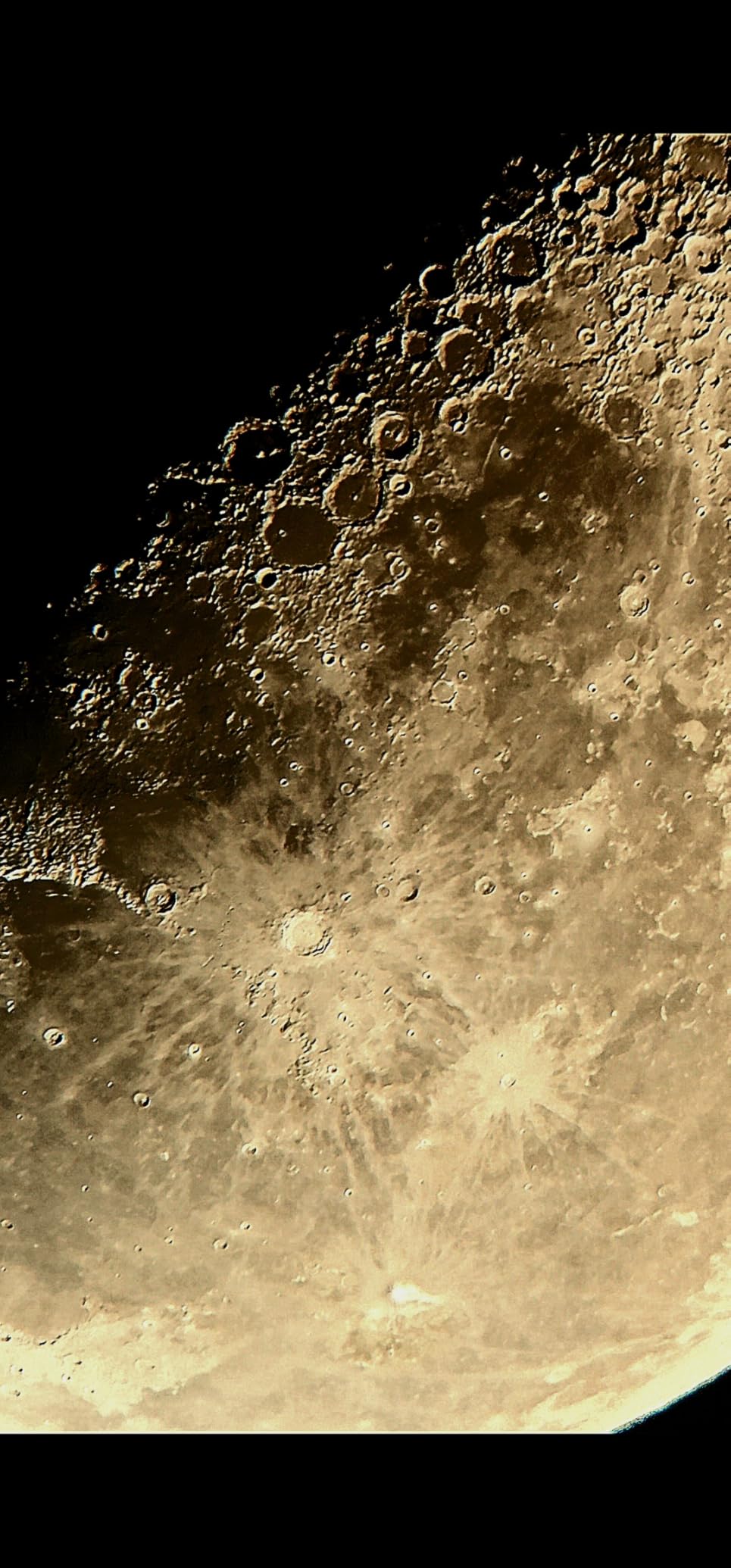
The Moon at any magnification, including crater detail along the terminator
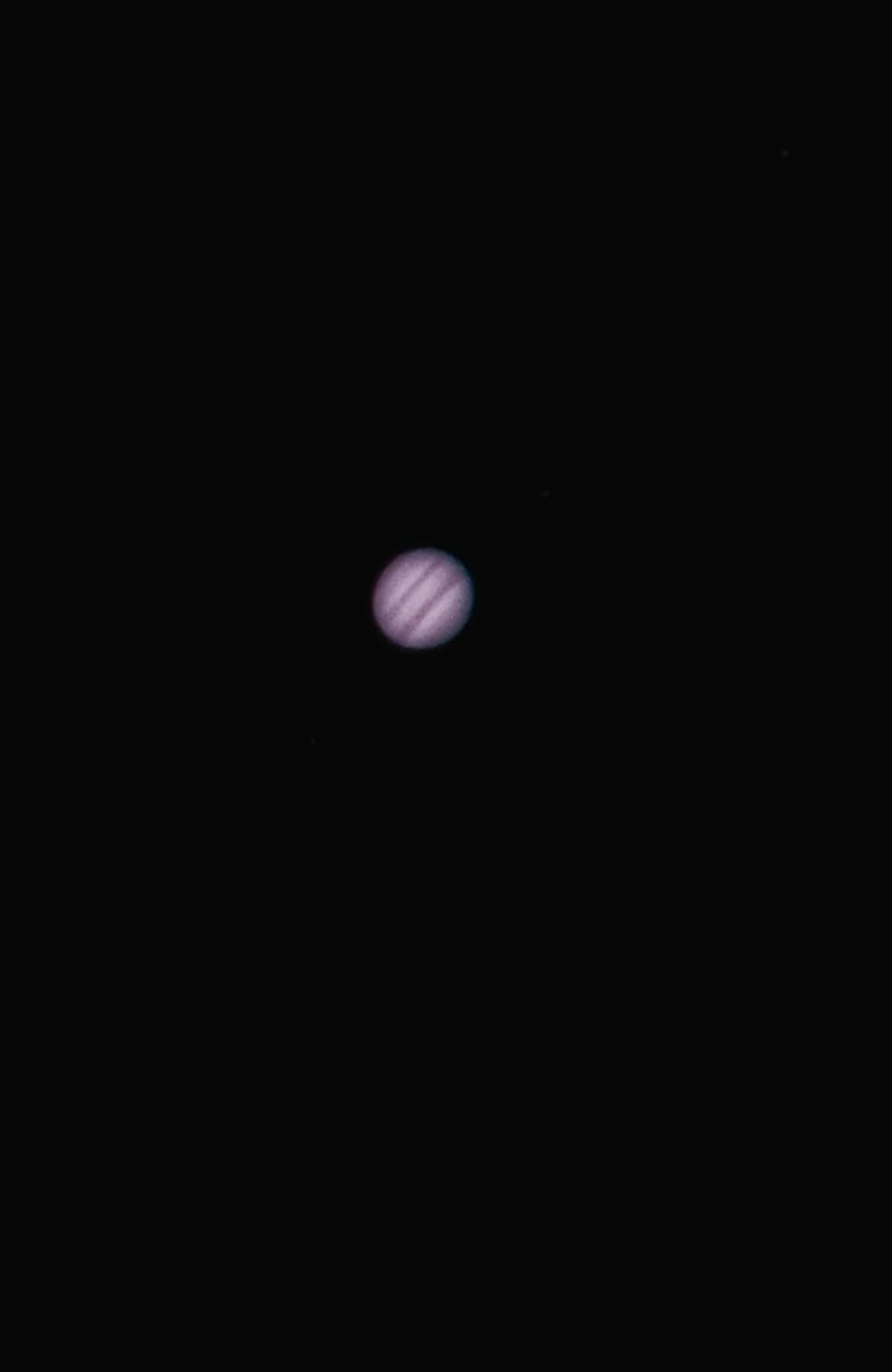
The planets, with Jupiter’s bands and Saturn’s rings the usual first targets
Bright double stars, where contrast and steadiness do the work
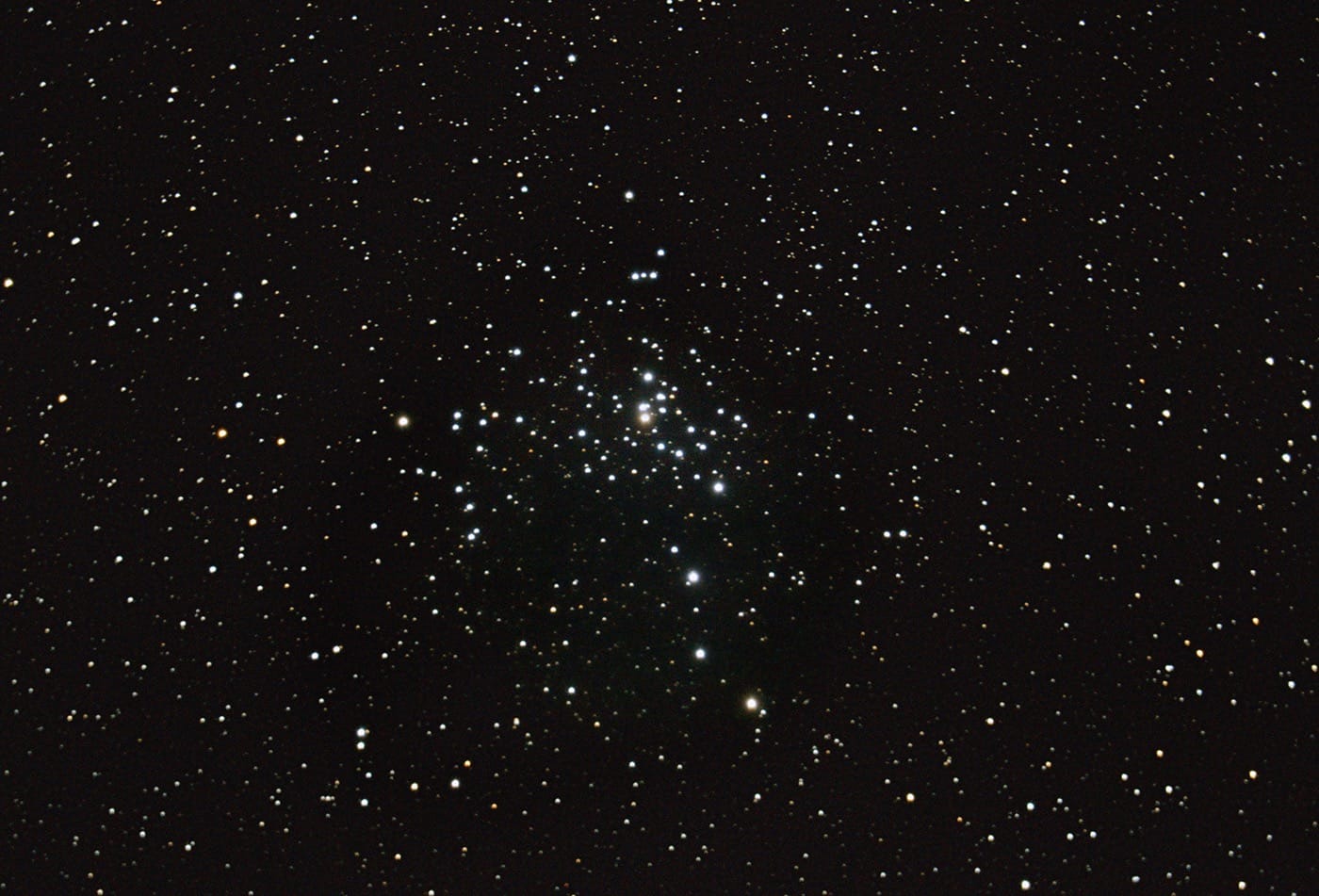
Open and globular clusters, which respond directly to aperture area
A handful of emission nebulae, and only with a light pollution filter
What mostly does not:
Faint galaxies, which need a dark site rather than a bigger aperture
Integrated-flux-nebula objects with low surface brightness
The Milky Way’s outer arms, even through 10 inches of glass
Anything the eyepiece cannot isolate from a neighbouring streetlight
On CloudyNights the consensus is blunt: light pollution is basically irrelevant for most planetary targets, which is why compact Maksutovs and small refractors keep getting recommended for urban planetary work. Set your expectations there and the hobby is genuinely rewarding. Expect faint galaxies and the disappointment is real.
Top 3 Picks for City Skies in 2026

Celestron NexStar 8SE
- 8-inch aperture
- 2032mm focal length
- Computerized GoTo with 40
- 000+ objects
ZWO Seestar S30 Pro
- Built-in light pollution filters
- 3.6 pound body
- One-tap stacking and mosaics

All 9 Telescopes at a Glance in 2026
The table below is the short version. Every product listed here earns its place, but they are not interchangeable: three are visual telescopes, two are smart astrographs, and the rest sit in between. The Key Features column is deliberately short, so read the individual reviews before you commit.
| Product | Specs | Action |
|---|---|---|
| Celestron NexStar 8SE |
|
Check Latest Price |
 Sky-Watcher Flextube 250 10-inch Dobsonian Sky-Watcher Flextube 250 10-inch Dobsonian |
|
Check Latest Price |
 Zhumell 10-inch Dobsonian Zhumell 10-inch Dobsonian |
|
Check Latest Price |
 Sky-Watcher Classic 200 8-inch Dobsonian Sky-Watcher Classic 200 8-inch Dobsonian |
|
Check Latest Price |
| ZWO Seestar S30 Pro |
|
Check Latest Price |
| DWARFLAB Dwarf Mini |
|
Check Latest Price |
 Celestron 114LCM Computerized Reflector Celestron 114LCM Computerized Reflector |
|
Check Latest Price |
 Sky-Watcher Heritage 150 Tabletop Dobsonian Sky-Watcher Heritage 150 Tabletop Dobsonian |
|
Check Latest Price |
 Celestron PowerSeeker 127EQ Reflector Celestron PowerSeeker 127EQ Reflector |
|
Check Latest Price |
1. Celestron NexStar 8SE Computerized Telescope – The Best Overall Pick for City Skies
Celestron NexStar 8SE Computerized Telescope – Schmidt-Cassegrain
8-inch aperture
2032mm focal length
Computerized alt-az fork mount
25mm eyepiece and red dot finder
Pros
- 8-inch aperture shows fine lunar detail and cloud bands on Jupiter
- GoTo removes star charts from every session
- SkyAlign sets up in minutes from three bright stars
- Compact for a large-aperture catadioptric
Cons
- Fork mount is heavier and bulkier than a Dobsonian of the same aperture
- Batteries
- AC adapter and PowerTank all sold separately
This is the scope I keep coming back to for people who live in a bright city and have never owned a telescope. The 8-inch Schmidt-Cassegrain collects enough light to make the Moon genuinely detailed and to hold Jupiter’s cloud bands steady at moderate power, which is precisely the target list that survives skyglow.
Its real advantage over a Dobsonian of the same size is pointing. The NexStar+ hand control carries a database of more than 40,000 objects, and SkyAlign gets the mount aligned in minutes by centring any three bright stars. On a suburban or city sky, finding a faint target by star hopping is often the hardest part of the night, and this removes it.
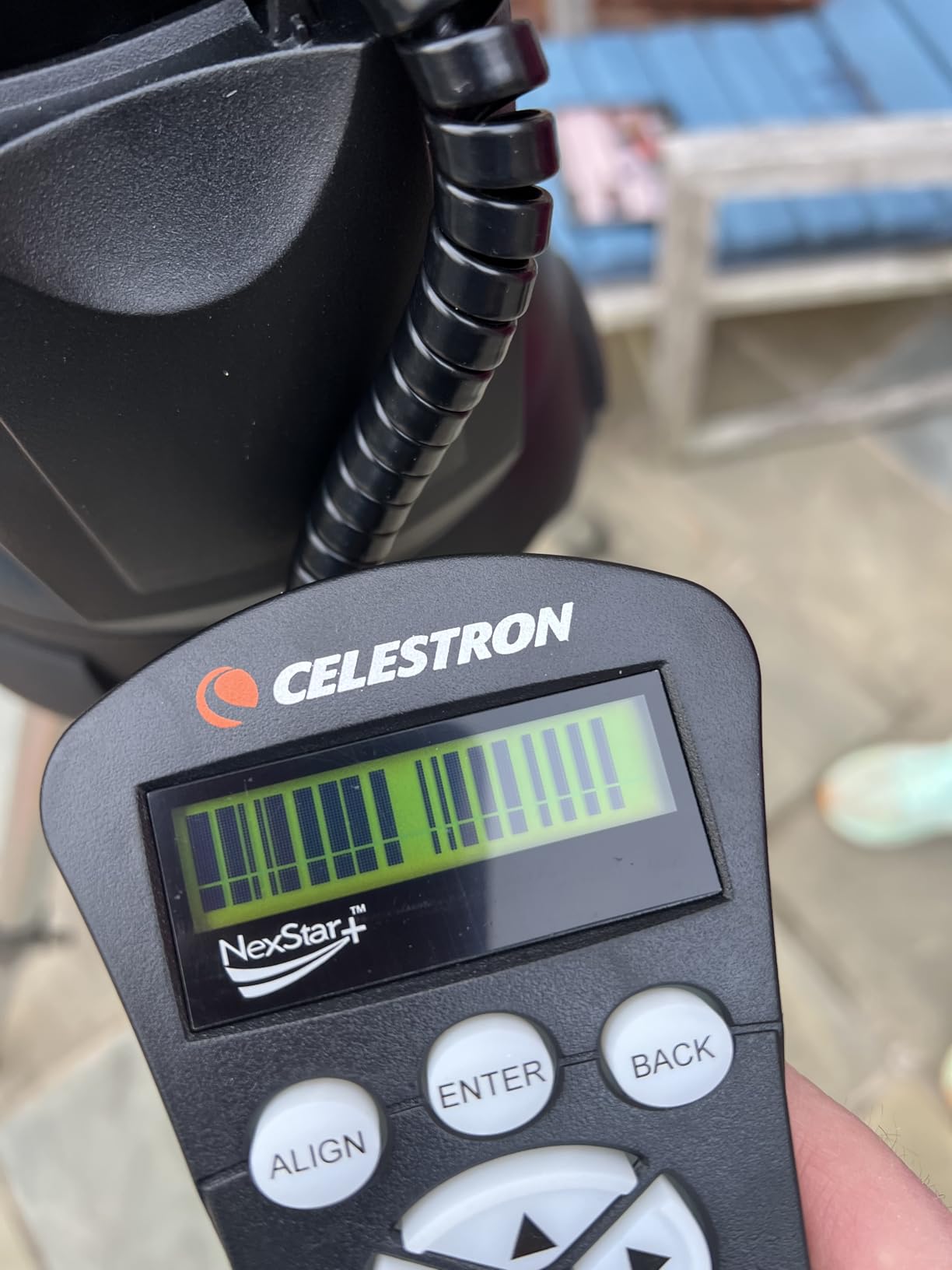
The optics are a proper long-focal-length design: 2032mm of focal length from an 8-inch aperture, listed at a 0.57 arc second Dawes limit and a 0.75 degree field of view from the supplied 25mm eyepiece. A longer tube rejects stray light better than a fast Newtonian, which is exactly the argument enthusiasts on CloudyNights make when they recommend large Maksutovs for very bright skies.
Owners consistently credit the combination of aperture and computerisation as the decisive factor, and they single out setup speed. The recurring complaints are physical rather than optical: the single fork arm is bulkier than a Dobsonian base, and you need to plan your power separately, since batteries, the AC adapter and the PowerTank are all extras.
Who will actually use this scope
Anyone who wants to see a lot and does not want to hunt for it. At 10.88 kg it is a two-person carry, and it suits a garden, a balcony with a solid floor, or a rooftop where you can leave it set up. The fork mount handles both axes smoothly enough for planetary work at moderate magnification.
Where it disappoints
It is not a grab-and-go instrument, and it is not the cheapest route to aperture. If your budget is fixed and you want the biggest possible mirror for your money, a Dobsonian below will show you more for less. The NexStar 8SE trades some of that raw light for the ability to find things, and in a bright sky that trade is usually worth making.
2. Sky-Watcher Flextube 250 – The Best 10-Inch Dobsonian for Small City Apartments
Sky-Watcher Flextube 250 Dobsonian 10-inch Collapsible Large Aperture Telescope – Portable, Easy to Use, Perfect for Beginners, White/Black (S11720)
10-inch aperture
1200mm focal length
Collapsible tube
Tension control handles
Pros
- 10-inch aperture gives bright high-contrast views of M42 and Orion
- Collapsible tube stores in a small flat and fits a car trunk
- 2-inch Crayford focuser accepts both eyepiece sizes
- Tension control handles let one person move it
Cons
- Collimation is required out of the box and after every move
- Eyepiece kit lacks a Barlow lens
- No light shroud for the open truss
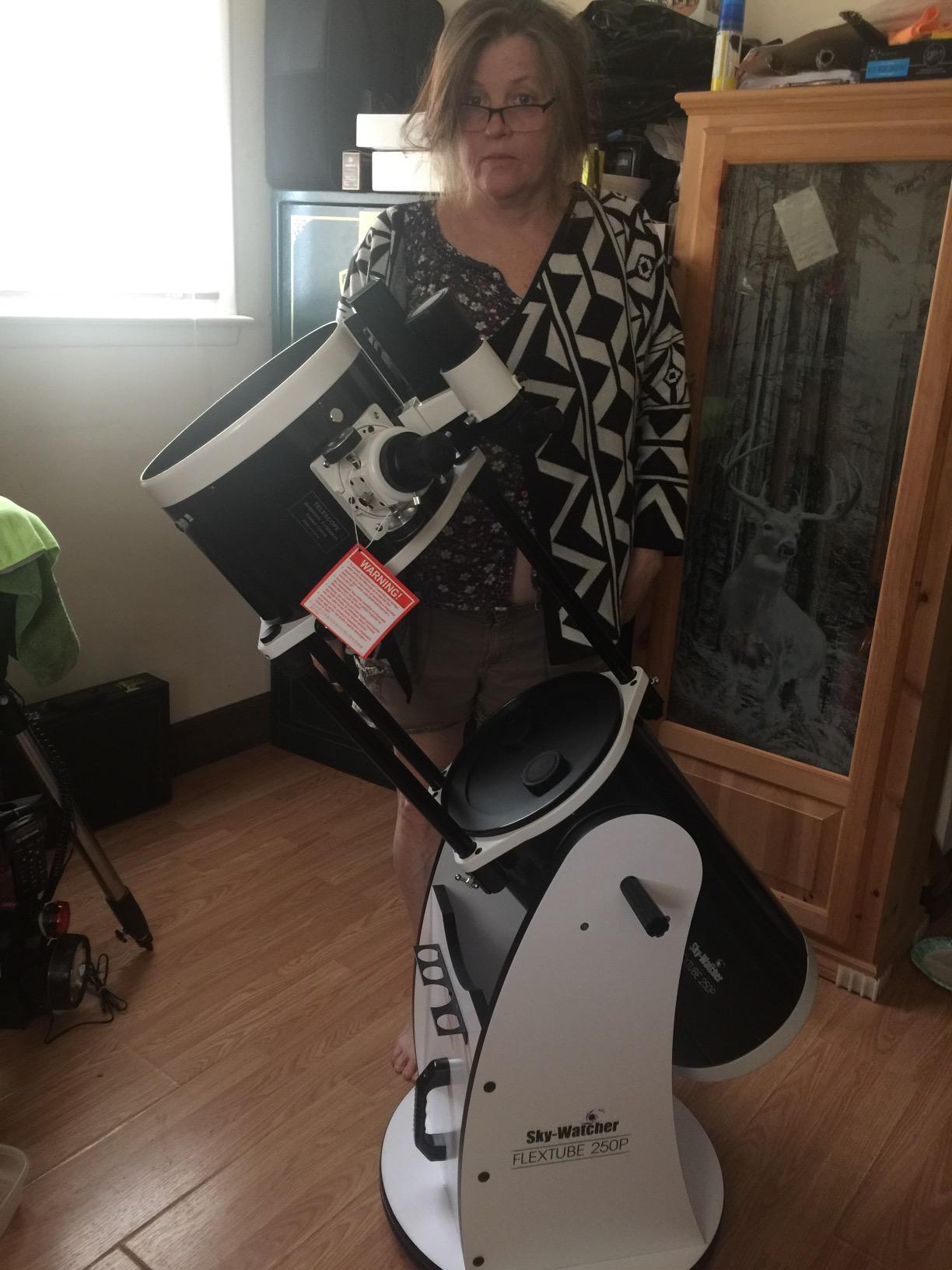
This is the 10-inch Dobsonian most urban observers end up recommending to each other, and the reason is the collapsing tube. A full-size 10-inch Dob is a two-person lift; the Flextube folds down to something one person can carry up several flights of stairs, which is the difference between a hobby that survives the first winter and one that does not.
On the astronomy side, 1200mm of focal length from a 10-inch aperture means brighter, higher-contrast views of the Orion Nebula and other emission targets than anything smaller on this list. Under skyglow, that extra aperture is doing real work rather than sitting idle.
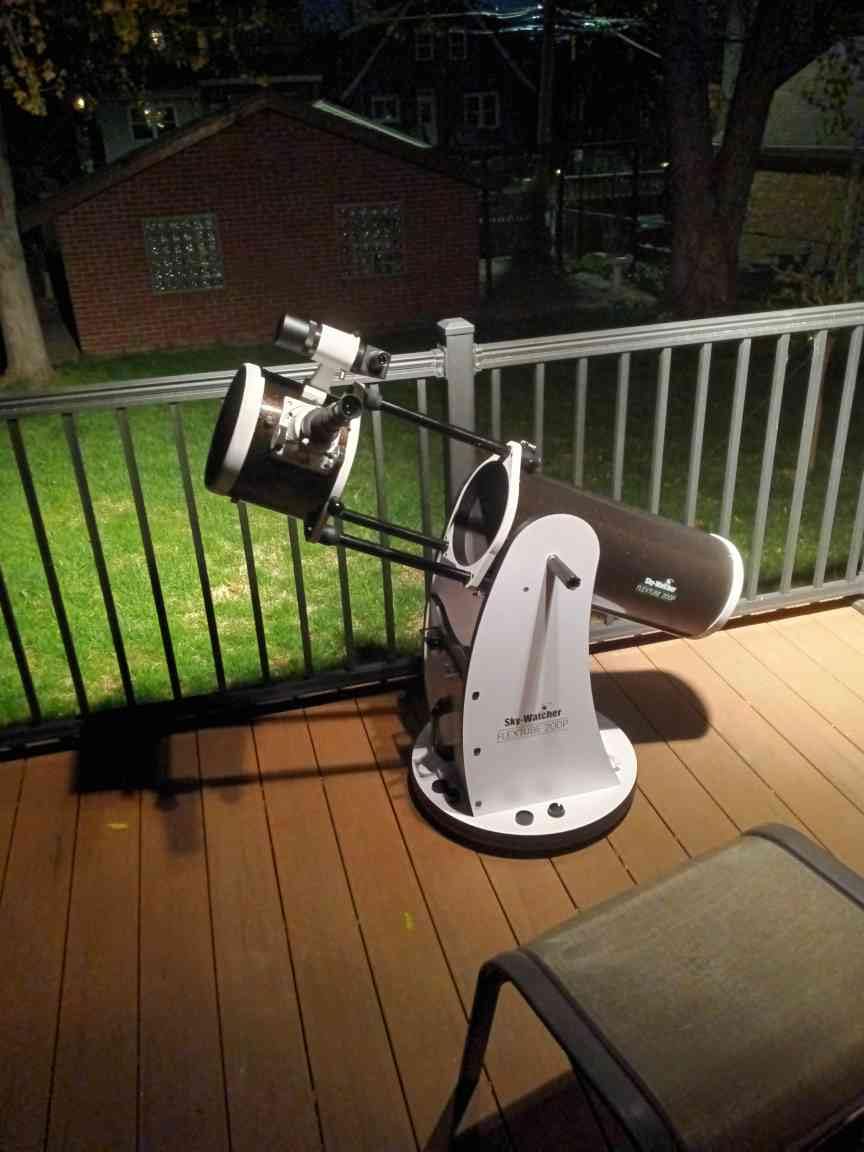
Owners treat it as the reference 10-inch: the 2-inch Crayford-style focuser is very smooth and takes 1.25-inch eyepieces through the included adapter, the Teflon bearings glide, and the tension control handles let you reposition the tube without perfect balance. Assembly takes minutes with the tools in the box.
The honest list of drawbacks is longer than the marketing suggests. Collimation is required out of the box and the scope drifts out of alignment every time you move it. The included eyepieces are a 25mm and a 10mm Plossl with no Barlow, and there is no light shroud for the open truss, which matters a great deal when stray light is your main problem.
When the extra aperture pays off
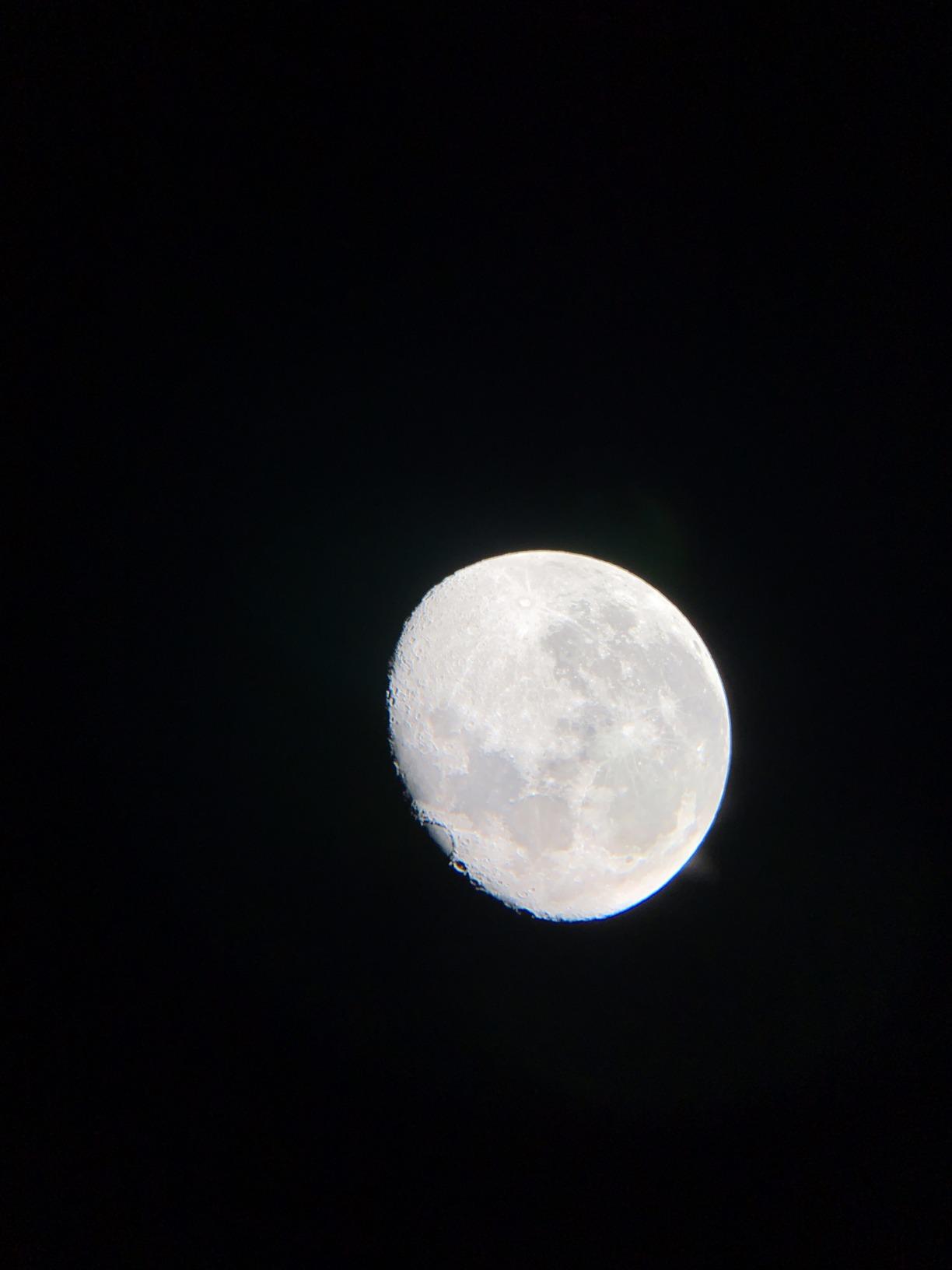
Open clusters, the Moon at high power, and the brighter Messier objects. The gap between a 10-inch and a 6-inch is not subtle on those targets, and it is the gap that decides whether an object is worth looking at or just noise above a glowing horizon. Several owners report clean views of Jupiter and Saturn from suburban skies with this scope.
When you will resent it
If your observing spot is small and you move the tube frequently, collimation becomes a chore rather than a task. A dark-adaptation-preserving light shroud and a laser collimator are not optional accessories for this scope in a bright city, and first-time buyers often discover both in the same week.
3. Zhumell 10-Inch Dobsonian – The Most Complete Kit for Getting Straight to Work
Zhumell – 10-inch Dobsonian Reflector Telescope – Large Aperture for Crisp, Bright Images – Solid Base Construction with Handle for Easy Transport – Ideal Astronomical Telescope
10-inch aperture
1250mm focal length
Altazimuth Dobsonian base with manual clutches
2-inch focuser
Pros
- 10-inch fully multi-coated primary for bright galaxy and nebula images
- Built-in cooling fan shortens mirror cooldown time
- Integrated carry handle in the base
- Unusually complete accessory kit
Cons
- 47 pounds is a two-person move between spots
- Included eyepieces are basic for the aperture they sit on
Where the Flextube wins on portability, the Zhumell wins on everything else. The accessory kit is the standout: a 2-inch 30mm wide-field eyepiece, a 1.25-inch 9mm, a 2-inch focuser with adapter, an 8×50 right-angle finder, a 1.25-inch Moon filter and a laser collimator cap, all in the box. You can start observing on night one without a shopping list.
The built-in cooling fan is the feature experienced urban observers value most, and the reason is timing. A 10-inch mirror takes a long time to reach outdoor temperature, and for the first hour of a session the images are soft while the tube is still shedding heat. The fan shortens that wait, which means more of your session is spent on sharp images.
At 1250mm of focal length from a 10-inch aperture, the optical output is in the same league as the Flextube, and the base uses manual clutches rather than friction bearings for smoother, more precise movement. Observation is fully manual and needs no batteries at all, which removes an entire category of failure from city observing.
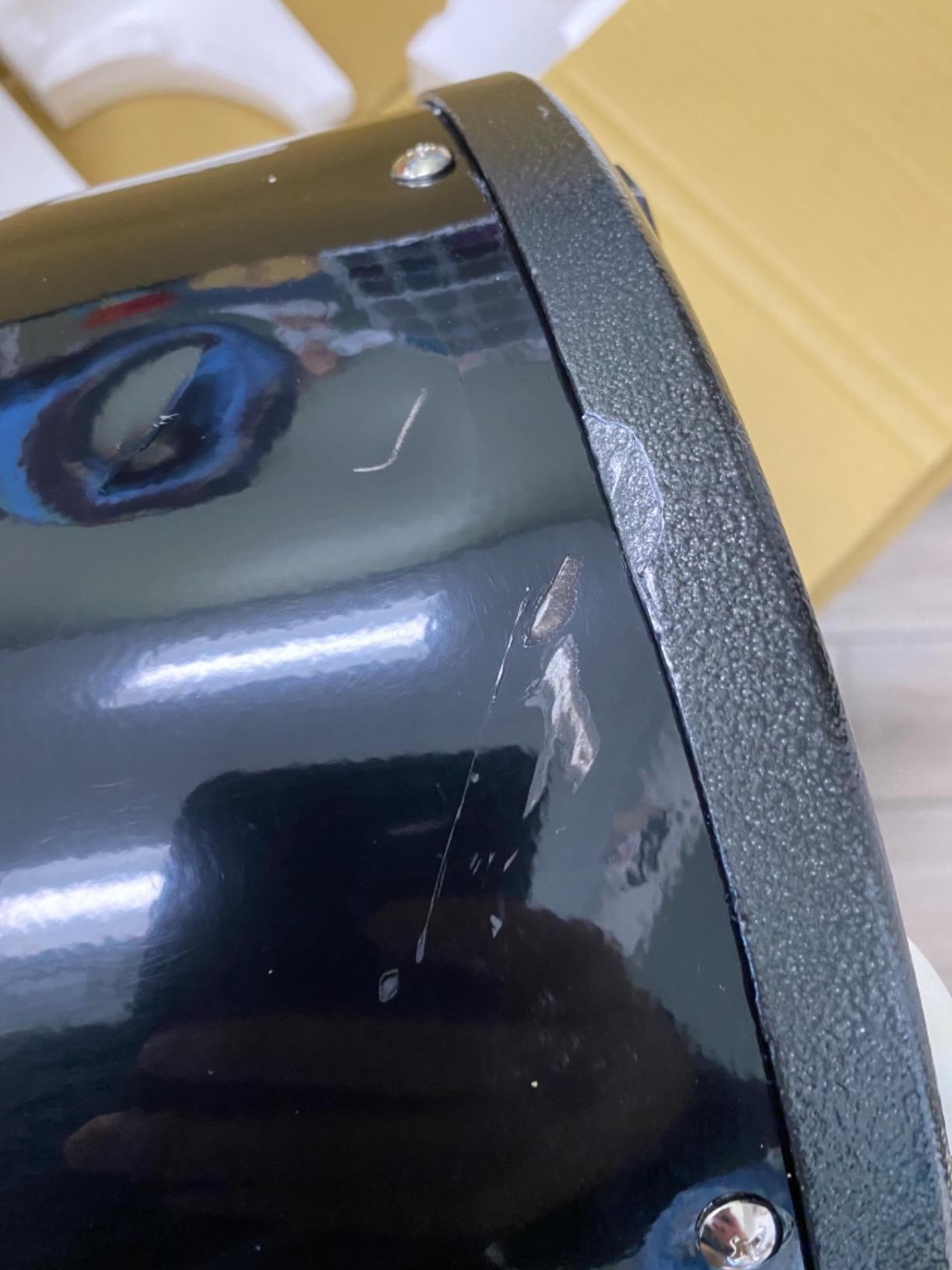
The sample size here is small, at 56 reviews, so the sentiment is thinner than for the big-name scopes. The consistent theme is still clear: owners buy it for the 10-inch light grasp and the solid handle-equipped base, and they report that the accessory kit beats competitors in the same bracket.
Who this is built for
Observers with a permanent spot. The carry handle and the sturdy base mean it can live on a balcony or in a garden and be walked out to a dark site a couple of times a year, rather than dragged up stairs every session. If you can leave it set up, this is a strong pick.
Where the money is better spent
If you have no permanent spot, 47 pounds is a hard number. The manual clutches are precise but require two hands and a settled tripod, and the included eyepieces are basic for a 10-inch mirror. Budget for one good 2-inch eyepiece before you worry about anything else.
4. Sky-Watcher Classic 200 – The Best 8-Inch Dobsonian for Learning the Sky
Sky-Watcher Classic 200 Dobsonian 8-inch Telescope – Solid-Tube – Simple, Traditional Design – Easy to Use, Perfect for Beginners, White (S11610)
8-inch parabolic primary
1200mm focal length
Limiting magnitude 14.2
Solid-tube altazimuth base
Pros
- Best aperture-per-dollar route to faint deep-sky objects
- No batteries and no electronics to fail
- Solid tube is stiffer and simpler than a truss design
- 2-inch Crayford focuser with 25mm and 10mm eyepieces
Cons
- Non-collapsible tube is bulky to store and transport
- No GoTo so targets must be found by hand
- 45 pounds assembled is a two-person move
The Classic 200 is the telescope we recommend to anyone who wants to learn the sky rather than be driven around it. The mount is pure mechanical altazimuth with Teflon bearings, no batteries, no motor, no electronics to fail in a damp flat, and the friction is set once and then ignored.
Optically it is a properly specified 8-inch: a parabolic primary with a Radiant Aluminum Quartz coating, 1200mm of focal length, and a listed limiting magnitude of 14.2 under dark skies. In a bright city the real number is lower, but the ranking against other 8-inch scopes holds, and the RAQ coating is worth having under heavy skyglow.
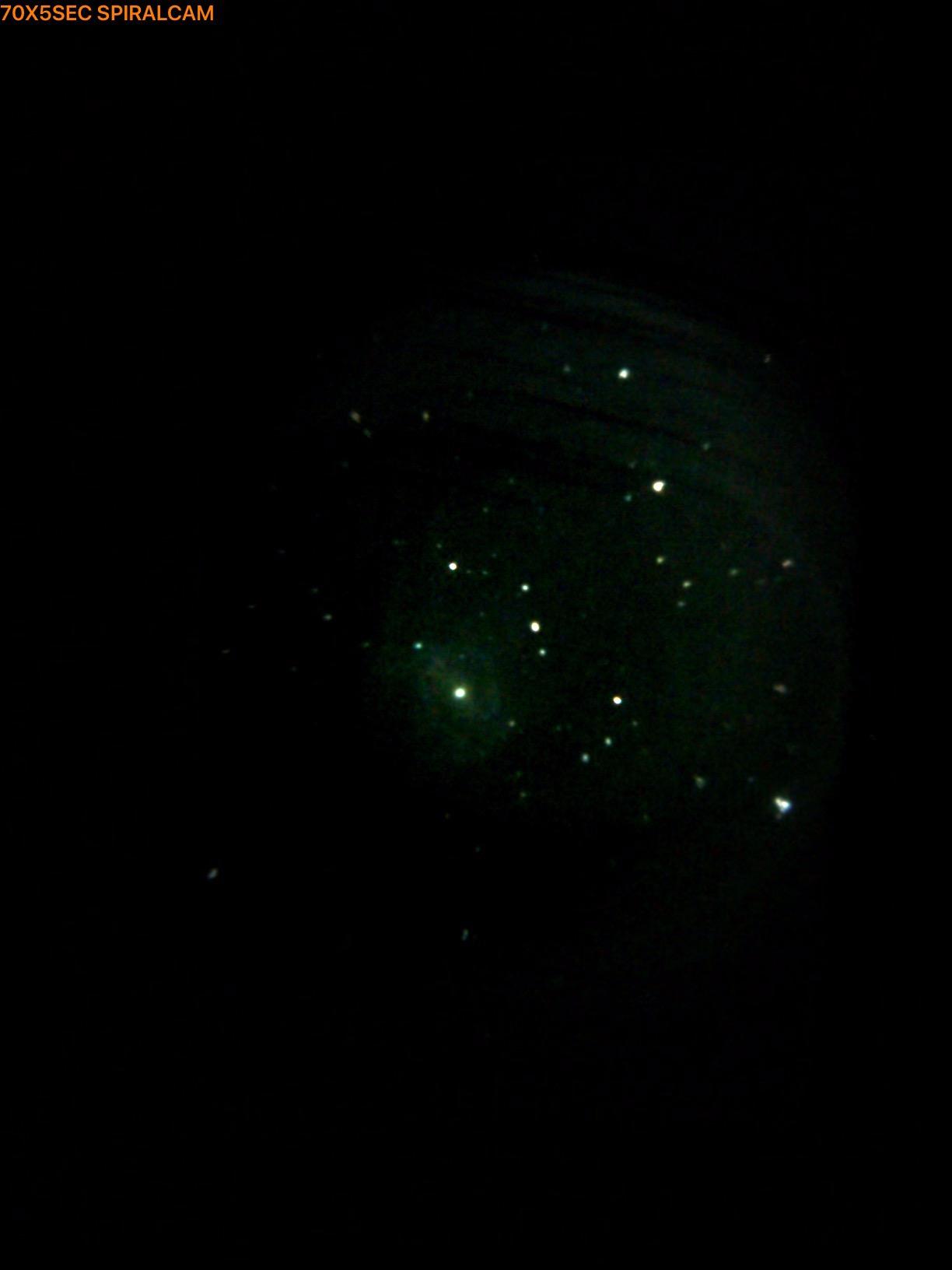
What the owners consistently praise is the value. The 2-inch Crayford-style focuser, a 25mm and a 10mm super wide-angle eyepiece, and a 9×50 straight-through finder come in the box. A well-made 8-inch glass mirror on a simple base simply costs less per inch of aperture than any computerized or catadioptric design.
The common complaint is bulk. At 45 pounds assembled, split 20 pounds of tube and 25 pounds of base, this is a two-person or wheeled move, and the solid tube does not fold. If your flat is small or your observing spot is a public rooftop, that is a real constraint rather than a nitpick.
Why manual pointing is an advantage here
On a bright sky, finding things is genuinely harder than seeing them, and owners who learn star hopping get a reward that no GoTo hand controller can give them: the ability to point at anything, any time, without power. A red-light torch and a sky chart app are all you need.
Where it is the wrong choice
If you want to show a child the Moon without a lesson in orientation, or if you have no car and no dark site, the weight and the lack of computerisation will frustrate you. Our telescopes for kids guide covers the easier-start options in detail.
5. ZWO Seestar S30 Pro – The Best Smart Telescope for Urban Astrophotography
ZWO Seestar S30 Pro Smart Telescope, App-Controlled Astrophotography
30mm aperture
160mm focal length
Alt-azimuth mount with equatorial mode
3.6 pound body
Pros
- Built-in light pollution filters and apochromatic optics work from bright skies
- One-tap capture with automatic stacking and mosaic stitching
- Automatic GoTo finds and tracks targets
- 3.6 pounds with a tripod is genuinely portable
Cons
- Deep-sky imaging only
- not a visual planetary scope
- Fixed 160mm focal length leaves small objects small
- Must stay stationary during imaging
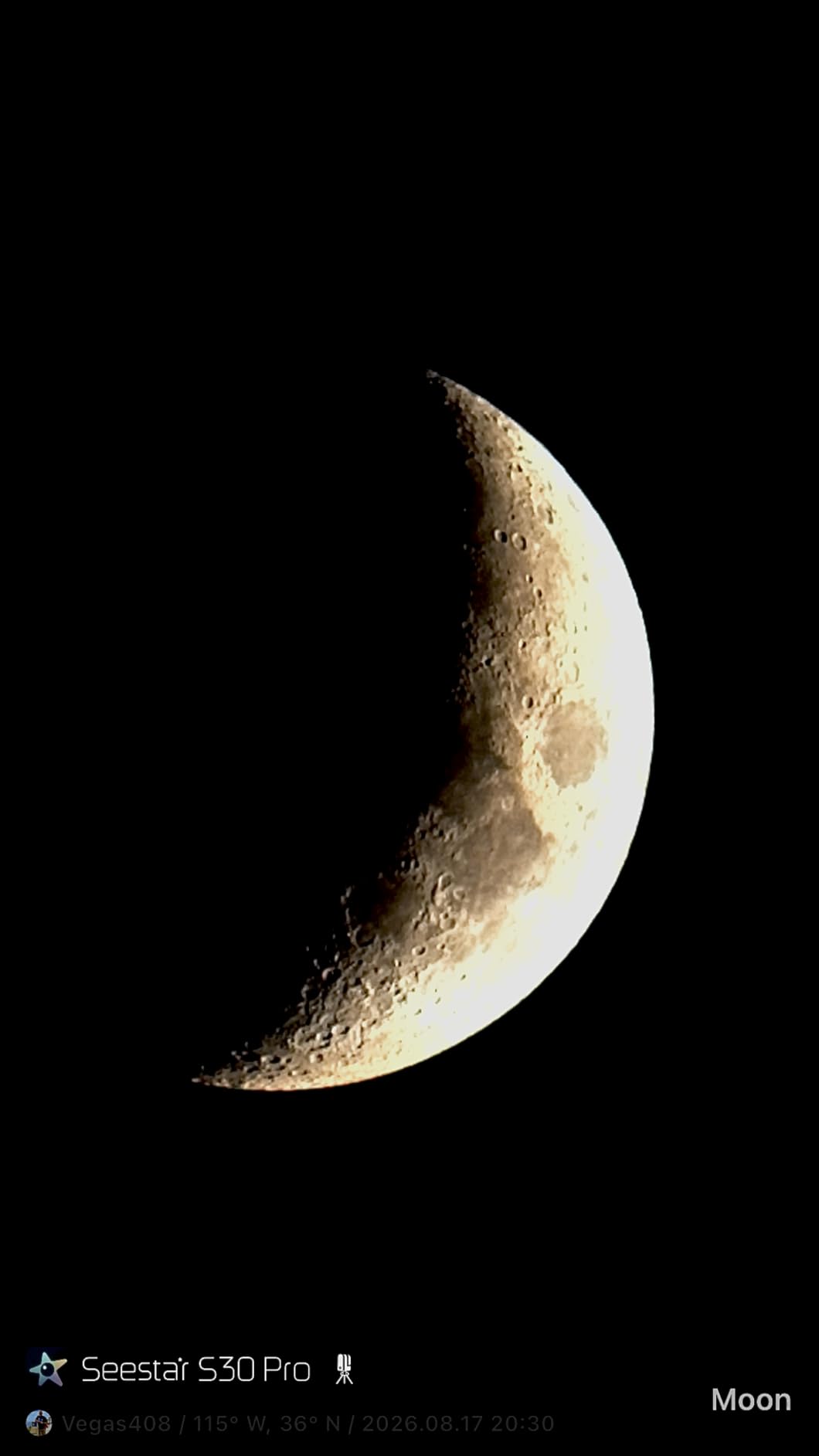
This is the answer for someone whose real interest is photographs, not views. The Seestar S30 Pro pairs fully multi-coated apochromatic optics with light pollution filters built into the body, which is unusual and is the reason city owners get usable deep-sky results at all from a 30mm aperture.
Everything else is aimed at removing the learning curve. You power it on, connect the app, and automatic GoTo finds and tracks the target. One-tap capture handles stacking, and dual-camera 4K imaging with automatic mosaic stitching handles objects larger than one frame. Anti-dew protection and long-session support are built in, which matters on a damp city balcony.
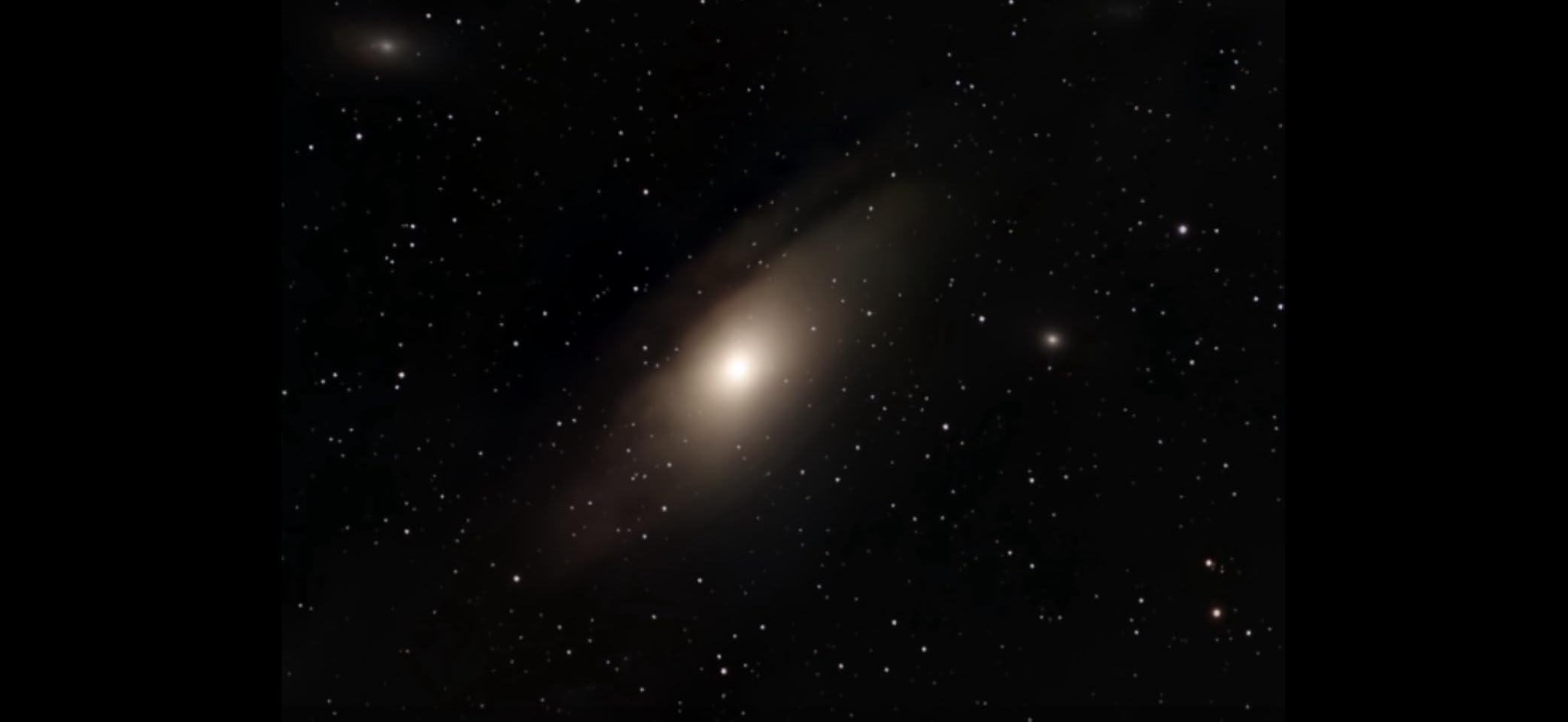
Owners fall into two camps and both are happy. Complete beginners get a stacked, shareable image on their first night. Experienced astrophotographers use it as a grab-and-go travel rig that fits in a bag at 3.6 pounds. The field of view is 4.6 degrees, wide enough to frame a large nebula or a landscape.
Be clear about what it is not. It is designed for deep-sky imaging and is not intended for planetary visual observation. The fixed 160mm focal length means small objects stay small in frame, and the whole unit has to stay put during imaging for the tracking to work.
When a smart telescope beats glass
On a balcony with no table height, no dark site reachable, and no interest in learning star hopping. The built-in filters do the work that a separate UHC filter would do on a traditional scope, and the app handles pointing, stacking and noise reduction without a computer, a camera or a controller.
When it disappoints
If you want to look through an eyepiece at Jupiter, it is the wrong instrument entirely. And if your interest is in fine planetary detail, the 30mm aperture and the fixed focal length leave that to one of the visual scopes on this list.
6. DWARFLAB Dwarf Mini – The Most Portable Scope That Photographs from a Bortle 9 Balcony
DWARFLAB Dwarf Mini Smart Telescope – 1.85lb Portable Astronomy Telescope
30mm aperture
150mm focal length
Sony IMX662 sensor
EQ mode with 90-second exposures
Pros
- Live stacking recovers deep-sky objects a scope this small would never show
- Built-in filters let one owner photograph from a Bortle 9 sky
- Plate solving and auto GoTo mean it can run unattended
- 1.85 pounds fits a backpack
Cons
- Planets appear as featureless discs
- Sensor resolution suits sharing rather than printing
- Initial Wi-Fi handshake can fail
- A tripod and power bank are needed for long runs
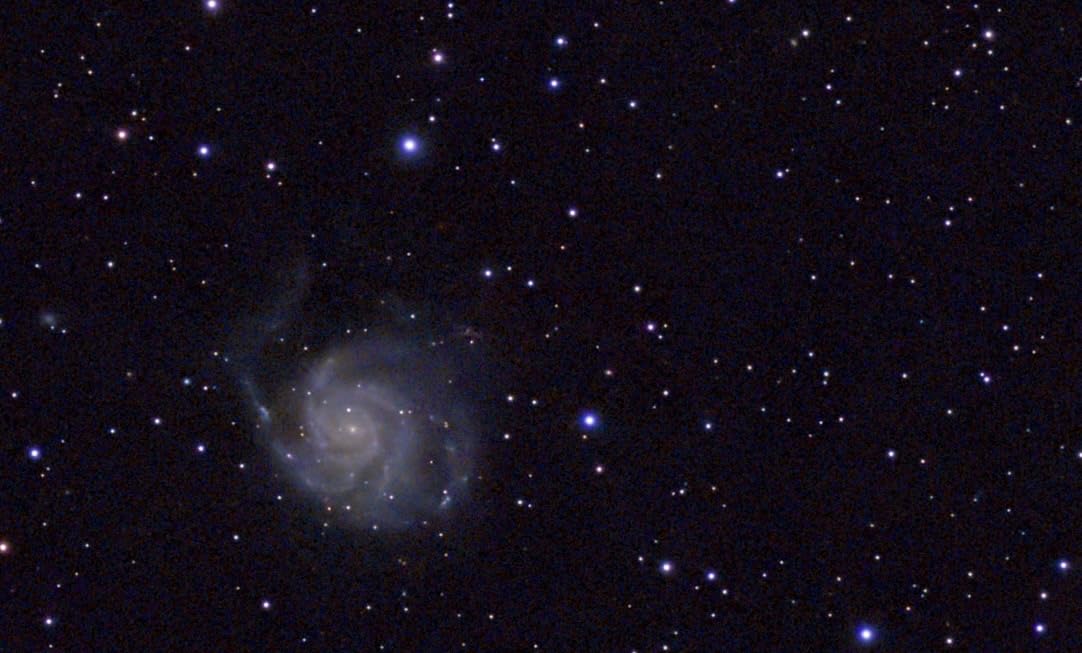
The Dwarf Mini is the most surprising entry here and the easiest to carry. At 1.85 pounds it fits a backpack, it runs on battery, and it goes from unboxing to a first shot in about three minutes using the built-in sky atlas. Several owners compare its results favourably to a Nikon on an 8-inch Schmidt-Cassegrain, which sounds exaggerated until you understand that it is stacking.
Stacking is the whole trick. A 30mm aperture showing an object live would look like nothing under city glow, but EQ mode allows single-frame exposures up to 90 seconds, and those frames are stacked internally and enhanced by cloud processing. City-dwellers in very high Bortle classes confirm that the filters and stacking pull signal out of severe glow.
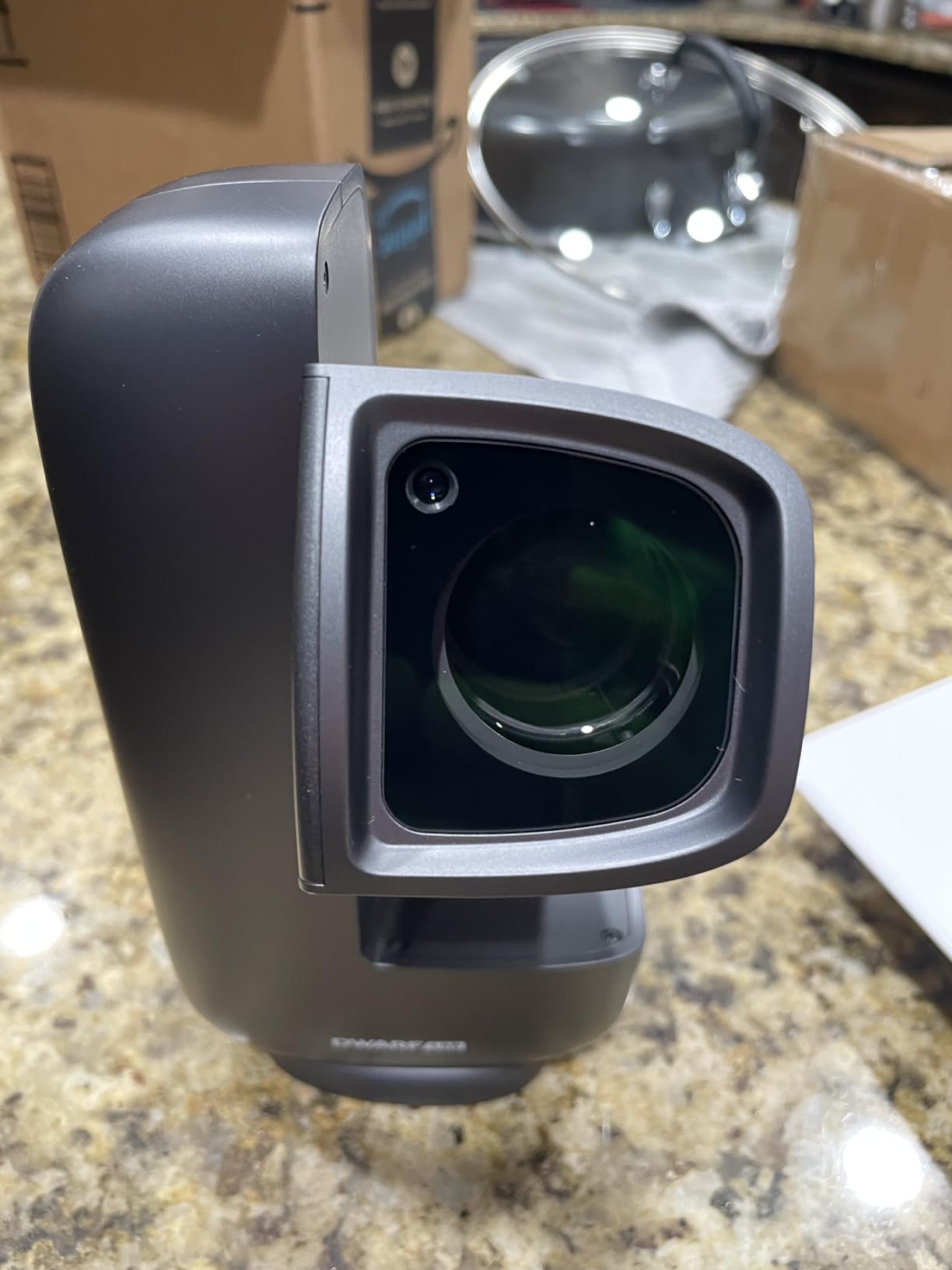
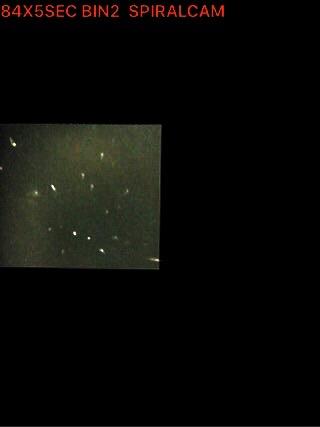
The auto GoTo uses plate solving to work out where it is pointing, so you can set the scope on a table, aim it at a target and let it run unattended. The internal shutter captures dark frames automatically when the temperature changes, which removes a genuinely tedious step. Astro and dual-band filters are selectable in the app depending on the target.
The caveats are consistent across owner reports. It is an astrograph, not a planetary or visual telescope, and planets show as featureless discs. Image resolution suits social sharing rather than printing. The Wi-Fi connection can fail until the app is pointed at your home network. And a fluid-head tripod plus a power bank are needed for anything beyond a short session.
Who should buy this one
Apartment dwellers with no dark site, no car, and no tolerance for a 45-pound carry. If your window faces away from direct streetlight, this is the cheapest possible route to a real astrophoto of a nebula, and it doubles as a nature and time-lapse camera.
Who should skip it
Anyone whose main interest is looking through an eyepiece at the Moon or the planets, and anyone who intends to print large. Also factor in the total cost of ownership. The tripod and the power bank are not in the box, and battery life drops sharply once live stacking starts.
7. Celestron 114LCM – The Best Starter Telescope for Families Under City Skies
Celestron 114LCM Computerized Reflector Telescope for Beginners
114mm aperture
900mm focal length at f/8
Motorized altazimuth mount
CR2032 battery included
Pros
- GoTo mount finds 4000 objects and Sky Tour suggests what to see
- 114mm fully coated glass shows the Moon and planets well
- Motorized tracking keeps targets centred
- Full package with tripod
- eyepieces
- finder and software
Cons
- 114mm aperture washes out faint targets under heavy glow
- Mount and tripod are the plastic-feeling part of the package
- Newtonian design means occasional collimation
The 114LCM solves the problem that stops most beginners: on a bright sky, the thing you cannot see is the thing you cannot find. Its GoTo mount locates 4,000 celestial objects automatically, and the Sky Tour button generates a list of the best objects currently visible from where you are sitting.
For a family, that is the whole argument. A child asks for the Moon, you press a button, and the scope goes and gets it. The 114mm of fully coated glass is modest, but it is honest about that, and it gives good Moon and planetary views on the supplied 25mm and 9mm eyepieces with motorized tracking to hold them still.
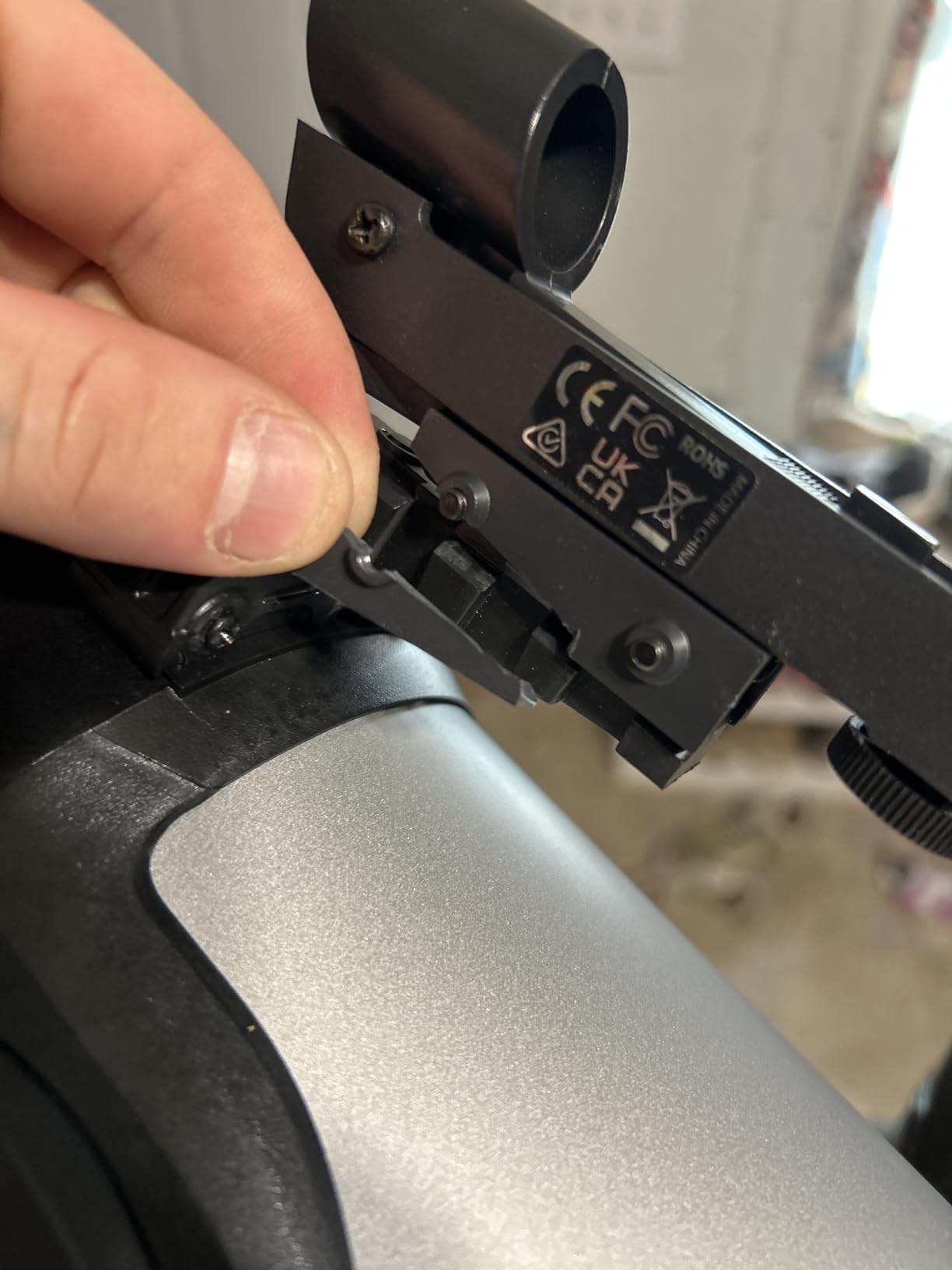
The box is genuinely full: full-height tripod, two eyepieces, a NexStar+ hand control, a built-on StarPointer red dot finder, and free Starry Night software. At 13.2 pounds the whole package is carryable by one adult, and a two-year warranty is included. With a large base of long-term owners, the long-run common complaints are well documented.
What those owners report is that the GoTo is the reason it works in a city, and the aperture is the ceiling. Faint targets wash out under heavy light pollution. The motorized altazimuth mount and tripod feel the most plastic-like part of the package, and because it is a Newtonian, occasional collimation is part of ownership.
Why the small aperture is acceptable here
Because the realistic urban target list is short. The Moon, Jupiter, Saturn and Venus all sit well inside what 114mm of glass can deliver, and the motorized tracking lets a beginner hold them at power without fighting the mount. Going bigger would show more, but far less of the value would be used.
When you outgrow it
When Sky Tour starts running out of objects you have not seen. That is the signal to move up in aperture rather than up in electronics, and our Dobsonian roundup is where most owners go next. Our refractor telescope guide covers the other common upgrade path.
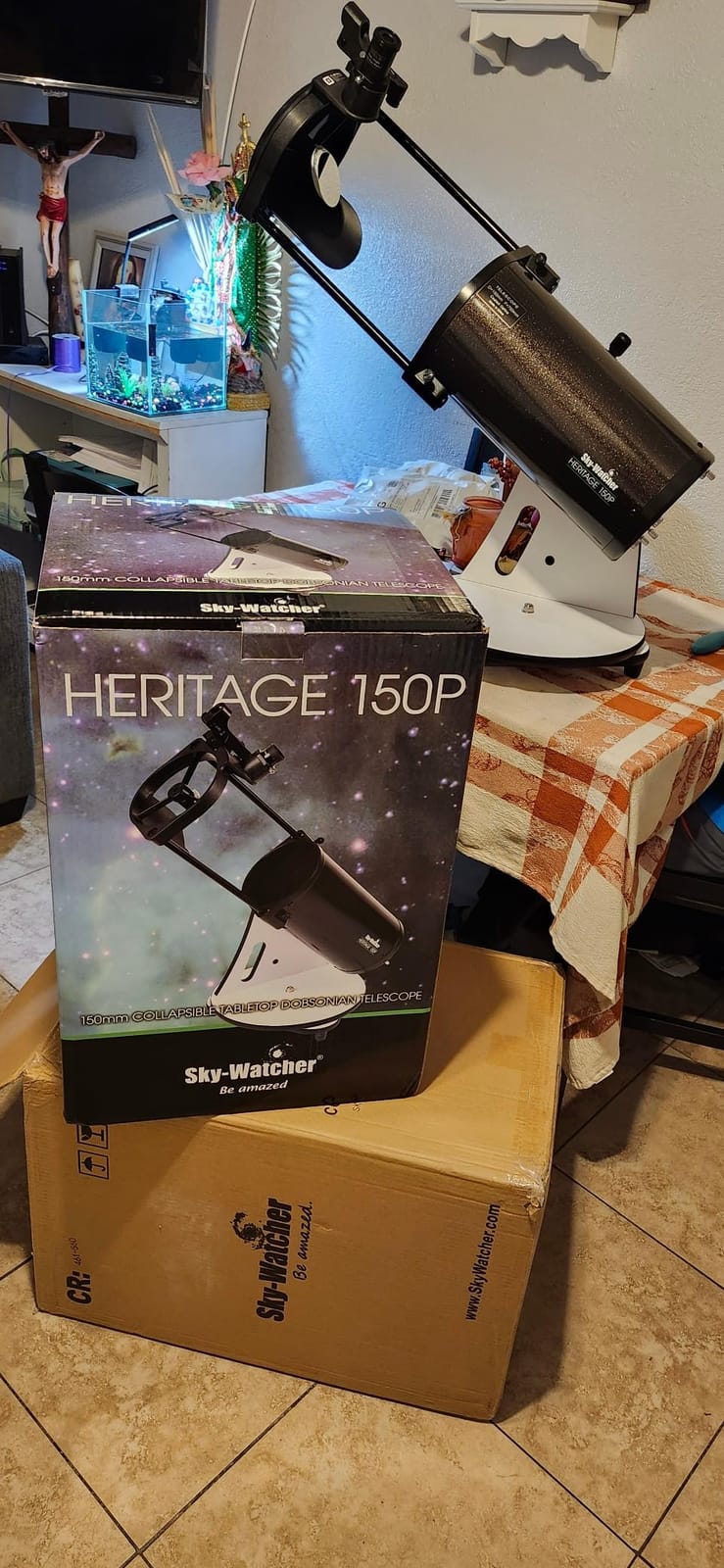
8. Sky-Watcher Heritage 150 – The Best Tabletop Dobsonian for Balcony Observing
Sky-Watcher Heritage 150 Tabletop Dobsonian Telescope – Perfect for Beginners, Easy Setup, Portable, and Fun (S11710)
150mm aperture
750mm focal length at f/5
1.25-inch helical focuser
23 pound tabletop design
Pros
- 150mm aperture gives contrast-rich views of the Moon and planets
- Fast f/5 focal ratio gives wide bright fields for scanning
- Collapsible tube and tabletop base store in a small home
- Rubber feet damp vibration at high power
- No batteries or electronics to charge
Cons
- 1.25-inch helical focuser limits eyepiece choice
- 150mm is the minimum that meaningfully beats a small tabletop refractor
- Manual base means no GoTo
The Heritage 150 is the smallest Dobsonian on this list and the one that fits the most urban lives. At 750mm of focal length on a 150mm aperture, the focal ratio is a fast f/5, which produces wide, bright fields that suit sweeping the sky from a balcony table or a small patio.
150mm is the smallest aperture that meaningfully beats a small tabletop refractor under city glow, and owners position this scope as a stepping stone rather than a destination. It shows real planetary detail and the brighter Messier objects from a suburban sky, and it is small enough to carry in one hand.
The design details are what make it work indoors. The collapsible tube retains its collimation while folding down, the tabletop base has rubber feet that damp vibration and increase stability, and there are no batteries or electronics to service. The 1.25-inch helical focuser is the one place the design saves money.
That focuser is a real limitation, because it restricts you to 1.25-inch eyepieces, while every larger Dobsonian here takes 2-inch. And the manual base means targets must be found by star hopping. For a 23-pound tabletop scope, that trade is usually fine, because you are likely setting it up in the same spot each time.
Where this one beats bigger scopes
Convenience and cost of entry. It needs no stairs negotiation beyond one flight, no flat ground beyond a table, and no charging. If the realistic alternative for your situation is no telescope at all, the Heritage 150 wins by a wide margin.
Where it hits the ceiling
Faint deep-sky objects. The aperture sets a hard limit, and under heavy skyglow you will be looking at the Moon, the planets, bright doubles and the brightest clusters, then switching off. Know that limit before you buy and it is a good buy.
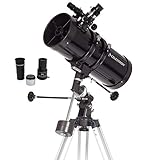
9. Celestron PowerSeeker 127EQ – The Best Budget Newtonian if You Will Collimate It
Celestron PowerSeeker 127EQ Reflector Telescope for Home Astronomy
127mm aperture
1000mm focal length
Manual German equatorial mount
13 pounds assembled
Pros
- 127mm aperture is the cheapest real route past a small refractor
- German equatorial mount with slow-motion controls
- Most heavily documented telescope in this roundup
- Compact at 13 pounds with a huge accessory ecosystem
Cons
- Spherical primary means removing the focuser to collimate first
- Supplied 4mm eyepiece and 3x Barlow are widely criticised
- Finder is easily knocked out of alignment
- Mount and tripod feel flimsy
With 9,247 reviews this is the most thoroughly documented telescope in the roundup, and that is exactly why it is here. Owners converge on a single conclusion: the optics and aperture are good value, but the first night is not plug-and-play. Budget for a laser collimator and a better eyepiece rather than judging the scope on day one.
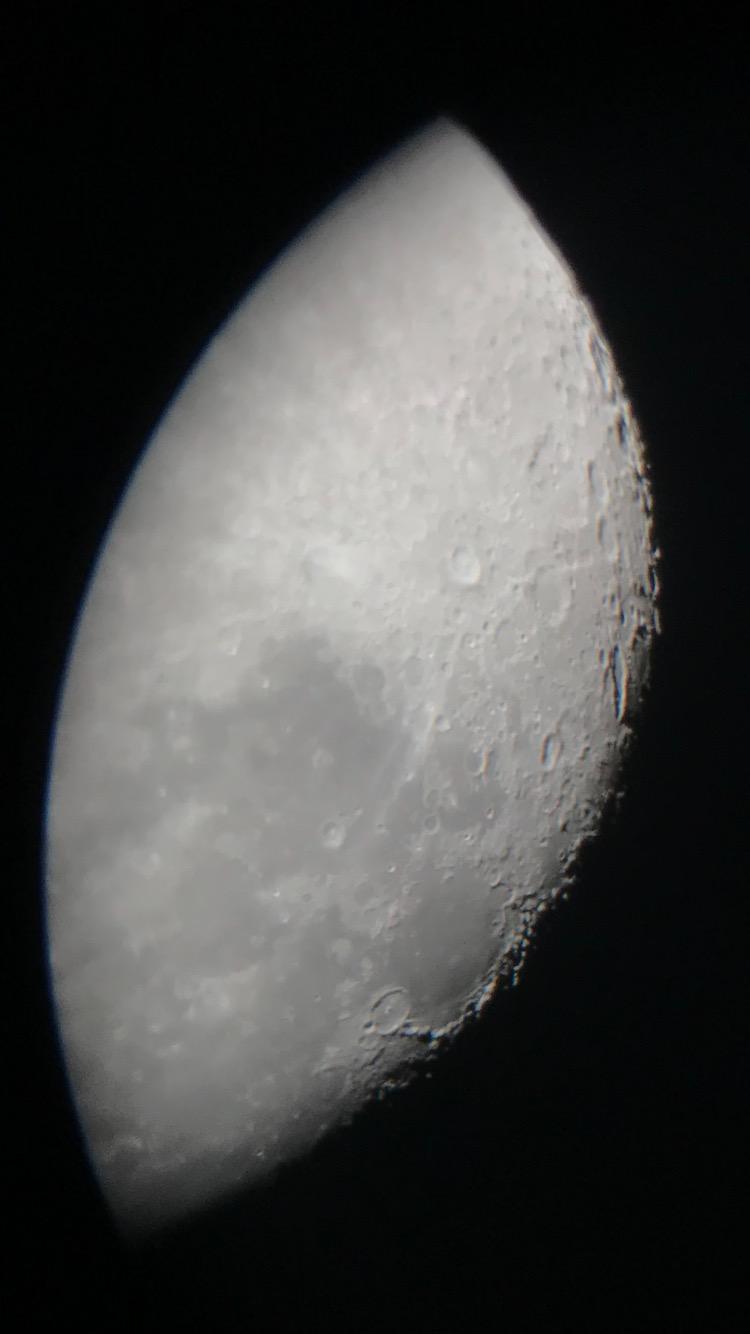
Once collimated, the 127mm aperture shows the Orion Nebula, the craters along the Moon’s terminator and the planets, which makes it the cheapest sensible step up from a small refractor. The German equatorial mount with slow-motion controls is a genuine advantage over a plain altaz mount when you want to follow a drifting object smoothly.
Because the primary is spherical, the corrector in the focuser has to be removed and the optics adjusted before first use. That is the barrier that stops some buyers, and it is worth saying plainly: if collimation frightens you, choose a refractor or a Maksutov instead, and our refractor guide will point you the right way.
The supplied 4mm eyepiece is widely described as unusable and the 3x Barlow is criticised by most owners. The finder is inexpensive and easily knocked out of alignment. The tripod and equatorial head feel flimsy and need careful balancing. There is no motor drive, so targets drift out of the field during longer sessions.
What you get for the money
A 127mm spherical primary with a Bird-Jones corrector, 1000mm of focal length, 20mm and 4mm eyepieces, a 3x Barlow, a reflex finder, a two-year warranty, and an accessory ecosystem large enough that a low-cost motor drive can be retrofitted later for tracking.
When experienced observers advise against it
Most of them say the same thing: spend more if you can. It is a fine second telescope and a very cheap way to learn what collimation actually involves, but the accessories you will want immediately are not in the box, and that is where the real cost sits.
How to Choose a Telescope for a Bright Sky
Four things decide whether a telescope works from a city: how much light it gathers, how steadily it stands, how easily you can point it, and how far you have to carry it. Everything else is preference. Here is how each one maps to your situation.
Aperture is the only lever that beats skyglow. Light-gathering power scales with the area of the mirror, not its diameter, so a 10-inch collects roughly 2.4 times the light of an 8-inch. Skyglow overhead does not scale at all. That is the entire physics of the situation, and it is why r/telescopes posters repeat that the biggest light-gathering scope you can afford and manage will cut through the glow.
Mount steadiness matters more in a city than you think. Passing buses, trams and building vibration shake cheap tripods, and any wobble is visible at planetary magnification. A Dobsonian base on level ground, or a solid fork mount, survives urban vibration far better than a spindly altitude-azimuth tripod on paving.
Pointing difficulty rises with skyglow. A faint object you could star hop in a dark garden is much harder to find under a glowing orange sky, because the reference stars are dimmer. This is the single strongest argument for GoTo or for a smart telescope, and the honest counter-argument is that learning to point manually is the skill that keeps you observing for years.
Portability is a hard constraint, not a preference. Weight that requires two people or several flights of stairs will end the hobby. If your only observing site is a public rooftop or a fire escape, the 23-pound Heritage 150 and the 1.85-pound Dwarf Mini are far more likely to still be in use next spring.
Measure your own sky before you buy. A light pollution map such as lightpollutionmap.info, a Bortle app, or a cheap sky quality meter reader will tell you which class you are dealing with. Then match it: Bortle 5 and below suits any of these scopes, Bortle 6 to 7 rewards 8-inch and larger aperture, and Bortle 8 to 9 mostly rewards filters, stacking and honest expectations.
Light Pollution Filters: What Actually Helps and What Does Not
Filters are the most misunderstood accessory in this hobby. They do not add light. They block the narrow emission lines that streetlights put out, which raises contrast between a target and the sky behind it. That is the whole mechanism, and it explains both what they do well and where they fail.
Broadband light pollution reduction filters cut a wide swathe of visible spectrum. They improve contrast on everything a little, work regardless of your local lamp type, and are a reasonable first buy for the Moon, the planets and star clusters.
UHC and OIII narrowband filters target specific lines, which is why they work best on emission nebulae like the Orion Nebula and the Veil. They also dim stars and many other objects, so they are a specialist tool rather than an all-night filter.
Dual-narrowband filters pass two very narrow emission lines and reject the rest of the spectrum, which makes them the most effective option against heavy urban skyglow. They cost more and they mainly serve the smart telescopes here, whose internal stacking multiplies their effect.
What filters cannot do is resurrect an object that is too faint. Galaxies emit across a broad spectrum, so a narrowband filter does almost nothing for them, and a broadband filter that looked magic in a review under a dark sky can be overwhelmed entirely by modern LED street lighting. Sellers consistently oversell this point, and the forum consensus is the opposite: buy the aperture first, and treat filters as a second purchase.
Two cheaper wins often beat a filter. A light shroud on a truss Dobsonian blocks stray light entering the tube, and a red-light torch preserves your dark adaptation far better than a phone screen. If you are in a Bortle 8 or 9 sky, positioning matters more than either, so do what you can to put the brightest lamp behind you.
What Not to Buy in the City
Most disappointing urban telescope purchases fail for reasons that have nothing to do with light pollution. These are the errors that keep showing up in owner reports, and avoiding them is worth more than any single upgrade.
Department-store 70mm refractors sold on magnification. A branded 70mm with 300x claimed power gives a dim, low-contrast image that a 5-inch Newtonian beats easily. Aperture, not magnification, is the number that matters.
Spindly plastic tripods and mounts. Urban vibration and passing traffic turn these into unusable instruments at high power. Feel the mount before you buy and skip anything that flexes under a light touch.
Anything sold on aperture alone. An 8-inch with a flimsy mount and no usable finder is worse in the city than a well-made 6-inch. A well-coated smaller scope will outperform a poorly made larger one every time.
Scopes that need collimation if you are afraid of collimation. Not a flaw in itself, but the single most cited barrier for first-time buyers. Choose a refractor or a Maksutov-Cassegrain instead.
Ignoring the total cost. Tripods, power banks, 2-inch eyepieces, a laser collimator, a light shroud and filters are where city setups quietly double in cost. Add them to the telescope in your head before you compare two options.
A stationary smart telescope for planetary work. Astrographs produce images, not views. If you want to see Saturn’s rings, buy glass.
Frequently Asked Questions
Do telescopes work in light polluted areas?
Yes, but only for a short target list. Aperture beats skyglow for the Moon, the planets, bright double stars and star clusters because those objects are bright enough to separate from the glow. Faint galaxies and low surface brightness nebulae mostly do not survive, and no filter changes that. Community consensus on r/telescopes is that clusters grow with aperture area while skyglow stays constant.
What is the best telescope for stargazing in light polluted areas?
For most urban observers a larger Dobsonian gives the best return, because aperture is the only lever that competes with skyglow. Our overall pick is the Celestron NexStar 8SE, which pairs an 8-inch aperture with a GoTo mount so you do not have to find faint targets by hand. If your main interest is photographs rather than views, a smart telescope with built-in filters is the better route.
What size telescope do I need for light pollution?
Six inches is a practical floor for a bright city sky and will show the Moon, the planets and the brighter clusters. Eight inches is the sensible step up, and 10 inches is where open clusters and brighter emission nebulae start to reward the extra light. A smaller aperture is not wasted if your budget is fixed, but buying a large mirror you cannot carry or steady usually is.
Do light pollution filters actually work?
They work, but only by raising contrast. Filters block the narrow emission lines that streetlights produce while passing the target’s own light, so emission nebulae improve most. They do not add light, and they do almost nothing for galaxies, which emit across a broad spectrum. Broadband filters are a sensible first buy, while UHC, OIII and dual-narrowband filters are specialist tools for emission targets.
Do telescopes flip the image upside down?
Yes, and it confuses more beginners than anything else. Astronomical telescopes invert images top to bottom, and refractors also mirror them left to right, so text appears reversed and the sky appears rotated. This is normal for every telescope designed for stargazing. A diagonal or an erecting prism corrects the orientation if you also want to look at buildings or landscapes in daylight.
Conclusion: Best Telescopes for City Light Pollution in 2026
The Celestron NexStar 8SE is our pick for city skies in 2026, because it is the only product here that solves both urban problems at once: 8 inches of aperture to fight the glow, and a GoTo mount so you do not have to find anything by hand under a bright sky.
If you are visual-only, the Dobsonians are the better value and the Sky-Watcher Flextube 250 gives you the most light per pound you can carry. If you want photographs rather than views, the ZWO Seestar S30 Pro handles a city sky in a 3.6-pound package, and the DWARFLAB Dwarf Mini goes further in a backpack.
Whatever you choose, buy the aperture you can actually carry, set your target list to the Moon, the planets, bright doubles and clusters, and check your Bortle class before you order. The hobby survives bright skies, as long as the gear matches the sky rather than fighting it.