
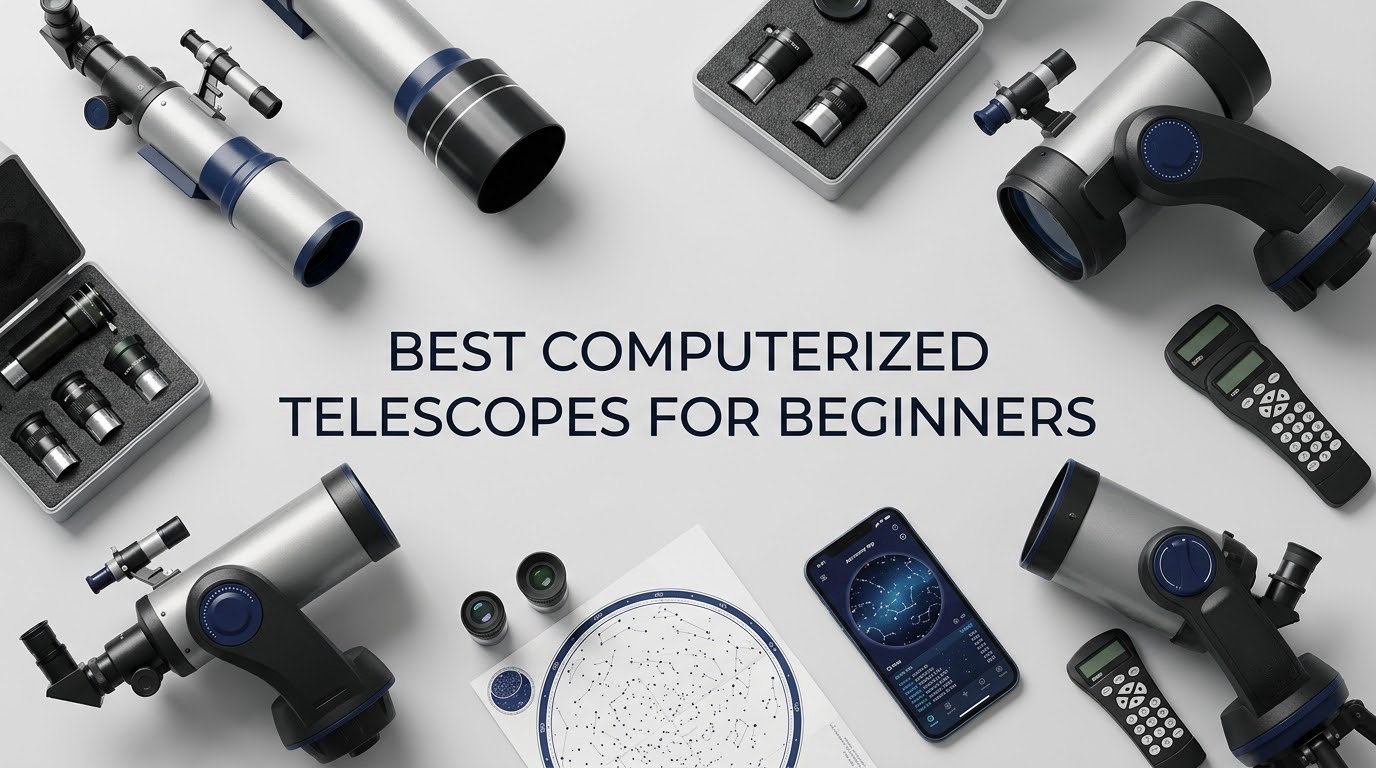
Computerized telescopes are good for beginners, and the reason is simple: finding objects is the hard part of astronomy, not looking at them. A motorized GoTo mount, an app with on-screen arrows, or a camera-based smart scope all remove the moment where a new owner stands in a dark garden holding a red dot finder over their head, trying to match faint smudges to a paper chart. Every one of the seven telescopes below solves that problem in a different way, and the right pick depends on whether you want to look through an eyepiece or watch an image build on a phone screen.
That distinction matters more than any spec on the box. Traditional GoTo telescopes slew the tube to a target and keep it there, so you look through glass. PushTo designs hand you the pointing work and you nudge the tube while following arrows. Smart telescopes skip the eyepiece entirely, stacking captured frames into finished pictures with no computer involved. If you already understand the trade-off, this roundup of the best computerized telescopes for beginners will save you a lot of browsing.
We spent weeks putting these seven through their alignment routines, carried them up and down stairs, and pointed them at the same handful of targets to see what each category really delivers after the novelty wears off. We also compared the field of view, the weight, and the honest limitations, because the gap between a 30mm camera module and a 150mm mirror is enormous and the marketing does not always admit it.
Two quick pointers before the picks. First, if you want the classic glass experience, read the 10 Best Computerized GoTo Telescopes roundup for a wider look at conventional mounts. Second, our guide to Dobsonian telescopes explains why aperture, not electronics, drives how much detail you actually see.
Table of Contents
Top 3 Picks for Computerized Telescopes in 2026

Celestron StarSense LT 80AZ
- StarSense app arrows
- 80mm coated refractor
- 9.2 lb total weight
The 7 Best Computerized Telescopes for Beginners at a Glance
Every model below earns its place, but they split into three families. The two Celestron entries with GoTo motors point a real eyepiece at a catalogue target. The StarSense refractor guides you by hand. The three smart telescopes turn light into pictures on a phone. Read the table, then jump to the review that matches how you want to observe.
| Product | Specs | Action |
|---|---|---|
| DWARF Mini Smart Telescope |
|
Check Latest Price |
 Celestron NexStar 90SLT Celestron NexStar 90SLT |
|
Check Latest Price |
| Celestron StarSense Explorer LT 80AZ |
|
Check Latest Price |
 Celestron AstroMaster 130EQ-MD Celestron AstroMaster 130EQ-MD |
|
Check Latest Price |
 ZWO Seestar S30 Pro ZWO Seestar S30 Pro |
|
Check Latest Price |
 Sky-Watcher Virtuoso GTI 150P Sky-Watcher Virtuoso GTI 150P |
|
Check Latest Price |
 DWARF 3 Smart Telescope DWARF 3 Smart Telescope |
|
Check Latest Price |
1. DWARF Mini Smart Telescope: Best Overall Computerized Telescope for Beginners
DWARFLAB Dwarf Mini Smart Telescope – 1.85lb Portable Astronomy Telescope
1.85 lb body
Sony IMX662 sensor
150mm focal length
EQ mode, 90-second exposures
Pros
- Weighs 1.85 lb and slips into a backpack
- Plate solving finds and tracks targets with no manual pointing
- Stacking and processing happen in the app with no PC
- EQ mode copes with bright suburban skies
- Included magnetic filter makes it usable for solar imaging
Cons
- Output is sized for sharing online rather than large prints
- Planets show as small discs with little visible detail
- Small deep-sky targets do not enlarge well
- EQ mode wants a fluid-head tripod and a power bank
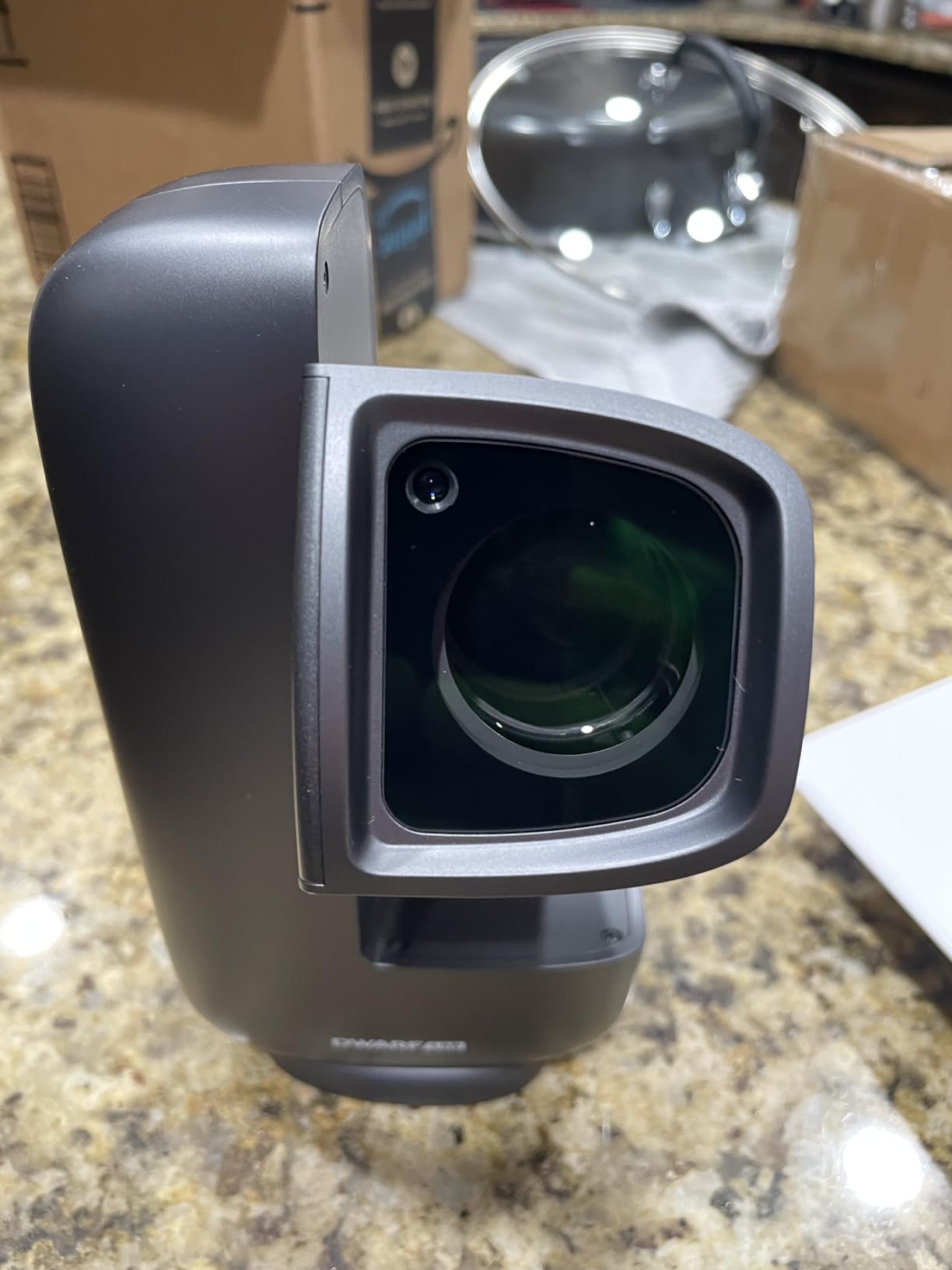
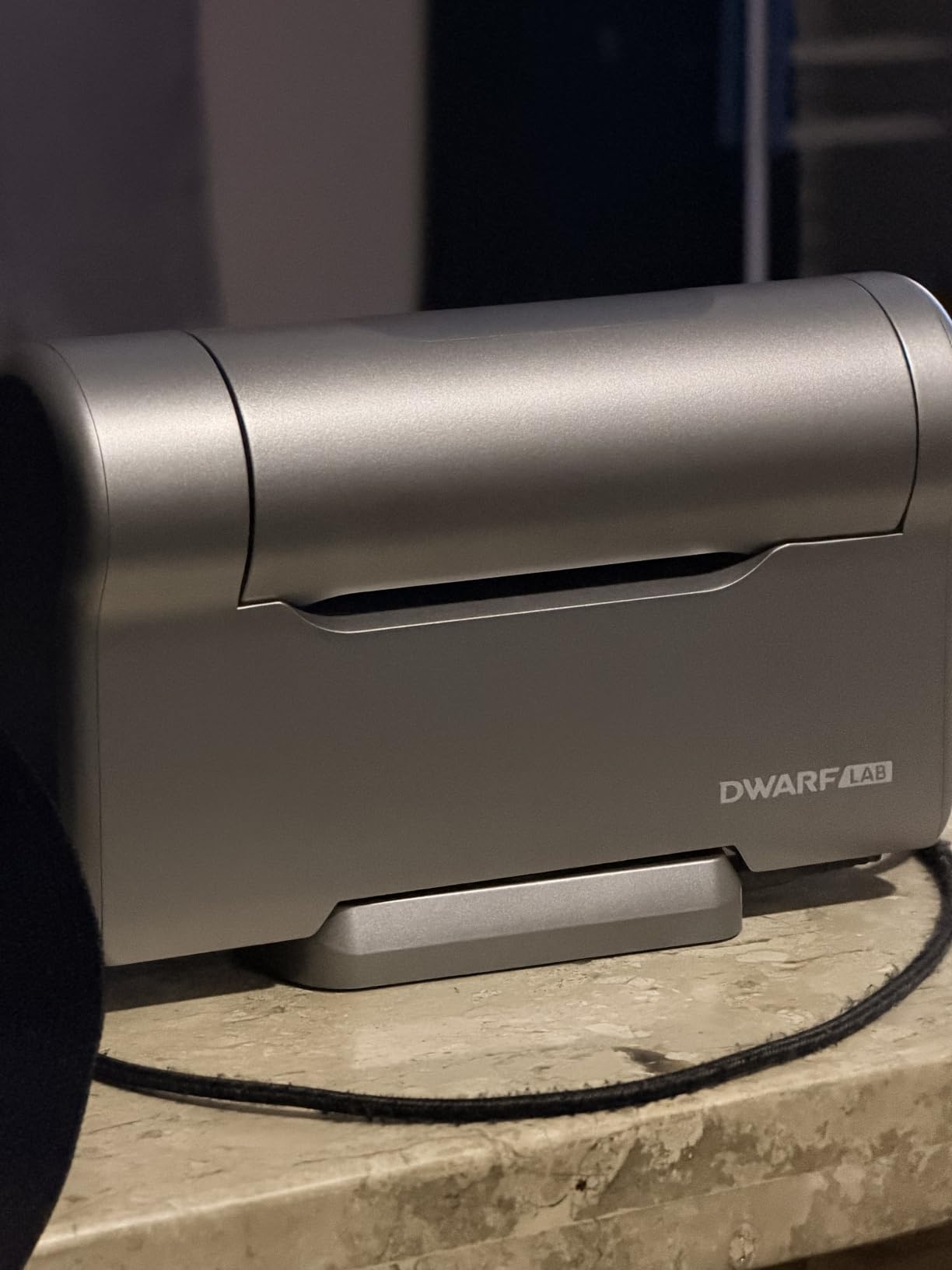
The DWARF Mini is the telescope we kept reaching for after the novelty faded, because it asks the least of a complete beginner. It weighs 1.85 pounds, spins through 360 degrees, and runs from an internal battery over USB-C, so the whole session is one object to carry out of the house. There is no tripod in the box and no eyepiece, which tells you immediately that this is an imaging device rather than a visual instrument.
What replaces the eyepiece is a 30mm optical tube feeding a Sony IMX662 sensor, which is 1/2.8 inch with 2.9 micron pixels. The app plate-solves the frame, works out where you are pointing, slews to the target and starts stacking sub-exposures. Experienced astrophotographers in the buyer reviews say the results from that sensor rival setups costing several times more, and the manufacturer rates the body for ages well beyond a typical first telescope.
The equatorial mode is the feature that changes this from a travel toy into a real deep-sky tool. In AZ mode the field rotates during longer exposures, which smears galaxies into ovals. Switch to EQ mode and single frames stretch to 90 seconds with the built-in light pollution filter doing some of the contrast work, which is the difference between a grey smudge and a recognisable nebula from a suburban driveway. The filter set also includes astro and dual-band options plus the magnetic solar filter.
It is honest to call this the best computerized telescope for beginners overall, because it removes alignment entirely, yet I want to be clear about the trade. There is no live visual view at all. If your ambition is to see Jupiter’s belts change hour to hour through glass, this is the wrong shape of instrument, and pick two fits that goal better. For capturing faint galaxies with no learning curve, nothing else in this list comes close.
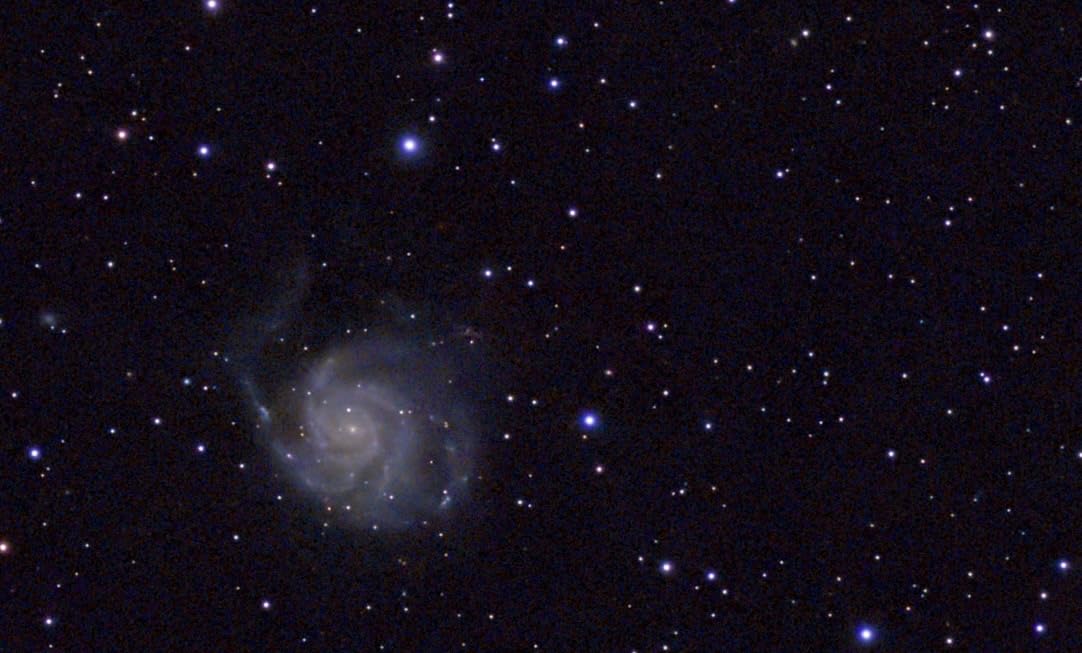
What you can realistically expect from it
Wide deep-sky objects are the sweet spot. Bright emission nebulae, large galaxies and Milky Way panoramas come through well from a suburban or even fairly bright urban sky because the light pollution filter and the stacking are doing the heavy lifting. Owners describe getting a usable image on the first clear evening without opening a single piece of desktop software, and the app’s built-in sky atlas suggests targets and matching filters for your date and location.
Planets are the weak spot, and the manufacturer is upfront that this is a deep-sky tool. At 150mm focal length with a small sensor, Jupiter and Saturn arrive as round discs rather than banded worlds. Time-lapse and star-trail video work well, and because the body has a 360 degree pivot, daylight birding and scenery shots come from the same hardware.
Where it falls short for a first telescope
The resolution will not hold up to a large print. Frames look sharp on a phone, on a social post, or on a modest monitor, and that is where they belong. Reviewers also point out that a fluid-head tripod and a power bank are effectively required for EQ mode and for any all-night session, so the advertised weight does not tell the whole story of what you will be carrying.
Connectivity is the other recurring note. Most owners have no problems, but a few report difficulty pairing the scope to the app over Wi-Fi, and the common fix is to connect through a home network first rather than a direct hotspot. Solar imaging works with the supplied magnetic filter fitted over the aperture, which is the one safe way to point this or any telescope at the Sun.
2. Celestron NexStar 90SLT: Best GoTo Telescope for Eyepiece Viewing
Celestron NexStar 90SLT Maksutov-Cassegrain Portable Telescope for Planets
90mm Maksutov-Cassegrain
1250mm focal length
40,000+ object GoTo database
SkyAlign alignment
Pros
- GoTo database of more than 40000 objects with automatic tracking
- SkyAlign needs only three bright stars to align
- Compact and light enough for a car boot or a campsite
- Long focal length delivers high magnification on planets
- Sharp high-contrast views of Saturn's rings and Jupiter's bands
Cons
- Long focal length makes high power handheld observing demanding
- 90mm aperture is modest for faint deep-sky objects
- Hand controller and motors need regular battery attention
- Alignment can falter under heavy light pollution
Where the DWARF Mini replaces looking with pictures, the Celestron NexStar 90SLT does the opposite and does it properly. This is a genuine star locating telescope, or SLT, in the Celestron sense: a compact Maksutov-Cassegrain tube on a single-handle altazimuth mount with a hand controller holding a catalogue of more than 40,000 stars, galaxies and nebulae. You pick a target, the motors slew, and then you watch it through glass.
The optical design is a 90mm Maksutov-Cassegrain with a 1250mm focal length, which gives a long, narrow view well suited to planets. In practice that means Saturn shows its rings with a visible gap from a dark site, Jupiter’s cloud bands separate at moderate power, and lunar craters hold up at higher magnification. The included 25mm and 9mm Plossl eyepieces with a 1-1/4 inch star diagonal are a reasonable starting pair rather than a luxury set.
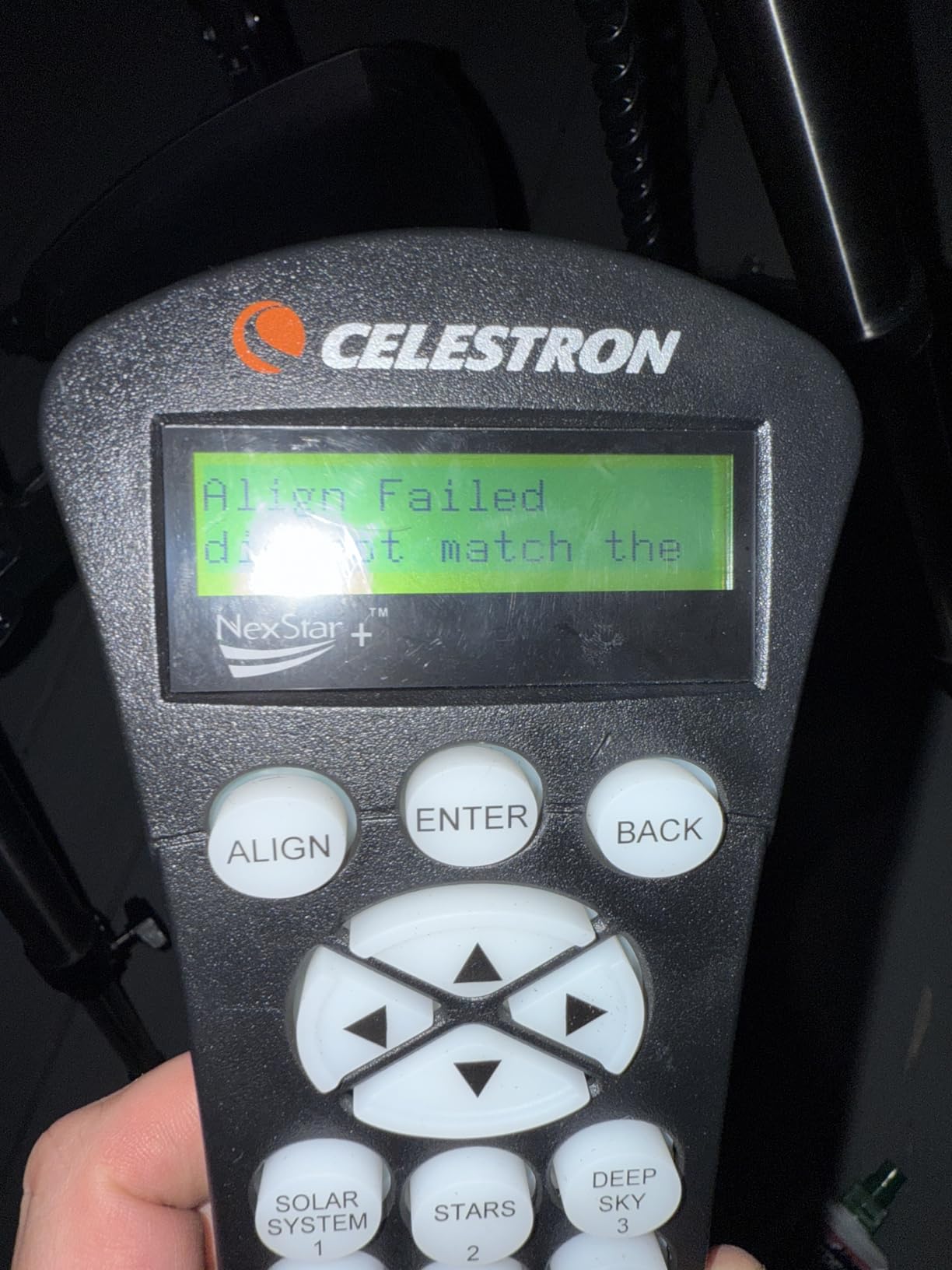
Alignment is the part beginners worry about, and SkyAlign is the reason this scope has stayed popular for years. You centre any three bright objects in sequence, the controller solves the geometry, and the GoTo database is live. Long-term owners across the forum community say that once this step is behind you the mount simply works, and the excitement of putting Saturn in the eyepiece in under a minute is what keeps a new observer coming back.
Portability is the quiet strength here. The package weighs 6.9 kg including the tripod and fits in the back of a small car, which makes it a realistic telescope for a dark-sky trip rather than a one-room-only instrument. For someone who wants to travel to a site with genuinely dark skies, that weight difference against an 8-inch Dobsonian is the deciding factor.
What you can realistically expect from it
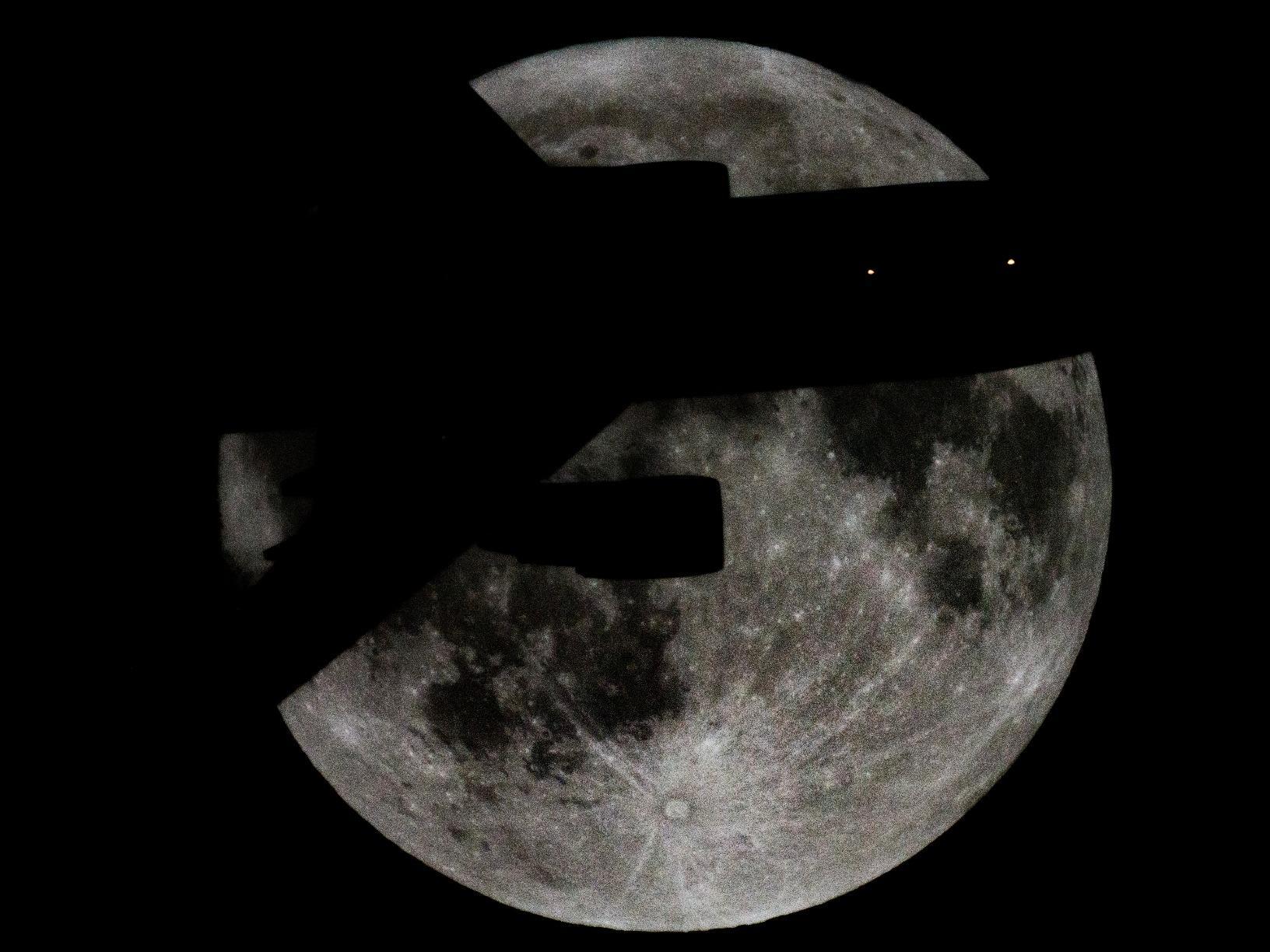
Lunar and planetary viewing is where this scope earns its keep. The long focal length gives you magnification without stacking Barlow lenses, and the Maksutov’s high-contrast correction keeps stars tight rather than haloed when you push toward the limit. A stable table or tripod matters at the top of the magnification range, because the long tube reacts to movement.
For deep-sky objects the 90mm aperture is the ceiling. You will see brighter clusters, the Andromeda galaxy, the Pleiades and a handful of large nebulae, and faint galaxy detail will stay out of reach. Buy it for planets and the Moon, and treat deep-sky as a pleasant bonus rather than the reason to choose it.
Where it falls short for a first telescope
Power is the most common niggle. Handheld GoTo mounts drain batteries, and owners on beginner forums talk about carrying a spare pack or a small power tank for a long session. A single 9V-style battery specification also means you should check the current type before a night out rather than assuming any old cells will work.
Alignment can also refuse to converge in heavily light-polluted skies, which is precisely the situation many buyers are in. Start with the brightest star you can find, keep the other reference well away from the horizon, and run the procedure in the last of the twilight rather than in full darkness. If GoTo keeps missing after that, the mount is usually fine and the sky is the problem.
3. Celestron StarSense Explorer LT 80AZ: Best App-Guided Telescope for Newcomers
Celestron StarSense Explorer LT 80AZ Smartphone Guided Refractor Telescope
80mm coated refractor
StarSense app navigation
400mm focal length
9.2 lb assembled weight
Pros
- App-driven arrows make finding targets genuinely approachable
- Light enough at 9.2 lb to carry up stairs or on a trip
- Preassembled mount and tripod need minimal setup
- Strong lunar views with craters and mountains visible
- Barlow lens and two eyepieces included for a range of power
Cons
- No motors
- so objects must be nudged back by hand
- 80mm aperture limits planetary detail such as Jupiter's bands
- Narrow field of view sends planets drifting quickly
- App syncing can be finicky and alignment may need redoing
The StarSense Explorer LT 80AZ is the gentlest introduction to computerized observing, because it hands you the sky knowledge instead of asking you to learn it. You dock your phone, open the app, and it recognises the pattern of stars overhead to work out where the telescope is pointing. On-screen arrows then walk you to planets and nebulae, and you slide the altitude slow-motion rod until the target is centred.
Because there are no motors, there is nothing to align, nothing to hand power a controller, and no batteries to drain beyond the small red dot finder. That single design decision removes the top two complaints that appear in every beginner telescope forum thread we read. It is manual in the way a good pair of binoculars is manual, and a great many people find that far more pleasant than wrestling with a hand controller in the dark.
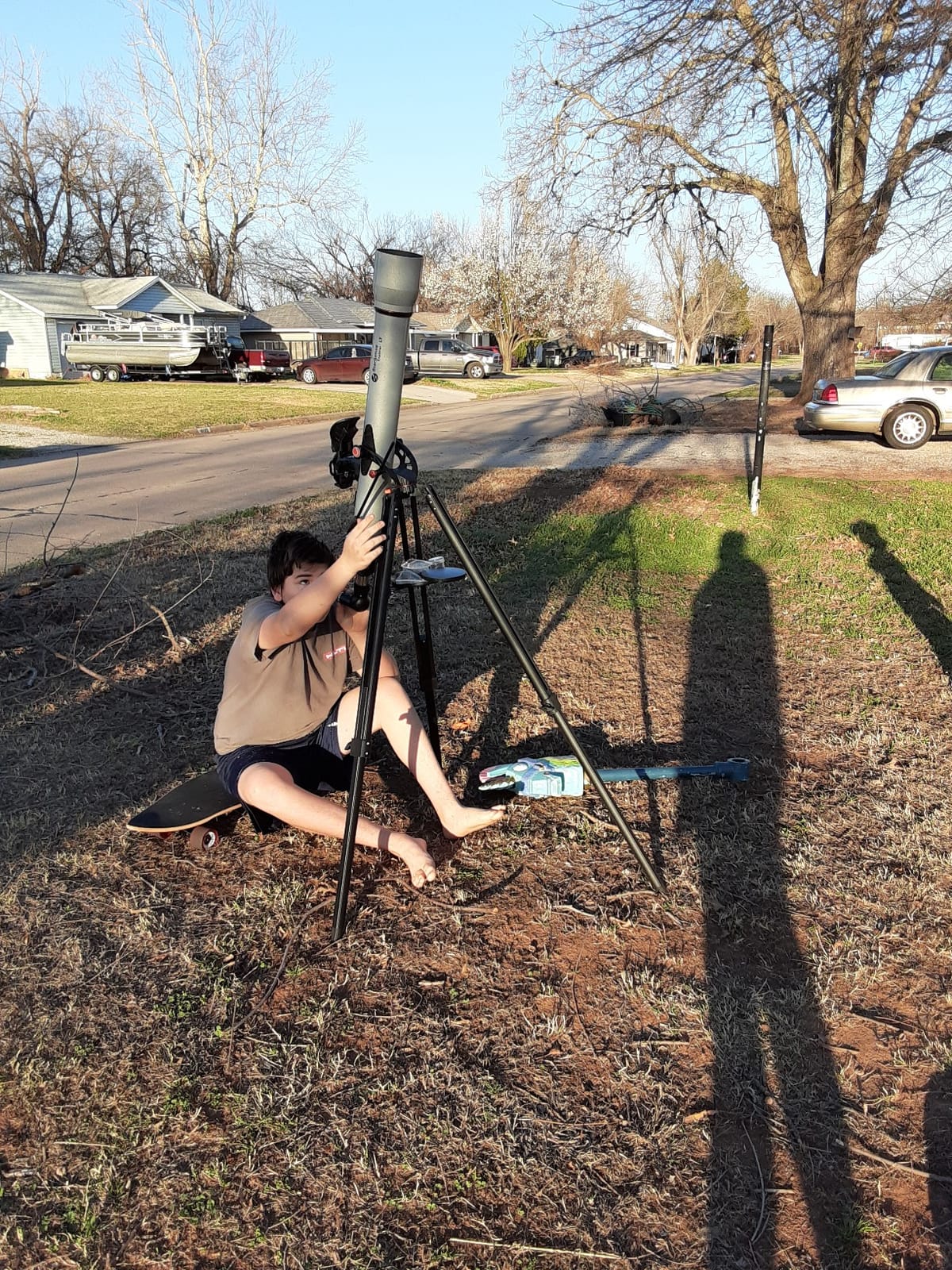
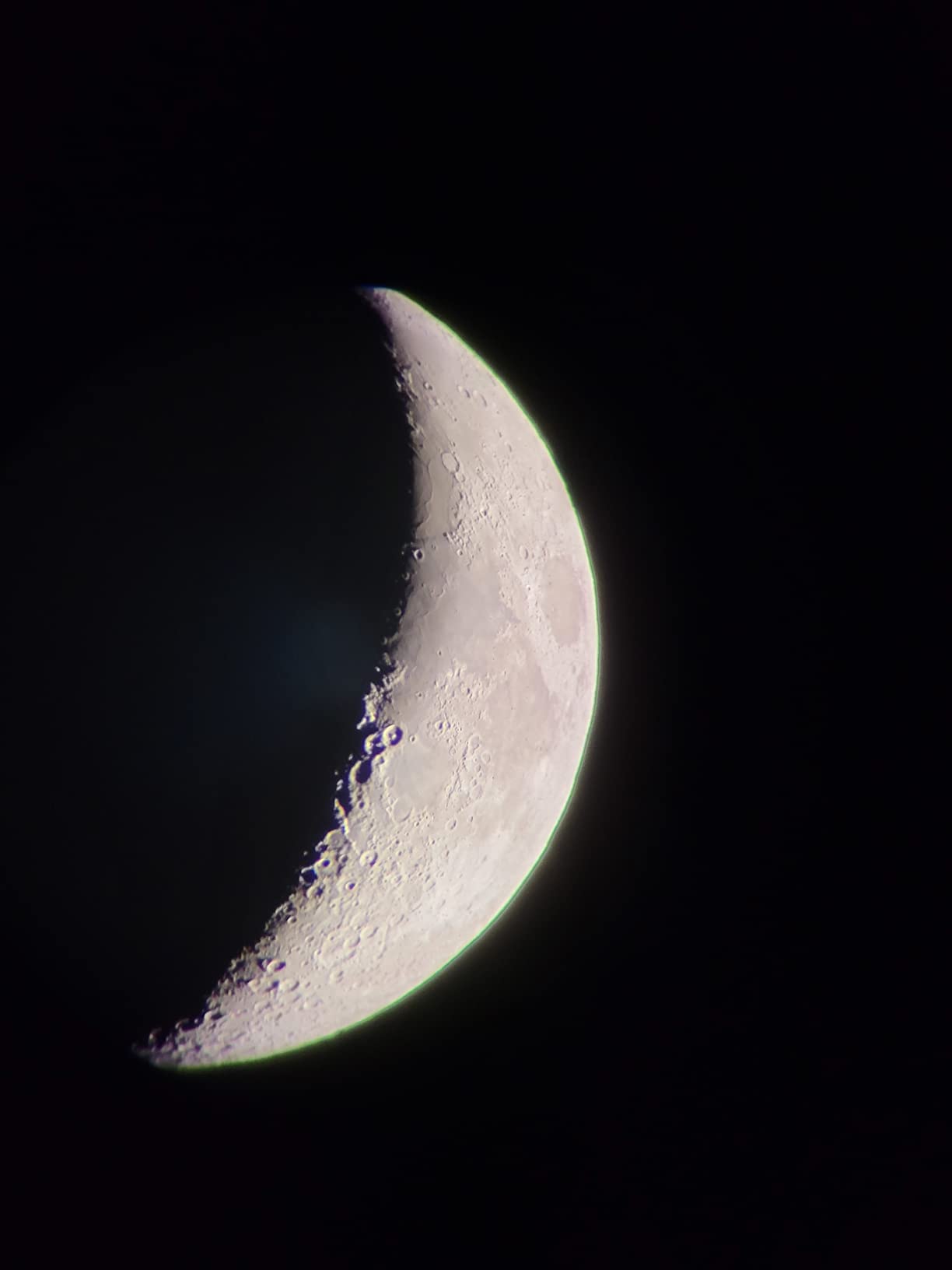
The optics are a straightforward 80mm fully coated achromatic refractor with a 400mm focal length and a 90 degree field of view. The wide field is the useful part for beginners, since it makes finding fainter targets far less of a hunt. On the Moon you will see craters, ridges and the terminator shadow line, and the included 25mm and 10mm eyepieces plus a 2x Barlow cover everything from wide sweeps to moderate power on Jupiter and Saturn.
Owners consistently call this an ideal first telescope, and the review volume reflects that. The criticisms cluster around two things. App connectivity occasionally frustrates users, who sometimes end up using a general sky-viewing app instead, and the 80mm aperture simply cannot resolve much planetary detail, with Jupiter’s bands staying soft at higher power.
What you can realistically expect from it
Expect a crisp, contrasty Moon every clear night and enough planetary interest to hold attention through a school term. The refractor also handles open clusters, the Andromeda galaxy and larger nebulae well, because a wide field with steady mount tracking is more forgiving than a long tube on high power. For children learning the sky from a parent, the app does the navigating and the child does the looking, which works unusually well.
Do keep an eye on drift. With no tracking motors, a planet at high power will leave the field within a minute or two, and you will be nudging the tube with the slow-motion rod to follow it. That is a skill worth learning early, and it is one you carry to every telescope you own afterwards.
Where it falls short for a first telescope
This is not the scope for someone whose ambition is a view of Saturn’s rings sharp enough to show the Cassini Division, or Jupiter’s belts resolved into separate bands. That needs more aperture, and reviewers regularly recommend pairing it with a higher-power wide-field eyepiece or planning an upgrade within a year. It is also a manual instrument, so if your priority is effortless target-to-target slewing, pick a motorised GoTo model instead.
One practical warning from buyers: leave the phone docked for the whole session. Pulling it out mid-alignment can break the sky recognition and force you to start the sequence again, which is the single most common frustration reported for this model. If the app will not connect at all, restarting the app on the phone and re-docking usually clears it.
4. Celestron AstroMaster 130EQ-MD: Best for Motorized Tracking
Celestron AstroMaster 130EQ-MD Telescope with Motorized Tracking
130mm Newtonian reflector
650mm focal length
CG-3 equatorial mount with RA motor drive
Red dot finder
Pros
- Motorised right ascension tracking keeps objects centred for long exposures
- 130mm aperture reveals lunar craters and banding on the gas giants
- No-tool assembly gets a beginner observing the same evening
- Red dot finder makes pointing at naked-eye targets simple
- Two slow-motion knobs cover both axes
Cons
- CG-3 mount has backlash and coarse fine-adjust knobs
- The motor drive blocks the manual RA fine-adjust knob
- Tripod and mount are visibly shaky when touched
- Factory 20mm eyepiece feels cheap
- Spherical primary mirror gives noticeable spherical aberration
The AstroMaster 130EQ-MD is the only telescope in this list with a motorised right ascension tracking drive, and that changes what you can do with it. Once a target is centred, the motor follows it at sidereal rate and it stays in the eyepiece while you watch. For an owner moving toward lunar photography with a phone adapter, that is the difference between a sharp frame and a streaked one.
The optics are a 130mm Newtonian reflector on a 650mm focal length, giving an aperture that outclasses every other visual telescope here. The mirrors carry aluminum and silicon dioxide coatings, and at this size you start to see real structure: crater detail on the Moon, banding on Jupiter, and the rings of Saturn with a comfortable margin for higher power. The Dawes limit of 0.89 arc seconds gives you plenty of theoretical headroom.
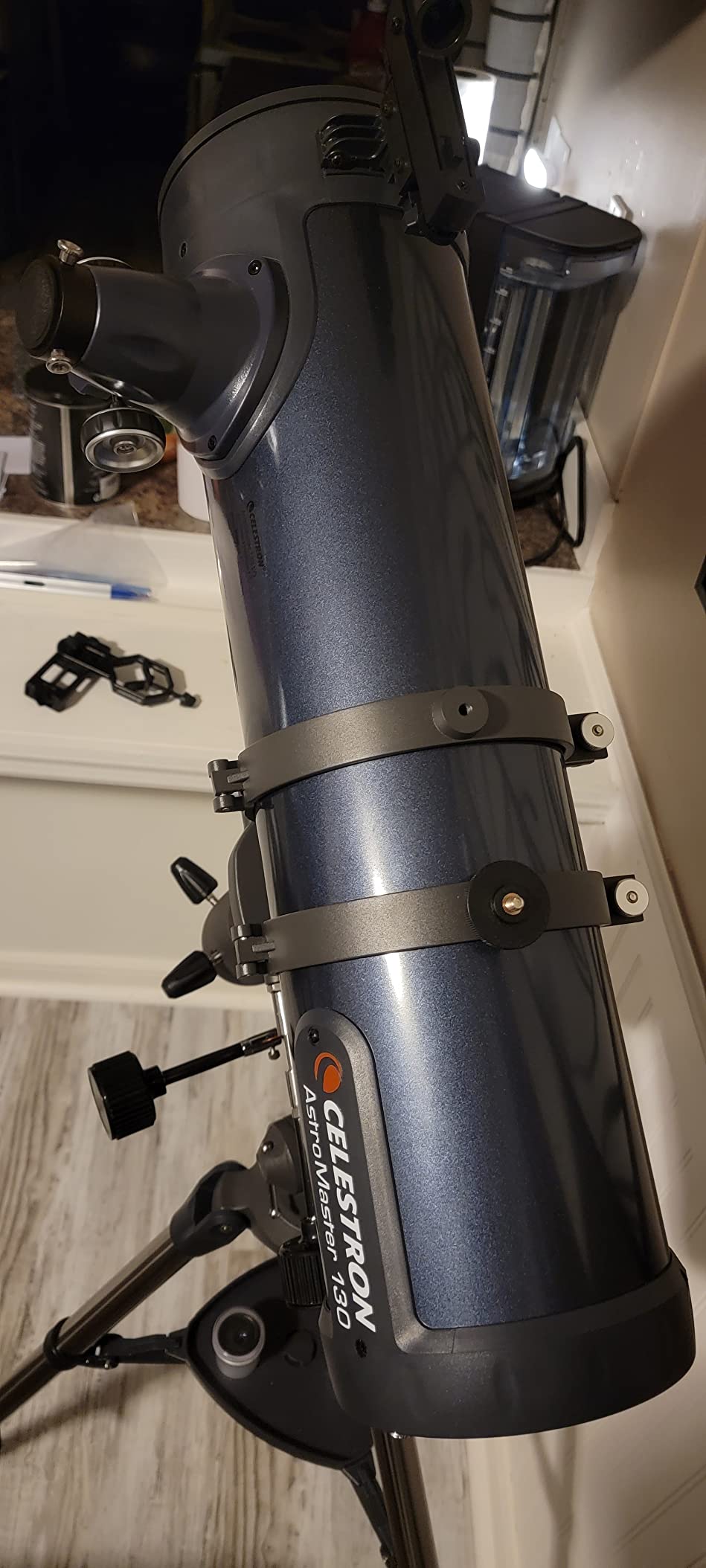
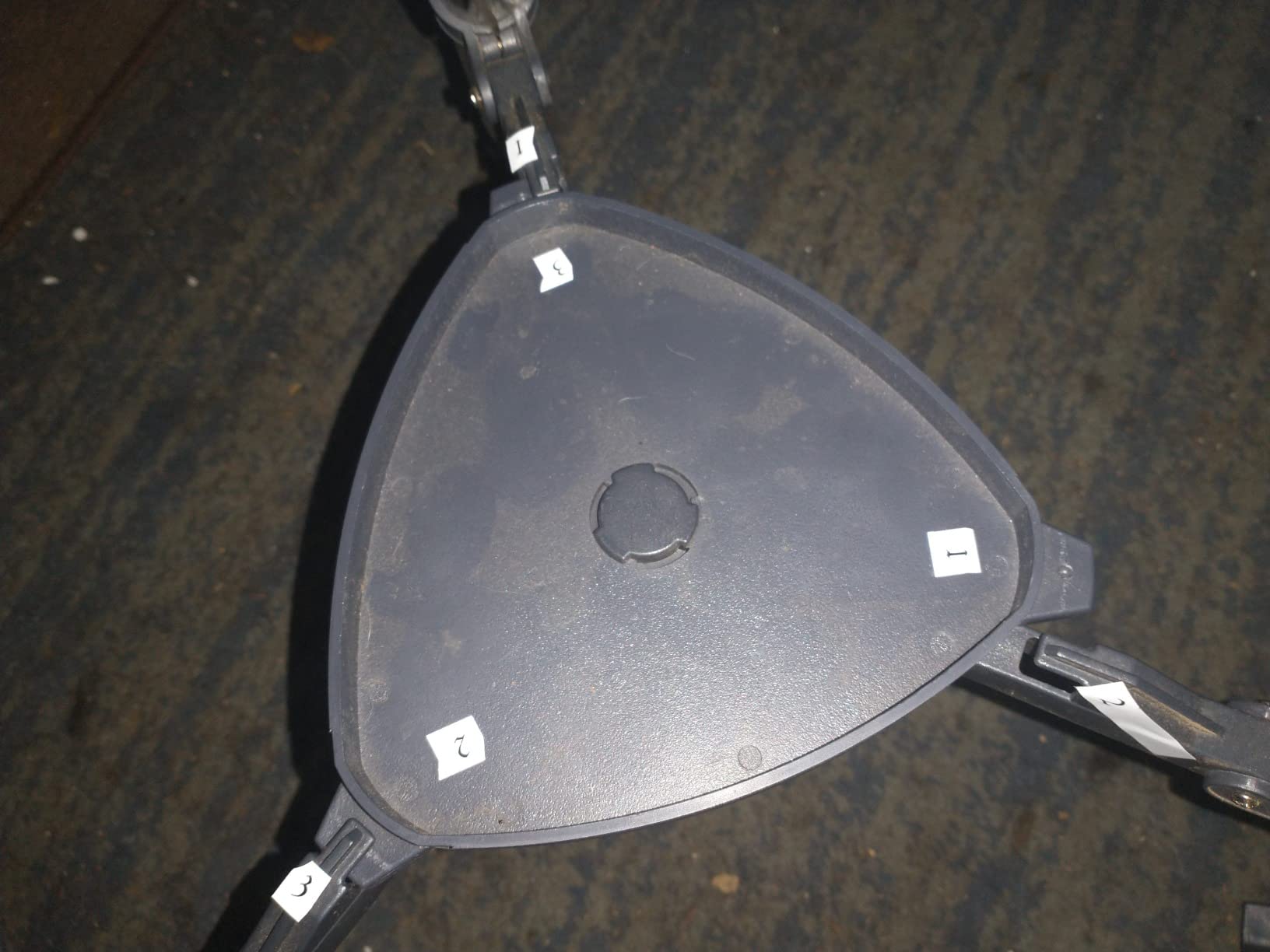
Assembly is genuinely quick, with a preassembled tripod and mount and no tools required, which matters more than it sounds for a first telescope. Two slow-motion knobs for right ascension and declination let you centre a target without moving the tube directly. The included accessories cover the essentials: a 20mm eyepiece with an erect image corrector, a 10mm eyepiece, a StarPointer red dot finder and a download of planetarium software.
Here is the caveat that matters most for a first-time buyer. The CG-3 equatorial mount is the old design that experienced observers point to when they warn beginners away from equatorial mounts, and the reviews back that up: backlash in the right ascension axis, coarse fine adjustment, and a tripod that bounces when you brush it. The motor drive is genuinely useful, but it physically blocks the manual fine-adjust knob on that axis.
What you can realistically expect from it
Visually this is the strongest light-gathering option in the roundup. A 130mm reflector at 650mm shows more on the Moon, on the gas giants and on the brighter deep-sky objects than anything else here, and the tracking motor means you can sit and watch one target for an hour without cranking the tube back. It handles a shared family session well, with two people taking turns at the eyepiece.
It is also the heaviest visual option at 17 pounds, so plan where it lives. A Newtonian needs collimation, which is a five-minute adjustment with a collimating cap and a little practice, and the dew shield on a tube this size benefits from a light dew heater during humid summer nights.
Where it falls short for a first telescope
GoTo is the missing piece. This is a tracking motor, not a star locating system, so pointing still happens by hand using the red dot finder and your knowledge of the sky. If your reason for wanting a computerized telescope is to stop hunting for faint targets, this is not the machine that does that, and a GoTo model will serve you better.
The build quality complaints are consistent enough to plan around. Several owners in the reviews recommend buying a Barlow lens for planetary work, or sourcing a non-motorized 130EQ and adding a drive separately, and the factory 20mm eyepiece is widely considered the weakest part of the package. The spherical primary mirror also produces some spherical aberration, so stars inflate slightly at the edges of high-power views.
5. ZWO Seestar S30 Pro: Best Smart Telescope for Astrophotography
ZWO Seestar S30 Pro Smart Telescope, App-Controlled Astrophotography
30mm apochromatic optics
160mm focal length
4.6 degree field of view
Dual-camera 4K imaging
Pros
- Apochromatic optics and a built-in light pollution filter work from urban skies
- One-tap capture handles stacking and mosaic stitching automatically
- AI noise reduction and sky separation finish images in minutes
- Dual cameras cover deep-sky targets and wide night scenes
- 3.64 lb with a tripod included and anti-dew protection
Cons
- Built for deep-sky imaging and not for planetary detail
- Deep-sky sessions need the unit to stay perfectly still
- No eyepiece
- so there is no visual observing at all
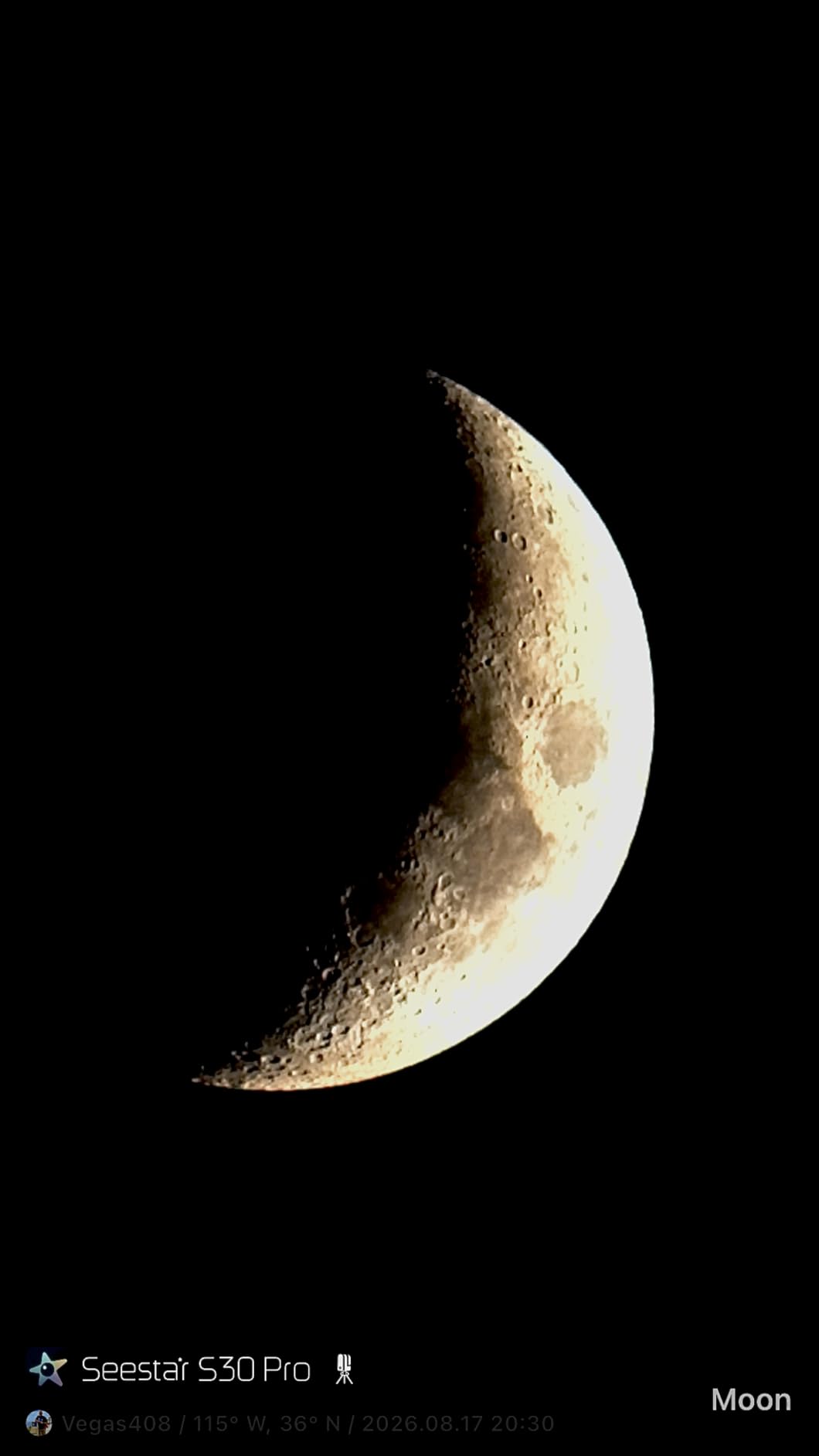
The Seestar S30 Pro is the most considered smart telescope here, and the difference shows in the glass. Its 30mm aperture carries fully multi-coated apochromatic optics with a 160mm focal length and a 4.6 degree field of view, and the light pollution filter is built into the body rather than sold as a clip-on accessory. For anyone observing from a city or a bright suburb, that filter is the feature that decides whether a galaxy looks grey or looks like a galaxy.
Operationally it is the simplest instrument in the list. Power on, connect the app, and auto GoTo with tracking finds and follows targets while you watch the live view on a smartphone. One-tap capture then produces the finished frame, with automatic mosaic stitching for anything wider than the sensor, single-tap noise reduction, and sky and foreground separation so a Milky Way panorama comes out with a defined horizon.
At 3.64 pounds with a tripod in the box, this is a genuinely portable setup, and the manufacturer adds anti-dew protection plus long-session imaging support. The altitude and azimuth mount also switches to equatorial mode, which is the right choice for the long integrations that deep-sky targets need.
The honest limit is scope of purpose. This is designed for deep-sky and wide-field imaging, and the documentation says so directly. It is not a planetary instrument, and there is no eyepiece at all. If you buy it hoping to see Jupiter through glass, you will be disappointed, and that is not a defect so much as buying the wrong category.
What you can realistically expect from it
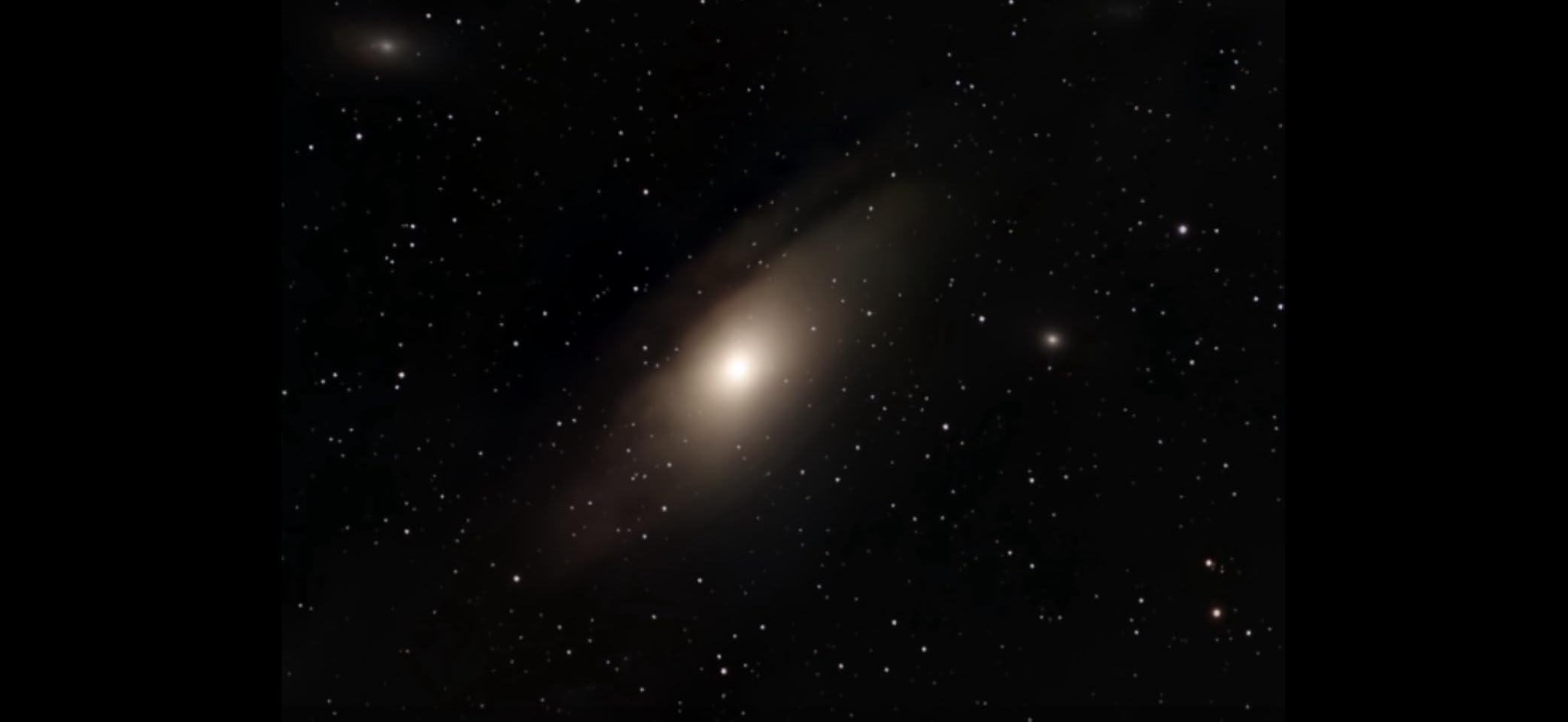
Expect nebulae, galaxies, clusters, the Milky Way band, star trails, the Moon and the Sun, all reachable from a phone. Buyers repeatedly credit the apochromatic optics and the integrated filter with producing sharp, high-contrast results from suburban and city locations without buying separate filters, and the one-tap workflow is described as removing the stacking and editing learning curve almost entirely.
The practical tip from experienced users is to let the unit sit completely still during deep-sky captures. A tripod that drifts, or a surface that vibrates, will soften stars across a long integration, and no amount of processing fixes that. Set it up on a level stand away from walking traffic and let it work.
Where it falls short for a first telescope
It cannot show you anything directly, so every session is an image session. For a family that wants to look up together on a cold evening, that is a different experience from a glass refractor, and it is worth being honest with yourself about which one you will enjoy more. There is also a full dependence on app and cloud connectivity, and a lost connection mid-session is genuinely frustrating.
Deep-sky output is intended for sharing, not large prints, and the Moon and Sun capture modes exist more for sharing and demonstration than for high-resolution study. If you want a telescope that grows with you for a decade, expect to add optics eventually rather than treating this as a permanent visual instrument.
6. Sky-Watcher Virtuoso GTI 150P: Best Value GoTo Dobsonian with 150mm Aperture
Sky Watcher Sky-Watcher Virtuoso GTI 150P Collapsible Tabletop GoTo Dobsonian Telescope
150mm aperture at f/5
750mm focal length
Built-in Wi-Fi GoTo
Collapsible tabletop base
Pros
- Largest aperture in the roundup for the money spent
- Bright high-contrast views of deep-sky objects at f/5
- Built-in Wi-Fi GoTo through the SynScan Pro app
- Freedom Find encoders allow manual slewing without losing alignment
- Collapsible tabletop design stores and transports easily
Cons
- Tabletop format is awkward for seated users and small children
- Base is too tall to use assembled on a normal table
- Only 25mm and 10mm eyepieces are included
- No tracking motor
- so it cannot be used for long-exposure imaging
The Virtuoso GTI 150P is the aperture argument in physical form. A 150mm fully coated reflector at f/5 and 750mm focal length gathers far more light than anything else on this list, and it is the difference between seeing a galaxy as a fuzzy suggestion and seeing its shape. For visual observers, that is the single largest quality jump available, and this scope delivers it without a premium price.
It is also a GoTo instrument, which is unusual for a Dobsonian of this size. Built-in Wi-Fi and full GoTo run through the SynScan Pro app on iOS or Android, or through the optional SynScan hand controller. Star locating works the same way as a Celestron SLT, and the tablet-friendly screen makes it easy to see what the telescope is doing.
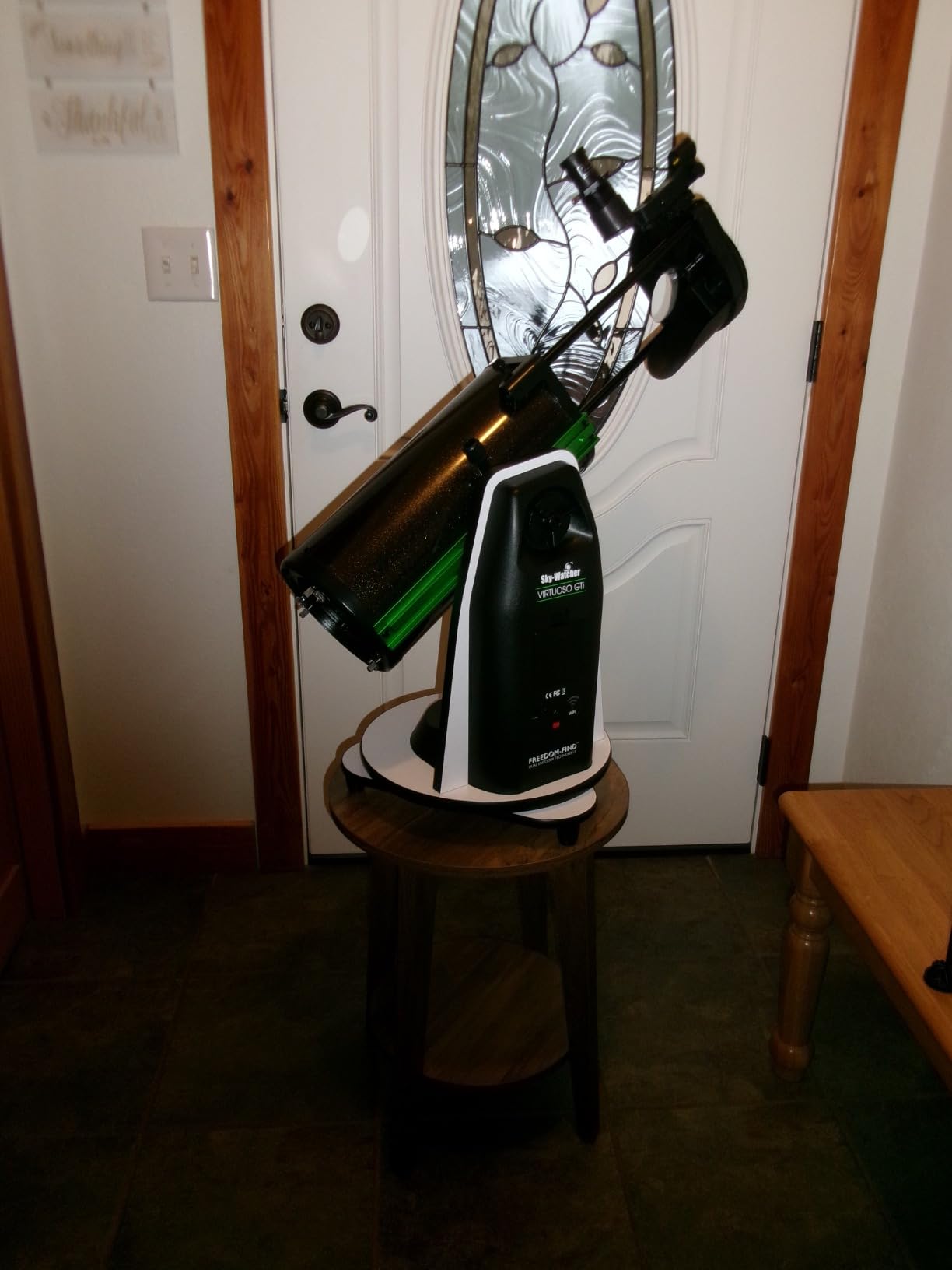
The feature we would highlight to a beginner is patented Freedom Find technology. Dual encoders let you slew the tube by hand for a close look at something and then return it to GoTo operation without re-running the whole alignment. On a Dobsonian that flexibility matters, because pointing by hand to centre a faint object is otherwise a fiddly business with tall altitude bearings.
The collapsible design is a genuine storage win. It breaks down to a compact package for a flat, a small cabinet or a car boot, and at 25.8 pounds it is heavy but manageable for one adult who knows how to lift with their legs.
What you can realistically expect from it
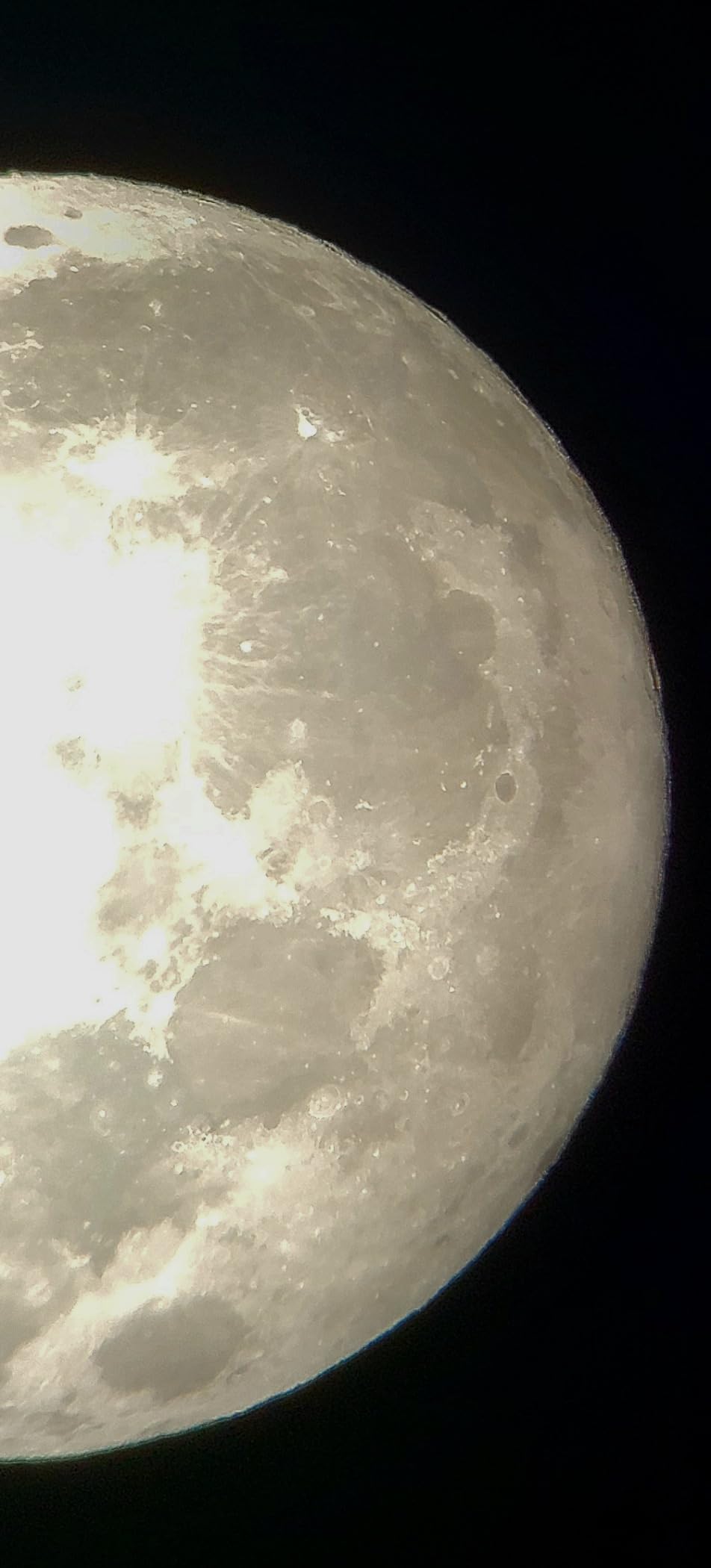
Deep-sky viewing is the reason to buy this. At 150mm you will see spiral structure in Andromeda, layered detail in the Veil Nebula region, and the globular clusters resolve into grainy balls of individual stars. The Moon and Jupiter look good too, and 750mm of focal length is short enough that high power stays manageable.
Reviewers with fewer years on this model than on the Celestron entries still rate the combination of aperture and app-driven GoTo highly, and they single out Freedom Find as the detail that makes the GoTo usable for a beginner in practice. The f/5 focal ratio means no focal reducer is needed to get a wide, bright field.
Where it falls short for a first telescope
There is no tracking motor, so this is a viewing scope only. Long-exposure imaging through it is not realistic, and a Dobsonian needs collimation after any transport, which is a five-minute job with a collimating tool but does add a step between the car boot and the stars.
Watch the ergonomics. The tabletop Dobsonian format is awkward for a seated user or a young child, because the eyepiece ends up at an uncomfortable height, and the base is not designed to be used fully assembled on an ordinary table for a long session. Plan a stand or a sturdy surface before you buy, and expect to add a 9mm or 6mm eyepiece for planetary detail, since only 25mm and 10mm eyepieces are included.
7. DWARF 3 Smart Telescope: Best for Travel and Daylight Shooting
DWARFLAB Dwarf 3 Smart Telescope, App-Controlled Astrophotography Camera
3 lb dual-camera body
Telephoto and wide-angle lenses
4K auto-tracking
Cloud processing in app
Pros
- Dual lenses cover deep space
- wildlife and scenery in one device
- One-touch cloud processing finishes images with no computer
- 4K auto-tracking keeps stars and moving subjects sharp
- 3 lb body with a carrying bag included
- Simple app workflow suits families and complete beginners
Cons
- An electronic viewfinder rather than an eyepiece instrument
- On-device resolution suits sharing online rather than printing
- Sessions can be interrupted by app and cloud connectivity
The DWARF 3 is the one to buy if your idea of a telescope involves pointing it at things that are not stars. It carries two lenses, a telephoto for deep space, wildlife and scenery, and a wide-angle for Milky Way panoramas and star trails, and it shoots 4K video with automatic tracking of stars, planets and moving subjects. At 3 pounds with the supplied carrying bag, it goes anywhere a backpack goes.
Auto GoTo works in both altitude and equatorial modes, and the imaging workflow is described as producing usable results in about two minutes from a standing start, with the manufacturer rating it for ages 6 to 98. For a parent introducing a child to the sky, a device that does not need alignment and produces a finished picture at the end of the session removes nearly all friction.
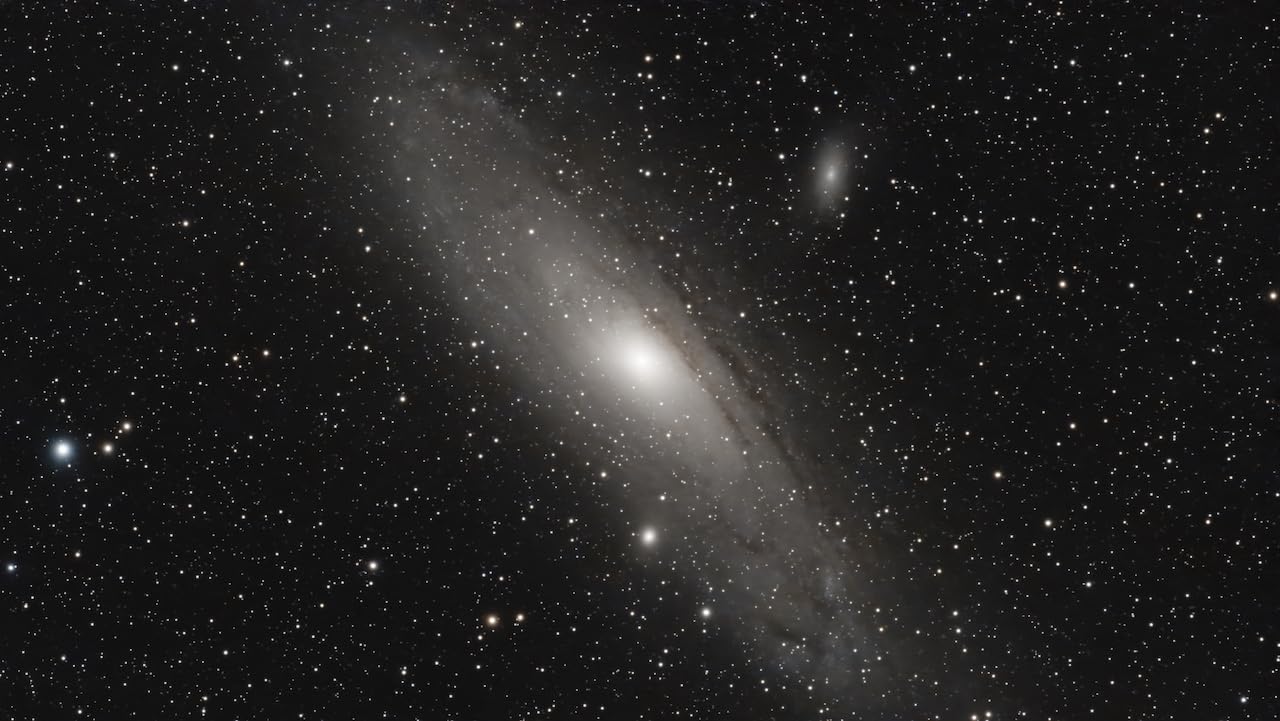
Buyers rate the dual-lens versatility and the one-touch cloud processing highly, and the reasoning is straightforward: this replaces the separate telescope, camera, tracking mount and stacking software that a beginner would otherwise have to buy and learn. Nothing needs installing, and the finished image is waiting on the phone when you come back inside.
That is the appeal and also the limit. It is an electronic viewfinder rather than a glass instrument, so the experience centres entirely on captured images. If your motivation is watching a planet move hour to hour with your own eye, no amount of processing convenience will substitute for that.
What you can realistically expect from it
Think of it as a very capable camera that happens to point at the sky. Astrophotography comes out well within minutes, the day-time wildlife and scenery modes are a genuine bonus, and 4K auto-tracking means moving subjects stay sharp without manual panning. Magnetic filters and a filter pouch are included, so you can also do safe solar imaging with the correct filter fitted.
As a family device it is arguably the most sociable option here. One phone, one button, an image at the end. Children who would not sit through an alignment routine often stay engaged for a full imaging session, which is how a hobby survives a teenage phase.
Where it falls short for a first telescope
It cannot be used for visual observing at all, and that is the honest disqualifier for a lot of people. If your list of targets begins with Saturn’s rings and the craters of the Moon, buy a refractor or a Maksutov instead and accept the alignment routine.
The output resolution is aimed at screens rather than prints, and cloud processing means an internet connection is part of the workflow, so a session in a genuinely remote site may not behave as advertised. Pair it with a power bank for long nights, and treat it as a complement to a visual scope rather than a replacement for one.
How GoTo, PushTo and Smart Telescopes Actually Work
The three categories solve the same problem, which is telling a telescope where to point, and the differences between them explain most of what you should buy. Before spending anything, it is worth knowing which one you want, because the same money buys a completely different experience depending on the answer.
A GoTo scope does the pointing and the following. You run an alignment routine, usually centring two or three bright stars named on the hand controller, and the mount works out where and when it is, computes coordinates for everything in its catalogue, and slews the tube into position while the motors hold it there. Twenty years of forum posts agree on one thing about this: the alignment is the only hard part, and once it is done a GoTo mount feels effortless.
A PushTo scope gives you arrows instead of motors. Your phone or tablet recognises the star pattern overhead, works out the telescope’s position, and displays a direction to slide the tube. You follow the arrow, centre the object, and you are done. There is no battery drain, no alignment failure, and no controller to lose in the dark, but you do the moving yourself.
A smart telescope replaces the eyepiece with a camera. It captures frames, plate-solves them to work out the target, tracks it, stacks the results and processes them into a finished image. There is no alignment at all because the camera is always looking. The trade is that you never see anything directly, and a small sensor is a genuinely small sensor, no matter what the marketing says.
So decide this first. If your question is what will I see tonight through glass, buy GoTo or PushTo. If your question is what can I photograph without buying a camera and a tracking mount, buy smart. Picking the wrong one is the most common expensive mistake in this hobby, and it is entirely avoidable.
How to Fix GoTo Alignment When It Fails
Alignment failure is the most searched problem in this category and the single biggest reason GoTo telescopes get returned. The reassuring part is that almost every failure comes down to one of a handful of conditions, and most of them are fixable in a few minutes without any equipment.
1. Start with the brightest star in the sky. The controller asks for three specific stars and the order is not fixed, so begin with the brightest object it offers. A bright star gives the controller a cleaner position fix and reduces the chance of a marginal solve.
2. Keep alignment stars away from the horizon. A star 10 degrees up is smeared by atmospheric turbulence and often by your own roofline. Pick references higher in the sky, where they are steady and unobstructed.
3. Align during twilight, not full darkness. The contrast between the target and the sky is highest at the end of astronomical twilight, so the solve is easier and the sky is dark by the time you finish. Aligning under a bright suburban sky is the most common reason a solve refuses to converge.
4. Centre accurately. Use fine adjustment and the highest power that still shows stars, then put the star dead centre before confirming. Sloppy centring is the second most common cause of a failed or inaccurate alignment.
5. Re-align after a long drive. If you have travelled more than about 30 miles, the mount’s idea of level and your position have both changed enough to matter. Re-run the routine at the new site before blaming the hardware.
6. Check for magnetic interference. Motors, iron, cars, garden machinery and even an unclosed laptop can skew a magnetically held altitude axis. If a solve works in one spot in the garden and not in another, move away from metal and try again.
7. Level the tripod properly. A scope on a sloping tripod is a scope that will drift. Confirm the bubble level before the alignment sequence, and re-check after you move the tripod, because people routinely nudge a leg while looking through the finder.
8. Update the firmware. Older controllers benefit from current firmware, which improves slew accuracy and object-database handling. Do this indoors before a night out, not in the field.
If alignment succeeds but GoTo still lands slightly off, that is usually normal. A small centre offset is corrected by a one-star re-align or by using the alignment stars as references, and it rarely matters visually. A large offset that repeats every time is a different problem, and re-aligning away from the horizon resolves it more often than anything else.
How to Choose a Computerized Telescope as a Beginner
Aperture is the number that decides how much you will see, and no amount of electronics changes that. A 150mm mirror gathers roughly four times the light of a 75mm one and resolves smaller detail, which is why the Virtuoso GTI 150P shows galaxies that every smaller scope in this roundup renders as vague smudges. Choose the largest aperture you can comfortably carry, and let the electronics decide the rest.
Below that, think in tiers. An 80mm refractor like the StarSense LT 80AZ is a Moon-and-planets instrument with a wide, forgiving field, and it is the right weight for a child or a small apartment. The 90mm NexStar 90SLT adds enough aperture to separate planetary features while staying car-portable. The 130mm AstroMaster is where deep-sky structure starts to appear in a Newtonian, and a 150mm Dobsonian is where galaxies resolve. Smart telescopes sit outside this ladder entirely, because their limitation is sensor size rather than aperture.
Next, mount type. Nearly every experienced observer recommends an altitude and azimuth mount for a first instrument, and the forums are unusually united on this. An equatorial mount demands accurate polar alignment before it tracks properly, which adds a second alignment routine, a wedge, and a long tube balanced on one side of a tripod. The AstroMaster here is the exception that proves the rule, because its motor is useful for tracking even though the mount is not beginner-proof.
Power planning is where first-time buyers get caught out. A GoTo mount with a hand controller will drain a battery pack over a few hours of active use, and reviewers describe that drain in unusually blunt terms. If your chosen scope runs on removable cells, buy a second set and a mains adapter or a small power tank before your first trip to a dark site. Smart telescopes run from internal batteries over USB-C, and a power bank is the cheapest accessory you can buy.
Eyepieces matter less than most sellers suggest, and better than most buyers expect. The 25mm and 9mm or 10mm pairs supplied with the Celestron scopes are adequate, while the 20mm on the AstroMaster is the one eyepiece in this roundup that buyers consistently criticise. A single 9mm or 6mm wide-field eyepiece in the 52mm thread standard, plus a 25mm wide-field for context, covers almost everything a beginner will want.
Solar observing needs its own warning. Never point any telescope at the Sun without a certified solar filter fitted over the front aperture, and never use eyepiece solar filters, which can fail catastrophically. The DWARF Mini includes a magnetic solar filter that makes safe daytime imaging possible, and that is the correct way to use it. Instantaneous, permanent eye damage is the only acceptable outcome to rule out here.
Where you buy matters more than the listing suggests. Large telescopes travel badly, and a bent tube or a cracked mount arrives as a return headache rather than a first night under the stars. Specialist astronomy dealers and the brands’ own channels give you a real return process and a support contact, which is the reason experienced buyers repeatedly recommend them. Check the serial registration, keep the packaging, and inspect for transit damage the moment a large Dobsonian or long SCT arrives.
One last question worth asking yourself honestly. A computerized telescope removes the star-hopping that teaches you the sky, and some people miss that lesson. If your goal is to learn the constellations and navigate by eye, start with the StarSense refractor, which points without hiding the sky from you. If your goal is to see Saturn in the eyepiece on the first evening, take the GoTo model and learn the sky later. Both are legitimate; they just suit different people.
Frequently Asked Questions
What type of telescope should a beginner use?
Most beginners should start with a computerized altitude and azimuth scope of 80mm to 130mm, which is stable, portable and needs no polar alignment. A refractor gives the sharpest views for the Moon and planets, a Newtonian reflector shows more deep-sky detail for the same money, and a Dobsonian with GoTo offers the largest aperture. Choose the biggest aperture you can carry comfortably.
Are computerized telescopes good?
Yes, for most beginners they are the best value in the hobby. Finding objects is the hardest and least rewarding part of astronomy, and from a light-polluted suburb you will rarely see enough stars to hop reliably between targets. A GoTo mount, an app with on-screen arrows, or a camera-based smart scope turns a dim search into a button press, which is the main reason people keep using a telescope.
What are the best telescopes for beginners?
The best choice depends on whether you look through an eyepiece or watch a phone screen. The Celestron NexStar 90SLT is a strong all-round visual option with a 40,000 object GoTo database. The Sky-Watcher Virtuoso GTI 150P offers the largest aperture for visual deep-sky work. The DWARF Mini and ZWO Seestar S30 Pro are the leading smart options for astrophotography without extra equipment.
Which telescope is best to see planets for beginners?
A Maksutov-Cassegrain or short refractor is the right choice, because planets reward aperture and a long focal length. The Celestron NexStar 90SLT pairs 90mm of aperture with 1250mm of focal length, which shows Saturn’s rings and Jupiter’s cloud bands clearly. Budget at least a 9mm eyepiece for a useful magnification range, and use a stable tripod or table at high power.
What are the best smart telescopes for beginners?
The DWARF Mini is the simplest entry, weighing 1.85 pounds with plate solving, auto GoTo and up to 90-second exposures in equatorial mode. The ZWO Seestar S30 Pro is the strongest for image quality, with apochromatic optics and a built-in light pollution filter. The DWARF 3 is the most versatile, adding a telephoto and wide-angle lens for wildlife and Milky Way work.
How hard is GoTo telescope alignment?
Expect five to ten minutes the first time and under two minutes once you know the routine. You centre three bright stars named on the hand controller, choose the brightest first, keep them well away from the horizon, and run the sequence during twilight. Align away from cars and metal objects, level the tripod properly, and re-align after driving more than about 30 miles.
How long do batteries last on a computerized telescope?
Expect a few hours of active use from a typical AA pack with a motorized GoTo mount running tracking and slewing, and considerably less if the motors work hard. The Celestron StarSense LT 80AZ needs no power beyond a small red dot finder cell, and the smart telescopes run from internal rechargeable batteries over USB-C. Carry a spare set or a power tank for longer sessions.
Is it safe to look at the Sun through a telescope?
Only with a certified solar filter fitted securely over the front aperture of the instrument. Never use eyepiece-mounted solar filters, which can crack under concentrated light and cause permanent eye damage. Instantaneous blindness is the risk being managed, and the same rule applies to binoculars. Never aim a telescope at the Sun while hunting for an object near it without the filter fitted first.
The Verdict: Which Computerized Telescope Should You Buy First
The DWARF Mini is our pick as the best computerized telescope for beginners in 2026, because it removes alignment, weighing 1.85 pounds and producing finished deep-sky images from a phone in a single session. It suits anyone whose real goal is photographing the sky rather than learning to point a tube.
If you want to look through glass, buy the Celestron NexStar 90SLT. It is compact enough to travel with, carries a 40,000 object GoTo database, and its 1250mm focal length is built for the Moon and the planets. If money and storage are the constraints, the StarSense Explorer LT 80AZ gives you app-guided pointing and no batteries, and the Virtuoso GTI 150P gives you the biggest aperture in this roundup by a wide margin.
Whichever you choose, the honest advice is to spend your first three evenings on the Moon and Jupiter, learn how the mount behaves, and only then start hunting faint targets. Used carefully, any of these seven will still be pointing at interesting objects years from now.
Before you go, our guides to refractor telescopes and telescopes for kids cover the two setups most first-time buyers actually end up choosing.