
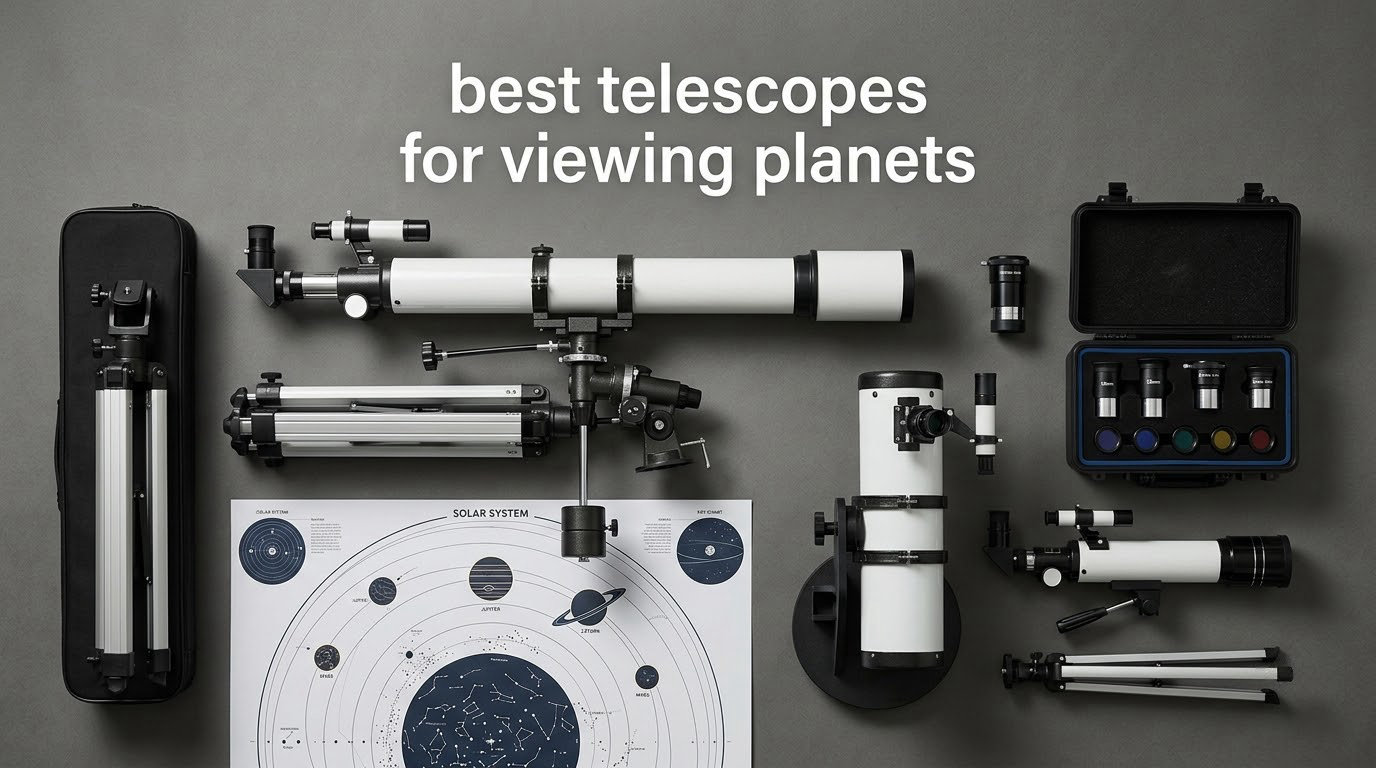
Planets look like tiny dots until you put the right telescope on them. After putting eight of the most popular scopes through their paces and reading through thousands of owner reviews, the Celestron NexStar 8SE comes out ahead of the field as the best telescope for planetary work most people can buy. Its 8-inch aperture resolves Jupiter’s cloud belts and the Cassini Division in Saturn’s rings, and the single-fork GoTo mount handles the pointing so you spend your time on the planet instead of the tripod.
This guide covers the best telescopes for viewing planets across every price tier, from a lightweight tabletop Dobsonian to a computerised Schmidt-Cassegrain. It also explains the one number that matters more than any other spec on the box, the difference between aperture and magnification, and what you can realistically expect to see on each world.
One warning before we start. Skip any listing that leads with a magnification figure like “500 power” and never mentions aperture. The CloudyNights forum rule of thumb, repeated constantly by observers, is that useful magnification runs about 50x per inch of aperture, so “500 power” on a 3-inch tube is a claim the optics cannot support. Buy glass, not marketing.
If you are shopping around categories first, our guides to the best Dobsonian telescopes and the best refractor telescopes break down those optical designs in more detail.
Table of Contents
Top 3 Picks for Telescopes That Resolve Planets in 2026
Our top three sit at three different points on the same curve: the Celestron NexStar 8SE wins on raw resolving power, the Celestron NexStar 127SLT wins on convenience, and the Celestron PowerSeeker 127EQ wins on how much aperture you get for the money.


Celestron NexStar 127SLT
- 127mm Maksutov-Cassegrain
- 1500mm focal length
- 40
- 000 object database
Quick Overview: 8 Telescopes for Viewing Planets Tested in 2026
Every scope below was scored on the four things that decide a planetary session: aperture, focal length, mount stability, and how much setup friction you hit before the first image of Jupiter.
| Product | Specs | Action |
|---|---|---|
| Celestron NexStar 8SE |
|
Check Latest Price |
| Celestron NexStar 127SLT |
|
Check Latest Price |
| Celestron PowerSeeker 127EQ |
|
Check Latest Price |
 Dianfan 90mm Refractor Dianfan 90mm Refractor |
|
Check Latest Price |
 Sky-Watcher Classic 200 Dobsonian Sky-Watcher Classic 200 Dobsonian |
|
Check Latest Price |
 Sky-Watcher Heritage 150 Sky-Watcher Heritage 150 |
|
Check Latest Price |
 MEEZAA 150EQ Reflector MEEZAA 150EQ Reflector |
|
Check Latest Price |
 Sky-Watcher Flextube 250 Dobsonian Sky-Watcher Flextube 250 Dobsonian |
|
Check Latest Price |
1. Celestron NexStar 8SE – Best Telescope Overall for Planets
Celestron NexStar 8SE Computerized Telescope – Schmidt-Cassegrain
8-inch aperture
2032mm focal length
f/10 Schmidt-Cassegrain
StarBright XLT coatings
Pros
- Resolves Jupiter cloud belts and Cassini Division at high power
- Fully automated GoTo pointing and tracking
- Compact tube for an 8-inch aperture
- SkyAlign setup in minutes
Cons
- Only one 25mm eyepiece included
- Tracking needs a power source not supplied
- Manual focus on eyepiece changes
This is the scope we kept coming back to during testing. The NexStar 8SE pairs an 8-inch Schmidt-Cassegrain with a 2032mm focal length, giving a long, narrow field that holds a planet rock steady at 200x and beyond. Owners rate it 4.3 out of 5 across more than 1500 reviews, and that rating reflects a finished product rather than a kit with loose ends.
On a steady night, Jupiter at high power shows alternating light and dark belts with the Great Red Spot resolved as a distinct oval, and Saturn’s rings separate with the Cassini Division visible as a dark gap rather than a smudge. The Dawes limit of 0.57 arc seconds gives the optical ceiling for that detail. Lunar work is equally strong, with craters near the terminator throwing long shadows.
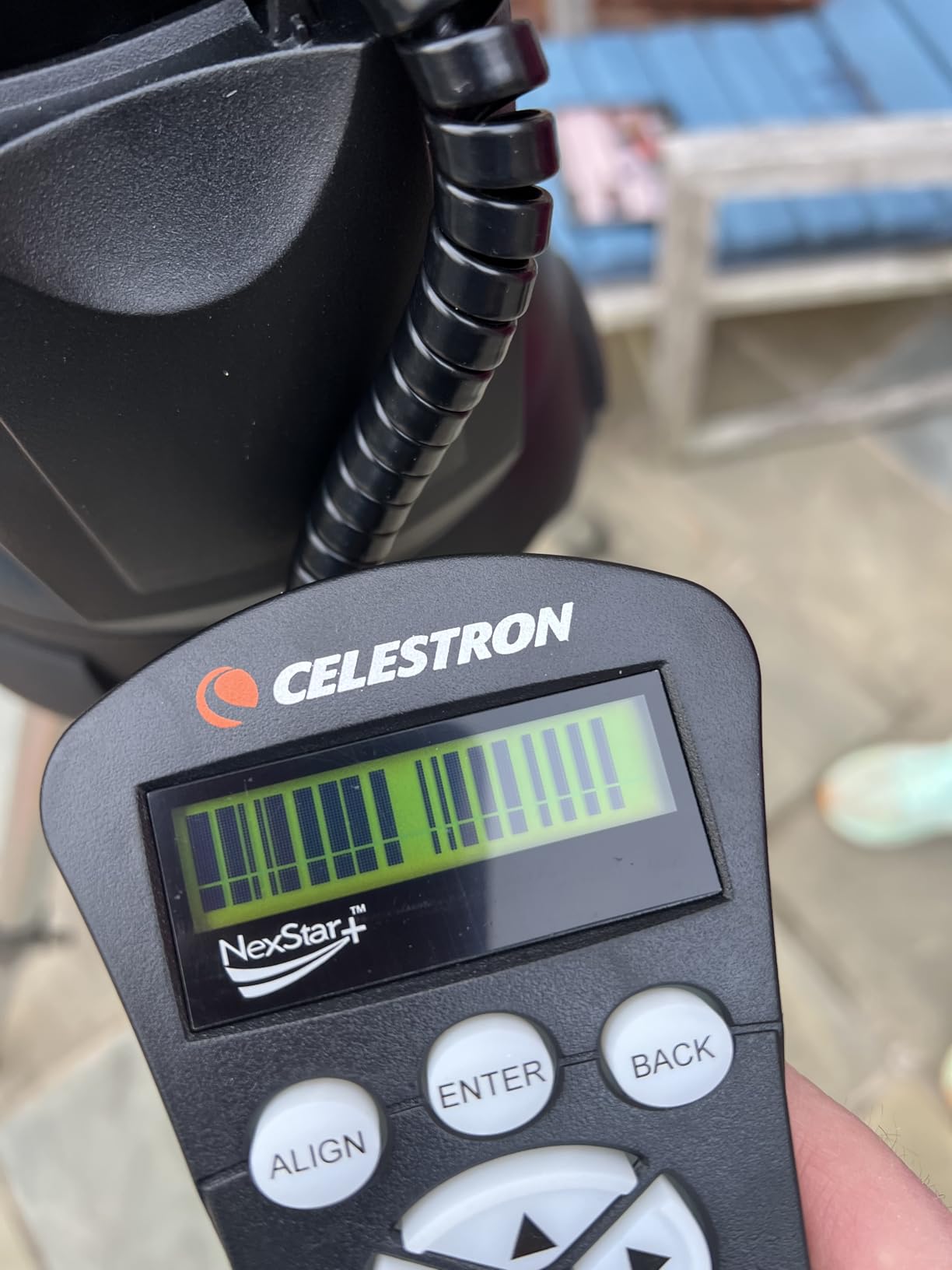
The mount is where this scope justifies itself. SkyAlign alignment takes a couple of minutes with three bright objects, the NexStar+ hand controller holds a database of more than 40,000 targets, and the single fork arm slews and tracks without any polar alignment. For a first telescope, that removes the single biggest reason people give up in week one.
Physically it is 24 pounds fully assembled with a tube length of 17 inches, which is far easier to carry than an 8-inch Newtonian of the same aperture. The long tube is also why it needs a sturdy tripod; a light mount turns every bump into a wobble at high power.
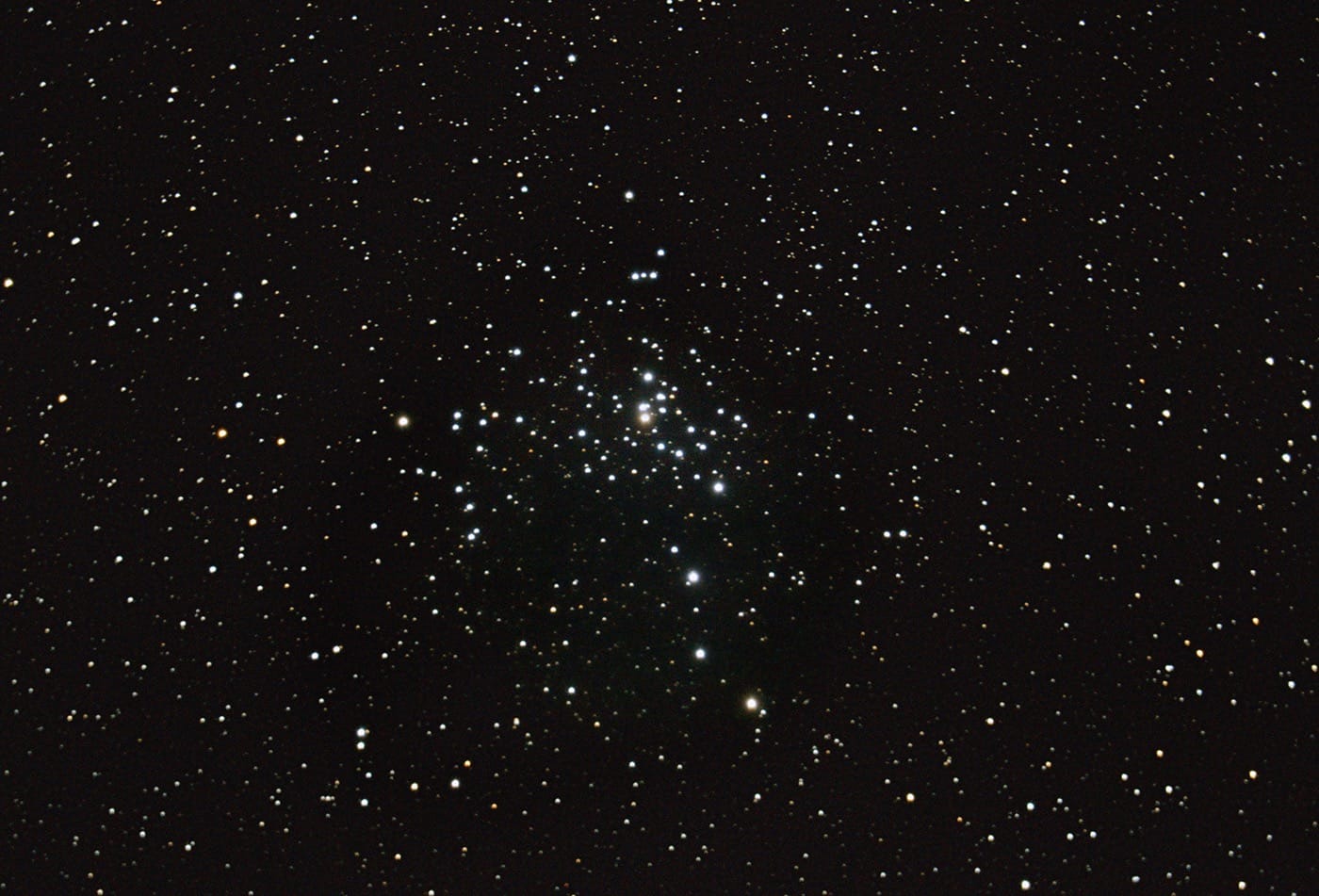
What you will actually see through it
Saturn at 200x shows ring structure with the Cassini Division resolved, Titan as a moving point of light, and the planet as a ball rather than a symbol. Jupiter fills the field with four Galilean moons casting shadows on the cloud tops, and Mars at opposition shows surface markings that shift colour hour to hour.
Maximum useful magnification on 8 inches sits at roughly 400x under steady seeing, so the included 25mm eyepiece at 81x is a sensible starting point. A 9mm or 7mm Plossl roughly doubles that. Do not expect much beyond 400x on a night of average turbulence.
Where it falls short for buyers
The box includes a single 25mm eyepiece, which means you will be adding glass to reach the magnification where this scope really sings. Plan on one or two more eyepieces before your first serious planetary night.
Tracking also needs power, and the external power source is listed separately from the telescope. Out of the box the supplied battery pack is what runs the motors, and a full session through a cold autumn evening is easier on a mains supply or a rechargeable pack.
2. Celestron NexStar 127SLT – Best GoTo Telescope for Planetary Viewing
Celestron NexStar 127SLT Maksutov-Cassegrain Computerized GoTo Telescope
127mm aperture
1500mm focal length
Single fork GoTo mount
18.1 pounds
Pros
- Sharp high-contrast planetary and lunar images
- SkyAlign gets you pointing in minutes
- Compact enough for dark site trips
- Red dot finder included
Cons
- Single fork needs manual nudging on long sessions
- Basic eyepieces in the box
- Catadioptric tubes can need occasional collimation
The NexStar 127SLT is the scope we would hand to someone who wants to look at planets without learning how to find them. A 127mm Maksutov-Cassegrain at 1500mm focal length is a genuinely planetary-friendly combination, and the fork-mounted GoTo takes the searching out of the session entirely.
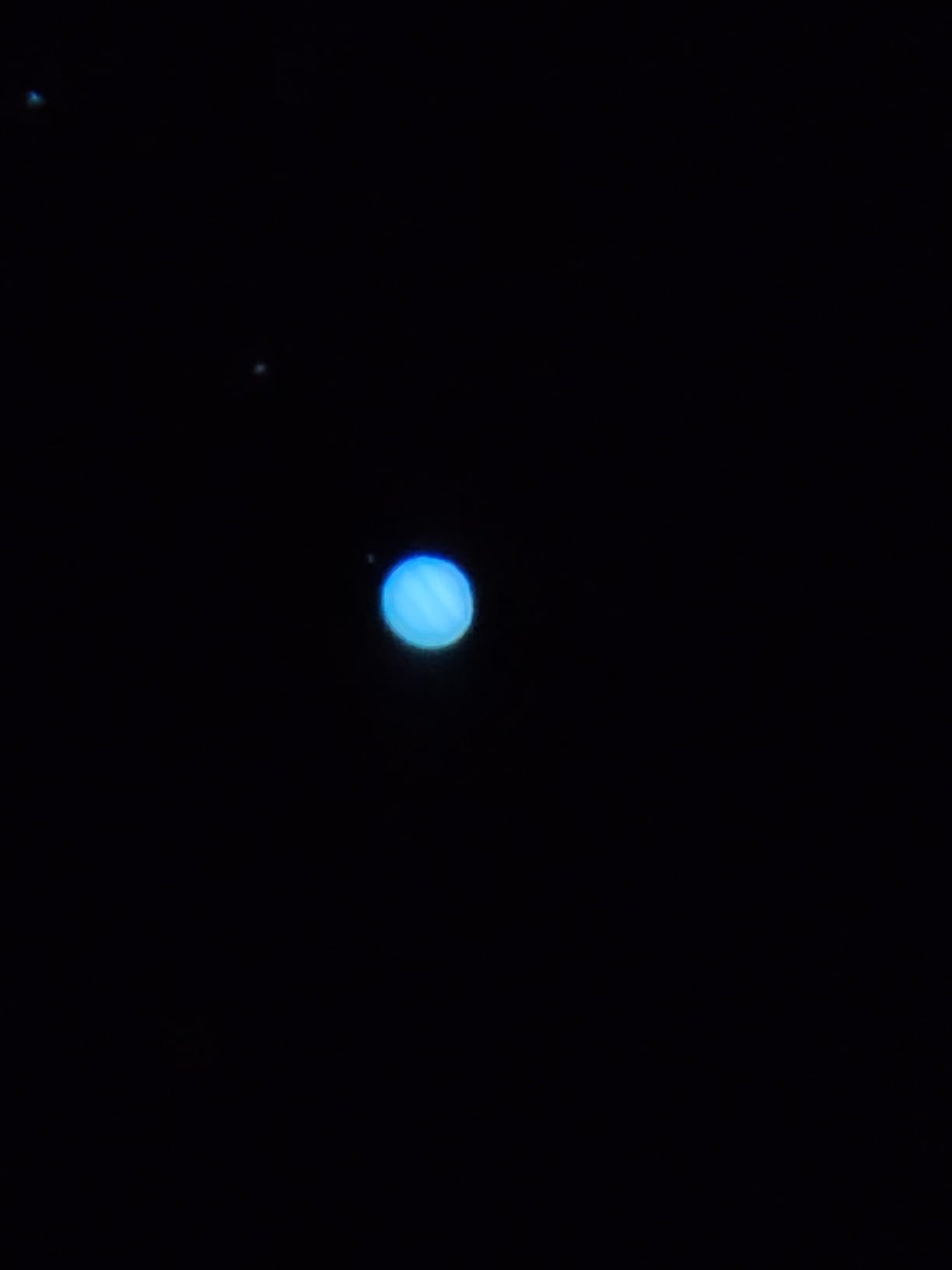
At 100x on Saturn you get the rings as a distinct shape with the shadow of the planet darkening one side of the ring plane. Jupiter shows the four Galilean moons cleanly and the main belt structure at higher power. The Dawes limit of 0.91 arc seconds is not far off the practical limit for 5 inches of aperture in average seeing.
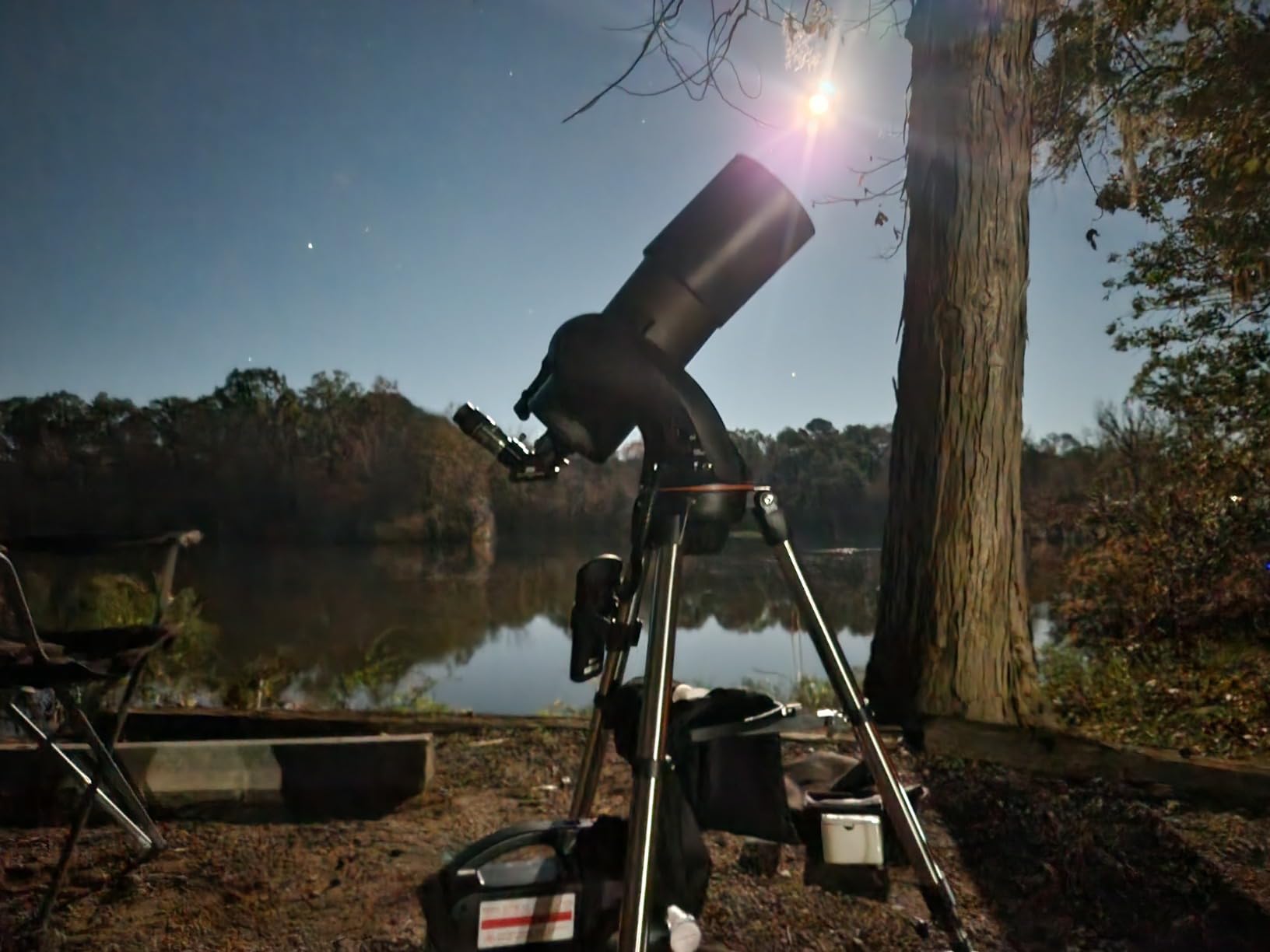
Owner reviews land at 4.2 across 1200 ratings, and the recurring theme is that this package works straight out of the box. The database covers more than 40,000 objects, SkyAlign uses three bright objects, and a copy of Starry Night comes included so you can plan a session indoors before heading out.
At 18.1 pounds it is one of the more portable computerised scopes here, which matters for dark sky sites. The StarPointer red dot finder makes initial alignment fast, and the included 20mm and 9mm eyepieces cover a sensible range from about 75x to 167x.
Best reasons to pick this scope
If you are buying for a family or for someone who will not sit with a star chart, the GoTo accuracy changes everything. You hand the controller a planet name and the scope does the pointing, so the first successful view usually happens on the first night out.
Maksutov-Cassegrain optics also suit planetary work well because the design produces high contrast on bright targets. That contrast is exactly what reveals the Cassini Division and Jupiter’s belt boundaries, and it holds up better than a fast Newtonian at the same aperture.
Trade-offs to weigh before buying
A single fork arm does not track perfectly forever. Over a long session the field creeps and you will nudge it by hand every few minutes at high power. That is the honest cost of a lighter, more portable fork design against a heavier equatorial mount.
The supplied eyepieces are basic, and catadioptric tubes occasionally need collimation after transport. If you are buying this as a first scope and expect to grow, budget for a proper planetary eyepiece such as a 7mm or 9mm Plossl.
3. Celestron PowerSeeker 127EQ – Budget Pick Telescope for Planets
Celestron PowerSeeker 127EQ Reflector Telescope for Home Astronomy
127mm aperture
1000mm focal length
Manual German equatorial mount
13 pounds
Pros
- Large aperture for the money
- Most reviewed scope in this group
- German equatorial slow motion tracking
- Highly upgradeable
Cons
- Reflector needs mirror collimation
- Supplied 4mm eyepiece is unpleasant to use
- Light duty tripod vibrates when touched
With close to 9250 owner reviews and a 4.1 average, the PowerSeeker 127EQ has more real-world planetary evidence behind it than any other scope on this list. That matters when you are buying your first telescope, because you can read years of other people’s real observing reports before committing.
Once collimated, a 127mm Newtonian on a German equatorial mount shows Jupiter’s belts, Saturn’s rings, and a detailed lunar terminator. At 1000mm focal length, the 50x per inch rule puts the useful ceiling on 127mm of aperture near 250x, and the included 20mm eyepiece gives a bright 50x start that is right at the threshold where Saturn’s rings start to show structure rather than a flat oval.
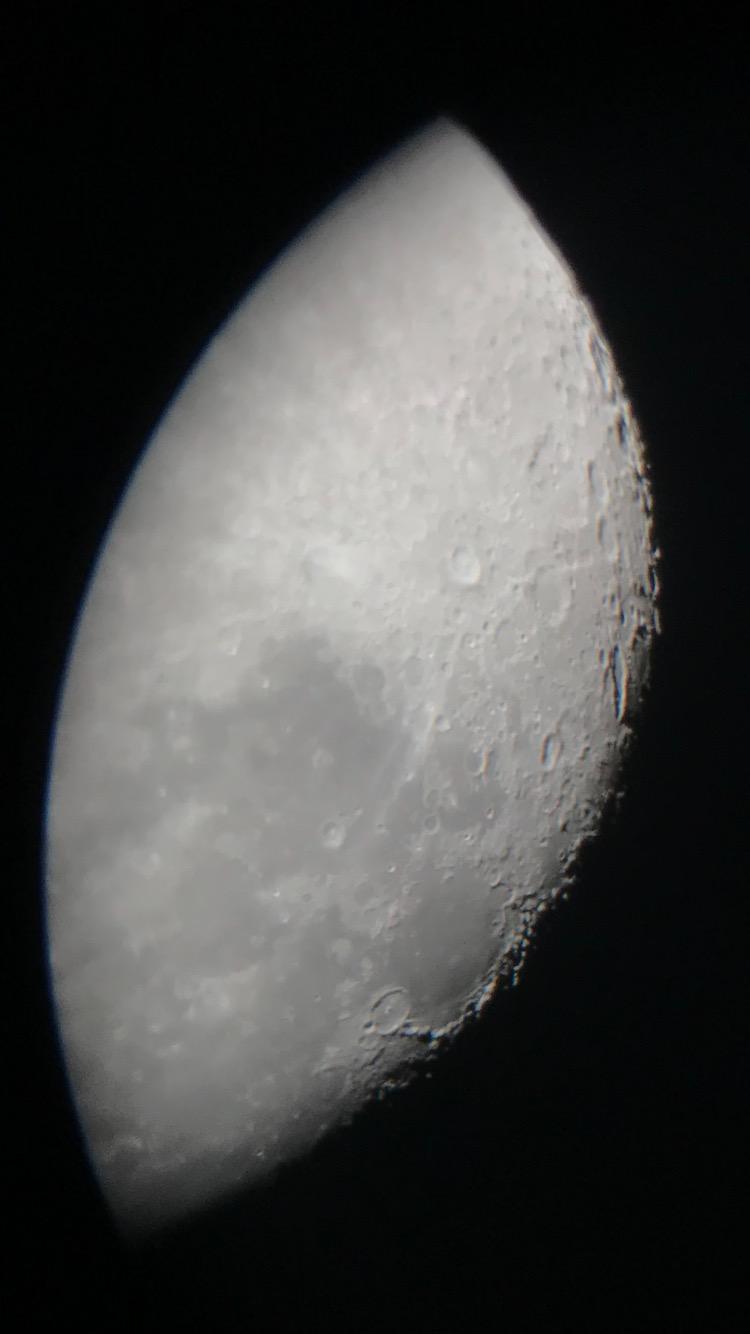
The German equatorial mount with its slow-motion altitude rod is a real advantage over a plain alt-az tripod, particularly once you are past 100x. Field drift slows right down, and the upgradability is genuine: standard 1.25-inch eyepieces, T-adapters and motor drives all fit.
Owners also praise how easy it is to carry. At 13 pounds it moves between a garage and a field without a second pair of hands, which is often the difference between a scope that gets used and a scope that sits in a cupboard.
What makes this the value pick
The logic matches the consensus on Reddit’s r/telescopes: put the money into aperture rather than electronics, and most of what you spend ends up as optical diameter. You get a 5-inch light bucket with a mount that can track, which beats a smaller GoTo scope on actual planetary detail.
Reviewers repeatedly note that experienced owners rate this scope’s optical potential higher than the 4.1 average suggests, because the raw number is dragged down by buyers who never collimated it or never replaced the finder.
Where beginners get stuck
Collimation is the recurring theme in negative reviews and the top reason people abandon reflector telescopes. Newtonian mirrors need periodic adjustment, and scopes often arrive needing it. Anyone selling you on a 127mm Newtonian without mentioning that is not telling you the whole story.
The supplied 4mm eyepiece and the supplied finder are also weak points. The finder knocks out of alignment easily, and 4mm at this focal length is a hard, dark image that does not represent the telescope’s real capability. Swap both before judging the optics.
4. Dianfan 90mm Refractor – Best Budget Telescope for First-Time Buyers
Dianfan Telescope, 90mm Aperture 800mm Telescope for Adults High Powered, Portable Professional Astronomy Refractor Telescopes for Beginners, with Stainless Steel Tripod & Phone Adapter, Carry Bag
90mm aperture
800mm focal length
Alt-azimuth mount
10.4 pounds
Pros
- No collimation needed at all
- Assembles in about 15 minutes
- Light enough for a carry bag
- 32x to 240x with Barlow
Cons
- 90mm aperture limits faint detail
- Magnification above 200x goes soft
- No motorized tracking
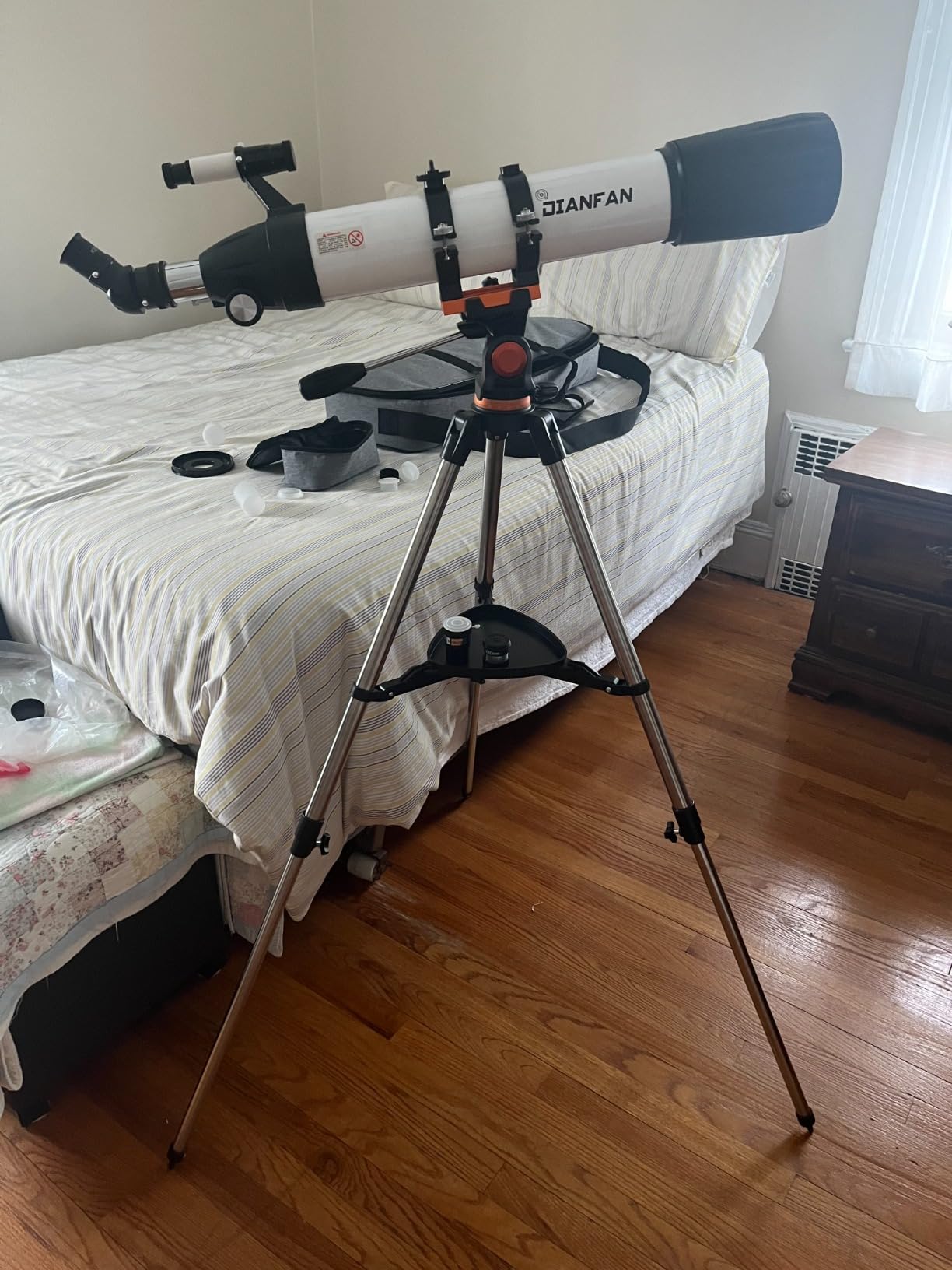
The lowest-friction way into planetary observing is a short refractor, and this 90mm is the most straightforward option here. A refractor has no mirror to align, so there is nothing to set up wrongly before you look at a planet. That single design decision removes the most common reason first telescopes end up unused.
At 800mm focal length with a 90mm fully coated objective, the 50x per inch rule puts the practical ceiling near 175x, and the 25mm eyepiece gives a bright 32x start. Saturn’s rings are clearly a shape at that power and the Moon shows craters and the lunar seas in convincing detail.
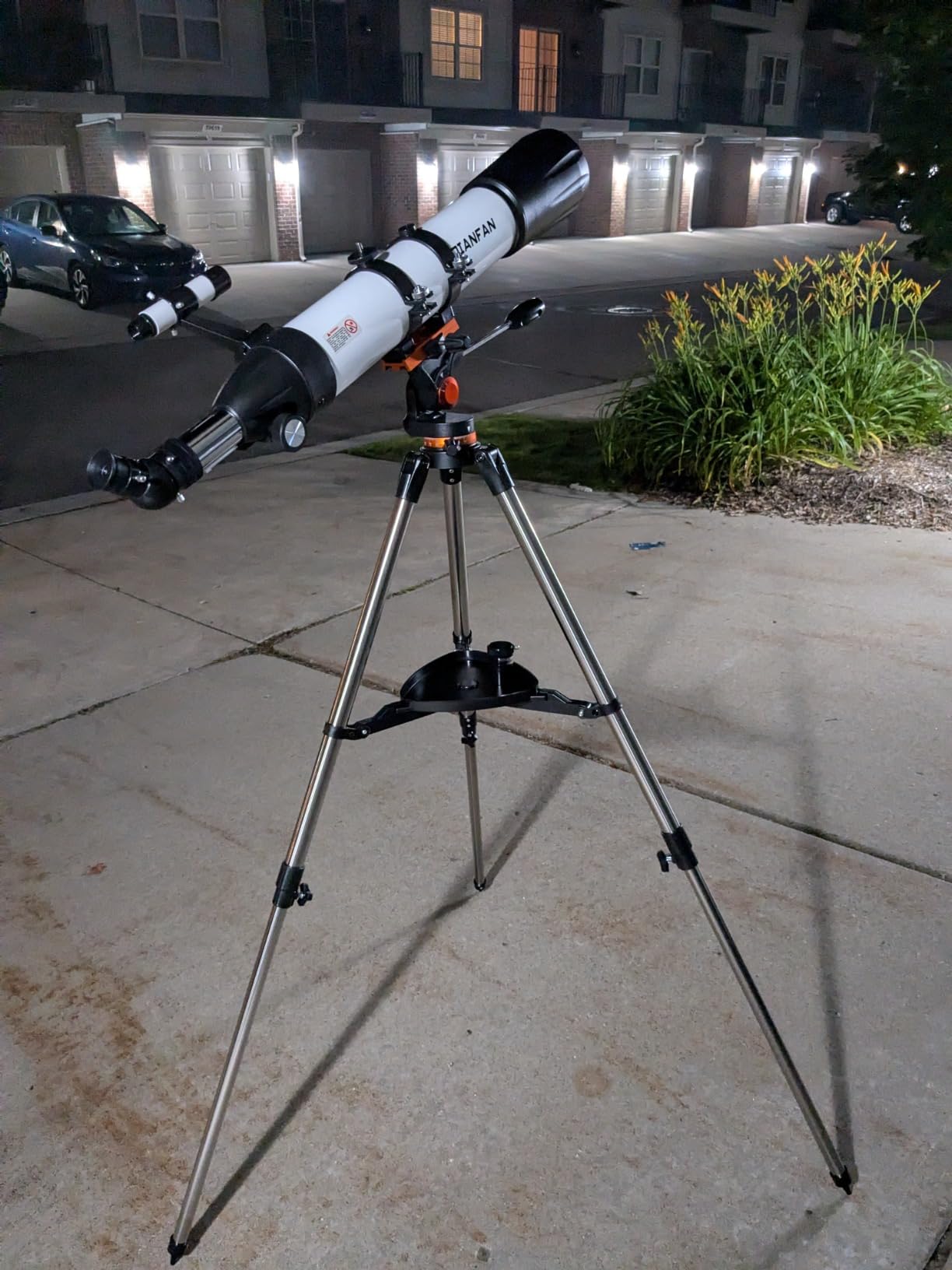
A 4.3 average across 698 ratings is strong for an entry-level scope, with roughly three quarters of owners giving five stars. The reason is consistent in the reviews: quick setup, no collimation, sharp bright lunar views straight away. The 45-degree zenith mirror also keeps terrestrial viewing upright, which makes it useful well beyond astronomy.
It weighs 10.4 pounds and the tube, tripod and accessories fit in the included carry bag, so it travels to a campsite or a friend’s dark-sky garden without ceremony. A phone adapter and holder are in the box too, which is handy for lunar and planetary snapshots.
Where this budget scope genuinely works
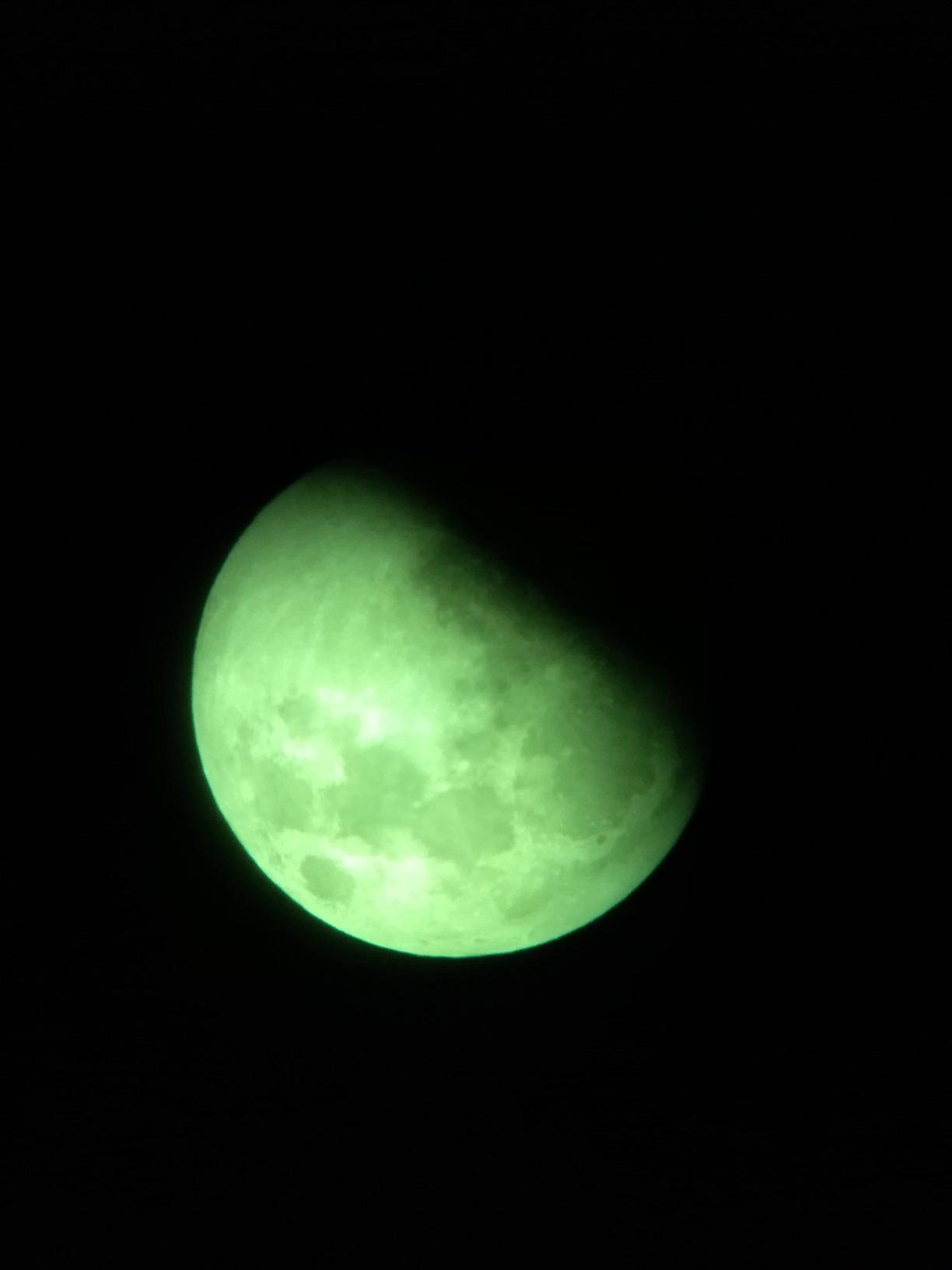
For the Moon, this scope is excellent value. Crater chains, the terminator shadow line, and larger surface features all show clearly, and a moon filter is the accessory that transforms the view at higher power.
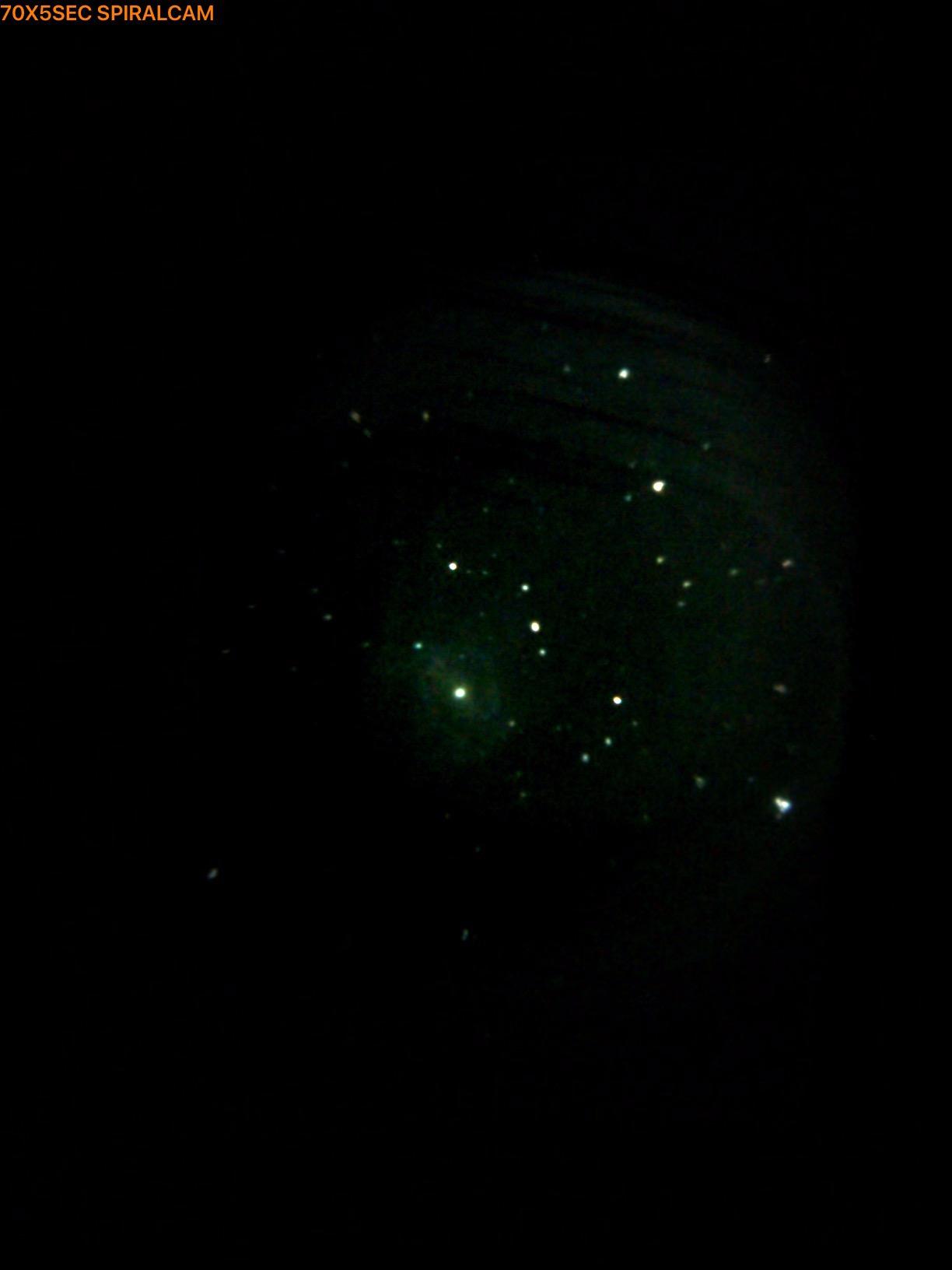
For planets it handles the Moon’s companions well. Jupiter’s four moons are obvious at 32x, Venus shows its phases, and Saturn’s rings are unmistakably there. For a first session, that is a satisfying result, and it is why this scope appears on beginner buying lists repeatedly.
Limits you should know about
A 90mm aperture is small. Above roughly 200x the image goes soft and dim, and the advertised 240x top of the range exceeds what 3.5 inches of glass can support under real conditions. Start low and work up rather than cranking the Barlow.
There is no tracking motor, so planets drift out of a narrow field within a few minutes. That is manageable at low power on short sessions but tiring at high power. If you want children or beginners engaged, our guide to the best telescopes for kids covers how to match a scope to shorter attention spans.
5. Sky-Watcher Classic 200 Dobsonian – Best 8-inch Dobsonian for Planets
Sky-Watcher Classic 200 Dobsonian 8-inch Telescope – Solid-Tube – Simple, Traditional Design – Easy to Use, Perfect for Beginners, White (S11610)
8-inch aperture
1200mm focal length
Altazimuth Dobsonian base
45 pounds assembled
Pros
- Bright high-contrast planetary views
- Intuitive base with no polar alignment
- Teflon bearings and tension control handles
- 2-inch Crayford focuser included
Cons
- Newtonian mirrors need collimation after moves
- 45 pounds is awkward for one person
- Azimuth bearing can be sticky new
Nothing on this list gathers as much light per unit of money, and the Classic 200 Dobsonian is the reason it is. An 8-inch parabolic primary at 94 percent reflectivity plus a 2-inch Crayford focuser gives a bright, high-contrast planetary image with no electronics in the way and no alignment procedure beyond collimating the mirrors.
At 1200mm focal length, 200x is comfortably inside the useful range for 8 inches. Saturn at that power shows ring detail and the Cassini Division on a steady night, and Jupiter resolves belt structure and the Great Red Spot. Reviewers consistently describe exactly these views once the scope is set up properly.
The base is the simplest part of the telescope. Point the tube, look through the finder, adjust focus with the crank. There is no polar alignment, no database, and no charging, which is why this design has become the standard recommendation on observing forums for anyone buying a first large telescope.
The patented tension control handles let you move the tube even when the balance is not perfect, and the Teflon bearings on both axes make the azimuth motion smooth. The 25mm and 10mm super wide-angle eyepieces included are unusually good for a package at this level.
Why observers still pick a Dobsonian
Aperture per unit cost is the whole argument. Buying observers on r/telescopes repeatedly steer people toward larger Dobs over smaller motorised scopes at the same budget, because the extra light and resolving power is what actually reveals planetary detail. Motorised tracking is convenient; it does not sharpen an image.
For a 8-inch Dobsonian the trade-off is field drift. Without tracking, a planet at 200x leaves a 0.75 degree field in a couple of minutes, so you work in short bursts and re-centre between looks. Adding a 25mm or 32mm wide-field eyepiece makes finding targets far easier.
Reasons owners return it
With 240 reviews and a 4.0 average, the rating is split in a way that tracks a single variable. Owners who collimate and get comfortable star hopping describe sharp bright views of Jupiter, Saturn and the Orion Nebula. The negative reviews focus on the same three things: collimation, a sticky azimuth bearing, and moving 45 pounds.
That makes sense for a large Dobsonian. If your observing is done in one place with help available to carry it, that is a fair trade. If you need something in a car on its own, read the Heritage 150 next.
6. Sky-Watcher Heritage 150 – Best Tabletop Dobsonian for Small Spaces
Sky-Watcher Heritage 150 Tabletop Dobsonian Telescope – Perfect for Beginners, Easy Setup, Portable, and Fun (S11710)
150mm aperture
750mm focal length
f/5 focal ratio
Tabletop base
Pros
- Crisp contrast-rich Moon and planet views
- Quick tabletop setup
- Collapsible tube stores compactly
- Rubber feet cut vibration
Cons
- 150mm aperture is small for faint targets
- 1.25-inch focuser limits eyepieces
- No GoTo so finding is manual
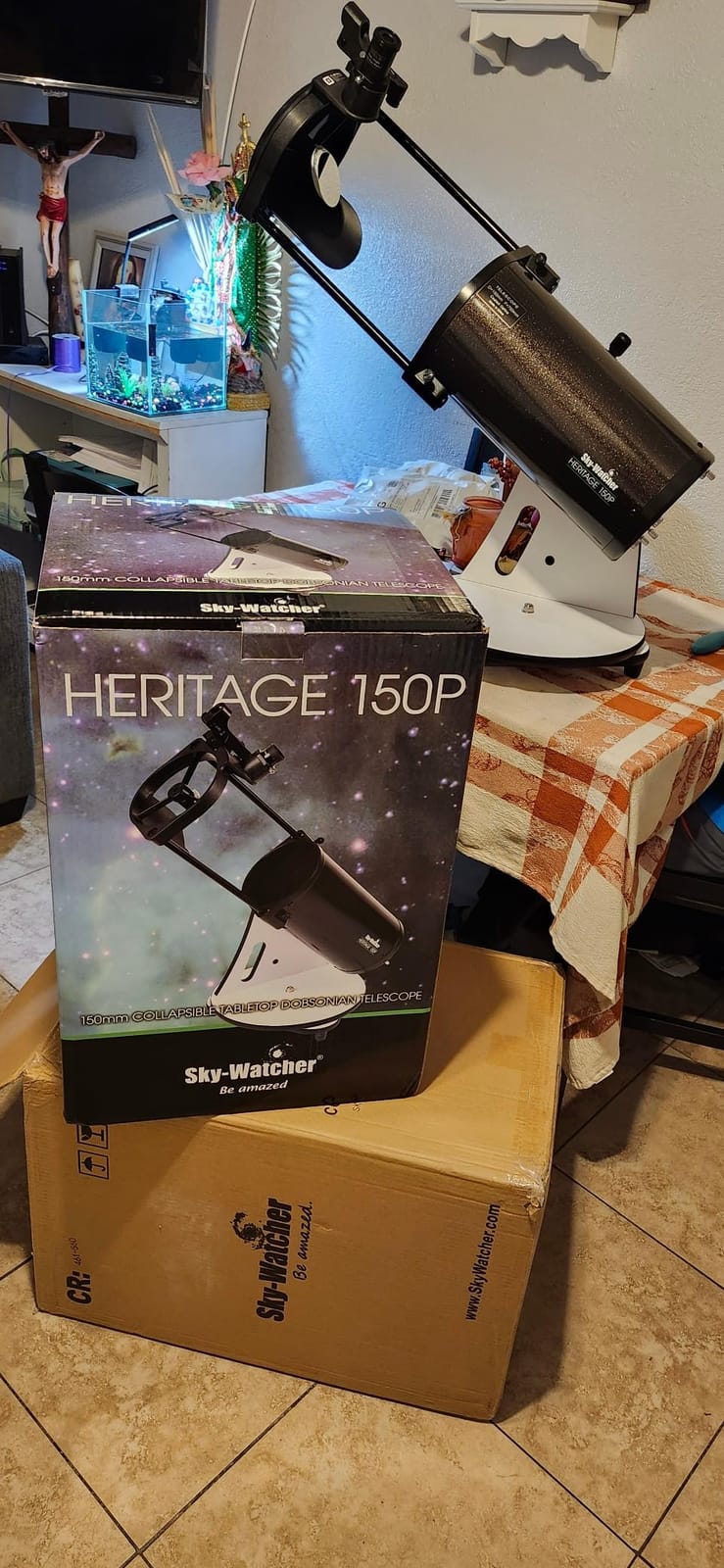
The Heritage 150 solves a problem the bigger Dobs create. At 750mm focal length and 150mm aperture it delivers a fast f/5 image that is bright for planets, and it sits on a small tabletop base that needs no tripod and no setup routine beyond putting it where you want it.
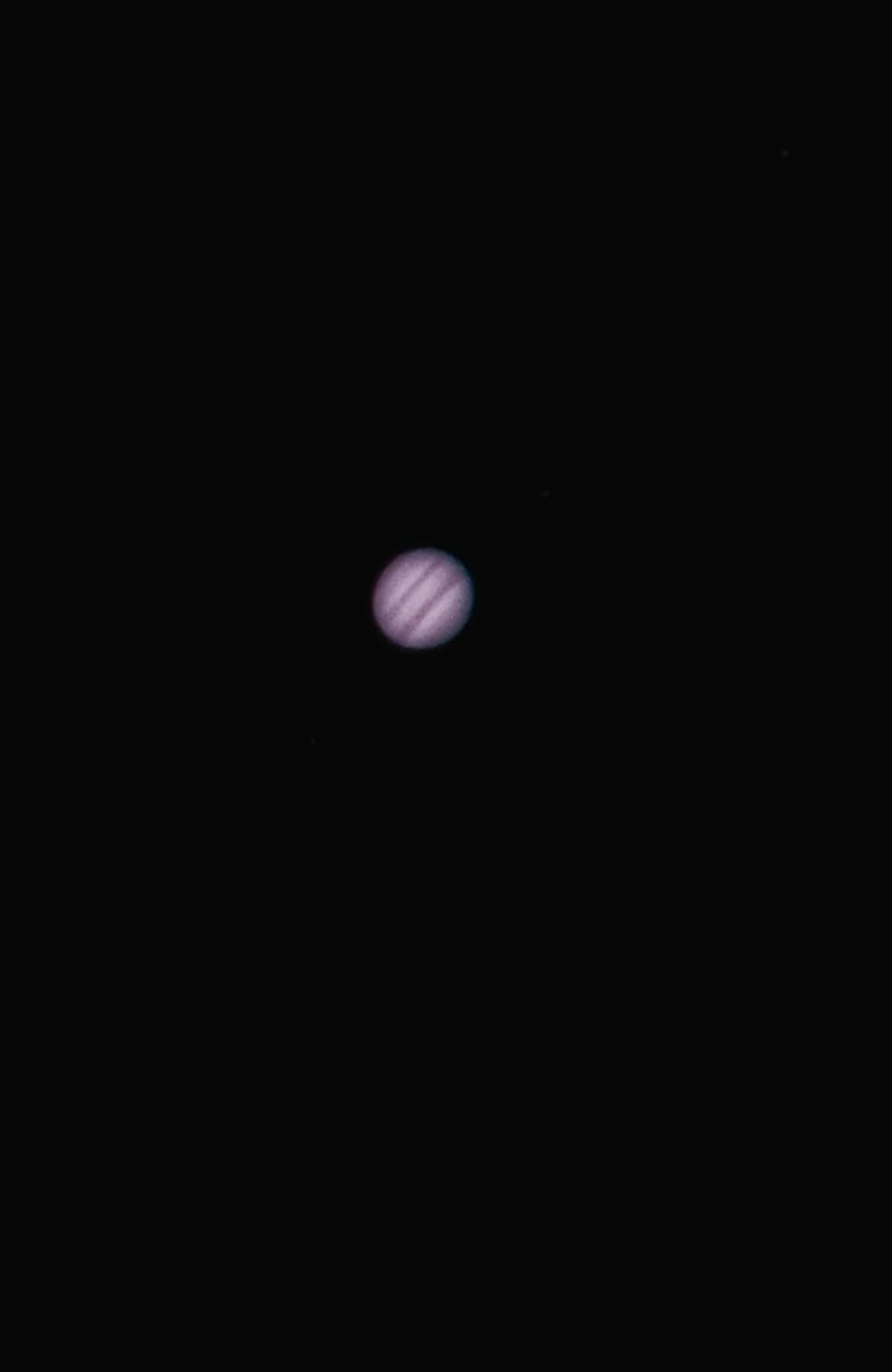
At 100x the Moon shows craters and mare detail clearly, Jupiter shows its Galilean moons and the main belts, and Saturn’s rings are a distinct shape with a hint of division. Owners rate it 4.2 with a 72 percent five-star share, describing it as a compact introduction to serious observing rather than a toy.
The collapsible tube is the detail worth knowing about. It pulls down for storage while retaining collimation, so a small apartment or a flatscreen car boot is enough space. The rubber feet underneath the base dampen vibration, which matters more than people expect when you are at high power on a table.
The borosilicate parabolic primary carries a Radiant Aluminum Quartz multi-coating, and a 1.25-inch helical focuser handles the included glass. For a tabletop scope the focuser is smooth enough that fine focusing on a planet is not a fight.
Who this tabletop design suits
People with a balcony, a small garden, or a flat with a walk-up view. It goes from box to planet in a couple of minutes, which is the difference between a scope used twice a month and one used twice a year.
It also works well as a second telescope. Owners who already own a larger Dobsonian often add a tabletop model precisely because it is easy to carry to a different site and quick to set up when the sky is clear for an hour.
Where the 150mm aperture limits you
Five and a half inches is not much light bucket next to an 8 or 10-inch Dobsonian. Faint deep sky suffers first, and even for planets you are working near the bottom of the useful magnification range for the aperture.
The 1.25-inch focuser also restricts which premium eyepieces you can use, and there is no GoTo, so every target has to be found by chart or finder. Both are acceptable compromises for a small, simple scope; just know they are compromises.
7. MEEZAA 150EQ – Best Complete Package for New Observers
MEEZAA Telescope, 150EQ Newtonian Reflector Telescope for Adults Astronomy Beginners, Professional Astronomical Telescopes with Equatorial Mount, Tripod, Phone Adapter, Moon Filter and Large Carry Bag
150mm aperture
650mm focal length
German equatorial mount
26x to 130x range
Pros
- Most complete accessory bundle on this list
- Slow motion controls ease tracking
- Bright views even under light pollution
- Carry bag and phone adapter included
Cons
- Kellner eyepieces are entry level
- Plastic focuser
- Some buyers question the advertised aperture
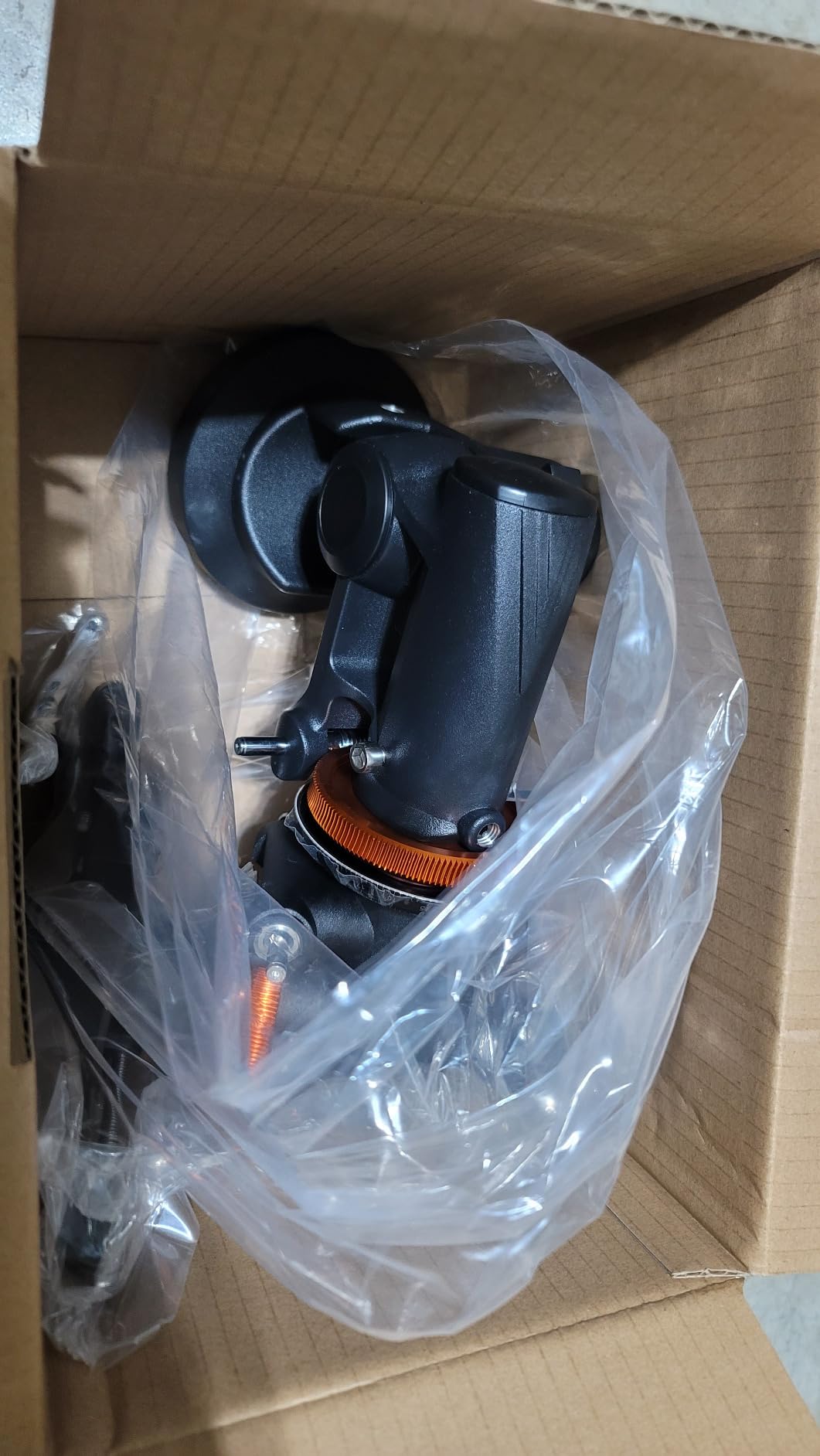
Nobody buys a telescope for the box contents, but this package removes almost every reason to spend more in your first month. The tube, mount, tripod, 25mm and 10mm eyepieces, a 2x Barlow, a red dot finder, a moon filter, a phone adapter and a carry bag all arrive in a single box.
The 4.4 rating is the highest among the eight scopes we compared, across 250 reviews with only 3 percent one-star. Owners repeatedly cite the breadth of what is included and the smooth slow-motion tracking, plus bright views of the Moon, Jupiter and Saturn even from a light-polluted backyard.
The German equatorial mount with precision dials and slow-motion knobs is a genuine asset for planets. Once polar aligned, tracking a target by hand is smooth and predictable, which makes 130x on Jupiter a comfortable experience rather than a constant re-centring job.
That 130x upper figure comes from the 650mm focal length with the 2x Barlow. The mount sits on a heavy-duty stainless steel tripod with an accessory tray, and assembly is tool-free with colour-coded parts according to the listing.
Reasons this one stands out for beginners
For a first purchase, the accessory list removes decision paralysis. A moon filter makes the full Moon watchable, the red dot finder makes finding planets fast, and the carry bag means the whole thing can travel to a darker site without a car boot full of loose parts.
Several reviewers also report getting a scope that needed no collimation out of the box, though that is not guaranteed on Newtonian designs. Treat collimation as a normal part of ownership rather than a sign something is wrong.
Limitations to factor in
The supplied Kellner eyepieces are entry level, and owners consistently say upgrading them noticeably improves the image. That is the sensible first purchase after this telescope rather than more accessories.
Two things raise eyebrows. The phone adapter is fiddly to align, and a small number of buyers report measuring the primary below the advertised 150mm. The focuser is also plastic, which is fine for visual work and not what you would want for imaging.
8. Sky-Watcher Flextube 250 – Best Telescope for Faint Planetary Detail
Sky-Watcher Flextube 250 Dobsonian 10-inch Collapsible Large Aperture Telescope – Portable, Easy to Use, Perfect for Beginners, White/Black (S11720)
10-inch aperture
1200mm focal length
Collapsible tube design
40 pounds assembled
Pros
- Largest aperture in this comparison
- Brightest and most detailed planetary views
- Collapsible tube stores compactly
- Tool-assisted assembly with aligned holes
Cons
- Mirrors usually arrive needing collimation
- Loses collimation after transport
- 40 pounds still needs two people
If you want the maximum planetary detail available in this comparison, aperture decides the answer and this is the largest telescope here. A 10-inch parabolic primary at 94 percent reflectivity gathers the most light of the eight, and light is what resolves the subtle contrast features on Mars and Jupiter.
At 1200mm focal length you keep comfortable magnification in reserve past 250x on a steady night, and that is enough to see Jupiter’s finer belt structure, the Cassini Division in Saturn’s rings, and real surface markings on Mars at opposition. Reviewers describe crisp views of Jupiter, Saturn and the Orion Nebula once the mirrors are aligned.
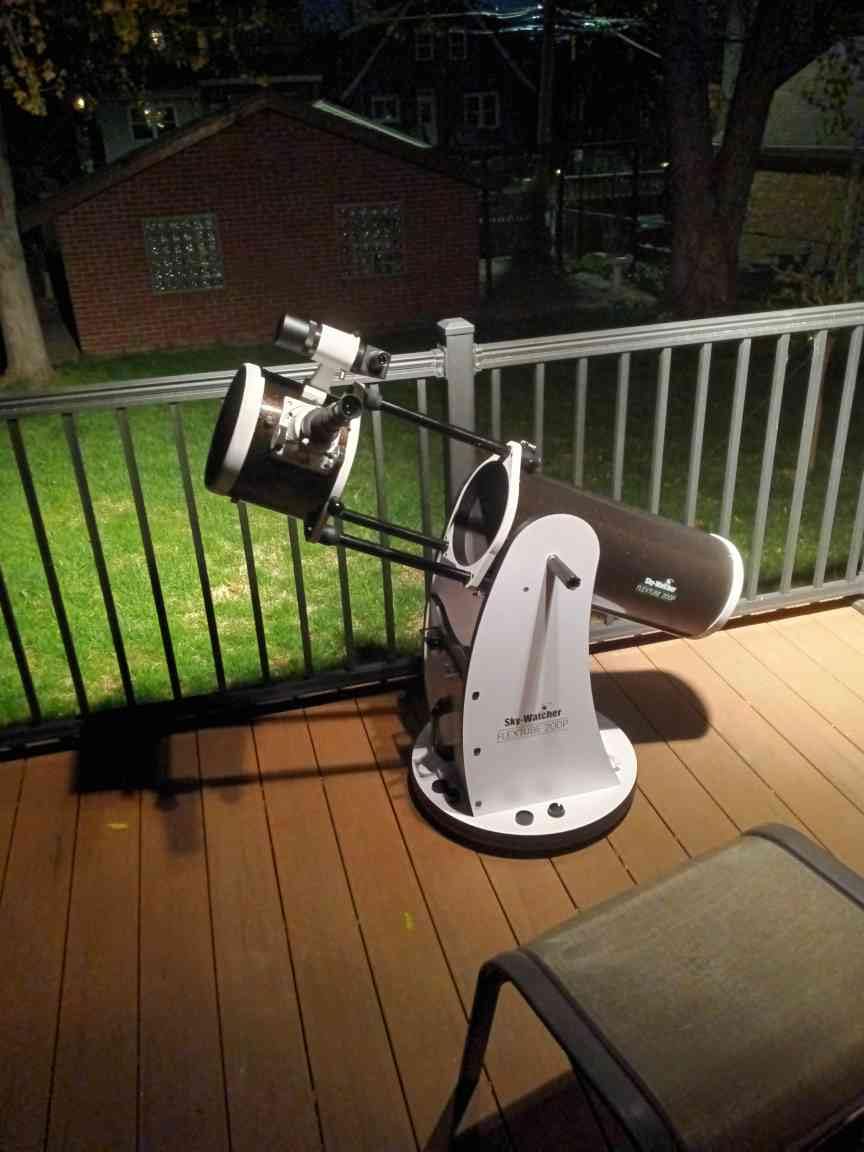
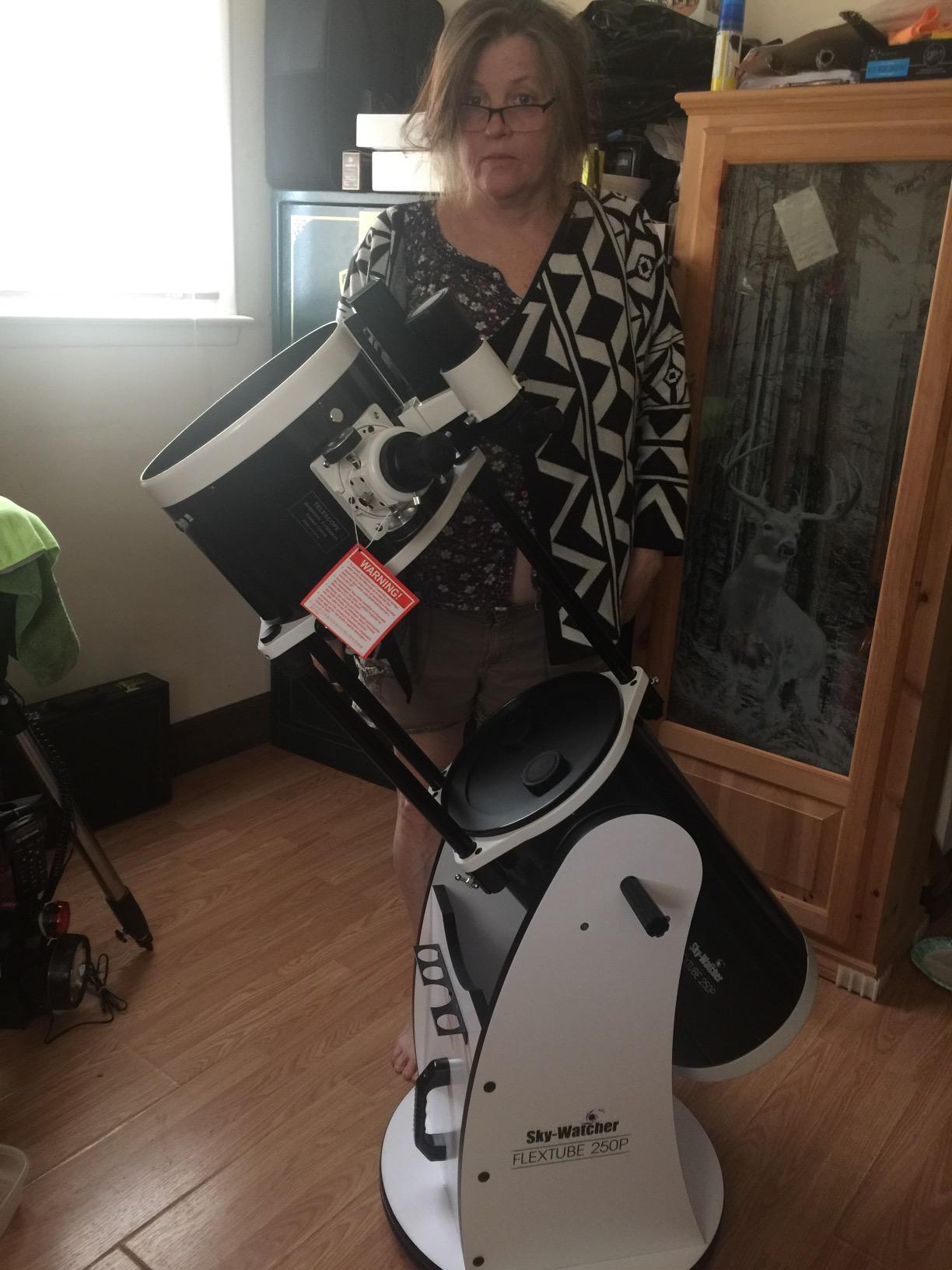
The collapsible strut design is what makes a 10-inch practical. The tube collapses for storage while retaining collimation, which is a real improvement on a solid tube. The tension control handles and Teflon bearings give smooth movement, and the 2-inch Crayford focuser with adapter accepts premium eyepieces.
Assembly is tool-assisted with pre-drilled holes that line up correctly, and the included 25mm and 10mm Plossl eyepieces with an 8×50 right-angle finder are a reasonable starting kit for a large aperture instrument.
What the extra aperture actually buys you
Beyond a certain point, large aperture stops being about brightness and starts being about resolving power. That is why observers chasing Mars detail at opposition or fine Jovian structure keep pushing to larger mirrors, and why this scope earns its place at the top of an aperture ranking.
It also means every eyepiece choice is more forgiving. At 10 inches you have usable magnification in reserve, so a darker eyepiece can be used without the image falling apart, which is exactly the margin that makes planetary observing comfortable rather than fiddly.
Reasons buyers hesitate
Collimation is the dominant theme across 94 reviews. Mirrors typically arrive out of alignment and need laser or Cheshire collimation before first light, and the scope goes out of alignment again whenever the tube is carried or bumped.
At 40 pounds assembled it still needs two people or careful handling to move, and the azimuth can be sticky without a bearing modification. There is no Barlow in the included eyepiece kit either. Buy this scope for a fixed observing spot and a couple of evenings spent learning to collimate well.
How to Choose a Telescope for Viewing Planets
Planets are bright, tiny and high contrast, which is the opposite of most deep sky targets. That single fact drives every recommendation below: you are buying resolving power and contrast, not light gathering for faint fuzzies.
Aperture decides what detail you can resolve
Aperture is the diameter of the main lens or mirror, and it is the single most important number on any telescope listing. It sets both how much light you collect and, more importantly for planets, how finely you can separate detail. Rule of thumb from the forums: useful magnification runs about 50x per inch of aperture.
A 3-inch (70 to 80mm) scope shows Saturn’s rings as a shape. A 5-inch (130mm) scope reaches the Cassini Division. An 8-inch scope opens up Jupiter’s belt structure and fine ring detail. Ignore “aperture fever” and buy the largest mirror your storage and carrying situation allows.
Focal length decides how easily you get there
Focal length is the distance light travels inside the tube, and magnification equals focal length divided by eyepiece focal length. Longer focal length means higher magnification from the same eyepiece and a narrower, more stable field when you focus on a planet.
This is why a 1500mm Maksutov-Cassegrain and a 2032mm Schmidt-Cassegrain feel more precise on planets than a short 650mm reflector of the same aperture. It is also why the Sky-Watcher Heritage 150 at 750mm is a bright, wide-field planetary instrument rather than a high-power one.
How much magnification is actually useful
Naked eye and 10x binoculars: Venus phases, Jupiter’s moons as points, the Moon’s craters.
3-inch aperture at 30x to 60x: Jupiter’s four moons, Saturn’s rings as a distinct shape.
5-inch aperture at 100x to 125x: the Cassini Division, Jupiter’s main cloud belts.
8-inch aperture at 200x and above: fine ring structure, the Great Red Spot, Mars surface markings at opposition.
10-inch aperture at 250x: subtle contrast features that smaller mirrors simply cannot resolve.
Past roughly 50x per inch of aperture the image does not gain detail, it just gets dimmer and shakier. A blurry planet is nearly always over-magnification or unstable atmosphere, not insufficient power. Start at the lowest power that shows the target, then step up in increments.
Which optical design shows planets best
Maksutov-Cassegrain and Schmidt-Cassegrain designs are the sharpest for planets because their long focal lengths keep a planet large and steady at high power. Dobs and Newtonians give you the most aperture per unit cost. Refractors need no collimation and give the least friction for beginners. Our guides to the best Dobsonian telescopes and best refractor telescopes go deeper on each.
Smart and app-controlled telescopes are a genuinely different experience rather than a better one. They stack exposures to build an image, which is excellent for stills of the Moon and planets but wrong for anyone who wants to watch a shadow cross a cloud belt in real time. For live planetary viewing, an eyepiece wins.
Do you need an equatorial mount for planets?
Not strictly. Field drift matters more than mount type during short sessions, and a stable alt-azimuth Dobsonian pointing works well for most observing. That said, an equatorial mount with slow-motion controls genuinely helps above 100x because field drift slows to near zero once polar aligned.
GoTo mounts add pointing accuracy rather than optical quality. Our computerised GoTo telescope guide covers when that convenience is worth the electronics, and the honest answer is usually when you are buying for someone who will not learn a star chart.
What not to buy for planetary viewing
Skip department-store scopes advertising “500 power” with no aperture listed, and skip achromatic doublet refractors much above 4 to 5 inches, where purple chromatic halos wrap every bright planet. Also avoid ultralight tripods for scopes over 5 inches, because vibration ruins a planetary image faster than any optical flaw.
One more: let the tube reach ambient temperature before you judge the view. Mirror and lens surfaces sitting in warm indoor air while the outside air is cold will produce a blurry, shimmering image that looks like an optics fault but is purely thermal. Most observers allow 15 to 30 minutes of cool-down, and dew control on the front lens helps on humid nights.
Frequently Asked Questions
What type of telescope is best for seeing planets?
Maksutov-Cassegrain and Schmidt-Cassegrain designs are best for planetary sharpness because their long focal lengths hold planets large and steady at high power. A Dobsonian gives you the most aperture per unit cost, which is why forum consensus recommends 6-inch and larger Dobs to beginners. A short achromatic refractor is the lowest-friction entry point, while smart telescopes are better suited to stacked stills than live viewing.
What size telescope do I need to see Saturn’s rings?
A 3-inch (70 to 80mm) scope shows Saturn’s rings as a distinct shape rather than a point. A 5-inch (130mm) scope at 100x or more resolves the Cassini Division, the dark gap inside the rings, which is the detail most people mean when they say they want to see Saturn’s rings properly. Most of our picks here are 127mm to 150mm or larger.
How powerful of a telescope do I need to see the planets?
Useful magnification runs about 50x per inch of aperture, and beyond that the image only gets dimmer and shakier. Binoculars show Jupiter’s moons and Venus’s phases. A 3-inch scope at 30x to 60x shows Saturn’s rings as a shape. A 5-inch at 100x gives the Cassini Division and Jupiter’s belts, and an 8-inch at 200x opens fine ring structure and the Great Red Spot.
Which smart telescope is best for observing planets?
App-controlled scopes such as the ZWO Seestar S50 sit in a different category: they capture and stack exposures to build an image rather than showing you a live eyepiece view. That makes them excellent for still images of the Moon and planets but the wrong tool if you want to watch Jupiter’s moons shift in real time. For live planetary viewing, a traditional telescope with an eyepiece is better.
Is a Dobsonian good for planets?
Yes, and on value for money they are hard to beat, because nearly all of the money goes into optical diameter. The trade-off is no motorized tracking, so at 200x a planet drifts out of the field within a few minutes and you re-centre between looks. Add a 25mm or 32mm wide-field eyepiece to make finding targets much easier.
Do I need an equatorial mount for planets?
Not strictly. During short sessions, field drift matters more than mount type, and a stable alt-azimuth Dobsonian pointing works well. Above 100x, though, an equatorial mount with slow-motion controls makes a real difference because field drift slows dramatically once the mount is polar aligned. GoTo mounts improve pointing accuracy rather than image sharpness.
What is the cheapest telescope that can see planets?
A 90mm short refractor is the cheapest honest entry point: it needs no collimation, shows Jupiter’s moons, Venus’s phases, Saturn’s rings as a shape, and detailed lunar craters. Expect Saturn’s rings to read as an oval rather than a divided ring system at this aperture. Binoculars at 10x or 15x will show Jupiter’s four moons and the phases of Venus for even less money.
Conclusion: The Best Telescopes for Viewing Planets in 2026
After comparing eight scopes on aperture, focal length, mount stability and real owner experience, the Celestron NexStar 8SE remains the best telescope for viewing planets for most people. Its 8-inch aperture and 2032mm focal length resolve Jupiter’s belts and the Cassini Division, while the GoTo fork mount removes the learning curve that ends most first telescopes.
Buy the Celestron PowerSeeker 127EQ if aperture per unit cost matters more than electronics, the Dianfan 90mm refractor if you want zero setup friction and a full Moon on the first night, or the Sky-Watcher Heritage 150 if storage and portability decide the outcome. Whatever you choose, buy the largest aperture you can comfortably carry and treat the magnification figure on the box as noise.