
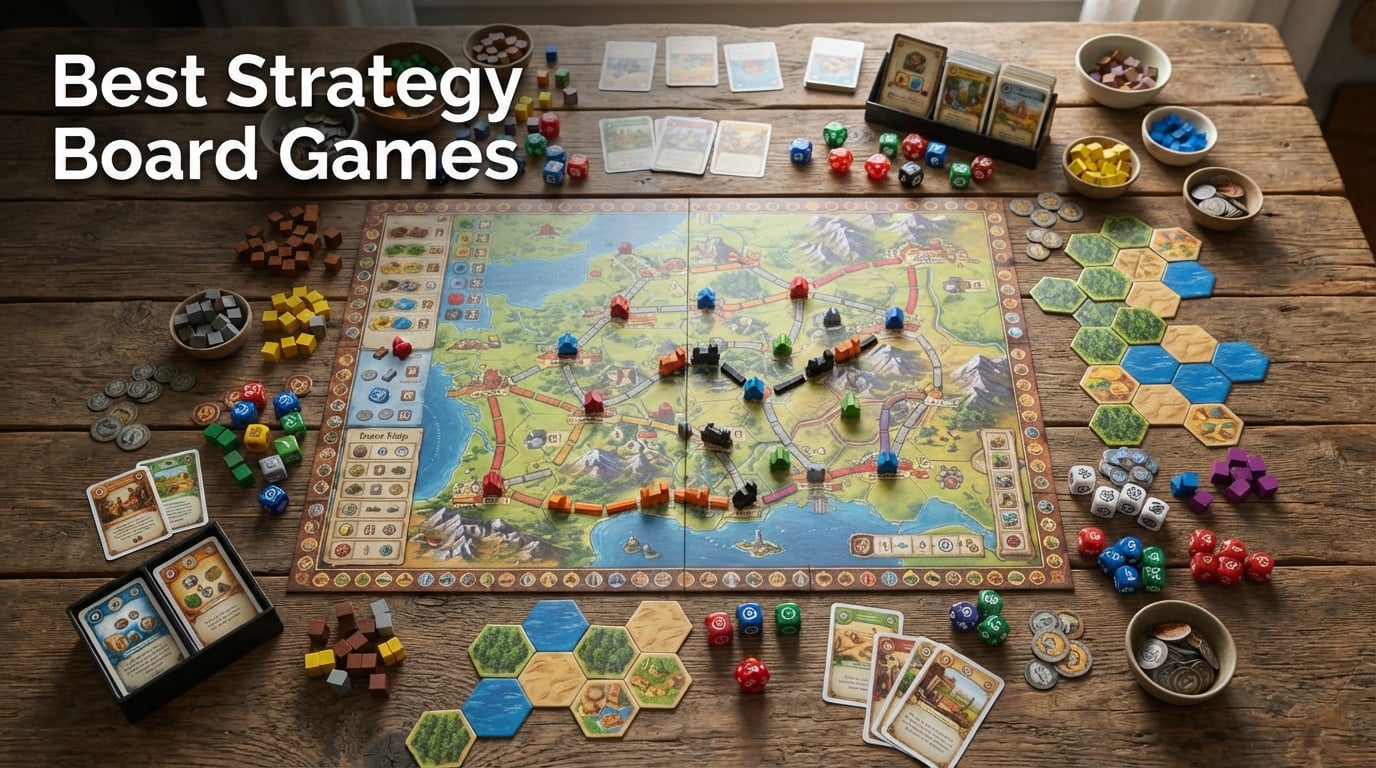
Strategy board games have quietly become the heartbeat of modern game nights, and 2026 feels like the year they finally went mainstream. I have spent the last few months hauling boxes to friends’ apartments, dragging a tote bag to board game cafes, and teaching my partner the difference between a eurogame and a war game.
The best strategy board games reward planning over reflexes. They hand you a small set of clean rules, then challenge you to chain decisions across an hour or two of play. You might be terraforming Mars, defending a haunted island from invaders, or just trying to draft the right colored tile before your rival does.
In this guide, our team narrowed the field down to 12 titles that consistently earn their spot on the table. We grouped them by mechanic, group size, and complexity so you can find the right fit whether you are hosting a couple, a family, or a five-person hobby group. We also pulled in recommendations from the best gifts for board game lovers roundup and the top tabletop accessories guide to round out the picture.
Table of Contents
Top 3 Picks for Best Strategy Board Games (September 2026)


Best Strategy Board Games in 2026
| Product | Specs | Action |
|---|---|---|
| Pandemic |
|
Check Latest Price |
| Azul |
|
Check Latest Price |
 Wingspan Wingspan |
|
Check Latest Price |
 Scythe Scythe |
|
Check Latest Price |
 Terraforming Mars Terraforming Mars |
|
Check Latest Price |
 7 Wonders 7 Wonders |
|
Check Latest Price |
 Sagrada Sagrada |
|
Check Latest Price |
 Spirit Island Spirit Island |
|
Check Latest Price |
| Cascadia |
|
Check Latest Price |
 CATAN CATAN |
|
Check Latest Price |
 Brass: Birmingham Brass: Birmingham |
|
Check Latest Price |
 Ticket to Ride Ticket to Ride |
|
Check Latest Price |
1. Pandemic – Best Cooperative Strategy Board Game
Pandemic Cooperative Strategy Board Game, 2-4 Players, 45-60 Min
Players: 2-4
Time: 45-60 min
Age: 8+
Mechanic: Cooperative
Pros
- Cooperative gameplay rewards planning
- communication
- and teamwork
- Distinct specialist roles create varied strategies across plays
- Great replayability with adjustable difficulty via Epidemic cards
- Strong family game-night appeal for 2-4 players ages 8+
Cons
- Several loss conditions can make the game feel heavily defensive at higher difficulties
- Setup can be tricky with two separate decks requiring careful shuffling
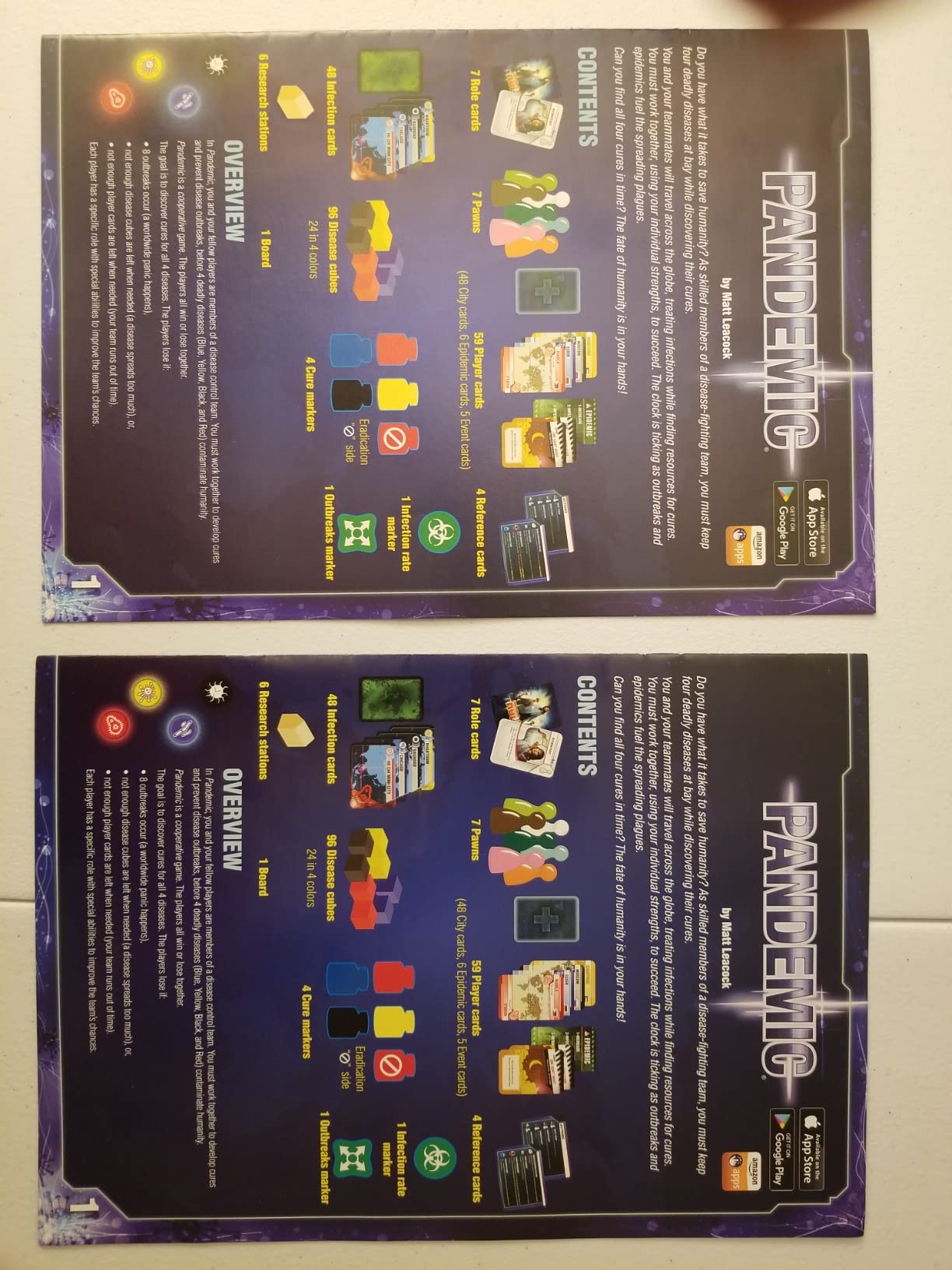
Pandemic was the game that converted most of my non-gamer friends. The premise is simple: four diseases are breaking out across the globe, and your team of specialists has to find cures before eight outbreaks happen.
The genius is that nobody is the villain. You and your friends sit on the same side of the table, planning moves out loud, and either win together or lose together. That single shift changes the social texture of a game night completely.
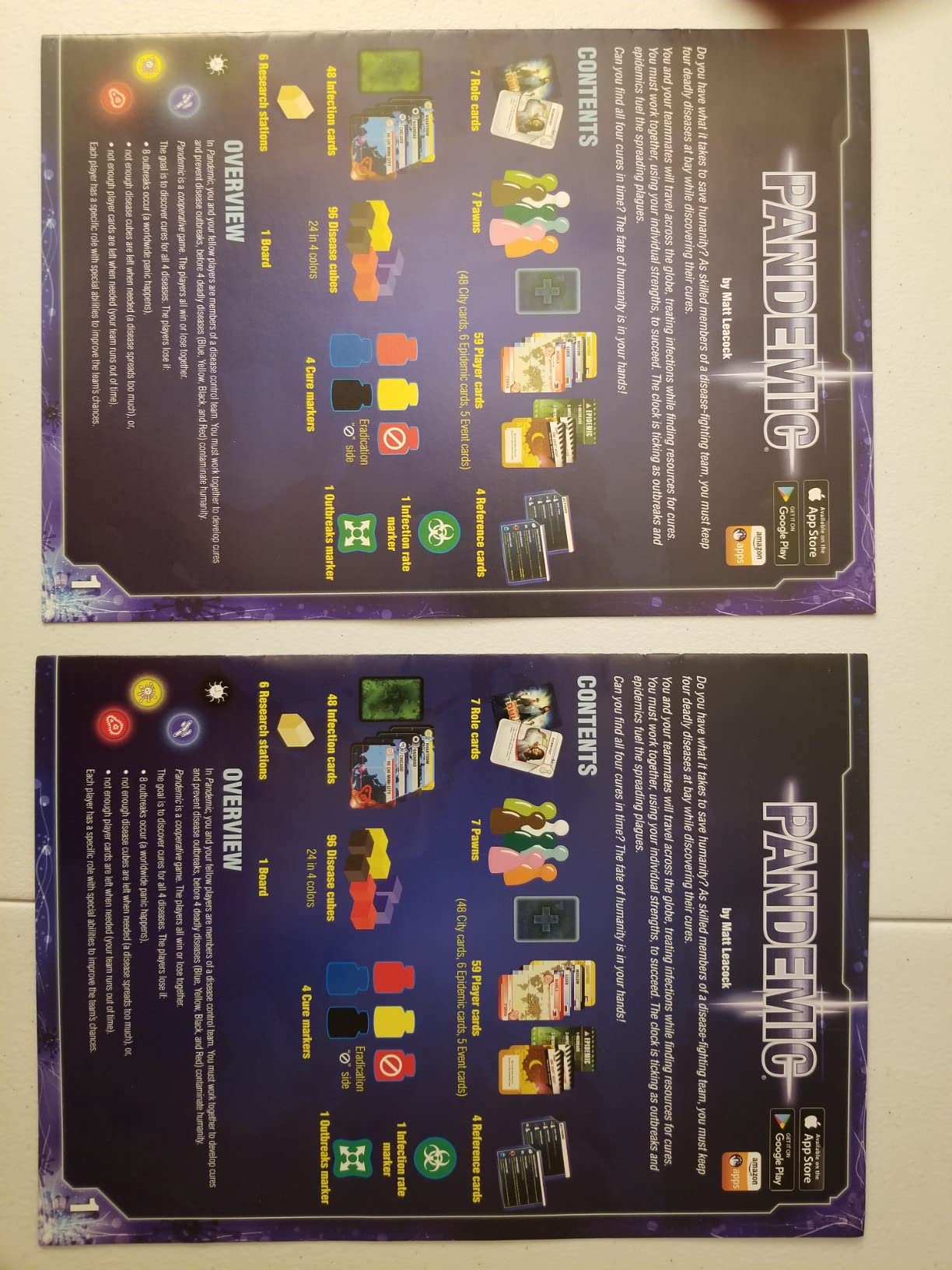
I have played Pandemic more than 40 times across groups of two, three, and four. The Medic and Scientist roles almost always win games on higher difficulty, while the Operations Expert shines when the board is crowded. The Epidemic card deck is what keeps it fresh: every shuffle re-rolls the pressure.
The biggest complaint I have read, and agree with, is the setup. Two separate decks need to be shuffled and stacked carefully, and a missed step can ruin the first 10 minutes. After a few plays it becomes second nature.
Who will love Pandemic
Couples and small families who want to play together instead of against each other. Newcomers looking for their first hobby game. Anyone who likes the feeling of pulling off a clutch plan after 45 minutes of careful work.
Who should skip Pandemic
Players who hate losing together. Groups larger than four people. Anyone who wants a short, snappy game under 30 minutes.
2. Azul – Best Tile-Placement Strategy Game
Azul Mosaic Tile-Placement Strategy Board Game, 2-4 Players, 30-45 Min
Players: 2-4
Time: 30-45 min
Age: 8+
Mechanic: Tile placement
Pros
- Award-winning tile-placement game (Spiel des Jahres 2018) with elegant rules
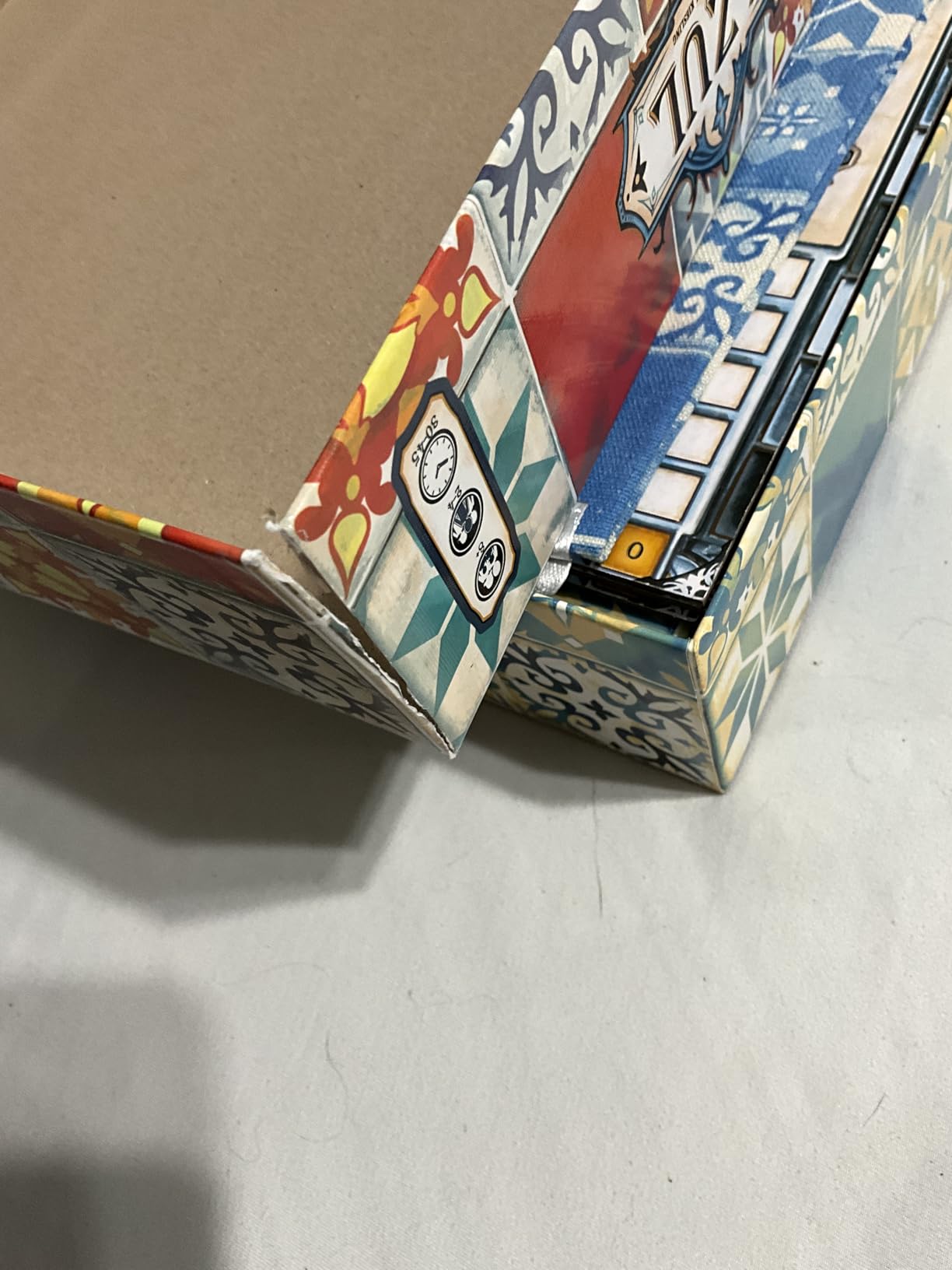
- Beautiful mosaic theme and high-quality components
- Easy to learn but offers meaningful strategic depth
- Excellent 2-player duel that scales well to 3-4 players
Cons
- Can feel samey after many plays without expansions
- Some players may find the drafting mechanic repetitive
Azul is the game I teach people who think they do not like strategy games. It looks like a children’s puzzle, plays in 30 minutes, and ends with someone saying “wait, let me try one more round.”
The hook is simple: tiles come out of shared factory displays, you draft one color per round, and you fill rows on your personal wall to score points. The drafting rules are tight enough that even a five-year-old can play, but the timing and pattern decisions run deeper than they look.
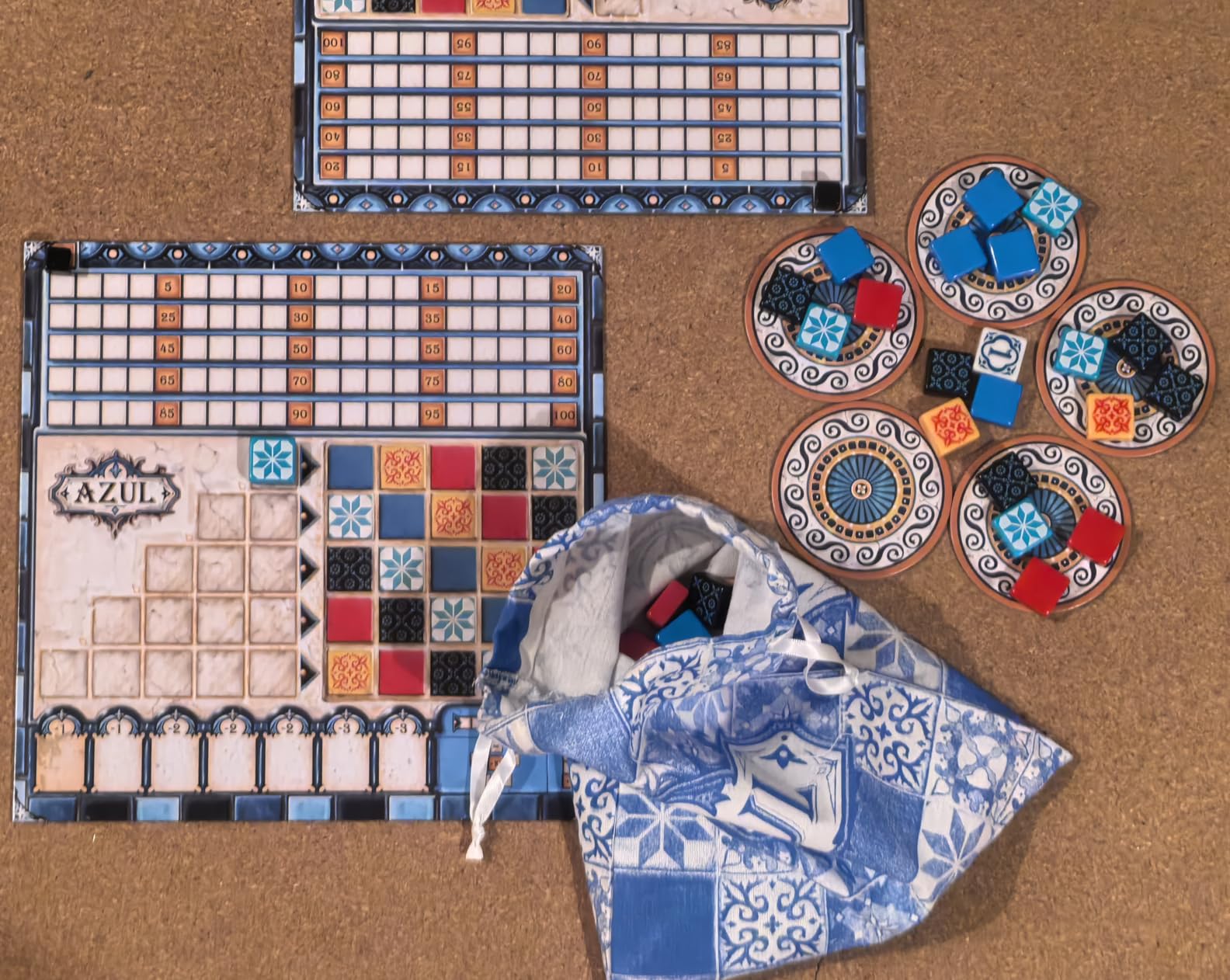
In our 2-player matches, Azul has become the default date-night game. With three or four players, the table gets louder and the take-that moments get sharper. Reviewers on the r/boardgames subreddit consistently call it the best gateway tile-laying game ever published.
After about 30 plays, the same wall patterns start to repeat. The Azul: Stained Glass of Sintra expansion fixes this for serious fans, but most households will not need it for years.
Who will love Azul
Couples looking for a 30-minute game with real decisions. New gamers who want to learn tile-laying without a thick rulebook. Anyone who appreciates beautiful components on the table.
Who should skip Azul
Players who want high interaction and direct combat. Groups that already burned through 50 plays and need fresh puzzles. Anyone seeking a long, immersive campaign.
3. Wingspan – Best Engine-Building Nature Game
Stonemaier Games: Wingspan by Elizabeth Hargrave
Players: 1-5
Time: 60-90 min
Age: 14+
Mechanic: Engine building
Pros
- Stunning artwork and premium components (eggs
- dice tower
- cards)
- Thematic bird abilities tied to real ornithology
- Excellent solo Automa mode and 1-5 player scalability
- Award-winning design (Kennerspiel des Jahres 2019) with high replayability
Cons
- Limited direct player interaction; mostly competitive solo play at the same table
- Some components (birdfeeder dice tower
- plastic tray) feel less durable
- Learning curve is moderate for first-time players
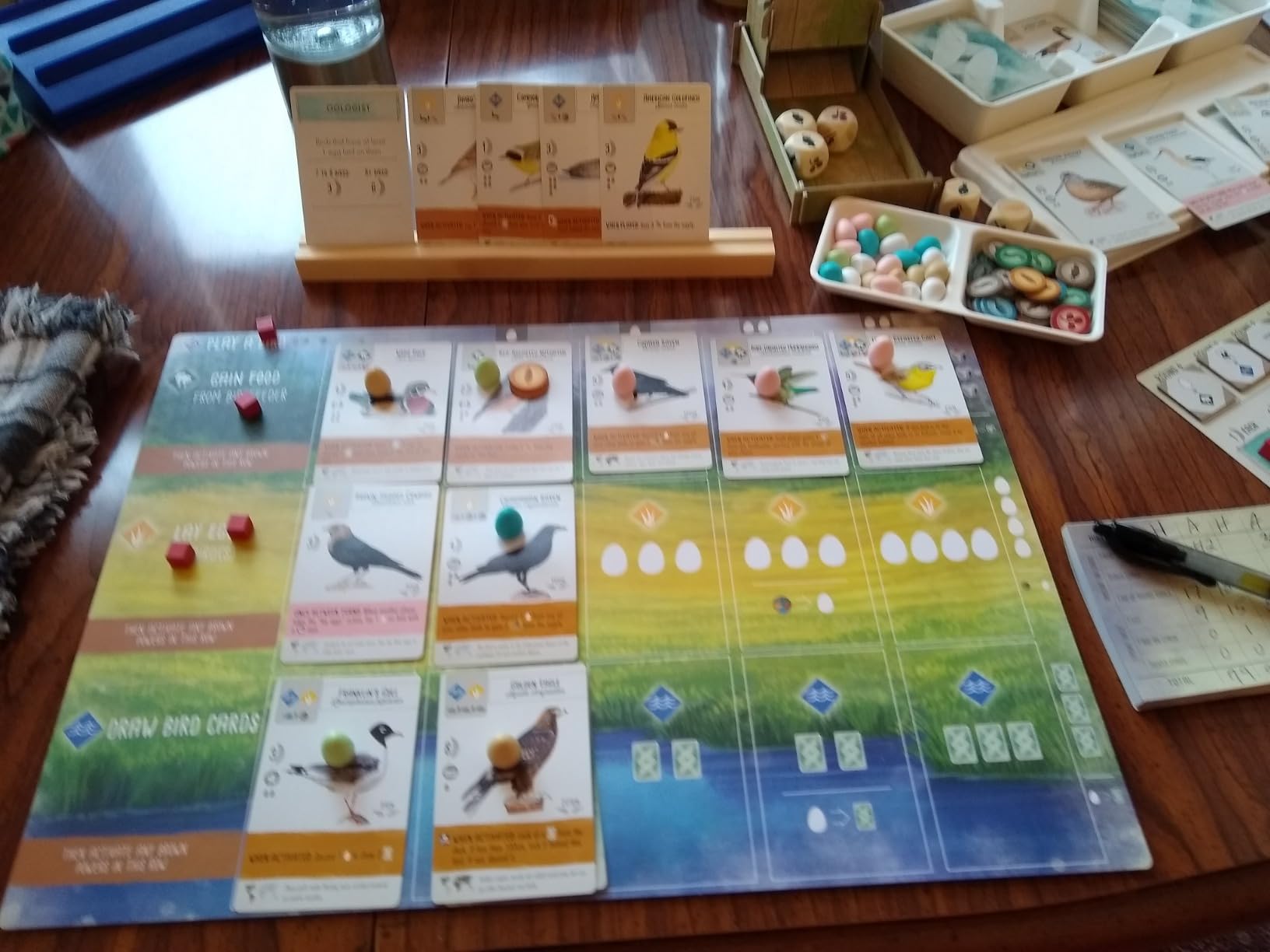
Wingspan turned bird-watching into one of the best engine-building games of the last decade. You attract birds to your wildlife preserve, chain their abilities together, and lay real-looking eggs to score points.
The art direction is what sells the table presence. Every bird card carries a painted illustration and a real ornithology fact, so even non-gamers lean in to read about the prothonotary warbler.
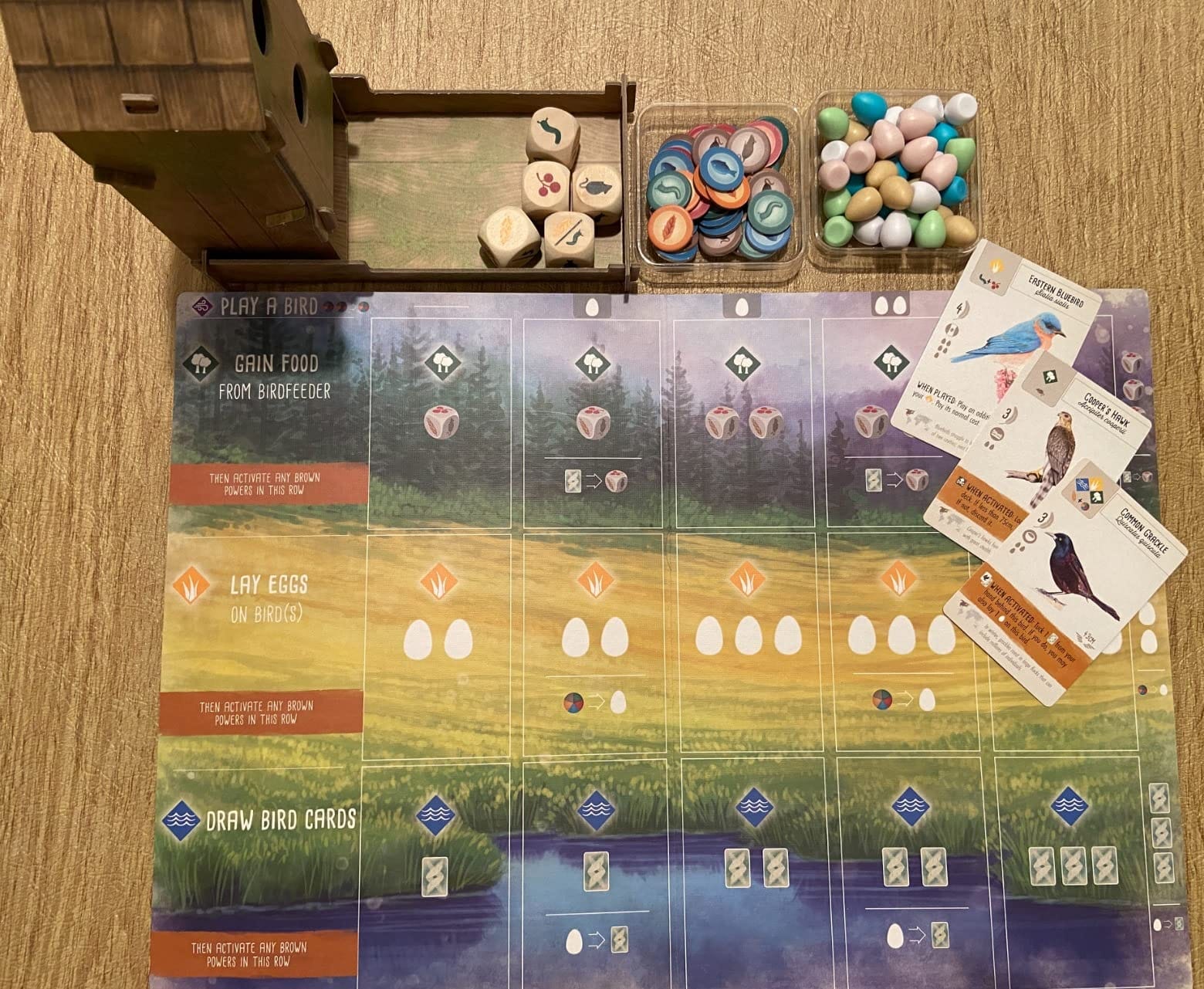
I have run Wingspan with two players, four players, and fully solo. The Automa solo mode is one of the best in the hobby: it plays in about 40 minutes, leaves room for you to plan a long engine, and never feels like you are playing against a clock.
Most groups I have taught report a 30-minute learning curve on the first play. The game does not punish mistakes hard, so new players can ease in. Direct interaction is limited, which is the one criticism that comes up over and over.
Who will love Wingspan
Nature lovers and bird enthusiasts who want a relaxing engine-builder. Couples and small families that want a 1-hour game that scales up. Solo players looking for one of the best Automa experiences around.
Who should skip Wingspan
Players who want direct conflict and backstabbing. Anyone looking for a quick 20-minute game. Groups that want a heavy decision density per minute.
4. Scythe – Best Alternate-History Engine-Building Game
Stonemaier Games: Scythe – A Strategy Board Game by Jamey Stegmaier
Players: 1-5
Time: 90-115 min
Age: 14+
Mechanic: Engine building
Pros
- Beautiful components and stunning alternate-history 1920s artwork
- Streamlined action-selection mechanism keeps turns moving
- High replayability with 5 asymmetric factions and multiple player boards
- Excellent Automa solo mode for 1-player games
Cons
- Steep learning curve and rulebook organization
- Long play sessions (90-120+ minutes) require committed groups
- Some faction/board icons are visually confusing for new players
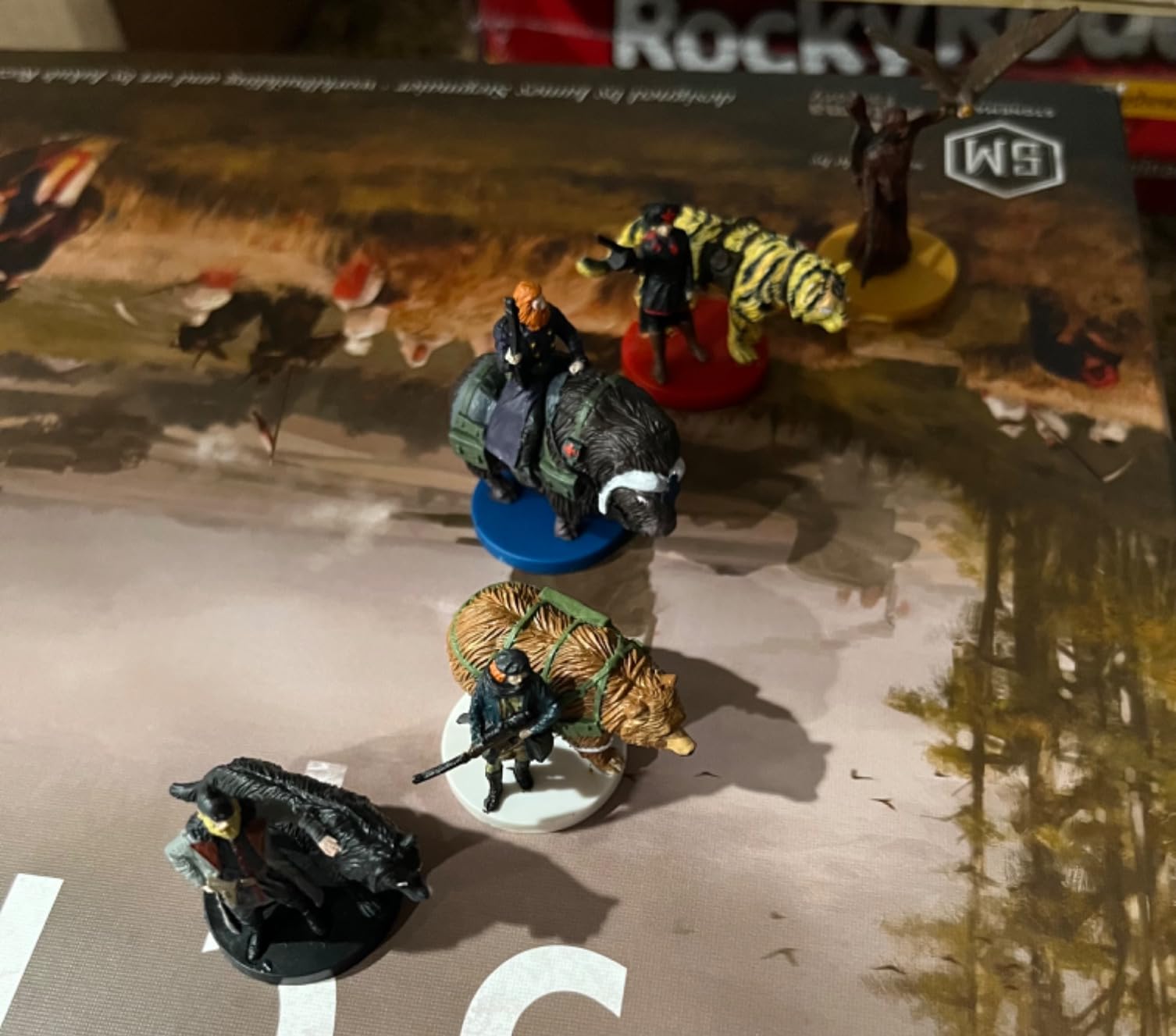
Scythe drops you into an alternate 1920s Europa where mechs, agriculture, and old empires all coexist. It looks intimidating on the table, but the action-selection system is surprisingly streamlined once you click.
Each faction has its own player board, ability track, and victory conditions. That asymmetry is what gives Scythe its longevity: every faction feels like a different game.
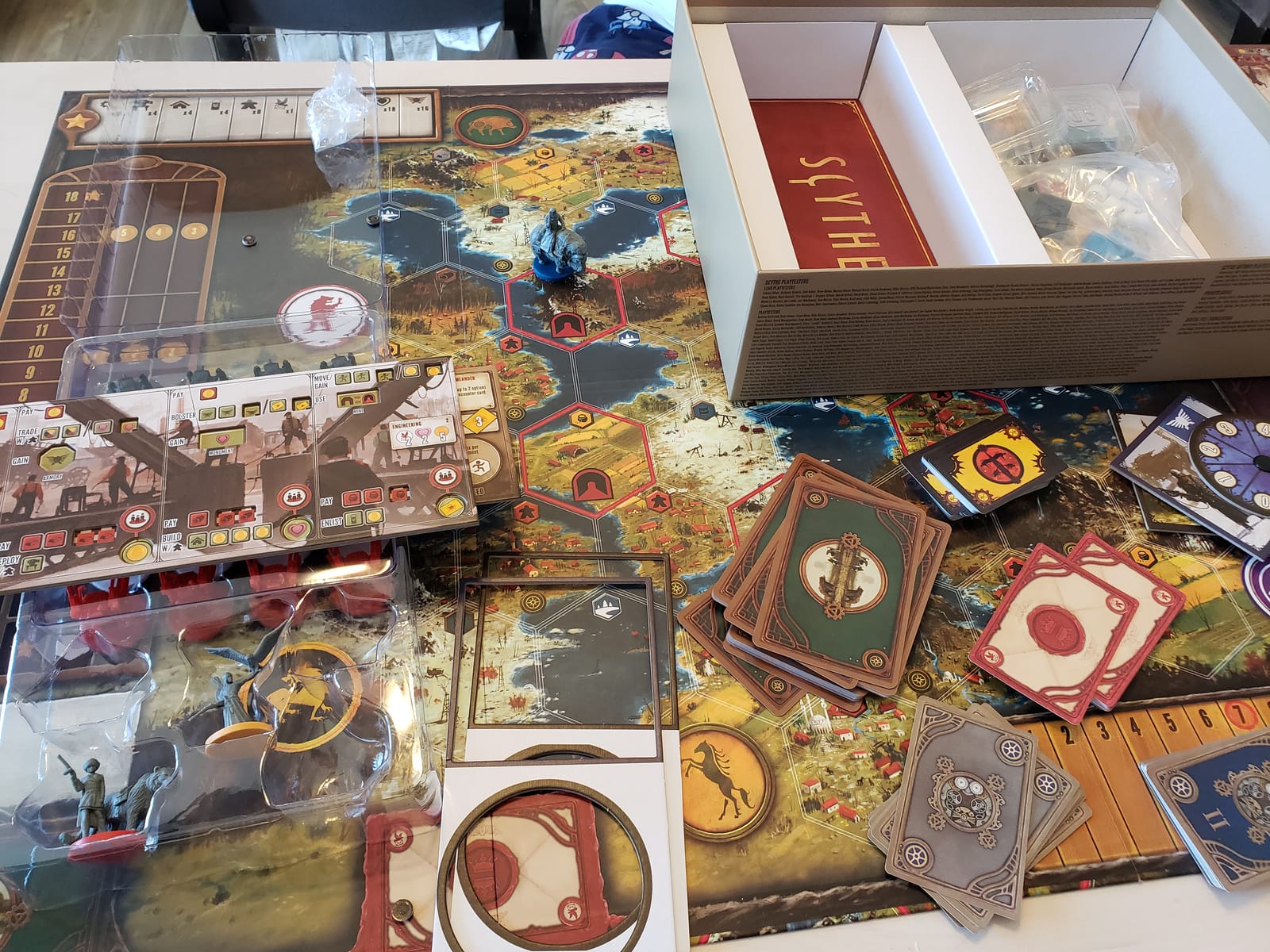
My longest session ran 2.5 hours with five players, and the turns stayed brisk thanks to the no-round action-queue system. With two players and the Automa, I usually finish under 90 minutes. The biggest barrier is the rulebook. We had to read it twice before our first game, and most groups I have watched do the same.
Once it clicks, Scythe offers some of the deepest engine-building in the hobby without heavy combat math. That is part of why it keeps appearing on best-of lists.
Who will love Scythe
Hobby gamers who want asymmetric factions and a meaty 2-hour experience. Solo players who want a real Automa. Anyone who likes low-luck strategic decisions and gorgeous table presence.
Who should skip Scythe
Casual players new to the hobby. Anyone who hates long rulebooks. Groups that need a game under 60 minutes.
5. Terraforming Mars – Best Thematic Engine-Building Game
Terraforming Mars by Stronghold Games, Strategy Board Game
Players: 1-5
Time: 120 min
Age: 14+
Mechanic: Engine building
Pros
- Deep engine-building and resource management with strong theme
- Hundreds of unique project cards create excellent replayability
- Great solo mode with target-score challenge
- Many expansions available for long-term value
Cons
- Steep learning curve
- especially for first-time players
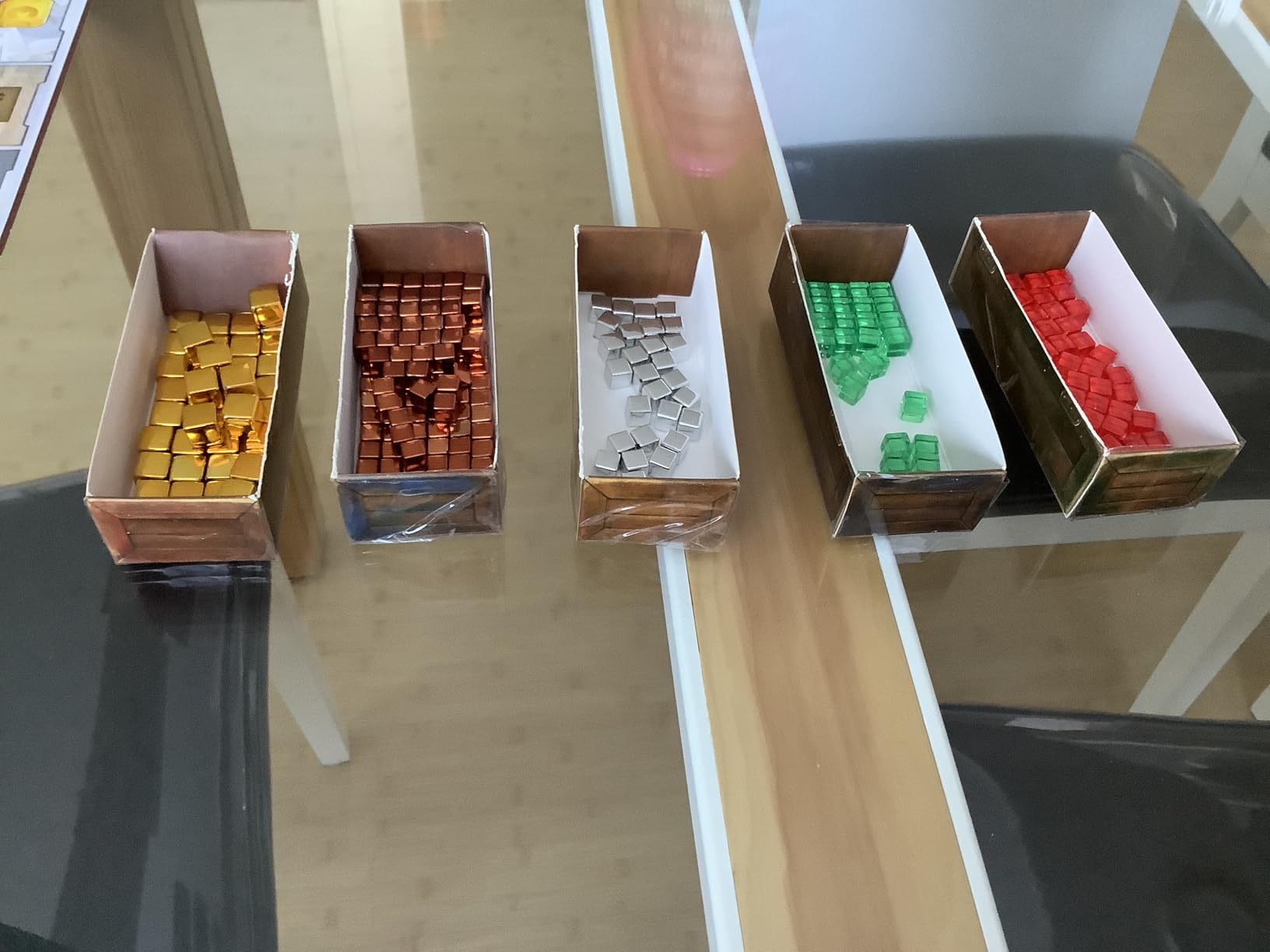
- Player mats can be flimsy; cubes can shift easily
- Long play sessions (often 2+ hours) require patient groups
Terraforming Mars is the game I pull out when my hobby friends visit. You run a corporation, play project cards, raise the planet’s temperature and oxygen, and try to score the most victory points before the planet is habitable.
The engine-building here is layered. Your corporation’s bonuses, the cards you draft, and the milestones you chase all interact differently each game. After 60 plays I have still seen new card combos surprise me.
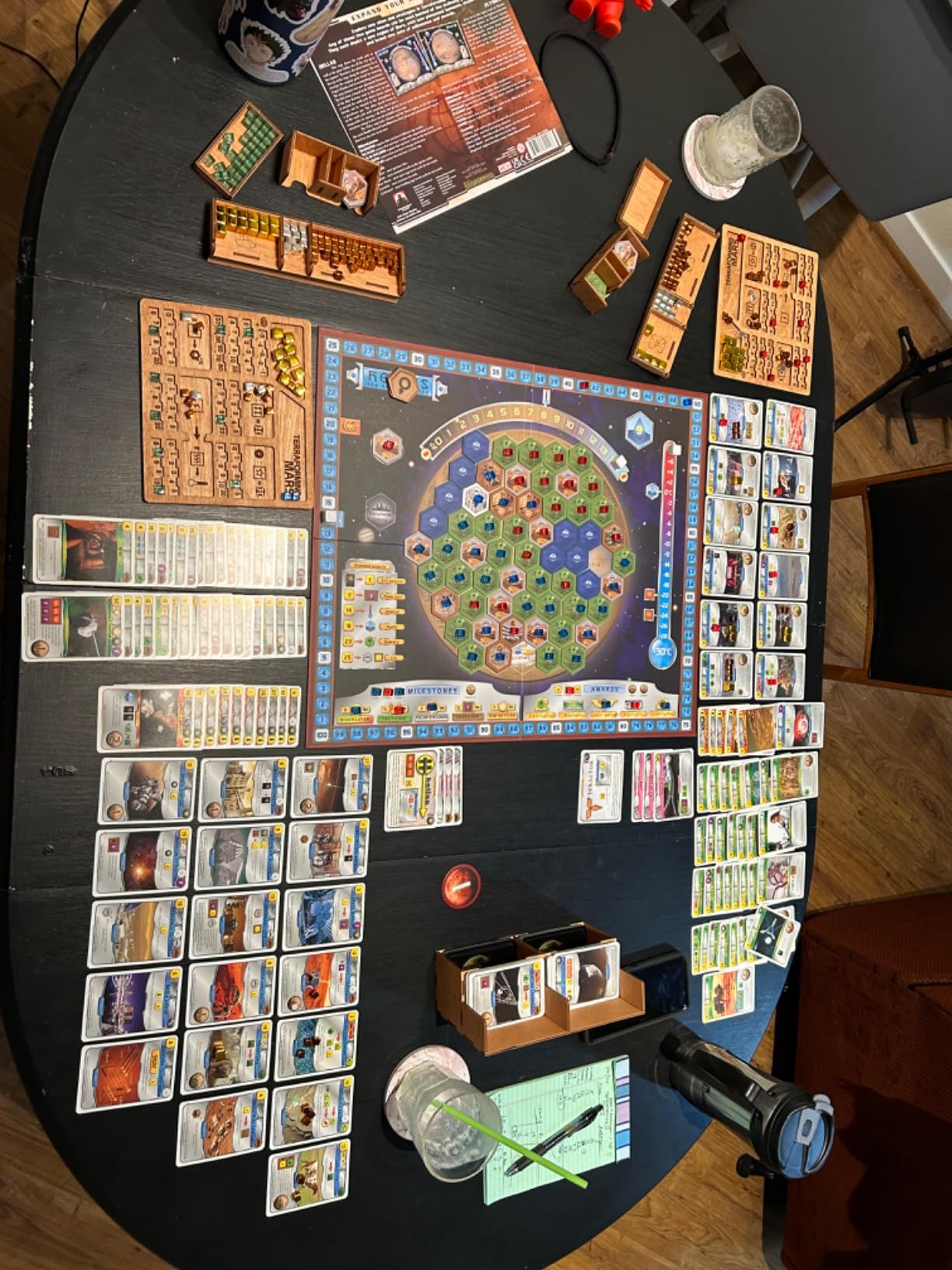
Solo play is one of the underrated strengths. The corporation-based solo mode gives you a clear target score and lets you build an engine without social pressure. It is how I started playing and it remains one of the best solo experiences in the genre.
The two complaints that come up the most: the player mats feel cheap and the cubes slide around, and the game runs long. Sleeving your cards and budgeting two hours are basically requirements.
Who will love Terraforming Mars
Players who want a long, deep engine-builder with a strong science theme. Solo gamers looking for a rewarding single-player project. Hobby groups willing to invest in expansions.
Who should skip Terraforming Mars
Anyone needing a quick game. New gamers without a patient teacher. Players who dislike heavy bookkeeping.
6. 7 Wonders – Best Quick Card-Drafting Strategy Game
Asmodee 7 Wonders Board Game (New Edition) – Lead Your Civilization to Prosperity, Strategy Game for Kids and Adults, Ages 10+, 3-7 Players, 30 Minute Playtime
Players: 3-7
Time: 30 min
Age: 10+
Mechanic: Card drafting
Pros
- Simultaneous card-drafting keeps turns fast at 3-7 players
- Multiple viable strategies (science
- military
- commercial
- civil)
- Short playtime (~30 minutes) fits busy family nights
- Excellent gateway civilization strategy game
Cons
- Resource system can be confusing for first-time players
- Scoring requires careful reference to the rulebook
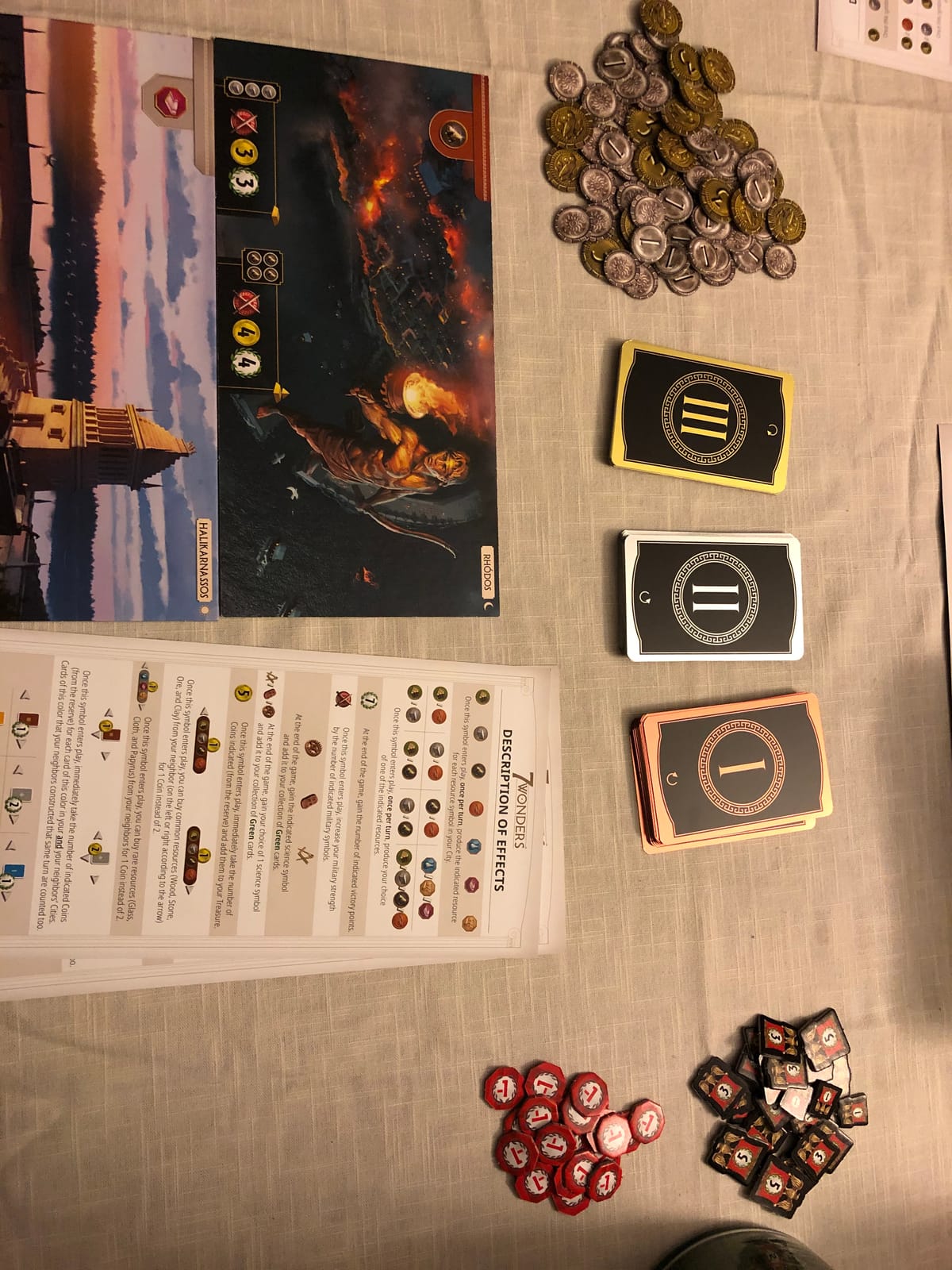
7 Wonders solves a problem most strategy games ignore: how do you keep seven people engaged at the same time? The answer is simultaneous card drafting. Everyone picks a card from their hand at the same moment, then passes the rest.
With three ages of cards and four paths to victory, no two games play alike. My family groups tend to drift toward science, while my adult hobby group loves going full military.
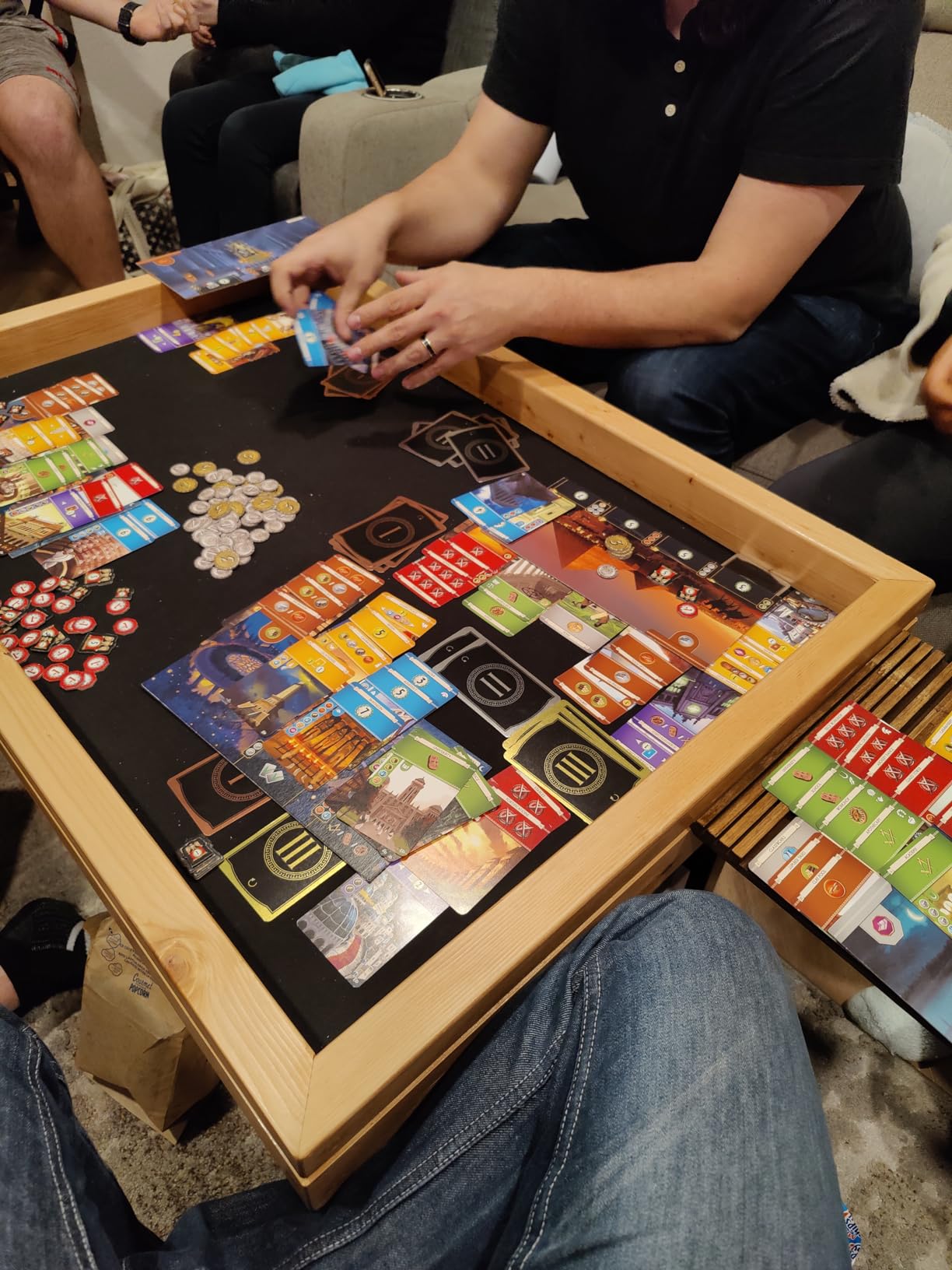
The 30-minute playtime is the real magic. I have pulled 7 Wonders out at the end of a long evening when nobody has the energy for a 2-hour game, and it fits perfectly.
The first game usually runs 45 minutes while everyone learns the resource rules. By the second game, the table is moving fast.
Who will love 7 Wonders
Families with mixed ages from 10 upward. Large groups of 5 to 7 friends. Anyone who wants a real strategy game in 30 minutes.
Who should skip 7 Wonders
Two-player groups (the game is best at three or more). Players who dislike referring to the rulebook mid-game.
7. Sagrada – Best Dice-Drafting Puzzle Game
Sagrada Board Game | Family Game for Kids and Adults | Dice Drafting and Placement Strategy Game | Ages 10+ | 1 to 4 Players | by Floodgate Games
Players: 1-4
Time: 30 min
Age: 10+
Mechanic: Dice drafting
Pros
- Beautiful stained-glass theme and high-quality colorful components
- Strikes a satisfying balance between luck (dice) and strategy
- Easy to learn with deep
- puzzly decision space
- Great solo mode and 1-4 player scalability
Cons
- Dice are small and can be fiddly to place
- Tool cards could be better explained in the rulebook
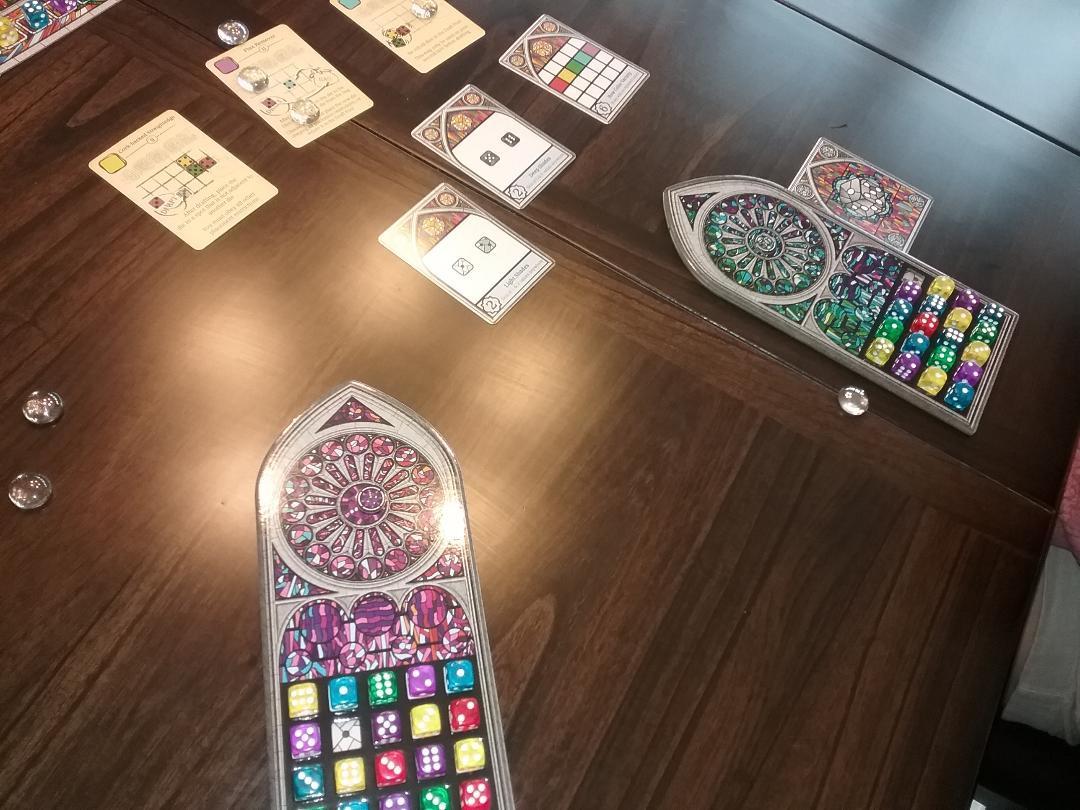
Sagrada turns stained-glass window design into a satisfying dice puzzle. You draft colored dice, place them on your window according to pattern restrictions, and chase public and private objectives for points.
It looks like a chill art game, but the restrictions create real spatial puzzles. Every placement matters because public objectives change each game.
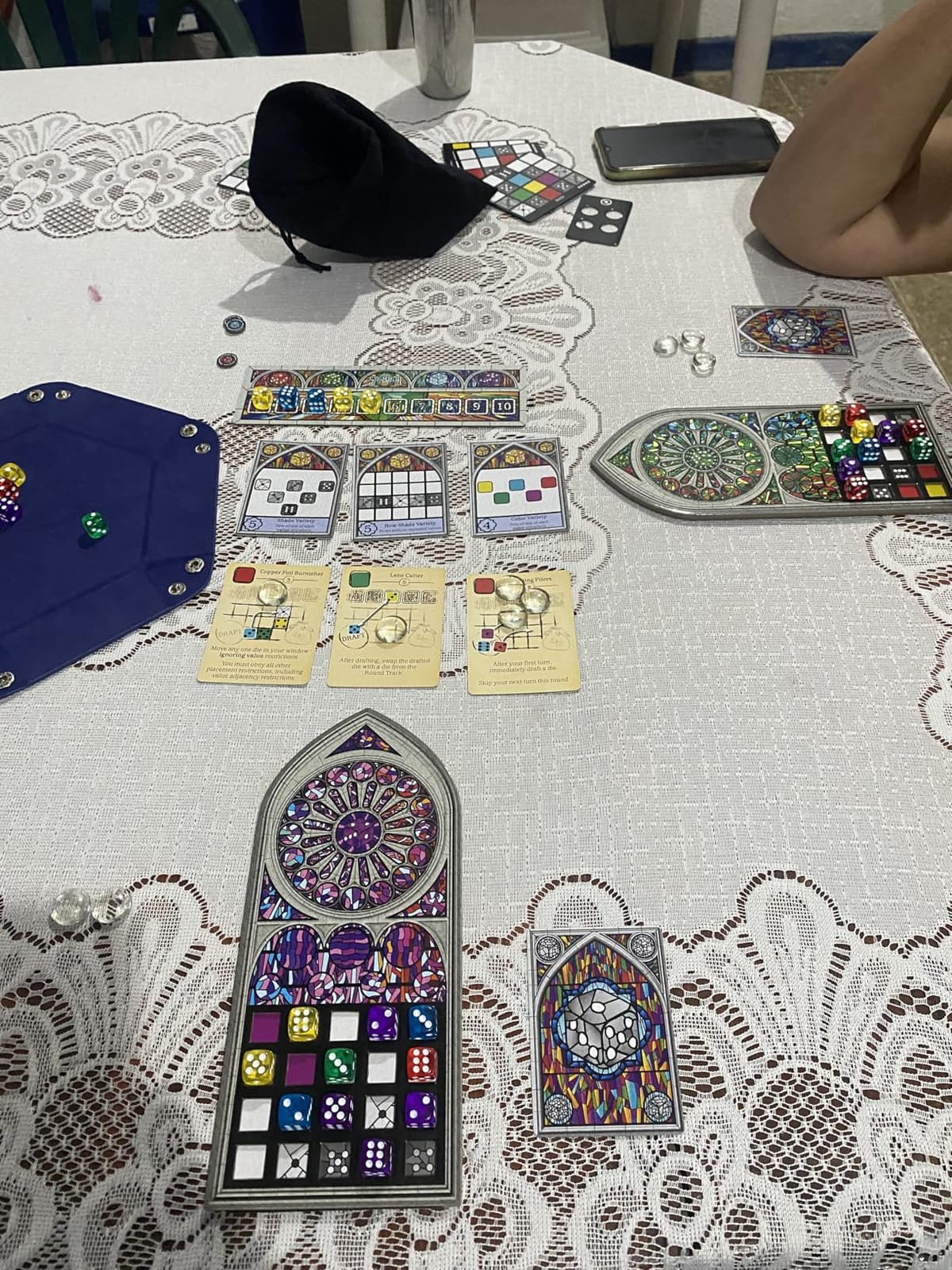
Solo Sagrada is one of my favorite 30-minute routines. The solo mode plays against a simple objective deck, and I have found it equally relaxing as a 4-player game.
The dice are small and can be fiddly for players with large hands. We have considered upgrading to glass tokens, but the standard set works fine for most people.
Who will love Sagrada
Players who enjoy spatial puzzles and pattern matching. Anyone who wants a colorful, relaxing 30-minute game. Solo gamers looking for a quick daily challenge.
Who should skip Sagrada
Players who dislike dice luck. Anyone wanting direct player interaction. Groups that prefer thematic narrative over abstract puzzles.
8. Spirit Island – Best Cooperative Anti-Colonial Strategy Game
Greater Than Games Spirit Island – Cooperative Strategy Board Game
Players: 1-4
Time: 90-120 min
Age: 14+
Mechanic: Cooperative
Pros
- Innovative reverse-colonization theme (spirits defending the island)
- Deep tactical cooperation with 8 unique spirits and adversaries
- Excellent solo Automa mode and 1-4 player scalability
- Highly thematic mechanics that build to a satisfying climax
Cons
- Long initial setup and steep learning curve
- Heavy bookkeeping when managing multiple spirits solo
- Not suitable for casual players or young children
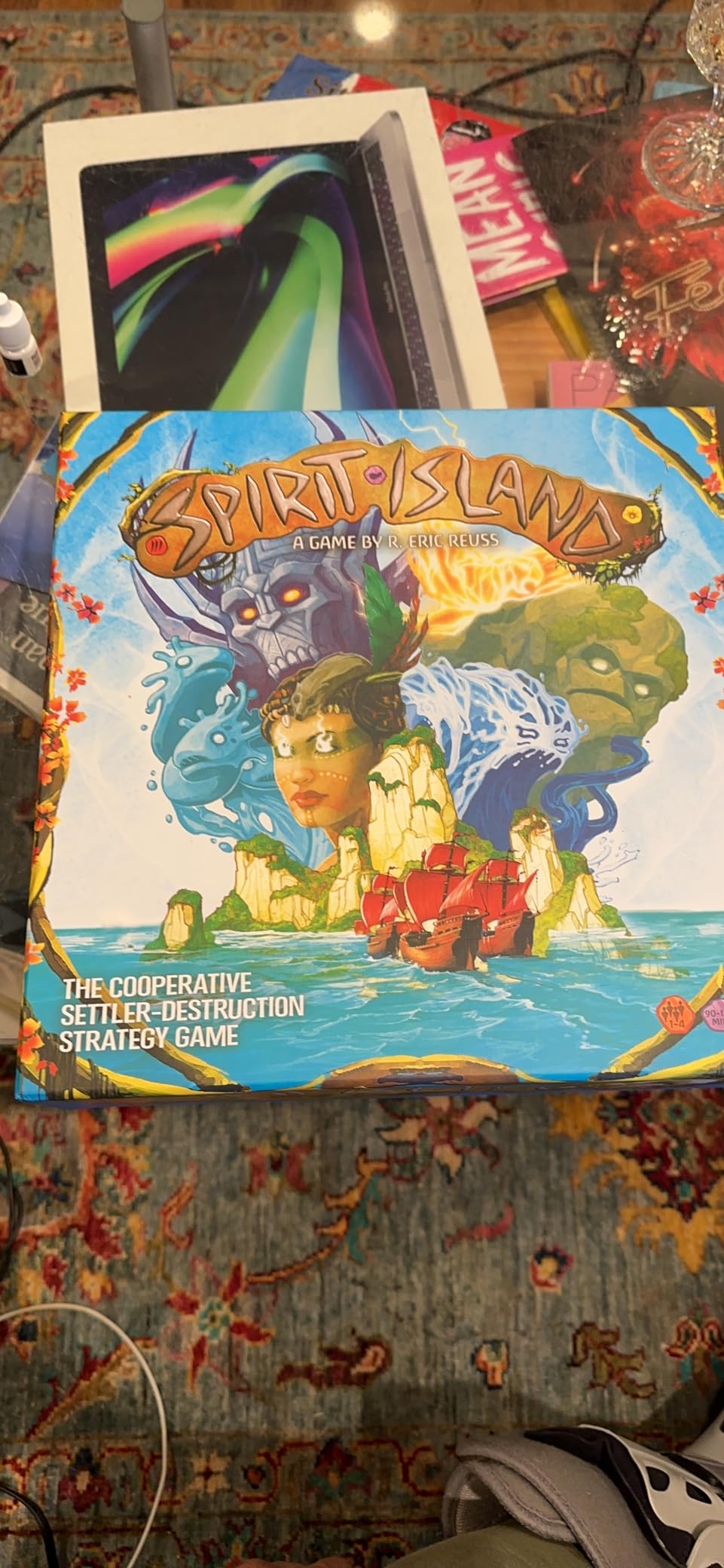
Spirit Island flips the colonization trope on its head. You play powerful spirits defending the island from invading settlers, and the invaders are the ones you push back across the map.
The mechanics are deeply thematic. Each spirit feels different: lightning scorches invaders, water floods coastal cities, and the fear mechanic turns settlers into panicked civilians.
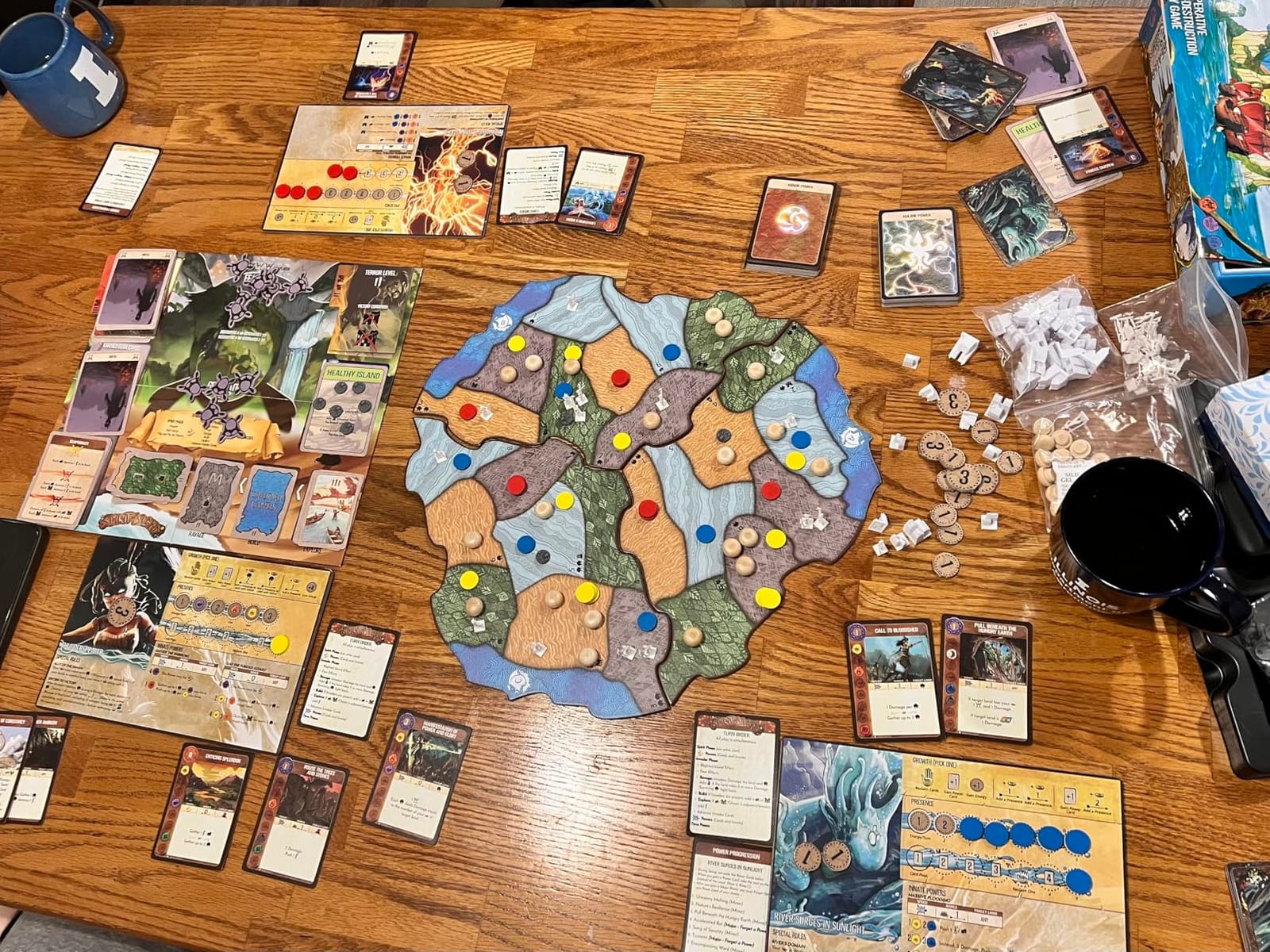
I run Spirit Island solo most often. The Automa is excellent, and the 8 spirits mean I can rotate through different playstyles. With two players, I have spent entire evenings on a single round and loved every minute.
The setup is the biggest barrier. Plan on 20-30 minutes for the first game and 10-15 minutes after that. Bookkeeping is real, especially in solo play, so a tray with sorted tokens helps a lot.
Who will love Spirit Island
Hobby co-op players who want a deep challenge. Solo gamers seeking a meaty 90-minute experience. Anyone interested in the anti-colonial theme and tactical cooperation.
Who should skip Spirit Island
Casual players new to the hobby. Anyone needing a game under 60 minutes. Players who hate heavy bookkeeping.
9. Cascadia – Best Cozy Tile-Laying Strategy Game
Cascadia, Award-Winning Cozy Nature Board Game Set in the Pacific Northwest
Players: 1-4
Time: 15-30 min
Age: 10+
Mechanic: Tile-laying
Pros
- Beautiful
- cozy Pacific Northwest theme and high-quality wooden components
- Easy to learn (~2 minutes) with surprising strategic depth
- Multiple scoring paths (5 wildlife cards) create varied strategies
- Excellent solo and 1-4 player experience
Cons
- Some player interaction is limited; mostly parallel play
- May feel repetitive after many sessions without expansions
- Pricing may feel high for the component count
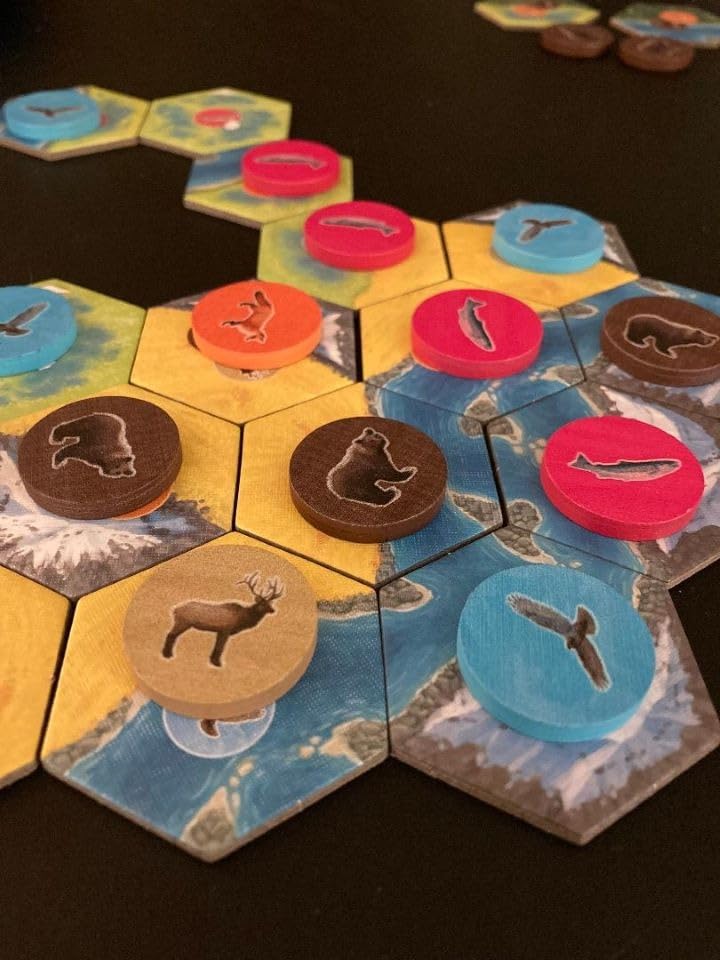
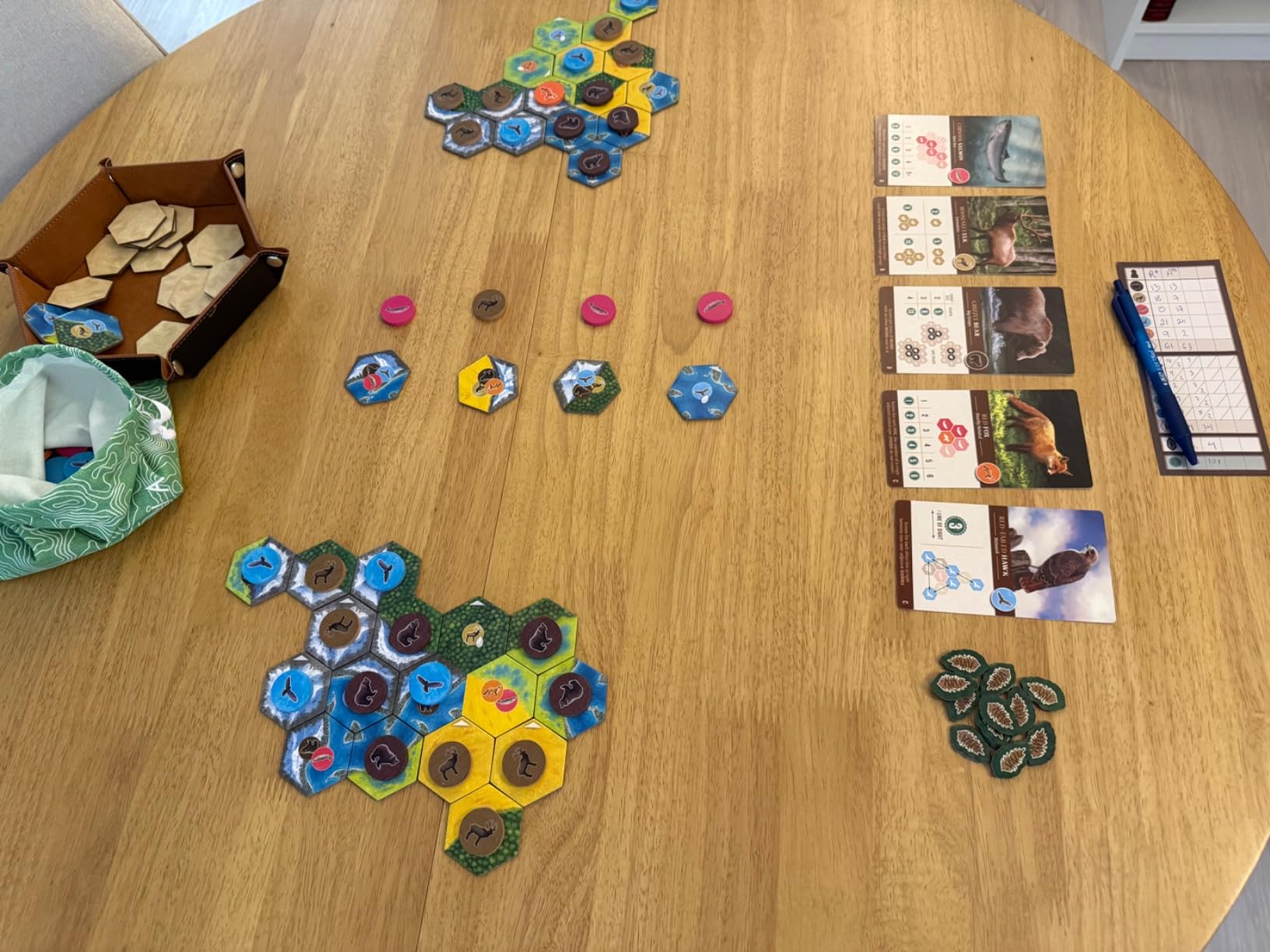
Cascadia is the game I bring when someone says they want “a chill strategy game.” You build a Pacific Northwest habitat by drafting habitat tiles and placing wildlife tokens, and you score by satisfying five different wildlife card patterns.
It plays in 15 to 30 minutes, scales from solo to four players, and teaches in about two minutes. The wooden animal tokens are gorgeous on the table.
The 4.9-star average across thousands of reviews tells the story. Cascadia is one of the most universally loved modern strategy games on the market. After 25 plays in my house, it still gets requested by my partner on lazy Sundays.
Interaction is low. Most of your play happens on your own board, which is exactly what some groups want and exactly what other groups find boring.
Who will love Cascadia
Nature lovers and casual strategy fans. Couples who want a 20-minute game. Solo players who enjoy tile-laying puzzles. Anyone who values premium wooden components.
Who should skip Cascadia
Players who want heavy conflict and direct interaction. Anyone seeking a game with high replayability out of the base box alone.
10. CATAN – Best Trading and Settlement Strategy Game
CATAN Board Game (6th Edition) Trade, Build & Settle in the Classic Strategy Game for Family, Kids & Adults, Ages 10+, 3-4 Players, 60-90 Min Playtime
Players: 3-4
Time: 60-90 min
Age: 10+
Mechanic: Trading
Pros
- Modern board game classic with strong replayability from modular board
- Trading and negotiation create lively social interaction
- Wooden player pieces and solid component quality in 6th Edition
- Excellent gateway strategy game for families and new gamers
Cons
- Best with 3-4 players; cannot be played 2-player out of the box
- Initial rules learning curve for first-time players
- Longer play sessions (~60-90 minutes)
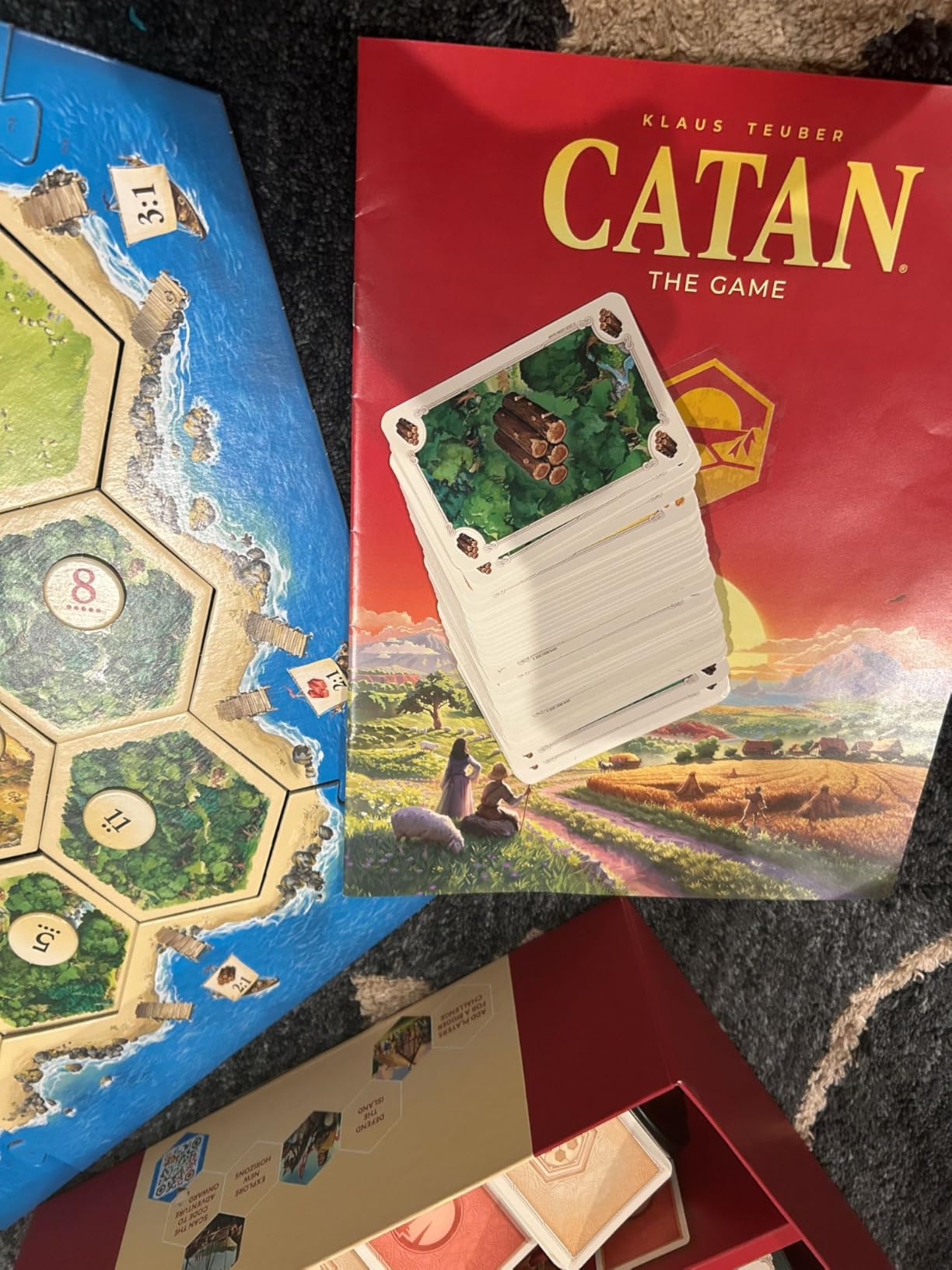
CATAN is the gateway strategy game that pulled an entire generation off Monopoly. The 6th Edition refreshes the components with wooden pieces and improved art, but the heart of the game is the same: trade, build, and settle to 10 victory points.
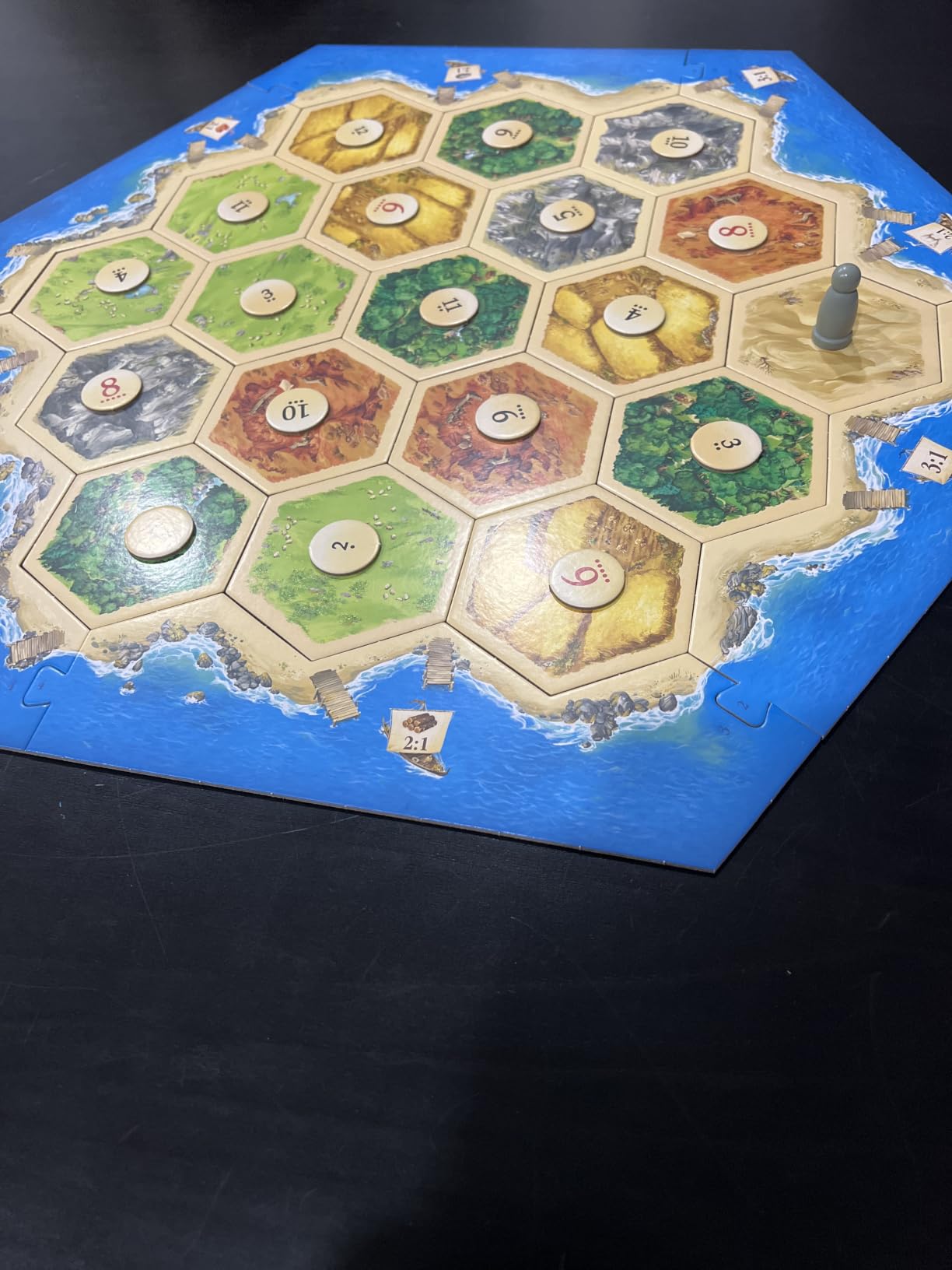
The hexagonal modular board is what gives CATAN its replayability. Every game has a different resource layout, which forces you to adapt your strategy on the fly.
I have introduced CATAN to dozens of first-time players, and the trading phase is what always hooks them. There is something magical about negotiating with your sibling for a single wheat while your parents plot against you both.
CATAN needs three or four players to really shine. The 2-player variant exists but it is not the experience the designers intended.
Who will love CATAN
Families new to strategy games. Groups of three or four friends looking for a casual night. Anyone who wants the most influential gateway game ever published.
Who should skip CATAN
Couples without a third or fourth player. Hobby gamers who have already played dozens of times and want something deeper. Anyone wanting a quick 30-minute game.
11. Brass: Birmingham – Best Industrial Economic Strategy Game
Roxley Games Brass: Birmingham Board Game, Economic Strategy, 2-4 Players
Players: 2-4
Time: 120 min
Age: 14+
Mechanic: Economic strategy
Pros
- Deep economic strategy set in England's Industrial Revolution
- Excellent balance for 2-player while retaining depth at 3-4
- Beautiful Roxley components with detailed board and pieces
- Critical acclaim (top rankings on BoardGameGeek) and strong replayability
Cons
- Long play sessions (2-3 hours) and complex rules
- Board artwork is visually dark and can be hard to read
- Not suited for casual or new strategy players
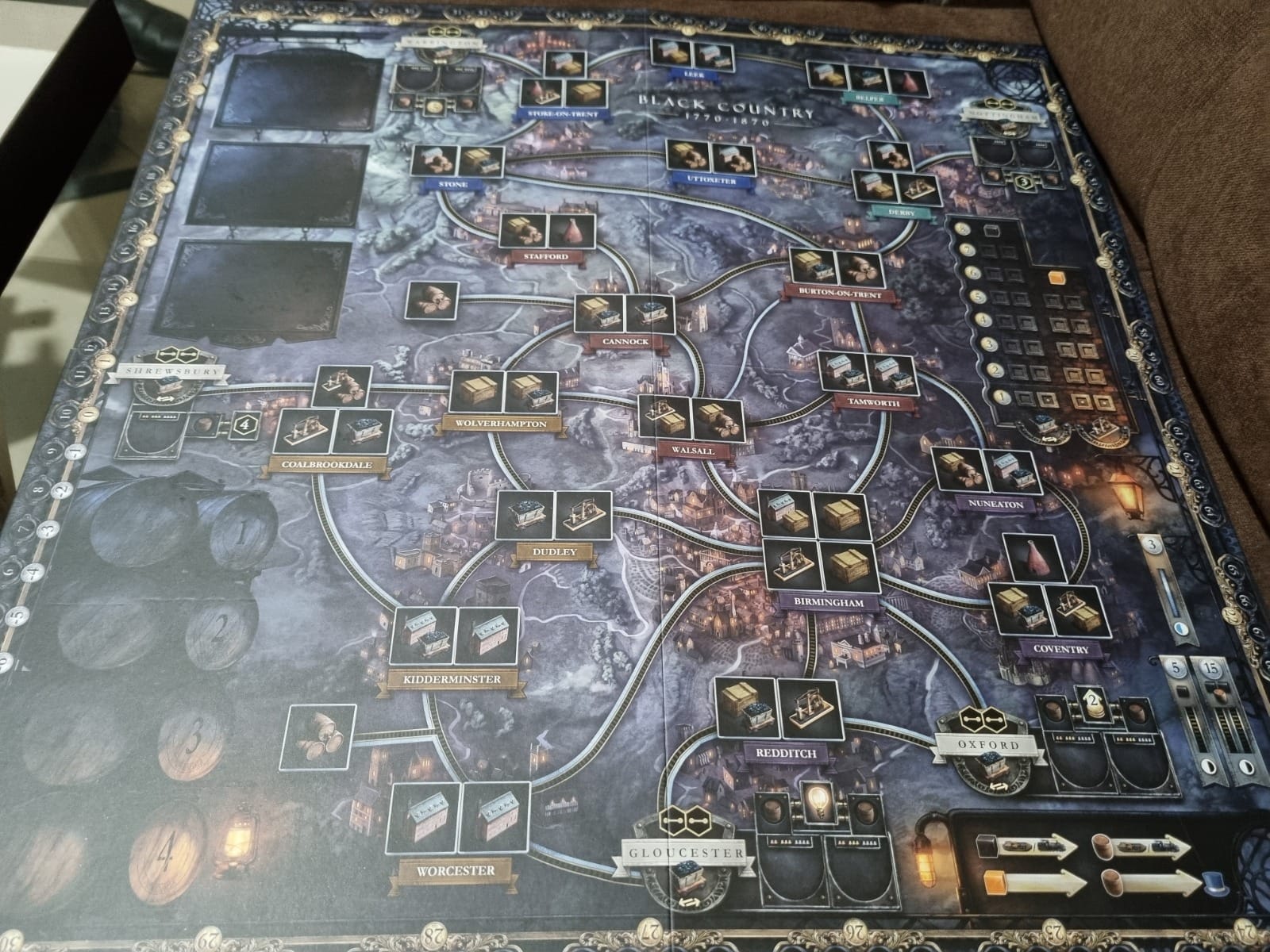
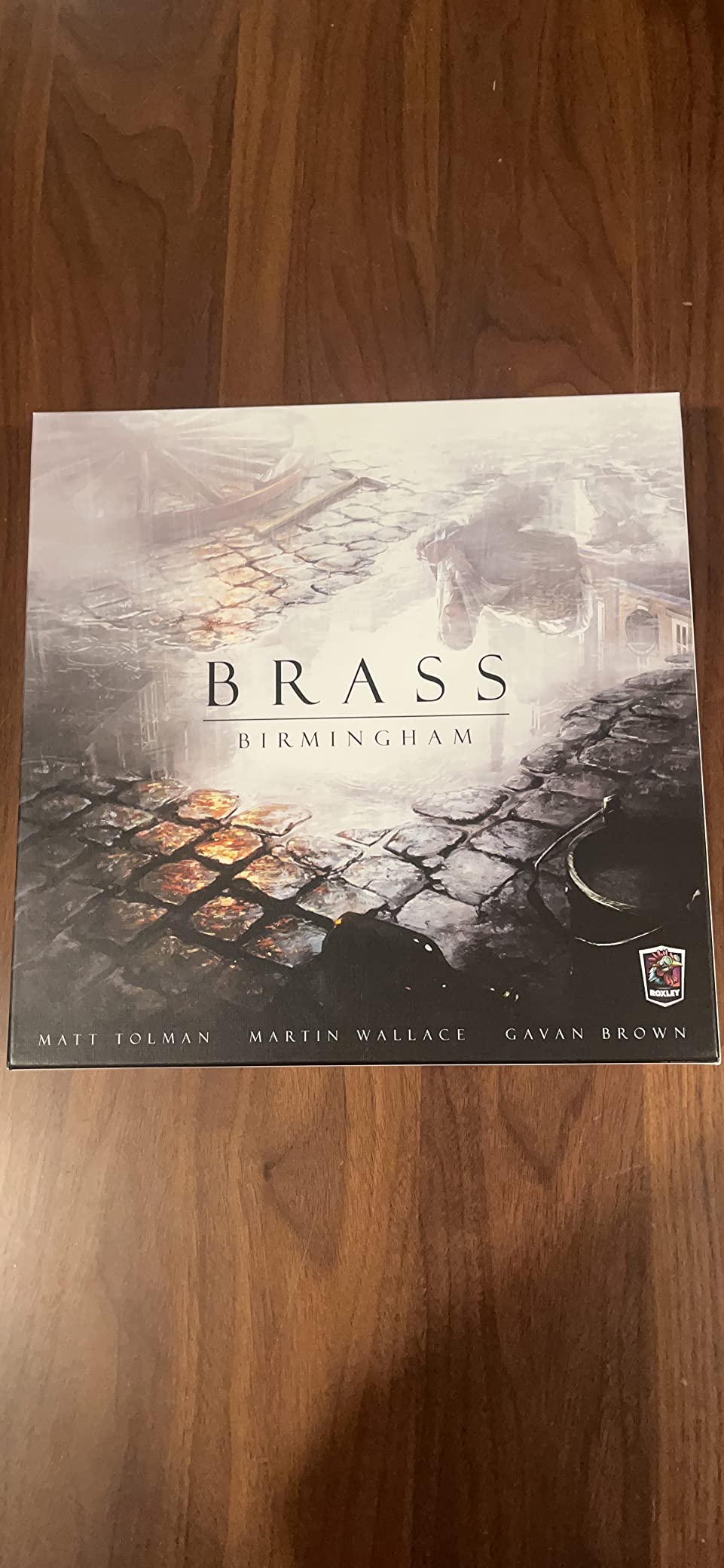
Brass: Birmingham is the heavyweight economic strategy game that sits on top of most critics’ rankings. You build cotton mills, breweries, and pottery works in industrial England, then ship goods through canals and rails to score money.
The two-era structure (canal then rail) is what makes it special. Every decision you make in the canal era sets up what is possible in the rail era.
I have played Brass: Birmingham with two players and four players, and both work well. Two players is faster and tighter, while four players creates a more crowded market with more cutthroat loan play. The Roxley components are gorgeous, with wooden cubes and engraved pieces.
Setup time is the most common complaint. Plan on 15 minutes to lay out the market, location tiles, and industry cards. The board art is also dark, so good lighting matters.
Who will love Brass: Birmingham
Heavyweight eurogame fans who want a meaty 2-hour experience. Couples who want a deep 2-player strategy game. Hobby collectors who appreciate premium components.
Who should skip Brass: Birmingham
Casual players and new gamers. Anyone needing a game under 90 minutes. Players who dislike dark, busy boards.
12. Ticket to Ride – Best Route-Building Family Strategy Game
Asmodee Ticket to Ride Board Game (2025 Refresh) – A Cross-Country Train Adventure for Friends and Family, Strategy Game for Kids & Adults, Ages 8+, 2-5 Players, 30-60 Minute Playtime
Players: 2-5
Time: 30-60 min
Age: 8+
Mechanic: Route building
Pros
- Iconic modern classic that is easy to learn
- hard to master
- Beautiful giant North American map and miniature trains
- Great family game night option for ages 8+
- Multiple winning strategies (tickets
- longest route
- set collection)
Cons
- Better with 3+ players; the 2-player experience is weaker
- Game length (~60 min) is moderate for casual audiences
- Some prefer more direct conflict mechanics (e.g.
- Catan)
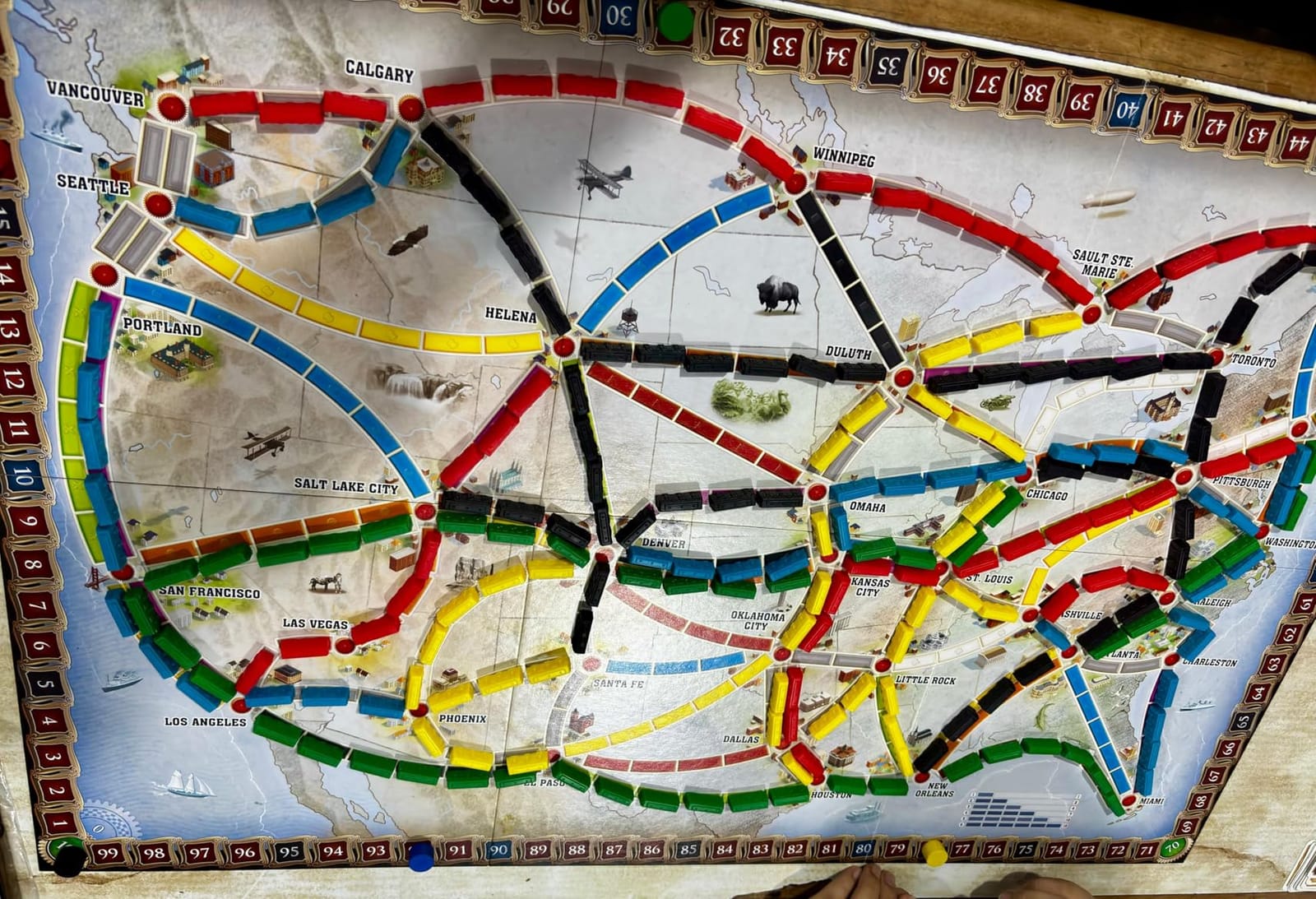
Ticket to Ride is the most accessible strategy game on this list. You collect colored train cards, claim routes between cities on a giant North American map, and try to complete ticket destinations before your opponents block you.
The 2026 Refresh keeps the heart of the game but updates the components. The trains and the board look sharper than ever on the table.
I taught Ticket to Ride to my 7-year-old nephew in under 10 minutes, and he won the first game by accident. The rules are that clean. With adults, the strategy emerges in route blocking and ticket selection.
Two players is fine but less exciting than three or more. The Europe version is actually a better 2-player option if that is your primary group size.
Who will love Ticket to Ride
Families with kids ages 8 and up. Groups of three to five players. Anyone looking for an easy teach with real strategic decisions.
Who should skip Ticket to Ride
Two-player groups (consider Europe edition). Hobby gamers wanting deep complexity. Players who want direct combat.
How to Choose the Best Strategy Board Game for You
Picking a strategy board game is less about the box art and more about your group. I have walked people through this decision for years, and the same six factors keep coming up. Use them to narrow your shortlist before you commit.
Player count and group size
If you mostly play with two people, prioritize games that scale down well. Azul, Brass: Birmingham, Spirit Island, Wingspan, Cascadia, and Sagrada all work in 2-player mode without losing their identity. For larger groups, 7 Wonders and CATAN shine. For solo play, Wingspan, Terraforming Mars, Spirit Island, and Cascadia all have excellent solo modes.
A common regret from buyers is grabbing a heavyweight that needs 4 players, only to discover most of their evenings are couples nights. Match the player count first, then the theme.
Complexity and learning curve
Complexity ratings (called BGG weight) are useful, but they hide a lot. Azul teaches in 5 minutes and feels deep after 30 plays. Spirit Island has the same weight on paper but takes 3 hours to teach properly. As a rule of thumb, gateway titles run 1.8 to 2.5 in weight, medium euros run 2.5 to 3.5, and heavyweights start at 3.5 and go up.
If you have never played a modern strategy game, start with Azul, Cascadia, or Ticket to Ride. Save Scythe, Brass: Birmingham, and Spirit Island for when you have a regular group that enjoys a longer teach.
Playtime and session length
Real playtime is usually 20% longer than the box says. Budget for 45 minutes on a “30-minute” game and 2.5 hours on a “2-hour” heavyweight. If your typical weeknight game window is 90 minutes, you want games in the 30 to 60-minute range like 7 Wonders, Azul, Sagrada, or Cascadia.
On weekend afternoons when nobody has to leave, that is when you break out Terraforming Mars, Scythe, or Brass: Birmingham.
Solo mode availability
Solo mode is now a standard feature in modern strategy board games. The quality matters more than the label. Wingspan, Spirit Island, Cascadia, Terraforming Mars, and Scythe all have well-regarded solo experiences. Pandemic also plays solo as a kind of puzzle, while Azul and 7 Wonders do not really work without opponents.
Theme preference
Theme is what keeps people coming back. Bird lovers gravitate to Wingspan. History buffs love Scythe and Brass: Birmingham. Science fiction fans usually pick Terraforming Mars. Families who want something cozy default to Cascadia or Azul. Pick the theme that excites your group, then narrow down by mechanic.
Budget and value
Modern strategy board games typically cost more than casual party games because of the component count. Cascadia and 7 Wonders sit on the friendlier end of the price range. Scythe and Brass: Birmingham sit at the premium end. If you want maximum value, look for games with strong solo modes and many expansions so the box grows with your group.
Once you have picked your game, a few well-chosen accessories can transform the experience. We rounded up the best options in our tabletop accessories guide, and our best gifts for board game lovers list is a good place to find a present for a hobby friend.
Frequently Asked Questions
What is the no. 1 strategy game?
Pandemic is our top pick for the no. 1 strategy board game. It earned our Editor’s Choice thanks to its 4.8-star rating across more than 18,000 reviews, accessible 45-minute cooperative play, and strong replayability from specialist roles and adjustable difficulty. For solo players, Spirit Island and Terraforming Mars are close runner-ups.
What are the top 10 strategy games?
Our top 10 strategy games in 2026 are: 1) Pandemic, 2) Azul, 3) Wingspan, 4) Scythe, 5) Terraforming Mars, 6) 7 Wonders, 7) Sagrada, 8) Spirit Island, 9) Cascadia, and 10) Brass: Birmingham. CATAN and Ticket to Ride round out the full 12-game list as the best gateway options.
What is the hardest strategy board game of all time?
Spirit Island, Brass: Birmingham, and Scythe are widely regarded as the hardest modern strategy board games. Spirit Island combines a deep co-op puzzle with heavy bookkeeping at higher difficulty. Brass: Birmingham layers economic decisions over a two-era timeline. Scythe’s asymmetric factions each demand a different strategic approach. None of these are great first strategy games.
What is the easiest strategy board game?
Azul and Cascadia are the easiest strategy board games to learn. Both teach in under five minutes, play in 30 minutes or less, and scale from 2 to 4 players. Ticket to Ride is another easy option that is best with 3 or more players. These three are the standard gateway recommendation for anyone new to modern strategy games.
Are there good strategy board games that are easy to learn but surprisingly deep?
Yes. Azul is the textbook example: simple tile-drafting rules but a deep decision space once you start denying opponents specific colors. Cascadia teaches in 2 minutes but offers long-term tile-laying puzzles across five wildlife scoring cards. Wingspan is approachable but rewards engine-building over many plays. Each of these hits the easy-to-learn, hard-to-master sweet spot.
What strategy board games work best for 2 players?
Azul, Brass: Birmingham, Spirit Island, Wingspan, and Cascadia are all excellent for 2 players. Azul is the best quick 2-player duel. Brass: Birmingham scales beautifully from 2 to 4 with tight economic play. Spirit Island has a strong solo and 2-player co-op mode. CATAN and Ticket to Ride are weaker at 2 players without special variants.
Final Verdict
After testing these 12 best strategy board games across dozens of sessions, Pandemic stands out as our top pick. Its cooperative design brings people together, the rules stay approachable, and the replayability from role combinations and Epidemic cards is essentially unmatched in the gateway co-op space.
If you want a quick 2-player duel, grab Azul. If you want the deepest solo experience, Spirit Island and Terraforming Mars are both excellent. If you want the warmest, coziest game on the table, Cascadia wins. For pure hobby depth, Scythe and Brass: Birmingham reward the time you put in. Whatever you choose, the best strategy board game is the one that gets played regularly. Pick the box that fits your group, and you will not regret it.
For more tabletop recommendations, explore our best gifts for board game lovers roundup and our top board game accessories guide to complete your collection in 2026.