
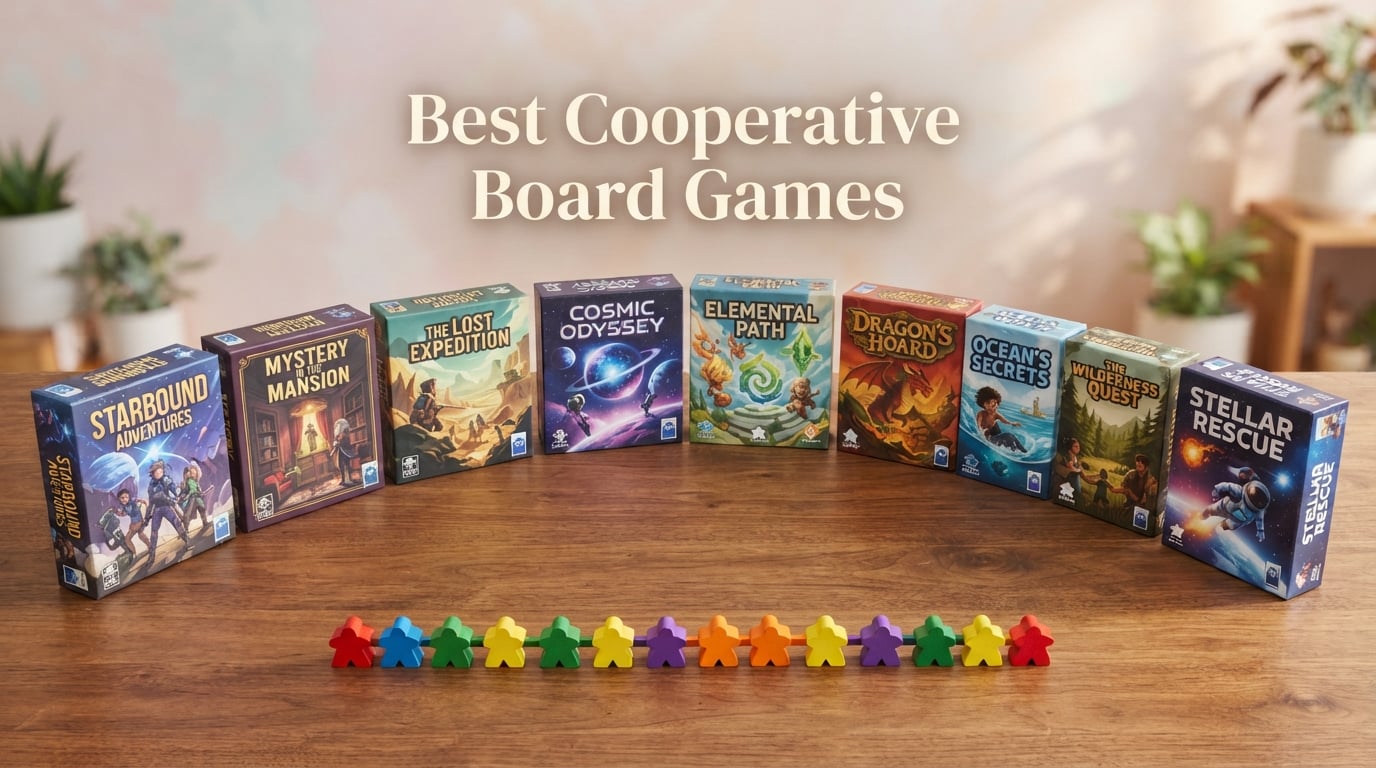
Cooperative board games flip the usual table on competition. Instead of hunting down your friends, you team up against the game itself, sharing every win and every loss. Pandemic, The Mind, Spirit Island, Mysterium – these are the best cooperative board games our team has tested across dozens of family game nights, couples weekends, and solo sessions.
We spent the last three months pulling ten of the most popular co-op board games off the shelf, teaching them to mixed groups, and tracking which ones got requested again. The list below covers light fillers like Hanabi and The Mind, mid-weight family adventures like Forbidden Desert and Horrified, and the heavy hitters Spirit Island and Journeys in Middle-Earth for hobby gamers who want a real challenge. Every game below is true co-op with no game master required, and most include a solo mode.
A cooperative board game works like this: players take turns with shared information, pool their cards, and chase a single team win condition before a shared loss condition trips. There is no sore-loser problem, no player elimination in the first ten minutes, and plenty of room for adults to coach younger or newer players. That is exactly why co-op has become the fastest-growing slice of the tabletop market heading into 2026, and why we put this guide together.
Table of Contents
Top 3 Cooperative Board Games at a Glance (September 2026)
Best Cooperative Board Games in 2026 Quick Comparison
| Product | Specs | Action |
|---|---|---|
 Pandemic Pandemic |
|
Check Latest Price |
 The Mind The Mind |
|
Check Latest Price |
 Mysterium Mysterium |
|
Check Latest Price |
 The Crew: Quest for Planet Nine The Crew: Quest for Planet Nine |
|
Check Latest Price |
 Horrified: Universal Monsters Horrified: Universal Monsters |
|
Check Latest Price |
 Hoot Owl Hoot Hoot Owl Hoot |
|
Check Latest Price |
 Forbidden Desert Forbidden Desert |
|
Check Latest Price |
 Hanabi Hanabi |
|
Check Latest Price |
 Spirit Island Spirit Island |
|
Check Latest Price |
 Journeys in Middle-Earth Journeys in Middle-Earth |
|
Check Latest Price |
1. Pandemic – The Classic Cooperative Survival Benchmark
Pandemic Cooperative Strategy Board Game, 2-4 Players, 45-60 Min
Players: 2-4
Time: 45-60 min
Age: 8+
Style: Cooperative strategy
Pros
- Benchmark gateway co-op with 4 specialist roles
- Replayable across difficulty levels via Epidemic cards
- Strong theme of curing four global diseases
- Tight 45-60 minute runtime that fits a weeknight
Cons
- City circles on the board run small and can be hard to read
- Setup needs careful shuffling for first-timers
- Some reports of misprinted boards in newer printings
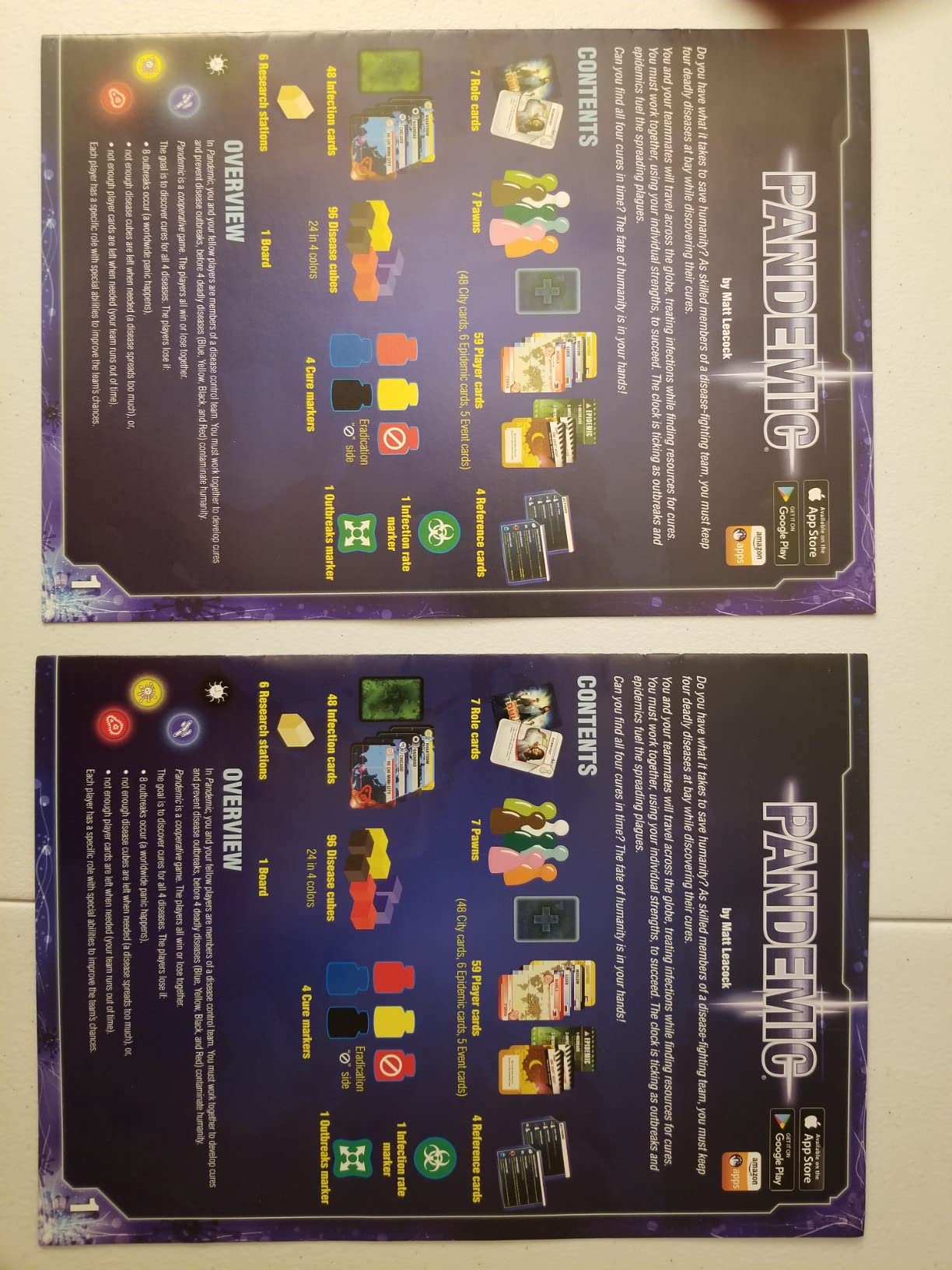
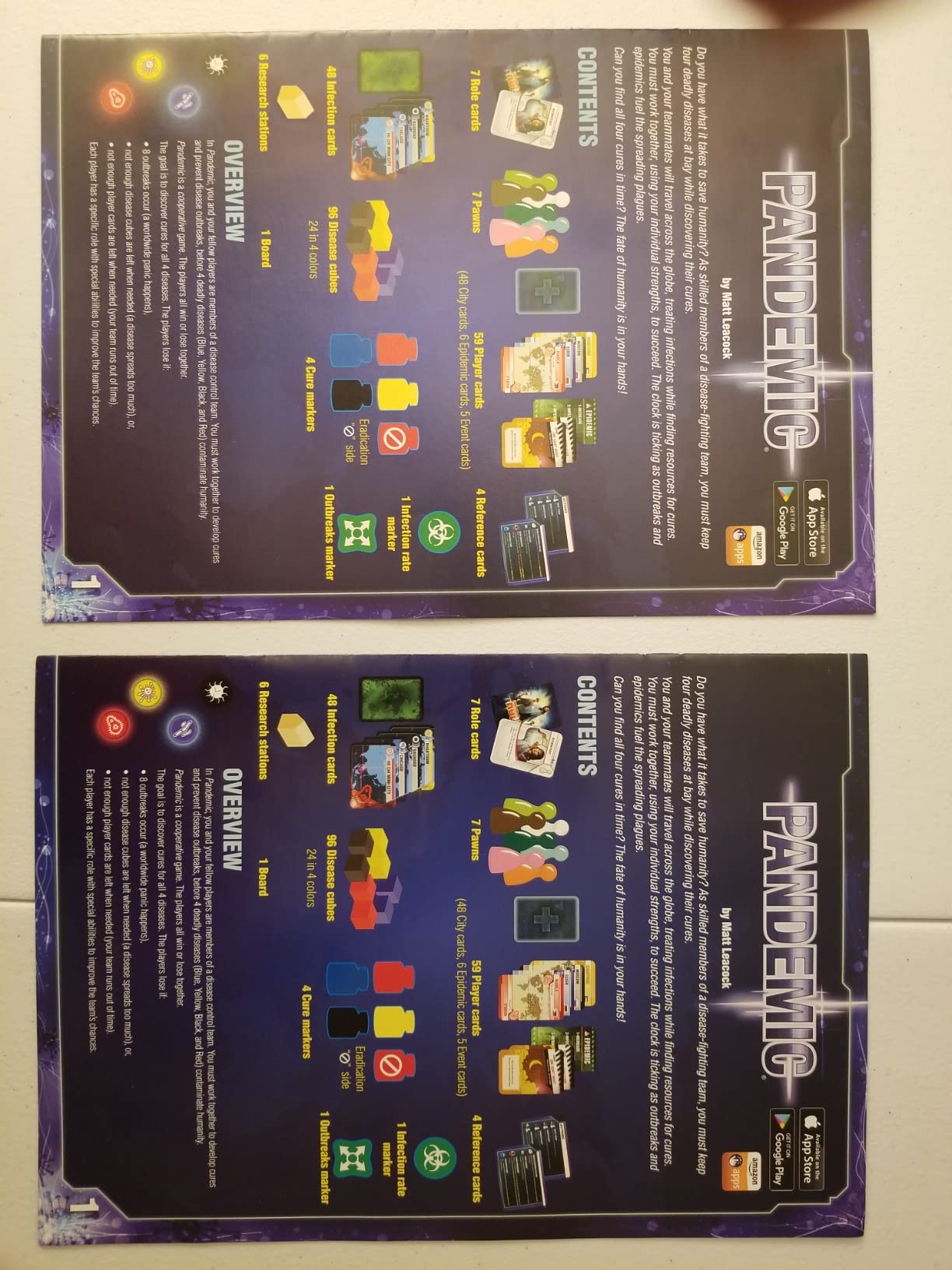
Our team has run Pandemic more times than any other co-op on this list, and it still earns the top spot. The pitch is simple: four diseases are breaking out across the globe, your team of specialists has to cure them all before eight outbreaks happen or the player deck runs out. Each role – Medic, Scientist, Researcher, Operations Expert – bends the rules just enough to feel different every game.
What makes Pandemic one of the best cooperative board games you can buy in 2026 is how cleanly it teaches co-op principles. There is no hidden traitor, no game master role to fill, and the win-loss line is razor sharp. You either cure all four diseases or you do not. That tension holds for kids as young as eight and adults who have been playing hobby games for twenty years.
In our playtests we found Pandemic shines brightest at four players, where every role gets covered and conversations stay lively. At two players it still works, but expect more quarterbacking since you have fewer specialists to delegate to. The base game has held up for over a decade, and the Pandemic Legacy series exists if you eventually want to commit to a year-long campaign with the same rules.
The main thing to know before buying: Pandemic’s city circles are small. Older eyes and dim lighting can be a real problem. The rulebook has been replaced by an updated edition, which fixed the worst of the printing complaints. Treat the box as a long-term investment – most owners still play it five years later.
Who should buy Pandemic
Families with kids age 8 and up who want a real strategy game without the arguments. Mixed-skill gaming groups who want a 45-minute weeknight experience. Anyone new to co-op who wants the genre’s defining title.
Who should skip Pandemic
Players who hate losing together – if shared loss conditions feel personal, the four-player co-op format will frustrate. Hardcore hobby gamers who have already owned Pandemic for years; in that case jump to Spirit Island below.
2. The Mind – Silent Synchronization Card Game
The Mind Card Game – Addictive Mind-Melding Fun, Cooperative Family Game for Kids & Adults, Ages 8+, 2-4 Players, 15 Minute Playtime, Made by Pandasaurus Games
Players: 2-4
Time: 15-20 min
Age: 8+
Style: Non-verbal co-op card game
Pros
- Brilliantly simple rule set with surprising depth
- Forces non-verbal communication that creates hilarious moments
- Quick 15-minute playtime fits any family night
- Tiny box is genuinely travel-friendly
Cons
- Difficulty jumps sharply after level 4 and can frustrate new players
- Replay value drops once your group has cracked the synchronization
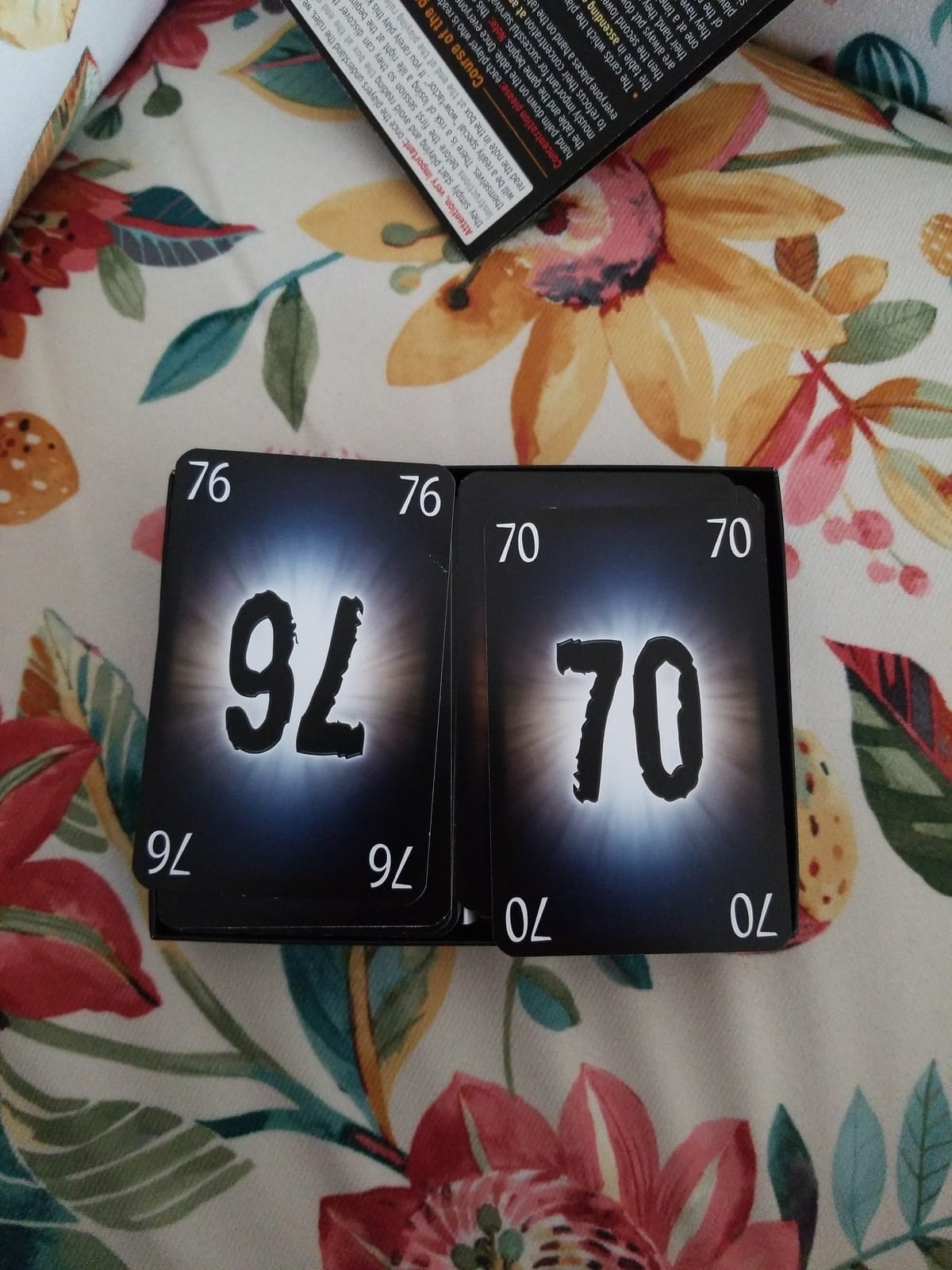
The Mind looks like a trick on the shelf – a small deck of numbered cards, two to four players, a 15-minute play time. Then you sit down and try to play cards in ascending order without saying a word. That single rule produces some of the most chaotic, joyful moments in tabletop gaming. Our team has laughed harder at The Mind than at games costing five times as much.
Levels one and two are gentle. Level three adds a “life” pile. Level four throws a one-time “throwing star” card that lets you force another player to play out of order. By level six or seven, your group will be staring at each other like you are reading minds. That is the magic of The Mind and the reason it has stayed on our short list of the best cooperative board games for casual groups.
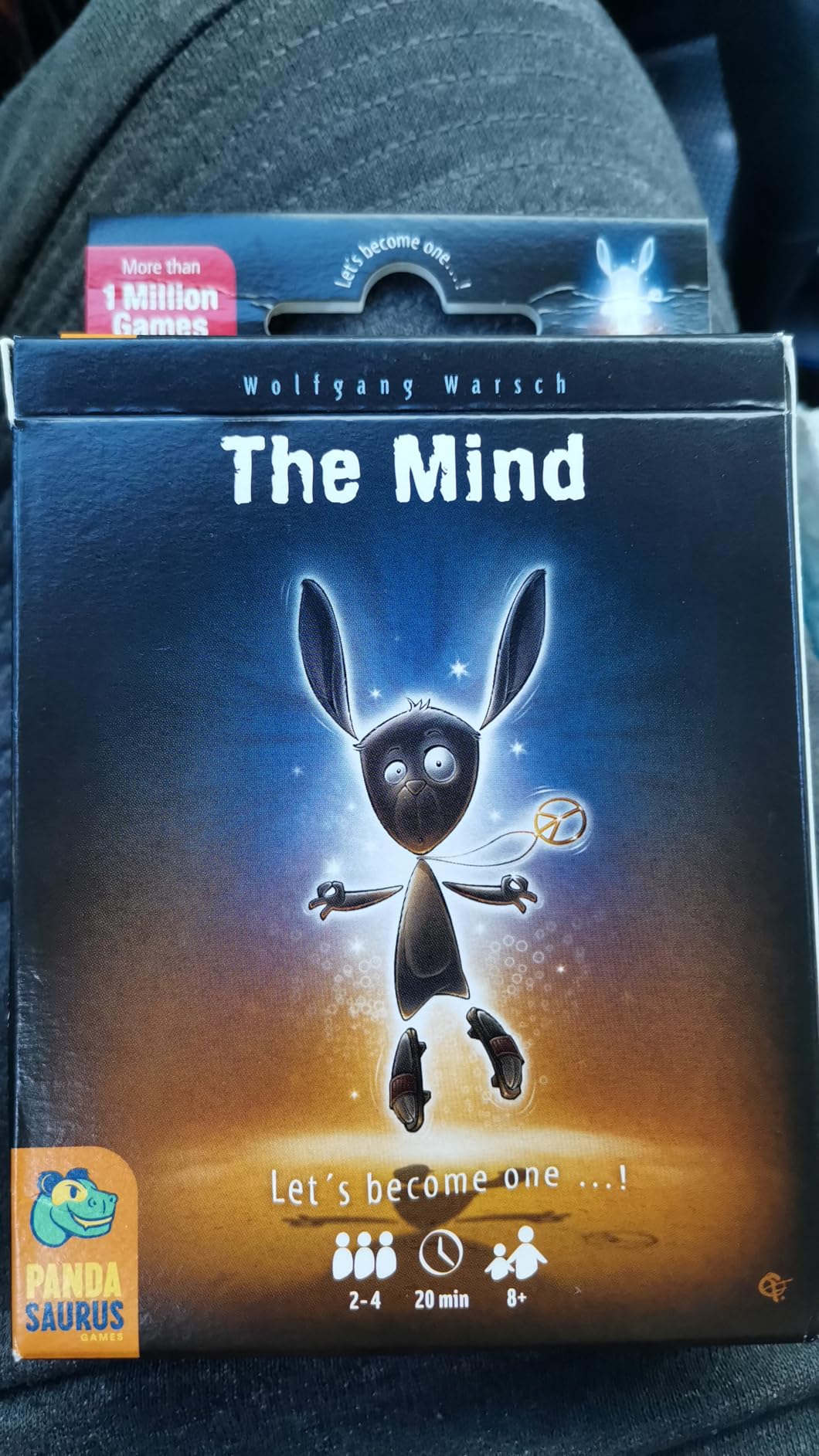
What we love most is the value. With nearly 7,000 reviews and a sub-15-minute playtime, this is the cheapest entry on the list and the easiest to teach. If you only ever buy one co-op card game, The Mind is a defensible pick. Just know going in that the second and third plays are better than the first – the learning curve is the whole point.
The honest weakness: once your group has synchronized, the spell fades a bit. We found ourselves pulling it out every few months for a fresh dose of confusion rather than weekly. That said, this is the perfect icebreaker for a mixed group of gamers and non-gamers at the start of a session.
Who should buy The Mind
Anyone who wants a 15-minute co-op that works as a warm-up or a palate cleanser. Families with mixed ages. Travelers who want a deck that fits in a coat pocket.
Who should skip The Mind
Players looking for a deep campaign experience. Groups who find non-verbal communication stressful rather than fun. Anyone who needs more than 20 minutes of play to feel satisfied.
3. Mysterium – Ghostly Cooperative Deduction
Asmodee Mysterium Board Game – Enigmatic Cooperative Mystery Game with Ghostly Intrigue, Family Fun for Kids & Adults, Ages 10+, 2-7 Players, 42 Minute Playtime
Players: 2-7
Time: 42 min
Age: 10+
Style: Cooperative deduction with one ghost
Pros
- Stunning dreamlike artwork that elevates the whole experience
- Asymmetric ghost role adds a unique twist on co-op
- Scales smoothly from 2 to 7 players
- Accessible to non-readers thanks to visual clues
Cons
- Rulebook is dense and easier learned from a video tutorial
- Final vote round can feel anticlimactic compared to the middle of the game
- Clairvoyance tokens are awkward to position physically
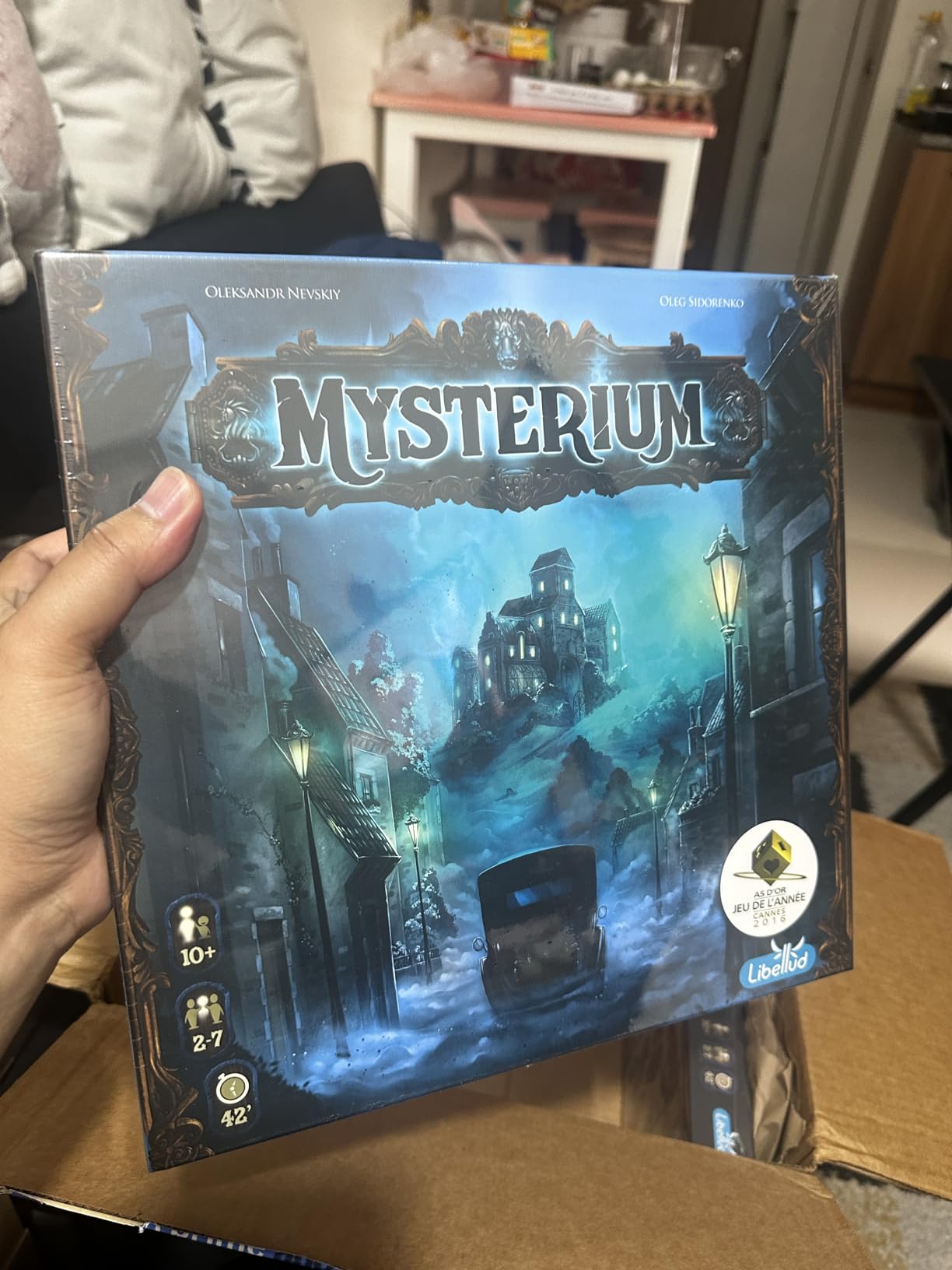
Mysterium is the only game on this list where one player takes a fundamentally different role. Everyone else is a psychic medium trying to solve a murder. One player is the ghost, sending cryptic vision cards across the table to point the team toward the right suspect, location, and weapon combination. It is asymmetric, atmospheric, and a strong entry among the best cooperative board games for groups of five or more.
In our playtests Mysterium landed hardest with mixed groups of adults and kids who appreciate beautiful objects. The art direction is genuinely one of the best in board gaming. Each vision card is a painted surrealist image, and piecing together the ghost’s intent becomes a delightful shared puzzle.

Where Mysterium struggles is teaching. The rulebook buries the timing rules in detail, and our first game took nearly 30 minutes just to explain. Watch one short video before your first play – it makes a huge difference. The endgame vote is also more polite than dramatic, which disappointed a few of our more competitive testers, but the journey is so strong that nobody returned the box.
Player count is Mysterium’s superpower. Two players works fine. Six players is even better. If your group keeps growing and shrinking, Mysterium flexes without losing tension, which is rare for a co-op at this weight.
Who should buy Mysterium
Groups of four to seven looking for a deduction game that does not feel like work. Players who care about component quality and table presence. Anyone who has played Codenames and wants the cooperative version.
Who should skip Mysterium
Gamers who dislike the asymmetric ghost role. Groups who need a tight 30-minute runtime. Anyone who finds abstract art frustrating rather than evocative.
4. The Crew: Quest for Planet Nine – Cooperative Trick-Taking
Thames & Kosmos The Crew: The Quest for Planet Nine | Cooperative Card Game
Players: 3-5
Time: 20 min
Age: 10+
Style: Cooperative trick-taking campaign
Pros
- Reinvents classic trick-taking with a 50-mission cooperative campaign
- Forced limited-communication rule prevents quarterbacking
- Compact and travels well
- Easy to learn but offers long-term challenge
Cons
- Card art is functional but not visually exciting
- Color and number printing can be tough for color-blind players
- Space theme is largely cosmetic and unconnected to the mechanics
The Crew took the cooperative board game world by storm and earned the 2020 Kennerspiel des Jahres for good reason. The core trick-taking rules are familiar – play a card, follow suit if you can, highest card wins. The cooperative twist is that the team must win specific tricks in specific orders, and there is no talking about what you have in hand. Across 50 missions, the difficulty ramps up to genuinely impressive heights.
Our team came to The Crew cold, expecting a light card game. By mission 25 we were leaning over the table trying to communicate with our eyebrows. That limited-communication constraint is the design’s masterstroke, and exactly why it belongs on a list of the best cooperative board games for adults who want brain-burn without hours of setup.
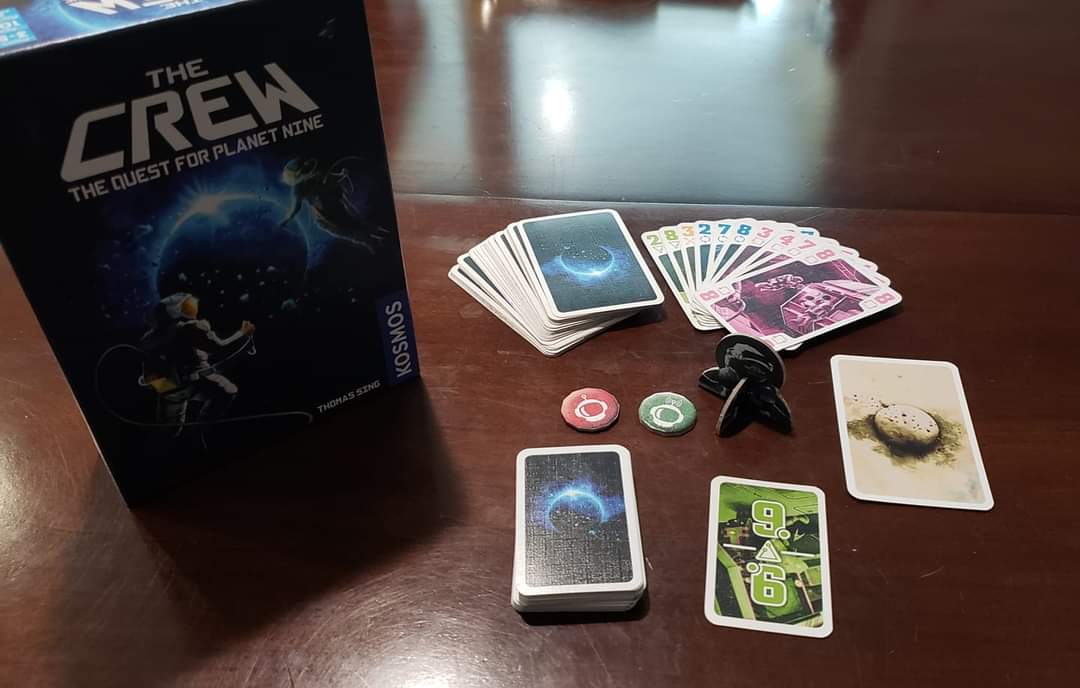
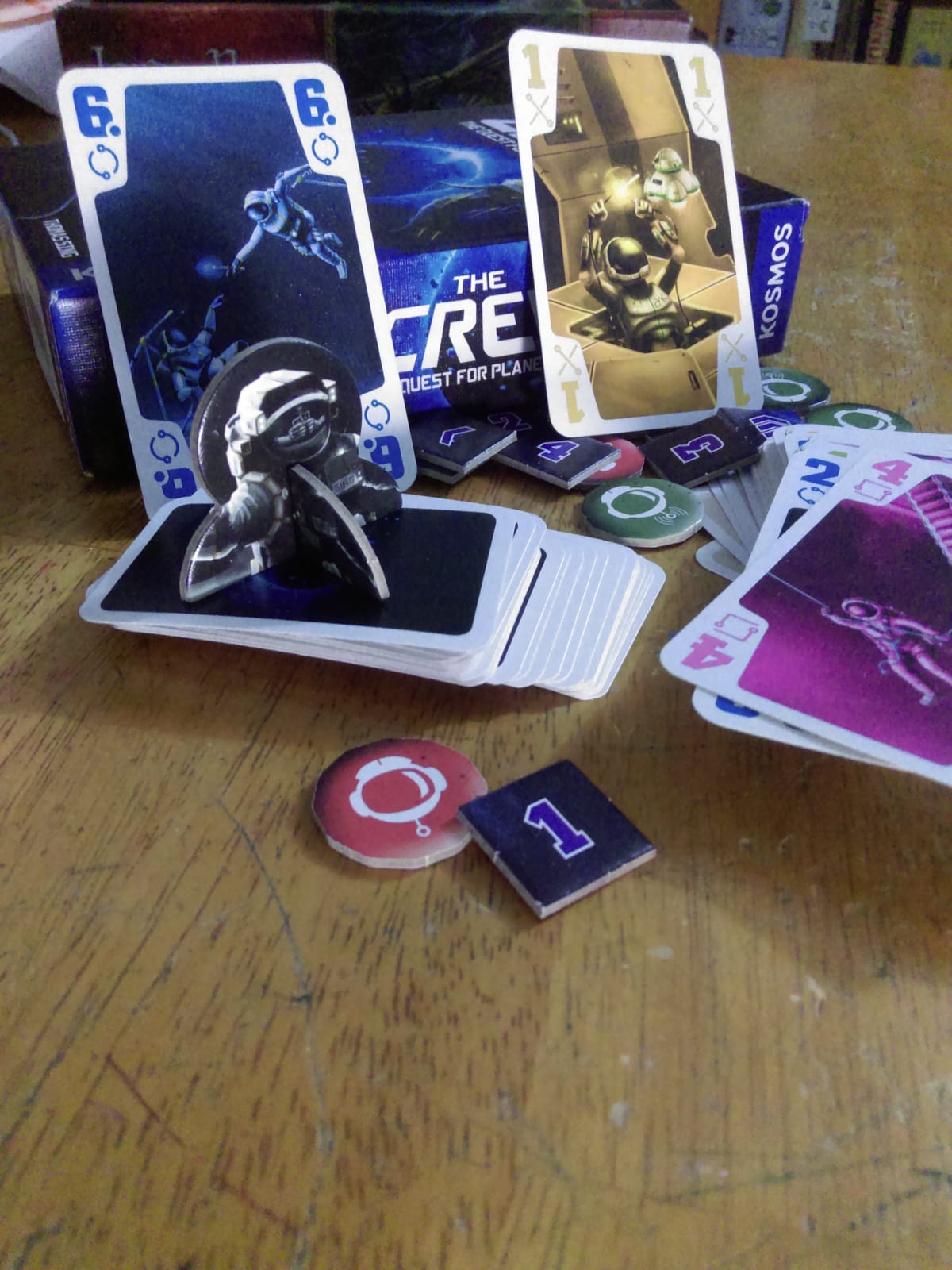
The honest trade-off is theme. The Crew is dressed up as a sci-fi adventure with astronauts and rocket cards, but the mission rules barely touch the space setting. If theme matters to you, this can feel a bit thin. Mechanically, however, it is rock solid. The Crew: Mission Deep Sea is a newer standalone sequel with a similar formula, but The Crew: Quest for Planet Nine remains the most accessible entry point.
One quirk: the limited communication works best at three or four players. At five it is still fun but the table talk can grow louder. We recommend starting at three to feel the intended pressure.
Who should buy The Crew
Card game fans who want a cooperative twist on trick-taking. Small groups of three or four looking for a 20-minute weekday game. Anyone who wants a campaign experience that fits in a backpack.
Who should skip The Crew
Players who want strong thematic immersion. Large groups of five or six. Gamers who dislike rules that limit conversation.
5. Horrified: Universal Monsters – Thematic Co-op for Groups
Ravensburger Horrified Games – Universal Monsters – Strategy Board Game – Boost Critical Thinking & Teamwork – Cooperative Gameplay – Unique Monster Challenges – 1 to 5 Players – Adults & Kids 10+
Players: 1-5
Time: 60 min
Age: 10+
Style: Cooperative monster battles
Pros
- Seven unique monster challenges add serious replay value
- Gorgeous sculpted miniatures elevate the theme
- Plays solo or up to five players for flexible game nights
- Easy to teach despite the rich thematic content
Cons
- First-time setup takes longer than the rulebook implies
- Higher difficulty modes can overwhelm younger or first-time players
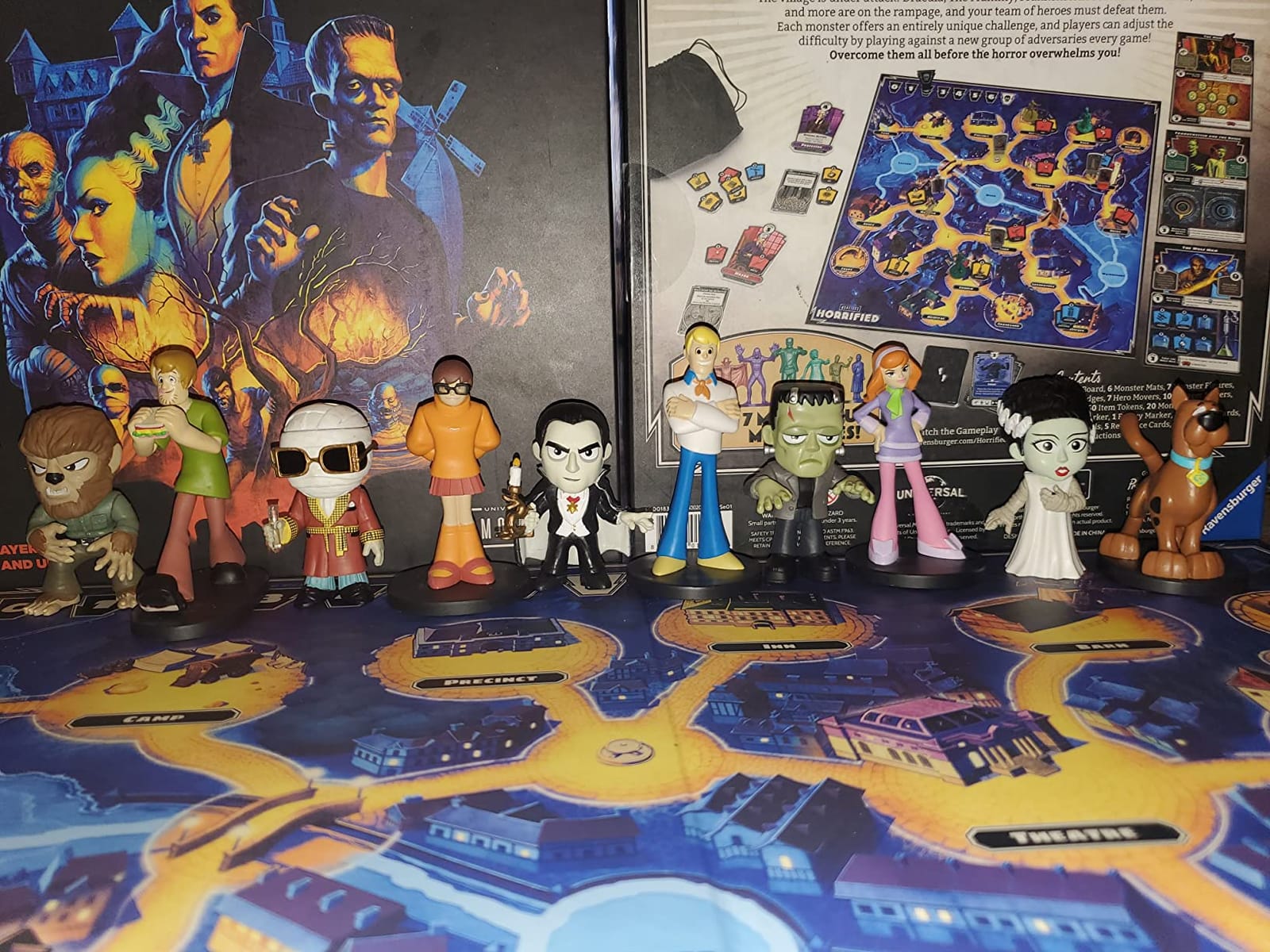
Horrified is the rare cooperative board game that feels like a movie poster on the table. You and your team of villagers face off against classic Universal Monsters – Dracula, Frankenstein, the Mummy, the Creature from the Black Lagoon, and more. Each monster has its own rules, components, and win conditions, so no two games feel the same.
We played Horrified with a family of four (two adults, two kids age 11 and 13) and the room lit up. The miniatures are stunning. The per-monster puzzles keep experienced players engaged, and the cooperative actions are easy enough that younger players can contribute meaningfully. Across our test nights, no two of the seven monster combinations repeated, which is a huge value multiplier.
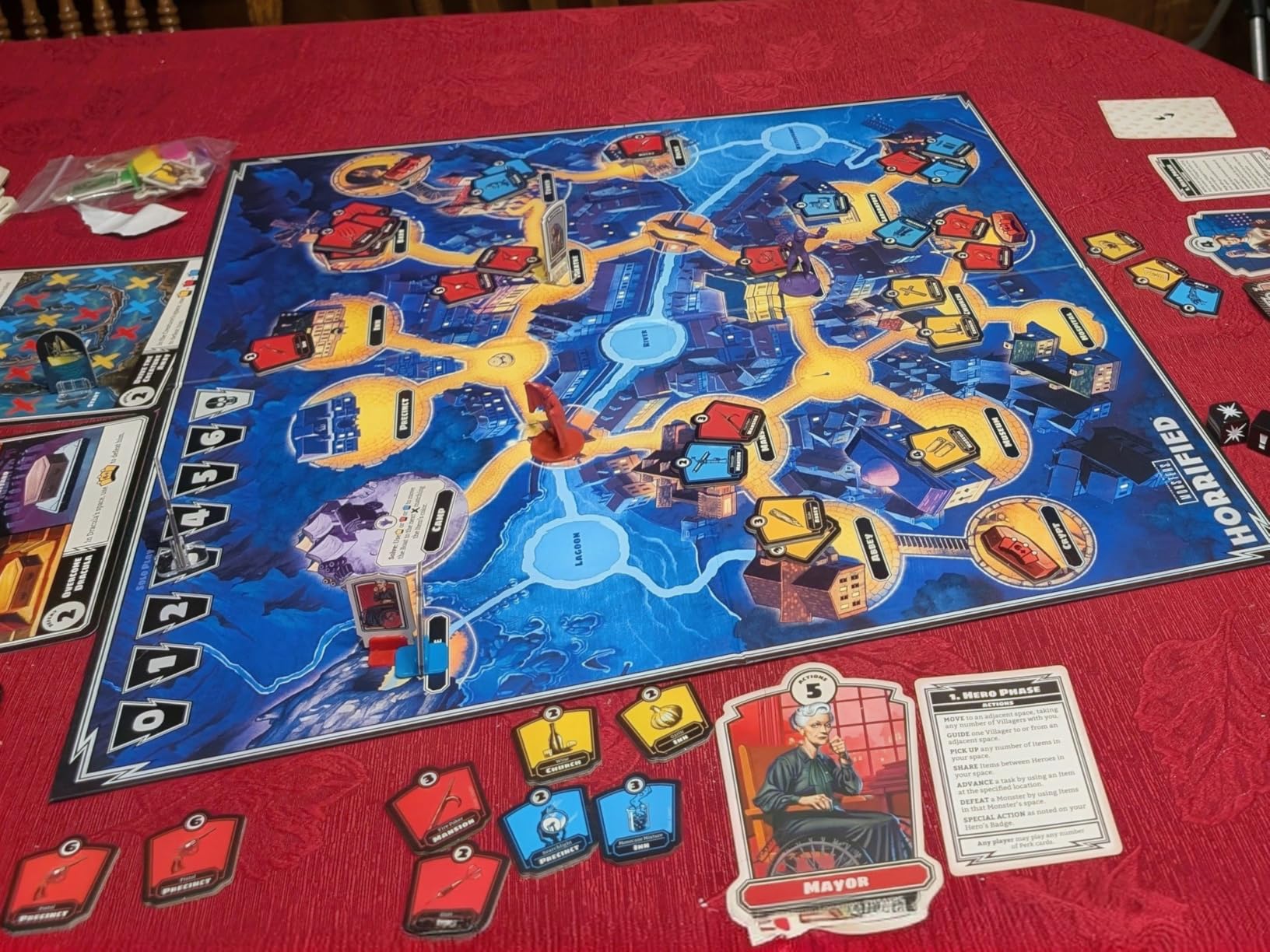
Horrified also has a true solo mode, which not every family co-op offers. That makes it a strong pick for hobby gamers who want to share a game with their family but still play alone when no one is around. Setup is the only friction point. Plan 10 to 15 minutes the first time you play to sort monsters and tokens. Once you have done it once, it goes much faster.
Compared to similar family-weight co-ops, Horrified sits in a sweet spot. Heavier than Forbidden Desert, lighter than Spirit Island, and far more thematic than Pandemic. If your household wants a Halloween-feeling cooperative board game that works all year, this is the one we recommend.
Who should buy Horrified
Families with kids age 10 and up who love classic monsters. Groups of two to five who want a flexible headcount. Hobby gamers who want a co-op that also works solo.
Who should skip Horrified
Players who want a strict 30-minute game. Anyone uninterested in the monster theme. Groups who dislike setup-heavy games.
6. Hoot Owl Hoot – Best Cooperative Board Game for Kids
Peaceable Kingdom Hoot Owl Hoot – Cooperative Matching Game For Kids
Players: 2-4
Time: 15 min
Age: 4+
Style: Color matching cooperative board game
Pros
- Genuinely accessible for ages 4 and up
- Teaches teamwork and color recognition without feeling like school
- Quick 15-minute runtime fits preschool attention spans
- Sturdy components built for small hands
Cons
- Limited long-term appeal once kids outgrow the simple matching
- Can feel repetitive after 20 to 30 plays
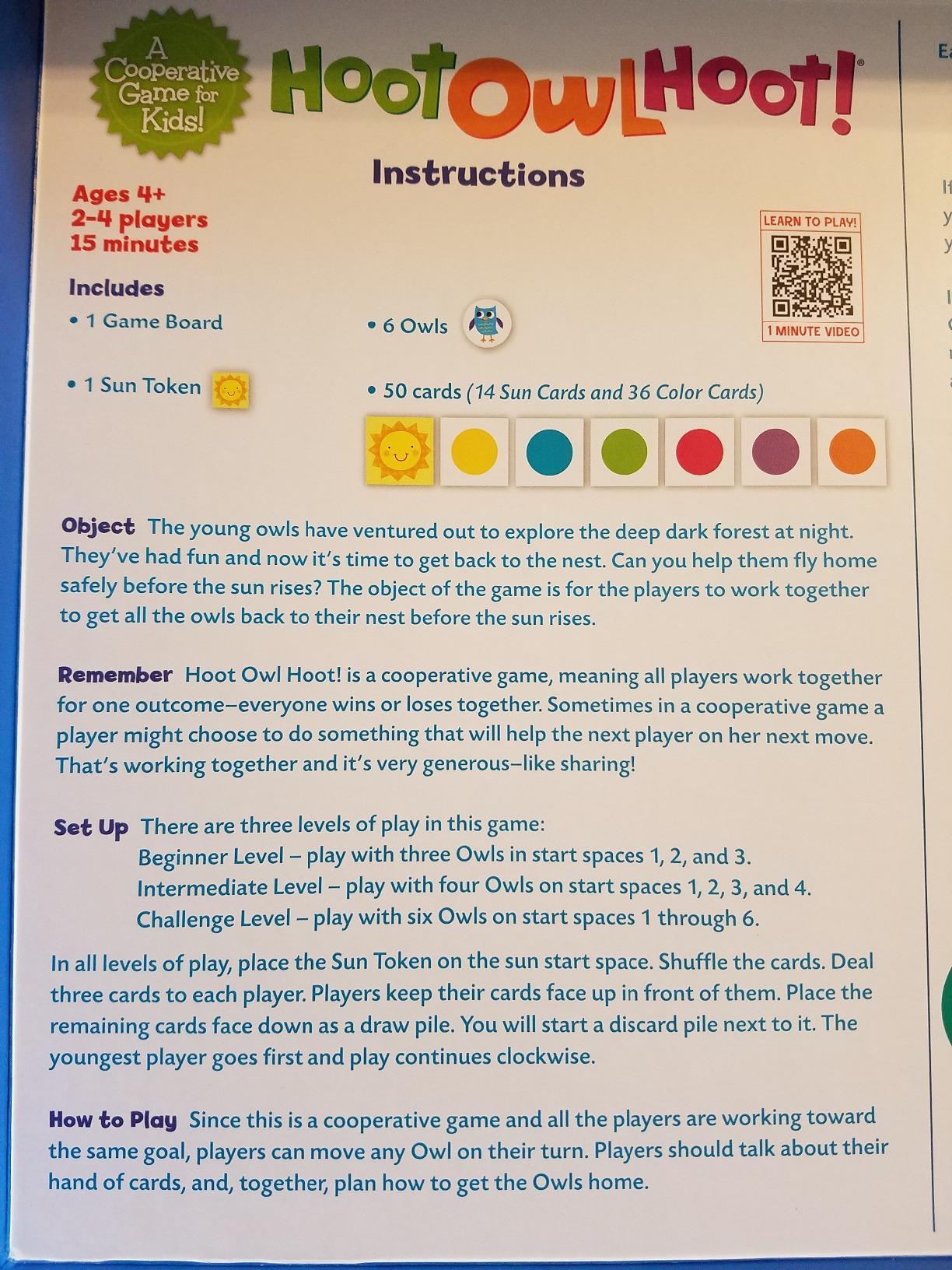
Hoot Owl Hoot is the first cooperative board game we hand to any kid under seven. The team of owls has to fly home to the nest before sunrise, and the only tools are colored cards and a shared decision about which owl moves next. There is no reading required, no elimination, and the entire game fits in 15 minutes.
Our team lent this to a kindergarten teacher for a week and got back the most useful feedback we have ever received on a kids game. Children as young as four could play without help. Six-year-olds started coaching four-year-olds. There were no tears. That is the magic of a clean co-op design aimed at the youngest audience.
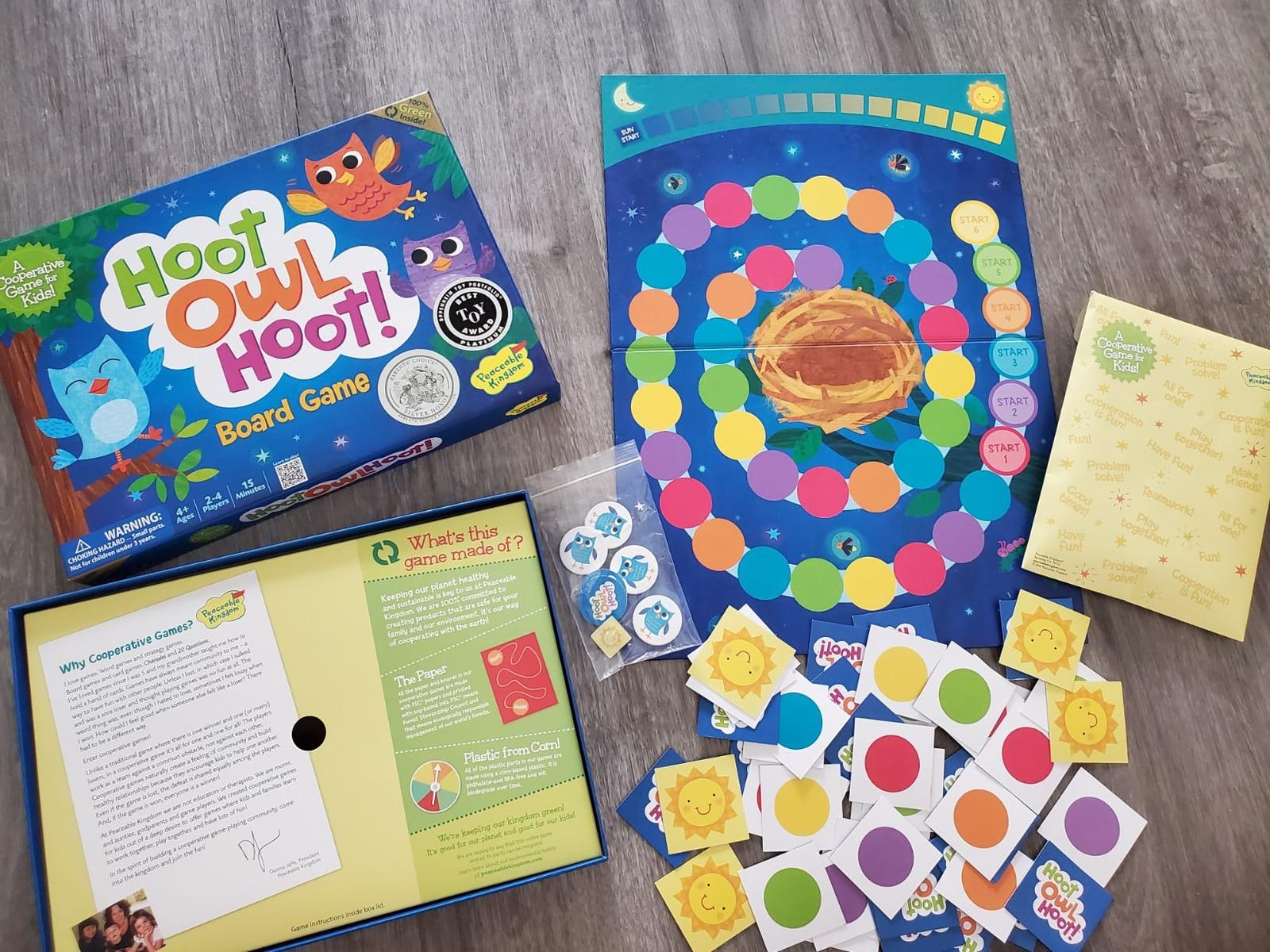
Where Hoot Owl Hoot runs out of steam is replay value. After a dozen plays, most kids have seen every card combination. Treat it as a stepping stone rather than a forever game. Once your child has the rules down cold, graduate them to Outfoxed, Forbidden Island, or The Mind. That is the natural arc of cooperative games for kids.
One thing our testers specifically called out: this is a Peaceable Kingdom game, and the company is well-known for sturdy components designed for classroom abuse. We have not seen a Hoot Owl Hoot box fall apart, and that matters when the player base is four.
Who should buy Hoot Owl Hoot
Families with kids ages 4 to 7 looking for their first co-op. Preschools and kindergarten teachers who want a teamwork game. Anyone introducing non-readers to board games.
Who should skip Hoot Owl Hoot
Older kids and adult-only groups. Players looking for strategy depth. Anyone who wants a 45-minute evening game.
7. Forbidden Desert – Ever-Shifting Cooperative Adventure
Gamewright – Forbidden Desert Cooperative Survival Adventure Board Game for 2-5 Players – Family Strategy for Ages 10+
Players: 2-5
Time: 45 min
Age: 10+
Style: Cooperative survival adventure
Pros
- Ever-shifting sand board creates a new map every turn
- Strong adventure theme with a real flying machine goal
- Crisp rules make it one of the easier co-ops to teach
- Vibrant components that hold up to repeated plays
Cons
- Games can feel short relative to the time spent setting up and shuffling
- Limited replay value once players master the central mechanism
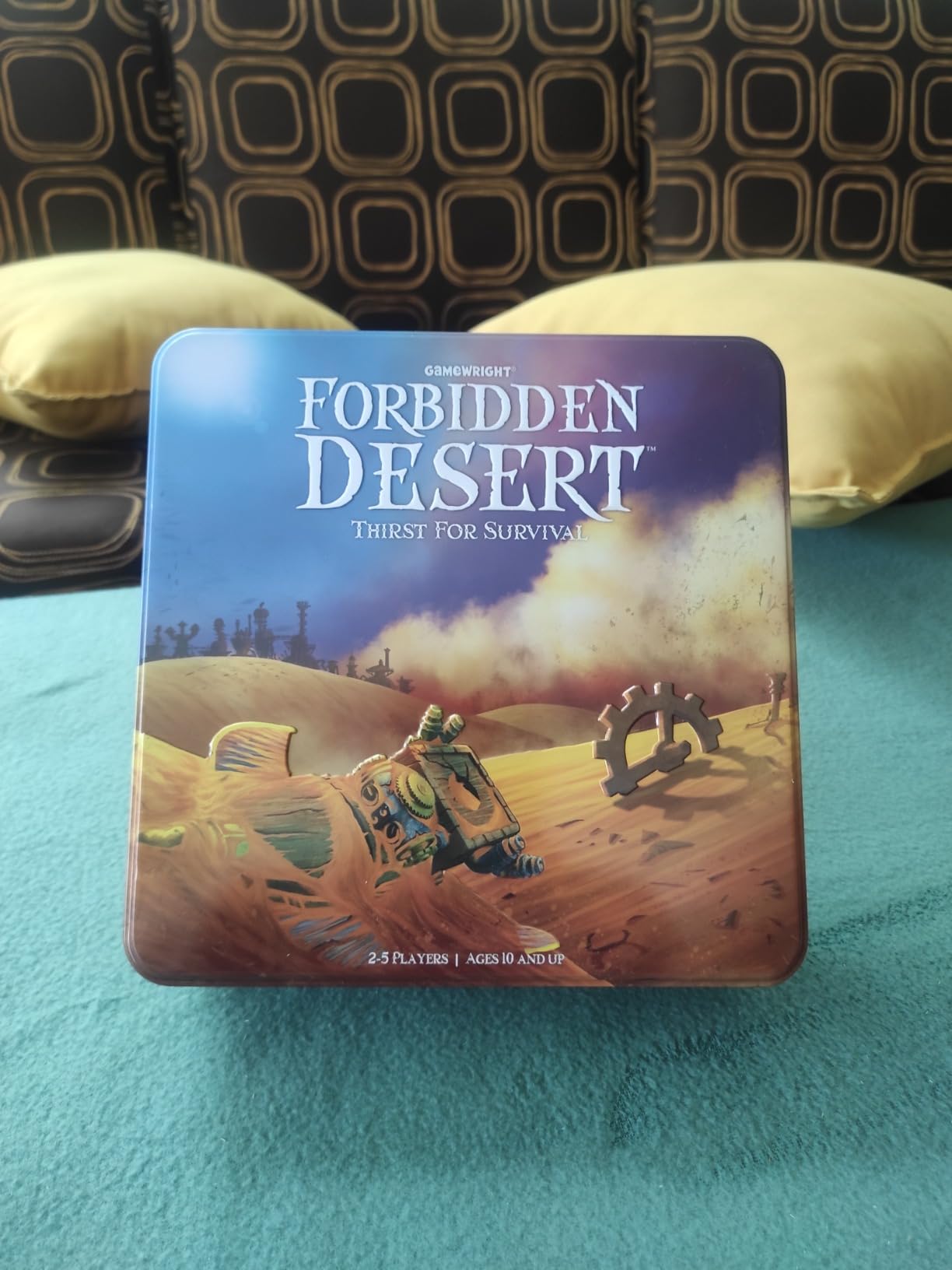
Forbidden Desert is the sequel to Forbidden Island, and the mechanical leap is significant. Instead of a static map, the board tiles shift under your feet every turn, exposing and burying locations as sandstorms roll across the desert. Your team is hunting for parts of a legendary flying machine before the water supply runs out.
What we love in playtests is how the shifting board forces conversation. Nobody can plan three turns ahead because the map will not sit still. That makes Forbidden Desert one of the best cooperative board games for mixed groups where one person usually tries to quarterback – the board simply will not let one player control everything.
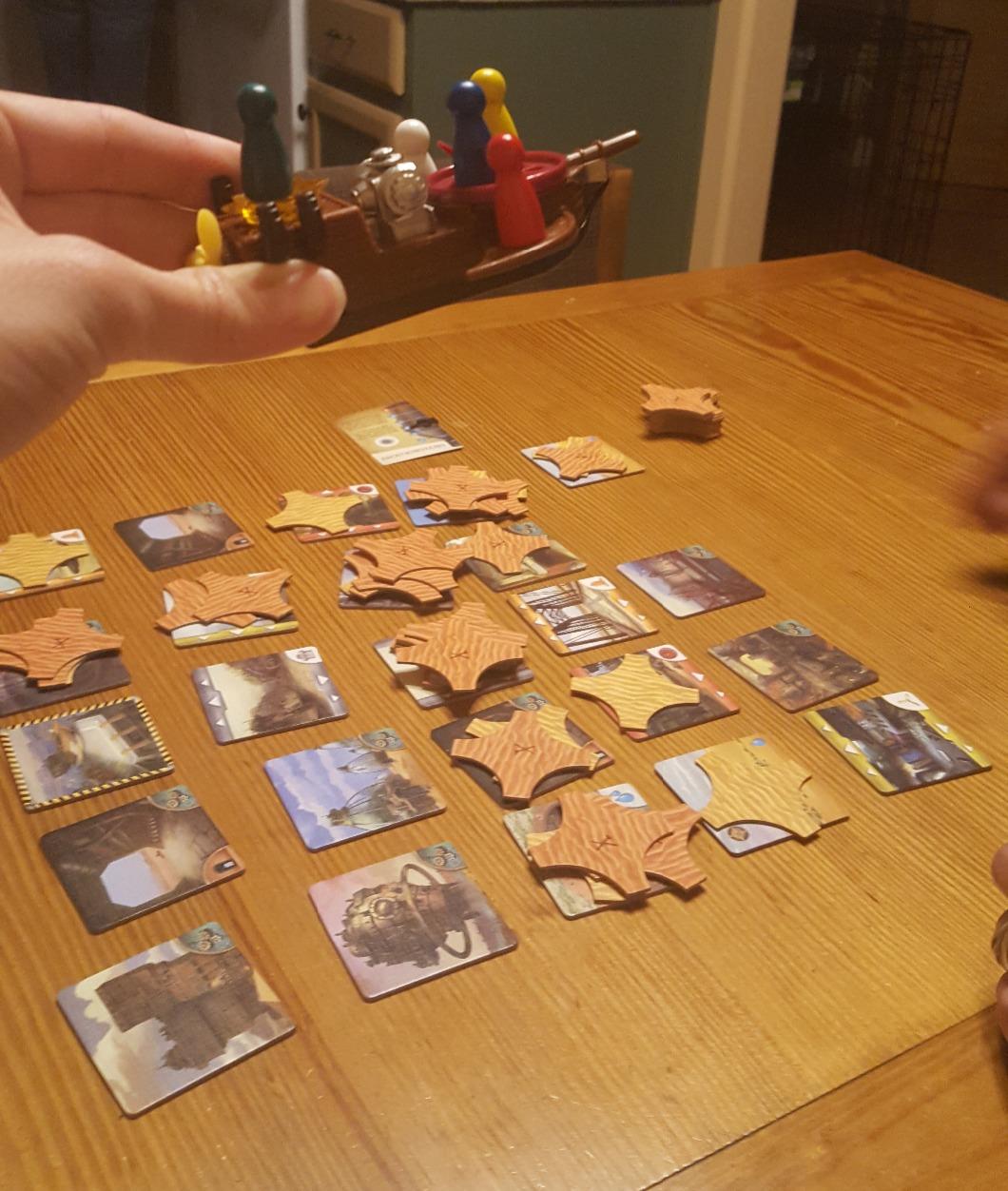
The honest weakness is the play-to-setup ratio. Setup and teardown run longer than the actual game, which is around 45 minutes. If your group is time-constrained on a weeknight, this can feel like a chore. Our recommendation is to leave the board set up between sessions if you have the table space.
If you enjoy Forbidden Desert, the Forbidden series also includes Forbidden Sky and Forbidden Jungle. Each shares the shifting-board DNA but with a different central mechanism. They are not required, but they make excellent gifts for someone who loves the desert adventure.
Who should buy Forbidden Desert
Families with kids age 10 and up who want a real adventure theme. Groups of three to five players. Anyone who found Pandemic too abstract and wants more tactile exploration.
Who should skip Forbidden Desert
Two-player groups who want maximum tension. Players looking for a quick 20-minute filler. Anyone bothered by noticeable setup time.
8. Hanabi – Award-Winning Deduction Card Game
R&R Games Hanabi Strategy Game
Players: 2-5
Time: 25 min
Age: 8+
Style: Cooperative deduction card game
Pros
- 2013 Spiel des Jahres winner with timeless design
- Holding cards face-out is a brilliant deduction twist
- Quick 25-minute runtime works as a filler or warm-up
- Small footprint makes it genuinely portable
Cons
- Card stock is thin and edges wear quickly with heavy play
- Some color suits are hard to distinguish
- Replay value drops once players establish reliable conventions
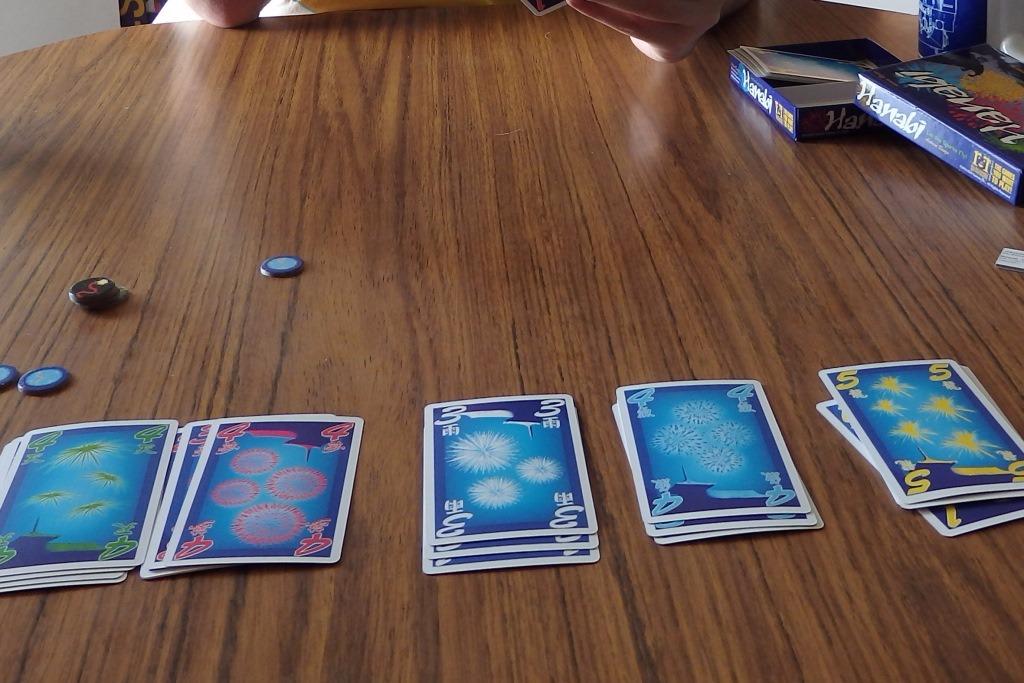
Hanabi is the quiet legend of cooperative card games. The 2013 Spiel des Jahres winner asks your team to assemble a perfect fireworks display. The catch: you hold your cards face-out toward the other players, and only they can see what you have. Limited communication tokens force your team to invent private conventions over time.
In our playtests Hanabi shines as a before-dinner or end-of-night game. The rules take two minutes to teach, a full game runs 20 to 25 minutes, and the table footprint is the size of a deck of cards. We have literally pulled it out on park benches and in airport terminals.
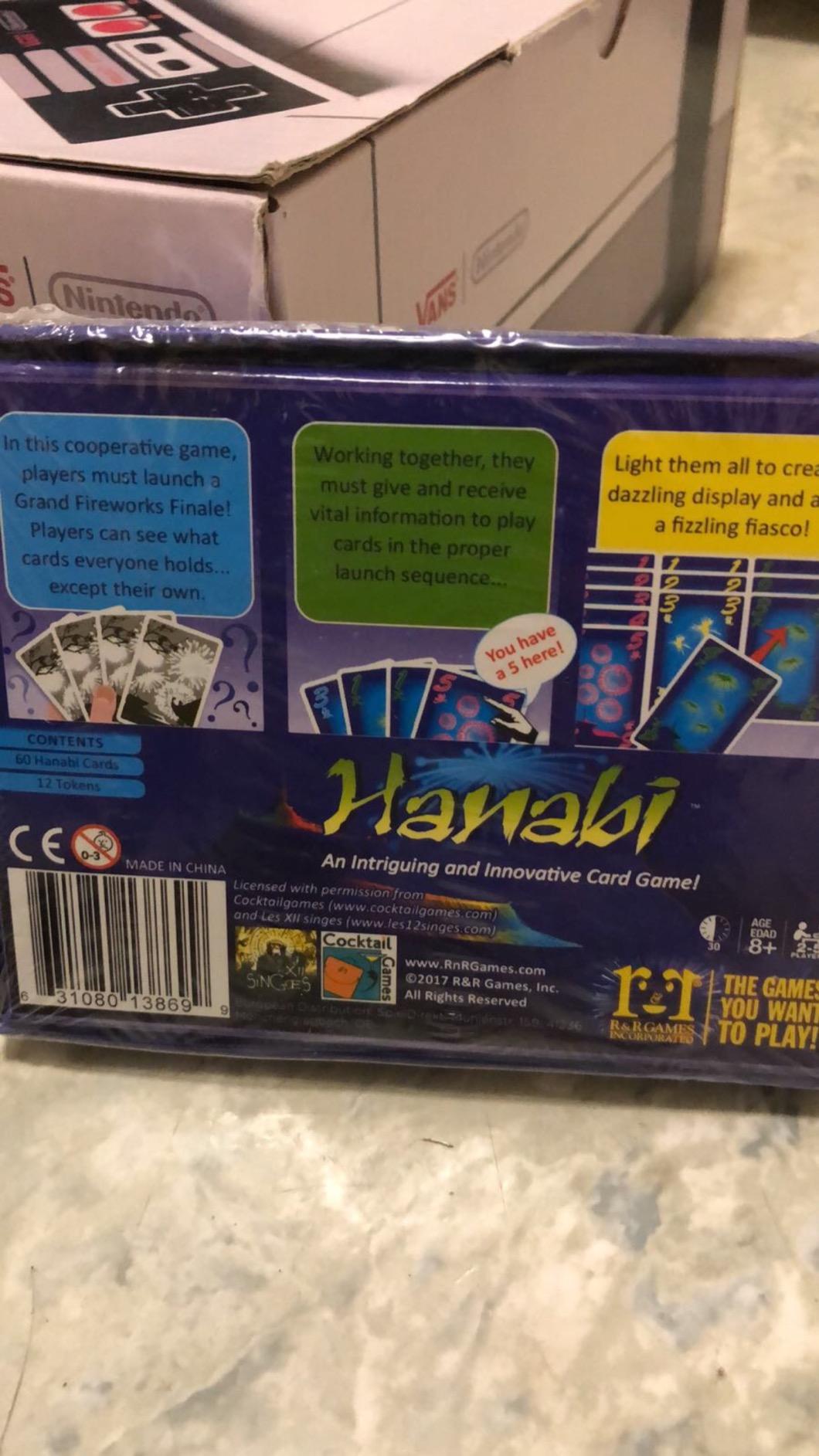
The honest weakness is component quality. The cards are thin and prone to wear after 50 or 60 plays. Sleeving the deck is a near-mandatory upgrade if you play often. Color-blindness is also a real issue: the red and yellow suits can be tough to distinguish in low light. Some players swap colored tokens for shape-coded variants to address this.
Compared to The Mind on this list, Hanabi is more cerebral and less chaotic. If your group enjoys deduction more than synchronizing, Hanabi is the better pick. If you want laughs over logic, go with The Mind.
Who should buy Hanabi
Couples looking for a date-night co-op. Travelers who want a tiny box with big decisions. Anyone who enjoys logic puzzles in card form.
Who should skip Hanabi
Players who dislike rules that restrict talking. Color-blind groups without modifications. Anyone looking for a thematic adventure experience.
9. Spirit Island – Heavy Cooperative Strategy for Veterans
Greater Than Games Spirit Island – Cooperative Strategy Board Game
Players: 1-4
Time: 90-120 min
Age: 13+
Style: Heavy cooperative area control
Pros
- Outstanding solo mode with dedicated single-player rules
- Eight unique Spirits each with completely different powers
- Deep replay value from adversaries and expansions
- Back-loaded difficulty creates a genuinely satisfying climax
Cons
- Steep learning curve and intimidating rulebook on first plays
- Long setup that gets faster with experience
- Long 90-120 minute sessions limit how often you can bring it to the table
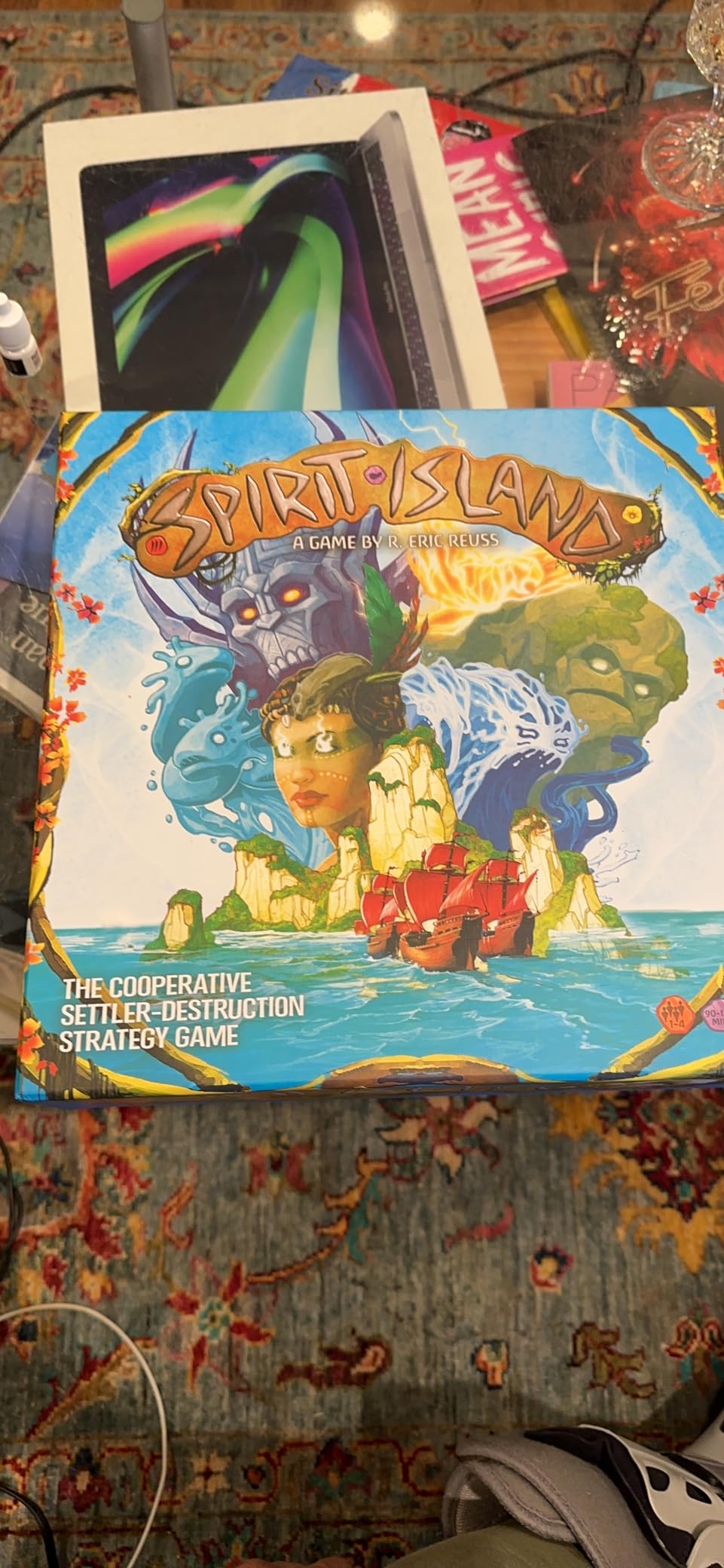
Spirit Island is the deepest cooperative board game on this list and one of the best in the entire hobby. You play powerful Spirits defending an island from colonizing invaders. The twist: you are not the explorers. You are the land itself, fighting back. Every Spirit has radically different powers, and combining two or three Spirits creates puzzles that change with every adversary you face.
Our team has played Spirit Island more than any other co-op at this weight, and we keep finding new strategies. The first session is rough – expect 30 minutes of rules explanation and slow turns. By session four, the same game runs in 90 minutes flat and feels like a totally different beast. That learning arc is part of the value.
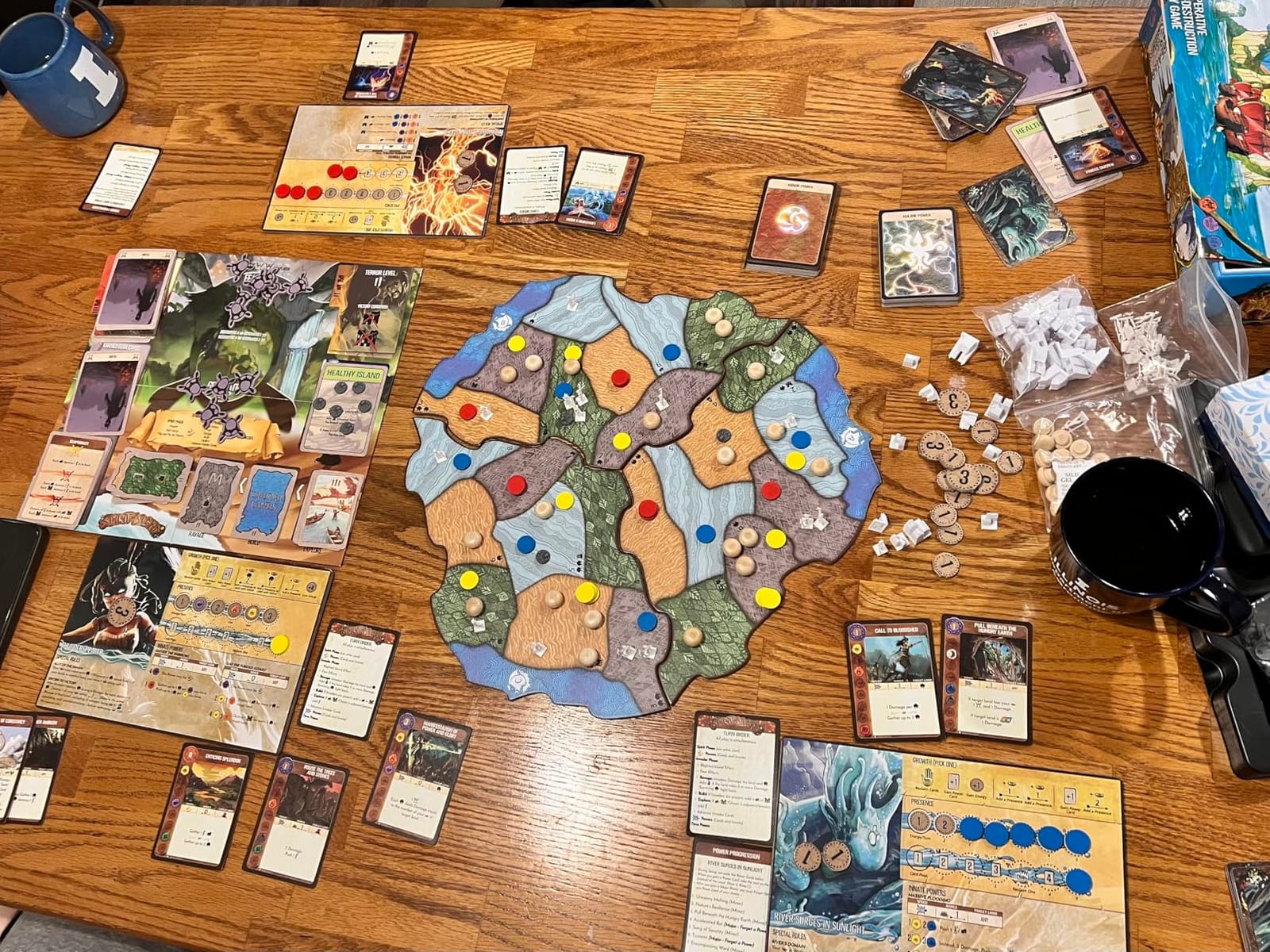
The reason Spirit Island earns a spot among the best cooperative board games in 2026 is its solo mode. The game was designed for solo play from the ground up, and it shines there. If you are a solo hobby gamer looking for a real brain-burner, Spirit Island is the consensus recommendation across BoardGameGeek, Reddit r/boardgames, and Dice Tower reviewers.
The honest weakness: do not buy Spirit Island for a casual group. The complexity barrier is real. If your table is mixed-skill or includes younger kids, start with Pandemic or Horrified first and graduate to Spirit Island once the group has the appetite.
Who should buy Spirit Island
Veteran board gamers who want a heavy co-op. Solo players looking for a serious brain-burner. Hobby groups with three or four committed players who can clear a 90-minute window.
Who should skip Spirit Island
Casual players and beginners. Anyone looking for a quick filler. Mixed groups that include kids under 12.
10. Journeys in Middle-Earth – App-Driven Campaign Adventure
Asmodee The Lord of the Rings Journeys in Middle-Earth Board Game – Epic Cooperative Adventure Game for Kids and Adults, Ages 14+, 1-5 Players, 60+ Minute Playtime
Players: 1-5
Time: 60-180 min
Age: 14+
Style: App-supported cooperative campaign
Pros
- App replaces the game master entirely
- Rich Tolkien theme with high-quality miniatures
- Randomized maps give every campaign real replay value
- Great gateway into tabletop RPG-style storytelling
Cons
- Cannot be played at all without the companion app
- Long 2 to 3 hour adventure sessions require real time commitment
- Character choices are locked once a campaign begins
Journeys in Middle-Earth solves a real problem: most campaign-style board games need someone to act as a game master, and that person often ends up doing the most work and having the least fun. This game flips that with a free companion app that runs the enemies, narrative, and event decks automatically. The players focus entirely on exploring Middle-earth together.
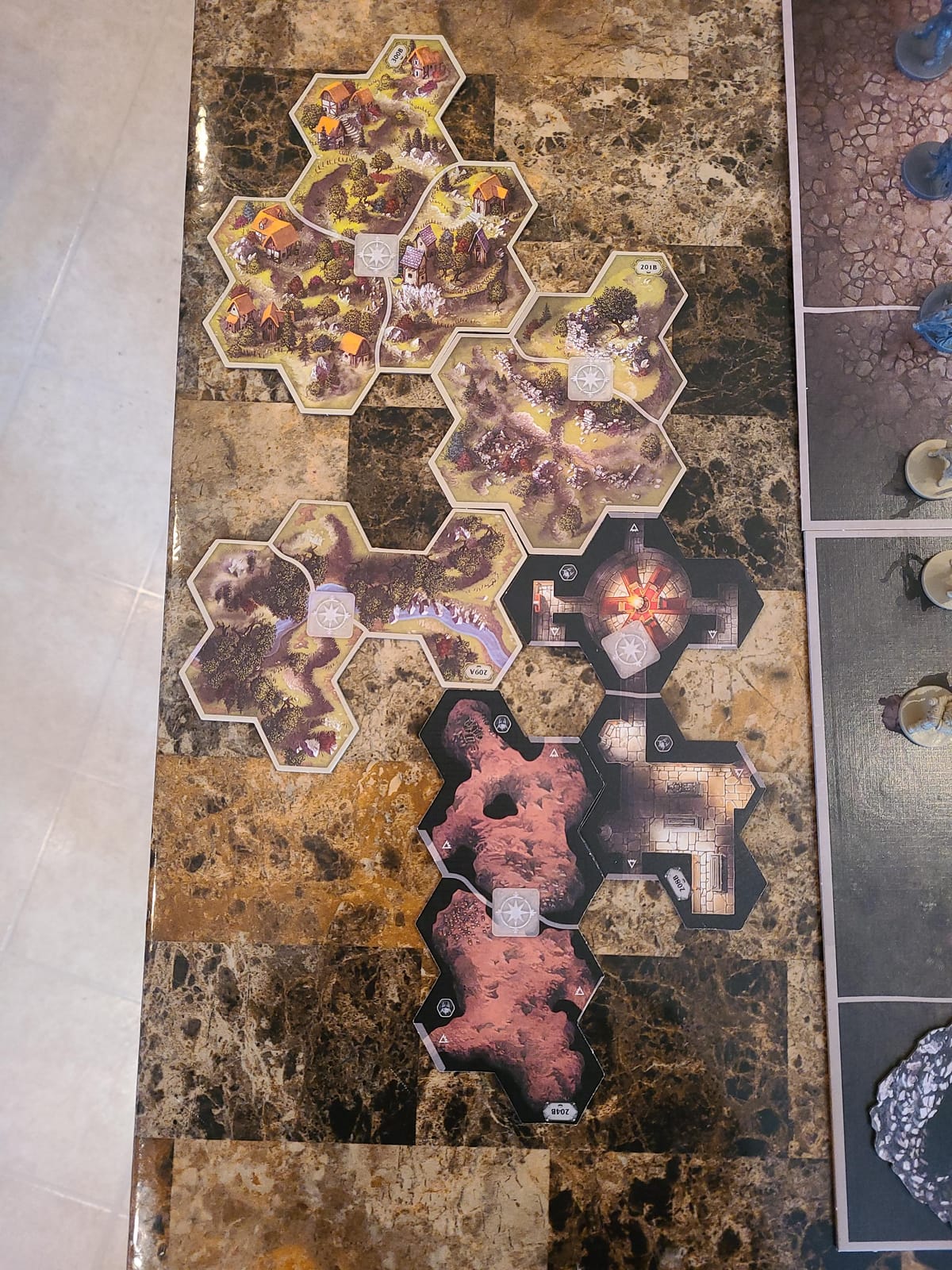
Our team has run multiple campaigns with Journeys in Middle-Earth, and the app-driven design genuinely delivers on its promise. There is no game master prep, no missing rules, no scheduling around one player’s availability. You sit down, open the app, and play. The miniatures are exceptional, and the map tiles create real exploration moments.
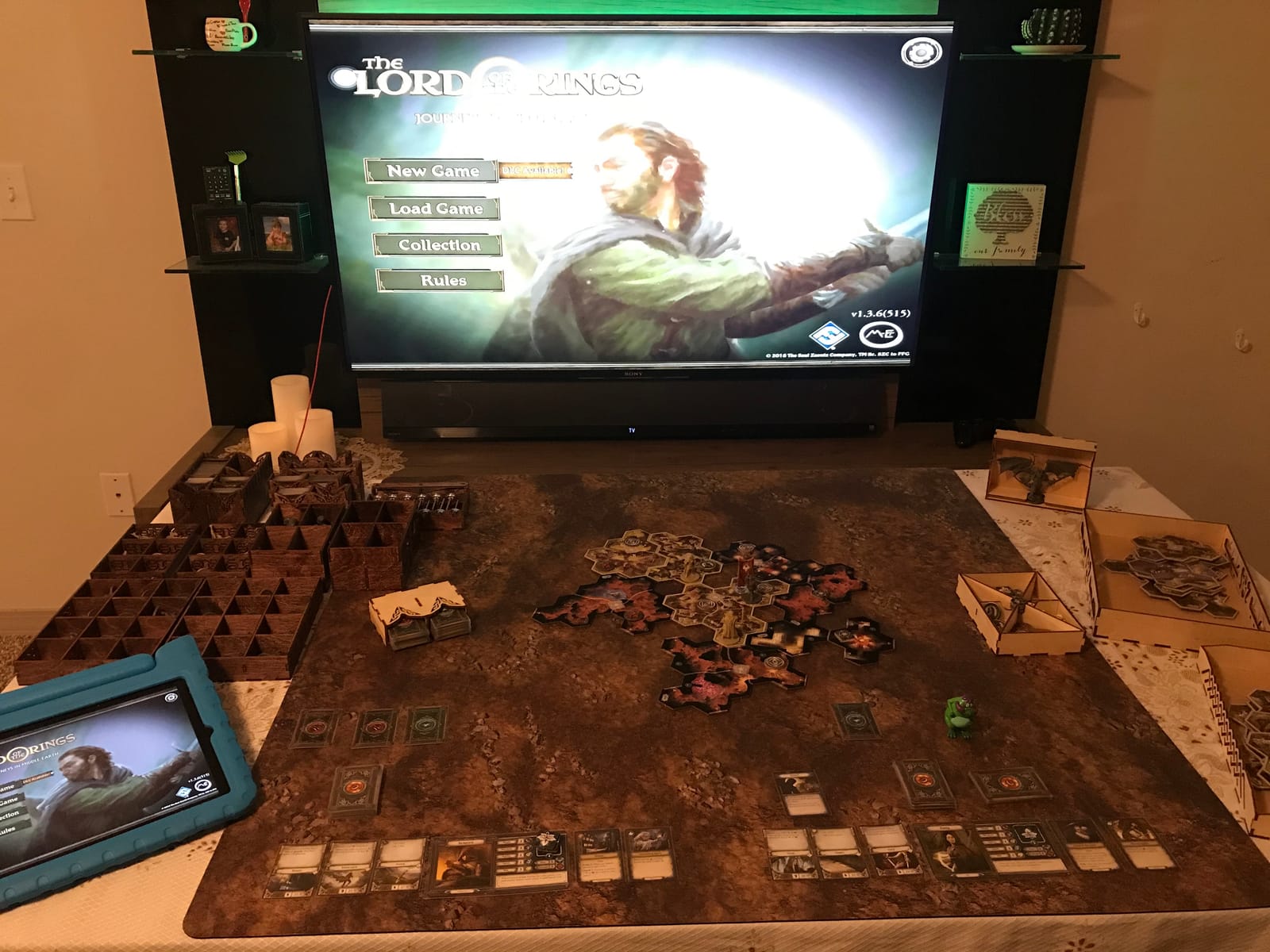
The big trade-off is total app dependence. If your phone dies or the app is discontinued, the box becomes nearly unplayable. That is a real long-term risk for a premium-priced game. Players who dislike mandatory digital dependencies should look at Spirit Island or Horrified instead.
Sessions run long – often 2 to 3 hours per adventure. Plan campaign nights carefully. Once you commit to a hero, that character is locked in for the duration of the campaign, so pick someone whose playstyle your group enjoys.
Who should buy Journeys in Middle-Earth
Lord of the Rings fans who want a deep cooperative campaign. Groups who want a GM-less RPG-style experience. Hobby gamers comfortable with app-driven games.
Who should skip Journeys in Middle-Earth
Players who refuse app-driven board games. Groups without a 3-hour weekly window. Anyone who likes to swap heroes mid-campaign.
How to Choose the Best Cooperative Board Game for Your Group
Start with player count. The best cooperative board games for adults scale to four or five, but several on this list top out at two or three. The Crew and Hanabi work beautifully for two-player couples nights. Mysterium and Horrified scale up to seven. Spirit Island caps at four. Match the player count to your most common group size before anything else.
Next, consider complexity. If your group is new to hobby board games, start with Pandemic, Horrified, or Forbidden Desert. These teach co-op mechanics without overwhelming rules overhead. If your group has been gaming for years and wants a brain-burn, Spirit Island is the consensus pick. The Mind and Hanabi sit in the middle: easy rules, surprisingly deep decision space.
Look at solo mode availability. If you want a co-op that also works for one player, Spirit Island is the gold standard. Horrified and Journeys in Middle-Earth include solo modes that are actually good. Pandemic and Forbidden Desert do not officially support solo play, although fans have published variant rules.
Check the no-game-master requirement. Every game on this list runs without a designated game master. The players all share information and decisions openly. This is one of the reasons cooperative board games have become the go-to format for mixed-age and mixed-skill groups. If your household struggles with the sore-loser problem or player elimination, switching to co-op is the cleanest fix in tabletop gaming.
Watch for quarterbacking. Quarterbacking happens when one dominant player tells everyone else what to do, which kills the cooperative experience. Games like The Mind, The Crew, and Hanabi counter this with rules that limit communication. Pandemic and Spirit Island lean into open discussion. Pick the constraint that fits your group.
Budget matters too. The Mind, The Crew, and Hanabi all sit under 20 dollars and travel well. Pandemic, Horrified, Forbidden Desert, and Mysterium cluster in the 25 to 50 range and offer the most value per dollar. Spirit Island and Journeys in Middle-Earth sit at the premium end and reward deeper commitment.
For more on the gear side of tabletop gaming, our guide to the best tabletop and board game accessories covers the dice towers, card sleeves, and organizers we use to keep these games in rotation. If you are shopping for a board game enthusiast, our picks for the best gifts for board game lovers are a good companion read.
Frequently Asked Questions
What are the best cooperative board games?
The best cooperative board games in 2026 are Pandemic for gateway co-op, The Mind for a quick non-verbal challenge, Mysterium for ghostly deduction, The Crew for cooperative trick-taking, Horrified for family-friendly monster battles, Hoot Owl Hoot for kids, Forbidden Desert for shifting-board adventure, Hanabi for award-winning deduction, Spirit Island for heavy solo strategy, and Journeys in Middle-Earth for app-driven campaigns.
What is the best cooperative board game for beginners?
Pandemic is the consensus best cooperative board game for beginners. It teaches shared turn order, role-based strategy, and team decision-making in 45 to 60 minutes with rules a child of eight can follow. Horrified and Forbidden Desert are excellent next steps once your group has outgrown Pandemic.
What is the best cooperative board game for 2 players?
The Crew and Hanabi are the strongest co-ops for two players. Both rely on limited-communication rules, which scale perfectly at a pair. Forbidden Desert also plays well at two with adjusted difficulty, and Spirit Island is widely considered the best heavy co-op for solo play and 1-2 players.
What cooperative board game has no game master?
Every game on our list runs without a game master. The Mind, Hanabi, The Crew, Pandemic, Mysterium, Horrified, Hoot Owl Hoot, Forbidden Desert, and Spirit Island all use shared information and open table talk. Journeys in Middle-Earth is the only one that uses a companion app to fill the GM role, but no human player has to do that job.
What is the hardest cooperative board game?
Spirit Island is widely regarded as one of the hardest cooperative board games on the market. It combines deep strategy, long play sessions, and a back-loaded difficulty curve that ramps up sharply in the late game. Gloomhaven and Frosthaven are heavier still, but Spirit Island is more accessible as a starting point for veteran hobby gamers.
How do cooperative board games work?
Cooperative board games work by having all players share a single win condition and a single loss condition. Players take turns, share information openly, and pool resources to defeat the game itself. There is no player-vs-player combat; either the whole table wins or the whole table loses.
Final Verdict on the Best Cooperative Board Games
Pandemic remains our top pick for the best cooperative board game you can buy in 2026. It is the gateway co-op for a reason, and after decades on the shelf it still teaches the format better than any competitor. The Mind is our budget pick for anyone who wants to spend 15 minutes laughing with friends. Mysterium earns the top-rated slot for groups of four to seven who want asymmetric deduction and stunning artwork.
Whatever your player count, age range, or experience level, the cooperative board games on this list will give your group a more connected game night than the next competitive hit on the shelf. Pick the one that matches your group, sleeve the cards if you can, and gather your team. The table is waiting.