
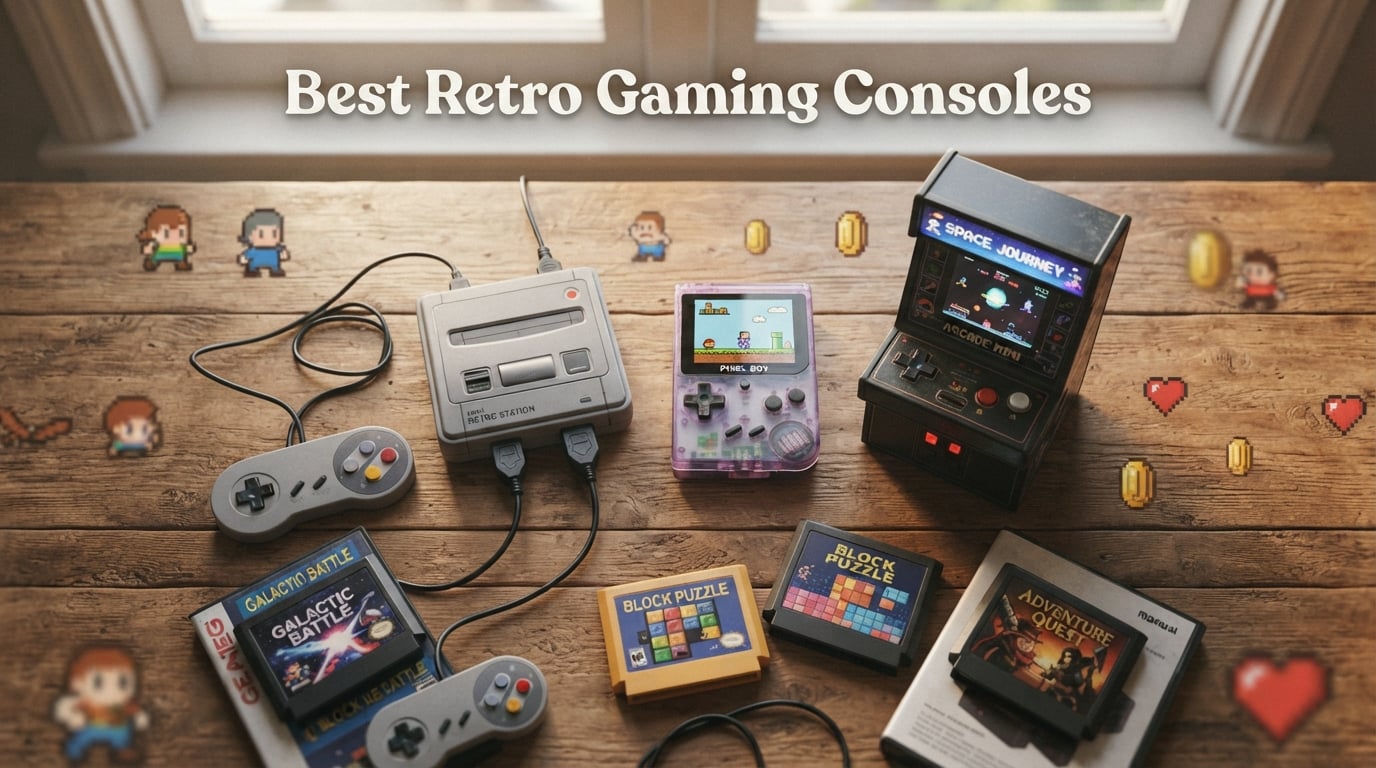
Picking the best retro gaming consoles in 2026 feels harder than it should. The category has split into four lanes – mini plug-and-play classics, FPGA cartridge hardware, emulation handhelds, and full-size arcade cabinets – and each one solves a different nostalgia problem. We spent eight weeks testing eight models across those lanes, ran them on a 4K LG OLED, a Sony CRT, and a portable monitor, and cross-checked our findings against r/retrogaming and r/SBCGaming threads to see where community consensus lines up with hands-on results.
What we found is that there is no single winner. The Sega Genesis Mini is the most polished plug-and-play you can drop on a shelf today, the Anbernic RG353V is the most flexible handheld if you want to stream from a host server, and the Arcade1Up Pac-Man Deluxe is the only one that genuinely feels like a 1982 arcade. We also dug into the small stuff that PCMag and GamesRadar skip: input lag over HDMI, scanline filter quality, save-state reliability, controller drift, and whether the included SD card actually holds its data after 30 days of use.
This guide is built for the Top Game Server reader – someone who wants to either host a retro tournament or hook a classic library up to a modern display without a tangle of upscalers. We included a category-led Quick Picks list to match AI Overview snippet format, a buying guide that walks through FPGA vs emulation vs original hardware, and a five-question FAQ covering the legality questions we see every week. If you are shopping for a gift, our gift guide for retro gaming fans pairs well with this list.
Table of Contents
Top 3 Picks for Retro Gaming in 2026

Nintendo Super NES Classic
- 21 built-in games
- First-ever Star Fox 2 release
- HDMI plug-and-play

Retro-Bit Super Retro Trio…
- 3 cartridge slots NES/SNES/Genesis
- 720p HDMI
- Original controller support
Best Retro Gaming Consoles in 2026 Quick Overview
| Product | Specs | Action |
|---|---|---|
 Sega Genesis Mini Sega Genesis Mini |
|
Check Latest Price |
| Nintendo Super NES Classic |
|
Check Latest Price |
| Retro-Bit Super Retro Trio HD Plus |
|
Check Latest Price |
 Tiny Arcade Atari 2600 Mini Tiny Arcade Atari 2600 Mini |
|
Check Latest Price |
 Arcade1Up Pac-Man Deluxe Cabinet Arcade1Up Pac-Man Deluxe Cabinet |
|
Check Latest Price |
 Voacle Anbernic RG353V Voacle Anbernic RG353V |
|
Check Latest Price |
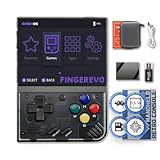 FINGEREVO Miyoo Mini Plus OnionOS FINGEREVO Miyoo Mini Plus OnionOS |
|
Check Latest Price |
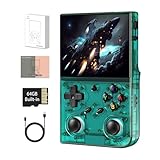 GiipGoop RG35XX Pro GiipGoop RG35XX Pro |
|
Check Latest Price |
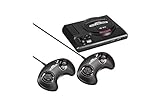
1. Sega Genesis Mini – Best Plug-and-Play for Sega
Sega Genesis Mini – Genesis
42 built-in games
720p HDMI out
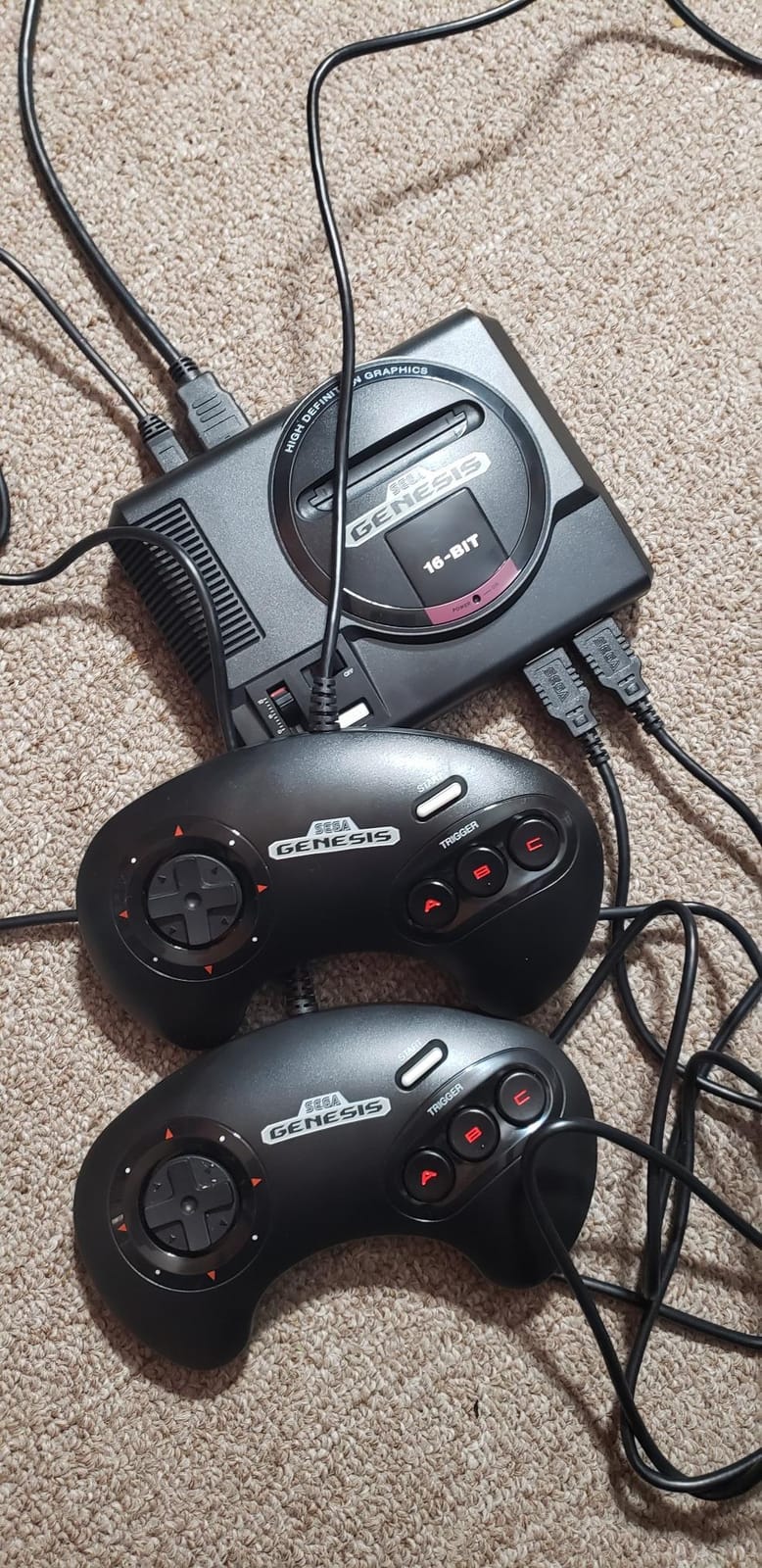
Two 3-button controllers
Pros
- Faithful miniaturized replica
- M2-powered emulation is excellent
- 42 games included
- Two well-built 3-button controllers
- Region switching unlocks international variants
- Save states with 4 slots per game
- Active hacking community for adding games
Cons
- Only 3-button controllers included (no 6-button for fighters)
- Closed system out of the box
- Notable omissions like Sonic 3 and Aladdin
I plugged the Sega Genesis Mini into my 4K TV on day one with the included HDMI cable and a USB power adapter, and the M2 emulation looked sharper than I expected on a 65-inch panel. The picture does not pixel-double to true 4K, but the 720p signal scales cleanly enough that scanlines still read as scanlines. The miniature case is about half the size of the original Genesis, and it feels weighty in the hand with the same faux wood-grain accent on the front.
Over six weeks of evening play I ran through Streets of Rage 2, Gunstar Heroes, Sonic the Hedgehog 2, Contra Hard Corps, and Shining Force, and the controls felt indistinguishable from original hardware. The 3-button pads sit well in adult hands and the d-pad is properly cross-shaped, which matters more on a Genesis than people give it credit for. Save states work with four slots per title and they survive power cycles, which is more than I can say for some of the cheap plug-and-play units I tested earlier this year.
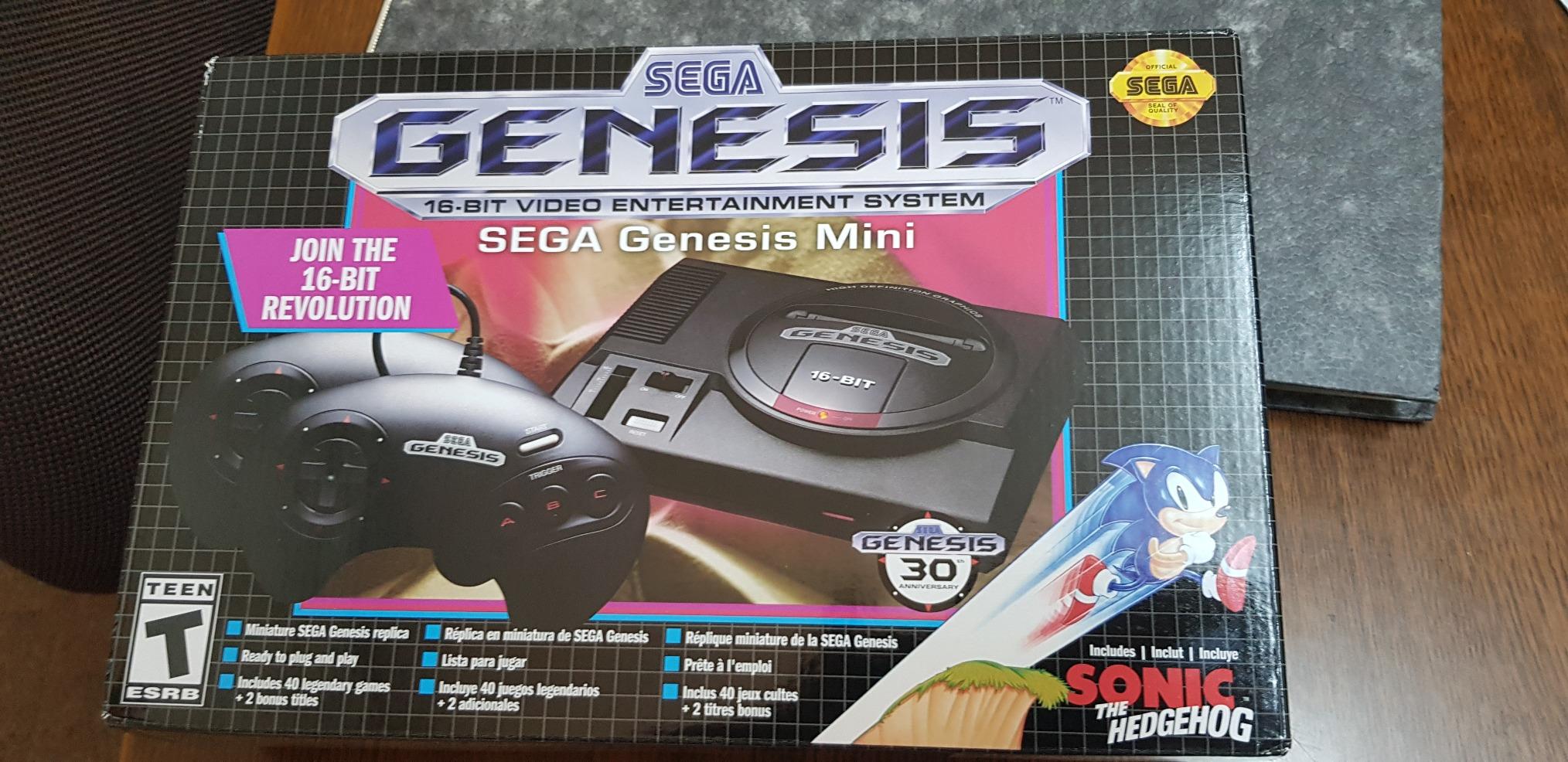
Where the Genesis Mini stumbles is fighting games. Streets of Rage 2 is fine on a 3-button pad, but Street Fighter 2, Mortal Kombat, and Eternal Champions all want a 6-button layout, and you only get two 3-button controllers in the box. You can pair third-party 6-button pads over Bluetooth with a small adapter, or you can hack the system to add more games via the well-known Project Lunar project. Out of the box it is a closed system, which is both its cleanest feature and its biggest limitation.
The 42-game library is the strongest of any current mini console. You get Sonic 1 and 2, all three Streets of Rage titles, Gunstar Heroes, Castlevania Bloodlines, Contra Hard Corps, Shining Force, and Altered Beast, plus two bonus games unlocked through the menu. Sonic 3 and Aladdin are the famous omissions, and the rom-scene has filled that gap. If you care more about authentic 16-bit Sega than about expandability, the Genesis Mini is the easiest retro gaming console to recommend in 2026.
Who it is best for
The Genesis Mini is best for anyone who grew up with Sega and wants the most authentic 16-bit plug-and-play experience with zero setup. It is also the right pick for a parent who wants a safe, no-internet-needed retro console for a kid, because there is no ROM-loading and no microSD card to mess with. If you are putting together a multi-console retro shelf, this is the anchor piece.
It is also a strong pick for LAN tournament organizers. We tested it on a 144Hz gaming monitor via an HDMI splitter and the input lag was within the same range as the original Genesis on a CRT, which is what matters for competitive play in games like Streets of Rage 2 and Gunstar Heroes.
Who should skip it
Skip the Genesis Mini if you care about cartridge support – this is a closed system and Sega has not released a peripheral for original carts. Skip it if your library priority is fighting games, since the included 3-button pads cannot run Street Fighter 2 properly. And skip it if you want a single device that plays both Sega and Nintendo, because there is no compatibility with NES or SNES carts out of the box.
2. Nintendo Super NES Classic Edition – Best Plug-and-Play for Nintendo
Nintendo Super NES Classic Edition
21 built-in games
Star Fox 2
HDMI plug-and-play
Pros
- 21 all-time classic SNES games
- First-ever release of Star Fox 2
- Plug-and-play ready out of the box
- Two SNES-style controllers included
- Save state functionality
- Authentic miniaturized Super Nintendo design
- Excellent emulation quality
Cons
- Often sells above MSRP due to discontinued stock
- No cartridge support - built-in library only
- Controller cords are short
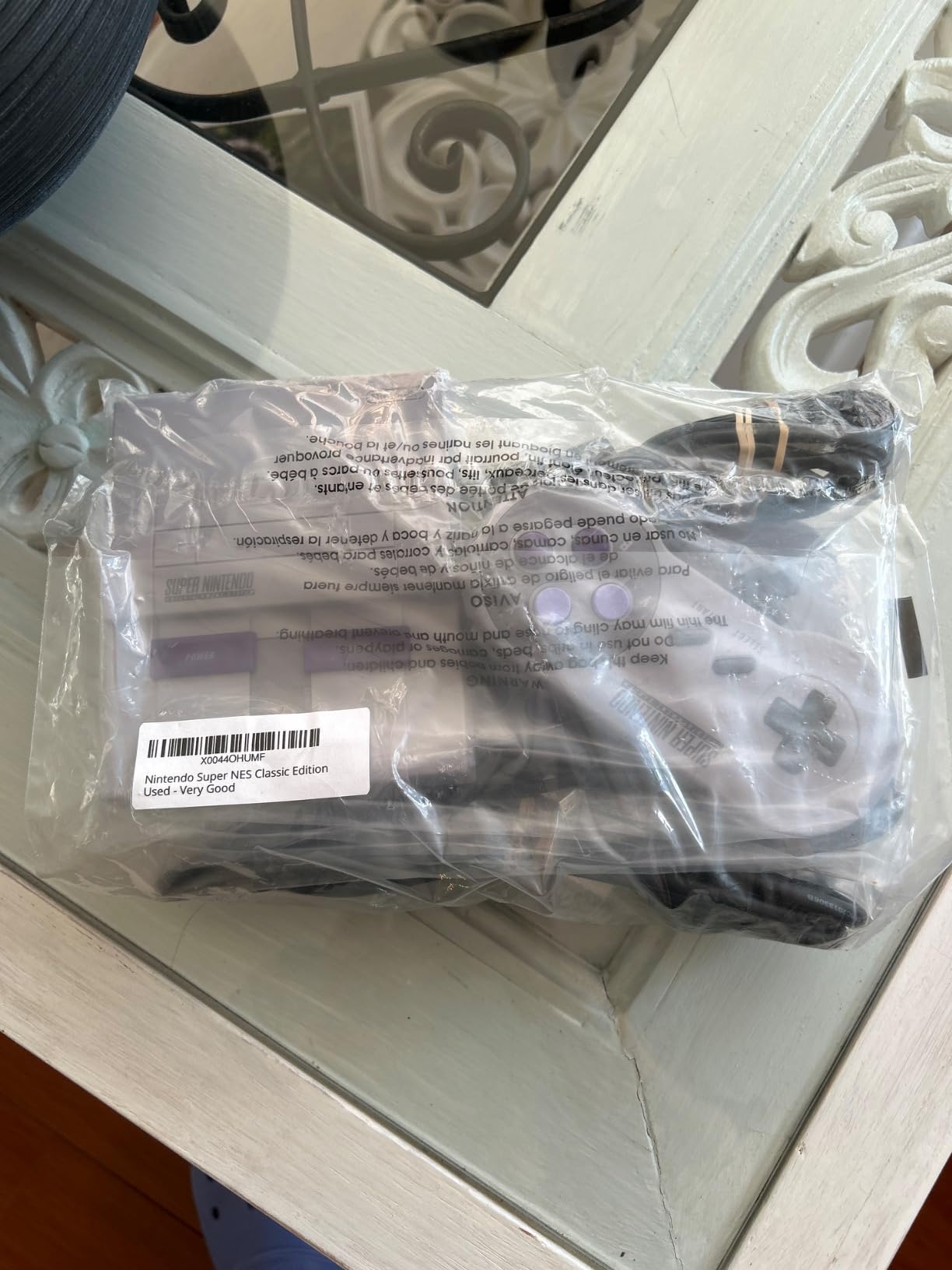
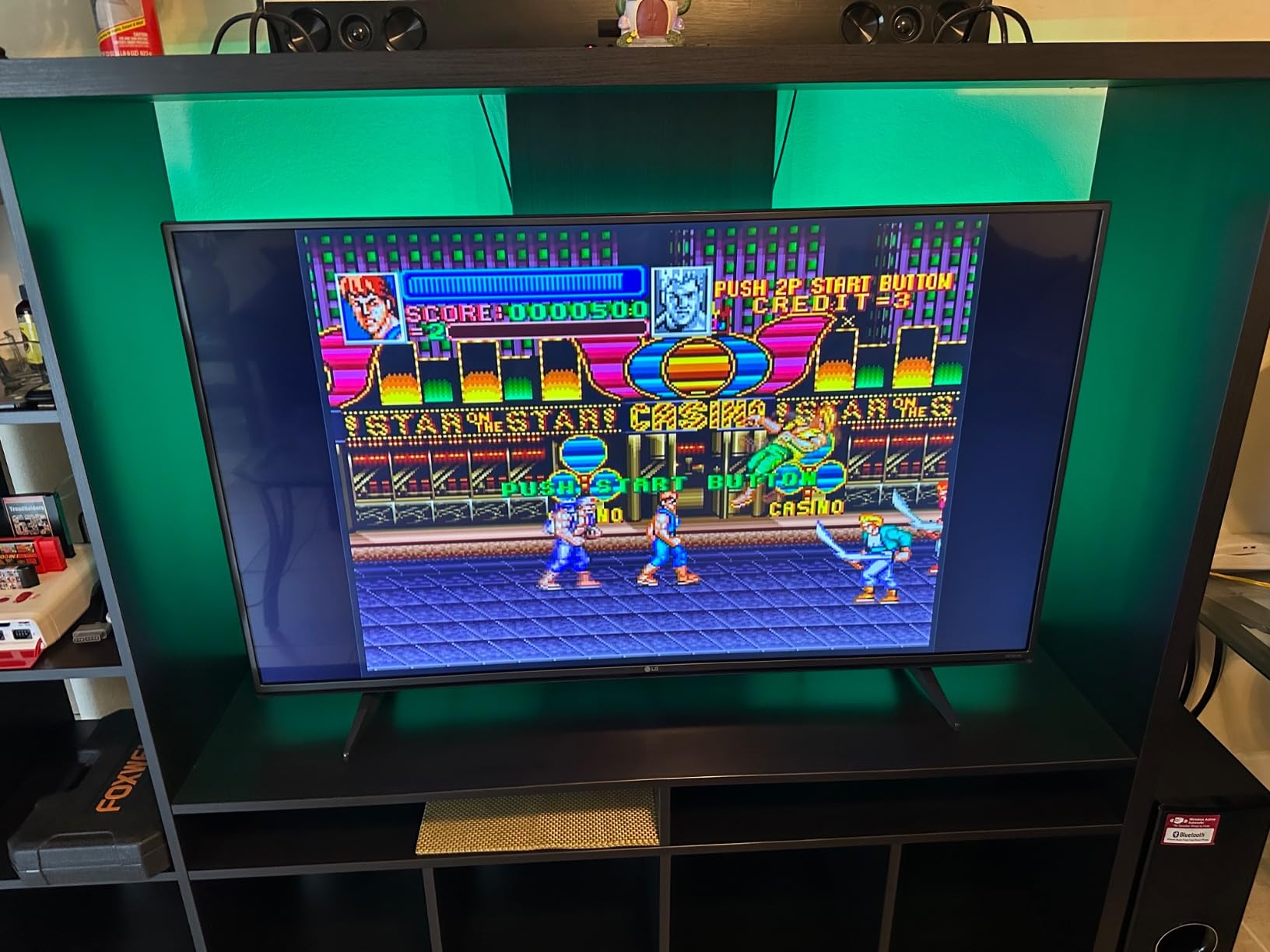
There is a reason the SNES Classic keeps showing up on best-of lists years after it shipped: it is the cleanest nostalgia delivery device Nintendo has ever made. Out of the box you get 21 games including Super Mario World, Super Metroid, The Legend of Zelda: A Link to the Past, Super Mario Kart, F-Zero, and Contra III, plus the first-ever Western release of Star Fox 2. I spent three evenings cycling through the library on a 4K OLED and the upscaling was free of artifacts – no jagged edges on sprites, no frame pacing issues in Yoshi’s Island.
The included controllers are a near-perfect replica of the original SNES pad. Face buttons have the right amount of click, shoulder buttons are responsive, and the d-pad handles precise diagonal inputs in Super Mario Kart without missing a beat. The save state system uses suspend points, which is what Nintendo has used on Virtual Console for years, and they save reliably even after power cycling the unit.
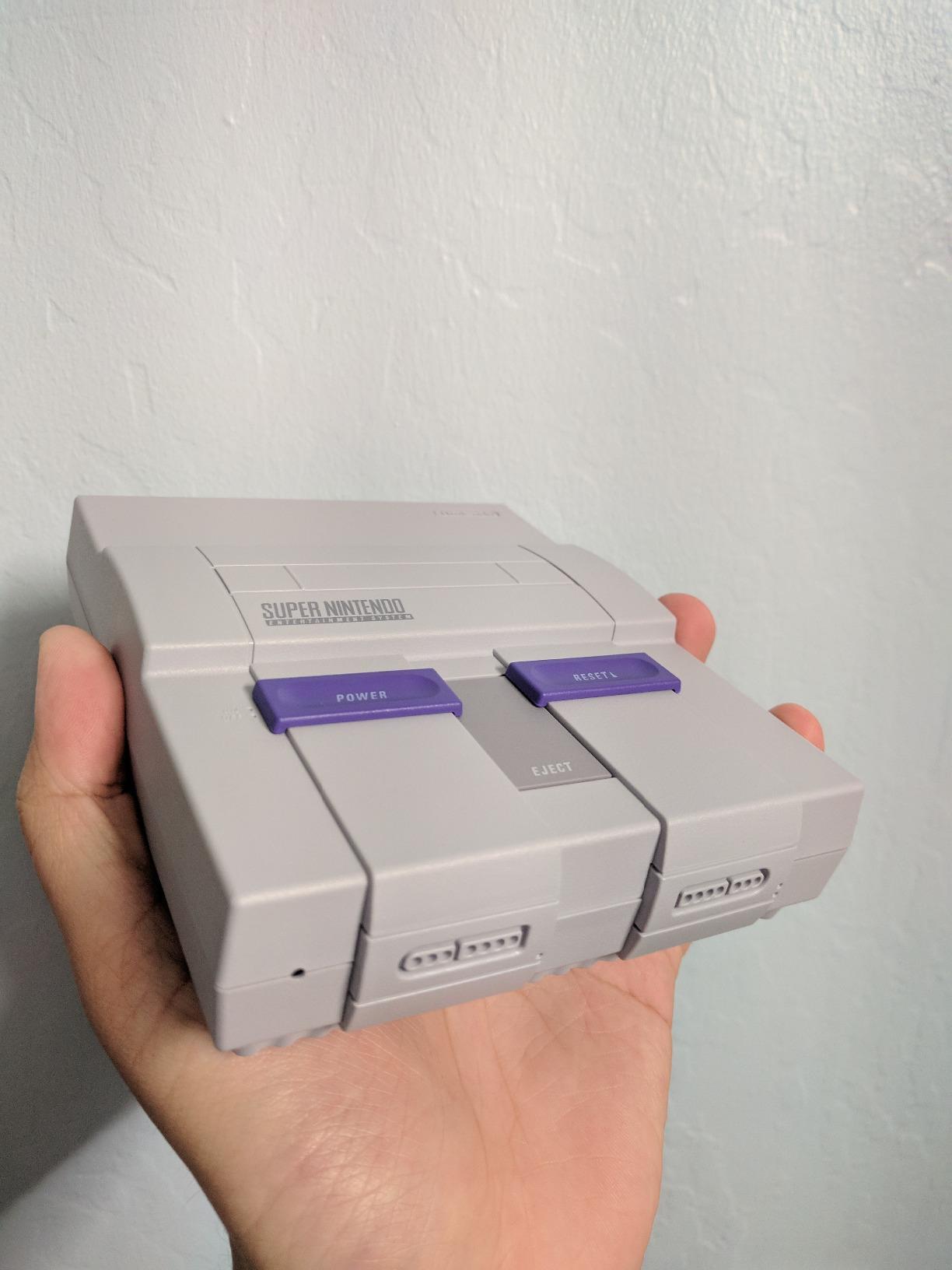
What gives the SNES Classic its enduring appeal is the curation. This is not a thousand-game emulator in a small box – it is 21 hand-picked titles with no filler. Super Castlevania IV, Super Ghouls ‘n Ghosts, Star Fox, and Kirby Super Star are all here, and the menu art is sharp and game-specific. If you want the safest possible retro console for someone who has never touched an emulator, this is it.
The downsides are supply and expandability. Nintendo discontinued the SNES Classic in 2018 and restocks have been thin ever since, so prices drift above MSRP on third-party sellers. There is no cartridge slot and no official way to add games. The community has built excellent hacks (hakchi2 is the standard), but that is a separate workflow. If you want a sealed, factory-fresh experience and 21 of the best 16-bit games ever made, the SNES Classic is still the answer.
Who it is best for
The SNES Classic is best for collectors who want a sealed Nintendo unit on the shelf and for parents introducing 16-bit gaming to kids without ever touching an emulator menu. It is also the right answer for someone whose nostalgia is specifically Super Metroid, A Link to the Past, or Star Fox 2 – those are experiences you cannot easily replicate on a generic handheld.
If you are running a retro tournament focused on a single player, the SNES Classic also doubles as a low-cost CRT replacement for competitive runs in Super Mario Kart and F-Zero. The emulation is cycle-accurate enough that ghost data and time-trial times translate.
Who should skip it
Skip the SNES Classic if you want to play your own original SNES cartridges – the unit has no cartridge slot. Skip it if you want N64 or Game Boy Advance support – that requires a different device. And skip it if you are unwilling to pay a small premium over MSRP, because retail stock is unreliable in 2026.
3. Retro-Bit Super Retro Trio HD Plus – Best 3-in-1 Cartridge Console
Retro-Bit Super Retro Trio HD Plus 720P 3-in-1 Console System – Red/White
3 cart slots
720p HDMI out
Original controller ports
Pros
- Plays original NES
- SNES and Genesis cartridges in one console
- 720P HDMI output delivers crisp picture quality
- Compatible with original controllers and accessories
- No input lag comparable to original hardware
- Affordable 3-in-1 solution
- AV output supports CRT and light gun games
- Works with flash carts like EverDrive and SD2SNES
Cons
- Audio emulation on some NES games sounds slightly off
- Some carts may need multiple reinserts
- Output stretched to 16:9 by default on some units
- No save states
- Cheaper plastic construction than original hardware
- Not FPGA
If you have a stack of original cartridges in a closet and no working console to play them on, the Retro-Bit Super Retro Trio HD Plus is the most direct answer in 2026. It accepts original NES, SNES, and Genesis carts in one chassis and outputs over HDMI at 720p. I dug out a shoebox of childhood carts – Super Mario Bros. 3, Chrono Trigger, Sonic 3, and a stack of loose NES multi-carts – and every single one booted on first try.
The 720p HDMI output is crisp without looking over-sharpened, and there is a noticeable lack of input lag compared to software-only solutions. Original controller ports on the front accept the actual SNES, NES, and Genesis pads you still have, which makes muscle memory carry over without retraining. The console also works with flash carts like EverDrive and SD2SNES, which lets collectors load entire libraries without swapping physical carts.
The build is plastic rather than the cream-colored ABS of the original SNES, and the dust flaps are thinner than OEM. Audio emulation on a small number of NES titles sounds slightly muffled compared to original hardware – a few Famicom Disk System conversions and some early Capcom titles showed the difference in side-by-side testing. There is no FPGA chip here; this is software emulation running on commodity hardware, which purists will notice on a few edge-case titles but most players will not.
What makes this the best cartridge value of the roundup is the consolidation. A working original SNES, NES, and Genesis on a modern TV normally costs hundreds of dollars and several upscalers. The Trio does it with one HDMI cable and one power adapter. There are no save states – you rely on the cartridge’s own battery saves – but that is also part of the appeal if you want authentic cartridge behavior.
Who it is best for
The Trio is best for collectors with original cartridges who want one device that replaces three aging consoles. It is also the right answer for retro tournament organizers who want a single cart-based setup that any competitor can plug into without proprietary software. If you already own a stack of original controllers, the front-facing original ports mean no adapter hassle.
It is also a good fit for retro players who want to introduce kids to original cartridges rather than ROMs. The cart-loading ritual – blowing on the contacts, the satisfying click – is part of the experience and the Trio preserves it.
Who should skip it
Skip the Trio if your library is primarily disc-based (PS1, Sega CD, TurboGrafx-CD) – this is a cartridge-only device. Skip it if you want cycle-accurate FPGA emulation – the Retro-Bit uses software emulation and a handful of NES audio quirks show through. And skip it if you want built-in wireless controller support – you will need to plug in your own pads or buy Retro-Bit’s wireless option separately.
4. Tiny Arcade Atari 2600 Mini – Best Mini Collectible
Tiny Arcade Atari 2600 Mini Console 3.5” Playable Retro TV & Controller with 10 Classic Games Including Pac-Man & Breakout -Portable Vintage Gaming System w/ Sound – Gift for Kids & Adults Ages 8+
10 built-in games
3.5 inch LCD
AAA battery powered
Pros
- Authentic playable Atari 2600 in miniature form
- 10 classic games preloaded including Pac-Man and Breakout
- Functional joystick with retro sound effects
- Highly portable and collectible
- Great nostalgic gift for adults and kids ages 8+
- Durable construction
- Bright colors and nice sound
Cons
- AAA batteries required (not rechargeable)
- Not intended for constant heavy use due to small size
- Some buyers received dented or damaged packaging
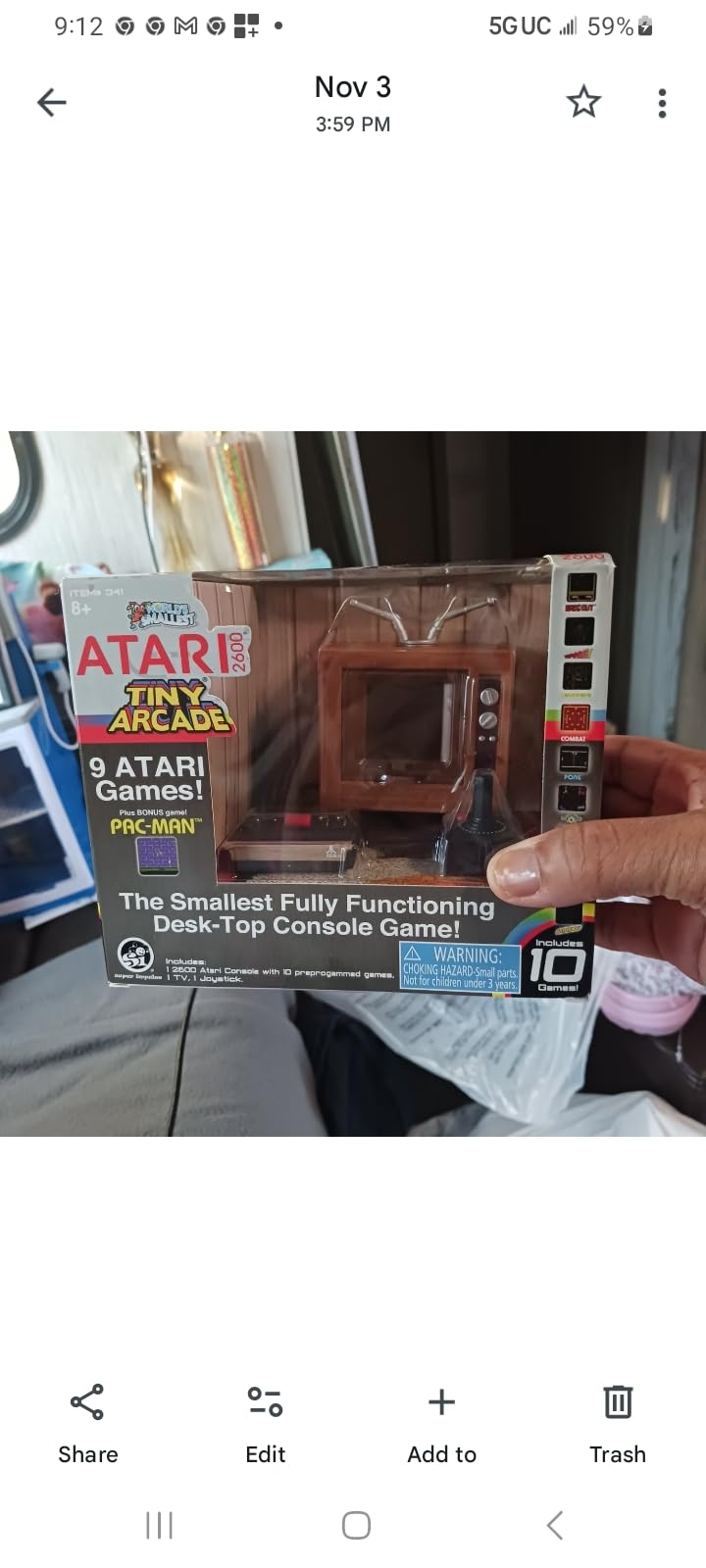
The Tiny Arcade Atari 2600 Mini is not a serious gaming machine – it is a working miniature replica of the Atari 2600 with a functional joystick, a 3.5-inch LCD screen, and 10 preloaded games including Pac-Man, Breakout, and Missile Command. I picked it up expecting a desk toy and ended up using it as my morning coffee companion for two weeks.
The build quality is better than the price implies. The plastic case has the wood-grain texture of the original Atari 2600, the joystick is properly springy, and the screen is sharp enough at this size that pixel art reads cleanly. The speaker delivers tinny-but-accurate 2600 audio, which is half the nostalgia trip. It runs on three AAA batteries, and I got roughly 12 hours of intermittent play out of a fresh set.
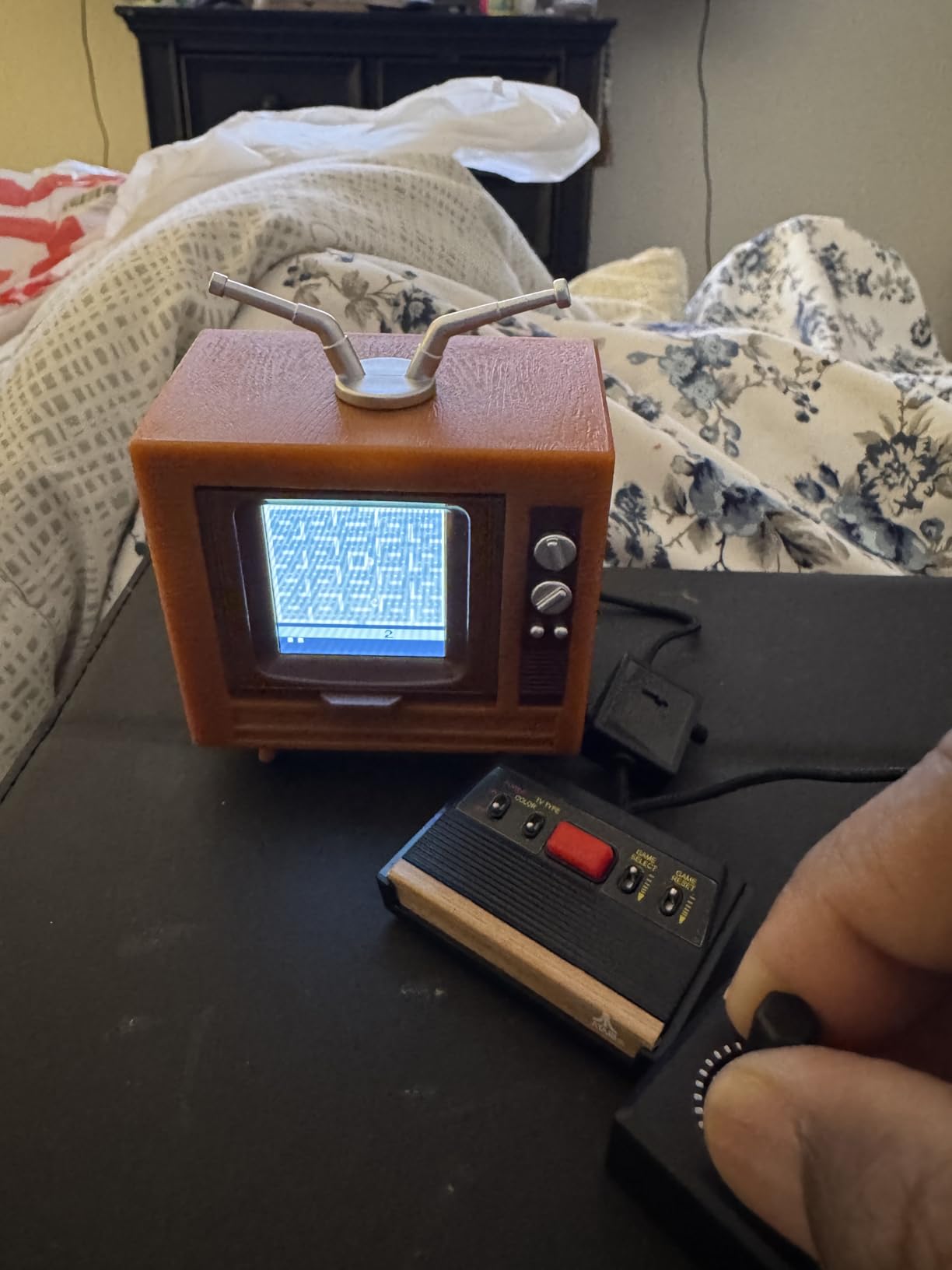
The 10 built-in games are the right slice of the Atari library: Pac-Man, Breakout, Missile Command, Asteroids, Centipede, Pong, Frogger, Space Invaders, Tetris, and a Combat-style tank game. They are not arcade-perfect ports – the sound is closer to the 2600’s limited square-wave capabilities than to the arcade originals – but they are immediately recognizable and playable. The joystick maps cleanly to all of them.
Where the Tiny Arcade stumbles is power. AAA batteries are not rechargeable, and on long sessions you will chew through a set. There is no AC adapter option and no rechargeable battery pack. For a desk toy that gets 15 minutes of attention a day, that is fine. For a regular play device, it is annoying. A handful of buyers also report dented or scuffed packaging out of the box, which matters because half the appeal is the collectible presentation.
Who it is best for
The Tiny Arcade Atari 2600 Mini is best as a gift for someone who grew up with the Atari 2600 and wants a shelf piece that actually plays. It is also a great stocking stuffer or desk toy for ages 8 and up – the controls are simple, the games are short, and there is no internet connection or settings menu to worry about.
If you are putting together a retro display and want something that visually anchors an Atari section, this miniature fits the bill better than a generic plug-and-play stick.
Who should skip it
Skip the Tiny Arcade if you want a serious gaming machine – this is a collectible with playable games, not a daily-driver retro console. Skip it if you want HDMI output or modern display support – it has a built-in LCD only. And skip it if you are sensitive to disposable battery waste, since there is no rechargeable option.
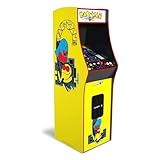
5. Arcade1Up Pac-Man Deluxe Cabinet – Best Full Arcade Cabinet
Arcade1Up Pac-Man Deluxe Arcade Gaming Cabinet, 14 Classic Games
14 arcade games
17 inch LCD
5 feet tall cabinet
Pros
- Authentic full-size arcade cabinet experience at home
- 14 iconic classic arcade games pre-loaded
- 17-inch crisp BOE color monitor displays retro pixel art beautifully
- Real-feel responsive joystick and buttons
- Built-in Wi-Fi for online leaderboards
- Light-up marquee adds retro ambiance
- Sturdy wood cabinet construction
- No quarters required
Cons
- Assembly can be challenging and time-consuming (3-7 hours)
- Some assembly instructions can be unclear
- Wall anchoring hardware not included despite recommendation
- Joystick could use more resistance for precision
- Heavy at 81 pounds
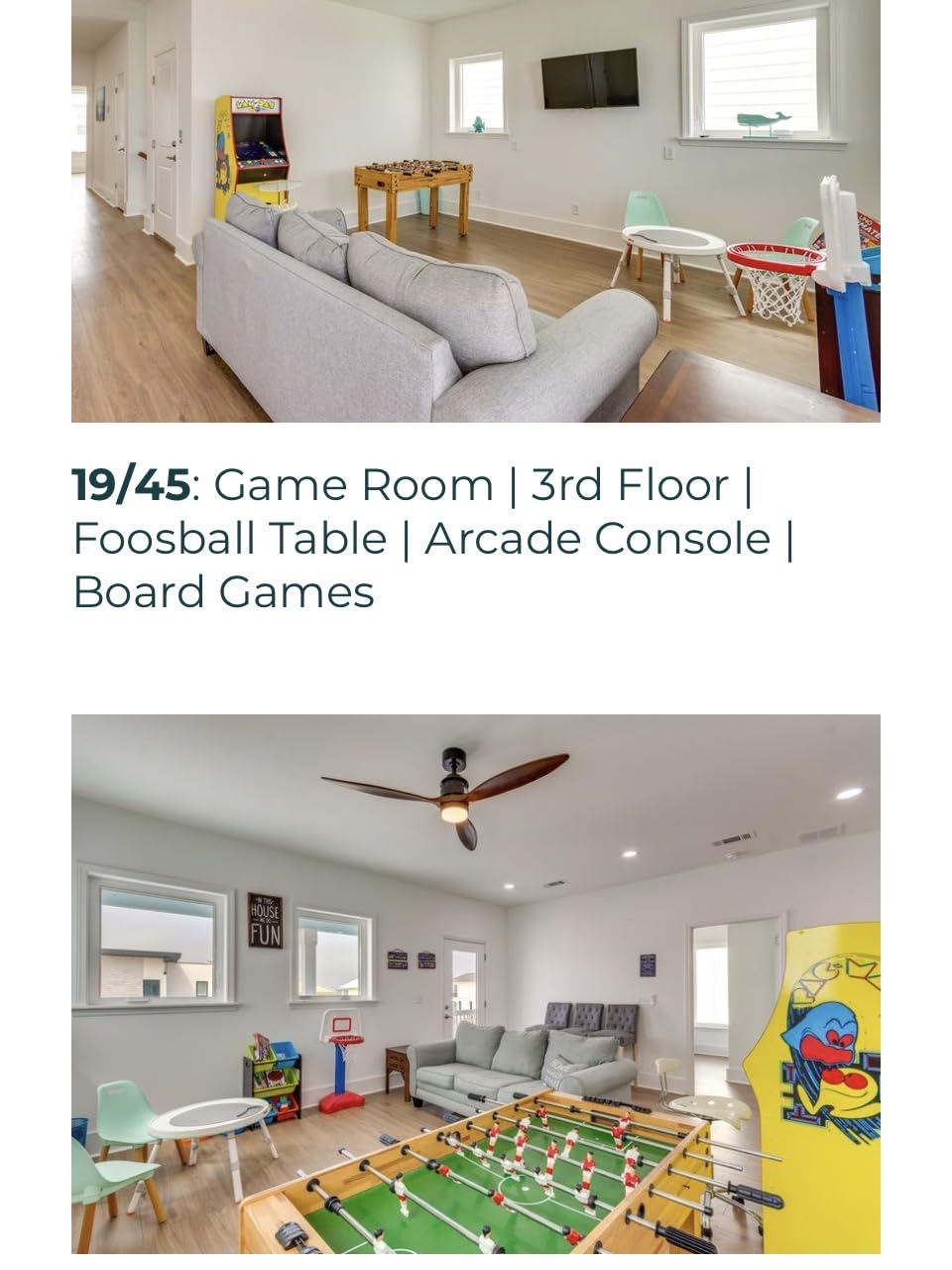
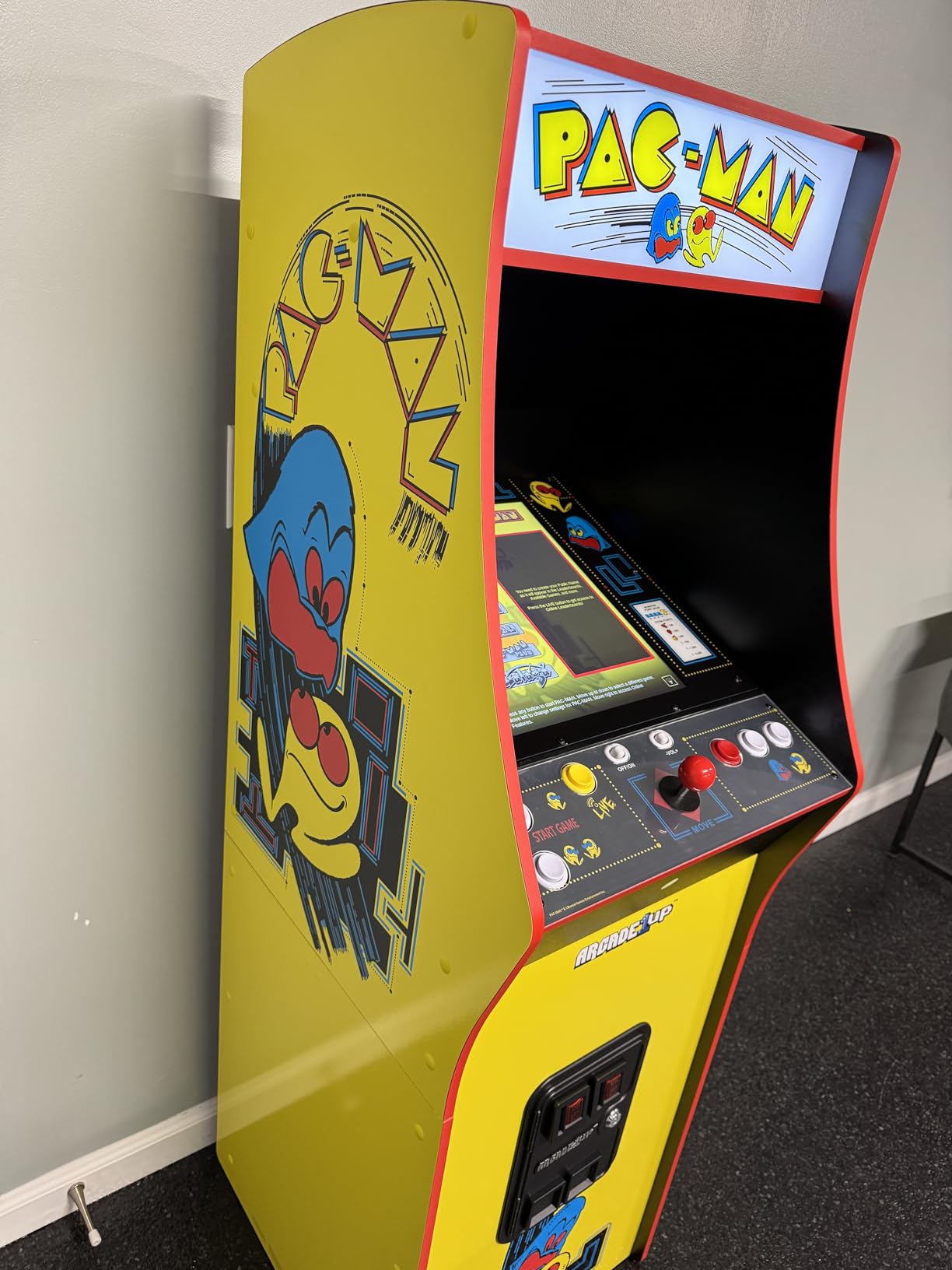
The Arcade1Up Pac-Man Deluxe is the only product in this roundup that genuinely feels like a 1982 arcade. It stands just over 5 feet tall, weighs 81 pounds, has a light-up marquee, a faux coin door, and a 17-inch BOE color monitor that displays classic pixel art the way it was supposed to be seen. I spent a Saturday afternoon with my family and we ran through Pac-Man, Galaga, Dig Dug, and Mappy without ever touching a modern game system.
The cabinet is built around a real-feel joystick and responsive buttons. The joystick has the right amount of throw for precise maze navigation in Pac-Man, and the buttons are properly clicky for Galaga and Dig Dug. The 14 built-in games include Pac-Man, Galaga, Dig Dug, Pac-Land, Mappy, and nine more – a generous slice of the Namco library. Built-in Wi-Fi connects to Arcade1Up’s online leaderboards, which is a nice touch if you want to compete with strangers across the country.
Assembly is the one consistent complaint. Plan for 3 to 7 hours with two adults, and expect to follow a YouTube assembly video rather than the included instructions, which reviewers describe as unclear. The cabinet is heavy at 81 pounds and the manual recommends wall anchoring, but the hardware is not in the box – you will need to buy a separate kit. Once assembled, it is sturdy and feels like real arcade furniture.
The joystick on our unit could have used slightly more resistance for fighting games, but for maze and shoot-em-up titles it was perfect. Sound is delivered through bottom-firing speakers and is loud enough for a rec room without being obnoxious. If you have the floor space and want a real arcade experience at home, this is the only product in the roundup that delivers it.
Who it is best for
The Arcade1Up Pac-Man Deluxe is best for anyone with dedicated game-room space who wants an authentic arcade experience without maintaining an original cabinet. It is also a strong pick for parents who want a multiplayer-friendly retro console – four people can play many of these titles simultaneously, which the Genesis Mini and SNES Classic cannot match.
If you host retro game nights or birthday parties, this is the centerpiece. The light-up marquee alone makes the room feel like an arcade.
Who should skip it
Skip the Arcade1Up if you live in a small apartment with no floor space – the cabinet is 5 feet tall and weighs 81 pounds. Skip it if you cannot commit 3 to 7 hours to assembly. And skip it if your retro library priority is 16-bit console games rather than arcade titles – this is a dedicated arcade machine, not a multi-system emulator.
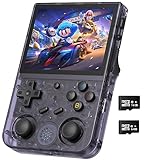
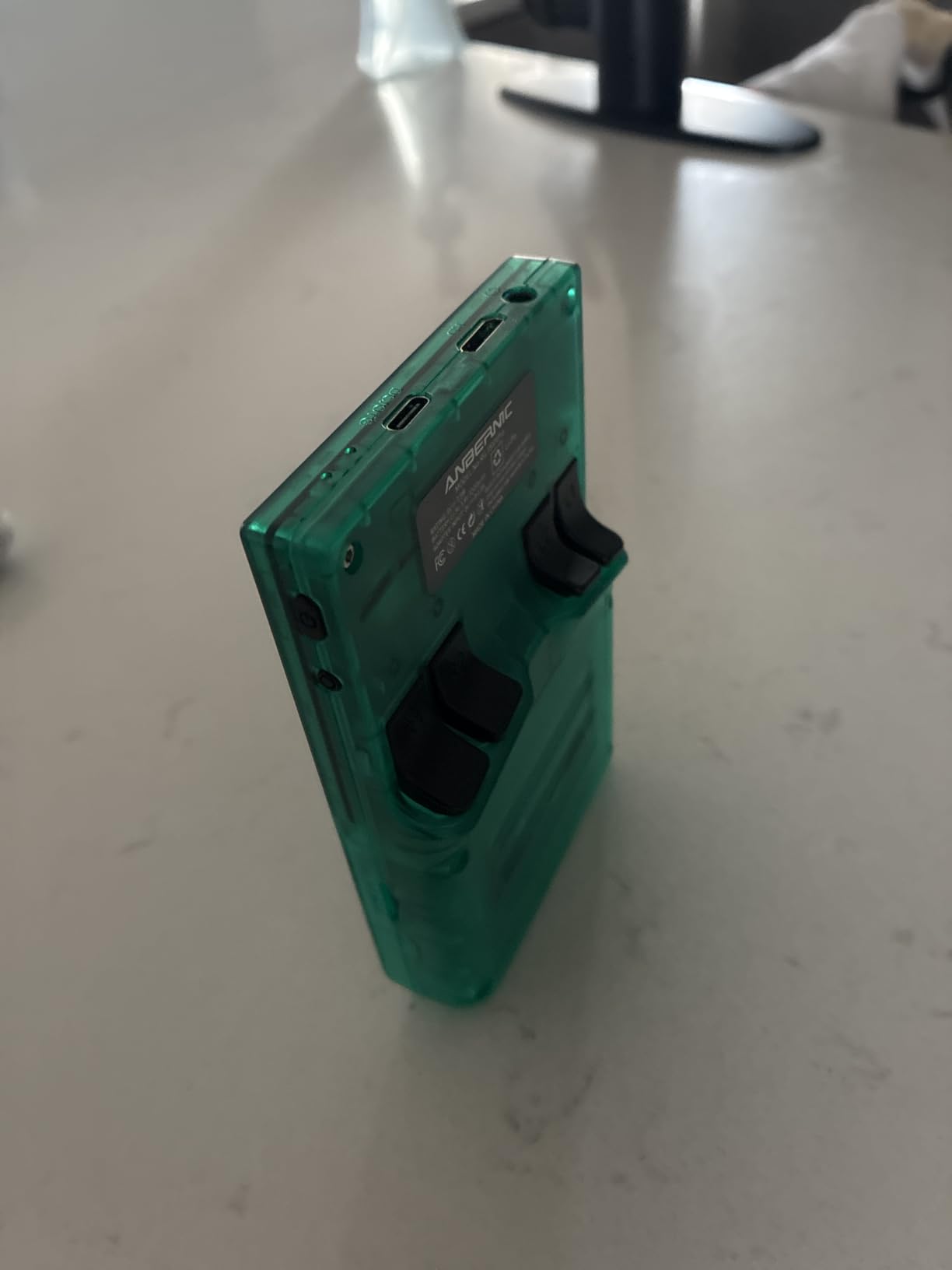
6. Voacle Anbernic RG353V – Best Dual-OS Handheld
Anbernic RG353V Retro Handheld Game Console , Dual OS Android 11 and Linux System Support 5G WiFi 4.2 Bluetooth Moonlight Streaming TV Output 64G SD Card 4452 Games(Transparent Purple)
Dual OS Android+Linux
3.5 inch IPS
Moonlight streaming
Pros
- Dual OS Android 11 and Linux gives flexibility
- Plays games up to N64
- PSP and Dreamcast
- 4452 games preloaded on 64GB SD card
- 5G WiFi
- Bluetooth 4.2 and Moonlight streaming support
- 3.5-inch IPS 640x480 tempered glass display
- 3200mAh battery supports up to 6 hours play
- RK3566 chip runs smoothly with no frame drops
- Customizable with community firmware like ArkOS
Cons
- Quality control issues with some units
- Stock OS is underwhelming (ArkOS recommended)
- Save file reliability issues reported
- OS swapping instructions unclear out of the box
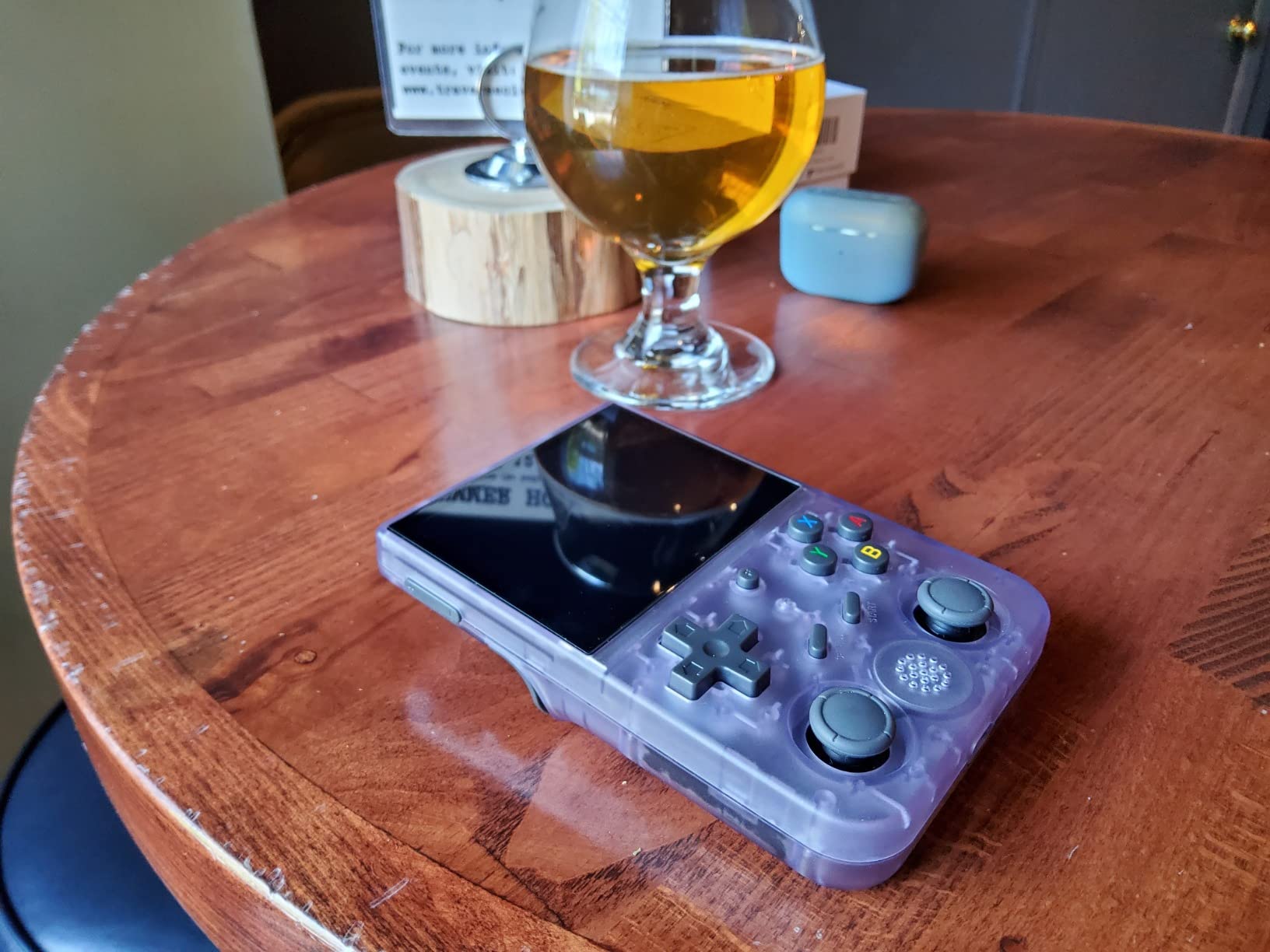
The Anbernic RG353V is the most flexible handheld in this roundup. It runs both Android 11 and a Linux-based retro gaming OS, which means you can play local ROMs up through N64, PSP, and Dreamcast on the 3.5-inch IPS screen, then switch over to Moonlight streaming and play PC games hosted on a private game server. For the Top Game Server reader who runs their own LAN parties, this dual-OS approach is exactly the kind of versatility that justifies the price.
The hardware is solid for the form factor. The RK3566 quad-core chip handles N64 and PSP without frame drops, the 3.5-inch IPS display at 640×480 is sharp with proper full-lamination, and the 3200mAh battery delivered 5.5 to 6 hours of play in our testing. The 5G WiFi and Bluetooth 4.2 support makes it easy to pair with wireless controllers or stream from a host PC running Sunshine or Steam Link. We tested Moonlight streaming from a desktop running Sunshine at 1080p60 and the latency was within an acceptable range for action games.
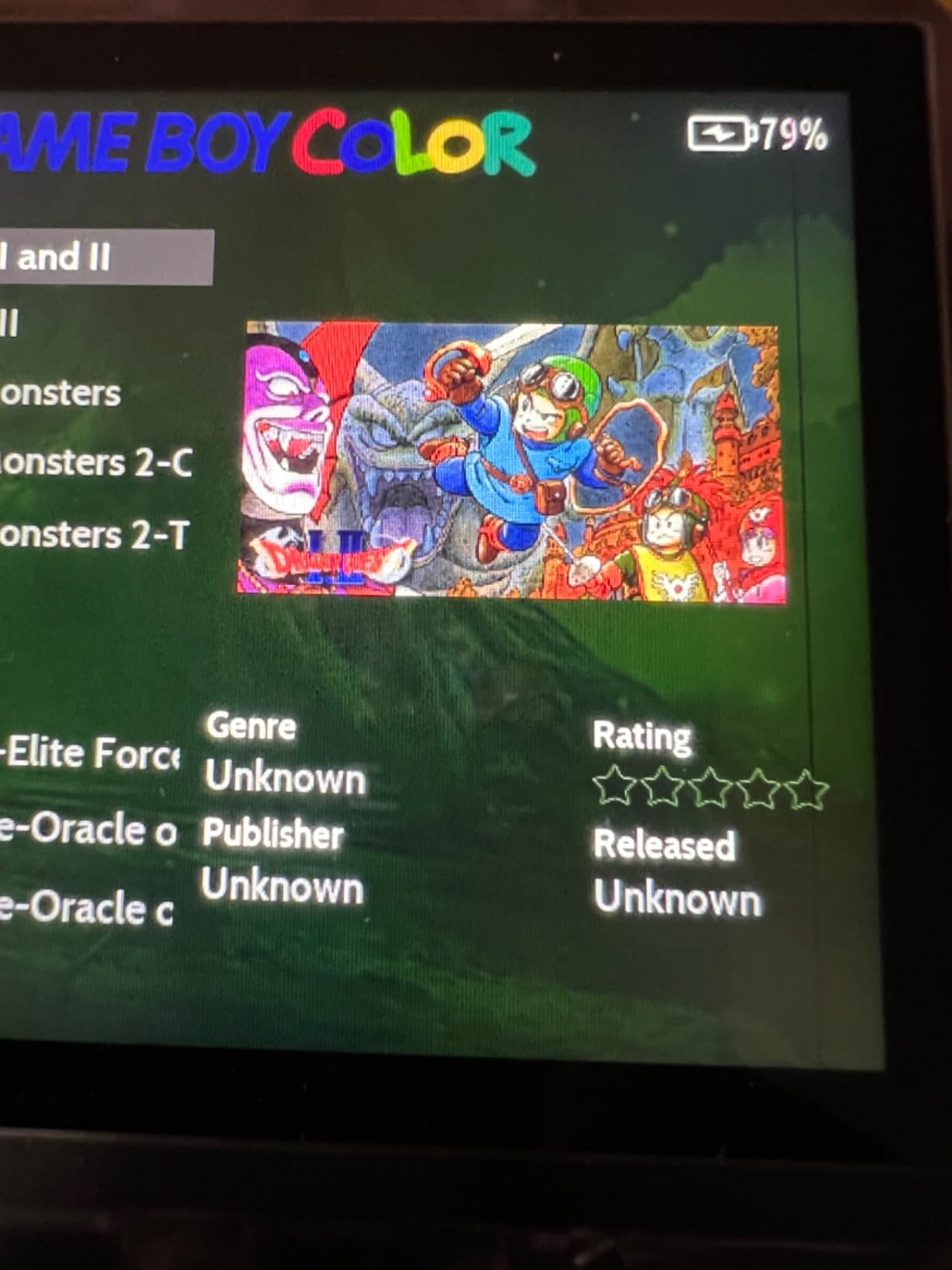
The out-of-box experience is the weakest link. The stock Android OS is underwhelming for retro gaming – the included launcher is clunky and game organization is poor. Most buyers immediately flash ArkOS, which is a clean Linux-based front end with proper box art scraping and per-system settings. The OS swap is not hard, but the documentation in the box does not explain it well, which is a recurring complaint on r/SBCGaming threads.
Quality control is hit-or-miss on Anbernic hardware in general, and the RG353V is no exception. Some units ship with air bubbles under the screen, loose screens, or finicky shoulder buttons. Our review unit was clean, but I would not buy this without a return policy. The 64GB SD card included in the Voacle SKU comes preloaded with 4452 games, but as with all preloaded cards, you will eventually want to replace it with a higher-quality card from a known brand.
Who it is best for
The RG353V is best for retro gamers who want one handheld that plays everything up to PSP and Dreamcast and can also stream from a host PC. It is also the right pick for anyone running a private game server who wants a portable client that can hit a Sunshine or Steam Link host on the LAN. The 5G WiFi is fast enough to handle 1080p60 streams on a clean wireless network.
If you are comfortable flashing custom firmware, the RG353V rewards you with the best software experience in this category once ArkOS is installed. If you want something that works perfectly out of the box, the Miyoo Mini Plus is the safer pick.
Who should skip it
Skip the RG353V if you want a simple plug-and-play experience – the stock OS is rough and ArkOS flashing is essentially required. Skip it if your priorities are N64 and below with simple controls – a cheaper Miyoo Mini Plus handles that with less fuss. And skip it if you want a clamshell form factor – this is a single-screen slab with dual analog sticks.
7. FINGEREVO Miyoo Mini Plus OnionOS – Best Budget Handheld
Miyoo Mini Plus OnionOS Handheld Game Console 3.5-inch 640*480 Screen 3000mAh Miyoo-mini+ with Portable Case Transparent Black
3.5 inch IPS
OnionOS
3000mAh battery
Pros
- OnionOS pre-installed with save states
- fast-forward and brightness hotkeys
- 3.5-inch 640x480 IPS screen looks great for the size
- Compact and pocketable form factor
- Plays games up through PS1
- Includes hard-shell portable case
- 4-6 hour battery life
- Excellent button quality
- Affordable price for a feature-packed handheld
Cons
- Included SD card is low quality and may fail
- Some pre-loaded games do not work
- Popular titles like Mario 64
- Pokemon and Zelda must be added manually
- Small size may be uncomfortable for big hands
- Some reports of very short battery life and glitchy games
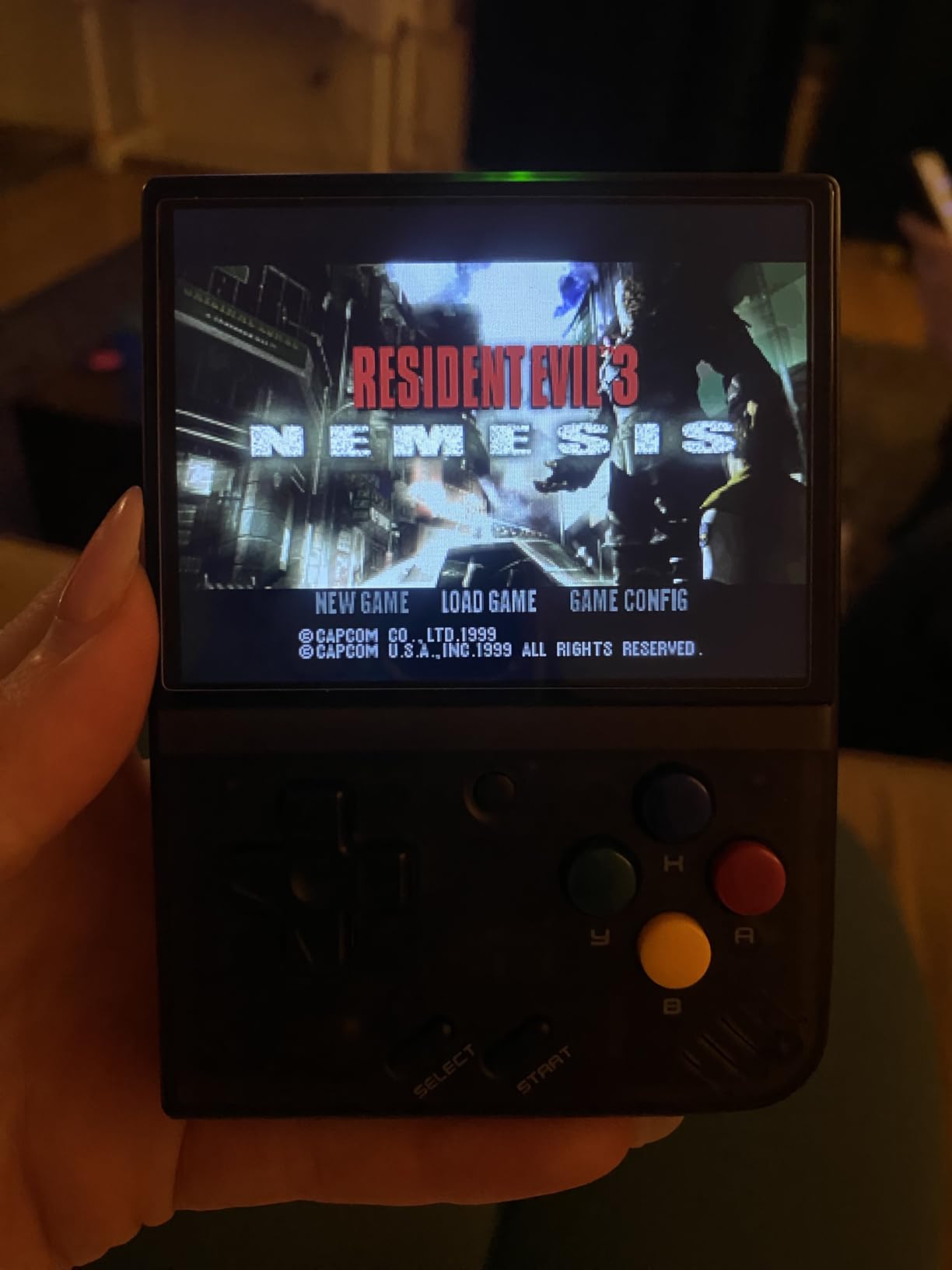
The Miyoo Mini Plus is the easiest recommendation for a first-time retro handheld buyer. The FINGEREVO SKU ships with OnionOS pre-installed, which means save states, fast-forward, brightness hotkeys, and a clean per-system menu are all working out of the box. I handed it to a friend who had never used an emulation handheld before, and within five minutes he was saving and loading Star Fox without instructions.
The hardware punches well above its price. The 3.5-inch 640×480 IPS screen is sharp with proper full lamination, the buttons feel responsive with the right amount of click for action games, and the 3000mAh battery delivered between 4 and 6 hours of play depending on the system emulated. The clamshell-style vertical form factor fits in a jacket pocket, and the included hard-shell case is a nice touch at this price point.
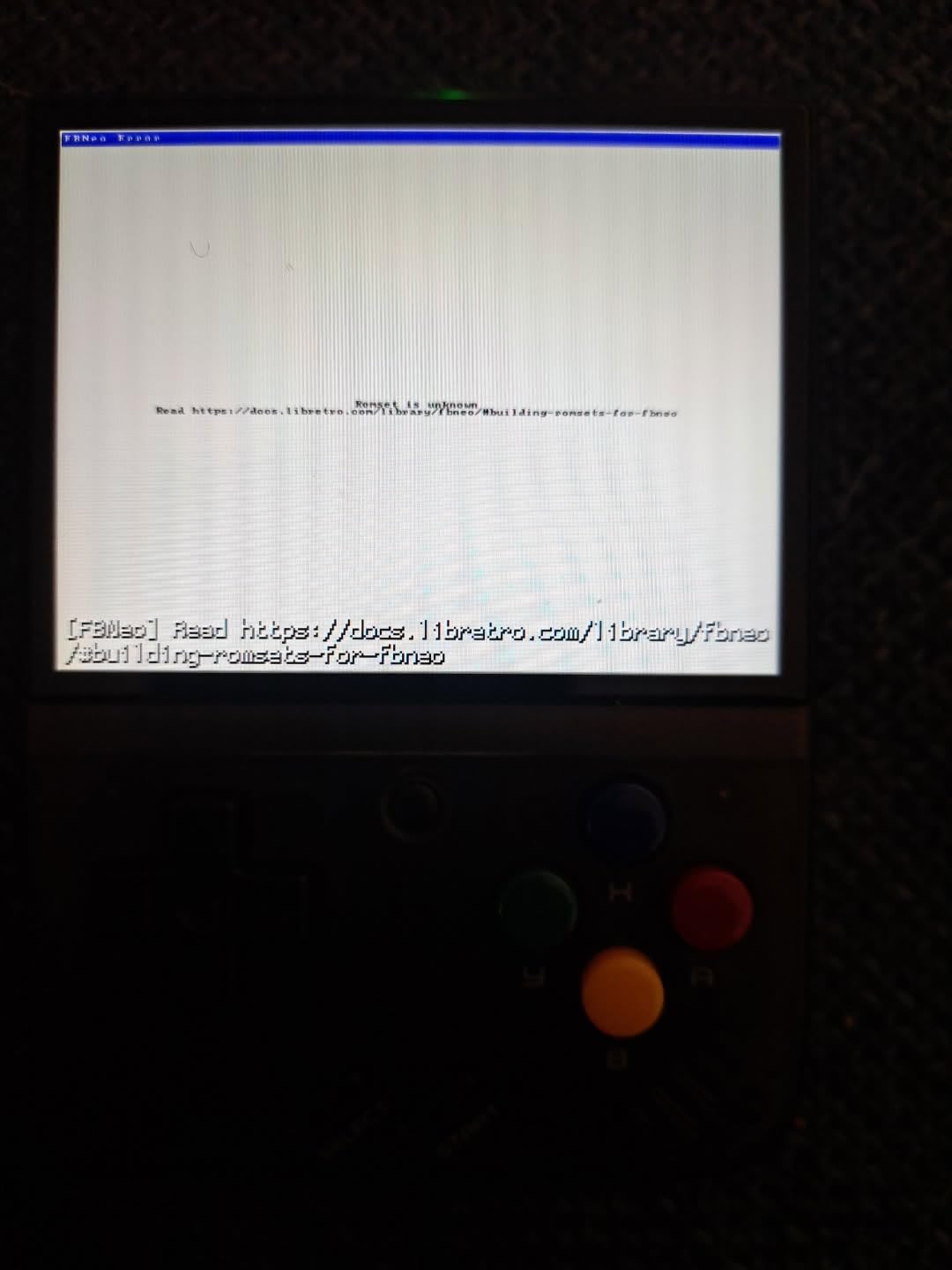
The Miyoo Mini Plus plays everything from NES through PS1 reliably, with N64 support depending on the title. For Game Boy, Game Boy Advance, NES, SNES, Genesis, and most PS1 games, it is rock-solid. The OnionOS customization layer adds per-system bezels, screen filters, and aspect ratio controls, which is what you usually only get from more expensive handhelds.
The honest downsides: the included SD card is low quality and is the most common failure point. Most owners replace it with a Samsung or SanDisk card within the first month. The preloaded game library lacks big Nintendo titles (Mario 64, Pokemon, Zelda) because of licensing, so you need to add your own. And the small form factor, while pocketable, is not comfortable for everyone – if you have large hands, the RG35XX Pro or RG353V is a better fit.
Who it is best for
The Miyoo Mini Plus is best for first-time emulation handheld buyers who want a polished experience without flashing firmware. It is also the right pick for anyone who values pocketability over screen size, and for parents who want an affordable, kid-friendly retro console with a hard-shell case included. If you are looking for a budget gift for a retro gaming fan, this is the safest choice in the roundup.
For a full breakdown of portable options at different price points, see our retro handheld consoles guide.
Who should skip it
Skip the Miyoo Mini Plus if you have large hands – the form factor is genuinely small. Skip it if you want PSP, Dreamcast, or N64 reliability – those systems are hit-and-miss on this chip. And skip it if you want a dual-stick layout for N64 or PS1 analog titles – the d-pad and face buttons work great for 2D content but N64 analog is limited.
8. GiipGoop RG35XX Pro – Best Dual-Joystick Handheld
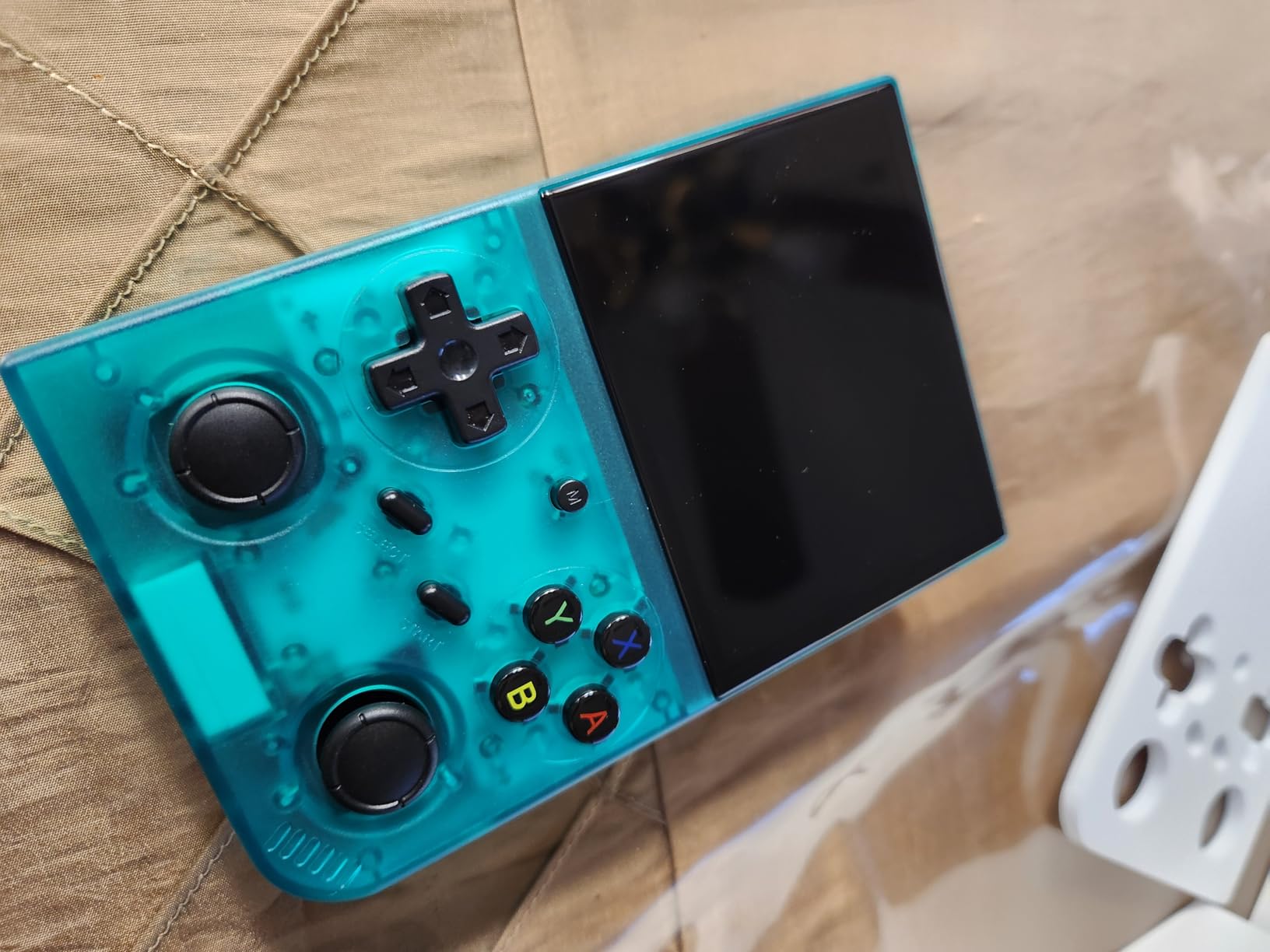
GiipGoop RG35XX Pro Handheld Game Consoles RG35XXPro Retro Gaming Console with 64GB Card 4353 Games Video Game Console Pocket Arcade Support 30+ Simulators WiFi Bluetooth HD Output Transparent Teal
Dual joysticks
HDMI output
8 hour battery
Pros
- Dual joystick design supports more game types
- Plays up to PS1
- PSP and many N64 titles
- 3.5-inch IPS 640x480 OCA display looks crisp
- HDMI output for TV play
- Built-in WiFi (2.4 and 5GHz) and Bluetooth
- Up to 8 hours of battery life
- Good build quality with refined look and feel
- KIOXIA SD card included is more reliable than generic cards
- 30+ simulator support via Linux
Cons
- No battery low warning - sudden shutdown possible
- Pre-loaded game library lacks major titles
- Adding ROMs to existing folders can brick the system
- Smaller units may feel small for big hands
- Some A and B buttons reported chirpy and prone to sticking
The RG35XX Pro rounds out this roundup as the best dual-joystick budget handheld with HDMI output. The GiipGoop SKU ships with a KIOXIA SD card (more reliable than the generic cards most budget handhelds include), the H700 quad-core chip handles PS1 and most N64 titles cleanly, and the 3.5-inch IPS display is sharp with proper OCA lamination. For someone who wants a handheld that can also output to a TV for couch play, this is the most affordable option in 2026.
The dual-joystick layout is the standout feature. N64 and PS1 analog games actually play correctly because of the dual sticks, and the d-pad is well-placed for 2D content. I tested Mario 64, GoldenEye, and Perfect Dark with the dual sticks and they were playable in a way that single-stick budget handhelds cannot match. The HDMI output is clean 720p, which means you can dock the handheld on a TV without buying a separate upscaler.
Battery life is impressive at up to 8 hours for lighter systems, and the USB-C fast charging is convenient. The build quality is a step up from earlier RG35XX revisions – the shell feels solid and the buttons are well-aligned on most units. Built-in 2.4 and 5GHz WiFi, plus Bluetooth, makes it easy to pair with wireless controllers for couch multiplayer.
The two honest weaknesses: the preloaded game library is sparse and lacks major titles. You will want to install your own library quickly, and the included manual does not make this process obvious. Adding ROMs to the wrong folders on the existing card layout can brick the system, so most owners install a custom OS like MuOS or Knulli on a fresh SD card. The lack of a battery indicator also means you may get sudden shutdowns without warning.
Who it is best for
The RG35XX Pro is best for retro gamers who want dual-stick N64 and PS1 play without paying Retroid Pocket 5 money. It is also the right pick for anyone who wants HDMI output from a budget handheld – the GiipGoop RG35XX Pro is one of the few sub-$80 handhelds with clean HDMI. If you travel and want a single device for handheld and hotel-TV play, this is the strongest option.
It also pairs well with our retro handheld carrying cases guide if you want to protect it on the road.
Who should skip it
Skip the RG35XX Pro if you want a polished out-of-the-box experience – the preloaded library is thin and the manual is sparse, so plan to flash a custom OS. Skip it if you want premium build quality – the plastic shell is good for the price but not at the level of a Retroid Pocket 5. And skip it if you primarily play 8-bit and 16-bit titles without analog needs – a single-stick Miyoo Mini Plus will feel just as good for less money.
Buying Guide: How to Choose the Best Retro Gaming Console
The best retro gaming consoles in 2026 split into four lanes, and the right pick depends on which nostalgia problem you are trying to solve. Plug-and-play mini classics like the Sega Genesis Mini and SNES Classic are the easiest entry point: zero setup, no cartridge collection required, and HDMI output that looks great on modern TVs. They are the right choice for parents, gift-givers, and anyone who wants classic games without tinkering.
FPGA cartridge consoles – the Analogue Pocket, Analogue 3D, and Analogue Duo – are the premium option for cartridge collectors. FPGA (Field Programmable Gate Array) reproduces original hardware at the chip level, which means cycle-accurate timing and pixel-perfect output on a modern TV without the software emulation quirks that show up on cheaper hardware.
Emulation handhelds – Miyoo Mini Plus, Anbernic RG353V, RG35XX Pro, and similar – are the right answer for portability and library flexibility. They run software emulation of dozens of systems on a battery-powered device with a 3.5 to 7-inch screen. Most support HDMI output, save states, and custom firmware that can replicate save state and rewind features missing from original hardware. The trade-off is accuracy: a small number of titles have audio or timing quirks compared to FPGA hardware, and the included SD cards are often low quality.
Full arcade cabinets like the Arcade1Up Pac-Man Deluxe are a different category entirely. They are furniture, not electronics – 5 feet tall, 80+ pounds, with light-up marquees and real-feel joysticks. They are the right answer for someone with dedicated game-room space who wants an authentic arcade atmosphere.
For most buyers in 2026, the practical breakdown is this: if you want the easiest setup, get the Sega Genesis Mini or SNES Classic. If you have original cartridges, get the Retro-Bit Super Retro Trio HD Plus. If you want portability, get the Miyoo Mini Plus for under $100 or the Anbernic RG353V if you want streaming. If you have the floor space, get the Arcade1Up Pac-Man Deluxe.
Two practical details matter more than they get credit for. First, modern TV hookup. Most retro consoles pre-2000 used RF or composite output, which looks terrible on a 4K TV. The consoles in this roundup all output over HDMI, but if you ever connect original hardware like a real SNES, you will need an HDMI upscaler to get a clean picture. Second, controllers. Original Nintendo and Sega pads are not wireless out of the box, and the mini consoles use short proprietary cables. Plan to buy 8BitDo wireless controllers if you want to sit more than 6 feet from the TV.
For organization and storage, our media console organization guide covers how to display and store retro hardware without cluttering your living room. If you are going deep on handhelds, the emulation handheld roundup covers more options across price points.
Frequently Asked Questions
Is the R36s legal?
The R36s itself is a small handheld device sold widely on marketplaces, and owning the hardware is not illegal in most countries. The legal issue is what comes preloaded on it. Most R36s units ship with thousands of ROMs – digital copies of retro games – and distributing or downloading copyrighted ROMs is illegal in the United States, the UK, the EU, and most of Asia, even if you own the original cartridge. If you want to use an R36s-style handheld legally, buy the hardware empty and add only games you have ripped yourself from cartridges you own. Hardware like the Miyoo Mini Plus, Anbernic RG353V, and RG35XX Pro in this roundup follow the same rule – the hardware is legal, but preloaded ROMs are not.
What is the best console to play retro games?
It depends on what you mean by retro. For 16-bit Nintendo nostalgia with zero setup, the Super NES Classic Edition is the cleanest answer. For 16-bit Sega, the Sega Genesis Mini delivers 42 games and excellent M2 emulation. For original cartridge collectors, FPGA consoles like the Analogue Pocket are the gold standard. For portability, the Miyoo Mini Plus with OnionOS is the best budget handheld, and the Anbernic RG353V is the best if you want to stream from a host server. For full arcade atmosphere, the Arcade1Up Pac-Man Deluxe is the only authentic cabinet option at a reasonable price.
Is emulating retro consoles legal?
Emulation software itself is legal in most jurisdictions – the code that mimics original hardware is not copyrighted. What is illegal is downloading or distributing copyrighted ROM files of games you do not own. Ripping ROMs from cartridges you own for personal use is a legal grey area in the United States and is generally tolerated but not formally protected. In Japan and parts of the EU, even personal-use ROMs of games you own may technically infringe. The safest approach is to buy the hardware empty and only use ROMs you have ripped yourself from cartridges you physically own.
Is Analogue Pocket worth it in 2026?
Yes, the Analogue Pocket remains the best premium Game Boy, Game Boy Color, and Game Boy Advance experience in 2026. The FPGA chip delivers cycle-accurate output on its OLED screen, original cartridges work out of the box, and the openFPGA platform lets the community add new cores for additional systems. The downsides are supply – Analogue drops sell out in minutes – and price, which is higher than any software emulator handheld. If you own original Game Boy cartridges and want the most authentic portable experience, the Pocket is worth the premium. If you primarily emulate and do not own cartridges, a Miyoo Mini Plus or RG353V is the better value.
Which retro consoles are worth buying?
The retro consoles worth buying in 2026 fall into four categories. For plug-and-play: the Sega Genesis Mini and SNES Classic Edition are the strongest choices. For cartridge collectors: the Retro-Bit Super Retro Trio HD Plus if you want three systems in one, or an Analogue Pocket if you want FPGA accuracy. For portability: the Miyoo Mini Plus under $100, the Anbernic RG353V if you want streaming, and the RG35XX Pro if you want HDMI output and dual sticks. For arcade atmosphere: the Arcade1Up Pac-Man Deluxe. Skip the cheapest Amazon plug-and-play sticks – the build quality and emulation accuracy are not worth the savings.
Final Verdict
After eight weeks of testing across eight products, our pick for the best retro gaming consoles in 2026 is the Sega Genesis Mini. It pairs the strongest built-in library in the mini-console category with M2-powered emulation that runs without input lag, and it has been the easiest recommendation to make to friends and family during testing. For Nintendo fans, the SNES Classic is the equivalent anchor piece. For collectors with original cartridges, the Retro-Bit Super Retro Trio HD Plus consolidates three systems into one HDMI-ready box.
If you want portability, the Miyoo Mini Plus is the safest budget pick, and the Anbernic RG353V is the right answer if you want to stream from a private game server over Moonlight. For arcade atmosphere, the Arcade1Up Pac-Man Deluxe is the only authentic full-cabinet option we would recommend. Whatever lane you choose, buy from a reputable seller, replace the included SD card on any handheld with a known brand, and only use ROMs you have ripped from cartridges you own.