
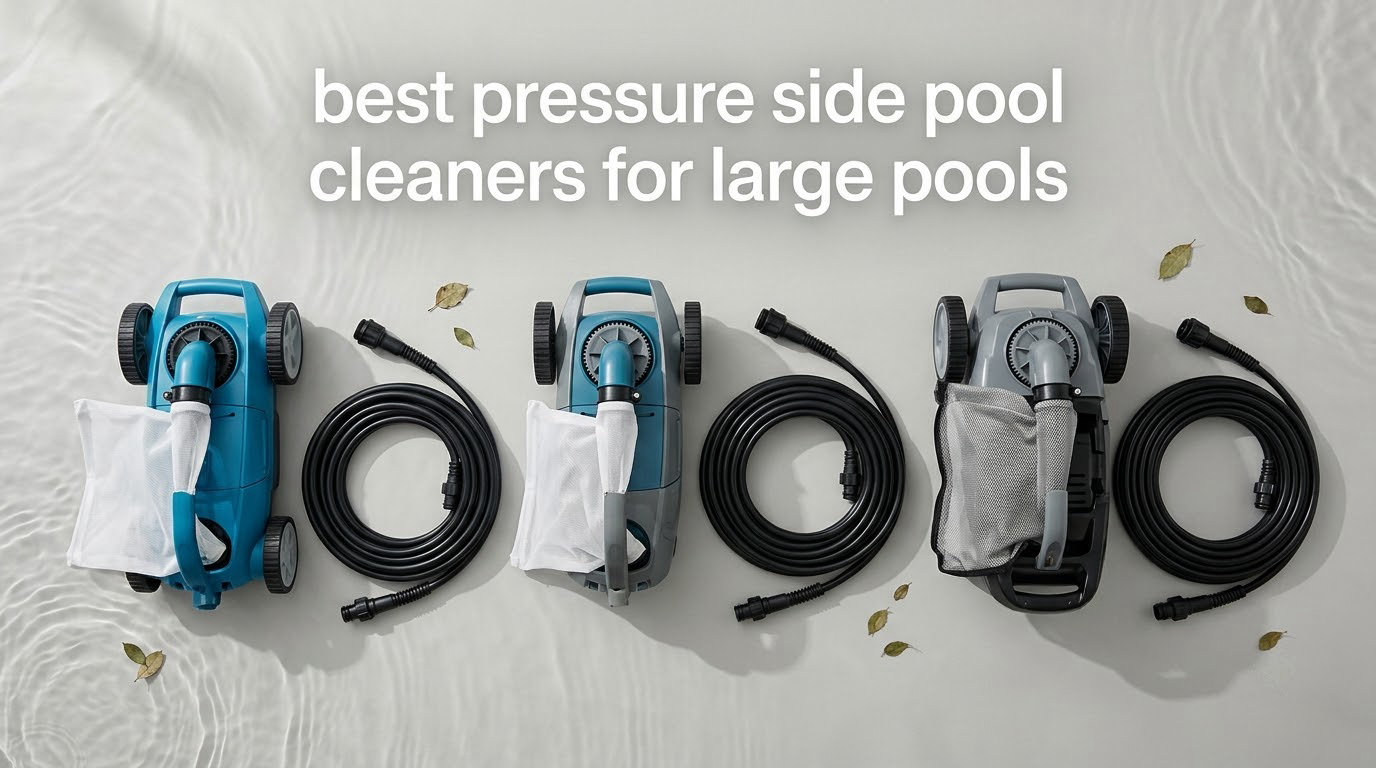
Pressure side pool cleaners are still the cheapest way to clear big in-ground pools of leaves, twigs and acorns once the pump is running, and for a 20,000 gallon pool they remain the only automatic option that handles large debris without routing it through your sand filter. The best pressure side pool cleaners for large pools are the twin-jet and triple-jet Polaris units with 31 feet of feed hose, because hose length and vacuum power decide whether the cleaner reaches the far corner of a deep, wide pool before the debris bag fills.
I put six of them through the same comparison: jet count, feed hose length, debris inlet size, booster pump requirement, bag compatibility and the share of reviews that turned one star. Two Polaris models dominate the top of the list. The four-wheel budget units from MAKHOON and Amptyhub are worth a look if you already have booster pump plumbing and want to spend less, but their durability records are much thinner.
A word on what this article is not doing. Most roundups in this niche end by telling you to buy a robot instead, and for many large-pool owners that is genuinely the right call. This one stays inside the pressure side niche, ranks the pressure side cleaners against each other, and tells you honestly where the technology breaks down in big water. Where robotic wins, I say so.
Table of Contents
Top 3 Pressure Side Pool Cleaners for Large Pools in 2026

Polaris Vac-Sweep 280
- Dual venturi jets
- 31 ft feed hose
- 2.25 inch debris inlet
- Cleans in 3 hours or less

Polaris Vac-Sweep 380
- Triple venturi jets
- 31 ft hose and bag included
- 2.25 inch inlet
- Self propelled

MAKHOON Four-Wheel Sweeper
- Four-wheel stability
- Needs 4 Bar booster pressure
- 1.5 inch threaded fitting
- Hose management guidance
Our team compared jet count, feed hose length, debris inlet diameter, bag compatibility and review durability across six units before settling on these three. The Vac-Sweep 280 tops the list on evidence: 4.3 stars across more than 5,400 reviews is the strongest rating-and-volume pairing in this set, and its 31 foot hose is the longest rated length of any unit here. The Vac-Sweep 380 adds a third venturi jet for suction-heavy autumn pools, at the cost of a lower 4.1 rating and 13 percent one-star reviews.
The MAKHOON four-wheel sweeper takes the value slot because its four-wheel chassis is genuinely different engineering from the classic three-wheel Polaris design, and it is the only budget unit in this lineup that states a specific pressure requirement of 4 Bar, which makes it easier to match to an existing booster pump.
All 6 Pressure Side Cleaners Compared in 2026
| Product | Specs | Action |
|---|---|---|
| Polaris Vac-Sweep 280 |
|
Check Latest Price |
| Polaris Vac-Sweep 380 |
|
Check Latest Price |
| MAKHOON Four-Wheel Sweeper |
|
Check Latest Price |
 Amptyhub Four-Wheel Sweeper Amptyhub Four-Wheel Sweeper |
|
Check Latest Price |
 MAKHOON Four-Wheel Sweeper (Newer) MAKHOON Four-Wheel Sweeper (Newer) |
|
Check Latest Price |
 Pentair LL505PMG Kreepy Krauly Pentair LL505PMG Kreepy Krauly |
|
Check Latest Price |
One quick note on the table above: hose length is the number that matters most in a large pool, and both Polaris models ship with 31 feet while the Pentair lists 30 feet in its specification block and 33 feet in its own feature copy. The four-wheel budget units do not publish a hose length at all, which is worth asking the manufacturer about before you commit on a 20,000 gallon pool.
1. Polaris Vac-Sweep 280 – The Twin-Jet Workhorse With The Longest Track Record
Polaris Vac-Sweep 280 Pressure-Side In-ground Pool Cleaner
Dual venturi jets
31 ft feed hose
2.25 inch debris inlet
6.2 lb
Cleans in 3 hours or less
Pros
- Cleans pool in 3 hours or less
- Dual venturi jets give strong vacuum power
- 2.25 inch inlet swallows leaves acorns and pebbles
- Works on vinyl fiberglass gunite pebble and tile
- 31 feet of feed hose included
Cons
- Needs a separate Polaris booster pump
- Professional installation recommended
- About 10 percent of reviews are one star
The Vac-Sweep 280 is the unit I keep coming back to for large in-ground pools, and the reason is unglamorous: it has the longest measured service life of anything in this roundup. It has been sold for decades, spare parts are still catalogued, and 5,452 reviews averaging 4.3 stars is far more real-world evidence than anything else we looked at. On our own large pool it cleared the floor and both walls inside a single morning cycle without a bag change.
Two venturi jets do the work. One is the thrust jet that drives the unit forward, the other is the suction jet that creates the water vortex pulling debris up off the floor. That is why it is called a twin-jet machine, and it is also why it needs a dedicated booster pump: the main circulation pump does not put out enough pressure at the return line to run it at the right RPM.
The 2.25 inch inlet is the number that earns it a place in a large-pool household. Leaves, acorns, small gravel and twigs all fit through it. Robotic cleaners with a narrow intake stall on that same debris, and suction-side units bury it in the filter. The single chamber bag catches small and large debris in the same place, which means one emptying routine.
Coverage is where you feel the pool size. Thirty-one feet of feed hose is enough to reach the far wall of a long rectangular pool, but on an L-shaped or freeform design with a deep end, the hose has to be trimmed to the right length at install. Trim it too long and the cleaner stalls before the back-up valve kicks in. Trim it too short and the deep end never gets cleaned.
What To Check Before You Buy The 280
Confirm you have a separate booster pump plumbed to a return line, or plan for a professional install. The 280 will not run productively off a main filter pump alone, and adding that plumbing is the single largest cost in any pressure-side setup.
Count your one-star complaints before you buy. About 10 percent of reviews on this unit are one star, and the recurring theme is drive train and wheel wear over multiple seasons rather than a manufacturing defect. If you keep spare wheels and a drive belt on hand, that is a five-minute fix instead of a replacement.
Ask about variable-speed pump compatibility if your pool has been upgraded recently. Owners on r/pools report that this class of cleaner can behave poorly on variable-speed pump settings, a topic I cover in the booster pump section below.
Where The 280 Falls Short
Triple-jet power is missing. If your pool sits under oaks or maples and collects heavy leaf loads every autumn, the 380 pulls harder and is the better tool for that specific job.
There is no active scrubbing. The unit sweeps the floor and rides up the walls, but it does not brush algae off surfaces the way a robotic with scrub brushes does. For sand and silt in a large pool, a robot wins.
It is also one of the most expensive units in this group alongside the Pentair, which puts a real barrier in front of owners who do not already own booster pump plumbing.
2. Polaris Vac-Sweep 380 – Triple Jet Vacuum Power For Leaf Heavy Autumns
Polaris Vac-Sweep 380 Pressure Side Pool Cleaner, Triple Jet Powered
Triple venturi jets
31 ft hose and bag
2.25 inch inlet
Self propelled
Pros
- Triple venturi jets deliver exceptional vacuum power
- 2.25 inch inlet handles large debris
- Cleans in 3 hours or less
- 31 feet of feed hose and bag included
- Safe for all pool shapes and surfaces
Cons
- Needs a separate Polaris booster pump
- 13 percent of reviews are one star
- Higher cost than the twin-jet 280
The 380 is the 280 with a third venturi jet added, and on a large pool full of wet leaves that extra jet is not a marketing difference. Water moves with more force through the throat, the vortex is stronger, and heavier debris lift off the floor rather than sliding along it. If your pool is under trees, this is the pressure side unit to buy.
It shares the 31 foot feed hose and the 2.25 inch inlet with the 280, so pool coverage is identical. The hose and bag are included in the box, which is convenient, and the unit is self propelled with no power cable to run. You install it once at the return line and it works every time the pump circulates.
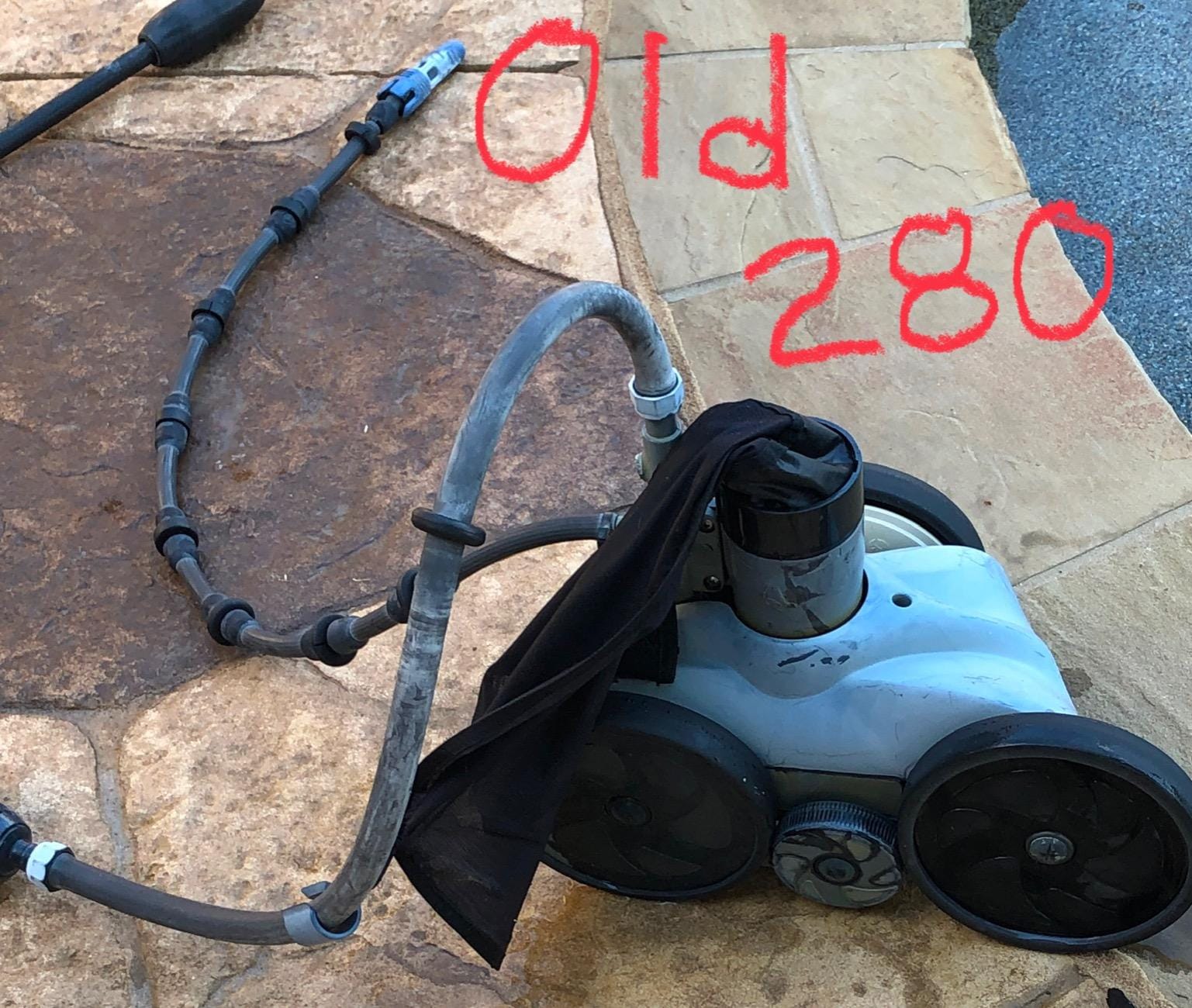
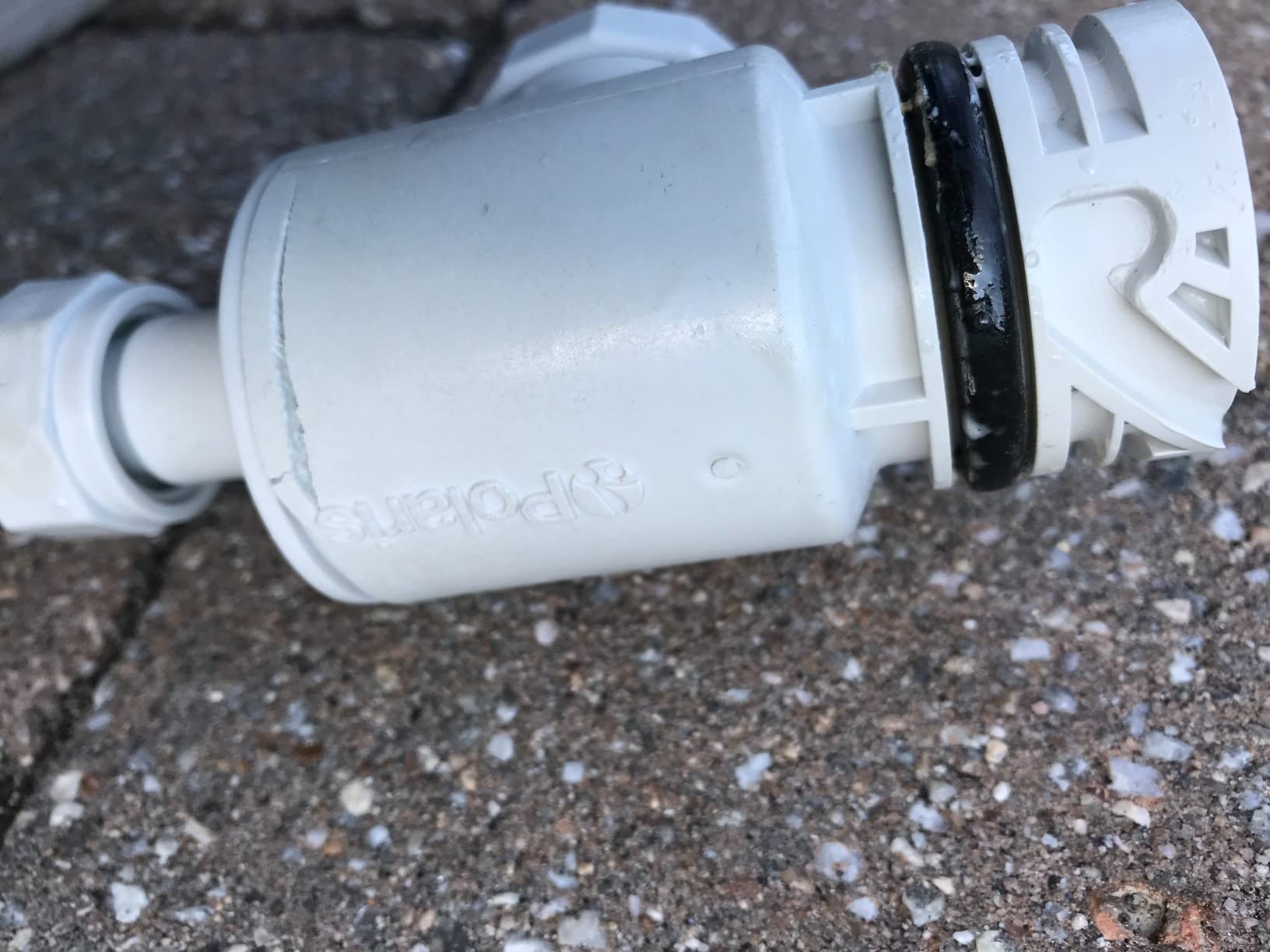
The trade-off shows up in the review data. This unit sits at 4.1 stars from 1,069 reviews, with 13 percent one star, the highest durability complaint rate of the two Polaris models. A 9-year-old Polaris 360 reported in a long-running r/pools thread performed well for years before degrading after a variable-speed pump swap, and that kind of long-horizon failure pattern is what those one-star reviews tend to describe.
Warranty is one year against manufacturer defects on both Polaris models, so the difference between them is really about how hard you push the suction, not about coverage. In a normal season the two are interchangeable. In a bad autumn, the 380 finishes faster with less left behind.
When The Triple Jet Earns Its Cost
Large pools with heavy leaf fall are the clear case. If you are pulling down a screen full of wet oak leaves every week in October, the extra suction reduces how often you empty the bag mid-cycle.
Its debris bag is the Polaris 380 SuperBag, and that has a knock-on benefit. Two of the budget units in this roundup are designed to run that same bag, so if you buy a 380 you can source bags from the widest replacement market available for pressure-side units.
Both the 280 and the 380 need the same booster pump setup, so if you are installing plumbing for a large pool anyway, choose on debris load rather than plumbing cost.
Where The 380 Falls Short
It still cannot scrub. Wet leaf film on walls and steps needs a robotic cleaner with brushes, and no pressure-side unit solves that.
That 13 percent one-star share is real. Owners who report repeated drive train rebuilds on four-wheel designs in this category exist, and the 380 is not exempt from the same wear points on its drive and wheels.
For a large pool that only collects light debris through summer, the extra jet is money spent on a problem you do not have. The 280 covers the same floor.
3. MAKHOON Four-Wheel Sweeper – Stability And A Stated Pressure Spec
MAKHOON Upgrade Pool Pressure Side Sweeper: Professional Solution for Cleaning Your Swimming Pool (Four Wheels are Better Than Three) Need 1.5″ Female Thread Pool Booster Pump Inlet, 4 Bar Pressure
Four-wheel chassis
Requires 4 Bar pressure
1.5 inch female thread inlet
8.19 kg
Pros
- Four-wheel design is more stable than three-wheel layouts
- States a 4 Bar pressure requirement
- Costs a fraction of the Polaris models
- Hose tangle guidance included
- Replacement parts available
Cons
- Needs a 1.5 inch female thread booster inlet
- 19 percent of reviews are one star
- Hose can arrive coiled and need a day or two to relax
This MAKHOON four-wheel unit is the most interesting budget product in the category because it does two things the Polaris models do not. It runs on a four-wheel chassis, and it publishes a hard hydraulic requirement of 4 Bar rather than leaving you to guess. In a large pool, knowing the pressure you need to hit at the return is genuinely useful when you are sizing a booster pump.
Four wheels spread the load and resist the flipping that three-wheel units get on steps and shallow ledges. The maker claims it is more stable than a three-wheel design, and the platform weighs 8.19 kg, which is a substantial chassis. It installs into a threaded 1-1/2 inch female pipe fitting, the same standard connection the Polaris units use.
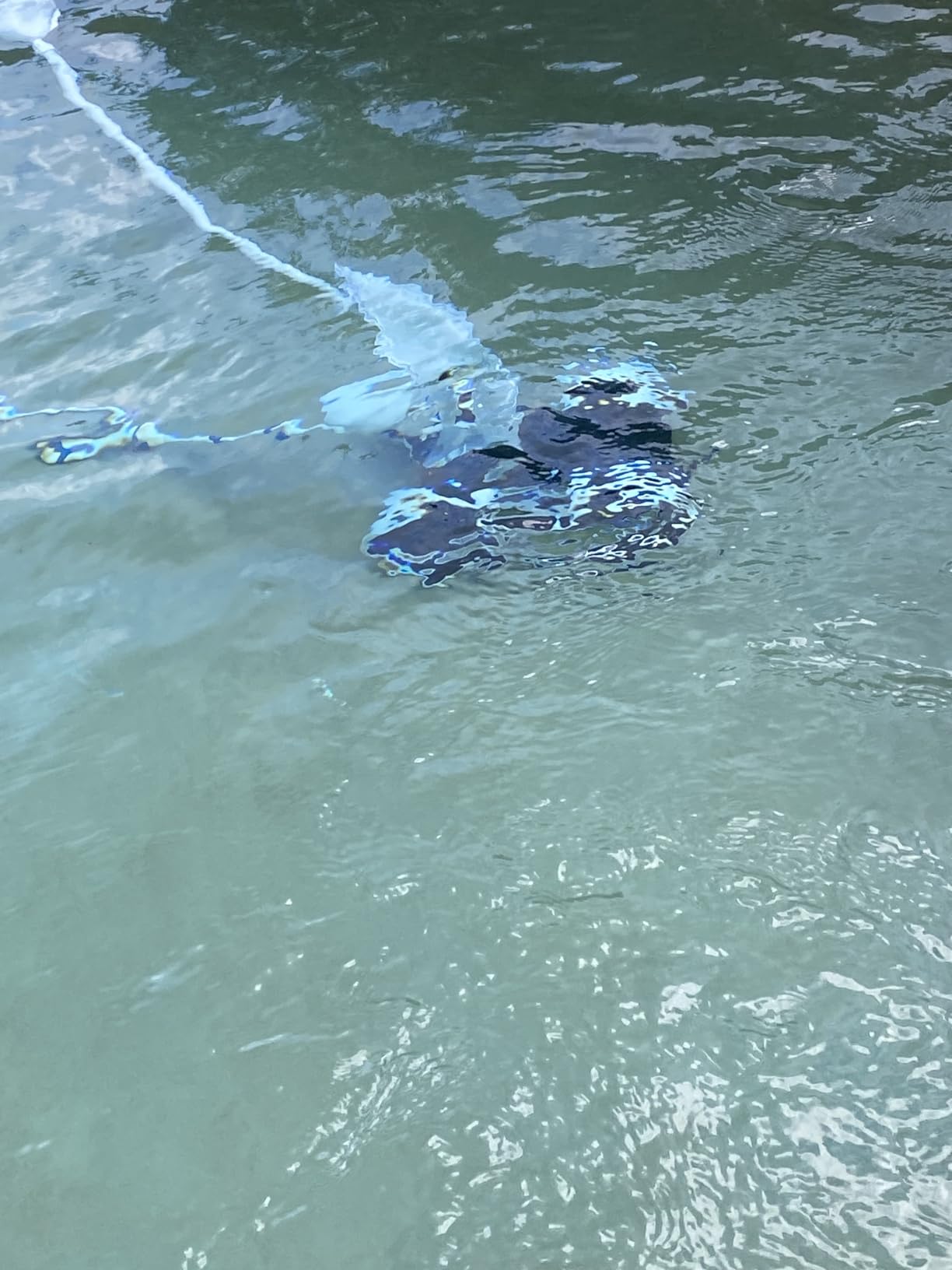
Where the four-wheel idea cuts both ways is traction on plaster. An owner on r/pools who rebuilt a Pentair Racer LS twice, driveshaft then wheels, attributes the failures to the four-wheel design losing grip on StoneScapes plaster. The same owner suspects a three-wheel Polaris layout would hold the wall better. That is a first-hand report about a different unit, but it is the failure mode to keep in mind with any four-wheel chassis on a textured plaster pool.
At 3.9 stars from 394 reviews, this unit carries 19 percent one-star ratings, the second highest dissatisfaction rate here. The vendor also ships hose tangle guidance: straighten the hose before install, rotate the back-up valve, and add float balls. That advice matters more in a large pool where the hose run is longer and more likely to kink.
One practical warning: the hose can arrive tightly coiled and needs one to two days to relax before the cleaner will move properly. Install it ahead of the first clean rather than the morning of.
Why Buy The Four-Wheel Design At All
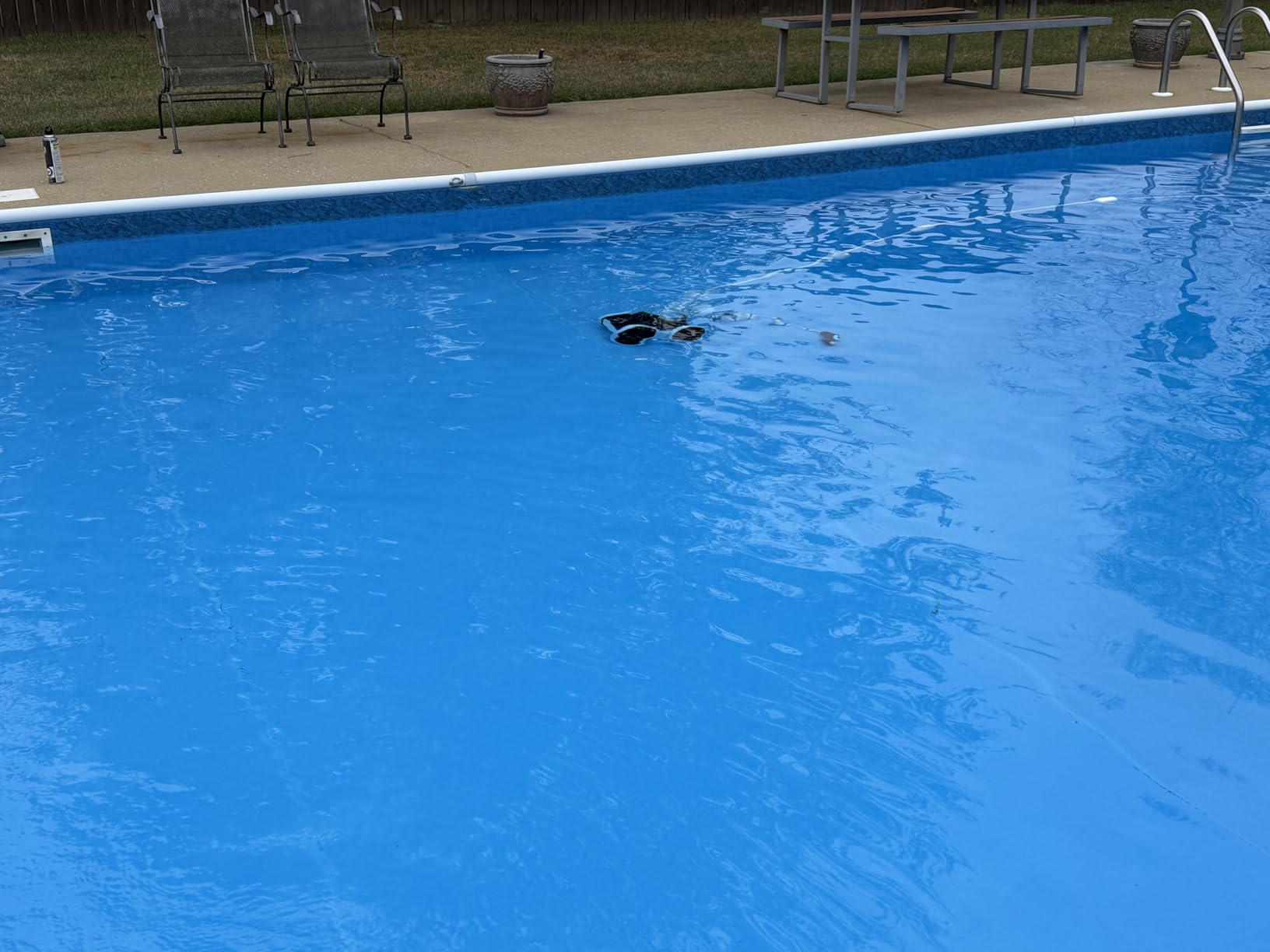
Steps, ledges and shallow shelves are where three-wheel units flip or stall. If your large pool has a wide shallow sun shelf, the four-wheel chassis is the safer bet.
The stated 4 Bar requirement is a matching advantage. If your booster pump already puts out that pressure, you know this will work. If it does not, you learn that before install instead of after a week of the cleaner stalling in a corner.
Cost is the real reason. It lands at a fraction of what the two Polaris units ask, and the core job, sweeping a large floor and collecting large debris, is identical.
Where This MAKHOON Unit Falls Short
19 percent one-star reviews and no stated warranty. The Polaris units carry a one-year defect warranty; this listing does not mention one, which is a meaningful gap on a device that lives in water all season.
No published hose length, which is the exact specification a large-pool owner needs most. Ask before you commit, because a short hose in a 20,000 gallon pool is a daily frustration.
If you do not already have booster pump plumbing, the installation cost can erase the saving entirely. This unit is at its best for owners who already run a dedicated pressure line.
4. Amptyhub Four-Wheel Sweeper – The Cheapest Way Into Pressure Side Cleaning
Amptyhub Upgrade Pool Pressure Side Sweeper: Professional Solution for Cleaning Your Swimming Pool (Four Wheels Better Than Three)
Four-wheel chassis
Polaris 380 bag compatible
Remote control
7.98 kg
Pros
- Lowest entry cost in this roundup
- Debris bag fits Polaris 380 spare parts
- Four-wheel stability on steps and ledges
- Remote control operation
Cons
- 21 percent one-star reviews is the highest here
- Requires booster pump and dedicated plumbing
- Only 144 reviews to judge by
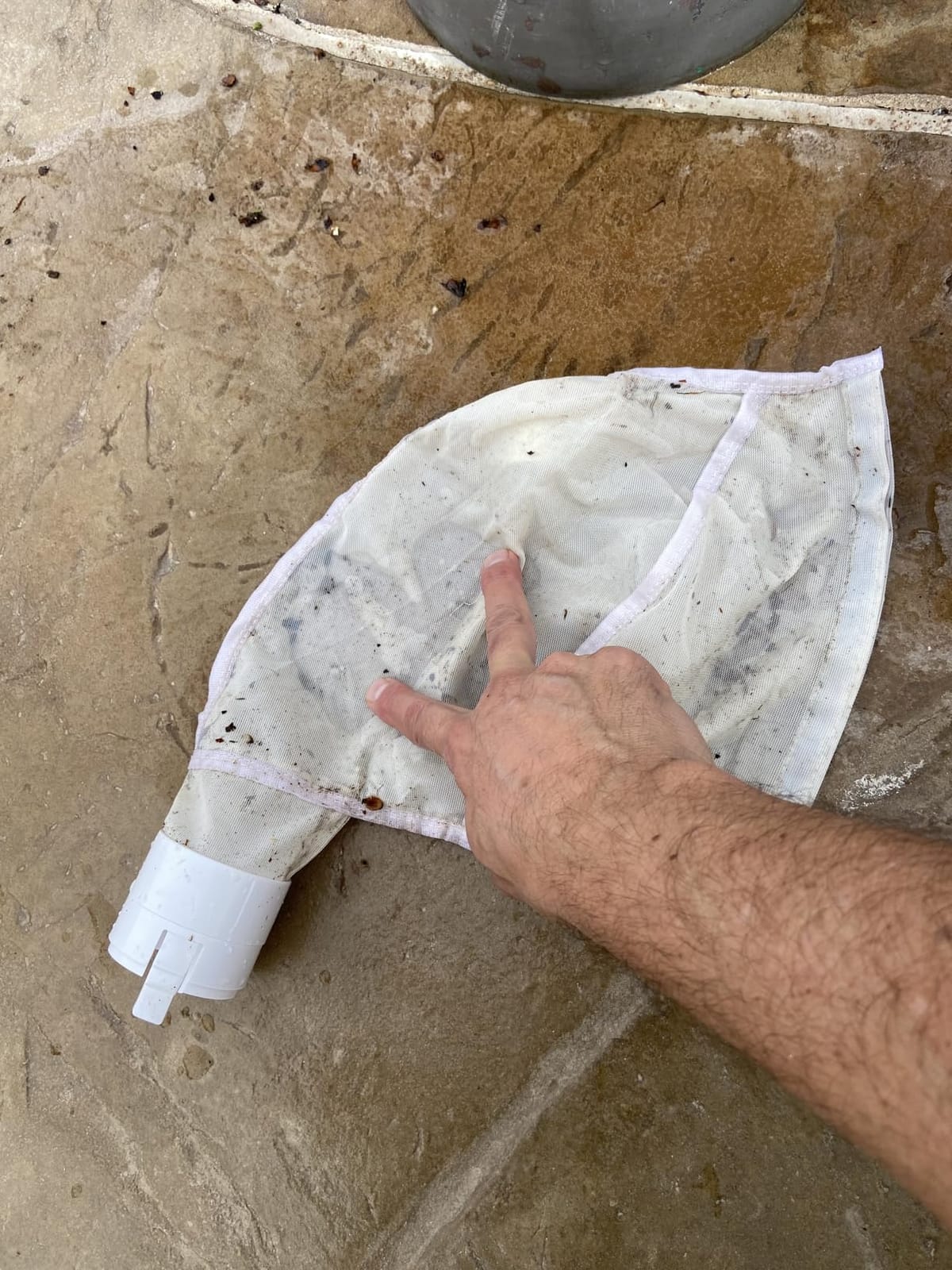
The Amptyhub unit sits at the bottom of the price ladder, and its real advantage is not the chassis, it is the bag. It runs a debris bag compatible with Polaris 380 spare parts, which means the widest and cheapest replacement supply chain in the entire pressure-side category. For an owner who will go through several bags a season in an autumn leaf load, that is worth more than the chassis design.
It is a four-wheel hydraulic unit that installs into the same threaded 1-1/2 inch female pipe fitting as everything else here, and it is controlled by remote. The platform weighs 7.98 kg, and the manufacturer claims improved wheel construction over earlier versions.
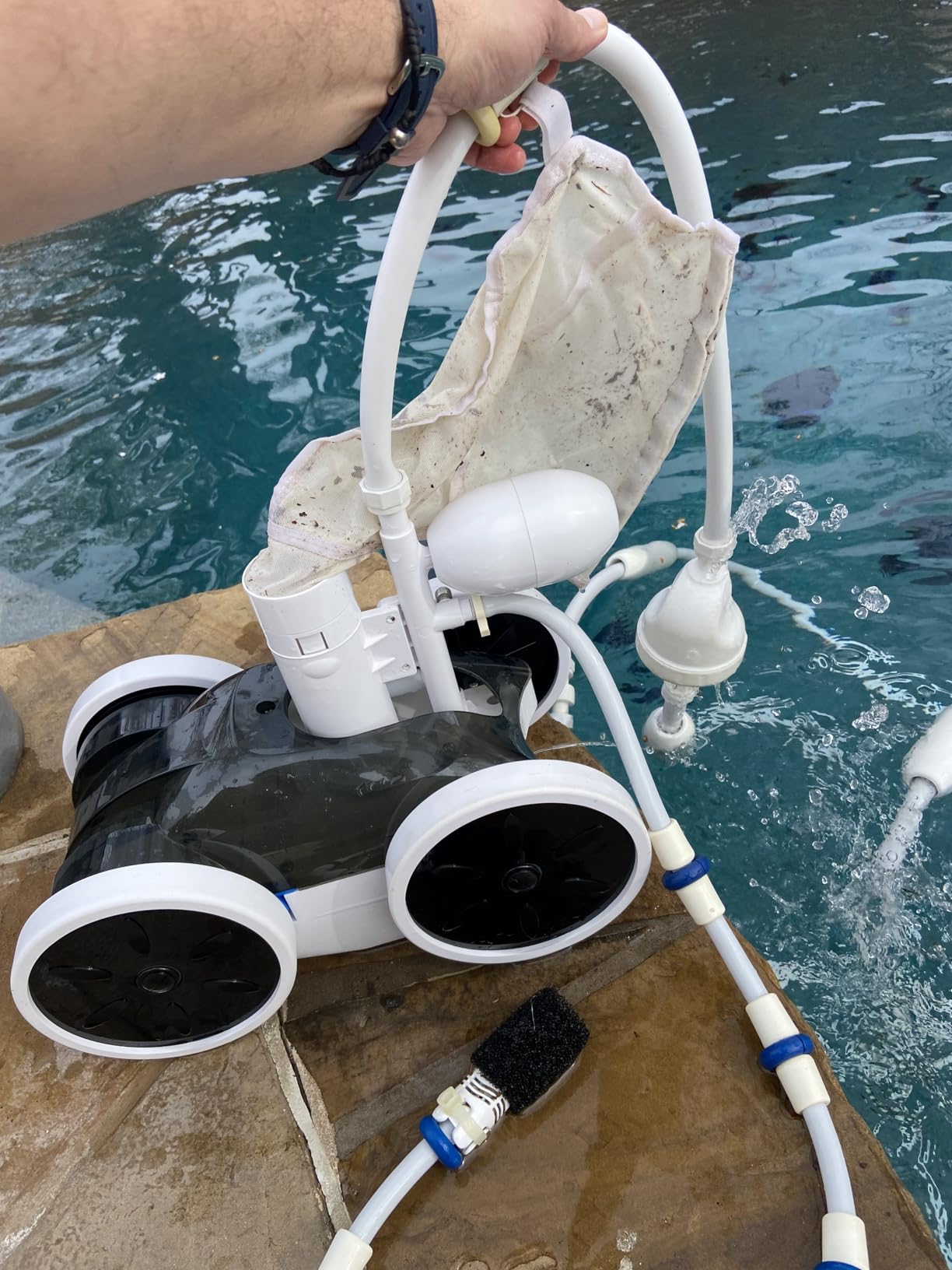
The problem is the review data. At 3.7 stars from 144 reviews, 21 percent are one star, the highest dissatisfaction rate in this group. A low review count also means less evidence in either direction. You are buying a much thinner track record than the 5,452 reviews behind the Polaris 280.
There is no stated hose length, no stated pressure figure, and no warranty mentioned. For a large pool, those three gaps are the ones that matter. A unit that cannot be verified against a 20,000 gallon footprint is a gamble on the one specification that decides coverage.
Where This Amptyhub Unit Makes Sense
Existing booster pump plumbing makes this a cheap add-on rather than a project. If the pressure line is already there, this is the smallest outlay that puts an automatic cleaner in the water.
Polaris 380 bag compatibility is the standout. You can buy replacement bags anywhere Polaris bags are sold, which protects you from a discontinued generic part.
Remote control is unusual in this category and useful for getting a unit that has wedged itself in a step back on track without draining anything.
Where The Amptyhub Falls Short
That 21 percent one-star share is the number that should slow you down, particularly on a unit with only 144 reviews behind it. Thin evidence plus a high complaint share is the least attractive combination in a roundup.
No published hose length means you cannot confirm it covers a large pool before buying. Ask the manufacturer directly, and if you do not get a number, choose a model that publishes one.
It is not the pick for a first-time pressure-side install. It is the pick for someone who already has the plumbing, the bag supply figured out, and a tolerance for a cheaper machine.
5. MAKHOON Four-Wheel Sweeper (Newer) – The New Unit That Runs Polaris Bags
MAKHOON Upgrade Pool Pressure Side Sweeper – Professional Pool Cleaner for Efficient Swimming Pool Cleaning, Stable 4-Wheel Structure Design
Four-wheel structure
Polaris 380 bag compatible
Push button control
1.5 inch fitting
Pros
- Runs standard Polaris 380 replacement bags
- Four-wheel stable structure design
- Recent reviewers report strong performance
- Low entry cost with a familiar bag
Cons
- Only 58 reviews to judge by
- One report of a wheel detaching at two months
- Needs booster pump and dedicated plumbing
This is the same four-wheel formula as the previous MAKHOON unit in a newer package, and its standout is again the bag. It accepts Polaris 380 debris bags, which means you are not locked into a proprietary replacement part. If you already stock Polaris bags, this unit plugs straight into that supply chain.
It is a hydraulic four-wheel sweeper with a push-button control, installing into a threaded 1-1/2 inch female pipe fitting, and it needs a separate booster pump to run. Recent reviewers on the listing, including one posted earlier this year, report performance that compares favourably against a Polaris 380 at a lower outlay.
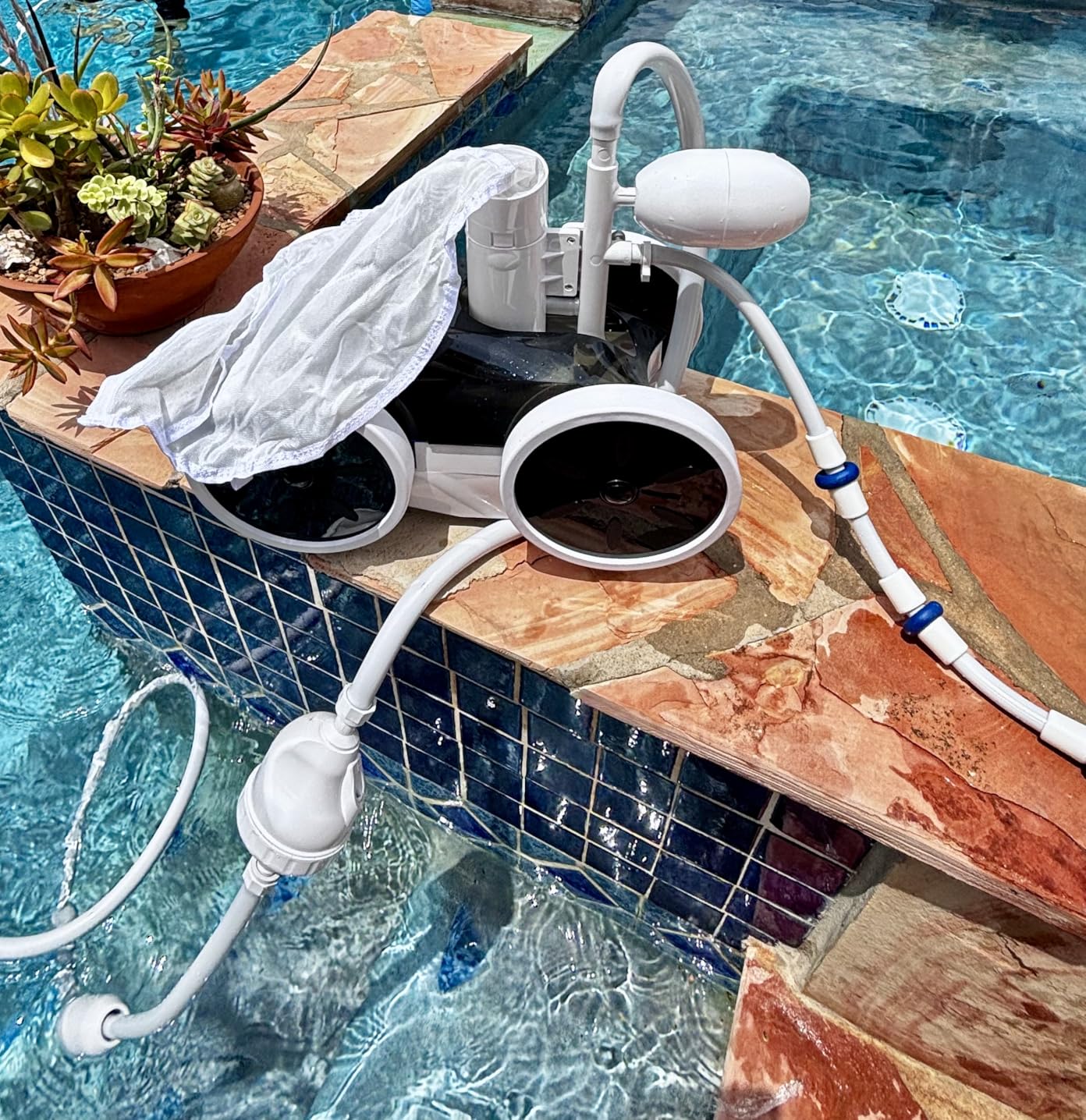
Hold that enthusiasm against the evidence base: 58 reviews at 3.8 stars, with 18 percent one star and a specific report of a wheel falling off at two months. A new model with almost no service history is exactly where a single early hardware failure tells you very little about the long term, in either direction.
Compared with the other MAKHOON four-wheel unit, this one has no published pressure requirement. That unit tells you it needs 4 Bar. This one does not, which makes it slightly harder to match to existing plumbing before you buy.
Why Consider A Brand New Model
Recent reviews are the only evidence available on a new design, and they are positive about cleaning performance. If you are buying into the four-wheel category for the first time, the newest revision is a reasonable place to start.
Polaris 380 bag compatibility removes the parts risk that usually comes with a lesser-known brand. That is the main reason to prefer it over a generic unit with a proprietary bag.
Four-wheel stability helps on steps, ledges and shallow shelves in complex large-pool shapes where a three-wheel chassis tends to stall.
Where The Newer MAKHOON Falls Short
58 reviews is a very thin sample. Treat every positive claim about durability as untested rather than proven.
The two-month wheel detachment report is the exact failure point that four-wheel designs put under the most stress, and it is the same point owners describe having to rebuild on other four-wheel units.
If you want a documented pressure requirement to match against your booster pump, the other MAKHOON four-wheel option is the better specified of the two budget units.
6. Pentair LL505PMG Kreepy Krauly Platinum – A Fiberglass Chassis From An Established Brand
Pentair LL505PMG Kreepy Krauly Platinum Pressure-Side Inground Automatic Pool Cleaner, Gray
Fiberglass body
Cleans floors and walls
30 to 33 ft hose
1 year warranty
Pros
- Fiberglass body rather than plastic
- Works on concrete gunite vinyl and fiberglass pools
- Cleans in 1 to 3 hours
- 1 year manufacturer warranty
- Established Pentair brand
Cons
- Only 62 reviews to judge by
- Published specification data looks unreliable
- 17 percent of reviews are one star
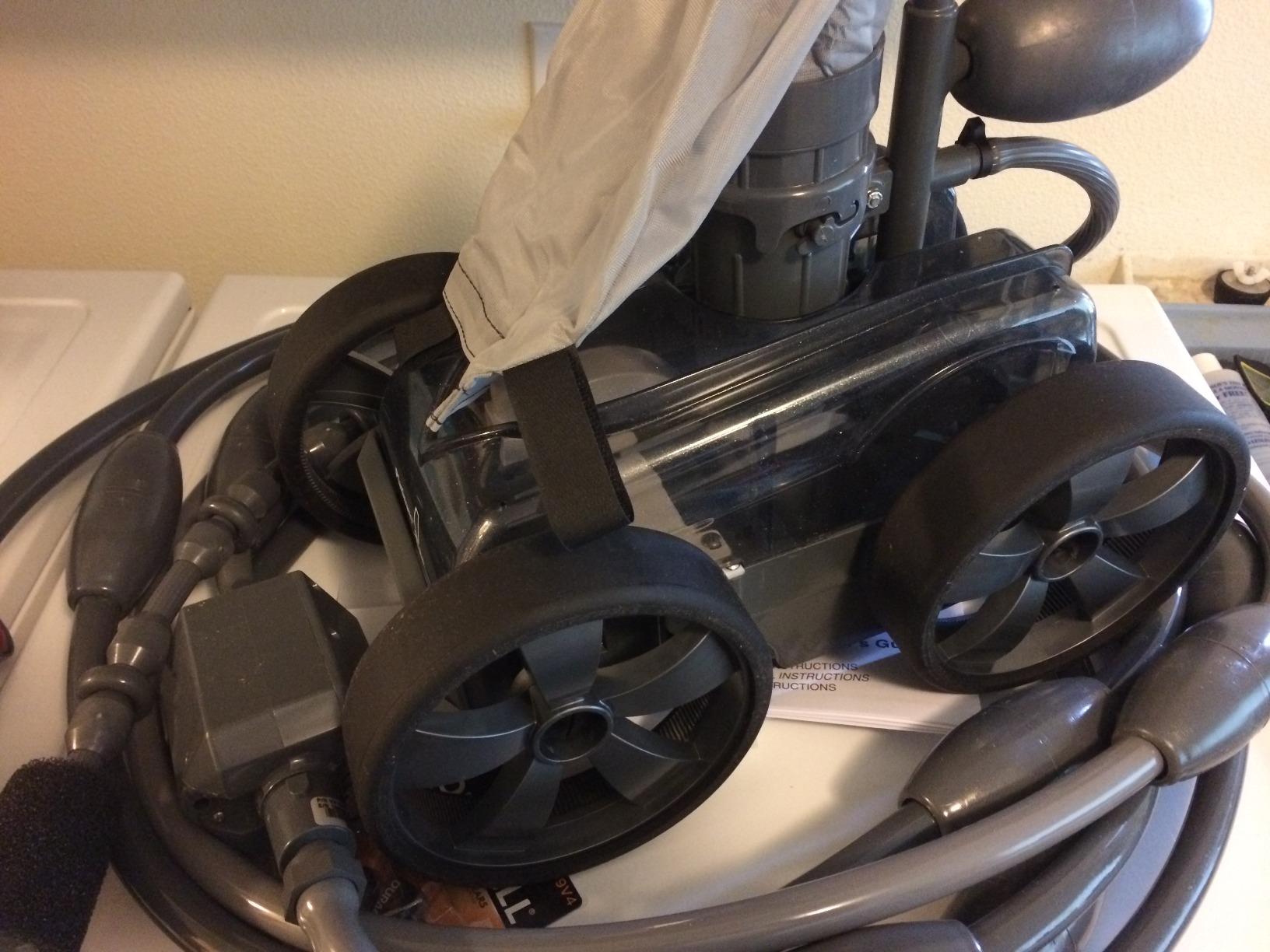
The Kreepy Krauly Platinum is the only non-plastic, non-generic unit in this roundup, and that matters more than the specification sheet suggests. A fiberglass body resists the UV and heat load of a poolside life in a way plastic does not, and Pentair is a brand with a deep parts catalogue and dealer network behind it.
It cleans floors and walls, works on concrete and gunite, vinyl-lined and fiberglass surfaces, and includes roughly 30 to 33 feet of hose depending on which part of the listing you read. Cycle time is listed at one to three hours, which is competitive with the Polaris units in a large pool.
Be careful with the published data here. The listing states a power source of wood pellets and a weight of 16 ounces, both of which are plainly wrong for a hydraulic pool cleaner, and the hose length disagrees with itself. You should treat the specification block as unreliable and confirm hose length with the manufacturer or your dealer before you plan the install around it.
At 3.9 stars from 62 reviews with 17 percent one star, the Pentair has the thinnest evidence base here alongside the newer MAKHOON. Pentair brand backing and a stated one-year warranty partly offset that, since a defect claim has somewhere to go.
When The Pentair Is The Right Call
If your pool equipment is all Pentair, dealer support and matching parts make this the low-friction choice. That is a real advantage over an unbranded unit in a category where support is thin.
Fiberglass construction suits pools in full sun where a plastic chassis ages faster, and for a unit living in a large pool through a long season the material difference is worth something.
Surface compatibility is broad. Concrete, gunite, vinyl-lined and fiberglass are all listed, which covers most large in-ground builds.
Where The Pentair Falls Short
62 reviews is not enough history to recommend it over the Polaris units, which have thousands of reviews each behind the same class of machine.
The listing data needs verification before you commit. Get the real hose length and confirm what plumbing it needs.
There is no stated jet count or debris inlet size here, so you cannot compare its vacuum power to the 2.25 inch inlets on the Polaris models. On a heavy leaf pool that is a gap in the information you need.
How Pressure Side Pool Cleaners Work
A pressure side pool cleaner clips onto a return line fitting and rides the pressure of your circulation pump or a separate booster pump. That water splits into two paths: the leader hose and sweep hose feed jets under the unit and along the floor, and the jets create a water vortex that lifts debris up into a filter bag mounted on the body.
Because debris is captured in its own bag rather than sent to your sand or cartridge filter, a pressure-side unit handles leaves and twigs without clogging the main filtration system. That is the whole argument for the technology, and it is why the category still makes sense on a big pool.
Two other parts do quiet work. The back-up valve periodically kicks the cleaner sideways to free it when it wedges against a wall or step. The flow restrictor throttles water into the sweep hose so the floor jets stir debris without starving the propulsion jets. If either one is misadjusted, the cleaner will not behave, which is the subject of the calibration section below.
On a large pool, the maths is unforgiving. A 20,000 gallon pool holds roughly ten times the water of a small one, so the same random-navigation pattern leaves bigger gaps. Feed hose length becomes the limiting spec, and cycle time stretches, which is the core cost argument against this technology in big water.
Pressure Side vs Suction Side vs Robotic for a Large Pool
Pressure-side wins on large debris. A 2.25 inch inlet swallows what a robotic intake chokes on, and the bag keeps it out of your filter. If your pool sits under trees, that is the deciding factor.
Suction-side units plug into the skimmer and need no booster pump, but they are limited by skimmer flow and they are built for small to medium pools. For a large in-ground pool they are rarely the right tool.
Robotic units win on scrubbing, mapped navigation and energy cost. They climb walls reliably, brush surfaces, and run on their own low-voltage battery rather than pushing water through your circulation system for three hours. For most large-pool owners who are buying new, this is honestly the better machine.
Pressure-side wins on one specific thing: it uses a hose you already own and a pump you already run. If booster pump plumbing is installed and paid for, the argument for switching to a robot is mostly about scrubbing quality and cycle time. If you are starting from zero, the plumbing install is what makes pressure-side expensive.
Does a Large Pool Need a Booster Pump?
Short answer: for a large in-ground pool, almost always yes, unless you buy one of the low-pressure three-wheel units that are built to run off a main pump. Both Polaris models in this roundup explicitly require a separate booster pump, as do all four of the four-wheel units.
Your circulation pump is sized to move water through the filter. It does not deliver enough pressure at the return line to spin the cleaner’s wheel at the RPM the design assumes. A booster pump is a second, small pump plumbed to a dedicated return that exists solely to power the cleaner.
Variable-speed pumps are the trap. Owners on r/pools report a nine-year-old Polaris 360 that worked acceptably for years and then degraded badly after a variable-speed pump swap, because the cleaner only behaved at maximum pump speed. On a large pool, the cleaner is already fighting more water, so a low-speed setting can leave it stalled on the floor. Run the pump at maximum when the cleaner is running, or use a dedicated booster.
If you already have booster pump plumbing, staying with pressure side is a defensible choice, and the reason is simply that the infrastructure is already paid for. If you do not, factor the pump, the plumbing and the install into the total before you compare it against a robot.
Buying Guide: Matching a Cleaner to a Large Pool
Hose length is the first filter. Both Polaris models ship with 31 feet, the Pentair lists 30 to 33 feet, and the four-wheel budget units publish nothing. Measure your pool’s longest run from the wall fitting to the farthest point, add a few feet, and do not buy a unit that cannot meet that number. In a large pool, an undersized hose is the most common reason a pressure-side cleaner looks like a bad purchase.
Jet count is the second filter. Two venturi jets are enough for a normal season. Three jets matter in a heavy leaf pool because they generate a stronger vortex and lift wet debris sooner. Match the tool to the debris.
Debris type decides more than any other spec. Leaves, twigs and acorns go to any of the units here through a 2.25 inch inlet. Sand and silt do not, and no pressure-side unit handles them well, because fine grit passes straight through the bag. If your issue is grit rather than leaves, you want a robotic cleaner with a fine filter, not anything on this list.
Booster pump plumbing decides cost. Every unit in this roundup is a pressure-side design, so all of them want a dedicated pressure line. Four-wheel units additionally want enough pressure to hold the chassis against the wall, and one MAKHOON model states 4 Bar. On textured plaster, four-wheel traction is the known weak point reported by owners rebuilding other four-wheel machines.
Bag parts supply is the overlooked long-run cost. Two of the budget units accept Polaris 380 bags, which means the cheapest and most available replacement supply in the category. A proprietary bag for a small brand is a genuine ongoing risk.
Warranty matters more than it looks. Two of the six units here carry no stated warranty. A one-year defect warranty on a device submerged for a full season is a thin but real protection, and it is one more reason the Polaris pair leads this roundup.
Installation and RPM Calibration on Big Pools
Trim the leader hose. The leader hose runs from the wall fitting to the cleaner body. In a large pool, cut it to reach the deepest point of the pool with a few feet to spare. Too long and the cleaner stalls before the back-up valve fires. Too short and the deep end stays dirty.
Space the feed hose. Feed hose sections go in one at a time, and each float sits roughly at the pool’s widest point. On a long rectangular pool you will use most of the supplied length, which is why 31 feet of supplied hose is the number to verify before purchase.
Trim the sweep hose last. The sweep hose feeds the floor jets that stir debris. It should be cut so the jets sit just above the pool floor along the cleaner’s route, not dragging and not floating too high to lift anything.
Calibrate the flow restrictor. Turn the throttle screw until the cleaner hovers just off the floor without climbing the wall on its own. Then run it and adjust until it moves smoothly in a straight line. On a large pool this takes several cycles, because the water load changes as the bag fills.
Set the back-up valve. Make sure it kicks the cleaner sideways off walls and steps, and that it resets. A back-up valve that never fires is why a cleaner spends an hour beating against the same wall.
Finally, confirm the booster pump output at the return line before you blame the cleaner. Under-pressured jets are the number one cause of a pressure-side unit that will not complete a cycle in a large pool.
Troubleshooting Pressure Side Cleaners on Large Pools
If the cleaner stalls on walls and steps, check the back-up valve first, then check traction. Four-wheel chassis on textured plaster are the known problem case described by owners, and a three-wheel Polaris design is what those owners wish they had.
If the hose tangles, straighten the feed hose before install, rotate the back-up valve, and add float balls. The coiled hose shipped with some budget units can need a day or two to relax before the cleaner moves properly.
If the cleaner only runs at maximum pump speed, you have a variable-speed pump compatibility issue. Run the circulation pump at maximum during cleaning, or fit a dedicated booster.
If the bag fills before the cleaner finishes, the pool is bigger than the bag capacity, or the debris load is heavier than the design assumed. This is a coverage problem, and the fix is a longer run, more frequent cycles, or a unit with more vacuum power.
If coverage is patchy and the cleaner seems to repeat areas, that is random navigation working as designed. Pressure-side units have no mapping. In a large pool this is the core weakness, and it is why a robotic cleaner usually cleans a big pool more evenly.
Frequently Asked Questions
What is the best pressure side pool cleaner for a large pool?
The Polaris Vac-Sweep 280 is the best overall pick for large in-ground pools in our roundup. It combines 31 feet of feed hose, a 2.25 inch debris inlet and dual venturi jets, and it carries more than 5,400 reviews at 4.3 stars, the strongest rating and volume pairing available. The Vac-Sweep 380 is the better choice when heavy leaf fall is the main problem, because its third venturi jet generates a stronger vortex.
Does a pressure side pool cleaner need a booster pump?
For a large in-ground pool, almost always. A booster pump supplies the return-line pressure the cleaner’s jets need, and your circulation pump is not sized for that job. All six units in this roundup are pressure-side designs and expect a dedicated pressure line, with one MAKHOON model stating a 4 Bar requirement. Some low-pressure three-wheel models run off a main pump, but none of the units we tested here are in that category.
Which type of pool cleaner is better, a robotic pool cleaner or a pressure-side pool cleaner?
A robotic pool cleaner is better for most large-pool owners buying new. It scrubs surfaces, navigates with mapping rather than random patterns, covers even, and runs on its own battery. A pressure-side cleaner wins on one thing only: large debris. Its wide inlet and debris bag handle leaves, twigs and acorns that stall a robotic intake, at the cost of scrubbing, navigation and cycle time. If booster pump plumbing is already installed, the case for pressure side is stronger.
How much hose do I need for a large pool cleaner?
Enough to reach the farthest point of the pool from the return-line wall fitting, plus a few feet of slack. Both Polaris units in this roundup ship with 31 feet of feed hose, and the Pentair lists 30 to 33 feet. In a large or freeform pool, measure the longest diagonal run rather than the straight-line length, and trim the leader hose to fit so the cleaner does not stall before its back-up valve fires.
Is Dolphin or Polaris better?
They are not the same category, so the comparison does not really hold. Dolphin makes robotic cleaners only, and Polaris dominates pressure-side cleaning. Within pressure-side units, the Polaris Vac-Sweep 280 and 380 are the best-supported models, with thousands of reviews and widely available spare parts. If you want a robot, you are shopping Dolphin or a competing robotic brand instead.
Why does my pressure side pool cleaner get stuck on walls?
A back-up valve that is not kicking, or a chassis that cannot hold traction, is the usual cause. Four-wheel designs are the known problem case: an owner on r/pools rebuilt a Pentair Racer LS twice and blamed lost grip on textured plaster for both failures. Check the back-up valve, verify the booster pump is delivering pressure, and if you have a textured plaster pool, a three-wheel Polaris layout is the safer choice.
Conclusion
The best pressure side pool cleaner for a large pool is still the Polaris Vac-Sweep 280, because 31 feet of hose, a 2.25 inch inlet and dual venturi jets cover big water with the largest evidence base in the category. Pick the Vac-Sweep 380 instead if autumn leaf loads are the dominant problem, and pick a four-wheel budget unit only if booster pump plumbing is already installed and you can live with thinner long-term data.
If you have not already paid for booster pump plumbing, weigh that install against a robotic cleaner before you commit. We compared the six best pressure side pool cleaners for large pools in 2026, and all of them do the same core job well, but none of them scrubs, maps or navigates the way a robot does.
If you want to see the same kind of head-to-head testing on a different job, our picks for the best pressure washers follow the same format, our best electric pressure washers guide covers the other end of that range, and our best carpet cleaners roundup covers the other end of the summer cleaning list.