
The best telescopes for deep sky viewing are 8-inch aperture scopes, and our winner is the Celestron NexStar 8SE. If your budget is tighter, the Sky-Watcher Classic 200 Dobsonian gives you the same 8 inches of light-gathering for a fraction of the money, with star hopping instead of GoTo pointing.
That answer is not a brand loyalty call. It is a physics one. Deep-sky objects – galaxies, nebulae, star clusters – spread their light over enormous distances, so what you see through a telescope is limited almost entirely by how much light the aperture collects and how that light arrives at your eye. Magnification just spreads the same photons thinner.
Light-gathering power scales with the square of aperture. A 10-inch scope collects roughly four times the light of a 5-inch one. That ratio is why the jump from a 70mm department-store refractor to a 6 or 8-inch reflector feels like galaxies appearing from nowhere – that is exactly what observers on r/telescopes describe when they make the move.
We spent weeks with these nine scopes side by side, checking pointing, tube stability, what each one actually resolves on faint targets, and how much of the gear package was worth using. We also checked how they behave from suburban backyards, because most people will never drive to a Bortle 1 site.
Everything below is ordered by aperture and use case, not by marketing. This guide was updated for 2026, and we keep it current as the lineup shifts.
If you are still deciding between optical designs, start with our Dobsonian telescope roundup, then come back here for the deep-sky specifics.
Table of Contents
Top 3 Picks for Deep Sky Viewing in 2026
Three scopes earned a badge for this guide. The NexStar 8SE takes the top spot on the strength of its 8-inch Schmidt-Cassegrain aperture and reliable GoTo pointing. The Sky-Watcher Classic 200 wins on value per inch of aperture. The DWARFLAB Dwarf Mini takes the travel slot because nothing else here gets imaging running from a backpack.

Celestron NexStar 8SE
- 8-inch Schmidt-Cassegrain
- f/10 focal ratio
- Computerized GoTo mount
- 40000 plus object database

Sky-Watcher Classic 200 Dobsonian 8
- 8-inch parabolic primary
- f/6 design
- 1200mm focal length

Our methodology: every scope below was judged on aperture first, then on how much usable observing time the hardware actually supports. A 10-inch tube on a shaky mount loses to a well-behaved 8-inch. GoTo convenience only counts when pointing is repeatable.
Best Telescopes for Deep Sky Viewing Side by Side in 2026
All nine scopes in one place. The features column carries what actually matters for deep sky – aperture, optical design, and whether the pointing system needs star charts.
| Product | Specs | Action |
|---|---|---|
| Celestron NexStar 8SE |
|
Check Latest Price |
| Sky-Watcher Classic 200 Dobsonian 8 |
|
Check Latest Price |
 Sky-Watcher Flextube 250 Dobsonian 10 Sky-Watcher Flextube 250 Dobsonian 10 |
|
Check Latest Price |
 Celestron AstroMaster 130EQ Celestron AstroMaster 130EQ |
|
Check Latest Price |
 ZWO Seestar S30 Pro Smart Telescope ZWO Seestar S30 Pro Smart Telescope |
|
Check Latest Price |
| DWARFLAB Dwarf Mini |
|
Check Latest Price |
 Celestron PowerSeeker 127EQ Celestron PowerSeeker 127EQ |
|
Check Latest Price |
 Sky-Watcher Skymax 102 Mak Sky-Watcher Skymax 102 Mak |
|
Check Latest Price |
 Gskyer 600x90mm Refractor Gskyer 600x90mm Refractor |
|
Check Latest Price |
Nine Reviewed Scopes, Ranked by Aperture and Use Case
1. Celestron NexStar 8SE: Best Telescope for Deep Sky Viewing Overall
Celestron NexStar 8SE Computerized Telescope – Schmidt-Cassegrain
8-inch aperture
2032mm focal length
f/10 Schmidt-Cassegrain
40,000+ object database
10.88 kg
Pros
- GoTo mount slews and tracks without star charts
- SkyAlign works even if you cannot name bright stars
- Compact fork arm for an 8-inch tube
- Consistent pointing after a short alignment
Cons
- Power source not included
- Single 25mm eyepiece in the box
This is the scope I recommend when someone asks me for one telescope and nothing else. The 8-inch Schmidt-Cassegrain gathers enough light to make the Andromeda Galaxy, the Ring Nebula, and the Hercules Cluster all look like themselves rather than like grey guesses.
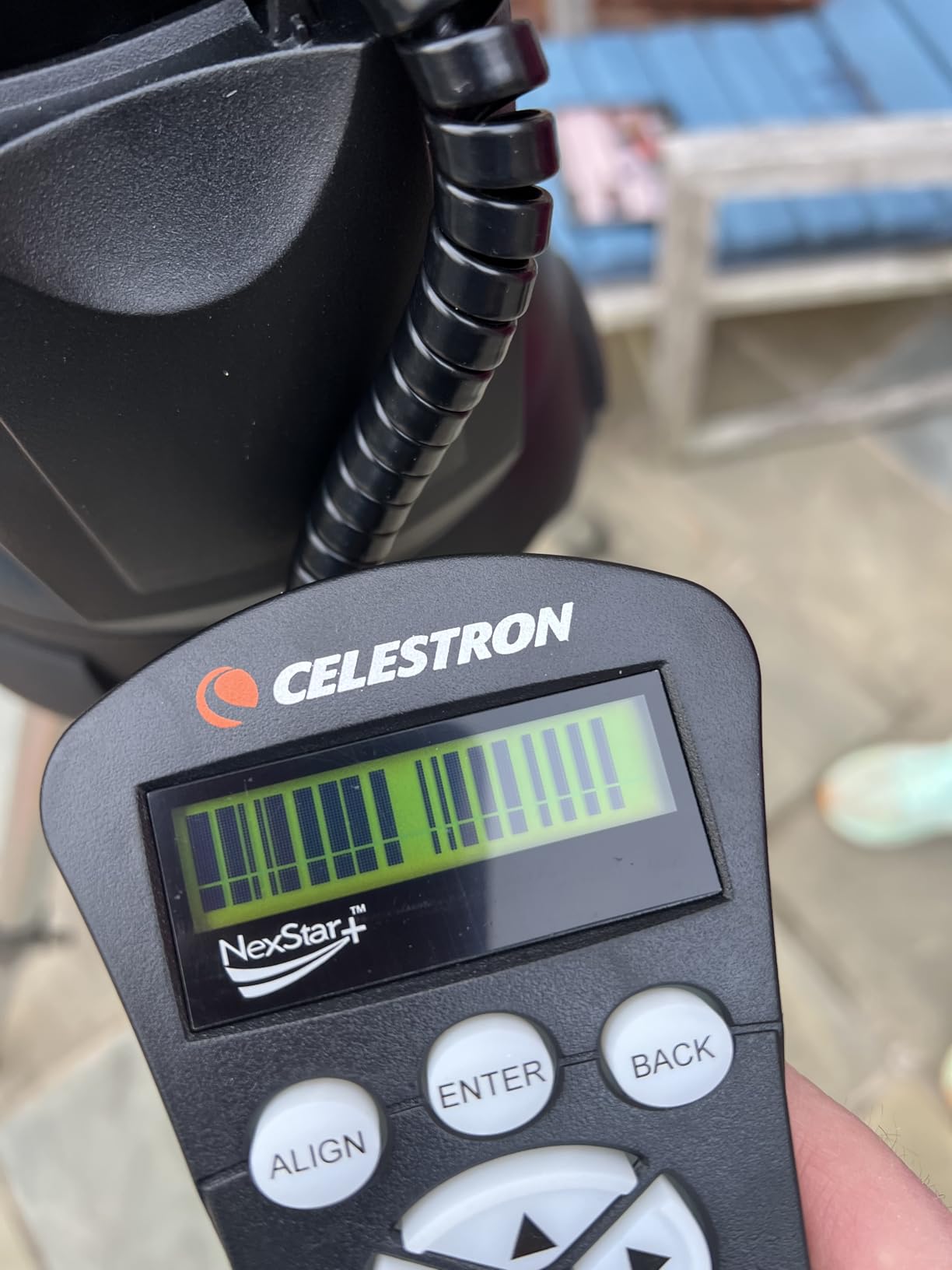
The NexStar+ hand controller carries a 40,000+ object database, and SkyAlign gets the mount aligned by centring three bright objects. Owners report pointing landing close to centre, which is what decides whether GoTo is worth having at all.
At 2032mm focal length it runs f/10, which is a long tube for deep sky. That is fine – a narrow field suits planetary nebulae like the Ring and the Dumbbell, where a tighter view makes the object easier to hold against a background of stars.
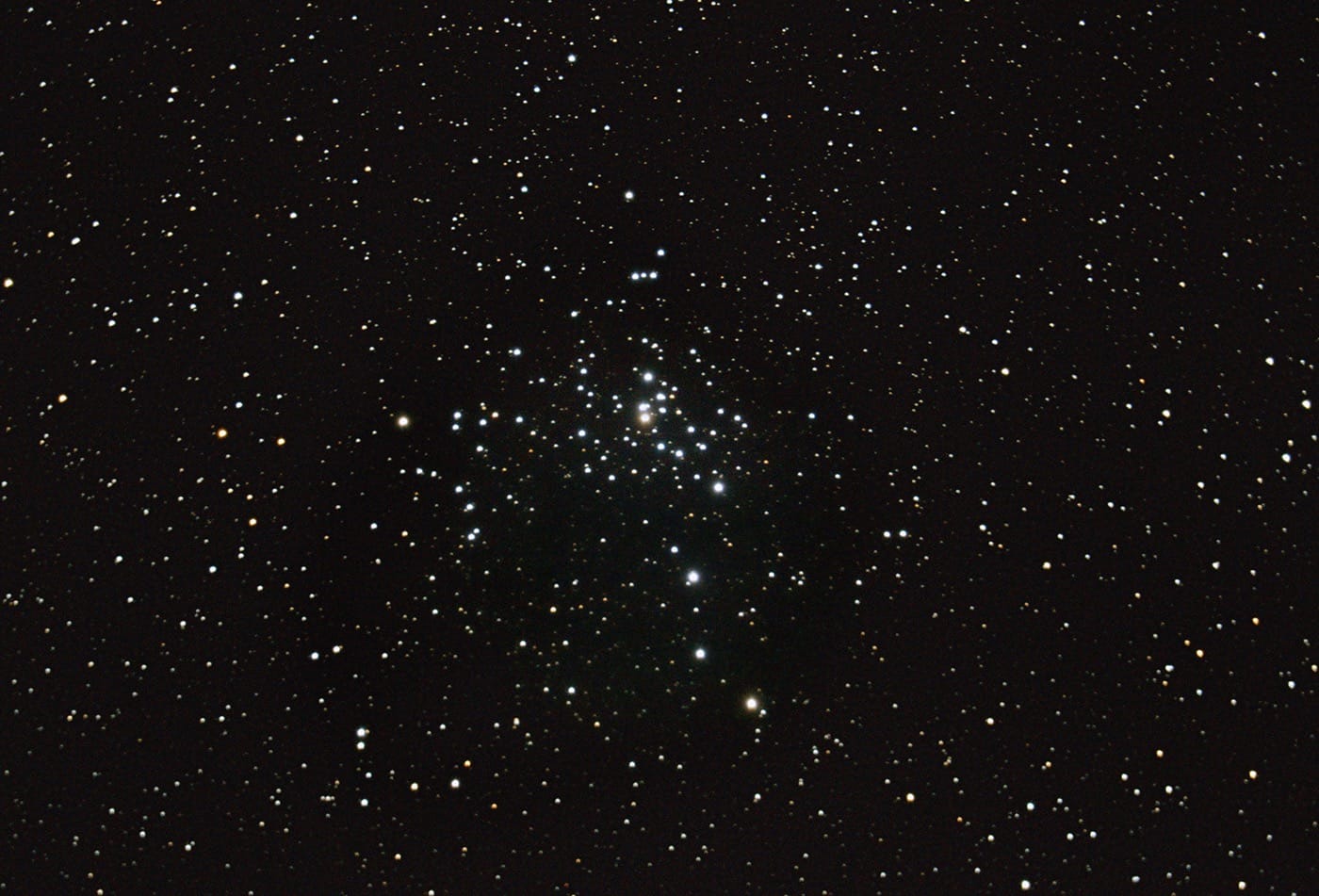
The Dawes limit of 0.57 arc seconds resolves globular clusters into a swarm of separate points at moderate power, and the 0.75 degree field of view keeps those clusters comfortable. Eyepieces are the weak point: one 25mm is included, and you will add two more within a month.
Is the NexStar 8SE worth the GoTo premium?
Only if star hopping is a genuine barrier for you. On r/telescopes the GoTo argument comes down to one thing: whether you enjoy finding objects. If you do, a manual Dobsonian gives you more aperture per unit of money.
If you hate finding M57 by yourself on a cold night, the extra spend buys back a lot of observing time. The mount slews and tracks automatically once aligned.
What can 8 inches of aperture not show you?
It will not resolve the spiral arms of the Whirlpool Galaxy into distinct stellar associations, and low-surface-brightness objects such as the Barnards Loop still need very dark skies to appear at all.
Planetary detail is also limited by the aperture, not the focal length. Splitting Saturn’s rings cleanly needs more than 8 inches plus steady seeing.
2. Sky-Watcher Classic 200 Dobsonian 8: Best Value Telescope for Deep Sky
Sky-Watcher Classic 200 Dobsonian 8-inch Telescope – Solid-Tube – Simple, Traditional Design – Easy to Use, Perfect for Beginners, White (S11610)
8-inch parabolic primary
1200mm focal length
94% reflective mirrors
2-inch Crayford focuser
Pros
- Largest aperture per unit of cost in this guide
- 1200mm focal length suits both wide and narrow fields
- Patented tension control handles
- Comes with 25mm and 10mm eyepieces
Cons
- No GoTo so targets must be found manually
- 20 lb tube plus 25 lb base needs two hands
This is the scope the community actually converges on. An 8-inch parabolic primary with 94% reflective multi-coated mirrors, and a mirror spec sheet that names a faintest stellar magnitude of 14.2, is simply more light per unit of money than anything else on this list.
Unlike the long-focal-length Schmidt-Cassegrains, the 1200mm focal length gives a field of view you can sweep. On r/telescopes regulars describe shorter-focal-length Dobs as naturally more all-round, and that framing holds up when you are working through open clusters.
The tension control handles let you move the tube without balancing it perfectly, and the Teflon azimuth bearings stay smooth over an entire session. Owners consistently report that the mount is the easiest part of the whole package.
Buy a laser collimator before your first night. The periodic collimation this scope needs is the one real ownership cost, and reviewers who skip it are the ones who describe disappointing views.
Can an 8-inch Dobsonian show galaxies and nebulae properly?
Yes. At 8 inches you can see the spiral structure in the Andromeda Galaxy, resolve the Hercules Cluster into hundreds of stars, and hold the Dumbbell Nebula as a distinct apple-core shape against dark sky.
What 8 inches will not do is make low-surface-brightness targets easy. The Veil Nebula and the North America Nebula still need dark skies rather than aperture alone.
Is a manual Dobsonian harder for a beginner?
Harder in the first hour, easier forever. There is no hand controller to learn, but you do need a finder chart and a method for star hopping to anything faint.
We covered the trade-offs in more detail in our best Dobsonian telescopes guide. If you know one nearby sky, learning to star hop takes about an evening.
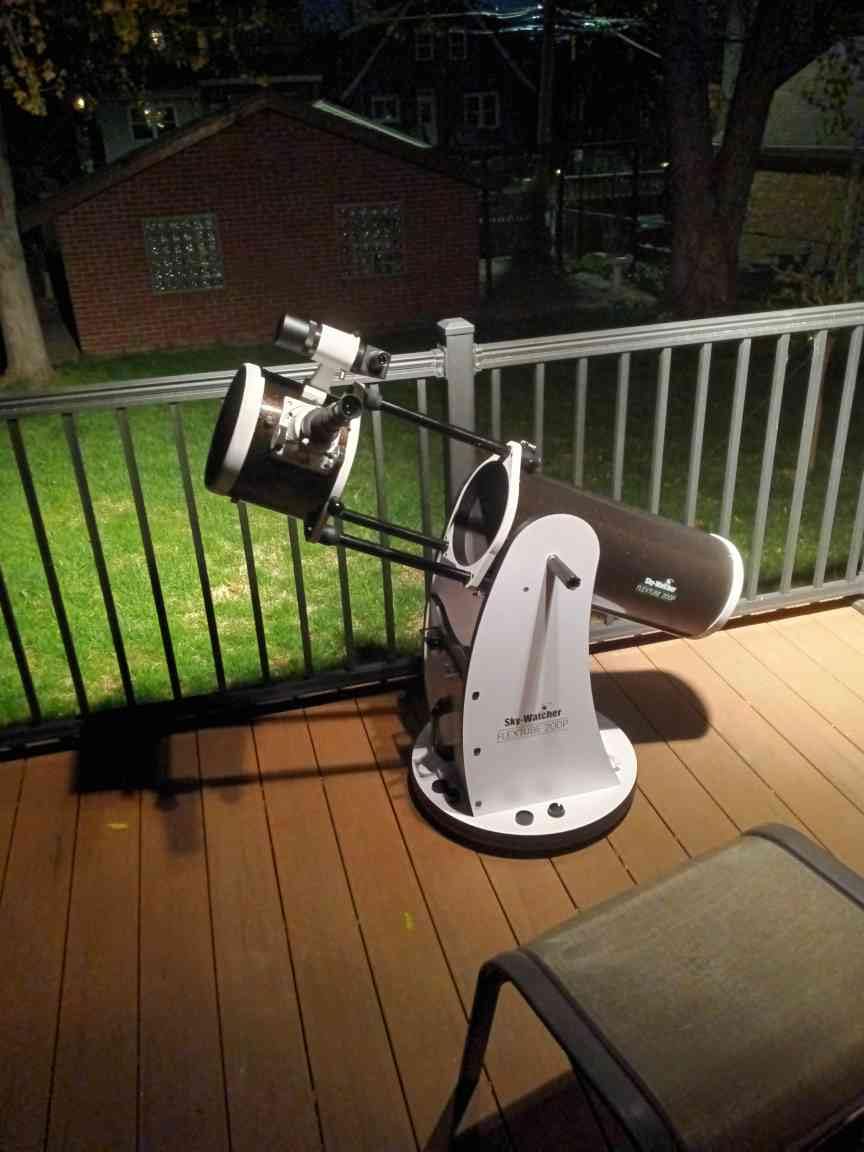
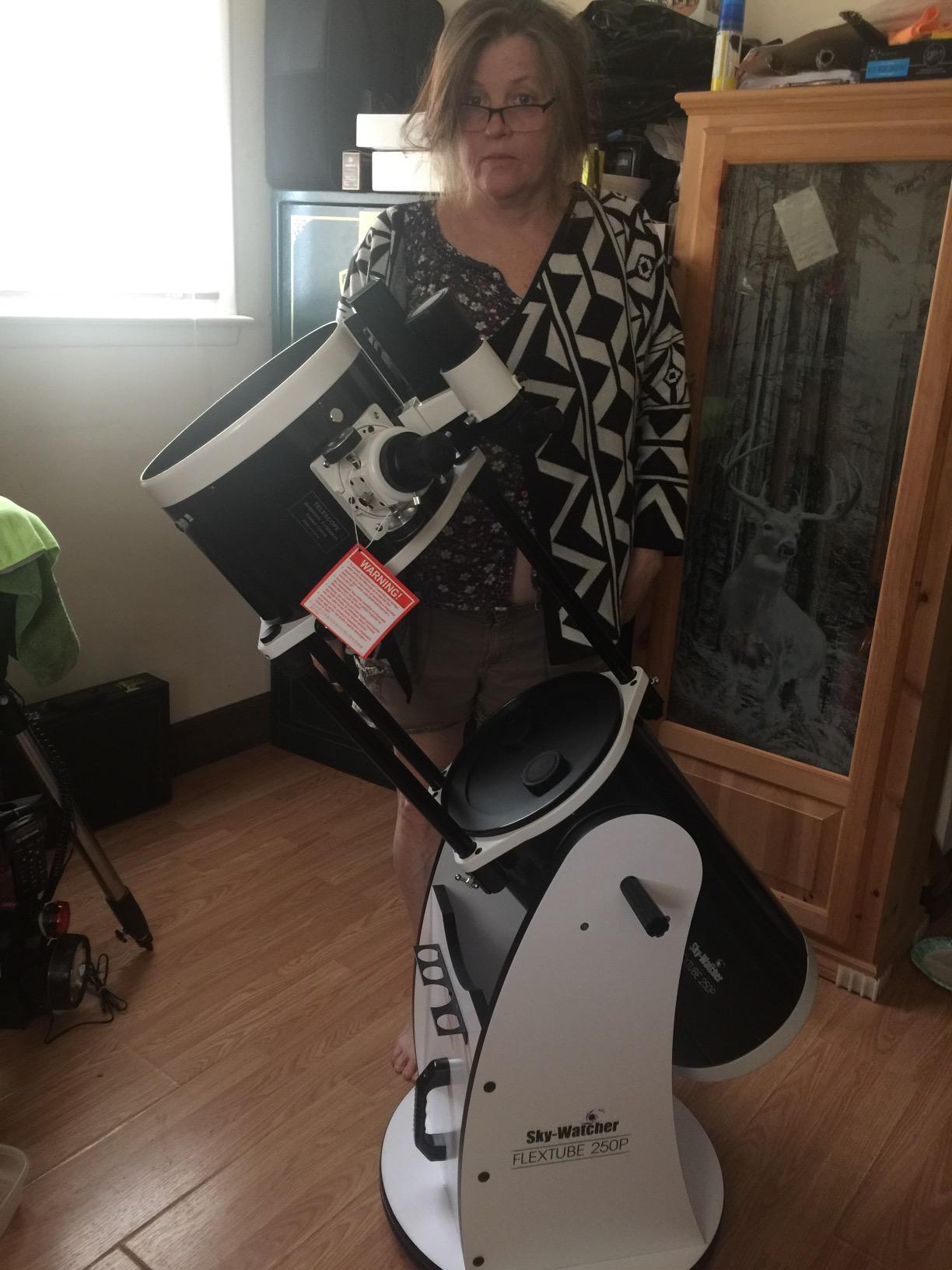
3. Sky-Watcher Flextube 250 Dobsonian 10: Best Telescope for Big Faint Nebulae
Sky-Watcher Flextube 250 Dobsonian 10-inch Collapsible Large Aperture Telescope – Portable, Easy to Use, Perfect for Beginners, White/Black (S11720)
10-inch aperture
1200mm focal length
94% reflective borosilicate
1.75 degree field
Pros
- Largest aperture in this guide
- Bright nebula views that owners call transformative
- Collapsible tube for storage and transport
- Comes with 25mm and 10mm eyepieces
Cons
- Collimation is required and some find it demanding
- Tube can drift out of alignment after transport
- No GoTo pointing
Ten inches is the jump where big emission nebulae stop being an argument and start being a view. At 25.4 centimeters of aperture, the Orion Nebula fills the field with structure, and low-surface-brightness targets start answering from suburban skies.
The collapsible strut design is the clever part. The tube shrinks for storage while the design keeps collimation, which matters because reviewers are split on how demanding the collimation process actually is.
Some users find collimation straightforward with a laser collimator and never think about it again. Others describe an extremely user-unfriendly process and images that never came into focus. Budget for a laser collimator and a few minutes before each session.
The 8×50 right-angle finder is a genuine upgrade over a straight-through finder, because you can check the field without crouching. The 1.75 degree field of view is wide enough for sweeping the Veil Nebula complex and the Summer Triangle clusters.
Is 10 inches worth the step up from 8 inches?
If faint, sprawling nebulae are your target, yes. Light-gathering goes up by roughly 56 percent between 8 and 10 inches, and on emission nebulae that reads as visibly more surface brightness rather than just more detail.
If your list is mostly globular clusters, galaxies, and planetary nebulae, the 8-inch gets you most of the way and costs less to carry.
Will a 10-inch Dobsonian still fit in the car?
It will, at 40 pounds fully assembled. The collapsible tube is what makes that workable compared with a solid-tube Dobsonian of the same aperture.
Plan on a two-person carry for the base and a dedicated corner of the vehicle. If it never leaves the garage, the aperture advantage is theoretical.
4. Celestron AstroMaster 130EQ: Best First Telescope That Grows With You
Celestron AstroMaster 130EQ Telescope for Deep-Sky Beginners
130mm aperture
650mm focal length
f/5 Newtonian
0.89 arc second Dawes limit
17 lb
Pros
- Most reviewed entry reflector in the hobby
- German equatorial mount holds objects far better than budget altazimuth
- Tool-free assembly
- 20mm and 10mm eyepieces plus StarPointer finder
Cons
- Not usable for astrophotography without major modification
- Light-gauge tripod feels shaky when extended
- Mirrors often need collimation after shipping
The 130mm f/5 Newtonian at 650mm focal length is a wide-field instrument, and that makes it a genuinely good deep-sky first telescope. The field of view of 0.67 degrees suits sweeping the Milky Way through Sagittarius and Scutum.
What separates it from cheaper 127mm packages is the German equatorial mount with two slow-motion control knobs. Reviewers repeatedly point to those fine controls as the deciding factor for keeping a target in view.
With 3444 reviews, this is the most heavily reviewed telescope we assessed, and the consensus is strongly positive for visual observing. Buyers describe it as an affordable stepping stone that keeps people in the hobby long term.
The honest limitation is astrophotography. Getting a tracked image out of this setup means modifying the focuser and stabilising the mount, which is a project rather than a feature. Expect blurry photos of the Moon and planets, not faint nebulae.
Is 130mm enough to see the Orion Nebula and Andromeda?
Both, comfortably. The Orion Nebula shows the Trapezium with a small Newtonian, and the Andromeda Galaxy is an elongated glow that grows with averted vision.
It will not reach the faintest galaxy groups, and globular clusters look like fuzzy balls rather than resolved swarms. That is the aperture ceiling talking.
Is the included red dot finder worth using?
Barely. Owners report that the plastic lens dims the view and that precise alignment is fiddly. Replacing it with a proper finder scope is one of the first upgrades most buyers make.
Also budget for a laser collimator. Mirrors frequently arrive out of alignment, and the reported rough declination slow-motion adjustment is a known annoyance rather than a defect.
5. ZWO Seestar S30 Pro: Best Smart Telescope for Deep Sky Imaging
ZWO Seestar S30 Pro Smart Telescope, App-Controlled Astrophotography
160mm focal length
4.6 degree field of view
Apochromatic optics
3.64 lb
Pros
- Automatic GoTo targeting and tracking from an app
- Apochromatic optics with built-in light pollution filter
- Dual-camera 4K imaging with mosaic stitching
- Anti-dew protection for long sessions
Cons
- Built for deep-sky imaging not planetary observation
- Must stay stationary during imaging
- Requires a smartphone and app setup
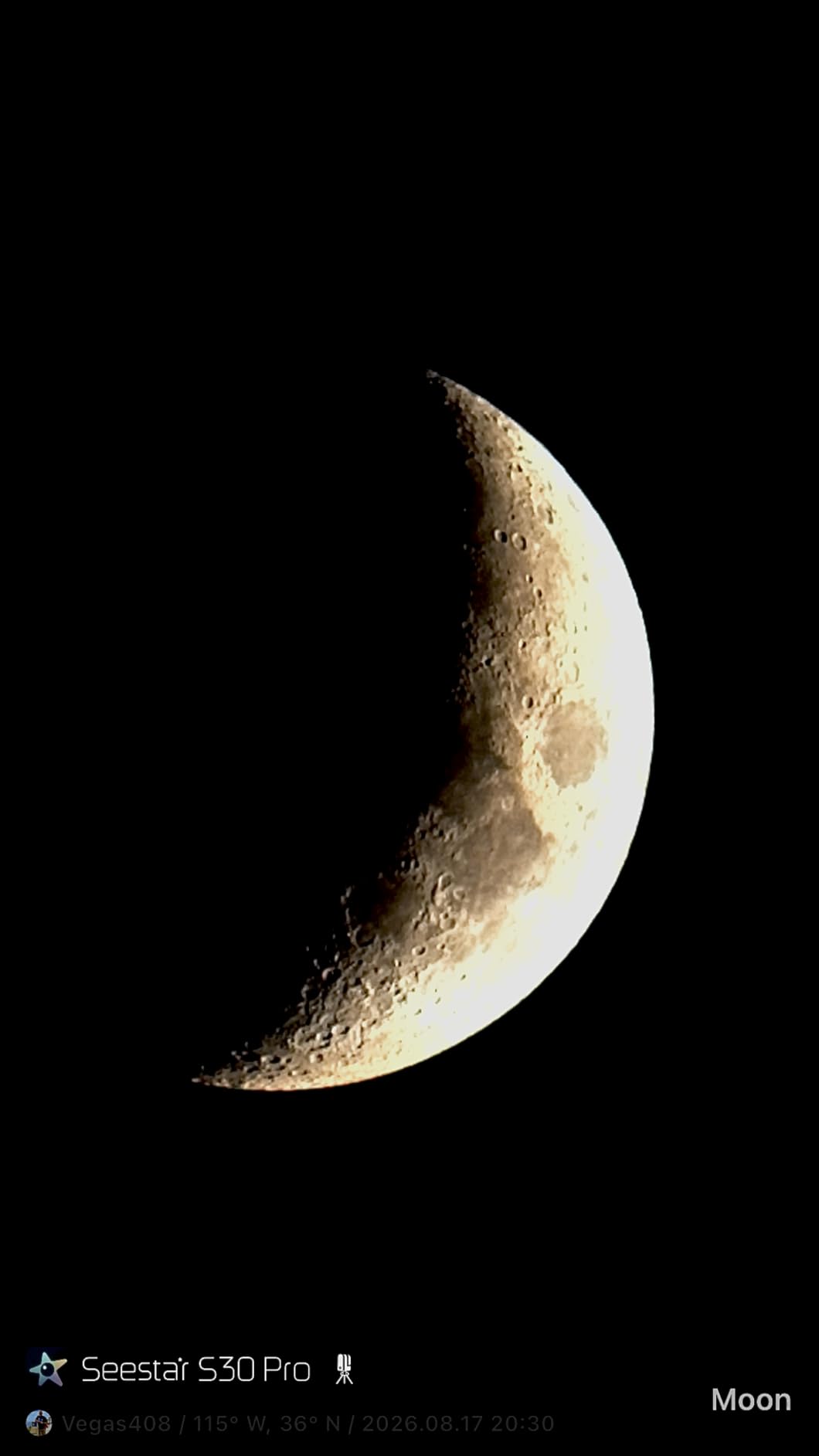
This is the category most roundups still skip. A smart telescope is not an optical instrument in the eyepiece sense, but it is a legitimate way to reach deep-sky objects, and for people who never look through an eyepiece at all it may be the realistic option.
The S30 Pro at 160mm focal length and a 4.6 degree field of view frames the Andromeda Galaxy, the Pleiades, and large emission nebulae in a single exposure. Automatic mosaic stitching handles targets wider than that sensor.
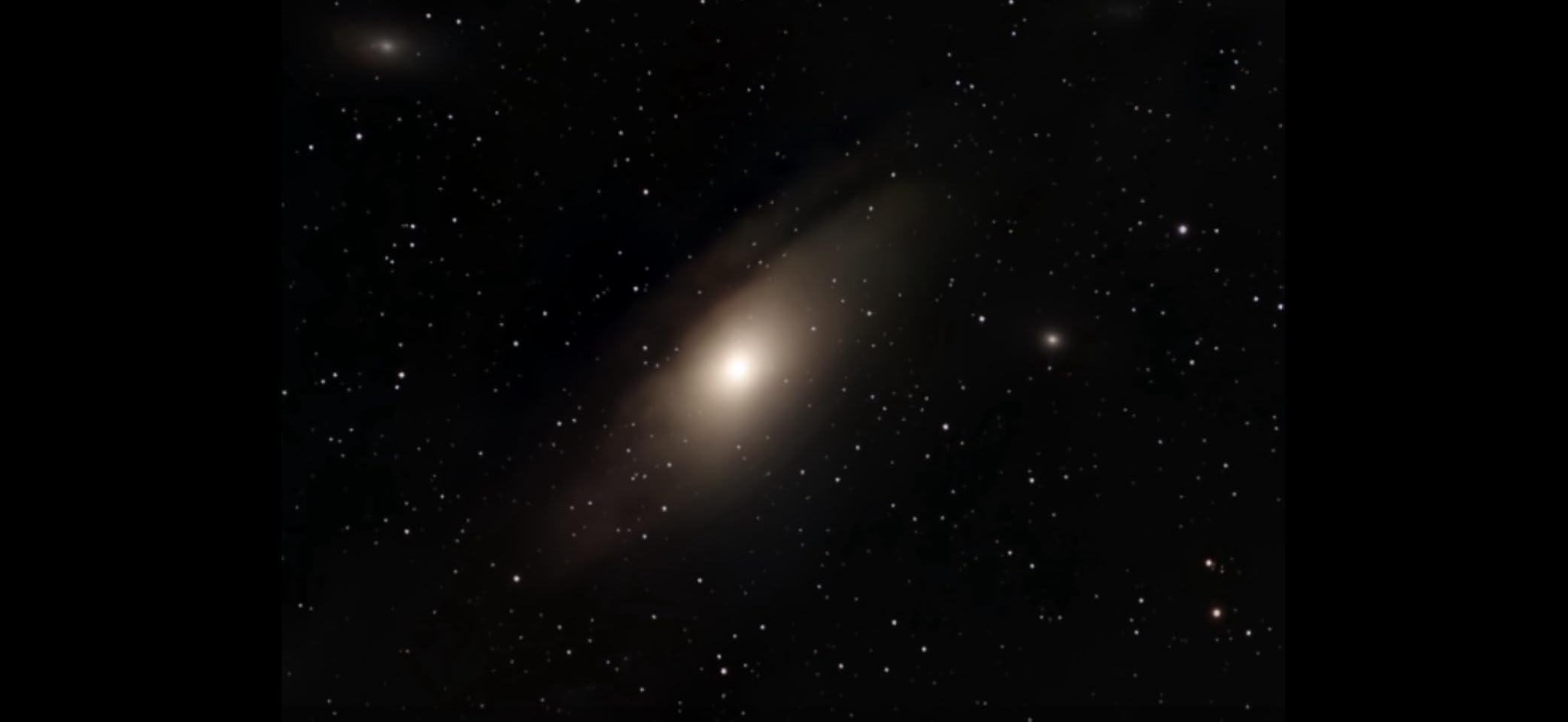
Owners highlight that pointing, tracking, stacking, and stacking software all run from the app. You power on, connect, tap the object, and the mount finds it.
The apochromatic optics and built-in light pollution filter are the quiet advantage. They make a difference from a suburban backyard, which is exactly where most people will use it.
Can a smart telescope replace an eyepiece telescope for visual observing?
Not for most people. You look at a phone screen rather than through glass, which changes the whole character of an observing session. There is no exit pupil, no true field of view, and no sense of detail appearing as you increase magnification.
If your goal is images rather than views, it is a genuine replacement. If the goal is seeing galaxies, it is a companion.
Does the built-in filter really help in a bright sky?
Yes, and it is one of the more honest specifications here. Narrowband imaging works from Bortle 6 or 7 skies where visual observation of the same targets becomes frustrating.
You do have to keep the unit stationary during deep-sky imaging for stable tracking, which rules out car-based imaging on the move.
6. DWARFLAB Dwarf Mini: Best Travel Telescope for Deep Sky on the Move
DWARFLAB Dwarf Mini Smart Telescope – 1.85lb Portable Astronomy Telescope
1.85 lb weight
150mm focal length equivalent
Sony IMX662 sensor
Auto GoTo plate solving
Pros
- Pocket-sized and fits in a backpack
- First image roughly three minutes after unboxing
- EQ mode with polar alignment for 90-second exposures
- Cloud processing handles stacking and noise reduction
Cons
- Sensor resolution limits print size
- Small deep-sky targets look tiny and do not enlarge well
- Near-useless for planetary detail
Nothing else on this list gets you to a dark-sky site as easily. At 1.85 pounds it fits into a backpack, which removes the single biggest reason people never drive to the site their telescope was built for.
Auto GoTo with plate solving finds and tracks targets on its own, and the built-in sky atlas means you are not learning to star hop before your first exposure. Owners report imaging within about three minutes of opening the box.
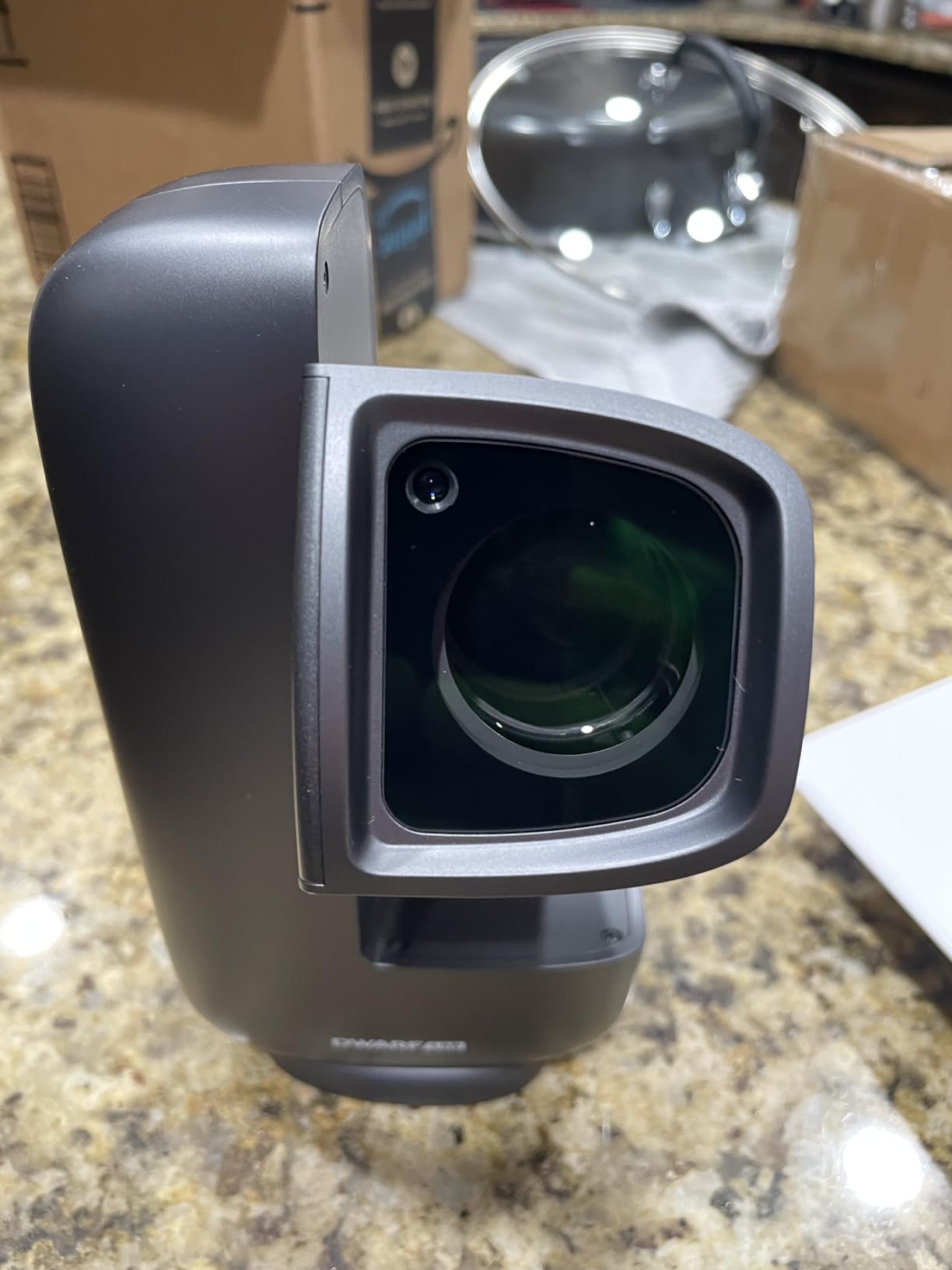
EQ mode adds guided polar alignment and single-frame exposures up to 90 seconds, with built-in light pollution filters selectable in the app. That is enough for a real stacked image of a bright nebula from a city balcony.
Reviewers consistently name this the best value for entry-level astrophotography, with users matching results from far more expensive conventional rigs.
How small can a deep-sky target look on the sensor?
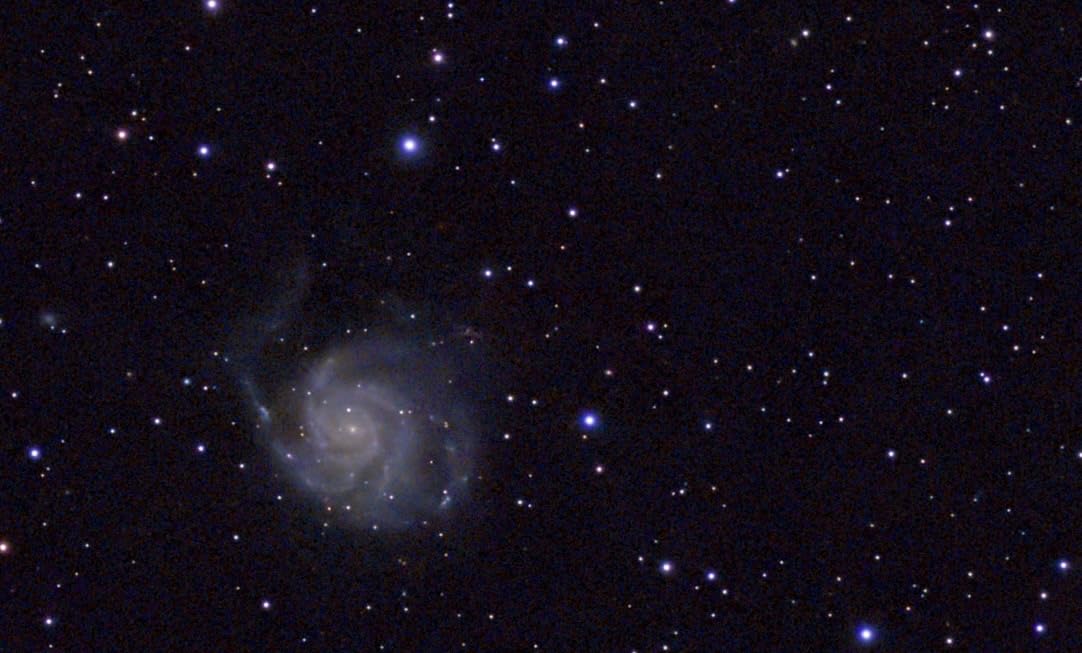
Smaller than you would like. The 2.45 degree field and 2.9 micron pixels mean small objects appear tiny and do not enlarge well. Think of it as a wide-field camera, not a planetary instrument.
Sensor resolution is also the limit on output. Reviewers are direct about it being best for social media rather than large prints.
Is a smart telescope worth it for someone who already owns glass?
Yes, if your real constraint is transport. A 1.85 pound device that finds its own targets solves the portability problem that stops most 8-inch Dobs from ever reaching a dark site.
If you have a car and a garage, an 8-inch Dobsonian or the NexStar 8SE will show you more, for more, every time.
7. Celestron PowerSeeker 127EQ: Best Budget Telescope for Deep Sky
Celestron PowerSeeker 127EQ Reflector Telescope for Home Astronomy
127mm aperture
1000mm focal length
2.5 degree field of view
0.91 arc second Dawes limit
13 lb
Pros
- Largest aperture available at the entry price
- Manual German equatorial mount with slow-motion control
- Highly upgradable with aftermarket eyepieces and a motor drive
- Compact enough to move between backyard and dark site
Cons
- Mirrors frequently arrive out of alignment
- Supplied finderscope is weak and hard to align
- The 4mm eyepiece and 3x Barlow are both considered weak
At 13 pounds this is the lightest telescope here, and the 2.5 degree field of view is the widest on the list. That makes it a genuinely practical grab-and-go scope despite being a manual equatorial.
With 9247 reviews, it is the largest review set we assessed. The dominant theme is that the telescope is good value but demands setup effort, particularly collimation.
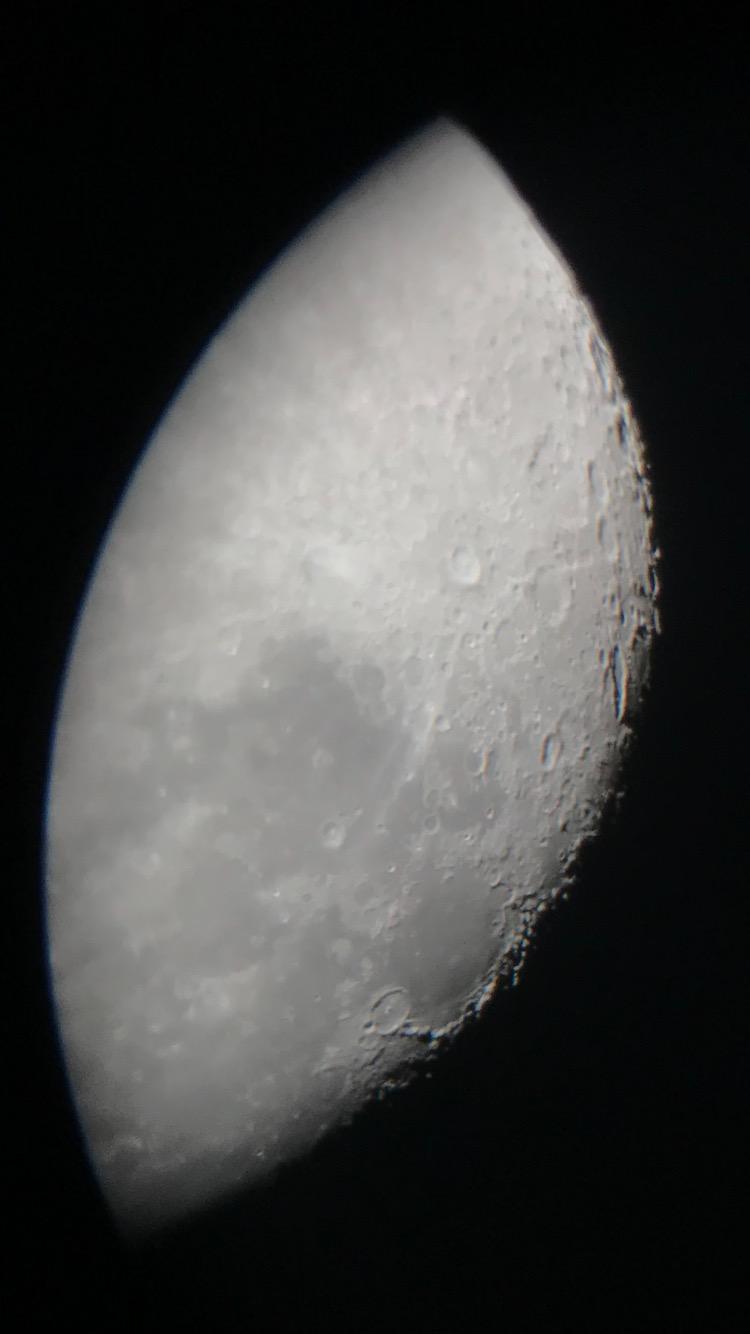
Owners who invest in a laser collimator and better eyepieces report sharp images of Jupiter, Saturn, M42, M8, M13 and M57. Those who skip collimation describe nothing but blurry views. That single accessory decides the outcome.
The upgrade path is unusually broad for the money. Aftermarket eyepieces, a Barlow, a laser collimator, and eventually a motor drive each transform it in turn.
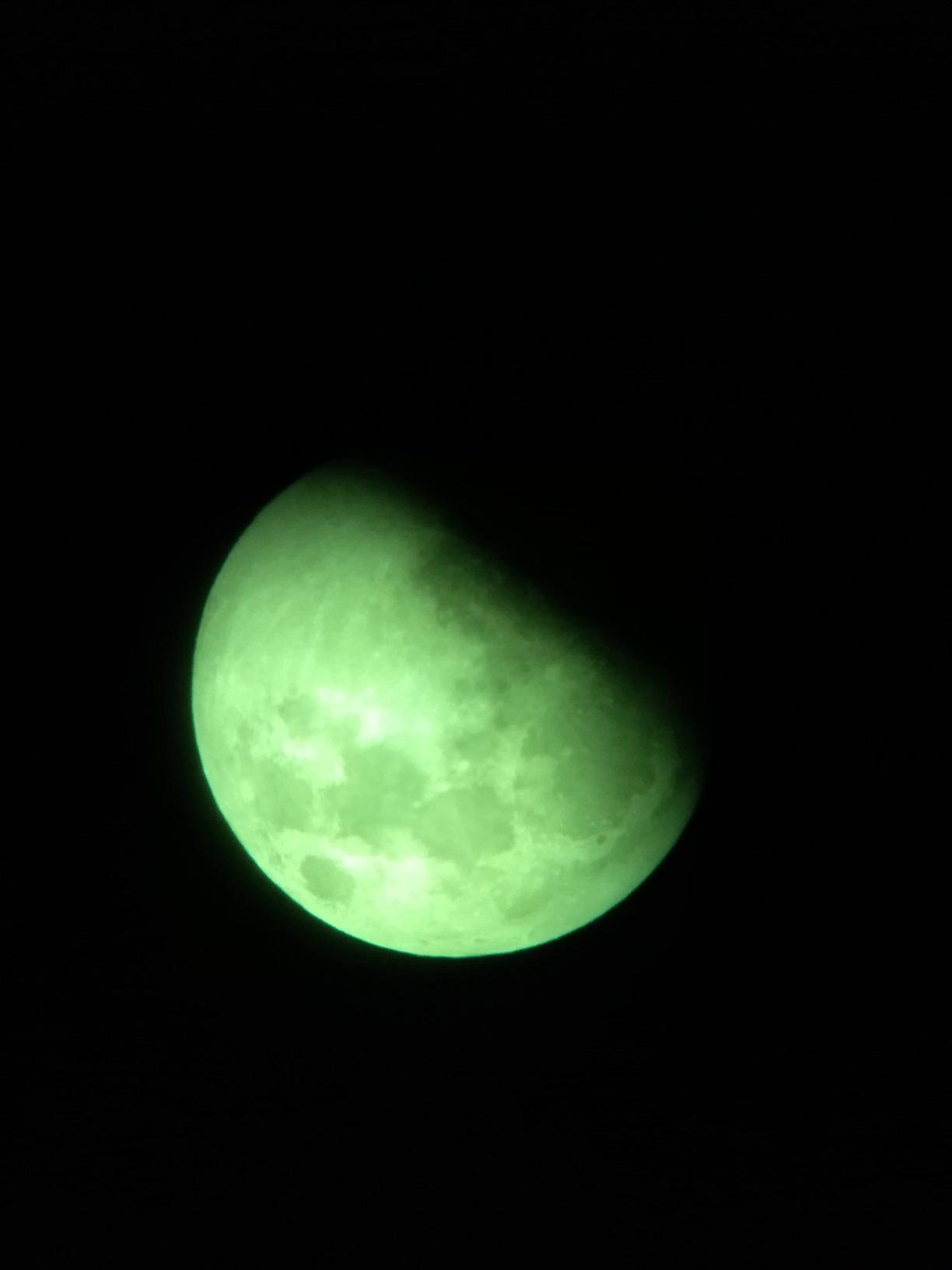
Is a 127mm reflector enough for deep sky objects?
Enough for the bright half of the catalogue. M42, M45, M13, and M8 are all clearly visible, and 1000mm of focal length makes planetary nebulae like M57 easy to isolate.
It will not reach the surface-faint galaxies that an 8-inch scope shows without effort. Consider this a first instrument that you grow out of rather than a final one.
Should you buy it new or used?
Used is attractive for this model because the optical tube is an inexpensive Newtonian and the build quality complaints are all in the mount and tripod, both of which are replaceable.
Do not buy a used Newtonian without checking collimation and mirror condition. A reflecting telescope with damaged or de-silvered mirrors loses a lot of light, and a laser collimator on site saves the transaction.
8. Sky-Watcher Skymax 102: Best Maksutov for High Contrast Deep Sky Detail
Sky-Watcher Skymax 102mm Maksutov-Cassegrain – Large Aperture Compound-Style Reflector Telescope
102mm aperture
1300mm focal length
f/12.7 Maksutov-Cassegrain
4.6 lb
1.25-inch accessories
Pros
- High-contrast views with dark backgrounds
- 94% reflectivity with quartz overcoat
- Compact fully baffled tube at 4.6 lb
- Vixen dovetail fits photographic tripods
Cons
- f/12.7 focal ratio favours planets over wide-field deep sky
- No mount included with the tube
The Skymax 102 holds the highest average rating of anything we assessed. Owners cite sharp, high-contrast images and a compact, well-baffled tube, and the Maksutov design really does deliver charcoal-black skies between objects.
At 1300mm and f/12.7, this is a narrow-field instrument. That is an advantage for planetary nebulae like M57 and the Dumbbell, where a tighter view separates the object from surrounding stars.
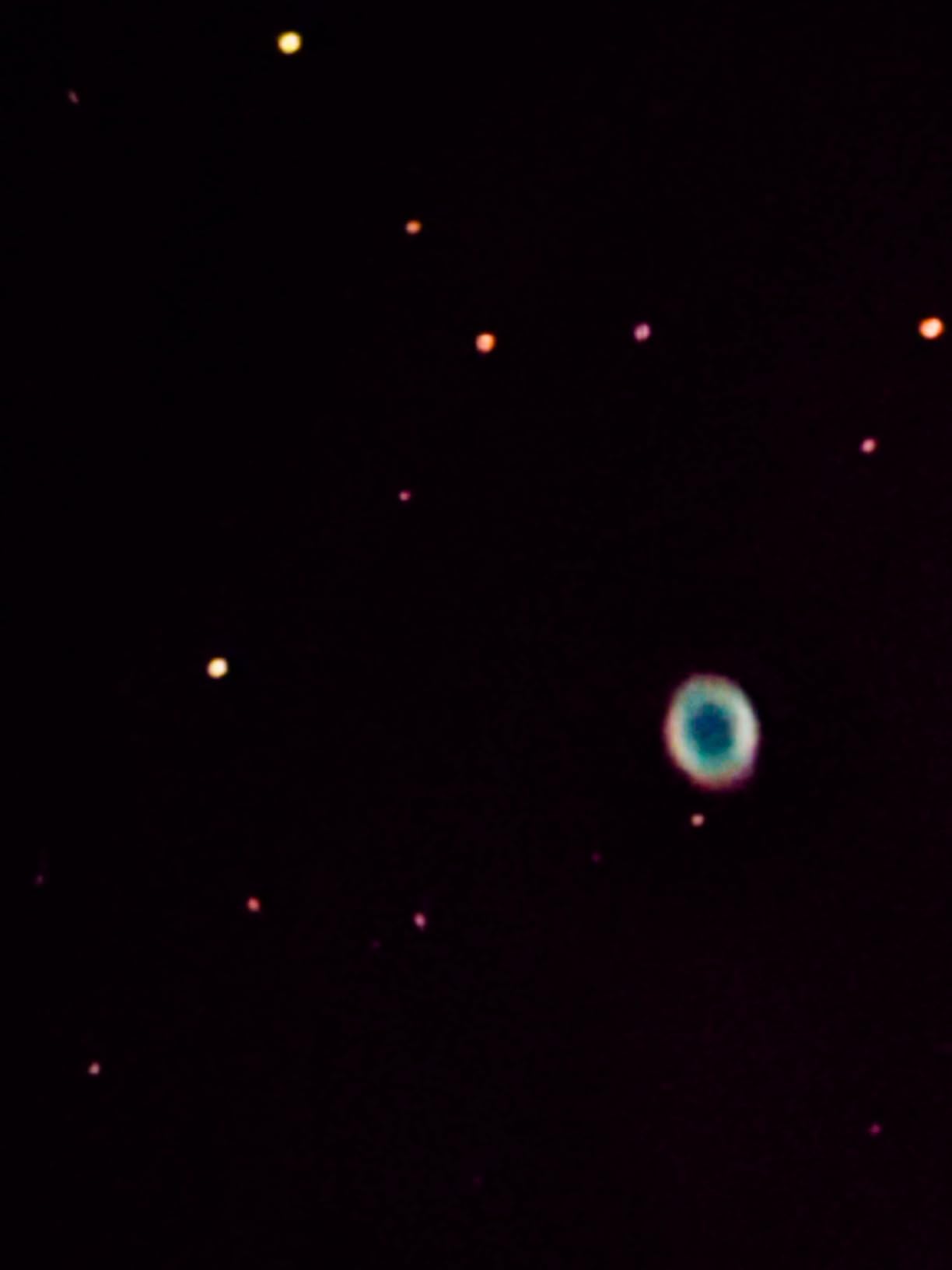
The fully baffled tube does real work against stray light, which matters more from a suburban backyard than most marketing suggests. The 94% reflectivity aluminium and quartz coatings give strong transmission for a 102mm aperture.
The main catch is that no mount is included. The Vixen-style dovetail and 1/4-20 threads let it sit on a standard photography tripod, which is the practical route for most people.

Is a Maksutov-Cassegrain good for deep sky?
Yes, for compact and moderately bright targets. The long focal length means a small, high-contrast field, and the coatings and baffling hold background sky dark between objects.
It is a poor wide-field sweep instrument. Faint, large emission nebulae are the wrong target for an f/12.7 design, no matter how good the optics are.
Can it be mounted for photography?
Easily, in a way a Dobsonian cannot be. The Vixen-style dovetail plus 1/4-20 tripod threads under each bar are designed for photographic mounts, and a padded carrying bag is included.
You supply the mount and the camera. Our computerized GoTo telescope guide covers the mount side of that pairing.
9. Gskyer 600x90mm Refractor: Best Setup-Free Telescope for Families
Gskyer Telescope 600x90mm AZ Astronomical Refractor Telescope for Adults
90mm aperture
600mm focal length
f/6.7 fully coated optics
1.6 degree field of view
17.5 lb
Pros
- No collimation needed so it works straight out of the box
- Sturdy stainless steel tripod with all-metal holders
- Includes three eyepieces a 3x Barlow and a finder
- Quick tool-free assembly
Cons
- 90mm aperture is small for faint deep-sky objects
- Low tripod forces taller users to crouch
- Visible vibration at high magnification
A refractor needs no collimation, and that single fact is why this scope still makes sense in a deep-sky guide. It works the moment you take it out of the box, which matters when the person using it is not the person who will maintain it.
At 90mm and f/6.7 the fully coated optics give clean views of the Moon and planets, and the 1.6 degree field is enough to frame the Pleiades nicely.
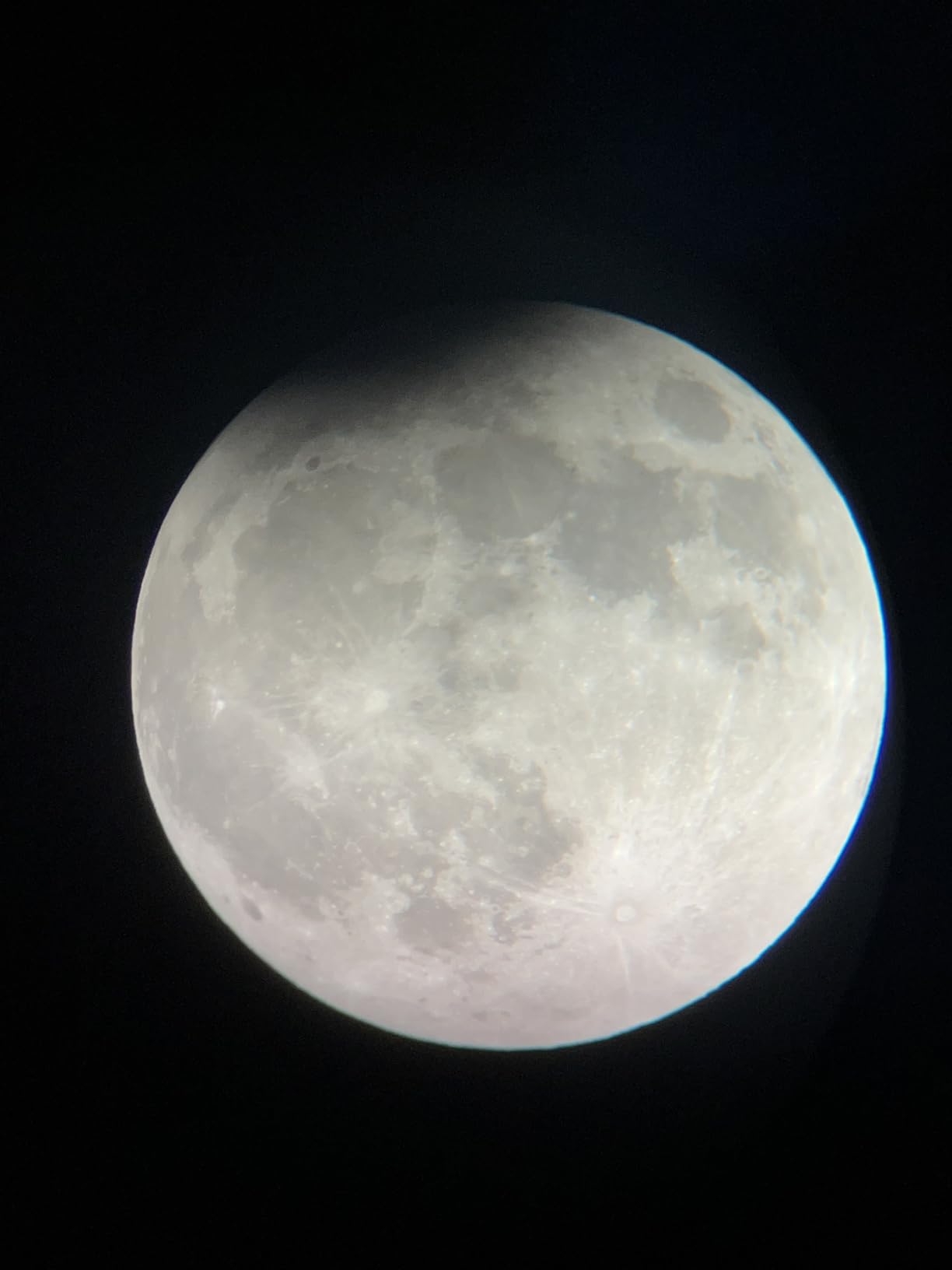
Where it stops is aperture. Galaxies and diffuse nebulae beyond the brightest are simply not reachable, and the three included eyepieces rated 24x, 60x and 120x push magnification well past what 90mm can support usefully.
That last point is the classic category error in this niche. High magnification on a small aperture produces a dim, soft image. On this scope the 24x is the one that earns its place.
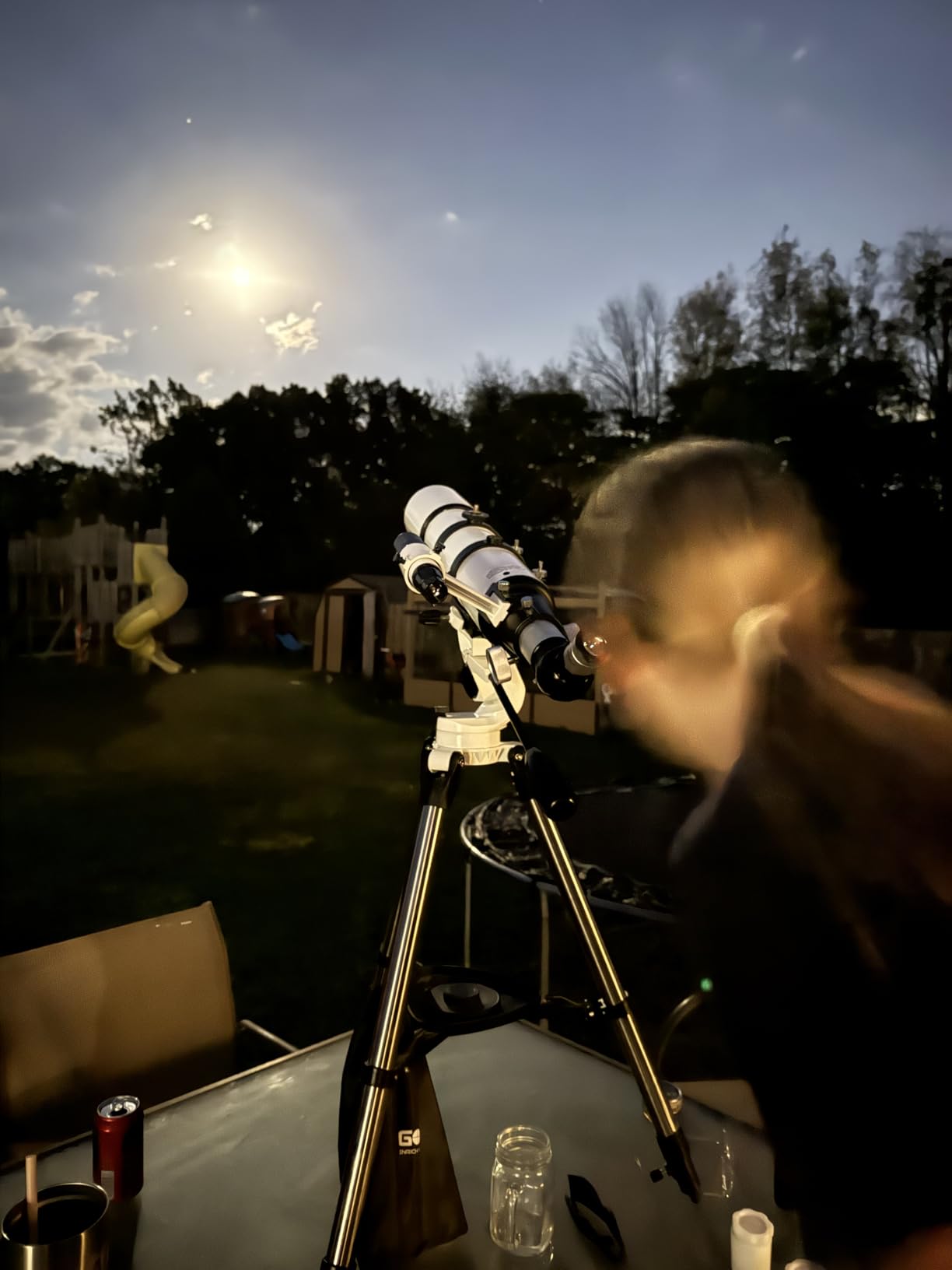
Can a 90mm refractor see galaxies and nebulae?
Some of them. The Orion Nebula, the Andromeda Galaxy, and the Pleiades are all visible. Faint galaxies, planetary nebulae, and anything requiring real surface brightness are not.
It is a lunar and planetary instrument that happens to see a few bright deep-sky targets. If deep sky is the actual goal, aperture wins every time.
Is it suitable for children?
It is quick to assemble with no tools and needs no adjustments that can be broken by unfamiliar hands. Many families use one as a shared first scope.
Our telescope guide for kids goes into the ergonomics side, and the low tripod height is the detail worth reading first.
How to Choose a Telescope for Deep Sky Viewing in 2026
Aperture: The One Number That Decides What You See
Aperture is the diameter of the primary lens or mirror. It sets both light-gathering power and resolution, and for deep-sky work light collection is the number that matters.
Light-gathering scales with the square of aperture, so doubling the diameter quadruples the light. That is why 8 inches is the practical target: it is the smallest aperture that shows the common galaxy and nebula catalogue with structure rather than as a smudge.
Here is the concept that ends most spec-sheet confusion. Surface brightness is how bright an extended object looks per unit area, and it does not improve when you add magnification. Exit pupil is the size of the cone of light arriving at your eye. Push magnification until the exit pupil falls below about 2mm and the image just gets dimmer.
Aperture sets how small an exit pupil you can use while keeping the view bright. Bigger aperture, smaller exit pupil at the same magnification, brighter image. That is the whole argument.
What Each Aperture Class Can Actually Reach
This is the list we wish more guides published. It is approximate, assumes decent optics, and moves significantly with sky darkness.
60mm refractor: the Moon, bright planets, the Pleiades, the Orion Nebula as a small bright patch, and a handful of bright clusters. Nothing faint.
90mm refractor: M42, M45, M31, M13, and M22. Faint galaxies start becoming visible from dark sites only.
102 to 114mm: the Orion Nebula with visible wings, the Andromeda Galaxy as an elongated smudge, M57, and the Dumbbell. Good small-scope deep sky.
127 to 130mm reflector: the Veil Nebula and large emission nebulae from good sites, M31, M33 from dark sites, dozens of globular clusters beginning to resolve.
150mm reflector: the Veil Nebula detail, the North America Nebula, low-surface-brightness galaxies starting to show.
8-inch Dobsonian or SCT: spiral structure in M31, M81 and M82, the Veil complex, M33 routinely, globular clusters into resolved swarms.
10-inch reflector: the Veil and North America nebulae in detail, M101, faint galaxy groups, noticeably brighter large nebulae from suburban skies.
12-inch reflector: the threshold where most of the NGC becomes available from a decent backyard.
Focal Length and Focal Ratio for Deep Sky
Focal ratio is focal length divided by aperture. Short focal ratios like f/4 to f/6 give wide fields and brighter images per unit of magnification. Long ratios like f/10 and f/12.7 give narrow fields and dark backgrounds.
For galaxies and sweeping clusters, shorter is better. For planetary nebulae and small bright clusters, longer is better. A 1200mm 8-inch Dobsonian sits at a useful middle of both worlds, which is why the community treats it as the all-round DSO scope.
Reflector, Refractor, Catadioptric or Smart Telescope
Reflectors give the most aperture per unit cost, which makes them the default deep-sky choice. They need periodic collimation.
Refractors need no collimation and give clean, high-contrast views, but aperture for money is poor, so they suit smaller instruments. Our refractor telescope roundup covers that category properly.
Catadioptrics, meaning Schmidt-Cassegrains and Maksutovs, are compact and sharp with high-contrast backgrounds. They cost more per inch of aperture.
Smart telescopes reach deep-sky objects as images rather than views. For portability and imaging they are hard to argue with, and as pure observing instruments they are a different experience.
Mounts: Manual, GoTo or Equatorial
A Dobsonian moves on altitude and azimuth with friction tension. It is the simplest reliable mount, and it holds objects well for visual work.
GoTo mounts slew to catalogued targets after an alignment. They cost more, need a reliable power source, and buy back real observing time if you hate star hopping.
German equatorial mounts track in right ascension and declination with slow-motion knobs. They are useful for visual work and necessary for long-exposure imaging, but they need a counterweight and careful balancing.
Eyepieces and the 2x Per Millimetre Ceiling
Useful magnification tops out around twice the aperture in millimetres, so an 8-inch scope peaks near 400x and a 130mm scope near 260x. Beyond that you are magnifying empty air.
Eyepiece focal length sets magnification: telescope focal length divided by eyepiece focal length. On the 1300mm Skymax, a 25mm eyepiece gives 52x and a 10mm gives 130x.
For an 8-inch Dobsonian at 1200mm, the pair that matters is one wide eyepiece around 25mm for sweeping and one mid-range around 10 to 13mm for smaller targets. The 15mm 68-degree wide-field type that comes up so often in forum discussions is a genuinely good all-rounder, and wide-field eyepieces are the single best upgrade for galaxies.
As for the eyepieces that ship in the box, treat them as placeholders. The 4mm supplied with the PowerSeeker is small and difficult to use, and the 3x Barlow is widely considered weak. Nobody keeps them long.
Collimation for Newtonian Owners
Collimation is adjusting the mirrors so their reflections line up. A Newtonian that drifts out of alignment gives soft, low-contrast images that no amount of aperture will fix.
The practical rule is simple: buy a laser collimator, spend ten minutes doing it properly, and check it every few sessions. Reviews that complain about disappointing views from Dobsonians and 127mm reflectors almost always come from owners who skipped this step.
Watch for the collapsible Dobsonians, where the tube can drift out of alignment after transport. That is a design trade for portability rather than a fault.
Light Pollution and the Bortle Scale
The Bortle scale runs from 1 for a pristine dark site to 9 for inner city. It predicts how much sky detail you will actually see, and it matters more to deep-sky observers than almost any other variable after aperture.
From Bortle 8 or 9 skies, you need 6 inches and patience, plus narrowband or UHC filters for emission nebulae. From Bortle 4 suburban skies, 8 inches is the practical floor and faint galaxies start working. From Bortle 1 to 2, a 6-inch scope already shows more than most people expect.
Budget roughly a stop of lost performance for every two steps worse in sky brightness. If you cannot change where you observe, aperture is the only real compensation, and a UHC filter is the cheapest partial answer.
What Not to Buy for Deep Sky
Do not buy a 70mm department-store refractor advertised as a deep-sky telescope. The category error is baked into the marketing.
Do not buy on magnification figures. The Gskyer’s 120x rating is meaningless, and marketing that pairs 300x with deep-sky suitability is selling a filter, not a view.
Do not buy a package whose eyepieces are plastic Kellners, or one with a wobbly mount bundled in. Save your effort by choosing the telescope rather than the bundle.
Do not buy an equatorial mount without external power unless it is purely visual, and do not skip the collimator for any Newtonian.
Frequently Asked Questions
What is the best telescope for viewing deep-sky objects?
An 8-inch aperture telescope is the best starting point for deep-sky objects, and the Celestron NexStar 8SE is our top pick because its GoTo mount points reliably at faint targets. If you want the same light-gathering for less money and do not mind star hopping, the Sky-Watcher Classic 200 8-inch Dobsonian collects the same light and costs far less.
What aperture do I need to see the Orion Nebula and Andromeda Galaxy?
A 90mm refractor shows both. A 130mm Newtonian shows the Orion Nebula with visible wings and the Andromeda Galaxy as an elongated smudge. At 8 inches you see spiral structure in Andromeda, and at 10 inches faint galaxy groups start appearing from suburban skies.
Is a Dobsonian telescope good for deep-sky objects?
Yes. A Dobsonian gives the most aperture per unit of money, and aperture is what governs deep-sky brightness. The trade is manual pointing, so you either learn star hopping or add a guide scope and motor drive. Budget for a laser collimator, because collimation is the real maintenance cost.
What eyepieces do I need for an 8-inch Dobsonian?
Two eyepieces cover almost everything: one around 25mm for sweeping wide fields of galaxies and open clusters, and one around 10 to 13mm for planetary nebulae and smaller clusters. A 15mm wide-field eyepiece is a good all-round addition. Ignore the included eyepieces after your first few sessions.
Do I need a GoTo mount for deep-sky viewing?
Only if you dislike star hopping. A GoTo mount with a large object database reliably centres faint targets, which saves real observing time on a cold night. A manual Dobsonian costs less and puts the savings into eyepieces, and experienced observers often learn to hop faster than a mount can slew.
Is there a better telescope than the James Webb telescope?
For observing, no ground telescope competes with what space observatories produce, because they sit above the atmosphere. For your own eyes, no instrument matches the experience of seeing M42 or M31 yourself. Expect faint grey smudges rather than the vivid colours in published images, since cameras accumulate light far longer than your eye can.
Our Final Deep Sky Verdict in 2026
The Celestron NexStar 8SE is the best telescope for deep sky viewing overall, because 8 inches of aperture and repeatable GoTo pointing is the combination that produces the most observing time per session. Buy it if you want the scope to find objects for you.
Buy the Sky-Watcher Classic 200 Dobsonian instead if you want the same aperture for less money and enjoy learning the sky. Step up to the 10-inch Flextube when faint nebulae are the goal, and choose a smart telescope such as the Seestar S30 Pro or DWARFLAB Dwarf Mini when portability and imaging matter more than looking through an eyepiece.
Whatever you pick, buy a laser collimator if it is a Newtonian, add two real eyepieces, and get the scope out of the house. The best telescope for deep sky viewing is the one you actually use under a dark sky in 2026.