
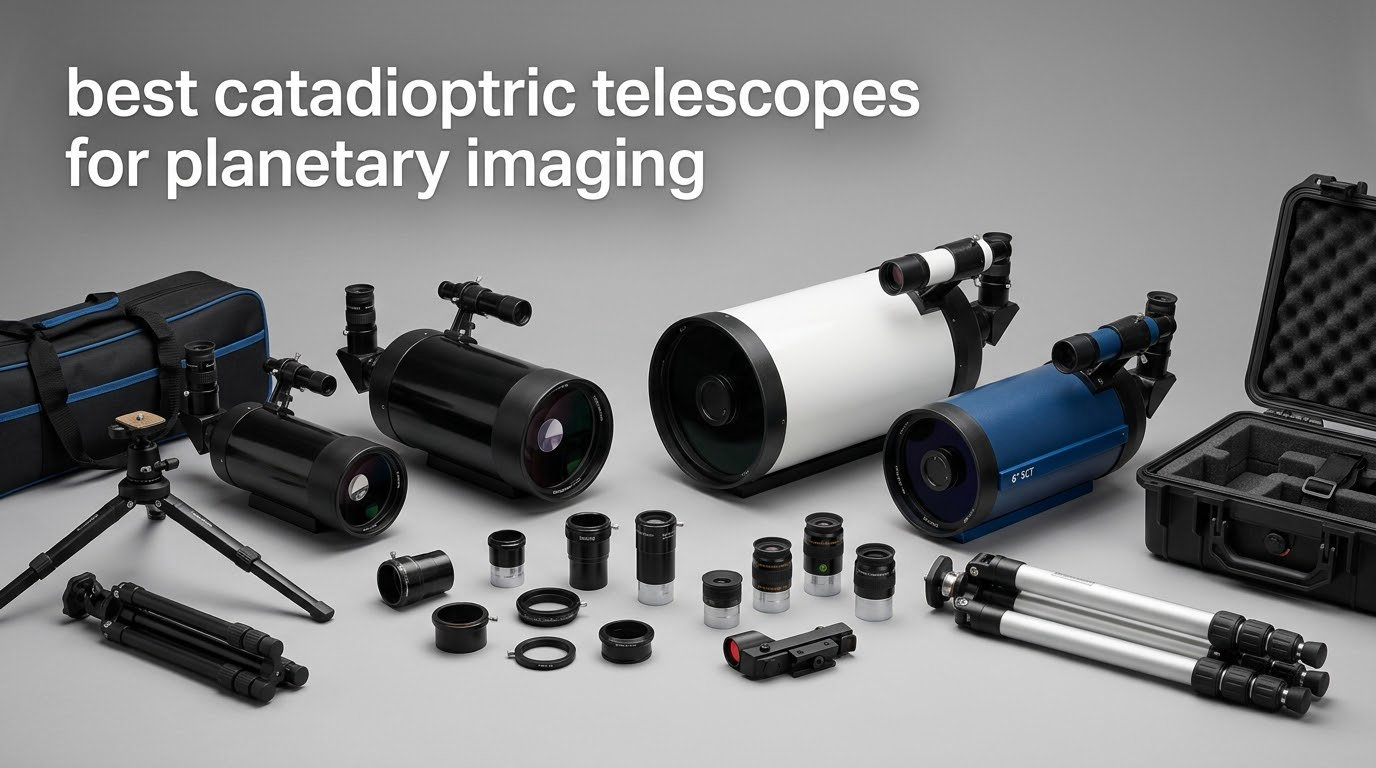
What is the best telescope for planetary imaging? For most people it is a catadioptric: a closed compound tube that packs a long focal length into a short, rigid body, so a small bright planet fills a high-frame-rate camera sensor and steady moments of atmosphere can be frozen into a finished image. Of the six best catadioptric telescopes for planetary imaging available now, the Celestron NexStar 8SE is the one we would put on a mount first.
That answer has a shape to it. A catadioptric uses a corrector plate or meniscus lens together with mirrors, which delivers a long focal length in a tube short enough to carry in one hand and a closed optical path that shrugs off dust and holds collimation after a car journey. Compare that with the alternatives in our refractor telescope guide, where aperture cost and chromatic aberration set the ceiling, or our Dobsonian telescope picks, where raw light grasp rules but tubes run long and mounts are chunky.
I have spent years around scopes that are sold as planet machines and then quietly do not deliver, so the six below were chosen on the numbers that actually decide a planetary frame: aperture, native focal length, focal ratio, obstruction and how well the mount holds still. Specifications come from the manufacturer listings and owner reviews, and every price-linked button on this page goes to the current listing. What we did not do is pretend to have run months of capture on all six in one backyard, because nobody does.
Table of Contents
Top 3 Picks for Planetary Imaging in 2026

Celestron NexStar 8SE
- 8-inch Schmidt-Cassegrain
- 2032mm focal length
- f/12.7 native
- 0.57 arcsec Dawes limit

Celestron NexStar 127SLT
- 127mm Maksutov-Cassegrain
- 1500mm focal length
- GoTo fork arm
- 0.91 arcsec Dawes limit

Celestron NexStar 4SE
- 4-inch Maksutov-Cassegrain
- 1325mm focal length
- Built-in wedge for polar alignment
- 1.14 arcsec Dawes limit
The 8SE wins on aperture and review depth. The 127SLT wins on the ratio of reach to effort, and the 4SE is the only one here with a built-in wedge, which makes it the least painful first step into actual imaging.
Quick Overview: Best Catadioptric Telescopes for Planetary Imaging in 2026
| Product | Specs | Action |
|---|---|---|
| Celestron NexStar 8SE Schmidt-Cassegrain |
|
Check Latest Price |
| Celestron NexStar 127SLT Maksutov-Cassegrain |
|
Check Latest Price |
| Celestron NexStar 4SE Maksutov-Cassegrain |
|
Check Latest Price |
 Sky-Watcher Skymax 102mm Maksutov-Cassegrain Sky-Watcher Skymax 102mm Maksutov-Cassegrain |
|
Check Latest Price |
 SVBONY MK105 Maksutov-Cassegrain SVBONY MK105 Maksutov-Cassegrain |
|
Check Latest Price |
 HOROX 80mm Maksutov-Cassegrain Travel Telescope HOROX 80mm Maksutov-Cassegrain Travel Telescope |
|
Check Latest Price |
Four of these six are Maksutov-Cassegrains, which is not an accident. In this particular group the Mak models dominate the portable end while the single 8-inch Schmidt-Cassegrain anchors the aperture end. That split mirrors the wider catadioptric market, where long-reach Maksutovs are the default and Schmidt-Cassegrains take the large-aperture end.
1. Celestron NexStar 8SE – The 8-Inch All-Rounder
Celestron NexStar 8SE Computerized Telescope – Schmidt-Cassegrain
8-inch Schmidt-Cassegrain
2032mm at f/12.7
0.57 arcsec Dawes limit
StarBright XLT
Pros
- Resolves fine lunar detail and Jupiter cloud bands in a compact package
- Computerized GoTo with 40000 plus object database
- SkyAlign gets you running in minutes by centering three bright objects
- StarBright XLT coatings hold contrast on planetary targets
- Full range of Celestron accessories available for upgrades
Cons
- Single fork arm mount is awkward for long imaging sessions
- Manual focus only with no motorized focusing
- Needs 8-AA batteries or an external power source for long sessions
- Steep f/12.7 ratio needs a Barlow or reducer for imaging
The NexStar 8SE is the scope I keep coming back to. Eight inches of aperture in a 43.2cm tube, 2032mm of focal length, and a listed Dawes limit of 0.57 arcseconds means Jupiter’s belts and Saturn’s rings are the first things you will see properly at high power. Owners consistently report crisp lunar and planetary detail, with roughly 70 percent of reviews at five stars.
The computerization is the part that surprises people. A 40,000-plus object database with automatic slewing and tracking means Saturn is two button presses away instead of twenty minutes of star-hopping, and SkyAlign alignment uses any three bright objects rather than a polar star and a compass. For imaging, that tracking is genuinely usable at planetary frame rates where a manual mount is not.
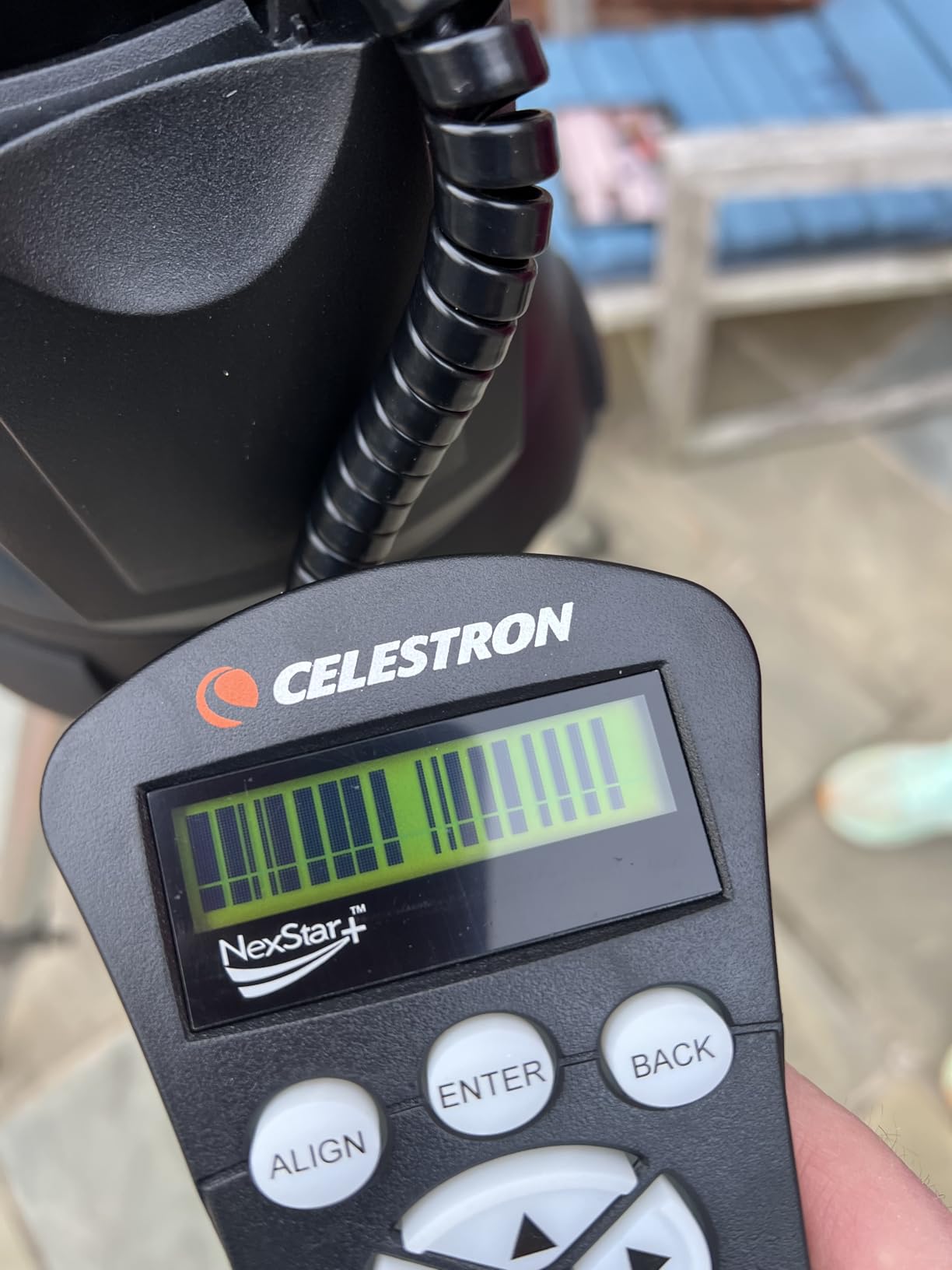
What you give up is fork-arm ergonomics. The single arm has to swing the whole 8-inch tube around, which is fine for an evening of visual observing and awkward when you want the tube to sit still for an hour while you stack frames. Reviewers also flag that focus is manual, so fine planetary adjustments mean working the focus knob by hand at high magnification.
Power is the other quiet constraint. The specification lists 8-AA batteries, a 12V AC adapter or a Celestron PowerTank, and none of those are included in the box. A long capture session on alkaline cells is a plan that ends early, so budget for a power supply if imaging is the plan rather than an occasional experiment.
Camera pairing and image scale
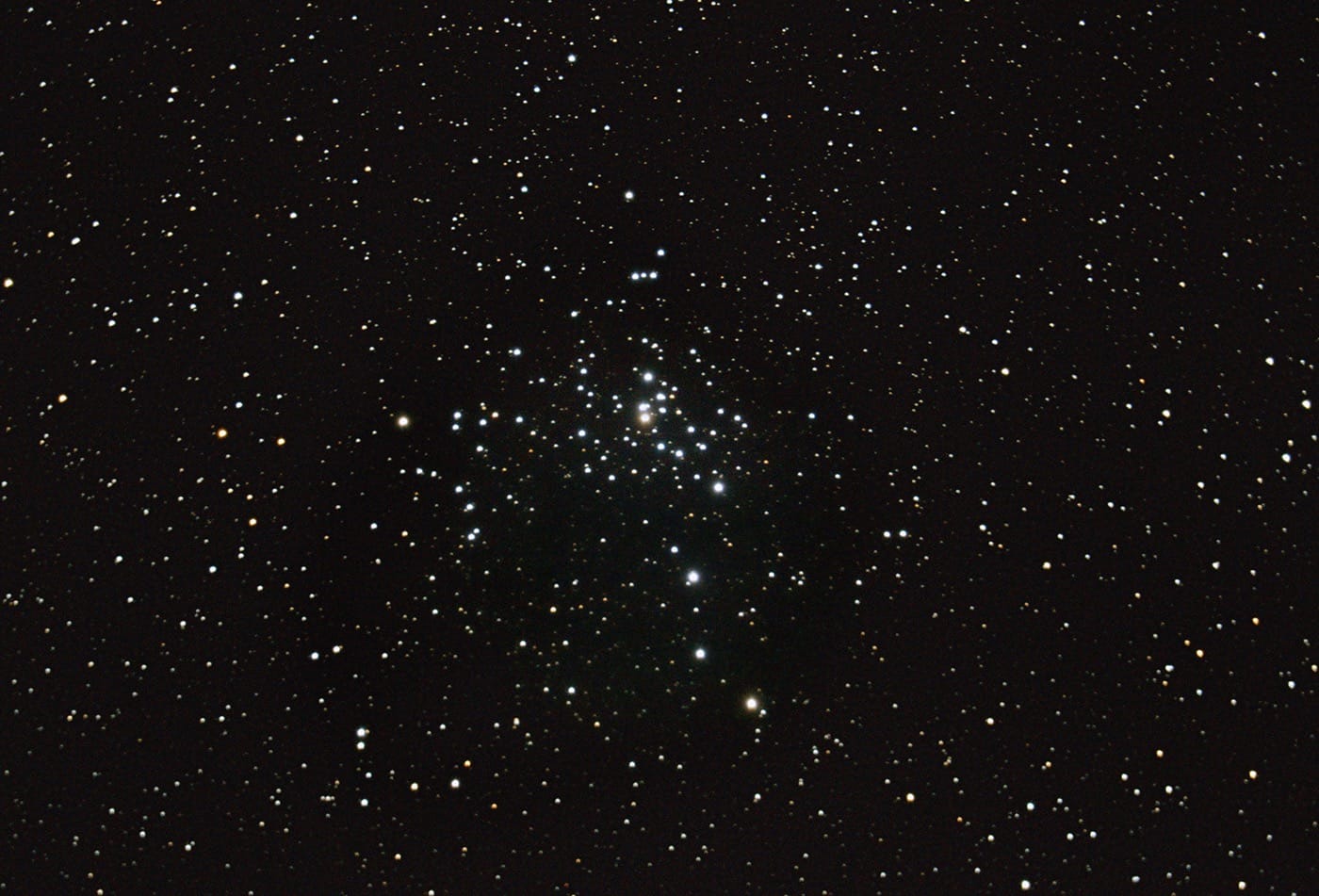
At 2032mm the 8SE is one of the longer-reaching options in this list, and that is exactly what a planetary camera wants. A small sensor needs focal length, not field of view, so the ratio of pixels to arcseconds is favourable before you add any Barlow. If your target is Jupiter, the 2032mm native length puts the planet across a comfortable stretch of frames without an amplifier crowding the chip.
A 2x Barlow takes this scope to roughly 4000mm, which is the classic high-resolution planetary configuration. Check focuser travel first though: on a long catadioptric focal length, a Barlow plus an adapter can run you out of inward travel, and the fix is a focal reducer rather than a bigger stack. The listed field of view for the included 25mm eyepiece is 0.75 degrees, a reminder of how narrow the visual field is at any real magnification.
Mount, power and cooldown realities
The single fork arm is rated for an 8-inch tube and will hold it, but there is a real vibration story here that forum regulars raise constantly about bundled mounts on C6 and C8 packages. For serious high-frame-rate work, a sturdier equatorial or harmonic-driven mount is the standard upgrade, and it is also what removes the constant frame-drift you would otherwise blame on the air.
Because the tube is closed and the corrector is thick, give it 30 to 45 minutes to reach ambient temperature before judging focus. Cooldown matters more on an 8-inch than a 4-inch because the front glass is a larger heat reservoir. Our computerized GoTo telescope guide covers the mount classes that pair well with tubes of this weight.
2. Celestron NexStar 127SLT – The Best-Value Grab-and-Go Mak
Celestron NexStar 127SLT Maksutov-Cassegrain Computerized GoTo Telescope
127mm Maksutov-Cassegrain
1500mm focal length
0.91 arcsec Dawes limit
Fully coated optics
Pros
- Shows Saturn rings
- Jupiter cloud bands and lunar craters in good detail
- GoTo mount with 40000 plus objects finds and tracks targets
- Compact and light enough to move to a dark sky site
- SkyAlign setup in minutes using three objects
- Comes with 20mm and 9mm eyepieces plus Starry Night software
Cons
- Fully coated optics give slightly less contrast than multi-coated alternatives
- Alt-az fork mount needs a wedge for long-exposure imaging
- Manual focus only
- Included 9mm eyepiece is a starting point rather than a high-resolution set
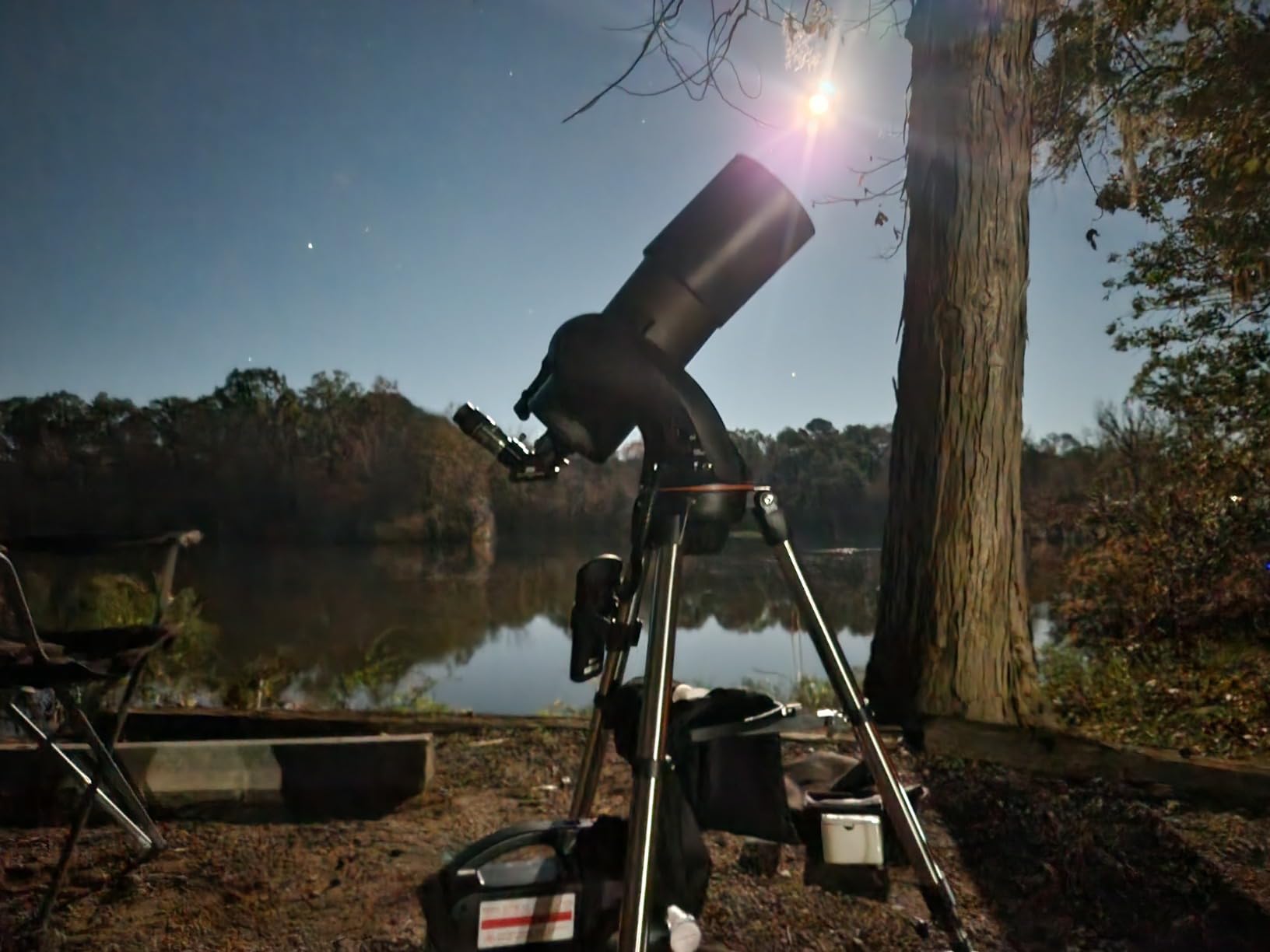
Here is the argument for the 127SLT in one line: 1500mm of focal length in a 27-inch tube that you can carry up a flight of stairs by yourself. As a Maksutov-Cassegrain it has no chromatic aberration at all, so the whole aperture stays useful on a target where colour fringing would otherwise be the limiting factor.
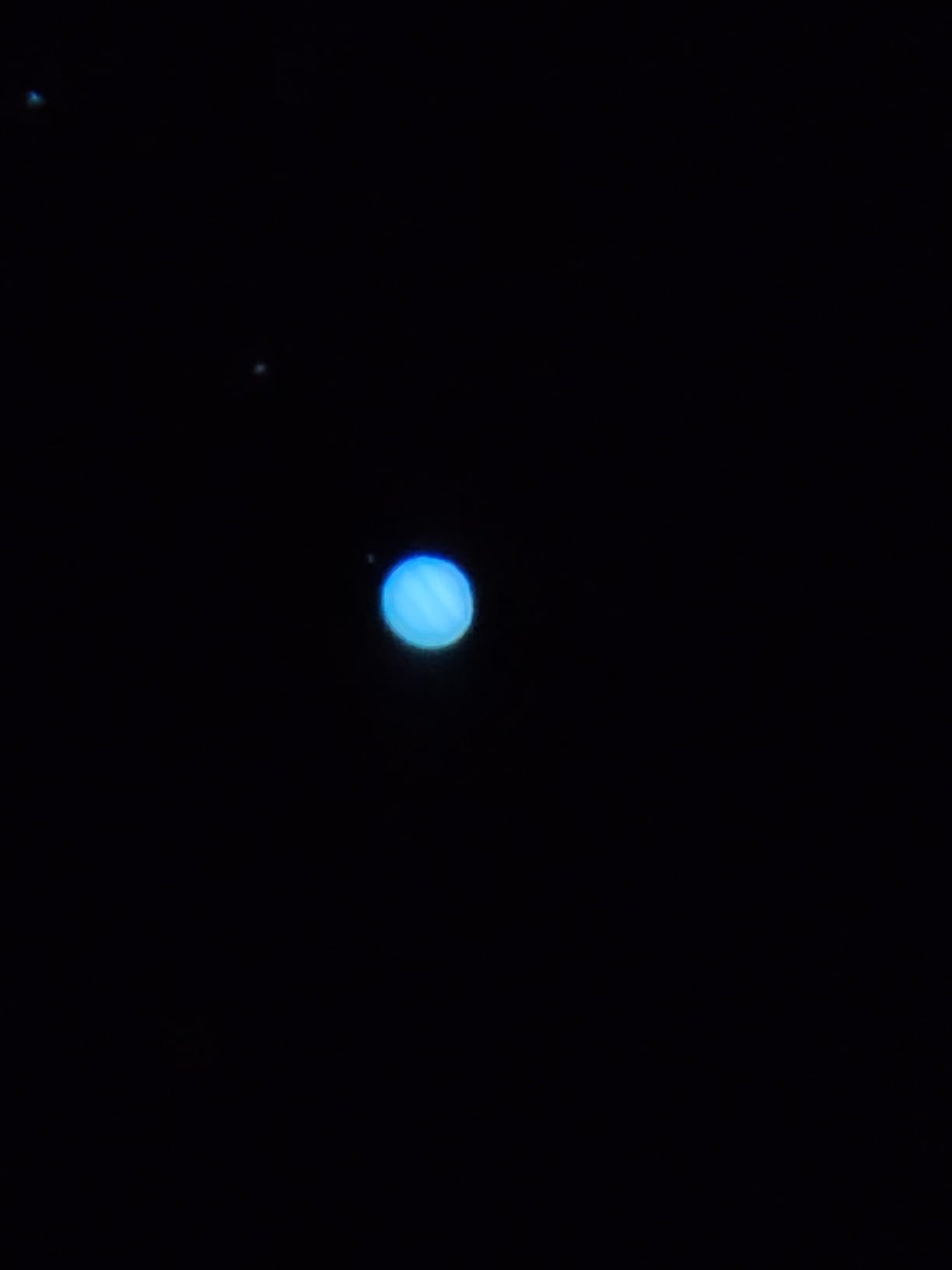
Owner reviews describe it as a genuine grab-and-go planetary telescope, with about two thirds of ratings at five stars. Saturn’s rings, Jupiter’s cloud bands and lunar craters all resolve, and the listed Dawes limit of 0.91 arcseconds tells you where the detail ceiling sits before the atmosphere does.
The coatings are the trade. These are fully coated, not multi-coated, and reviewers who have used both say the difference in planetary contrast is real but modest. On Jupiter and Saturn, where brightness is not the constraint, that is a small price for the portability.
The included 9mm eyepiece gives you a genuine high-power starting point, though owners planning to image tend to move to their own eyepieces and a Barlow quickly. Note also that the alt-az fork has no wedge in the box, so planetary video works fine but deep-sky imaging does not without a separate accessory.
Handling and transport
At 18.1 pounds for the whole package, this is the scope that gets carried to a dark site rather than dragged. A Maksutov’s closed tube means it arrives at the site still collimated, which removes the star-test ritual that an open truss Newtonian would demand in the cold. That single fact is why so many planetary imagers end up owning one of these even when a larger scope sits at home.
The flip side is that fork arm again. It swings a 5-inch tube rather than an 8-inch one, so it is far less awkward than the 8SE, but the tracking is still alt-az, so field rotation appears the moment you stack long exposures. For 10,000-frame planetary video at a fraction of a second each, rotation is not a practical problem.
Focal length matched to a planetary camera
1500mm is a very natural match for a small-sensor planetary camera, and this is where a Maksutov earns its reputation. On a forum thread about small-aperture catadioptrics, observers on Reddit’s r/telescopes note that Maksutovs rank a close second to refractors for planetary work, and that below about 25 percent central obstruction the difference is barely noticeable. This tube sits comfortably in that territory.
At a 1.7 degree field of view with the supplied eyepieces, the framing is tight and planet-centred, which is what you want when a camera chip, not an eye, is sampling the sky. Add a 2x Barlow only if your focuser has the inward travel to accept it.
3. Celestron NexStar 4SE – Small Aperture With a Built-In Wedge
Celestron NexStar 4SE Maksutov-Cassegrain GoTo Telescope
4-inch Maksutov-Cassegrain
1325mm focal length
1.14 arcsec Dawes limit
StarBright XLT
Pros
- Long focal length gives sharp high-contrast Moon and planet views
- Built-in wedge allows polar alignment for entry-level imaging
- GoTo mount with 40000 plus objects and SkyAlign setup
- Compact and easier to transport than larger Schmidt-Cassegrains
- StarBright XLT multicoatings improve contrast on planetary targets
Cons
- 4-inch aperture limits resolution and light grasp versus 6-inch and 8-inch models
- Built-in wedge is minimal for anything beyond short exposures
- Manual focus only
- Comes with a single 25mm eyepiece
The 4SE solves a problem no other scope here solves: getting a new owner from visual observing to a polar-aligned imaging rig without buying a second piece of hardware. The built-in wedge is the whole story. It tips the fork into equatorial mode, which cuts field rotation for short exposures, and the wedge is included with the tube, tripod and hand control.
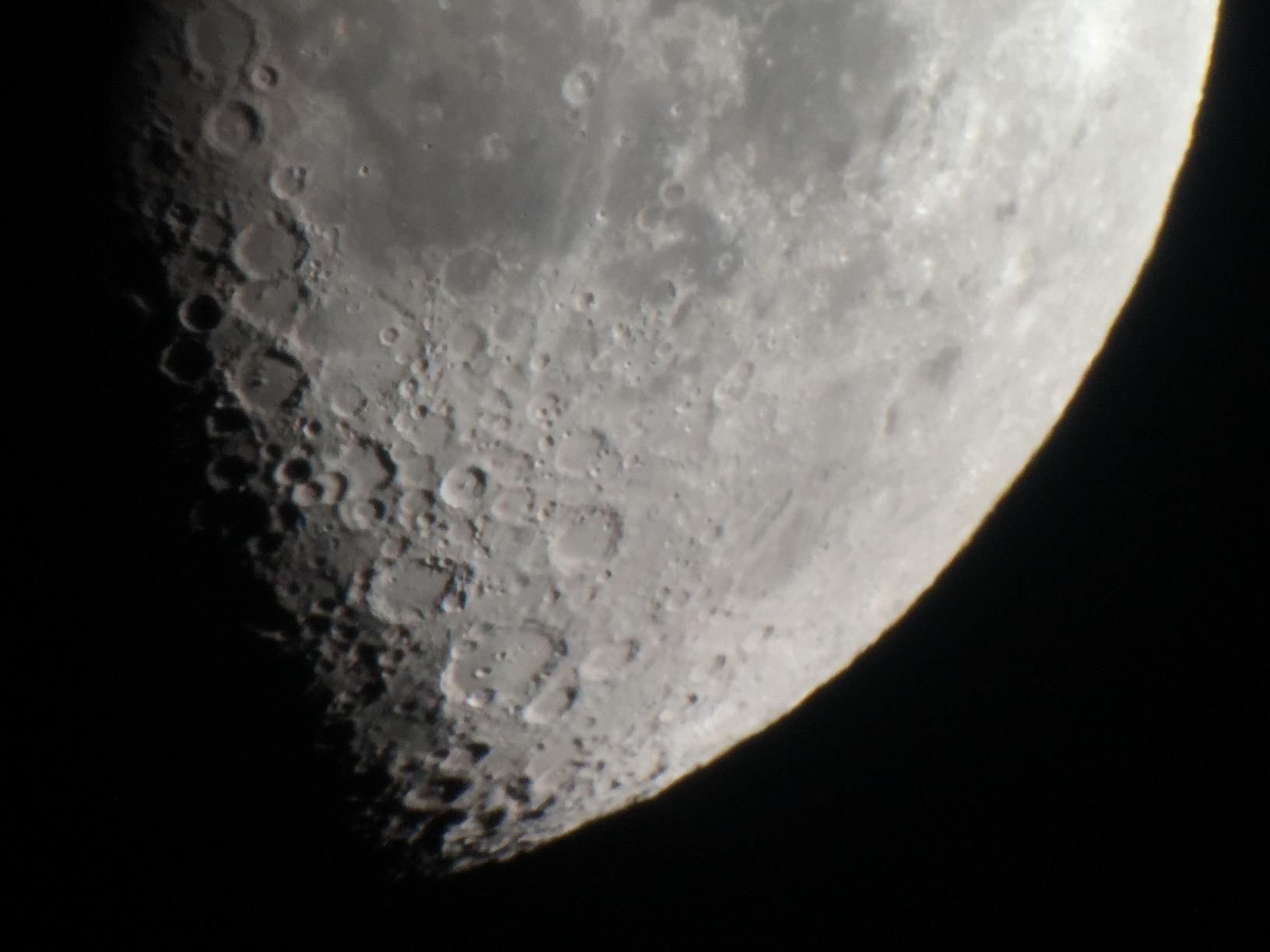
Optically it is a 4-inch Maksutov-Cassegrain at 1325mm with StarBright XLT multicoatings in a 34.3cm tube. That focal length is longer than most people expect from a 4-inch, and it is why the scope produces sharp, high-contrast views of the Moon and planets rather than merely bright ones.
Owners rate it highly, with about 69 percent of five-star reviews, and the portability is genuinely easier than a Schmidt-Cassegrain of similar reach. SkyAlign gets the mount aligned in minutes using three bright objects, which matters more for a first-time owner than any spec line.
The limits are honest ones. A 4-inch aperture has less light grasp and less resolving power than a 6-inch or 8-inch, so the finest detail on Jupiter during a good night stays out of reach. And the 25mm eyepiece in the box is a low-power starter, so higher-power planetary eyepieces become an early purchase.
What the built-in wedge actually buys you
Enough to make short exposures work without an accessory, which for a beginner is a real saving in both money and frustration. It is not enough to pretend the scope is a deep-sky imaging instrument, and experienced imagers report that anything beyond short frames still wants a heavier equatorial mount.
For planetary work specifically, the wedge matters less than it does for galaxies, since frames are a fraction of a second long. Even so, having polar alignment available means a beginner can grow into lunar and planetary imaging without changing hardware mid-season.
When a 4-inch aperture stops being enough
Saturn’s rings and Jupiter’s belts are well within reach of this scope, and reviewers confirm good views of both. The ceiling arrives on the smaller targets: Uranus’s disc, Neptune’s colour, the Cassini Division on a steady night, or the finer lunar terminator detail that rewards aperture.
The listed Dawes limit of 1.14 arcseconds is a useful expectation-setter. That is a theoretical number, and real atmospheric seeing rarely delivers it, but it tells you a bigger tube buys you the next tier of detail that a 4-inch simply cannot reach. A step up to 127mm doubles the aperture for a modest jump in focal length.
4. Sky-Watcher Skymax 102mm – The Rating Leader for Grab-and-Go Tubes
Sky-Watcher Skymax 102mm Maksutov-Cassegrain – Large Aperture Compound-Style Reflector Telescope
102mm Maksutov-Cassegrain
1300mm focal length
94 percent reflectivity primary
Fully baffled tube
Pros
- 94 percent reflectivity borosilicate primary with quartz overcoat
- Fully baffled tube keeps stray light off the image
- Vixen-style dovetail accepts most equatorial mounts
- Best average rating in this group at 4.5
- Includes 10mm and 25mm eyepieces plus red dot finder and 90 degree diagonal
Cons
- Optical tube only with no mount or tripod
- No batteries for the red dot finder
- Long f/12.7 ratio needs a Barlow or reducer
- Manual focus only
Owners give this tube a 4.5 average, the highest rating of the six, and the reason is in the optics. The borosilicate primary with aluminum coating and quartz overcoat is listed at 94 percent reflectivity, and reviewers single out the contrast-rich, chromatic-aberration-free views as the stand-out quality.
At 4.6 pounds and 1300mm of focal length, this is a genuinely different proposition from the three Celestrons above. This is not a telescope, it is a tube, and that is a feature when you already know what you are doing. It drops onto a Vixen-style dovetail and behaves like a serious imaging instrument rather than a starter kit.
The fully baffled tube is worth a note. Internal baffles keep stray light off the eyepiece, which on a bright planet at high magnification is the difference between seeing cloud detail and seeing glare, and it is a feature the generic budget alternatives often leave out.
The honest catch is the bundle. You get a red dot finder, a 90 degree star diagonal, 10mm and 25mm eyepieces and a padded carrying case, but no mount, no tripod and no finder batteries. Users treat the Vixen dovetail and straightforward mounting as good value precisely because they already had a mount to pair it with.
Choosing a mount for the dovetail
The dovetail bar is the industry-standard Vixen plate with quarter-inch 20 tripod threads under each bar, so it accepts most equatorial mounts and sturdy photo tripods. At 4.6 pounds you are not load-limited, which means a mid-class mount with smooth tracking will not be the weak link in the chain.
That matters more than usual for planets. Reviewers on Cloudy Nights and r/telescopes repeatedly make the same point about catadioptrics in general: a good optical tube on a mediocre mount produces drift you spend the whole evening fighting. Our Dobsonian telescope roundup covers the alt-az mounts that work acceptably for high-power planets, and the same class suits this tube.
Where 1300mm sits for a planetary camera
At 1300mm the Skymax lands almost exactly where the 127SLT does, in the sweet spot for a small high-frame-rate sensor. It is a long reach for a 4-inch aperture, which is precisely the Maksutov argument: high magnification from focal length rather than from aperture and focal ratio, and a folded light path that keeps the tube compact.
The listed zoom range of 52x to 130x understates what the tube can do, since the 10mm eyepiece on 1300mm is roughly 130x before any Barlow. If you pair it with a 2x, the constraint becomes focuser travel rather than optics, so check that before committing.
5. SVBONY MK105 – A 105mm Mak Built for Imaging Mounts
SVBONY MK105 Maksutov-Cassegrain Telescope, 105mm Catadioptric Telescope
105mm Maksutov-Cassegrain
1365mm focal length at f/13
Up to 210x magnification
OTA only
Pros
- Reflective design is completely free of chromatic aberration
- 1365mm at f/13 suits planetary and lunar work
- Multi-layer aluminum primary and electroplated secondary for contrast
- Built-in and exposed dovetail bases plus a 160mm 75 degree plate
- Users report smooth focuser with no image shift
Cons
- Optical tube only with no eyepieces or mount included
- Some units reported as shipped out of collimation
- Detectable spherical aberration softens high-power focus
- Needs a long thermal acclimation period
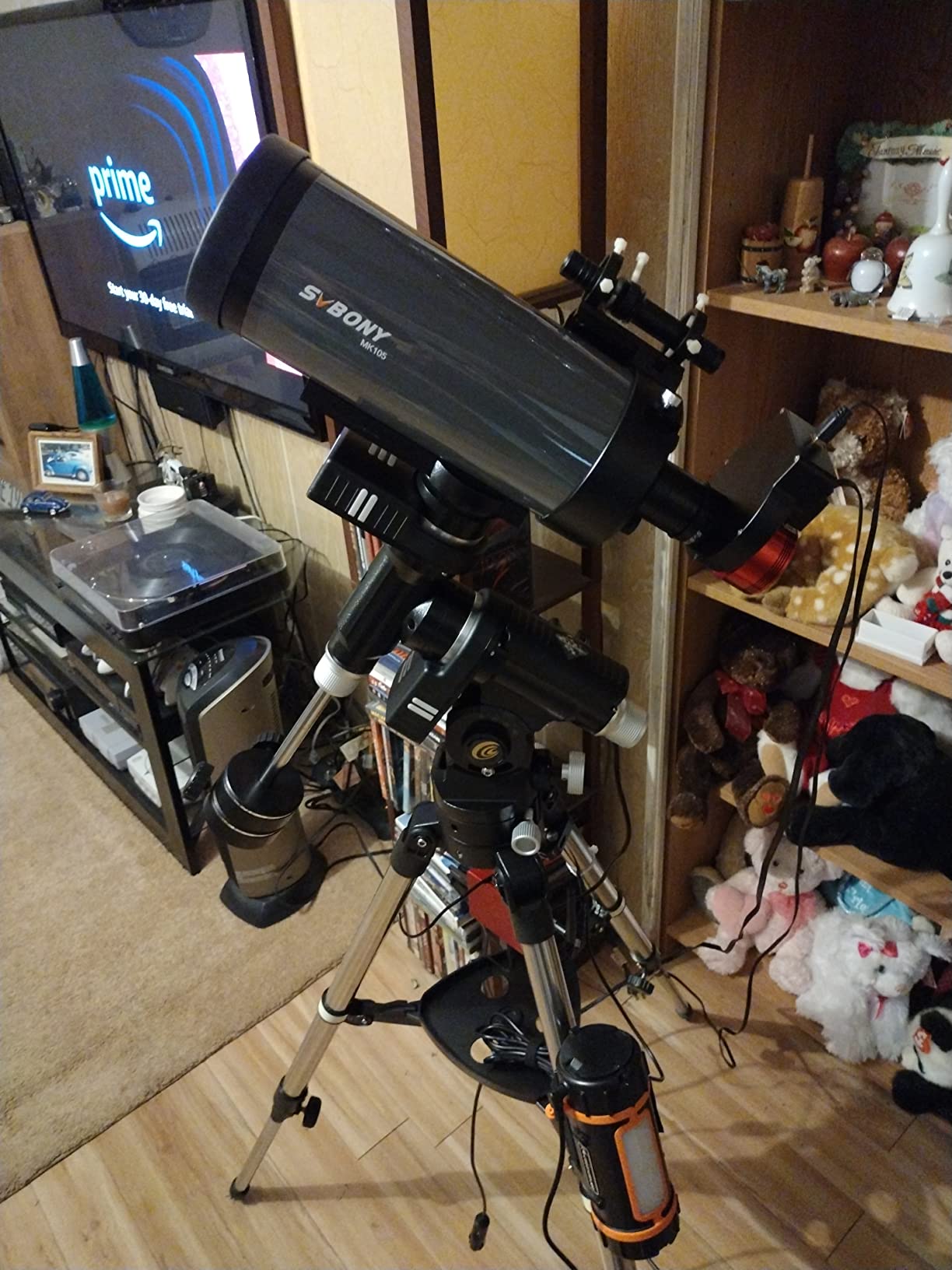
The MK105 is the most explicitly imaging-shaped tube in this group. 105mm of aperture, 1365mm of focal length at f/13, and a 210x maximum magnification rating, with a tapered extinction tube design intended to suppress stray light. Owners who have used achromats report the aberration-free view is competitive with slightly larger glass.
Mounting is where it separates from the alternatives. You get one built-in and one exposed dovetail slot plus a 160mm 75 degree dovetail plate, and the barrel carries an M42x0.75 adapter thread suitable for T-rings. In plain terms, this is a tube designed to be bolted to a mount and a camera rather than passed around at a star party.
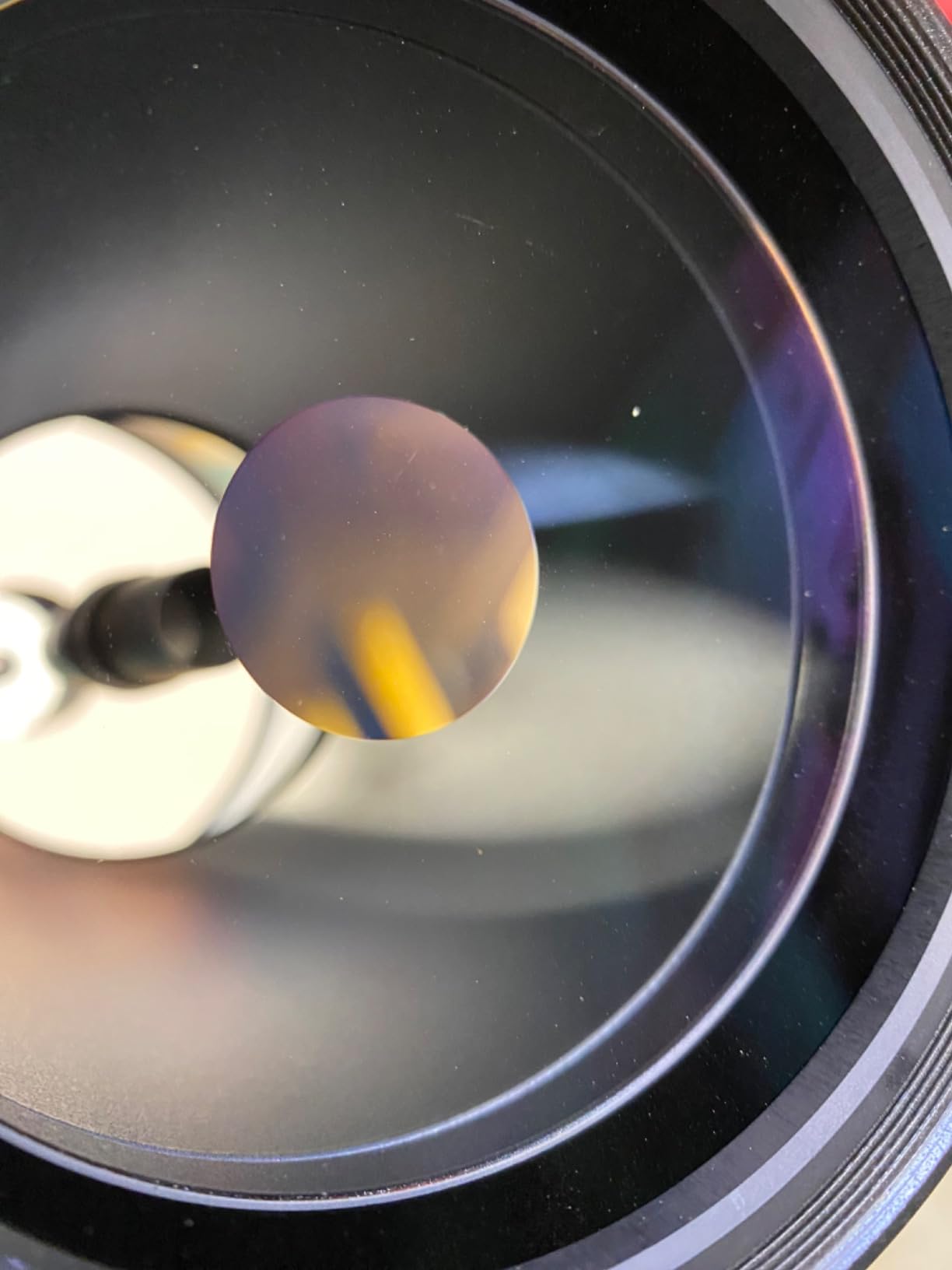
The focuser is a genuine strength. Multiple owners describe it as very smooth with no image shift, and that matters more in high-frame-rate planetary video than it does in any other imaging discipline, because a shifted frame discards the sharpest exposures you captured.
Consistency between samples is the real concern raised by experienced observers. Some samples reportedly arrive out of collimation, and some show enough spherical aberration to soften the focus on Jupiter and the Moon. If you buy this, collimate it properly before your first serious night rather than assuming it left the factory perfect.
Collimation and back focus on this tube
Maksutovs are the awkward member of the catadioptric family for collimation, and Cloudy Nights regulars make that comparison directly: an SCT is easier to collimate than a Mak. The meniscus corrector, primary and secondary all have to line up, and drift is common after transport or a temperature change.
On this tube specifically, the M42x0.75 thread and the smooth focuser make back focus straightforward to set, and a collimation-capable focuser would be the sensible addition. Budget for a laser collimator, and re-check after any car journey rather than trusting the factory state.
What 210x really means in practice
The 210x figure is a maximum rating, not a useful working number. It assumes excellent eyepieces and near-perfect atmospheric seeing, and in practice the usable ceiling on a 105mm Maksutov is set by turbulence long before diffraction does. Treat it as headroom rather than a target.
At f/13 with a folded path, high magnification is achievable, but the 1365mm focal length also means narrow framing. A 1.32 degree field of view with the supplied eyepiece class means Jupiter fills the frame and a Barlow takes you past that comfortably. The tapered extinction tube is a sensible bit of engineering to have here, since a high-power planetary image shows any stray light immediately.
6. HOROX 80mm – The Travel Scope That Fits in a Backpack
HOROX Maksutov-Cassegrain Telescopes for Adults Astronomy, 80mm Aperture 850mm Catadioptric Compound Telescope, Compact Portable Travel Telescope, w. Pro Tripod & Phone Adapter
80mm Maksutov-Cassegrain
850mm focal length at f/10.6
22cm folded optical tube
Tripod and phone adapter included
Pros
- 850mm focal length in a tube measuring only 22cm
- Aluminum OTA properly supports the thick meniscus corrector
- Twin slow-motion controls on both axes
- Includes 10mm and 20mm eyepieces plus finder and phone adapter
- Usable in daylight as a telephoto lens
Cons
- Focusing is very sensitive with small turns snapping in and out
- Included 5x24 finder is a basic unit
- Light tripod shakes with legs extended
- Scope mounts off-center creating an imbalance
- No star diagonal included
The HOROX does one thing better than anything else here: it collapses to something you can genuinely travel with. 850mm of focal length in a 22cm folded optical tube, against roughly 85cm for an equivalent refractor, and the whole package packs back into its own box. Owners confirm strong value and surprisingly good Moon and Saturn views from the supplied eyepieces.
It is also a complete package rather than a tube. The reinforced aluminum tripod, phone adapter, 5×24 finder scope, two eyepieces and a handle all arrive together, which makes it the least assembly-heavy option in this list and an easy first telescope for a family. Our telescopes for kids guide covers the situations where that kind of all-in-one design pays off.

The build is better than the specification suggests in one respect that matters: the aluminum optical tube properly supports the thick meniscus corrector that generic budget scopes often flex. Sharp pinpoint stars are reported consistently, which means collimation and tube rigidity are not the weak link here.
What is weak is the hardware around the optics. The recurring criticisms are a very sensitive focuser where small turns snap in and out of focus, a basic finder that needs daylight alignment, and a tripod light enough to shake with its legs extended. Reviewers suggest working on a table with legs retracted, which is honest advice rather than a workaround.
Tripod and vibration limits at high power
At 4.23kg the whole assembly is not heavy, but the tripod is light, and light tripods transmit every footstep and gust. High magnification is where that shows: the image shimmers when you touch the table, which at planetary power can end a capture run.
The scope also mounts off-center on the tripod head, creating an imbalance that owners report as a tip-over risk. That combination, plus twin slow-motion controls that make target acquisition workable, defines the realistic use: lunar and bright-planet observing, phone snapshots, and beginner sessions where steadiness matters more than resolution.
Where 850mm falls short
At f/10.6 with 850mm of focal length, it is the least reach in the group, and it is enough for the Moon and the obvious planetary views but not for high-resolution work on smaller targets. The listed 5mm exit pupil sits in the range where you are using the whole aperture, which is right for a bright planet but caps faint deep-sky detail.
There is no star diagonal in the box, so the view is inverted for a beginner, and the 10mm and 20mm eyepieces cap your power. If your goal is genuinely advanced planetary imaging, this is a travel and introduction scope; if it is the first telescope and the planets are the target, it does the job.
SCT vs Maksutov: Which Design Wins at the Planets
This is the core decision, and it comes down to one trade: aperture against obstruction. Refractors lead on contrast because they have no obstruction at all, and observers on r/telescopes rank refractors first for planetary detail with Maksutovs a close second and Schmidt-Cassegrains behind both. Maksutovs get close because the meniscus corrector and secondary together obstruct a small fraction of the incoming beam.
Schmidt-Cassegrains sit lower in that ranking because their secondary typically blocks a larger fraction of the aperture, and that shadow is exactly what kills the low-contrast detail that makes planetary images look sharp. The NexStar 8SE is the only Schmidt-Cassegrain here, and it earns its place through aperture rather than contrast: 8 inches of light and resolution outweighs a small contrast penalty.
The Maksutov argument is focal length. A 127mm Mak at 1500mm gives you the magnification a small refractor cannot reach without a Barlow, which is why forum consensus places Maksutovs second only to refractors for planetary work. The catch is that a 105mm Maksutov can never match an 8-inch SCT on light grasp, no matter how good the seeing.
There is a widely repeated community view worth knowing before you spend: on Stargazers Lounge, the Celestron C9.25 is repeatedly called the best value sweet spot for planetary imagers, with the C14 as the ceiling. Those two do not appear in this list, so if your budget stretches beyond the six here, that is the thread to read first.
How to Choose a Catadioptric for Planetary Imaging
Aperture and resolution. Aperture sets your resolution ceiling, and the gap between designs is the gap between them. The listed Dawes limits here run from 0.57 arcseconds on the 8SE, through 0.91 on the 127SLT and 1.14 on the 4SE, down to the small-aperture end where atmosphere rather than optics is the limit. Doubling aperture roughly halves the diffraction limit, which is why the step from a 4-inch to an 8-inch is the single biggest upgrade available.
Focal ratio and image scale. Image scale is the number that decides whether a camera is matched to a scope, and it is calculated from focal length and sensor pixel size rather than bought off a spec sheet. A longer focal length spreads the same planet across more pixels, which is what a high-frame-rate planetary camera needs in order to resolve detail at all. That is why every scope here is long, and why a 2x Barlow is a normal step once the native scale is too coarse.
Central obstruction. The shadow cast by the secondary mirror or by the meniscus corrector assembly reduces contrast, and quantifying that cost is the part retail copy usually skips. The practical rule that emerges from forum consensus: below roughly 25 percent obstruction the contrast difference against a refractor is described as hardly noticeable, and above it the penalty becomes visible on Jupiter and Saturn. Buy on aperture and obstruction together rather than on aperture alone.
Collimation and field decenter. Every catadioptric needs collimation, but the effort differs. A star test is the check: a defocused star should show concentric rings, and uneven rings inside versus outside focus point at a specific adjustment. Maksutovs are fussier than SCTs and drift more after transport, and on an off-axis load like Jupiter you can watch a slightly decentered image degrade even when the optics are sound.
Back focus and focuser travel. This is the trap nobody documents and everybody hits. Adding a Barlow, a reducer or a diagonal adapter to a long catadioptric focal length consumes inward focuser travel, and if you run out, no amount of patience will bring the image to focus. Before buying a stack, check the total optical path length against the focuser minimum, and remember that reducers exist partly to solve exactly this.
Mount pairing and tracking. The most common complaint in every forum sample was the bundled single-arm mount on C6 and C8 packages, described as a source of vibration and tracking error rather than a usable imaging platform. For planetary video you need smooth sidereal tracking at high frame rates, and that is a mid-class equatorial or a quality harmonic mount, not a lightweight alt-az fork. If the scope you are considering comes with one, plan on replacing it.
Thermal cooldown. Closed tubes need 30 to 45 minutes, sometimes more, to reach ambient temperature. Until they do, focus shifts continuously and a 4-inch corrector can drift for longer than an 8-inch. Set the tube up first, attach the camera, then focus. Dew heaters on the corrector ring are worth adding for long sessions, particularly on Maksutovs where the meniscus sits exposed at the front of the tube.
Camera and Barlow pairing. Entry-level planetary cameras are inexpensive compared with the telescope, so the barrier is the scope, not the camera. Match a small-pixel high-frame-rate CMOS camera to a long native focal length, and reach for a 2x Barlow or 3x only when your focuser travel allows. On an AstroBin forum thread, experienced imagers were blunt about the optics of the stack: cheap Barlows and cheap adapters will undo good telescope, which is the correct priority order.
Target expectations. Jupiter, Saturn and the Moon are the reliable targets. Mars rewards aperture at opposition, Venus shows phases at almost any aperture, and Mercury, Uranus and Neptune are the hard cases where a larger scope and steady air both matter. A 4-inch will show you all of them; only a larger scope will resolve the detail in the smaller three.
Disadvantages of Catadioptric Telescopes
None of these are deal-breakers, and every one of them is raised repeatedly on the forums that know these scopes best, so here is the honest list before you commit.
Central obstruction reduces contrast. The secondary mirror shadows part of the aperture, costing the low-contrast planetary detail that refractors keep. The effect is small on a good Maksutov and more noticeable on an SCT.
Steep focal ratios limit framing. Native f/12.7 to f/13 means Jupiter overflows the frame before you can zoom in, so a Barlow or reducer becomes a near-essential purchase rather than an optional one.
Back focus and focuser travel. Adapters, diagonals and Barlows eat inward travel on a long focal length, and the failure mode is an image that will not come to focus no matter how you adjust.
Collimation maintenance. Maksutovs in particular drift after transport or a temperature change, and unlike a Newtonian the adjustment is less forgiving. A star test before every serious session is normal practice.
Cool down time. A closed tube needs 30 to 45 minutes to reach ambient temperature, and thick corrector assemblies in larger models take longer still, which eats into observing or imaging time.
Field decenter off-axis. Planets are rarely centred, and a slightly decentered catadioptric image can be noticeably worse than the on-axis star test suggests.
Bundled mounts are often the weak link. Single-arm alt-az mounts on C6 and C8 packages are the most complained-about component in owner reviews, and a sturdier mount is a near-certain follow-up purchase.
Frequently Asked Questions
What is the best telescope for planetary imaging?
The best telescope for planetary imaging is one with a long focal length, low obstruction and a mount that tracks smoothly. Among catadioptrics, a 7 to 9 inch Schmidt-Cassegrain gives the best combination of aperture and reach, while a 5 inch Maksutov is the strongest portable option. A cooled high-frame-rate CMOS camera and lucky imaging software complete the system.
Are Schmidt-Cassegrain telescopes good for planetary imaging?
Yes. Schmidt-Cassegrains are among the most capable catadioptrics for planets because a long native focal length at 8 inches or more gives high magnification and real resolution. Their central obstruction costs a little contrast compared with a refractor, but the aperture gain more than compensates. The Celestron NexStar 8SE is the strongest all-in-one example here.
Is a Maksutov telescope good for planets?
A Maksutov is very good for planets. The reflective design has no chromatic aberration, the obstruction is small, and the long focal length provides high magnification from a modest aperture. Forum consensus places Maksutovs a close second to refractors for planetary detail. The limits are aperture, since light grasp caps how faint the detail can be, and collimation sensitivity after transport.
Which telescope is powerful enough to see planets?
A 4 inch Maksutov at 1300mm shows Saturn’s rings and Jupiter’s belts well. Jupiter and Saturn are comfortable at 4 inches and above, Mars rewards more aperture near opposition, and Venus shows phases at almost any size. Mercury, Uranus and Neptune stay small discs unless you have a larger aperture and steady atmospheric seeing.
What are the disadvantages of catadioptric telescopes?
The recurring drawbacks are central obstruction, which reduces contrast against a refractor, and steep focal ratios that demand a Barlow or reducer to frame a planet. Buyers also hit back focus and focuser travel problems when adding accessories, Maksutov collimation that drifts after transport, and 30 to 45 minute thermal cooldown times before the focus stops shifting.
What is the best telescope for seeing Saturn’s rings?
For seeing Saturn’s rings, a 4 inch Maksutov or an 8 inch Schmidt-Cassegrain both reach them easily, and the rings appear at surprisingly low power. Resolving the Cassini Division, the gap in the ring system, needs around 6 inches of aperture and steady seeing. For imaging rather than viewing, a longer focal length such as 1300mm or more suits a small planetary camera sensor.
Conclusion: The Best Catadioptric Telescopes for Planetary Imaging
Six scopes, one clear winner. The Celestron NexStar 8SE takes the top spot on the strength of 8 inches of aperture at 2032mm, a 0.57 arcsecond Dawes limit and the largest review base in the group, and it is the only option here that will not be outgrown within a year of serious planetary work.
For everyone else the path splits cleanly. Buy the 127SLT if you want maximum reach per kilogram and true grab-and-go portability. Buy the 4SE if you are a beginner who wants polar alignment in the box. Buy the Sky-Watcher Skymax 102mm if you already own a mount and want the best-rated tube here. Buy the SVBONY MK105 if you are building a dedicated imaging rig, and the HOROX 80mm if the telescope has to fit in a backpack.
Whichever you choose, the wins come from the same three habits: collimate before a serious night, let the tube cool down for half an hour, and match your camera to the focal length rather than the other way round. Check the current listing for each scope above, and pick a night with steady air.