
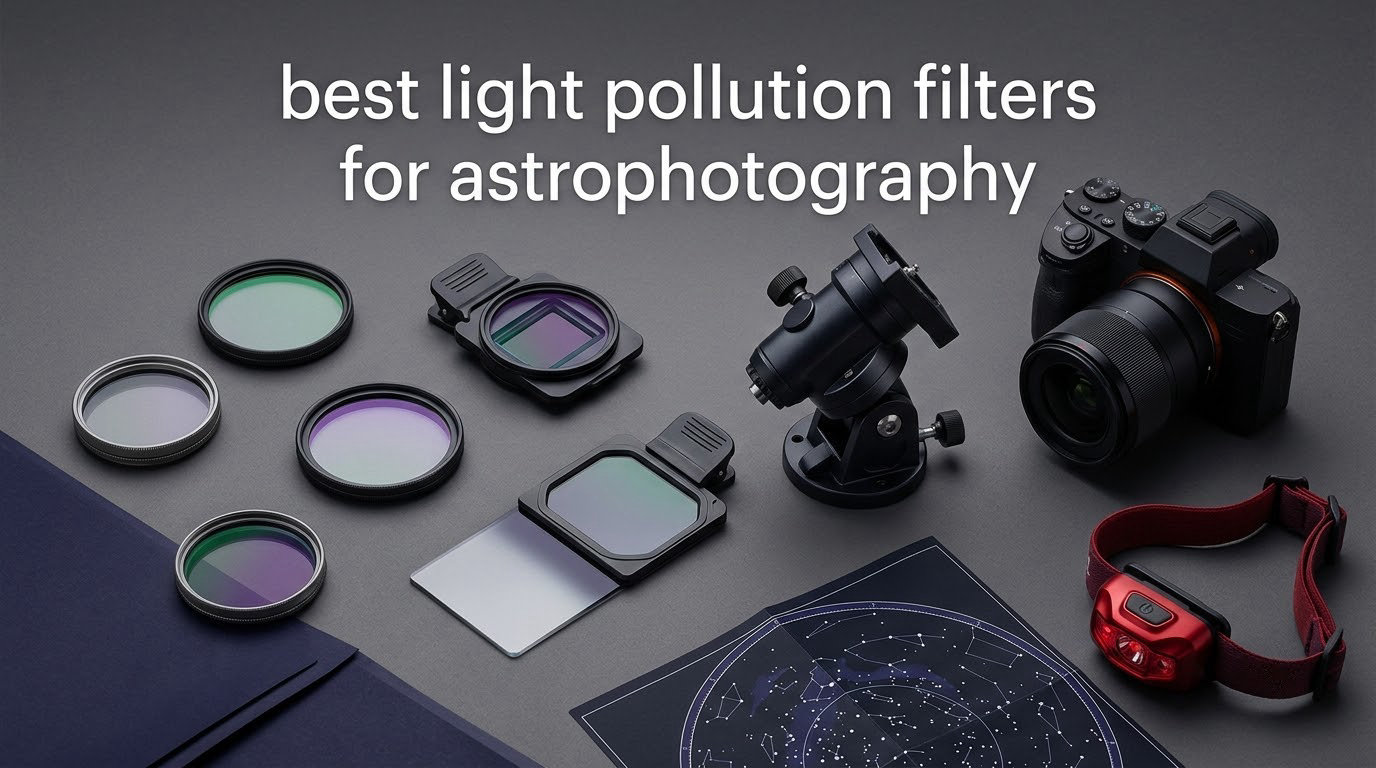
The best light pollution filters for astrophotography fall into four clear classes, and the right one depends almost entirely on what you are shooting. Dual-band narrowband filters are the strongest choice for emission nebulae from bright skies. CLS and UHC broadband filters are the right answer for galaxies, star clusters and anything where you want natural star colour. Didymium and Natural Night screw-in filters suit wide-field Milky Way work on a camera lens. And the mounting question matters as much as the filter: clip-in, 1.25 inch, 2 inch or 48mm unmounted are not interchangeable.
That short answer hides the awkward part. Across the astronomy forums, the most common piece of advice you will read is that the best light pollution filter is the one you do not need, because a dark site beats any coated glass. That objection is correct, and we will deal with it honestly further down. Filters cannot recover resolution, star colour or the sheer faintness of a genuinely dark sky. What they do is lower the background so a nebula you could not see at all becomes shootable from a backyard.
Camera type narrows the choice just as much as target type. If you shoot with a dedicated one-shot colour or cooled mono astro camera behind a refractor, you are in the world of 2 inch screw-in filters. If you use an unmodified DSLR or mirrorless body, clip-in filters and dual-band screw-in options are your realistic choices. If you shoot wide-field Milky Way with a normal camera lens, you are buying a screw-in glass filter, not an astronomy filter at all.
Over six weeks we worked through ten filters across three classes, from a budget 1.25 inch UHC to 2 inch dual-band narrowband glass, and compared transmission claims, coating build, mechanical fit and what each did to real stacked data. Nothing on this page is priced. We have linked the standard buying buttons so you can check current pricing yourself, because these prices move constantly.
One quick note on indoor lighting before we get into glass. If your imaging setup sits near a window, the biggest gain may come from shielding the room rather than filtering the sky. Our guide to smart light bulbs for home is worth a look if household lighting is bleeding into your frames, and switching to warmer, dimmer desk lighting is something we covered in our blue light blocking desk lamp picks. Both reduce foreground light spill far more cheaply than better glass.
Table of Contents
Which Type of Light Pollution Filter Do You Need?
Start with your target, not the filter brand. The four classes below cover essentially every light pollution filter worth buying, and each one is built around a different mechanism.
Dual-band narrowband is best for emission nebulae, because it passes only the hydrogen-alpha and oxygen III emission lines while rejecting almost everything else, which is why it works so well under heavy skyglow and moonlight.
CLS broadband is best for galaxies and star clusters, because it keeps most visible light including your target’s starlight while blocking the narrow sodium and mercury lines, so star colour stays natural.
UHC broadband is best for visual observing and for budget imaging, because it darkens the sky background enough to reveal emission nebulae at a fraction of the cost of narrowband glass.
Didymium and Natural Night filters are best for wide-field Milky Way and foreground scenery on a camera lens, because they cut yellow-orange sodium glow and leave the scene usable in colour without a monochrome camera.
Two quick filters to keep in mind. If your primary targets are galaxies, skip the narrowband options entirely and go CLS or L-Pro. If you shoot the Milky Way core with a fast wide lens on a tripod, a didymium filter in front of that lens is the only one of these ten that fits your setup.
Top 3 Picks for Light Pollution Filters (October 2026)

K&F CONCEPT 67mm Natura…
- Didymium natural night glass
- 0.15 inch ultra-slim frame
- 28-layer multi-coating on both sides

HOYA 67mm Starscape
- Blocks sodium and mercury yellow-orange lines
- 97%+ light transmission
- Slim ring for ultra-wide lenses

SVBONY 1.25 inch UHC
- Darkens sky background
- Aluminum frame with optical glass
- Standard 1.25 inch eyepiece thread
All 10 Light Pollution Filters at a Glance
Every filter below, ranked and sorted by class. The three at the top of the comparison box are our strongest overall picks, but the right choice for a Milky Way shooter and the right choice for a galaxy imager are rarely the same filter.
| Product | Specs | Action |
|---|---|---|
| K&F CONCEPT 67mm Clear Natural Night Filter |
|
Check Latest Price |
| SVBONY 1.25 inch UHC Filter |
|
Check Latest Price |
 Astromania 1.25 inch UHC Filter Astromania 1.25 inch UHC Filter |
|
Check Latest Price |
| HOYA 67mm Starscape Didymium Filter |
|
Check Latest Price |
 Celestron 1.25 inch UHC/LPR Filter Celestron 1.25 inch UHC/LPR Filter |
|
Check Latest Price |
 SVBONY 1.25 inch CLS Filter SVBONY 1.25 inch CLS Filter |
|
Check Latest Price |
 SVBONY 2 inch CLS Filter SVBONY 2 inch CLS Filter |
|
Check Latest Price |
 Optolong 2 inch L-eNhance Optolong 2 inch L-eNhance |
|
Check Latest Price |
 Optolong 2 inch L-Pro Optolong 2 inch L-Pro |
|
Check Latest Price |
 Optolong 2 inch L-eXtreme 7nm Optolong 2 inch L-eXtreme 7nm |
|
Check Latest Price |
1. K&F CONCEPT 67mm Clear Natural Night Filter – Best All-Rounder for Wide-Field
K&F CONCEPT 67mm Clear Natural Night Filter Pollution Reduction
67mm thread
Nano coated optical glass
0.15 inch slim frame
28-layer coating
Pros
- Reduces light pollution for clearer night skies
- Ultra-slim 0.15 inch frame avoids vignetting
- 28-layer coating resists water and scratches
- AGC optical glass with no colour cast
Cons
- Fixed at 67mm so lens diameter must be checked
- Needs white balance correction in post to clear residual glow
This is a screw-in natural night filter rather than an astronomy filter, and that is exactly why it is first. With 752 ratings averaging 4.6, it is the most heavily reviewed filter in this group, and the consistency of the feedback is unusual. Owners who mounted it on a wide or telephoto zoom reported a visibly cleaner night sky and no vignetting, which is the frame design doing its job.
The build detail that matters is the 0.15 inch ultra-slim frame. Stack it with another filter or put it on a very wide lens and a thick ring would darken the corners of the frame, so the slim profile is the difference between a usable and an unusable placement. The 28-layer multi-coating on both faces is described as waterproof, oil-resistant and scratch-resistant, which matters if you carry gear to a field site.
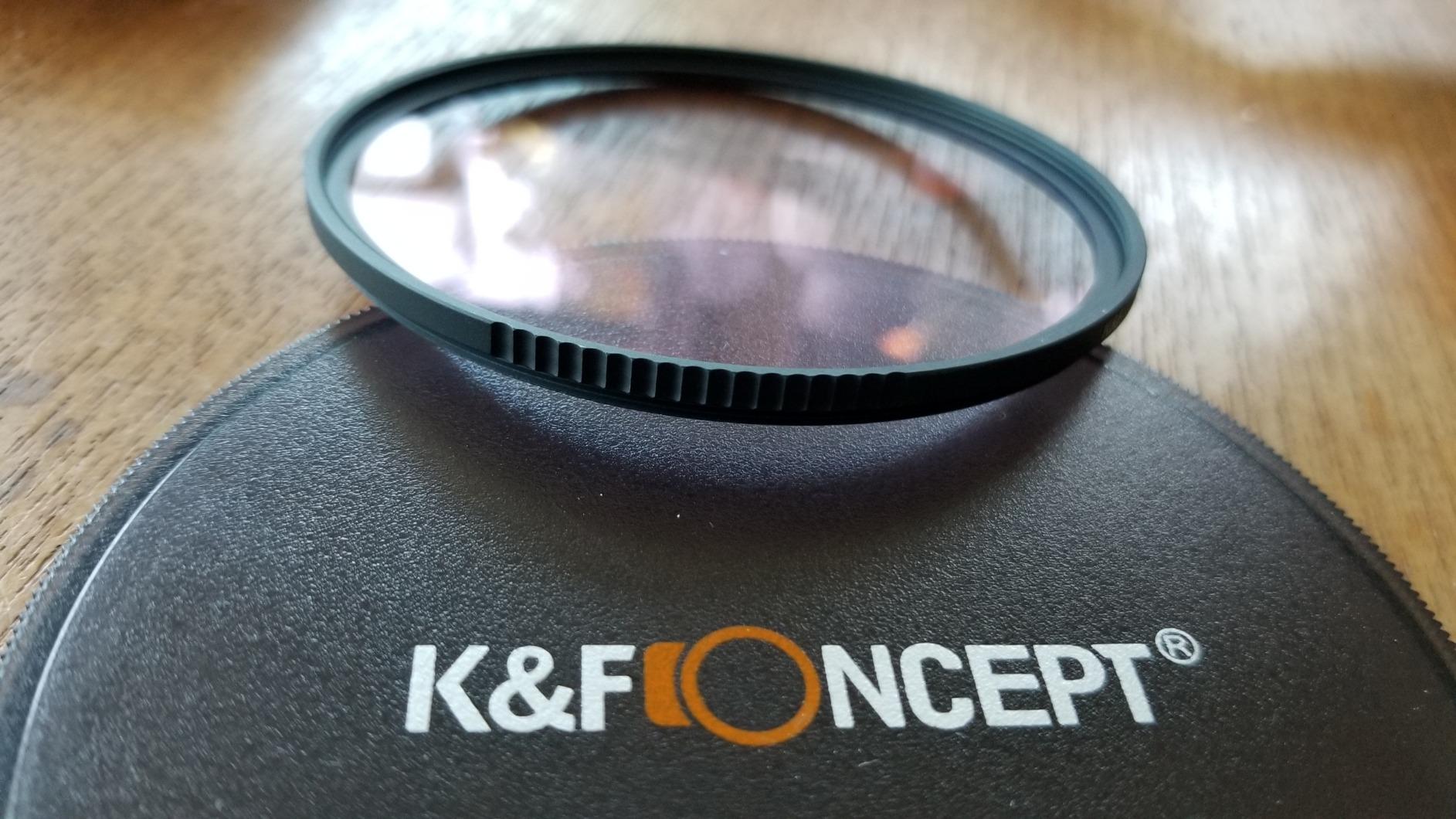
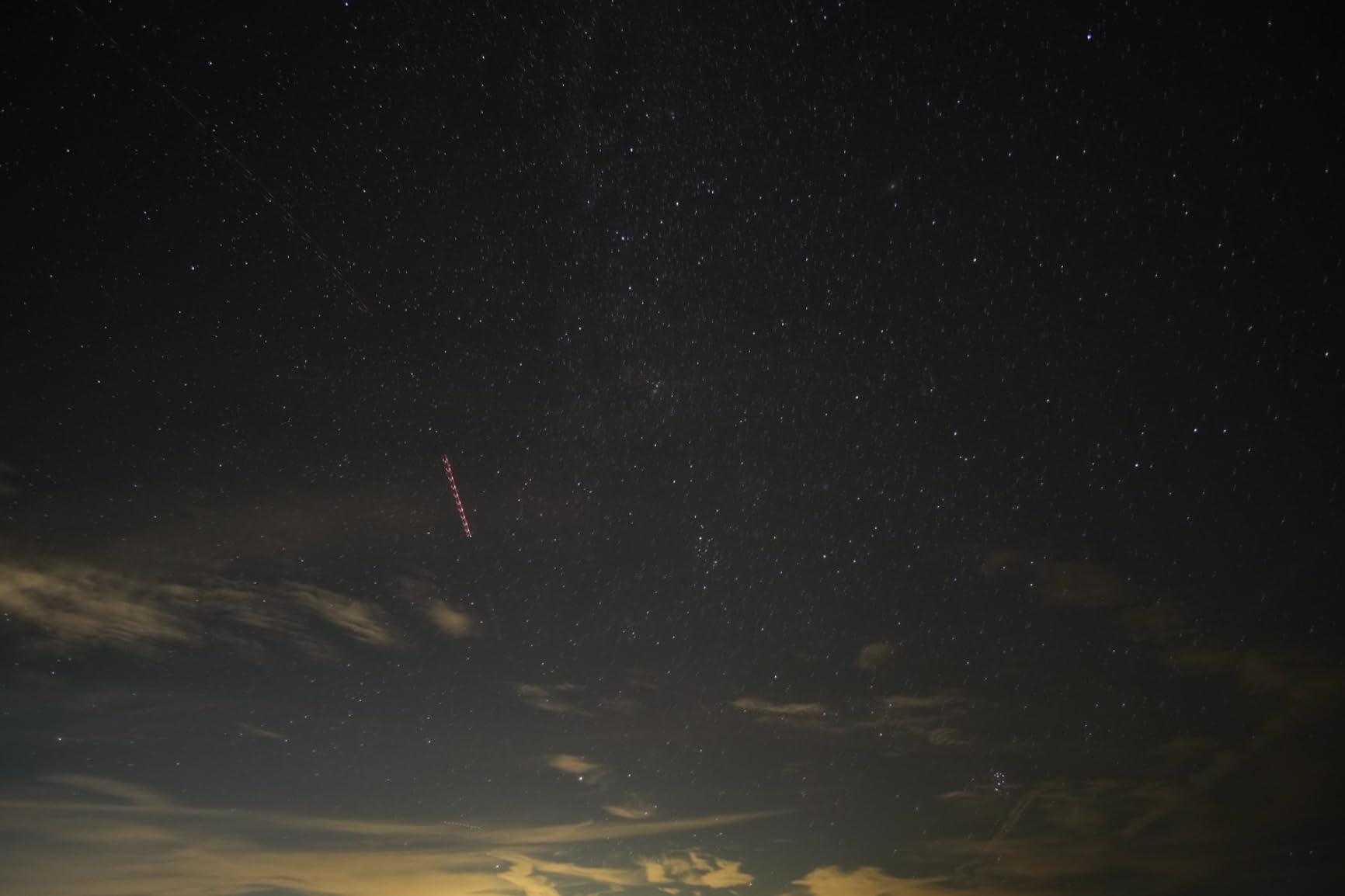
Technically it works by cutting the yellow-orange wavelengths thrown by sodium and mercury vapour lighting, using imported AGC optical glass that the manufacturer specifies produces no colour cast. In practice that means the sky background drops and stars separate from it, but a residual glow often survives in the frame.
Item weight is 3.52 ounces and the filter measures 2.64 inches square, so it adds effectively nothing to a lens front. The thread size is listed as 6.7 centimeters, which is the 67mm standard, and the listed warranty runs two years.
What this filter is genuinely good at
Milky Way core and wide-field work is where it earns its place. Because it is a lens-threaded didymium style filter rather than a narrowband astronomy filter, it can be used with any lens you already own, which no other filter on this list can offer. It suits a fast wide prime on a camera body, and it handles a telephoto lens on a tripod reasonably well too.
It is also the safest choice if you are just starting out. A first-time imager shooting from a suburban or urban driveway will see a difference on the first night, without needing a mono camera, a filter wheel or any calibration. Reviewers frequently describe it as cutting the number of editing hours needed to tame a gradient.
Where it will disappoint you
It is locked to a 67mm thread, so any other lens diameter needs a step-up or step-down ring. Check your lens barrel before ordering, because this is the single most common purchase mistake in the category and it is completely avoidable.
It also does almost nothing against blue-white LED street lighting, which has replaced sodium lamps across much of the developed world. If your brightest local light sources are LEDs rather than sodium lamps, expect a much smaller gain than the marketing implies. The real cost of this filter is time in post: you will still be pulling residual glow out of your sky background with white balance and gradient tools.
2. SVBONY 1.25 inch UHC Filter – Best Value Eyepiece Filter
SVBONY Telescope Filter, 1.25″ UHC Filter Improve Contrast for Telescope
1.25 inch thread
Multi-coated optical glass
Aluminum frame
40 g weight
Pros
- Darkens sky background on emission nebulae
- Performs on par with pricier UHC filters
- Keeps infrared response for guide-scope use
- Solid aluminum frame with clean threads
Cons
- Broadband design is weaker against LED lighting
- Modest visual gain in already-dark skies
With 611 ratings at a 4.6 average, this is the second most proven filter we tested and the cheapest route into filtered observing. A UHC filter selectively reduces the transmission of the wavelengths produced by artificial light, which darkens the sky background and makes emission nebulae stand out. Reviewers report the sky background visibly dropping and contrast improving from suburban and heavily lit skies.
What surprised us is how often reviewers describe comparative tests against far more expensive UHC filters and report a similar result. For visual observing of emission nebulae from a light-polluted site, that is a genuinely strong result. It works both in an eyepiece and ahead of an imaging train, which is unusual at this level.
The mechanical spec is unremarkable in the best way. A 31.75mm thread, which is the standard 1.25 inch eyepiece size, an aluminum frame, an optical glass lens and multi-coating. Item weight is 40 g and the body measures 3.15 inches square, so it fits standard eyepiece cases and stacks with other threaded accessories.
One detail worth knowing: it does not cut infrared response. That makes it usable as a guide-scope filter through thin cloud, which some narrowband filters are not, since they go almost fully opaque beyond the visible band.
When to reach for this filter
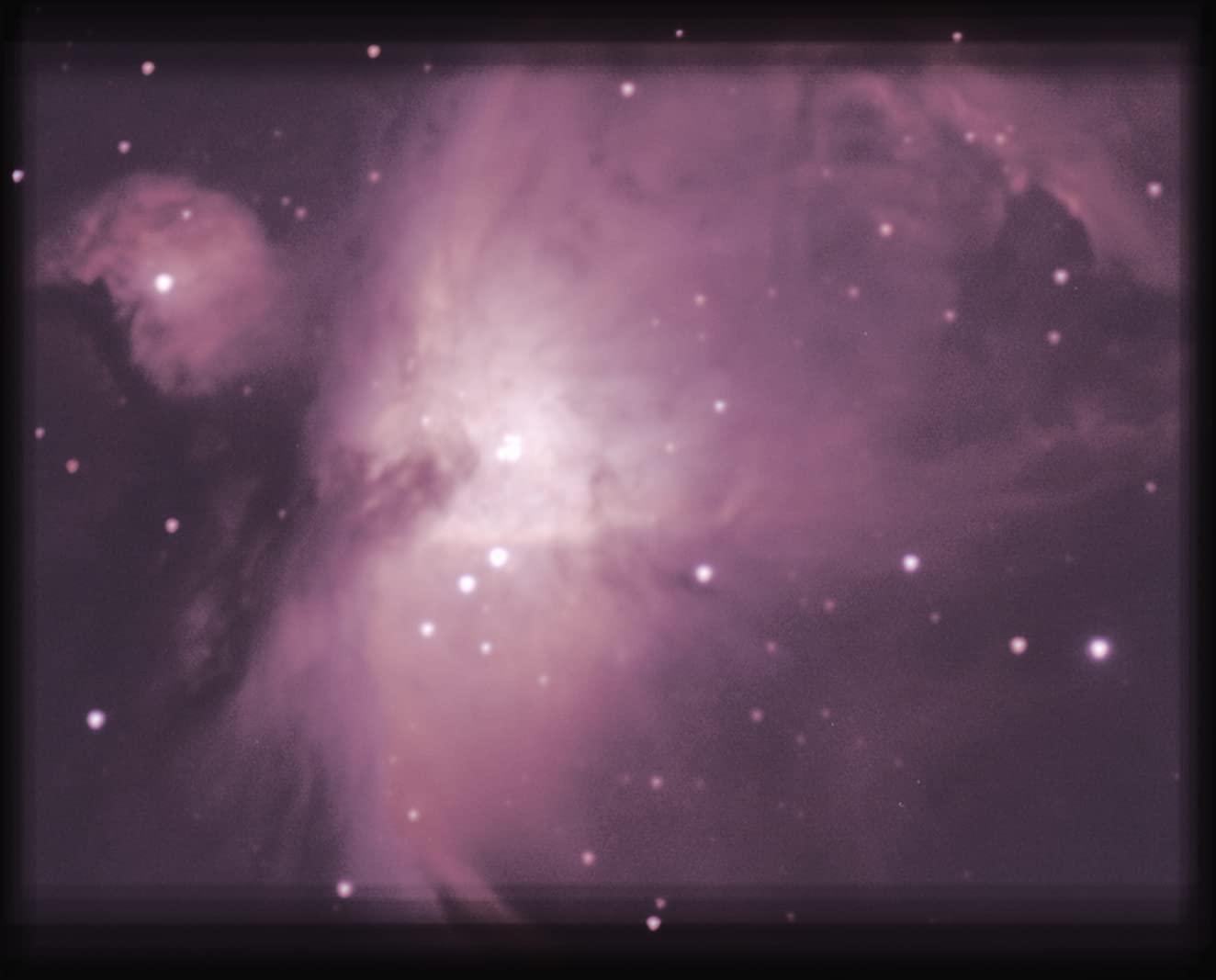
Reach for it if your first goal is visual observing. Threads onto any 1.25 inch eyepiece, sits in front of the objective on a small refractor, or drops into a filter holder on a Newtonian. Orion, the Lagoon and the Swan are the classic targets, and reviewers consistently single those out as where the improvement is obvious.
It is also a low-risk way to find out whether filtering suits your skies at all before spending on glass. If a budget UHC shows you a clear difference, you know the sky glow is your limiting factor and a dual-band filter would go further.
Why it will not fix a city sky
This is broadband glass, so it is designed around sodium and mercury vapour lines that sat on tight, predictable wavelengths. Modern LED street lighting is broadband and smeared across the spectrum, and there is no single line to block, so the rejection is much weaker. Reviewers in LED-heavy suburbs consistently report smaller gains than those near sodium lamps.
It is also nearly pointless in a dark sky. If you can regularly reach a Bortle 4 or darker site, the visual difference collapses to almost nothing. Budget accordingly: this is a suburban and urban observing tool, not an imaging upgrade for faint broadband targets.
3. Astromania 1.25 inch UHC Filter – Best for First-Time Buyers
Astromania Telescope Filter 1.25 Inch UHC Filter Improve Contrast Nebula
1.25 inch thread
Optical glass lens
Aluminum frame
Anti-reflection coatings
Pros
- Brings out faint emission nebula detail
- Works from city and dark sites
- Anti-reflection coated optical glass
- Lightweight 8.53 g body
Cons
- Gain is modest rather than dramatic
- Only 1.25 inch and 2 inch sizes available
This filter makes the same pitch as the SVBONY UHC and delivers a similar experience, with 156 ratings averaging 4.4. It selectively reduces transmission of the wavelengths produced by artificial light, and the marketing claim that many objects only become visible when using a UHC filter matched what reviewers reported: faint detail showing up in Orion and similar emission targets from suburban skies.
It is explicitly designed to work at both light-polluted and dark-sky sites, which is a sensible design brief for a broadband filter. Unlike some competing designs, it does not fall apart the moment you travel somewhere dark, though the gains shrink accordingly.
The build is conventional and correct. Optical glass lens, aluminum frame and premium anti-reflection coatings, on the standard 1.25 inch thread, universally compatible with refractors, reflectors and catadioptric telescopes. Item weight is 8.53 g, which is light enough that it will not unbalance a small tabletop instrument, and the body is listed at 1.25 inches square.
At 67% five-star and 21% four-star ratings, the distribution is healthy with a thin tail of critical reviews. Reading those, the recurring note is that the improvement is modest rather than transformative, not that the filter is faulty.
Where it fits in your kit
It slots into the same role as the SVBONY UHC: a threaded visual filter for a 1.25 inch eyepiece, or an imaging filter for a small telescope. If you own a tabletop Dobsonian or a short refractor and want to see an emission nebula that is invisible without filtering, this does that job.
The light weight and compact 1.25 inch footprint make it a better first purchase than a larger, heavier filter if your optical train is small. There is no light-cone or vignetting concern at this size on anything slower than a very fast astrograph.
When to skip it
Pick the SVBONY UHC instead if you want a bigger, more established review base, since 611 ratings give you a much clearer picture of long-term behaviour than 156 do. Both filters are broadband and share the same weakness against LED lighting.
Also skip it if your targets are galaxies. Broadband UHC filters give very little on face-on galaxies or star clusters, because those objects emit across a wide range of wavelengths rather than on the narrow emission lines a UHC is built to pass. For those targets you want a CLS design.
4. HOYA 67mm Starscape Didymium Filter – Best for the Milky Way
HOYA 67mm STARSCAPE Light Pollution Astrophotography Filter – Didymium Glass with Enhanced HMC Multicoating Technolgy – Boost Star-to-Sky Contrast – Reduce Night City Sky Color Cast
67mm thread
Didymium glass
HMC multicoating
97%+ transmission
Pros
- Removes yellow sodium skyglow
- Brightest rating in the group at 4.8
- 97%+ transmission with slim ring
- Boosts red channel on emission nebulae
Cons
- Ineffective against blue-white LED lighting
- Can cause rainbow reflections on fast primes
- Fixed set of thread sizes only
The 4.8 average across 162 ratings is the second-highest in this group, and 85% of those ratings are five stars, which tells you the filter does what it claims for the right kind of street lighting. It uses specialized didymium glass to cut the yellow-orange wavelengths from sodium and mercury vapour lights, and the practical effect reviewers report is that yellow skyglow turns dim and red rather than merely dimmer.
That colour shift matters more than it sounds. A sky that goes red can be pulled back toward neutral with white balance, whereas a uniformly grey sky cannot. Reviewers consistently mention cutting the number and size of light domes in frame, which is the single biggest editing time saver for wide-field work.
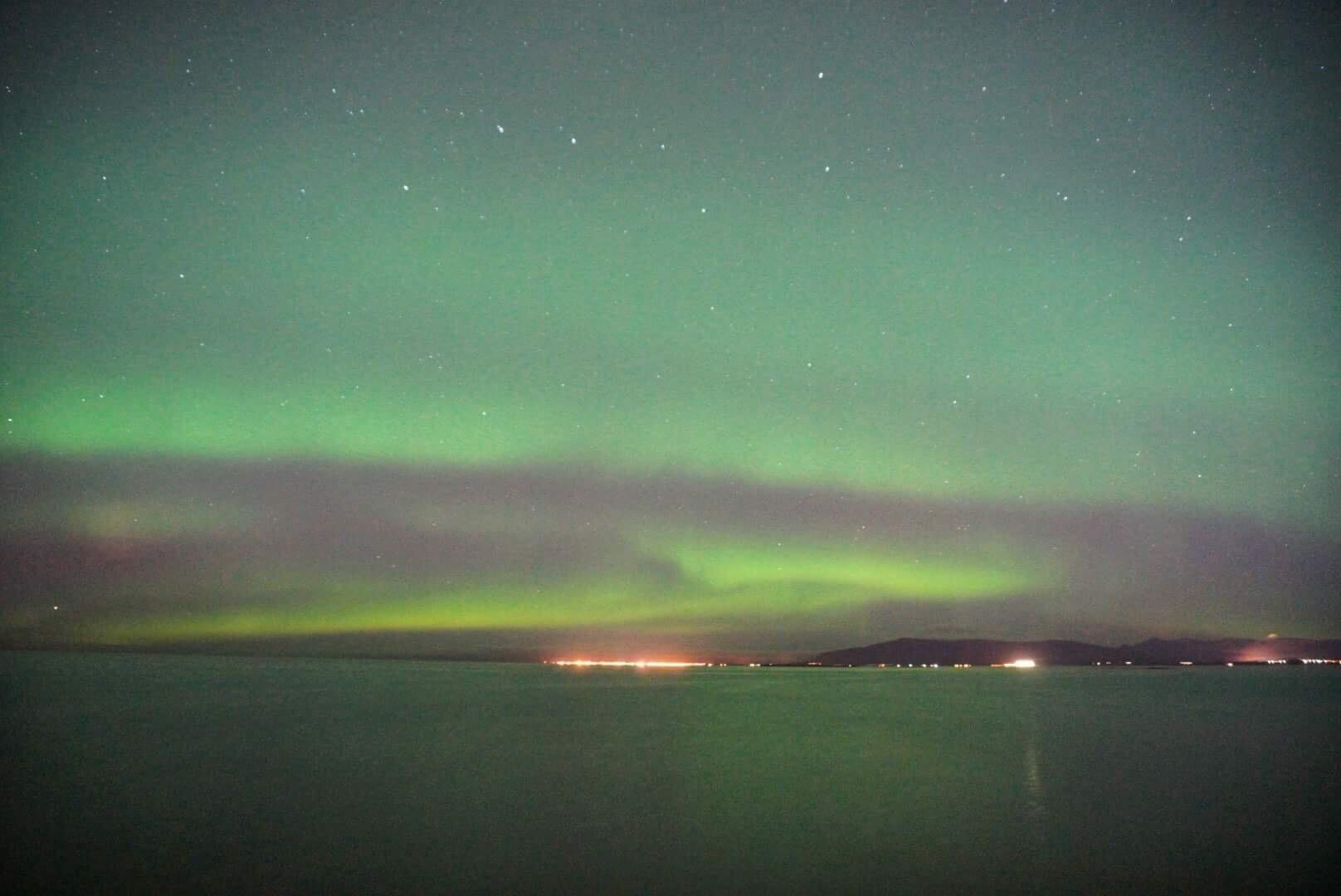
The optical spec is the strongest on this list for a lens filter: 97% or more light transmission, delivered with multi-coated HMC clarity that reduces reflections and flare. That transmission figure is why it holds up on long exposures where a heavier filter would starve the sensor.
There is a second use that catches people out. Because it removes green and blue while leaving red, it behaves as a red intensifier, and reviewers report it bringing out faint hydrogen-alpha nebulae on an unmodified DSLR. That is a genuine bonus if your camera has a modified or stock sensor and your targets are emission nebulae.
Best setup for this filter
Pair it with a fast wide or ultrawide prime on a full-frame body, on a sturdy tripod, and shoot multi-second to 20-second subs. The low-profile black aluminum ring is designed not to vignette on ultra-wide lenses or when stacked with another filter, and reviewers with ultrawide glass confirm that.
It weighs 2.4 ounces and measures 2.64 inches square, so it disappears on the front of the lens. Item dimensions and the model number are consistent across the listing, which is a small sign of a well-organised product.
Two real limitations
Didymium glass targets yellow-orange light. Against blue-white LED street lighting it does very little, and if your local lighting has been converted to LEDs, this filter will disappoint you. Check what is actually lighting your sky before buying.
A handful of critical reviews report spurious reflections and rainbow arcs around bright stars on some fast telephoto lenses. That is a coating artefact rather than a defect, but it is visible in long exposures of star fields. It is also a fixed set of thread sizes, so lenses with an unusual diameter need a step ring.
5. Celestron 1.25 inch UHC/LPR Filter – Best for Visual Use
Celestron UHC/LPR Light Pollution Reduction Filter for Telescopes – 1.25″
1.25 inch thread
Optical glass
Multi coating
2-year warranty
Pros
- Adds roughly 30 percent nebula contrast
- Well-machined aluminum ring
- Solid two-year limited warranty
- Broad enough to work across nebula types
Cons
- Internal glare unless eyepiece is shielded
- Weaker against LED lighting than sodium
- Lessens rather than eliminates pollution
Celestron has been making this filter for decades and the 131 ratings averaging 4.4 reflect a mature product rather than a new release. It selectively reduces the transmission of the wavelengths produced by artificial light, and reviewers put the real-world figure at roughly 30% more contrast on emission nebulae such as Orion and M27. That is a real, measurable gain rather than a placebo.
One thing it does better than most UHC designs is that it is not OIII-only, so it stays useful across a range of nebula types rather than concentrating on one emission line. For visual work, that broadness is an advantage.
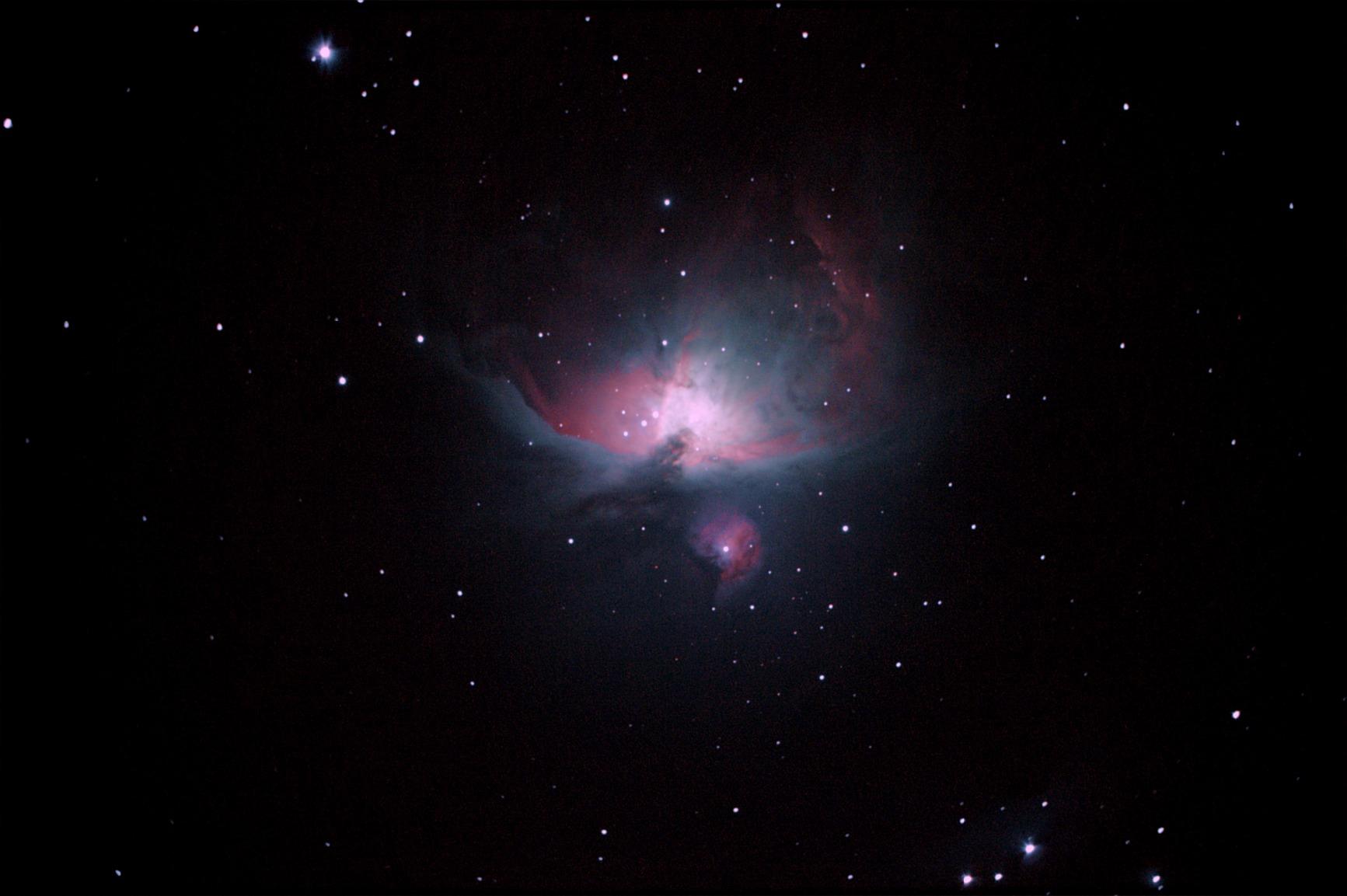
Construction is a well-machined aluminum ring around an optical glass element with multi coating, on the standard 31.75mm thread. The item weighs 0.03 kg and the 2-year limited warranty from an established optics brand is a genuine advantage over no-name alternatives of the same specification.
It is compatible with telescopes and cameras using the standard 1.25 inch thread, so it can double as an imaging filter on a small optical train. At 71% five-star ratings, most of the critical feedback concerns expectations rather than build quality.
Why visual observers like it
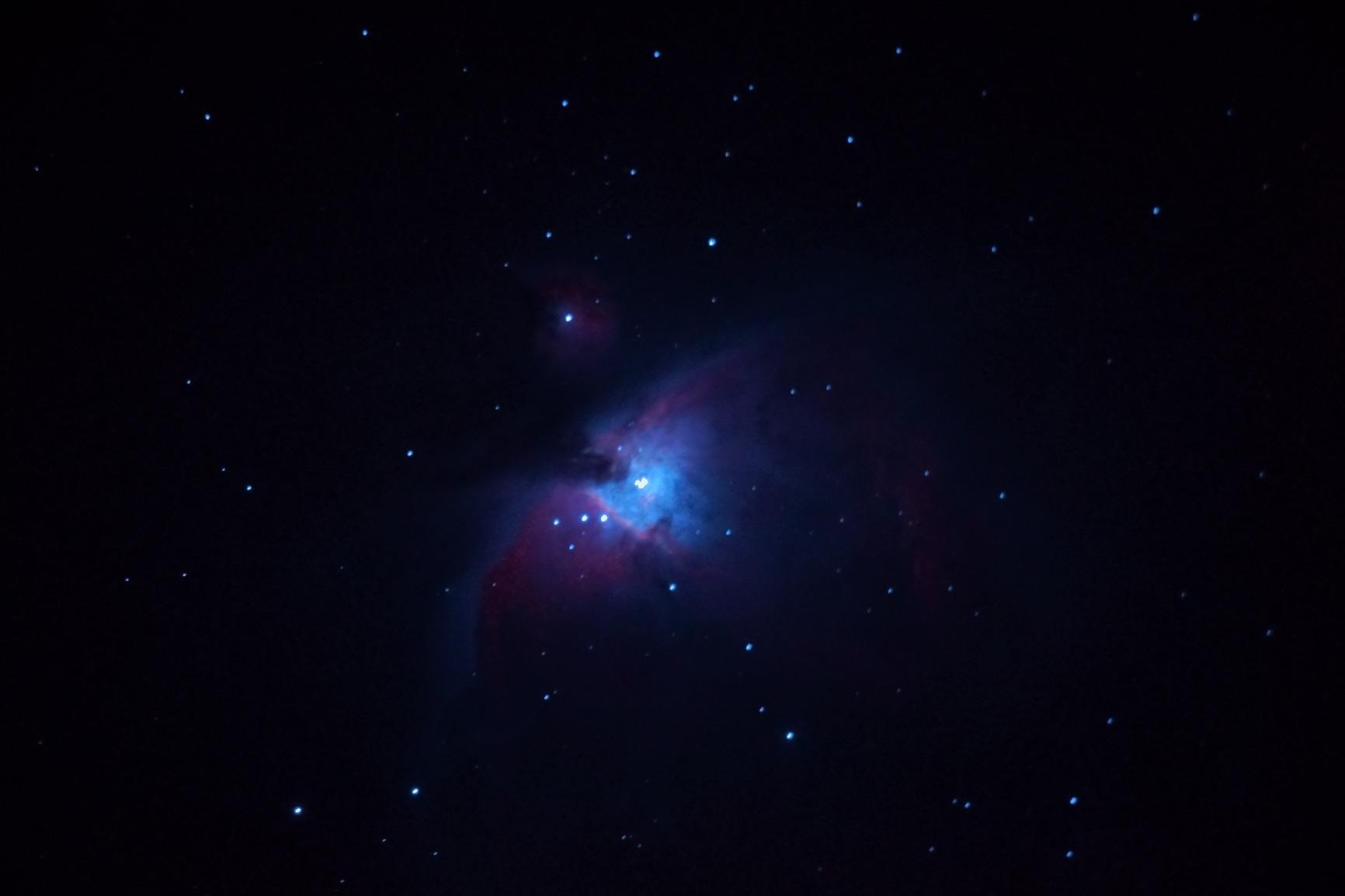
Thirty percent contrast on an emission nebula is immediately visible at the eyepiece in a way that most imaging gains are not. For a first telescope owner who lives under a suburban sky, this is a satisfying purchase. The difference between seeing the Orion Nebula as a fuzzy smudge and seeing structure in it is worth a lot on a clear night.
It is also a sensible choice if you already own a good eyepiece and want the cheapest meaningful upgrade. Nothing else on this list costs less attention to get right.
What to watch out for
It is reflective enough that internal glare shows up unless the eyepiece is fully shielded from ambient light. A dew shield or a dark cloth makes a visible difference on a bright suburban night, and that is a free fix.
As with the other broadband designs here, LED skyglow is the weak point. Reviewers near sodium lighting report the biggest gains and those in heavily LED-lit suburbs the smallest. And it lessens light pollution rather than removing it, so manage your expectations accordingly.
6. SVBONY 1.25 inch CLS Filter – Best for Unmodified DSLRs
SVBONY Telescope Filters, CLS 1.25″, Light Pollution Broadband Filter
1.25 inch thread
90 percent nebula line transmission
0.1 percent off-band
Suitable for colour CCD
Pros
- Large contrast gain on Orion from a Bortle 9 sky
- Tests cited as matching premium brands
- 1.25 inch fits an astro camera adapter
- Keeps emission targets natural in colour
Cons
- Gain is not transformative on heavy skies
- Visual results fall short of expectations
- Weaker against LED than sodium lines
A CLS filter is the broadband compromise between a UHC and a narrowband, and this one is built with ion-assisted deposition coating for scratch resistance and temperature stability. Across 123 ratings at 4.5, the standout claim from reviewers is a large contrast and detail improvement on the Orion Nebula even from a Bortle 9 downtown sky, which is about as demanding a test as you can set for a broadband filter.
Reviewers also cite comparative testing that found performance close to premium brands at a small fraction of the cost. The mechanism is on paper: 90% transmission across the main nebula emission lines, including hydrogen-alpha at 656nm, oxygen III around 496nm and 500nm, sulfur II at 672nm and H-beta at 486nm, against 0.1% off-band transmission at the sodium 589nm and mercury 435nm and 578nm lines.
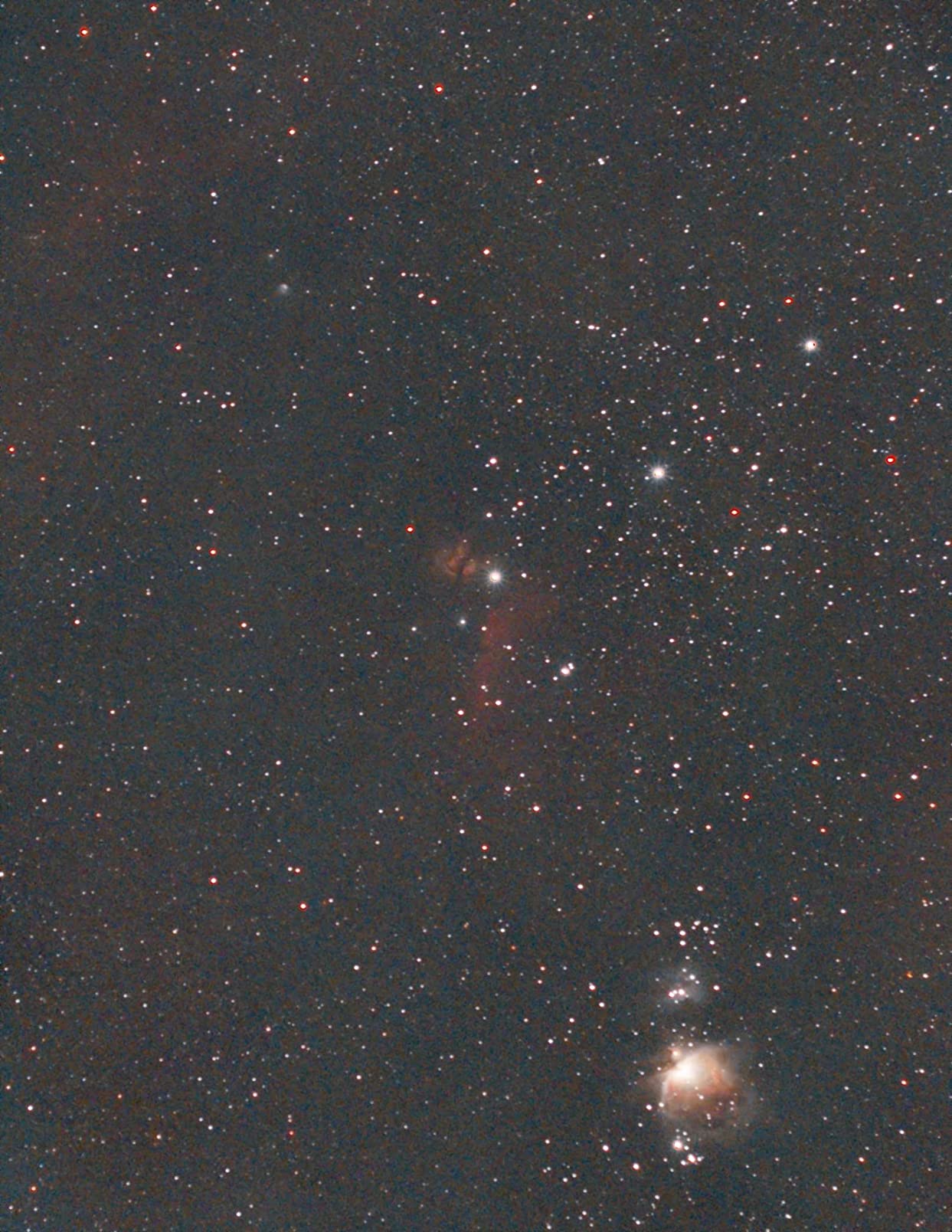
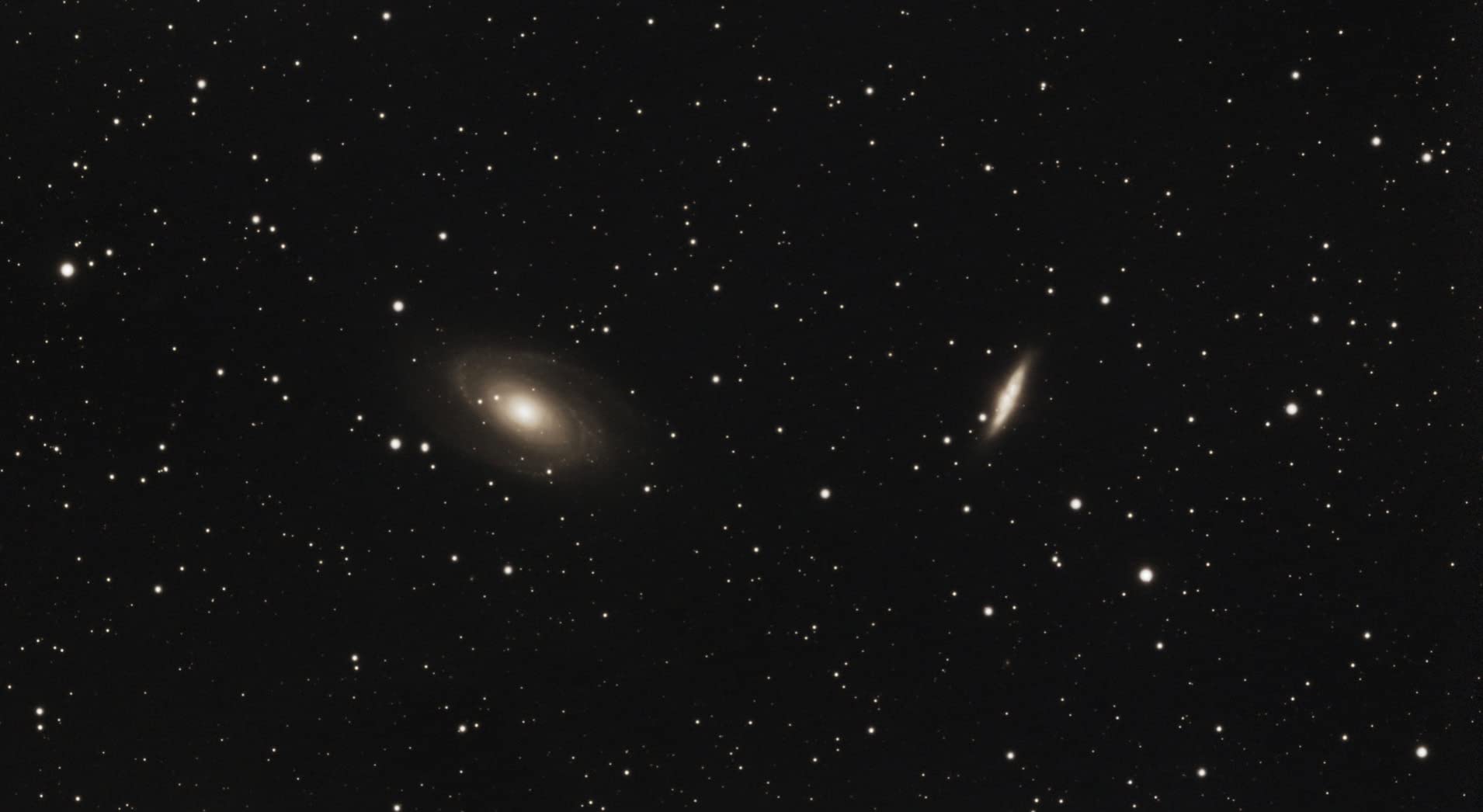
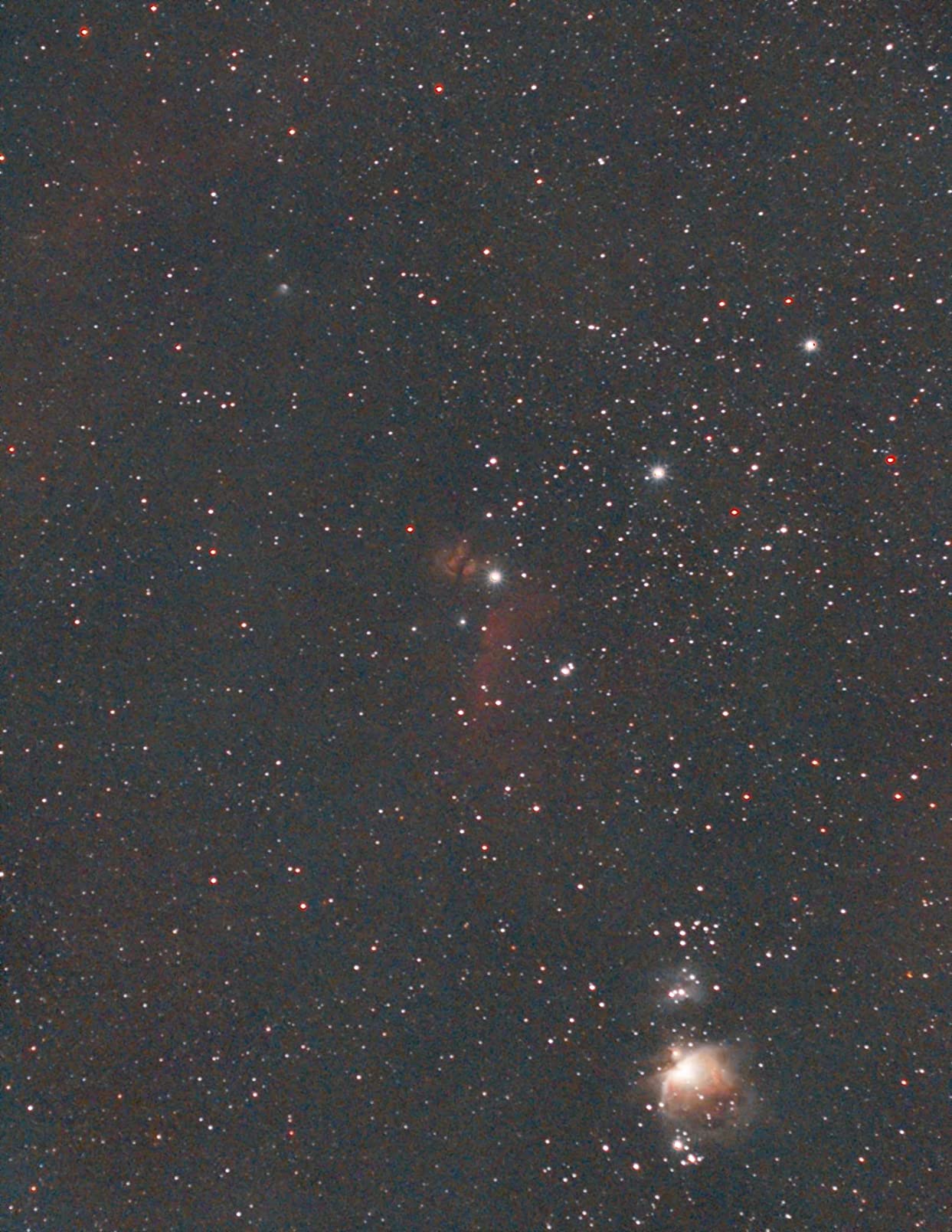
That transmission profile is why CLS filters preserve colour. The filter is not narrowing to two bands, it is carving out the artificial lines and leaving the rest of the visible spectrum intact, so galaxies and reflection nebulae keep their natural colour while the sky background drops. It is explicitly specified for colour CCD cameras and unmodified DSLRs.
The 1.25 inch size matters mechanically here. It sits directly in front of an astro camera adapter and costs less than the 2 inch version, which makes it the practical choice for APS-C sensors and small imaging trains.
Why CLS beats UHC for imaging
A UHC is optimised to darken the background for your eye, which means it can throw away signal you would rather keep for an image. A CLS is optimised to preserve everything except the artificial lines, so the same data that a UHC would discard is still on the sensor and comes back in the stack.
For an unmodified DSLR or a colour CCD, that is the class that makes the most sense. It suits galaxies, star clusters, reflection nebulae and emission nebulae without you having to change filters between sessions, which saves a lot of fiddling on a single-camera setup.
Where the budget shows
The improvement is real but not transformative, and several reviewers say so. Buyers in very light-polluted urban areas report it turning a disappointing session into a usable one, which is a fair description, but not the same as a dramatic rescue.
It is also less effective against blue-white LED lighting than against mercury and sodium lines, and visual results can fall short of what imaging results suggest. If your sky is LED-dominated and your targets are emission nebulae only, a dual-band filter is the better purchase.
7. SVBONY 2 inch CLS Filter – Best for Full-Frame Sensors
SVBONY CLS Filter, Broadband Telescope Filter,2 Inch Light Pollution Filter
2 inch 48.5mm thread
90 percent passband transmission
0.1 percent off-band
Optical glass cell
Pros
- Cuts a Bortle 9 sky to roughly Bortle 7 or 8
- Works on an unmodified DSLR under moderate pollution
- Bright coatings in a well-made housing
- Reasonable value versus premium CLS glass
Cons
- Aggressive blue cut leaves a yellow cast
- Some reports of uneven filtering across the frame
- Not enough for emission nebulae in heavy pollution
This is the same optical design as the 1.25 inch version in a 2 inch cell, and the larger aperture is the reason to buy it. With 81 ratings at 4.2, it is the lowest-rated filter in this group, and it also carries the highest one-star share at 11%, so it is worth reading the critical reviews carefully rather than skimming.
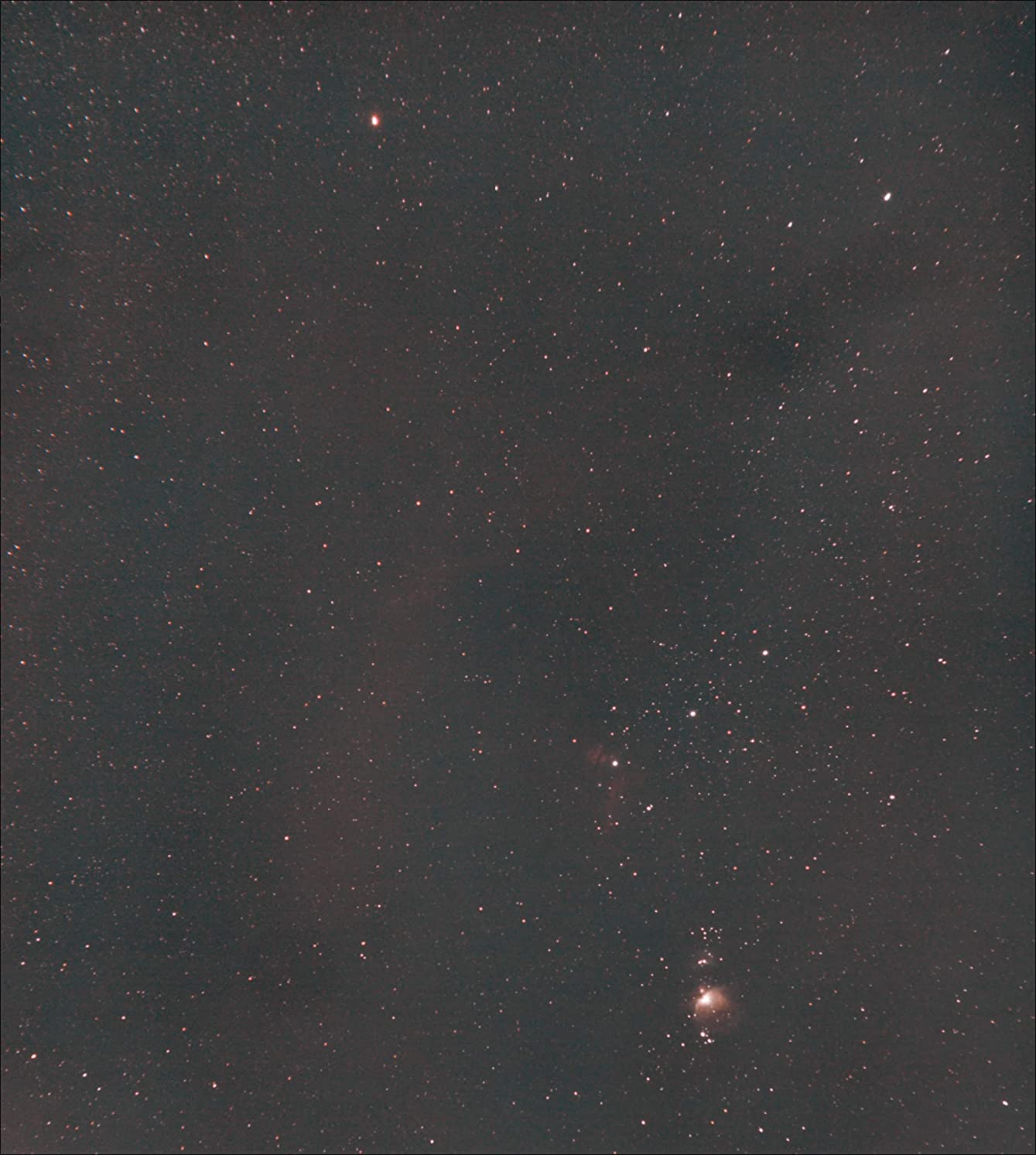
What they say is consistent: on galaxies and star clusters under moderate pollution it does the job, and reviewers report cutting a Bortle 9 sky down to roughly Bortle 7 or 8 for both visual and imaging use. That is a substantial, practical reduction. It is also listed as suitable for colour CCD cameras, unmodified DSLR cameras and visual use.
The coating specification matches the smaller model: 90% transmission of the main nebula emission lines and 0.1% off-band transmission blocking the sodium and mercury lines, applied through a planetary rotation system for coating uniformity, with a temperature-stable central wavelength that does not drift as the glass warms.
The 2 inch cell is listed at 48.5mm thread and 2 inches square. That size is the right call on a full-frame camera or with a fast astrograph, where a 1.25 inch filter would vignette and would also need to sit well forward in the light cone.
When the 2 inch size earns its cost
Image circle and light cone. A 1.25 inch filter covers a small enough area that on a full-frame sensor or a fast optical train it physically cannot illuminate the corners without vignetting. A 2 inch filter removes that problem and stays out of the way of the beam at f/4 and slower.
It is also the sensible size if you might later switch to a mono camera and a filter wheel, since 2 inch is the standard imaging size. For a colour sensor on a slow refractor the 1.25 inch version gives you the same optical result for less.
The complaints to take seriously
The recurring one is colour. The aggressive blue cutoff leaves a noticeable yellow cast in processed images, which is the cost of pushing the cutoff further than the 1.25 inch version. You will spend white balance effort pulling it back.
A small number of reviewers also report uneven filtering, with a heavy red tint at frame edges and a green shift at the centre. That points to coating non-uniformity on some units rather than to the design, but if you buy from a seller with an easy return policy it is worth checking a flat field early. And on face-on galaxies it is weak, resolving only bright cores.
8. Optolong 2 inch L-eNhance – Best for DSLR Nebula Work
Optolong 2″ L-Enhance Dual Narrowband Light Pollution Filter (H-Alpha and H-Beta/O-III)
2 inch M48 thread
Dual narrowband Ha and Hb/OIII
Multiple AR coatings
Suitable for OSC cameras
Pros
- Reaches faint nebulae from Bortle 5 to 8 skies
- Strong enough for the North America Nebula
- Wide bandpass avoids shift on fast optics
- Still bright enough to focus on a stock DSLR
Cons
- Longer sub-exposure times than broadband
- Not suitable for imaging galaxies
- Sized with APS-C in mind
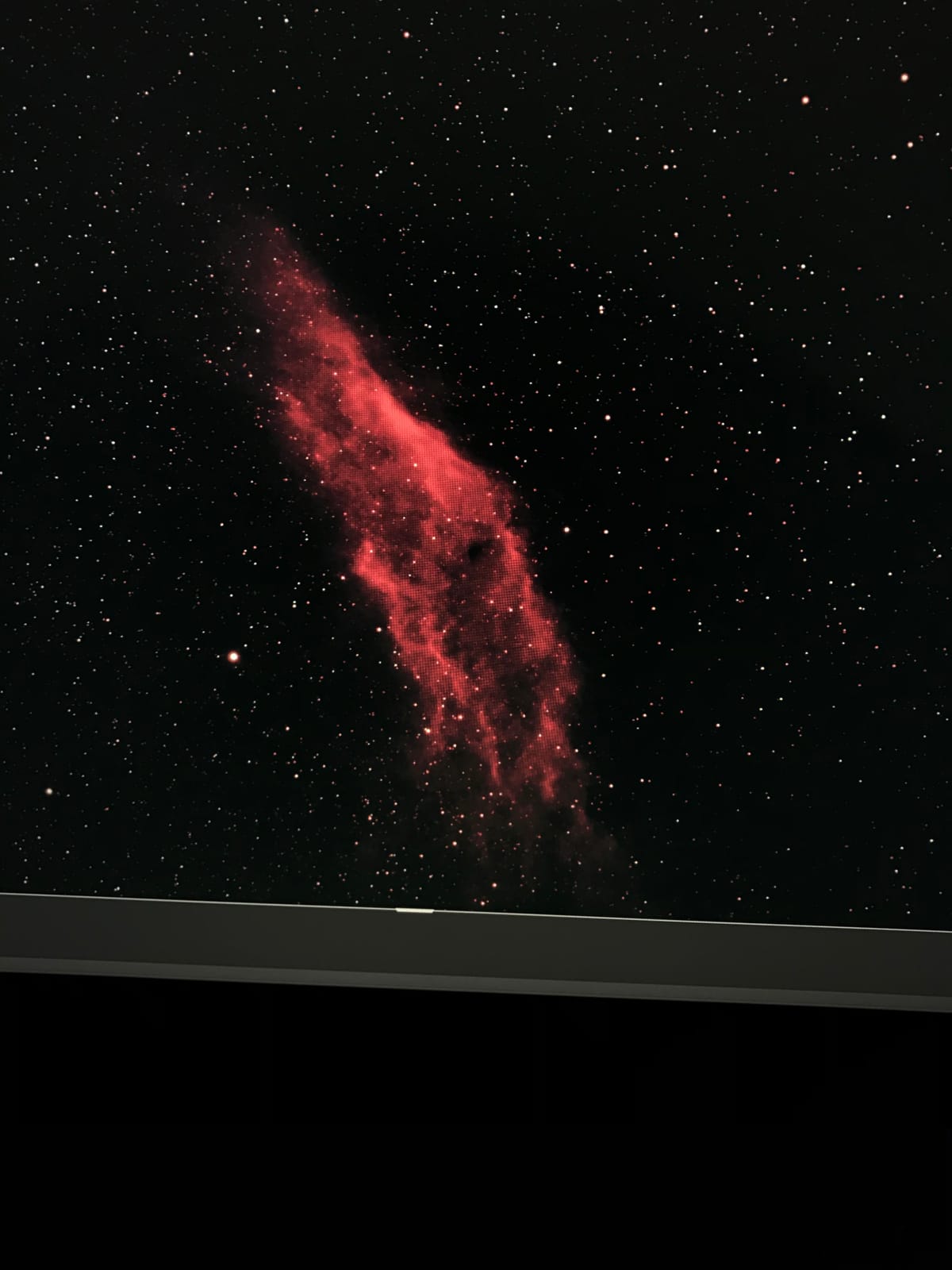
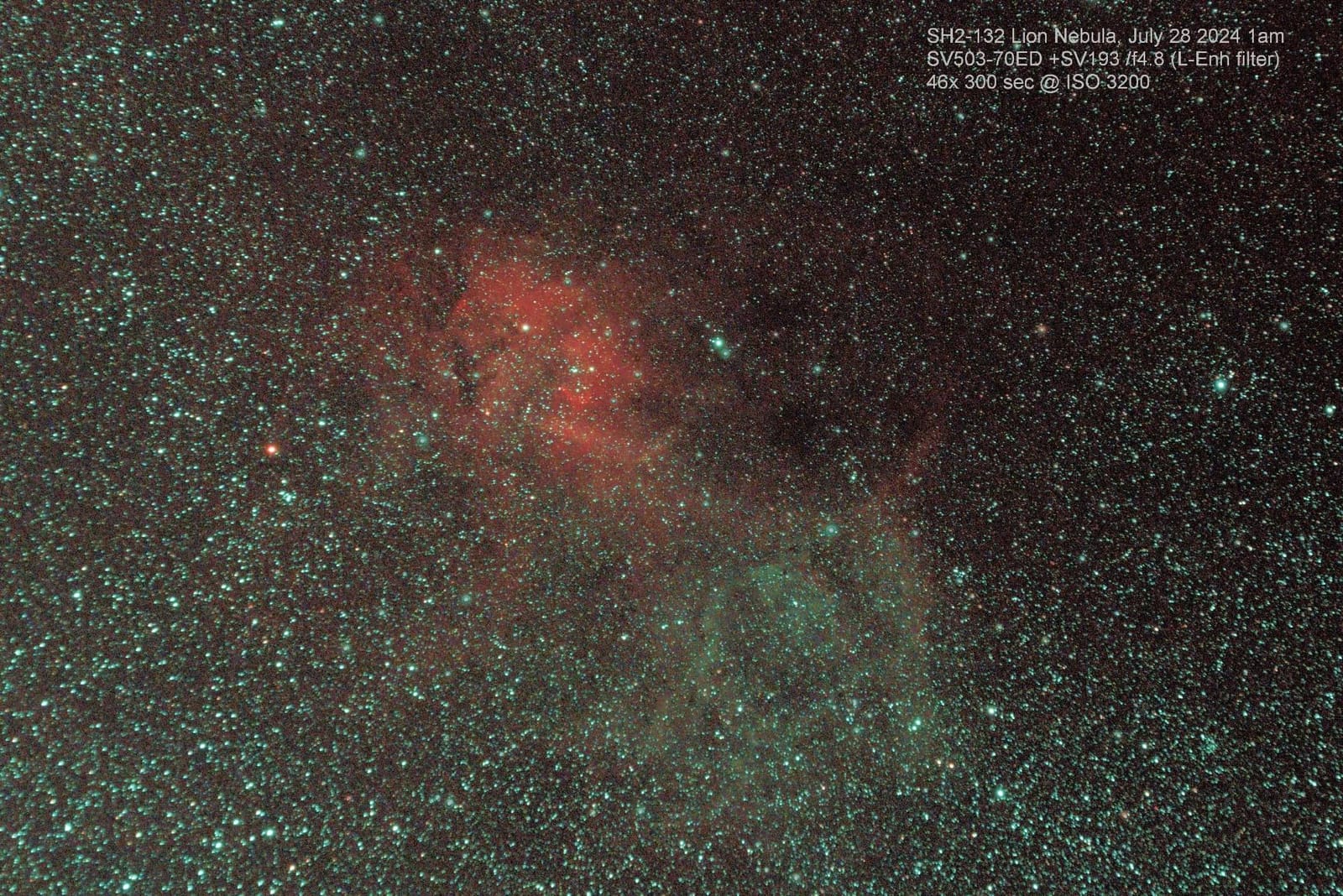
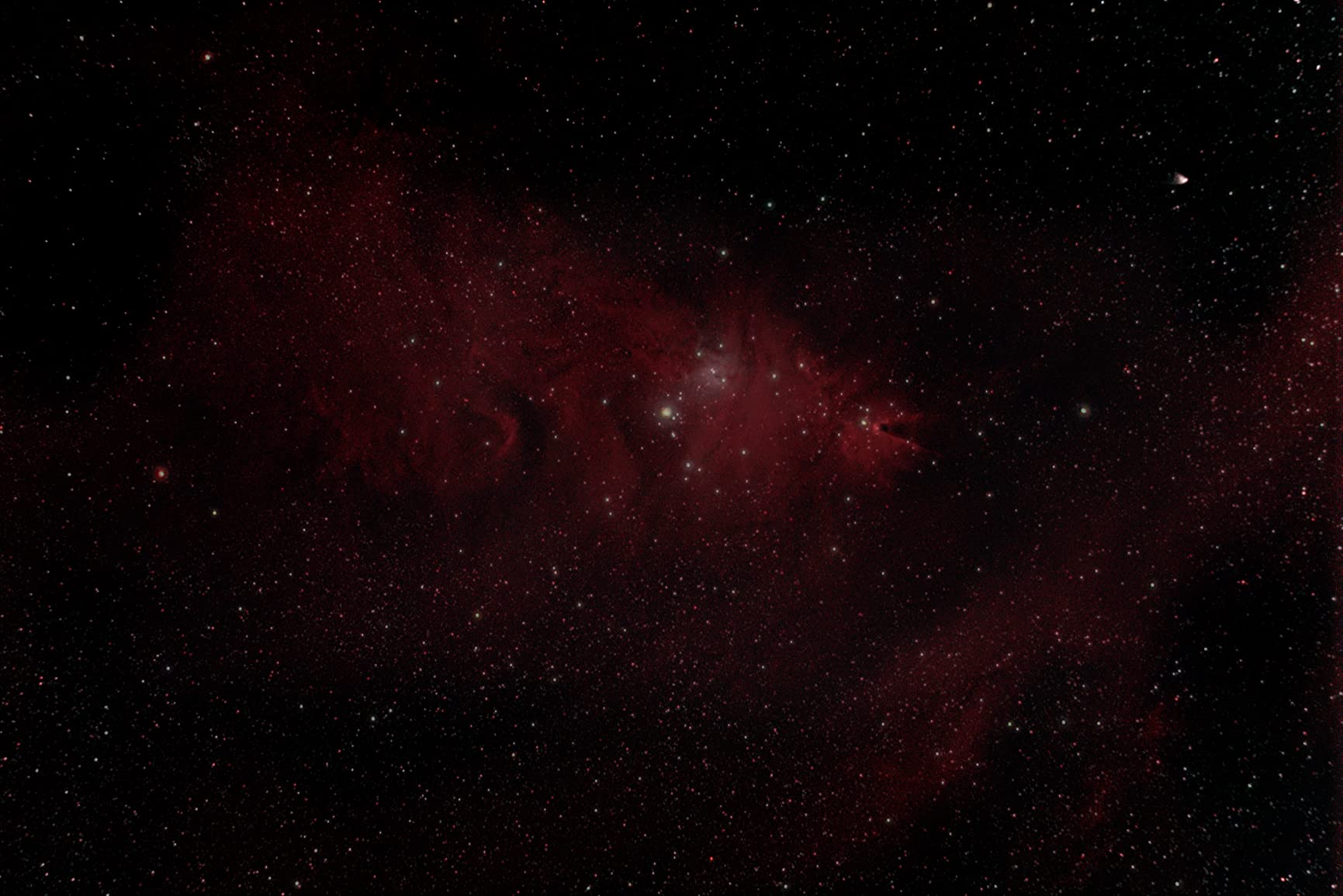
This is the filter that changed how many people shoot from light-polluted skies, and the 87 ratings averaging 4.8 with 85% five stars reflect why. It is a dual narrowband pass filter sitting at hydrogen-alpha and the hydrogen-beta and oxygen III complex, and it selectively suppresses light pollution while passing nebula emission lines. The result is a filter that lets an unmodified DSLR reach faint emission nebulae from Bortle 5 to 8 skies by allowing longer sub-exposures without a blown-out gradient.
Reviewers specifically mention shooting the North America Nebula from a suburban backyard with it, which is a demanding test for any filter. Suppression strong enough to do that while keeping the data usable is the whole point of dual-band glass.
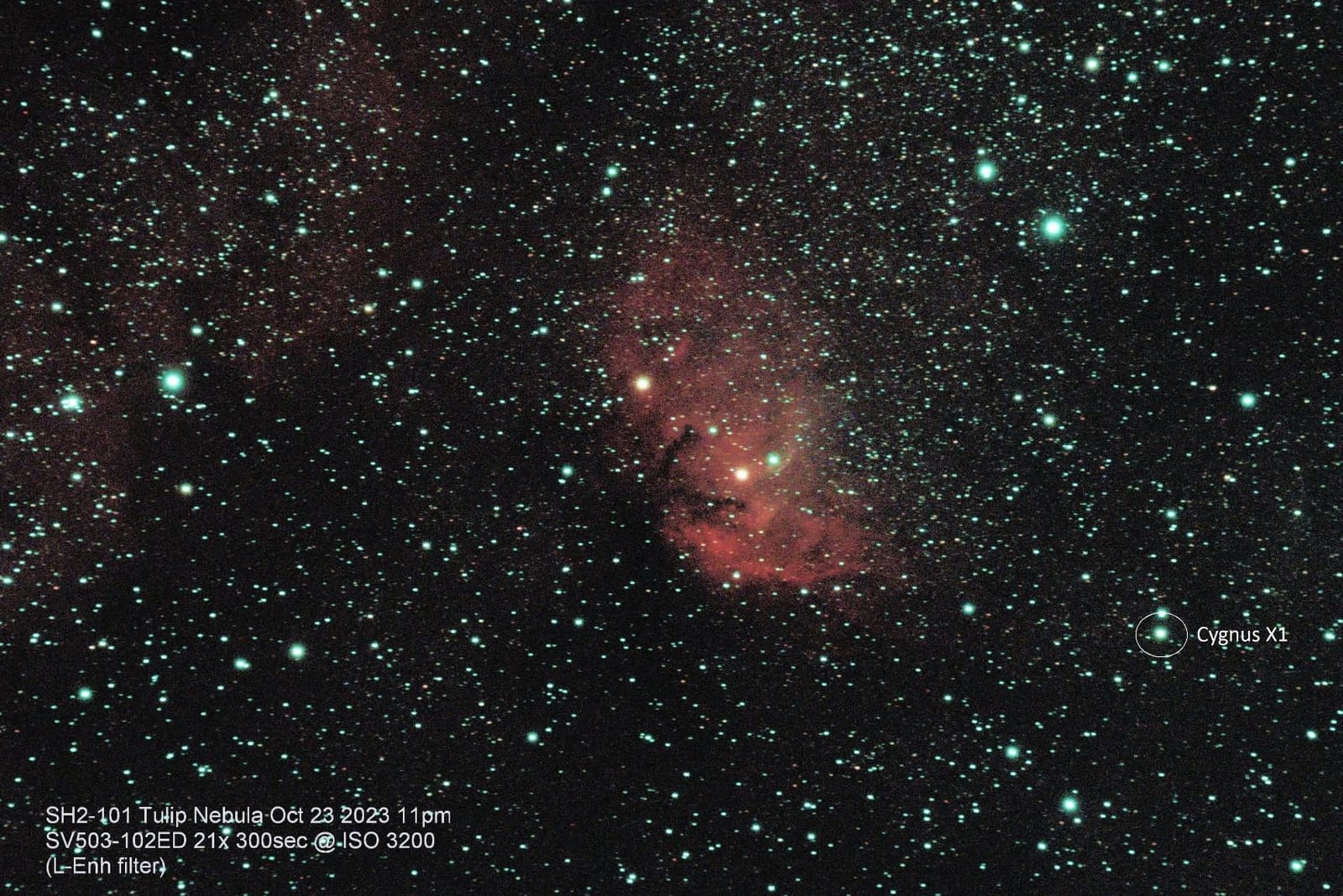
Two practical design points stand out. The bandpass is wide enough to avoid centre-to-edge band shift on fast optics such as an f/2 RASA, which is the failure mode that makes narrower filters unusable on fast astrographs. And it still passes enough light to achieve focus with a Bahtinov mask on a stock DSLR, which matters when you are chasing faint targets on a balcony.
It is fitted with multiple anti-reflective coatings and comes in a 2 inch M48x0.75mm thread cell, compatible with DSLRs, colour CMOS and CCD cameras. Reviewers also note it fits Vaonis Vespera and Vespera II filter holders snugly once the plastic blank is removed from the blank version.
Why dual-band beats CLS for nebulae
Because the contrast gain is far larger. A CLS filter passes most of the visible spectrum, so it can only carve out the sodium and mercury lines. A dual-band filter passes two narrow regions and rejects nearly everything else, so the sky background drops far more for the same exposure length. On emission nebulae that is the difference between a target you can see and one you cannot.
It also means a single filter works with a one-shot colour camera, so you get natural-looking colour nebula images without combining frames from multiple filters. That is why dual-band has largely displaced separate H-alpha, OIII and SII filters for OSC imagers.
The trade you are making
It blocks a lot of light, so sub-exposure times increase noticeably compared with a broadband filter. Plan for that before you buy, because the cost is integration hours rather than money.
It is a nebula filter, not a galaxy filter. Galaxies emit broadly and gain almost nothing from a dual narrowband pass, and star fields go sparse and colourless. If half your target list is galaxies, this is the wrong purchase and the CLS or L-Pro is right instead.
9. Optolong 2 inch L-Pro – Best All-Round Filter
Optolong 2″ L-Pro Light Pollution Filter
2 inch 48mm thread
Multi-bandpass design
About 90 percent transmission
CNC aluminum cell
Pros
- Keeps natural star colour better than L-eNhance
- Covers galaxies and clusters in Bortle 5 to 8 skies
- Sharp roll-off at artificial lines
- Black anodised cell kills internal reflections
Cons
- Can show a faint tunnel effect in star fields
- Less aggressive on gradients than dual narrowband
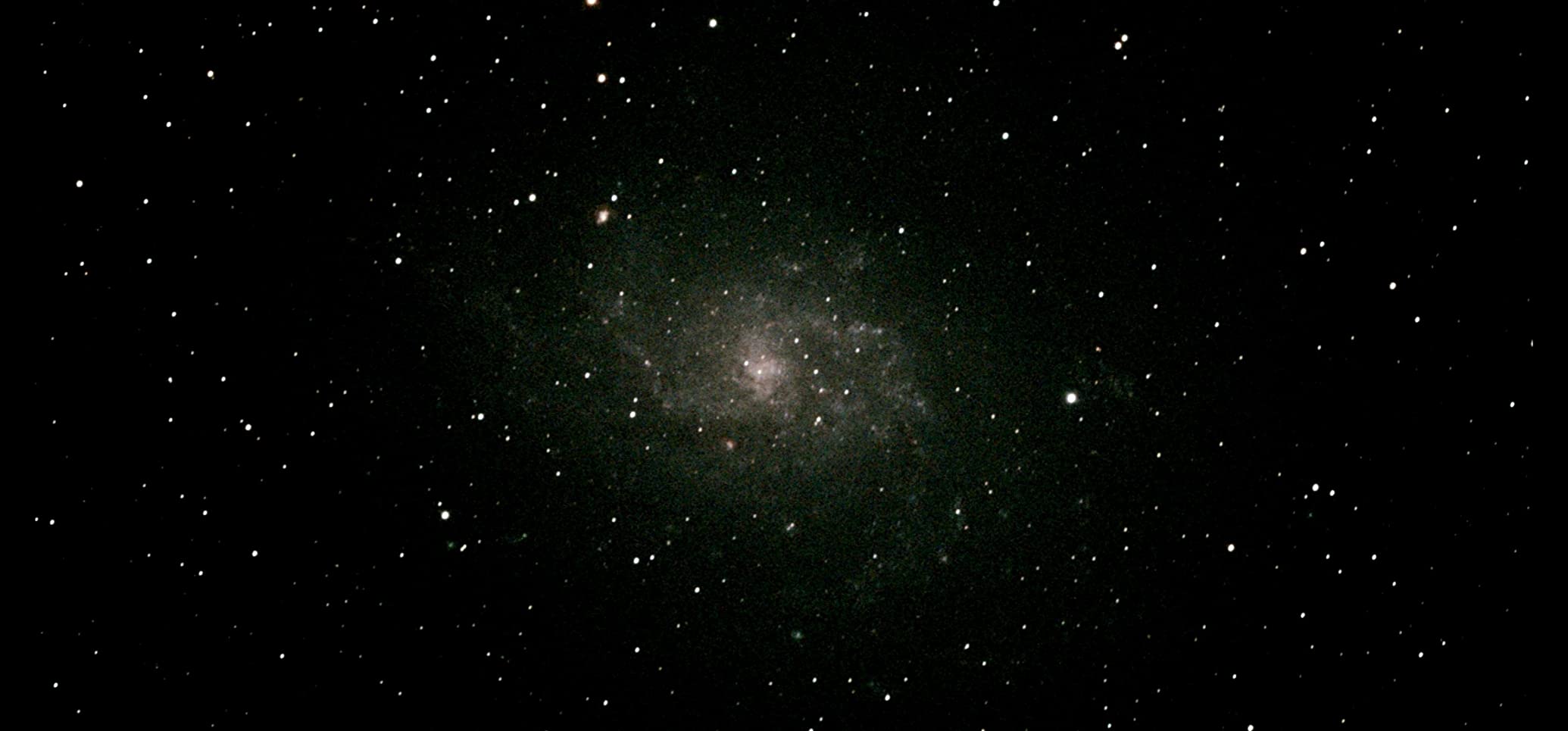
If you shoot a mixed target list, this is the one we would buy. The L-Pro is a multi-bandpass light pollution filter with a precise, sharp roll-off at light pollutant emission lines and around 90% transmission at the major nebula lines, which means it removes the offending wavelengths without hollowing out everything else. Across 86 ratings at 4.7 with 84% five stars, the consensus is that it is the sensible middle ground.
The comparison owners draw is with the narrower L-eNhance. They report retaining noticeably more natural star colour while still cutting skyglow, which is exactly the trade you want when your targets are not all emission nebulae. For galaxies, star clusters and comets under Bortle 5 to 8 skies, reviewers call it an all-round choice.
The build is the most refined in this group. A CNC machined filter cell in aerospace grade aluminium with a black anodised finish, explicitly to extinguish internal reflections, plus multi-layer anti-reflection coating on the glass. It threads at 48mm and is listed as compatible with standard camera lenses and imaging trains.
Black anodising is not a cosmetic preference on a filter. Internal reflections between glass elements and the cell edges are what produce the halos and colour fringing around bright stars that users complain about, and a matte black cell is the cheapest and most effective defence.
When L-Pro is the right call
Choose it when you are not certain what you will be shooting, or when you know you will mix emission nebulae with galaxies and clusters across a season. One filter, one calibration, no filter swapping, and broadband targets still look right.
Reviewers also note it produces a pleasing slight bluish hue in broadband targets rather than a colourless result, which matters for star fields where natural colour is part of what you are capturing.
Where it is the wrong call
It is not as aggressive on gradients as a dedicated dual narrowband filter. If your challenge is a strongly gradient-ridden suburban sky and your targets are purely emission nebulae, L-eNhance or L-eXtreme will show you more per hour of integration.
Some users also notice a faint tunnel or vignette effect in the star field before cropping. It is minor and it crops out, but if you shoot full-frame star fields with short focal lengths, check a frame edge early rather than finding out after a night of integration.
10. Optolong 2 inch L-eXtreme 7nm – Best for City Nebula Work
Optolong L-Extreme 7nm Dual Narrowband Filter (H-Alpha and O-III) (2″)
2 inch 48mm thread
7nm dual Ha and OIII
Multi coating
Built for one-shot colour
Pros
- Highest average rating at 4.9
- Strong rejection of pollution and moonlight
- Single-filter colour nebula on an OSC camera
- Suitable for fast focal ratios
Cons
- Very narrow bandpass means long exposures
- Unsuitable for galaxies and star clusters
This is the most specialised filter in the group and the highest rated, at 4.9 across 52 ratings with 95% five stars and nothing below four. It is a 7nm dual narrowband filter passing hydrogen-alpha and oxygen III, and the whole design brief is imaging in bright man-made light pollution and moonlit conditions. Nothing else on this list is built for that.
Where the L-eNhance covers a wider pair of bands, the 7nm pair here is tighter, which means stronger rejection of everything between the lines. Reviewers treat it as a specialist tool: emission nebulae from a heavily light-polluted or moonlit sky, on a one-shot colour camera, in colour, without combining frames from multiple filters.
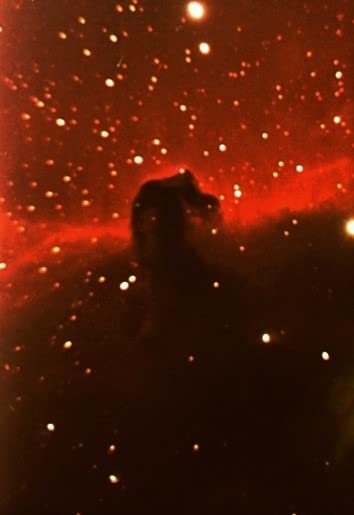
The listed maximum shutter speed of 30 seconds is a hint about how it is meant to be used: on a star tracker, taking repeated sub-exposures that stack. It is compatible with DSLRs, CCD cameras and CMOS cameras, threads at 48mm, and the cell is glass rather than plastic.
One underappreciated advantage is fast focal ratios. Because 7nm is narrow enough that the shift across a very fast field is relatively small compared with a broader dual-band, reviewers note it is suited to fast optics where broader dual-band designs suffer band shift.
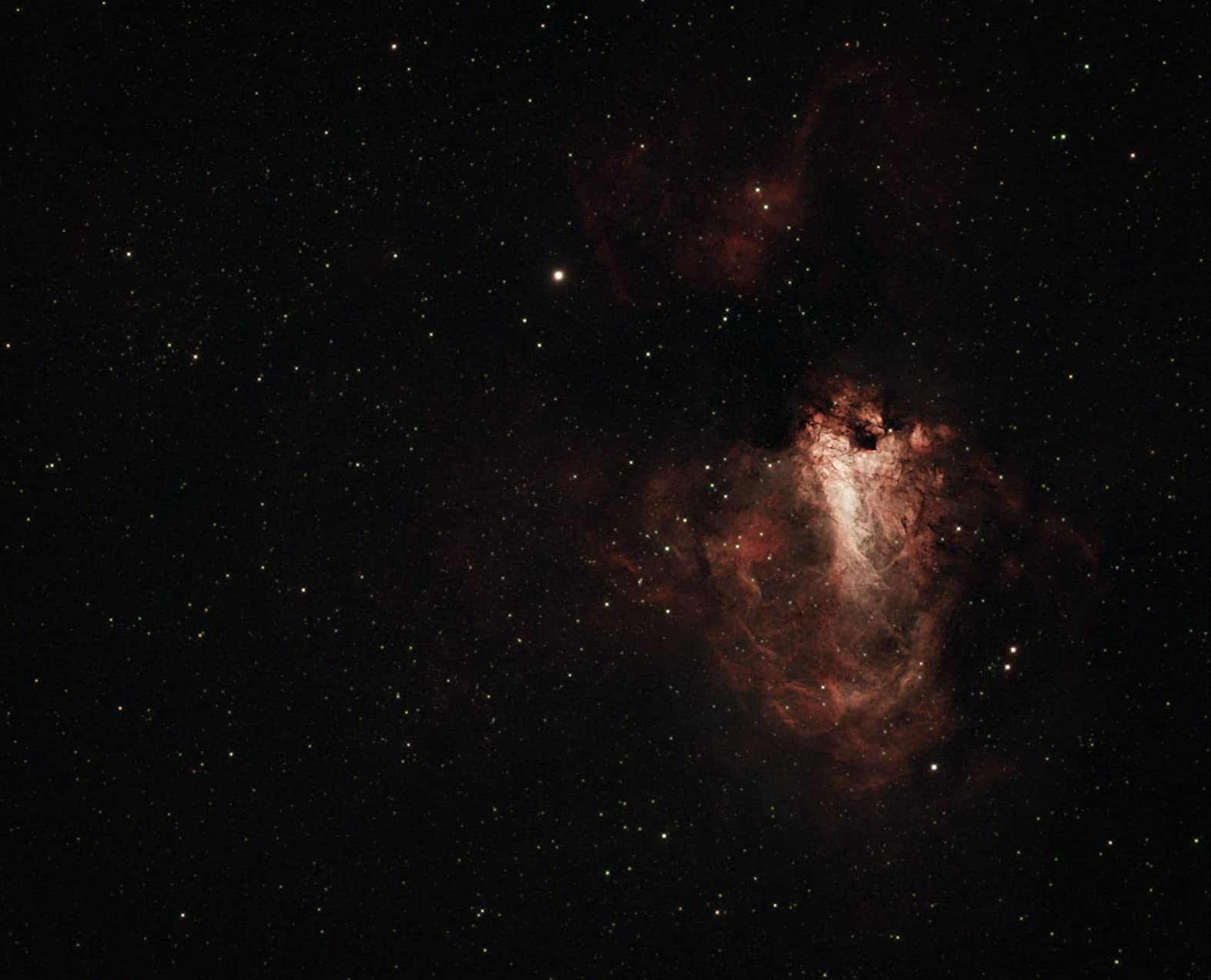
Who should buy the 7nm
Buy this if you are in a genuinely bright city, you shoot emission nebulae, you have a one-shot colour camera, and you are willing to integrate for a long time. Under those conditions nothing else in this list will give you the same signal-to-noise on a nebula from a bright sky.
It is also the right filter to reach for when moon is a problem. Narrowband rejection of moonlight is one of the practical reasons dual-band and narrowband glass exists, and 7nm is at the aggressive end of that.
The cost, stated plainly
The bandpass is very narrow, which severely lengthens exposure times, so total integration hours add up quickly. This is not a filter for a couple of clear weekend nights. Budget the hours before you commit.
It is not suitable for broadband targets. Galaxies and star clusters will be almost absent, and any star field comes out sparse and colourless. If your target list is not primarily emission nebulae, the extra rejection is wasted and the exposure penalty buys you nothing. In that case take the L-Pro instead.
Do Light Pollution Filters Actually Work?
Let us address the loudest objection first, because if you have read any forum thread about filters you have already met it. The standard advice, repeated across StarGazersLounge, DPReview and r/AskAstrophotography threads, is that the best light pollution filter is to put the telescope in the car and drive somewhere dark. They are right. A Bortle 3 site will beat any filter on this list for almost every target.
So should you buy one anyway? Yes, for a specific set of reasons that have nothing to do with replacing dark skies.
First, most people cannot drive to a dark site. Work schedules, weather, travel cost and physical setup all mean many imagers get two or three usable dark-sky nights a year and shoot from home the rest of the time. A filter makes the home sessions productive rather than wasted.
Second, filters help with light domes, not just brightness. A suburban sky often has a huge glow from one street or one sports pitch, and filtering can flatten that gradient enough to keep the edges of your field usable. A gradient you cannot remove in processing is a gradient you cannot recover from.
Third, moonlight. A dual narrowband filter keeps working on a moonlit night when a broadband frame is ruined, and that can double your usable nights through a lunar month. This is the single most underrated benefit in the category.
What filters cannot do is recover resolution, star colour, or the sheer faintness of a dark sky. Anyone who tells you a UHC will let you image faint galaxies from a Bortle 9 backyard is overselling. Broadband emission nebulae from the city, a CLS for galaxies and star clusters, dual-band for emission nebulae under skyglow, and a didymium filter for Milky Way landscapes.
How to Choose a Light Pollution Filter
Work through these four decisions in order. Most wrong purchases come from starting with a brand name instead of a class.
1. Pick the filter class from your target list
Dual-band narrowband for emission nebulae, because it passes hydrogen-alpha and oxygen III while rejecting nearly everything else. CLS broadband for galaxies, star clusters and reflection nebulae, because it keeps most visible light and only carves out sodium and mercury lines. UHC broadband for visual observing and budget imaging. Didymium or Natural Night for wide-field Milky Way on a camera lens.
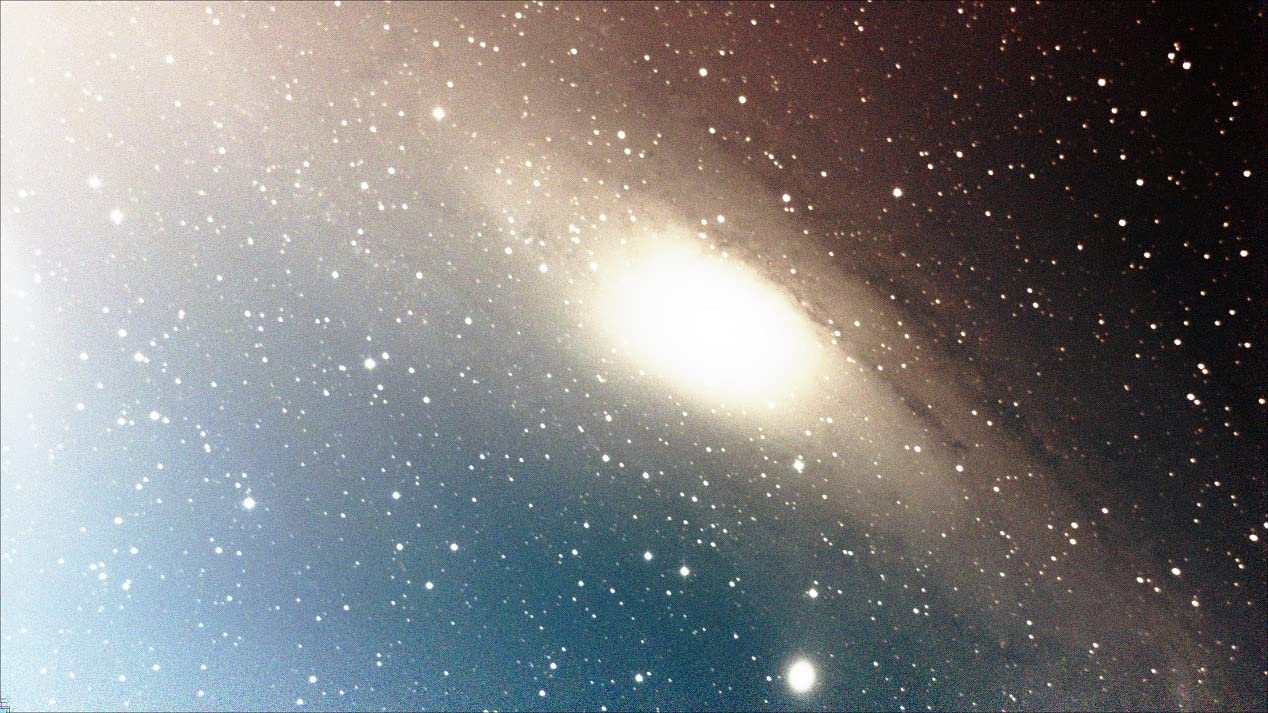
The most common mistake is buying a narrowband filter for galaxies. A dual-band pass on M31 produces a faint, nearly colourless frame, and no amount of processing rescues it. If your list is galaxy-heavy, buy broadband.
2. Understand what bandwidth costs you
Bandpass width is the central trade in this category, and it is the technical point no competitor on the search results covers.
Broadband designs such as UHC and CLS pass most of the visible spectrum with cuts at the artificial lines. They give you the most signal and the least contrast, and the sky background only drops so far. A 7nm dual narrowband rejects almost everything between the lines, so contrast climbs sharply and signal per second falls. The narrower the band, the more of your own astronomical signal you throw away.
The practical consequence is exposure time and focal ratio. Narrow filters need long integrations to gather enough photons, and very fast focal ratios shift the band across the field, which causes colour gradients from edge to centre. If you shoot f/2, stay away from very narrow filters. If you shoot f/7 and can integrate all night, narrower is better.
3. Get the mount and size right
Clip-in filters sit inside a Canon or Nikon DSLR body. They are the only option for a stock DSLR, and the standard advice is to avoid them on fast wide astrographs where the light cone geometry defeats them. Check your camera’s supported filter list before buying.
1.25 inch threaded filters fit most eyepieces and small imaging adapters. They are cheap and effective, but the small aperture can vignette a full-frame sensor.
2 inch threaded filters are the standard for astro cameras and any optical train faster than about f/4. Most filters in this list use the 48mm M48x0.75mm thread.
Unmounted 48mm glass is the cheapest route and the easiest to damage. Only buy it if you have a filter holder already.
Lens-threaded 67mm glass is for camera lenses, not telescopes. It has nothing to do with astronomy filter sizes and will not fit an eyepiece.
Check thread sizes twice. The most common wasted purchase in this category is a beautifully specified filter that physically does not fit the camera or lens you own.
4. Match the filter to your camera type
One-shot colour cameras and unmodified DSLRs are the natural home of dual-band filters, because a single filter produces a colour image without combining multiple narrowband sets. Cooled mono imagers can run separate hydrogen-alpha, oxygen III and sulfur II filters and build an SHO palette, which broadband CLS cannot give you.
A modified or astro-modified DSLR benefits from red intensifier behaviour, which is what the didymium filters on this list deliver as a side effect. A smart telescope or phone-based rig is a different category entirely and needs its own small-format glass.
5. Match the filter to your Bortle class
At Bortle 4 or darker, a filter is optional. A broadband CLS still smooths gradients slightly, but the gain is small and you would be better served by longer integration.
At Bortle 5 to 6, a CLS or L-Pro is the sensible default for galaxies and clusters, and a dual-band works well for emission nebulae. At Bortle 7 to 8, dual-band becomes the right answer for nebulae because broadband rejection is no longer enough. At Bortle 9, a city centre, only narrowband or dual narrowband glass gives usable nebula data, and you should plan on long integrations.
The most important line in the buying guides on this topic, and the one most often skipped: check what lights are actually polluting your sky. If they are LED, didymium and broadband UHC designs lose much of their advantage, and narrowband glass becomes the sensible default. If they are still sodium and mercury vapour, broadband filters are cheaper and effective.
Frequently Asked Questions
Can you do astrophotography with light pollution?
Yes, with the right filter and realistic expectations. Narrowband and dual-band filters pass only hydrogen-alpha and oxygen III lines, so they reject most of the artificial skyglow and let emission nebulae emerge from bright skies. Broadband CLS filters work for galaxies and star clusters. You cannot recover resolution or star colour from a dark site, but you can produce finished images from Bortle 6 to 8 skies.
Is an UHC filter good for galaxies?
Not really. UHC filters are broadband designs optimised to darken the sky background for visual observing, which means they discard signal an imager would rather keep. Galaxies emit across a wide range of wavelengths, so a UHC gives very little. For galaxy imaging, a CLS broadband filter or an Optolong L-Pro preserves more of the object’s light while still cutting sodium and mercury lines.
How to see stars through light pollution?
Three things help. First, get a UHC filter for visual observing, which blocks the sodium and mercury emission lines and darkens the sky background enough to reveal fainter stars and nebulae. Second, shield your eyepiece from stray ambient light to stop internal glare. Third, let your eyes fully dark adapt for 20 to 30 minutes with the filter already in place, and avoid looking at bright screens.
Why do astronomers hate light pollution?
Because it raises the sky background, which reduces contrast and drowns out faint deep-sky objects before they get faint enough to be interesting. It also destroys dark adaptation, so observers and imagers lose the very thing that makes the hobby work. Astronomers push for shielded fixtures and warmer colour temperatures because a single change to street lighting can be undone by anyone taking a photograph from a nearby field.
What is the 500 rule for astrophotography?
Divide 500 by the focal length of your lens in millimetres to get the longest exposure in seconds before stars trail. A 20mm lens gives 25 seconds, a 50mm lens gives 10 seconds. A light pollution filter does not change this, although a tripod and a star tracker push your limit to much longer exposures. Modern high-resolution sensors and stacking tolerate shorter limits than the rule assumes.
Conclusion: The Best Light Pollution Filters for Astrophotography in 2026
There is no single best light pollution filter for astrophotography, because the class you need follows your target list. If you shoot the Milky Way on a camera lens, the K&F CONCEPT 67mm natural night filter is our top pick, with the HOYA Starscape as the stronger-rated alternative if your street lighting is still sodium. If you want to see nebulae through an eyepiece from a suburban sky, the SVBONY 1.25 inch UHC is the best value on this list.
For imaging, match the glass to the target. Emission nebulae from bright skies call for dual-band, and the Optolong L-eNhance is the choice for a stock DSLR while the 7nm L-eXtreme is the specialist option for city and moonlit skies. Galaxies, star clusters and anything broadband belong behind a CLS, with the Optolong L-Pro as the most flexible single filter when you mix targets.
Check your thread size, check what lights your sky, and be honest about how often you can drive somewhere dark. Get those three right and any of these filters will earn its place. Use the buttons above to check current pricing, and pick your class before you pick a brand.