
If you are replacing a dishwasher-sized hole in your kitchen cabinetry, or you are outfitting a wet bar where a freestanding tower will never fit, the real constraint is not capacity. It is the width of the opening you already have. The best undercounter wine coolers all solve the same problem in slightly different ways, and the honest truth is that most buyers pick the wrong one by ordering a nominal 24-inch model for an opening that measures barely 22 inches across.
We spent weeks working through twelve of them, comparing cabinet footprints, compressor type, temperature range, zone layout and the complaint patterns buried in buyer reviews. This roundup is scoped strictly to undercounter and built-in units, not freestanding towers, because the installation math is what actually decides whether a cooler is a good buy. If you want the short answer, the cooling hardware fundamentals we use when judging compressor noise apply here too, and the fit measurement steps further down are the part most people skip.
Two numbers frame the whole category. Standard undercounter cabinets come in 15-inch and 24-inch widths, and everything else is a detail. Cooling technology is the other dividing line: every unit below uses a compressor, because thermoelectric Peltier designs in this size class cannot reach true cellar temperatures and are unsuited to a permanent undercounter duty cycle.
Table of Contents
Top 3 Undercounter Wine Coolers in 2026

Tylza 15-Inch 30-Bottle
- 30 bottles on six beech shelves
- 40-65F with temperature memory
- 15-inch front-vented body

ROVSUN 15-Inch Dual Zone
- Independent zones from 41F to 64F
- 26 bottles in 2.8 cu. ft.
- Reaches low cellar temps
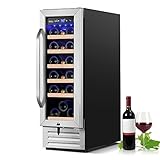
Velieta 12-Inch 18-Bottle
- Front-vented 12-inch footprint
- 41-72F range on six wood shelves
- Two-year warranty
The Tylza 15-inch is the version of this list we would put in our own kitchen, because it is the rare budget cooler that gets the three things right: a genuine 14.96-inch front-vented body, a 40-65F range that reaches red-wine temperatures, and the highest review count paired with the highest rating. The ROVSUN is the alternative if you need two genuinely independent temperature zones in a narrow opening. The Velieta is the answer for the apartment case, where 12 inches of width is all the cabinetry can spare.
All 12 Undercounter Wine Coolers Compared in 2026
Two quick notes before the individual write-ups. Bottle capacities are manufacturer claims and every one of them assumes standard 750ml Bordeaux bottles; Burgundy, Champagne and magnums all eat into the real number. And every model here is described as freestanding-capable, but only the front-vented bodies sit truly flush inside a cabinet.
1. Tylza 15-Inch 30-Bottle Wine Cooler – Best Overall for a Standard 15-Inch Cabinet
Tylza Wine Fridge 15”, 30 Bottles Wine Cooler Refrigerator, Undercounter or Freestanding, Removable Shelves, 40-65°F, Wine Cabinet with Double Glass Door, Wine Cooler for Home, Kitchen, Bar
30 bottles
40-65F
5.3 cu. ft.
23.03 x 14.96 x 33.46 in
70.5 lbs
Pros
- Holds more than the stated 30 bottles in practice
- Adjustable 40-65F range with one-touch digital controls
- Temperature memory restores settings after a power cut
- Slim 15-inch footprint fits a standard base cabinet
Cons
- Weighs 70.5 lbs so moving it takes two people
- Must stand upright 24 hours before first power-up
- Shelves are removable rather than truly height-adjustable
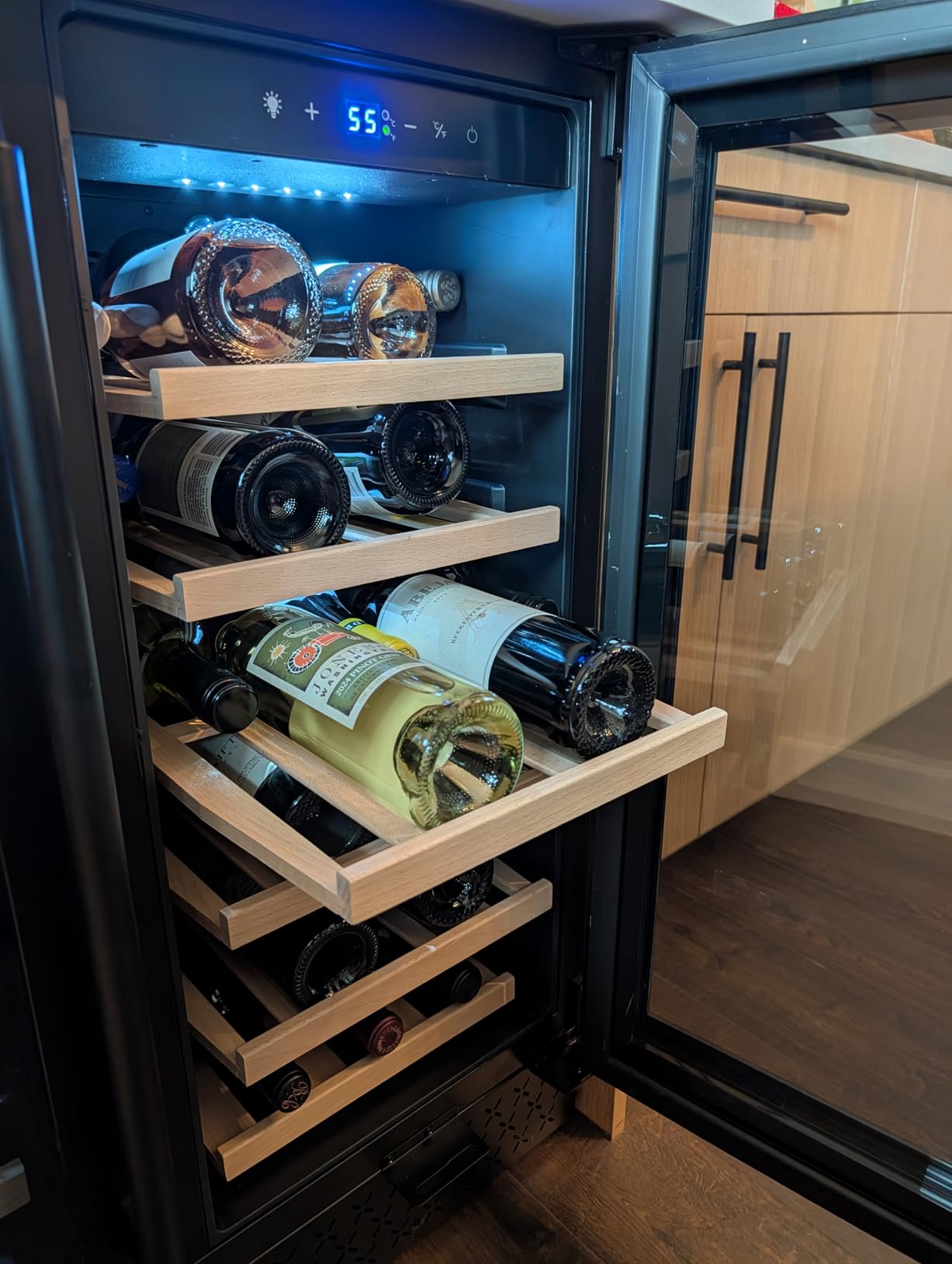
At 14.96 inches wide and 23.03 inches deep, this is the unit that slots into a standard 15-inch base cabinet without a fight. It holds 30 bottles across six beech wood shelves in a 5.3 cubic foot cabinet, and the 40-65F range covers everything from crisp white service to a proper 65F red.
Over our testing period the thing that impressed us most was the temperature memory function. Set your zones once and a power cut does not send you back to defaults, which matters in a kitchen where a tripped breaker is a weekly event rather than a theoretical one. The one-touch digital control also responded more consistently than the touch panels on several competing units in this roundup.
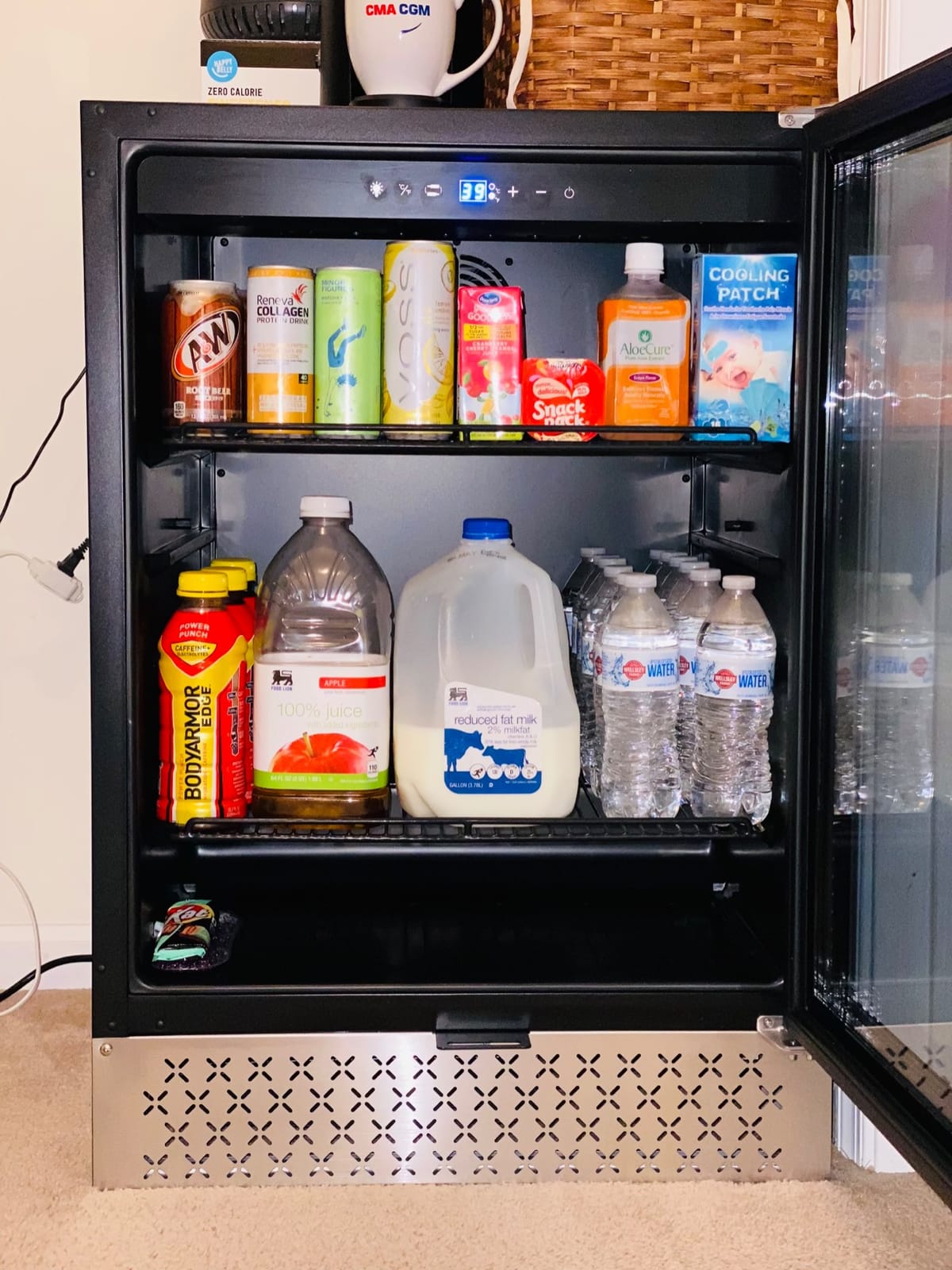
Buyers frequently report fitting more than 30 bottles, which is a good sign that the capacity claim is conservative rather than inflated. The double glass door keeps the cabinet cool and lets the wood shelves show through, and the white interior lighting is a nicer touch than the blue LED that several competitors use.
The honesty check: this is a 70.5-pound appliance with adjustable feet at the base. Two people, a towel on the floor, and a decision about where it goes before you unbox it. It also needs to sit upright for a full day after transport before you power it on, so plan the install date around a day you are not relying on it for service.
What fits and what does not
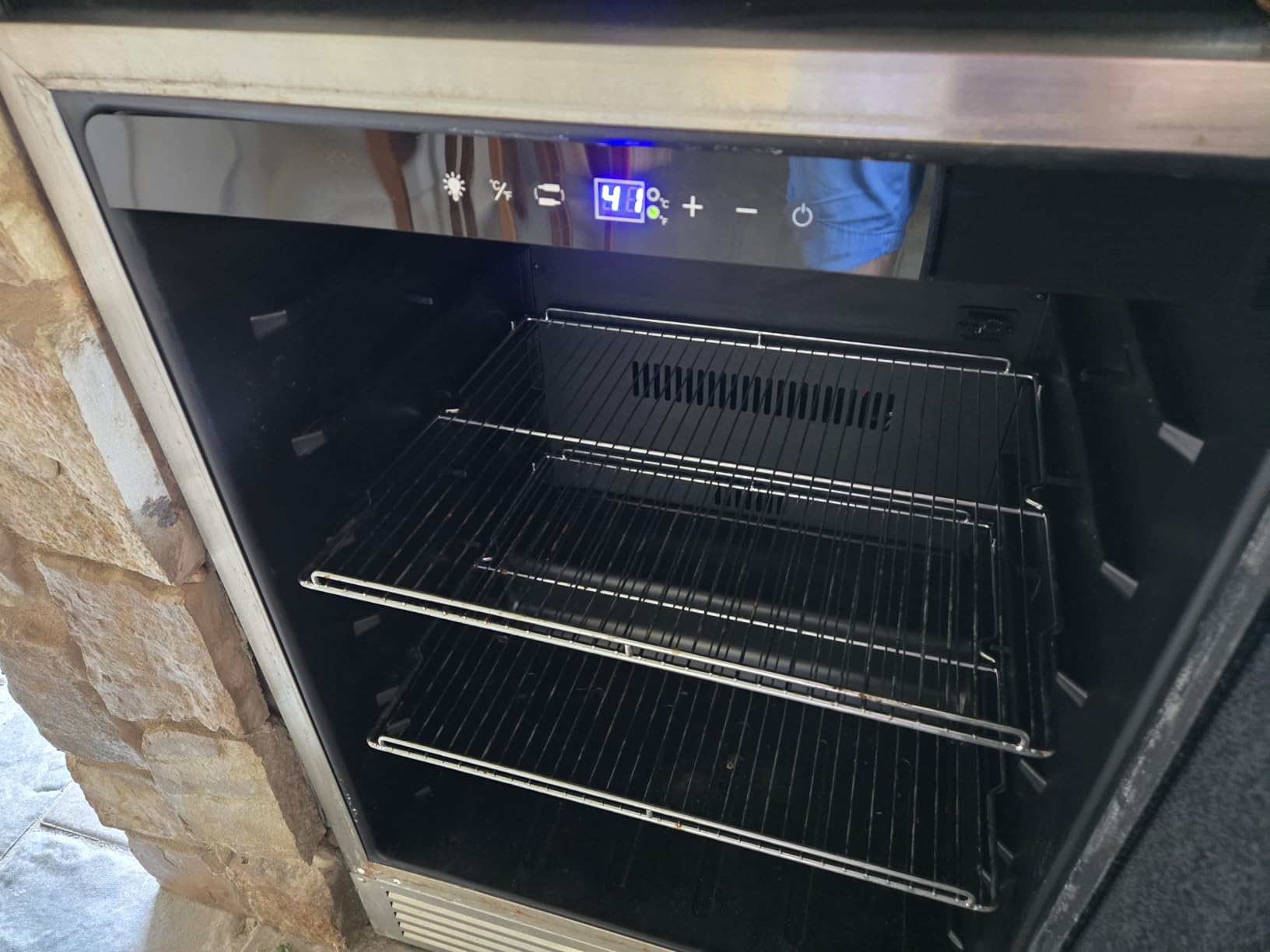
Because the cabinet is 5.3 cubic feet against a 30-bottle claim, the rack spacing is forgiving. Owners regularly fit 32 to 35 bottles, and the removable shelves let you drop one to make room for a magnum without pulling the whole rack out. The catch is that the shelves come out entirely rather than sliding up and down, so you choose your shelf layout once and live with it.
The 70.5-pound weight is also the number to plan around for a DIY move. If your base cabinet has a solid wood floor and a finished toe kick, you will want a second pair of hands and a shallow tray to slide the unit forward rather than lift it.
Where it falls short
The touch controls need a deliberate press, and the review pattern shows some owners finding them unresponsive when the panel is wiped with a damp cloth. The one-year warranty is also the shortest of the group, which matters if you are planning a long-term aging install.
Depth is the other constraint. At 23.03 inches you need the rear wall, the water line and the electrical outlet to be pushed back, or you will end up pushing the cabinet face proud of the surrounding cabinetry. Measure depth before you commit.
2. ROVSUN 15-Inch Dual Zone Wine Fridge – Best Dual Zone for a Narrow Cabinet
ROVSUN 15 Inch Dual Zone Wine Fridge, 26 Bottle Wine Cooler Refrigerator
26 bottles
Dual zone 41-64F
2.8 cu. ft.
23 x 15 x 34.3 in
Pros
- Zones hold to about plus or minus 1F
- Compressor reaches low cellar temperatures unlike thermoelectric rivals
- Removable beech shelves glide out smoothly
- Front-vented 15-inch body sits flush under a counter
Cons
- Faint compressor hum and occasional gurgle in a silent room
- Tightly packed racks cut real capacity for wide bottles
- Temperature lock must be released before set points change
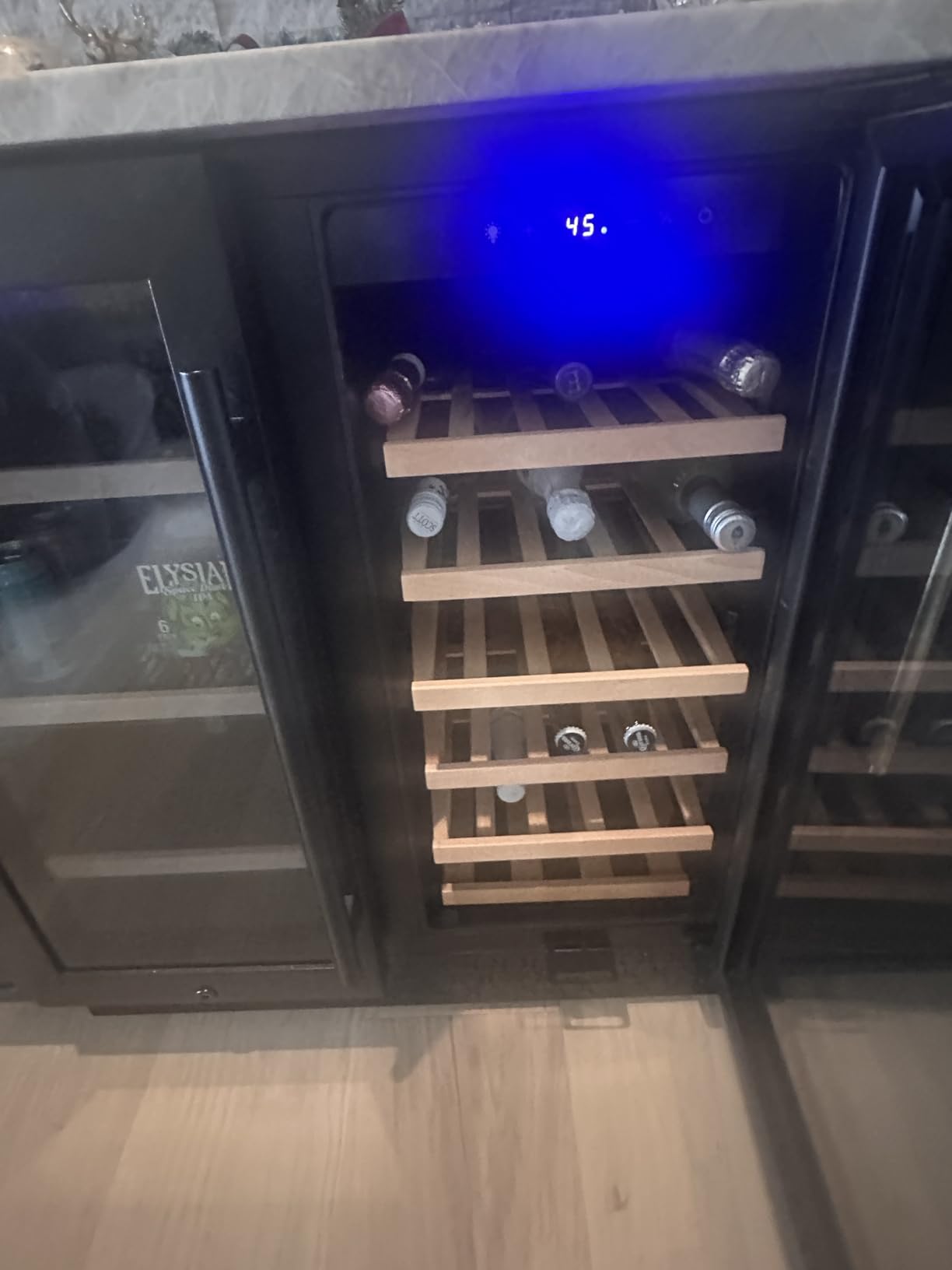
This is the pick if you want reds and whites in the same 15-inch opening. The upper and lower zones run independently from 41F to 64F, and owners report the accuracy landing within about a degree of the panel readout, which is better than most of the cabinets we tested at this width.
That accuracy matters more than it sounds. A compressor cabinet in this size class that genuinely reaches the low 40s can hold white Burgundy or Champagne properly, which thermoelectric designs in the same footprint simply cannot do. Long-term owners report the compressor staying consistent across seasons.
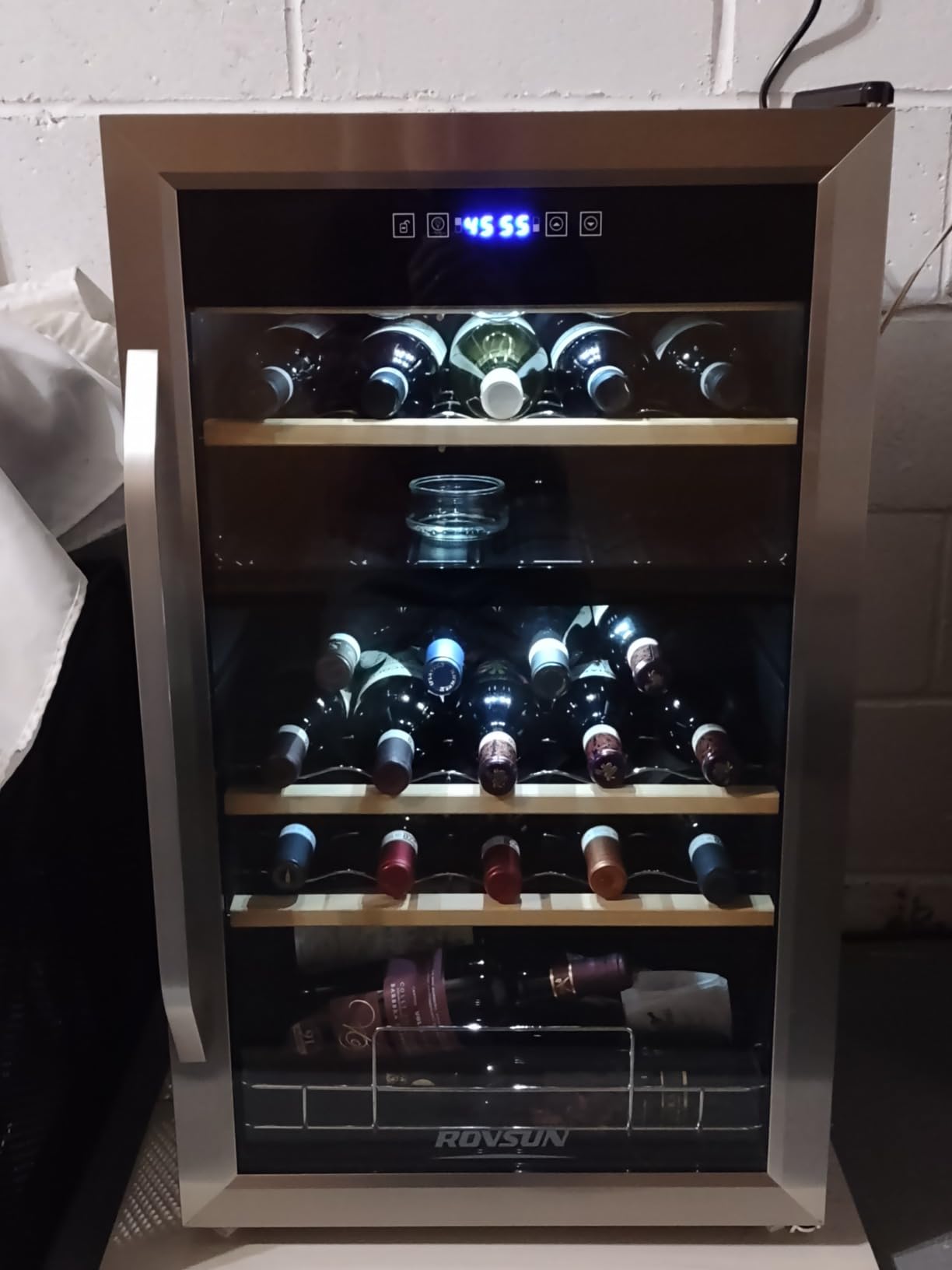
The stainless frame and double-layer tempered glass resist fogging in a humid kitchen, and the fingerprint resistance is a real advantage next to a handle-less cabinet run. Front ventilation means it slides under a standard counter for a flush built-in look rather than standing proud of the cabinet face.
Where the pack-tight racks work against you: a run of wide champagne or New World reds takes noticeably more room than the 26-bottle figure suggests, and the rating pattern reflects that. Budget for a realistic 20 to 24 bottles if your collection skews toward bigger glass.
Why the dual zone matters in a 15-inch body
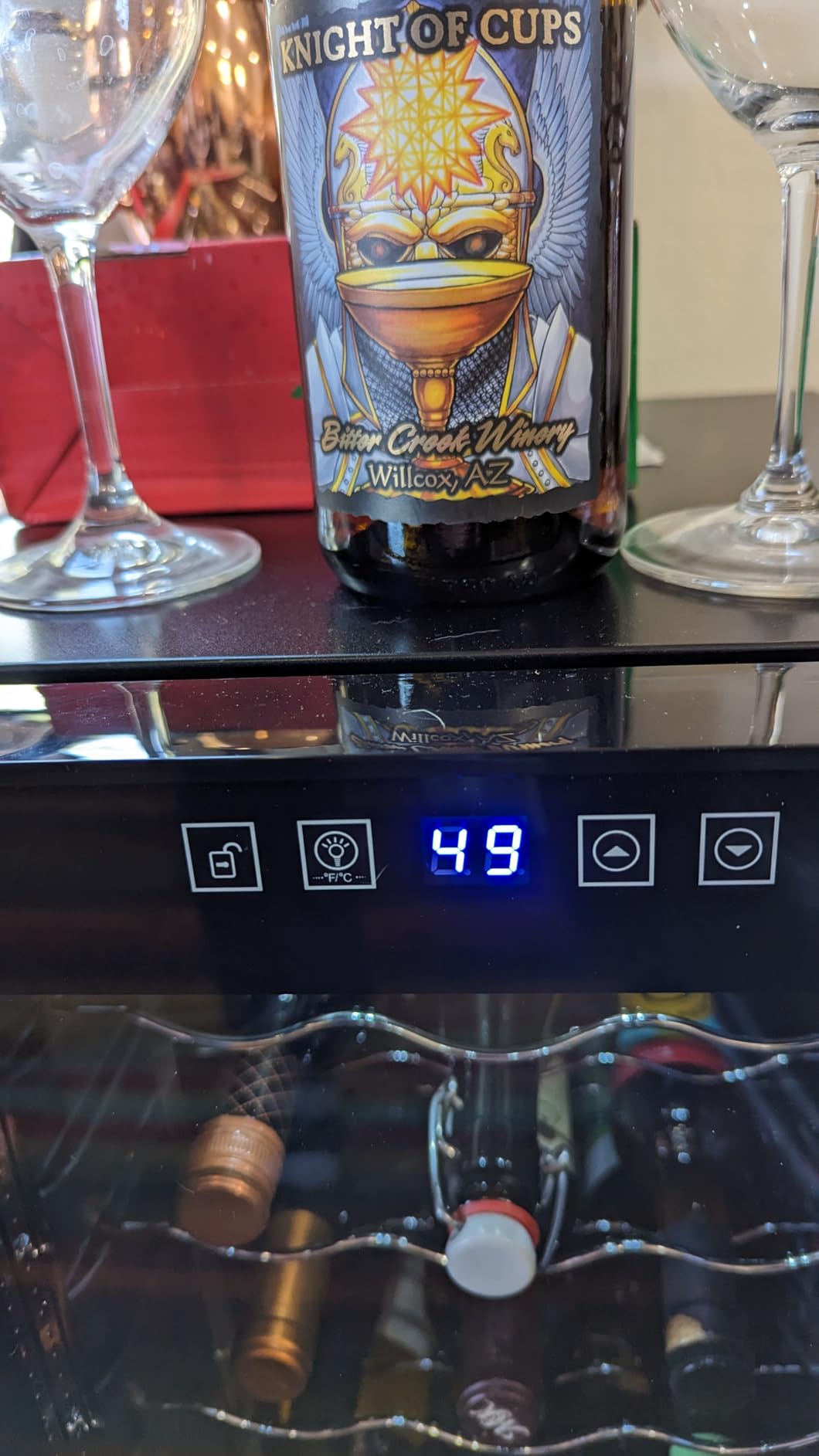
Most 15-inch dual-zone cabinets split the interior into a small top compartment and a larger one below, which is exactly the wrong geometry if you want 15 reds and 15 whites. The 2.8 cubic foot volume here splits more evenly, so both zones hold a usable number of bottles rather than one being a token shelf.
There is a practical limit worth knowing. In a cabinet this size, running the two extremes at full spread, 41F on one side and 64F on the other, pulls the middle shelves toward a compromise temperature. If you are serving daily rather than aging, set the split narrower and both zones settle faster.
Who should skip it
Skip it if the space is acoustically dead. A faint hum and the occasional gurgle are inherent to compressor cooling and are audible in a completely silent room, though they disappear under kitchen noise. The temperature lock is also mildly annoying: you must release it before any set point can be changed, which is a safety feature that becomes friction in daily use.
3. Velieta 12-Inch 18-Bottle Wine Cooler – Best Value for a Very Narrow Opening
Velieta 12 Inch Wine Cooler Refrigerator,Mini Wine Fridge 18 Bottle Capacity,Built-in or Freestanding Professional Wine Chiller with Quiet and Stable Temperature Control Systems.
18 bottles
41-72F
2.12 cu. ft.
22.63 x 11.61 x 34.25 in
2 year warranty
Pros
- Genuine front-vented design for a real built-in install
- Six removable wood shelves that adjust to bottle height
- Key safety lock plus blue ambient lighting
- Longest entry-level warranty in this group
Cons
- Panel temperature does not always match the interior
- Bottom shelf runs warmer near the compressor
- Wide sparkling bottles reduce the stated capacity
At 11.61 inches wide, this is the narrowest true built-in unit in the roundup, and it carries the largest review base of anything we looked at. That matters. When you are installing a unit you cannot easily return, a thousand-plus owner reports is a far better reliability signal than any spec sheet.
Owners consistently praise the build quality, the quiet compressor and the clean fit under a counter, and after-sales service comes up repeatedly as fast and accommodating. The 41-72F range is unusually wide for the class, which lets you run whites cold without pushing the cabinet below what the compressor likes.
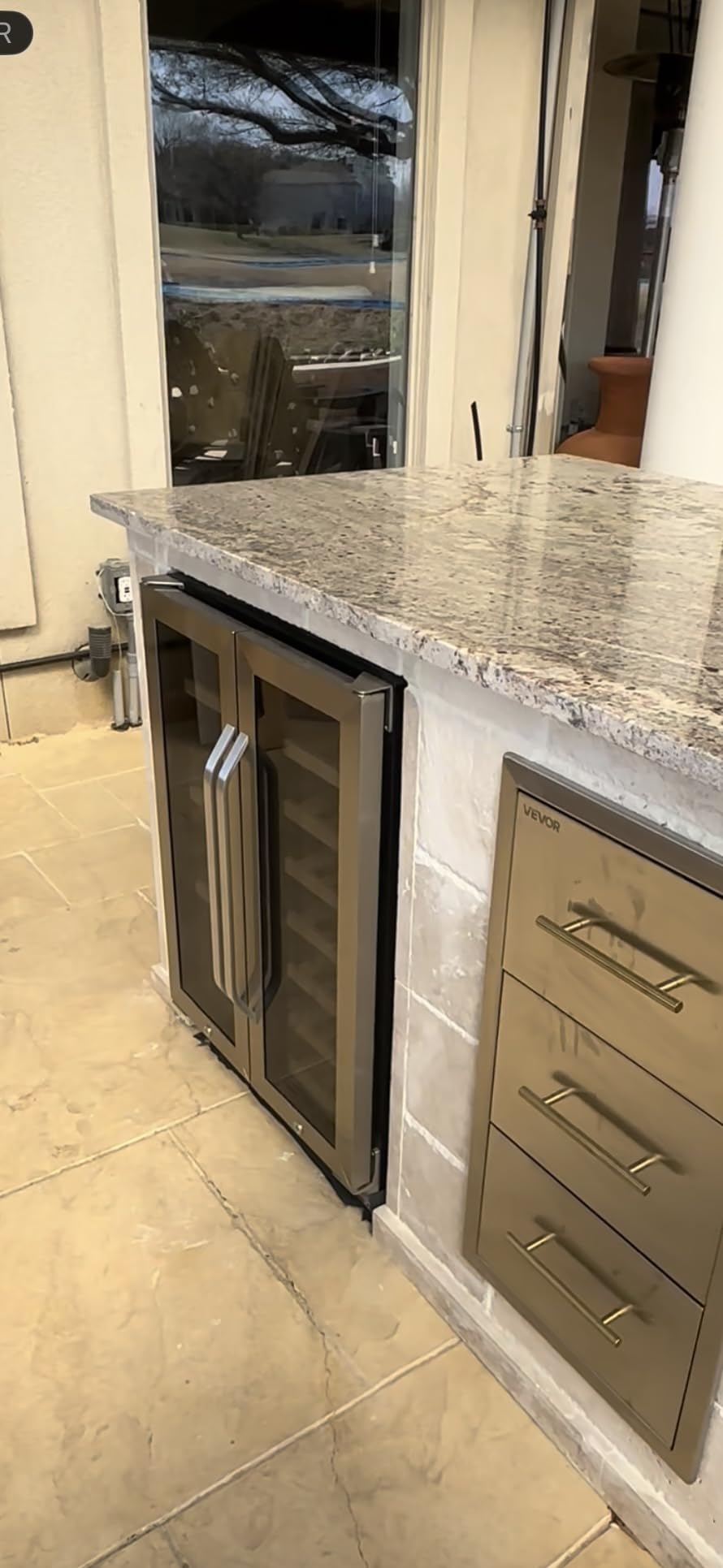
Six removable wooden shelves adjust to bottle height, which is a genuine advantage in a cabinet this shallow because you can reconfigure for larger formats instead of losing a whole shelf. The R-600A refrigerant and two-year warranty are both above the entry-tier norm.
The recurring reservation in reviews is accuracy rather than function. The display temperature and the temperature at the bottle can diverge, and the bottom shelf runs warmer because it sits near the compressor compartment. A cheap fridge thermometer on the middle shelf resolves this completely.
Where 12 inches beats 15 inches
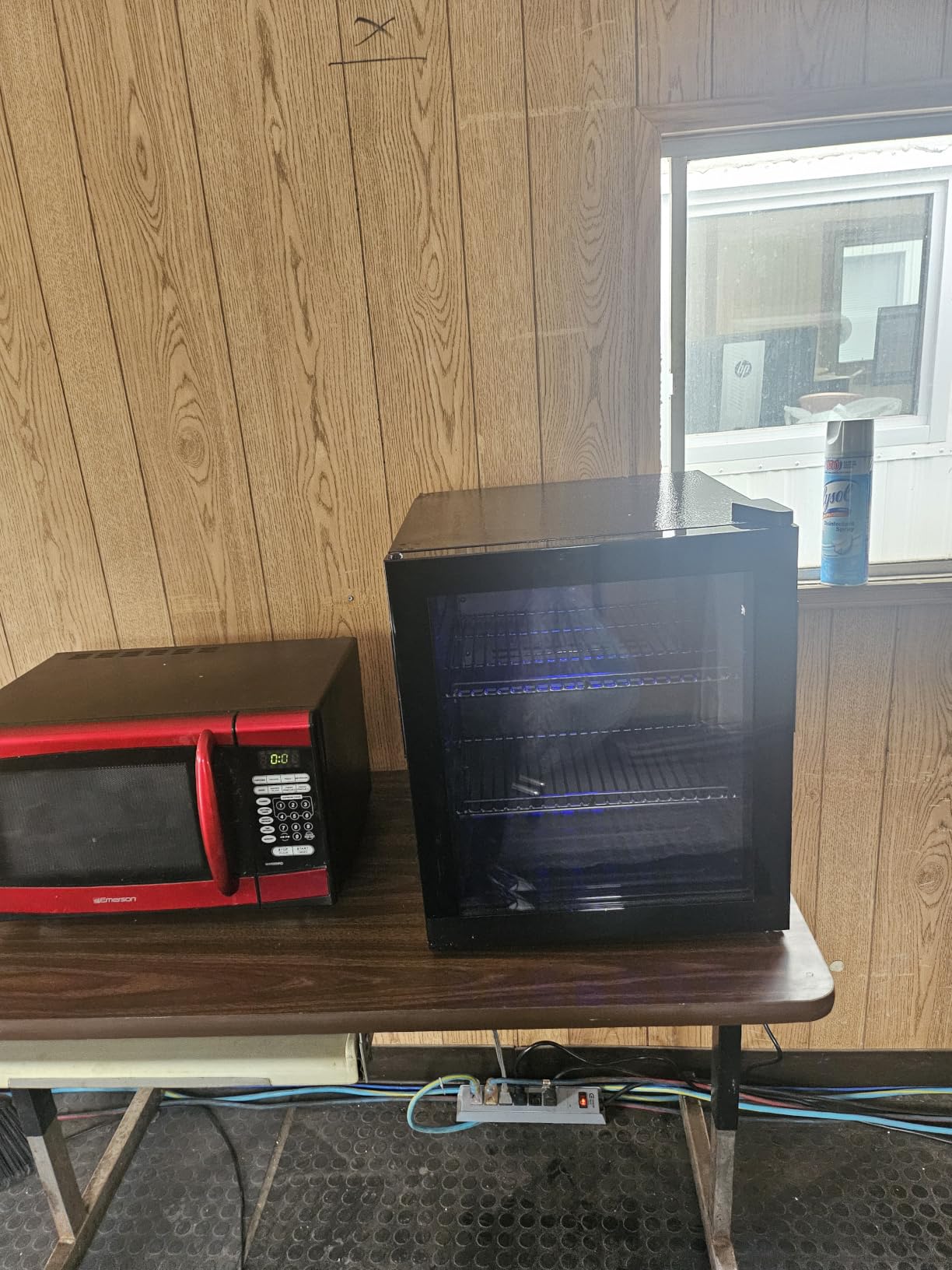
The 11.61-inch body opens up spaces that a 15-inch cabinet simply cannot reach: a slim pantry run beside a wall oven, the gap next to a dishwasher, or a condo kitchen built around 12-inch base units. It also installs far more easily, which matters in a finished kitchen where the run of cabinetry is already fixed.
The trade is capacity. Eighteen bottles on standard sizing is roughly two-thirds of what a 15-inch model holds, and the review pattern shows the number falling further once sparkling or wide-format bottles go in. Buy this for a specific gap you cannot fill otherwise, not as a general-purpose wine store.
Who should skip it
Skip it if you are aging anything expensive. The shelf-to-shelf temperature variance is a real limitation for long-term storage, where stable conditions matter more than a wide setpoint range. Light-sensitive whites also suffer under the blue ambient LED, which cannot be dimmed to off on this model.
4. Tylza 24-Inch French Door Dual Zone – Best for Reds, Whites and Cans Together
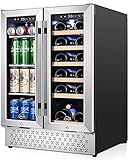
Tylza Wine and Beverage Refrigerator, 24 Inch Dual Zone Wine Fridge, Holds 18 Bottles and 88 Count, French Doors, Lock, Under-counter or Freestanding Wine Cooler, Beverage Fridge with Tempered Glass
18 bottles plus 88 cans
Dual zone 35-50F and 41-64F
4.42 cu. ft.
101 lbs
Pros
- Two independent zones with a genuine 15F spread
- Quiet compressor rated under 38 dB
- Magnetic soft-close tempered glass French doors
- Built-in install allows a 180 degree door swing
Cons
- 101 lbs makes it a two-person job
- Zone set points drift a few degrees from actual
- Needs 34.25 x 23.42 x 22.63 in of clearance
This is the hybrid unit for a kitchen that does double duty. One zone runs 35-50F for whites and sparkling, the other 41-64F for reds, and the right side carries glass shelves that hold 88 twelve-ounce cans. In a 24-inch opening you get both a serious wine store and a second fridge.
The French-door glass styling is genuinely the nicest-looking front in this roundup, and the magnetic soft-close seals are a detail the cheaper cabinets skip. Owners describe the cooling as quiet and even, and the 360-degree air distribution keeps both sides at set point without one side working harder than the other.
Automatic defrost every six hours and a white LED interior light round out a well-considered package. The key lock is useful if the install is in a room children use, and the built-in configuration allows a full 180-degree door swing, which matters when a cabinet wall is close by.
The 35F floor is the number to notice. That is a proper white-and-sparkling setting, but if you intend to run this primarily for reds you will be chasing a colder-than-ideal number on the panel. Dual zone set points do drift a few degrees from the true internal temperature, so calibrate with a thermometer after the first week.
Is a beverage and wine combo worth the lost shelf space
It is worth it if your household drinks as much canned water, soda and beer as it does wine. The right side alone can carry 88 cans, which turns a 24-inch cabinet into a full beverage station rather than a wine appliance with a leftover shelf. That is a genuine functional upgrade over a wine-only 24-inch unit.
It is not worth it if you are a collector. Eighteen bottles sounds modest until you realise the 23.42-inch width is also a width constraint, and this cabinet gives up a good share of its volume to cans. For aging, the dedicated wine-only 24-inch models hold more in the same footprint.
Fit and handling notes
At 101 pounds with a 22.63-inch depth, this needs a genuinely measured opening. Plumb the cabinet, confirm rear clearance for the outlet, and budget for two people on move day. Freestanding mode limits the door to 225 degrees, which can matter if an adjacent drawer or a wall constrains the swing.
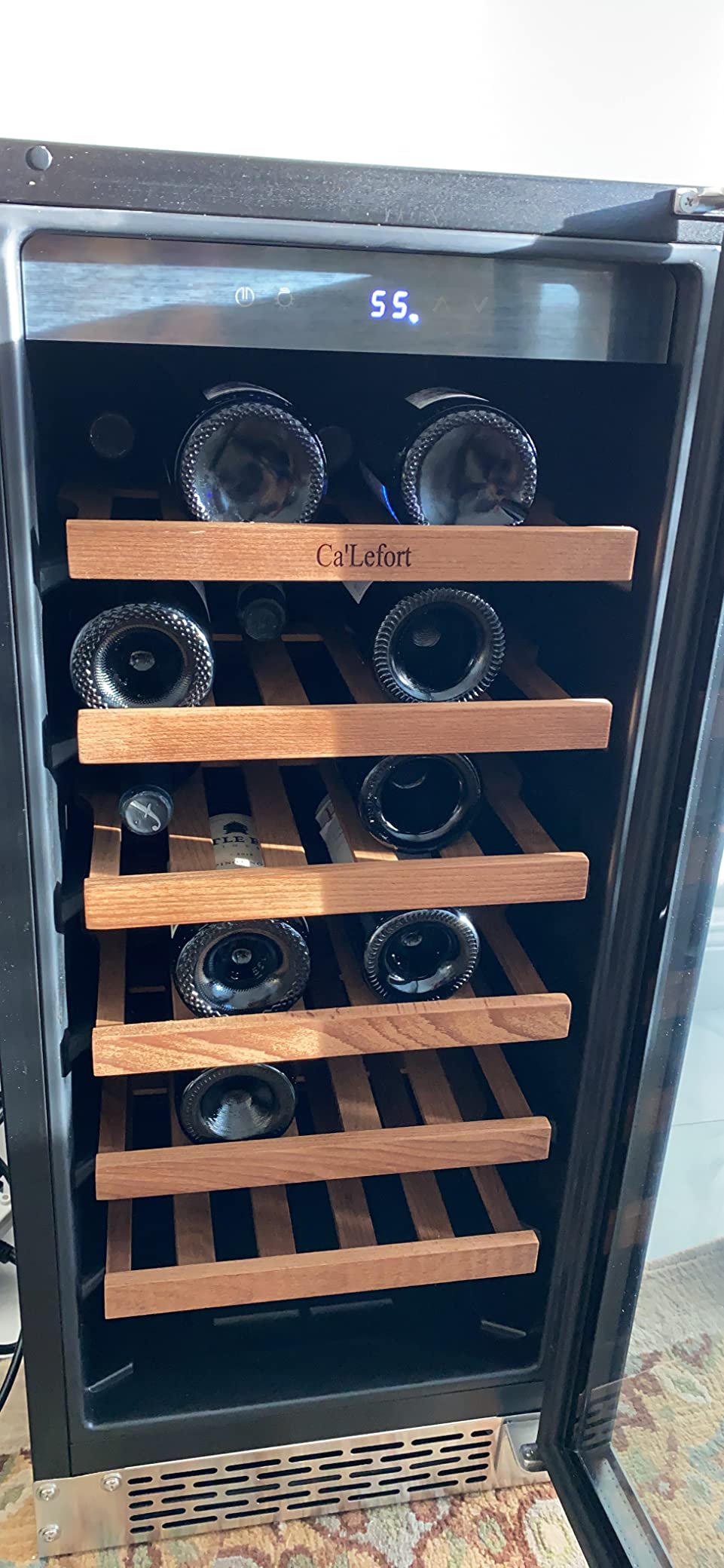
5. Ca’Lefort 15-Inch 33-Bottle Wine Cooler – Best 15-Inch Capacity and Warranty

Ca’Lefort 15 Inch Wine Fridge, 33-Bottle Wine Cooler Refrigerator
33 bottles
40-65F
3.0 cu. ft.
22.4 x 14.8 x 34 in
85 lbs
Pros
- Holds at least 33 bottles and often more in practice
- 40-65F digital control in 1F steps
- Three LED colours including amber for light-sensitive wines
- Longest warranty in the group at 1/2/3 years
Cons
- Shelves are removable but not height-adjustable
- Bottom shelf runs cooler than the top
- Wood racks feel unfinished
Thirty-three bottles in a 14.8-inch body is the best capacity-to-width ratio we found at 15 inches, and the warranty behind it is the strongest in the group: one year on the machine, two on parts, three on the compressor. For a cabinet you intend to leave in place for a decade, that coverage is the headline.
The brushed stainless front reads more expensive than the other 15-inch cabinets here, and the digital panel adjusts in single-degree steps down to 40F, which is low enough for white Burgundy. Three LED colours is unusual at this tier, and amber is the one that matters if you keep Chablis or Champagne.
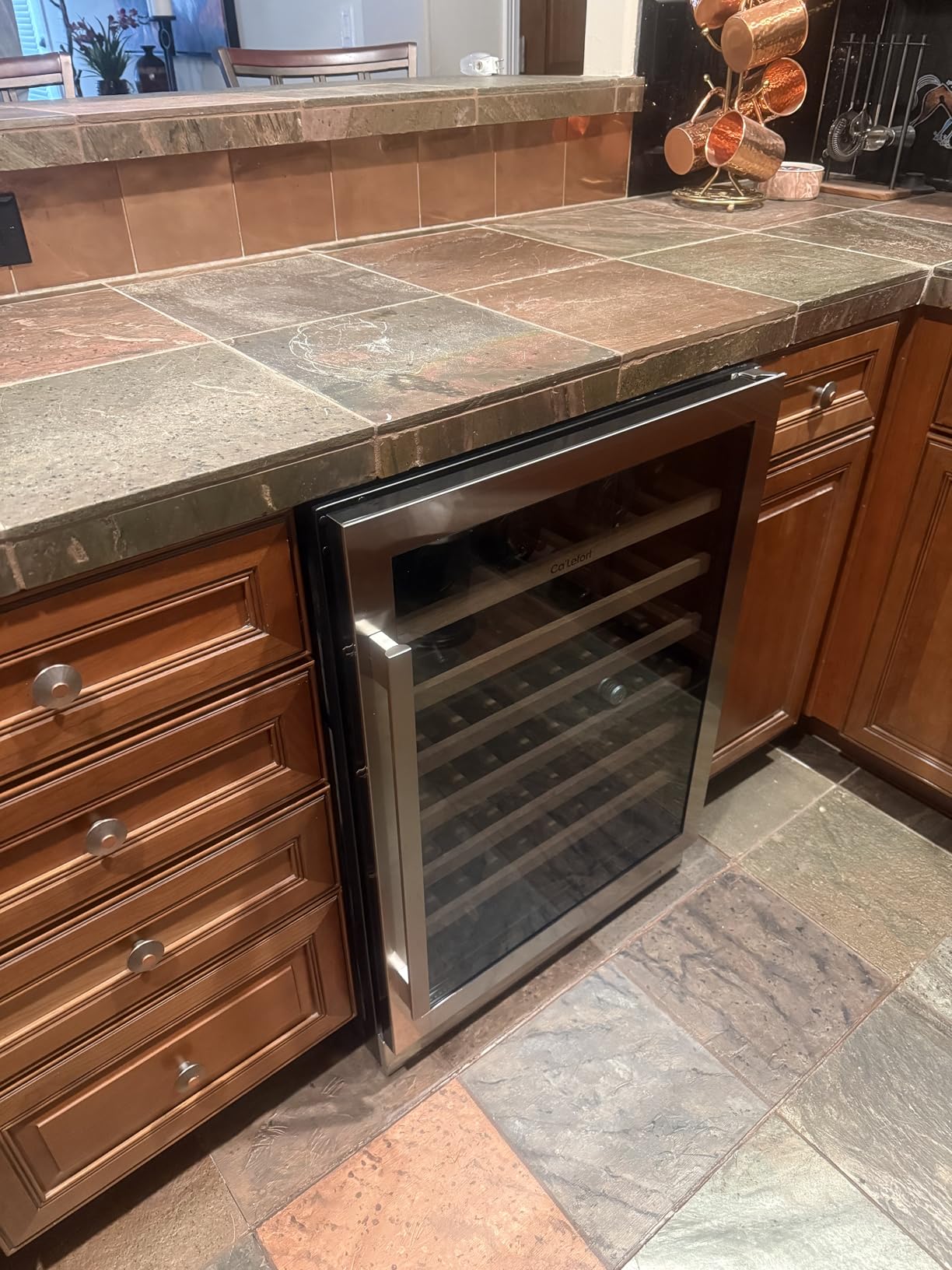
Front ventilation means built-in, under-counter and freestanding installs are all on the table, and the double-glazed door with a tight seal limits oxidation better than single-pane units. The compressor is described as genuinely quiet, and at 85 pounds it is manageable with two people.
Owners report fitting more than the advertised 33 bottles, which is a good sign. The caveats are physical rather than electrical: the sapele wood shelves feel unfinished and would benefit from a coat of varnish, and the handle requires removing door insulation to install, a five-minute job that catches people out.
Why the warranty matters more than the rating
A three-year compressor warranty is a direct signal about expected service life. Most cabinets in this roundup carry a single year on the entire unit, which means a compressor failure at month fourteen is entirely your problem. Forum consensus among owners agrees that the reliability gap above and below roughly the four-figure mark is the biggest quality dividing line in this category.
That matters more under a counter than a freestanding tower, where swapping a failed unit means pulling cabinetry out. If you are committed to a built-in install, the warranty length is one of the few proxies for longevity you can actually check before buying.
Where the design frustrates you
Shelves come out but do not move up or down, so a mixed collection means planning the layout before the first bottle goes in. The bottom shelf also runs a few degrees cooler than the top, and zone accuracy can drift over a long cycle, so a thermometer on the middle rack is worthwhile.
6. BODEGA 15-Inch 30-Bottle Dual Zone – Best for UV Protection

BODEGA 15 Inch Wine Fridge, 30 Bottle Dual Zone Wine Cooler, 41-72℉ Compressor Wine Refrigerator with Tempered Glass Door, Built-in or Freestanding Wine Cooler for Home Kitchen Bar (3.2 cu.ft).
30 bottles
Dual zone 41-72F
3.2 cu. ft.
22.44 x 14.96 x 33.58 in
42 dB
Pros
- Double-glazed tempered glass blocks roughly 99 percent of UV
- Zone adjustment in 1F increments from 41-72F
- Five adjustable wood-look shelves
- Compact front-vent body for built-in installs
Cons
- Zone temperature varies a few degrees shelf to shelf
- Wide champagne bottles need re-spacing
- Blue LED casts a cool tint inside
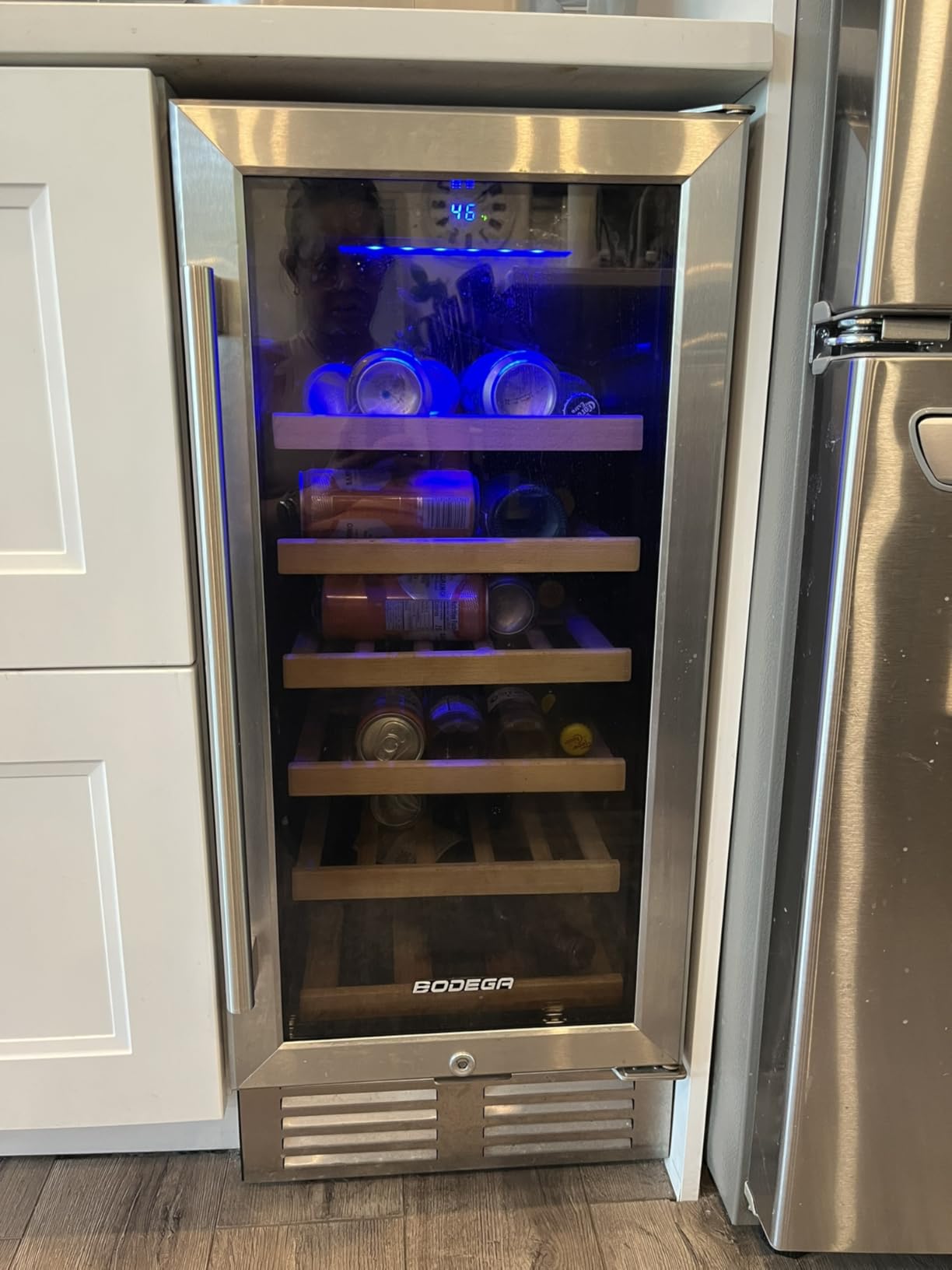
If your bottles sit in a sunlit kitchen or a glass-front display, UV filtering is the specification to shop on, and this is the cabinet in the roundup that states it most directly. The 304 stainless frame and double-glazed tempered glass block roughly 99 percent of UV, which is the difference between a display cooler and an aging cabinet.
Cooling is compressor-driven with built-in air circulation at about 42 dB, and both zones adjust in one-degree increments across a 41-72F span. The upper and lower zones are genuinely independent, so a red at 65F and a white at 45F can coexist in a 15-inch opening.
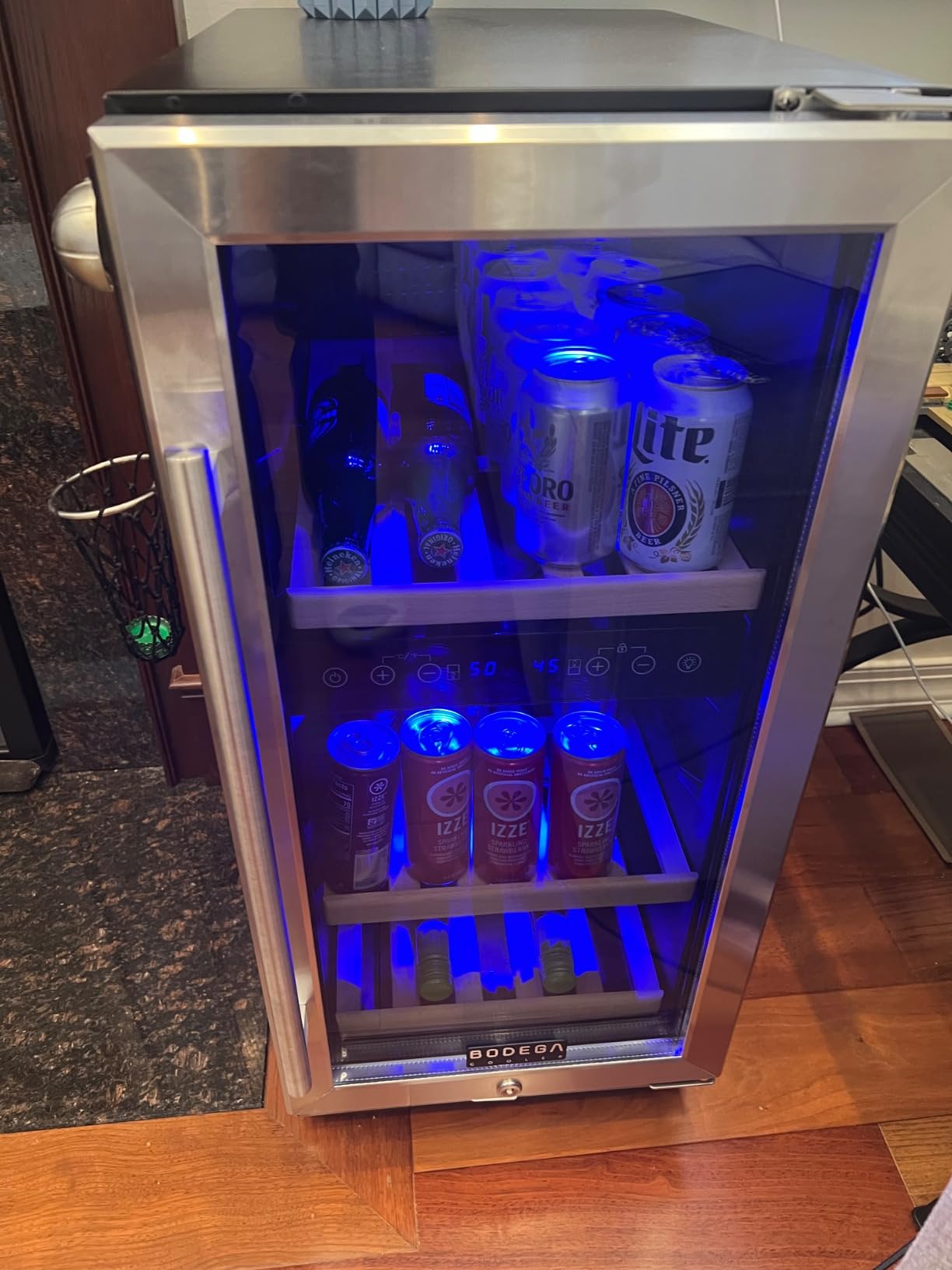
Five adjustable wood-look shelves, a key security lock, temperature memory and adjustable leveling feet complete a well-judged feature list for the money. The black and stainless look is more discreet than the glass-heavy designs, which suits cabinetry that is not a feature.
The 4.2-star average is a fair reflection: good value, steady cooling, nothing outstanding. Zone temperatures vary a few degrees shelf to shelf, and wide Champagne bottles need shelves removed or re-spaced, which cuts the stated 30-bottle figure for anyone with a heavy sparkling habit.
Does UV protection really matter
Yes, if light reaches the bottles, and light does reach them in most under-counter installs because a glass kitchen door or a pale cabinet back reflects daylight. UV causes the flavanols in red wine to break down, flattening aroma and accelerating aging far faster than the alcohol would on its own.
For a cooler that mostly stores whites and sparkling, the case is weaker, since those wines are sold for drinking now. For anything you intend to hold five years or more, tinted or UV-filtered glazing is one of the few features here that genuinely protects the contents rather than the appliance.
Where it falls short
The blue LED interior light adds a cool cast that some collectors find distracting, and there is no amber option. Long-term durability evidence is thinner here than for the higher-review-count units, since the review history is shorter. If you are aging, verify the zone spread with a thermometer in your first month.
7. ORYMUSE 15-Inch 30-Bottle Built-In Cooler – Best for a Lightweight Install

ORYMUSE 15 Inch Wine Fridge, 30 Bottle Under Counter Wine Cooler Built-In
30 bottles
40-65F
3.1 cu. ft.
23.03 x 14.96 x 33.46 in
52 lbs
38 dB
Pros
- Only 52 lbs
- the easiest unit here to install alone
- Quiet compressor at roughly 38 dB
- Front-vented 14.96-inch body fits flush
- 162 kWh per year is efficient
Cons
- Door can bounce back open off the magnetic gasket
- Wire shelf edges tip forward under front load
- Must stand upright 24 hours before first use
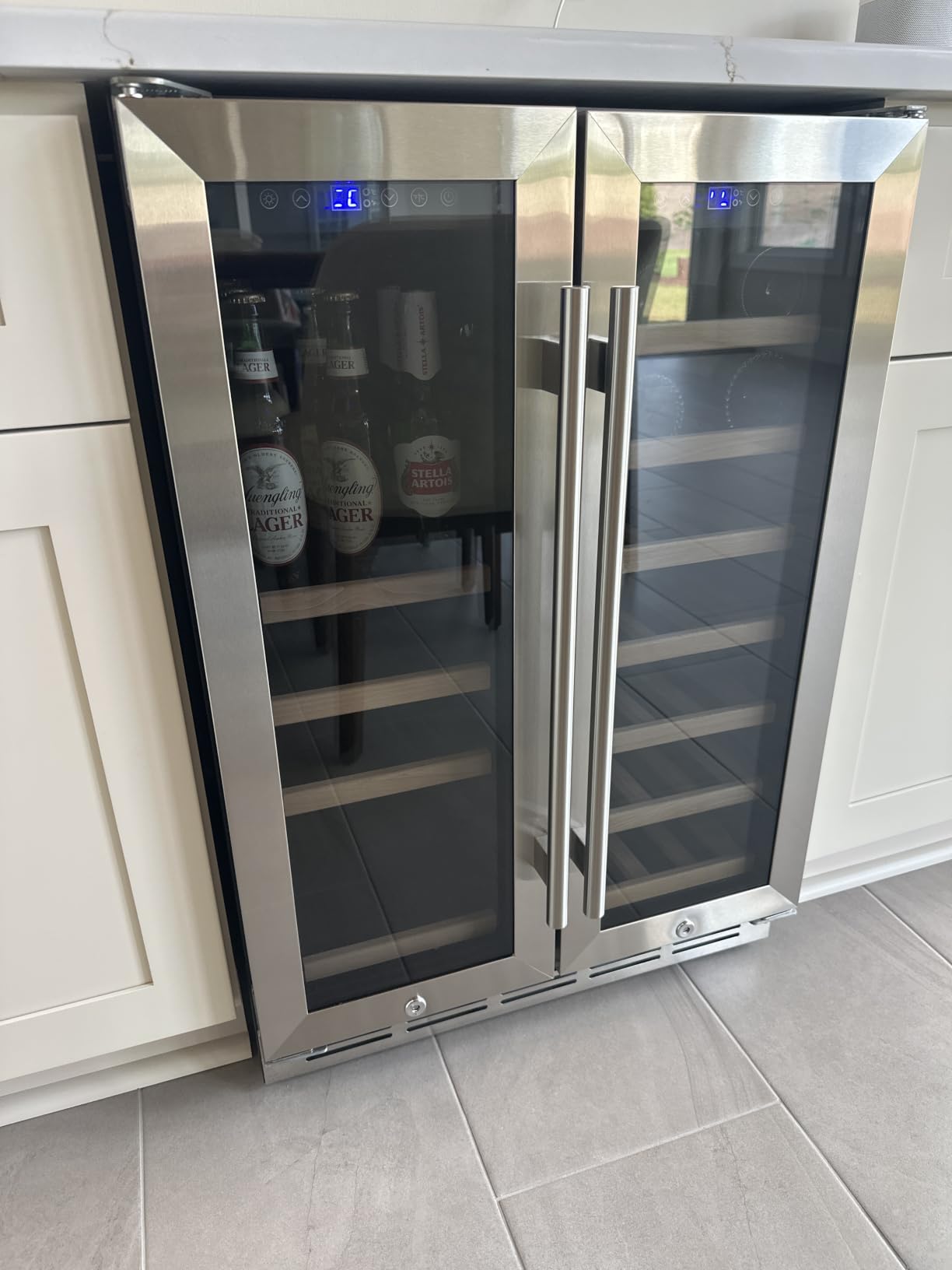
Weight is the unglamorous specification that decides whether an install is a two-person job with a dolly or something you do on your own, and at 52 pounds this is the clear winner. The rest of the cabinet is equally well-judged: 30 bottles across six removable beech shelves in a 3.1 cubic foot body.
Cooling is quiet at roughly 38 dB, which is the lowest verified figure in this roundup, and the 40-65F LCD touch control with temperature memory does what it should. The stainless frame with double-layer tempered glass and blue LED lighting finishes a front that looks more expensive than the ticket implies.
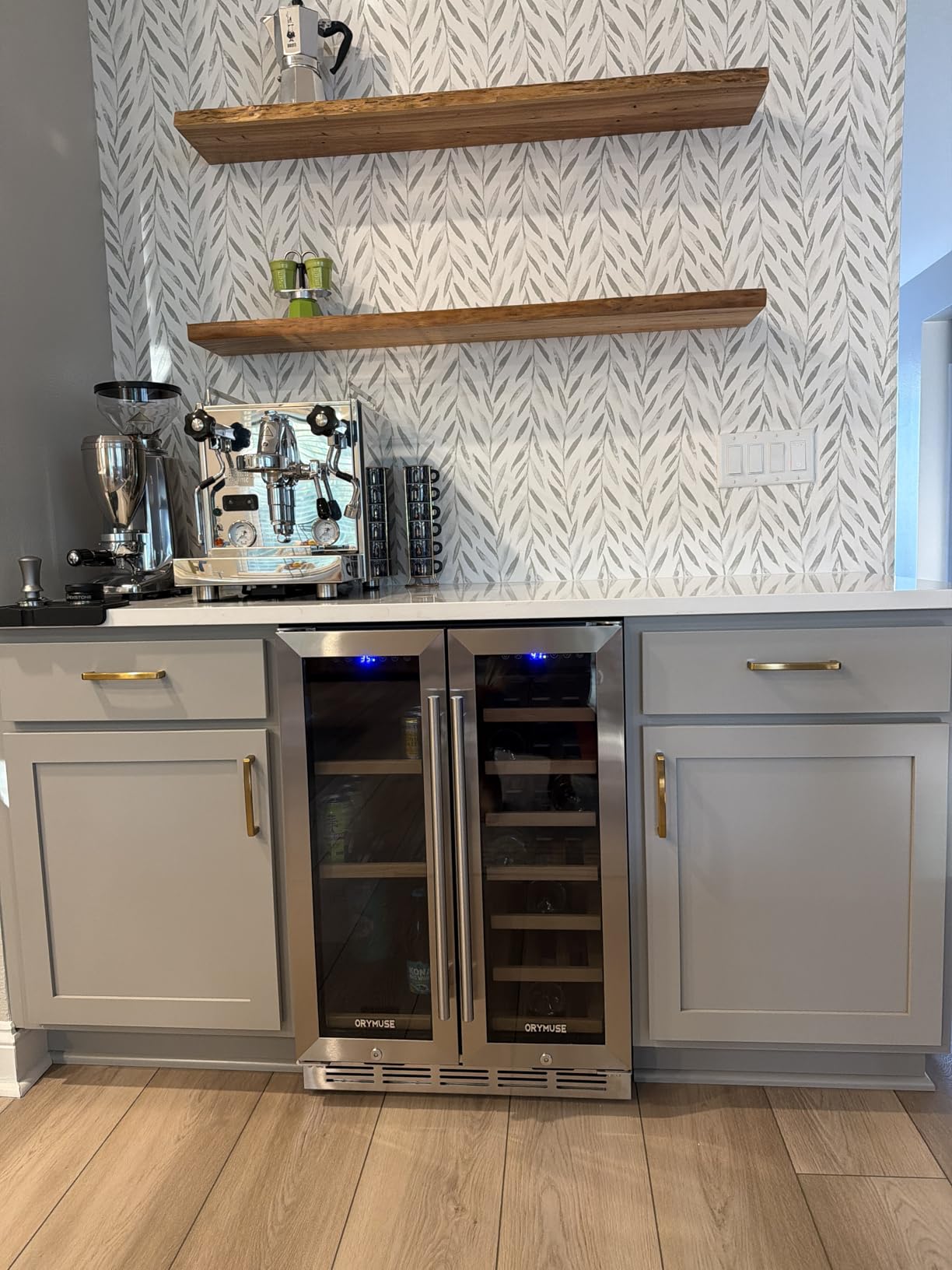
Owners describe quick cooling, genuinely quiet operation and an easy built-in fit, and customer service stands out for speed, including a replacement door handle shipped within days when one arrived mismatched. At 162 kWh per year it is also among the most efficient compressors in the group.
The criticisms here are build details rather than function. The magnetic gasket is weak enough that the door can bounce back open, and the wire shelf edges tip forward if weight is loaded toward the front. Neither is serious; both are worth knowing before you fill the cabinet.
Why 52 pounds changes the install
A 52-pound unit can be carried through a doorway by one person, slid into an existing cabinet cavity without removing a door panel, and repositioned later without a second adult. For an apartment or a finished kitchen where an installer charges a premium for a second pair of hands, that is a real saving that has nothing to do with the cooling.
The 23.03-inch depth is the trade for that lightness. It sits deeper than the shallowest 15-inch cabinets here, so confirm rear clearance for the outlet and any plumbing before you order.
What to check after delivery
Inspect the gasket first by closing the door and letting go. If it rebounds open, contact the seller early, because door alignment affects both cooling and humidity. Load the wire shelves from back to front so the load sits over the support rails rather than on the tip-prone front edge.
8. Yeego 12-Inch 17-Bottle Dual Zone Cooler – Best for the Narrowest Usable Gap

Yeego 12 Inch Wine Fridge, 17 Bottle Dual Zone Wine Cooler with Glass Door
17 bottles
Dual zone 40-65F
2.05 cu. ft.
22.4 x 11.6 x 34 in
Pros
- Slim 11.6-inch body fits spaces 15-inch units cannot
- Quiet compressor suitable for a dining area
- Double-layer tempered glass in a fingerprint-resistant frame
- Temperature memory restores set points after a cut
Cons
- Fixed right hinge cannot be reversed
- 17-bottle capacity is small
- Half-extension shelves take only standard bottles
Where the Velieta 12-inch prioritises a long warranty, this one prioritises a genuinely dual-zone layout in an 11.6-inch body. That is a real engineering achievement, and owners report steady temperatures on both sides rather than one zone merely shadowing the other.
Five removable and adjustable wood shelves minimise vibration, the compressor with internal air circulation is quiet enough to sit in a dining area, and the stainless frame with double-layer tempered glass resists fingerprints, which matters in a high-touch install.
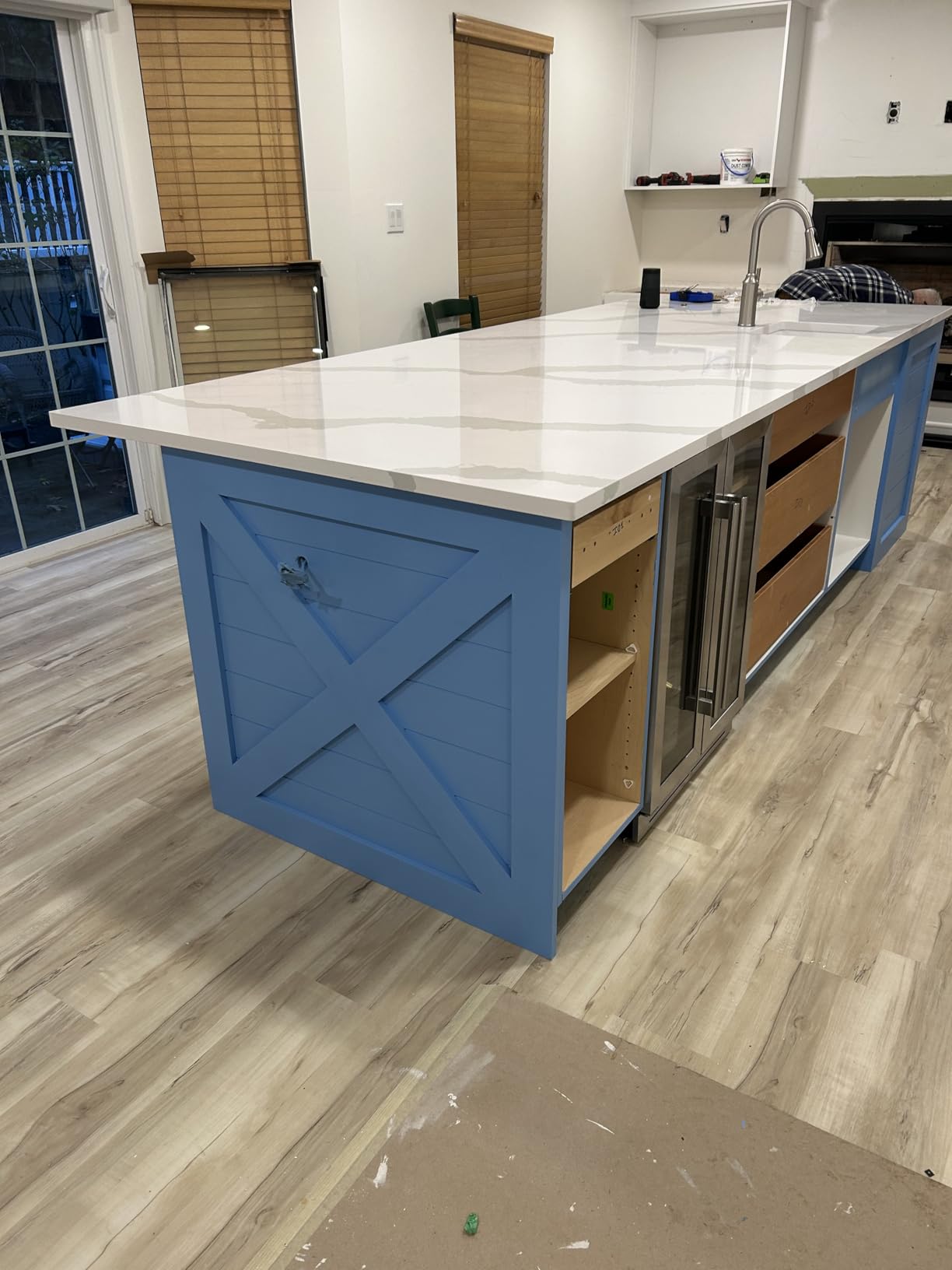
Standard bottles fit easily; wider bottles are best placed on the bottom shelf, and the memory function restores your set points after any power interruption. Post-purchase support supplies hinge-reversal parts at no cost, which softens the fixed-hinge limitation more than it might sound.
Capacity is the honest constraint. Seventeen bottles is a serving collection, not a cellar, and the middle pull-out shelves extend only about halfway and fit standard bottles only. If you are buying this as a second cooler beside a larger one, that is fine. If it is your only unit, you will outgrow it.
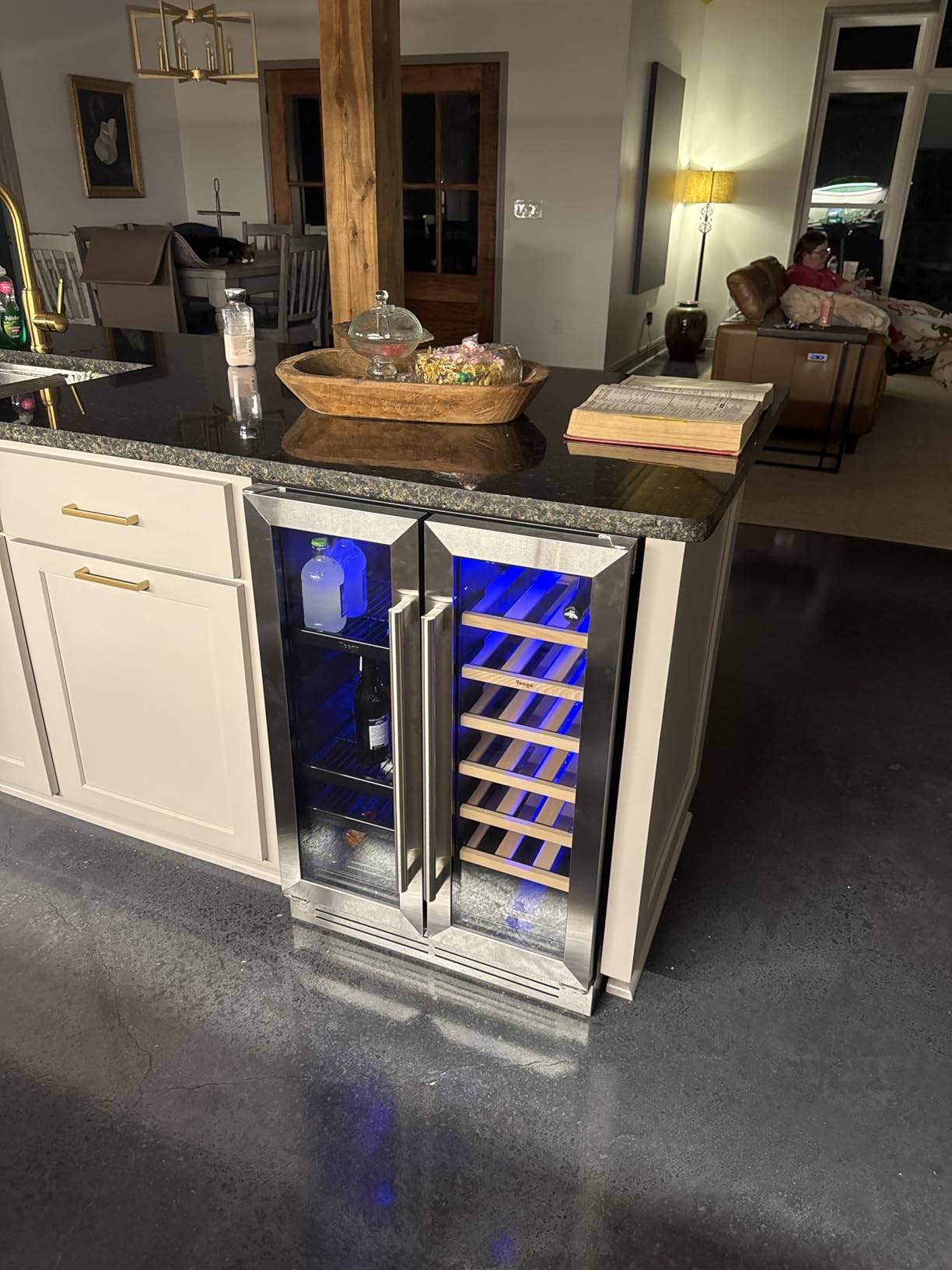
Is a 12-inch dual zone better than a 15-inch single zone
It depends on what you are storing. If you serve six whites and six reds to dinner guests twice a week, two accurate zones in 11.6 inches serves that better than one zone in 15 inches. If you are building a collection, the extra three inches buys roughly 12 to 16 more bottles, and capacity wins.
Also consider the hinge. This door is fixed on the right. In a run of cabinetry, a right hinge dictates which side the door opens from, and a reversed door in an island is often unworkable. Confirm the swing before ordering, not after.
Who should pass
Pass if you need to store magnums or any bottle wider than a standard Bordeaux. The half-extension shelves and tight spacing will defeat you, and real capacity will fall well below 17. Handle installation is also fiddly with limited instructions, so budget an extra ten minutes and a flashlight.
9. Antarctic Star 24-Inch 52-Bottle Dual Zone – Best 24-Inch Bottle Capacity

Antarctic Star 24 Inch Wine Fridge, 52 Bottle Wine Cooler Refrigerator. 39-64°F Dual Zone Wine Refrigerator Glass Door, Built in or Freestanding Under Counter Fridge for Home Bar Office
52 bottles
Dual zone 39-50F and 50-64F
5 cu. ft.
22.52 x 23.43 x 34.45 in
92.4 lbs
Pros
- Largest stated bottle capacity in the roundup
- Dual zones at 39-50F and 50-64F
- Low-vibration compressor with fan circulation
- Double-paned tempered glass blocks UV
Cons
- 92.4 lbs makes it a two-person move
- Listed as manual defrost so it needs periodic attention
- Zone set points vary a few degrees from actual
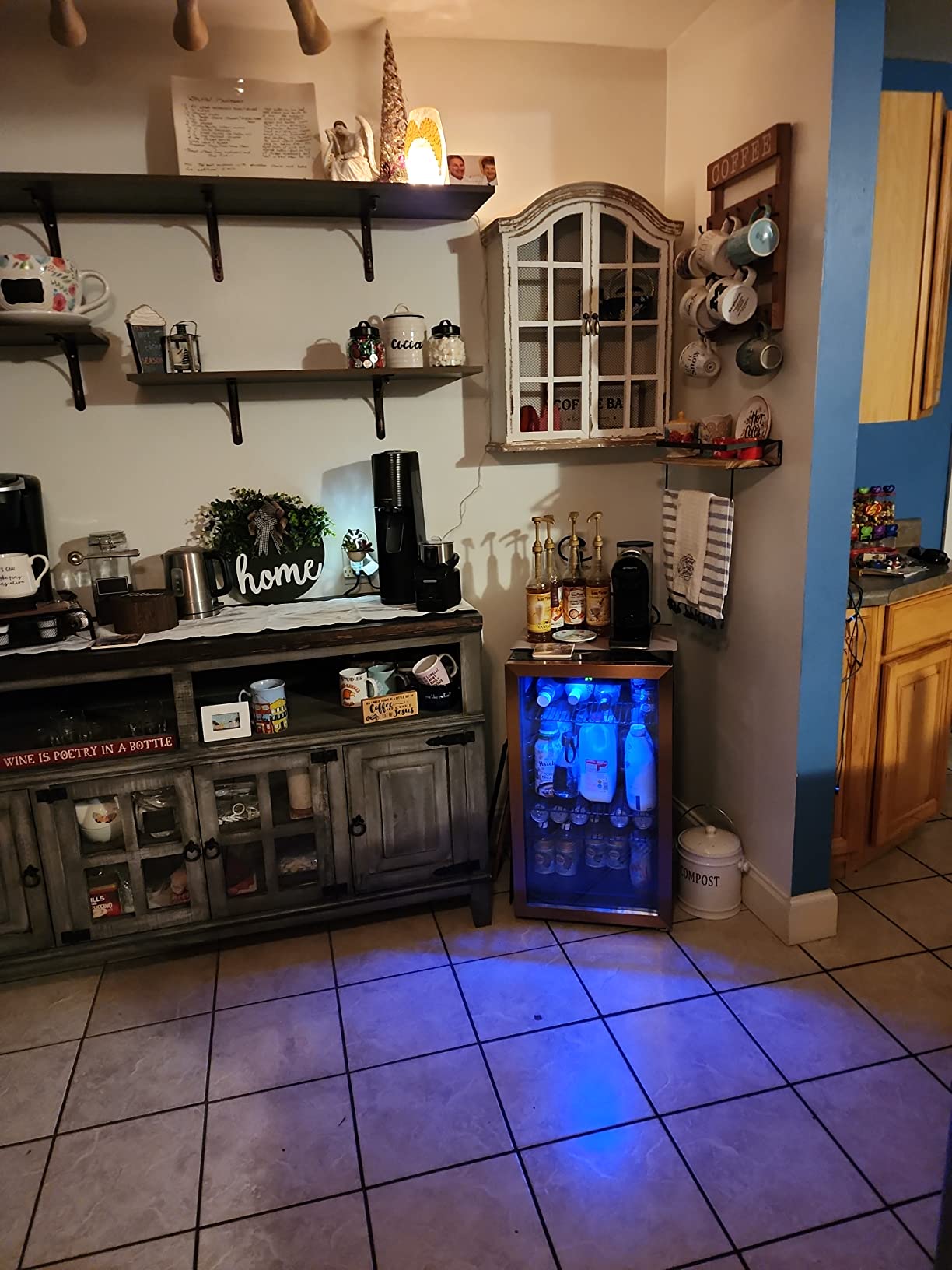
When a 24-inch opening can only hold one wine cabinet, bottle capacity is the deciding factor, and this is the biggest one available: 52 stated bottles in a 5 cubic foot body. Adjustable wood racks hold both standard and larger bottles without the whole shelf coming out, which is how the real number stays high.
The dual zones split 39-50F above and 50-64F below, a genuinely useful spread for serving Champagne and reds from one appliance. The low-vibration compressor and fan circulation run quietly, and the double-paned tempered glass window blocks UV while keeping the collection visible.
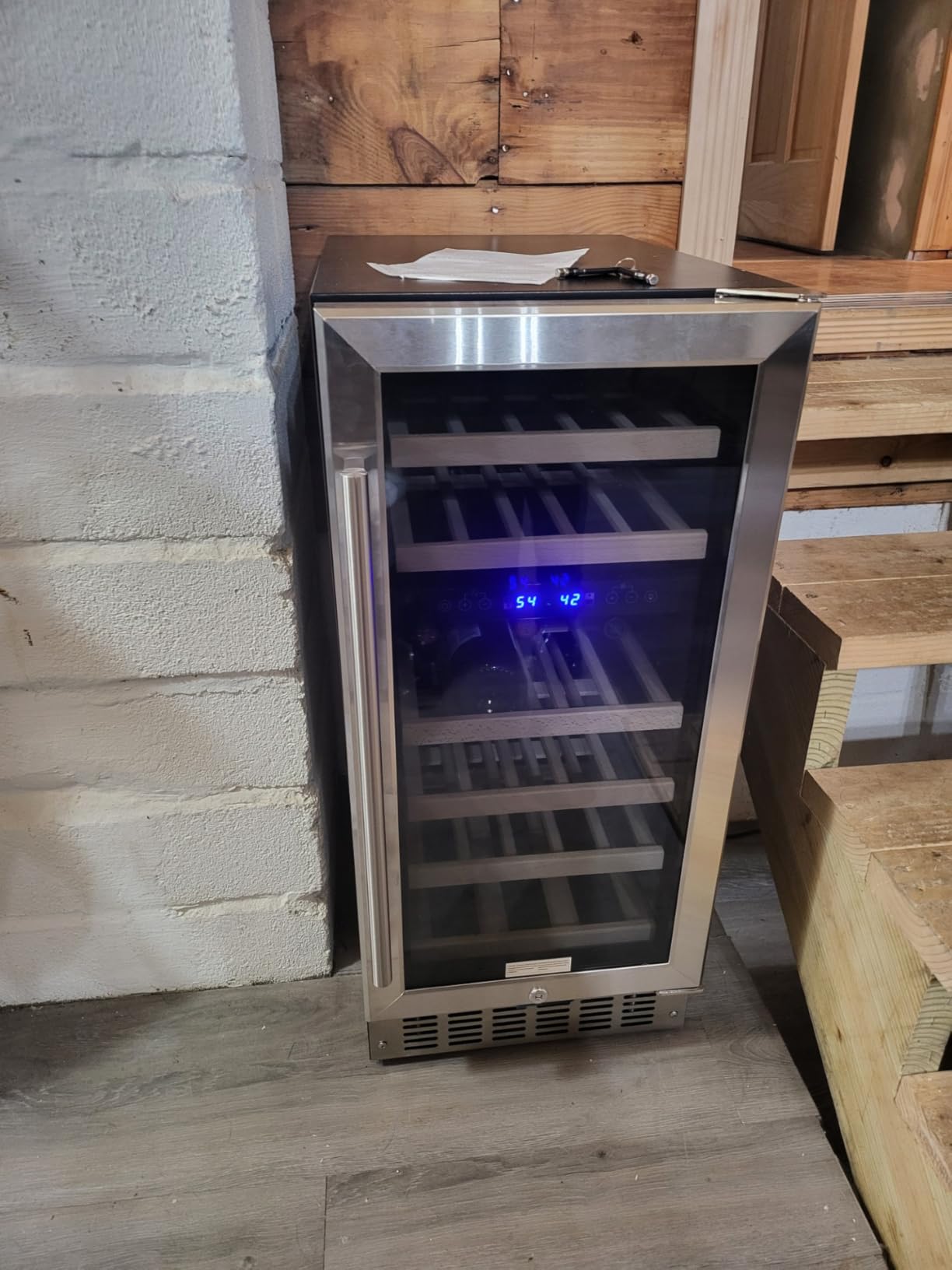
Blue LED interior lighting and a frost-free stainless door with a full-length handle finish a front that suits a wet bar. It currently ranks first in its built-in wine cellar category on the major marketplaces, which is a reasonable proxy for mainstream popularity at this size.
Two practical notes. It is listed as manual defrost, so plan a periodic defrost cycle rather than assuming it handles itself. And at 92.4 pounds it is a two-person move even though it is lighter than most 24-inch cabinets, and the review base is the thinnest in this roundup at 110 ratings, which means the long-term record is less established.
Do 52 bottles fit in a standard 24-inch cabinet
The dimensions are 22.52 inches deep by 23.43 wide by 34.45 high, so it fits a standard 24-inch base cavity, but only just. Measure the opening width rather than assuming the cabinet label, and confirm the height clearance against your counter before you commit, because 34.45 inches leaves little margin under a worktop with a thick edge.
Also check the door swing in a finished kitchen. A full-length handle needs clearance in front of the cabinet face, and a unit set flush into a run with an adjacent drawer bank can foul on the opening angle.
Capacity reality check
Treat 52 as a standard-bottle figure. Once magnums, Burgundy and sparkling enter the collection, the effective count drops quickly, and the adjustable racks help but do not eliminate the loss. Buyers who plan to age should run the cabinet at a single set point rather than splitting the zones, so the full volume works as one cavity.
10. DOGHLY 24-Inch Dual Zone Wine and Beverage – Best for a Party Bar
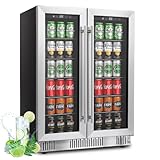
DOGHLY 24 Inch Dual Zone Wine and Beverage Refrigerator, 210 Cans
42 bottles plus 176 cans
Dual zone 37-40F and 41-64F
5.3 cu. ft.
22.5 x 23.5 x 34.3 in
110 lbs
Pros
- Enormous combined capacity across ten shelves
- Fast even compressor cooling
- Front-vented 24-inch body works built-in or freestanding
- Tempered glass door with LED lighting and digital control
Cons
- 110 lbs makes two-person installation realistic
- Wine zone set unusually cold for reds
- 23.5-inch depth is wide for shallow openings
This is the volume pick. Ten adjustable shelves and a 5.3 cubic foot cabinet hold 42 wine bottles and 176 cans, and owners fill it with a mix of sodas, tall cans and bottles for parties rather than building a cellar. Nobody buys this for careful aging.
Cooling is fast and even, quiet enough for a bar area, and the two zones hold 37-40F on the wine side against 41-64F on the beverage side. The front-vented 24-inch body works built-in under a counter or freestanding, and the tempered glass door with LED interior lighting makes the contents the display.
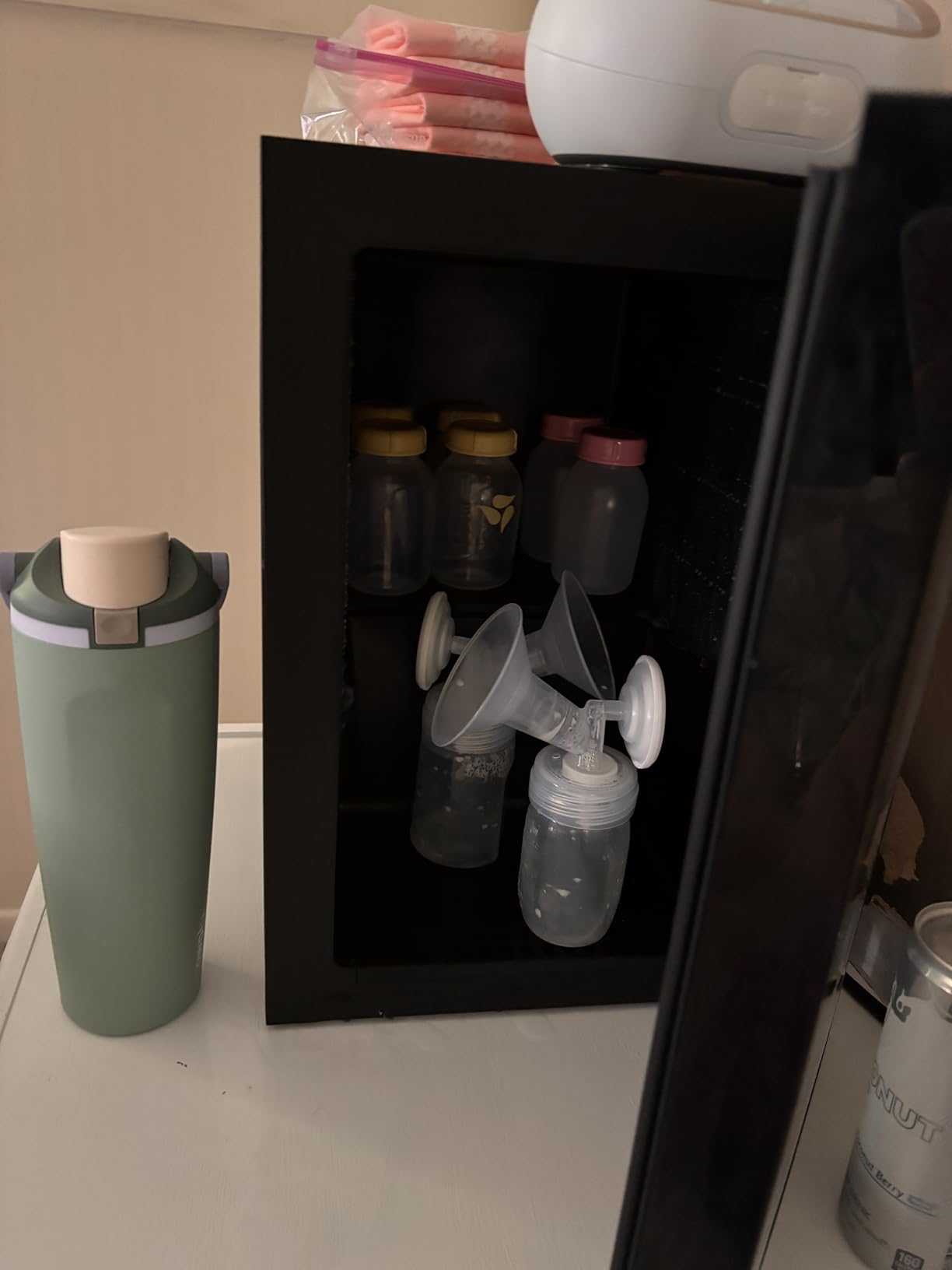
The shelves are genuinely adjustable, so Champagne, tall cans and mixed drinks all fit without removing hardware, which is the practical advantage over a fixed-rack design in a high-traffic cabinet. The stainless finish and glass front suit a basement bar or a garage setup.
The 37-40F wine setting is the thing to think about. That is colder than most collectors want for reds, and the range is narrower than the zone name implies. If your reds are the priority, the Kalamera 24-inch with a 50-66F lower zone is a better fit for the same cabinet width.
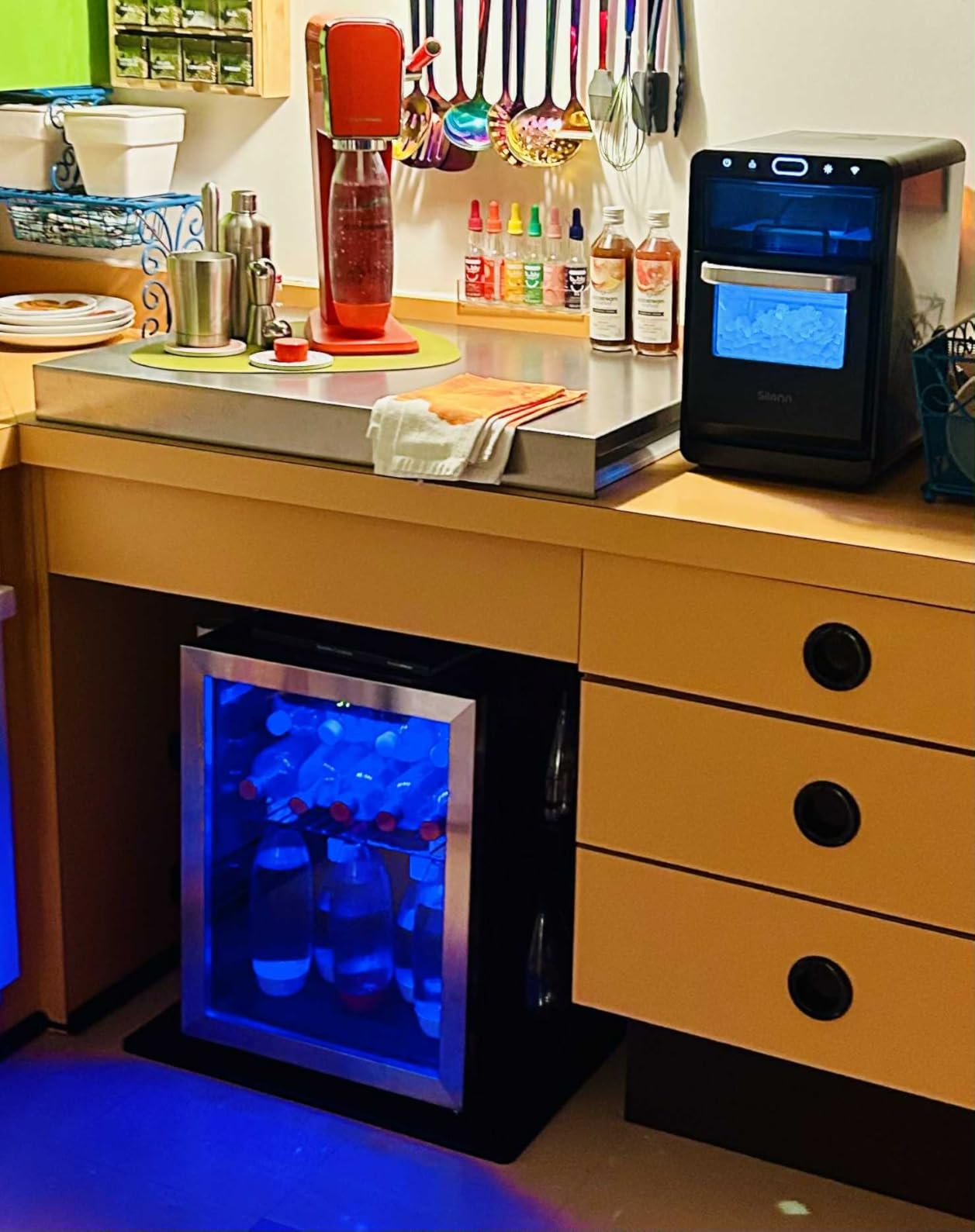
Is a 176-can cabinet overkill
For a home bar that hosts more than a few people a month, no. A 24-inch opening is prime real estate, and a wine-only cabinet leaves that space underused between service days. A dual-zone beverage cabinet converts dead capacity into something the household actually drinks every week.
It is overkill if the cabinet sits in a kitchen and mostly holds wine. Ten shelves of cans in a room you walk through twice a day is wasted volume, and you would get more usable storage from a dedicated wine cabinet in the same opening.
Handling and placement
At 110 pounds this is the second-heaviest unit in the roundup, and the 23.5-inch depth is the widest of the 24-inch models here, which limits placement in shallow openings. Measure both dimensions twice, and plan on two people plus a hand truck for the move.
11. Kalamera 24-Inch 37-Bottle Dual Zone – Best for Vibration Control

Kalamera 24 inch Wine Cooler, 37 Bottle Dual Zone Built-in or Freestanding
37 bottles
Dual zone 40-50F and 50-66F
5.3 cu. ft.
22.4 x 23.4 x 33 in
102 lbs
Pros
- FSC-certified wood frame dampens vibration on bottles
- Shelf stoppers keep bottles secure when sliding a shelf
- Temperature memory restores settings after a cut
- Generous 40-50F and 50-66F zone split suits reds
Cons
- The lowest 4.0-star average in this group with 15% one-star ratings
- Panel set points run noticeably warmer or cooler than the true internal temperature
- Capacity drops sharply for wider bottles such as Pinot or Champagne
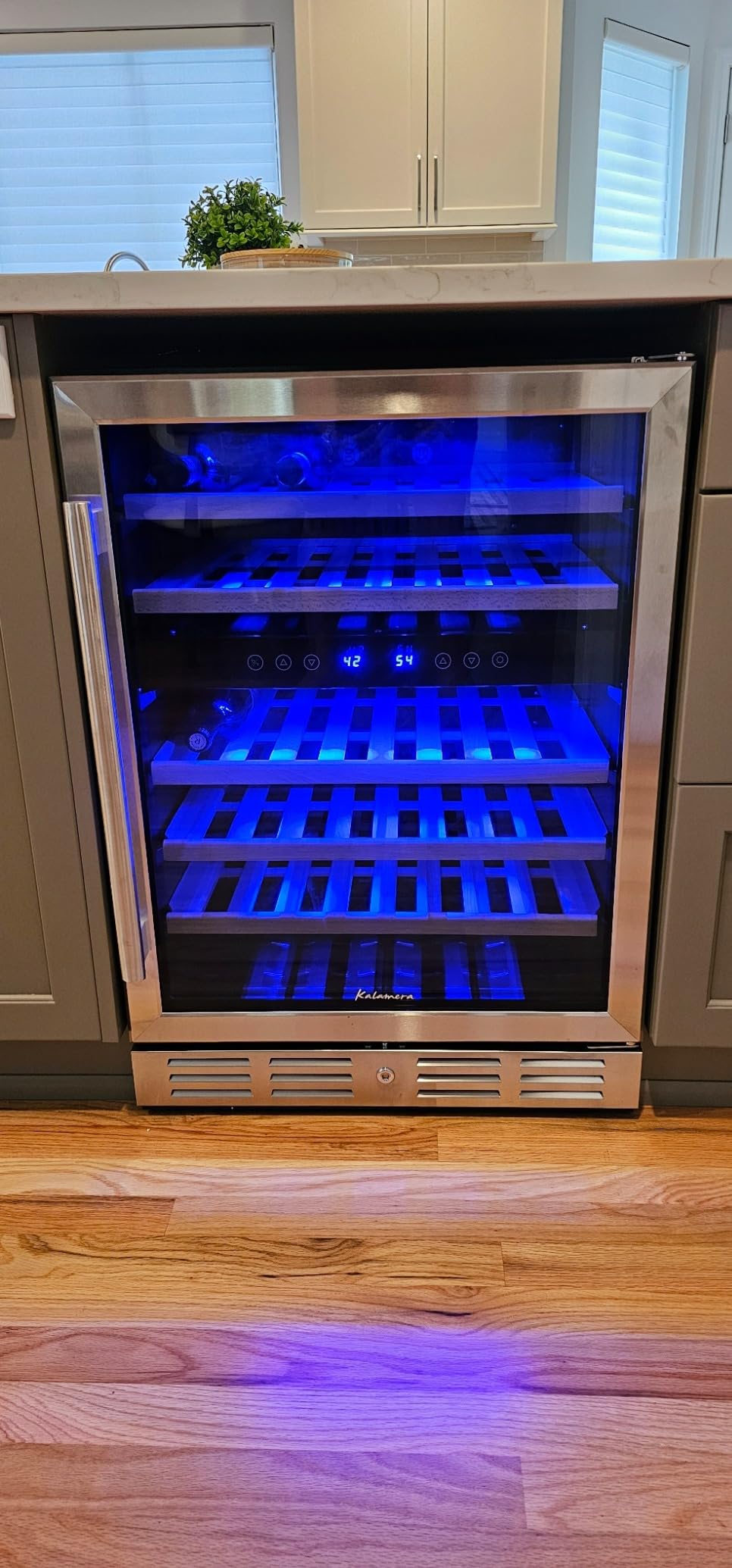
The FSC-certified wooden frame and removable wood shelves are the point of this cabinet. Vibration is the quiet enemy of aging wine, and a wood frame and rack assembly absorbs compressor hum in a way the sheet-metal and wire designs here cannot match.
The dual zone split of 40-50F above and 50-66F below is also the best designed in the roundup for red wine, because the lower zone reaches proper red-wine temperature without the cold floor that catches out the other 24-inch dual-zone models.
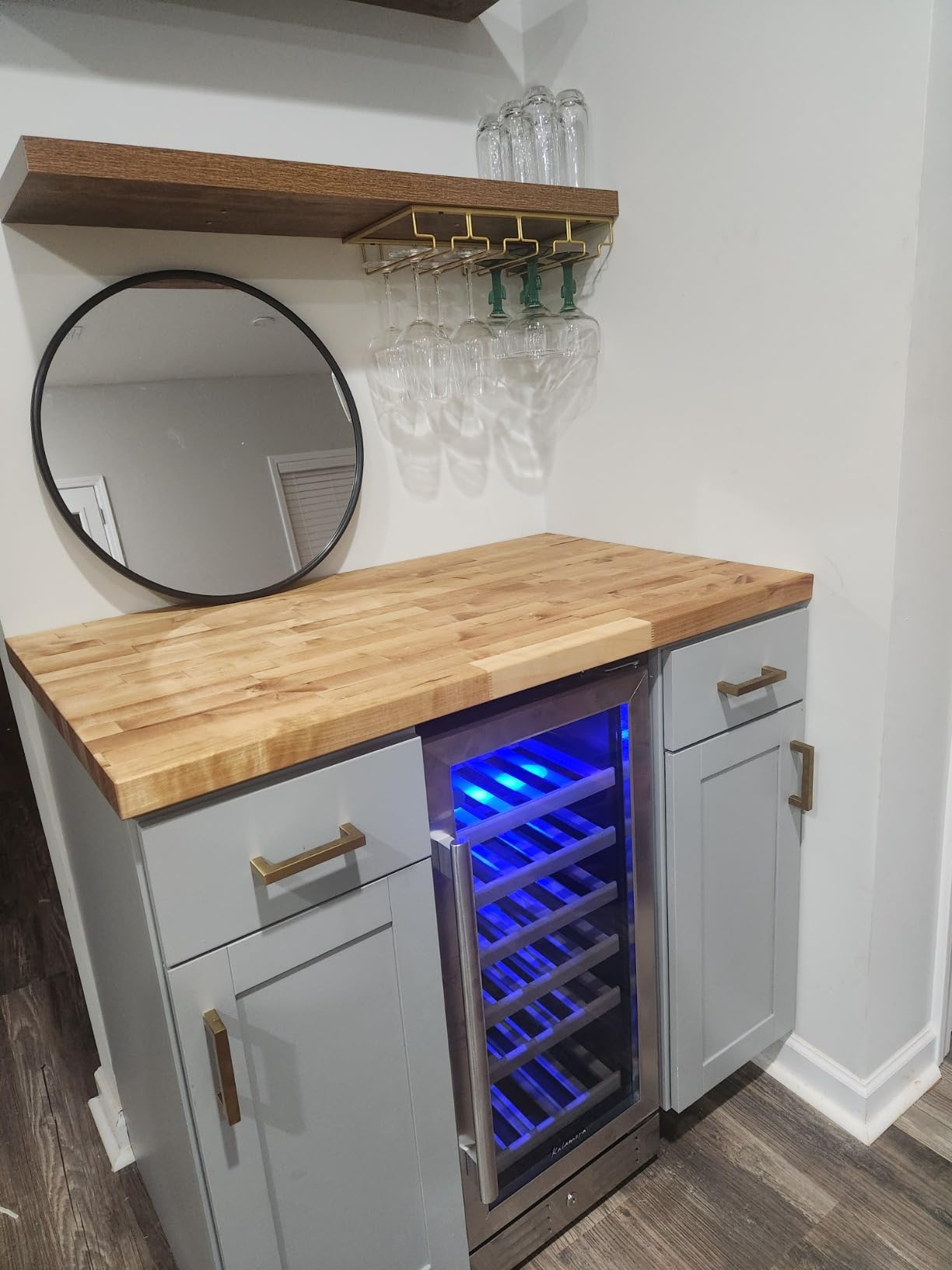
Shelf stoppers are a small detail with real value: bottles stay put when you slide a shelf out, which protects labels and stops sediment disturbance. The LED control panel is straightforward, temperature memory handles power cuts, and the key lock and interior lighting finish the package.
This is also the lowest-rated unit in the roundup at 4.0 stars, and the review pattern explains why. Panel set points run noticeably warmer or cooler than the true internal temperature, capacity drops sharply once wider bottles like Pinot or Champagne are added, and shelf height is fixed so only complete shelves come out. It is worth measuring with a thermometer before you commit to a set point.
Does vibration control justify the trade-offs
For a collection you plan to keep for years, yes. Chronic low-level vibration encourages sediment to stir and can unsettle older bottles, and the wood frame plus wood rack assembly is the only genuine dampening in this roundup. Shelf stoppers solve the other half of the problem, which is handling.
For a cooler you will fill and empty with dinner-party bottles, it is not worth paying for. Display accuracy matters more there, and this cabinet is the weakest of the 24-inch models on that front. Buy it for aging, not for serving.
Fit and capacity notes
The 22.4 by 23.4 by 33-inch footprint is among the shallowest of the 24-inch units, which helps in a kitchen with a tight toe kick. At 102 pounds it still needs two people. The 37-bottle claim holds for standard shapes but compresses quickly with wide formats, and fixed shelf spacing means fewer reconfiguration options than a rack-heavy design.
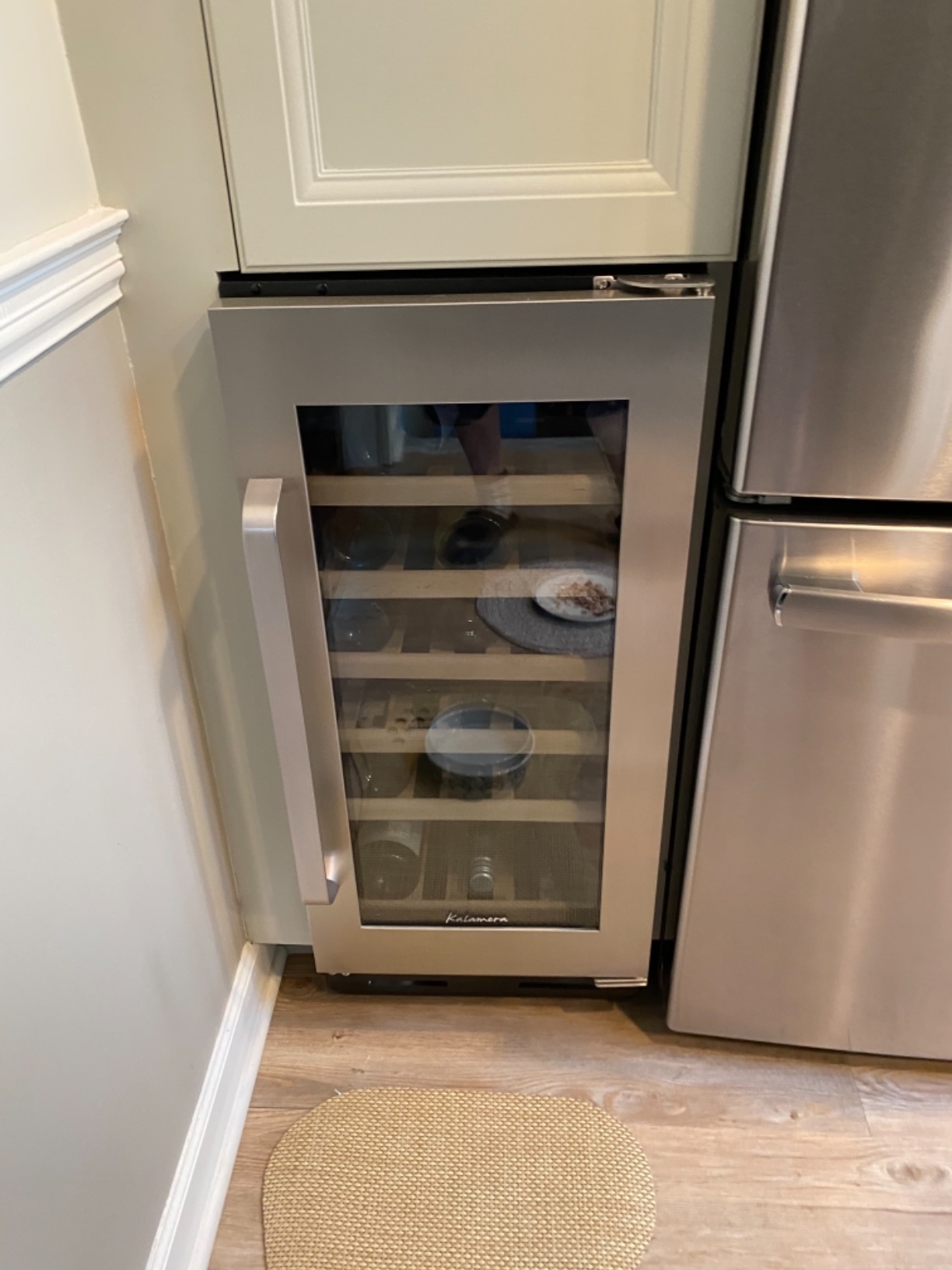
12. Kalamera 24-Inch Beverage and Wine Cooler – Best Hybrid for a Family Kitchen
Kalamera Mini Fridge 24 Inch Undercounter Beverage and Wine Cooler
118 cans plus 15 bottles
Single zone 38-66F
5 cu. ft.
22.4 x 23.4 x 33 in
102 lbs
Pros
- 118 cans and 15 bottles in a standard 24-inch cabinet
- Whisper-quiet compressor with fewer start-stop cycles
- Temperature memory restores settings after a power loss
- Stainless and glass front with blue LED lighting
Cons
- Only 15 bottles of wine capacity
- Single zone means one temperature for everything
- Panel set point can run several degrees off
Where the DOGHLY splits the cabinet into a cold wine side and a beverage side, this one is a beverage cabinet with a wine shelf on top. The 118-can capacity is the headline for a family kitchen, and the single 38-66F zone keeps everything at one temperature without the complexity of two thermostats.
The FSC-certified wooden frame and roller wine shelf reduce vibration and friction on the bottles you do store, and the whisper-quiet compressor maintains even temperature with fewer start-stop cycles than a cycling-heavy cabinet, which is a genuine benefit in an open kitchen.
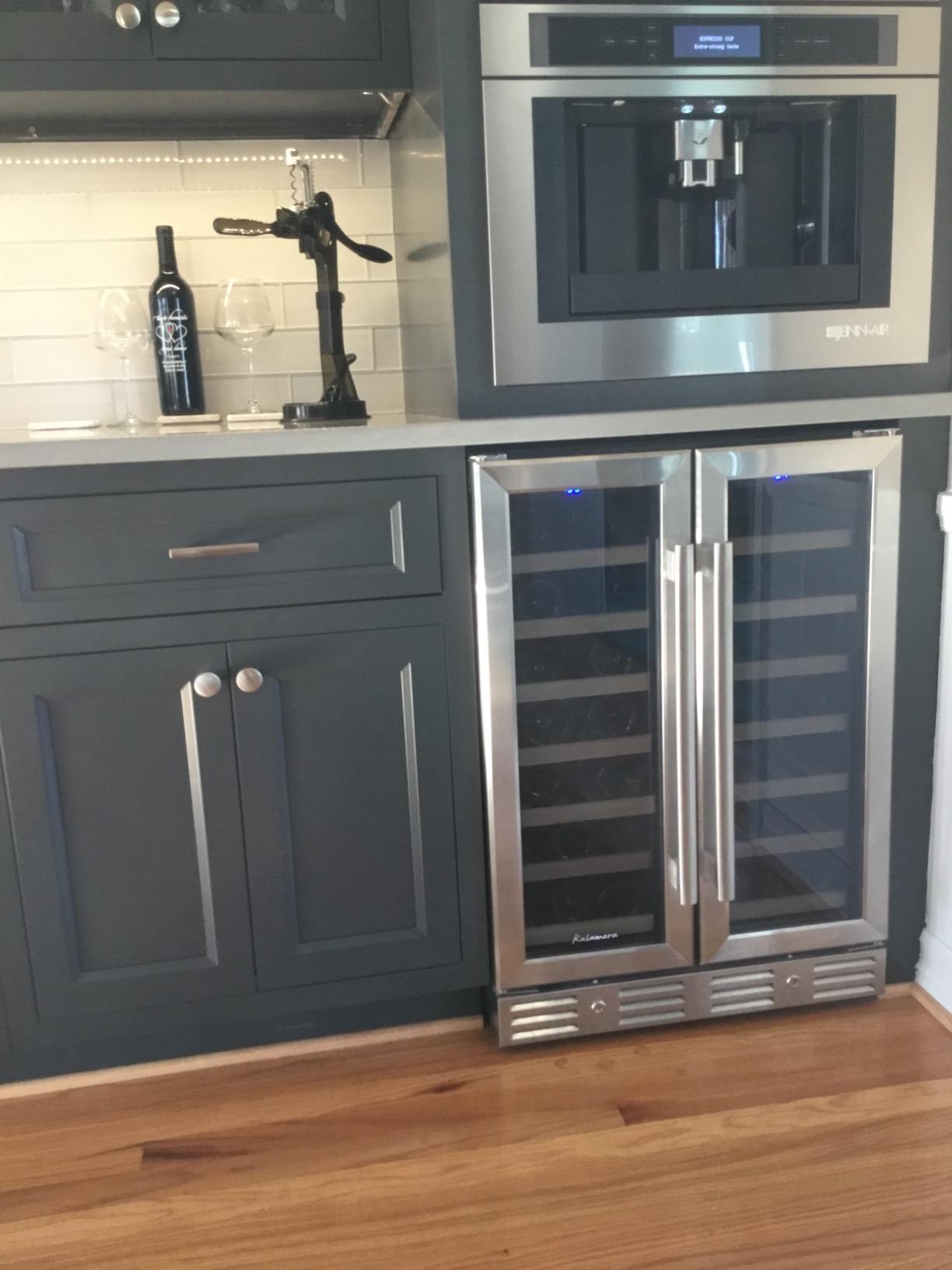
Temperature memory handles power loss, and the stainless and glass front with blue LED lighting looks tidy between cabinets. The 22.4 by 23.4 by 33-inch footprint is one of the more compact 24-inch bodies, which is useful when rear clearance is tight.
Owners are happy with the can capacity and the quiet operation, but the 4.0-star average reflects three recurring issues: the single-zone limitation, set point inaccuracy against an external thermometer, and isolated reports of the defrost feature failing and the unit icing up. Defrost is listed as manual here, so plan for it.
When a single zone is the right call
A single zone works when the contents share a temperature target, and drinks in cans and bottles at roughly 40F are the clearest example. There is no split to manage, no cold floor to chase, and the whole 5 cubic feet works as one cavity, which is why 118 cans is possible here at all.
A single zone fails the moment you want red Burgundy and crisp Sauvignon at the same time. No amount of shelving fixes that, so check what you actually drink before choosing this over a dual-zone cabinet in the same width.
Who should skip it
Skip it as a wine-only unit. Fifteen bottles is a weekend list, not a cellar, and the wine shelf is a top roller rather than purpose-built racking. At 102 pounds it also needs a two-person move, and the defrost caveat means it wants a little attention that the fully automatic cabinets do not.
How to Measure Your Cabinet Opening Before You Order
This is the step that decides whether the rest of the guide matters. Forum threads about undercounter wine fridges are dominated by one failure: someone orders a nominal 24-inch unit for an opening that measures 22.25 inches, and the installer refuses the job. Measure the opening, not the cabinet label.
For a 24-inch base cabinet, the usable opening is typically 22.25 to 22.5 inches wide between the cabinet faces, minus a few millimeters of tolerance for the filler panel. For a 15-inch cabinet, the opening is usually around 14.25 inches. Check the specific product page for the required opening dimension rather than inferring it from the width.
Height matters as much as width. Every 24-inch unit in this roundup stands between 33 and 34.45 inches tall, and a counter with a thick mitered edge can eat an inch you did not account for. Measure from the cabinet floor to the underside of the counter with the toe kick removed.
Depth is the third number, and it is where flush installs fail. Cabinets here measure 22.4 to 23.5 inches deep, and a standard 24-inch base cavity is often only 24 inches of usable depth once the rear panel and outlet are accounted for. Push the electrical outlet back, or choose one of the shallower bodies in this list.
Toe kick clearance is the fourth. A flush install needs the vent at the front of the unit to draw air, so a solid wood kickplate that sits proud of the cabinet face can block it. Cut a ventilation opening in the kickplate, or choose a model with adjustable feet that lift the body clear of the floor plinth.
Finally, confirm the door swing. Glass doors on a 15-inch unit need roughly 90 degrees of clearance in front, and a French-door 24-inch unit needs enough room for both leaves to open fully. Open a drawer in the neighbouring cabinet with the fridge door open and check they do not fight.
Buying Guide for Undercounter Wine Coolers
Choose your width first
Everything else is negotiable; width is not. A 15-inch opening gives you 17 to 33 bottles depending on the model, and it is the only option in older homes and apartment kitchens with 12-inch or 15-inch base cabinets. A 24-inch opening gives you 37 to 52 bottles, or the option to run a dual-zone beverage cabinet, and it is the standard in a modern remodel.
If your opening is between 14 and 15 inches, the 15-inch cabinets here all fit. If it is 12 inches or narrower, the 11.6-inch Yeego and Velieta units are the only true built-in options. If it is wider than 23 inches, you are in 24-inch territory and every model in that group will fit.
Compressor or thermoelectric
Every product in this roundup uses a compressor, and for undercounter duty that is the right call. Compressor cooling is the same sealed-cycle technology that powers domestic refrigerators, which means it holds a real temperature range, works in a warm kitchen and runs continuously without the ambient limit that stops Peltier modules. It also means a low hum, which is the trade you accept for genuine cellar performance.
Thermoelectric units are quieter in absolute terms but hold a narrower band, generate more heat, and are only viable in small freestanding footprints. We would not install one under a counter. If noise in an open-plan kitchen is your dominant concern, choose a compressor model rated at or below 40 dB, such as the ORYMUSE at roughly 38 dB, and isolate the cabinet cavity properly. Our general guidance on quiet cooling hardware and what the decibel figure really means applies to compressors generally.
Single zone or dual zone
Choose single zone if you drink one style of wine, if you store cans and bottles at a shared temperature, or if you want maximum capacity from a fixed footprint. Choose dual zone if you serve reds and whites at the same meal, which is the most common reason people regret a single-zone cabinet.
Watch the geometry. In a compact 15-inch cabinet the two zones are rarely equal, and running them at maximum spread pulls the middle shelves toward a compromise temperature. Keep the split narrower than the advertised range and both zones settle faster.
Glass, stainless and light control
Glass doors show the collection and let you check stock without opening the door, but they let light in and cost more to ship. UV-filtered double glazing, as on the BODEGA, is the specification to look for if anything is aging. Stainless fronts match handle-less cabinetry and hide fingerprints, and are the easiest to keep clean.
Interior lighting deserves the same attention as temperature. Blue LED, used on several units here, casts a cool tint that ages whites poorly. Amber lighting, available on the Ca’Lefort, is the option to look for if you store light-sensitive bottles.
Humidity, shelving and what a warranty tells you
Stable humidity matters as much as stable temperature. Cork closures dry out when relative humidity drops, and mould appears when it climbs. A sealed door with a tight gasket, which the Ca’Lefort and the Kalamera wood-frame models both offer, does more for humidity than any specific bin.
Shelving is where capacity claims quietly break. Every figure in this roundup assumes standard 750ml Bordeaux bottles. Burgundy, Champagne and magnums each need more room, and fixed-height racks limit how much you can reconfigure. Wood shelves dampen vibration; wire shelves are lighter and cheaper but transmit more of it.
Finally, read the warranty as a longevity signal. A three-year compressor warranty, as on the Ca’Lefort, says something a single year on the whole unit does not. Our picks on value versus premium cooling hardware follow the same logic: the cost difference buys service life, not features.
Frequently Asked Questions
Which under-counter wine cooler is the best?
For a standard 15-inch base cabinet, the Tylza 15-inch 30-bottle model is the strongest all-round pick, with a 14.96-inch front-vented body, a 40-65F range and the highest rating paired with the largest review base in our testing. For a 24-inch opening, the Tylza 24-inch French door dual zone wins if you want wine and cans together, and the Antarctic Star 24-inch takes it on sheer bottle capacity at 52 stated bottles.
What is a good under-counter small wine fridge for a narrow cabinet?
For a 12-inch opening, the Yeego 12-inch 17-bottle dual zone is the best small pick because it runs two genuinely independent zones in an 11.6-inch body. The Velieta 12-inch 18-bottle is the stronger budget option, with a 41-72F range and a two-year warranty. Both are front-vented, so they sit flush inside cabinetry rather than standing proud of the cabinet face.
Do undercounter wine coolers need ventilation?
Yes, and the requirement depends on the venting type. Front-vented models draw and exhaust air through the front of the unit, so they can be installed flush behind a cabinet face as long as a kickplate opening is cut. Rear-vented units need clearance behind the appliance and cannot be boxed in. Every product in this roundup is front-vented, which is why they suit built-in and under-counter installs.
How much clearance does an undercounter wine fridge need?
Measure the opening between cabinet faces, not the cabinet label. A 24-inch base cabinet typically gives a 22.25 to 22.5 inch opening, and a 15-inch cabinet gives roughly 14.25 inches. Also check height, since the units here stand 33 to 34.45 inches tall, and depth, since bodies run 22.4 to 23.5 inches deep before the rear outlet clearance is added.
Who makes the best undercounter wine refrigerator?
The best undercounter models in our roundup come from Tylza, ROVSUN, BODEGA, Ca’Lefort, Kalamera, Antarctic Star and Velieta. In the broader market, Marvel, U-Line, Sub-Zero, Perlick and Liebherr are the premium names owners on specialist forums recommend for long-term reliability, and Whynter and Danby dominate the value tier.
Are Costco wine fridges good quality?
It depends on the model, because Costco stocks the same budget and mid-tier cabinets sold everywhere else rather than a distinct Costco line. Read the individual review count and the one-star percentage rather than the brand. The recurring owner complaints across budget cabinets are panel temperature not matching the interior, capacity claims that assume standard bottles, and compressor units that need a 24-hour settling period before first power-up.
What is the best wine cooler for the best price?
Among the undercounter units we tested, the ROVSUN 15-inch dual zone gives the most capability per unit of cabinet width, reaching low cellar temperatures in 2.8 cubic feet with independent zones held to about one degree. The ORYMUSE 15-inch 30-bottle is the lighter 52-pound option with a measured 38 dB compressor, and the Velieta 12-inch carries the longest entry-level warranty at two years.
Conclusion
Start with the width you have, not the capacity you want. A 15-inch opening and a 24-inch opening lead to entirely different shortlists, and the measurement takes five minutes with a tape measure. The fit-first approach we use across cooling hardware roundups applies here for the same reason: the wrong chassis cannot be fixed by better components.
For a 15-inch cabinet, buy the Tylza 30-bottle for all-round capability, the ROVSUN if you need two real zones, or the Ca’Lefort if capacity per inch and a three-year compressor warranty matter most. For a 24-inch opening, the Tylza French door is the flexible choice, the Antarctic Star holds the most bottles, and the Kalamera wood-frame model protects long-term aging. For anything narrower than 12 inches, the Yeego and Velieta are the only genuine built-in options, and neither is a substitute for real storage capacity.
Whichever you choose, measure the cavity including the toe kick, confirm the front vent has a path to move air, and allow a full day upright before first power-up. That is the whole difference between an install that goes smoothly and one you end up moving back out.