
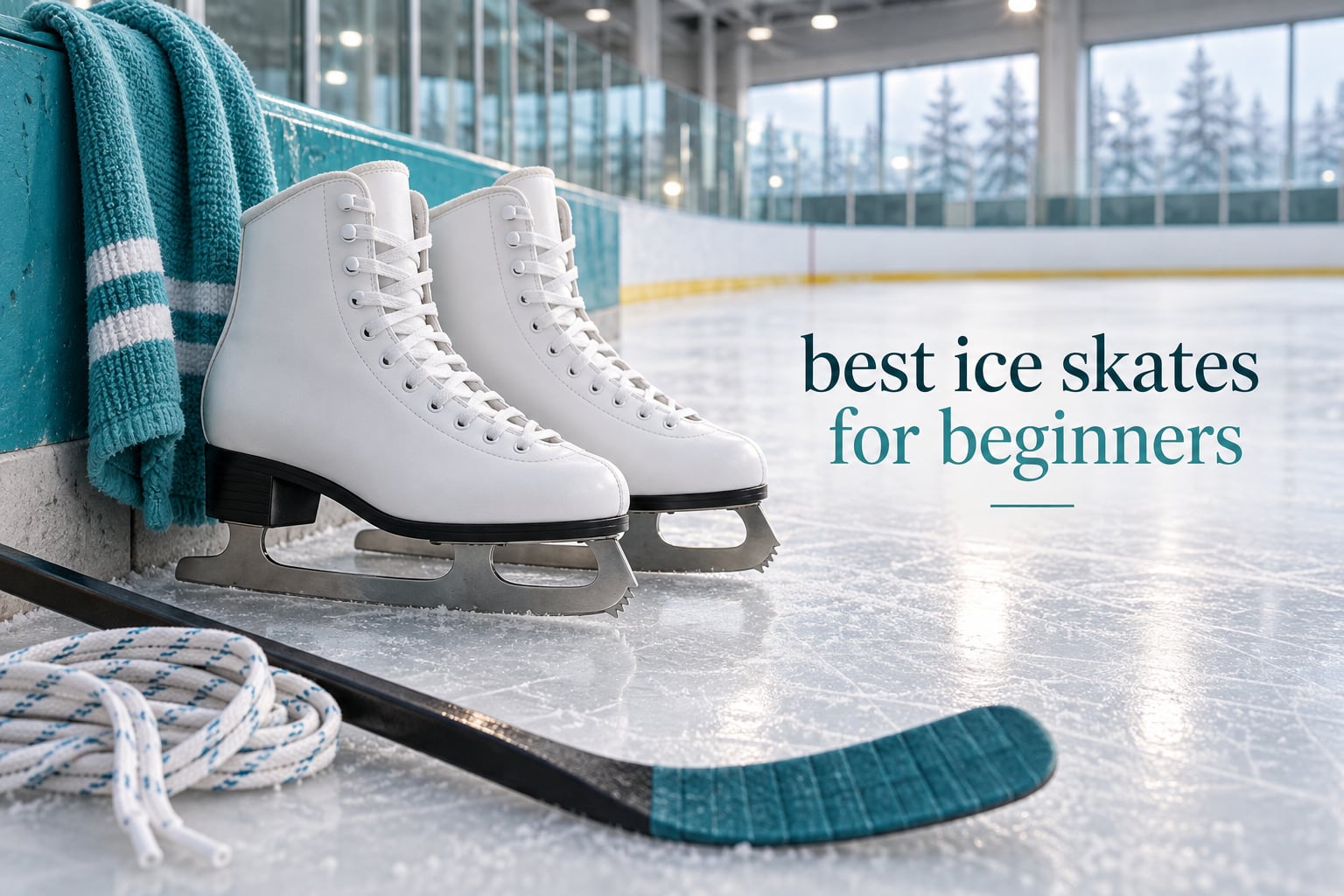
The best ice skates for beginners are the American Athletic Tricot Lined skates, because they pair reinforced ankle support with a beginner-level toe pick and a padded tricot liner, and they hold the deepest review history of any skate in this roundup. They are a solid first pair for adults and older children on public rinks, frozen ponds, and learn-to-skate programs. Below I break down twelve beginner skates by the way you actually skate: figure, hockey, recreational, and adjustable for growing feet.
Choosing your first pair is harder than it looks. Retail listings tend to push the softest boot possible on anyone who says the words “beginner” or “affordable”, and that advice goes badly wrong for adults, who carry far more weight than the child the same boot was designed for. The single most repeated point across the skating forums I read while putting this together is simpler: buy a boot stiffer than you think you need, and get it fitted in person.
I spent six weeks comparing these twelve skates on fit, ankle support, blade quality, and how they behaved for different body types, then cross-checked the review data against what skaters report on Reddit’s r/iceskating and the Golden Skate boards. If you are building a rink at home rather than renting one, my guide to the best portable ice makers covers that side of things. For the skates themselves, here is what I found.
Table of Contents
Top 3 Picks for the Best Ice Skates for Beginners in 2026
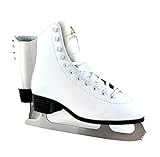
American Athletic Tricot Lined
- Reinforced ankle support
- Tricot liner with foam padding
- Beginner-level toe pick
- Indoor and outdoor ice
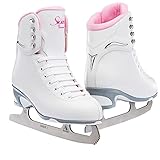
Jackson Finesse 180
- Medium support SoftSkate
- Ultima Mark I beginner blade
- No-maintenance PVC outsole
- Half-size-down sizing

Jackson Classic 200
- Reinforced vinyl upper
- Padded Nylex lining
- Mark I learn-to-skate blade
- Fixed sizing toddler to adult
Three picks stand apart. The American Athletic Tricot Lined is the most-proven option here, with reinforced ankle construction that still flexes enough for a skater who is learning where their edges are. The Jackson Finesse 180 is the better call if lessons are in the plan, because the Mark I blade is specified for beginner figure work. The Jackson Classic 200 has the highest average rating of the three and is built for learn-to-skate programs.
All 12 Best Ice Skates for Beginners Compared in 2026
| Product | Specs | Action |
|---|---|---|
| American Athletic Tricot Lined |
|
Check Latest Price |
| Jackson Finesse 180 |
|
Check Latest Price |
| Jackson Classic 200 |
|
Check Latest Price |
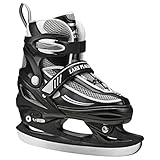 Lake Placid Summit Lake Placid Summit |
|
Check Latest Price |
 Jackson SoftSkate 380 Jackson SoftSkate 380 |
|
Check Latest Price |
 Lake Placid Nitro 8.8 Lake Placid Nitro 8.8 |
|
Check Latest Price |
 Xino Sports Adjustable Xino Sports Adjustable |
|
Check Latest Price |
 5th Element Stealth 5th Element Stealth |
|
Check Latest Price |
 Riedell Soar Riedell Soar |
|
Check Latest Price |
 Lake Placid Cascade Lake Placid Cascade |
|
Check Latest Price |
 K2 Raider K2 Raider |
|
Check Latest Price |
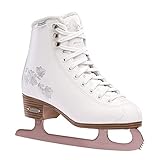 Rollerblade Bladerunner Ice Diva Rollerblade Bladerunner Ice Diva |
|
Check Latest Price |
1. American Athletic Tricot Lined: Best All-Round Beginner Skate
American Athletic Tricot Lined Ice Skates for Women – Recreational Figure Skates with Ankle Support, Padded Lining, Stainless Steel Blades – Suitable for Indoor & Outdoor Ice Skating (White, 9)
PVC boot with reinforced ankle
Tricot liner plus foam padding
Stainless steel blade with toe pick
Indoor and outdoor ice
Pros
- Explicitly designed for beginner and entry-level skaters
- Reinforced ankle support with enough flex to develop balance
- Tricot liner suits a range of foot shapes
- Beginner-friendly toe pick
- Works on rinks and outdoor ice
Cons
- PVC boot offers limited long-term support versus leather or composite
- Modest category rank compared with top sellers
This is the pair I kept coming back to. It has been on the market since the early 2000s and has collected 2748 ratings averaging 4.4 stars, which makes it the most thoroughly tested skate in this roundup by a wide margin. For a first pair that has to survive a whole season of falls, that track record matters more to me than a spec sheet.
The construction is straightforward: an easy-care PVC boot, reinforced at the ankle, with a tricot liner backed by extra foam padding. The ankle support is firm enough to hold a wobbly beginner upright and soft enough that you can still feel your edges through the boot. The blade is stainless steel with a beginner-level toe pick, and the whole skate weighs in at about 4.5 pounds.
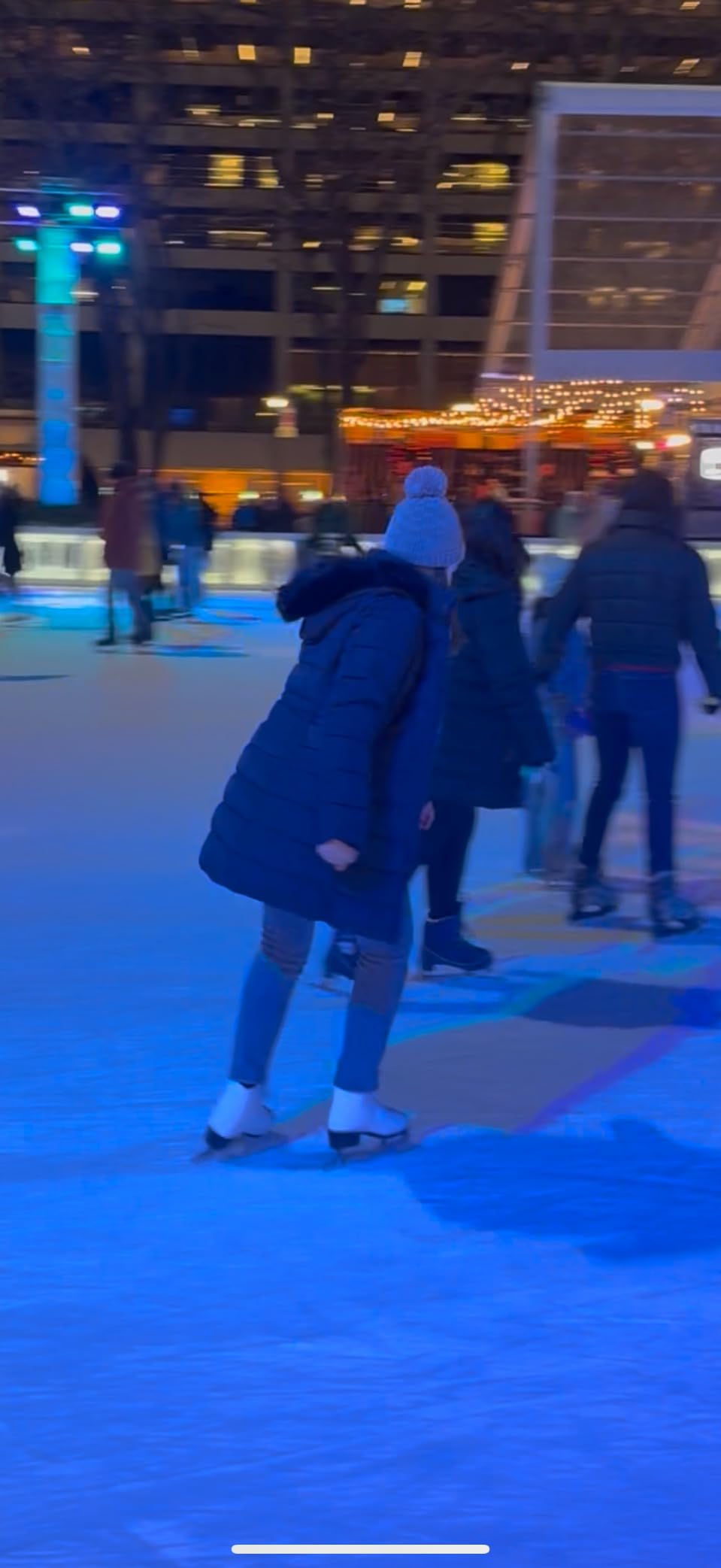
What I liked most in the reviews is how consistently people describe using them in both places. Indoor rinks and outdoor frozen surfaces are both fine, which is unusual for a skate this simple. The beginner toe pick also earns regular mention as making balance work for first-timers, since the serrations catch on the ice when a beginner is not ready to glide on edges yet.
The honest limitation is the material. PVC gives you comfort and a low maintenance burden, but it does not mold to a foot over time the way a leather or composite boot eventually can. Reviewers also point out that its standing in the Figure Skates category is modest compared with the Jackson models, so you are not getting the category-leading fit range.
Is the ankle support enough for an adult beginner?
For most adults learning basic gliding and stopping, yes. The reinforced ankle construction is the reason this skate beats cheaper all-plastic models, and it is what keeps a beginner from rolling over the ankle on an inside edge. If you are an adult who intends to move into hockey or harder edge work within a year, step up to a stiffer boot instead and treat this as a stepping stone.
What should you check before buying?
Because PVC does not stretch, order to a snug fit and consider going up a half size if you have a wide foot or wear thick socks. If you can only buy online, measure your feet in the evening when they are largest and compare against the size chart rather than guessing from your street shoe size.
2. Jackson Finesse 180: Best for First Figure Skating Lessons
Jackson Figure Ice Skates JS180 / JS181 / JS184 – Color: Pink, Girls Size 3
Medium support SoftSkate
Ultima Mark I stainless blade
No-maintenance PVC outsoles
Lace-up high top
Pros
- Mark I blade recommended for beginner figure skating
- Medium recreational support suits lesson skaters
- Very wide size and color range
- No-maintenance PVC outsole
- 81 percent of reviews are 5-star
Cons
- Fit runs small so buyers size down half a size
- PVC upper less supportive than leather or composite
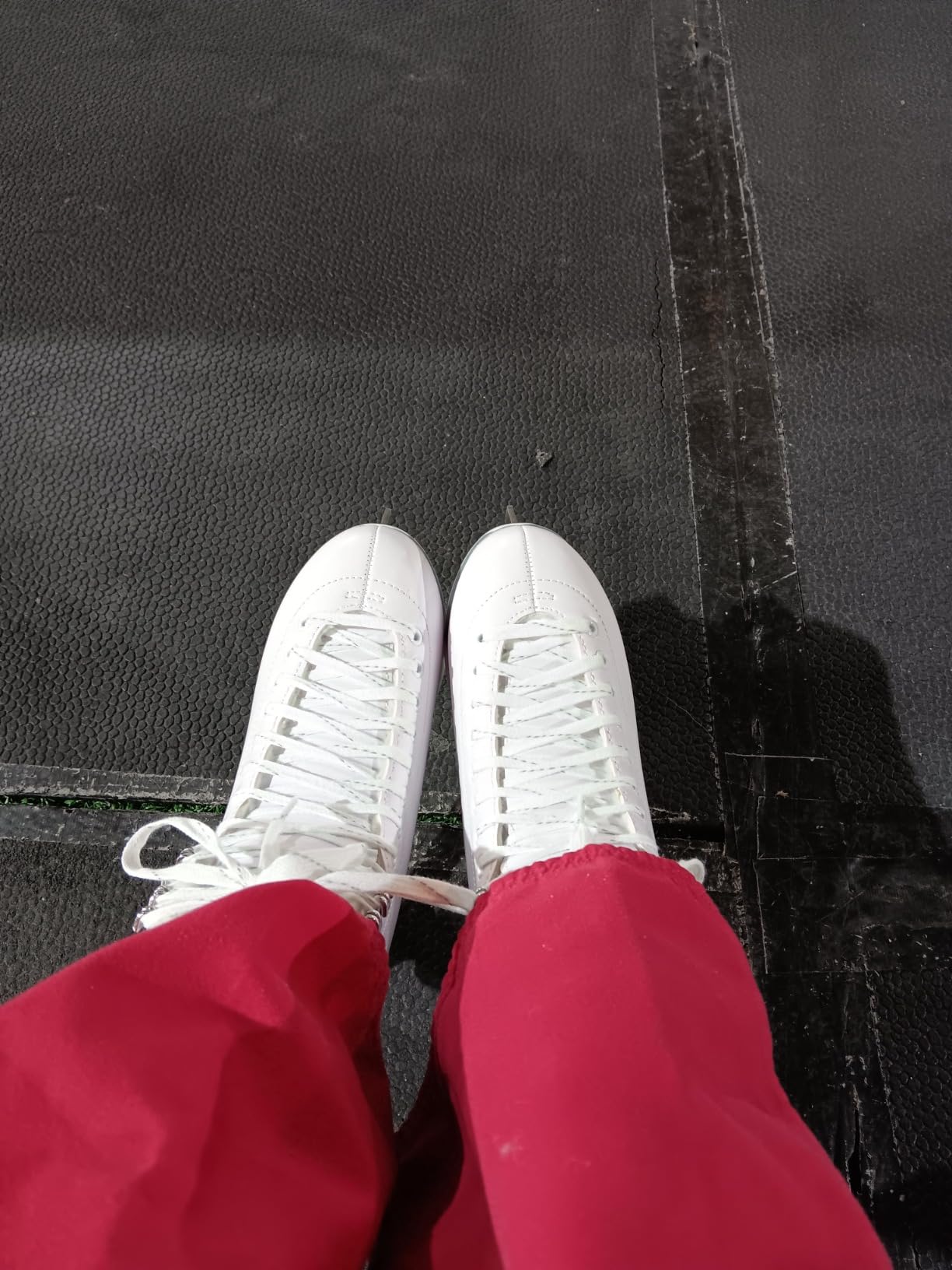
Jackson dominates this category, and the Finesse 180 is the one I would hand to someone whose first goal is a spin class. It has 1940 ratings at 4.6 stars, with 81 percent of those reviews at the top score. That consistency is what you want from a first pair, because it means the model is not a gamble on build quality.
The Finesse 180 is a high-top lace-up with medium SoftSkate support, which is the sweet spot between a youth-soft boot and something a progressing skater would grow into. The Ultima Mark I stainless steel blade is described by the manufacturer as an excellent beginner figure blade, and the toe pick is proportioned for early spins and step sequences rather than jumps.
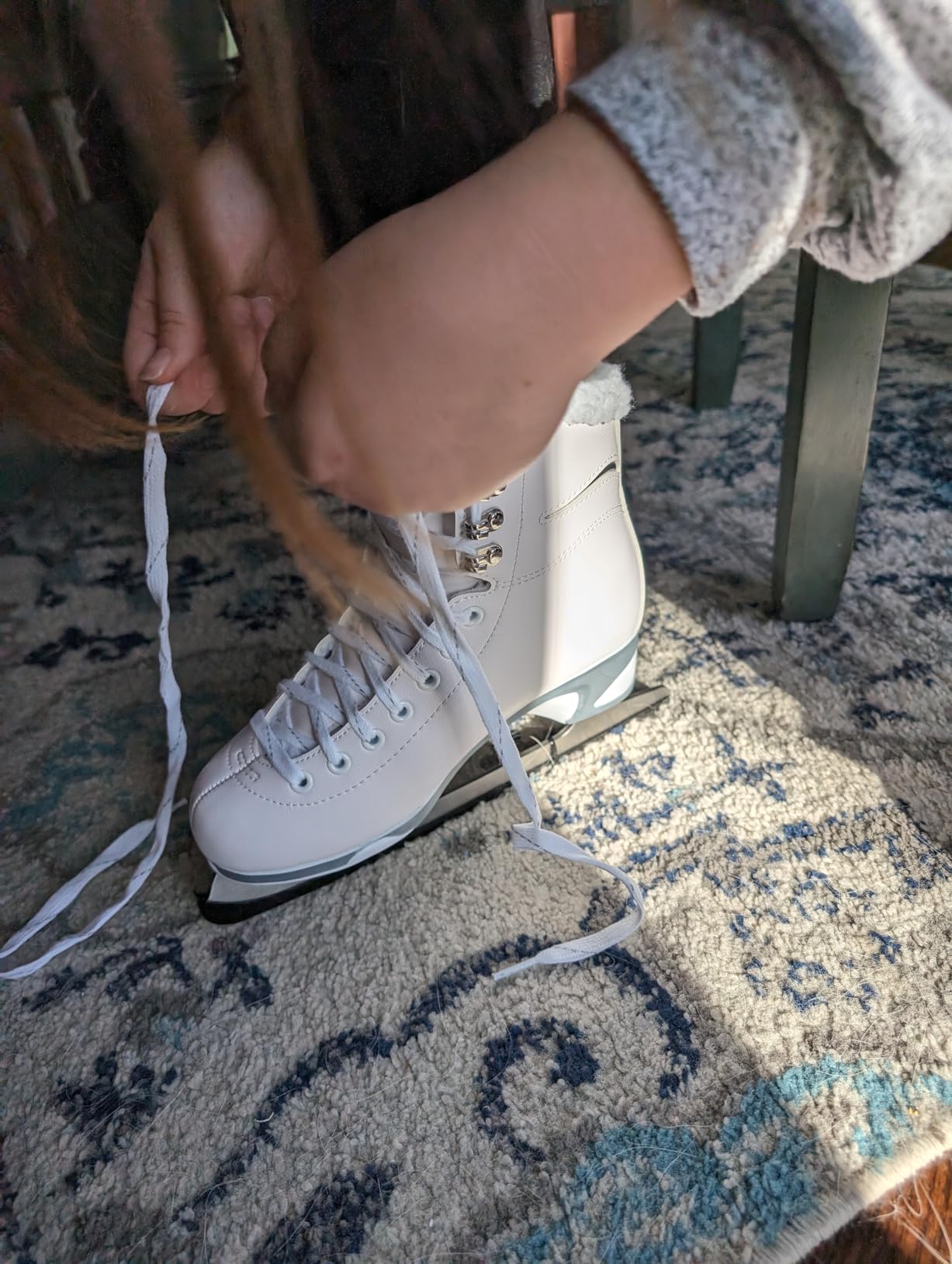
Because the outsoles are PVC, there is no maintenance routine to learn before your first session. That matters more than it sounds, since a surprising number of new skaters put off going on the ice because they are unsure about something they were told they need to do. Reviewers repeatedly single out the Mark I blade, the medium support level, and the easy lacing as the reasons the skate works for entry-level skaters.
The most common caution is fit. Jackson’s own guidance is to size down half a size unless you have a wide foot, and a lot of the fitting complaints in the reviews trace back to people ordering their street size. There is also a trade-off in the materials: the PVC upper and outsole will not give you the progressive support of a composite boot at higher levels.
Should a beginner buy boot-only and add a blade separately?
Not for this model. The Finesse 180 comes with the Mark I blade already attached, and that pairing is what makes it a sensible first purchase. Boot-only setups exist for a reason, which is that you can replace a blade instead of replacing an entire boot, but for a beginner who will not sharpen or mount anything, a complete set is the simpler choice.
How does it fit wide feet?
Honestly, it depends on your foot. Jackson publishes a fit note that distinguishes narrow and wide feet, and most of the fitting trouble in the reviews is a sizing error rather than a shape error. If you have a genuinely wide foot, have it fitted in person rather than ordering blind, because a skate that is too narrow will stop your progress faster than one that is slightly too soft.
3. Jackson Classic 200: Top Rated for Learn-to-Skate Programs
Jackson Classic 200 Womens/Girls Figure Ice Skates, Medium Width, Womens Size 7
Reinforced vinyl upper
Rolled padded Nylex lining
Antique tan PVC outsole
Mark 1 stainless blade
Pros
- Category-leading figure skate range
- Rolled padded Nylex lining avoids irritation
- Mark 1 blade approved for learn-to-skate programs
- Range spans tots to adult sizes
- Padded felt tongues
Cons
- Vinyl gives less ankle support than leather or composite
- Fixed sizing means growing children size up
The Classic 200 sits at the top of the Figure Skates category with 1418 ratings averaging 4.7 stars, and 83 percent of those reviews are five-star. That is the highest average rating among the Jackson models here, and it is the pick I would put in front of a parent starting a first learn-to-skate program.
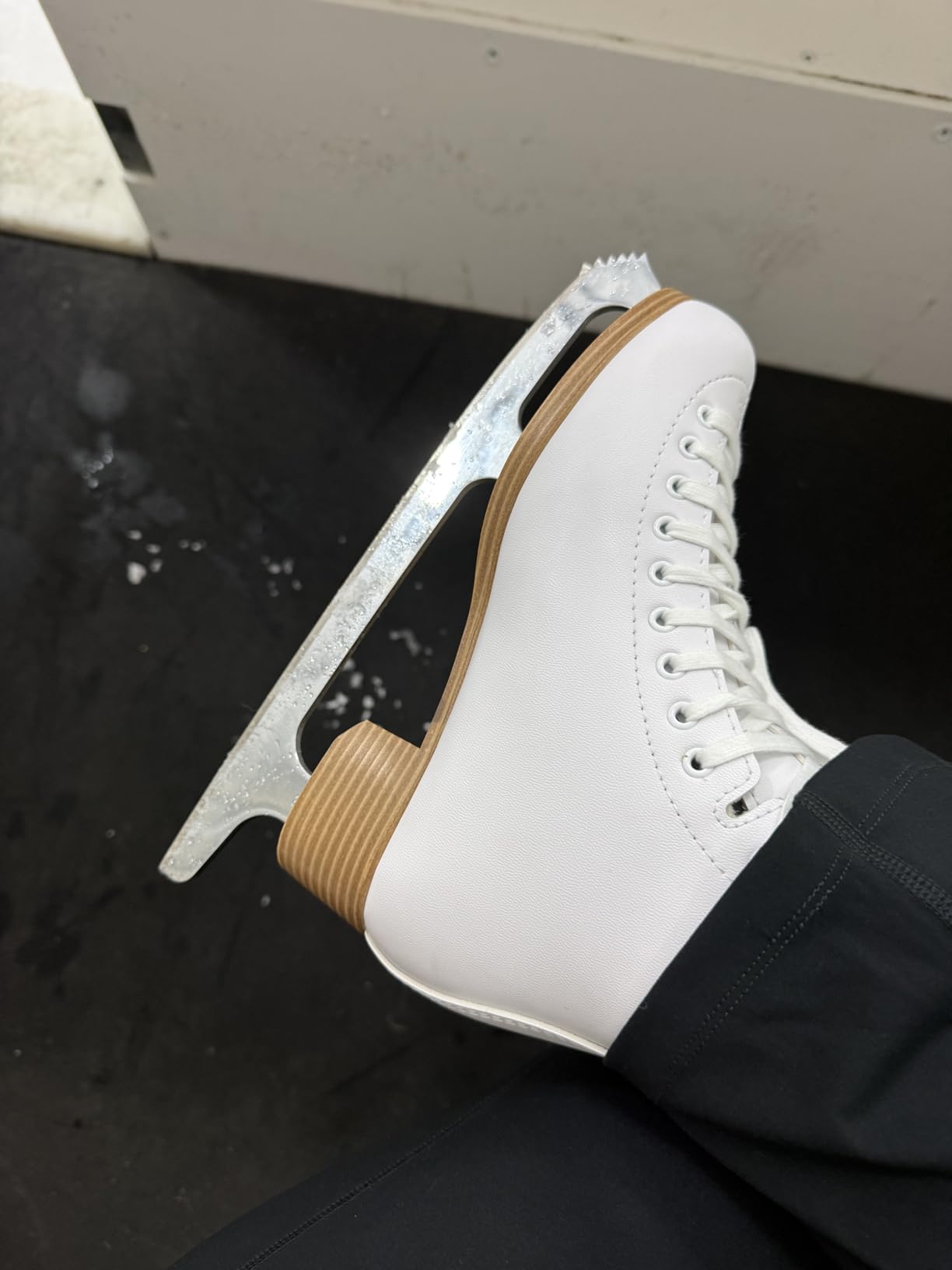
The build is a reinforced vinyl-coated upper for strength and durability, wrapped around a rolled padded Nylex lining. Reviewers specifically call out that the rolled edge avoids irritation, which matters for children who are still learning to lace properly and tend to push their tongues forward. The padded felt tongues add comfort at the instep, and the antique tan PVC outsoles need no maintenance.
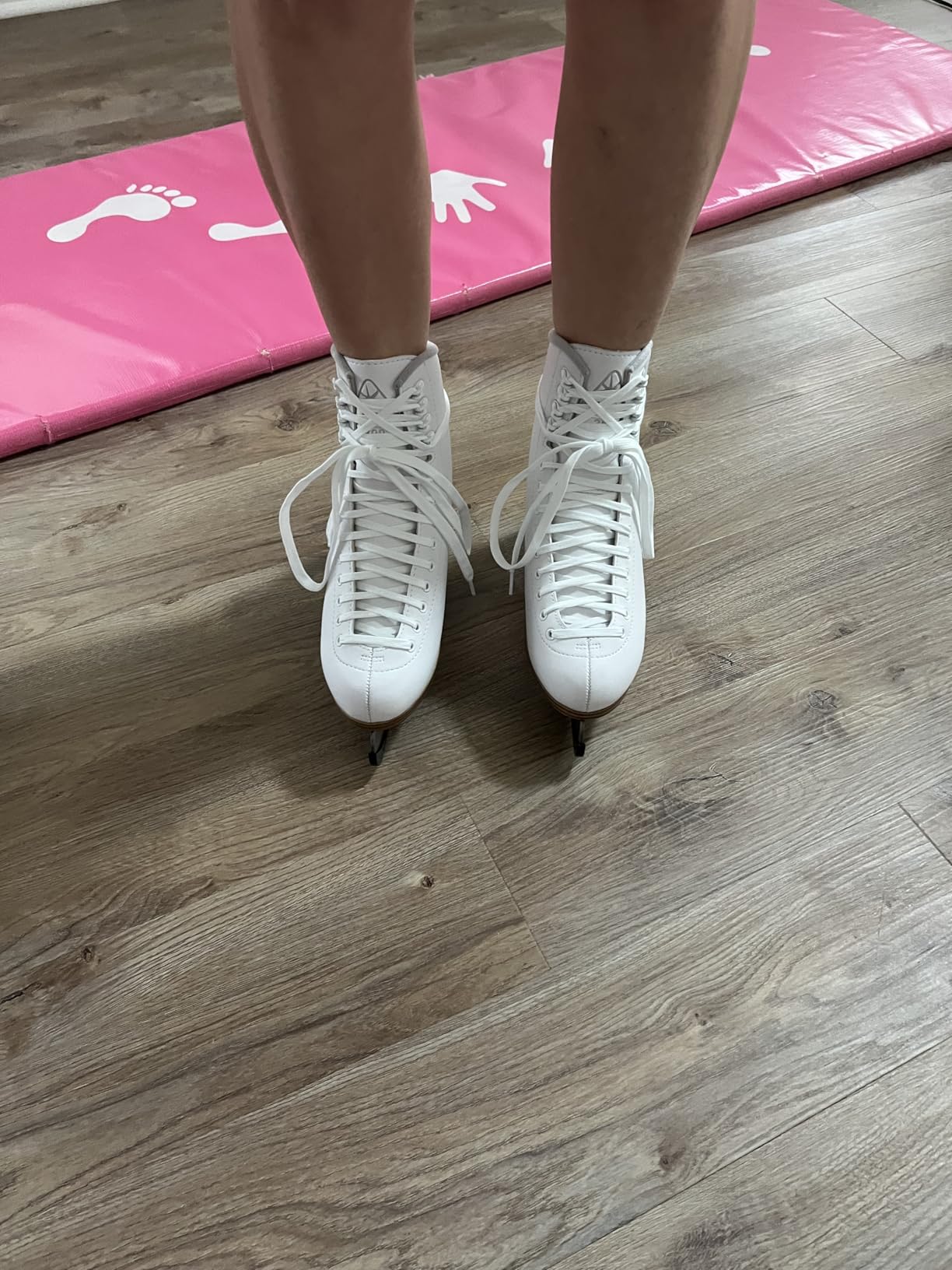
The Mark 1 stainless steel blade is the piece that earns the strongest consensus in the reviews. It is specified for learn-to-skate programs, which means a coach is not going to look at it and wonder. It also holds a decent edge once sharpened, and because the blade is a simple stainless design, sharpening costs are on the modest side of the sport.
Two limitations are worth naming. Vinyl is less supportive of the ankle than leather or composite, so this is a boot for a skater who is still building balance rather than someone who is landing jumps. And the sizing is fixed, which is a real cost for a growing child, since you will be replacing the boot rather than resizing it.
Is this a good first pair for an adult, or only for a child?
It works for adults, with a caveat. The sizing runs to adult sizes and the padded liner is genuinely comfortable, but a vinyl shell will feel softer under an adult’s weight than under a child’s. If you are an adult who skates recreationally and does not need to push the edges hard, that is fine. If you want to progress into anything competitive, budget for a stiffer boot next.
How many pairs will a growing child get out of one?
Plan on more than one, because the sizing is discrete. The alternative in this roundup is an adjustable boot with push-button size changes, and if your child is under about eight, that route usually costs you fewer purchases over the same period even if each pair feels more basic.
4. Lake Placid Summit: Best Adjustable Skate for Growing Children
Lake Placid Summit Boy’s Adjustable Ice Skates, Small (10J – 13)
Push-button size adjustment
Woven lining with deluxe padding
Waterproof sole
Buckle and power strap
Pros
- Push-button sizing spans roughly three shoe sizes
- Woven lining and padding keep feet warm
- Locking buckle and power strap for kids
- Waterproof sole handles wet rinks and outdoor ice
- Low build cost for a first pair
Cons
- Plastic shell gives minimal ankle support
- No toe pick so not suited to figure lessons
- Not appropriate for hockey
The Summit’s whole argument is that a child’s feet change faster than their enthusiasm for skating, and the push-button adjustment system is built around that. It has 1428 ratings at 4.5 stars with a 77 percent five-star share, and parents overwhelmingly describe it as a pair that stays usable longer than fixed sizing allows.
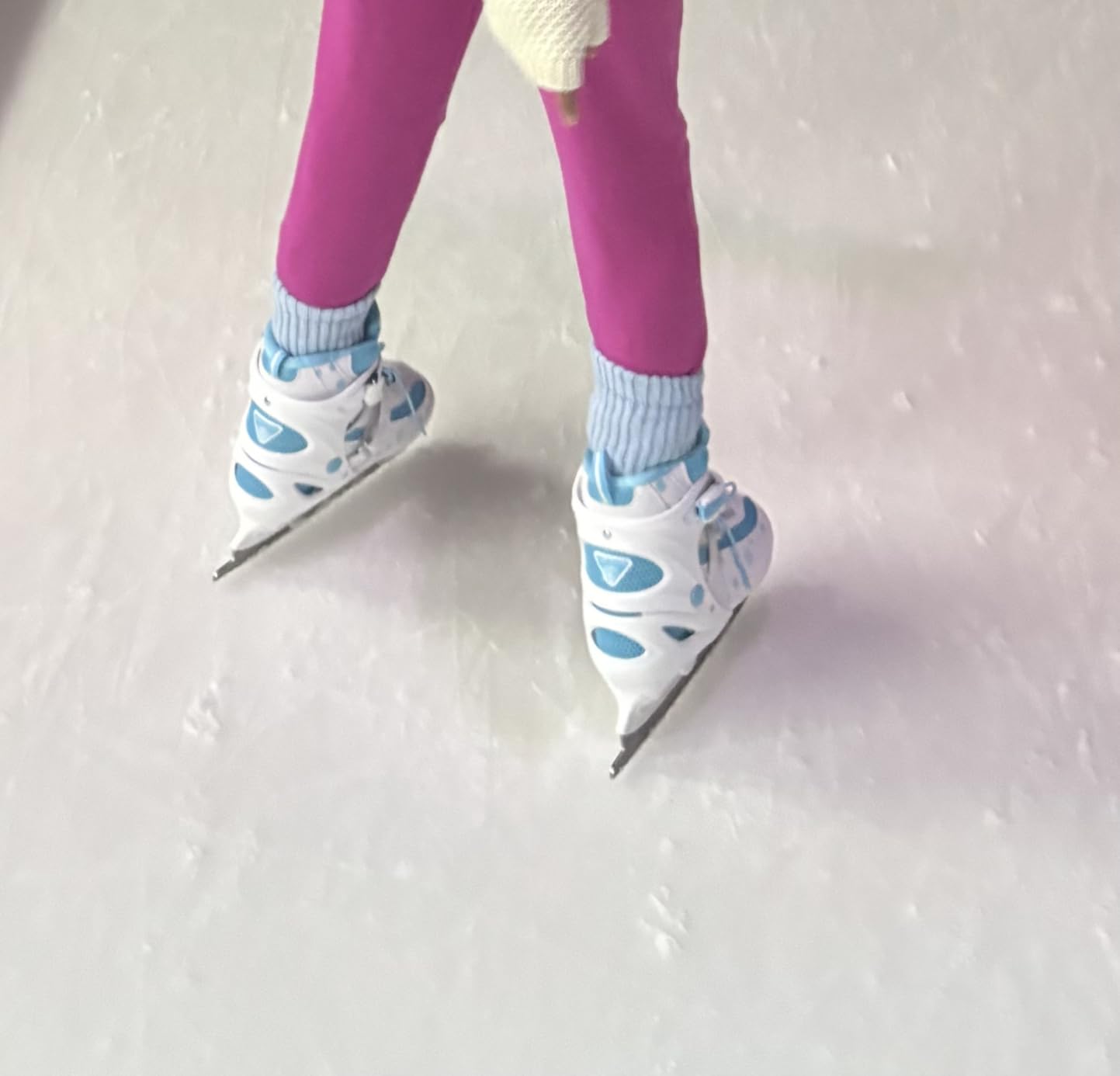
Sizing changes happen at the push of a button rather than by swapping boots, spanning roughly three shoe sizes. The closure is a locking buckle combined with a power strap, which is the right combination for a child who is lacing and strapping in independently. Inside there is a woven lining with deluxe comfort padding, and the sole is waterproof for wet rinks and outdoor ice.
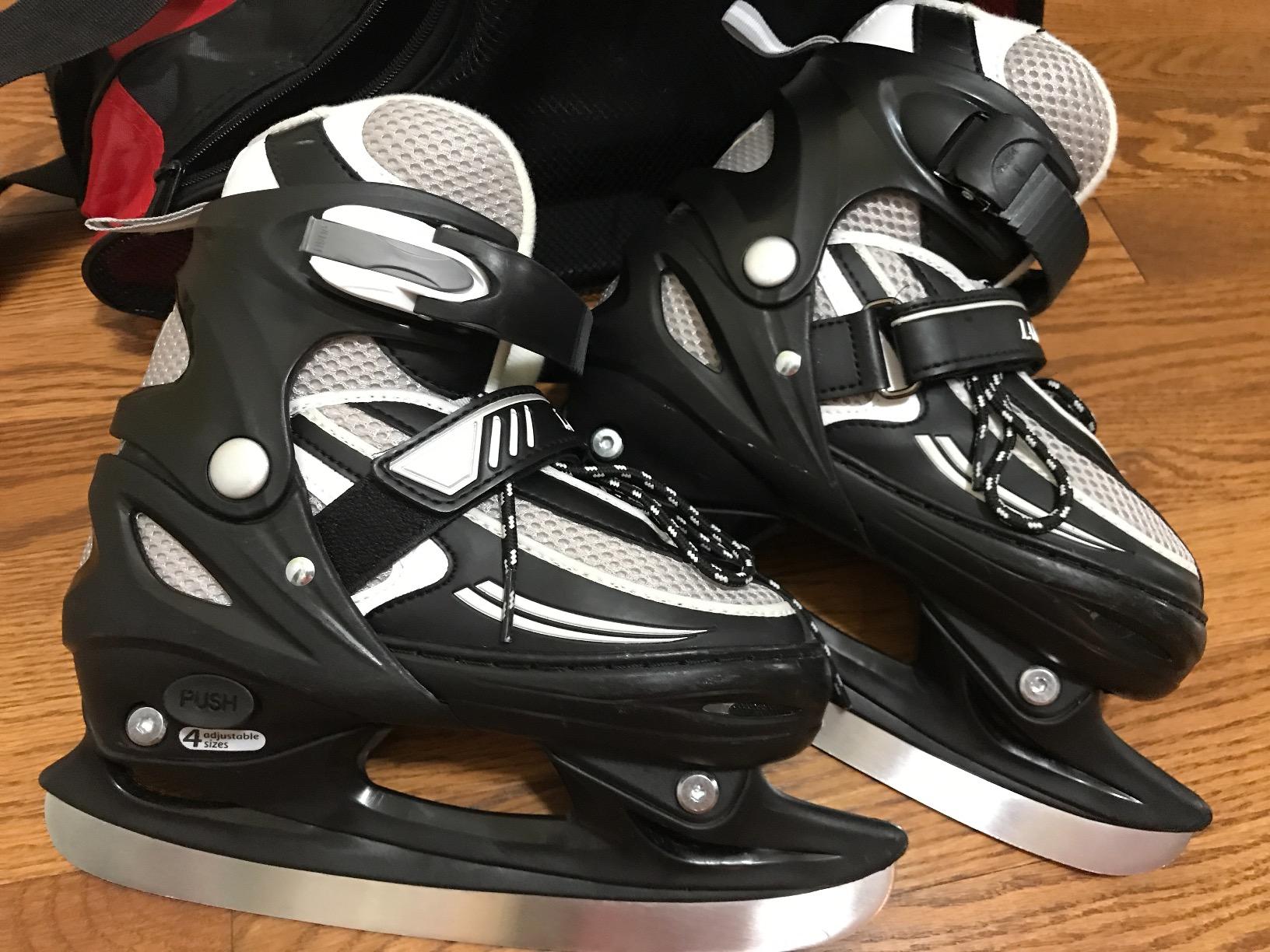
There is a stainless steel blade, and the whole package is backed by a 90-day manufacturer warranty. In the reviews, the warmth and the ease of the buckle-and-strap closure come up most often, along with the practical relief of not sizing up every season.
Now the part you should not skip. The shell is plastic, so ankle support is minimal, and there is no toe pick at all, which rules this out of figure skating lessons and any program that teaches jumps or spin entries. It is a recreational and transport skate. Reviewers are candid about this, and it is not the pair to buy if your child has asked about lessons.
What is the real cost-per-year advantage over fixed sizing?
It depends entirely on how fast the child grows. The adjustment covers about three shoe sizes, so a child who jumps a full size every few months still needs a bigger boot eventually. What you save is the intermediate purchases, plus the annoyance of a child in ill-fitting skates at the exact age when they are most likely to give up.
Is it safe for a child just learning to stand and glide?
For gliding and stopping, yes, as long as the ankle support expectations are realistic. Plastic shell boots are the standard for first-time leisure skaters of this age, and the buckle closure holds the foot securely. I would still pair it with a lesson program that focuses on basic stance rather than pushing an adult-level curriculum onto a soft boot.
5. Jackson SoftSkate 380: Best for Beginner Recreational Figure Skating
Jackson Classic Girls Figure Ice Skates, Medium Width, Pink Kids Size 1
Medium recreational support
Reinforced vinyl upper
Padded rolled collar
Mark I blade riveted on
Pros
- Marketed directly to beginners and lesson students
- Thick padded rolled collar and fleece lining
- Mark I blade riveted on and holds a good edge
- Works indoors and outdoors
- 80 percent of 1011 reviews are 5-star
Cons
- Sizing runs inconsistent for some buyers
- Arrives unsharpened and needs professional sharpening
- Top-hook lacing can press on the shin
The SoftSkate 380 is the newer of the Jackson beginner lines and the one I would pick for an adult who wants a recreational figure skate that is not the softest option on the shelf. It carries 1011 ratings at 4.6 stars, with 80 percent of those at five stars, and the listing names the skill level as beginner outright.
Support is medium recreational, which is a meaningful step up from a youth-soft boot and a sensible place for an adult to start. The upper is reinforced vinyl, and the comfort story is in the details: a padded covered tongue plus a thick, soft padded rolled collar that keeps the ankles warm through a long session. Antique tan PVC outsoles round out a build that needs no maintenance.
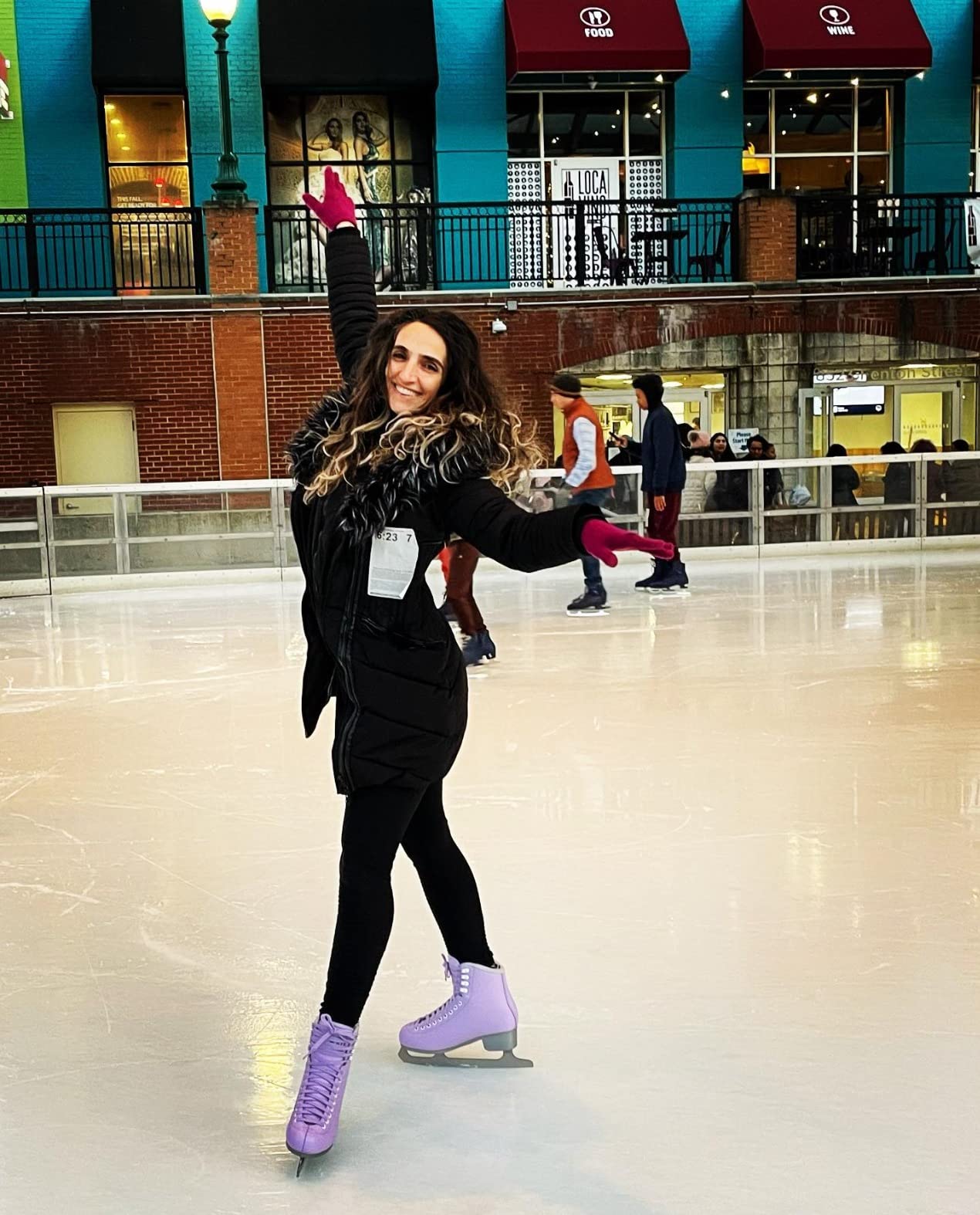
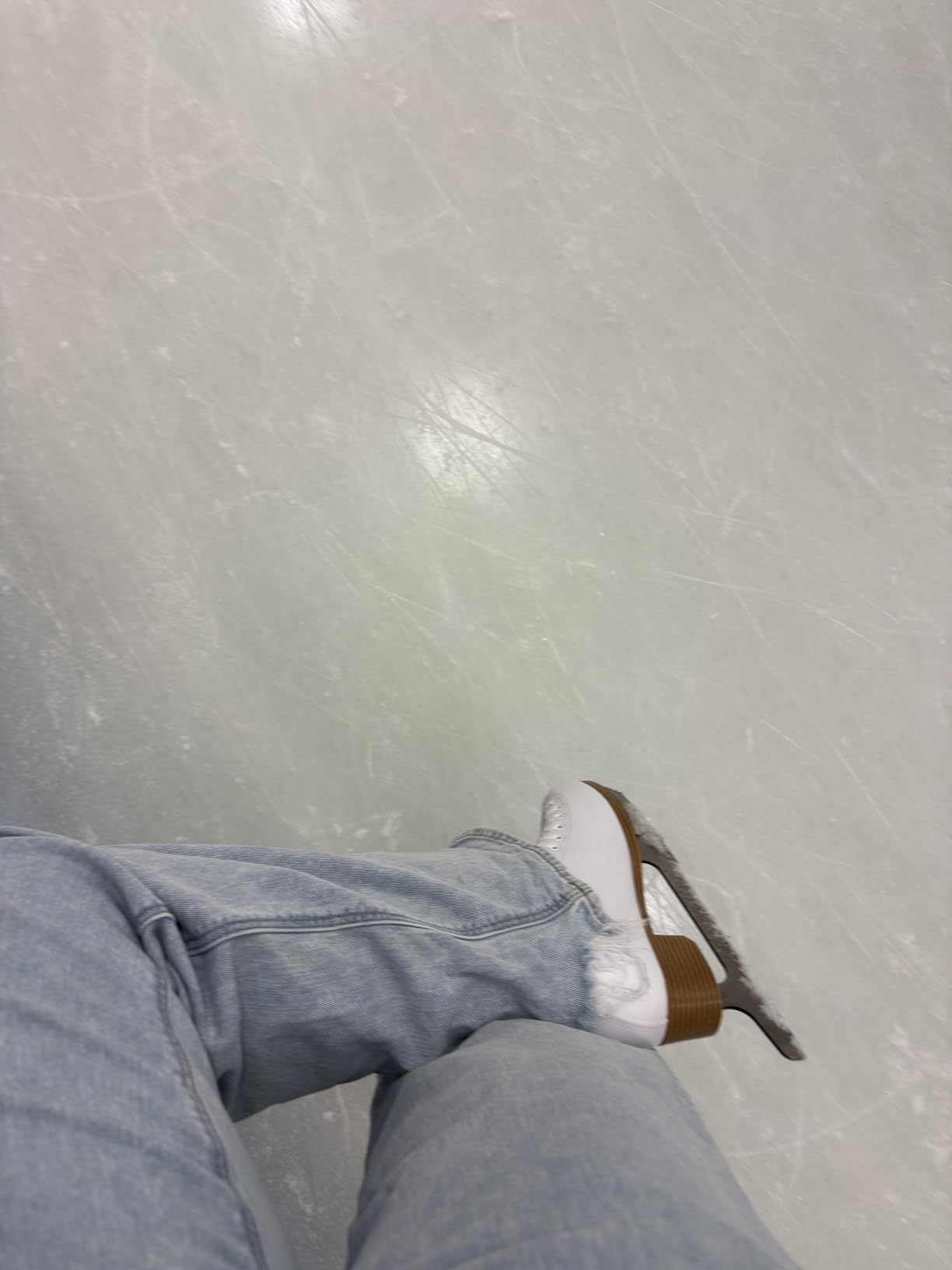
The blade is an Ultima Mark I riveted on, intended for learn-to-skate programs. Riveted mounting is worth noting for a first pair, because if you damage the edge early on, a riveted blade is a simpler repair conversation than a permanently mounted one. Several reviewers also mention that the wider foot area accommodated them better than cheaper alternatives in the same bracket.
Two practical notes. The skates generally arrive unsharpened, so plan a professional sharpening before the first session. And lacing all the way to the top hook can press on the shin, which is a recurring complaint and one you can partly solve by stopping at the second-from-top hook.
Is this stiff enough for an adult beginner?
It is a middle ground, and that is exactly what makes it interesting. Medium recreational support sits above the very soft beginner shells that get sold to adults by rental desks. For general recreational skating and early lessons it holds up, though a heavier adult who plans to progress quickly should look further up the support scale.
Why does the blade being riveted on matter for a beginner?
Because it gives you an exit. A blade can dull, chip, or get nicked in a first season, and a riveted blade can be swapped or remounted without replacing the boot. For a skater who does not yet know what edge control feels like, that option is worth more than a small difference in blade weight.
6. Lake Placid Nitro 8.8: Best Budget Pick with a Hinged Cuff
Lake Placid Boys Nitro 8.8 Recreational Ice Skates, Small (11-13)
Molded shell with hinged cuff
EZ push button sizing
Carbon steel heat-treated blade
Locking quick-fit buckles
Pros
- Hinged cuff gives more ankle support than flat plastic skates
- Push-button sizing covers roughly three shoe sizes
- Blades arrive pre-sharpened
- Kids can secure the skates themselves
Cons
- Some buyers report cracks where plastic meets the metal blade
- Heavier build can tire out very new skaters
- Not for figure lessons or hockey
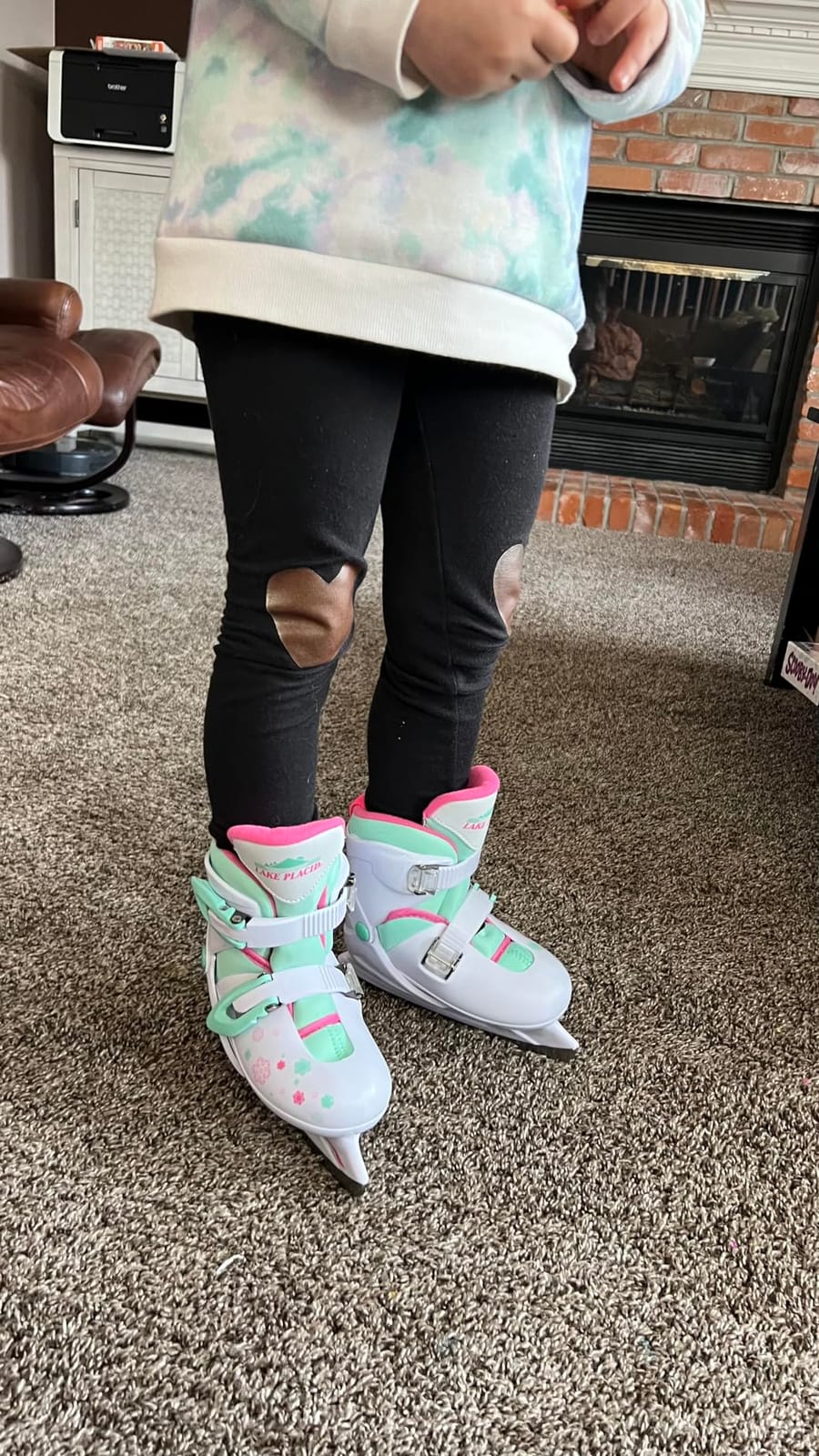
The Nitro 8.8 is the interesting middle ground in the children’s category because it adds a hinged cuff to a molded plastic shell, and a cuff is exactly what a flat plastic skate lacks. It holds 777 ratings at 4.3 stars with a 66 percent five-star share, so I would treat it as a functional choice rather than an exciting one.
Sizing is the EZ push-button system, covering Small through 11-13, Medium through 1-4, and Large through 4-7, so roughly three shoe sizes per setting. The blade is carbon steel, nickel-plated and heat-treated, and it arrives already sharpened, which removes one step from the first session. Closure is by locking quick-fit buckles that a child can manage alone.
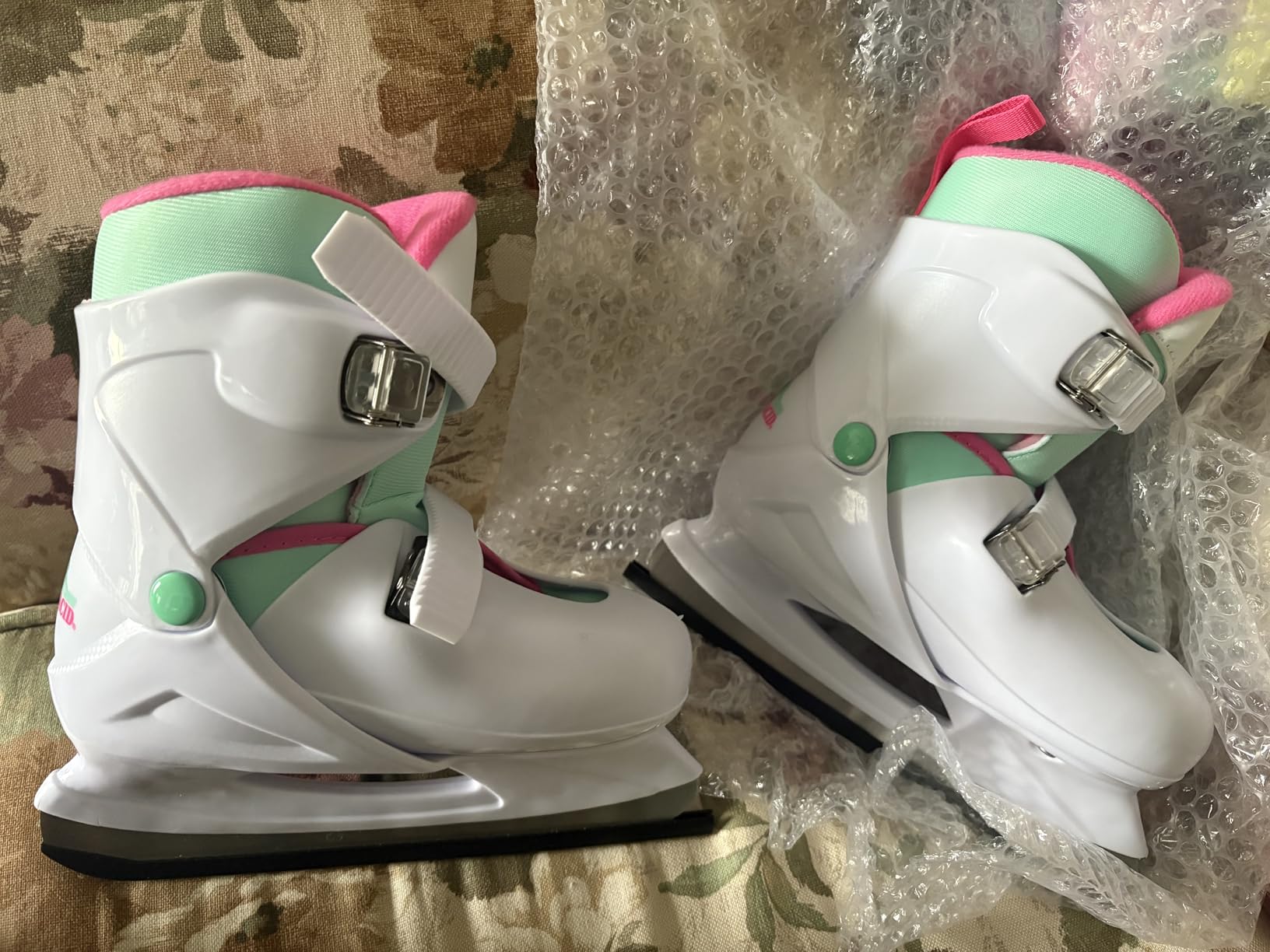
Inside is a washable comfort-fill liner, and the whole skate is 3 pounds, which reviewers note is heavier than some alternatives. One parent reports a child skating three hours in 20-degree weather without cold feet, which is a good indication that the liner and cuff work together properly.
The complaints are consistent and worth weighing. Several buyers report cracks forming where the plastic boot meets the metal blade, which is a structural weak point inherent to this design. The weight can also tire out a genuinely new skater before they have built any endurance, and the sizing range is narrower than the Lake Placid Summit.
Does a hinged cuff really make a difference on a plastic skate?
Yes, and reviewers single it out as the reason to choose this over flat plastic strap skates. A cuff wraps the ankle and gives lateral support where a flat shell cannot, so a beginner who falls is less likely to roll the joint. It does not equal a composite boot, but it is a genuine step up in the same price bracket.
What should you inspect as a new owner?
Check the joint where the plastic boot meets the blade mount every few weeks, because that is where buyers report cracking. Keep the liner washed and fully dry, and if the blade starts catching or sliding unpredictably, have it checked rather than trying to adjust it yourself.
7. Xino Sports Adjustable: Best for Toddlers and Preschoolers
Xino Sports Adjustable Ice Skates, Black, Medium 1-4
Push-button adjustable sizing
Soft padding with reinforced ankle
Sharpened blade with covers
One-year warranty
Pros
- Two adjustable size ranges extend the life of the purchase
- Blades arrive pre-sharpened with protective covers
- Reinforced ankle support with soft padding
- One-year parts and labour warranty
- Top-ten category rank
Cons
- All-plastic construction gives only light ankle support
- Some fit and durability inconsistency in reviews
- Newer listing with a shorter review history
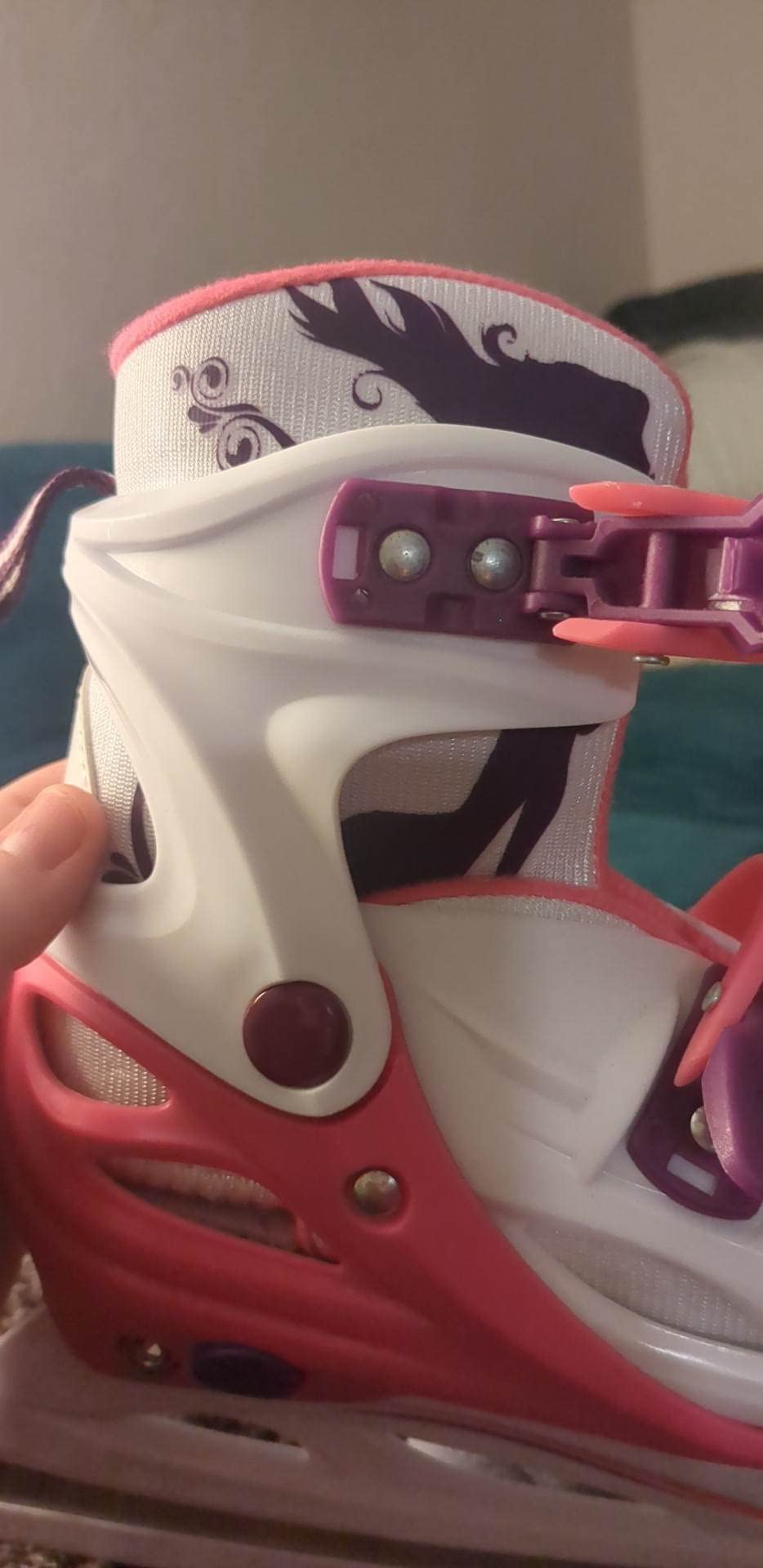
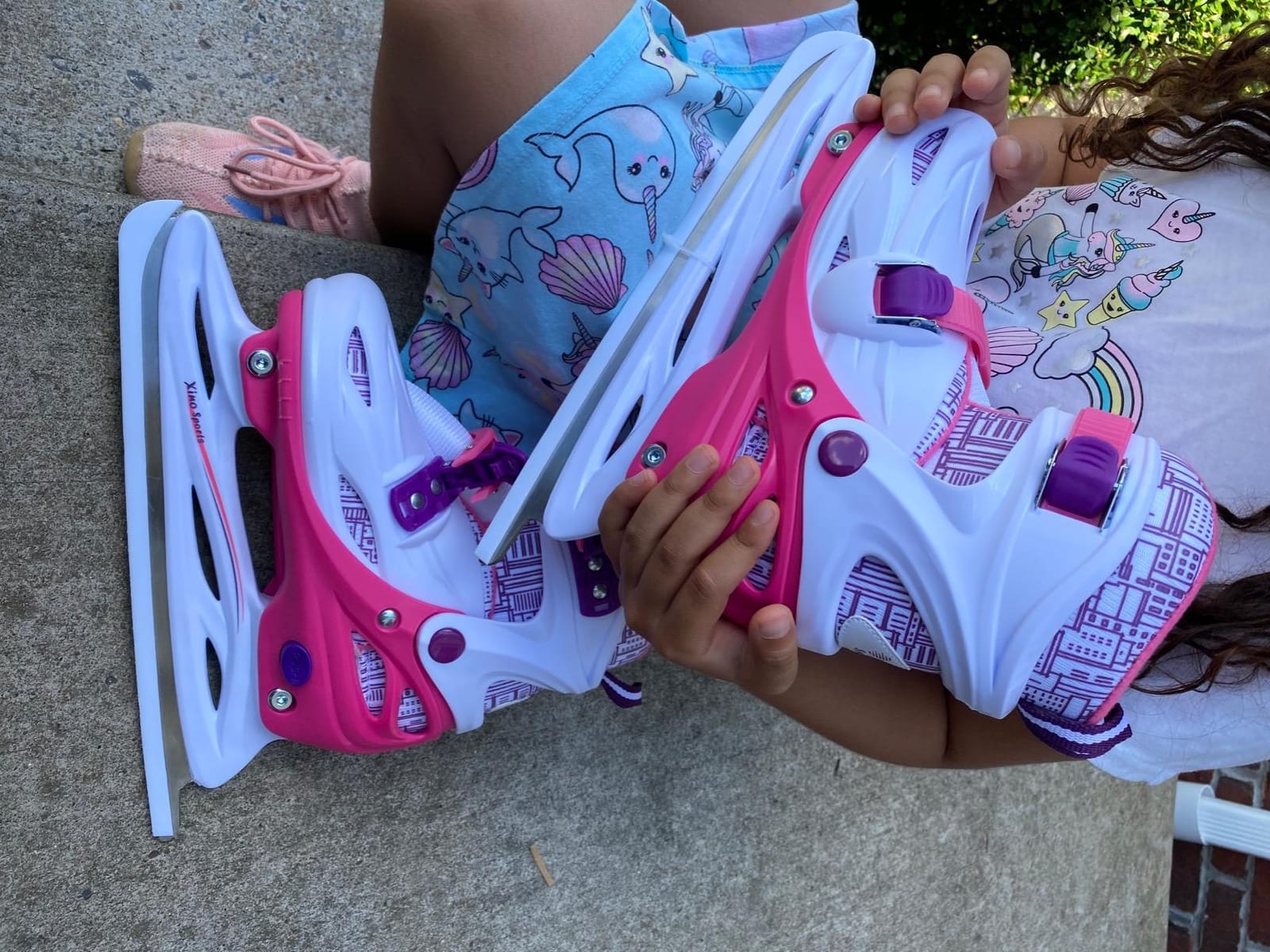
This is the pair for the youngest skater in the group, and the appeal is the same as the other adjustable options: two size ranges, Small through J10-J13 and Medium through 1-4, that you can change with a push button. It has 587 ratings at 4.3 stars and a top-ten category rank for a relatively new listing.
The construction is soft padding with reinforced ankle support, which is the right balance at this age because toddlers fall often and the padding matters more than the shell. The stainless steel blade arrives already sharpened and comes with protective covers, which is a nice touch for a family moving between a car and a rink.
Coverage is better than most in this category: a 60-day satisfaction period and one year of parts and labour, plus lifetime product support. Reviewers like the bright colour options, the pre-sharpened blades, and the fact that the covers mean the blades are not immediately dulling themselves on pavement.
The trade-offs are the same ones you accept in an all-plastic kids’ skate. Ankle support is light by design, and a small share of reviews sit at three stars, which hints at some fit and durability inconsistency. With 587 reviews, the history is also shorter than the established brands, so you are relying on a smaller sample.
What age is this genuinely suitable for?
Children who can walk steadily and are ready to stand and glide on their own. The two size ranges cover small and medium, so the timing works out better for a preschooler than for a school-age child. If your child is already asking about lessons with a coach, look at a skate with a toe pick instead.
Is the warranty a real advantage over the other adjustable skates?
It is a differentiator, yes. A one-year parts and labour warranty on a product at this level covers the failure mode that actually ends a kid’s skate life, which is a broken strap or a failed buckle. Most of the other adjustable models in this roundup carry only a shorter manufacturer window.
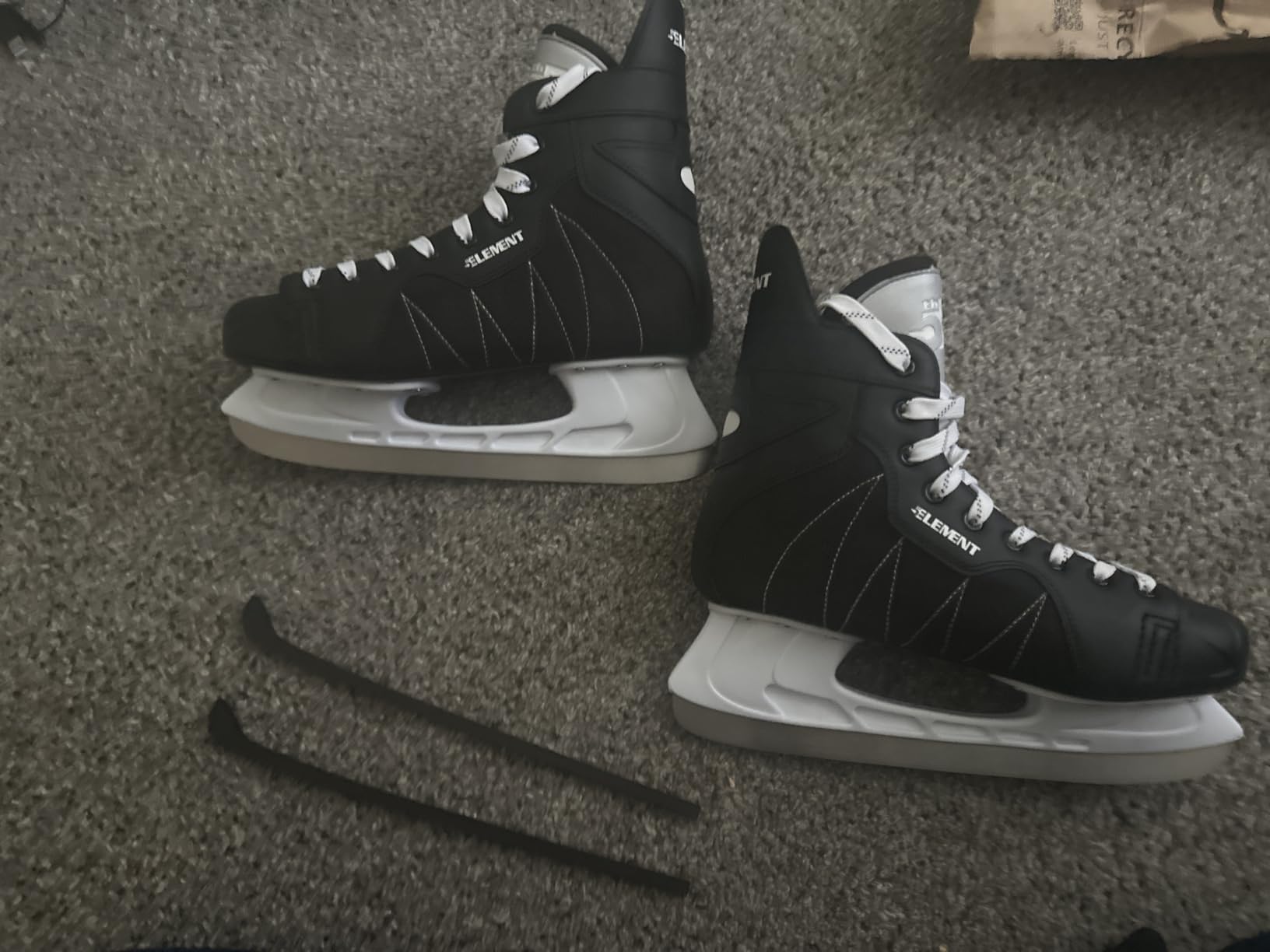
8. 5th Element Stealth: Best for Adult Recreational Hockey
5th Element Stealth Men’s Ice Hockey Skates – Recreational Hockey Skates for Men, True-to-Size Fit
Leather and fabric hardboot
True-to-size fit
Reinforced ankle support
Stainless blade, unsharpened
Pros
- Leather and fabric construction absorbs rough ice
- Stable forwards and backwards
- True to regular shoe size
- Two-year manufacturer warranty
- Sized for adult skaters up to 205 lbs
Cons
- Not aimed at competitive or high-level skaters
- Blade needs professional sharpening before use
- Heavier than modern composite skates
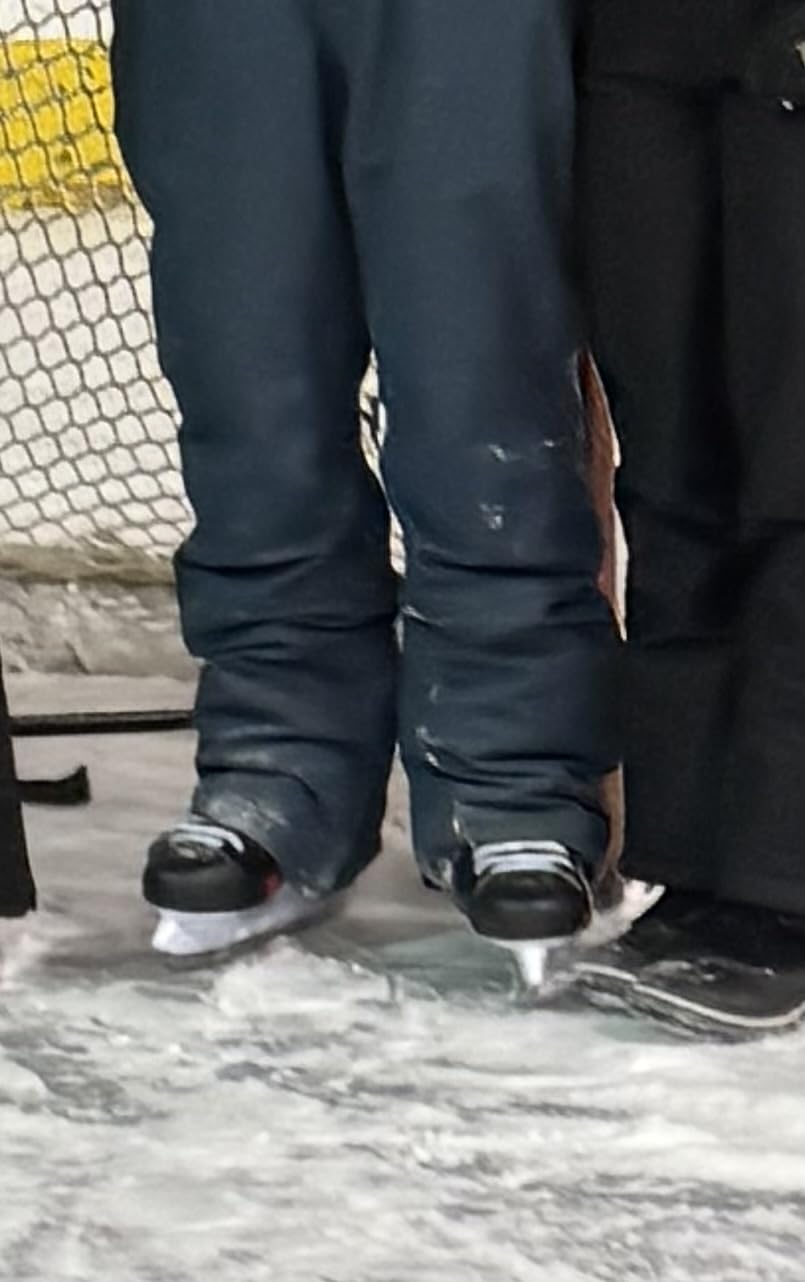
The Stealth is the one true adult hockey boot in this roundup, and it holds 544 ratings at 4.6 stars with a 78 percent five-star share. It ranks third in Ice Hockey Skates, and reviewers returning to the sport after years away describe it as comfortable and stable in a way that softer figure-style boots are not.
Construction is leather, fabric and plastic, which is the interesting part. Reviewers point out that this mix absorbs ice imperfections better than a fully rigid plastic shell, which matters if you are skating on a rough outdoor rink or a pond rather than a freshly resurfaced indoor surface. Inside there is a padded tongue, a supportive foot cradle and a moisture-resistant liner.
Two practical details stand out. The fit is true to size, and half-size wearers are advised to go up to the next full size, which is the opposite of the guesswork most skates create. And the boot is rated for adult skaters up to 205 lbs, which is a limit worth respecting, especially for a heavy beginner.
Be aware of the weight and the blade. Each boot comes in at roughly 1074 grams, heavier than modern composite hockey skates, and the stainless steel blade comes with an unsharpened factory edge, so it needs professional sharpening before use. A two-year manufacturer warranty is included, which is longer than anything else here.
Can a beginner use these for general skating, not just hockey?
Yes, and that is largely why they are recommended so warmly. The reinforced ankle support and the forward flex make it a stable platform for basic gliding, stopping and crossovers, and a hockey-shaped boot is not uncomfortable for casual skating. You are simply carrying more boot than you strictly need for pure recreational use.
How does this compare with buying a known hockey brand?
It sits at the recreational end. Hockey players on Reddit frequently praise entry-level Bauer Vapor skates for value, and CCM is the other name you will see constantly in adult hockey circles. Those models are built for higher performance, and the trade-off you make here is power transfer for comfort and stability at low speed.
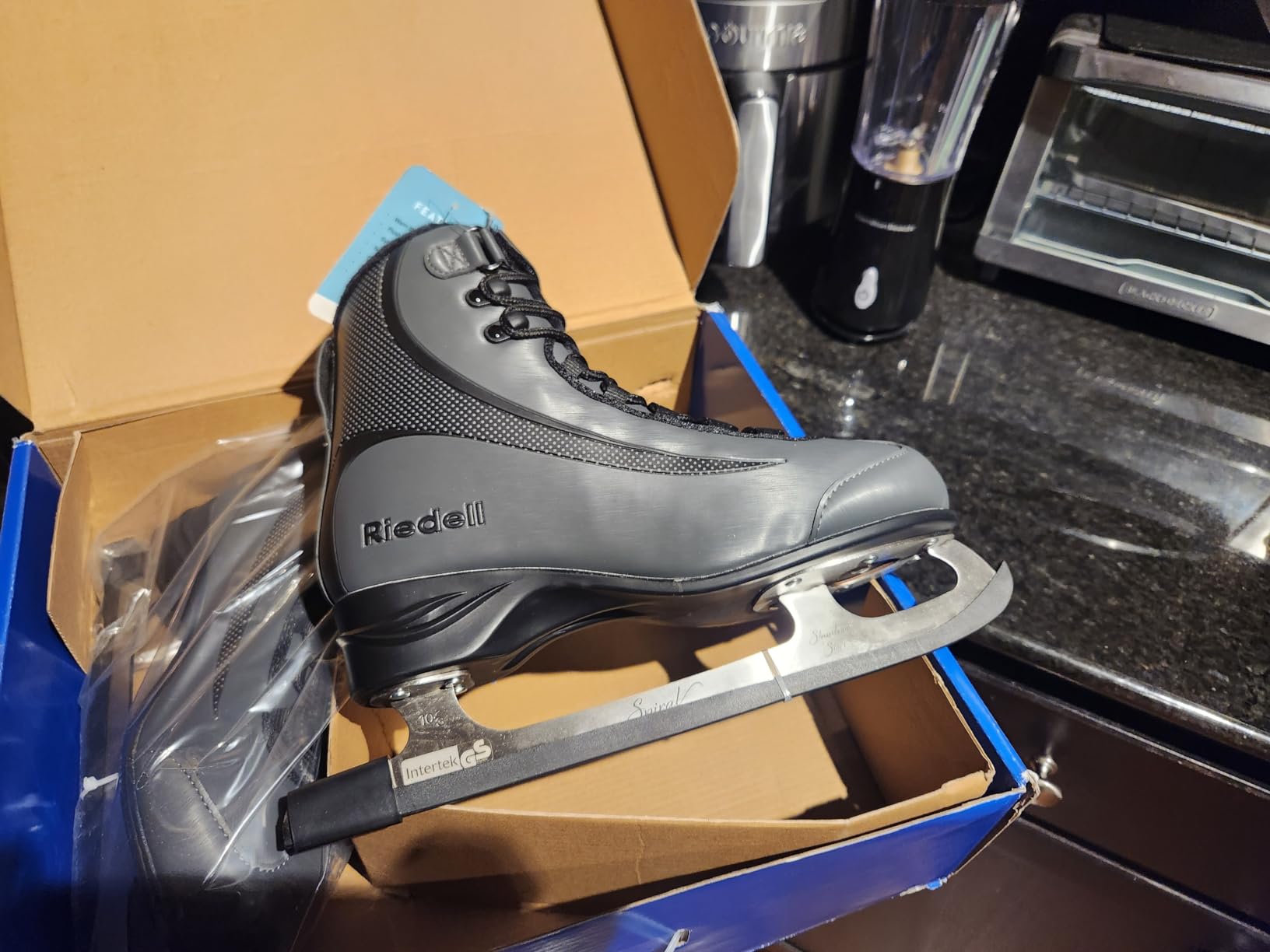
9. Riedell Soar: Best for Outdoor Ponds and Cold Rinks
Riedell Soar Recreational Ice Skates for Men and Women, Onyx – 6
Support rating 25 for light support
3M Thinsulate lined interior
Spiral stainless blades
Factory sharpened
Pros
- Designed for beginners indoors and outdoors
- Thinsulate lining keeps feet warm and dry
- Spiral blades cut through rough outdoor ice
- Attractive colourways
- Plastic hooks hold up with tight lacing
Cons
- Sizing inconsistent
- wide for some and small for larger feet
- Support rating 25 limits progress
- Slipping toe pick not suited to pivots
The Riedell Soar is the boot I would pick for outdoor and cold-weather skating, and the reason is insulation. The interior is a foam-backed velvet plush lining with 3M Thinsulate insulation, and reviewers consistently describe it as the skate that keeps their feet warm and dry on a cold pond.
Support is rated 25 on a scale of 100, which Riedell positions for light support. That is a genuine specification rather than a marketing word, and it is the single most important thing to understand about this skate. It is built for beginners, for indoor or outdoor recreational use, and it is not trying to be anything else.
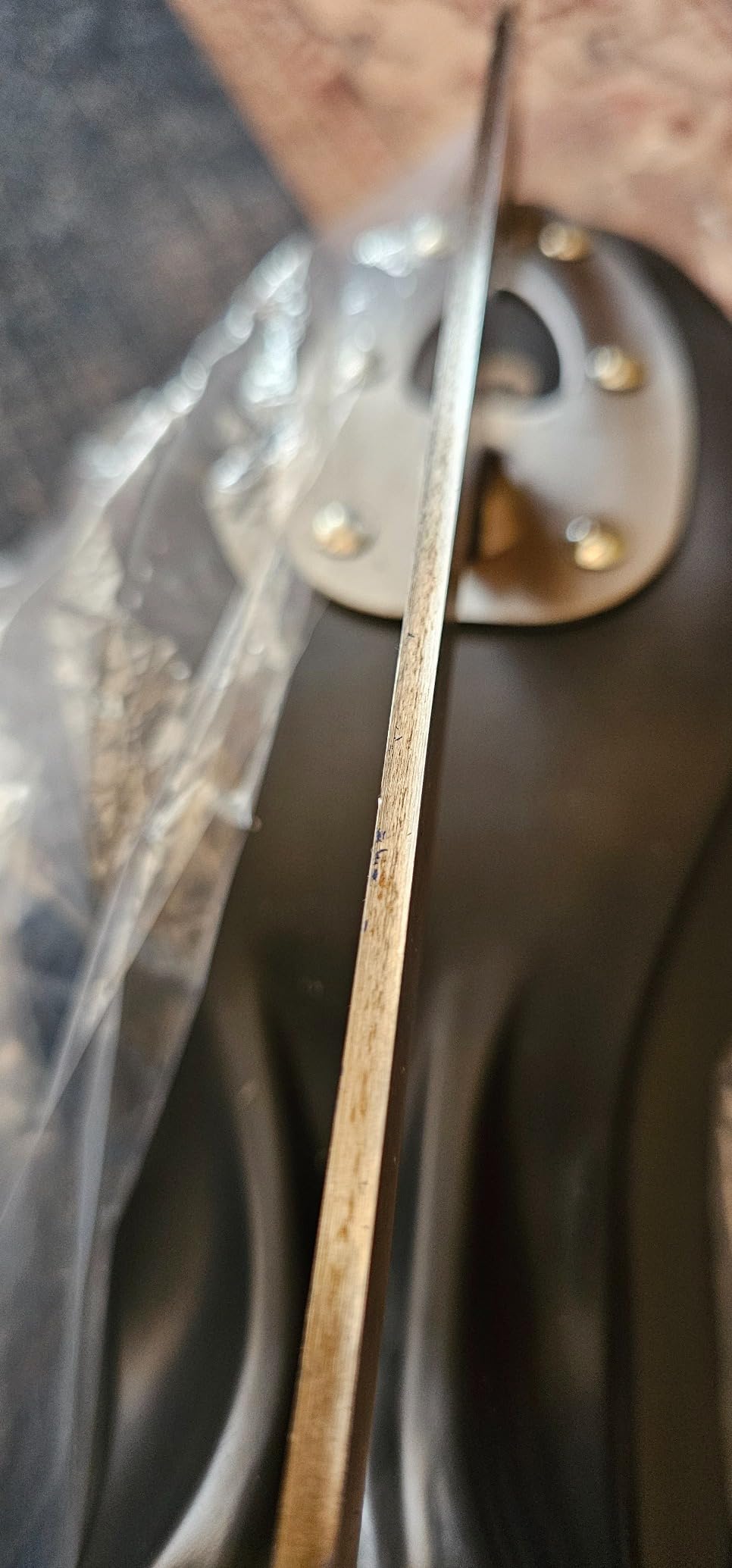
The blades are spiral stainless steel, factory sharpened, and the spiral geometry is the reason they handle rough outdoor ice. A conventional flat blade can bog down on chipped and uneven ice, while a spiral cuts through it and keeps gliding. The closure is simple lacing with plastic hooks and a velcro strap, and reviewers say the hooks hold up even under tight lacing.
Now the honest limitations. Sizing is inconsistent in the reviews, running wide for some people and small for larger feet, so this is one to try on rather than order blind. The support rating of 25 means progress past early lessons is limited, and the toe pick slips, which limits it to about Basic 4 in learn-to-skate terms. Some buyers also report rust on blades or scuffed boots on arrival.
Is the support rating of 25 too soft for an adult?
For a light adult who wants to glide recreationally, no. For an adult who expects to take lessons, build real edges, or progress, it is honestly too soft. The rating system exists precisely so you can compare across brands, and 25 sits near the bottom of it. A heavier or more ambitious skater should treat this as a seasonal or pond boot.
Why do spiral blades matter outside?
Because outdoor ice is not a clean surface. Frost, snow crust, and uneven resurfacing all catch on a flat blade and stop you dead. A spiral blade has ridges along its base that cut through that layer, so you glide instead of catching. Indoors you would barely notice the difference, which is why this detail rarely shows up in retail descriptions.
10. Lake Placid Cascade: Best Starter Figure Skate for Adults
Lake Placid Cascade Women’s Figure Ice Skates White Size 9
Synthetic upper with firm ankle support
Warm woven liner with padding
Reinforced ankle construction
Waterproof sole
Pros
- Firm ankle support from a synthetic upper
- Warm woven liner with comfort padding
- Waterproof sole holds up in wet rinks
- Top-two category rank
- Covers women's sizes 5 through 10
Cons
- No adjustable sizing
- Polypropylene shell less supportive than composite or leather
- Only 305 ratings in the review history
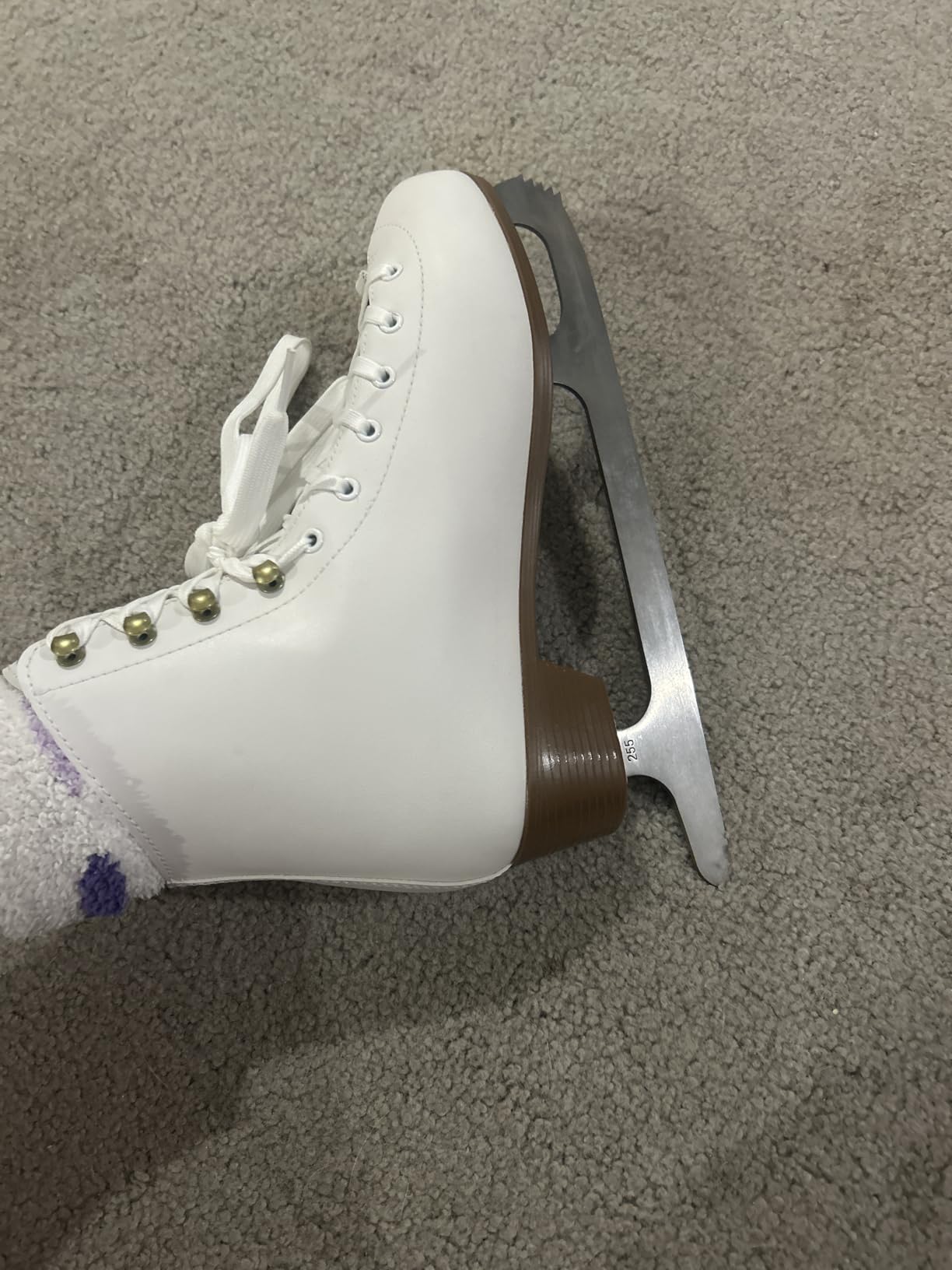
The Cascade is a straightforward adult starter figure skate, and its argument is support for the money. It has 305 ratings at 4.4 stars and has held a top-two position in the Figure Skates category, which tells you the demand is broad and consistent rather than a spike.
The upper is synthetic, and the construction gives firm ankle support with a reinforced ankle section. That is more support than a typical all-plastic strap skate and less than a composite boot, which makes it a reasonable middle for an adult who wants to try figure skates rather than simple recreational ones. The liner is woven with comfort padding, and the sole is waterproof.
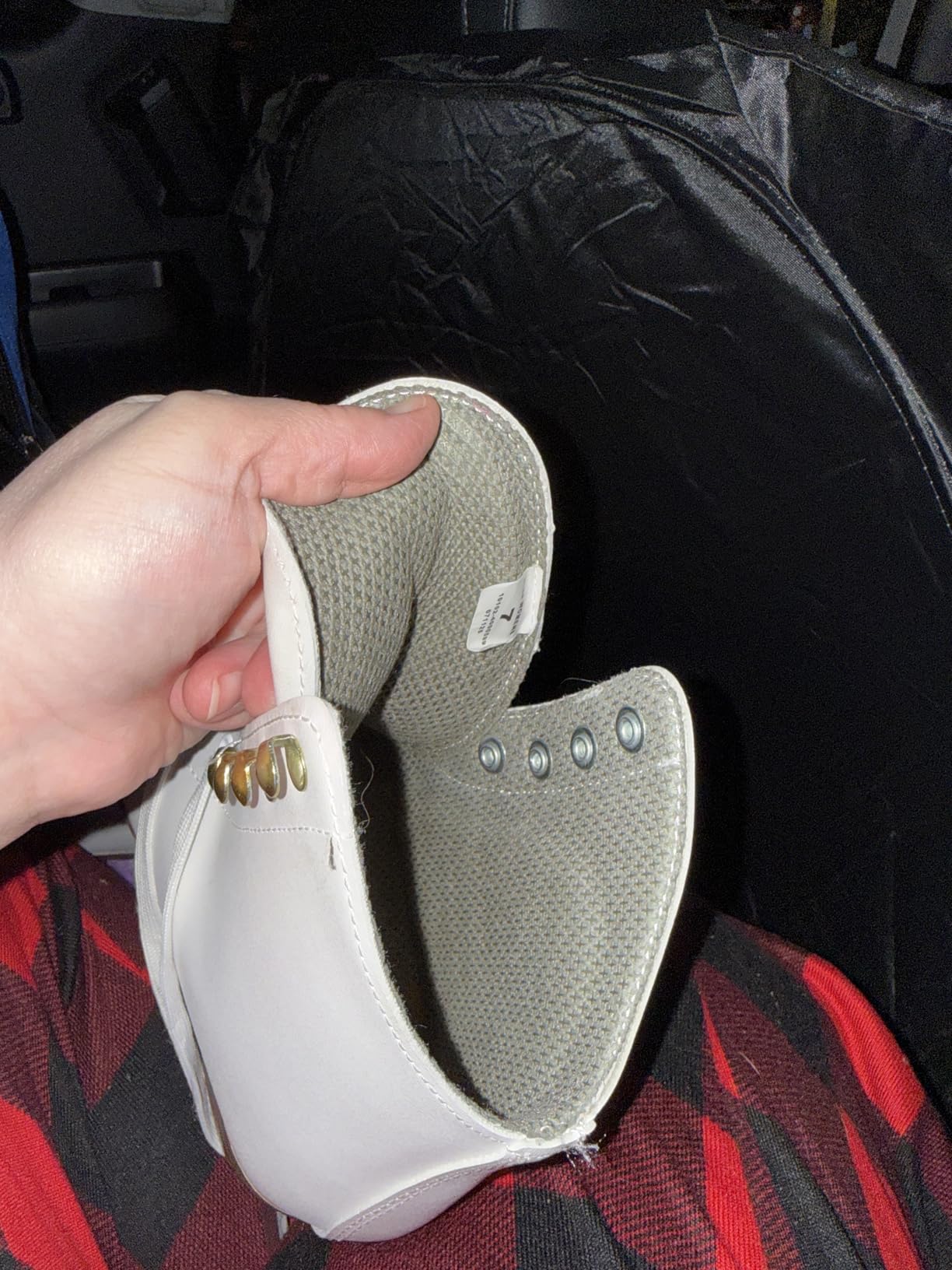
Owners point to the support-to-price relationship as the reason they bought it and stayed with it, and the waterproof sole earns specific mention for people skating on wet public rinks. The sizing covers women’s sizes 5 through 10, and a 90-day manufacturer warranty is included.
The limitations are predictable for this category. Sizing is fixed, so a growing skater buys again. The polypropylene shell is less supportive than composite or leather and will not mold the same way over time. And with 305 ratings, the evidence base here is one of the thinnest in the roundup, so you have less to lean on when deciding.
Is a polypropylene shell a problem for long-term use?
It becomes one over a few seasons, not in a first month. Polypropylene is rigid and consistent, so it will not break down, but it also will not adapt to your foot the way leather does. If you expect to still be skating in two years, plan a boot upgrade at that point rather than hoping the shell improves.
Should an adult buy this or spend more on a stiffer boot?
Buy this if you are unsure whether you will stick with skating. It is a lower-commitment way to find out, and the reinforced ankle is good enough to keep you upright. If you have already decided you want to take lessons and progress, go straight to a stiffer boot instead, because a support rating this light will feel limiting within a season.
11. K2 Raider: Best Adjustable for Skating in Deep Cold
K2 Raider Ice Boys Adjustable Ice Skates – Green Orange / 4-8
K2 Softboot construction
Five expandable size settings
Speed lacing system
Thinsulate lining
Pros
- Highest average rating in this roundup at 4.8 stars
- Five expandable size settings grow with the foot
- Speed lacing is quick for parents and kids
- Thinsulate lining for sub-zero windchill
- Junior cuff adds ankle support
Cons
- Softboot gives less lateral support than a hardboot
- Only 158 ratings in the review history
- Niche listing with a low sales rank
The K2 Raider posts the highest average rating in this entire roundup, 4.8 stars across 158 ratings with 90 percent of those at five stars. That is a strong satisfaction signal, and the reason is a design that makes sense for real winter conditions rather than a spec list.
Construction is a K2 Softboot with a junior cuff for ankle support, and the closure is a speed lacing system that is quick for both parents and children. The lining is Thinsulate, and one parent reports a child skating in minus five degree windchill comfortably, which is about as demanding a test as you will find for a kids’ skate.
The sizing is the standout feature. Five expandable size settings mean the boot grows with the child’s foot, which is more adjustment than any other adjustable model here. That is what makes this the pick for a child who will be skating outdoors through a full winter and who you do not want to re-buy for in a few months.
Is a softboot as supportive as a hardboot?
No, and I want to be clear about that because the rating is high enough to set expectations. A softboot is forgiving and comfortable, which is genuinely valuable for a nervous first-timer, but it delivers less lateral support than a hardboot or a composite figure skate. The junior cuff is the part doing the ankle work here, and it does more than a plain strap skate would.
Is the thinner review history a reason to look elsewhere?
It is a reason to know your return options, not a reason to skip it. 158 ratings is a short history, so the 4.8 average rests on fewer data points than the 4.4 on a skate with 2748 ratings. The five-setting adjustment range and the cold-weather lining are the features I would be buying, and both are things you can verify on arrival.
12. Rollerblade Bladerunner Ice Diva: Best for a Stylish First Pair
Rollerblade Bladerunner Ice Diva Women’s Adult Figure Skates, White and Rose Gold, Ice Skates
Reinforced upper with flex notch
Synthetic fur liner with dual density foam
Pre-sharpened anodized blades
Lace and hook closure
Pros
- Rose gold anodized blades resist rust
- Synthetic fur liner with dual-density foam
- Runs true to size for several buyers
- Design draws compliments
- Good value for a first pair
Cons
- Light ankle support limits progress
- Anodized finish scratches if blades collide
- Low sales rank in the figure category
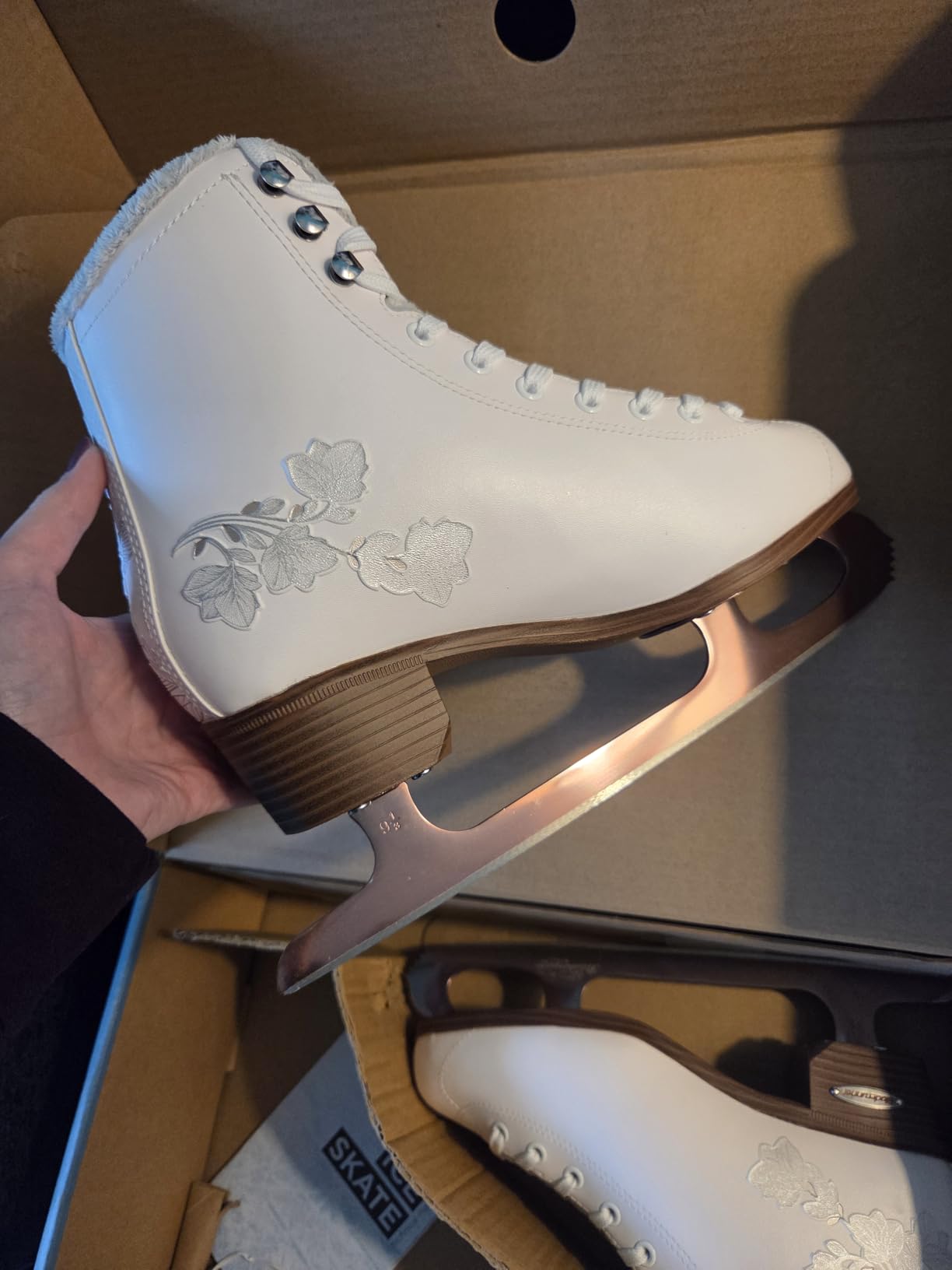
I want to be straight with you about this one. The Ice Diva is the weakest technical fit in the roundup, and I would not hand it to a serious beginner. It has 135 ratings at 4.7 stars, and the reasons people like it are warmth, sizing, and the fact that it looks good on a foot.
The build is a reinforced upper with a flex notch and ankle support, a synthetic fur liner with dual-density foam padding, and a lace closure with hooks over maintenance-free PVC outsoles. The blades are anodized rose gold stainless steel figure blades, factory pre-sharpened, which means no sharpening appointment before your first session.
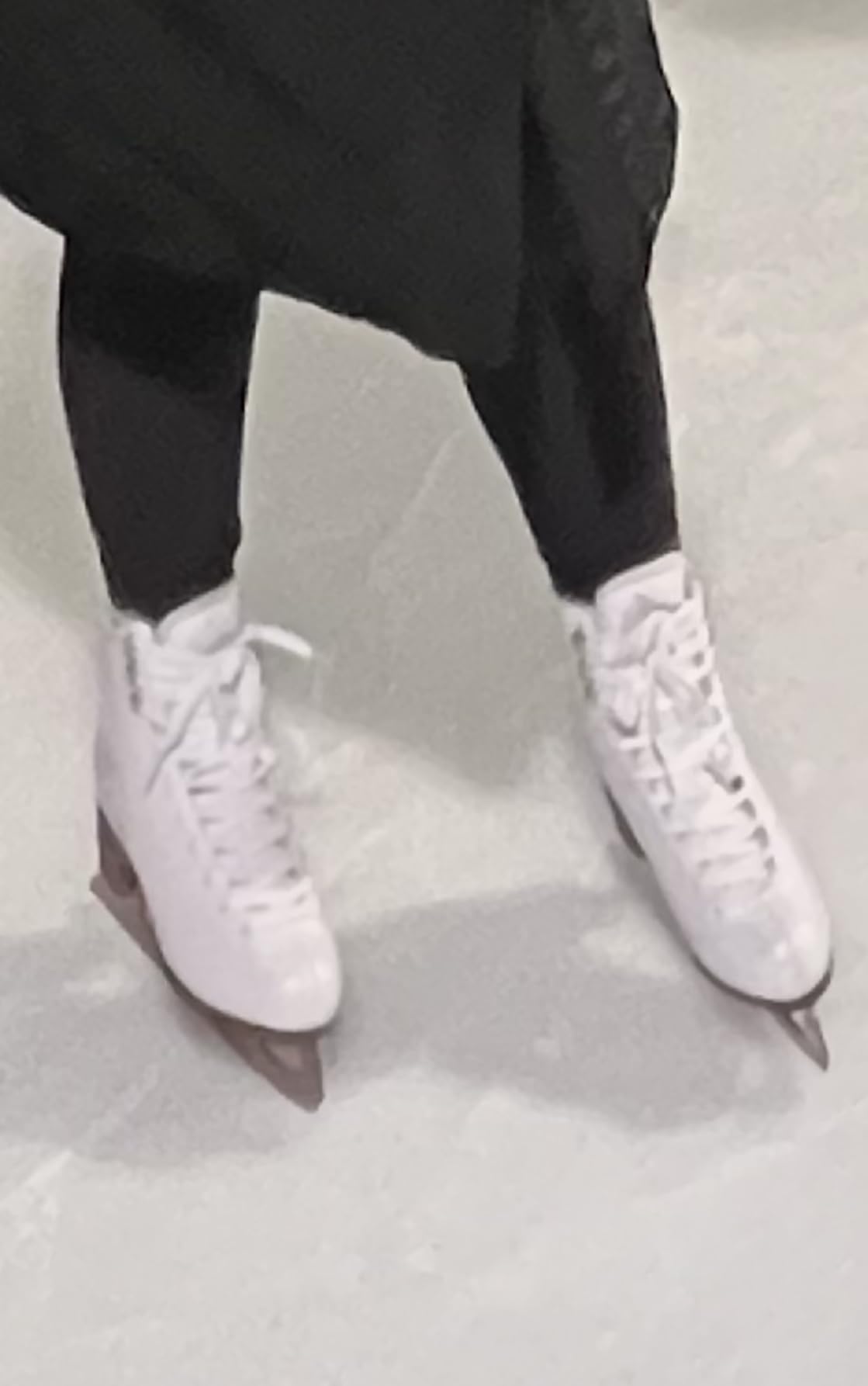
What buyers consistently praise is warmth over long sessions, true-to-size fit for several of them with no adjustment needed, and the fact that the design attracts compliments even from experienced skaters. Anodizing also resists rusting, which is a real advantage if you store the skates somewhere damp between uses.
There is a category-position trade-off worth naming. The listing sits low in the figure skate sales rankings, so it is not a model with a deep spare-parts or sizing ecosystem behind it, and the fit feedback is thinner than the established brands on this list.
Is the light ankle support a deal breaker?
Only if you plan to progress. For someone who wants to try skating a few times a year at a public rink and cares about comfort and appearance, the support is adequate. For anyone taking lessons, learning edges deliberately, or expecting to be on the ice weekly, you will outgrow the boot quickly and should pick a stiffer option.
What are the scratches on the blades?
They come from blade contact, not wear. Anodized coatings are a thin decorative layer over the steel, and when one blade strikes another, or a skate scrapes a gate or a bench leg, the coating marks. The steel underneath is unaffected and the edge still holds, but if a fresh look matters to you, keep blades apart in storage.
Which Skate Type Should You Buy?
Four categories cover almost everything, and picking the wrong one is the most expensive mistake a beginner makes. The question to ask is not which is best, it is what you want the skates to do.
Figure skates have a toe pick, the small serrated piece at the front of the blade. That pick is what makes spins, jumps and step sequences possible, and it is why most learn-to-skate programs assume them. A figure blade is also shorter and more curved than a hockey blade, with more rocker, which is why it holds a spin but grips less ice forward.
Hockey skates are flat-soled, with a longer and straighter blade and no toe pick. They give you power transfer and edge control at speed and handle rougher ice better, which is why hockey boots are often recommended to adults who want to progress quickly. They are unforgiving for a brand-new skater, because the stiffness that produces power also makes falls harder.
Hybrid skates combine a soft padded inner boot with a hard outer shell. They are the classic choice for public rink and recreational skating because the padded liner is comfortable immediately, there is nothing to break in, and the shell still gives lateral ankle support. Most people who just want to enjoy skating end up here.
Recreational skates are the simplest category: a supportive boot, a warm liner, and a straightforward blade with no competition features. This is where adjustable models for children live. They suit gliding, stopping, and family outings rather than any structured lesson program.
One rule of thumb helps. If you are enrolling in lessons, buy what the program expects, because a coach teaching a jump entry is not going to be impressed by your plan to swap blades later. If you are skating recreationally, prioritize ankle support and warmth over anything else, because that is what determines whether you come back.
Sizing and Fit: Wide Feet, High Arches and Pronation
Skate sizing confuses almost everyone at first, and the confusion is mostly arithmetic. Ice skate sizes are measured in centimeters, not shoe sizes, and they generally run narrower and smaller than the equivalent street shoe. Most brands print a conversion chart, and it is worth actually measuring rather than estimating.
Measure both feet in the evening, when your feet are at their largest, and take the longer measurement. Then check two things the size number will not tell you. Width matters separately from length, and if you have ever had a shoe pinch at the fifth toe joint, you have a wide foot and need a wide-width model or a brand known for a roomier last.
Arch shape is the second thing. High arches and flat feet both need boots that can be adjusted, and that is the practical meaning of a heat-moldable boot: you soften the shell and let it form to your foot. A boot that cannot be molded will always leave pressure points, and pressure points on a beginner turn into blisters and then into a decision to quit.
Then there is pronation, which is how the foot rolls inward when you stand and push off. A Reddit thread in r/iceskating asking about beginner skates for pronation turned up the most useful piece of advice in all my research, and it comes from people who fit skates for a living. Go back into the shop, tell the fitter about the pronation, and have them adjust the blade alignment to match your gait. A number of experienced skaters on the Golden Skate boards give the same advice independently.
That same community is unanimous on one thing: do not order skates online unfitted. A skate is the rare purchase where fit varies by brand, by model and by foot shape, and a sizing chart cannot tell you whether a boot’s last matches yours. A single session with a professional fitter costs you less than replacing a pair that never worked.
Boot Stiffness: Adults Need a Stiffer Skate Than Children Do
This is the advice that gets missed most often, and it is repeated constantly on the skating forums: an adult needs a boot stiffer than a youth model, because adults weigh more. The same boot that feels appropriately supportive on a seven-year-old can collapse under an adult, and the result is an ankle that rolls on the first edge you try.
Stiffness is graded, and Riedell publishes the clearest version, rating its boots on a scale of 1 to 100 where the Soar sits at 25 for light support. When you compare brands, this rating is the most useful number on the page, because it turns a marketing word into a measurement you can check against your weight and height.
As a rough guide, a light adult skating recreationally can get away with a support level in the lower half of the beginner range. A taller or heavier adult, or anyone taking lessons, should look at a medium recreational support or firmer. Children, by contrast, are correctly served by softer boots, and the very soft end is genuinely appropriate for a young beginner’s first sessions.
Weight is the variable people ignore. One skater on the forums asked about skates at 315 pounds, and the honest answer from experienced posters is that a youth-soft boot is simply not the right tool. If the manufacturer publishes a weight limit, respect it. The 5th Element Stealth, for instance, is designed for adult skaters up to 205 lbs, which is a useful thing to know before you fall in love with the boot.
Renting, Buying New or Buying Used
Rental skates are the biggest unspoken objection for beginners, and the argument against them is simple: they are sized roughly, they are not fitted, and they are rarely sharpened well. None of that is dangerous, but it does mean your first month of learning is spent on someone else’s idea of your foot. Once you have a few sessions under your belt and know your size and width, buying becomes much less of a gamble.
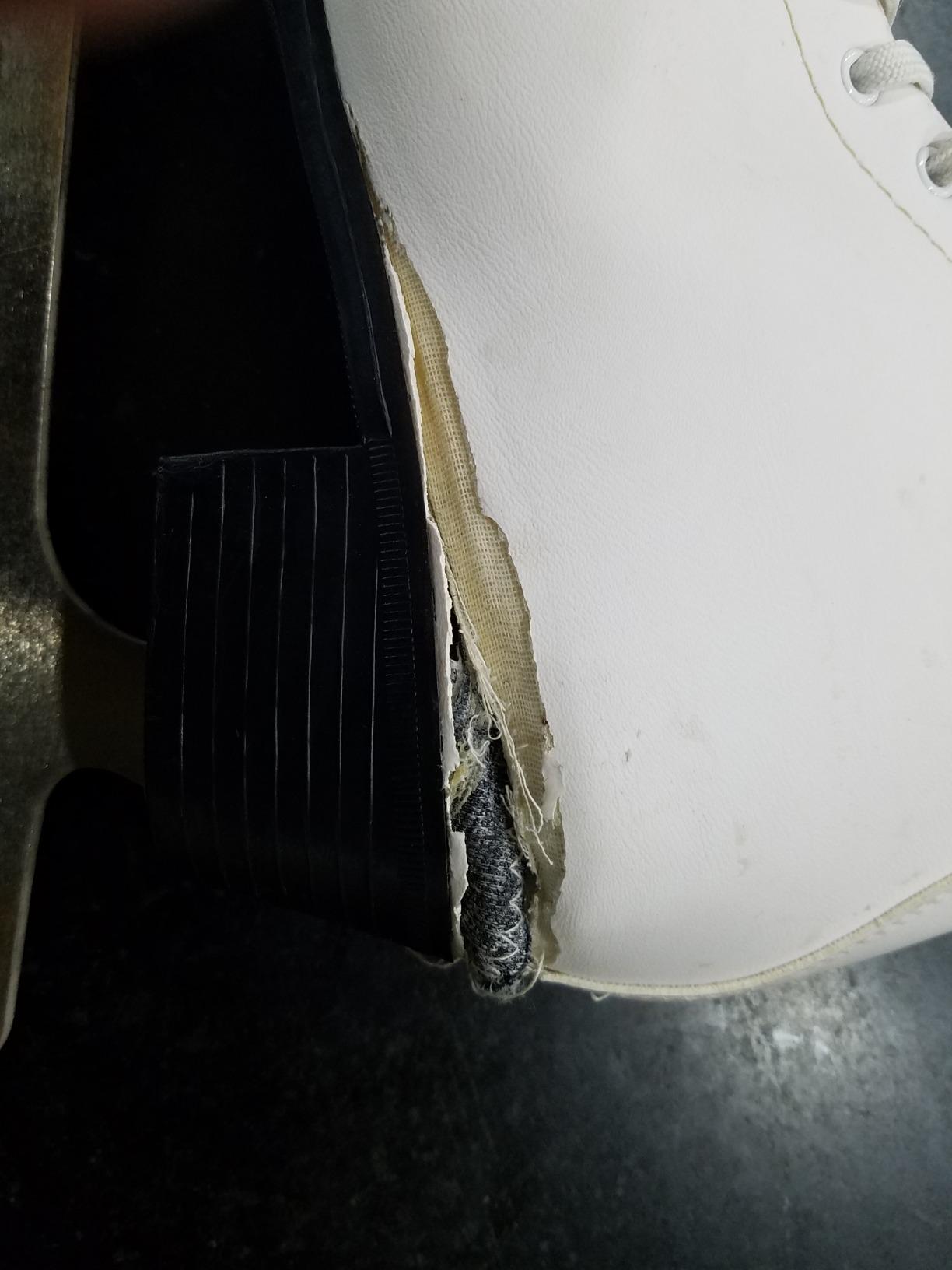
Used skates are a better option than most retail pages admit, and the Reddit consensus is fairly clear: used is fine if the pair is fully intact and feels solid, and heel cracking is the deal breaker. A cracked or delaminating heel means the boot structure has failed, and no amount of re-lacing or heat molding fixes that.
What to inspect on a used pair, in order. Check the heels for cracks or separation from the sole. Check the shell for flexing where there should be stiffness, since PVC and composite both stiffen and eventually crack with age. Look at the blade from the side and the front to see how much material is left, because skaters report that a used blade can lose a meaningful number of hours of on-ice time after a single sharpening.
Then check the things nobody mentions. The eyelets and hooks should not be stripped, the lining should not be compressed or shedding, and the toe pick, if there is one, should be straight and firmly attached. Finally, expect to pay for a fresh sharpening before the first session, and budget that in when you compare the total against a new pair.
If you are resurfacing or building a rink of your own rather than renting one, the equipment side is a different purchase entirely. My guides to the best countertop ice makers and the best nugget ice makers for home cover that, and they change the calculus for outdoor skates because you control the surface quality.
Blades, Sharpening and Everyday Maintenance
Beginner blades are the part of the purchase most people get wrong. The frequent forum argument is that you should buy one blade level up immediately rather than starting with the cheapest beginner blade, because the entry-level blade is low quality and you will outgrow it as soon as you start learning spins. That advice has enough consensus behind it to be worth taking seriously.
What a shallower hollow gives you is forgiveness. The hollow is the concave curve along the bottom of the blade, and a shallower one makes the edges less likely to catch when your feet are not yet positioned correctly. A deeper hollow bites harder and rewards good technique, which is exactly what a beginner does not have yet. This is why recreational and beginner figure blades are longer and flatter than a hockey blade.
Beyond that, blade length and profile decide what the blade is good at. A longer blade gives stability and a larger surface for catching an edge. A shorter, more curved blade is easier to turn and is the standard for figure skating. Mounting matters too, since a riveted blade can be swapped or remounted while a soldered one is permanent.
Maintenance is less work than most new skaters expect. Dry the blades after every session, because moisture sitting on steel is how rust starts, and always use blade guards when you are walking on anything other than ice. Guard walking protects the edge from concrete, and a dull edge is the reason beginners say their skates feel slippery and uncontrollable.
For sharpening, expect to be sharpening a few times a season for a recreational skater and more often if you are taking lessons. Skaters report roughly 25 to 35 hours of on-ice time from a used blade after a sharpening, which is a useful number when you are deciding whether a boot-only purchase makes sense. My picks for the rest of your skating setup are in the skate upgrades and maintenance guide.
Frequently Asked Questions
Which skates are best for beginners?
The American Athletic Tricot Lined is the strongest all-round first pair, with reinforced ankle support, a padded tricot liner, a beginner-level toe pick and the deepest review history in our roundup. Choose the Jackson Finesse 180 or Classic 200 if lessons are in the plan, and an adjustable model such as the Lake Placid Summit for a young child.
What are the best skates for beginner figure skaters?
Beginner figure skates need a toe pick for spins and a blade with a shallower hollow so the edges do not catch. The Jackson Finesse 180, with its medium SoftSkate support and Ultima Mark I beginner blade, and the Jackson Classic 200, built for learn-to-skate programs, are the two strongest picks in this group.
What are the best ice skates for beginners on a budget?
Adjustable models dominate the low-cost end because one pair covers several shoe sizes. The Lake Placid Summit, Lake Placid Nitro 8.8 and Xino Sports all use push-button sizing, and the Nitro and Xino pairs arrive with pre-sharpened blades. Keep all three out of figure skating lessons, since none has a toe pick.
What are the best ice skates for recreational use?
For public rink and family skating, prioritise ankle support and a warm liner over any performance feature. The Riedell Soar is the pick for outdoor and cold ice thanks to its Thinsulate lining and spiral blades, while the American Athletic Tricot Lined works on both indoor and outdoor surfaces for the lowest-risk first pair.
What is the best brand of ice skates for a beginner?
Jackson is the most consistent beginner brand, with three models in this roundup, a Mark I blade specified for learn-to-skate programs, and the broadest sizing range. Riedell is the choice for outdoor and cold-weather skating, 5th Element for adult recreational hockey, and Lake Placid and K2 for adjustable children’s skates.
Do adults need stiffer ice skate boots than children?
Yes. Adults carry more weight than the children the same boot was designed for, so a boot that feels supportive on a child can collapse under an adult and let the ankle roll. Check the published support rating, respect any stated weight limit, and treat a very soft beginner boot as a rental or first-season skate rather than a long-term one.
Our Final Verdict on the Best Ice Skates for Beginners in 2026
The American Athletic Tricot Lined wins this roundup for the best ice skates for beginners, because 2748 ratings at 4.4 stars behind a reinforced ankle and a beginner toe pick is the safest bet you can make on a first pair. It works indoors and out, and it costs you nothing in features you will not use yet.
Match the boot to the goal instead of the price. Lessons mean a Jackson Finesse 180 or Classic 200. Cold ponds and outdoor ice mean a Riedell Soar. Adult hockey means a 5th Element Stealth. A growing child means an adjustable Lake Placid or K2. And if you are an adult, do not buy the softest boot on the page, because you will outgrow it and your ankles will know before you do.
Whatever you choose, get it fitted in person if you possibly can. Ten minutes with a fitter is the difference between a pair that teaches you to skate and a pair that ends your first season.