
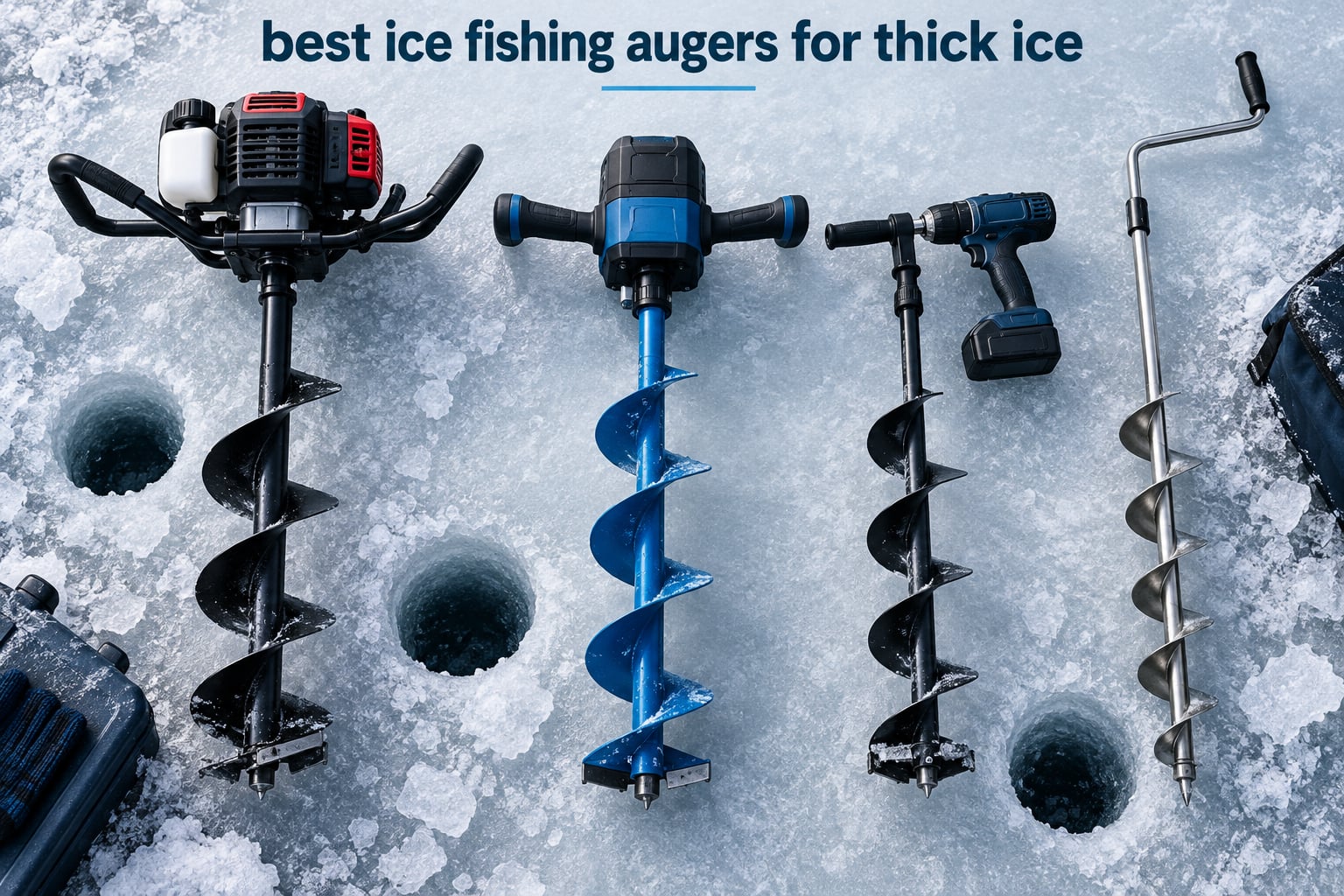
Gas-powered ice augers are unmatched in raw torque, which makes them the best choice for drilling the very thickest ice, but they are no longer the only sensible answer. For most anglers fishing 24 to 30 inches of late-season ice, a battery or drill-mount auger cuts just as fast and weighs a fraction as much.
We pulled together ten augers that span every power class – two-stroke gas, 40V electric, cordless-drill mounts, dual-drive hand tools and lightweight hand cranks – and ranked them for one job: cutting a clean hole through thick ice. The winners are the ones that kept cutting after the ice got hard, the ones whose shafts are long enough to reach the bottom, and the ones you can still haul across a lake at the end of the day. Every product below carries a verified owner rating and review count, and we flag the honest limits alongside the strengths.
One note before we start: hand augers have a real ceiling. On the in-depthoutdoors forums, anglers consistently describe hand augers losing their advantage somewhere around 10 to 12 inches of ice, and that is the threshold that separates a good early-season tool from a thick-ice tool. If your lake routinely produces 24 inches or more, the auger choice matters far more than the brand badge on the head.
Table of Contents
Top 3 Picks for Thick Ice Drilling in 2026


ION Alpha 40V Electric Auger
- Self-contained 40V power
- Up to 2000 inches per charge
- 8 inch steel flighting
All 10 Ice Augers Side by Side in 2026
Every auger in the list below appears in the same order as the individual reviews, so you can jump from this table to the full write-up without guessing. We sorted them by power class and shaft reach rather than brand, because those two variables decide whether an auger survives a hard late-season lake.
| Product | Specs | Action |
|---|---|---|
| Strike Master Mora 6 Inch Hand Auger |
|
Check Latest Price |
 Strike Master Lazer 5 Inch Hand Auger Strike Master Lazer 5 Inch Hand Auger |
|
Check Latest Price |
 VEVOR 8 Inch Nylon Drill Auger VEVOR 8 Inch Nylon Drill Auger |
|
Check Latest Price |
 Nordic Legend E-Drill 8 Inch Combo Nordic Legend E-Drill 8 Inch Combo |
|
Check Latest Price |
 K-Drill Auger 7.5 Inch K-Drill Auger 7.5 Inch |
|
Check Latest Price |
| ION Alpha 40V Electric Auger |
|
Check Latest Price |
 THUNDERBAY 33cc 8 Inch Gas Auger THUNDERBAY 33cc 8 Inch Gas Auger |
|
Check Latest Price |
 RAZR Scout 6 Inch Auger RAZR Scout 6 Inch Auger |
|
Check Latest Price |
 Nordic Legend 33cc Auger and Shelter Nordic Legend 33cc Auger and Shelter |
|
Check Latest Price |
 Nordic Legend Hardware Lite E-Drill Nordic Legend Hardware Lite E-Drill |
|
Check Latest Price |
1. Strike Master Mora 6 Inch Hand Auger – Our Editor’s Choice for Balanced Thick-Ice Work
StrikeMaster 290149 Mora Hand Auger-6 in. MD-6 Blue
6 inch cutting diameter
Two-piece hand build
Steel blades with guard
Adjustable crank handle
Pros
- Very light and easy to carry all day
- Sharp high-performance steel blades that hold an edge
- Cuts 8 to 10 inches of ice in under a minute
- Adjustable handle gives real cranking leverage
- Blade guard included for safe transport
Cons
- Manual effort becomes tiring past roughly 20 inches of ice
- Two-piece build needs assembly and the handle is awkward on large holes
- Occasional reports of bent shafts from shipping damage
The Mora is the most proven hand auger in this roundup by a wide margin, with 1171 owner ratings behind it and a 4.7 average. Owners describe it the same way decade after decade: light in the hand, sharp out of the box, and quick through a foot of ice. The adjustable handle is the part people notice most, because it lets you crank one hand high and one hand low instead of fighting a fixed grip.
For thick ice specifically, the Mora’s job is a staging point rather than a final answer. It opens 8 to 10 inches of ice in under a minute, which covers early-season lakes, first-ice slush, and a lot of mid-season holes on softer ice. It is not a 30-inch ice tool, and owners are candid that arm fatigue sets in around 20 inches.
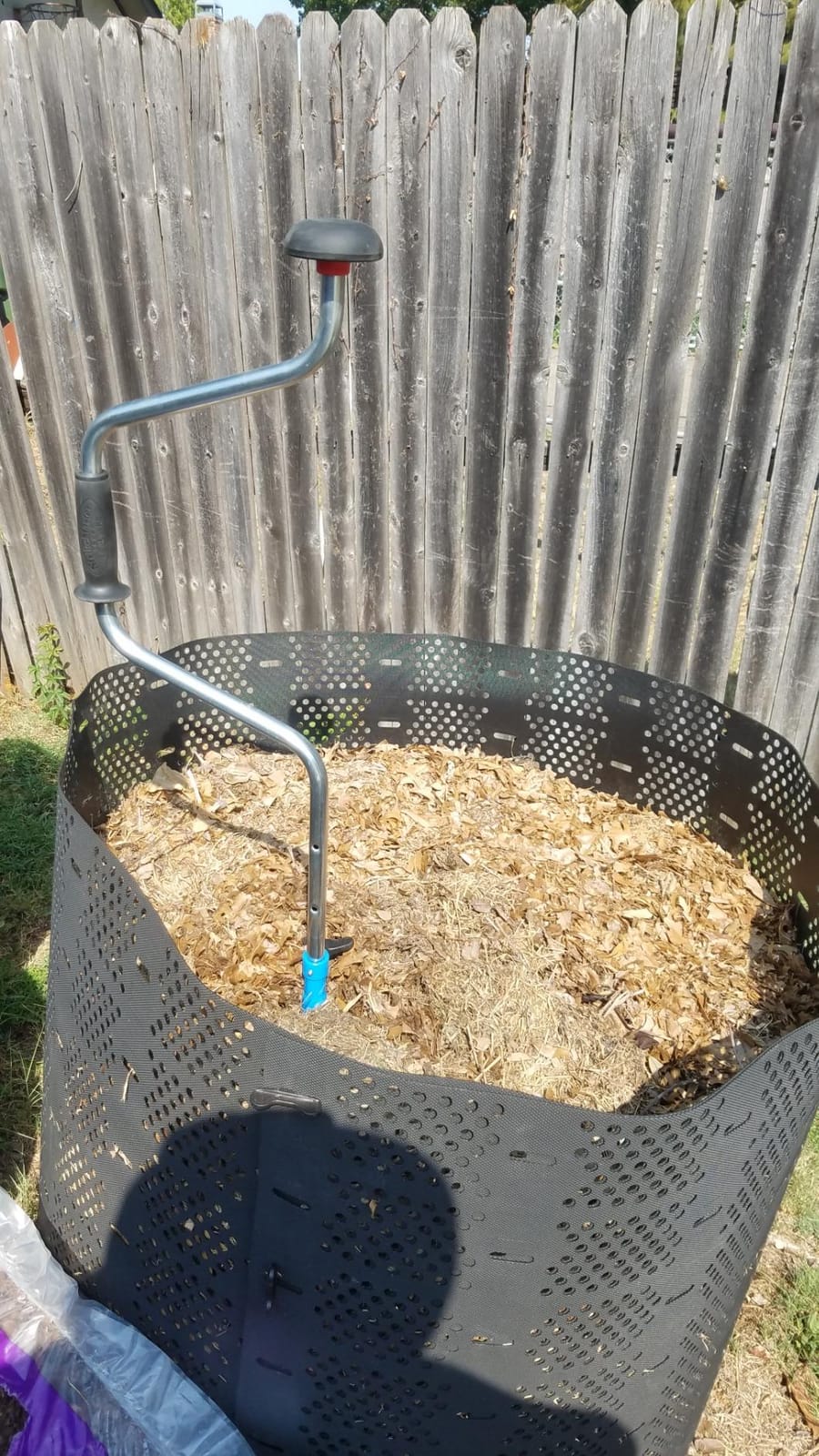
What makes it our Editor’s Choice is not raw cutting power. It is the combination of owner history, steel blade retention and carry weight, plus the fact that it converts cleanly to a powered setup. Many owners pair it with a cordless drill adapter so the same auger that cranked the first hole cuts the deep one later in the day.
The blade guard matters more than it sounds. A 6 inch spiral with two sharp steel blades projecting from the bottom is the classic way people puncture a knee on a sled, and the Mora ships with a cover that lives over the blades when the auger is in transit.
Two things to check when your Mora arrives. Confirm the shaft is straight, because a small number of buyers report bent shafts from crushed packaging, and check that the blade bolts are tight before the first hole. The two-piece design also means assembly is part of the setup, so allow a minute at the sled before you start drilling.
When the Mora is the right call
Reach for the Mora when you walk a long way to fish, when you fish alone, and when your ice is under 15 inches. It is the easiest auger here to carry for a full day and the one most likely to still be in working condition several seasons later.
Owners also rate it highly as a house-hole tool, drilling and redrilling one spot all day rather than walking a lake. If that is your style, a hand auger is faster than any powered option because there is no engine to idle.
When the Mora is the wrong call
Skip it for 24 inch-plus ice unless you own a good drill adapter. Twenty inches is the practical wall for hand cranking on this auger, and a full day of holes at that depth will empty your arms long before the sun goes down.
The 6 inch hole is also modest if you are after walleye. It works fine for panfish and perch, but anglers chasing larger fish usually want to move up to at least a 7.5 or 8 inch cutting diameter.
2. Strike Master Lazer 5 Inch Hand Auger – Lightest Option for Thin Ice and Walking Distance
StrikeMaster Lazer 2pc Hand Auger 5″
5 inch cutting diameter
16 oz listed weight
Stainless steel blades
Adjustable handle
Pros
- Precision stainless steel blades that hold an edge
- Very light at a 16 oz listed weight
- Two-piece construction is easy to pack and assemble
- Adjustable handle improves leverage
- Consistently rated across many seasons of use
Cons
- 5 inch hole is small for targeting trophy fish
- Blades install in one direction only so orientation must be checked
- Blade bolts can loosen with use and need periodic tightening
The Lazer is the travel-first hand auger in this group. At a 16 oz listed weight, you can carry it all day in a jacket pocket or clipped to a sled without thinking about it, which matters when your spot is 400 paces from the truck. The 4.7 average across 554 ratings tells you the blade quality is not the compromise here.
Owners regularly describe punching 8 to 10 inches of ice quickly, and the same group of buyers pairs it with a cordless drill adapter when the ice thickens. That combination is the most realistic way to get a decade of use out of a hand auger in 2026 without buying a second tool.
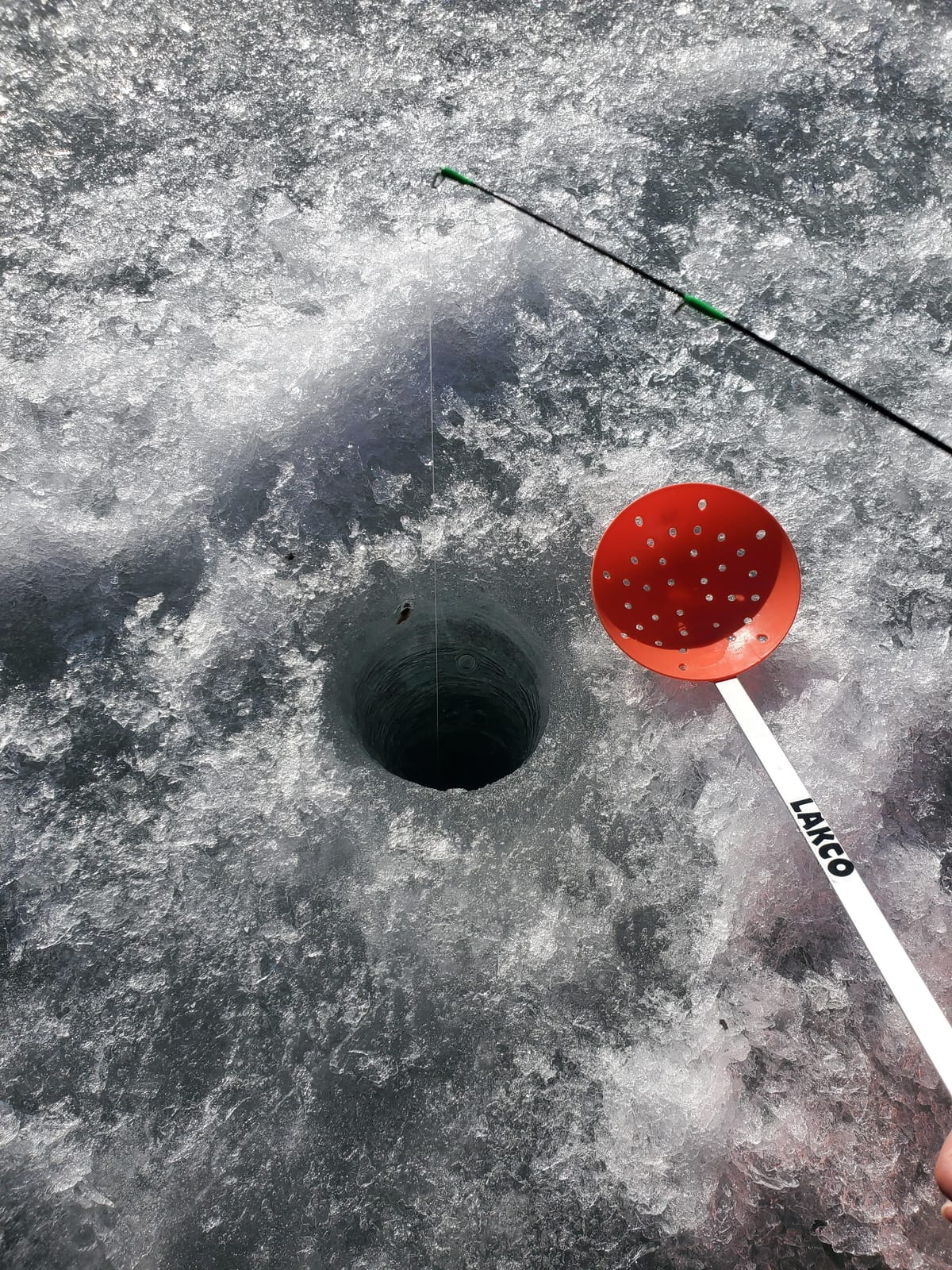
The stainless steel blades are the reason it outlasts cheaper hand augers. They hold a sharp edge through dozens of holes without sharpening, which is where most budget hand cranks fall apart. Two-piece construction also means nothing gets crushed in your sled.
On forums, the Lazer shows up constantly in the “what should I buy first” conversation, and one in-depthoutdoors poster describes loving theirs and then finding it struggling as ice approaches 10 inches. That is an honest limit worth planning around rather than discovering mid-lake.
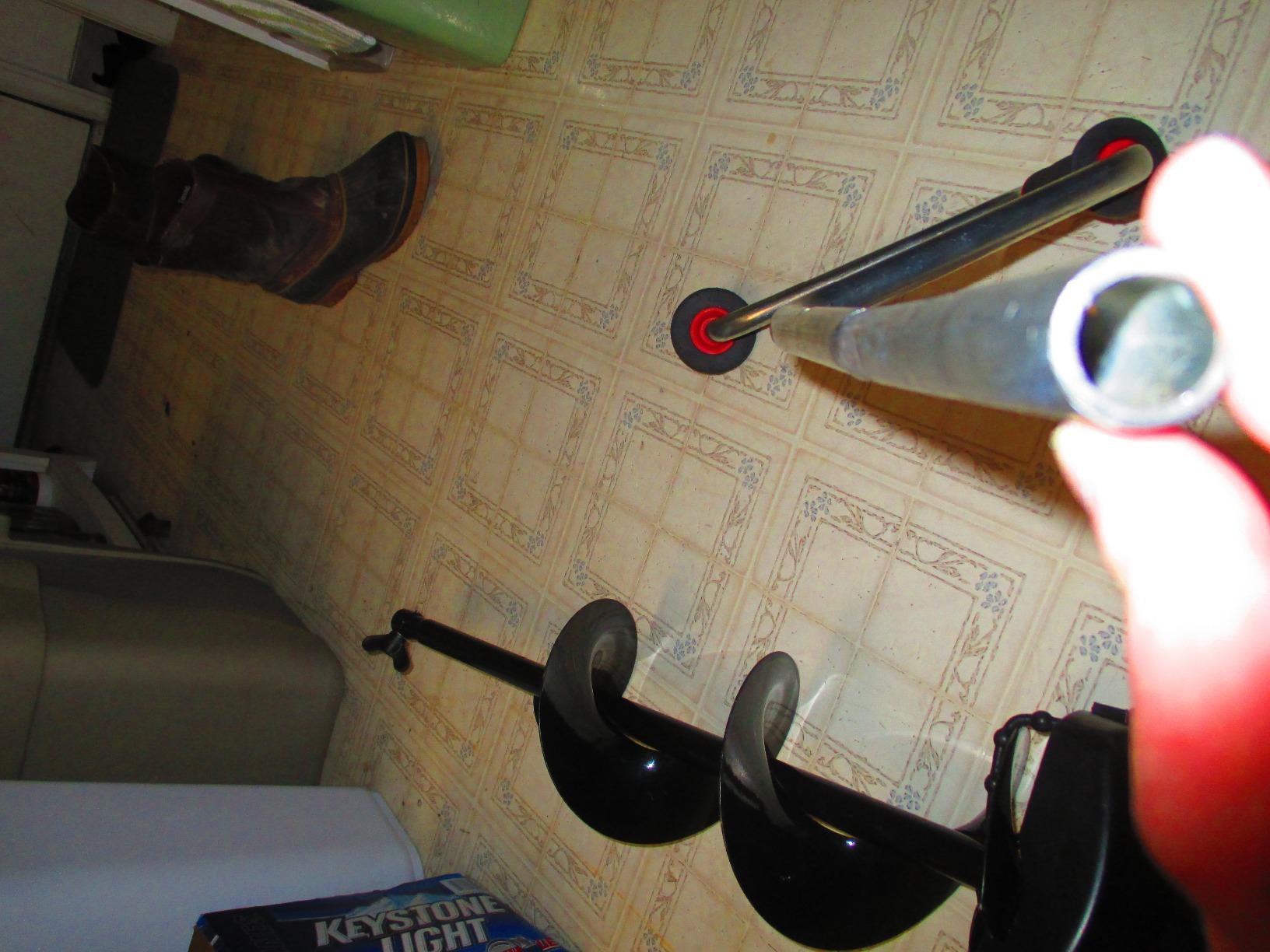
Two setup details catch people out. The blades only seat correctly in one direction, and a reversed blade cuts a rough, slow hole. The blade bolts also work loose with use, so a five-second check before each outing prevents a frustrating trip.
Who should buy the Lazer
Buy it if you fish early-season ice, fish panfish, or walk a long distance to every hole. At this weight it is the easiest auger on the list to carry, and it will not slow you down on thin ice.
It is also the easiest entry point for someone who is not sure whether they want to own a power auger at all. A hand crank you will actually carry gets used; a heavy unit you hate hauling stays in the garage.
Who should skip the Lazer
The 5 inch cutting diameter is the dealbreaker for anyone chasing walleye or pike. It is a panfish and perch hole, and a small hole in late season means more work, not less, if you are after bigger fish.
It is also the wrong tool for the thick-ice end of this list. If your lake regularly hits 20 inches or more, you need shaft reach and blade torque that a hand crank cannot deliver.
3. VEVOR 8 Inch Nylon Drill Auger – Longest Reach in the Kit for the Least Carry Weight
VEVOR Nylon Ice Auger Drill Bit, 8″ Diameter 41″ Length, Cordless Ice Augers for Ice Fishing with Extra 13.4in Extension Rod, Drill Adapter, Top Plate and Blade Guard
8 inch diameter
41 inch shaft,54.4 with rod
7.7 lb total
Fits 1/2 inch chuck drills
Pros
- Hollow aluminum and nylon body is easy to haul on a sled
- Sharp self-centering blade cuts clean holes quickly
- Extension rod adds depth without buying a second bit
- Spare blades
- top plate
- adapter and guard included
- Well below the cost of a self-contained electric auger
Cons
- Extension rod can break after limited use under load
- Some units arrive scratched or missing spare blades
- Center point screw can arrive stripped and hurt cutting
This is the reach-and-weight combination nobody else in the list matches. A 41 inch shaft extends to 54.4 inches with the included 13.4 inch rod, and the whole assembly weighs 7.7 lb. That is more cutting depth per pound carried than anything else we evaluated.
It mounts through a universal half-inch adapter that fits electric augers or cordless drills producing 120 Nm of torque or less, so you are not locked into one battery platform. The top plate sits above the bit to keep ice splash off the drill, a small detail that saves your chuck and your jacket.
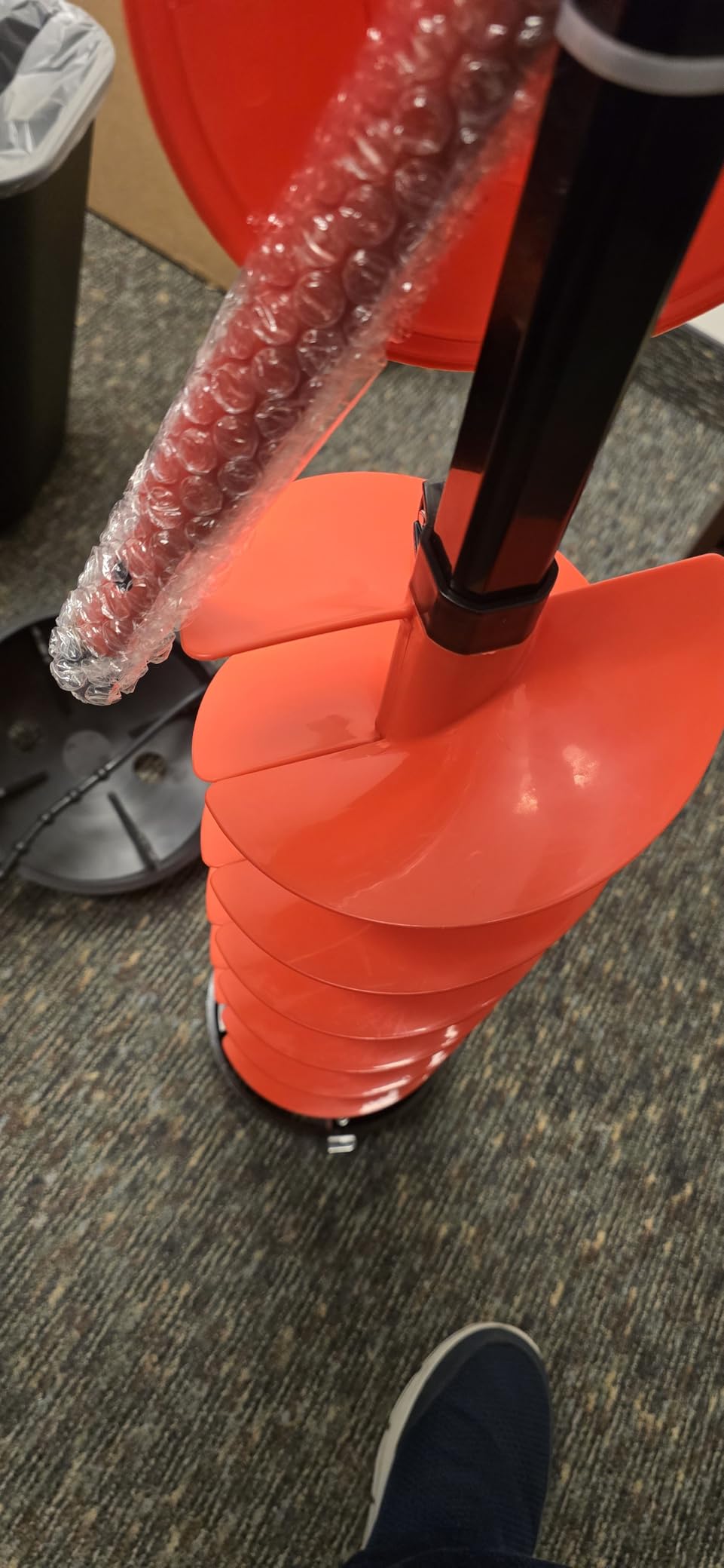
The 8 inch cutting diameter is a genuine step up from hand augers here, and the hollow aluminum tube with nylon flighting handles cold without the rust risk that steel flighting carries. Spare blades and two drill heads come in the box, which is unusual at this tier.
Our reservation is quality control rather than design. A small sample of buyers report an extension rod that broke under load, a stripped center point screw, or a unit that arrived scratched and missing spare blades. The design works when the parts arrive complete.
Before your first hole, check the center point screw by hand and confirm the extension rod threads fully. Those two checks take ten seconds and cover most of the reported failures.

Where the VEVOR wins
It wins on reach and weight, full stop. If your ice runs past 30 inches and you want to drill standing up rather than bent over, the 41 inch shaft plus rod combination gets you there without a second purchase.
It also wins on cost against self-contained electric units. If you already own a capable cordless drill, this is the least expensive way in the list to cut an 8 inch hole through hard ice.
Where it falls short
Durability reports are mixed, and the extension rod is the weak point. If you routinely drill at maximum extension under full load, expect that rod to see more stress than a fixed shaft.
It is also drill-dependent. An underpowered drill will stall or overheat on thick ice, and the 120 Nm ceiling is a real constraint rather than a suggestion.
4. Nordic Legend E-Drill 8 Inch Combo – Drill Mount With a 33 Inch Shaft and 14 Inch Extension
Nordic Legend E-Drill Nylon Ice Auger Combo and Universal Adapter with 14” Extension (8-in)
8 inch diameter
33 inch shaft
14 inch extension included
18V-20V drill mount
Pros
- Very fast cutting in owner tests
- Synthetic nylon flighting cuts weight versus steel
- Universal adapter fits most 18V-20V drill brands
- 14 inch extension lets you drill standing up
- Brightly colored flights are easy to spot on an ice field
Cons
- Requires a genuinely powerful brushless drill to perform as advertised
- Height adjustment bolt threads can strip
- One durability complaint about a break after limited use
Owners of this one treat it as a gas auger replacement, not a compromise. The common report is 18 to 24 inches of ice cut in roughly ten seconds on a 20V drill, with blades holding sharpness across 60-plus holes in a season. That is a real gas-class result at a fraction of the carry weight.
The 33 inch shaft with synthetic nylon flighting and an aluminum stem is the engineering story. Nylon flighting cuts roughly a third of the weight of a steel hand auger and stays flexible in cold temperatures, which is exactly what you want when the ice is at its hardest.
The universal adapter fits most 18V-20V drill brands, including DeWalt, Makita, Milwaukee, Ridgid, Ryobi and Husky, and the included 14 inch extension is what turns a bent-over crouch into an upright stance on deep holes. Three adjustable height settings let you tune the reach for different ice conditions.
The trade-offs are honest ones. This needs a proper high-torque brushless drill, and owners who pair it with an underpowered drill report stalling. The height adjustment bolt threads are a known wear point, and there is at least one durability complaint about an early failure.
Best used for
It is a strong choice for the angler who owns a good 20V brushless drill already and wants a second hole in camp. The 8 inch diameter suits walleye, and the extension covers the deep-lake end of the season.
The bright orange flights are a practical touch too, easy to locate if one drops through slushy ice on a reservoir.
Not the right fit when
Skip it if you do not own a capable brushless drill, because the advertised speed depends entirely on the tool driving it. Buy the drill first, then the auger.
It is also not the lightest option here, and the adjustable height mechanism adds a bolt that can strip if you overtighten it in the cold.
5. K-Drill Auger 7.5 Inch – The Highest Rated Drill Mount for Ice Up to 36 Inches
K-Drill Auger 7.5 in, IDRL75
7.5 inch diameter
Rated to 36 inches of ice
Tool-steel blades
7.39 lb floating design
Pros
- Highest owner satisfaction in this roundup
- Tool-steel blades cut fast and hold an edge
- About half the weight of a typical steel auger setup
- Fits standard half-inch chuck drills including 20V hammer drills
- Floating design protects against losing the auger down a hole
Cons
- Requires you to own a separate cordless drill with adequate torque
- Mounting on a clam plate needs an extra adapter
- Blades are consumables and need periodic checks
The K-Drill carries a 4.8 average across 134 ratings, the highest rating paired with a substantial review count in this group. Owners describe it as a life-changing upgrade that runs all day on a single battery pack while weighing a fraction of a steel setup, and the tool-steel blades are repeatedly credited with never needing sharpening.
The stated rating is the part that matters most for this query: ice up to 36 inches thick. That is deeper than any other drill-mount here is claimed to cut, and it puts the K-Drill in the same conversation as a small gas auger while weighing 7.39 lb.
Mechanically it is a well-considered design. An aluminum shaft and rugged composite flighting keep weight down, the center-cutting blades bite cleanly, and the floating design means a dropped auger surfaces instead of disappearing to the bottom of the lake.
Owners consistently pair it with a 20V DeWalt or Milwaukee drill. The half-inch chuck fit is standard, so almost any quality cordless drill will turn it, but torque is what determines whether you enjoy the experience.
Where it beats the alternatives
It beats other drill mounts on blade material and owner satisfaction. Tool steel on a composite-flighting frame is a combination no budget nylon bit in this list matches, and the 36 inch rating gives you room on late-season lakes.
It also beats gas on every carry metric that matters. A solo angler walking a mile to a spot will feel the 7.39 lb weight far less than a 32 lb gas head.
Where it does not fit
It does not fit a buyer who wants a single self-contained purchase. The drill, battery and charger are all separate line items, and a weak drill will stall it on thick ice.
The 7.5 inch hole is also a touch smaller than the 8 inch options, which some walleye anglers will notice. The floating design is a genuine safety net, not a substitute for a blade guard.
6. ION Alpha 40V Electric Auger – The Quiet Self-Contained Choice for Thick Ice
ION® Alpha, 8-Inch, Gen 3, 40V Lithium-ion, Electric Ice Auger, 59150
8 inch steel flighting
40V 4Ah battery included
Up to 2000 inches per charge
3-year limited warranty
Pros
- Self-contained powerhead with a battery included
- Best-in-class cutting speed in the set
- One 4Ah charge runs up to 2000 inches of ice
- Lightest option in the 40V electric class
- Turbo system re-drills old holes with low resistance
Cons
- Most expensive product in this roundup
- Full-size electric frame is bulkier than hand or drill-mount models
- Runtime depends on ice thickness and hole count
The ION Alpha is the simplest thick-ice answer on this list. The powerhead, the 8 inch steel flighting and a 4Ah Gen 3 battery all ship in one box, so there is no drill to buy, charge overnight or maintain in the cold. For an angler who wants one tool and no platform decisions, that is the whole pitch.
Cutting speed is the headline figure, and it is a manufacturer claim worth reading carefully: an average of up to 3.4 inches per second based on more than 10,000 test holes. A single 4Ah charge is rated to push the auger through up to 2000 inches of ice, which on a typical lake means a full day of holes without a swap.
Owners rate it very highly for all-day usability and typically find the included battery lasts a whole trip. At under 20 lb it is also the lightest self-contained 40V unit here, and the 3-year limited warranty is longer than most competitors offer.
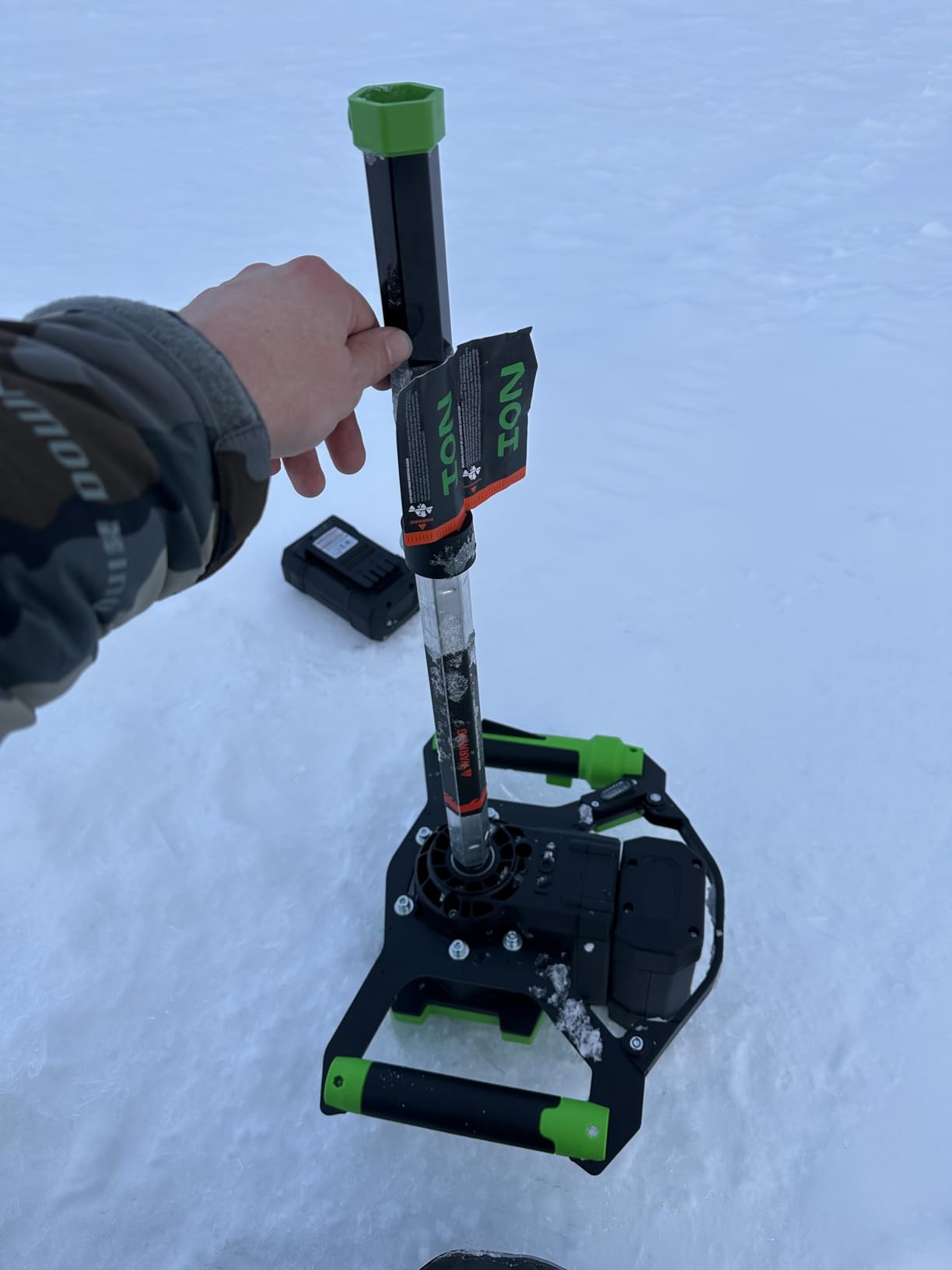
The turbo high-speed system is aimed at a specific job: re-drilling an old hole. When your slush hole has frozen over and you do not want to walk to a new spot, this is the fastest way to reopen it without fighting the ice.
Electric owners consistently point to three real advantages: no exhaust in the shelter, quiet operation that does not carry across a lake, and the ability to stop instantly when the trigger is released. On a lake shared with other anglers, that last point is not a small comfort.
Forum complaints about electric augers concentrate on one thing – one person can drill at a time, so a group ends up queuing. If you fish with three others and everyone wants a hole now, the bottleneck is real.
Why owners switch to it
The switch is usually about convenience, not cutting speed. Gas is faster on paper; the ION wins because you never think about fuel, starting fluid or a pull cord in gloves.
It is also the best choice for early-season anglers who fish dawn to dusk in a shelter with a heater running, where fumes are genuinely unpleasant.
What you give up
You give up the purchase price, which is the highest on this list by a wide margin, and some bulk. A full-size electric frame is bigger than a drill mount when you compare sled space.
Runtime is also a variable rather than a constant. Two feet of ice per hole eats far more battery than eight inches, so plan spares for a hard day.
7. THUNDERBAY 33cc 8 Inch Gas Auger – The Self-Contained Gas Workhorse
THUNDERBAY 33cc 8″ Power Ice Auger
33cc two-cycle engine
8 inch flighting
32 lb total weight
Cold-Shot easy-start tech
Pros
- Self-contained gas powerhead with no drill or battery
- 8 inch auger handles thick northern ice
- Sharp blades and a well-built machine
- Responsive manufacturer customer service
- Includes power head
- auger and blade protector
Cons
- Cold starts can need several pulls or starting fluid
- Engine idles high until fully warmed
- Heaviest standalone option here at 32 lb
- Highest share of one-star reviews in the group
This is the pure gas option: a 33cc two-cycle engine, an 8 inch auger and a blade protector, all in one package with nothing else to buy. Owners report the 8 inch flighting cutting through thick northern ice without trouble, and the Cold-Shot starting system is designed for exactly the conditions that frustrate small engines.
At 32 lb it is also the heaviest standalone unit in this roundup, and gas owners themselves say so. Forum posters in late-season conditions describe the auger as the last thing to reach camp rather than the first, which is the honest downside of the torque advantage.
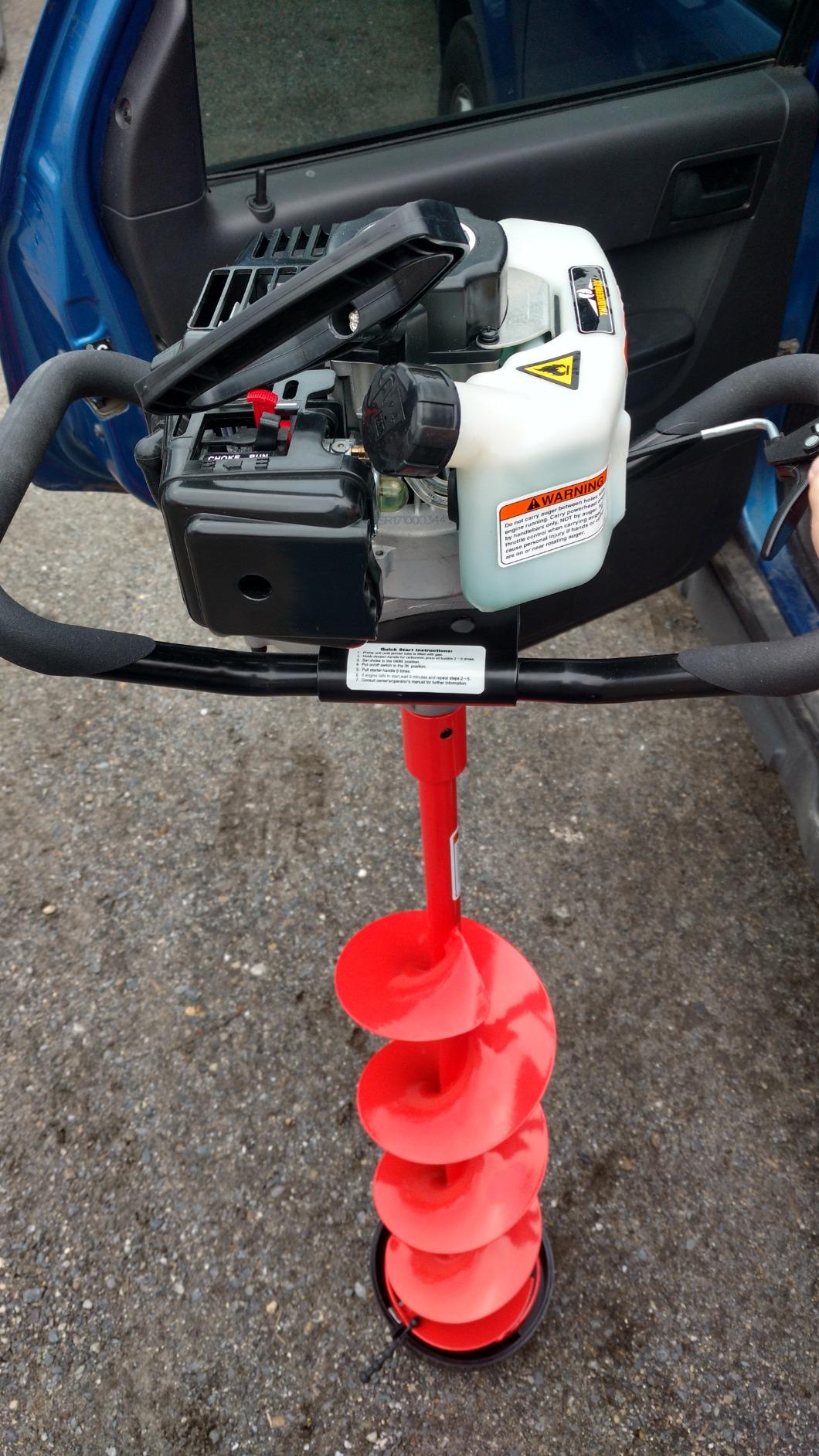
The cold-start issue is the one consistent complaint. Several owners report needing multiple pulls or starting fluid on a freezing morning, and the recurring advice is to let the engine warm up before settling into an idle. Budget a minute of warm-up in your setup time.
The engine also idles high until it is fully warm, which owners find is the second-most-common adjustment after a few trips. Once it settles, cutting performance is not the weak point, and reviewers describe the machine as well built with sharp blades.
One point in its favor: the manufacturer handled a blade recall and replacement well. On a tool where blades are consumables, that kind of support is worth something over a decade of use.
When gas still makes sense
Gas remains the right answer for a stationary camp where the auger lives in a shelter and the same hole gets redrilled all day. It is also the most forgiving choice when the ice is at maximum thickness and nobody wants to think about battery capacity.
Choose it if you already have mixed fuel and are comfortable pulling a starter in gloves. The torque headroom is real and it will not run out of punch.
When it costs you
The 32 lb weight is the dealbreaker for solo anglers walking any real distance. Gas owners describe carrying it as the hardest part of the trip, and that complaint shows up constantly across forums.
It also carries the highest share of one-star reviews here, and the pattern is consistent: performance is fine, cold starting is not.
8. RAZR Scout 6 Inch Auger – One Auger You Can Crank or Drive With a Drill
RAZR Scout Ice Auger (6 inch)
6 inch steel flighting
31-43 inch adjustable height
Hand crank or 18V+ drill
Safety flange
Pros
- Runs on a hand auger handle or an 18V+ brushless drill
- Adjustable 31 to 43 inch height for varying ice
- All-steel flighting and blade carriage
- Curved center-point blades start cleanly and cut fast
- Easy-view safety flange helps prevent losing it
Cons
- 6 inch cutting diameter is small for larger fish
- Long-term blade durability at this rating level is not well documented
The Scout is the most adaptable tool here, and flexibility is genuinely useful when ice thickness is unpredictable week to week. It ships with steel flighting and a blade carriage that will crank by hand on a thin-ice morning and mount to an 18V or higher brushless drill when the lake turns hard.
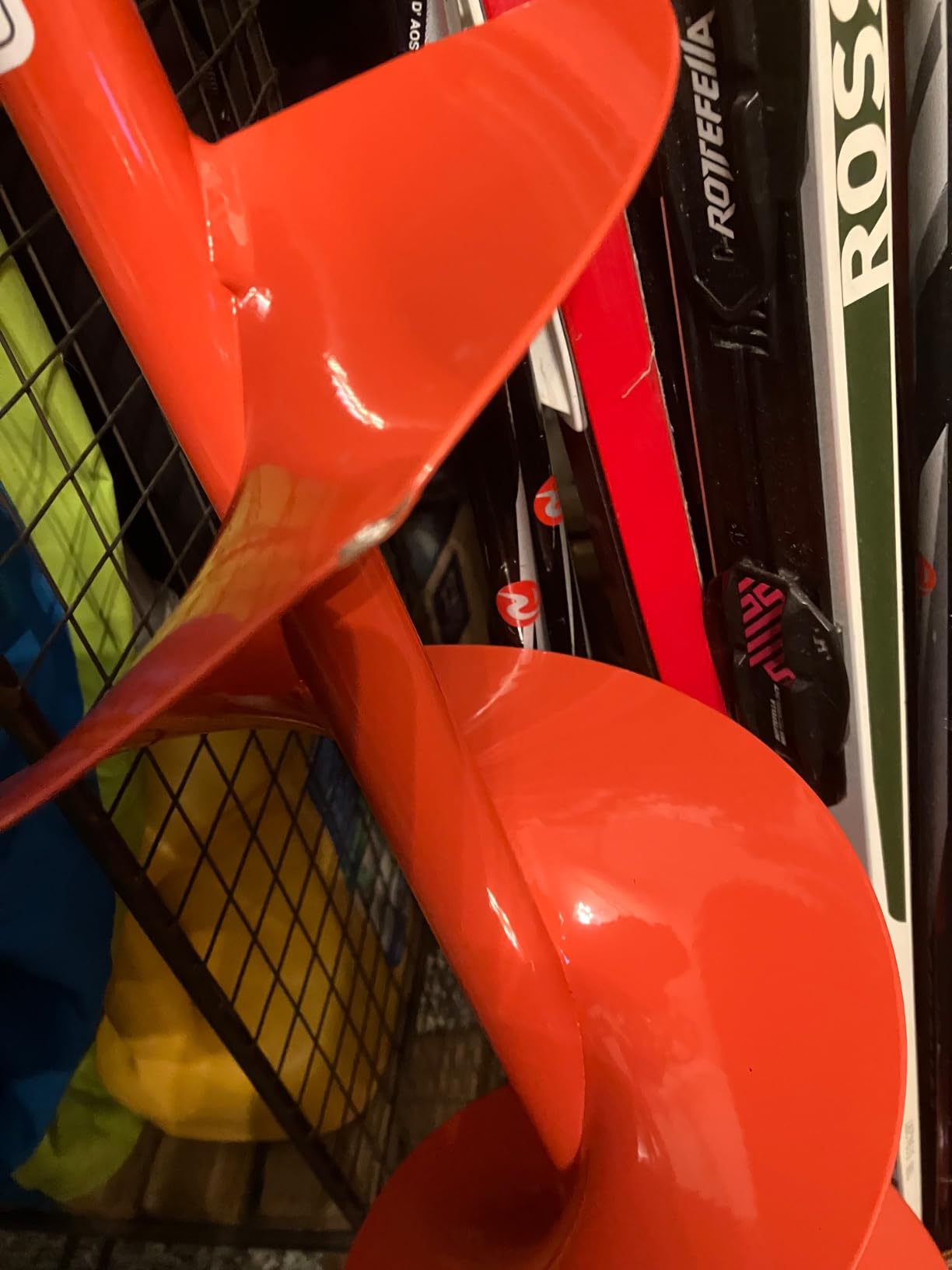
The adjustable height from 31 to 43 inches is the feature owners point to most. On 10 inch ice you set it short and work fast; on 30 inch ice you extend it and stay upright instead of crouching over the hole. That single adjustment covers more of a season than any other spec on this list.
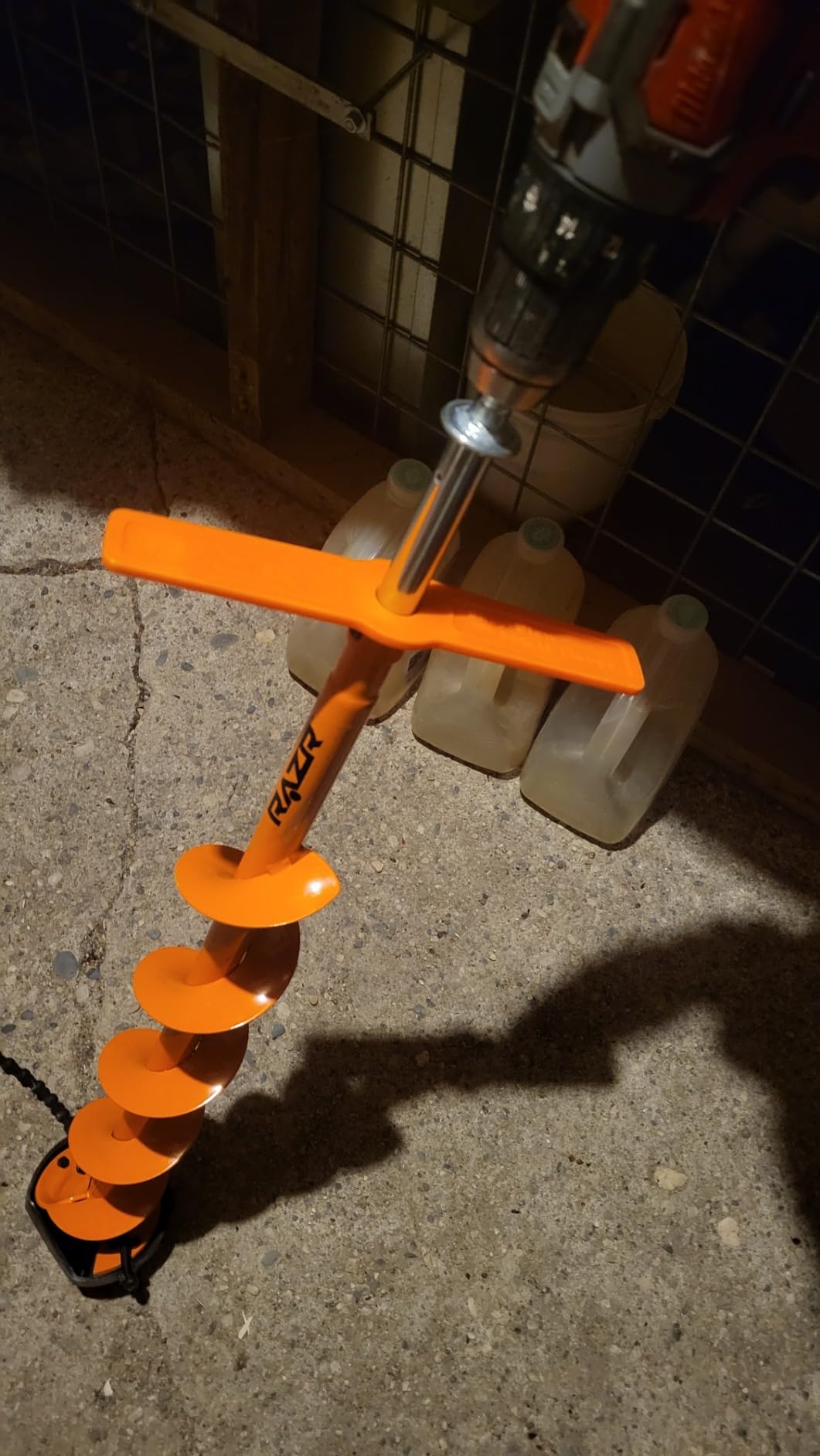
The curved blades with a center point start cleanly and cut fast, and the all-steel construction is a step up in perceived durability from nylon flighting. The easy-view safety flange is a small but real safeguard against an auger vanishing into slushy reservoir ice.
At a 4.6 average across 107 ratings, it sits comfortably in the middle of the pack on owner satisfaction. Buyers describe it as an affordable, flexible entry auger with steel construction and adjustable height as the standouts.
The limitation owners raise most is the 6 inch hole. It is a panfish and perch diameter, and if you are after walleye you will want to move up. The high-visibility orange finish is genuinely useful for spotting it on a wide ice field.
Why the dual-drive design pays off
It pays off on a lake where you move between shallow and deep spots, or on a slow-ice day when a hand crank is more practical than firing up a battery. Having one tool that covers both halves of the season is a real saving in sled space.
It is also a good bridge purchase for someone between a hand auger and a full powered unit, since the drill investment is not wasted when you upgrade later.
Where it falls short
The 6 inch cutting diameter is the honest limit, and for this thick-ice-focused list that is a meaningful one. Larger fish need a wider hole to be effectively jigged.
Long-term blade durability is not well documented at this review volume, so plan on checking blade sharpness more often than you would with a documented tool-steel system.
9. Nordic Legend 33cc Auger and Two-Man Shelter Combo – Gas Power Plus a Base Camp
Nordic Legend 33cc Power Ice Auger and Portable Two Man Shelter Combo
33cc two-cycle engine
8 inch auger flighting
76 inch shelter included
High carbon steel blades
Pros
- One package delivers the auger and a two-man shelter
- Precision ground high carbon steel blades cut quickly
- 33cc engine has plenty of torque for thick ice
- 300D shelter fabric holds heat in and weather out
Cons
- Package weight is 55 lb
- the heaviest option here
- Shelter adds bulk that solo anglers will not use
- Same gas cold-start and maintenance burden as any gas auger
For two people, this bundle solves a problem no single-tool pick addresses: where do you stand when the weather turns? The 33cc 8 inch gas auger does the drilling, and the 76 inch hub-to-hub shelter gives both of you somewhere to sit out the wind while the ice is at its safest for travelling.
The auger itself is conventional and competent. Precision ground high carbon steel blades rip through ice quickly, and the 33cc engine has the torque for genuinely thick conditions. Owners are satisfied with the cutting ability; the debate is about the package.
At a 4.5 average across 104 ratings, satisfaction tracks the bundle logic. People who came for a two-man setup are happy. People who came alone are carrying a shelter they will not use.

The shelter fabric is 300D and the design intent is straightforward: keep wind and weather outside and heat inside. That matters most in the late-season scenario this article is about, when the ice is thick enough to fish and the walk back is the risky part.
The 55 lb package weight is the number to think about before buying. It is not a carry distance package. It is a set-up-once-and-stay package, which is a completely different use case from a solo sled trip.
It also inherits every gas auger drawback: cold starts, fuel mixing, and engine maintenance. The shelter does not change that.
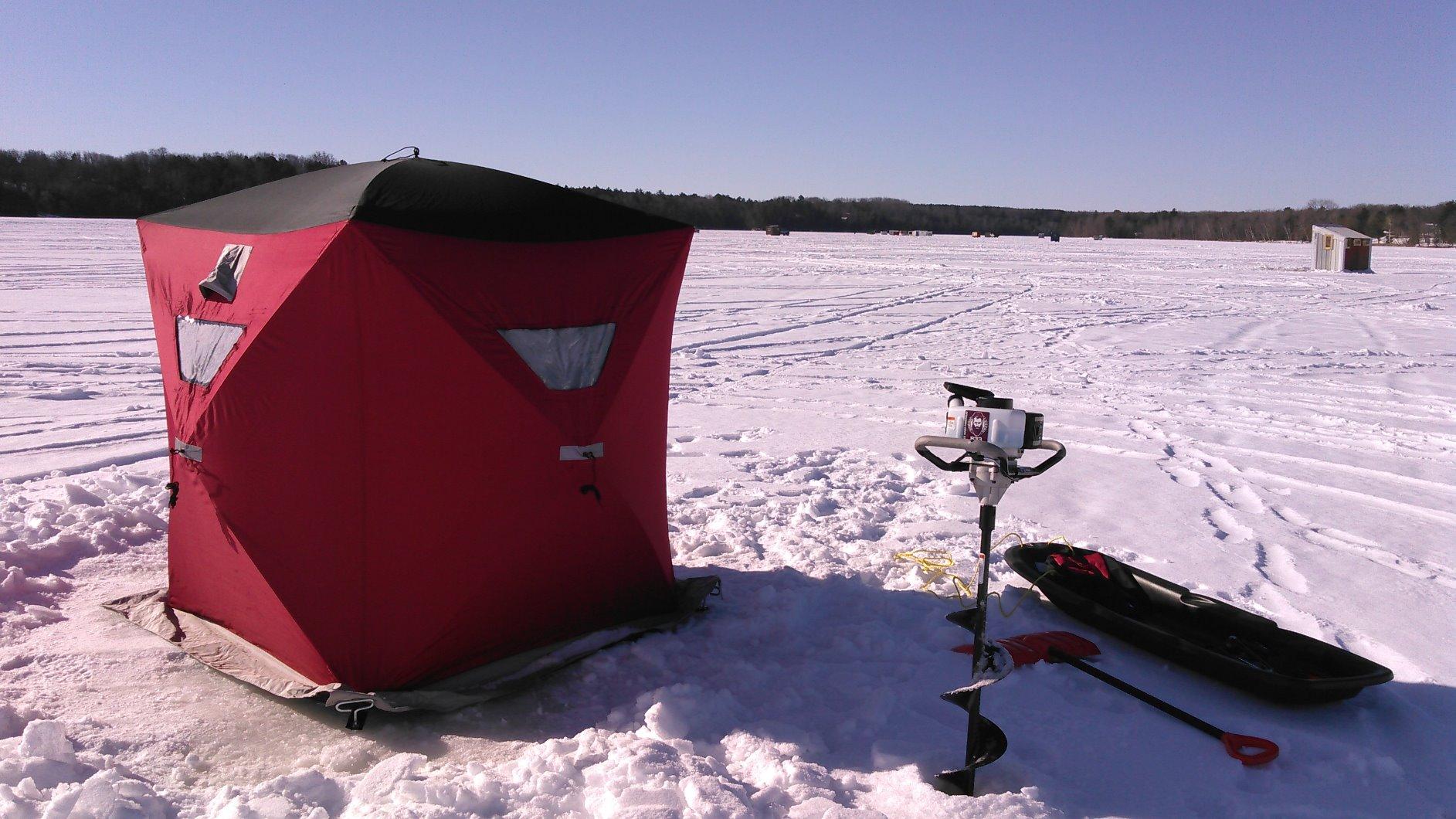
Where the bundle wins
It wins for pairs and small groups who want a complete base camp without assembling one from separate parts. Two people, one 8 inch hole, one shelter, and a machine that does not need a battery charger in the cold.
For walleye anglers fishing deep late-season structure, the 8 inch diameter and gas torque combination is well matched to the job.
Where the bundle hurts
It hurts anyone fishing alone. The shelter is dead weight, and the gas engine brings the weight and starting problems you were trying to avoid.
For a group of four or more, one heavy gas auger still means everyone waits for the same hole, which is the exact complaint electric and battery owners raise about sharing lighter setups.
10. Nordic Legend Hardware Lite E-Drill 39 Inch – Fastest Cutting Nylon Bit in the Set
Nordic Legend Hardware Lite E-Drill – Cordless Nylon Ice Drill Auger with Centering Point Blade, 8″ Ice Auger Bit with Adapter & Top Plate for Ice Fishing
8 inch diameter
39 inch shaft
Fits 18V-20V half-inch chucks
Dual flat replaceable steel blades
Pros
- Very fast cutting on a strong brushless drill
- Light and compact enough to replace gas and hand augers
- Nylon flighting stays flexible and rust-free in cold
- Dual flat steel blades are easy to sharpen or swap
- One owner logged roughly 60 holes in a single winter
Cons
- Needs a genuine high-torque drill or it stalls and overheats
- One unit shipped without the M6x25 hex bolt for the adapter
- Guard strap broke on first adjustment
- Very aggressive cutting that can strain the wrist
The Hardware Lite E-Drill is the reach champion among drill mounts, with a 39 inch shaft, and owners report drilling 10 to 12 inches of ice in under five seconds on a strong brushless drill. Several describe cutting 14 to 22 inches almost instantly with a Milwaukee or DeWalt brushless setup.
The 39 inch shaft is the number that matters for thick ice. It is longer than most drill-mount augers here, which means you can reach the bottom of a deep hole without crouching and without adding an extension to the stack.
Nylon flighting on an aluminum stem keeps the whole assembly light and flexible in cold temperatures, and the dual flat steel blades are replaceable, sharpenable and swappable. One owner logged roughly 60 holes in a single winter without an issue, and the bright color makes the auger easy to find on a wide ice field.
The quality-control notes are worth reading: one unit shipped without the M6x25 hex bolt that mounts the drill adapter, and another had a guard strap snap on the first height adjustment. Neither is serious if you check the box before you leave home.
Where this one is strongest
It is strongest where speed and reach combine: deep ice, a good brushless drill already in hand, and an angler who wants to drill several holes an hour without a gas engine idling beside them.
The replaceable dual flat blades are a genuine advantage. Blades dull on hard ice, and being able to swap or sharpen them in a few minutes is what separates a tool you keep for years from one you leave on the ice.
Where it will disappoint
It disappoints anyone with a modest drill. Owners are blunt that an underpowered drill stalls or overheats, and the aggressive cutting profile can strain the wrist if you are not braced properly.
It is also a drill-mount, so all the costs of a separate battery platform sit outside this purchase. Verify the hex bolt and guard strap before you head out, and check blade tightness each trip.
Gas vs Electric vs Battery vs Hand: Which Power Source Handles Thick Ice?
Gas wins on torque and self-containment, electric wins on simplicity, battery and drill-mount wins on weight, and hand cranks win on nothing except the fact that you already own them. The right answer depends on two variables: how thick the ice actually gets on your lake, and how far you walk to reach it.
The single most useful rule of thumb from the forums is that hand augers lose their advantage somewhere around 10 to 12 inches of ice. Below that, a hand crank is faster than any engine because there is nothing to start. Above it, you want powered torque, and that is the whole decision.
Here is how the four power classes compare on the factors that actually matter at 24 inches and beyond:
Gas (33cc two-stroke): Highest sustained torque, no battery charging, no drill to own. Costs you 32 to 55 lb of carry weight, fuel mixing, cold-start reliability and exhaust fumes in a shelter. The right pick for a stationary camp or a pair with a shelter.
Self-contained electric (40V): Fast, quiet, no fumes, and everything in one box including the battery. Battery life scales with ice thickness, and the frames are the bulkiest here. The right pick if you want one purchase and stop thinking about it.
Drill-mount battery: Very fast, lightest carry weight of any powered option, and the deepest reach in this list at 39 to 41 inches. Requires a high-torque brushless drill you already own. The right pick for a solo angler who walks and walks.
Hand crank: Nothing to charge, nothing to start, nothing to break that does not have a spare part. The practical ceiling is roughly 10 to 12 inches of ice. The right pick for early season and short walks.
Propane belongs in its own category, and the answer is usually no. Users report inconsistent power compared with gas, and there is no fuel additive option, which matters in cold weather. For a thick-ice buyer, the small convenience of a cylinder is not worth trading away the torque and the starting reliability you already have.
Shaft Length vs Ice Depth: Which Augers Clear 24, 30 and 36 Inches?
Shaft reach is the specification most roundups skip and the one that strands people on late-season ice. If your shaft is too short, you drill 30 inches and hit the bottom of the auger before you reach the bottom of the ice, which means a second pass with an extension or a different tool.
Here is what the shaft data in this list supports, using only the stated lengths for these products:
Up to 24 inches of ice: The 33 inch Nordic Legend E-Drill shaft, the 31 to 43 inch adjustable RAZR Scout, and the 41 inch VEVOR shaft all clear 24 inches with room to spare. Most hand augers physically cannot be extended to this depth without an adapter.
Up to 30 inches of ice: The 39 inch Nordic Legend Hardware Lite E-Drill, the 41 inch VEVOR shaft, and the RAZR Scout at its tallest setting clear this depth directly. The VEVOR extension rod takes it to 54.4 inches of reach.
Up to 36 inches of ice: The 41 inch VEVOR shaft plus the included 13.4 inch rod is the only configuration in this list that reaches here without a separate purchase. The K-Drill is rated to cut ice up to 36 inches thick and is the other purpose-built option at this depth.
Beyond 36 inches: You are into the range where gas augers with their taller shafts and higher gearing are the conventional answer, and where the no-turn-around rule below matters more than any auger specification.
The pattern is clear: drill mounts dominate the deep-ice reach category because the shaft is the auger. The gas units in this list do not publish shaft lengths, which is a real gap when you are shopping specifically for 30-plus inch lakes.
Chipper vs Twin Blades: What Actually Cuts Hard Late-Season Ice
Two blade geometries dominate ice augers, and the debate between them is one of the most active threads on the ice fishing subreddit. A chipper blade is a single aggressive edge that shaves chips cleanly and starts fast. Twin blades split the cutting duty across two edges, which spreads wear and keeps the hole round.
Owners on r/IceFishing consistently argue that single chipper blades cut faster on hard ice, and that preference is the most common reason experienced anglers move between brands mid-career. The practical takeaway is that blade geometry interacts with ice type: chipper designs suit cold, clear, dense lake ice, while twin-blade designs tend to be more forgiving on slushy reservoir ice where chip clearance is uneven.
Material matters as much as shape. Tool-steel blades, used on the K-Drill and the Nordic Legend gas combo, hold an edge longest and tolerate hard ice and accidental contact with the lake bottom. Stainless steel, used on the Lazer, resists rust in slush and wet snow. Nylon and composite flighting pairs with replaceable steel blades in most drill mounts, because the flighting lifts chips while the blade does the cutting.
The most repeated complaint on forums is not the geometry. It is that blades dull fast on hard ice and owners blame the auger instead of the blade. Whichever design you choose, check the edge before every outing and keep a spare in the sled.
How to Choose an Ice Auger for Thick Ice: 7 Criteria That Decide It
1. Match the auger to the real ice depth on your lake. Check historical readings, not a forecast. If the average late-season reading is 22 inches, do not buy a hand crank and hope.
2. Verify shaft reach against drillable depth. The auger should be long enough to clear the ice with a few inches to spare, or you will bottom out mid-hole. This is the criterion most often overlooked.
3. Size the hole for your target species. A 5 or 6 inch hole suits panfish and perch. Walleye and pike anglers generally want 7.5 to 8 inches, and a bigger hole costs you torque and battery capacity.
4. Check blade material and replaceability. Tool steel holds an edge on hard ice, stainless resists rust, and a replaceable blade system matters more than any brand loyalty. Blades are consumables, not accessories.
5. Factor in carry weight before power. A 32 lb gas head that arrives last at camp is a real problem on a solo trip. The drill mounts here run 7 to 8 lb for the whole assembly.
6. Understand what you are buying with the auger. A drill-mount auger is not a complete tool. You still need a high-torque brushless drill, a battery and a charger, and the drill is the part that decides whether cutting is fast.
7. Know the difference between an ice auger and a post hole auger. A post hole digger makes a wide, straight-walled hole for fence posts, tree planting and outhouse holes. An ice auger uses spiral flighting to lift chips out of a narrower hole, and only an ice auger is designed to be pulled upward through a frozen lake. Never use a post hole digger on ice, and never use an ice auger in soil.
One final criterion that is not on any spec sheet: how you will store it. Blades project from the bottom of an ice auger, and a throwing strap or guard is worth more than most buyers expect. Several products in this roundup include one.
Before You Drill: Ice Thickness Checks and Safety Habits
Verify ice thickness before you drill any hole, every single trip, and do not rely on how it looked an hour ago. A useful reference point is a standard ice safety marker: at least 4 inches of clear, solid ice for a single person, and that figure is a minimum, not a target. Above 4 inches, the widely taught guidance is that you should not turn around and walk back to shore alone.
Ice thickness is never uniform on a lake. Wind-drifted areas, current seams, creek mouths and the area near a dam can be dramatically thinner than the flat bay you just walked across, and pressure ridges are not a shortcut. Check the route back to the truck as carefully as the route in.
Carry a spud or a solid probe to test the ice, drill at least a foot from a crack or pressure ridge, and never work alone on ice you have not verified. Wear a flotation device and carry ice picks, and keep a whistle on a lanyard so a fall does not take it with you.
The auger matters here too. Electric and battery augers stop the instant you release the trigger, which owners cite as a genuine safety advantage in slushy ice. Gas augers keep turning with the throttle set, which is one more reason to keep your hand on the handle.
Group vs Solo Ice Fishing: One Gas Auger or Several Battery Augers?
The most common complaint from electric and battery owners has nothing to do with cutting speed. It is queueing. A one-hand auger can only be operated by one person at a time, so a group of four with one light auger ends up with four anglers waiting their turn while the first one drills.
That changes the economics. For a solo angler, one drill-mount auger plus one drill is the lowest-weight, most capable setup on this list. For a group of three or four, the same logic points toward individual battery augers – roughly 7 to 8 lb each – rather than sharing a single 32 lb gas head that only one person can operate at a time anyway.
The bundled gas and shelter option makes sense for a pair: one 8 inch hole and one shelter, both of you working around it. Past two people, the bottleneck returns, and the wait is worse in 30 inch ice because each hole takes longer.
Forum advice also covers the fuel question that comes up alongside group trips: 91 octane with a fuel additive is the recurring recommendation for cold-weather starting, and letting the engine warm up before idling addresses most reported starting problems.
Cold-Weather Battery Care and Blade Maintenance
Lithium-ion batteries lose capacity in cold, and that is chemistry rather than a defect. The single most repeated tip across the ice fishing forums is to keep spare batteries in a warmer shelter or inside the truck cab, then swap them in only when you are about to drill. Reviewers report the difference is obvious on a cold morning.
Charge spare batteries indoors the night before rather than on the tailgate. A battery that sits at low charge in freezing conditions is the one most likely to refuse to start, and it is also the hardest to warm back up.
For blades, the routine is simple and the payoff is large. Check the edge before every outing, keep a spare in the sled, and tighten blade bolts with a thread locker if they keep loosening. One owner of the Lazer notes that blade bolts develop over time and need periodic tightening, and that pattern is common across hand augers generally.
Carry a spare hand crank handle and a spare hex bolt for drill adapters. Both are small items that have ended trips, and both appear in the quality-control reports on two of the products reviewed here.
Frequently Asked Questions
What is the best auger for ice fishing?
For thick ice, the best auger is a 40V self-contained electric or a high-torque drill-mount model with 36-plus inch reach. Gas wins on raw torque, hand augers cap out around 10 to 12 inches of ice, and the K-Drill and Nordic Legend Hardware Lite cover the deepest ice in our roundup.
Which is better, gas or electric auger?
Gas is better for sustained torque, stationary camps and maximum ice thickness with no charging. Electric is better for weight, quiet operation, no fumes in a shelter and stopping instantly when the trigger is released. Most solo anglers walking long distances are better served by a drill-mount auger.
Who makes the best battery operated ice auger?
For a self-contained battery auger, the ION Alpha 40V leads with 8 inch steel flighting, up to 2000 inches of ice per 4Ah charge and a 3-year warranty. For a drill-mount, the K-Drill at 4.8 and the Nordic Legend Hardware Lite with its 39 inch shaft are the strongest rated options.
Are propane ice augers a better choice than gas ice augers?
Usually not for thick ice. Users report inconsistent power compared with gas, and propane offers no fuel additive option, which matters for cold-weather reliability. For 24-plus inch ice, a 33cc gas powerhead or a quality battery auger is the stronger pick.
How thick of ice can a hand auger cut?
Around 10 to 12 inches before hand cranking becomes impractical. Owners consistently report arm fatigue setting in near 20 inches, which is the practical limit. Above that, a drill adapter or a powered auger is the difference between finishing the hole and stopping halfway.
How deep can an ice auger reach?
It depends entirely on shaft length. In this roundup, the 41 inch VEVOR shaft extends to 54.4 inches with its included rod, the Nordic Legend Hardware Lite has a 39 inch shaft, and the Nordic Legend E-Drill has 33 inches plus a 14 inch extension. Pick a shaft at least 6 inches longer than your expected ice depth.
What size auger hole do I need for walleye?
A 7.5 to 8 inch cutting diameter is the usual choice for walleye and pike, which is what the K-Drill, ION Alpha, THUNDERBAY and VEVOR options provide. A 5 or 6 inch hole works for panfish and perch but is tight for trophy fish.
What is the difference between an ice auger and a post hole auger?
A post hole digger makes a wide straight-walled hole in soil for fence posts and tree planting. An ice auger uses spiral flighting to lift chips out of a narrower hole through frozen water. Never use a post hole digger on ice and never use an ice auger in soil.
Final Verdict: The Best Ice Fishing Augers for Thick Ice
For the best ice fishing augers for thick ice in 2026, the Strike Master Mora is our Editor’s Choice, and the reasoning is about balance rather than raw power. It has the deepest owner history in the group, steel blades that hold an edge, a carry weight you can hold all day, and the shortest distance between a hand crank and a drill-driven deep hole of any pick here.
For genuinely thick ice, match the tool to the depth. The K-Drill and the Nordic Legend Hardware Lite handle the deepest ice in this roundup with 36 inch ratings and long shafts, the ION Alpha is the simplest all-in-one answer, and the THUNDERBAY or the Nordic Legend 33cc combo cover you when maximum torque matters more than weight.
Whatever you pick, verify the ice before you drill, keep a spare blade in the sled, and pick a shaft at least 6 inches longer than your lake’s worst reading. Those three habits matter more to a successful day than the badge on the powerhead.
One safety habit rounds out the kit: if you want ice for drinks at the end of the day, compare our best portable ice makers, the best countertop ice makers and the best nugget ice makers for home before a long trip that will need more than a thermos.