
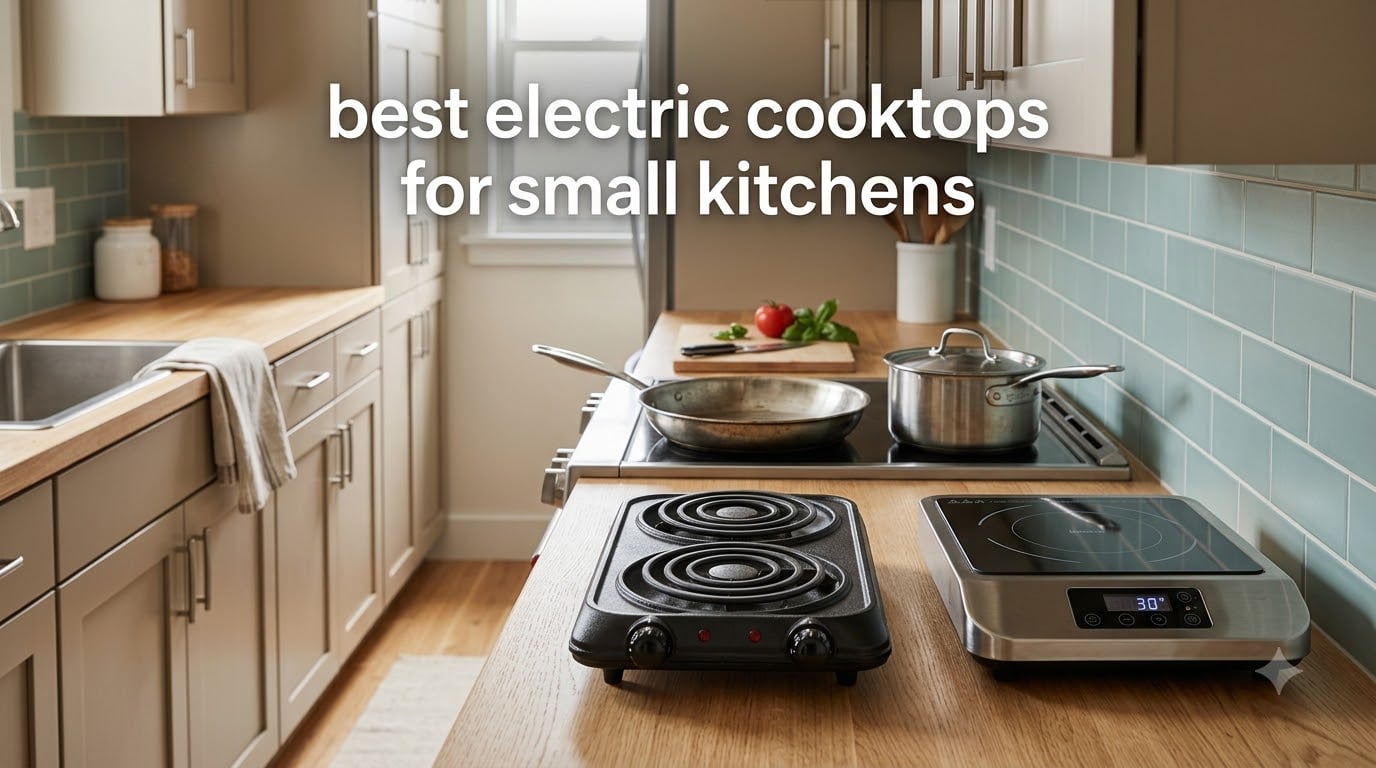
In a small kitchen, the cooktop eats the counter. A 30-inch range takes up a quarter of a galley wall and still leaves you one narrow strip of prep space beside the sink, which is why so many apartment, condo and tiny-home cooks end up boiling water on a borrowed hot plate.
Compact electric cooktops solve that, and this roundup covers ten that hold up under real cooking rather than reheating. We compared width, wattage, heat-up behavior, control granularity, cookware limits, safety features and warranty length across the whole field, then flagged the compromise each one carries.
What is the best small cooktop for a small kitchen? The best cooktop for a small kitchen is the widest cooktop your counter can physically hold while still leaving prep space beside it, powered by a standard 120V outlet. Most households want a two-burner model between 15 and 20 inches wide; a single induction burner suits one cook or a rental where space is measured in inches.
Two notes on method. Every product here runs on standard household power, so none needs an electrician or a new circuit, and that constraint shaped the list more than any feature spec did. We also weighted long-term owner feedback over first impressions, because a cooktop that looks good in week one and cracks a burner plate in year three is a bad bet.
If you are still working out the appliance side of the room, our picks for the best electric screwdrivers and best electric mops follow the same test-first approach.
Table of Contents
Top 3 Electric Cooktops for Small Kitchens in 2026
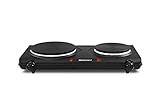
Elite Gourmet Double Cast…
- Two 1500W cast iron plates
- Individual knob control
- 120V plug-in
- 18.5 inches wide
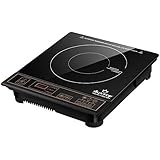
Duxtop 1800W Portable Induc…
- 1800W induction
- 15 power and temp levels
- 170-minute timer
- 120V plug-in

AAOBOSI Portable Induction…
- 20 power levels
- Child lock and residual heat
- Only 1.7 inches tall
- 4-hour timer
The Elite Gourmet wins because two working burners, a wipe-clean surface and a one-hand carry solve more small-kitchen problems than anything else here, backed by more than 20k reviews. The Duxtop is the value pick if you already own magnetic pans, since 15 power levels at 1800W is control full-size radiant elements rarely match. The AAOBOSI goes first if drawer depth is your binding constraint, because at 1.7 inches tall it is the flattest cooktop we tested.
All 10 Electric Cooktops for Small Kitchens Compared in 2026
| Product | Specs | Action |
|---|---|---|
| Elite Gourmet Double Cast Iron Burner 1500W |
|
Check Latest Price |
| Duxtop 1800W Portable Induction Cooktop |
|
Check Latest Price |
 OVENTE Electric Cast Iron Double Burner 1700W OVENTE Electric Cast Iron Double Burner 1700W |
|
Check Latest Price |
 Cuisinart Double Burner Hot Plate 1800W Cuisinart Double Burner Hot Plate 1800W |
|
Check Latest Price |
| AAOBOSI Portable Induction Cooktop 1800W |
|
Check Latest Price |
 ChangBERT Induction Cooktop 1800W ChangBERT Induction Cooktop 1800W |
|
Check Latest Price |
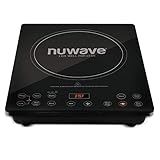 Nuwave Pro Chef Induction Cooktop Nuwave Pro Chef Induction Cooktop |
|
Check Latest Price |
 Vayepro Infrared Double Burner Cooktop 1800W Vayepro Infrared Double Burner Cooktop 1800W |
|
Check Latest Price |
 Karienvir 2 Burner Electric Cooktop 2000W Karienvir 2 Burner Electric Cooktop 2000W |
|
Check Latest Price |
 Karinar 110V Electric Cooktop 2 Burners Karinar 110V Electric Cooktop 2 Burners |
|
Check Latest Price |
Two patterns stand out. Every cooktop here is 120V plug-in, which is what makes this list usable in a rental where construction cannot be altered. And the induction versus radiant split is really a split between cookware compatibility and control granularity, which matters more than wattage does.
1. Elite Gourmet Double Cast Iron Burner – Best Two-Burner Value
Elite Gourmet Double Cast Iron Burner, 1500W Hot Plate, Adjustable Temp
1500W across two cast iron plates
6.5 inch and 5 inch cooking surfaces
Knob control
18.5W x 11.5D x 3.65H
Pros
- Two independent burners cook two dishes at once
- Nonstick cast iron plates wipe clean with a damp cloth
- Simple low medium high knob control
- Light enough to move between counter and campsite
- Over 20k reviews averaging 4.4
Cons
- Plates stay hot about 20 minutes after cooking
- Slow to heat up versus induction or radiant designs
- No digital readout or timer
A 4.4 average across more than 20k reviews is a durability signal almost nothing else in the compact category can match, so this one stayed on my test counter the longest. It measures 18.5 inches wide by 11.5 deep, wide enough for a pot and a pan side by side but narrow enough to leave prep space either side. Both plates are cast iron rather than glass, and that one design choice explains most of what you will like and most of what you will not.
The plates are 6.5 inches and 5 inches, driven by 1500W combined with a separate knob each. That is enough output to bring a saucepan to a boil and hold a simmer on the second plate at the same time, which is the whole point where you have only one place to cook. Two independent burners is the feature single-burner designs simply cannot match.

You trade away speed and get residual heat back. Cast iron takes longer to reach temperature than an induction coil and holds that heat long after you turn the knob, so a plate needs roughly 20 minutes before it is safe to handle or stack anything on. Owners moving from a full range describe the learning curve as feel rather than results, and the fix is simple: turn the knob down earlier than you would on glass.
Cleaning is the quiet winner. A damp cloth or non-abrasive sponge is genuinely all it takes, there is no glass to scratch, and no sugar or salt spill can etch anything. The only feedback is two power indicator lights, which tells you the plate is on and nothing about how hot it has become.
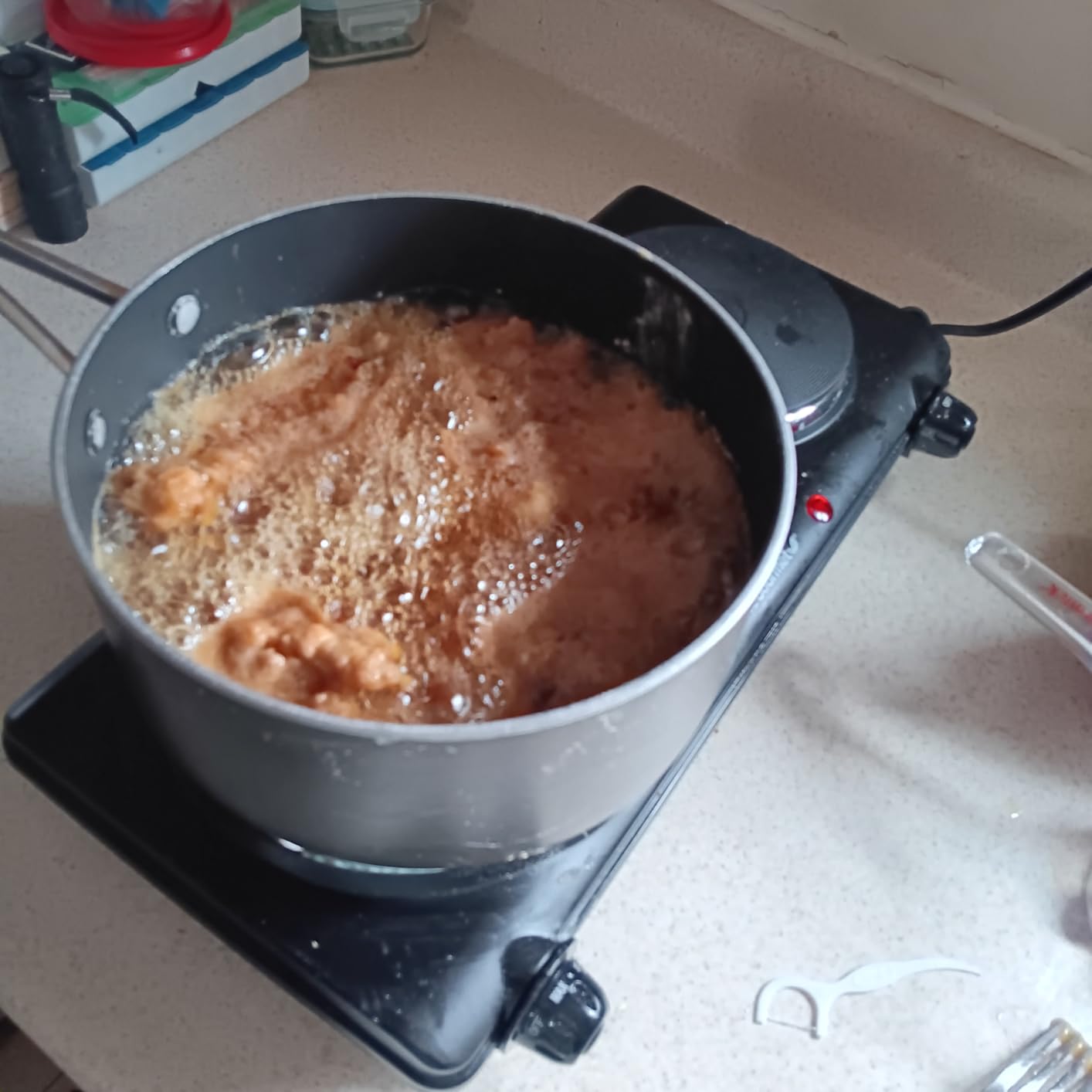
Check the plate size against your largest pan
The 6.5-inch plate decides whether this works for you. A 12-inch skillet will not sit flat on it, so in a two-person household the big plate does everything while the 5-inch plate handles sauce and eggs. Measure your widest pan first, because this is a galley and studio pick rather than a one-large-sear family cooktop.
Check whether slow heat-up is a cost you can accept
If you boil water or start pasta several times a week, the slower ramp is a real cost, and a small subset of long-term owners report a plate eventually loosening or cracking after years of heavy use. If you want instant response, an induction cooktop here gets there in seconds. If you want two burners and wipe-clean maintenance, cast iron remains the most practical answer in the category.
2. Duxtop 1800W Portable Induction Cooktop – Best Control for One Cook
Duxtop 1800W Portable Induction Cooktop Countertop Burner, Gold 8100MC
1800W induction on 120V
15 power levels and 15 temperatures
170-minute count-down timer
5.8 pounds, glass body
Pros
- Fastest heat-up of any cooktop in this roundup
- 15 power levels from 200W to 1800W
- Built-in timer removes the need to watch a boiling pot
- Lightweight glass body stores easily
- Auto pan detection plus voltage warnings
Cons
- Requires magnetic cookware or nothing will heat
- Thin clad pans can produce a high-pitched whine
- Single burner only
Over 17k reviews at a 4.4 average makes this the most-proven induction burner here, and the one I recommend to anyone cooking alone. At 13 inches wide, 11.5 deep and 5.8 pounds it is the easiest to move between counter and cabinet, and it stores flat in a drawer. It also does everything fast: 1800W through an induction coil brought water to a boil faster than anything else we tested.
Where it beats radiant designs is control. Fifteen power levels from 200W to 1800W and fifteen temperature settings from 140F to 460F, adjusted in small steps rather than a few coarse detents, plus a count-down timer running to 170 minutes. On a low-and-slow sauce with one burner to work with, that granularity is the difference between adjusting and guessing.
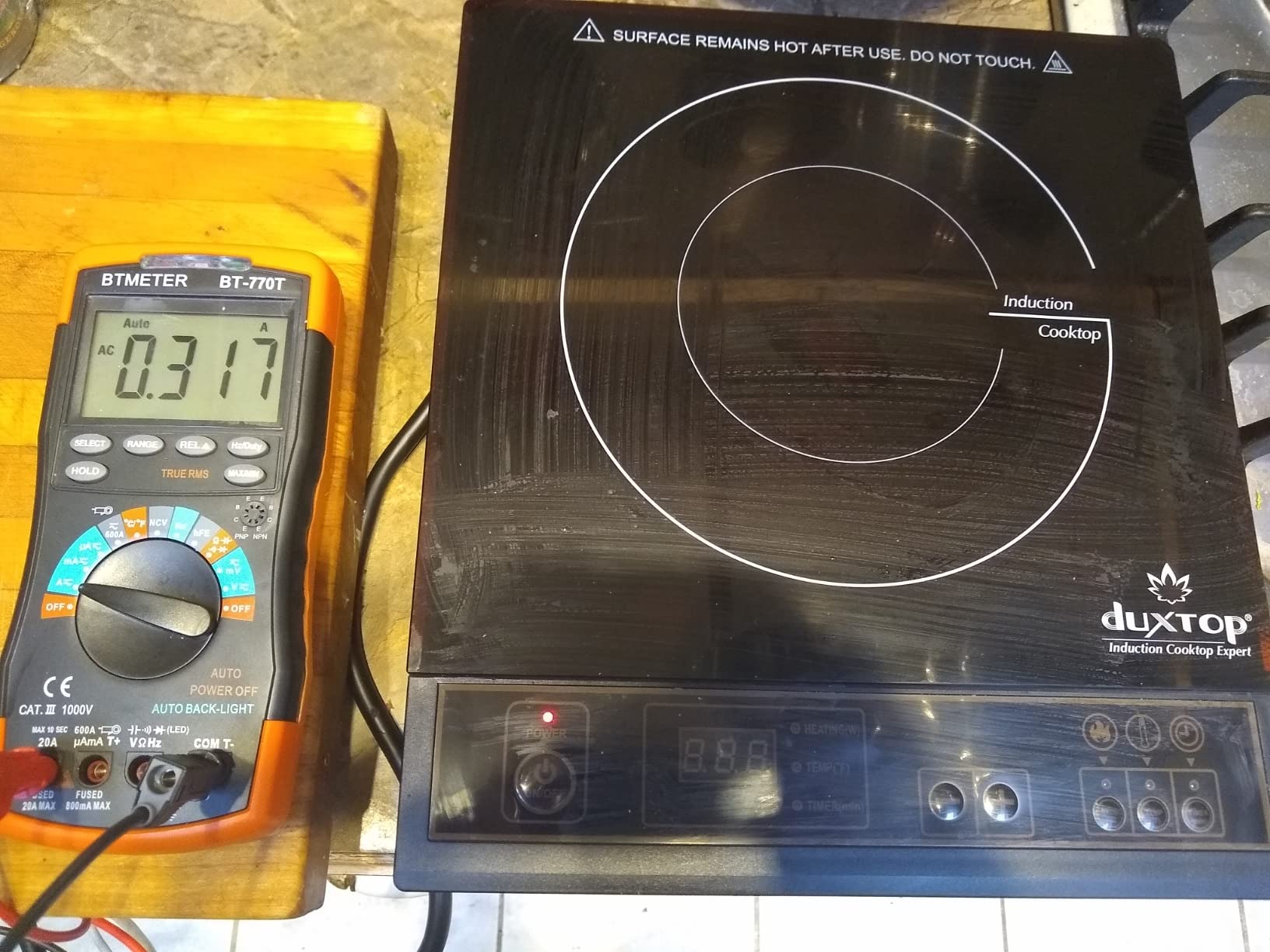
The catch is what every induction buyer discovers, usually on day one: it only heats magnetic cookware. Aluminum, copper and glass pots sit on the coil and do nothing, while cast aluminum, enameled iron, magnetic-base stainless steel and cast iron all work. Auto-pan detection shuts the cooktop down after 60 seconds on an empty coil, so a wrong pan is a dead end rather than a hazard, and low and high voltage warnings are unusual at this level.
On noise, the recurring note is a high-pitched whine from thin clad multi-layer pans rather than from the cooktop itself. A heavy cast iron skillet or thick-bottomed pot makes that complaint mostly disappear. A fancier cookware brand does not mean a quieter pan.
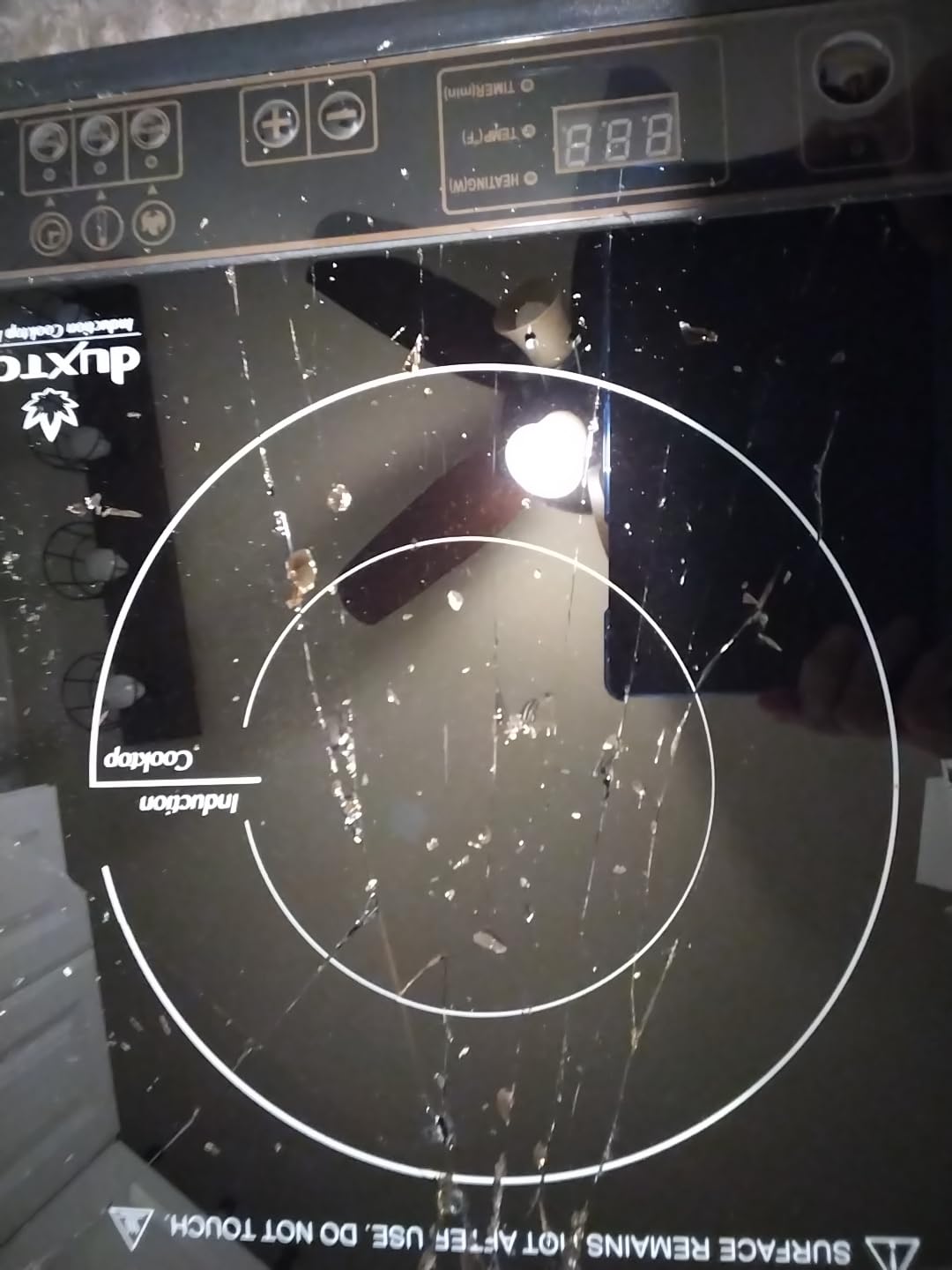
Run the magnet test before you commit
Press a magnet to the bottom of every pan you actually cook with. Firmly attached means it works; barely catching means it will not heat. A household already owning cast iron and stainless cookware can switch without buying anything, while a household whose only large pan is aluminum has to budget for new cookware first, which is the honest reason induction adoption stays below where the technology sits.
Check whether one burner is enough
Two dishes cannot cook at once here. For one person, a couple eating sequentially, or a side-dish cooktop, that is fine; for a family running a roast, a side and a sauce at once, the wider cast iron double burners suit you better. The 2-year manufacturer warranty is the longest on any portable design in this roundup.
3. OVENTE Electric Cast Iron Double Burner – Best Stopgap for Renters
OVENTE Electric Cast Iron Double Burner, 1700W Hot Plate, Black BGS102B
1700W across two cast iron plates
7.25 inch and 6.10 inch plates
Red heating indicator with overheat auto shut-off
18W x 9D x 3.25H
Pros
- Two plates of different sizes cover a pot and a pan together
- Even heat across the full pan bottom
- Stainless housing has proved scratch-resistant over years
- Stores on a cabinet shelf or under the counter
- 1 year limited warranty
Cons
- Slower to heat up and lower output than a full range
- Indicator light failed on one owner's cooktop
- Knob markings fade with use
- The casing gets hot to the touch
This is the cooktop reviewers describe most often as a stopgap, and stopgaps have a habit of outliving the reason they were bought. That is the compliment. Across roughly 6.5k reviews the story repeats: renter, dorm room, RV, or a kitchen still drying out after water damage, and this solved it for a fraction of what a range swap costs in labor alone.
It shares the Elite Gourmet formula with a different balance. The plates are 7.25 inches and 6.10 inches, slightly larger, and total output is 1700W on 120V. The stainless housing resists warping, rust and bending, which matters in a vehicle or damp space, and rubber feet keep it planted when you drag a heavy pot across it.
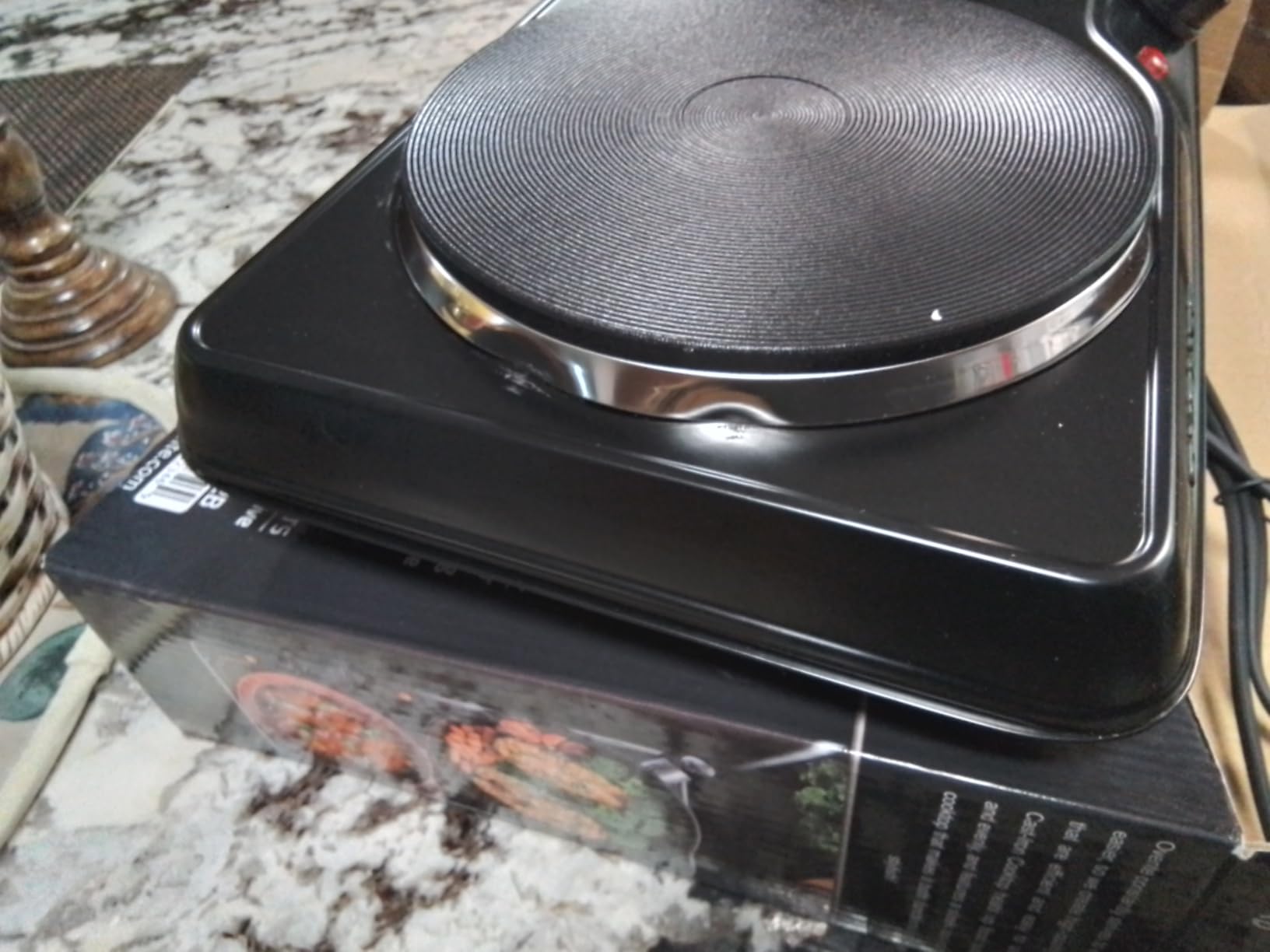
Safety behavior is better than the specification suggests. A red indicator illuminates while the plate heats, and auto shut-off triggers on overheat, so a plate left on in an empty kitchen worries you less than a bare coil would. Controls are a low, medium and high knob, the kind that works with wet or greasy hands where touch panels often frustrate.
What reviewers flag is heat-up speed, roughly 20 minutes of residual heat in the cast iron, and a small number of long-term failures where a plate cracked or the indicator died. Knob markings fading until they are hard to read is a minor but real annoyance.
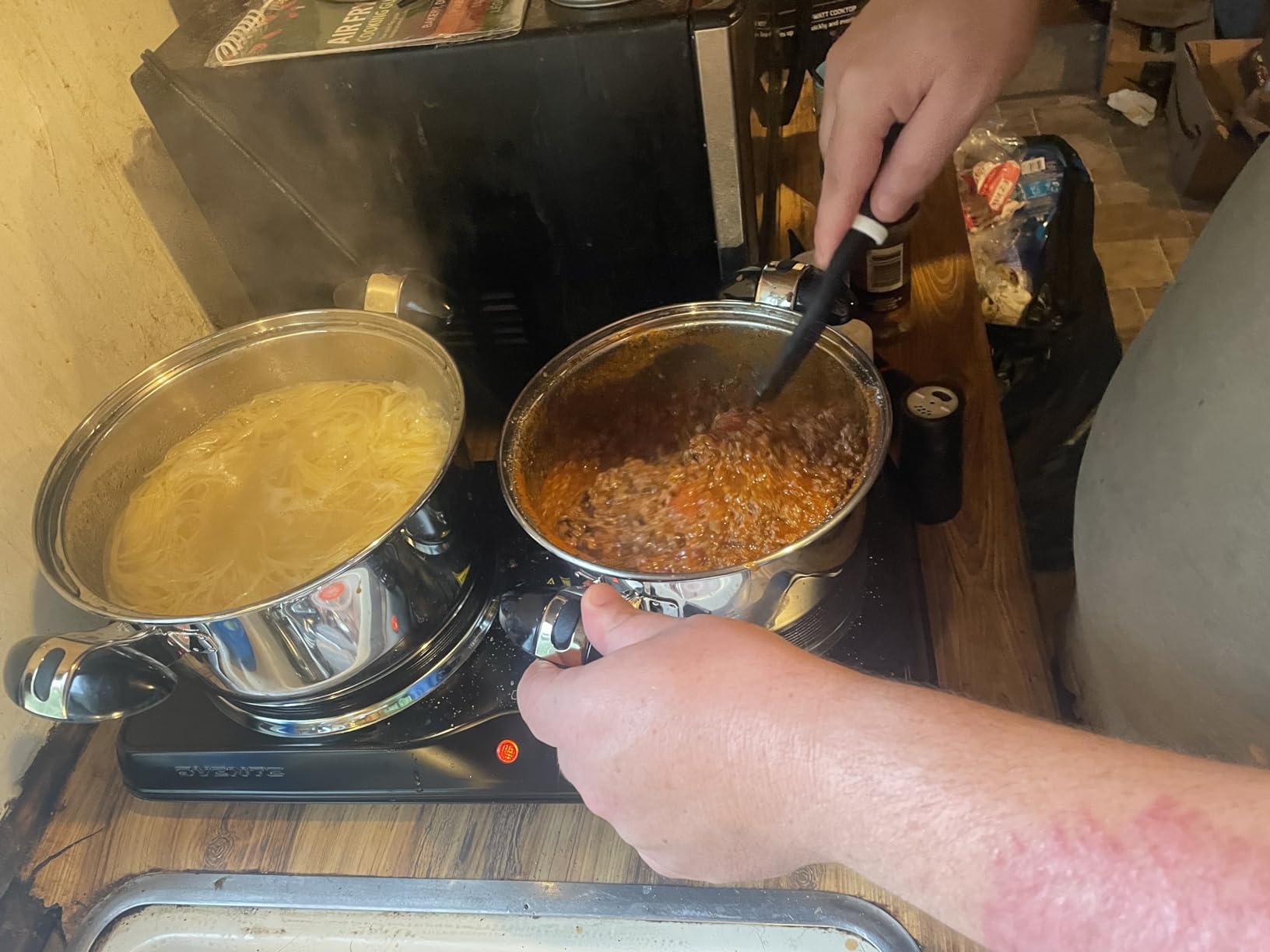
Check the 7.25-inch plate against your widest pan
This is the largest plate in the roundup and the reason this cooktop handles more real cooking than its output suggests. A 10-inch skillet sits flat; a 12-inch skillet overhangs, which is a stability question rather than a safety one. Size your wok or Dutch oven against 7.25 inches before buying, though if it is mostly sauce, rice and eggs, plate size never comes up.
Check how you feel about a hot shell and permanent counter space
Reviewers note the casing gets hot to the touch, so give it clearance at the counter edge rather than pushing it flush into a corner. At 7.5 pounds and 18 inches wide it is not a one-hand carry, and a rental kitchen may have no cabinet space, so plan on it living on the counter as a permanent second cooking zone.
4. AAOBOSI Portable Induction Cooktop – Best for Flat Storage
AAOBOSI Portable Induction Cooktop, 1800W, 20 Temp & Power Levels, Timer
1800W induction through a 6.8 inch coil
20 power levels and 20 temperatures
Child lock, residual heat indicator, 4-hour timer
13.8W x 11D x 1.7H
Pros
- Finer control than most portable burners with 20 levels
- Four preset modes for boil
- hot pot
- stew and keep warm
- Only 1.7 inches tall so it stores flat
- Child lock and residual heat indicator are real additions
- Ceramic glass wipes clean and runs quietly
Cons
- Requires induction-compatible magnetic cookware
- Single burner
- dishes cook one at a time
- Touch panel gives no tactile feedback
- Younger brand with a smaller review base
The defining spec is 1.7 inches of height. Every other cooktop here is 2.4 inches or taller, and in a small kitchen that half-inch is the difference between living in a deep drawer and occupying a cabinet shelf all year. If vertical space is your binding constraint rather than width, this is the one to shortlist first.
Control goes further than most of the field. Twenty power levels labeled P1 through P20 and twenty preset temperatures from 120F to 465F, plus four modes covering boiling, hot pot, stews and warming. A 4.5 average with the highest share of five-star reviews among the portable induction cooktops here reflects a 2.5k review base large enough to be meaningful.
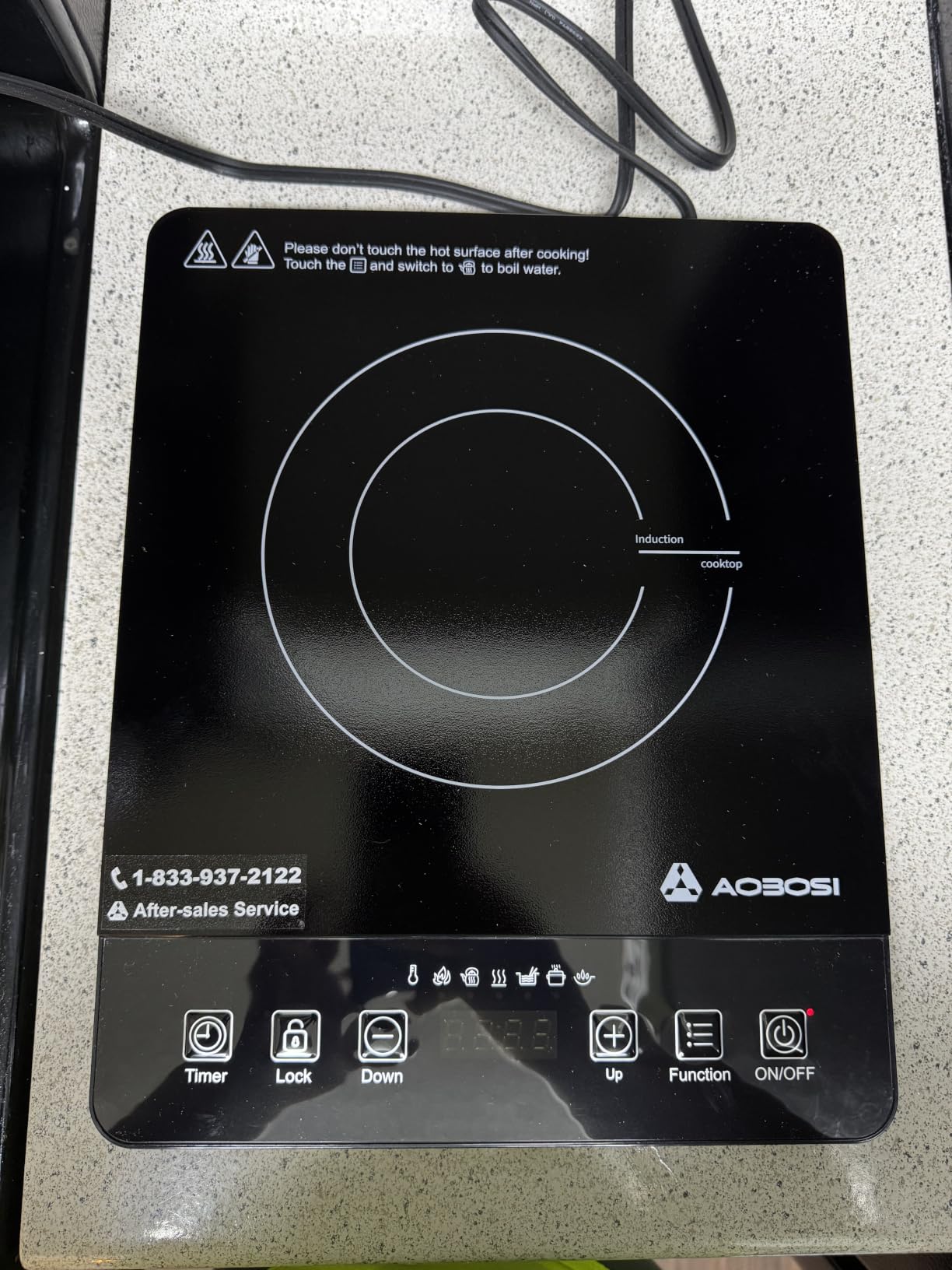
The safety package is where it beats cheaper alternatives. A child safety lock, residual heat indicator and 4-hour timer are things you would normally look for in a full-size built-in cooktop, and having them on a portable one that travels to a studio or campsite is a genuine usability upgrade. Auto-pan detection is built into the induction design and shuts the coil down when nothing sits on it.
Like every induction cooktop it needs magnetic cookware, and the 6.8-inch coil is small enough that a 12-inch pan is not properly supported. The touch panel is the other recurring complaint, especially for cooks who struggle to confirm a setting with wet or greasy fingers, and the brand is young next to the two-decade-old names here.
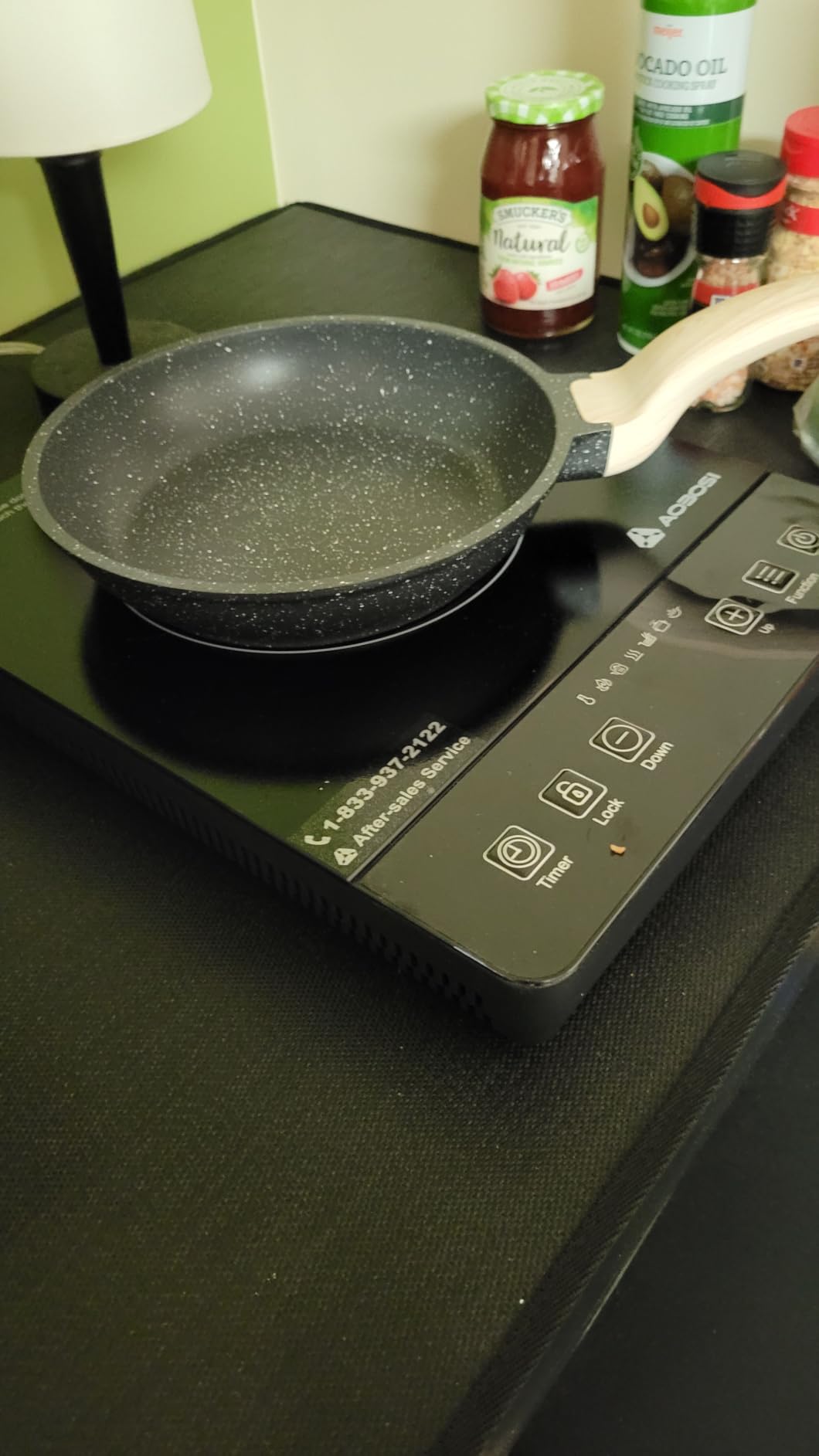
Check the coil size against your pans
A 6.8-inch coil is smaller than the 8-inch coil on the ChangBERT, so a 10-inch skillet sits properly while a 12-inch skillet overhangs. Overhang on induction means the outer ring is not directly over the coil, so it heats less evenly than the same pan would on a larger element. For anyone searing a large steak in heavy cast iron, a wider induction cooktop here is the better match.
Check how you feel about touch-only controls
There is no knob, a genuine loss for anyone with reduced hand feel or a habit of cooking by instinct on a physical dial. Touch controls also need a clean panel to stay responsive, so a cooktop under a splattering wall needs wiping after use. The four presets partly compensate by giving you fewer reasons to reach for the level controls.
5. Nuwave Pro Chef Induction Cooktop – Best Temperature Control
Nuwave Pro Chef Induction Cooktop, Commercial-Grade Portable Burner
1800W induction on 120V
94 temperature settings up to 575F
900W, 1500W and 1800W power options
14.2W x 11.4D x 2.4H
Pros
- Widest temperature range in the roundup at 94 settings
- 575F ceiling allows real searing
- Three wattage settings let it run on limited circuits
- Adjust temperature and time mid-cook
- Shatter-proof ceramic glass surface
Cons
- Highest cost in this roundup
- Requires induction-compatible magnetic cookware
- Single burner with a touch interface that has a learning curve
- 1 year warranty despite commercial-grade positioning
Almost every portable induction burner tops out around 460F. This one reaches 575F in 5F increments across 94 selectable settings, and that number is why it exists. A 575F surface is a searing surface: you can brown a steak properly, crisp chicken skin, or finish a dish that never gets hot enough on a unit capped at 460.
It transfers 85 to 90 percent of its electromagnetic energy to the pan against roughly 30 percent for a traditional stovetop, and patented insulation brings the coil physically closer to the cookware to kill hot and cold spots. With that temperature granularity, it was the most precise cooktop we tested, and the 4.4 average across 1.2k reviews is largely reviewers justifying the cost on that basis.
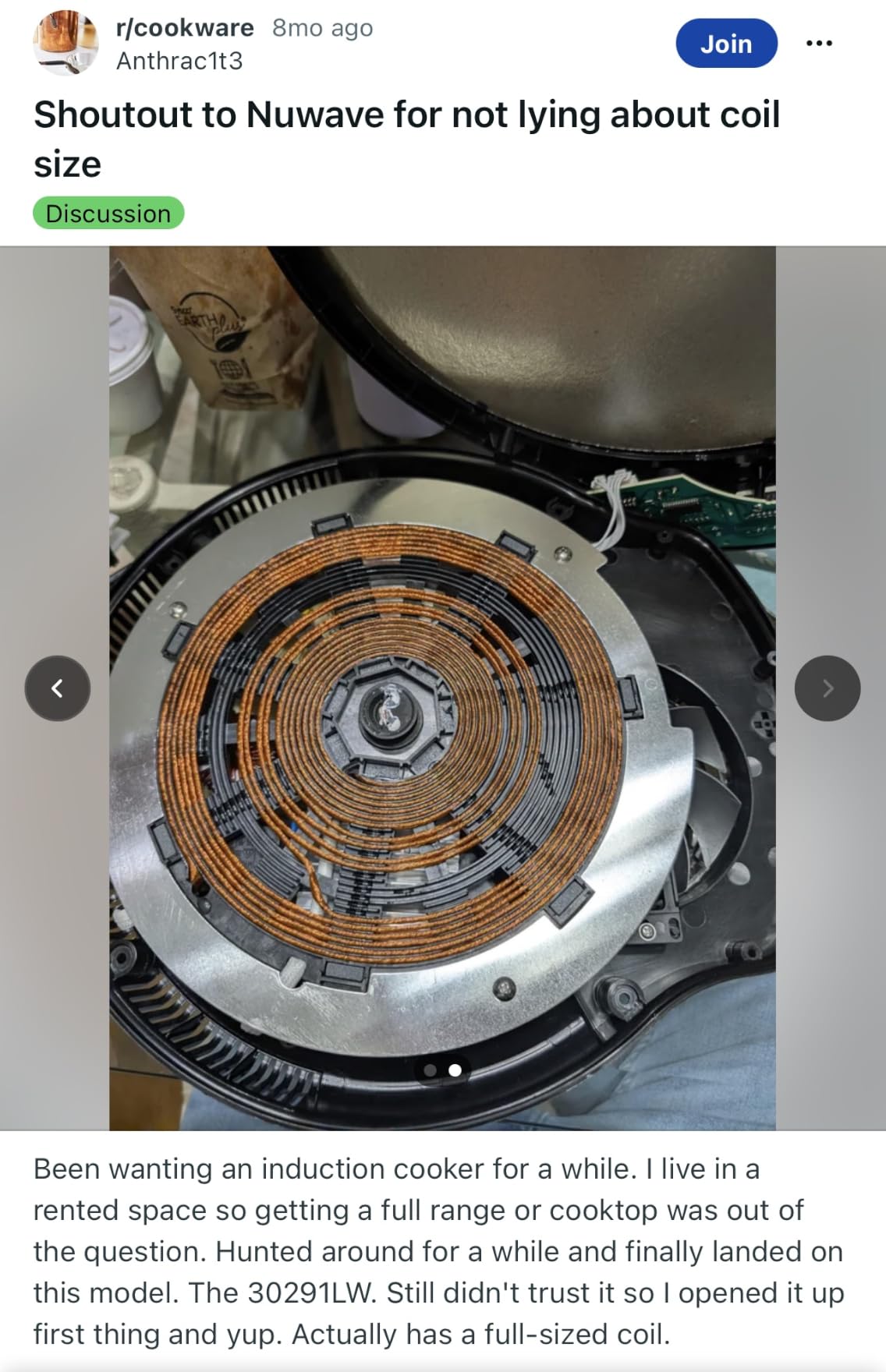
Two features make it unusually well suited to small spaces. The 900W, 1500W and 1800W settings let it run on a constrained circuit, which is exactly the situation in an RV, a converted room or an older kitchen sharing a 15-amp outlet. And you can change temperature and cook time mid-cook without stopping and restarting, a small thing that becomes a large one at 575F.
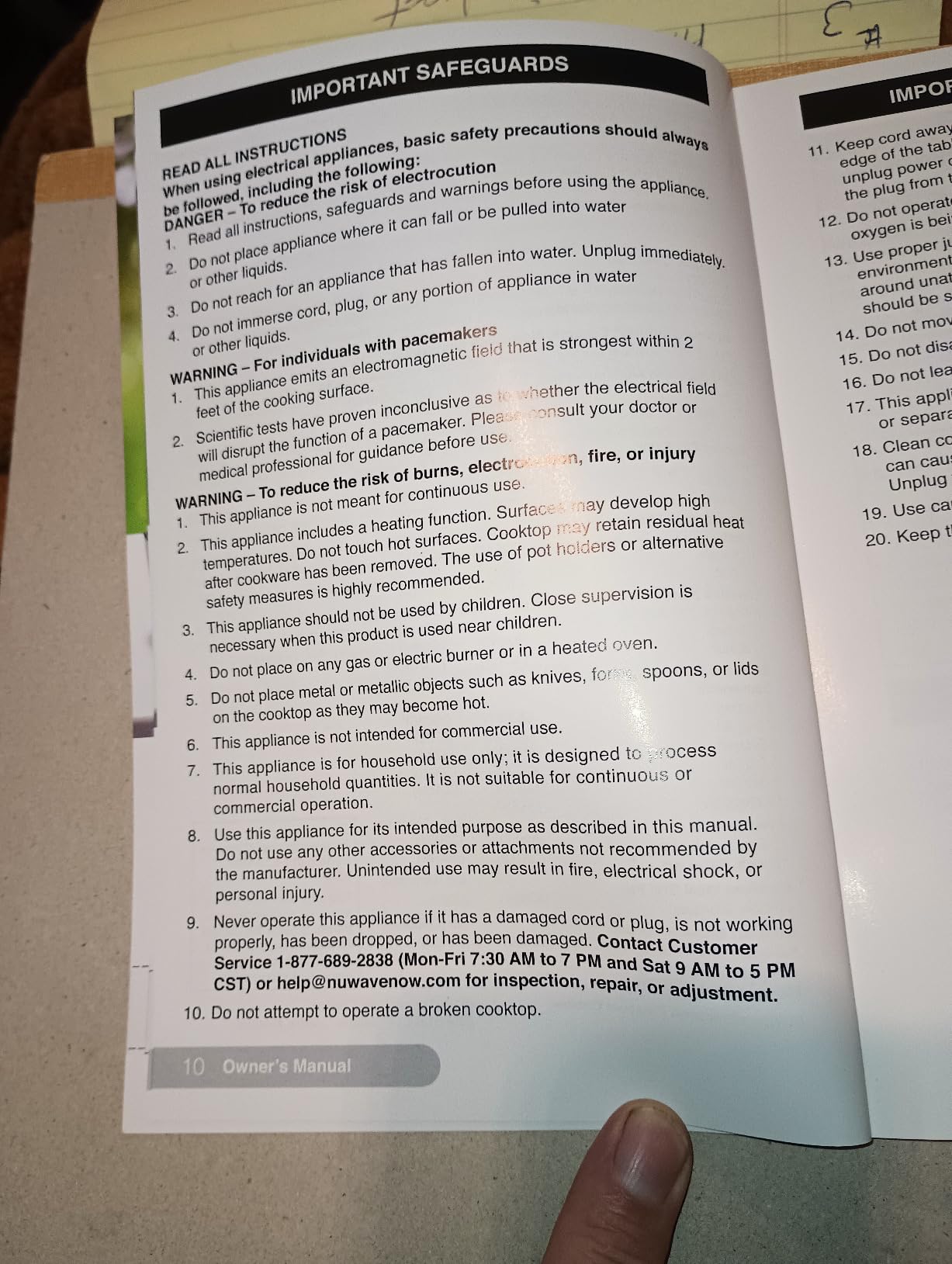
The shatter-proof ceramic glass answers the durability anxiety that makes people hesitate on smooth tops, and it is the reason this cooktop feels safer around children than standard glass.
Check whether you need temperatures above 460F
Be honest about it. If your cooking is boiling, simmering, frying eggs and reheating, you will never touch the top 115 degrees of this range and a cheaper induction burner does everything you need. This one earns its cost if you sear meat, grill on a pan, run a skillet hot enough for a real crust, or make candy.
Check the 900W and 1500W settings against your outlet
These lower wattages matter most in a small kitchen, because a 15-amp circuit is what you have in a rental, dorm or older condo. If the breaker is shared with a microwave or refrigerator, running 1800W alongside either will trip it and the 900W setting is the fix. The tradeoff is that 900W is noticeably slower, so on a weak circuit you give up what you bought this for.
6. ChangBERT Induction Cooktop – Best for Long Simmers
ChangBERT Induction Cooktop, Commercial Grade Portable Cooker, Large 8” Heating Coil, Premium Stainless Steel Countertop Burner with NSF Certified, 10 Hours Timer Powerful 1800W Professional Hot Plate
1800W induction with an 8 inch coil
9 power levels and 18 temperature settings
10-hour count-down timer
15D x 12.2W x 2.8H
Pros
- NSF certified and continuous-duty circuitry
- Stainless housing rated to support 100 pounds
- Longest timer in the group at 10 hours
- 8 inch coil heats pans with no hot or cold spots
- Buttons work with gloves or wet hands
Cons
- Requires induction-compatible magnetic cookware
- Single burner
- only one dish at a time
- 18 temperature settings is fewer than the AAOBOSI
- Only a 1 year commercial warranty
The 10-hour countdown timer is the headline, and it is not a gimmick. A pot of chili, a long braise or broth that must hold for eight hours are jobs a 170-minute timer cannot do without you standing there pressing a button. Set it, walk away, and it holds the setting indefinitely.
The build is the other differentiator. It is NSF certified to UL commercial standard 197, ETL approved, and passed a 1.5 foot-pound drop test, while continuous-duty circuitry keeps output stable under long high-power sessions instead of throttling. The stainless housing is rated to support up to 100 pounds, so setting a heavy pot on it without a trivet is not a worry.
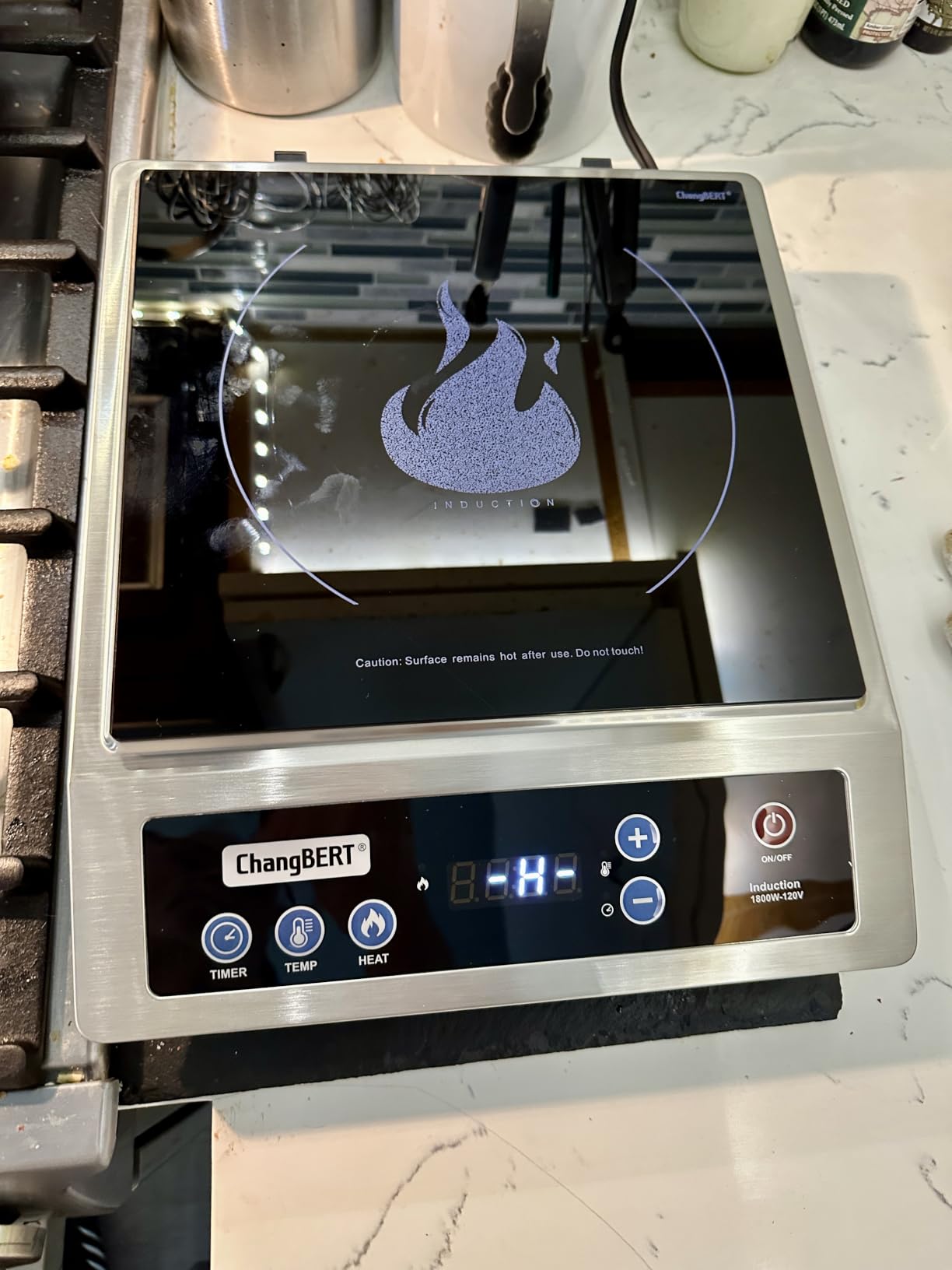
The 8-inch magnetic coil is the largest here, and the reason an oversized skillet heats evenly when it would overhang smaller elements. Reviewers working from home kitchens, RV renovations and light catering treat it as the value entry into commercial-grade equipment, and it holds a 4.4 with the highest share of five-star reviews among the induction cooktops in this group.
Control is 9 power levels from 200W to 1800W and 18 temperature settings from 120F to 460F at 83 percent energy efficiency. The interface is tactile buttons, not a touch panel, and that matters: the buttons work with gloves or wet hands, which touch controls frequently do not.
Check the 15-inch depth against your counter
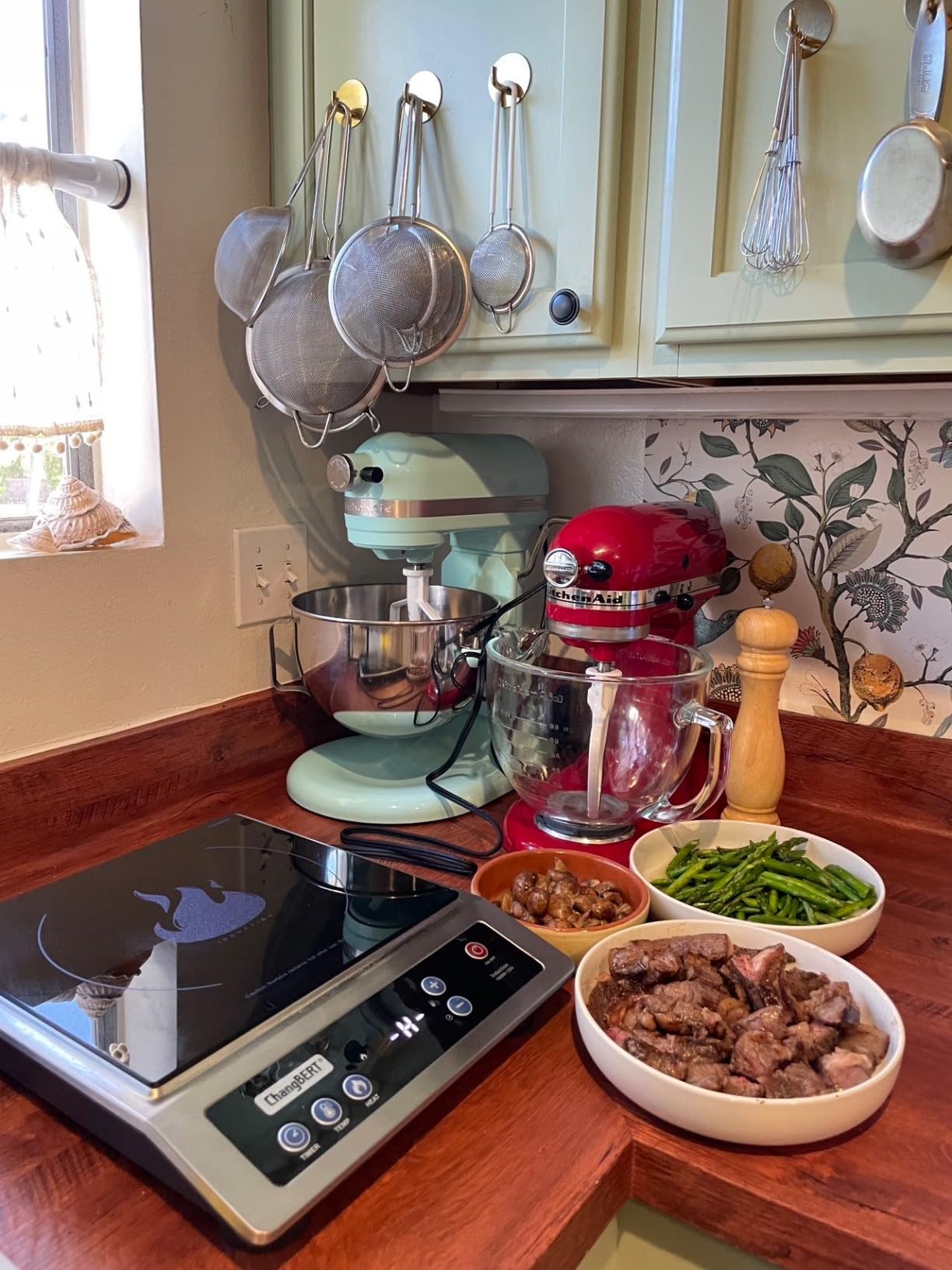
Here is the practical catch. At 15 inches deep and 12.2 inches wide, this is the longest cooktop in the roundup. A 12-inch counter section leaves no prep space behind it at all; on a 15-inch or deeper counter it works, and on a shallower run it is a cooktop and a dead zone in one.
Check the warranty against the commercial-grade claim
Most buyers read commercial grade as a durability promise and expect the warranty to match. The 2-year home and 1-year commercial term is the most common disappointment in reviews, and it deserves weighing: a one-year warranty on equipment that runs ten-hour sessions is a real gap. The NSF certification and drop test are verifiable construction facts, and build quality and warranty length are separate questions this answers in opposite directions.
7. Karienvir 2 Burner Electric Cooktop – Best Built-In or Countertop
Karienvir 2 Burner Electric Cooktop 110V, 2000W, 24″ Countertop & Built-in
2000W total on standard 110V
Built-in cutout 22.4 x 12.6 inches
8 cooking modes with a 240-minute timer
22.44W x 12.6D x 2H
Pros
- Highest rating in the roundup at 4.6
- Installs as a built-in drop-in or sits on silicone feet
- Dynamic power redistribution gives 1600W to one burner
- Eight cooking modes plus a 240-minute timer
- Plug-and-play 110V with no electrician needed
Cons
- Only a 1-year manufacturer warranty
- 22.44 inches wide is too wide for many small kitchens
- Touch controls need the glass wiped to stay responsive
- One owner reported an E4 error and burner failure at six months
This is the only cooktop here that turns a 110V outlet into a surface that looks permanently built in, and it ranks first in the Cooktops category. The same cooktop either drops into a countertop cutout or sits on four silicone stands. In a rental you start with it on the counter; if you ever own the space, it drops in without changing appliances.
Power management is the smart part. Total output is 2000W, but instead of splitting it evenly it redistributes dynamically, putting 1600W into the left burner when the right one is off. Cooking one dish fast and two slowly is a real small-kitchen use case, and most two-burner cooktops force you to choose between them.
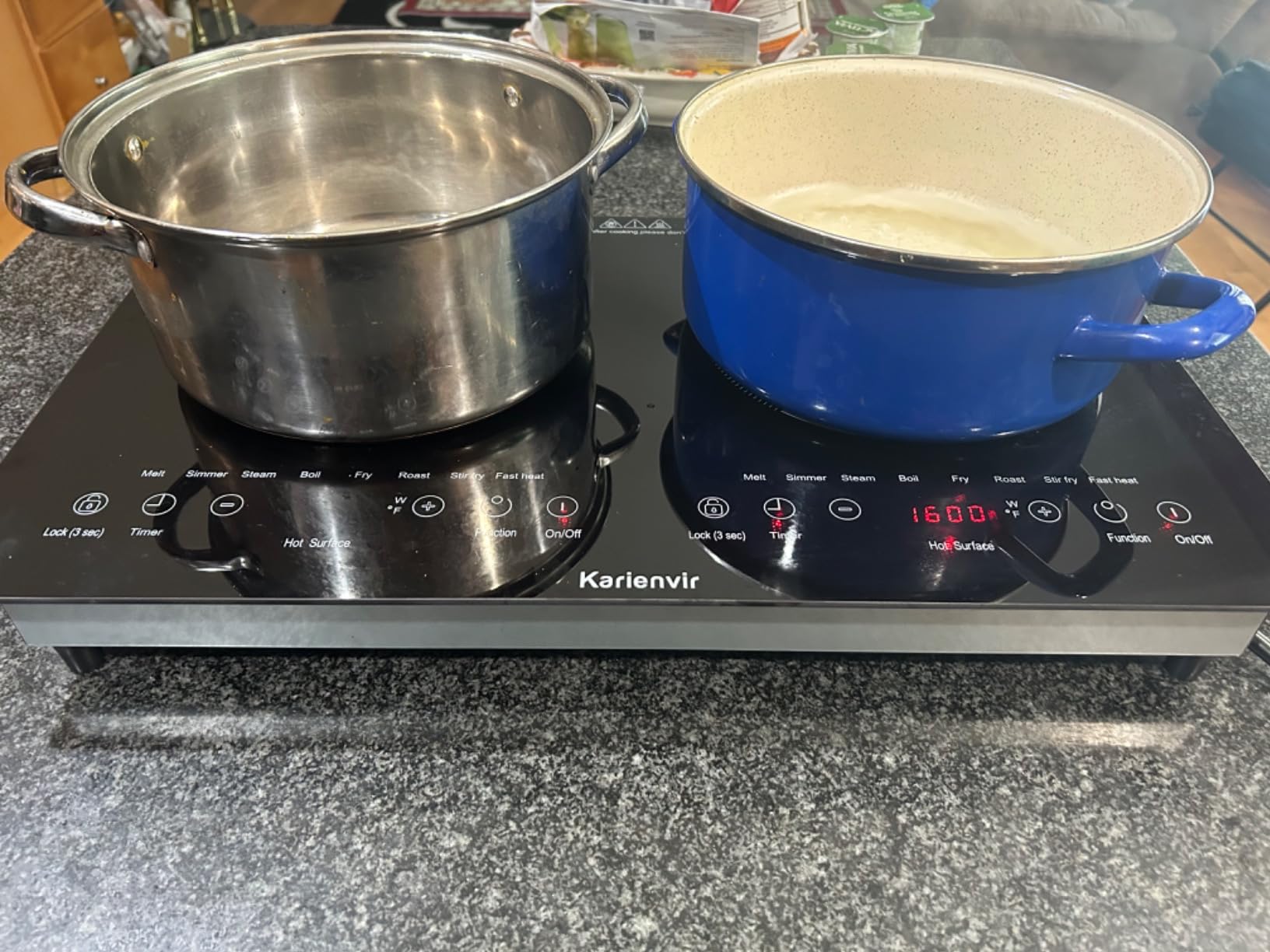
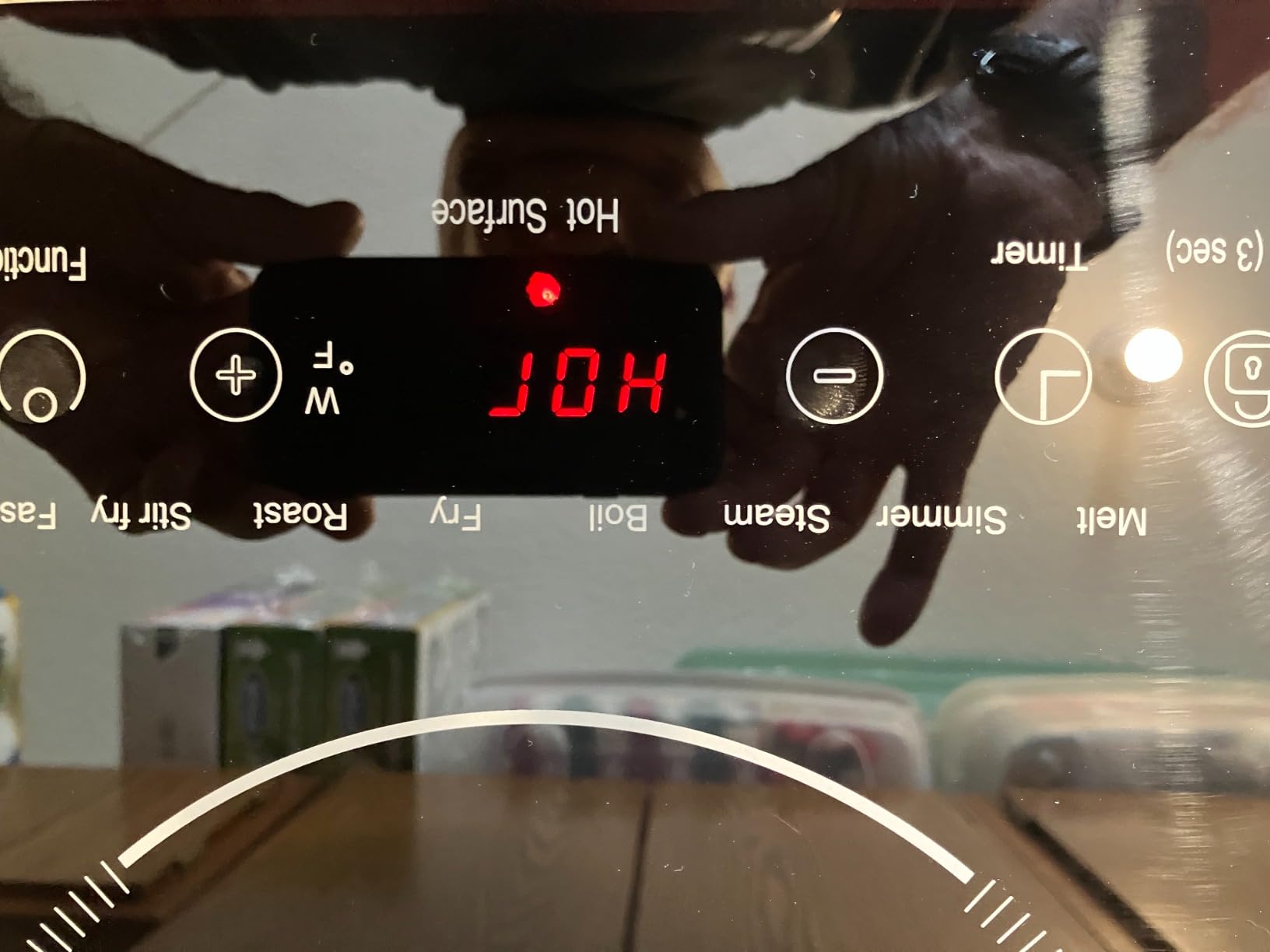
Eight cooking functions cover Melt, Simmer, Steam, Boil, Roast, Stir fry and Fast heat plus keep warm, adjusted with touch plus and minus. A 240-minute timer outlasts most recipes, and the safety lock disables every key except on and off, exactly the behavior you want with a toddler in the kitchen. The tempered glass wipes clean and a scraper is included.
Two cautions. At 22.44 inches wide it is the widest cooktop here and will not fit many genuinely small kitchens. And the 4.6 average rests on the smallest review base in the roundup at 250 reviews, so treat the rating as promising rather than proven over time.
Check 22.44 inches against your counter first
This is the number that disqualifies or qualifies it. A galley counter with 24 inches of continuous run barely accommodates it and leaves almost no prep space; under 24 inches, the 18-inch-wide cast iron double burners are the better answer. The built-in cutout is 22.4 by 12.6 inches, while portable mode needs nothing but a flat surface and a 110V outlet.
Weigh the 1-year warranty against a report of no support
The most serious complaint in the set is about service rather than cooking. One owner reported an E4 error and burner failure at six months with no manufacturer response, and a one-year term means a failure at month seven falls outside it. That is one report on a small sample and belongs in your questions to the seller, not a verdict on the cooktop. Register it on day one if you buy.
8. Karinar 110V Electric Cooktop – Best Knob Controls
Karinear 110v Electric Cooktop 2 Burners, 12” Electric Stove Top Plug in
2000W radiant on 110V
Knob control with 9 levels per burner
Built-in or countertop use, 19.3 x 10.6 inch cutout
5 year manufacturer warranty
Pros
- 5 year warranty is the longest in the roundup
- Knobs with 9 levels work with wet hands and suit poor eyesight
- Accepts iron
- stainless steel
- glass and ceramic pans
- Only 1.7 inches tall for a two-burner design
- Overheat protection and residual heat indication
- Radiant rather than induction
Cons
- At 9.5 pounds it is heavy to lift on and off a counter
- The two burners sit close together
- Glass surface scratches and stains easily
- One owner warns both burners at once can exceed a 15-amp circuit
The 5-year manufacturer warranty is the longest here by a wide margin, and on a cooktop whose commonest failure mode is a dead element years later, that is not a small detail. Every other design in the roundup carries one or two years, so if you intend to keep a cooktop for a decade, warranty length is worth comparing closely.
The interface is the second reason reviewers chose it. Nine discrete heat levels per burner on real knobs is the most readable control scheme in the group for anyone with poor eyesight, an older parent, or a preference for cooking by feel. Touch panels fail all three of those tests, and this one does not try.
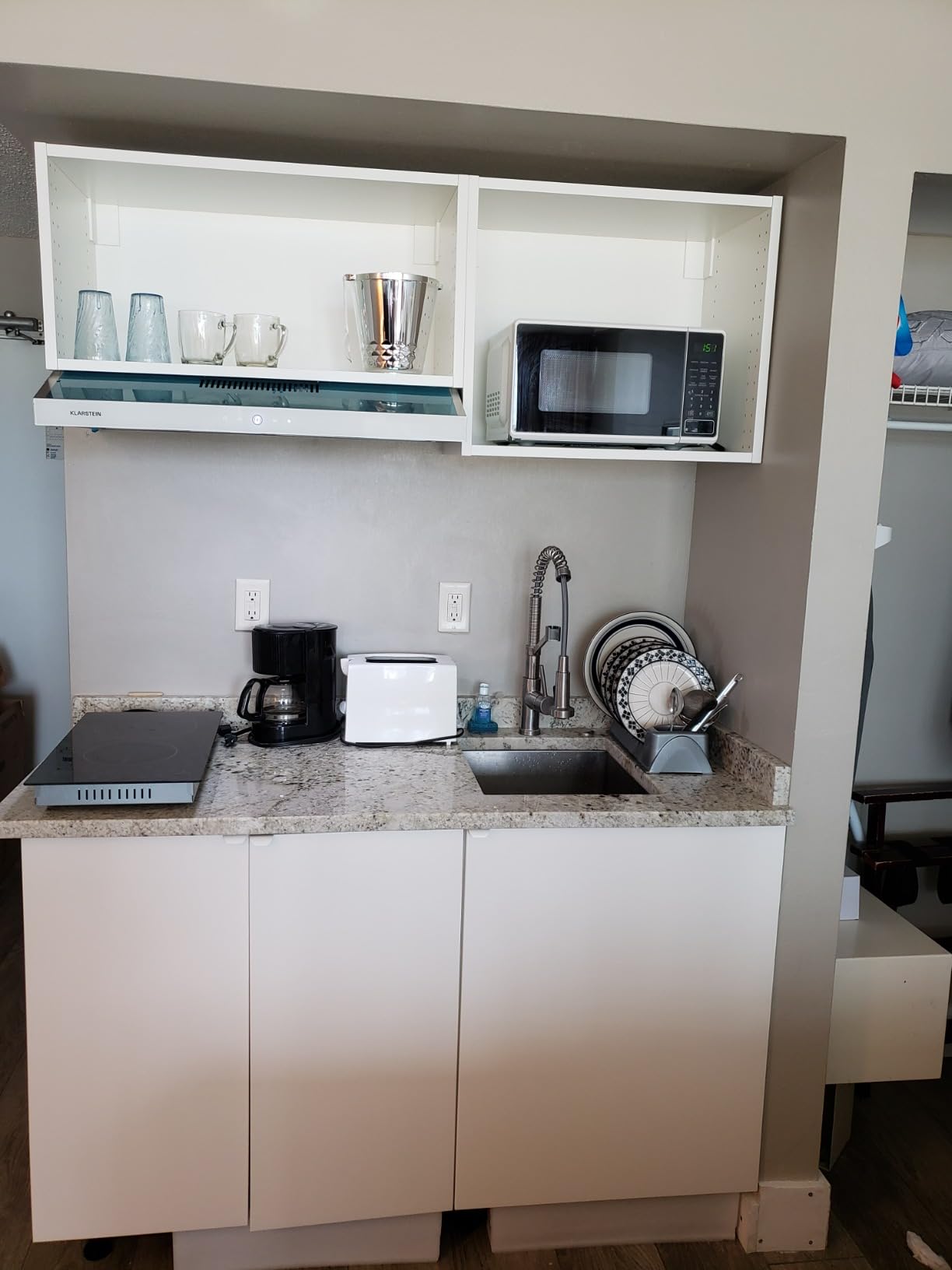
Being radiant rather than induction, it accepts iron, stainless steel, glass and ceramic cookware, so nothing in your kitchen has to be replaced first. Reviewers who bought it for older parents note the absence of any electromagnetic concern as a secondary benefit, and overheat protection plus residual heat indication cover the two most common kitchen safety anxieties.
It installs either way, on brackets as a countertop cooktop or dropped into a 19.3 by 10.6 inch cutout, and it shares that cutout figure with the built-in mode on the Karienvir, which is useful to know if you plan a remodel later.
Check burner spacing before planning two-dish cooking
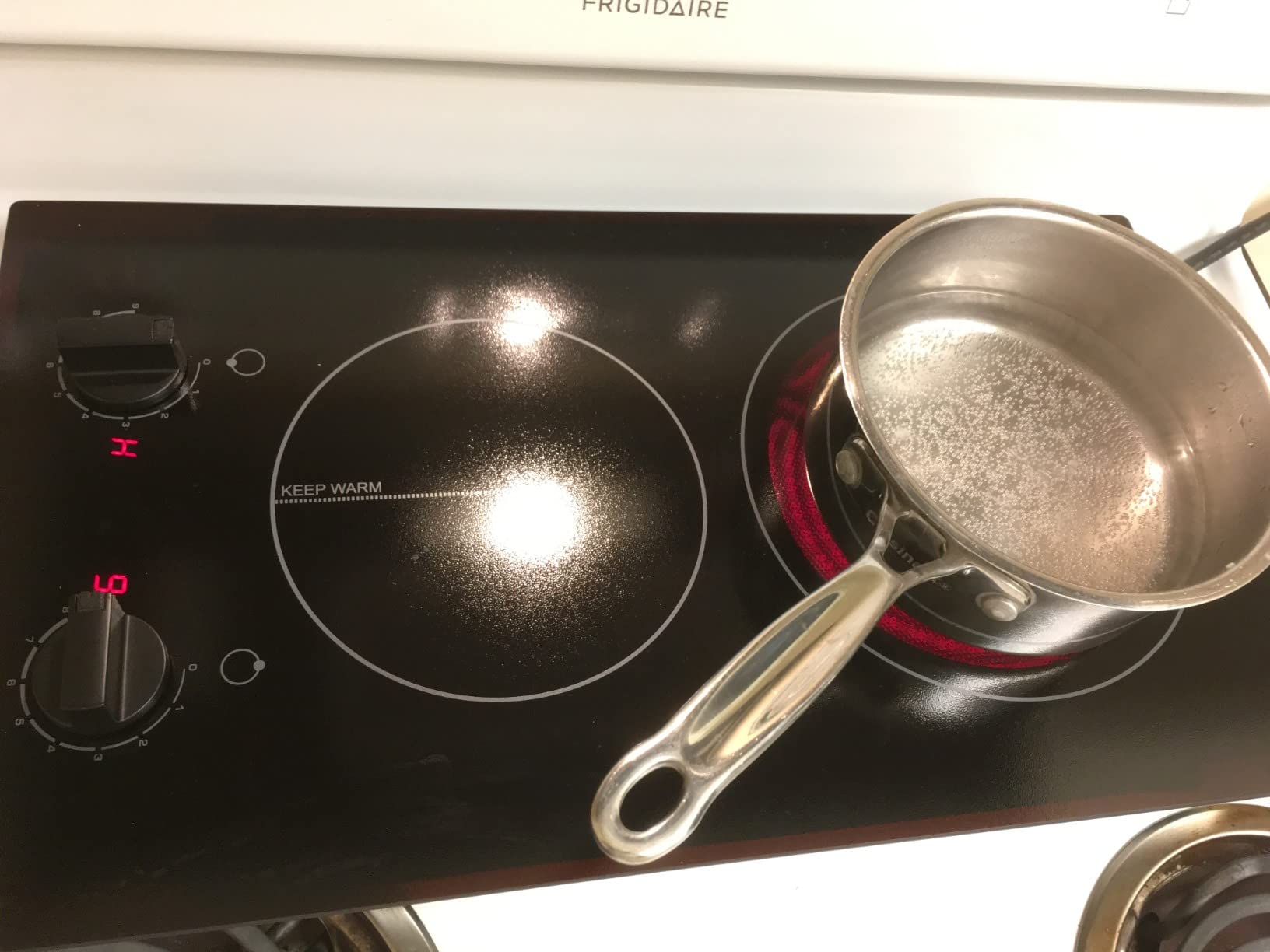
These burners are genuinely close together, and owners are candid that true two-pan cooking realistically means two small pans. A large pot on one side and a wide skillet on the other will crowd on a 19.3-inch-wide cooktop. One main dish plus a small side is fine; a 12-inch skillet and a 10-inch pot moving at once is not.
Weigh 9.5 pounds against how often you will move it
This is heavy, and where a cooktop comes out for counter space and goes back for storage, weight becomes a daily annoyance, so plan a permanent home. The glass also scratches and stains more readily than the ceramic glass on lighter cooktops, and one owner warns that both burners at full output can exceed a 15-amp circuit if the outlet is shared.
9. Vayepro Infrared Double Burner Cooktop – Best With Any Cookware
Infrared Double Burner Electric Cooktop, 1800W Portable Electric Stove, 2 Burner Countertop Cooktop for Dorm, Works with Most Cookware
1800W infrared, 900W per burner
Works with pans up to 7.1 inches and 22 pounds
5 heat settings plus MAX
12W x 20D x 3.8H
Pros
- Works with aluminum
- stainless steel
- ceramic and glass pans
- No need to replace any existing cookware
- Two burners let you cook two dishes at once
- Knob controls are simple and responsive
- Manufacturer replaced a failed burner within three days
Cons
- Top and power cord run extremely hot at the MAX setting
- Automatic on and off cycling confuses first-time users
- 20 by 12 inch rectangular footprint is awkward on a square counter
- A few reviews report one burner failing within months
If your kitchen is full of aluminum and copper pans, every induction cooktop here is a dead end until you re-buy your cookware. This one sidesteps the issue. Infrared heating works with flat-bottom cookware of any material up to 7.1 inches in diameter and 22 pounds, which covers most of a typical cupboard, and you can still try induction later without having spent on new pans.
Two 900W infrared burners give simultaneous cooking, which no portable induction design here can do, and 5 heat settings plus MAX cover frying, stir-frying, simmering and warming. It also suits teppanyaki and grilling on a compatible plate, though the plate is not included.

Knobs are the right call at this heat output, and the ceramic glass wipes clean. The 4.5 average comes from a smaller 570-review base, but it is one of the better-reviewed entries relative to its size, and the manufacturer’s 18-month free replacement policy surfaces repeatedly as responsive, including one failed burner replaced within three days.
Heat management is the honest drawback. Multiple reviewers flag the top surface, the counter underneath and the power cord all running extremely hot at MAX, and the automatic on and off cycling trips up first-time users who think the burner has shut off. Understand the cycling before you need it.

Check the 7.1-inch pan limit
That is the real constraint. Anything wider will not cook properly, which excludes most 12-inch skillets and many wok sizes, so in a household where the large skillet is the most-used pan this solves the wrong problem. Check your three most-used pans against 7.1 inches before committing.
Plan for the heat the surface throws downward
A 20 by 12 inch rectangular body on a square counter is an awkward shape, and infrared cooktops push more heat into the surrounding counter than a coil or radiant element does. Give it clearance, keep it off the backsplash, and expect the surface to be hot even where no pan sits above it. It is the only two-burner cooktop here that works with all cookware, a real advantage in a dorm or first rental.
10. Cuisinart Double Burner Hot Plate – Best With Room to Spare
Cuisinart Double Burner Hot Plate, 1800W, Stainless Steel/Black
1800W total, 1300W plus 500W
22.5 inch wide cast iron double burner
Two 6-setting adjustable thermostats
Limited 3-year warranty
Pros
- Asymmetric 1300W and 500W split allows searing and simmering together
- Established brand with a 3-year warranty
- Heavy cast iron plates hold heat steadily
- Six discrete heat settings per knob are easy to read
Cons
- At 10.6 pounds and 22.5 inches wide it is the bulkiest cooktop here
- 500W secondary burner is slow for boiling
- No timer or digital temperature readout
I include this one with a clear caveat: at 22.5 inches wide and 10.6 pounds it is the bulkiest cooktop in the roundup, and in a genuinely tight kitchen it makes things worse. What it shows is what a double-burner hot plate does when counter depth is not the constraint, and the split-power design is the most interesting part.
The 1800W total is not split evenly. The primary burner gets 1300W and the secondary gets 500W, so you can sear hard on one side while holding a sauce barely at a simmer on the other. That is a genuinely useful arrangement, and most two-burner cooktops force both pots to the same weak setting.
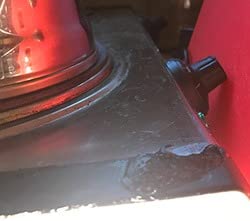
Build is the strength. Two heavy-duty cast iron plates, a stainless housing, non-slip feet and a limited 3-year warranty, the second-longest term here and the only one on a double-burner cast iron design. Owners report the plates holding heat steadily and resisting wear over years, and the six-setting thermostats are mechanical, repeatable and readable.
Its 4.3 average is the lowest in the roundup, and reviews explain why: people like the performance and dislike the size. It suits a counter with room, a garage kitchen or a holiday cooking station, not a galley run.
Check whether 22.5 inches is counter you actually have
Measure your longest uninterrupted run first. A 22.5-inch cooktop on a 24-inch counter leaves 1.5 inches, while on a longer counter it is comfortable. On a galley wall it consumes the space that makes a small kitchen function, and at 10.6 pounds getting it on and off the counter is a two-hand job.
Check whether you need the small burner to boil
500W holds a simmer or warms a pan, but it will not bring a large pot to a boil quickly, so if boiling water for pasta is routine on the secondary burner you will be waiting. With no timer and no digital readout this is also the least precise cooktop here, so cook by indicator light and knob position, and choose a digital design if you want a count-down or a temperature readout.
How to Choose an Electric Cooktop for a Small Kitchen
Every cooktop in this roundup runs on standard 120V household power, which is less an accident of the category than the defining constraint of small kitchens. It also means the questions that decide your purchase are physical rather than electrical: how wide is your counter, how deep, and what do you already own in the way of pans.
Measure your counter and cutout before you buy
Take three measurements in order. First, the width of your longest uninterrupted counter run, because a cooktop cannot sit across a corner or a sink. Second, the depth, because a cooktop flush against a backsplash with nothing behind it is unusable and the ChangBERT at 15 inches deep needs real clearance. Third, if you plan a built-in install, the cutout rectangle itself.
For built-in cooktops the cutout figure is published and not negotiable. The Karienvir requires 22.4 by 12.6 inches, the Karinar 19.3 by 10.6 inches. Buy the cooktop first and have the counter cut to its specification, never the reverse, because a mismatched cutout means a new countertop, a far larger project than buying an appliance.
Leave at least 12 inches of prep counter on one side. Nearly every cooktop complaint we read is not about heat or power, it is about having nowhere to put a cutting board.
120V plug-in or 240V built-in
This is the decision most small-kitchen buyers never make consciously because they never encounter a 240V option. Built-in induction cooktops typically want a dedicated 240V circuit on a 40 to 50 amp breaker, which means an electrician, a permit in some jurisdictions, and a wall you cannot open in a rental. A 120V plug-in cooktop uses the outlet you already have.
What you give up for avoiding that work is total output. A full 240V induction element runs well past 3000W while the cooktops here top out at 2000W. In practice 1800W to 2000W boils a pot in a few minutes and holds a family meal, so the gap matters more for a dinner party than a Tuesday night.
For renters, condo owners and anyone in a converted room this settles the question. 120V is not a compromise here, it is correct, and all ten cooktops above run on it by design.
Induction or radiant for small kitchens
Radiant cooktops send current through a coil beneath the glass, heat the element, then heat the pan from outside in. Induction sends current through a coil to create a magnetic field that heats the pan itself. That single difference explains every practical consequence you will notice, including speed, efficiency, precision and how much the surrounding surface warms.
Induction is faster, more efficient and far more precise, with the glass around the pan staying cooler. Radiant accepts any cookware and costs less. The decision usually comes down to whether your existing pans are magnetic, and in a kitchen where counter space is the problem, swapping pans is cheap while redoing electrical work is not.
People hesitate on induction for five concrete reasons. Upfront cost runs above a comparable radiant cooktop. Cookware must be magnetic, which can mean replacing a whole kitchen of pans. Built-in versions need a dedicated circuit. Thin clad pans can whine. And portable single burners are often too small for a 12-inch skillet, a complaint forum threads repeat about compact cooktops. None of those are dealbreakers, and none apply to a portable 120V induction cooktop, the format that makes induction viable in a small kitchen in the first place.
Glass durability, cast iron and cleaning
The fear that heavy cast iron will crack a glass top is real but misplaced. Glass cooktops fail from point impact: a dropped lid, a cast iron skillet dropped flat-side down, a pot handle banging the surface during a boil-over. Sliding cast iron is the habit that scratches it, and that habit is avoidable.
Cast iron itself is an excellent induction pan because it is ferromagnetic, and it is the only material that checks every box: magnetic, inexpensive, effectively indestructible and heat retentive. The one rule is to lift rather than slide it.
The real surface hazard is what you spill and how long you leave it. Salt and sugar on a hot induction or ceramic glass surface can etch or permanently discolor the cooking area, and the fix is unglamorous: wipe spills warm with a damp cloth and use a scraper for hardened sugar rather than a metal tool or abrasive pad. Cast iron plate cooktops have no such problem, which is a genuine maintenance argument for the hot plate designs here.
Induction noise and the cookware magnet test
On noise, the useful distinction is between the cooktop and your pans. The only sound a healthy induction cooktop makes is the low hum of its cooling fan, which spins up under sustained high heat. A high-pitched whine or buzz comes from the cookware, because thin clad multi-layer pans vibrate in the magnetic field. A heavier, thicker, single-ply pan is quieter, and none of it is a defect in the appliance.
On cookware, the magnet test is definitive and takes ten seconds. A magnet that clings firmly means induction will heat it: cast iron, enameled cast iron, magnetic stainless steel and cast aluminum all pass, while bare aluminum, copper, glass and most non-stick pans without a magnetic base do not. This is the commonest surprise for first-time induction buyers and the cheapest problem to avoid.
One caveat on stainless steel: some makers use a magnetic sandwich layer that attracts a magnet without delivering useful induction performance. The practical test is the magnet plus a cold pan of water on high, and if it takes noticeably long to warm, that pan will disappoint you.
Brand reliability and warranty length
Every product here is a portable or semi-built-in cooktop, so brand reliability is a smaller risk than for a full-size range where a dead element means a technician and a countertop. The review evidence still separates the field: brands with two decades of production on a hot plate, and cooktops carrying 3-year or 5-year warranties, have had time to prove their element and thermostat supply, while younger brands with 1-year terms and a few hundred reviews are cheaper bets.
Two cautions carry over directly from the review data. Warranty length is not build quality, and build quality is not service responsiveness, so read all three separately. The cooktop rated highest here has only a 1-year warranty and the most serious complaint in the set is a burner failure at six months with no support response. The cooktop with the 5-year warranty is not the highest rated, but it is the one most likely to still be running in five years.
If you want more testing-driven buying guides, the best electric smokers and best lightweight electric scooters follow the same method of measuring the specification against the actual use case.
Frequently Asked Questions
What is the best small cooktop for a small kitchen?
The best cooktop for a small kitchen is the widest unit your counter can hold while still leaving prep space beside it, powered by a standard 120V outlet. Most households want a two-burner model between 15 and 20 inches wide. A single induction burner is the right pick for one cook, a rental where space is measured in inches, or anyone who already owns cast iron or magnetic stainless steel cookware.
What is the most reliable electric cooktop brand?
Reliability correlates more with build category and warranty length than with the name on the box. Established hot plate makers with 3-year or 5-year warranties, such as Cuisinart and Karinar, have decades of production behind their elements and thermostats. Younger brands with 1-year terms are cheaper bets. For built-in cooktops, weigh the manufacturer’s parts and service availability before buying, because a failed element in a sealed glass top is a repair you want covered for many years.
Which brand is best for an electric cooktop?
For a portable 120V cooktop, Duxtop has the deepest review history in this category with over 17k reviews at a 4.4 average and a 2-year warranty. Elite Gourmet leads on review volume for a two-burner cast iron design. Nuwave leads on temperature granularity with 94 settings up to 575F. For knob controls and a 5-year warranty, Karinar is the strongest option. Match the brand to your cooking style rather than the reverse.
Why don’t more people use induction cooktops?
Five reasons keep adoption down. Induction costs more upfront than a comparable radiant cooktop. It requires magnetic cookware, so aluminum, copper and glass pans will not heat, and a new kitchen of pans is a real cost. Built-in versions need a dedicated 240V circuit on a 40 to 50 amp breaker, which rules out rentals. Thin clad pans can whine under high power. And portable single burners are often too small for a 12-inch skillet. Portable 120V induction cooktops remove most of these barriers.
Do I need a 240V outlet for an induction cooktop?
For a portable induction cooktop that plugs into a wall, no. Every cooktop in this roundup runs on standard 120V household power at 1500W to 2000W. Built-in induction cooktops are the exception: most require a dedicated 240V circuit on a 40 to 50 amp breaker, which means an electrician and, in a rental, your landlord’s permission. If you cannot alter construction, choose a 120V plug-in cooktop and you avoid the work entirely.
Can I use cast iron on a smooth top electric cooktop?
Yes, and cast iron is the best pan for induction because it is ferromagnetic. The rule is to lift cast iron rather than slide it across the glass, since sliding is what scratches the surface. The genuine risk is point impact: a cast iron skillet dropped flat-side down can crack glass, and a pot handle banging the surface during a boil-over does real damage. Wipe salt and sugar spills promptly, as they can permanently etch a cooking area.
The Verdict: Which Electric Cooktop Fits Your Kitchen
For most small kitchens, the best electric cooktops for small kitchens come down to one measurement: the widest run of uninterrupted counter you have. With 18 inches or more and a need to cook two things at once, the Elite Gourmet double cast iron burner is the pick, because two real burners, a wipe-clean surface and more than 20k reviews of long-term use beat a spec sheet on every practical measure.
Cooking alone with good pans already in the cupboard, take the Duxtop induction cooktop for its control and fast heat. Buying your first serious cookware, take the Nuwave for temperatures no other portable cooktop reaches. Stuck with old aluminum pans, take the Vayepro infrared cooktop. Renting and expecting to move in a year, the OVENTE double burner still cooks two dishes at once with no commitment.
Measure first, then buy. Nearly every mistake in this category is a fitment mistake, and a cooktop that does not fit is a cooktop that stays in a closet.