
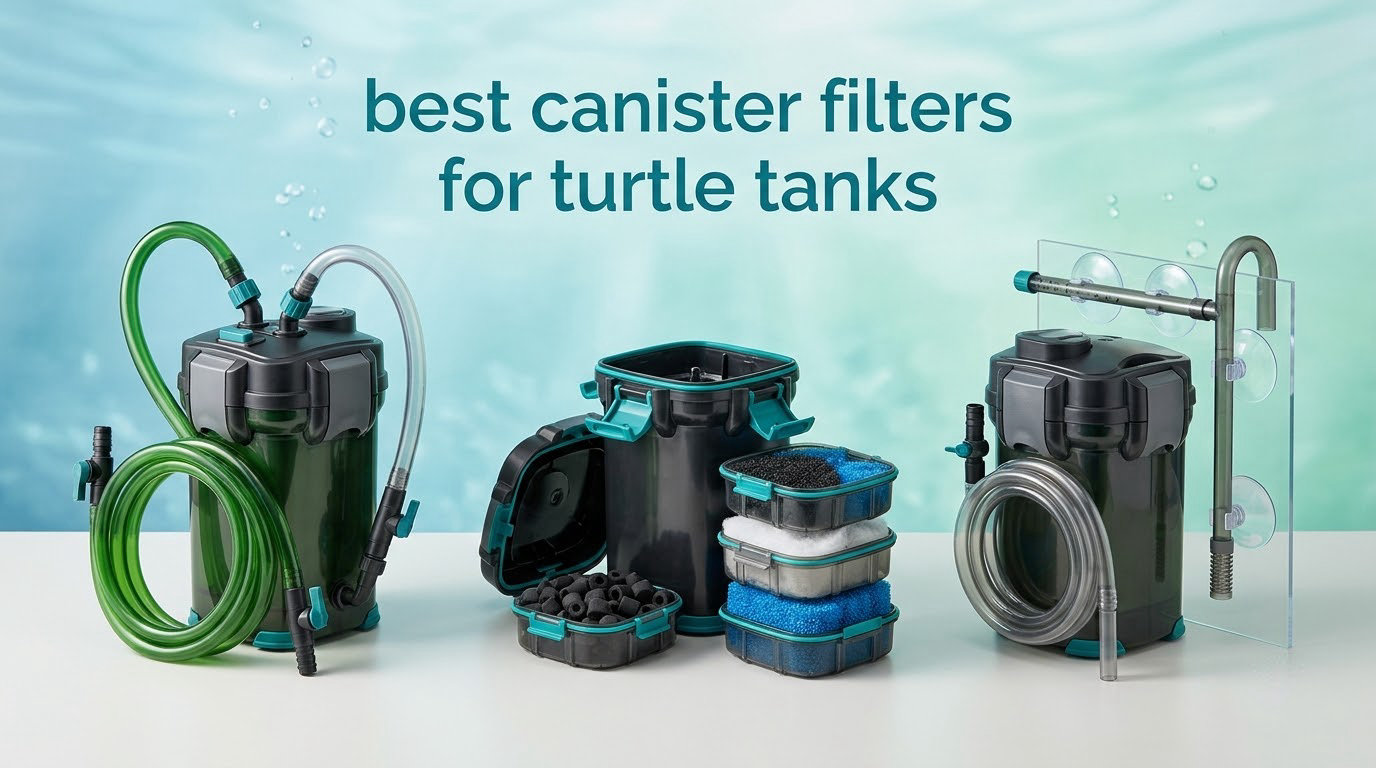
A turtle produces more waste per animal than any fish of comparable size, and that single fact changes everything about how you filter the enclosure. The best canister filters for turtle tanks are the ones that give you large external media volume, a strong pump that keeps up with solids, and hardware that stays out of the swimming area entirely. Our team spent weeks working through the specs, owner reviews and failure reports on ten of the most widely used canisters to work out which one actually fits which tank.
Most hang-on-back filters lose the fight early. Turtle waste mats on the bottom, clogs the intake screen, and pushes water over the back lip within days. A canister moves all that hardware into a cabinet, gives you three or four separate media baskets, and returns water through a spray bar strong enough to keep the surface moving.
What follows is a de-duplicated list of ten distinct canisters, each with its stated flow rate, manufacturer tank rating, real drawbacks, and the tank size it genuinely suits. We also explain the sizing math, since the single biggest mistake is buying a filter rated for exactly your tank volume instead of two to three times that volume.
While you are here, our guides to pop filters and shock mounts for mics and dust filters and covers for gaming PCs cover similar ideas about airflow, noise and maintenance scheduling for a completely different kind of hardware.
Table of Contents
Top 3 Picks for Turtle Tanks in 2026
These are the three we would put in a turtle tank first, based on the balance of flow rating, media capacity, review history and known weak points.

Fluval 307 Performance…
- Rated to 70 gallons
- eTEC pump
- EZ-Lift media baskets
- Runs up to 25 percent quieter
Penn-Plax Cascade 1000
- 265 GPH flow
- Rated to 100 gallons
- Three stackable baskets
- Push button primer

Fluval 107 Performance…
- Rated to 30 gallons
- eTEC quiet pump
- Compact body
- Self-priming startup
Every Filter in This Roundup Compared
All ten canisters, with the figures that actually decide whether one fits your turtle tank. Flow ratings are manufacturer pump figures, and real turnover drops once hoses and filled media add resistance.
| Product | Specs | Action |
|---|---|---|
| Fluval 307 Performance Canister |
|
Check Latest Price |
| Penn-Plax Cascade 1000 |
|
Check Latest Price |
| Fluval 107 Performance Canister |
|
Check Latest Price |
 Fluval 407 Performance Canister Fluval 407 Performance Canister |
|
Check Latest Price |
 Penn-Plax Cascade 700 Penn-Plax Cascade 700 |
|
Check Latest Price |
 SunSun HW-302 Pro Kit SunSun HW-302 Pro Kit |
|
Check Latest Price |
 Marineland Magnum 400 Canister Marineland Magnum 400 Canister |
|
Check Latest Price |
 Zoo Med Turtle Clean 30 Zoo Med Turtle Clean 30 |
|
Check Latest Price |
 Zoo Med Turtle Clean 15 Zoo Med Turtle Clean 15 |
|
Check Latest Price |
 Marineland Magnum 290 Marineland Magnum 290 |
|
Check Latest Price |
1. Fluval 307 Performance Canister – Best Overall for Turtle Tanks
Fluval 307 Perfomance Canister Filter for Aquariums up to 70 Gallons
Rated to 70 gallons
eTEC pump technology
9.45 x 7.09 x 16.54 inches
6 pounds
Pros
- Strong steady pump performance
- Very quiet for its flow rating
- Self-priming with simple top-up startup
- EZ-Lift baskets remove the whole media stack
Cons
- Consumable media cost adds up
- Occasional microbubbles in the outflow
- Intake may not reach deep in tall tanks
We ran the 307 on a 55 gallon adult turtle habitat and it never once lost prime, even after weeks of heavy feeding. The eTEC motor delivers constant pressure, and the company claims the pump runs up to 25 percent quieter than earlier versions.
That pressure matters more than raw gallons. A turtle tank needs the return stream to push water from the far corner back toward the intake, otherwise solids settle where no flow reaches them and the filter only sees the easy part of the tank.
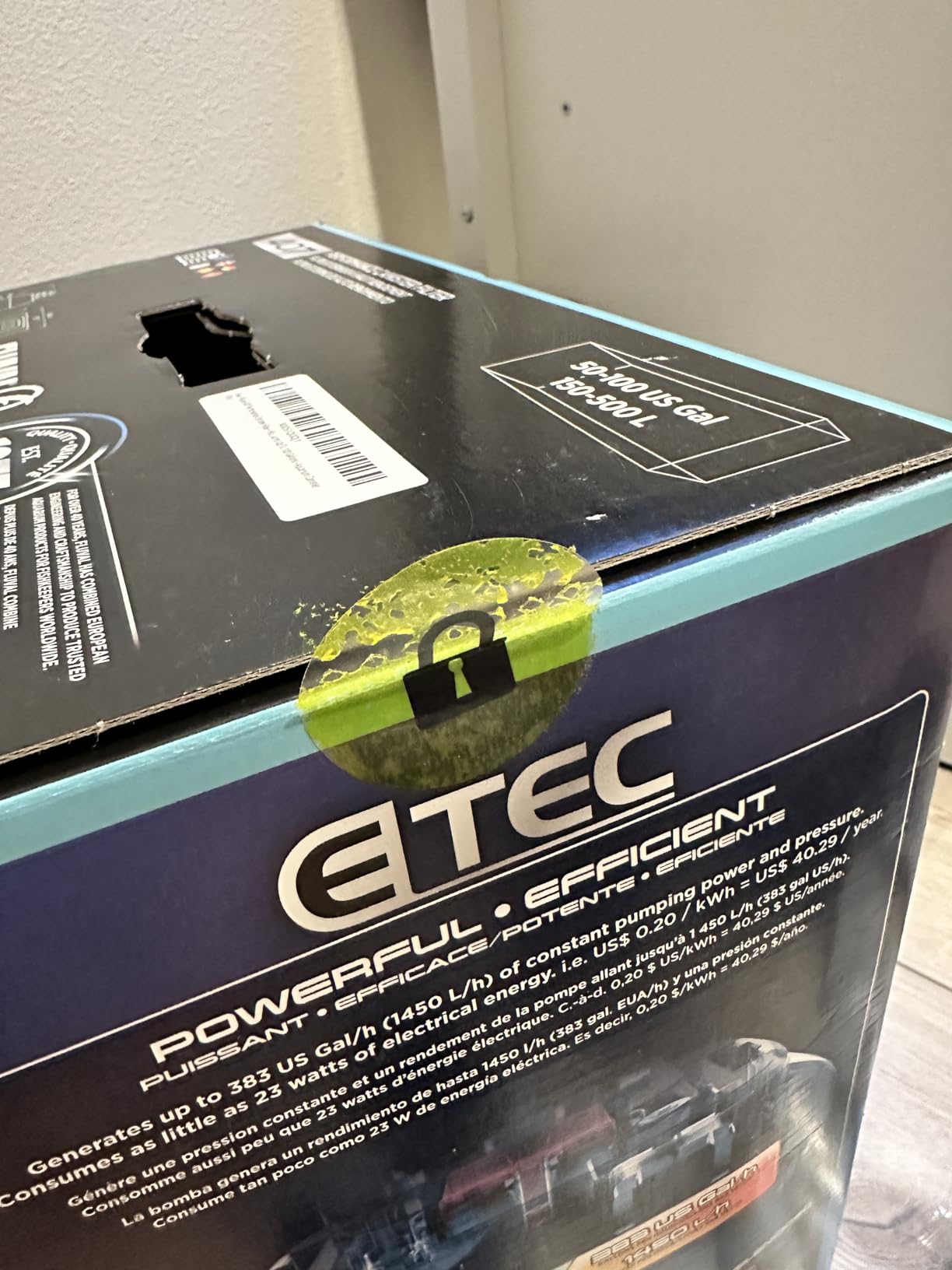
The real time saver is the EZ-Lift media baskets with a center handle. You pull the whole stack out with one finger instead of fishing sponges out of a cramped canister with your fingers, which matters when you are doing it every two weeks.
Owners also report the pump using roughly the energy of an LED light bulb, so leaving it running 24/7 in a turtle tank is not a meaningful power draw. The unit itself measures 9.45 by 7.09 by 16.54 inches and weighs 6 pounds, so it fits most aquarium stands.
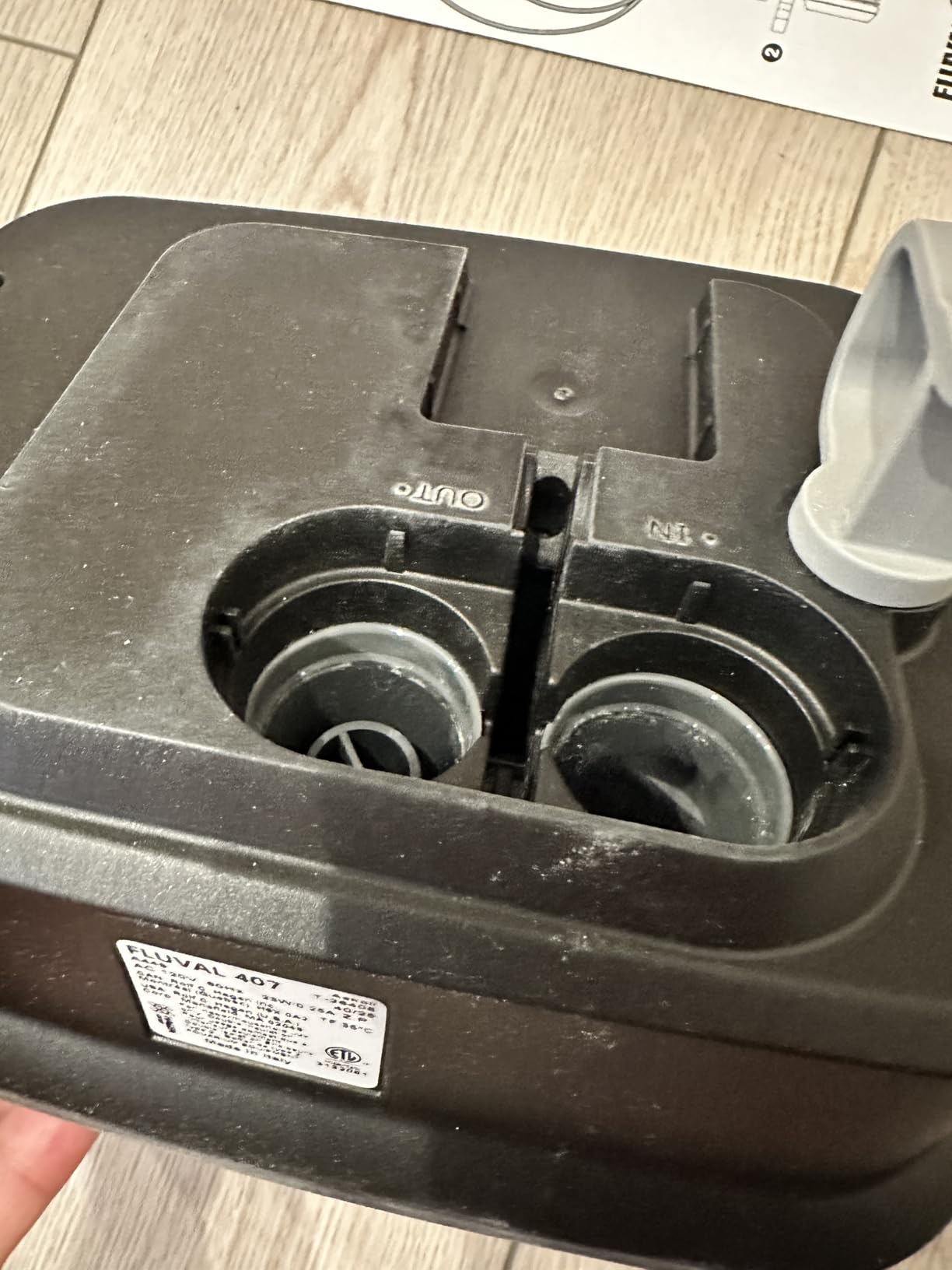
What owners like about it
Across its ten thousand plus reviews, the strongest theme is consistency. This is a filter that keeps its rated output month after month instead of slowly losing flow as its head wears in.
Quietness is the second most repeated comment. Keepers running it in a bedroom report that the hum sits under normal conversation level, and r/turtle members commonly recommend Fluval canisters for exactly this reason.
Where it falls short
The Fluval-branded media is the expensive part of ownership. Because turtle tanks consume mechanical media faster than fish tanks, you will replace pads and sponges more often, and those consumables add up over years.
Some owners also see microbubbles in the outflow right after startup, and a few report the telescopic intake does not reach far enough down in a very tall tank. Both are minor, but worth knowing before you buy.
2. Penn-Plax Cascade 1000 – Best Value for Large Turtle Tanks
Penn-Plax Cascade 1000 Canister Filter – 265 GPH Aquarium Filter for Tanks Up to 100 Gallons – 360 Degree Flow Valves, Poly Fiber Pads, Bio-Sponge & Activated Carbon -Fresh & Saltwater -11.5x10x17in
265 GPH flow
Rated to 100 gallons
Three stackable baskets
11.42 x 9.84 x 16.93 inches
Pros
- 265 GPH suits large turtle tanks
- Three stackable baskets give media control
- Dual 360 degree rotating valve taps
- Push button primer starts fast
Cons
- Frequent cleaning under heavy turtle bioload
- Included carbon bag is small
- Media adds recurring cost
The Cascade 1000 is the pick we recommend when a keeper wants serious flow in a large habitat without moving to a premium brand. It pushes 265 GPH and is rated by the manufacturer for tanks up to 100 gallons.
Three large stackable baskets with built-in handles is the feature that separates it from cheaper two-basket kits. You can put coarse sponge at the bottom for the heaviest solids, floss in the middle, and biological media on top, in the right order for the water path.
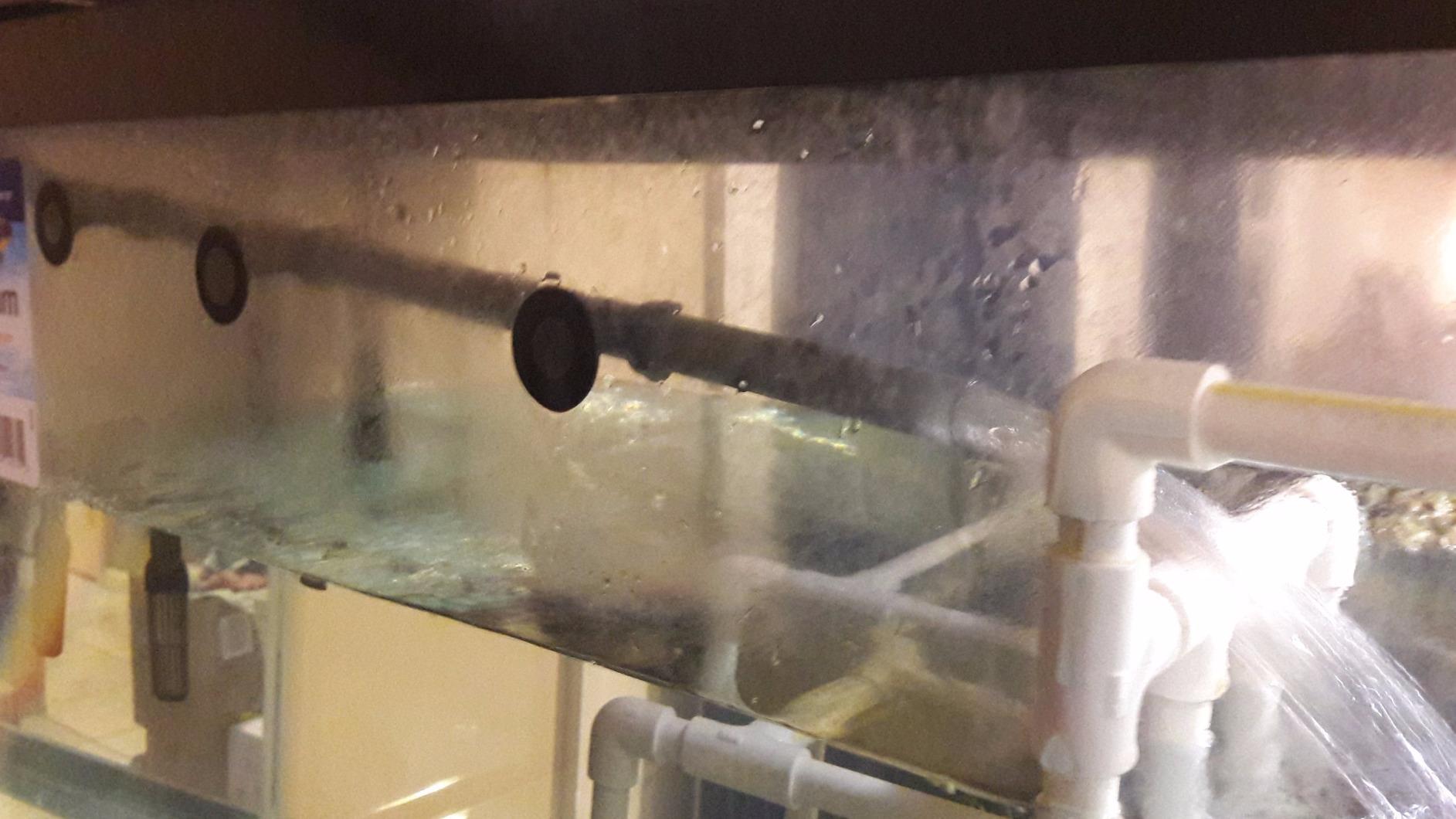
The dual 360 degree rotating valve taps solve a real cabinet problem. Instead of fighting rigid fittings in a tight stand, you rotate each valve to match the angle of the hose and lock it in place.
The kit ships with three poly fiber floss pads, one coarse bio-sponge, one activated carbon bag, a spray bar, hose clamps and alignment clamps. That full starting media package means you can run it immediately.
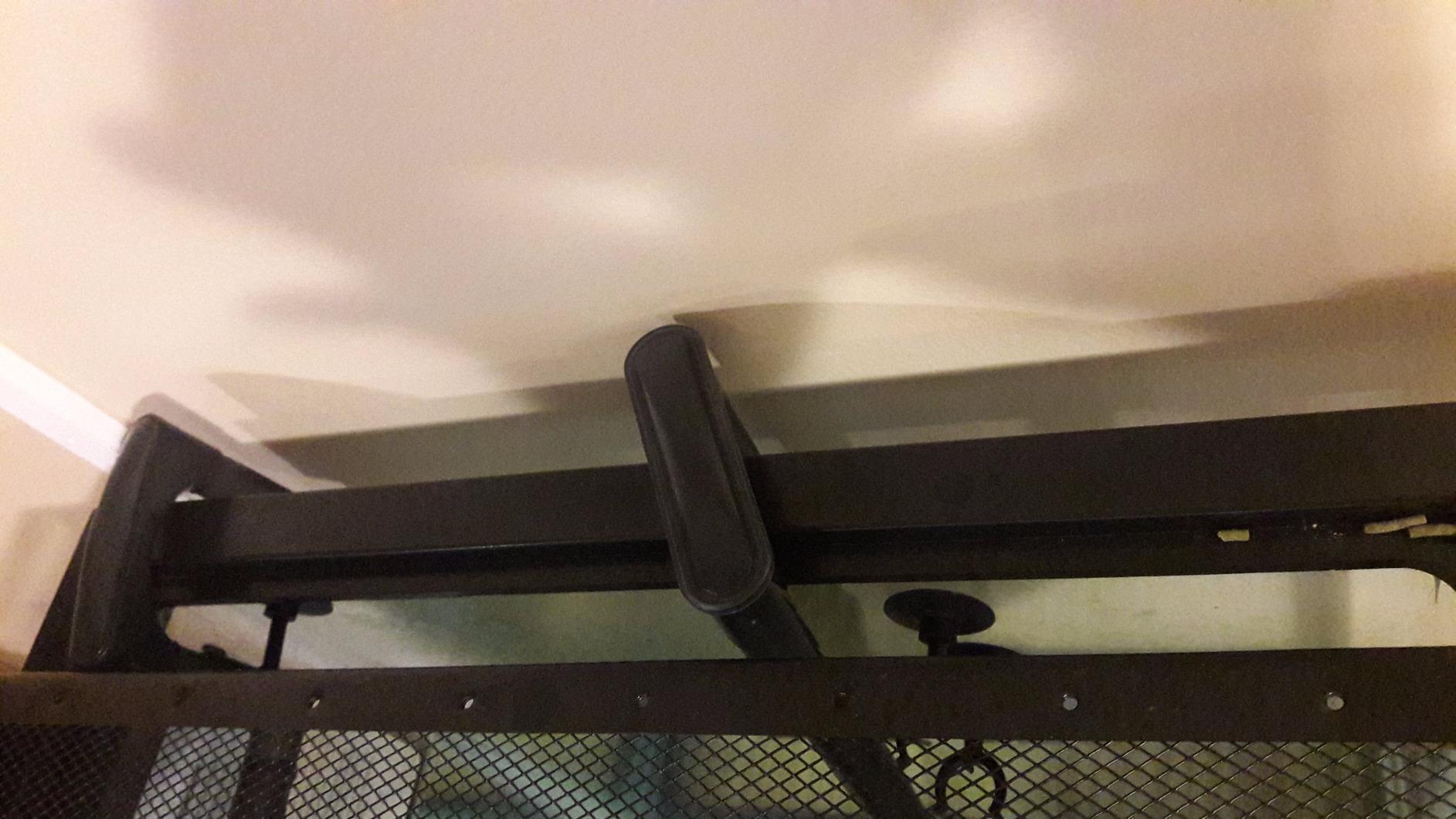
Strengths for turtle keeping
This is one of the few canisters in our list that is explicitly marketed for turtle habitats alongside freshwater and saltwater, which tells you the manufacturer tested it against that bioload.
The spray bar return gives better circulation than a directional nozzle, spreading flow across the length of the tank rather than blasting one corner and leaving the far end still.
Honest drawbacks
Owners running heavy turtle bioload report cleaning it frequently, which is the honest cost of any canister in a messy enclosure. The included carbon is a small bag and runs out ahead of the bio-sponge.
At 12 pounds the canister itself is heavy, and the basket media plus floss pads are a recurring line item in a large turtle habitat. Budget for restocking rather than treating the first kit as a one-time cost.
3. Fluval 107 Performance Canister – Top Rated Pick for Tanks up to 30 Gallons
Fluval 107 Perfomance Canister Filter for Aquariums up to 30 Gallons
Rated to 30 gallons
eTEC pump technology
4.89 pounds
Self-priming startup
Pros
- Compact footprint with real circulation
- Very quiet running for its size
- Simple self-priming
- Easy media access with EZ-Lift baskets
Cons
- Limited to tanks up to 30 gallons
- Consumable media cost adds up
- Smaller valve set than the 307 and 407
The 107 is the one we suggest for a juvenile turtle in a 20 to 29 gallon enclosure, and for anyone whose tank lives in a bedroom. Owners repeatedly report that they cannot hear it running.
It uses the same eTEC pump technology as the larger Fluval canisters, so the motor character is the quiet, low-hum type rather than the whir you get from budget imports. Startup is self-priming with a simple top-up.
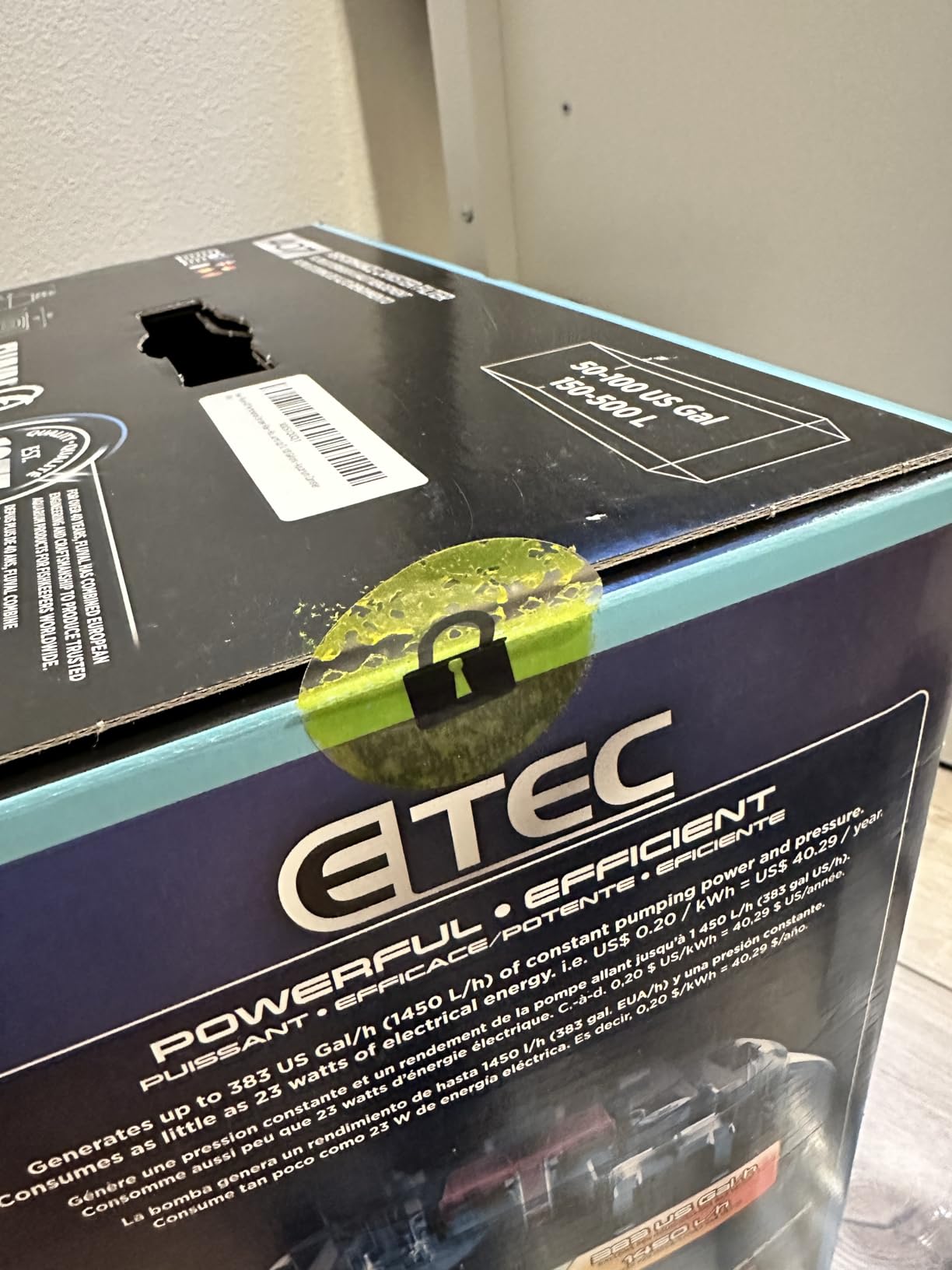
Despite its size, the circulation is stronger than you would expect for a unit rated to 30 gallons. That is exactly why the 2x to 3x sizing rule works so well in a small turtle tank: a 30 gallon rated filter on a 15 gallon tank gives you the turnover a juvenile turtle needs.
A 207 is described by keepers as more than enough for a 20 to 29 gallon turtle tank, which is the same logic applied one model up. Moderate over-sizing is the right instinct here.
What makes it quiet
The pump is precision-built for low vibration rather than raw power, and Fluval states it runs up to 25 percent quieter than previous models. The four rubber feet also dampen cabinet resonance.
If hum still bothers you, forum consensus is that a rubber pad or a folded towel under the canister noticeably muffles it, and the 107 is light enough at 4.89 pounds to move easily for that reason.
Where the ceiling is
Thirty gallons is a hard limit from the manufacturer, and an adult turtle in a larger habitat will outpace it. The adjustable valve set is also smaller than on the 307 and 407, so you have less control over the return pattern.
Consumable media cost adds up over long ownership, same as with the rest of the Fluval range. If your turtle is a year or two from adulthood, plan to size up rather than buy this and replace it later.
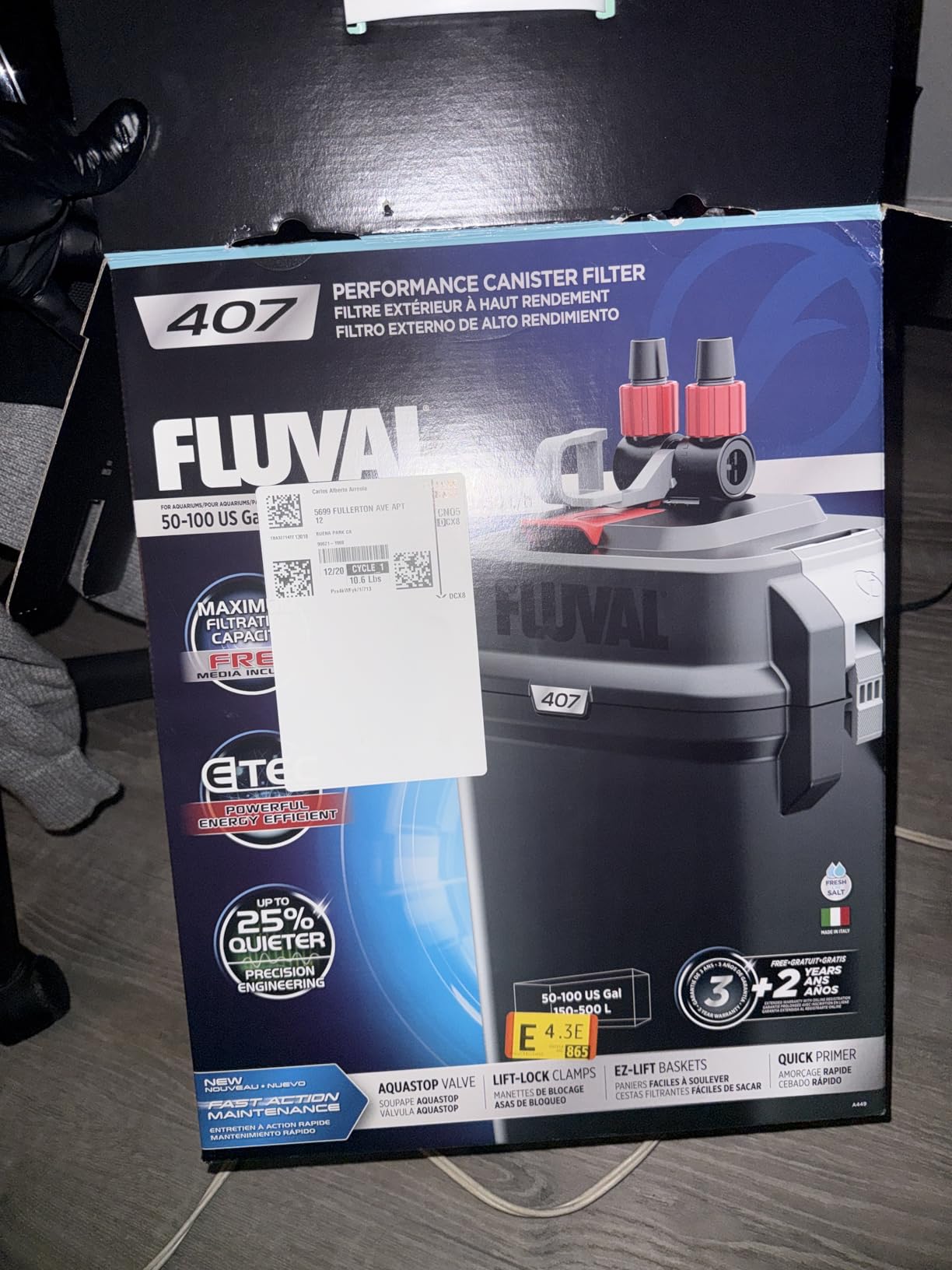
4. Fluval 407 Performance Canister – Heavy Flow for 100 Gallon Habitats
Fluval 407 Performance Canister Filter – For Aquariums Up To 100 Gallons
Rated to 100 gallons
eTEC pump technology
7.09 x 9.45 x 19.29 inches
9.7 pounds
Pros
- Very high flow and pressure
- Quiet enough to sit under a stand
- Straightforward assembly and priming
- Stackable baskets load all three media stages
Cons
- Impeller cover sealing failures reported
- Motor head replacements are costly
- Multi-stage media is among the pricier options
When a habitat reaches the 75 to 100 gallon range, the 407 is where we land. Owners praise the very high flow and pressure, describing it as clearing large turtle tanks quickly and running quietly enough to sit in a living room under a stand.
It is the tallest of the three Fluval performance canisters at 19.29 inches, so measure your stand cavity before buying. It weighs 9.7 pounds, which is fine to lift but worth considering if you need to move it for water changes.
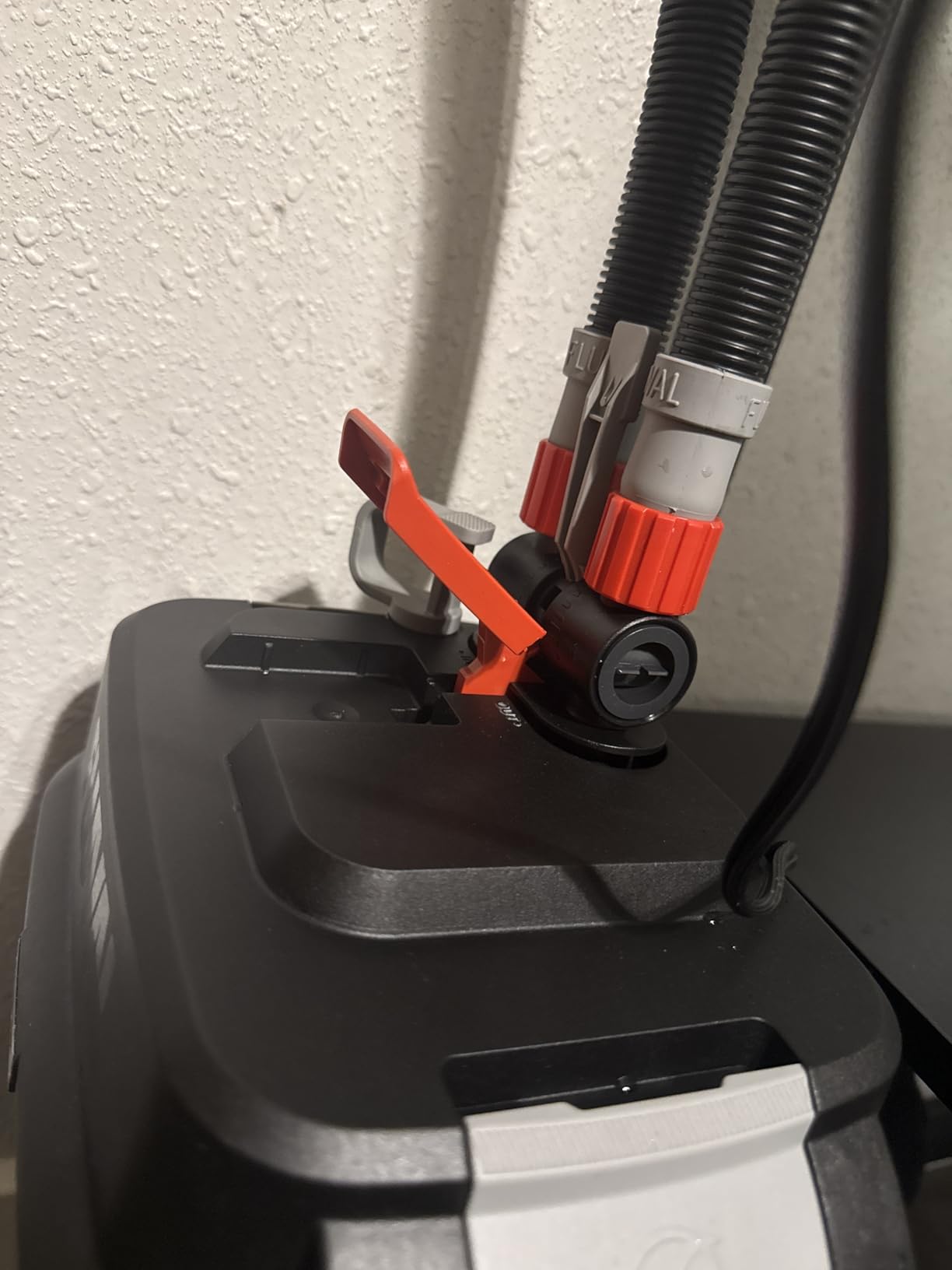
The stackable EZ-Lift baskets let you load all three stages of media, which is exactly what a turtle tank needs: coarse mechanical at the bottom, polishing in the middle, and biological media on top where it stays wetted and oxygenated.
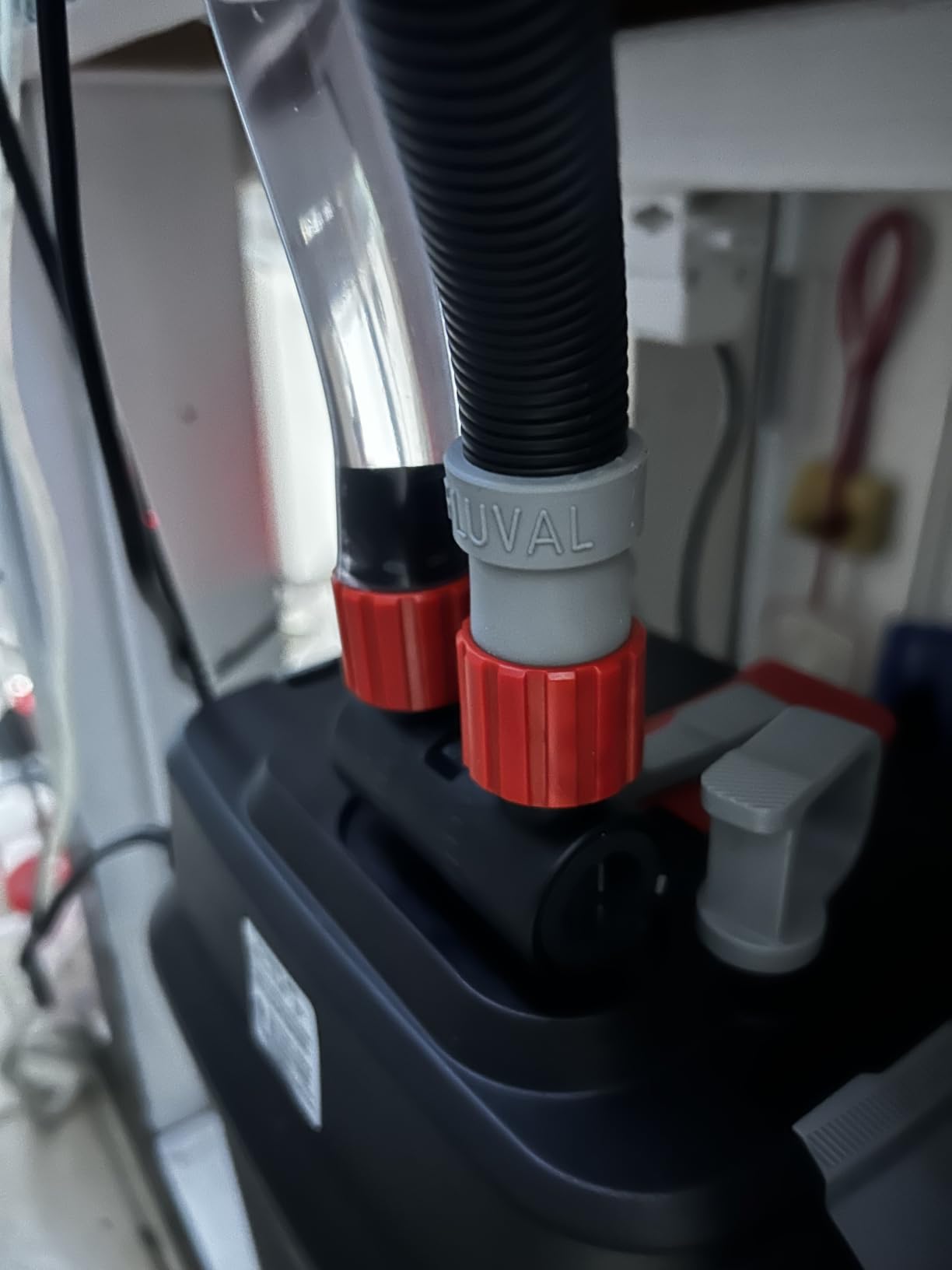
Assembly, priming and media access are all straightforward according to owners, and the self-priming cycle with a simple top-up is one of the less fussy systems in this roundup.
Best-case scenarios
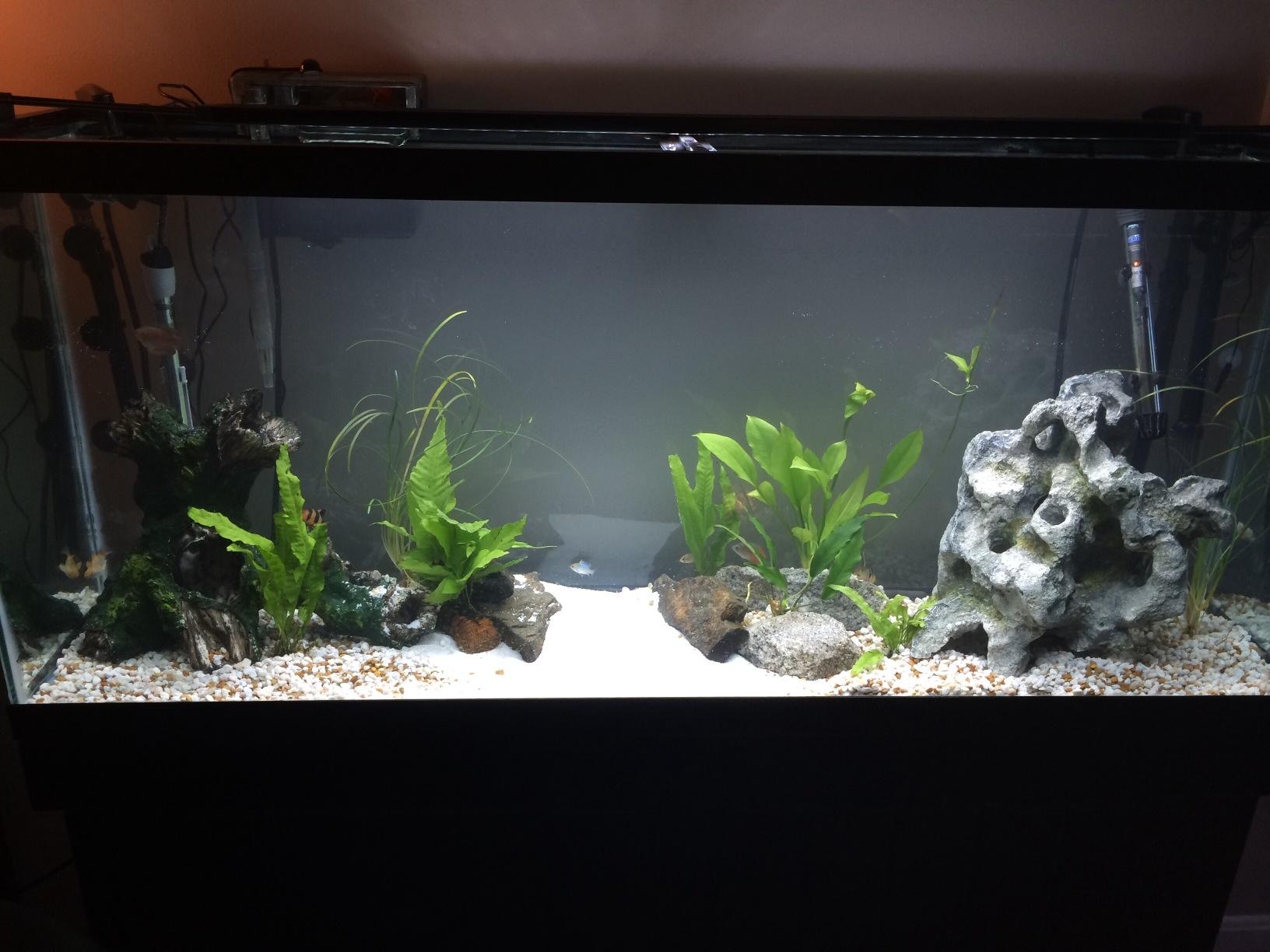
A large adult turtle in a heavily planted 75 to 100 gallon tank is the ideal match, because the extra flow keeps plant substrate from compacting into a sludge blanket.
For very large adult turtles, running two canisters off a splitter gives you redundancy. Forum keepers point out that older canisters degrade, impellers stick, and a sudden shutdown can take tankmates with it.
Known problems to plan around
There is a recurring report of impeller cover sealing failures, which can stop flow entirely. If that happens, the fix is a motor head replacement and those are among the more expensive parts in the hobby.
Multi-stage media replacements are also on the pricier side. We would budget for a full media restock in the first year rather than assuming the shipped media will carry a large habitat.
5. Penn-Plax Cascade 700 – Balanced Pick for 40 to 55 Gallon Tanks
Penn-Plax Cascade 700 Canister Filter – 185 GPH for Tanks Up to 65 Gallons
185 GPH flow
Rated to 65 gallons
Two stackable baskets
15 x 11 x 15 inches
Pros
- 185 GPH matches adult tanks to 65 gallons
- Baskets have built-in handles
- 360 degree valve taps for tight cabinets
- Push button primer
Cons
- Only two media baskets
- Less layering flexibility than the Cascade 1000
- Bio-sponge needs frequent rinsing
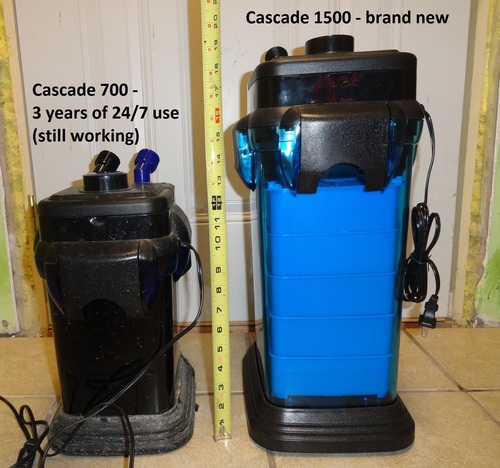
For the most common turtle setup out there, a 40 to 55 gallon adult habitat, the Cascade 700 hits the practical middle. It delivers 185 GPH and carries a manufacturer rating for tanks up to 65 gallons.
Two large stackable baskets with built-in handles make media changes fast, and the 360 degree rotating valve taps simplify fitting it into a cabinet where hose routing is awkward.
Owners rate it highly for flow control, quiet running and easy servicing, and the push button primer gives a quick, fuss-free startup after a water change or a media swap.
It is listed at 10 pounds with dimensions of 15 by 11 by 15 inches, so it needs more shelf area than the smaller Fluval units. Plan the cabinet layout before it arrives.
Why it fits a mid-size turtle tank
At 185 GPH in a 55 gallon tank, you are in the range where the rated flow lands close to the 4 to 6 turnovers per hour that turtle keepers target, before accounting for hose loss.
That is the sweet spot where the filter clears suspended solids fast enough that you are not siphoning the same corners every weekend, without the pump cost and cabinet demands of a 400 GPH unit.
What to watch
Two baskets means less layering flexibility than the Cascade 1000. You lose one separation point, so you have to choose between a dedicated floss stage or a dedicated bio stage.
The bio-sponge needs frequent rinsing under high turtle bioload, and media capacity is limited compared with the 265 GPH model. If your turtle is already large and messy, step up a size instead.
6. SunSun HW-302 Pro Filter Kit – Best Budget Canister
SunSun Hw302 265GPH Pro Canister Filter Kit
265 GPH 1000 L per hour
Rated to 75 gallons
9 x 9 x 18 inches
12 pounds
Pros
- Generous media package included
- 265 GPH suits tanks to 75 gallons
- Three baskets allow custom stacking
- Strong value at similar flow
Cons
- Included carbon and media need regular replacement
- Documentation and hose fittings less refined
The HW-302 Pro is the pick if you want 265 GPH and a full media package without paying a premium brand price. Owners consistently describe it as strong value relative to name-brand canisters of similar flow.
Flow is rated at 265 GPH, which is 1000 L per hour, and the manufacturer rating is for aquariums up to 75 gallons. That puts it in the same flow class as the Cascade 1000 at a noticeably lower tier.
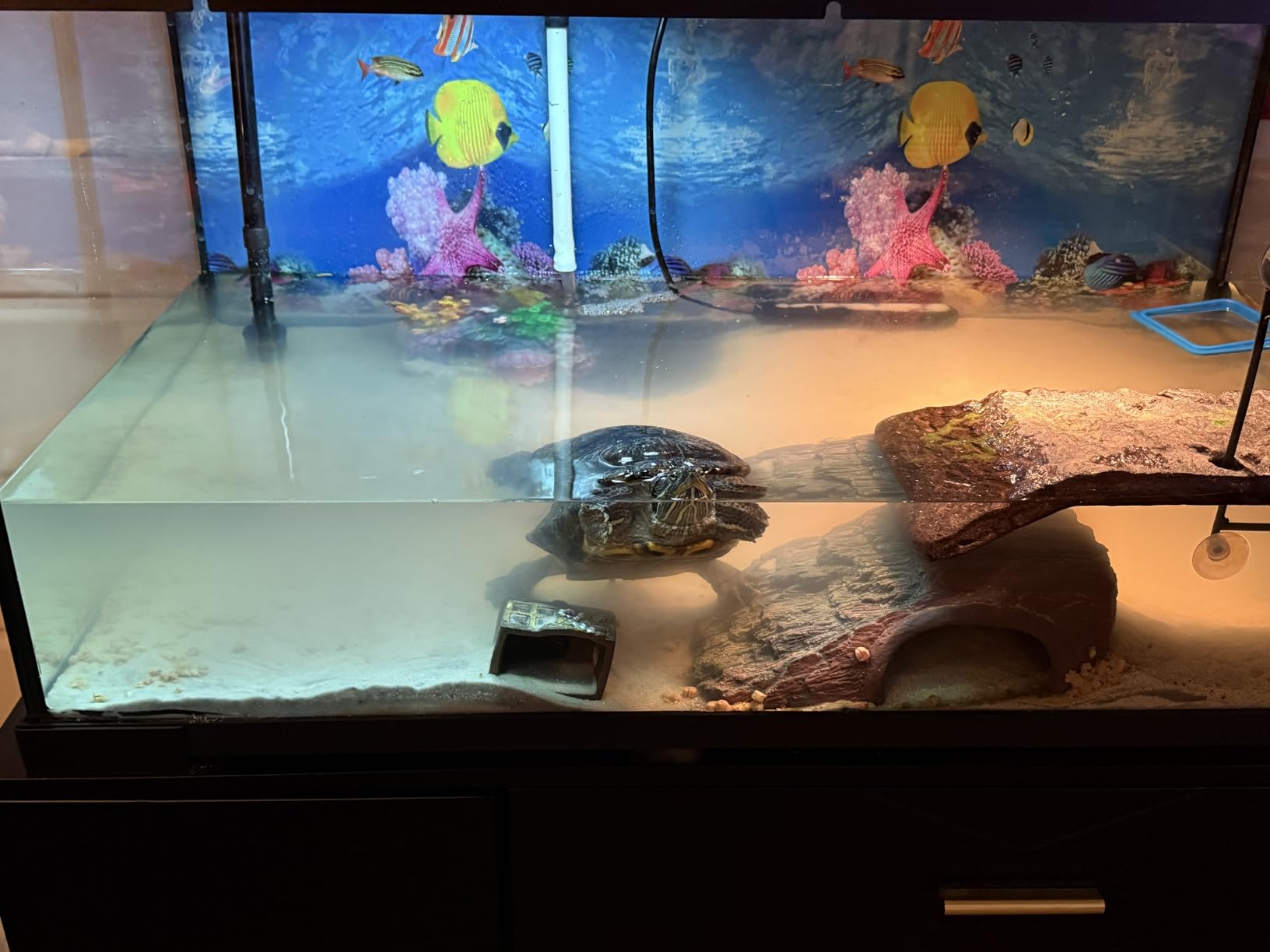
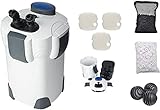
The Pro kit is what makes this one interesting. It includes the canister, three white filter pads, three media baskets, one pound of premium carbon, one pound of ceramic rings and a set of bio balls, so you are not buying media on day one.
Three media baskets let you stack and order media yourself, which is the part turtle keepers care about. You need coarse mechanical first, then a fine pad, then biological media.
Who should buy this
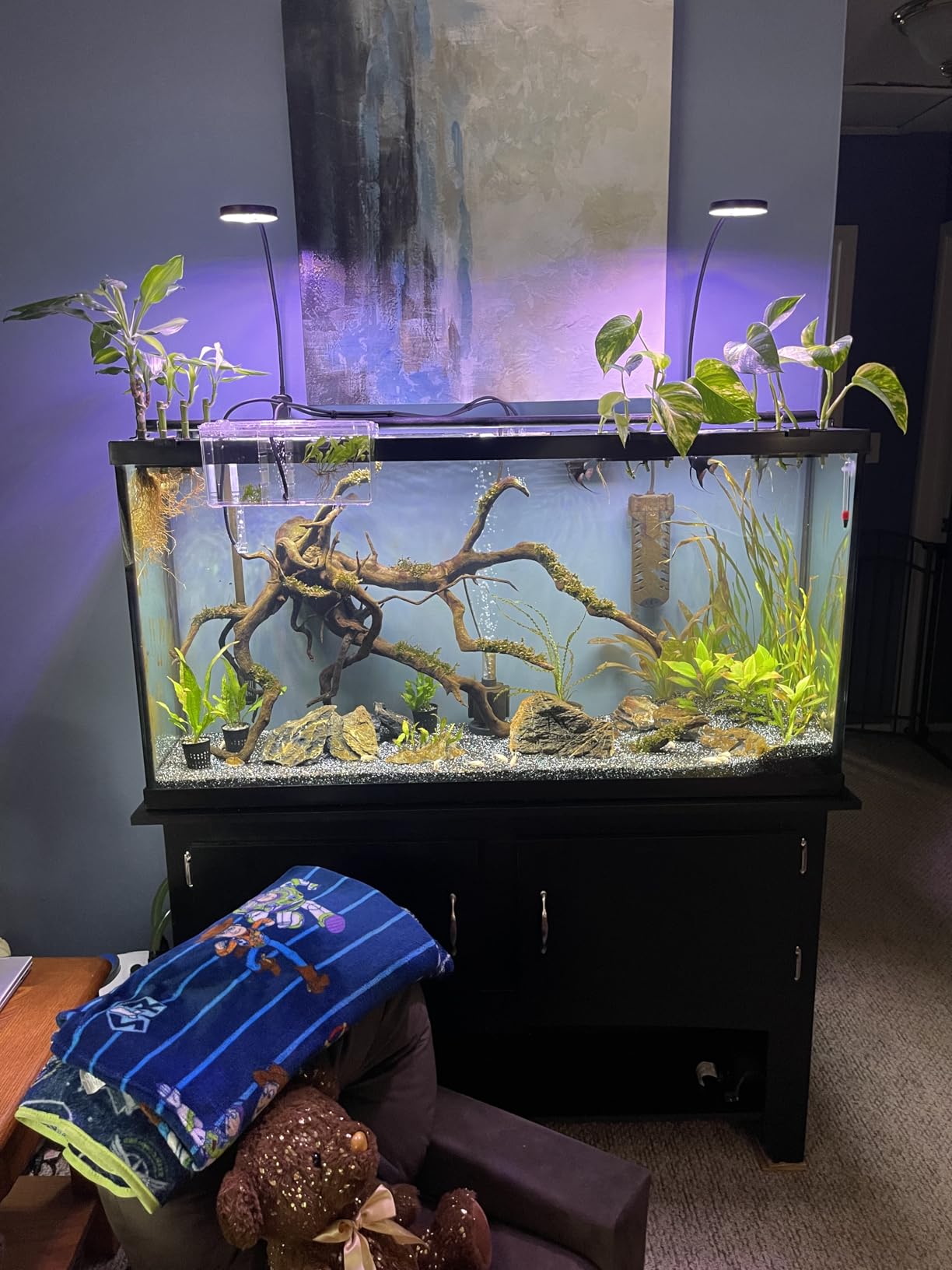
First-time turtle keepers building a 40 to 75 gallon habitat on a budget are the obvious audience. The included media package alone covers a full first filter load.
A tortoise forum moderator described SunSun and Aquatop as the same OEM factory building essentially the same filter, a value alternative with decent build quality and self-priming, and said for the money they are pretty fantastic.
Where it is less refined
Documentation and hose fittings are less refined than on name-brand units, so expect less hand-holding during setup. The fittings are not the ones to trust in a heavily worked turtle tank.
At a typical turtle bioload, the included carbon and media need regular replacement. Budget for consumables, and keep spare clamps on hand in case the hose connections weep.
7. Marineland Magnum 400 – Highest Rated Flow in This List
Marineland Magniflow 400 GPH Canister Aquarium Filter
400 GPH flow
Rated to 100 gallons
11 x 11 x 18 inches
19.27 pounds
Pros
- Clears cloudy water fast
- Very quiet for a hang-on-back alternative
- Stack N Flo trays hold loose media
- Full media kit included
Cons
- Failures reported where the lid gasket leaks
- Included plastic hose clamps are weak
- Priming can be stubborn
- Supplied tubes are rigid and cause microbubbles
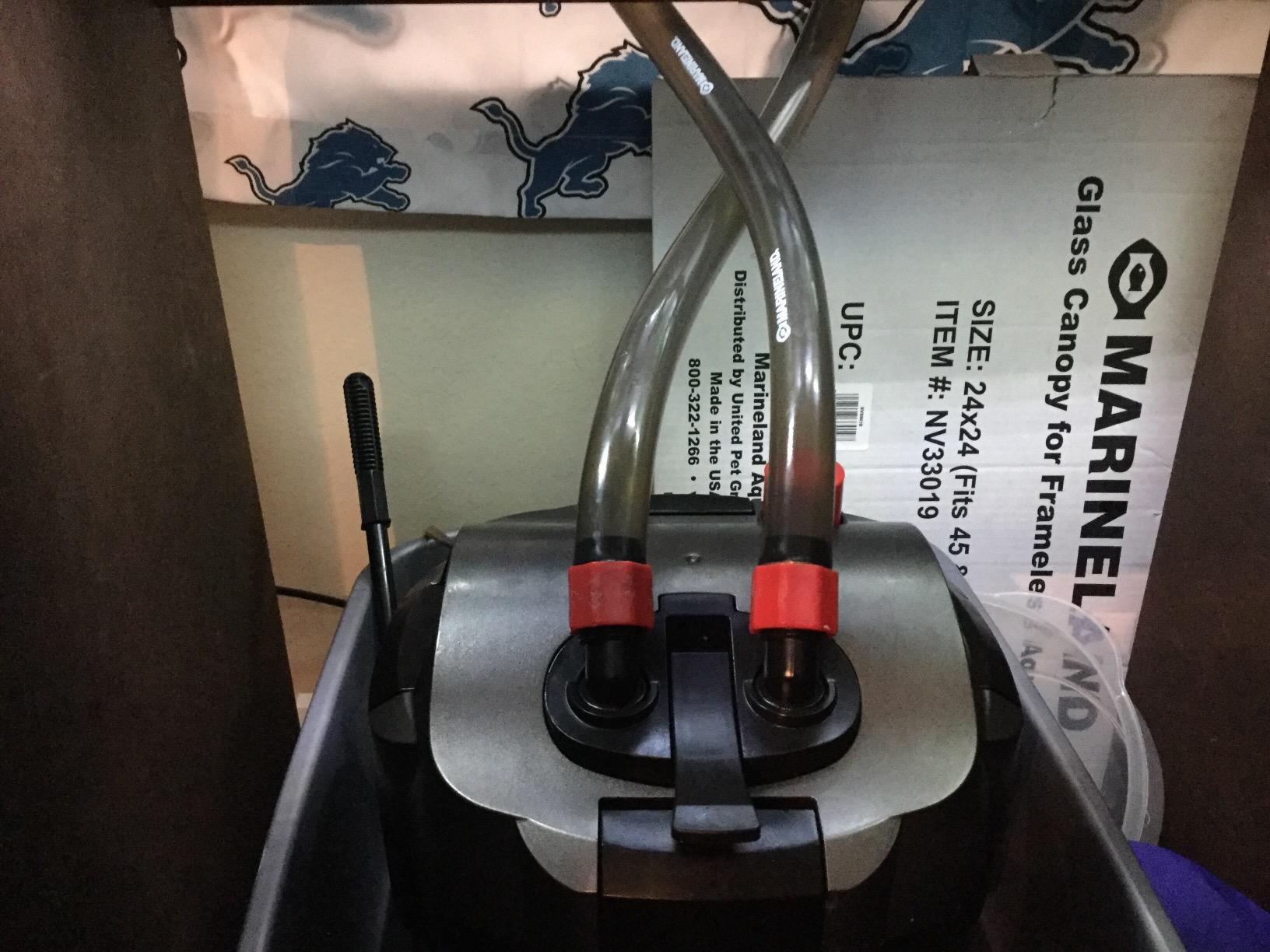
The Magnum 400 carries the highest stated flow rate in this roundup at 400 GPH, with a manufacturer rating for aquariums up to 100 gallons. Owners report it clears cloudy water often within 24 to 48 hours.
Stack N Flo filter trays force water through media layers providing mechanical, chemical and biological filtration, and they hold a generous volume of loose media. The included kit covers foam, carbon bags, bio-balls, ceramic rings and polishing pads.
A quick prime button fills the filter chamber for self-priming startup, and the watertight lid lifts up so the whole media stack comes out for cleaning without dismantling hoses.
At 19.27 pounds this is by far the heaviest canister here, and 11 by 11 by 18 inches is a serious footprint. It is a cabinet filter, not a shelf filter.
Where the flow pays off
A very large adult turtle in a 100 gallon habitat, or a messy feeding setup where solids need to be pulled to the intake fast, is where 400 GPH earns its cost.
For a bedroom setup, keepers rate it as very quiet relative to hang-on-back filters, but it is still the largest and heaviest unit we tested specs for.
Problems owners report
There are recurring reports of leaks from the lid gasket or under the handles, which is a real problem in a wooden stand.
The supplied plastic hose clamps are weak and can slide, so replace them with metal clamps. Priming can be stubborn on first startup, and the rigid intake and output tubes can generate microbubbles.
8. Zoo Med Turtle Clean 30 – Purpose-Built for Juvenile Turtles
Zoo Med Turtle Clean 30 External Canister Filter for Aquatic Turtle Habitatsup To 30 gallon
Rated to 30 gallons
Spray bar return
Adjustable flow valve
18 x 15 x 27 inches
1.2 pounds
Pros
- Purpose-built by Zoo Med for turtle habitats
- Adjustable flow control valve
- Included spray bar for aeration
- Removable hose connector
Cons
- Small media baskets
- Rated only to 30 gallons
- Owners report frequent clogging
The Turtle Clean 30 is one of the few canisters here designed specifically for aquatic turtle habitats rather than adapted from a fish filter. That focus shows in the flow control and return design.
The adjustable flow control system lets you dial circulation to match the tank, which matters for a juvenile turtle that does not yet need the full blast of a 265 GPH pump. A young animal pushed around by heavy flow is a stressed animal.
The included spray bar provides strong aeration and surface movement, and the removable hose-connecting device makes setup and tank changes simple. Both are small conveniences that add up during routine maintenance.
Owners running 20 gallon turtle setups report dramatically slower water-change and odor cycles compared with unfiltered or lightly filtered tanks, which is the main result you are buying.
Best used as a turtle-specific filter
This suits a hatchling or juvenile in a 20 to 30 gallon enclosure, where the turtle is not yet producing the waste load of a full-grown adult.
It is listed as corded electric, freestanding, with cotton material and activated carbon purification. A clear choice when you want one filter that does one job well.
Limits to be aware of
Media baskets are small relative to larger high-flow canisters, so the mechanical stage clogs faster. Owners report frequent clogging in tanks with heavy turtle bioload.
The 30 gallon rating means it under-serves larger adult enclosures, and the listed dimensions of 18 by 15 by 27 inches are packaging-level rather than the canister body itself, so check the stand cavity.
9. Zoo Med Turtle Clean 15 – Simple Filter for Hatchling Tanks
Zoo Med Turtle Clean 15 External Canister Filter
Rated to 15 gallons
11 x 5.5 x 4.5 inches
2.04 pounds
1 year warranty
Pros
- Very quiet operation
- Small convenient external footprint
- Clear viewing case shows media timing
- Biological chemical and mechanical filtration
Cons
- Weak suction past 10 to 15 gallons
- Included carbon bag is low quality
- Included ceramic rings have limited surface area
- Short hoses and flimsy latches
The Turtle Clean 15 is one of the most compact canisters we looked at, and the simplest. It measures 11 by 5.5 by 4.5 inches, weighs just 2.04 pounds, and is rated for tanks up to 15 gallons.
Owners rate it as very quiet, quieter than most hang-on-back filters, and the small external footprint means it does not eat into the enclosure or the stand space above it.
The clear viewing case is genuinely useful on a small filter. You can see when the media needs replacing without opening the housing, which matters more here because you will be checking it often.
It provides biological, chemical and mechanical filtration, and carries a 1-year warranty. It is also listed for turtle tanks, vivariums, box turtle pools and aquariums up to 15 gallons.
Where a small canister is enough
A hatchling turtle in a 10 to 15 gallon tank is the ideal use. At that bioload, the modest flow is more than adequate and the quiet operation is a real advantage in a bedroom or office.
It is also a sensible first external filter. Learning canister maintenance on a small unit is cheaper than learning it on a large one.
Where it will not keep up
Suction is weak for anything past roughly 10 to 15 gallons, and a larger turtle simply generates more solids than this pump can draw through the intake.
The included carbon bag is low quality and often gets swapped for third-party media, and the included ceramic media rings are very smooth with limited surface area for bacteria. Hoses are short and the head latches feel flimsy.
10. Marineland Magnum 290 – In-Tank Polisher, Not an External Canister
Marineland Magnum 290 GPH Polishing Canister Aquarium Filter
290 GPH flow
Rated to 97 gallons
Two refillable chambers
7.5 x 3.5 x 9.88 inches
Pros
- Submerged motor is fully self-priming
- Two refillable chambers take any loose media
- Lightweight and compact
- Micron cartridge polishes water
Cons
- Sits inside the tank and takes swimming space
- Not plumbable under a stand
- Micron cartridge is a consumable
- Lower capacity than the 400 GPH model
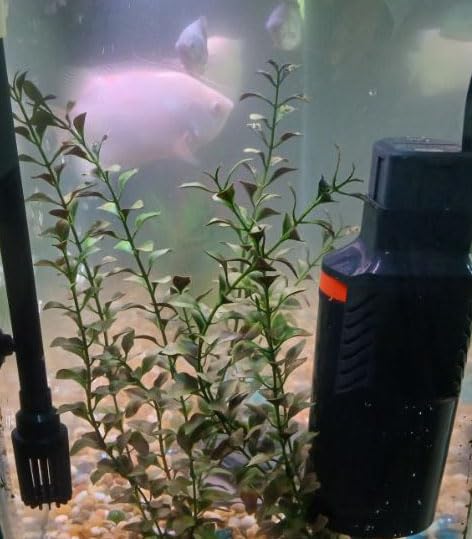
We include the Magnum 290 as a companion option rather than a straight canister pick, because it is a submerged internal canister. It filters 290 GPH and carries a rating for aquariums up to 97 gallons.
Its strength is simplicity. The submerged motor design means it is fully self-priming with no manual pump button, so it starts the moment you drop it in. There is no airlock to troubleshoot.
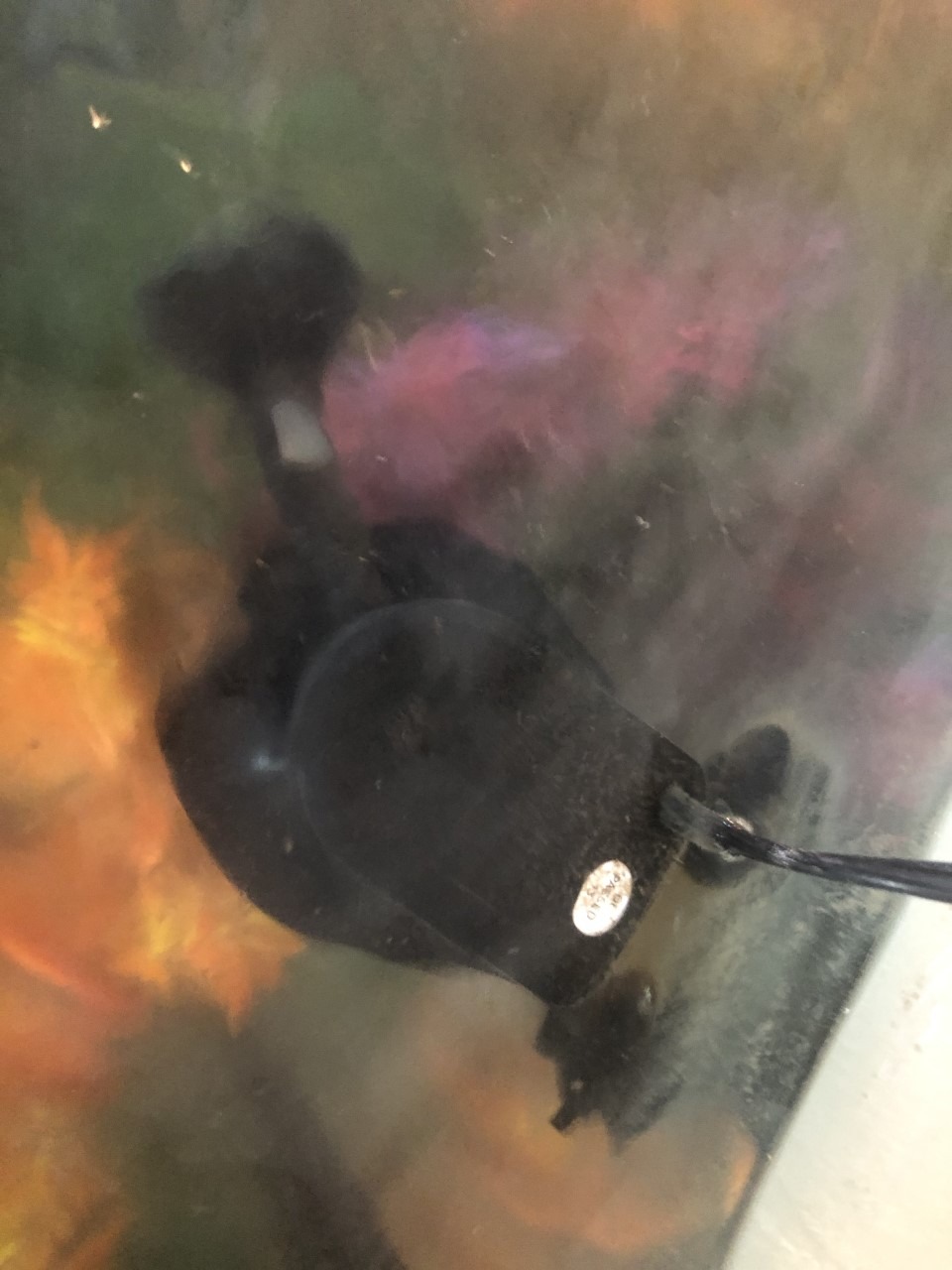
Two refillable chambers accept carbon or any loose custom media, and the included micron cartridge delivers noticeably clearer water. It is lightweight at 2.91 pounds and easy to move for cleaning.
That makes it a good polisher alongside an existing filter, or a simple choice for a turtle kept in a habitat where you do not want hoses and a cabinet unit.
Why some keepers still run one
Continuous three-stage filtration runs without intervention, and there is no prime button to fail. For a straightforward turtle tank where noise and simplicity matter more than hiding hardware, that is a real benefit.
It is also easy to carry between a tank and a sink for cleaning, which no canister of this size manages.
Why it is not our main recommendation
It sits inside the tank, taking up swimming space in an enclosure where a turtle is already cramped. And because it is not external, it cannot be plumbed under a stand.
The micron cartridge is a consumable that needs regular replacement, and its rated capacity is lower than the 400 GPH external model. For an adult turtle, external media capacity is the deciding factor.
How to Size a Canister Filter for a Turtle Tank
Measure your actual water volume first, not the tank’s nominal capacity. A 55 gallon tank rarely holds 55 gallons of water, and the difference matters when you are multiplying by two or three.
Then apply the sizing rule: choose a filter with a rated capacity of two to three times your actual water volume. A 40 gallon turtle tank with 35 gallons of water wants a filter rated for 70 to 105 gallons.
Next check turnover. Divide stated GPH by actual volume to get turnovers per hour, and target four to six. A 265 GPH filter on a 55 gallon tank gives you a little under five turnovers, which is the range most turtle keepers aim for.
Remember that pump GPH is not the same as rated filter circulation. Every foot of hose, every elbow and a full set of media adds resistance, and keepers report real flow loss over a long hose run. Treat the pump figure as a ceiling, not a promise.
Media basket count is the next filter. Two baskets give you a mechanical stage and a biological stage. Three baskets let you separate coarse sponge, fine pad and bio media, which is what we would want in a turtle tank because waste clogs coarse media fast.
Intake safety is a hard rule, not a preference. The intake guard openings should stay under one half inch so a turtle cannot pull a limb or its head into the strainer. If yours is wider, add a nylon stocking prefilter or a purpose-made guard.
Return placement matters as much as intake placement. A spray bar spreads flow along the tank, while a directional nozzle is better if you are lowering circulation for a small turtle or trying to keep a sandy substrate from lifting.
On brand tiers, the premium group is Fluval, Eheim and Aquael, where you pay for quieter motors, better fittings and cheaper long-term media. The value group is SunSun, Aquatop and Penn-Plax. Ultra-budget unbranded canisters often ship with no stated flow rate, wattage or tank rating, which makes them impossible to compare honestly.
One caution from keepers: VEVOR in and out fittings and housing clamps look weak and are described as not confidence inspiring. If you consider one, replace the clamps and check the fittings weekly.
Finally, think about maintenance intervals. Mechanical media in a turtle tank typically needs rinsing every one to two weeks, floss and carbon every four to six, and biological media should never be rinsed under tap water because that kills the bacteria you are cultivating.
If your turtle is a large adult in a big habitat, consider running two canisters off a splitter. Older canisters degrade, impellers stick, and a sudden shutdown can take tankmates with it. Redundancy is cheap insurance.
If hum from the canister is a problem where you keep the stand, the same isolation logic we recommend for shock mounts and pop filters for streaming mics applies here: decouple the pump from hard cabinet surfaces rather than trying to out-buy it with a bigger unit.
Building the Right Filter Media Stack for Turtle Tanks
Order matters more than brand. Put coarse sponge in the basket closest to the intake, a fine pad in the middle, and biological media last so it stays the wettest layer.
Coarse mechanical sponge catches feces, uneaten food and plant debris before those solids reach the finer stages. This is the layer you will clean most often in a turtle tank.
A fine pad or poly floss polishes the water and traps the particles that made it through the sponge, and it protects the biological media from clogging too quickly.
Biological media such as ceramic rings or bio balls provides the surface area nitrifying bacteria need to process ammonia into less harmful compounds. Keep it wet, keep it oxygenated, and keep it last in the water path.
Activated carbon is optional. It handles odors and dissolved organics, but in a turtle tank it clogs out faster than in a fish tank, so many keepers run it in a small separate pouch rather than a full basket.
One rule to keep: rinse media in water removed from your own tank, never under the tap. Chlorine kills the bacteria living in your biological media, and a full restock is the hidden cost of replacing an aging filter.
Frequently Asked Questions
What is the best external canister filter for a turtle tank?
For most turtle tanks the Fluval 307 is the best overall pick, rated by the manufacturer for aquariums up to 70 gallons and quiet enough for a bedroom. For large habitats, the Penn-Plax Cascade 1000 gives you 265 GPH, three stackable media baskets and a manufacturer rating up to 100 gallons. Size either one at two to three times your actual water volume.
What is the best brand of canister filter?
Fluval is the most recommended brand among turtle keepers, largely for quiet pumps, solid fittings and easy media access. Eheim and Aquael sit alongside it in the premium tier. Penn-Plax and SunSun deliver comparable flow for less money, and forum consensus notes that SunSun and Aquatop come from the same OEM factory, so they are effectively the same filter at different branding.
What is the best filter for a 40-gallon turtle tank?
For a 40 gallon turtle tank, aim for a filter rated for 80 to 120 gallons. A Penn-Plax Cascade 700 at 185 GPH or a Fluval 107 rated to 30 gallons both work, but we prefer a unit in the 185 to 265 GPH range. That gives you roughly four to six turnovers per hour, which is what keeps a turtle tank clear between water changes.
What is the best filter for a 55 gallon turtle tank?
A 55 gallon turtle tank calls for a filter rated between 110 and 165 gallons, so a 185 GPH unit such as the Penn-Plax Cascade 700 or a 265 GPH unit like the Cascade 1000 both fit. Measure your actual water volume first, then add a 30 percent margin for substrate and decor, and remember that hose runs reduce real turnover below the pump rating.
How powerful should a canister filter be for a turtle tank?
Target four to six turnovers per hour, which means dividing your actual water volume by the gallons per hour figure. A 265 GPH canister on 55 gallons of water delivers close to five turnovers. Multiply your volume by two or three to find the rated capacity you should be shopping for, and choose a pump with extra head pressure to offset hose resistance.
What filter media works best in a turtle aquarium?
Use a three-stage stack ordered coarse to fine. Coarse sponge first catches solid waste and uneaten food, a fine pad or poly floss second polishes the water, and biological media such as ceramic rings or bio balls last, where it stays wetted and oxygenated for nitrifying bacteria. Add carbon in a small pouch only if odor is a problem, and always rinse media in water removed from your own tank.
Can a canister filter handle turtle waste better than an internal filter?
Yes, mainly because of media volume and location. A canister holds three or four baskets of media outside the tank, so mechanical filtration does not reduce swimming space and the whole biological stage stays oxygenated. An internal filter combines a small media volume with a submerged motor, which clogs faster in a turtle tank and cannot be serviced without removing it from the enclosure.
Can a canister filter replace turtle tank cleaning?
No. A canister improves circulation and clears suspended solids, but turtle tanks still need regular partial water changes and siphoning of settled debris from the substrate. Keepers report that mechanical media in a turtle tank clogs within weeks at heavy bioload, so plan on rinsing it every one to two weeks and replacing floss and carbon every four to six.
The Best Canister Filters for Turtle Tanks, Final Word
After working through all ten, the Fluval 307 remains our pick as the best canister filter for turtle tanks in most homes. It has the quietest motor in the group, three EZ-Lift media baskets, a manufacturer rating to 70 gallons, and the deepest review history here, which makes long-term failure modes visible rather than mysterious.
When budget matters more than polish, the Penn-Plax Cascade 1000 matches it on flow with 265 GPH, three baskets and a rating to 100 gallons. The SunSun HW-302 Pro gives you the same flow class and a full media package for less again, and the Fluval 107 covers small tanks up to 30 gallons with almost no noise.
Whichever you choose, size at two to three times your actual water volume, target four to six turnovers per hour, and keep the intake guard openings under one half inch. Turtle waste is heavy, and a filter that keeps up is the difference between weekly maintenance and a permanent odor problem.