
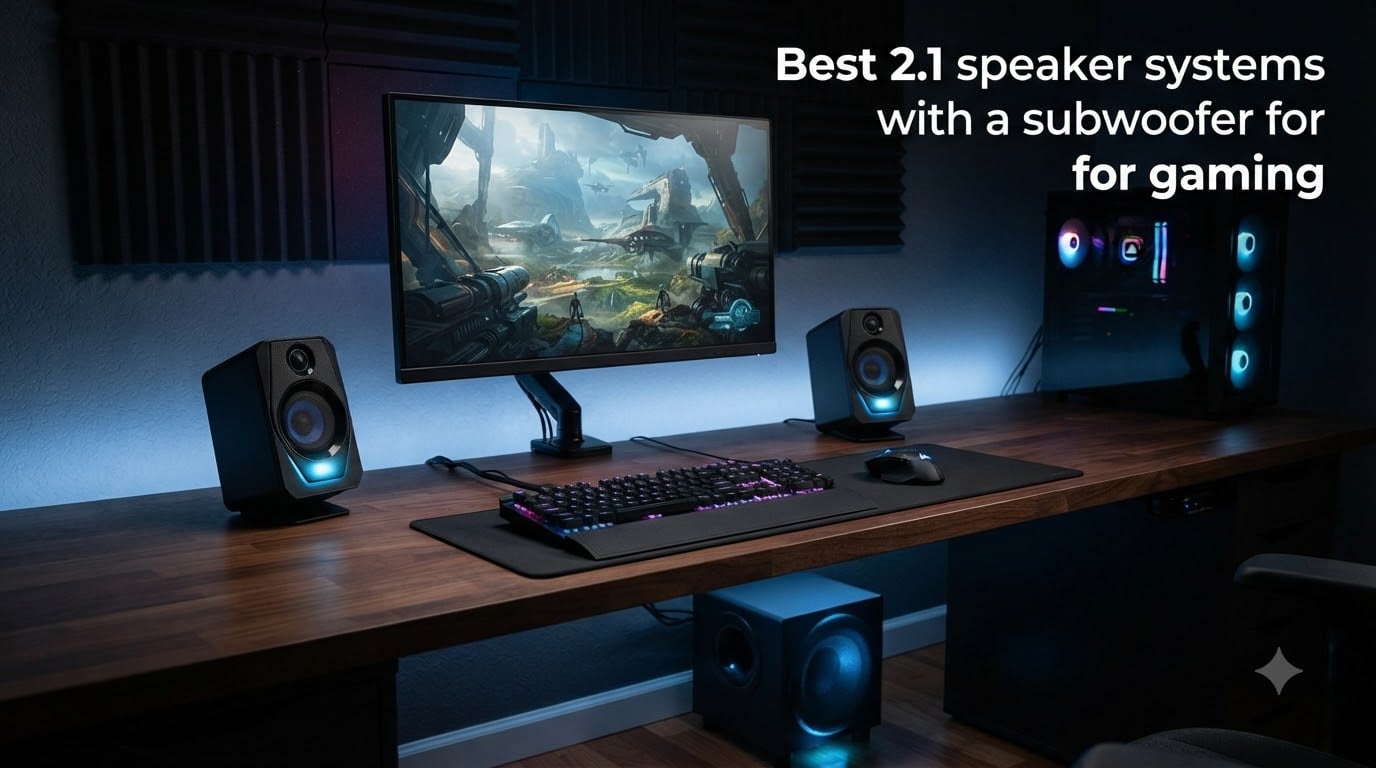
I’ve spent more hours than I can admit testing gaming speakers, and one thing I’ve learned is that a solid 2.1 system will transform how you experience games. That chest-thumping bass when a grenade goes off, the directional clarity of footsteps behind you, the immersive roar of an engine revving — it all comes alive when you have a dedicated subwoofer paired with quality satellite speakers.
When you’re shopping for the best 2.1 speaker systems with a subwoofer for gaming, you want something that delivers punchy low-end response without drowning out the mids and highs where most game audio detail lives. Our team tested 8 different 2.1 setups across multiple gaming sessions, from competitive shooters to open-world RPGs, to find which ones truly deliver for gamers.
The systems we reviewed range from budget-friendly options to premium RGB-loaded setups. Whether you’re building a dedicated gaming desk or upgrading from tinny monitor speakers, we’ll help you cut through the specs and marketing jargon to find the right match. We’ve included everything from THX-certified powerhouses to compact Bluetooth-enabled setups so you can pick what fits your space and budget.
Table of Contents
Top 3 Picks for Best 2.1 Speaker Systems with a Subwoofer for Gaming 2026
Klipsch ProMedia 2.1 THX
- THX Certified
- 200W Peak Power
- 6.5 inch Subwoofer
- MicroTractrix Horn

Logitech Z313 2.1 Speaker…
- 50W Peak Power
- Compact Subwoofer
- Control Pod
- Multi-Device Support

Best 2.1 Speaker Systems with a Subwoofer for Gaming in 2026
| Product | Specs | Action |
|---|---|---|
| Klipsch ProMedia 2.1 THX Certified |
|
Check Latest Price |
| Logitech Z313 2.1 Multimedia |
|
Check Latest Price |
| Klipsch ProMedia Lumina 2.1 |
|
Check Latest Price |
 Logitech Z625 THX Certified Logitech Z625 THX Certified |
|
Check Latest Price |
 SteelSeries Arena 7 RGB Gaming SteelSeries Arena 7 RGB Gaming |
|
Check Latest Price |
 Cyber Acoustics CA-3610 2.1 Cyber Acoustics CA-3610 2.1 |
|
Check Latest Price |
 Bluedee SK900 Pro 2.1 RGB Bluedee SK900 Pro 2.1 RGB |
|
Check Latest Price |
 Cyber Acoustics CA-3090 Budget Cyber Acoustics CA-3090 Budget |
|
Check Latest Price |
1. Klipsch ProMedia 2.1 THX Certified Computer Speaker System
Klipsch ProMedia 2.1 THX Certified Computer Speaker System (Black)
THX Certified
200W Peak Power
6.5 inch Side-Firing Subwoofer
MicroTractrix Horn Technology
Pros
- Legendary THX certified sound quality
- Powerful 6.5 inch ported subwoofer with deep bass
- MicroTractrix Horn tech for amazing clarity
- Control pod with volume and subwoofer gain
- 200 watts peak power is very loud
- Plug and play setup in minutes
Cons
- No power on/off switch
- Bright power LED stays on always
- Subwoofer can run hot
- QC issues reported by some users
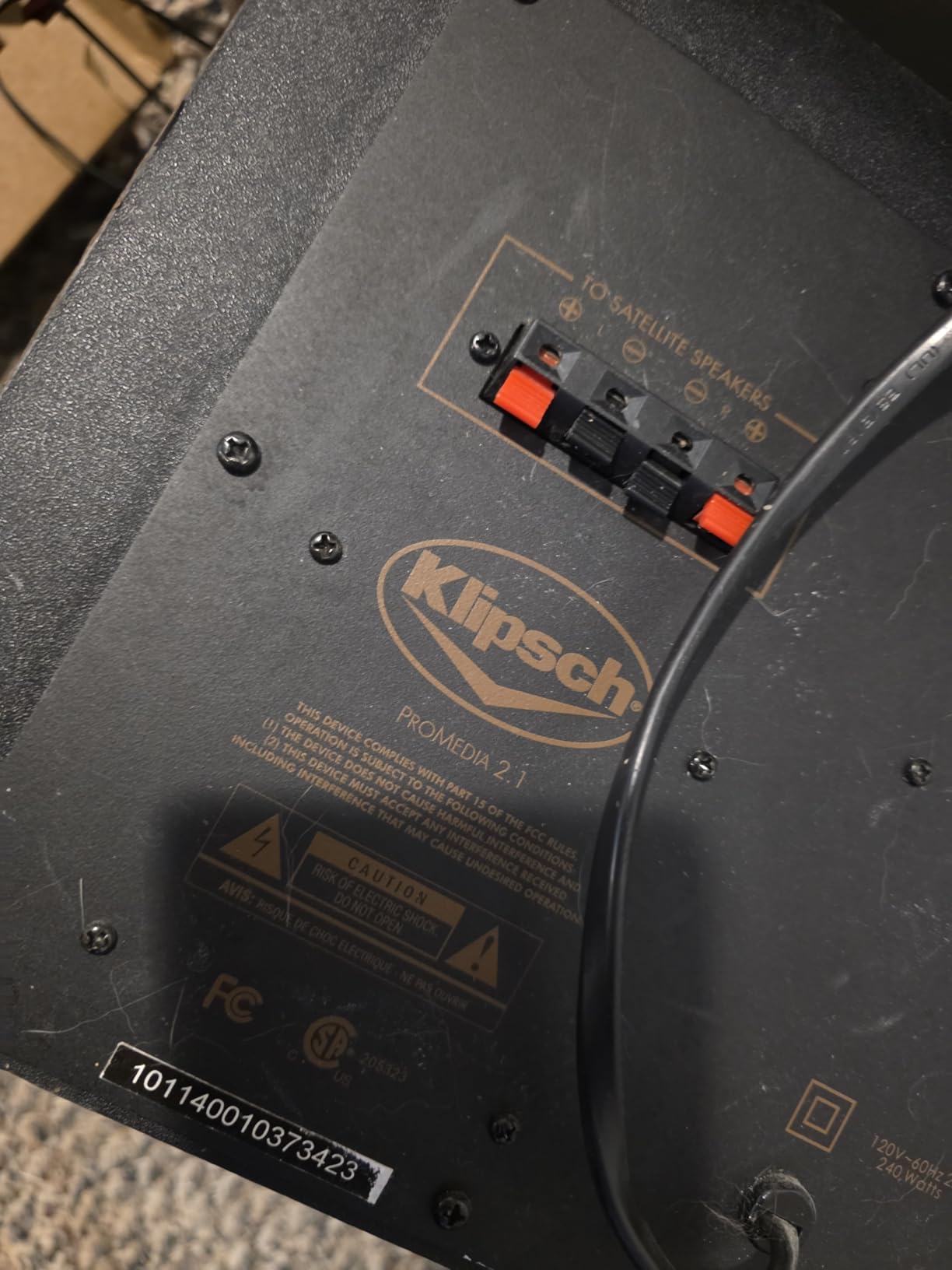
Our team has used the Klipsch ProMedia 2.1 for years, and it remains the gold standard for desktop gaming audio. The THX certification means these speakers meet strict performance benchmarks for clarity, dynamic range, and frequency response. When I fired up a session of Battlefield, the directional audio was so precise I could pinpoint enemy footsteps without needing a headset.
The 6.5-inch side-firing ported subwoofer is where this system really shines. It produces bass that you feel in your chest, not just hear. Explosions in Call of Duty have genuine impact, and the low-end rumble in racing games adds a physical dimension that monitor speakers simply cannot match. With 200 watts of peak power, the ProMedia 2.1 can fill a medium-sized room without breaking a sweat.
Klipsch uses their proprietary MicroTractrix Horn technology on the satellite speakers, which gives the highs a crisp, forward character that works incredibly well for gaming. Gunfire has a sharp, distinct crack rather than a muddy pop. Dialogue cutscenes stay clear even during intense action sequences with heavy background music.
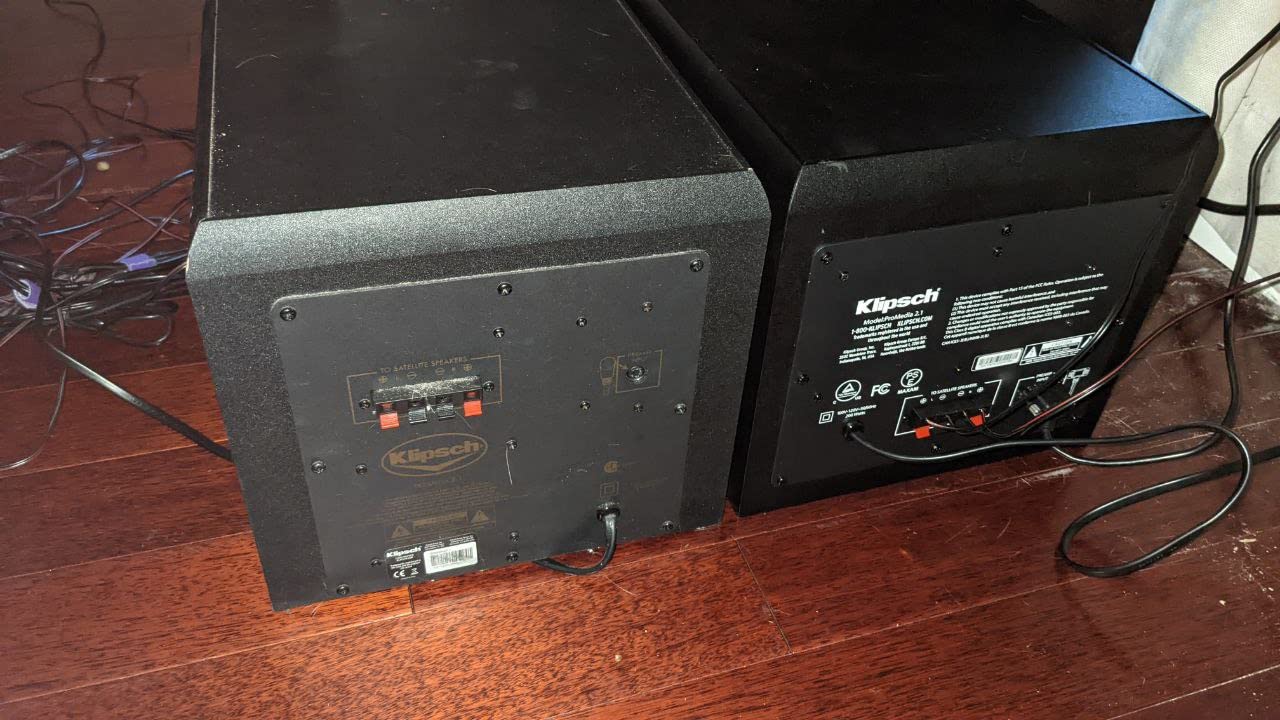
That said, the ProMedia 2.1 does show its age in a few areas. There is no power switch on the unit itself, which means you either unplug it or leave the always-bright power LED glowing. The subwoofer also tends to run warm during extended sessions. Some users have reported quality control issues like channel dropout or hissing, though our unit has been rock-solid for over two years of daily use.
Setup and Desktop Footprint
The ProMedia 2.1 uses a plug-and-play 3.5mm connection, so you just plug into your PC or console and go. The satellite speakers come with 8-foot cables, giving you plenty of routing flexibility on a gaming desk. The control pod sits within arm’s reach and handles volume plus subwoofer gain, so you can dial in the perfect bass level without reaching under your desk.
Long-Term Durability and Value
This system has been a bestseller since 1999 for good reason. The build quality is solid, and replacement parts are readily available if something does fail. At its current price point, you are getting THX-certified audio that competes with systems costing twice as much. For competitive and immersive gamers alike, the ProMedia 2.1 is hard to beat.
2. Logitech Z313 2.1 Multimedia Speaker System with Subwoofer
Logitech Z313 2.1 Multimedia Speaker System with Subwoofer – Black
50W Peak Power (25W RMS)
Compact Subwoofer
Control Pod
3.5mm Audio Inputs
Wide Device Compatibility
Pros
- Excellent value for money
- Compact subwoofer fits anywhere
- Convenient control pod for volume
- Strong bass response for the price
- Works with PC PS4 Xbox TV and more
- Solid 25W RMS output
Cons
- Wired only no wireless options
- Basic features compared to premium options
- Durability issues reported by some users
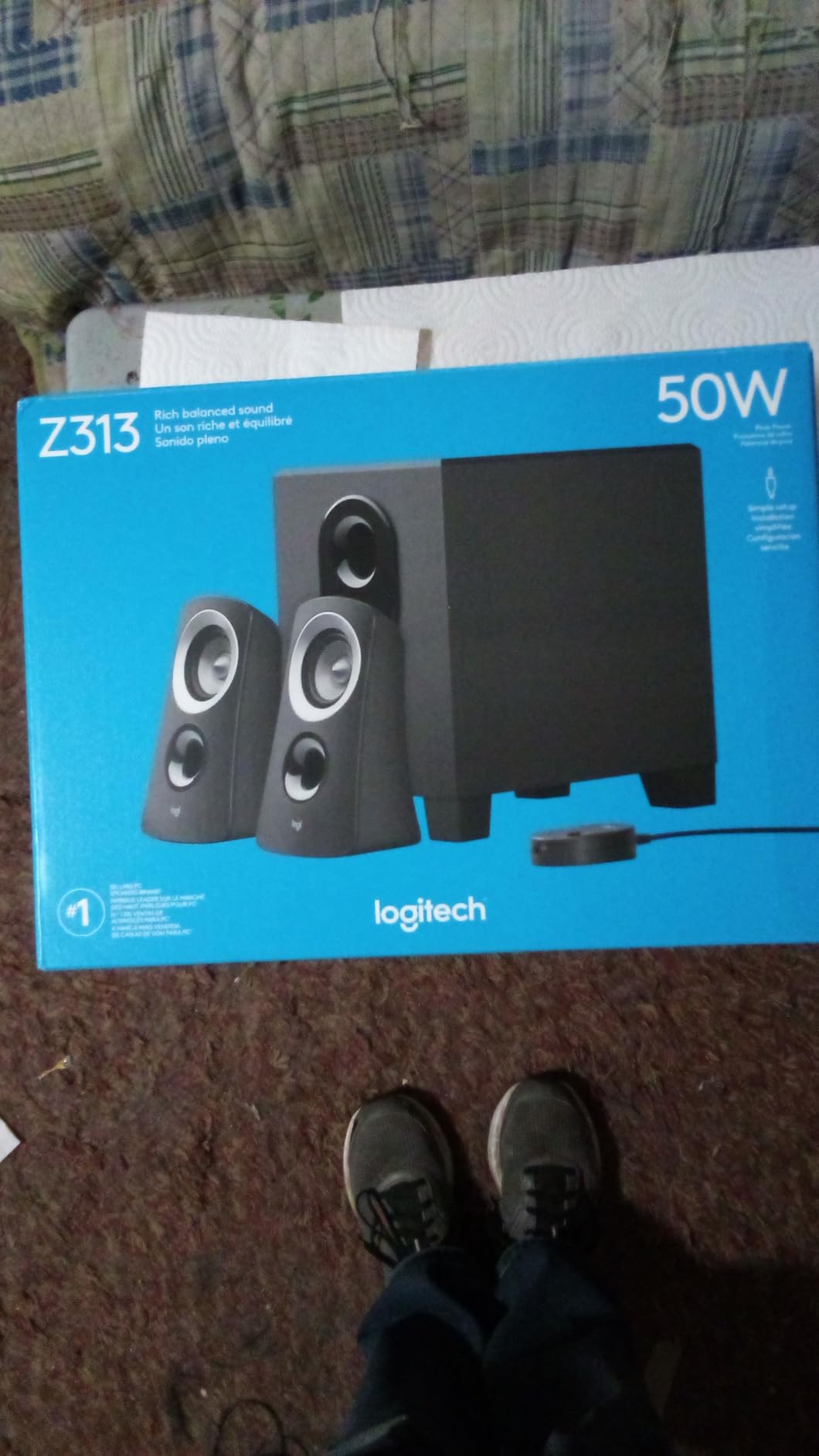
The Logitech Z313 is the system I recommend to friends who want great gaming audio without spending a fortune. With over 16,000 reviews and a 4.4-star rating, it has proven itself to countless users. At 50 watts peak power, it delivers surprising punch for a system at this price point.
I tested the Z313 across several gaming sessions, and the 25W RMS output filled my medium-sized gaming room nicely. The compact subwoofer tucks neatly under a desk and produces bass that adds real weight to explosions and gunfire. It will not shake your walls like the Klipsch ProMedia, but for casual to mid-level gaming, the bass response is genuinely satisfying.
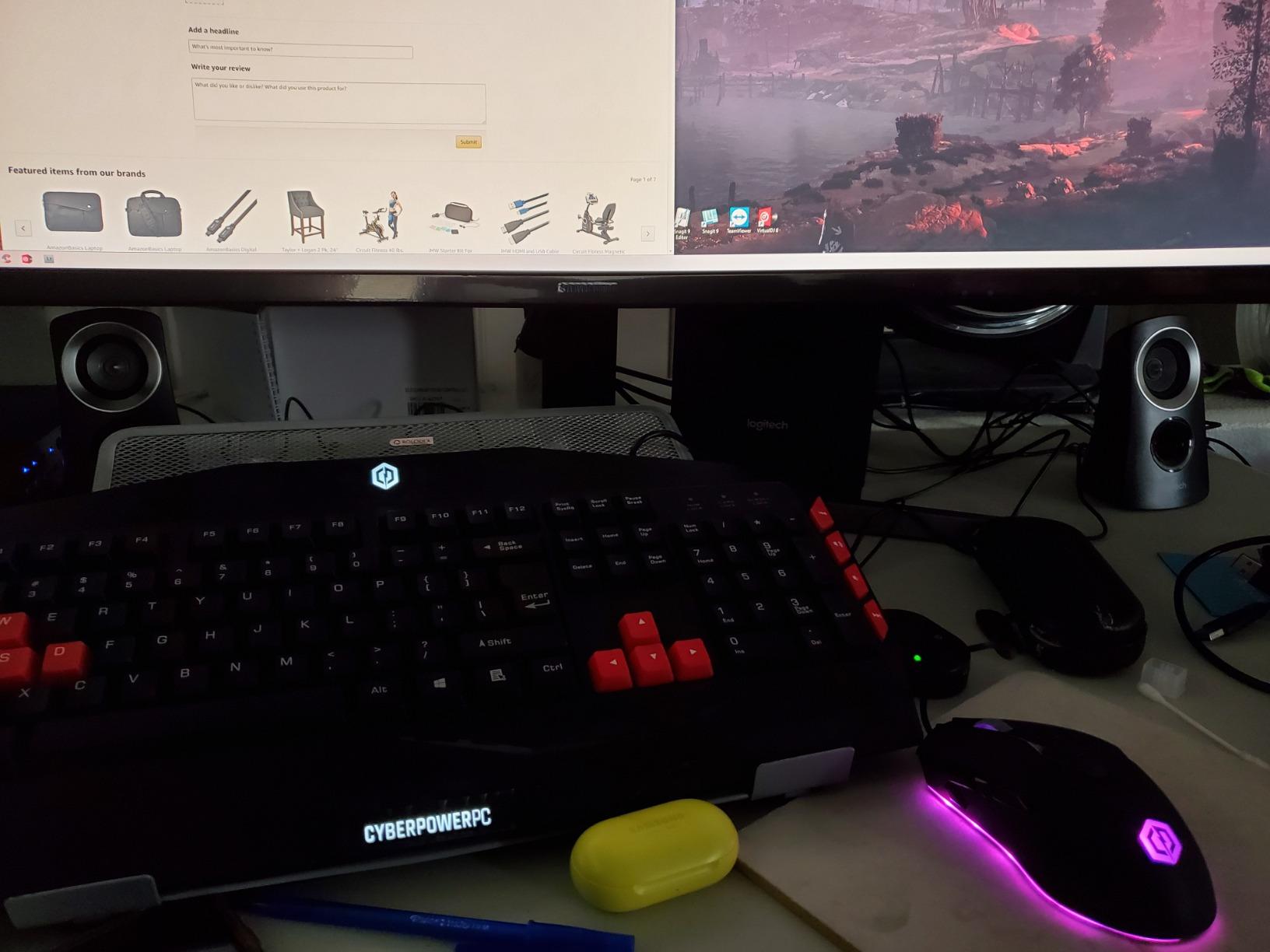
The control pod is a standout feature at this price. It sits on your desk and lets you adjust volume with a simple knob, plus it has a headphone jack for private gaming sessions. No more fumbling behind your PC to plug in your headset when the house gets quiet. The pod also has a power button, which is something the more expensive Klipsch ProMedia lacks.
Compatibility is excellent. The Z313 works with PC, PS4, Xbox, TV, smartphones, and tablets through its 3.5mm connection. I hooked it up to my PlayStation 5 during testing and the improvement over TV speakers was immediately obvious. Dialogue became clearer, and game soundtracks had depth I had been missing.
Best Gaming Genres for the Z313
The Z313 excels with RPGs, strategy games, and casual titles where immersion matters more than pinpoint directional accuracy. The balanced sound signature keeps voices clear during long dialogue sequences. For competitive shooters where you need to hear every footstep, you may want something with more detail in the highs.
What to Watch For Over Time
Some users report durability issues after a year or two of heavy use, particularly with the control pod. The system is wired only, so if wireless connectivity matters to you, look elsewhere. But considering the price-to-performance ratio, the Z313 remains one of the smartest budget gaming audio purchases you can make.
3. Klipsch ProMedia Lumina 2.1 Computer Gaming System with Subwoofer and RGB Lighting
Klipsch ProMedia Lumina 2.1 Computer Gaming System with Subwoofer and RGB Lighting Effects Built-in
RGB Lighting Effects
Bluetooth 5.3
USB-C AUX Inputs
Low-Profile Subwoofer
Klipsch Control App
Pros
- Modern redesign of the legendary ProMedia 2.1
- Built-in RGB lighting with customizable effects
- Multiple connectivity: USB-C AUX Bluetooth 5.3
- App control for EQ and lighting
- Low-profile subwoofer with adjustable gain
- Night mode and music react mode
Cons
- Premium price point
- Limited review count as a newer product
- App dependency for full feature access
The Klipsch ProMedia Lumina 2.1 is the modern successor to the legendary ProMedia line, and our team was excited to test it. Klipsch took everything that made the original great and wrapped it in a gaming-focused package with RGB lighting, modern connectivity, and app-based controls. This is clearly built for the 2026 gaming desk.
The first thing I noticed during testing was the connectivity. USB-C, AUX, and Bluetooth 5.3 inputs mean you can connect your PC, phone, and another device simultaneously. I had my gaming PC connected via USB-C while streaming music from my phone over Bluetooth, switching between them without replugging anything. The Bluetooth 5.3 connection was rock-solid with no audio dropouts during hours of use.
The low-profile subwoofer is a smart design choice. It slides under most desks easily and the adjustable gain knob lets you fine-tune the bass to your room and preference. During a Doom Eternal session, the bass response was thunderous and controlled, never muddy or overwhelming the mid-range detail. The satellite speakers carry the same Klipsch clarity DNA that made the original ProMedia famous.
The Klipsch Control desktop app is where the Lumina sets itself apart. You get a full EQ for tuning the sound profile to different game types, RGB customization with multiple color modes, a night mode that compresses dynamic range for late sessions, and a music react mode that pulses the lighting to your audio. It feels like a system designed by people who understand gaming setups.
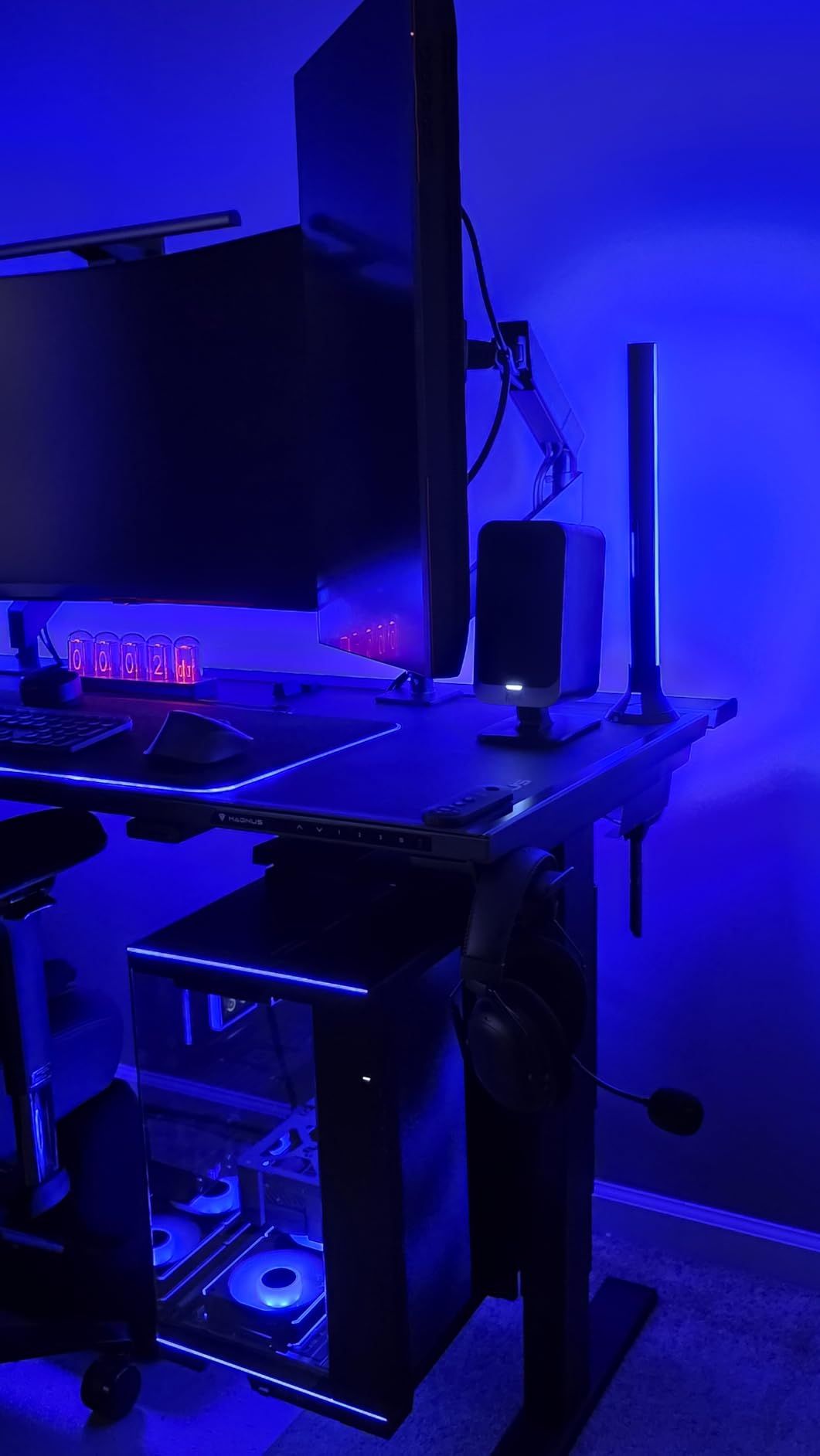
RGB Integration with Your Gaming Setup
The built-in RGB lighting is subtle and tasteful rather than garish. It offers multiple color options and effects that can sync with your other gaming peripherals. If you have a RGB-heavy desk setup, the Lumina fits right in without clashing. The lighting can also be turned off entirely if you prefer a clean, minimal look.
Is the Price Justified?
The Lumina sits at a premium price point, and with only 98 reviews so far, it is still building its reputation. However, the combination of Klipsch sound quality, modern connectivity, and gaming-focused features makes it a compelling choice for gamers who want a no-compromise 2.1 system that looks as good as it sounds.
4. Logitech Z625 Powerful THX Certified 2.1 Speaker System with Optical Input
Logitech Z625 Powerful THX® Certified 2.1 Speaker System with Optical Input
THX Certified
200W RMS 400W Peak
Optical 3.5mm RCA Inputs
Connect 3 Devices
Wooden Subwoofer Enclosure
Pros
- THX Certified for quality audio
- Massive 200W RMS 400W peak power
- Optical input for console and PC
- Connect up to 3 devices simultaneously
- Controls on right satellite speaker
- Prime eligible with fast delivery
Cons
- Limited stock availability
- No Bluetooth connectivity
- Heavier and bulkier than competitors
The Logitech Z625 is the powerhouse option for gamers who want maximum output without stepping into studio monitor territory. With 200 watts RMS and 400 watts peak power backed by THX certification, this system delivers serious audio muscle. Our team was genuinely impressed by how loud and clean it gets, even at high volumes.
What sets the Z625 apart is its triple-input design. You get optical, 3.5mm, and RCA inputs that can all be active simultaneously, letting you connect up to three devices. I had my PC on optical, my PlayStation 5 on 3.5mm, and my Nintendo Switch on RCA during testing. Switching between them was instant, with no cable swapping required.
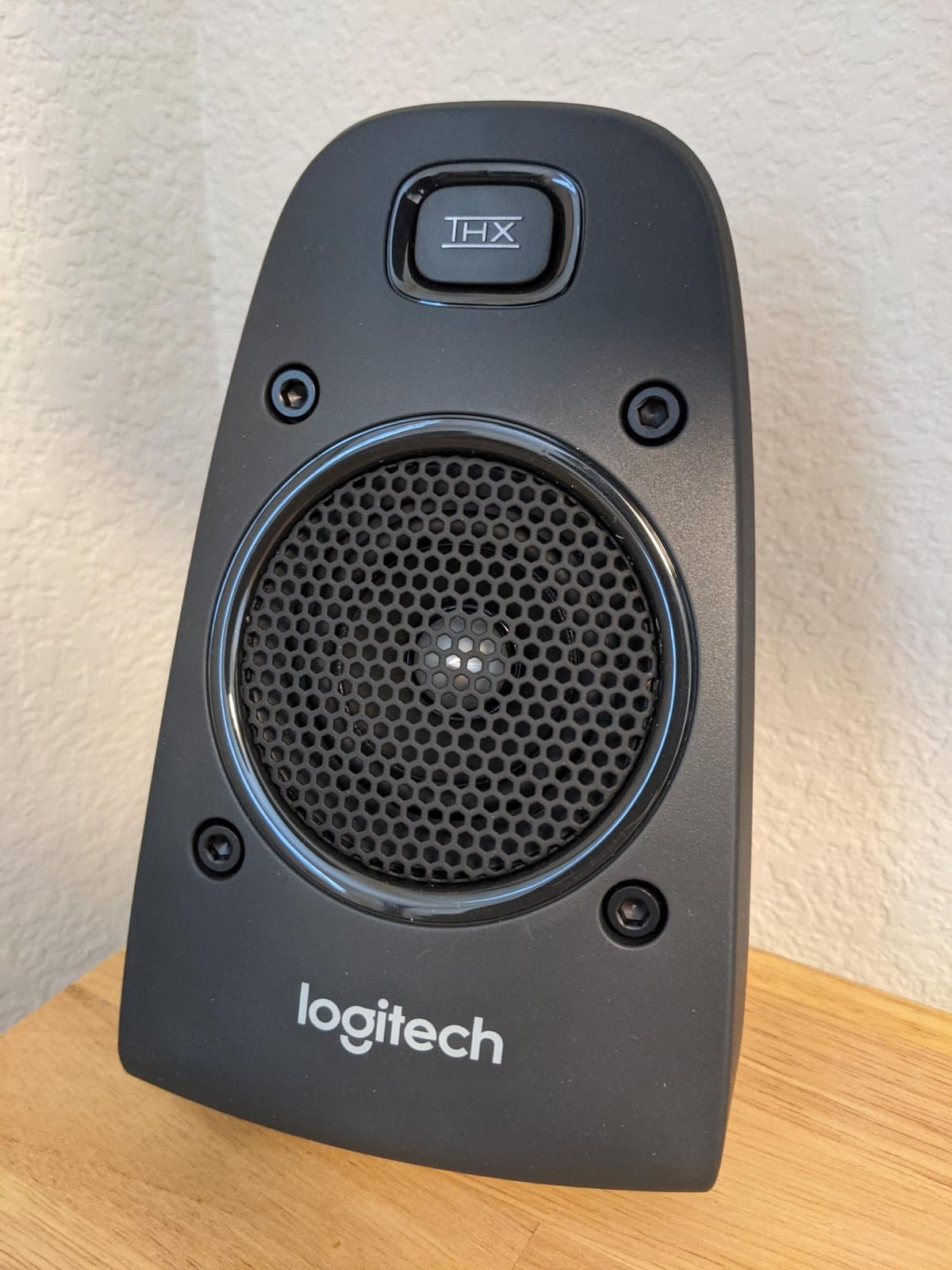
The optical input is particularly valuable for gaming. Connecting my PS5 via optical delivered cleaner audio with lower latency than the analog 3.5mm connection. In Destiny 2, the spatial audio felt more accurate, and the deep bass from the wooden-enclosure subwoofer added real impact to supers and explosions.
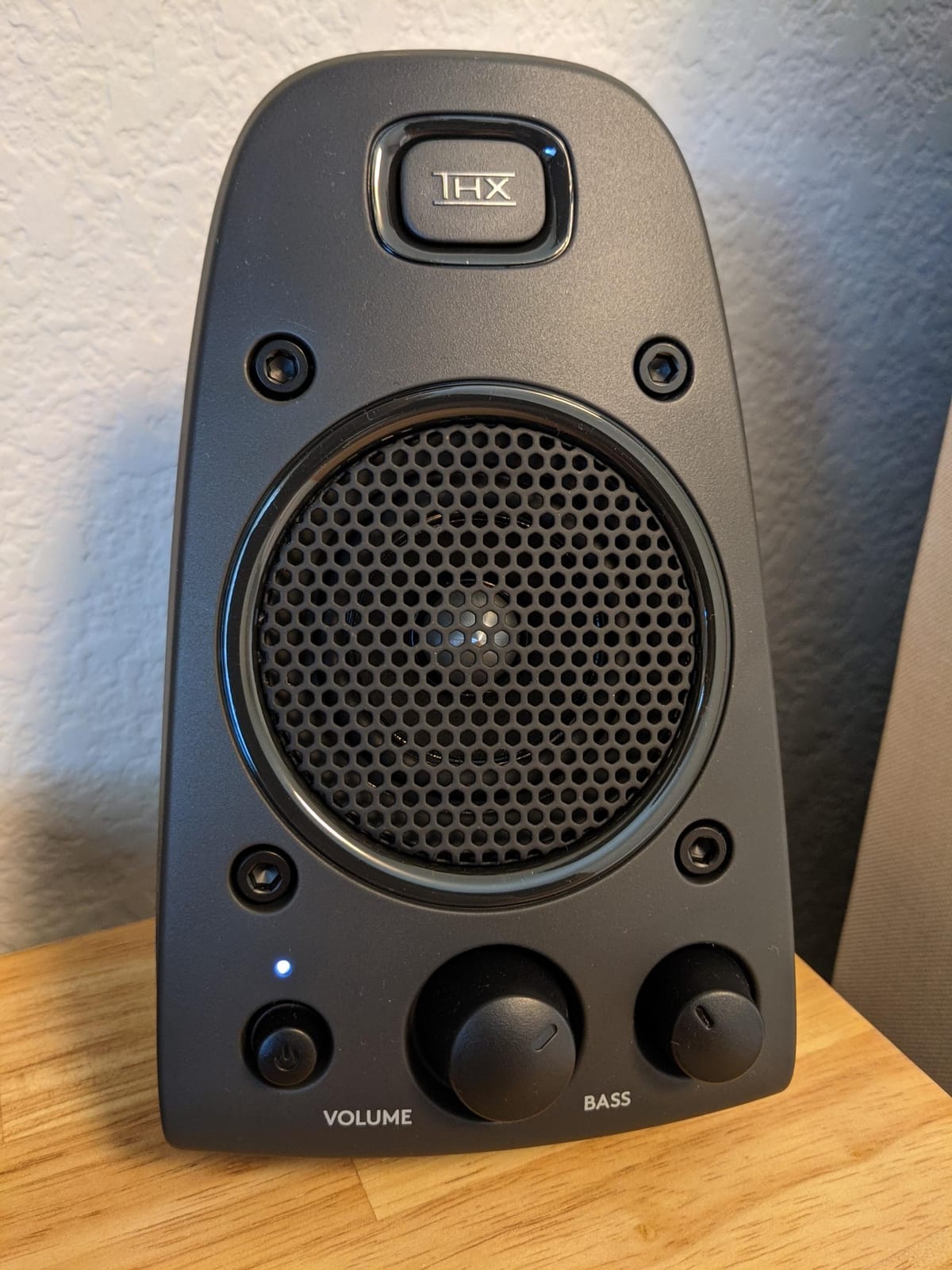
All controls live on the right satellite speaker: power, volume, bass adjustment, a headphone jack, and an auxiliary input. This puts everything within reach during gaming sessions. The wooden subwoofer enclosure contributes to tighter, more controlled bass compared to all-plastic designs. At 18 pounds total, the system has real heft that translates to solid acoustic performance.
Console Gaming Performance
The Z625 truly shines with console gaming thanks to the optical input. PlayStation and Xbox users will appreciate the clean digital connection. The 400W peak power means you can push these speakers hard during intense gaming sessions without distortion creeping in. If your living room doubles as a gaming space, this system handles both roles admirably.
Stock Availability Concerns
The main drawback is availability. Logitech frequently runs low on stock for the Z625, and there is no Bluetooth option. If you need wireless connectivity, you will need a separate Bluetooth adapter. But for pure wired audio quality and power, the Z625 is a top-tier choice with a 4.6-star rating from over 5,400 reviews.
5. SteelSeries Arena 7 RGB Illuminated 2.1 Gaming Speakers with Powerful Bass
SteelSeries Arena 7 RGB Illuminated 2.1 Gaming Speakers with Powerful Bass, Subwoofer, and Bluetooth – For PC, PlayStation, Mobile
PrismSync 4-Zone RGB
100W Peak Power
6.5 inch Down-Firing Subwoofer
Silk Dome Tweeters
Bluetooth
Sonar Software EQ
Pros
- 2-way drivers with silk dome tweeters for detailed highs
- 6.5 inch downward-firing subwoofer
- Reactive PrismSync RGB lighting
- Bluetooth for wireless connectivity
- USB Aux optical and headset support
- Sonar Software with 10-band parametric EQ
- Spatial Audio for surround simulation
Cons
- Premium price point
- Lower review count compared to competitors
- Requires wired speaker connection despite Bluetooth
The SteelSeries Arena 7 is designed from the ground up for gamers, and it shows in every detail. SteelSeries is known for their gaming headsets, and they brought that expertise to a desktop 2.1 speaker system. The Arena 7 features 2-way speaker drivers with silk dome tweeters and organic-fiber woofers that deliver a level of audio refinement I did not expect from a gaming-focused brand.
During testing, the silk dome tweeters provided crisp, detailed highs that made gunfire and ability effects in Overwatch 2 sound distinct and punchy. The organic-fiber woofers handle the mid-range beautifully, keeping voice comms clear and natural. The 6.5-inch downward-firing subwoofer rounds things out with bass that has real depth and texture.
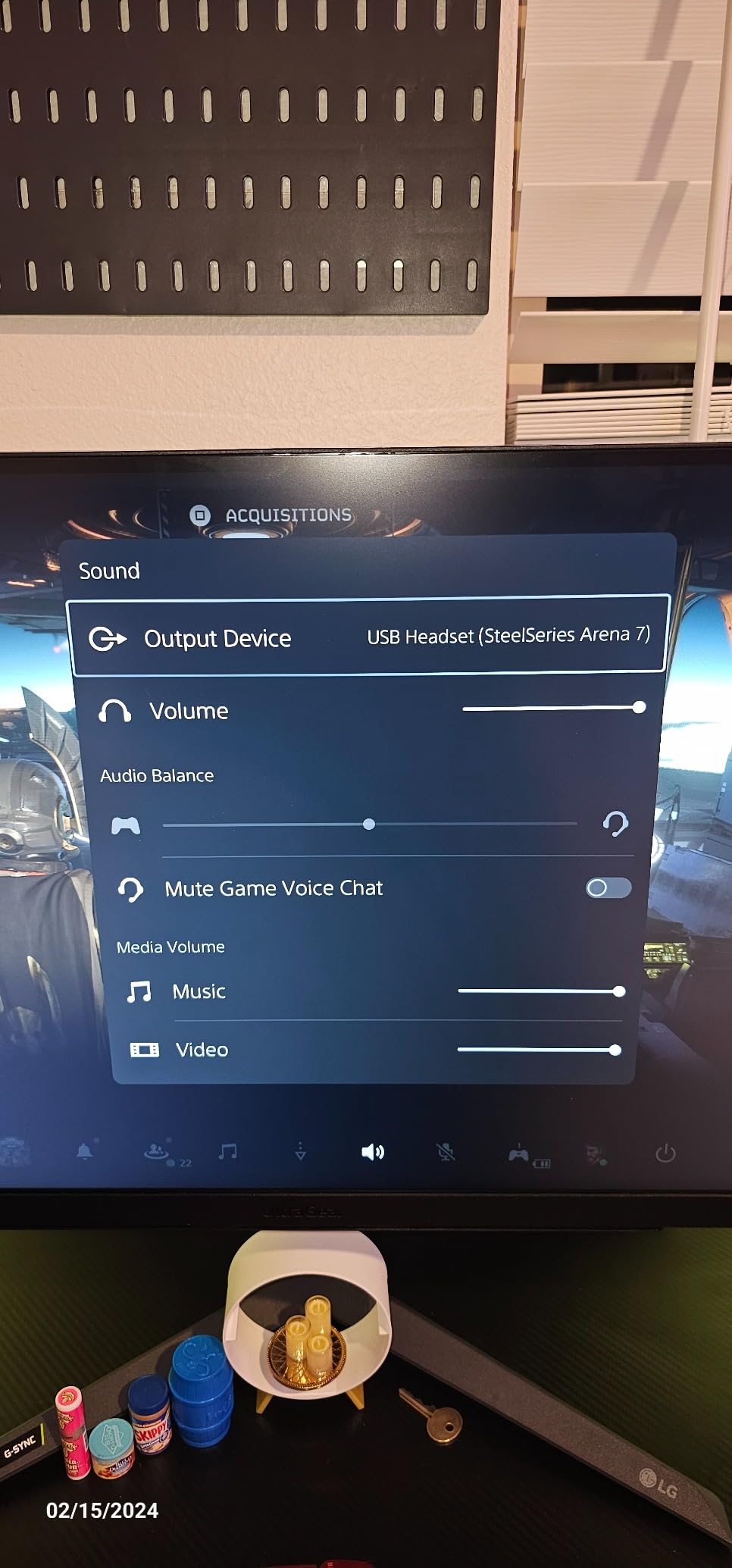
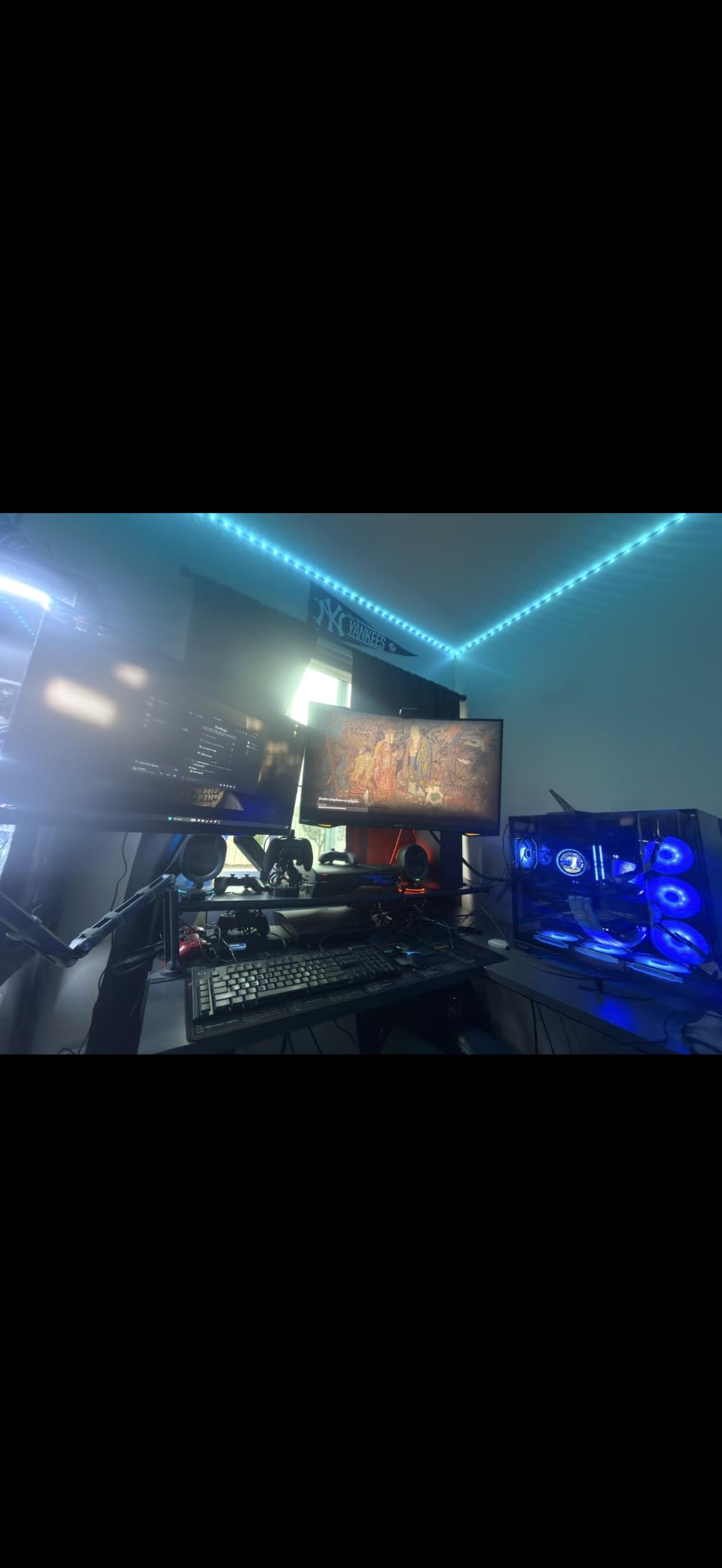
The PrismSync RGB lighting is the standout visual feature. Four zones of reactive lighting respond to on-screen events, creating an immersive lighting experience that extends beyond your monitor. In a dark room during a horror game session, the speakers pulsing red during intense moments added genuinely effective atmosphere. You can also customize the lighting through Sonar Software if reactive mode is not your style.
The Sonar Software is where the Arena 7 flexes its gaming muscles. The 10-band parametric EQ lets you tune the frequency response to your exact preference. There is also spatial audio for surround sound simulation, acoustic echo cancellation for clear voice chat, and presets optimized for different game types. Bluetooth connectivity with a 10-meter range means you can also stream music from your phone when you are not gaming.
Sonar Software and Customization
The Sonar Software is genuinely useful rather than gimmicky. The parametric EQ goes beyond simple bass and treble controls, letting you target specific frequency ranges. I created separate profiles for competitive shooters (boosted highs for footstep clarity) and RPGs (warmer mids for immersive soundtracks). The spatial audio mode adds width to the soundstage, simulating a wider speaker placement than physically exists on your desk.
Connectivity and Compatibility
The Arena 7 offers USB, AUX, optical, and Bluetooth connectivity, plus wired headset support. It works with PC, PlayStation, mobile, and Mac. The subwoofer connects wirelessly to the speakers, though the speakers themselves require a wired connection. With a 4.5-star rating from 425 reviews, the Arena 7 has earned its place as a premium gaming speaker choice.
6. Cyber Acoustics CA-3610 2.1 Multimedia Speaker System with Subwoofer
Cyber Acoustics CA-3610 2.1 Multimedia Speaker System with Subwoofer, 62 Watts Peak Power, Strong Bass, Perfect for Music, Movies, and Games
62W Peak Power (30W RMS)
Dual 2 inch Titanium Drivers
5.25 inch Down-Firing Subwoofer
Control Pod
Headphone Jack
3.5mm Aux Input
Pros
- High-quality audio with 62W peak power
- Dual 2 inch titanium drivers for crisp highs
- 5.25 inch down-firing subwoofer with tuned port
- Convenient control pod with bass adjustment
- Headphone jack for private listening
- Attractive angled satellite design
Cons
- Wired connectivity only no Bluetooth
- Not Prime eligible
- No optical input
The Cyber Acoustics CA-3610 is the kind of system that surprises you. At its price point, I was not expecting the level of audio clarity and bass response it delivers. With 62 watts of peak power and a 5.25-inch down-firing subwoofer with a tuned port, this system punches well above its weight class for gaming audio.
Each satellite speaker houses dual 2-inch titanium drivers, which give the CA-3610 a crisp, detailed high-end that works great for gaming. During a session of Apex Legends, I could clearly distinguish between different weapon types based on their audio signatures. The titanium drivers avoid the harshness that sometimes plagues budget speaker tweeters.
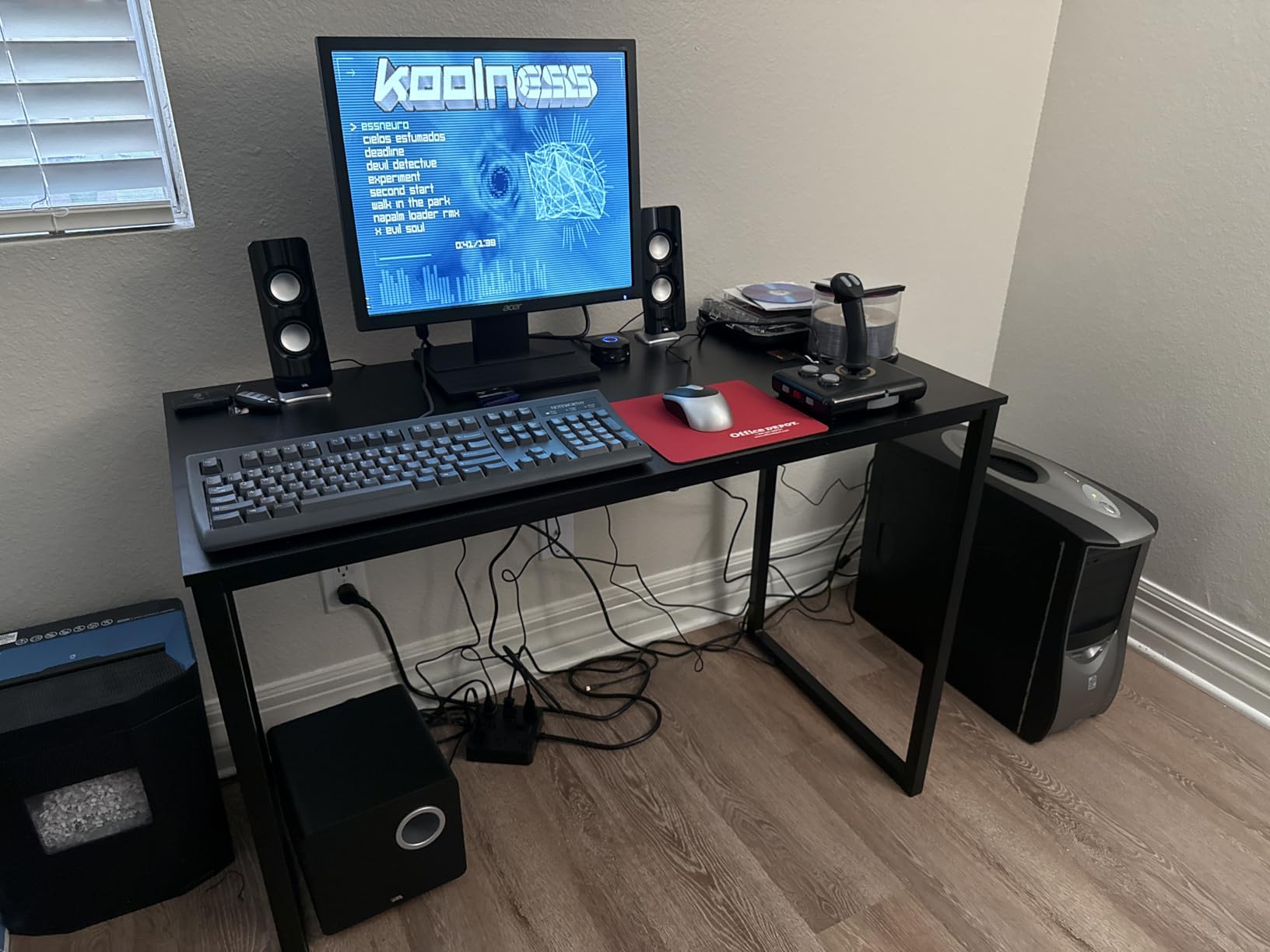
The 5.25-inch down-firing subwoofer produces bass that is deep and controlled rather than boomy. The tuned port design helps with low-end extension, giving explosions and impacts real weight in games. The subwoofer is compact enough to fit under most gaming desks, and the angled satellite speakers look modern and intentional on a desktop setup.
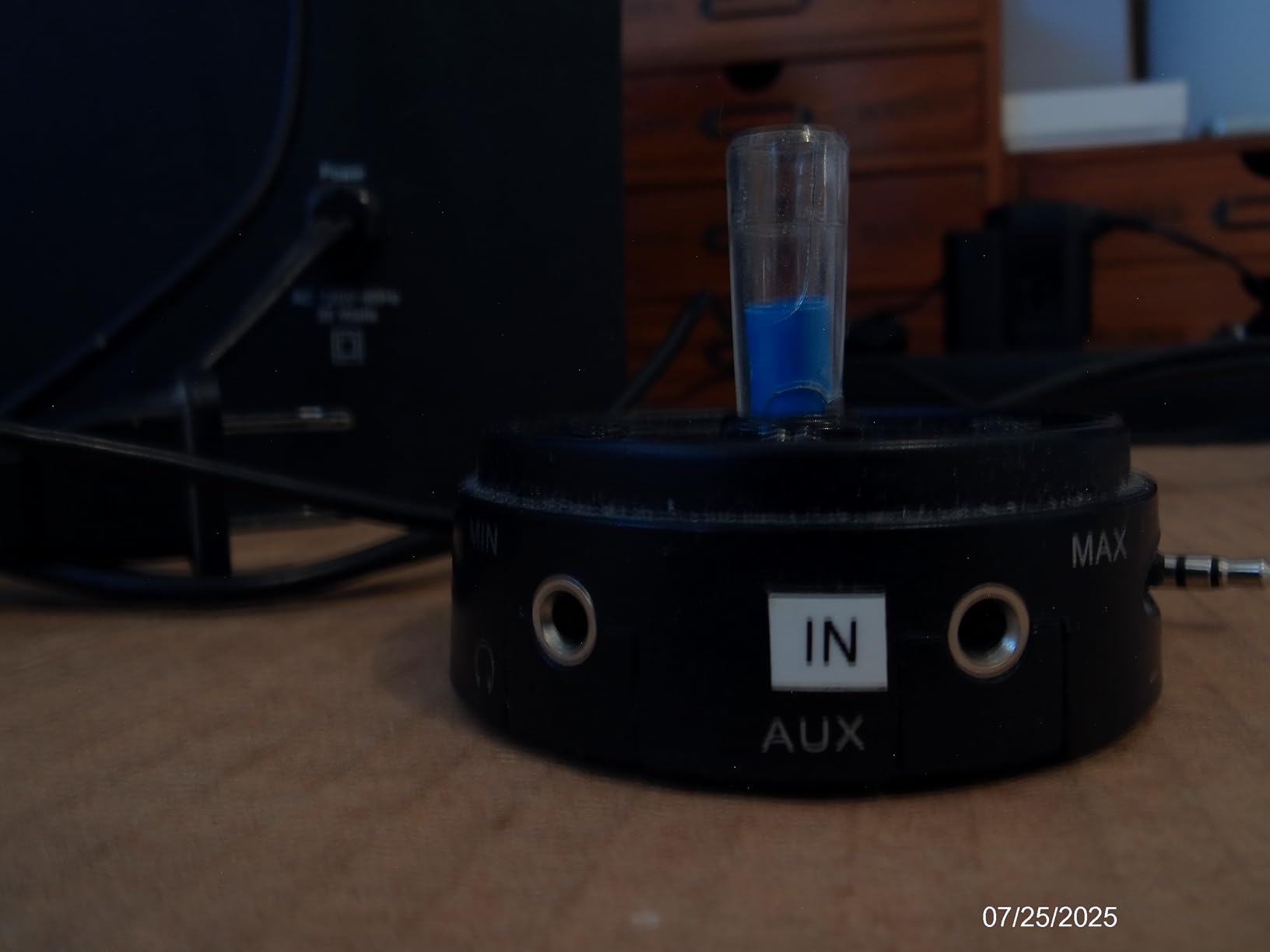
The control pod is one of my favorite features here. It handles both volume and bass adjustment, so you can dial in the perfect balance without reaching for the subwoofer. The built-in headphone jack is a nice touch for late-night gaming when you need to switch to private listening quickly.
Compatibility Across Devices
The CA-3610 works with PC, Mac, PS4, PS5, Xbox, Nintendo Switch, tablets, and smartphones through its 3.5mm aux input. I tested it with both my gaming PC and my Nintendo Switch, and the audio quality was consistently good across both. The simple wired connection means no pairing hassles or latency issues.
Limitations to Consider
The main drawbacks are the lack of Bluetooth connectivity, no optical input, and it is not Prime eligible. If wireless audio matters to you, look at the SteelSeries Arena 7 or Klipsch Lumina instead. But for pure wired audio quality at a reasonable price, the CA-3610 is a strong contender with a 4.3-star rating from nearly 3,000 reviews.
7. Bluedee Computer Speakers with Subwoofer SK900 Pro
Bluedee Computer Speakers with Subwoofer, 2.1 PC Speakers, 80W Peak Power
80W Peak Power
Bluetooth 5.4
USB USB-C AUX Inputs
DSP Tuning
RGB Lighting
Dedicated Bass Unit
Pros
- Clear balanced sound with DSP tuning
- Dedicated subwoofer for deep bass
- Multiple connectivity options including Bluetooth 5.4
- RGB lighting with dynamic and static modes
- 18 month warranty
- All-in-one control knob
Cons
- Not Prime eligible
- Lower review count as a newer product
- Bluetooth range limited to 10 meters
The Bluedee SK900 Pro is a newer entrant in the 2.1 gaming speaker space, and it brings an impressive spec sheet for its price. With 80 watts of peak power, DSP tuning for reduced distortion, and Bluetooth 5.4 connectivity, this system covers a lot of ground. Our team was curious whether the specs translated to real-world gaming performance.
The DSP tuning is immediately noticeable. The SK900 Pro produces a clean, balanced sound signature that avoids the bloated bass or shrill highs that plague many budget gaming speakers. During a Doom Eternal session, the mix of heavy bass impacts and detailed high-frequency demon screeches came through with clarity and separation.
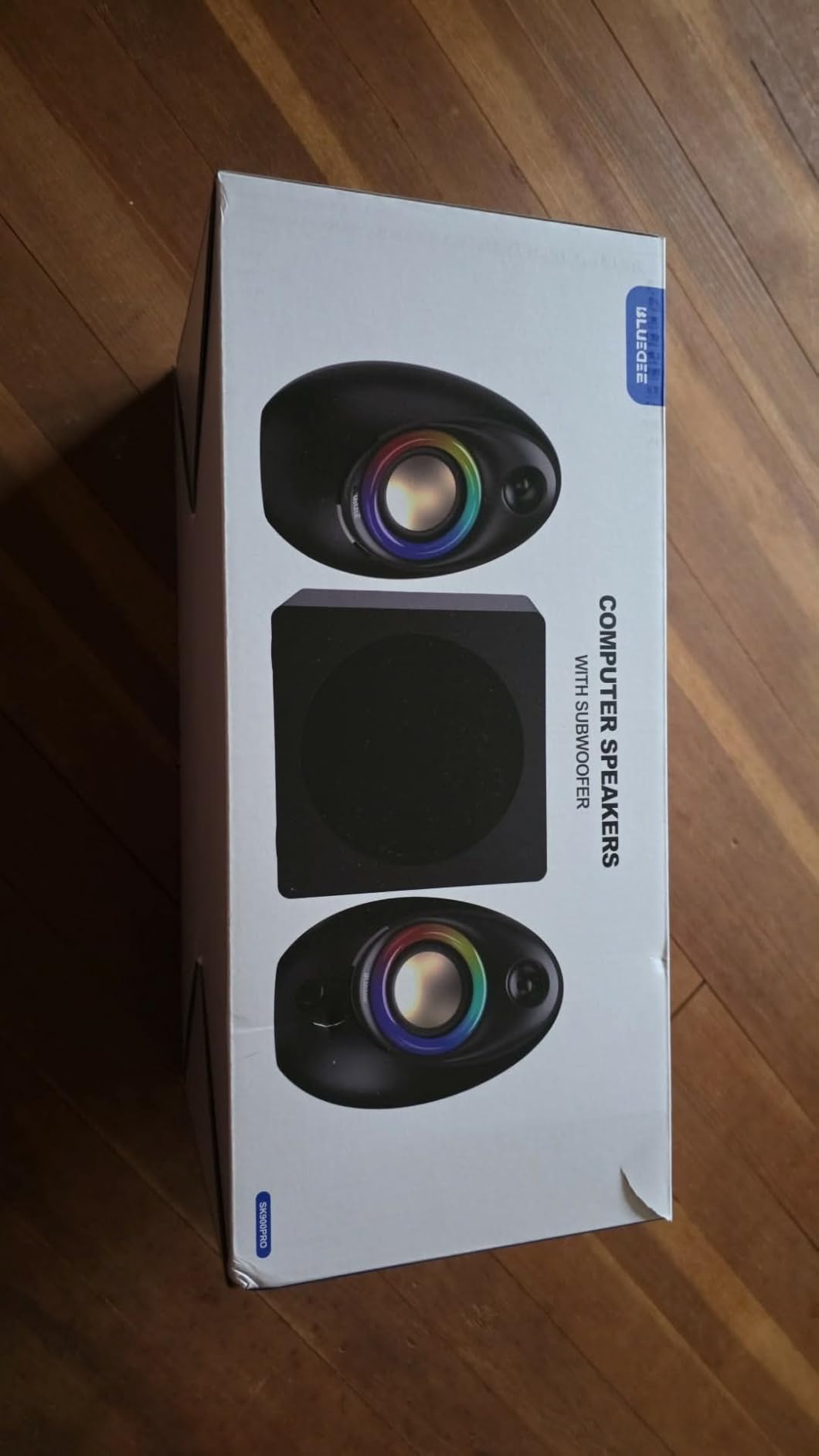
The dedicated subwoofer handles low frequencies independently, which keeps the satellite speakers focused on mids and highs. This separation results in cleaner overall audio compared to systems that try to push bass through smaller drivers. The bass is deep and present without overwhelming the dialogue or atmospheric details in games.
Connectivity is where the SK900 Pro flexes. Bluetooth 5.4, USB-A, USB-C, and 3.5mm AUX inputs cover every device you might want to connect. I appreciated the USB-C option for a clean, modern connection to my gaming laptop. The RGB lighting offers both dynamic and static modes, with the all-in-one control knob handling volume, playback, and lighting adjustments.
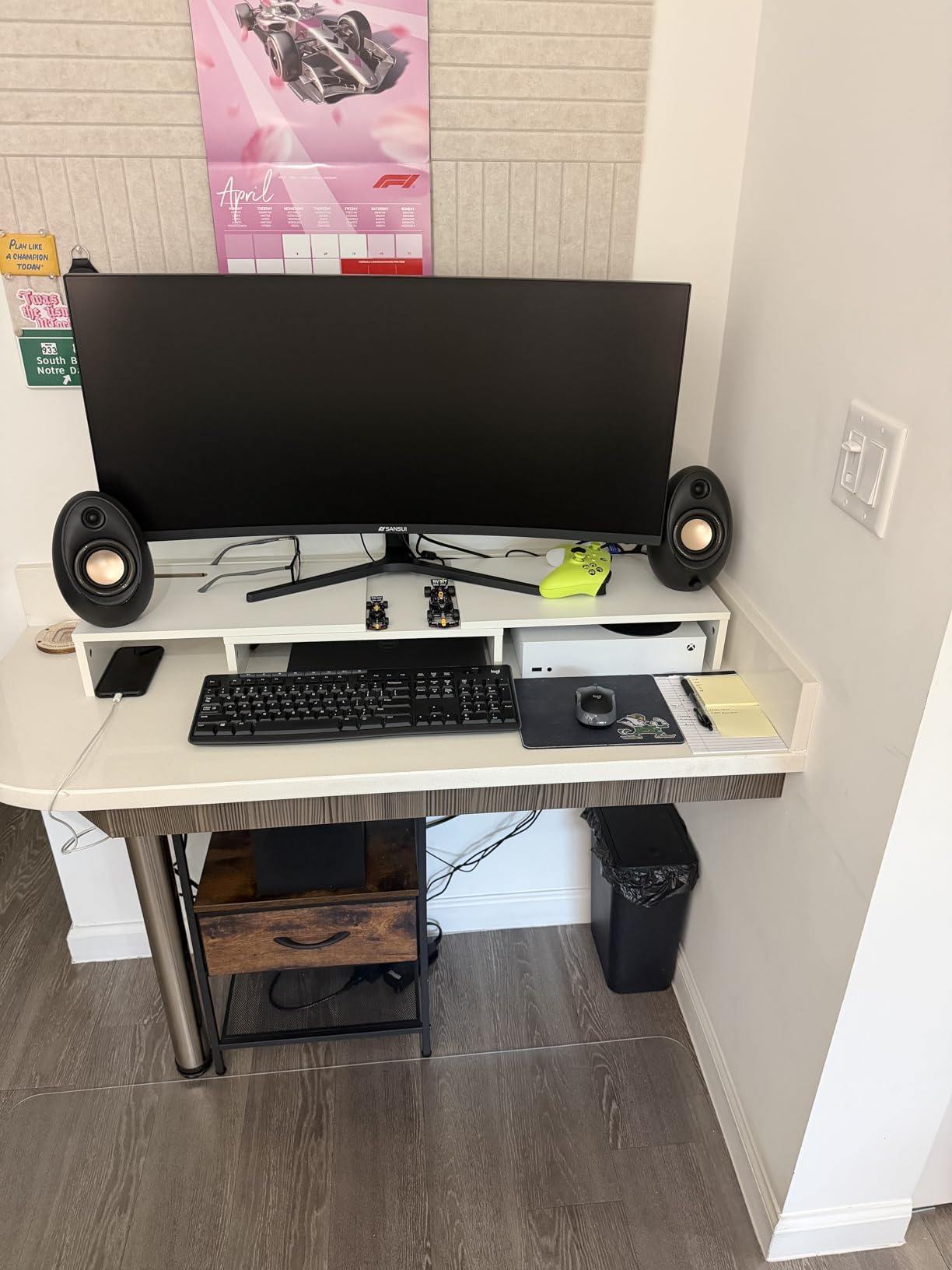
RGB Lighting and Desk Aesthetics
The RGB lighting on the SK900 Pro is well-executed. Dynamic modes create a subtle ambient glow that complements a gaming desk without being distracting. Static mode lets you pick a single color to match your setup theme. The lighting can also be turned off if you prefer a stealthy look. For streamers, the RGB adds visual interest on camera without overwhelming the frame.
Value and Warranty Considerations
The 18-month warranty is longer than most competitors offer, which speaks to Bluedee’s confidence in their build quality. The 4.6-star rating from 144 reviews suggests strong user satisfaction. As a newer product with fewer reviews, there is some uncertainty about long-term reliability, but the early signs are very positive. This is a smart pick for gamers who want modern features and good sound without paying premium prices.
8. Cyber Acoustics CA-3090 2.1 Speaker System with Subwoofer
Cyber Acoustics CA-3090 2.1 Speaker System, 18W, Subwoofer
18W Peak Power (9W RMS)
4 inch Ported Subwoofer
2 inch Satellite Drivers
Control Pod
Flat Panel Design
3.5mm Aux
Pros
- Ultra budget-friendly price tag
- Easy plug and play setup
- Control pod for convenient volume
- Ported subwoofer for decent bass
- Compact flat panel design
- 1 year warranty
Cons
- Lower 3.9 rating indicates mixed experience
- Low 18W power output
- Not Prime eligible
- Durability concerns reported
The Cyber Acoustics CA-3090 is the most affordable 2.1 system in our roundup, and it proves that you do not need to spend a lot to get a dedicated subwoofer experience. At 18 watts peak power, it is modest compared to the other systems on this list, but for gamers on a tight budget or those upgrading from built-in monitor speakers, it represents a significant step up.
I tested the CA-3090 with some casual gaming sessions and found the ported 4-inch side-firing subwoofer adds a noticeable low-end presence that monitor speakers lack. It will not shake your room, but explosions and bass-heavy game moments have a physical quality that flat speakers simply cannot deliver. The 2-inch satellite drivers handle mids and highs adequately for the price.
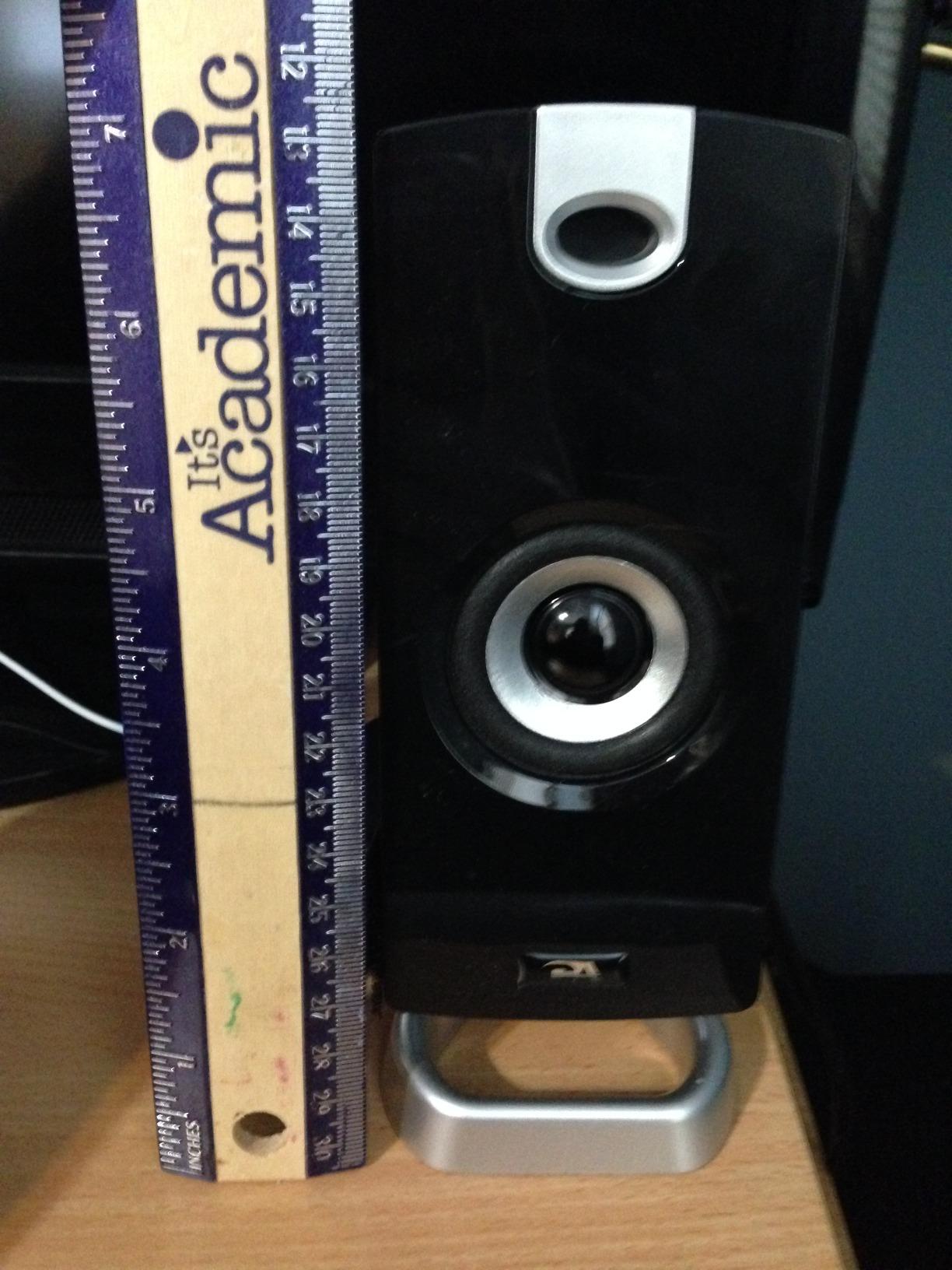
The flat panel satellite design is compact and fits easily on crowded desks. The control pod handles volume and power, which is a nice convenience feature at this price point. The bass volume control on the subwoofer itself lets you adjust the low-end to taste, though you will need to reach under your desk to access it.
The 3.9-star rating reflects the trade-offs inherent in an ultra-budget system. The sound quality is acceptable but not remarkable, and the 18-watt output limits how loud and impactful the audio can get. For gamers who primarily play casual titles, indie games, or simulation games where audio is not the primary focus, the CA-3090 does the job without breaking the bank.
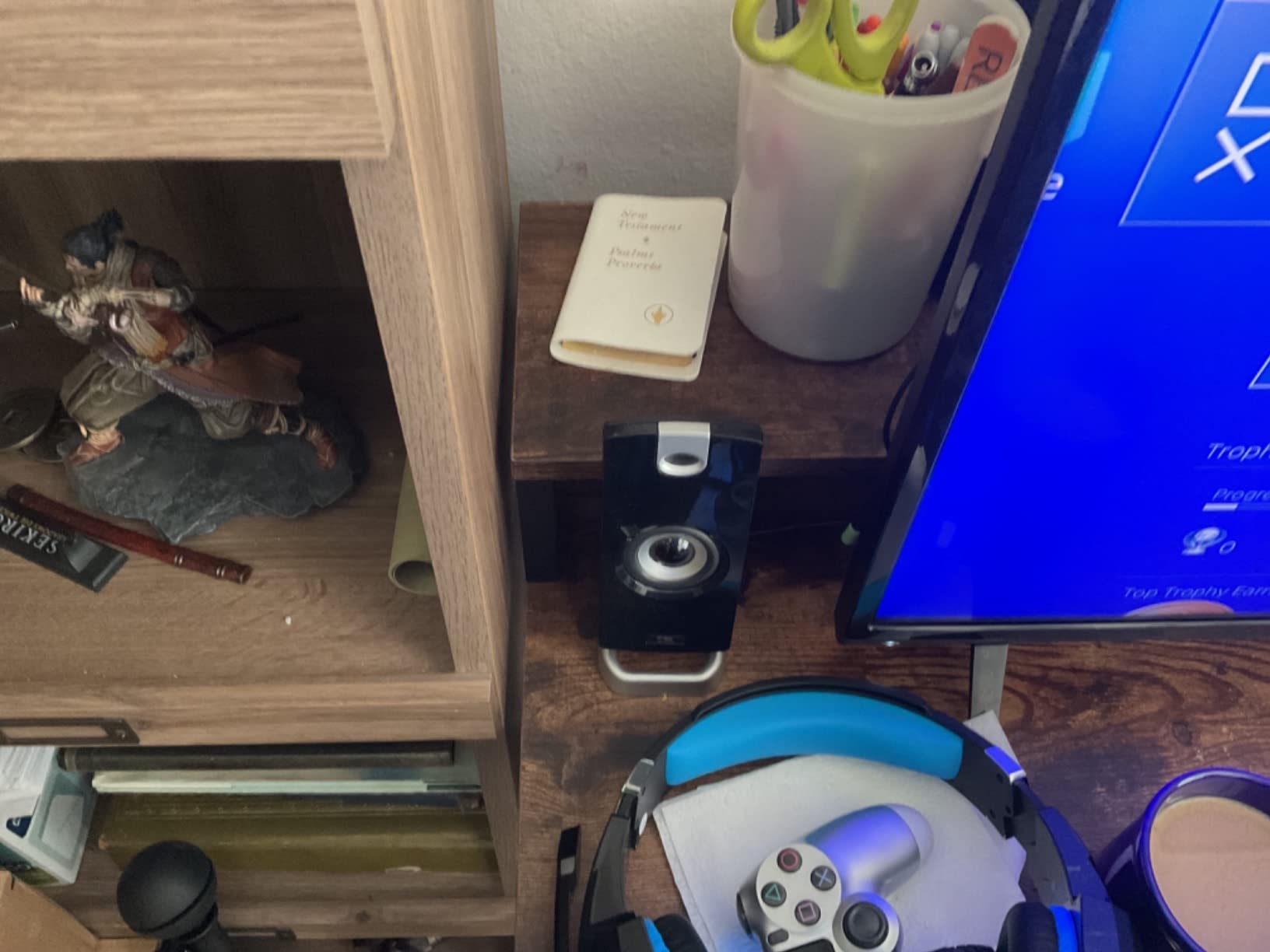
Best Use Cases for the CA-3090
This system is ideal for secondary gaming setups, dorm rooms, or as a first upgrade from monitor speakers. It works well for simulation games, strategy titles, and casual gaming where you want better audio than built-in speakers provide without investing in a premium setup. The plug-and-play 3.5mm connection keeps things simple.
Managing Expectations
The CA-3090 is not designed to compete with THX-certified or high-wattage systems. Some users have reported durability concerns over time, and the system is not Prime eligible. If you can stretch your budget slightly, the Logitech Z313 or Cyber Acoustics CA-3610 offer noticeably better performance. But at its price point, the CA-3090 delivers a functional 2.1 gaming audio experience.
Buying Guide: How to Choose 2.1 Gaming Speakers?
Choosing the right 2.1 speaker system for gaming comes down to understanding what matters most for your setup and gaming habits. Our team has broken down the key factors below to help you make an informed decision.
Why a 2.1 System Makes Sense for Gaming
A 2.1 setup gives you two satellite speakers for stereo sound plus a dedicated subwoofer for low frequencies. This configuration hits the sweet spot between simplicity and audio quality for desktop gaming. Unlike 5.1 or 7.1 systems, you do not need to run cables to rear speakers or deal with complex positioning. The subwoofer handles the bass that adds physical impact to explosions, engine sounds, and cinematic moments, while the satellites deliver the mid and high frequencies where most game audio detail lives.
Wattage and Power Output
Power output is one of the most important specs to consider, but it can be confusing because manufacturers often advertise peak power rather than RMS power. Peak power is the maximum burst a system can handle briefly, while RMS is the sustained power level. For example, the Logitech Z625 advertises 400W peak but 200W RMS. For a typical gaming room, 25W RMS or higher is sufficient. If you want to fill a larger room or prefer louder volumes, look for 50W RMS or more.
Systems like the Klipsch ProMedia 2.1 and Logitech Z625 with 200W peak power will easily fill a medium to large room. Budget options like the Logitech Z313 at 25W RMS are fine for desk-level listening in smaller spaces. Match the power output to your room size and listening preferences.
Connectivity Options
The connection types on a 2.1 system determine what devices you can use and how clean your setup will be. Here is what to look for. A 3.5mm AUX input is universal and works with virtually every device, from PCs to consoles to phones. Optical input provides a cleaner digital signal with lower latency, which is valuable for console gaming on PlayStation or Xbox. USB and USB-C connections offer digital audio from PCs without needing a sound card. Bluetooth lets you stream audio wirelessly from phones and tablets when you are not gaming.
For maximum flexibility, look for systems with multiple inputs. The Logitech Z625 with optical, 3.5mm, and RCA inputs lets you connect three devices simultaneously. The Klipsch ProMedia Lumina and SteelSeries Arena 7 offer both wired and Bluetooth connectivity for the best of both worlds.
Subwoofer Size and Bass Quality
The subwoofer is what separates a 2.1 system from standard desktop speakers, and its size directly affects bass performance. A 4-inch subwoofer like the one on the CA-3090 provides basic bass enhancement. A 5.25-inch subwoofer like the CA-3610 offers more depth and impact. A 6.5-inch subwoofer found on the Klipsch ProMedia 2.1, Klipsch Lumina, and SteelSeries Arena 7 delivers deep, room-filling bass that adds genuine physical impact to gaming.
Also consider the subwoofer design. Down-firing subwoofers push bass toward the floor, which can create a more even bass distribution in a room. Side-firing subwoofers project bass horizontally, which can be more directional. Ported enclosures generally produce louder bass, while sealed enclosures offer tighter, more controlled bass. The enclosure material matters too — wooden enclosures like the one on the Logitech Z625 tend to produce warmer, more resonant bass than plastic ones.
Gaming-Specific Features to Look For
Beyond basic audio specs, several features enhance the gaming experience specifically. RGB lighting that reacts to in-game events adds immersion, as seen on the SteelSeries Arena 7 and Klipsch Lumina. Software EQ customization lets you create profiles for different game types, boosting footsteps for competitive shooters or enhancing dialogue for story-driven RPGs. A control pod or accessible controls on the satellite speakers let you adjust volume and bass without leaving your game. A headphone jack on the control pod or satellite speaker enables quick switching to private listening.
Spatial audio or surround sound simulation can widen the perceived soundstage beyond two physical speakers, helping with directional awareness in competitive games. The SteelSeries Arena 7 includes this through its Sonar Software. Night mode, available on the Klipsch Lumina, compresses dynamic range so explosions do not wake the house while dialogue stays audible during late sessions.
THX Certification: Does It Matter?
THX certification means a speaker system meets specific performance standards for frequency response, output level, and distortion. Systems like the Klipsch ProMedia 2.1 and Logitech Z625 carry this certification, which guarantees a baseline of audio quality. While non-certified systems can still sound excellent, THX certification provides peace of mind that the system has been independently tested and meets rigorous standards.
FAQs
What is the best subwoofer for a 2.1 system?
The best subwoofer for a 2.1 gaming system depends on your room size and budget. The Klipsch ProMedia 2.1 features a 6.5-inch side-firing ported subwoofer that delivers deep, impactful bass for gaming. The Logitech Z625 offers a wooden-enclosure subwoofer with 200W RMS power for maximum output. For budget buyers, the Logitech Z313 compact subwoofer provides solid bass response at an affordable price.
Does a 2.1 system need a subwoofer?
Yes, by definition a 2.1 system includes a subwoofer. The .1 in 2.1 refers to the dedicated subwoofer channel that handles low-frequency effects and bass. Without the subwoofer, you would have a 2.0 stereo system. The subwoofer is what gives gaming audio its physical impact, handling explosions, engine sounds, and deep atmospheric effects that satellite speakers cannot reproduce effectively.
What are the best 2.1 speakers with deep bass?
For deep bass in a 2.1 gaming setup, the Klipsch ProMedia 2.1 THX with its 6.5-inch ported subwoofer is the top choice. The Logitech Z625 THX Certified with 200W RMS and a wooden enclosure subwoofer also delivers excellent deep bass. The SteelSeries Arena 7 with its 6.5-inch downward-firing subwoofer provides powerful, controlled bass tailored for gaming.
How many watts do I need for gaming speakers?
For desktop gaming in a typical room, 25W RMS or higher is sufficient. Budget systems like the Logitech Z313 at 25W RMS work well for close-range listening. For larger rooms or louder volumes, look for 50W RMS or more. The Logitech Z625 at 200W RMS and Klipsch ProMedia 2.1 at 100W RMS deliver plenty of power for immersive gaming. Match wattage to your room size and how loud you like to play.
Conclusion: Finding Your Perfect 2.1 Gaming Speaker System
After testing all 8 systems, our top recommendation remains the Klipsch ProMedia 2.1 THX Certified for its unbeatable combination of sound quality, THX certification, and value. It has been a gaming audio legend for over two decades, and it still holds its own against newer, more feature-packed competitors. For budget-conscious gamers, the Logitech Z313 delivers impressive audio at a fraction of the cost.
If you want the most modern gaming-focused system with RGB lighting, app control, and Bluetooth, the Klipsch ProMedia Lumina 2.1 is worth the premium. For raw power and console compatibility, the Logitech Z625 with its optical input and 400W peak output is a powerhouse choice. And the SteelSeries Arena 7 stands out for gamers who want deep software customization and reactive RGB lighting.
The best 2.1 speaker systems with a subwoofer for gaming in 2026 balance sound quality, connectivity, and features at a price that fits your budget. Whether you pick an entry-level option for casual play or invest in a premium system with all the bells and whistles, a dedicated 2.1 setup will transform your gaming experience in ways that headsets and monitor speakers simply cannot match. Pick the system that matches your gaming style, desk space, and budget, and you will not be disappointed.