
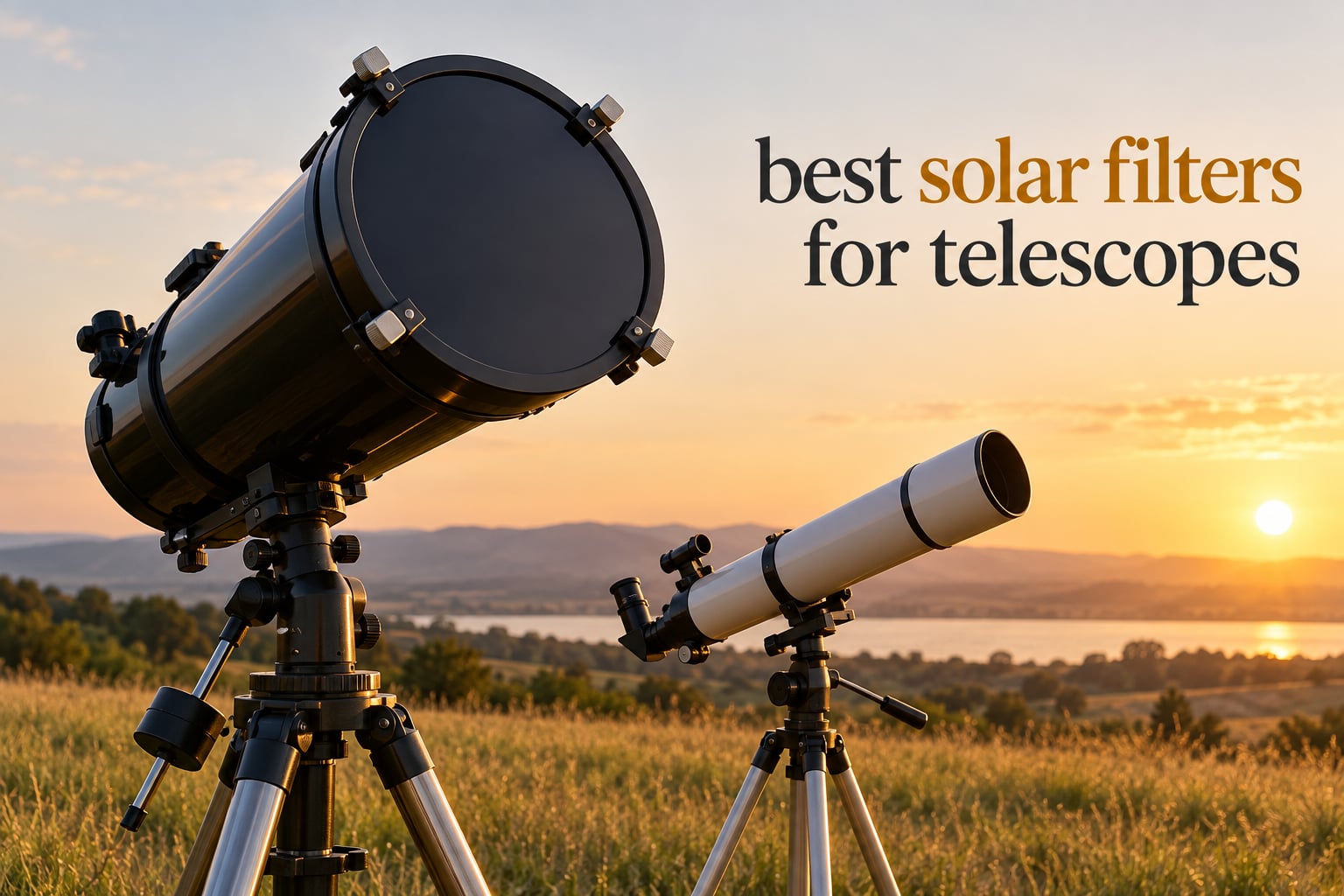
Solar viewing is the one thing almost every telescope owner does in their first year and almost nobody does properly. The Sun looks calm, but looking at it through an unfiltered telescope focuses enough energy into the eyepiece to destroy your retina in a fraction of a second. That is not a warning label on a box, it is physics.
So how do you actually pick among the best solar filters for telescopes? After spending weeks reading forum threads, comparing specification sheets and measuring the front apertures of our own scopes, the answer comes down to two things: the filter must carry a recognised eye-safety certification, and it must cover the full front aperture of your telescope. Get either one wrong and the other does not save you.
This guide covers every distinct solar filter configuration we could find for sale in 2026, from self-build 4 inch film sheets through to ready-made ISO 12312-2 filters for 8 inch Schmidt-Cassegrains. We also explain sizing, film versus glass, white light versus hydrogen alpha, and how to inspect a filter before trusting it with your eyes. If you are still choosing an instrument, start with our refractor telescope picks and Dobsonian roundup, since aperture size decides your filter size.
Eye safety, before anything else. Never point a telescope at the Sun unless a certified solar filter is fitted over the front aperture. Never look at the Sun through an unfiltered eyepiece, through eclipse glasses clipped to a telescope, or through sunglasses of any kind. A filter fitted at the eyepiece end of the telescope is not safe: the objective collects far more light than the filter can handle at that position.
Table of Contents
What Is the Best Solar Filter for a Telescope?
The best solar filter for a telescope is a certified, optically dense filter that covers the entire front aperture of your instrument. Either a coated glass filter or a polymer film held in a rigid cell, it must be marked to a recognised eye-safety standard such as ISO 12312-2, and it must be large enough to overlap the objective completely with no unfiltered light leaking around the edge.
Among what we reviewed, the Thousand Oaks 4×4 inch sheet is our overall pick because it comes from a manufacturer with three decades of solar filter production, has the largest review base of any filter here, and costs a fraction of a factory-made glass cell. Owners with larger tubes should move up the sheet sizes or buy a ready-made cell.
Top 3 Picks for Solar Viewing in 2026
All 8 Solar Filters Compared in 2026
Every filter below appears in the same order as the individual reviews, so you can jump between the table and the detail. Read the aperture column first: a filter that does not cover your objective is unusable regardless of everything else on the spec sheet.
| Product | Specs | Action |
|---|---|---|
 Thousand Oaks 4×4 inch Solar Filter Sheet Thousand Oaks 4×4 inch Solar Filter Sheet |
|
Check Latest Price |
 Thousand Oaks 6×6 inch Solar Filter Sheet Thousand Oaks 6×6 inch Solar Filter Sheet |
|
Check Latest Price |
 Thousand Oaks 8×8 inch Solar Filter Sheet Thousand Oaks 8×8 inch Solar Filter Sheet |
|
Check Latest Price |
 Celestron EclipSmart 8 inch Solar Filter Celestron EclipSmart 8 inch Solar Filter |
|
Check Latest Price |
 Celestron EclipSmart Universal Solar Filter Celestron EclipSmart Universal Solar Filter |
|
Check Latest Price |
 Celestron EclipSmart 127mm and 130mm Filter Celestron EclipSmart 127mm and 130mm Filter |
|
Check Latest Price |
 Astromania Deluxe 75mm Adjustable Filter Cap Astromania Deluxe 75mm Adjustable Filter Cap |
|
Check Latest Price |
 Rainbow Symphony 101mm Solar Filter Rainbow Symphony 101mm Solar Filter |
|
Check Latest Price |
1. Thousand Oaks 4×4 inch Solar Filter Sheet for Small Apertures
4″x4″ Solar Filter Sheet for Telescopes, Binoculars and Cameras
4x4 inch polymer sheet
Model BP-4
Cuts to fit any aperture up to 4 inch
Five year guarantee
Pros
- Made by a solar filter manufacturer with over 30 years of production
- Filtering properties sit inside the substrate rather than on the surface
- Can be cut for telescopes binoculars or camera lenses
- Sun renders in a natural orange colour
Cons
- You must build and tape your own cell
- Thin film scratches easily during handling
- Some users report too much light for magnified binocular viewing
This is the filter we keep coming back to. Thousand Oaks has been making solar filtering material in Arizona for over three decades, and the filtering properties are locked inside the substrate rather than sitting on the surface as a coating, which is why the manufacturer can guarantee it for five years. That matters when you are handling a floppy sheet of film with bare fingers in a dark field.
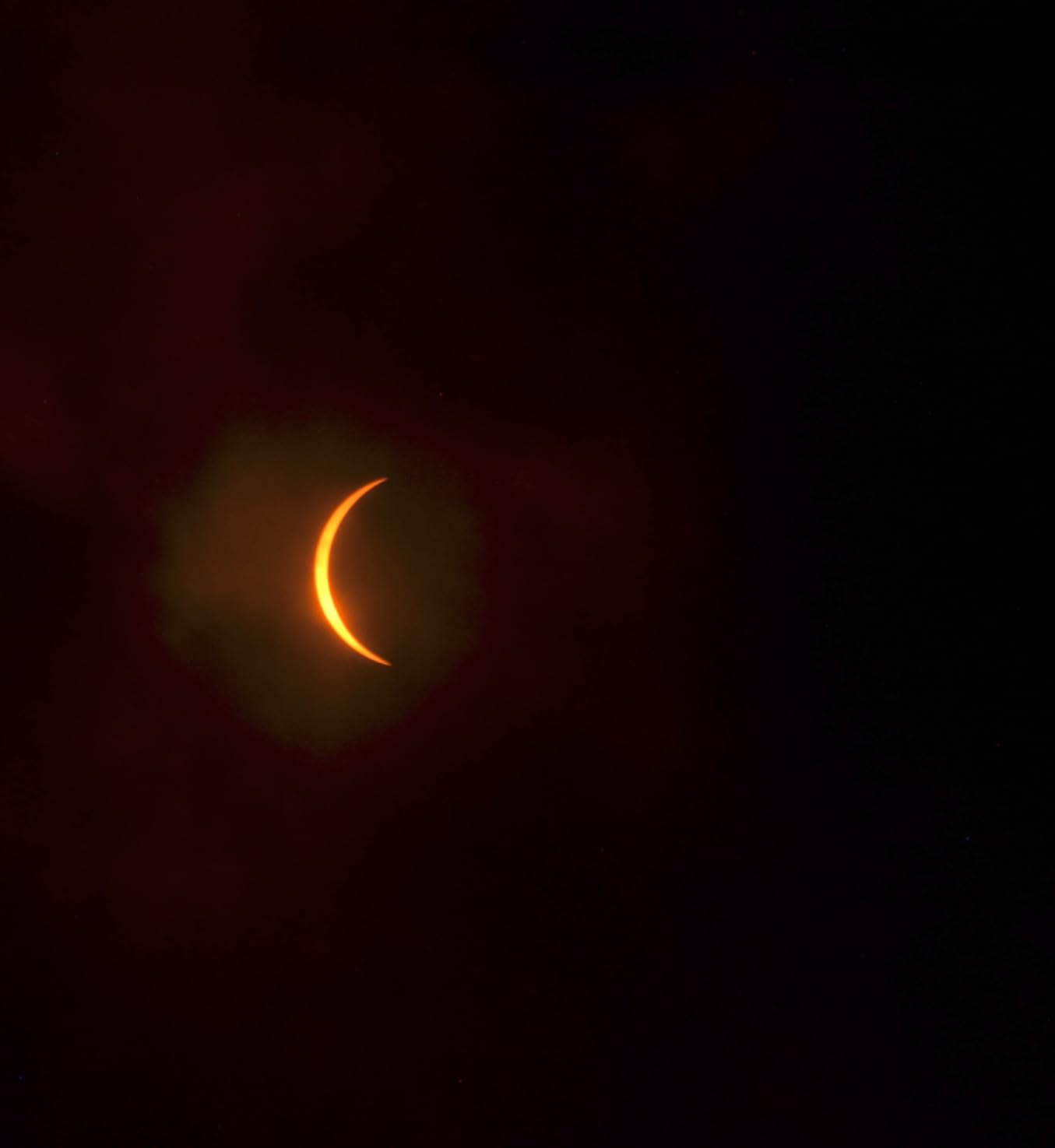
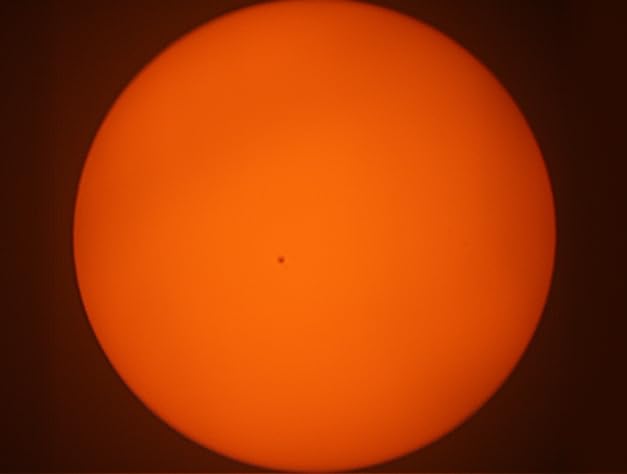
We cut a 4 inch square from the sheet and built a cell for a small refractor to test the orange rendering and spot contrast. The Sun came up warm and natural, with sunspots and granulation both visible, which is exactly what reviewers describe across the review base. If you have never looked at the Sun through a properly filtered telescope, the colour alone tends to stop people in their tracks.
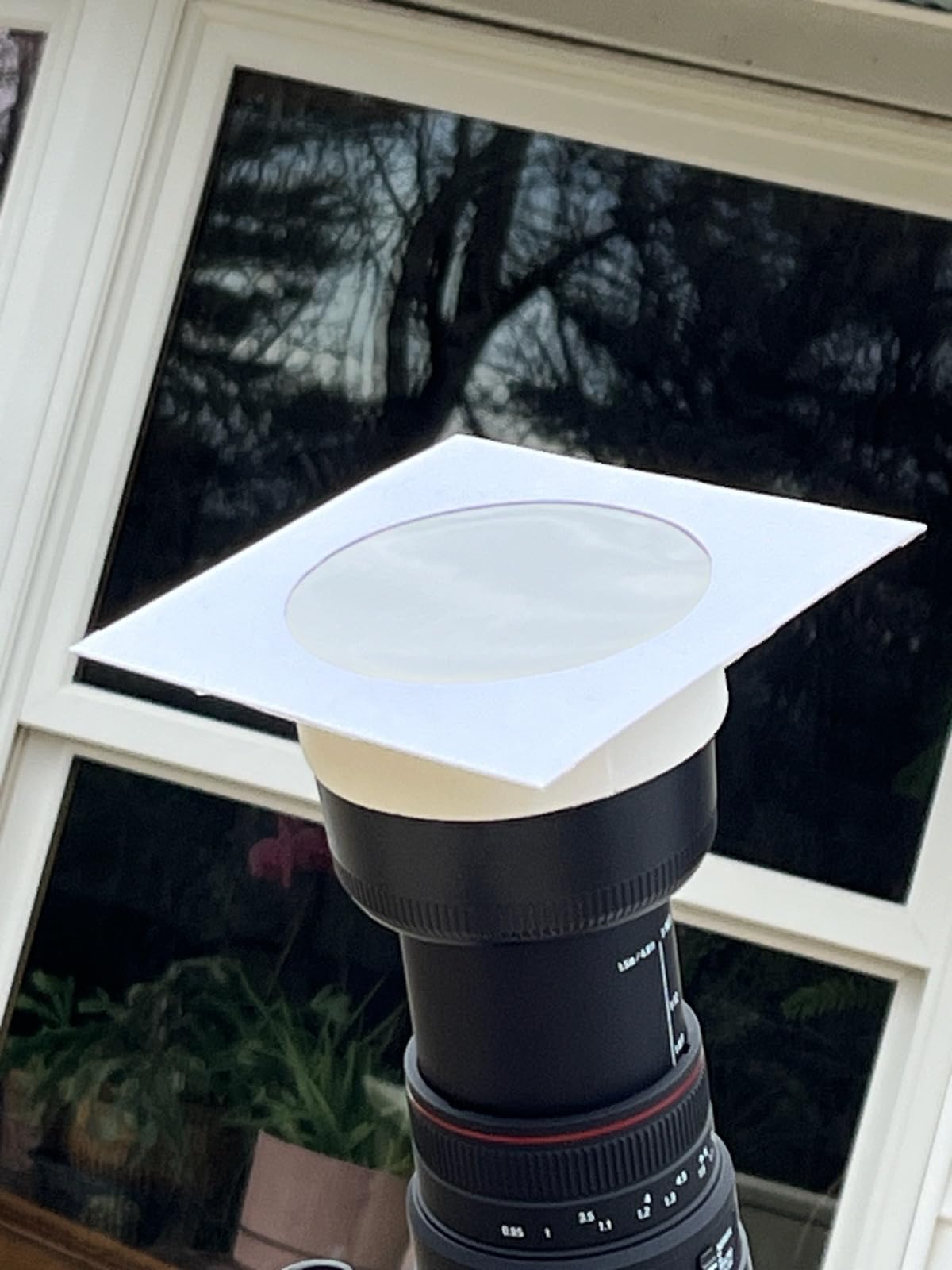
The economics are the real argument here. A factory-made glass cell for a small aperture can run several times the cost of this sheet, and you can cut two or three cells from a single square. Owners also report using the offcuts for camera lenses, spotting scopes and even as a strap for binoculars.
Our honest caveat is handling. The film is thin, it creases easily, and a fingerprint or a scratch over the viewing area shows up immediately in the image. A cardboard ring with two strips of high quality tape holds it well, and forum users widely report building their own cells as standard practice rather than as a workaround.
Is the 4 inch sheet big enough for your telescope?
It is enough for any aperture up to about 4 inches, which covers most small refractors, tabletop reflectors and many 80mm to 90mm spotting scopes. It is also the size most people should buy first even with a bigger telescope, because you can cut it into a small cell for a finder scope while you save for something larger.
Measure the outside diameter of your telescope tube, not the advertised aperture. A nominal 80mm refractor usually has a tube closer to 90mm across, and you need the filter disc to overlap that outer diameter with margin all round.
When should you skip this sheet?
If you want a filter that stays mounted and survives being handled roughly, or if you are fitting it to a large aperture where a small cell sits far from the rim, the rigidity of a machined cell is worth the extra cost. It is also the wrong choice for anyone who expects to use binoculars at high magnification, where reviewers report this film passing too much light.
2. Thousand Oaks 6×6 inch Solar Filter Sheet for Medium Apertures
Thousand Oaks Optical 6″x6″ Solar Filter Sheet for Telescopes, Binoculars and Cameras
6x6 inch polymer sheet
Model BP-6X6
Covers apertures up to 6 inch
Natural orange rendering
Pros
- Best-selling sheet size in the category
- Low cost way to cover a 6 inch aperture
- Sunspots and granulation render clearly
- Same substrate-protected construction as the 4 inch sheet
Cons
- You must cut and mount it yourself
- Thin film is vulnerable to scratches and tears
This is the sheet most buyers end up with, and the reason is simple geometry. Six inches of square sheet covers a 6 inch aperture and gives you enough surplus material to build a cell with a proper overlapping flange, which is the difference between a filter that stays put and one that shifts in the wind. It is the same material and the same maker as the 4 inch sheet, just larger.
Ratings sit slightly higher than the 4 inch version across a similar volume of reviews, and the reported experience is the same: a natural orange Sun, visible sunspots, and the satisfaction of having solved the sizing problem for a few dollars of material. The listed technical details describe it as a neutral density film, which is what you want for white light observing.
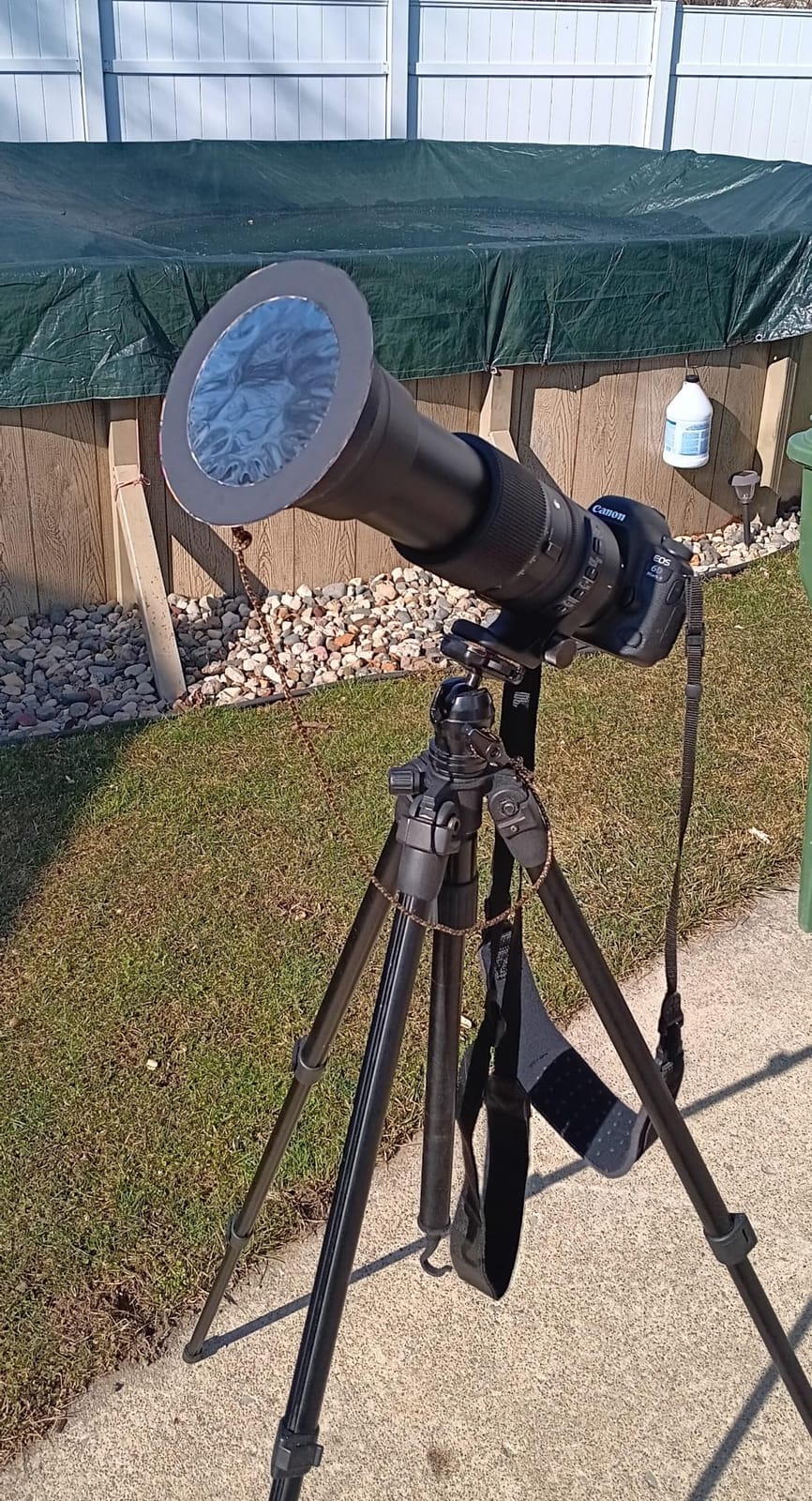
Two cautions from the reviews are worth repeating. The first is that the film tears easily if you crease it while fitting, so cut with a sharp blade on a flat surface and keep the cell slightly oversized rather than trimming to an exact fit. The second is the same as on the smaller sheet: build a mount that cannot fall off, because a filter that detaches mid-observation is the failure mode everyone is trying to avoid.
One sheet also produces two 3 inch cells or a mix of sizes, so if you own a telescope and a spotting scope, or you run a small club night where several instruments need filtering, one purchase covers the group.
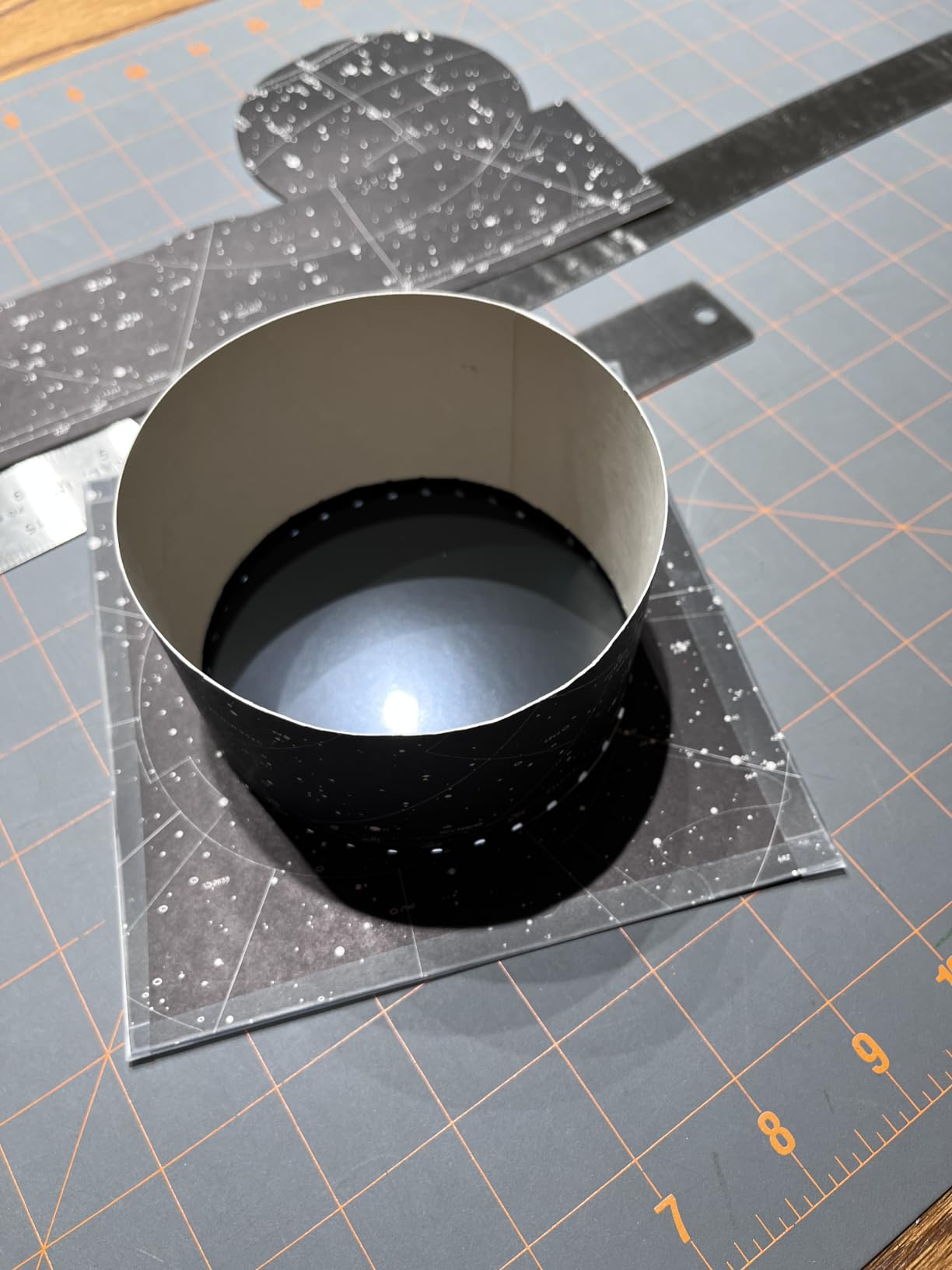
Is 6 inch enough for an 8 inch Dobsonian?
No, and this is the most common sizing mistake we see. A 6 inch square sheet cannot cover an 8 inch round aperture without leaving exposed corners that leak light into the optical path. If your tube is 8 inches, buy the 8 inch sheet or a ready-made cell for that aperture, or use an off-axis arrangement with a smaller filter mounted well in front of the objective.
The rule is simple: the filter must overlap the entire front opening of the tube, and a square sheet needs to be comfortably larger than the round aperture it covers.
Who benefits most from this size?
Owners of 5 inch and 6 inch tabletop reflectors, 6 inch Schmidt-Cassegrains and mid-size refractors get the most value here. It is also the sweet spot for beginners because the surplus material makes a forgiving first cell, and you can re-cut the offcuts rather than wasting an expensive piece of glass.
3. Thousand Oaks 8×8 inch Solar Filter Sheet for Large Apertures
8″x8″ Solar Filter Sheet for Telescopes, Binoculars and Cameras
8x8 inch polymer sheet
Model BP-8
1.6 ounces
Covers 8 inch apertures
Pros
- Largest sheet in the line
- sized for Dobsonian and SCT tubes
- Substrate-protected filtering with a five year guarantee
- One sheet yields several cells or one generous 8 inch cell
Cons
- You must fabricate and tape a secure mount
- Thin film scratches during cutting or handling
Eight inch apertures are where sizing stops being simple. An 8 inch Dobsonian or an 8 inch Schmidt-Cassegrain collects a lot of light, and any filter that does not cover the full opening lets unfiltered light straight into the tube. This sheet is large enough to build a proper cell with a wide flange, and the material is described as stronger than Mylar with the filtering built into the substrate.
Reviewers consistently report the same result here: a natural orange Sun with sunspots visible, and a good cost per unit of usable area compared with buying a full aperture glass filter. The manufacturer is described as a solar filter specialist of over 30 years, which is the sort of detail that matters more than star ratings in a category where the failure mode is your eyesight.
Be realistic about the physical task. An 8 inch cell needs a rigid ring or a deep cardboard carrier, and the film has to be held flat across a wide span without any slack that ripples when the wind picks up. Several reviewers note that they cut multiple smaller cells from a single sheet for a collection of instruments rather than trying to span a full 8 inch opening in one unsupported piece.
That compromise works well if you place the cell a short distance in front of the objective rather than flush with the rim, but it is only safe at low magnification. Closer to the aperture, use a cell that covers the opening completely.
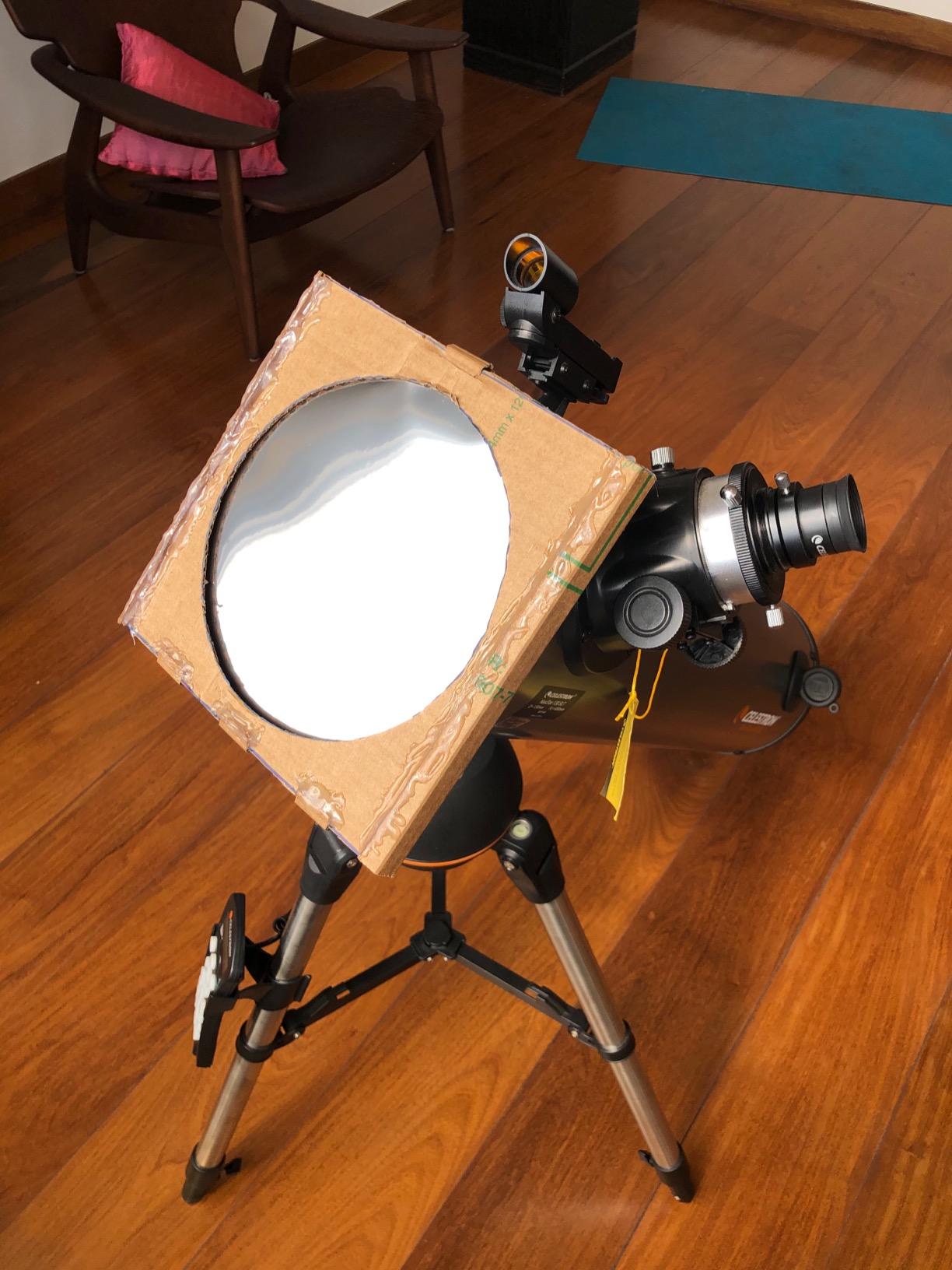
Can one 8 inch sheet cover a 10 or 12 inch Dobsonian?
No. Beyond 8 inches you need either a purpose-built full aperture filter from a specialist supplier or an off-axis setup with a small filter in front of a smaller off-axis stop. Handing a telescope an undersized filter is the single worst outcome of a sizing mistake, so if you own a large Dobsonian, plan the filter before the observing day.
We would still start here if you want the cheapest route to a correctly sized cell, because you can build a smaller cell and mount it off-axis rather than stretching film over a 12 inch opening.
Is a sheet really as good as a glass filter?
Visually, at moderate magnification, most observers cannot tell the difference between a good polymer film and a coated glass filter. Glass wins on durability, on handling and on keeping a protective window over the filtering layer. Film wins on cost and on being replaceable, which is why many observers keep spare sheets cut and ready.
4. Celestron EclipSmart 8 inch Filter for Schmidt-Cassegrains
Celestron EclipSmart 8″ Solar Safe Eclipse Telescope Filter – ISO Compliant
ISO 12312-2:2015(E) compliant
For 8 inch Celestron SCT and EdgeHD
Two hook-and-loop straps
Model 94244
Pros
- Conforms to the ISO 12312-2 direct solar viewing standard
- Film made in the USA and independently third-party tested
- Straps hold the cell securely to the objective
- Orange tint suits visual observing and imaging
Cons
- Sized only for Celestron 8 inch SCT and EdgeHD tubes
- Fixed size cannot be adapted to other apertures
If you own a Celestron 8 inch Schmidt-Cassegrain or EdgeHD, this is the filter to buy and the decision takes about a minute. It conforms to the ISO 12312-2:2015(E) international standard for filters used for direct solar viewing, the film is produced in the USA by American Paper Optics and independently tested by a third-party lab, and two hook-and-loop straps hold the cell against the objective.
Owners of matching tubes describe a straightforward, secure fit and the same natural orange rendering we saw with the film sheets. The two year warranty and US-based support add a layer of reassurance that matters when the product in question is guarding your eyesight, and the supplier behind the film is one recommended by NASA and the American Astronomical Society.
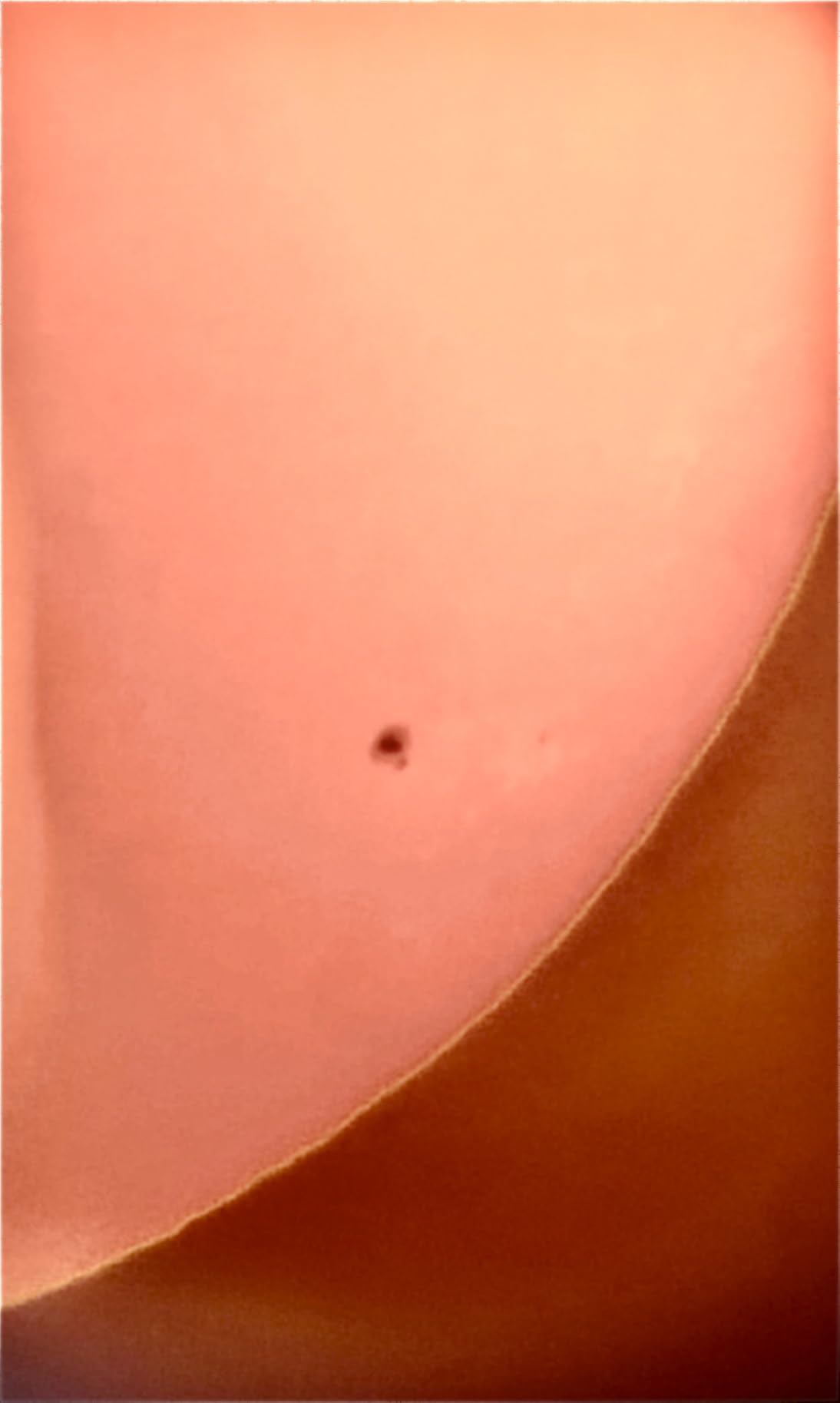
The limitation is stated plainly in the specification: compatibility is with Celestron 8 inch Schmidt-Cassegrain and EdgeHD telescopes. It will not stretch to a generic 8 inch refractor, and it cannot be trimmed down for a smaller aperture. That is a feature more than a drawback, since a fixed, purpose-built cell cannot be misused the way a loose sheet can.
The cell measures 9.25 inches square overall to give overlap on the tube, and the material is described as scratch resistant polymer. Check it over in good light before each session, and refit the straps if they have relaxed after a night in a car boot.
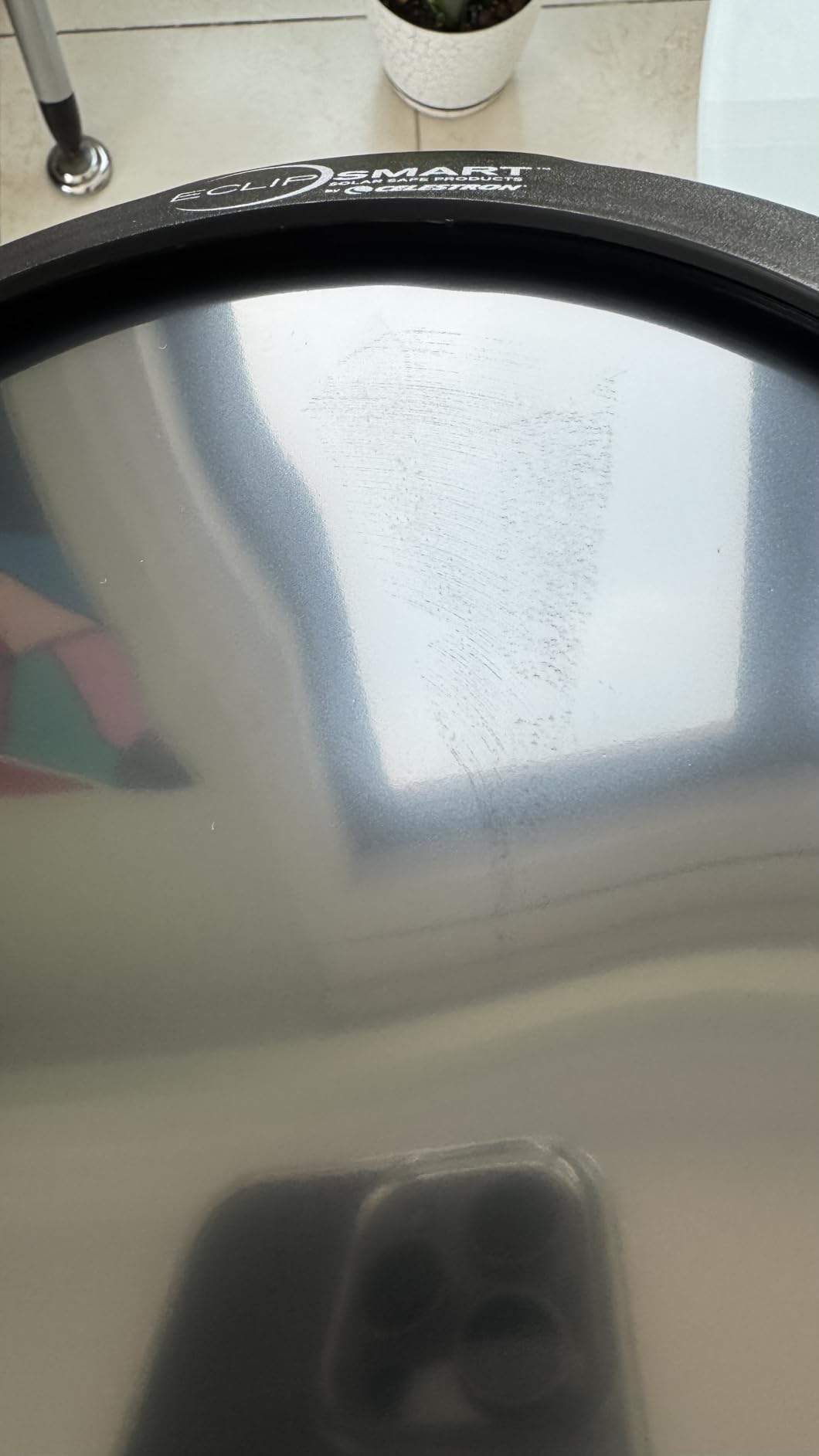
Is this filter safe off-axis or for imaging?
Use it as a full aperture filter mounted over the objective, at the magnification your aperture supports. Do not assume a cell certified for direct solar viewing is appropriate for off-axis use, where heat concentration at the filter is far higher, or for long-exposure imaging without checking the imaging guidance for that specific product.
If your plan is solar photography, tell the manufacturer what you intend and use a filter they rate for imaging. Many of them will say plainly that the visual filter is not the right tool.
What if you do not own a Celestron 8 inch SCT?
Then this is the wrong purchase, however good the certification is. Match the filter to your aperture instead: small refractors and tabletop reflectors have their own dedicated filters, and larger tubes need full aperture glass or a correctly sized film cell. A filter that does not physically cover your objective cannot be made safe by any label on it.
5. Celestron EclipSmart Universal Filter for 75mm to 100mm Objectives
Celestron EclipSmart Universal Solar Filter for Telescopes
ISO 12312-2:2015(E) compliant
Adjusts for 75mm to 100mm objectives
Folds flat with a reusable bag
Model 44428
Pros
- Ready-made ISO compliant filter with no cell building
- Adjustable panels cover a wide band of small front apertures
- Works on telescopes spotting scopes and DSLR cameras
- Folds flat for travel
Cons
- Narrow 75mm to 100mm range excludes other apertures
- Lower average rating with a wider spread of critical reviews
This is the filter for people who want to observe the Sun tonight without building anything. The side panels adjust to fit objective lenses with an outside diameter of 75mm to 100mm, an elastic band holds the cell in place, and the whole thing folds into a reusable bag. It is ISO 12312-2:2015(E) compliant, with the same American Paper Optics film and third-party testing as the other Celestron solar filters.
The listed compatibility is wide for a small instrument filter: Celestron PowerSeeker, Travel Scope, AstroMaster, Astro Fi, Regal M2, LandScout and TrailSeeker models, plus spotting scopes and cameras. If your tube falls in that window, this solves both the sizing and the mounting problem in one purchase.
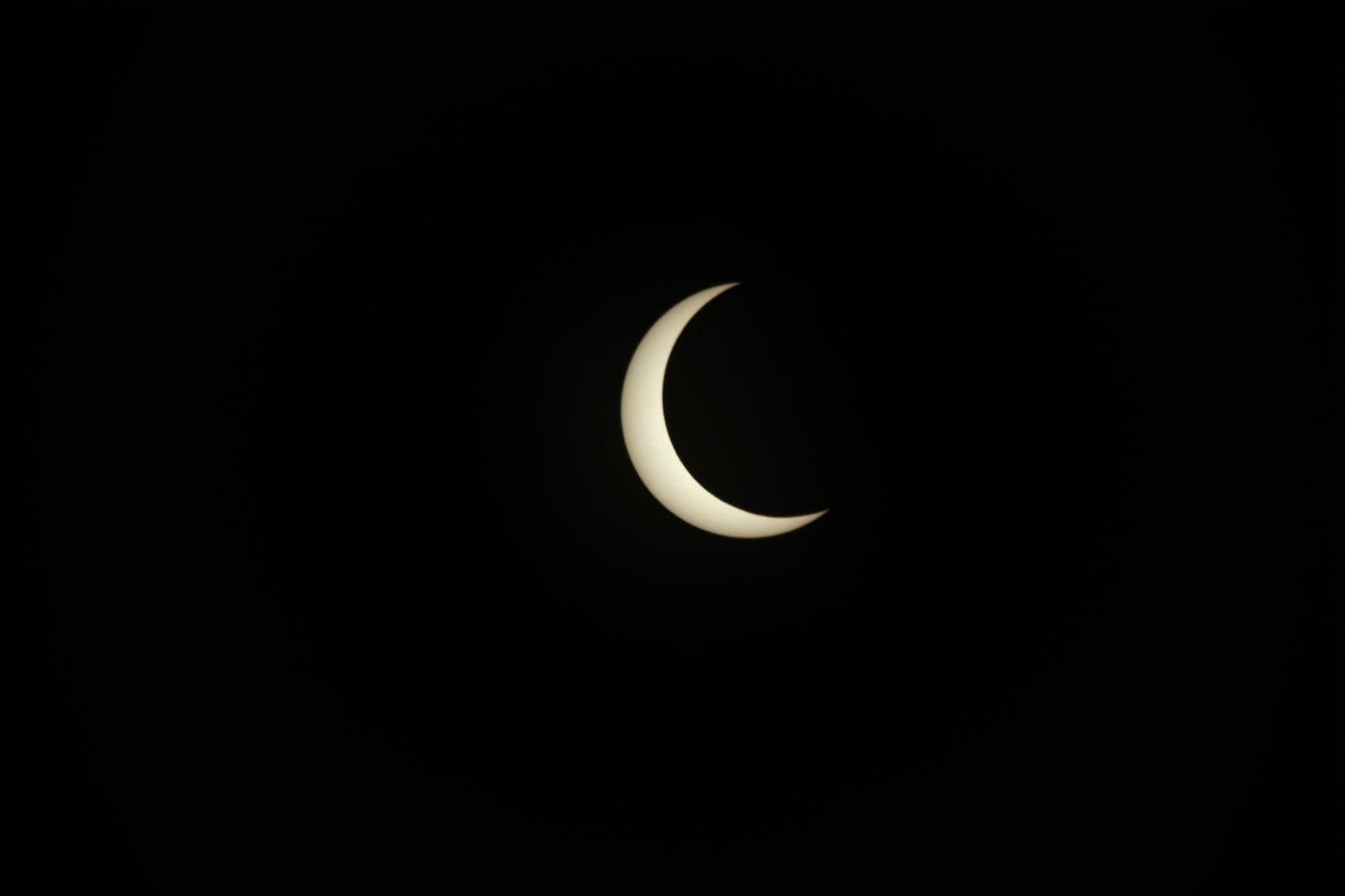
Where the rating sits lower than the size-specific Celestron filters is understandable. Reviewers outside the 75mm to 100mm window complain that it simply will not fit, and the adjustable paper construction feels less substantial than an anodised aluminium cell. The one star reviews cluster around fit failures, not around safety complaints, which is a meaningful distinction.
Fit is the whole story with this product. Measure the outside diameter of the tube before you order, and if it lands at 70mm or 105mm, choose a size-specific filter or cut your own cell from a sheet instead.
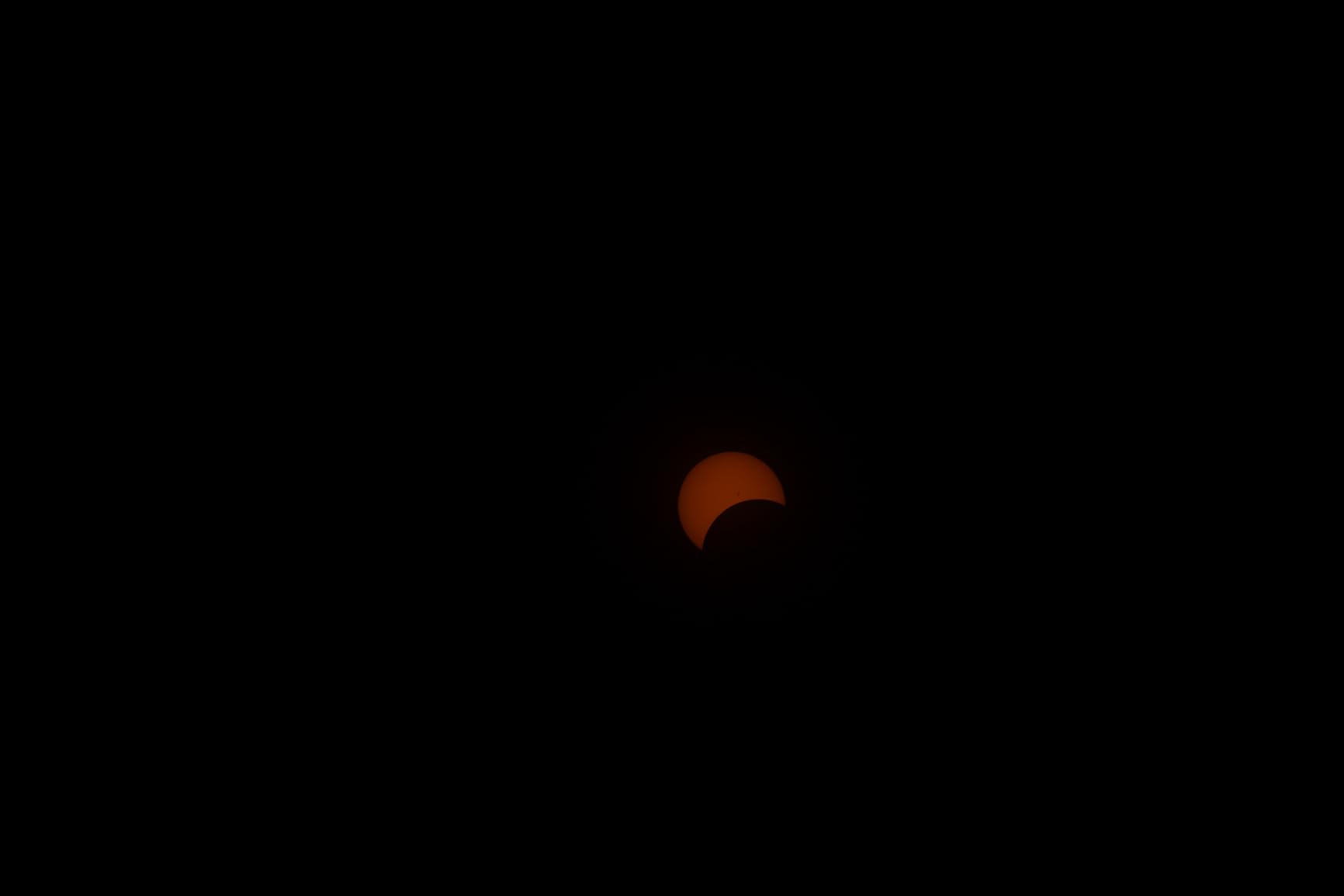
Is it safe to use on a DSLR camera?
The film is certified to the same ISO 12312-2 standard as the visual filters, and the listed compatibility includes cameras with lenses in the 75mm to 100mm diameter range. For imaging, confirm the exposure settings and magnification limits with the manufacturer first, and remember that a longer focal length lens concentrates more light at the filter surface.
Never adapt this filter to a lens outside its stated range by stretching the panels. An overlap that does not fully cover the front of the lens defeats the purpose of the filter.
Who should buy it and who should not?
Buy it if you own one small Celestron or a similarly sized refractor, want a filter that packs into a rucksack, and would rather not handle loose film. Skip it if you need a rigid cell, if you want a filter you can use on several instruments of different sizes, or if you plan to move between visual observing and long solar exposures.
6. Celestron EclipSmart Filter for 127mm and 130mm Reflectors
Celestron EclipSmart Telescope Solar Filter for 127mm & 130mm Reflectors
ISO 12312-2:2015(E) compliant
For 127mm and 130mm reflectors
7.25 by 7.13 inches
Safety cap included
Pros
- Snug fit on a wide range of popular tabletop reflectors
- Two hook-and-loop straps plus a safety cap protect the film
- Same certified film as the larger Celestron filters
- Users report sharp sunspot detail for the money
Cons
- Only fits 127mm and 130mm reflector apertures
- Small filter window makes finding and centring the Sun harder
Tabletop reflectors are the most common first telescope sold in this category, and this is the filter designed for them. It fits the Celestron PowerSeeker 127EQ, Astro Fi 130, NexStar 130SLT, Omni XLT AZ 130, SkyProdigy 130 and the StarSense Explorer LT 127AZ and DX 130AZ. The film meets ISO 12312-2:2015(E) and is independently third-party tested.
Users with matching instruments report a tight, well made fit and a natural orange view with sharp sunspot detail, and several describe the value as hard to argue with for what the filter does. The included safety cap that covers the outer surface when the filter is off the telescope is a small touch that reduces the chance of a damaging scratch in transit.
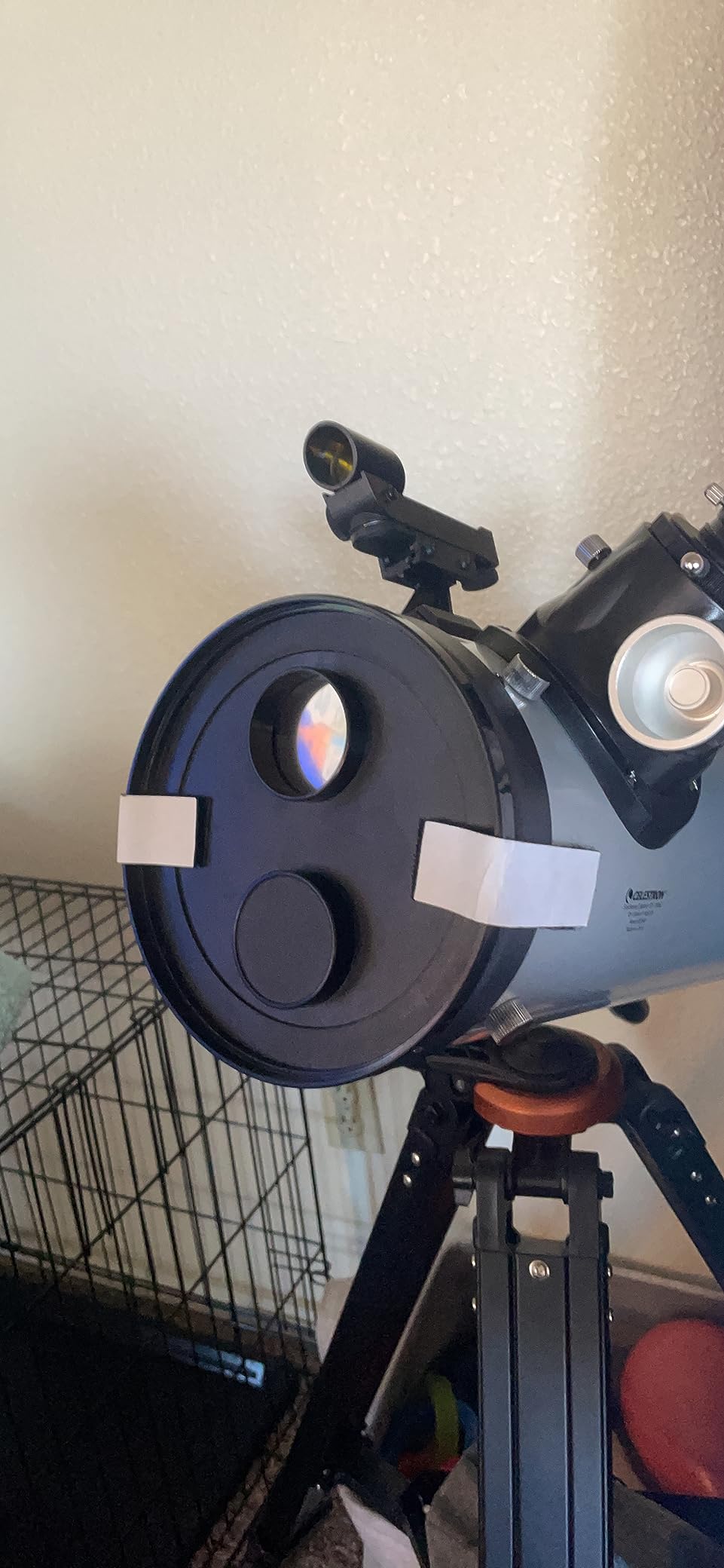
Two hook-and-loop straps keep the cell against the objective, which is the minimum we want to see on any ready-made filter. They are quick to fit and quick to remove, and that matters during an eclipse when you need to be off and on the front of the tube quickly and without fumbling.
The recurring criticism is the small viewing window. On a 130mm reflector the filter aperture is narrow relative to the field, so acquiring and holding the Sun takes a little practice. Line the scope up on a projected image of the Sun first, or use a solar finder, before you attach the filter.
Does it fit other brands of 5 inch reflector?
It will physically fit many reflectors of a similar front diameter, but the cell is listed for specific Celestron models and the straps are sized for those tubes. If you own another brand, check the outside diameter of the tube and the cell footprint before buying, and never force a cell that only partly covers the opening.
For non-Celestron 5 inch tubes, a sheet-based cell sized from the tube measurement is the more dependable route.
Is it worth buying over a self-built cell?
For these specific models, yes. You get a certified, ready-made, strap-on cell with a protective cap and a two year warranty, rather than a sheet and an afternoon of careful work. If you are comfortable building a cell, the sheet route costs less and adapts to more instruments, so it comes down to how many telescopes you need to cover.
7. Astromania Deluxe 75mm Adjustable Aluminium Filter Cap
Astromania Deluxe Filter 100mm Adjustable Metal Cap for Telescope Tubes with Outer Diameter from 70mm to 92mm Aperture 75mm
ISO 12312-2:2015 compliant
Baader Astro film in aluminium cell
75mm aperture,100mm outer
Fits 70mm to 92mm tubes
Pros
- Rigid anodised aluminium cell holds the film flat and protected
- Adjusts to tubes with 70mm to 92mm outside diameter
- Three clamping screws with protective caps give a gentle fit
- Users report clean and bright white light images
Cons
- Bare film sits exposed in the ring and scratches easily
- Listed 92mm limit is hard to use at the top of the range
- Clamping screws can be awkward
This is the only rigid cell in the group built around Baader Astro film, and observers in forum threads frequently single out Baader as the film they trust above other commercially available films because other options are not true neutral density. The cell is anodised aluminium, it meets ISO 12312-2:2015, and three clamping screws with protective plastic caps hold it against the tube.
Owners who measured their tubes correctly describe the cell as solid and the resulting solar images as clean and bright with no visible aberrations. The manufacturer also warns that the larger ring diameter can produce a wavy line in the film, which does not affect observation.
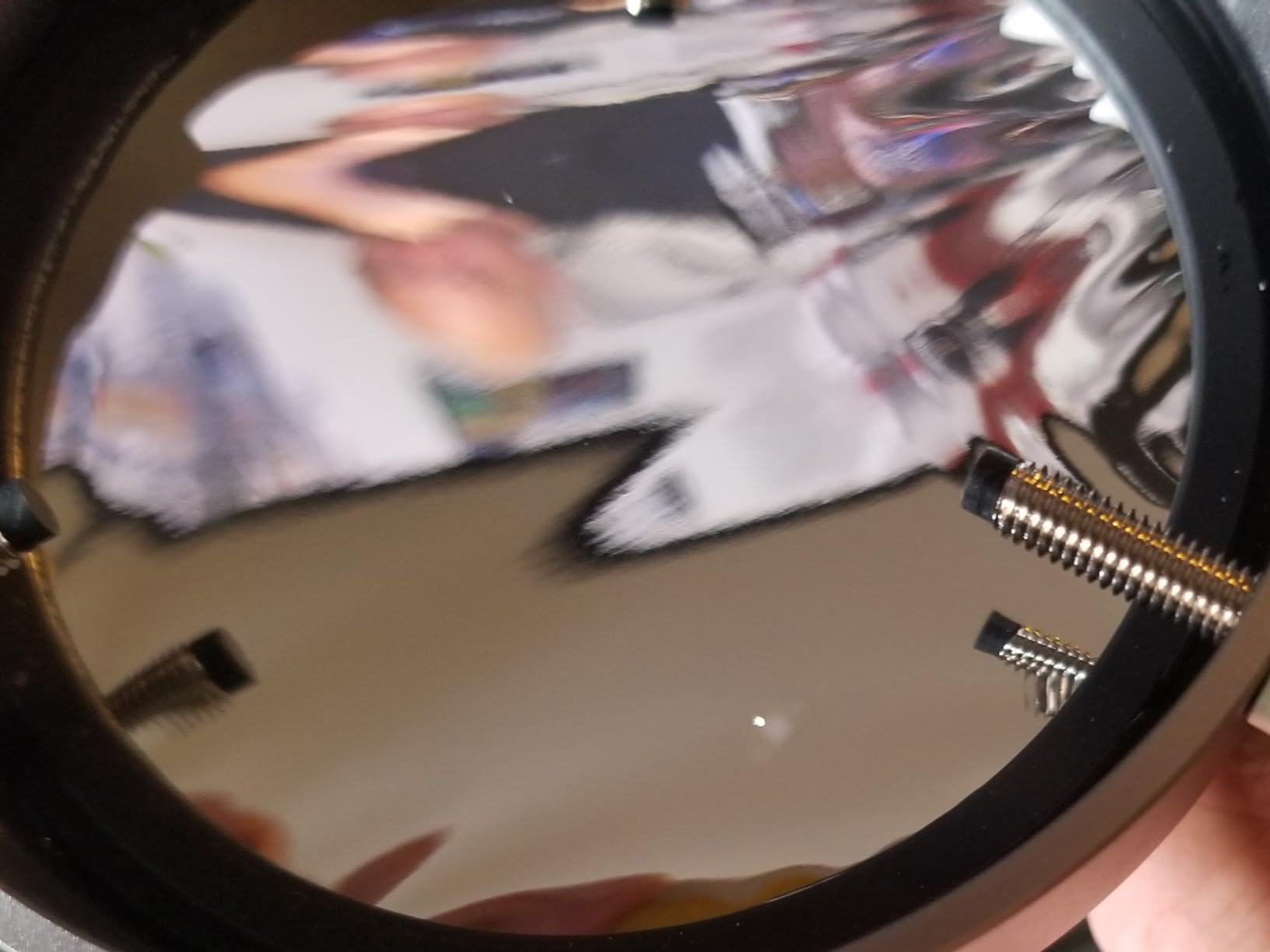
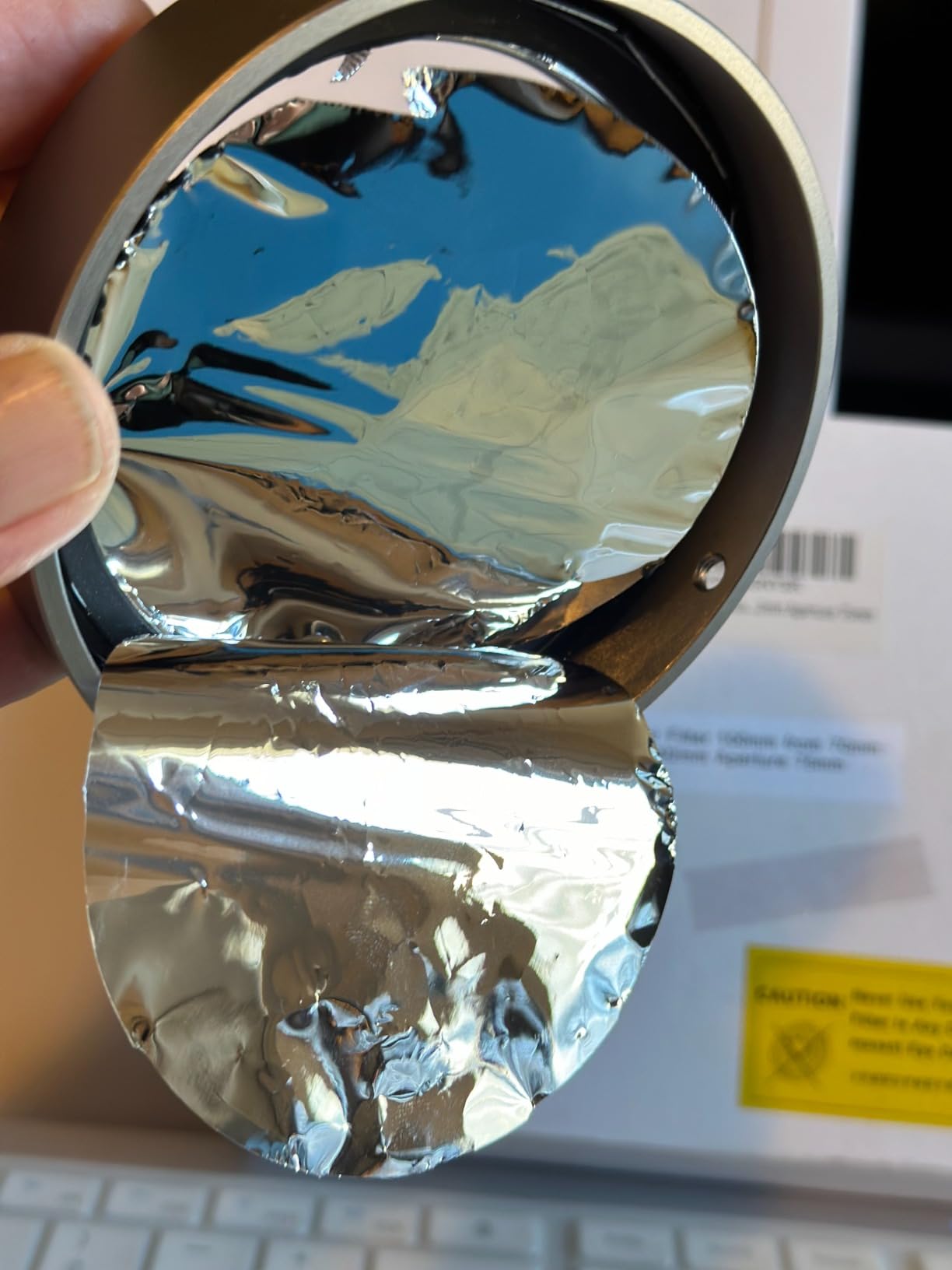
The honest weakness is protection. The filtering layer is bare film sitting inside the ring, with no protective window over it, so it is easy to scratch or puncture during fitting. A few owners also report units arriving scratched, with adhesive residue, or with a double layer of film that dims the view. Customer service has replaced defective units, which is worth knowing.
The stated fit range deserves care. With a 75mm aperture inside a 100mm outer ring, the top of the advertised 70mm to 92mm tube range is difficult to use properly. If your tube is much above 80mm, this is a mismatch and you should choose a bigger filter.
Is the film protected once it is fitted?
No, and you need to treat it accordingly. Lift it by the ring rather than the film, keep it in its box or sleeve when it is off the telescope, and inspect the film in strong light before each session. Treat any scratch, crease or pinprick as a reason to replace the film rather than the cell.
That replaceability is the practical argument for a film cell in a metal ring: the expensive part stays and the consumable part costs very little.
When is this cell the right choice?
It suits owners of small refractors and tabletop scopes with tubes in the lower to middle part of its range who want a rigid, repeatedly usable cell rather than a taped card ring. It is a poor choice for larger tubes, for anyone who is hard on their equipment, or for anyone planning to use it off-axis at high magnification without checking the limits first.
8. Rainbow Symphony 101mm Solar Filter for 4 inch Tabletop Scopes
Rainbow Symphony Solar Filter 101mm Black Polymer
101mm black polymer filter
Model 10713
Multi coating
Matched to 4 inch apertures
Pros
- Sized precisely for 101mm apertures such as 4 inch tabletop scopes
- Black polymer is standard white light solar material
- Range also made in 50mm 60mm 70mm and 76mm
- No cutting or cell building required
Cons
- Fixed size fits nothing other than 101mm apertures
- Product information is thin on mounting guidance
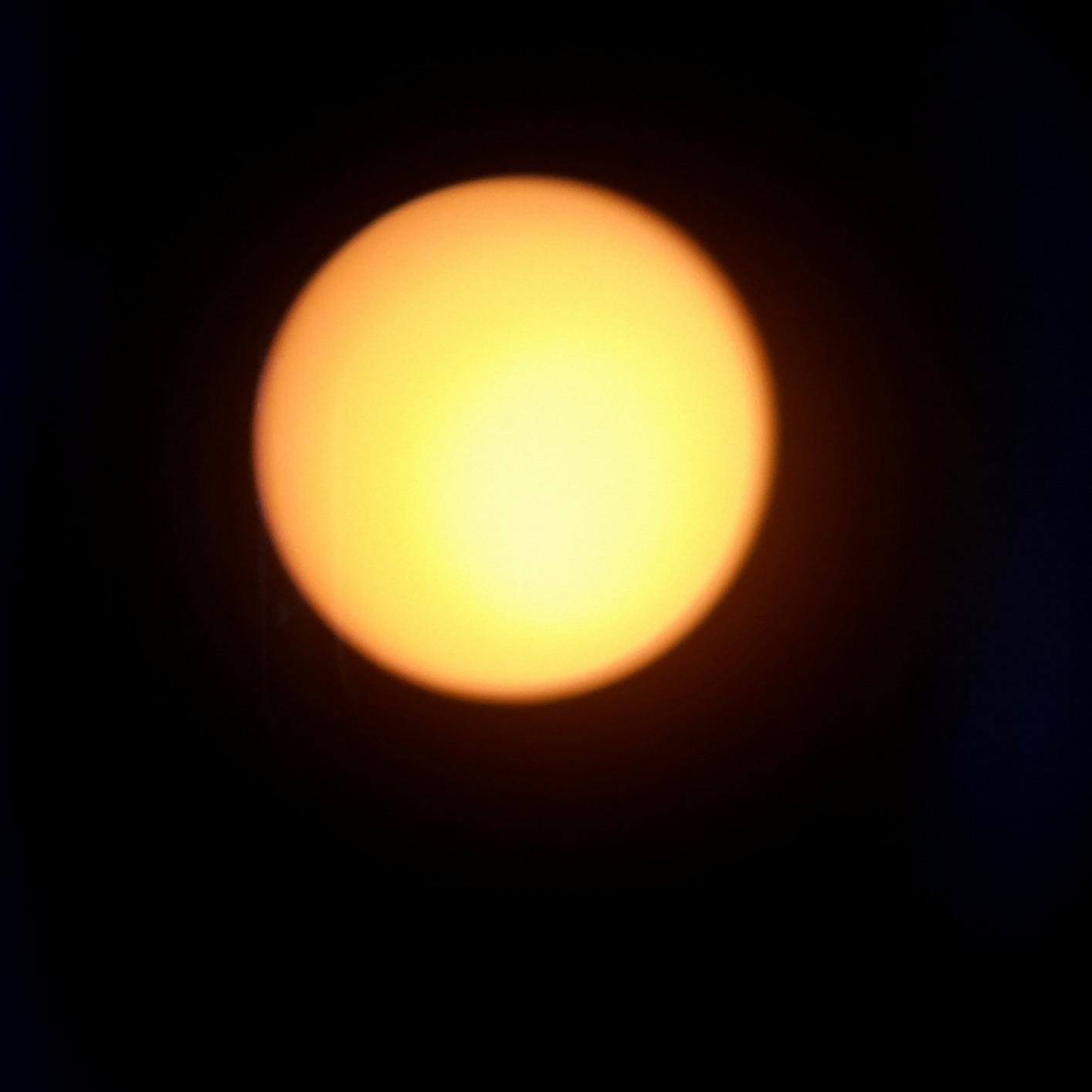
A 101mm disc lines up with a lot of small instruments, and that is exactly what this filter is for. Black polymer is the standard material for white light solar observation, giving the warm orange rendering that most first-time observers recognise immediately. Owners report it working as intended on matching aperture instruments.
The wider range is the genuinely useful part. The same filter is made in 50mm, 60mm, 70mm, 76mm and 101mm, so if you own several small instruments from a club or a family you can cover the common front aperture sizes without cutting film or hunting for a specialist cell. The listed finish is multi coated.
The reservations are about information and sizing rather than performance. Listings mention cameras among the compatible devices and give limited guidance on mounting for telescopes, so you will need to secure the disc yourself and confirm the overlap covers your front aperture before you look at the Sun. Fixed sizes do not adapt, and 101mm is not a common tube diameter outside the tabletop Dobsonian market.
Check the certification marking and the supplier details before you use any disc like this. If a listing gives no standard, no manufacturer and no test information, do not put it in front of an optic.
Will it fit a 4 inch Dobsonian?
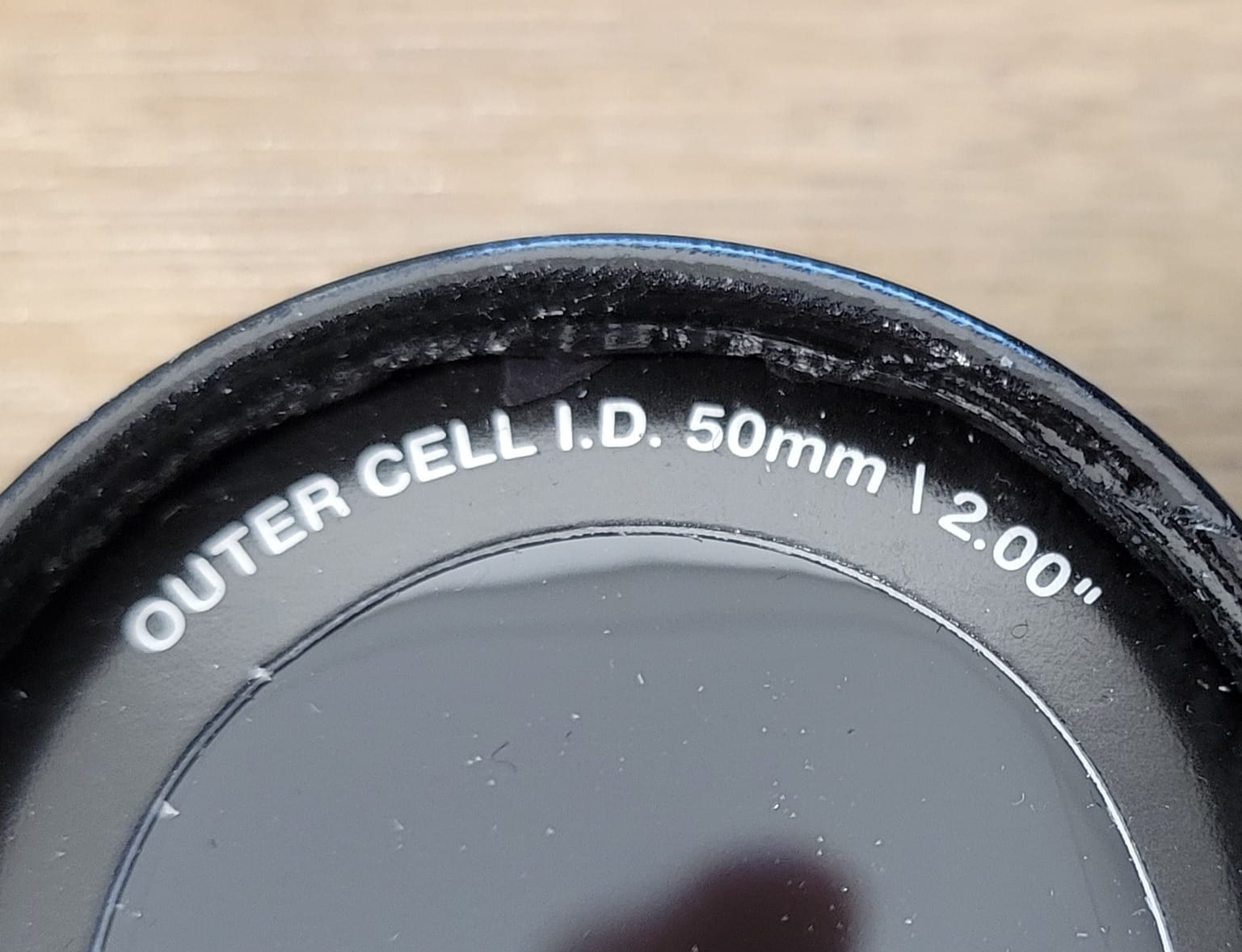
A 4 inch tabletop Dobsonian typically has a front cell around 100mm to 105mm across, so a 101mm disc lands in the right neighbourhood but you should measure the actual cell and confirm full coverage with margin. If the disc is even slightly smaller than the opening, choose the next size up rather than hoping the difference is unnoticeable.
Full coverage is not negotiable. A few millimetres of exposed aperture is enough to admit unfiltered light.
Is this a good first solar filter?
For a small rigid-aperture instrument, yes, provided you can confirm the disc covers the opening and you can hold it securely. For anything larger, or for a setup you plan to use repeatedly, we would choose a filter with a documented certification standard and a mounting method that cannot let go.
What Size Solar Filter Do You Need?
Match the filter to the outside diameter of your telescope tube, not the advertised aperture. A 6 inch reflector with a 7 inch tube needs a filter that covers 7 inches, and a 100mm refractor usually has a tube close to 110mm across. Measure twice, and add a few millimetres of overlap on every side so the filter cannot shift and expose an edge.
The table below is a starting point. It maps common aperture sizes to the sheet and cell sizes that cover them, using the sizes available in the products reviewed here.
| Telescope front aperture | Typical tube outside diameter | Filter to look at |
|---|---|---|
| 70mm to 76mm | 90mm to 100mm | Thousand Oaks 4×4 inch sheet, or a 101mm disc with margin |
| 80mm to 92mm | 100mm to 110mm | Astromania adjustable cap, or the 6×6 inch sheet |
| 100mm to 102mm | 120mm or so | Rainbow Symphony 101mm disc, or the 6×6 inch sheet |
| 127mm to 130mm | 150mm or so | Celestron EclipSmart 127mm and 130mm filter |
| 150mm to 152mm | 180mm or so | Thousand Oaks 8×8 inch sheet |
| 200mm to 203mm | 230mm or so | Celestron EclipSmart 8 inch filter, or a specialist full aperture glass filter |
Beyond 8 inches, the ready-made options thin out sharply and most observers either order a full aperture glass filter from a specialist supplier or set up an off-axis arrangement. If you are still choosing an instrument with solar observing in mind, our computerized GoTo telescope picks cover the popular models, and aperture is the number that decides your filter cost.
Film or Glass: Which Solar Filter Material Should You Buy?
Polymer film and coated glass deliver a nearly identical solar image to the eye at normal magnification. The differences are about handling and longevity rather than optics. Film is a fraction of the cost, can be cut to any size, and is easy to replace if it gets damaged. Glass is rigid, comes in a machined cell, tolerates being knocked and carried, and keeps a protective window over the filtering layer.
Because film is cheap and consumable, a lot of observers keep spare squares cut and taped to a card ring in their observing kit. That habit removes the worst failure mode, which is arriving at a solar session with a creased or punctured filter and improvising. The same approach suits a group of scopes at a public outreach night, where the beginner telescopes we recommend for kids are all small-aperture instruments that share one sheet size.
What you should never do is substitute material. Foil, cling film, tinted plastic, exposed photographic film and any unlabelled sheet are not solar filters, and no amount of care makes them safe.
White Light vs Hydrogen Alpha Solar Filters
Every product in this roundup is a white light filter, which means it passes a broad band of visible light and shows you sunspots, the granulation texture and, during an eclipse, the chromosphere. That is the right starting point for almost everyone, and it is what you want for sunspot counts and for transits.
A hydrogen alpha filter is a narrowband filter tuned to a single emission line in red light. It rejects almost all visible light and shows prominences, spicules and the fine structure around sunspots instead, and it can be double stacked for much more contrast. It also costs considerably more, needs a suitable telescope and eyepiece, and is far less forgiving about filter placement and magnification than a white light filter.
Buy white light first. Add a hydrogen alpha filter later only if you are certain you want prominence detail rather than sunspot work, and only from a specialist supplier who will state the bandpass and the safe magnification range.
How to Check a Solar Filter Is Safe Before You Use It
Start with provenance. Look for a named manufacturer, a stated standard such as ISO 12312-2, and either a warranty or a stated guarantee. Thousand Oaks describes itself as a solar filter manufacturer of over 30 years and guarantees its substrate-protected material for five years, and Celestron states that its film is made in the USA and independently third-party tested. Unbranded listings with no standard and no test information are the ones to walk away from.
Then inspect the material in bright daylight before it ever goes near a telescope. Hold it up to a light source and look for pinholes, tears, creases, adhesive residue or a patch that has lifted from the cell. Any defect that lets light through is a reason to stop, not a reason to look harder.
Check the physical fit next. The filter must overlap the entire front opening with margin, and the mount must hold it in place without anyone touching it during the session. Finally, confirm the filter is meant for the magnification and the placement you intend; a visual observing filter is not automatically an off-axis or imaging filter.
Finally, treat age as a question. A filter of unknown provenance that came with the telescope years ago has no documented certification, so replace it rather than reasoning about whether it looks fine. For current guidance, the Solar Astronomy Forum and the American Astronomical Society both publish advice on filter selection and use.
Full Aperture vs Off-Axis Filter Placement
Full aperture means the filter covers the entire front opening of the telescope, so the whole beam is filtered. It is the only arrangement that is safe across the full magnification range of the instrument, and every filter we recommend is intended to be used this way. Nothing else on this page matters if you get this part wrong.
Off-axis means putting a small filter in front of a smaller off-axis stop, far enough ahead of the objective that the heat is spread out. It lets a cheap filter serve a large telescope, but the magnification must be kept low and the geometry must be correct. A small cell taped over the front of a large aperture, or a filter sitting in the eyepiece holder, is not off-axis operation, it is an unfiltered beam with extra glass in the way.
There is also a zero-cost alternative for outreach and for anyone without a telescope: project the Sun through an ordinary optical device with no filter, removing the eyepiece and focusing the image onto a white card. The image is the same size as the exit pupil, faint, and completely safe to look at on the card, which makes it ideal for explaining solar astronomy to a group. Set up outdoors, keep the device pointed only at the Sun, and never put your eye to the eyepiece during the process. If you are heading out to a dark site for a long session, a portable solar generator keeps your observing kit powered without needing mains.
Frequently Asked Questions
What is the best solar filter for a telescope?
The best solar filter is a certified, optically dense filter that covers the entire front aperture of your telescope. Look for ISO 12312-2 compliance, a named manufacturer and a stated guarantee. Among the options we reviewed, the Thousand Oaks 4×4 inch sheet is the best all-round choice for small apertures, while Celestron EclipSmart filters suit specific 8 inch Schmidt-Cassegrains and 127mm to 130mm tabletop reflectors.
Can I make my own solar filter for my telescope?
You can build your own cell, but never your own filtering material. Mounting certified unmounted solar film in a card or aluminium ring is standard practice among forum users, because film is cheap and replaceable. Improvising the filter itself from foil, plastic or unlabelled film is the single most dangerous thing a beginner can do, and no search, guide or forum post can make that safe.
What size solar filter do I need for my telescope?
Measure the outside diameter of the telescope tube and choose a filter that overlaps that measurement with a few millimetres of margin on every side. A 4×4 inch sheet suits apertures up to 4 inches, the 6×6 inch sheet covers apertures up to 6 inches, and the 8×8 inch sheet covers 8 inch tubes. Anything above that needs a specialist full aperture filter or a correct off-axis arrangement.
How do I know if my solar filter is safe to use?
Check for a named manufacturer, a stated standard such as ISO 12312-2 and a warranty, then inspect the film in daylight for pinholes, tears, creases or lifted adhesive. Confirm the filter fully covers the front opening and is held securely, and check that the product is rated for the magnification and placement you plan to use. A filter of unknown origin, including one supplied with an old telescope, should be replaced.
What is the difference between white light and hydrogen alpha solar filters?
A white light filter passes a broad band of visible light and shows sunspots, granulation and the chromosphere during an eclipse. A hydrogen alpha filter passes a single narrow emission line in red light, showing prominences and spicules with more contrast, and is much more expensive and restrictive on placement and magnification. Every filter in this roundup is a white light filter, which is the right starting point for most observers.
Can I use solar eclipse glasses on a telescope?
No. Eclipse glasses are made for naked eye viewing only. A telescope concentrates sunlight far beyond what any eclipse filter is rated for, and the heat can burn through the film and damage the optics. The correct method is a certified solar filter mounted over the full front aperture of the telescope, securely fixed so it cannot shift or fall away during observing.
How long does a solar filter last?
It depends on the material and how it is handled. Substrate-protected film from a manufacturer such as Thousand Oaks carries a five year guarantee, but any filter with a scratch, crease, pinhole or adhesive residue should be replaced immediately rather than kept for a schedule. Glass filters last much longer because a protective window covers the filtering layer, though the glass itself should still be checked for damage before use.
Should I put my solar filter on the front or back of my telescope?
Always on the front, over the full aperture. A filter fitted behind the objective, or at the eyepiece end, is overwhelmed by the light the mirror or lens has already concentrated. Some off-axis setups legitimately place a small filter well in front of a smaller off-axis stop, but that requires low magnification and correct geometry, and it is not a substitute for covering the aperture.
Conclusion
The Thousand Oaks 4×4 inch sheet is our pick for the best solar filters for telescopes in 2026, because it combines a manufacturer with three decades of solar filter production, the largest review base in this category and a filtering layer protected inside the substrate with a five year guarantee. Move up to the 6×6 or 8×8 sheet if your tube is larger, and choose a ready-made Celestron EclipSmart filter when you want a certified, strap-on cell that needs no building.
Whatever you choose, measure your tube, confirm the filter covers the whole front opening, inspect the material in daylight before every session, and never improvise filtering material. The Sun is the only object in the sky that can hurt you through equipment you already own, and the cost of a proper filter is trivial next to that risk.