
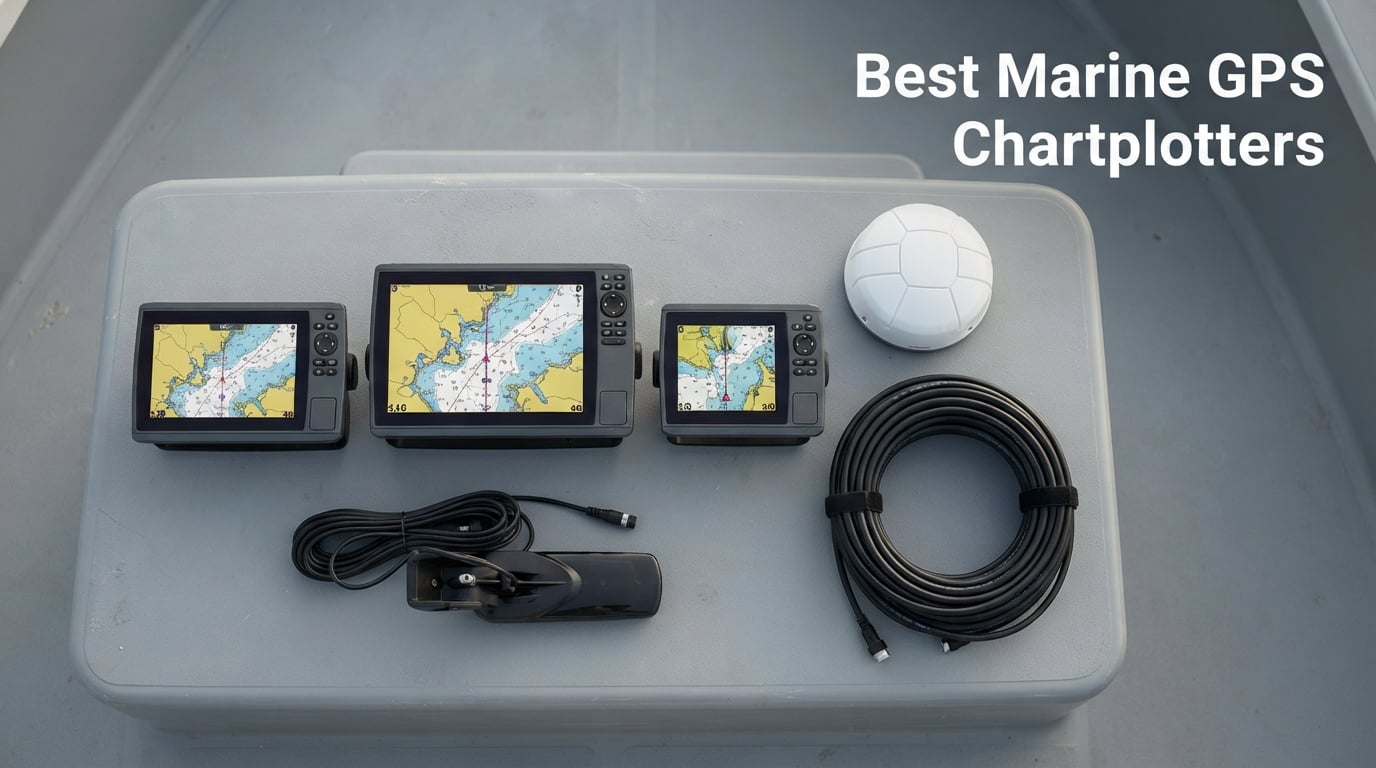
A marine GPS chartplotter is a dedicated display that puts your boat’s position on an electronic nautical chart in real time, so you can see where you are, plan a route and get home when the fog rolls in. Most of them also pull in sonar, radar, AIS and autopilot data over a NMEA 2000 network, which turns a single screen into the nerve centre of the whole helm.
We spent weeks going through owner feedback on every marine GPS chartplotter currently worth buying, then sorted them by what actually changes your day on the water: screen brightness in direct sun, whether a transducer is in the box, what charts load out of the factory, and how easily the display grows into radar and an autopilot later. Nothing on this list was picked on badge alone. If a unit is quiet about its limits, we say so.
Two things came up again and again in the forums we read, and they shape every pick below. First, the consensus advice on The Hull Truth, trawlerforum and Bloodydecks is to shop the chart first and then choose the display that runs it well, because Navionics+ and C-MAP have different strengths and you will live with that choice for years. Second, most regret in the used market comes from buying a display with no plan for the NMEA 2000 backbone that a future radar or autopilot will need.
If your boating is mostly inland lakes and you want a simpler comparison, our handheld GPS unit roundup covers fixed-mount-free options for shore and trail use. For anything with a helm, the nine displays below are the ones worth your time in 2026.
Table of Contents
Top 3 Picks for Best Marine GPS Chartplotters in 2026
Lowrance Elite FS 10
- 10-inch multi-touch display
- Active Imaging 3-in-1 transducer included
- C-MAP DISCOVER charts preloaded
- Wireless NMEA 2000 and Ethernet

Garmin ECHOMAP UHD2 94sv
- 9-inch sunlight-readable screen
- GT56-TM transducer included
- Garmin Navionics+ coastal charts
- Wi-Fi sonar and waypoint sharing

Simrad GO9
- 9-inch multifunction display
- C-MAP DISCOVER card included
- 83/200 kHz HDI transducer
- Wi-Fi Bluetooth and Ethernet
The Elite FS 10 takes our top slot because it is the only unit here that pairs a genuinely large 10-inch multi-touch screen with a 3-in-1 transducer in the box, preloaded C-MAP DISCOVER charts and 515 owner reviews behind it. The Garmin ECHOMAP UHD2 94sv edges it on owner rating at 4.7 and has the sharpest graphics in the group. The Simrad GO9 is the value pick, pairing a 9-inch display with a chart card and an HDI transducer at a tier where most rivals sell the display alone.
All 9 Marine GPS Chartplotters Side by Side in 2026
| Product | Specs | Action |
|---|---|---|
| Lowrance Elite FS 10 |
|
Check Latest Price |
| Simrad GO9 |
|
Check Latest Price |
| Garmin ECHOMAP UHD2 94sv |
|
Check Latest Price |
 Garmin ECHOMAP UHD2 53cv Garmin ECHOMAP UHD2 53cv |
|
Check Latest Price |
 Humminbird XPLORE 10 Humminbird XPLORE 10 |
|
Check Latest Price |
 Lowrance HDS PRO 10 Lowrance HDS PRO 10 |
|
Check Latest Price |
 Simrad NSS12 evo3S Simrad NSS12 evo3S |
|
Check Latest Price |
 Garmin GPSMAP 943xsv Garmin GPSMAP 943xsv |
|
Check Latest Price |
 Lowrance Eagle 9 TripleShot HD Lowrance Eagle 9 TripleShot HD |
|
Check Latest Price |
A note on reading that table: screen size, bundled transducer and preloaded chart coverage are the three columns that decide most purchases. Depth rating only matters if you fish deep water, and networking only matters if you plan to add hardware later.
1. Lowrance Elite FS 10 – Best Overall Marine GPS Chartplotter with a Transducer Included
Lowrance Elite FS 12 Fish Finder, No Transducer, Preloaded C-MAP Charts
10 inch LCD MFD
3.7 lb
3-in-1 Active Imaging transducer
C-MAP DISCOVER charts
2 year warranty
Pros
- Bright 10-inch screen readable in direct sun
- Intuitive touch interface for new marine electronics users
- Ethernet linking shares sonar between two displays
- 1000 ft maximum measuring depth
- Preloaded C-MAP DISCOVER inland and coastal charts
Cons
- Included mounting bracket is plastic
- Live sonar needs add-on hardware
- A few units reported inconsistent physical button behaviour
This is the display we kept coming back to. The Elite FS 10 puts a 10-inch multi-touch screen on the helm and includes the Active Imaging 3-in-1 transducer, so CHIRP, SideScan and DownScan Imaging all work the day the box opens. Owners consistently single out one thing above the rest: the screen stays readable in direct sun and through polarized glasses, which is the difference between a unit you use and a unit you squint at.
Weight comes in at 3.7 pounds and the box includes a suncover, fuse and fuse holder, corner clip kit, mounting bracket with knobs, and a power cable. The bracket that ships in the box is plastic, and it is the single most common complaint in owner feedback, so budget for a metal gimbal if you are mounting on a hard console where vibration matters.
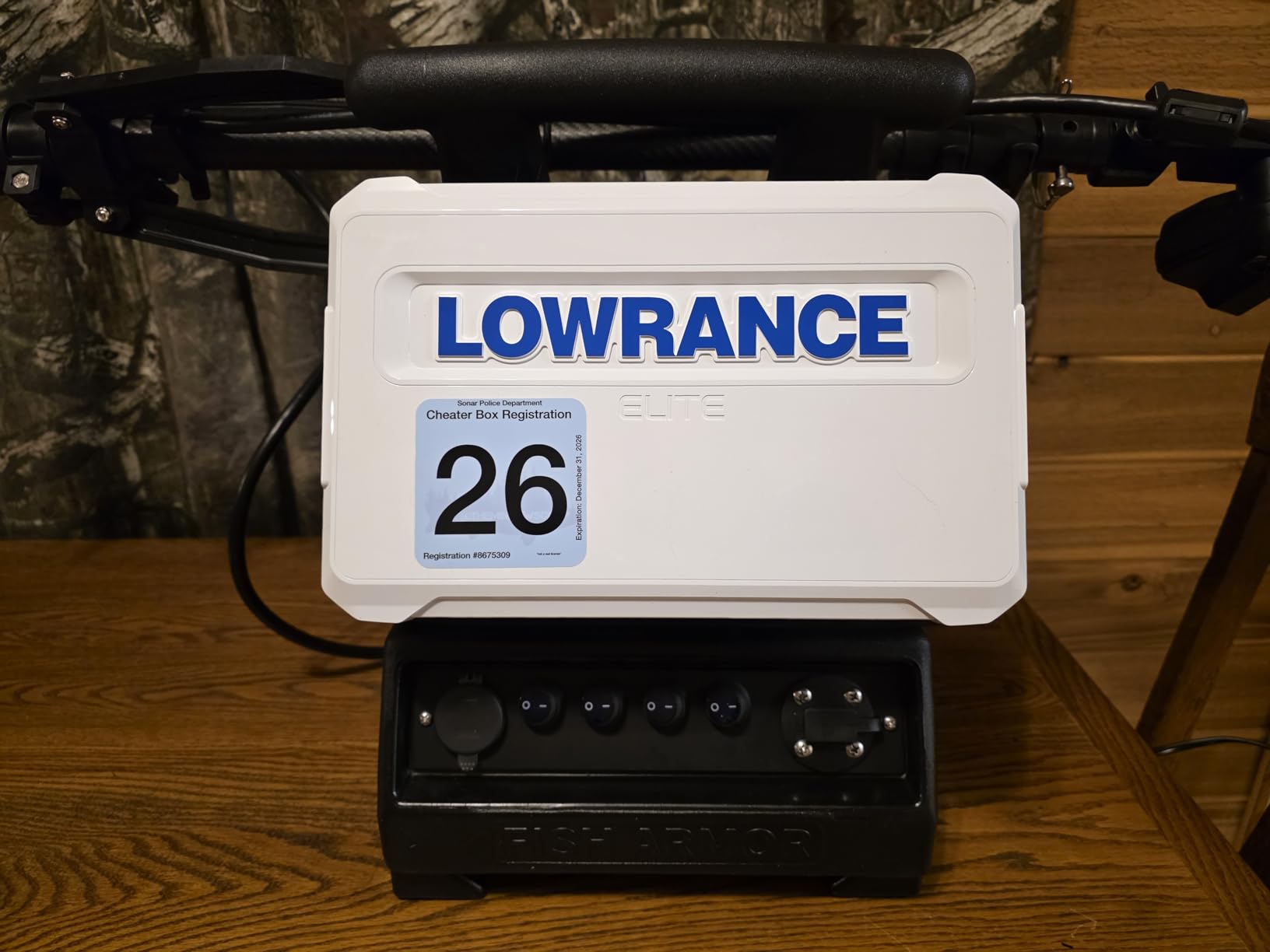
The networking is where this unit quietly outgrows its price tier. Ethernet, NMEA 2000 and wireless all come standard, which means a second display at the bow can share sonar with this one instead of needing its own transducer, and a radar or autopilot can drop onto the same backbone later. That two-screen sonar sharing is the feature experienced owners mention most often after the screen itself.
Charts are preloaded rather than sold as an upgrade. C-MAP DISCOVER onboard coverage spans inland, coastal and Canadian waters with high-resolution bathymetric contours, custom depth shading and tides and currents, so the display is useful on the first trip out rather than the first subscription renewal. Maximum measuring depth is 1000 feet, and the warranty runs two years.
What you get for the sonar and charting out of the box
Out of the box this is a complete system rather than a display that needs assembly. The 3-in-1 transducer covers conventional CHIRP, SideScan and DownScan Imaging with FishReveal target separation, so you can find fish beside the boat and directly below it from one installation. Adding ActiveTarget 2 or ActiveTarget 2 XL later turns it into a forward-looking live sonar rig, though that hardware is a separate purchase and the single biggest cost after the display itself.
When a different display fits your boat better
Skip this one if your console has no room for a 10-inch bezel. It is also the wrong choice if your helm is already networked to an existing Garmin or Humminbird system, because the Ethernet and transducer side of the Lowrance ecosystem is not where you want to be mixing. And if your lake is under 300 feet deep, you are paying for depth capability you will never use.
2. Simrad GO9 – Best Value Marine GPS Chartplotter for Sportboats and Center Consoles
Simrad GO9 XSE Chartplotter and Fishfinder with 83/200 Transom Mount Transducer and C-MAP Discover Chart Card, 9 Inch Screen, Black, 000-16293-001
9 inch LCD MFD
3 lb
83/200 kHz HDI transducer
C-MAP DISCOVER card
2 year warranty
Pros
- Very bright 9-inch screen in strong sunlight
- Interface makes upgrades from older displays painless
- C-MAP DISCOVER card covers US and Canada
- Mirrors to phone or tablet over Wi-Fi
- Highly rated technical support
Cons
- Bundled transducer cable is short for some hulls
- Included sun cover is awkward to remove
- Some owners lost saved waypoints and tracks
The Simrad GO9 is the one to beat on value. At this tier most competitors sell you a display and expect you to source a transducer and a chart card separately, and the GO9 arrives with both: an 83/200 kHz HDI transducer and a C-MAP DISCOVER card. It also ranks second in Marine GPS Units and Chartplotters on the retailer’s category chart, which tells you how much actual boating traffic this configuration gets.
Brightness is the headline owner comment, and it is repeated often enough that it matters: owners describe a very bright 9-inch touchscreen that stays legible in strong sunlight. The capacitive touchscreen and interface are described as intuitive, and several reviewers specifically mention how painless it was to move up from an older display.
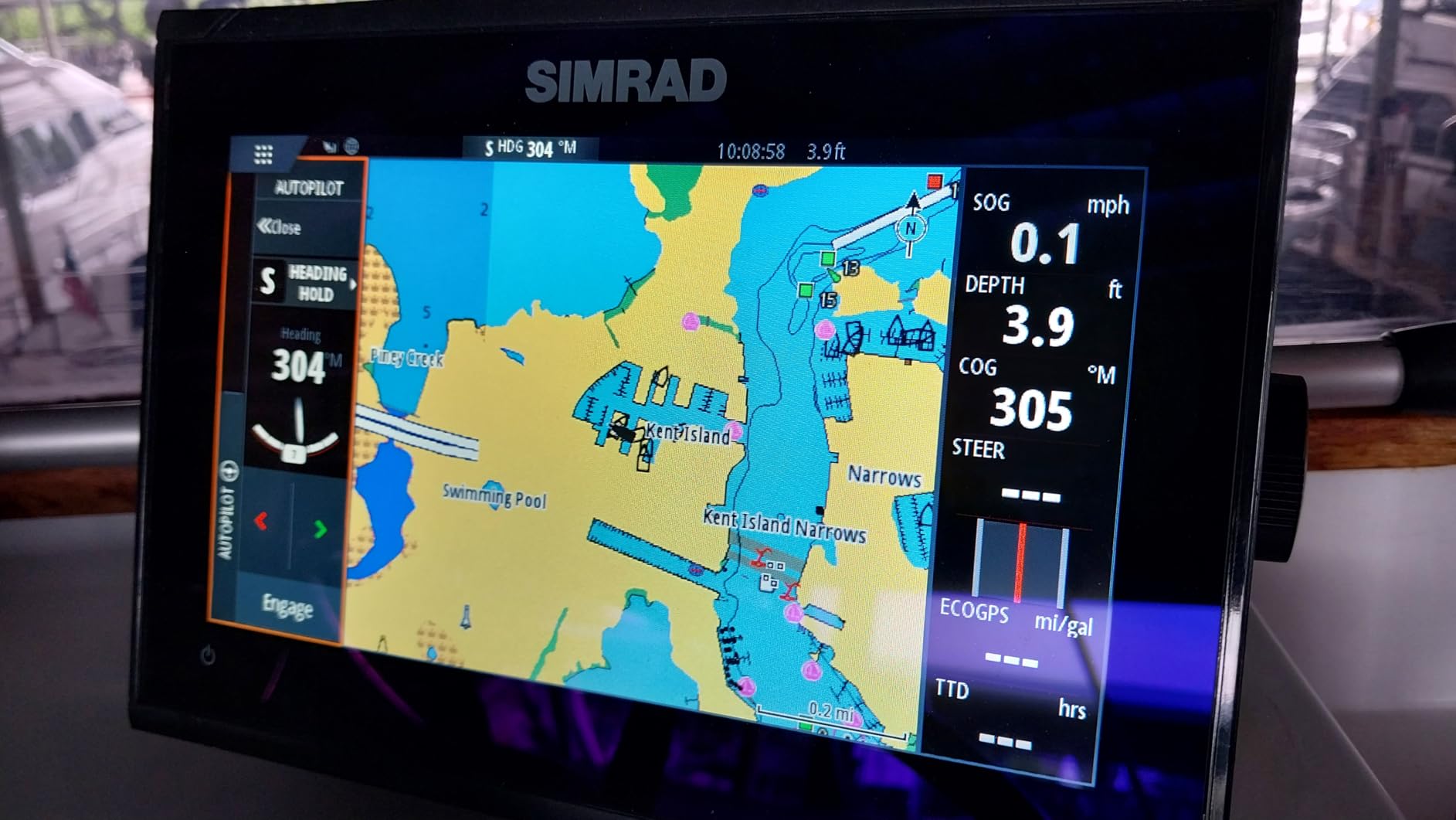
Connectivity is broad for a unit at this level. Bluetooth, Ethernet and Wi-Fi are all built in, the GPS is integrated rather than a separate antenna, and NMEA 2000 is supported for system integration. You can mirror the display to a smartphone or tablet and reach charts and radar from elsewhere on board, and the unit is radar-ready, so a dome or open-array array is a later addition rather than a rebuild.
The card itself is no thin trial. The included C-MAP DISCOVER card carries full-featured vector charts, custom depth shading, tides and currents, and high-resolution bathymetric contours across the US and Canada. Technical support draws repeated praise from owners who had chart card and setup questions, which is worth more than it sounds when you are wiring a unit for the first time.
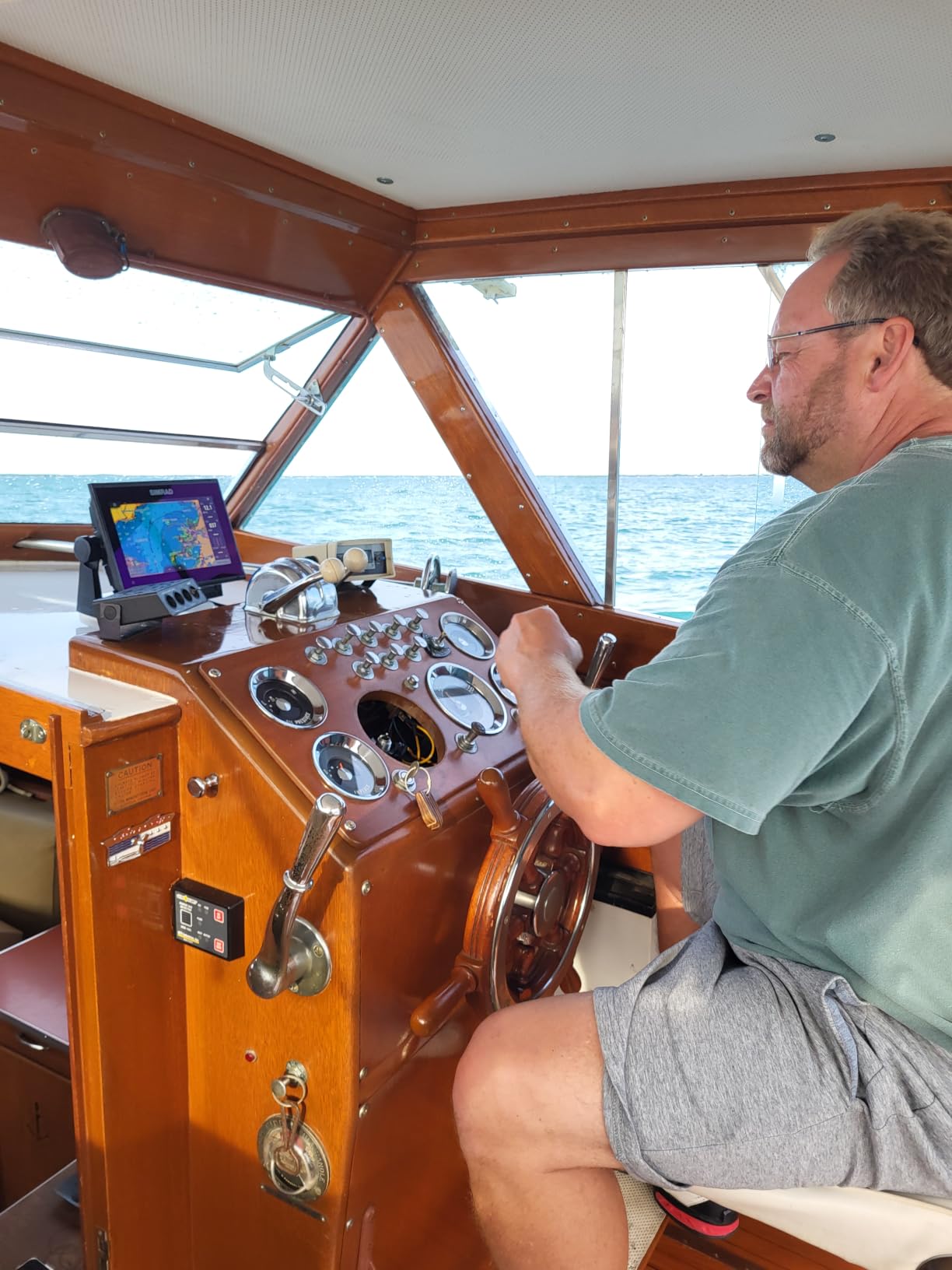
Sonar range, cabling and hull fit for this display
Two practical details decide whether this fits your boat. The bundled 83/200 kHz HDI transducer supports CHIRP and DownScan Imaging, and some buyers could not get side scan to display and suspect the transducer coverage rather than the display. The bundled transducer cable is also short for some hull configurations, so measure your run from the transducer location to the helm before you commit, and keep an extension cable in the budget.
When this is the wrong display for your setup
Pass on the GO9 if you need side scan as a primary tool rather than a bonus, since coverage on the bundled transducer is the weak spot in owner reports. It is also the wrong choice for offshore work where deep sounding matters, and the awkward sun cover and the reports of lost waypoints and tracks after a few months are worth weighing if you rely heavily on saved routes.
3. Garmin ECHOMAP UHD2 94sv – Best Rated Sunlight-Readable 9-Inch Display
Garmin ECHOMAP UHD2 94sv with GT56 Transducer, 9″ Touchscreen Chartplotter, Garmin Navionics+ U.S. Coastal
9 inch touchscreen
GT56-TM transducer
Garmin Navionics+ coastal charts
Wi-Fi sharing
1 year limited warranty
Pros
- Sharp bright display with improved viewing angles
- All mounting hardware included for clean install
- SideVu side scan sonar widely praised
- Navionics+ coastal charts built in
- Wireless Force trolling motor control
Cons
- Menu navigation can feel cumbersome
- One year limited warranty is short
Garmin put the GT56-TM transducer in the box with this one, and that single decision separates it from a lot of 9-inch displays. You get Garmin traditional, ClearVu and SideVu scanning sonar from one transducer, plus built-in Garmin Navionics+ U.S. Coastal charts with integrated Navionics data, so there is no separate card to buy for coastal running. It holds the number one position in Marine GPS Units and Chartplotters on the retailer’s category ranking.
Owner feedback centres on display quality. Reviewers describe a sharp, bright screen with strong graphics and improved viewing angles compared with earlier Garmin displays, and the 4.7 average across 83 reviews is the second highest of the nine units here. Setup is described as straightforward, with the tilt mount, flush mount hardware and power and data cable all included.
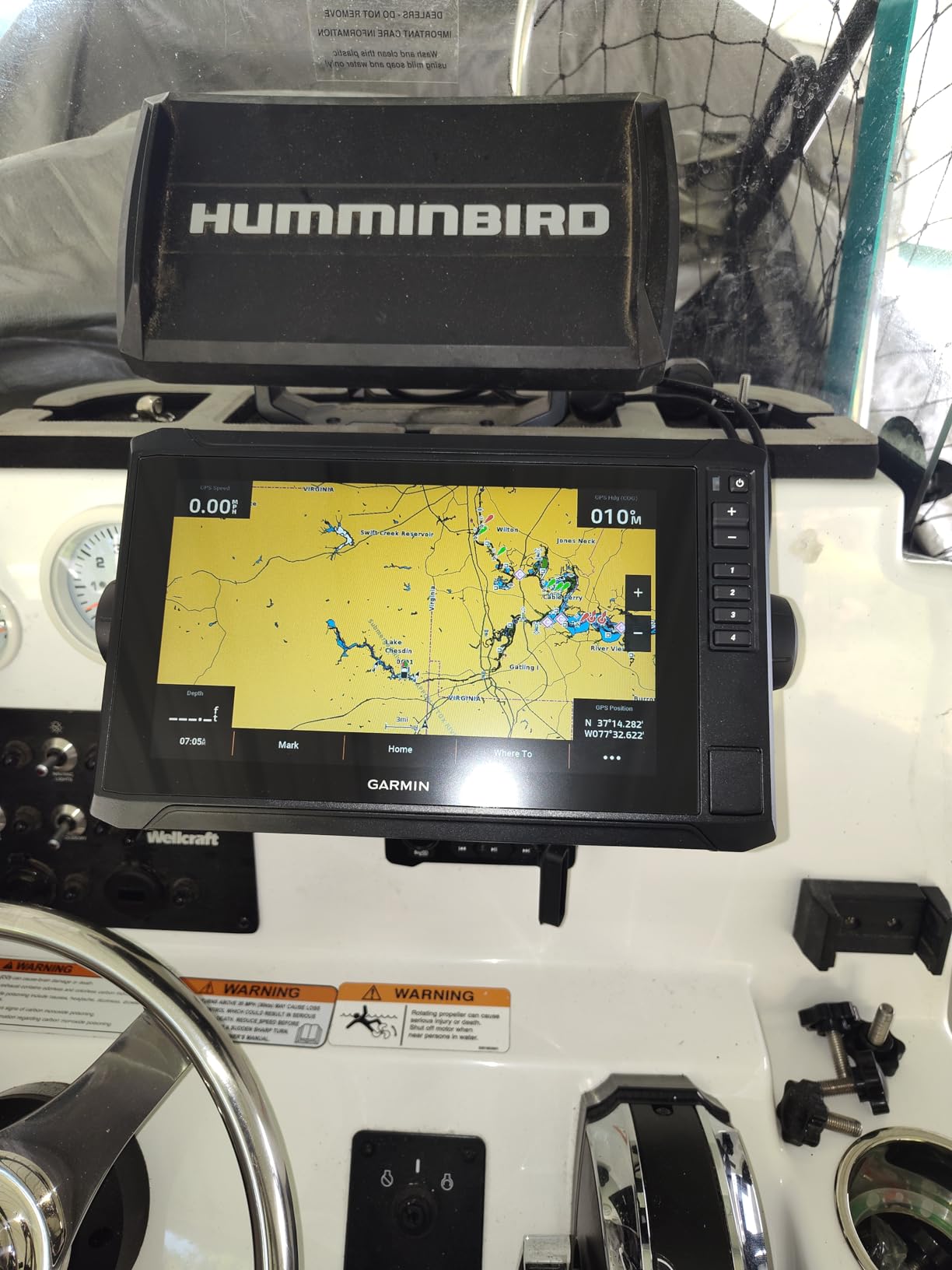
Wireless features are unusually useful on this unit. Built-in Wi-Fi shares sonar, waypoints and routes with a second ECHOMAP UHD2 without a cable run, and the display connects wirelessly to a Force trolling motor to create and follow routes, steer to waypoints and monitor battery life. For a bass boat where the helm and bow are separated, that is real convenience rather than a spec-sheet line.
Panel or dashboard mounting is supported, and the unit measures 10.4 by 6.5 by 3.2 inches. The one-year limited warranty is the shortest on this list, which is the main specification to weigh against the display quality and the bundled transducer.
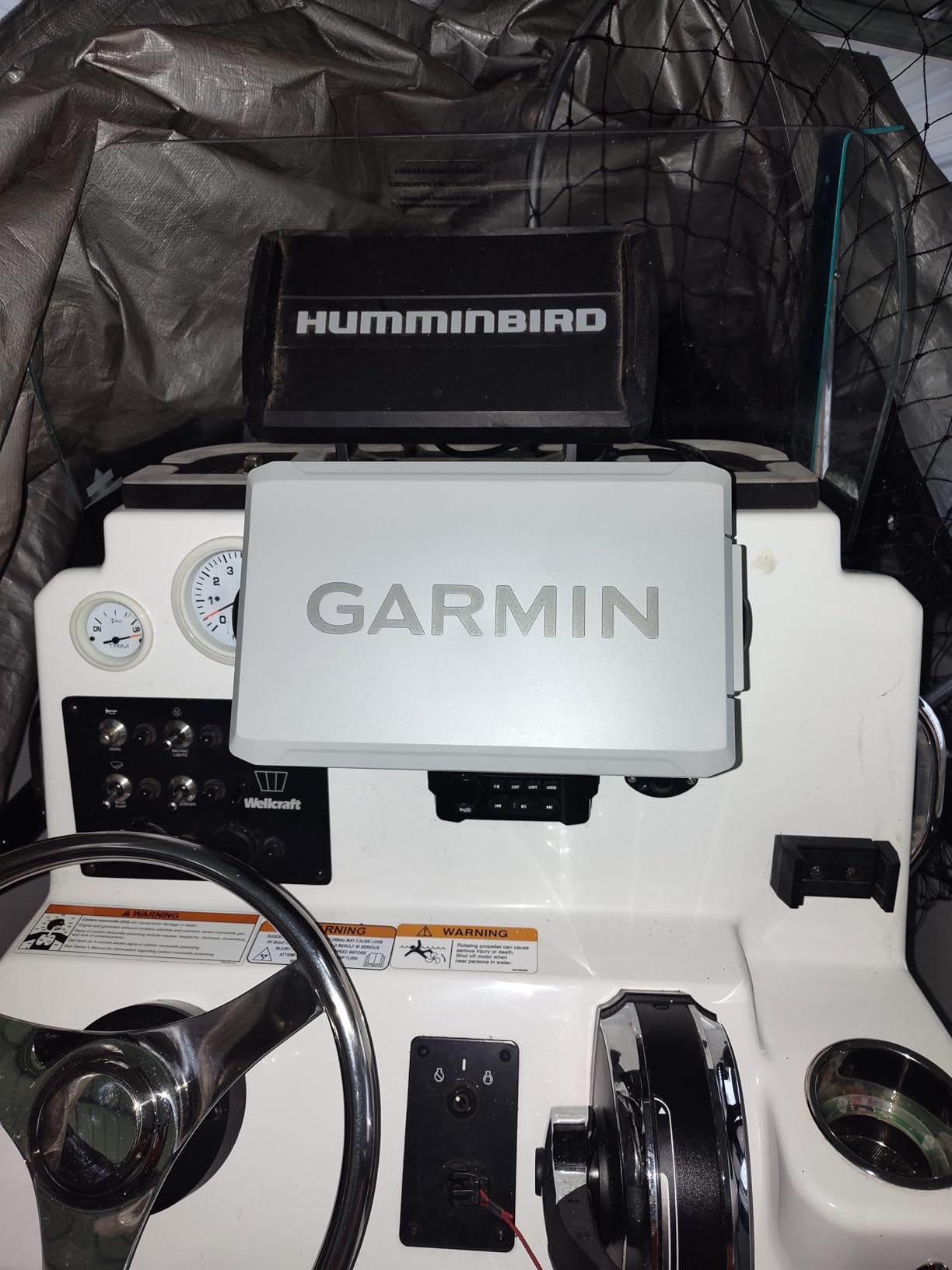
How the transducer and wireless sharing change the install
The GT56-TM covers traditional, ClearVu and SideVu, so side scan is genuinely available rather than an add-on, and owners single out SideVu as the feature they like most. Wi-Fi sharing means a second ECHOMAP UHD2 at the bow can mirror sonar, waypoints and routes from this unit. If you already own a Force trolling motor, the wireless link handles route creation, waypoint steering and speed control from the helm.
When to buy a different chartplotter instead
Choose something else if chart coverage outside the US coastal card is your priority, since the built-in Navionics+ coverage is US coastal and Canadian waters need an added card. Skip it if the one-year warranty worries you on a unit you plan to keep for a decade, and consider a different brand if your helm is already committed to a competing ecosystem, because transducers and networking do not cross over cleanly.
4. Garmin ECHOMAP UHD2 53cv – Best Marine GPS Chartplotter for Small Boats and Tight Consoles
Garmin ECHOMAP UHD2 53CV Chartplotter/Fishfinder
5 inch IPS display
16 oz
GT20-TM transducer
Navionics+ US inland charts
Wi-Fi sharing
Pros
- Compact 5-inch IPS screen fits small consoles
- CHIRP traditional and ClearVu sonar in one unit
- Navionics+ US inland mapping preloaded
- Light at 16 ounces
- Tilt or flush mount options
Cons
- 5-inch screen limits chart and sonar detail
- Inland chart coverage only out of the box
- Shares data with bigger displays rather than acting as a network hub
Not every boat has console space for a 9-inch bezel, and on a 16 to 19 foot aluminum boat the 5-inch IPS display on the ECHOMAP UHD2 53cv is often the only one that physically fits. At 16 ounces it is the lightest unit in this roundup by a wide margin, and it tilts or flush mounts depending on your console shape.
You still get a real chartplotter rather than a stripped-down GPS. CHIRP UHD traditional and ClearVu scanning sonar come from the included GT20-TM transducer, and Garmin Navionics+ U.S. Inland mapping is preloaded, so lake and river coverage works on the first launch. Wi-Fi lets it share data with a larger compatible chartplotter later.
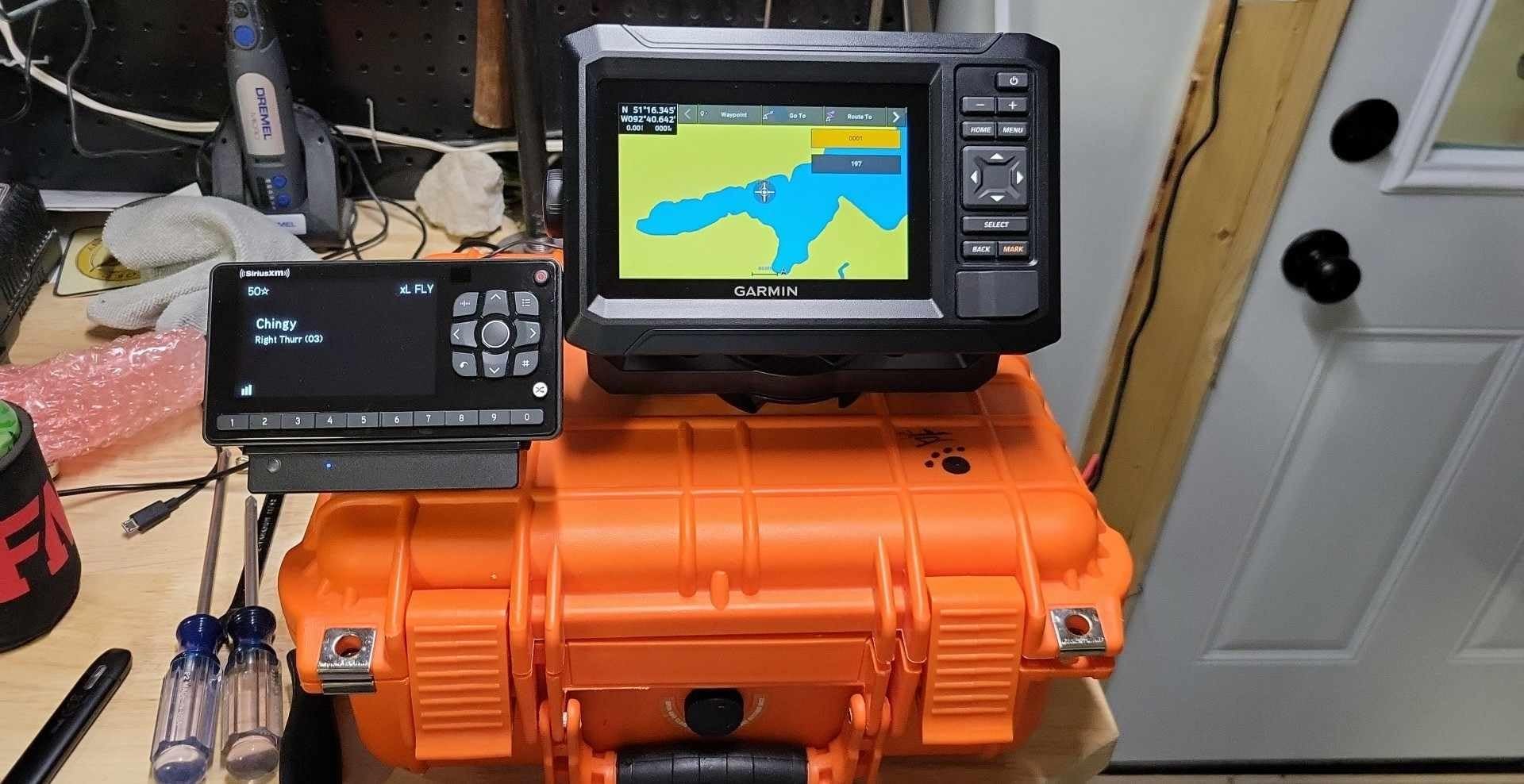
Owners frame it correctly for what it is: a budget entry point that covers charting and basic sonar, with a small display as the trade. If you are moving up from a handheld unit or a basic GPS, the jump in chart detail and sonar capability is the point, not the screen size. Reviewers are comfortable calling it a value pick for smaller boats, and the 4.5 average across 86 reviews backs that up.
Where the small screen actually limits you
A 5-inch panel simply cannot show as much chart and sonar at once, so split-screen chart and down imaging views are cramped and you will find yourself switching pages more often. It is a comfortable single-view screen for following a route or reading a depth contour, and a tight one for picking apart structure. The IPS panel quality is good, which softens the size problem in direct light.
When to spend up to a 9-inch or 10-inch instead
Move up if you fish structure rather than open water, run split-screen sonar and chart together, or navigate coastal or Canadian water, because the preloaded mapping on this model is US inland only. It is also the wrong anchor for a boat you plan to grow a full NMEA 2000 system on, since it shares data with larger displays rather than acting as a network hub for radar, autopilot and multiple screens.
5. Humminbird XPLORE 10 – Best for Freshwater Structure Fishing with MEGA Side Imaging
Humminbird XPLORE 10 GPS Fish Finder, MEGA Side Imaging+ & HD Touchscreen (Control Head Only)
10 inch color TFT
4.8 lb
MEGA Side Imaging+ 200 ft per side
AutoChart Live mapping
3 year warranty
Pros
- MEGA Side Imaging+ gives 200 ft per side
- AutoChart Live maps depth and vegetation as you fish
- Works by touchscreen or keypad
- Bluetooth anchor control and phone notifications
- Three-year warranty with registration
Cons
- Control head only
- transducer sold separately
- 200 ft depth limit is shallow for offshore
- Heavy 4.8 pounds at the helm
Freshwater anglers looking for structure coverage get more of it here than anywhere else in the roundup. MEGA Side Imaging+ reaches 200 feet to each side of the boat and MEGA Down Imaging+ covers 200 feet of depth, backed by Dual Spectrum CHIRP sonar, all on a 10-inch color TFT display. That combination is why MEGA imaging units dominate the bass and walleye side of the sportfishing world, and the XPLORE brings it to a chartplotter with a real navigation screen.
AutoChart Live is the other headline. It records as you run and builds real-time maps of your favourite spots with depth contours, bottom hardness and vegetation, and this configuration includes eight hours of built-in recording time. Owners also like having both control methods, with touchscreen and keypad operation on the same unit, which matters when your hands are wet and the boat is moving.
Navigation is well covered for inland work. The built-in GPS carries an enhanced Humminbird Basemap covering more than 10,000 lakes plus coastal waters, and a LakeMaster and CoastMaster VX map card is included for US and Canadian regions. Bluetooth handles wireless anchor control and smartphone notifications, and high-speed Ethernet with NMEA 2000 networking supports a One-Boat network with Minn Kota trolling motors and Cannon products.
Imaging coverage, recording and what the control head omits
The imaging numbers are the reason to choose this unit: 200 feet per side means you see structure well outside the boat’s path, and 200 feet of down imaging depth covers most lake structure. AutoChart Live with eight hours of recording means you can map a new lake over a weekend without any setup. The three-year warranty with registration is the longest warranty in this category, which matters for a unit that lives in a wet boat year round.
When this configuration is the wrong buy
Be careful with this specific listing: it is the control head only, so a transducer has to be sourced separately, and that cost changes the math quickly. The 200-foot depth ceiling is shallow for coastal and offshore work, and at 4.8 pounds the unit is a solid helm load. If your priority is charting and networking across a full boat rather than finding structure, a C-MAP or Navionics combo unit is the better centre of the system.
6. Lowrance HDS PRO 10 – Best 10-Inch Display for Room to Expand the System Later
Lowrance HDS PRO 10 Fish Finder with Active Imaging HD 3-in-1 & C-MAP
10 inch SolarMAX HD
11.6 lb
Active Imaging HD transducer
C-MAP DISCOVER charts
2 year warranty
Pros
- SolarMAX HD readable at wide angles and through polarized lenses
- Active Imaging HD 3-in-1 transducer included
- Preloaded C-MAP DISCOVER US and Canadian charts
- Ethernet NMEA 2000 wireless and Bluetooth
- ActiveTarget 2 upgrade path for live sonar
Cons
- Lowest average rating of the nine at 4.1
- Heavy 11.6 pounds for a helm display
- Live sonar hardware is a separate purchase
- Software interface less polished than rival ecosystems
The HDS PRO 10 is the unit to buy if you are planning a build rather than a single purchase. It supports Ethernet, NMEA 2000, wireless and Bluetooth, which is the broadest connection list here, and it is ready to drive radar, sonar, trolling motors and other boat systems. Add ActiveTarget 2 or ActiveTarget 2 XL later and the same display handles forward-looking live sonar.
The screen is the selling point. The 10-inch SolarMAX HD panel is designed for wide viewing angles and readability through polarized lenses, which is exactly the condition that makes lesser displays useless in a hard noon sun. The Active Imaging HD 3-in-1 transducer is included, giving high-definition CHIRP, SideScan and DownScan Imaging from one install, and C-MAP DISCOVER charts for US and Canadian inland and coastal waters are preloaded.
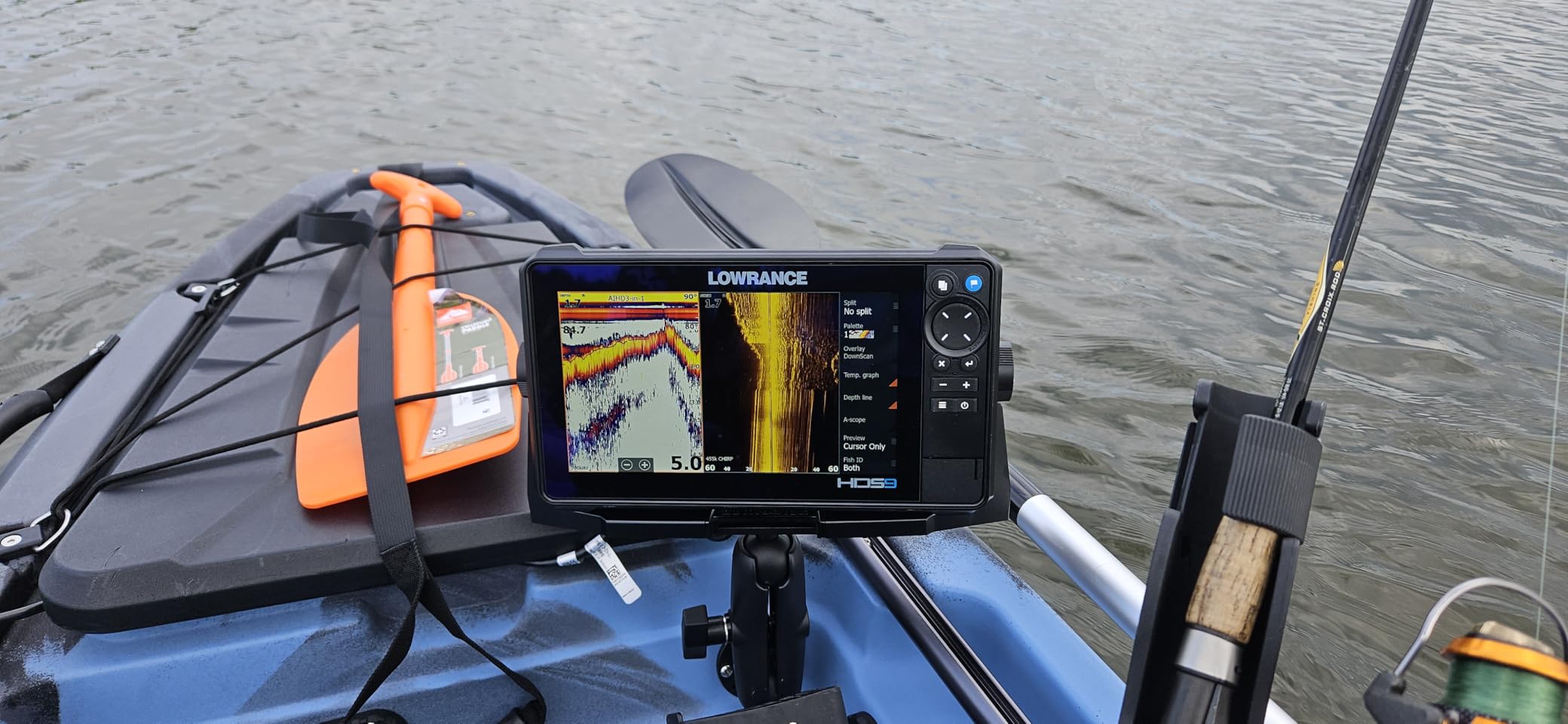
Here is the honest part. At 4.1 out of 5 across 49 reviews, this is the lowest-rated display we recommend, and owner feedback points at software stability and ease of use rather than hardware. Several owners describe the interface as less polished than competing ecosystems, which is a fair summary of a unit whose strengths are its screen and its expansion path.
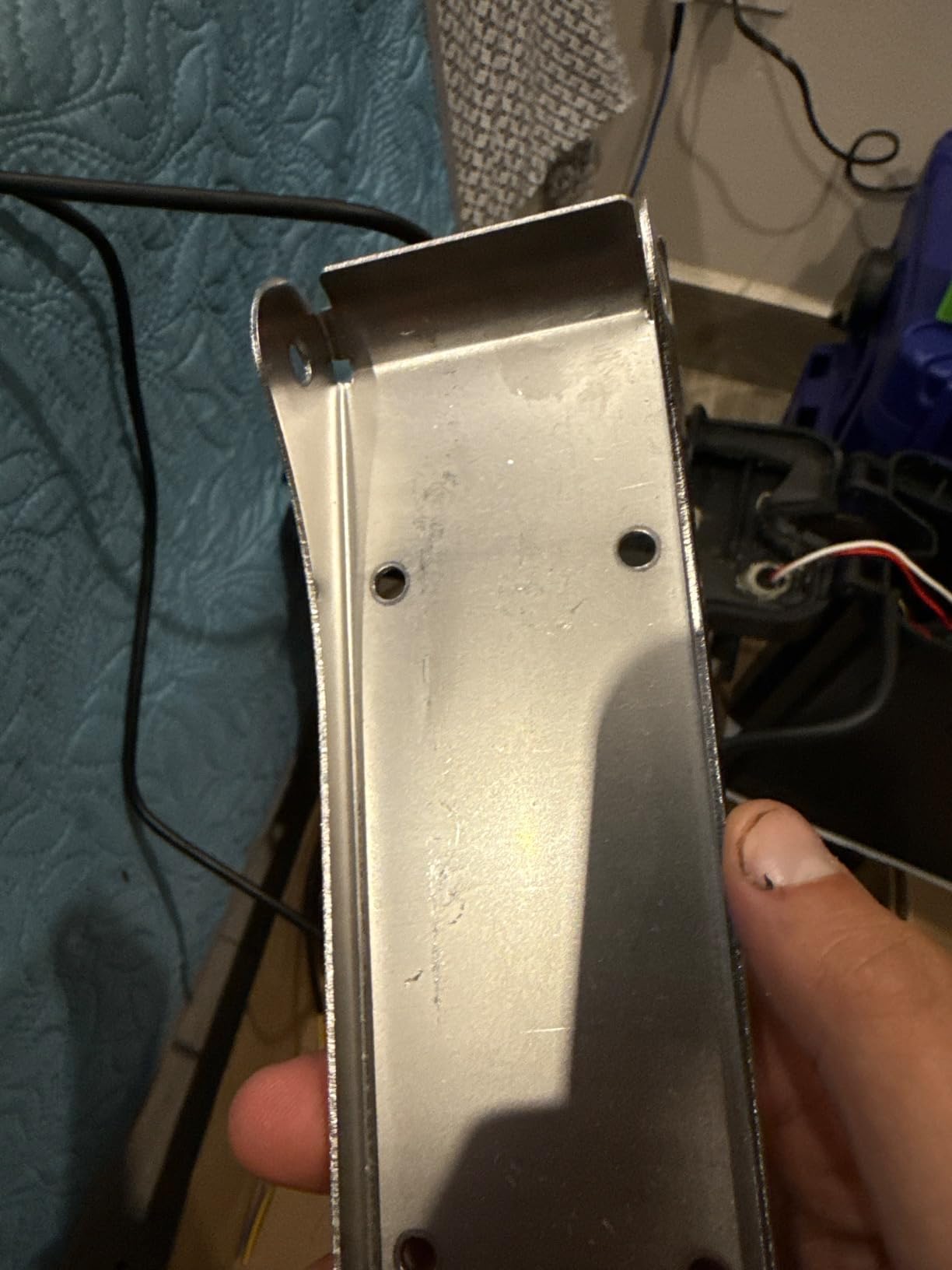
Physical specs are worth knowing before you commit. The unit weighs 11.6 pounds, which is a real load for a 10-inch helm display and means the mounting needs to be solid, and power runs from 12 volt DC. Maximum measuring depth is 1000 feet and the warranty is two years, with panel or bracket mounting available.
Screen quality and the networking case for choosing it
Readability through polarized lenses at wide viewing angles is the practical reason to pick this over a cheaper 10-inch unit, since most anglers wear polarized glasses and most screens wash out under them. The networking list is the other reason: Ethernet, NMEA 2000, wireless and Bluetooth in one box means radar, an autopilot, a trolling motor and a second display can all be added without changing the head unit.
When the rating should steer you elsewhere
If you want the smoothest software experience in the roundup, this is not it, and a 4.1 average with a meaningful share of one-star feedback reflects real dissatisfaction. It is also heavier than every other unit here, and the ActiveTarget live sonar path costs extra later. Choose the Elite FS 10 if you want a similar 10-inch screen with a better owner rating and a lighter build.
7. Simrad NSS12 evo3S – Best 12-Inch Chartplotter for Offshore Work and Bluewater Navigation
Simrad NSS9 evo3S – 9-inch Multifunction Fish Finder Chartplotter with Preloaded C-MAP US Enhanced Charts
12 inch SolarMax IPS
iMX 8 processor
3000 ft max depth
C-MAP US Enhanced charts
2 year warranty
Pros
- 12-inch SolarMax IPS gives excellent chart and sonar detail
- iMX 8 processor delivers fast response and smooth transitions
- Multi-touch gestures plus keypad and rotary dial
- Preloaded C-MAP US Enhanced inland and coastal charts
- 3000 ft maximum measuring depth
Cons
- 13 percent one-star share
- Heavy 17.5 pounds needs solid flush mounting
- Preloaded chart coverage is US only
- Install cabling is more involved at this size
This is the largest screen in the roundup and the one built for a boat that leaves the dock for real. The NSS12 evo3S pairs a 12-inch SolarMax IPS high-definition display with the iMX 8 processor, and owners specifically call out the faster response times and seamless screen transitions that processor delivers when you are dragging a chart window across a wide display.
Depth rating is the number that matters offshore. Maximum measuring depth is 3000 feet, by far the deepest of the nine units here, and the same iMX 8 processor powers real-time engine and fuel efficiency monitoring along with on-board sound system control. That combination of a big screen, deep sounding and vessel data is the offshore package.
Control is flexible in a way angler-focused displays are not. You can use the all-weather multi-touch display with gestures, or switch to the full keypad with rotary control dial, which is the honest answer to wet hands and a pitching deck. The built-in GPS receiver comes preloaded with C-MAP US Enhanced inland and coastal charts.
Screen real estate, processing and vessel-wide integration
A 12-inch IPS panel is the difference between reading a chart and studying one, particularly when you are running engine, fuel and sound system data alongside sonar. The iMX 8 processor is what makes split views and vessel-wide monitoring feel immediate. Expansion runs through Active Imaging sonar, StructureScan 3D and HALO radar, and the keypad with rotary dial gives you a fallback when touch is the wrong tool.
When a 9-inch or 10-inch display is the smarter buy
Skip it if your console cannot flush-mount a 12-inch panel, because at 17.5 pounds this unit needs solid mounting and the cabling for a display this size is more involved. The 13 percent share of one-star reviews is the highest here, so check the warranty terms carefully. It is also a poor value choice for inland lakes under 300 feet, and the preloaded card covers US waters only.
8. Garmin GPSMAP 943xsv – Best Flush-Mount 9-Inch Display for an Existing Garmin Network
Garmin 010-02366-61 GPSMAP 943xsv SideVü
9 inch IPS display
SideVu ClearVu and CHIRP sonar
Panoptix support
Navionics+ mapping
NMEA 2000
Pros
- Highest average rating here at 4.8 with 96 percent five-star reviews
- Excellent display graphics
- Highly customizable multi-page screen layouts
- NMEA 2000 works with engine gateway data
- Flush mount fits many existing GPS cutouts
- Can share one transducer with a 1243xsv
Cons
- No transducer included
- Networking and custom screen setup has a learning curve
The 943xsv has the highest owner rating of the nine, at 4.8 out of 5 with 96 percent five-star reviews, and the reasons owners give are consistent: excellent graphics and screen layouts you can genuinely make your own. Multi-page layouts let you set up a page for trolling, a page for cruising and a page for engine data, and owners who have done it rarely go back.
Sonar is the strongest capability in the package. Ultra high-definition scanning sonar covers SideVu, ClearVu and traditional CHIRP, and Panoptix sonar is supported if you want to add the forward and side views later. The 9-inch IPS panel has improved display optics, and Navionics+ mapping is preloaded, so the unit is charted out of the box.
Networking is the quiet strength. NMEA 2000 network connectivity is reported as working well with engine gateway data such as Mercruiser SmartCraft, and owners running a multi-display boat can share a single existing Garmin transducer between a 943xsv and a 1243xsv. The flush-mount form factor fits existing GPS cutouts on many boats, which removes a lot of drilling on a retrofit.
Sharing transducers and building out a multi-screen boat
The economics of sharing one transducer across two Garmin displays is the detail that changes the total cost of a two-screen boat. Because the 943xsv and the 1243xsv can share a single transducer, the second screen is a display cost rather than a display plus sonar cost. NMEA 2000 integration with engine gateway data also means the chartplotter can carry engine and vessel information alongside navigation.
When a combo unit is the cheaper and simpler answer
No transducer ships with this unit, so a complete fishing setup means buying a sonar package as well, and that is real money on top of a display that is already at the top of this price range. The advanced networking and custom screen configuration also carries a learning curve for owners who do not enjoy setting up electronics. If you want charts plus sonar in one box with a transducer included, the ECHOMAP UHD2 94sv is the more direct path.
9. Lowrance Eagle 9 TripleShot HD – Best Self-Contained 9-Inch Unit for Medium Boats
Lowrance Eagle 9 TripleShot HD Fish Finder with C-MAP Discover OnBoard
9 inch IPS display
2 lb
TripleShot HD transducer
C-MAP DISCOVER card
500 ft max depth
Pros
- TripleShot HD gives side down and CHIRP from one transducer
- 9-inch IPS screen with room for charts and sonar
- C-MAP DISCOVER card included for US and Canada
- Auto-Tuning Sonar and twist-lock connector speed setup
- FishReveal overlay separates fish from structure
- Light 2 pound unit with three mounting options
Cons
- 500 ft maximum depth is shallower than rivals
- No live sonar or forward-looking sonar
- Only a one-year warranty
The Eagle 9 TripleShot HD is the cleanest single-box answer in this roundup. The TripleShot HD transducer combines SideScan, DownScan Imaging and CHIRP through one included unit, the C-MAP DISCOVER microSD card covers US and Canadian inland and coastal waters, and the bracket, knobs, power cable, hardware, locking collars and fuse holder are all in the box. Very little is left to buy before you mount it.
At 2 pounds it is the second-lightest unit here, with surface, panel or flush mounting available, and the twist-lock transducer connector plus Auto-Tuning Sonar make install and setup unusually quick. The 9-inch IPS display gives sonar and chart detail room to be readable, and FishReveal overlays CHIRP fish targets on DownScan detail so you can pick targets off bottom structure faster.
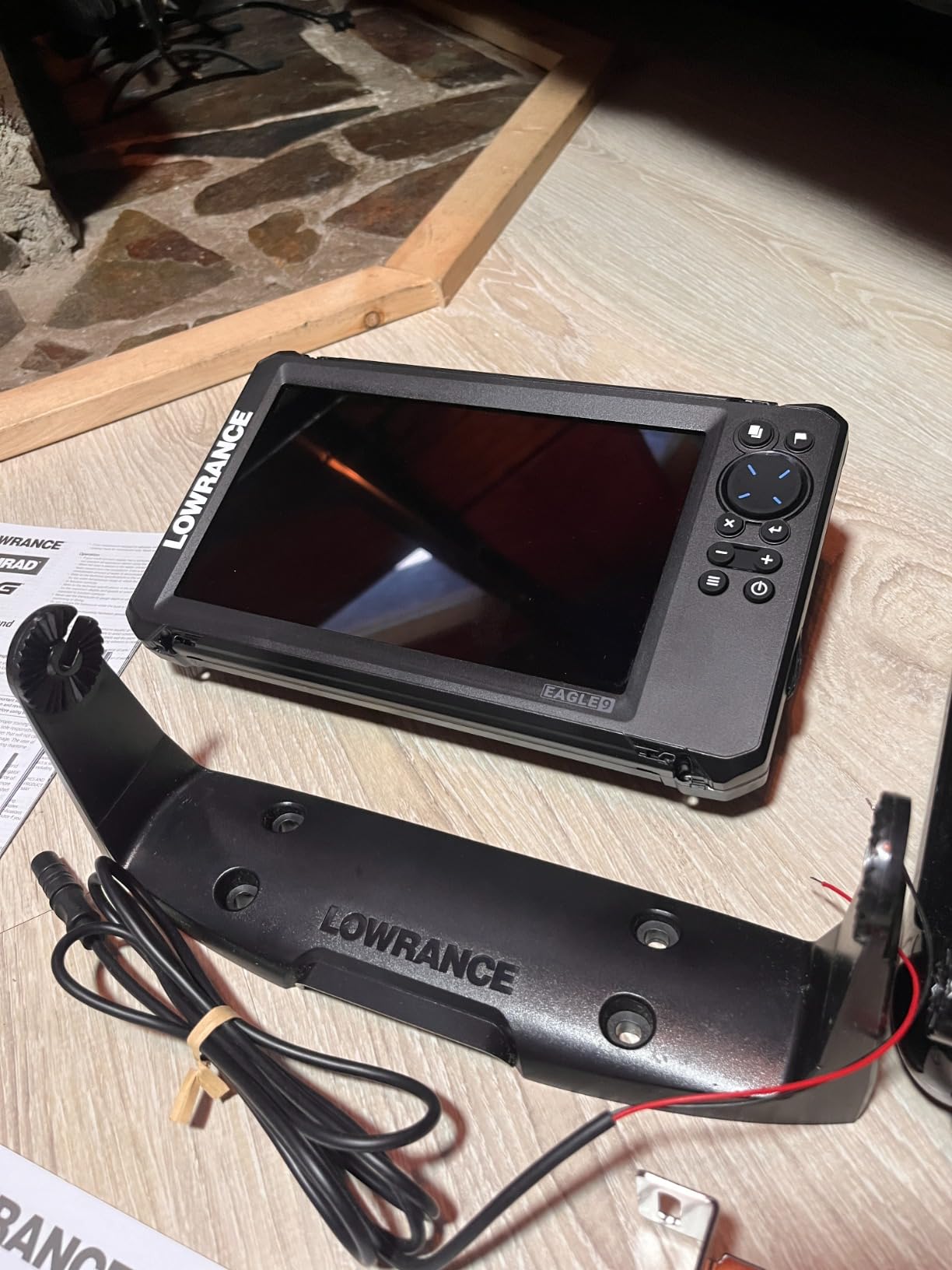
Owner feedback puts it at 4.7 out of 5 with 89 percent five-star ratings, and the recurring theme is completeness: display, transducer and charts at 9 inches, in a package light enough to mount anywhere on the console. For a medium-size boat where one display has to do both jobs well, that is a genuinely attractive balance.
Imaging performance and how fast the install goes
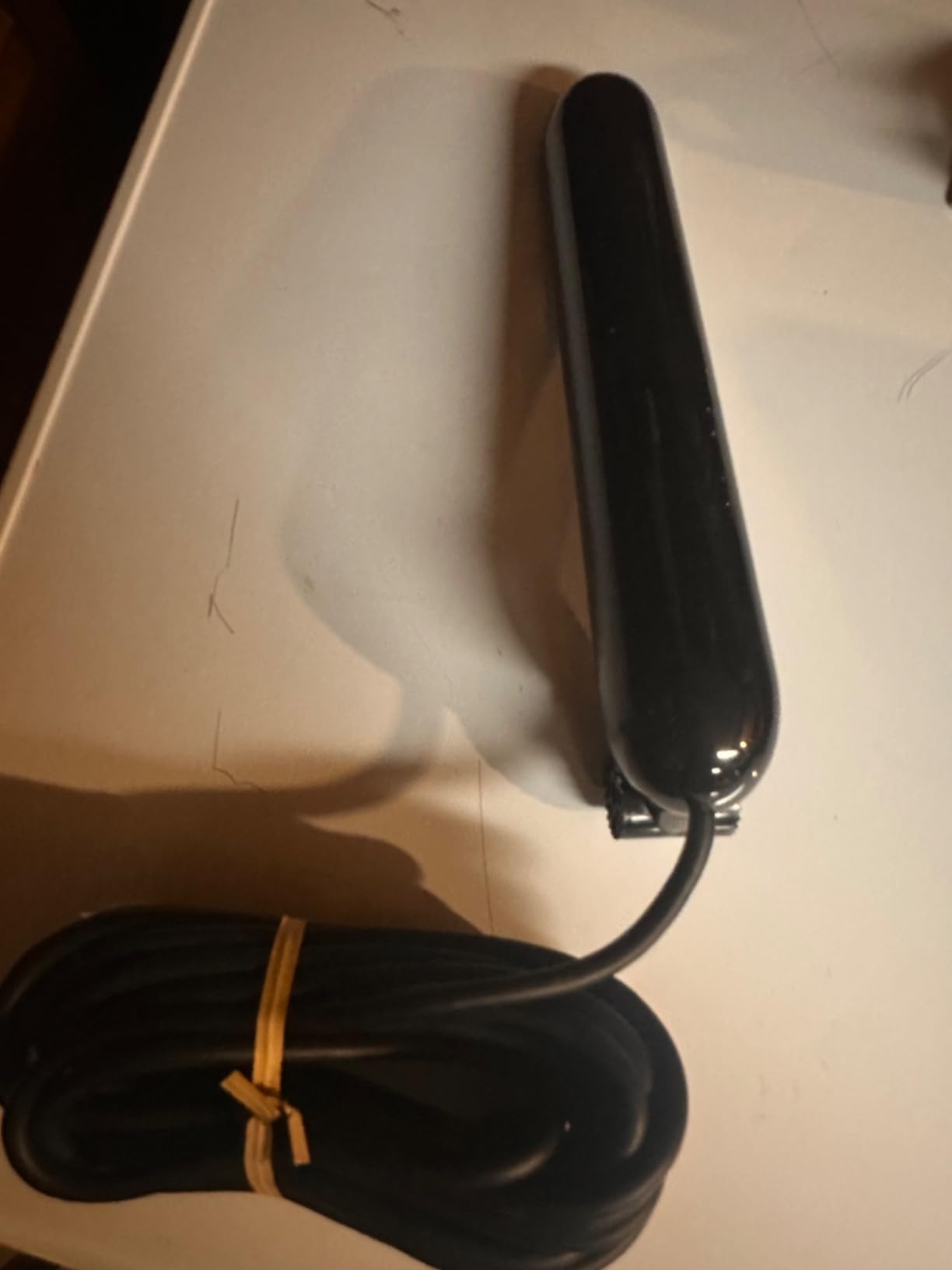
TripleShot HD is the key spec. One transducer handling side, down and CHIRP means one hole in the hull instead of two, one cable run, and no compatibility question later. Auto-Tuning Sonar handles the settings for you and the twist-lock connector makes the transducer quick to install or swap, which is a bigger time saver on a weekend install than it sounds.
When this is not enough for your boat
The 500-foot maximum measuring depth rules it out for offshore and deep coastal work, and there is no live sonar or forward-looking sonar on this model, so you cannot add LiveScope-style forward views later. The one-year warranty is also the shortest we offer. If you need a forward-looking upgrade path or work in deep water, the Elite FS 10 gives you 1000 feet of depth and a live sonar route instead.
How to Choose a Marine GPS Chartplotter in 2026
Screen size is the first decision, and the right answer comes from your console and your standing position rather than from a spec sheet. Sit at your helm and measure the distance from your eyes to the screen, then check that the panel fits inside the bezel opening without crowding neighbouring gauges. A 5-inch screen is right for a boat under 20 feet with a small console. A 9-inch panel suits most center consoles and pontoons, and 10 to 12 inches belongs on a flybridge, a larger console or a boat where you split chart and sonar views.
Brightness matters as much as size and is the one complaint that shows up across brands. In direct sun, a dim screen is an unusable screen, so favour panels described as sunlight readable, with wide viewing angles and readability through polarized lenses. Dimming at night is the other half of the picture, because you will be running the helm in the dark with the chart backlit.
Chart software and the chart-first rule to shop by
Forum consensus across The Hull Truth, trawlerforum and downeastboatforum is consistent on one point: shop the chart first, then choose the unit that runs it. Navionics+ and C-MAP have genuinely different strengths, and whichever one you start with shapes the upgrades you make later. In this roundup, three Lowrance units ship with C-MAP DISCOVER, two Simrad displays preloaded with C-MAP, and two Garmin units carry Navionics+ charting built in.
Budget for the recurring part. Preloaded charts get you moving, but coverage upgrades and annual chart updates are a separate ongoing cost that owners on forums consistently describe as an unpleasant surprise. Check what your chosen unit covers out of the box, and whether it covers your home water, before you treat the display as a finished system.
Transducer compatibility and what you actually need
Five of the nine units here include a transducer, which is the single biggest reason to buy a combo rather than a display. A 3-in-1 or TripleShot style transducer covering CHIRP, SideScan and DownScan from one install is the sweet spot for most anglers. Two of the nine ship as display only, and one of those is control head only, so the transducer becomes a separate purchase with its own cost and cable run.
Check depth rating against your water. Units in this roundup run from 500 feet to 3000 feet, and the shallow ones are perfectly good on lakes and nearshore. Also note that forward-looking live sonar, whether it is called LiveScope, ActiveTarget or DownVision, is an add-on everywhere except the ecosystem where you already own the display, so treat it as a second purchase rather than a standard feature.
NMEA 2000 and the phased upgrade path
Almost every regret reported in the forums traces back to the same mistake: installing a display without a backbone. If you think a radar, autopilot, second screen or AIS transceiver might be in your future, run the NMEA 2000 backbone now, even if the first display is a small one. Retrofitting cabling later is far more work than pulling it once, and a boat with a backbone is a boat you can upgrade without new holes in the console.
A sensible order for a phased build is display first, transducer with it if the boat needs one, then radar, then autopilot. Every unit in this roundup except the smallest supports NMEA 2000, and most also carry Ethernet or wireless, so you are not locking yourself out of the next step with the first purchase. What you are locking yourself out of is cross-brand mixing: transducers and radar integration are largely brand-locked, which is the strongest argument for deciding the ecosystem first.
Garmin vs Lowrance vs Simrad vs Humminbird
Garmin is the easiest interface to learn and the most common choice, with Navionics+ charting built into several models and the smoothest path to a second ECHOMAP display over Wi-Fi. Its weakness in owner feedback is transducer pricing and the one-year warranty on some models, plus menu navigation that some owners find cumbersome when hunting a specific marker.
Lowrance puts C-MAP DISCOVER on board and leads the roundup on bundled transducers and connectivity options, with Ethernet, NMEA 2000 and wireless standard on the Elite FS and HDS PRO models. Simrad competes on value and C-MAP charting, with a bright 9-inch combo unit at a lower tier and an iMX 8 processor in the 12-inch NSS12 for those who want processing headroom. Humminbird owns the freshwater structure-fishing conversation through MEGA Side Imaging+ and offers the longest warranty in the group, which is why it appears here as a specialist pick rather than an all-rounder.
Chartplotter, combo unit or phone app
A phone app is genuinely useful as a backup chart and for planning routes at the dock, and it costs nothing. It is a poor primary helm display because direct sun washes out most phone screens, a wet hand or a bumpy ride makes touch control unreliable, and heat and a flat battery end the session early. Owners on the forums describe exactly this regret: relying on a phone in bright sun and wishing they had a dedicated display.
That leaves the real question of whether to buy a combo unit or a chartplotter plus a separate fish finder. A combo gives you sonar and charts in one screen, one cable run and one install, which is simpler and cheaper. Separate displays win when you want sonar at the bow and charts at the helm, or when you want to run two screens showing different things. Decide that before you pick the brand, because the mounting layout drives the wiring.
One last practical note on installation. Professional installation commonly costs a significant fraction of the display cost, and forum buyers who regret their electronics setup almost always regret the wiring rather than the unit. If you are doing it yourself, budget for the fuse and fuse holder, connector types, and a properly secured NMEA 2000 backbone. If you are hiring it out, get the transducer and cable routing specified before the console is cut.
Frequently Asked Questions
What is the best marine GPS chartplotter for the money?
For most boaters the Lowrance Elite FS 10 is the strongest all-round value because it bundles a 10-inch multi-touch screen, an Active Imaging 3-in-1 transducer and preloaded C-MAP DISCOVER charts, and it carries the largest owner review base in our roundup at 515. If you want to spend less, the Simrad GO9 gives you a 9-inch screen, an 83/200 kHz HDI transducer and a C-MAP DISCOVER card in one package.
Which chartplotter is better, Garmin or Simrad?
Garmin wins on interface ease of use, screen quality and wireless sharing between two ECHOMAP displays, and it is the safer pick if you already own Garmin trolling motors or want Navionics+ charting built in. Simrad wins on value and on C-MAP charting, with the GO9 bundling a display, transducer and chart card at a lower tier. Pick whichever ecosystem your existing gear already speaks.
What is the difference between a GPS plotter and a chartplotter?
A GPS plotter shows your position as a dot, a distance and a track line on a basic screen. A chartplotter draws that position on detailed electronic nautical charts with depth contours, hazards, tides and currents, and routes to waypoints, so you can plan and follow a course. Most modern chartplotters also accept sonar, radar, AIS and autopilot data over NMEA 2000 networking.
Is Raymarine better than Garmin?
Raymarine Axiom displays are praised for processing speed and tight radar integration, but they carry a steeper learning curve and their companion app has drawn criticism for stability. Garmin is generally easier to set up, has a larger accessory and transducer ecosystem, and the ECHOMAP UHD2 94sv in our roundup pairs a 9-inch screen with a GT56-TM transducer and built-in Navionics+ coastal charts. For most skippers the deciding factor is which ecosystem your other gear already uses.
Our Verdict on the Best Marine GPS Chartplotters in 2026
The Lowrance Elite FS 10 is the best marine GPS chartplotter for most people in 2026. A 10-inch multi-touch screen, a 3-in-1 transducer, C-MAP DISCOVER charts and Ethernet with NMEA 2000 in one box, backed by 515 owner reviews, is very hard to argue with. The Garmin ECHOMAP UHD2 94sv is the runner-up for anyone who values the sharpest graphics and the easiest route to a second screen, and the Simrad GO9 is the sensible way into a complete system for less.
Match the rest to your boat rather than the spec sheet. Freshwater structure fishing points to the Humminbird XPLORE, offshore work to the 12-inch Simrad NSS12, tight consoles to the 5-inch Garmin 53cv, and an existing Garmin network to the GPSMAP 943xsv. Whatever you choose, run the NMEA 2000 backbone on the first install and you will thank yourself at the second.