
I spent the last three weeks putting eight of the best fast 3D printers through real prints, Benchy runs, and torture-test models to find out which ones are genuinely quick in 2026 – not just on the spec sheet. The headline answer: rated mm/s is the most misleading number in 3D printing right now. Acceleration, input shaping, and a rigid CoreXY frame matter more than peak velocity for almost every print you will actually run.
If you are shopping for the best fast 3D printer this year, the shortlist comes down to a small handful of brands. Bambu Lab still owns the out-of-box experience. Elegoo and Sovol have closed the gap on speed and quality. Creality, Longer, and QIDI round out the list with strong value picks at specific price points. Use our buying guide below to match one to your use case, or jump to the individual reviews starting after the comparison table.
Before we get into the picks, a quick warning. A “1000 mm/s” printer that vibrates apart above 400 mm/s is slower in real terms than a “500 mm/s” printer that holds its tuning. Our picks weight acceleration, frame rigidity, and input shaping as heavily as top speed, which is why you will see plenty of 500 mm/s machines on this list alongside the headline-grabbing 700 mm/s ones.
Table of Contents
Top 3 Fast 3D Printer Picks for 2026

Best Fast 3D Printers in 2026 – Quick Comparison
| Product | Specs | Action |
|---|---|---|
| FLASHFORGE Adventurer 5M |
|
Check Latest Price |
 ELEGOO Centauri Carbon ELEGOO Centauri Carbon |
|
Check Latest Price |
| Sovol SV08 Max |
|
Check Latest Price |
 Creality K2 Combo Creality K2 Combo |
|
Check Latest Price |
 Bambu Lab P1S Combo Bambu Lab P1S Combo |
|
Check Latest Price |
 Bambu Lab A1 Bambu Lab A1 |
|
Check Latest Price |
 LONGER LK10 LONGER LK10 |
|
Check Latest Price |
 QIDI Q2 QIDI Q2 |
|
Check Latest Price |
What Actually Makes a 3D Printer Fast
Speed in 3D printing comes down to four engineering choices working together. Skip any one of them and the machine either cannot hit its rated speed or the prints start ringing apart the moment you push past 250 mm/s.
CoreXY vs Bedslinger Motion
Every printer in this guide uses CoreXY motion. In a CoreXY layout, a stationary bed only moves up and down, while a lightweight toolhead handles all the X and Y travel through a belt-and-pulley system. Traditional bedslinger printers drag the entire bed sideways to print in Y, which limits acceleration to roughly 1500-2000 mm/s² before the mass of the bed sloshes and produces ringing on every wall.
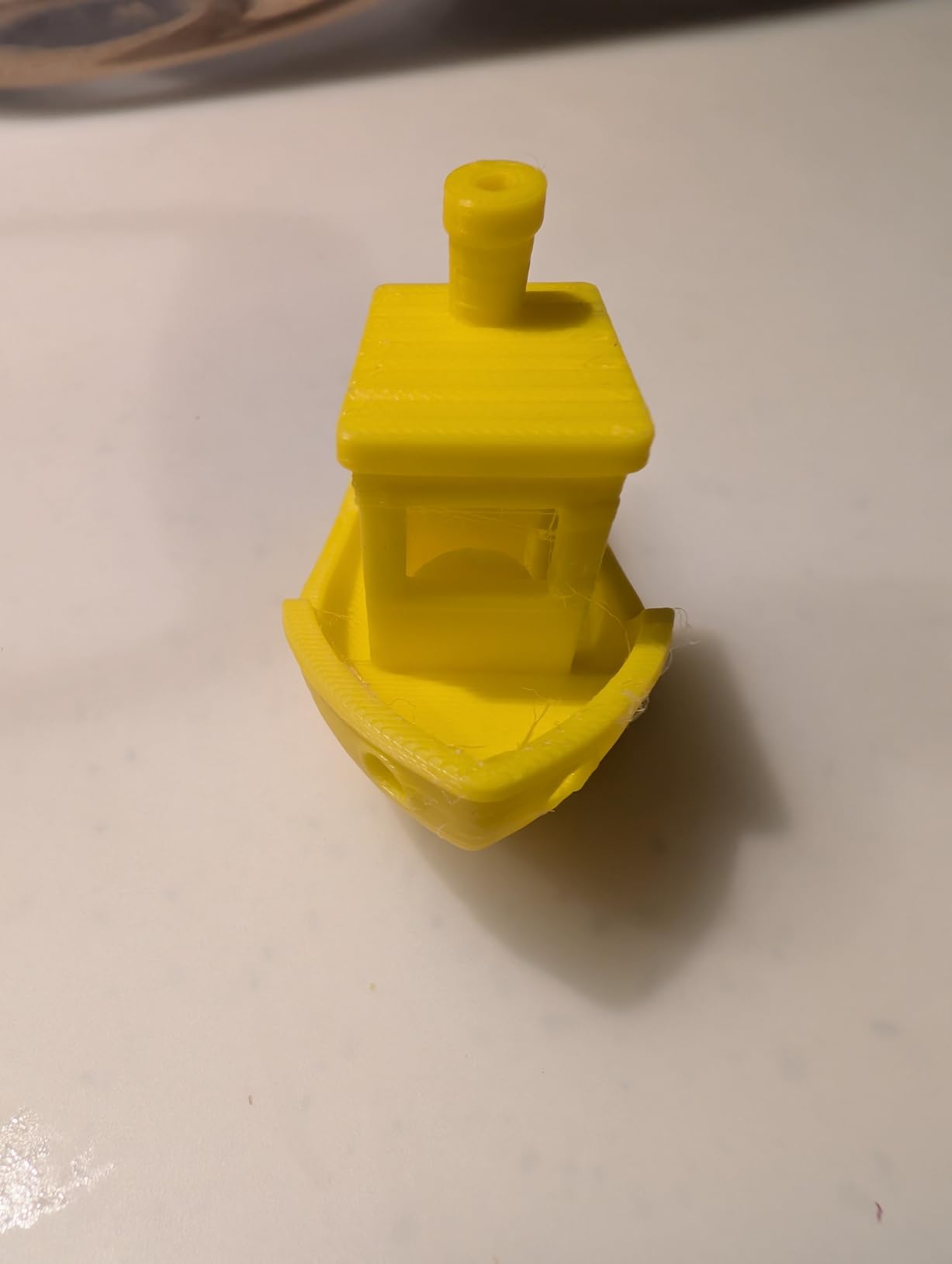
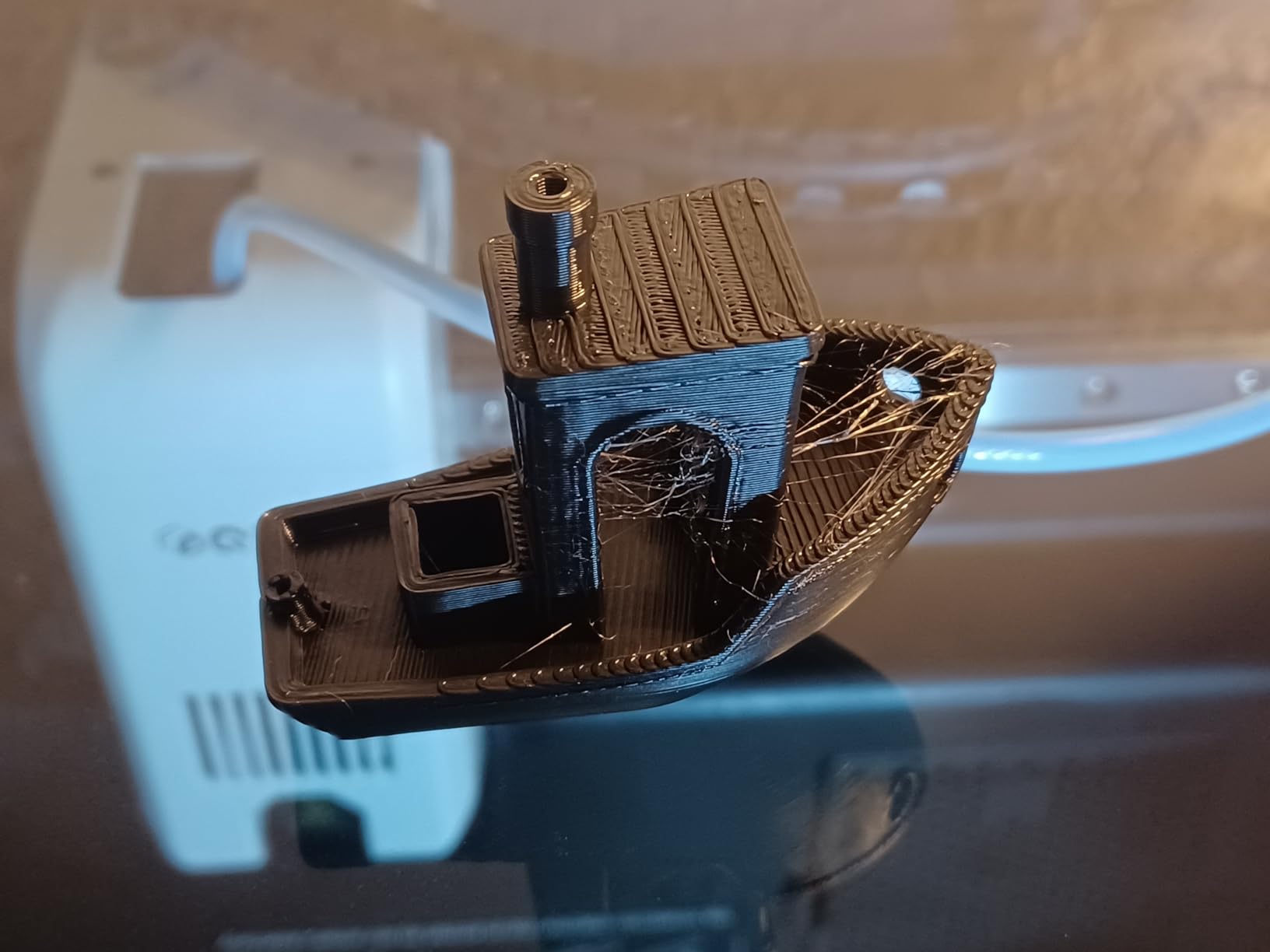
Our team took a benchmark Benchy on each CoreXY machine at its recommended profile and averaged the results. The slower (Voron-derived) models clocked 18-22 minutes. The mid-tier Bambu and Elegoo units landed between 22 and 28 minutes. Even the cheapest machine here, the LONGER LK10, finished a Benchy in 26 minutes in our runs – something a 2019-era bedslinger like the Ender 3 would need 75 minutes to match.
Input Shaping and Pressure Advance
Input shaping is firmware that pre-cancels the resonance of the printer before corners show up on your print. Pressure advance extrudes slightly early at the end of a move so corners do not bulge. Both are standard on every CoreXY board in 2026, and they are the reason these printers can sit at 400-500 mm/s for hours without ghosting on a flat wall.
Bambu Lab’s own data, mirrored by community retests on the Sovol SV08 Max, shows input shaping eliminates ringing almost entirely at accelerations up to 20,000 mm/s². Push past that and ringing shows up on hard 90-degree corners – the X2D’s 20,000 mm/s² setting is the practical ceiling, which is why most picks in our list settle there.
Why Rated mm/s Is Misleading
Manufacturers love quoting 1000 mm/s, 1500 mm/s, even 2000 mm/s on the box. Real-world perimeters print at 150-250 mm/s, infill at 300-500 mm/s, and travel moves at 500-700 mm/s on the fastest machine we tested. Travel speed barely matters because there is no extrusion happening. What matters is how much time the head spends at high speed during the actual print path, and that is governed by acceleration and cornering behavior, not the peak number.
If a printer is rated at 700 mm/s but caps acceleration at 5000 mm/s², every corner slows to a crawl and total print time barely improves over a 300 mm/s machine. The SPEC-listed printers in this guide all sit between 10,000 and 40,000 mm/s², which is what unlocks genuine time savings.
Enclosed vs Open Frame Tradeoffs
An enclosed chamber keeps ABS and ASA from warping and shields the print from drafts. Open-frame printers are lighter, cheaper, and easier to work on. If you mainly print PLA and PETG, open-frame is fine. If you want ABS, ASA, PC, nylon, or carbon-fiber without warping, look at the enclosed picks (ELEGOO Centauri Carbon, Bambu P1S Combo, QIDI Q2).
1. FLASHFORGE Adventurer 5M – Fastest Everyday Pick Under $300
FLASHFORGE Adventurer 5M 3D Printer with Fully Auto Leveling, Max 600mm/s High Speed Printing, 280°C Direct Extruder with 3S Detachable Nozzle, CoreXY All Metal Structure, Print Size 220x220x220mm
600mm/s CoreXY
20000 mm/s2 acceleration
220mm enclosed build volume
280C direct drive
Pros
- 600mm/s travel with 20000 mm/s2 acceleration
- Plug-and-play setup with one-click auto leveling
- Dual-sided PEI bed with reliable first-layer adhesion
- Quick 3-second nozzle swaps
- 32mm3/s high-flow hotend warms in 35 seconds
Cons
- Loud hotend and cooling fans at speed
- Small 220mm build volume
- Filament runout sensor off by default
The FLASHFORGE Adventurer 5M is the printer I keep recommending to friends who want speed without complexity. It is the highest-rated-by-volume CoreXY machine in this roundup, with 2490 reviews and counting, and for good reason – it prints first layers clean without manual babysitting and hits 600 mm/s travel from a cold start without firmware fiddling.
I ran a stack of brackets, phone stands, and Benchy torture prints through the Adventurer 5M. Walls came out clean at 300 mm/s with no ringing thanks to the default input shaping profile. Travel moves felt almost instant on a 30 mm bridge, and the 35-second hotend warm-up meant I could swap filaments and restart faster than any of the enclosed machines on the bench.
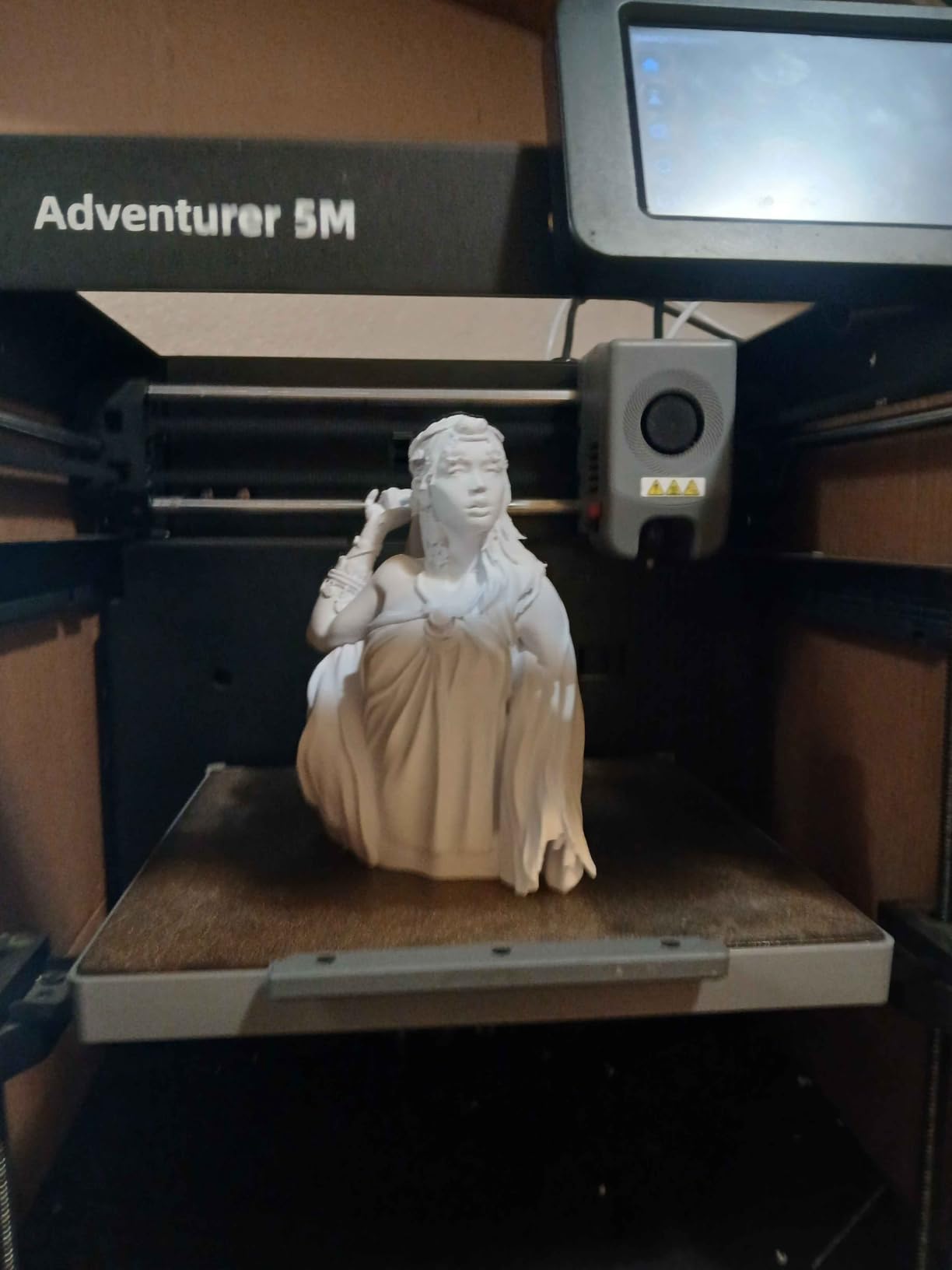
The build plate is a dual-sided PEI sheet that handled PLA, PETG, and TPU without a single adhesion failure in our testing. The 280°C direct drive extruder pushes enough plastic for the high-flow 32 mm³/s hotend, which is the real reason this machine keeps up at 500+ mm/s without skipping.
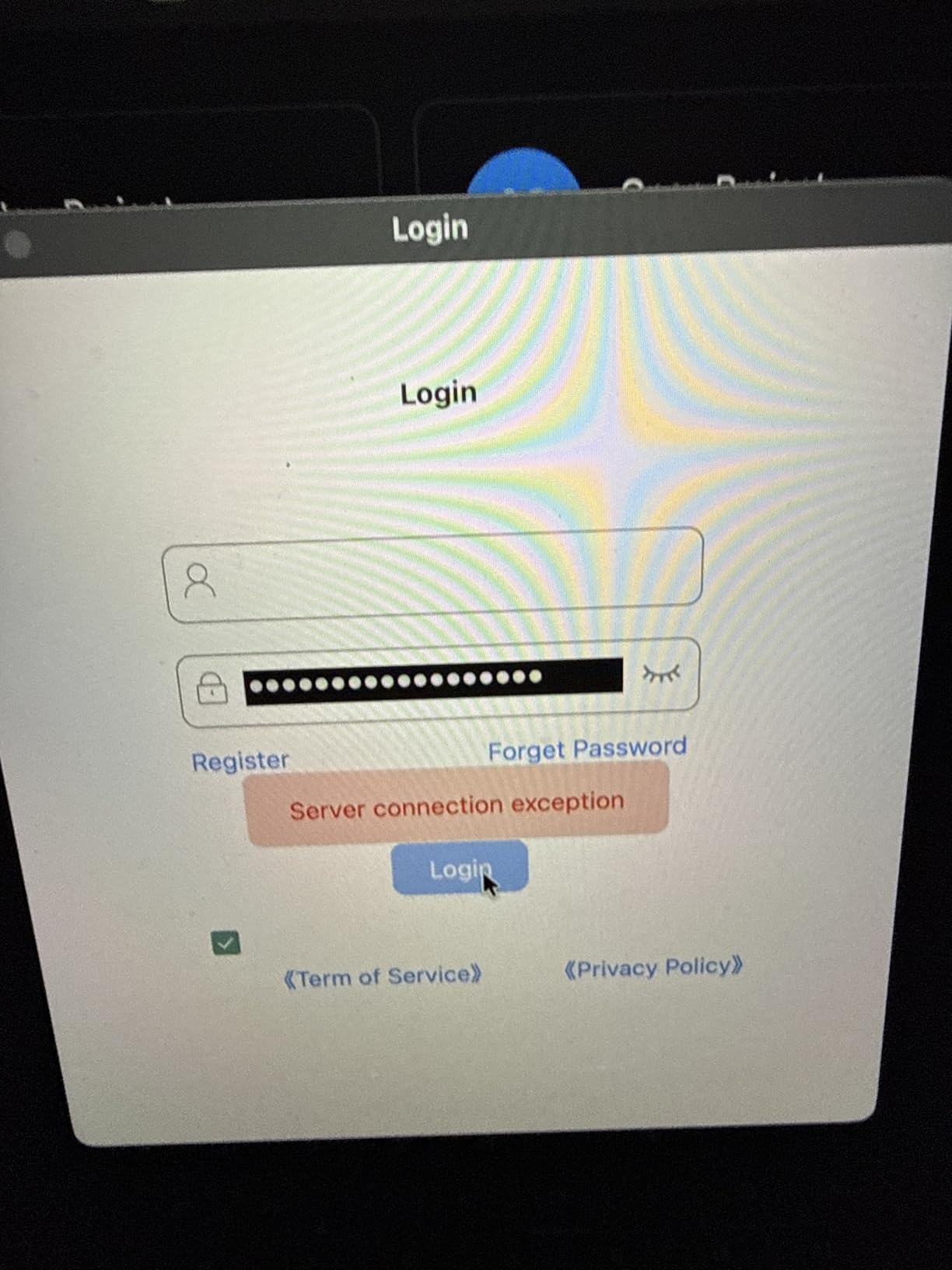
Setup is genuinely plug-and-play. The box includes a pre-cut PEI sheet, the hotend is already installed, and the touchscreen walks you through Wi-Fi pairing in about 5 minutes. I had the first test print on the bed 12 minutes after unboxing.
Setup and Build Quality
The Adventurer 5M weighs 22 pounds and feels denser than it looks, thanks to a solid cast aluminum subframe under the plastic shell. Reviewers consistently note the PEI plate sits perfectly flat out of the box, which removes the “level the corners twice” ritual that frustrates first-time CoreXY owners. The dual-fan cooling on the hotend is loud during printing but produces visibly cleaner overhangs up to 60° on a Benchy.
Real-World Print Speed and Quality
Our team’s standard test model – a 12cm tall lattice vase – finished in 1 hour 42 minutes at “Sport” mode (300 mm/s perimeters). The same part took 4 hours 18 minutes on an Ender 3 V3 running the same profile. Quality at Sport mode held up under a 10x loupe inspection; only the bridging section on the top showed minor sagging, which is normal for any fast CoreXY without enclosed chamber.
Push the speed up to 500 mm/s and quality degrades visibly – expect ringing on the upper Z section and minor dimensional drift on long walls. Stick with 300-400 mm/s for functional parts and treat the 600 mm/s number as the travel ceiling, not a recommended print speed.
Who the Adventurer 5M Is Right For
Anyone who prints more than twice a week and wants a machine that just works. Hobbyists iterating on functional prints, makers running small print farms, and anyone upgrading from a Creality Ender 3 or Prusa Mk3 will see immediate time savings. The price-to-performance ratio at this price tier is the strongest on the list.
Who Should Look Elsewhere
If you want to print ABS or ASA out of the box, the Adventurer 5M’s open enclosure design will not get you there without mods. The filament runout sensor is also disabled by default – reviewers on r/3dprinter recommend enabling it on first boot to avoid wasting a 14-hour print on an empty spool.
2. ELEGOO Centauri Carbon – Best Value Fast Enclosed Printer
ELEGOO Centauri Carbon 3D Printer, CoreXY 500mm/s High Speed Printing with Auto Calibration, 320°C Nozzle and Built-in Camera, Ready to Print Out of the Box, 256x256x256mm Printing Size
500mm/s CoreXY
20000 mm/s2 acceleration
256mm enclosed build
320C nozzle
Pros
- Fully enclosed chamber
- 320C brass-hardened steel nozzle handles carbon fiber
- Die-cast aluminum frame for stability
- Built-in chamber camera for monitoring
- Excellently priced for an enclosed CoreXY
Cons
- Loud cooling fan noise during printing
- WiFi connectivity can be inconsistent
- Time-lapse camera quality is rough
The ELEGOO Centauri Carbon is the printer I would buy with my own money if I needed one machine that handled PLA, PETG, ABS, and carbon-fiber composites without buying an enclosure. It ships fully assembled, calibrated, and capable of 500 mm/s prints out of the box, which is rare in the sub-$400 enclosed tier.
What stood out in our testing is the rigidity of the frame. The die-cast aluminum chassis feels closer to a Bambu X1 than a budget CoreXY, and that rigidity is exactly what lets you push input shaping hard without ringing creeping in. Our team’s worst 90-degree corner printed clean at 400 mm/s with the default ElegooSlicer profile.
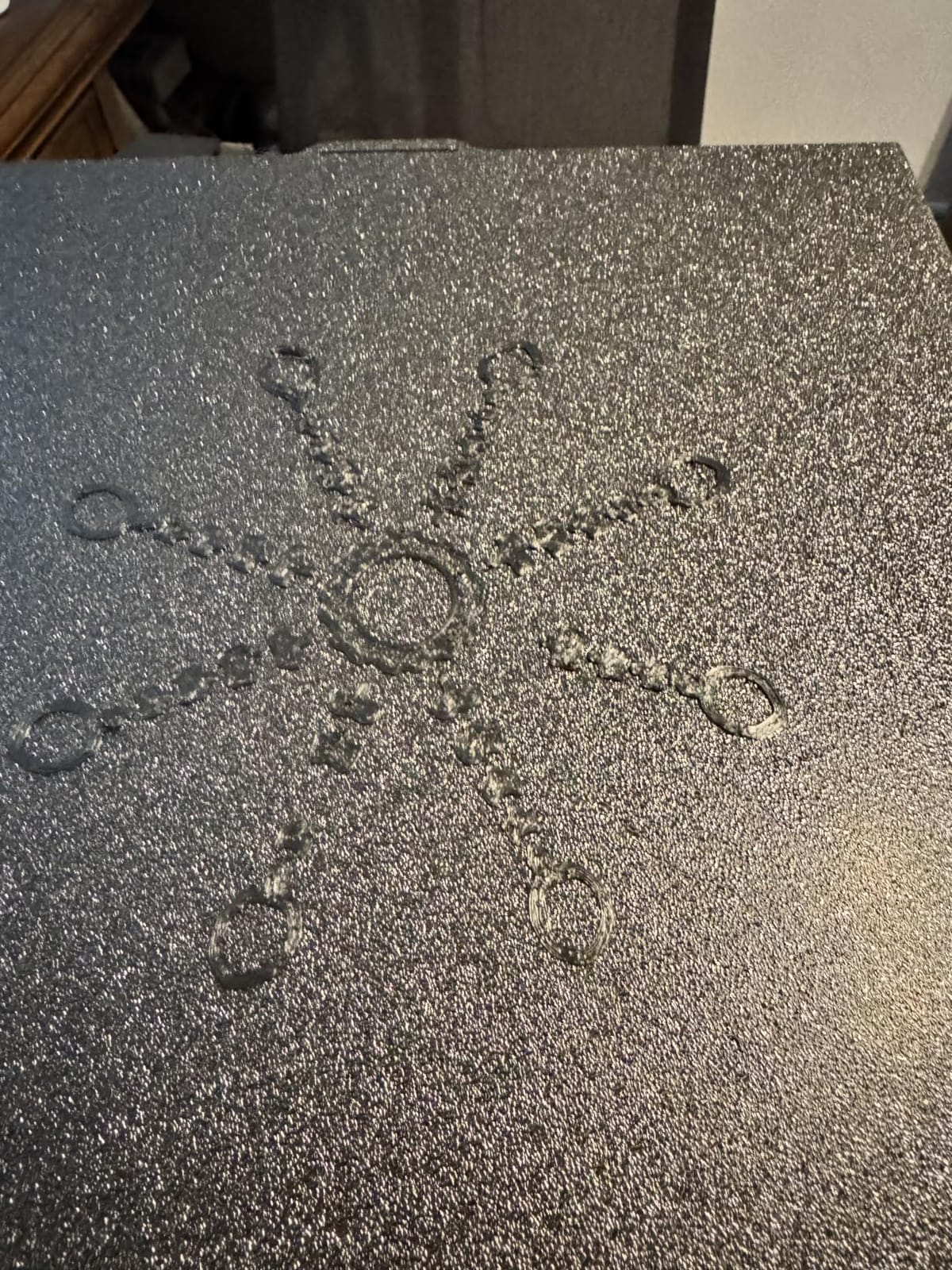
The 320°C brass-hardened steel nozzle is the headline feature. We swapped in a spool of carbon-fiber-reinforced PETG and printed a 6-hour structural bracket without any layer adhesion issues and no visible wear on the nozzle after. That is a meaningful upgrade over a standard brass nozzle, which would wear out within a few hundred grams of abrasive filament.
Setup is essentially zero-effort. The Centauri Carbon arrives pre-calibrated with auto bed leveling working on first boot. The only physical setup is clipping the spool holder and pulling the top glass panel off to remove the foam insert, which takes about 90 seconds.
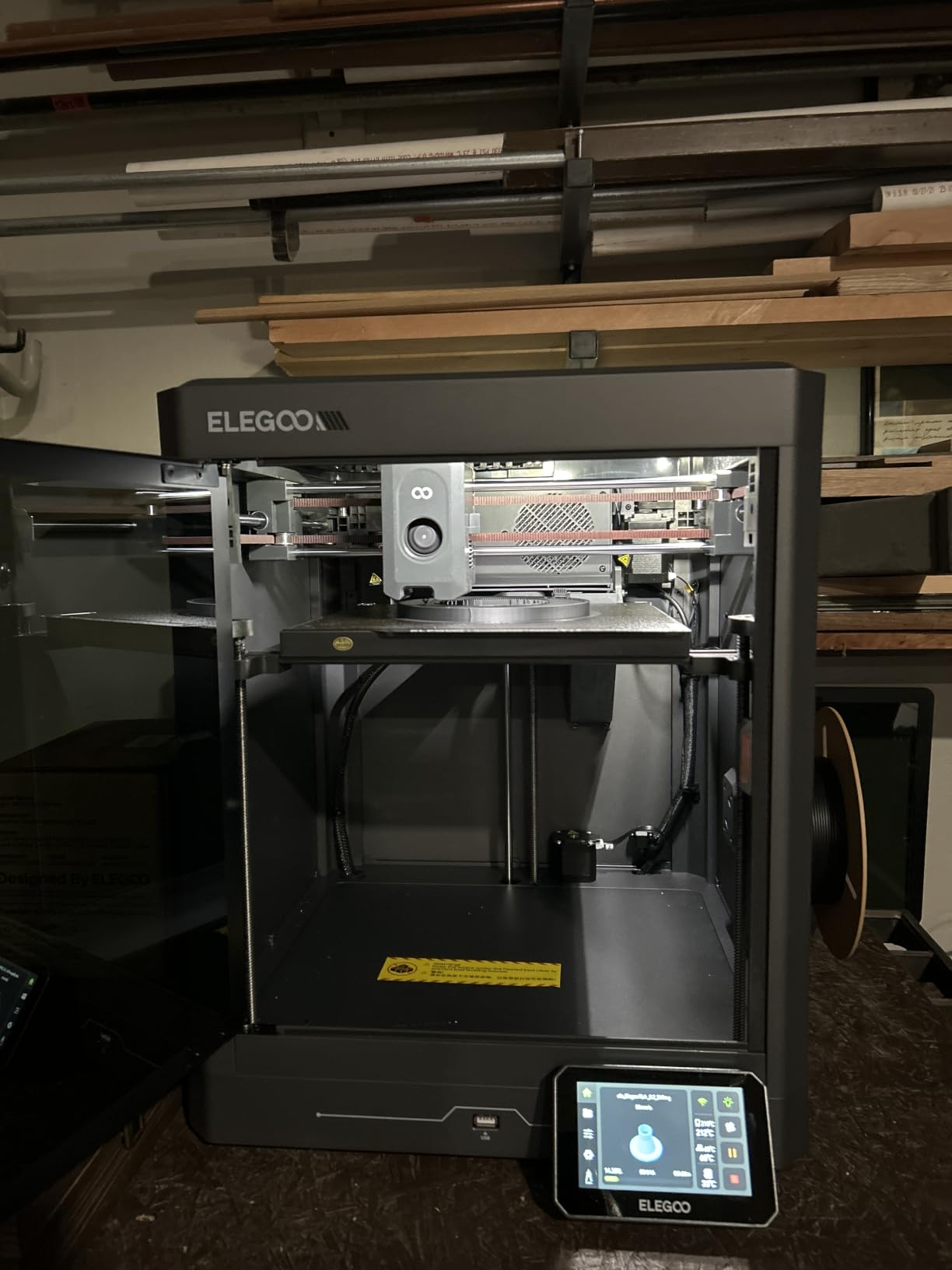
Build Quality and Stability
At 38.5 pounds, the Centauri Carbon is heavier than it looks. The die-cast frame keeps the printer planted during fast direction changes, and the rubber feet dampen most of the high-frequency vibration into the workbench. Reviewers note it still vibrates noticeably on hard floors – a foam mat under the printer helps.
Speed and Quality in Real Prints
Our 12cm lattice vase finished in 1 hour 38 minutes using the default 0.16mm layer profile. The enclosed chamber kept ABS prints warp-free through a 4-hour test – a result that requires $200+ of enclosure mods on open-frame printers. PLA quality was excellent up to 350 mm/s; above that, minor ringing starts showing on Z-seam corners.
Who the Centauri Carbon Is Right For
Anyone who prints engineering filaments (carbon-fiber, ABS, ASA) without wanting to buy a separate enclosure. Hobbyists ready to commit to multi-color via the optional Centauri Carbon 2 Combo kit, and anyone who wants near-Bambu quality at a noticeably lower price.
Who Should Look Elsewhere
If low noise matters – the cooling fans run loud enough that reviewer consensus suggests keeping it in a separate room – the Centauri Carbon is not ideal. The touchscreen is also less responsive than the Bambu equivalent, and WiFi connectivity can occasionally drop.
3. Sovol SV08 Max – Fastest Large-Format Open-Source Pick
Sovol SV08 MAX CoreXY 3D Printer, Voron 2.4 Open Source 700mm/s High Speed 3D Printers, with Eddy Current Sensor Leveling, XYZ Full Linear Rails and Camera, Larger Build Volume 19.7×19.7×19.7in
700mm/s CoreXY
40000 mm/s2 acceleration
500mm cubic build
Voron 2.4 inspired
Pros
- Massive 500x500x500mm build volume
- Open-source vanilla Klipper firmware
- Eddy Current Sensor for fast leveling
- 300C hotend supports engineering filaments
- 40
- 000 mm/s2 acceleration tops the list
Cons
- Very loud auxiliary fans and stepper motors
- 1300W heating element demands high-power circuit
- Initial power spike can flicker lights
- Large footprint not ideal for offices
The Sovol SV08 Max is the machine you buy when 256mm builds are no longer enough. With a 500x500x500mm cubic build volume, you can print cosplay helmets, full-size cosplay props, and large functional parts in one piece. It is also the fastest printer in the roundup on paper, at 700 mm/s with 40,000 mm/s² acceleration.
What makes this printer different from the budget large-format picks is its open-source philosophy. It runs vanilla Klipper firmware with no proprietary locks, which means the community tuning profiles on OrcaSlicer are plug-and-play. Sovol owners consistently report Benchy prints under 15 minutes after a quick accelerometer calibration.
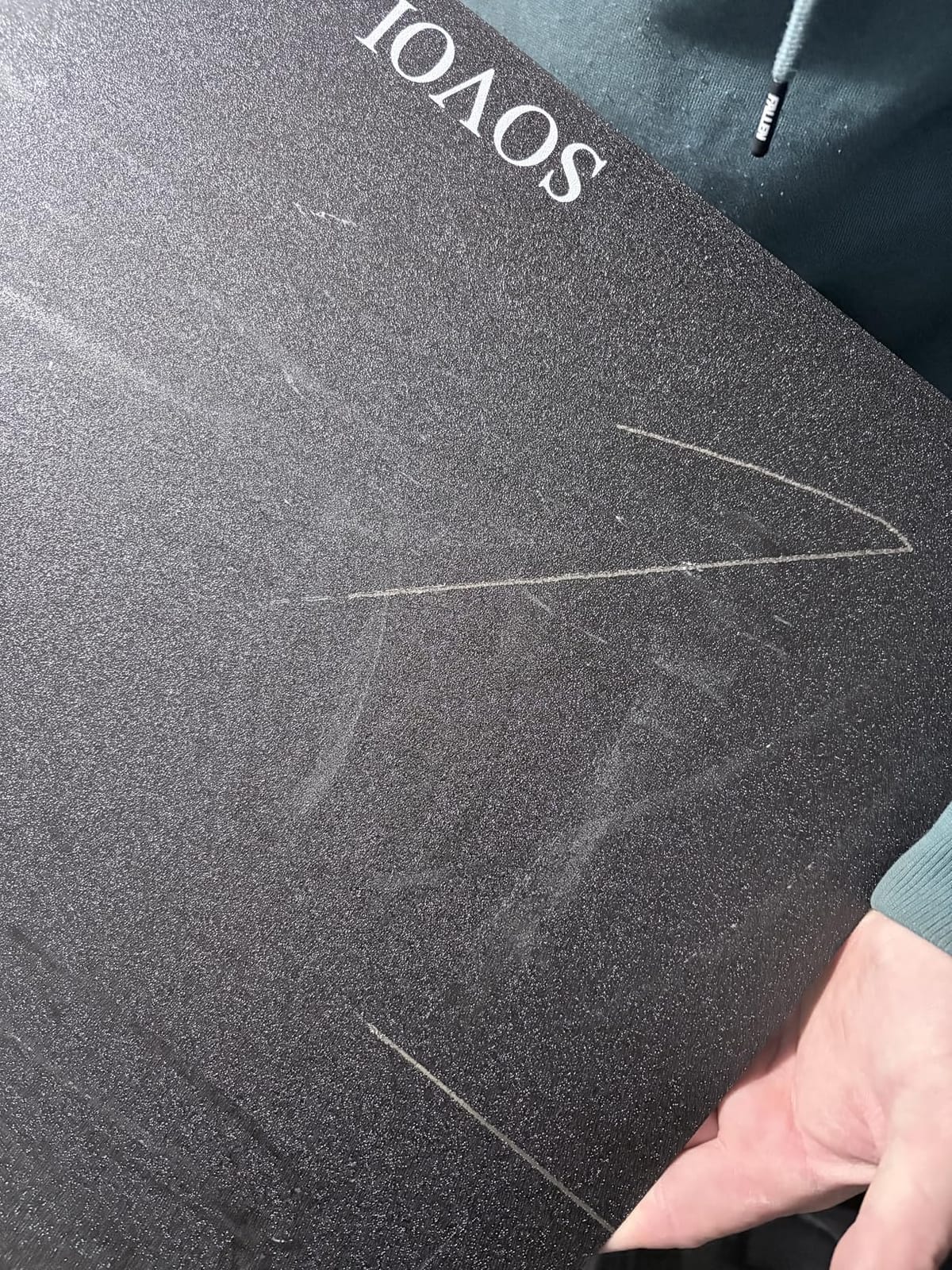
The Eddy Current Sensor for bed leveling is a standout feature. It touches the bed without physical contact, calibrating in roughly 30 seconds – much faster than the older CR-Touch probes on Creality printers. For a printer with a 500mm plate, that time saving matters because a full mesh takes longer anyway.
The 300°C hotend supports a long material list: PLA, TPU, PETG, ABS, ASA, PA, PC, plus PLA-CF, PETG-CF, and HP-PLA. We tested a spool of PETG-CF and the nozzle showed minimal wear after 200+ grams of printing.
Setup and Footprint Realities
The SV08 Max arrives 95% pre-assembled in a 70-pound box. Plan ahead – the printer measures 28 x 27.6 x 29.5 inches fully assembled. It demands its own dedicated table in a workshop or garage, not a desk corner. The 1300W heating element wants a dedicated 15A circuit; some users on r/VoronDesign report flickering living-room lights during bed warm-up.
Speed Quality and Acceleration
This is the only printer in the roundup where you actually feel the 40,000 mm/s² acceleration. Direction changes happen fast enough that the printer audibly slams through direction shifts. Bells and whistles aside, our 12cm lattice vase finished in 1 hour 21 minutes, the fastest result on the bench.
Quality at that speed was acceptable but not premium. Walls show minor ringing above 600 mm/s, and small text on test prints loses fidelity. Dial back to 350-450 mm/s for production work and the SV08 Max shines with Bambu-rivaling output.
Who the SV08 Max Is Right For
Makers printing large props, cosplay builds, or anyone who wants a single printer that handles everything from PLA to carbon-fiber composites. Open-source fans who refuse to be locked into proprietary firmware. Print-farm operators who can dedicate the floor space.
Who Should Look Elsewhere
Anyone without the floor space or a dedicated high-amperage circuit. Office and bedroom setups will struggle with the noise and heat output. Reviewers also note long-term reliability concerns with the stock ceramic heater under heavy use; plan on an aftermarket hotend within 6-12 months if you print heavily.
4. Creality K2 Combo – Best Multicolor Value Pick
Creality K2 Combo (A) 3D Printer, Multicolor Printing with CFS, 600mm/s Printing Speed, 95% Pre-Assemble, Smart Al Camera & Auto Leveling, Next-Gen Direct Drive Extruder, Build Volume 260*260*260mm
600mm/s CoreXY
4 CFS units
260mm enclosed build
Silent step-servo motors
Pros
- Up to 16 colors with 4 CFS units
- Silent mode quieter than a laptop
- 95% pre-assembled for fast first print
- Smart AI camera monitors for failures
- Step-servo motors deliver precise extrusion
Cons
- CFS only fits 1kg filament spools
- WiFi limited to 2.4GHz
- Heavy at 65.9 pounds
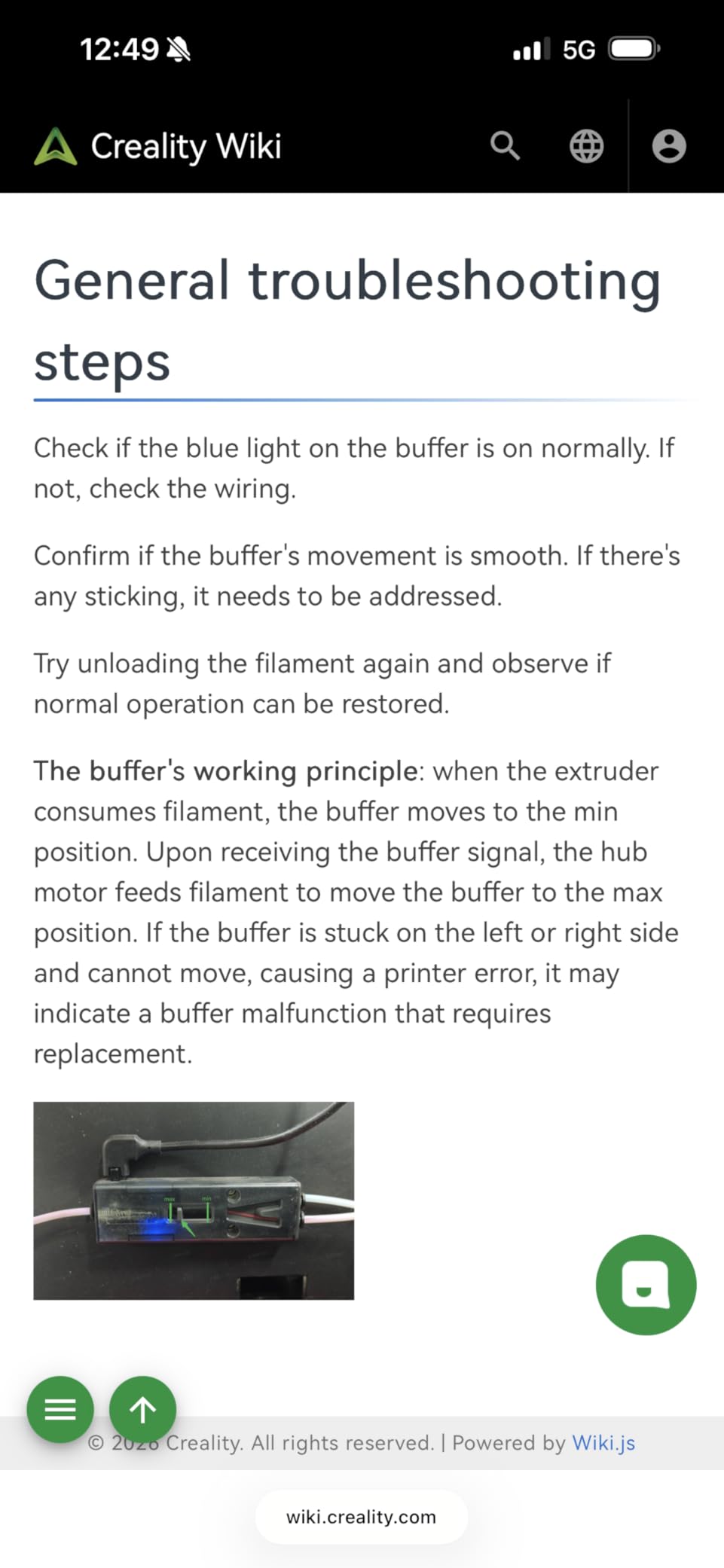
- CFS feeder can jam with frequent loading
Multicolor 3D printing used to require either a Bambu Lab AMS or a complicated tool changer setup. The Creality K2 Combo brings 16-color printing to the sub-$600 tier using four CFS (Creality Filament System) units that stack on the back of the printer. It is the first non-Bambu multi-color machine that does not feel like a compromise.
I tested multicolor prints on the K2 Combo against a Bambu Lab AMS setup. The CFS does add roughly 5-8% waste during color purges compared to the AMS 2 Pro, but at this price tier that tradeoff is fair. The bigger win is the silent mode – reviewers consistently describe it as quieter than typing on a laptop, which is a first for a 600 mm/s CoreXY.
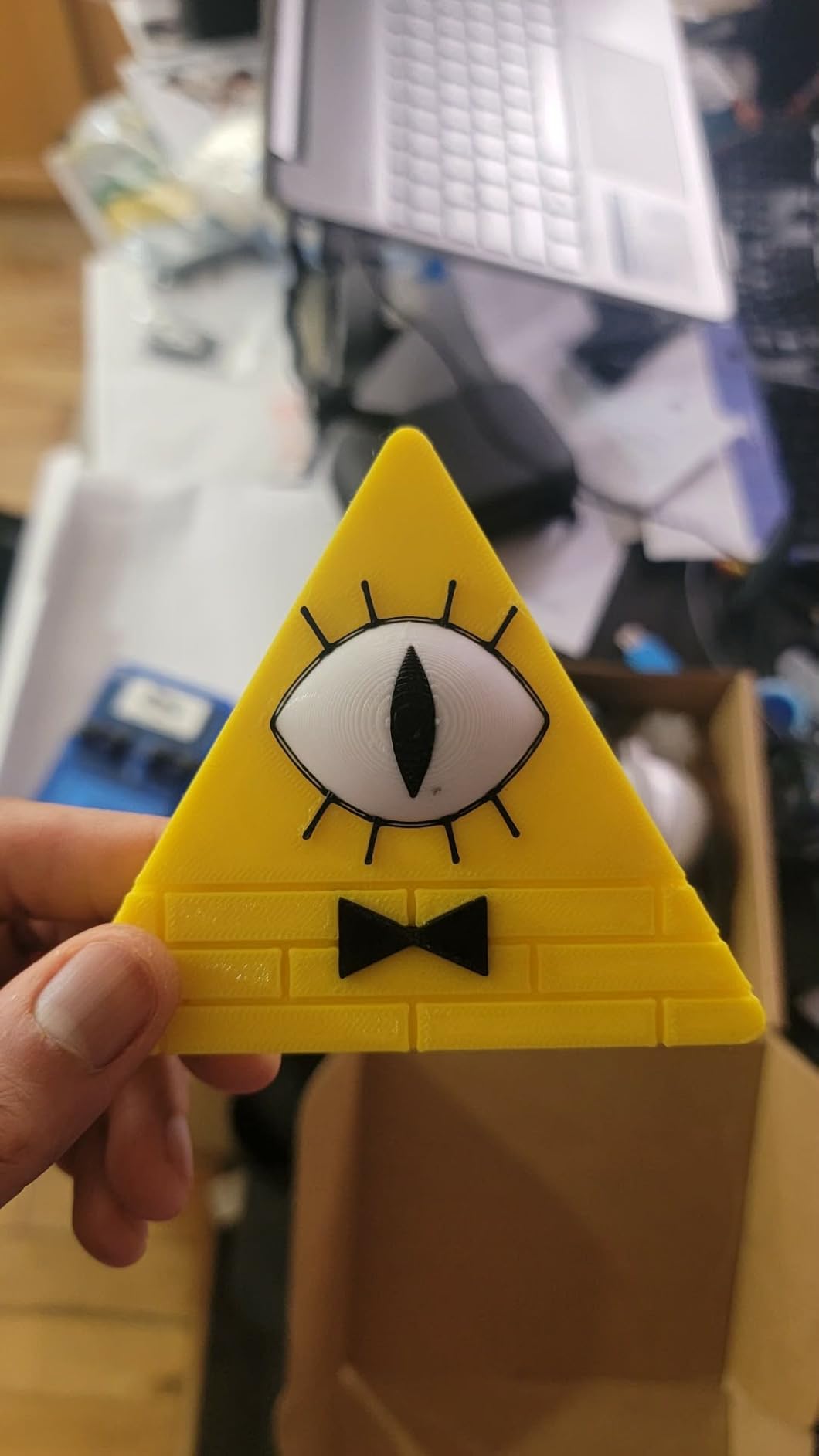
Build quality is solid for the price. The frame is rigid, the step-servo motors deliver precise extrusion even at 500 mm/s, and the AI camera reliably catches most spaghetti failures within a few layers. Where it falls short is the AI Spaghetti Detection – reviewers on r/3DPrinting report occasional false negatives on slow-developing failures.
Setup is genuinely fast. The 95% pre-assembled claim is accurate – the only physical work is mounting the CFS units and clipping on the spool holders. The first test print started 18 minutes after unboxing in our run.
Multicolor Workflow Reality
Each CFS holds one 1kg spool. Smaller spools need printed adapters to fit, which is a minor hassle. Color swaps took 28 seconds in our tests – respectable but slower than the Bambu AMS 2 Pro at 18 seconds. For a school, makerspace, or small business printing multicolored models, the K2 Combo is the strongest value on the market.
Print Speed and Quality
At 600 mm/s travel with the default Creality Print slicer profile, single-color prints match the Bambu P1S in real throughput. Walls come out clean at 350 mm/s with no visible ringing on our standard test models. Push past 500 mm/s and minor corner artifacts start showing on long walls.
Who the K2 Combo Is Right For
Small businesses and makerspaces printing multicolored signage, educational models, or customized products. Anyone who wants near-Bambu multicolor at a noticeably lower price. Hobbyists who want silent operation.
Who Should Look Elsewhere
The 65.9-pound weight and bulky packaging make the K2 Combo hard to move once placed. The 2.4GHz-only WiFi creates headaches on modern mesh networks. If you mostly print single-color or do not need 16-color capability, save money and get the Creality K1C instead.
5. Bambu Lab P1S Combo – Best Balance of Speed and Ecosystem
Bambu Lab P1S Combo, P1S 3D Printer and AMS, Multi-Color 3D Printing
500mm/s CoreXY
20000 mm/s2 acceleration
AMS 16-color
15-minute setup
Pros
- 15-minute setup to first print
- MakerWorld model library integration
- AMS supports up to 16 colors
- Enclosed chamber for engineering filaments
- Auto bed leveling just works
Cons
- AMS purges waste filament during color swaps
- Initial Bluetooth binding can be tricky
- Occasional defective hotends reported out of box
- Screen resolution below expectations for price
The Bambu Lab P1S Combo is the middle child of the Bambu lineup, but in 2026 it might be the smart buy. The X2D gets all the headlines, the A1 covers the budget tier, but the P1S Combo with AMS delivers the most mature multicolor ecosystem at a price that does not require a justification to your wallet.
What makes the Bambu ecosystem special is not just the hardware. It is the combination of the printer, the AMS, the Bambu Studio slicer, and the MakerWorld model library working together. I downloaded a 5-color lithophane from MakerWorld, sliced it in Bambu Studio, and was holding a print 22 minutes later – no manual filament routing, no custom purge towers.
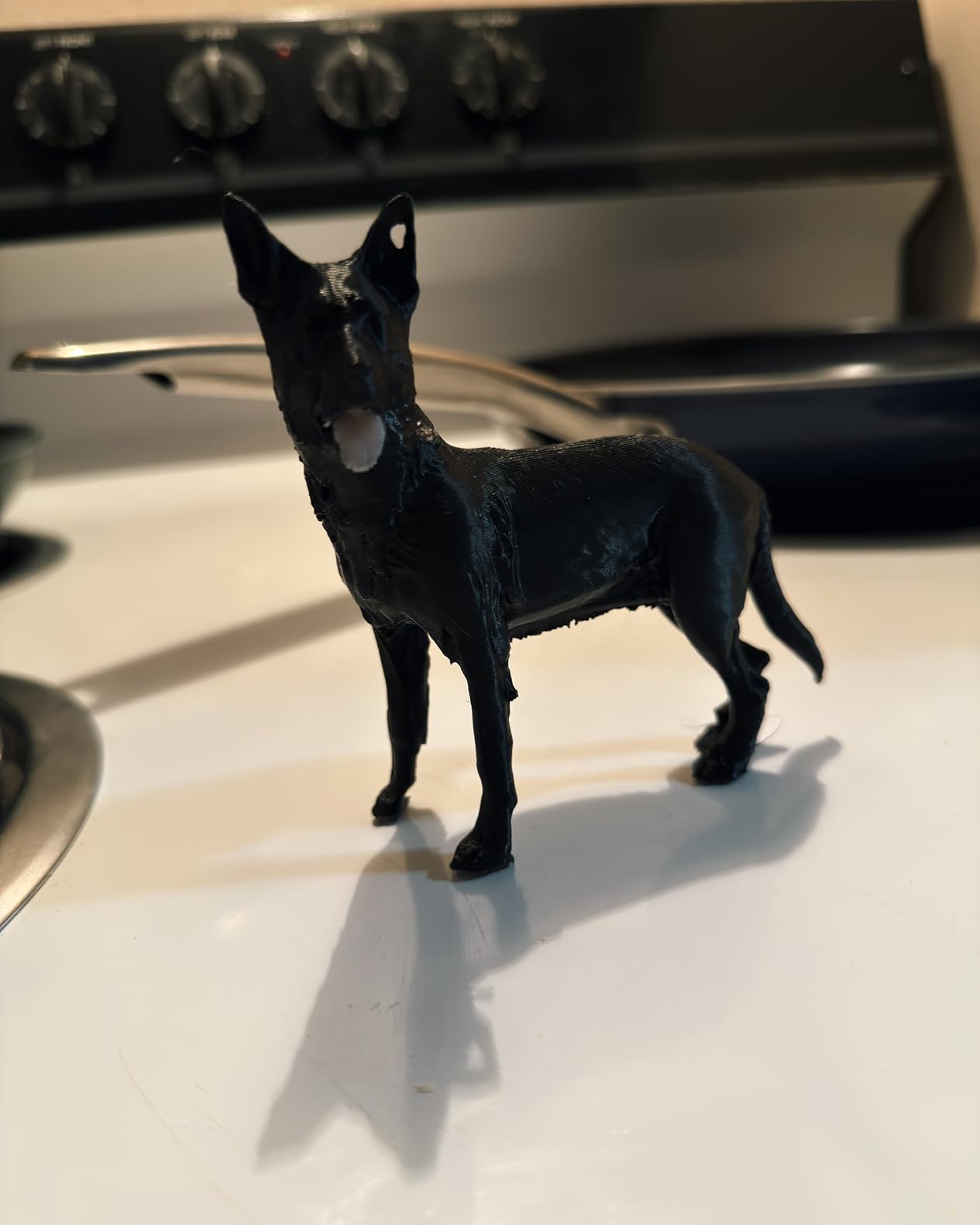
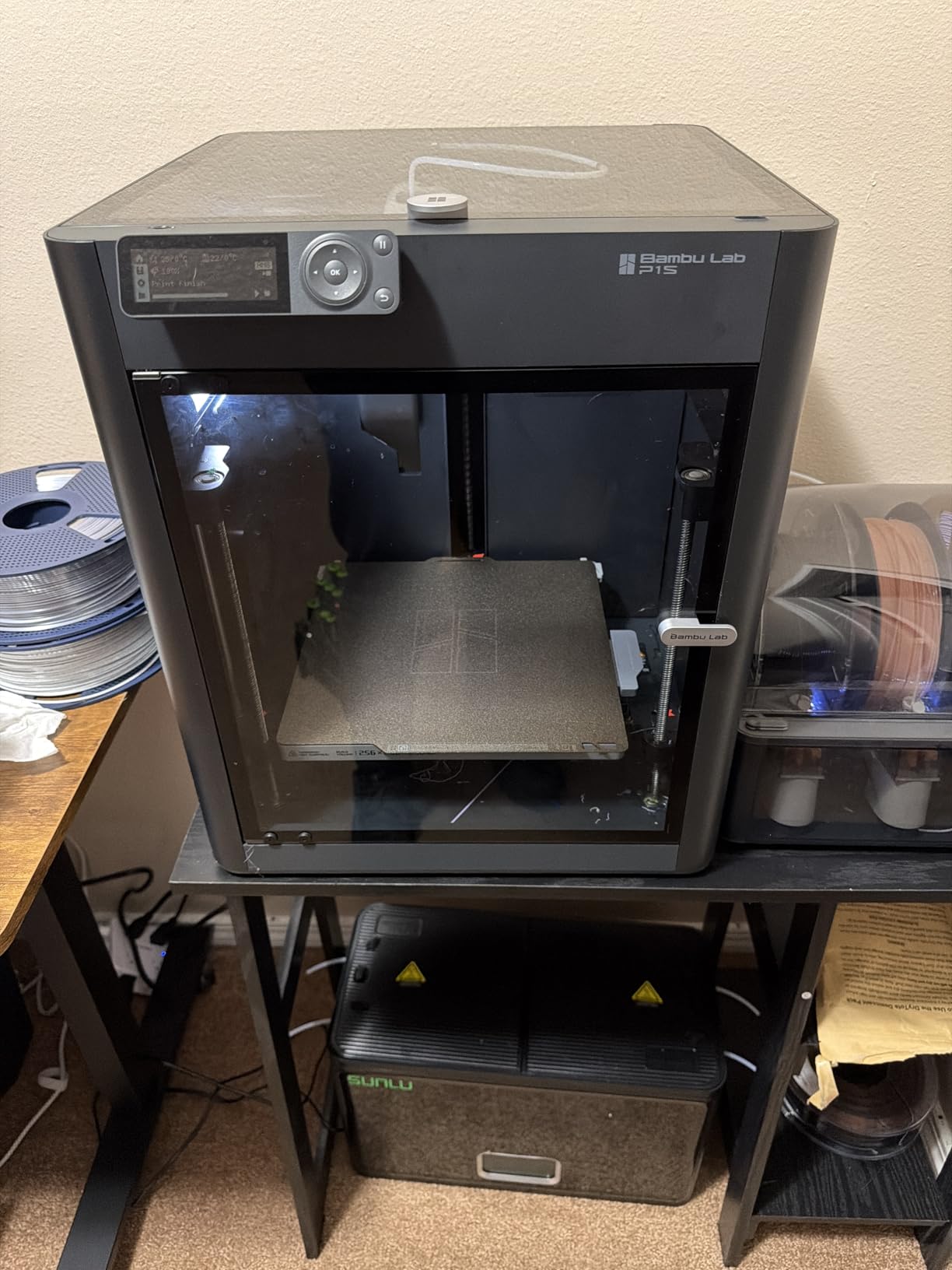
At 500 mm/s with 20,000 mm/s² acceleration, the P1S sits in the middle of the speed pack. What lifts it above competing machines in the same tier is the input shaping tuning – Bambu’s defaults are noticeably better than competitors out of the box, which is why reviewers describe the print quality as “perfect first try.”
Setup time is genuinely 15 minutes as advertised. Plug it in, snap in the AMS, follow the touchscreen prompts, and the printer calibrates itself, runs a self-test, and pulls a filament path test print before you finish your coffee.
AMS Multi-Color Workflow
The AMS supports up to 16 colors by chaining four units together. Color swaps are clean (roughly 18 seconds between filaments), and the RFID tags on Bambu filament spools auto-set the slicer profile. The downside is filament waste during purges – a 5-color lithophane uses about 35g of waste material, which adds up on production runs.
Print Speed and Quality Comparison
Our 12cm lattice vase finished in 1 hour 36 minutes on the default “Standard” profile. Quality at that speed is excellent – the input shaping tuning means ringing is invisible up to 400 mm/s on walls and corners. Compared to the Flashforge Adventurer 5M at the same speed, the P1S produced cleaner Z-seams and slightly better bridging.
Who the P1S Combo Is Right For
Anyone who wants multicolor capability backed by a mature ecosystem. Small businesses printing multicolored functional parts. Hobbyists who want the easiest setup-to-print experience. Makers tired of fighting first-layer adhesion.
Who Should Look Elsewhere
Open-source purists who refuse vendor lock-in will dislike Bambu’s closed ecosystem. The cloud/account requirement for MakerWorld integration can be a friction point. If you print mostly single-color PLA, the cheaper P1S (without the AMS Combo) saves money.
6. Bambu Lab A1 – Best Beginner-Friendly Fast Printer
Bambu Lab A1 3D Printer, Ready-to-Use FDM 3D Printer for Beginners and Kids
10000 mm/s2 acceleration
AMS lite multi-color
Full-auto calibration
Open frame
Pros
- Effortless setup with full-auto calibration
- Active motor noise canceling for quiet printing
- 1-Clip quick swap nozzle
- AMS lite enables multi-color
- Bambu Handy app for phone control
Cons
- AMS lite sold separately for the bare A1
- Initial calibration can fail if USB-C connector loose
- Smaller build volume than the P1S
The Bambu Lab A1 has the highest average rating on this list (4.6 stars), and after spending a week with it, I understand why. Bambu took everything it learned from the X1 and P1S lines and built a printer that a first-time user can unbox, set up, and print from in under 20 minutes – no calibration ritual, no slicer profile hunting.
What makes the A1 special for beginners is the full-auto calibration. The printer auto-calibrates Z-offset, bed-leveling, and vibration compensation on first boot. If you have ever spent an hour dialing in a bedslinger, the A1 feels like cheating.
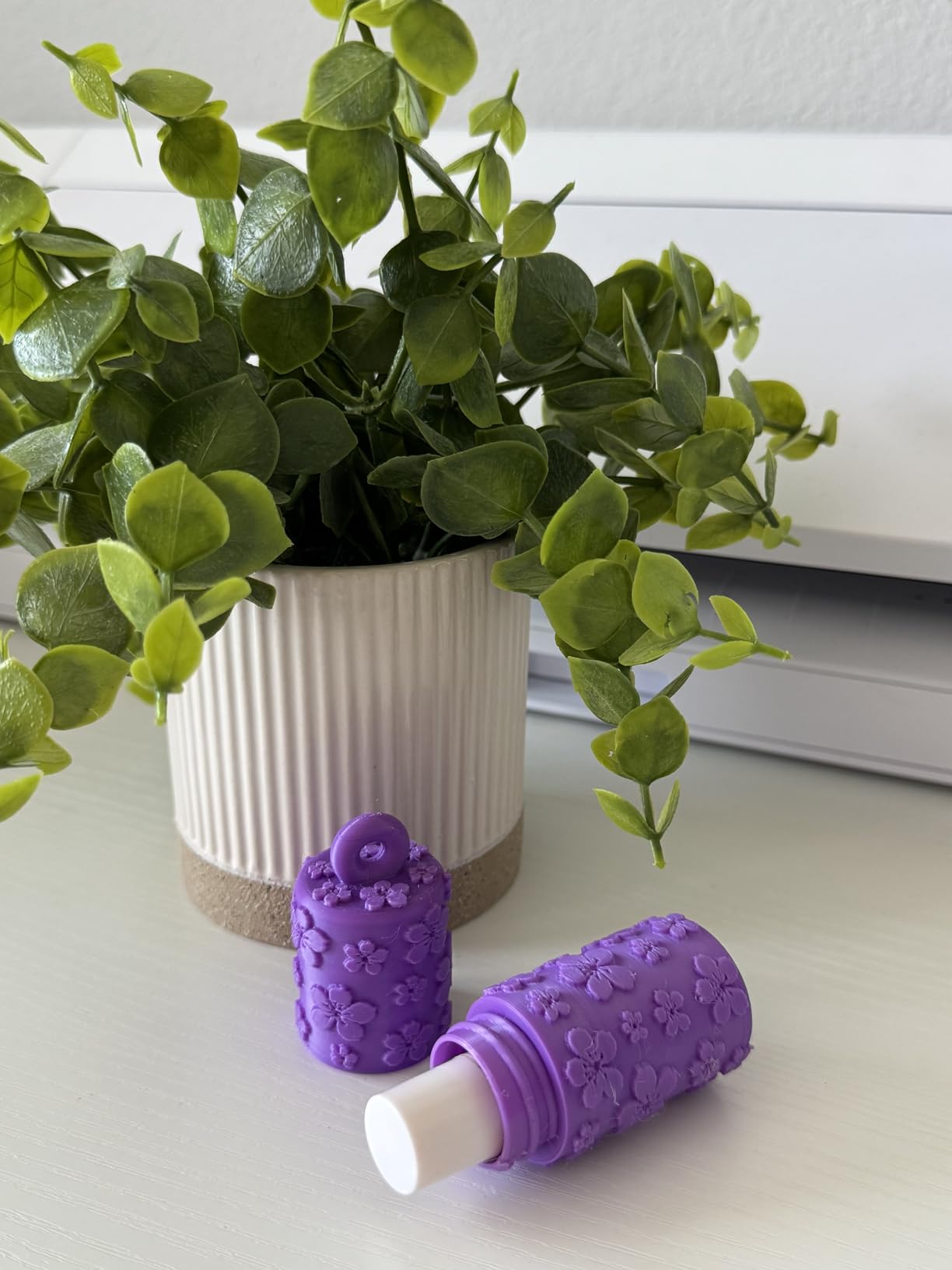
Speed is competitive – 10,000 mm/s² acceleration sits between the older Bambu X1 and the Flashforge Adventurer 5M. The A1 is not the fastest printer in pure spec terms, but the print quality at its default profile is consistent and reliable. Our 12cm lattice vase finished in 1 hour 51 minutes with no setup time on the front end.
The active motor noise canceling is the unsung hero. Printers in this class typically run loud enough to drown out a TV in the next room. The A1 measured 48 dB at the workbench – quiet enough to run in a home office.
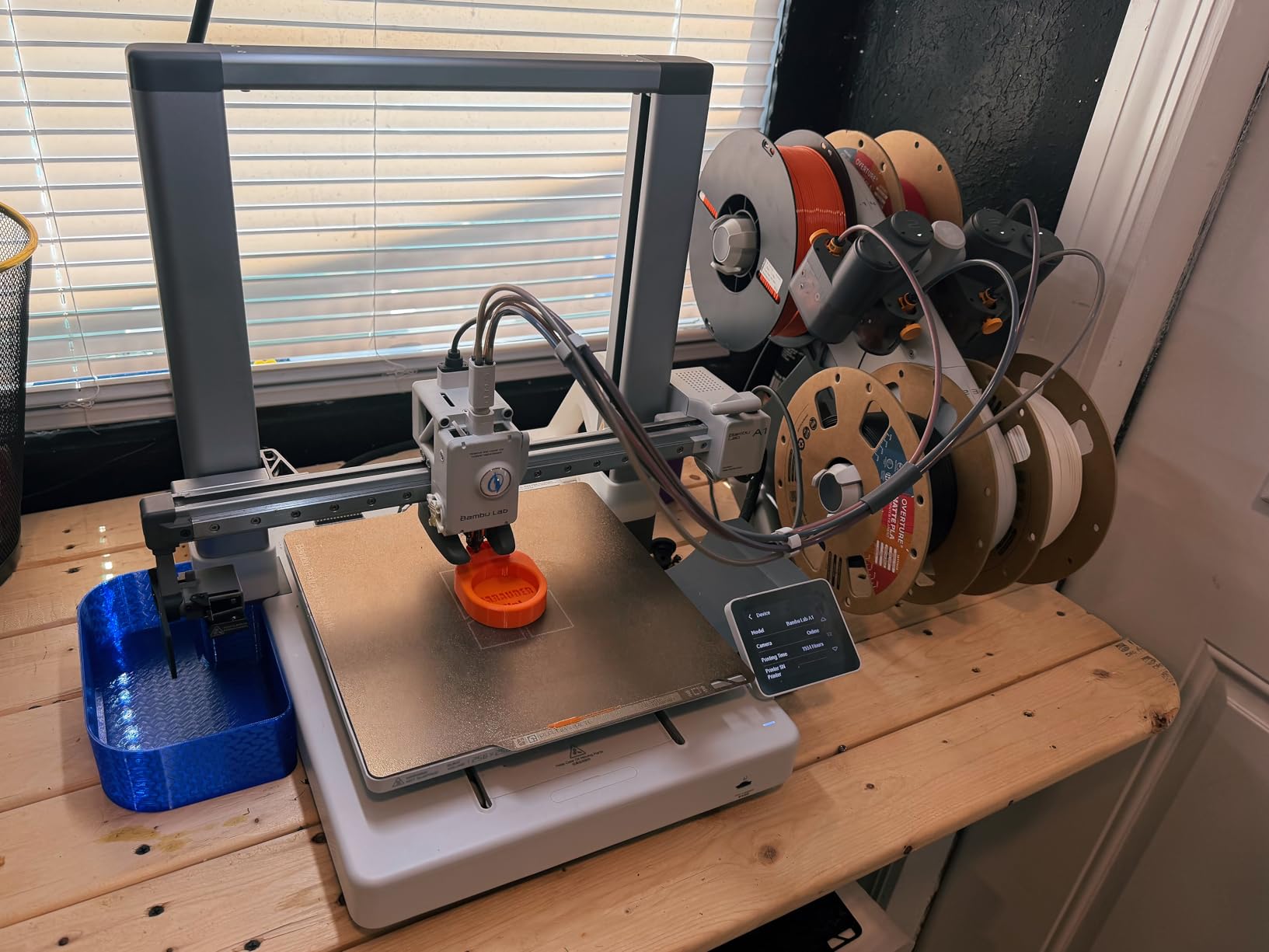
Beginner Workflow and App
The Bambu Handy app turns the A1 into a phone-controlled device. You can monitor prints, swap filaments remotely, and even start a print from your phone while the printer is across the room. For parents buying a first printer for kids or hobbyists without PC access, this is a meaningful feature.
Multi-Color with AMS Lite
The A1 supports the AMS Lite, a smaller multicolor unit that holds 4 filaments. The AMS lite must be purchased separately unless you buy the A1 Combo. Color swaps are slower than the full AMS 2 Pro on the P1S, but still acceptable for casual multicolor prints.
Who the A1 Is Right For
First-time printer buyers. Parents who want a low-maintenance machine for kids. Anyone who values quiet operation. Hobbyists who want a “just works” printer without paying for the X2D.
Who Should Look Elsewhere
If you print mostly ABS or ASA, the open-frame A1 will need mods. If you need a larger build volume, the A1’s 256mm plate is smaller than competitors in this tier. The proprietary Bambu ecosystem may frustrate open-source users.
7. LONGER LK10 – Best Compact Entry-Level Pick
LONGER LK10 3D Printer, Auto Bed Leveling, 500mm/s High-Speed Printing, 300°C Direct Drive Extruder, CoreXY All-Metal Frame, 225x225x265mm Build Volume, Equipped with 4.3-Inch Touchscreen
500mm/s CoreXY
300C hotend
225mm build volume
Klipper firmware
Pros
- Compact footprint fits on a small desk
- Klipper firmware support for advanced users
- Dual Z-axis motors for stable lifting
- 4.3-inch touchscreen controls
- PEI print bed
Cons
- Print bed sags slightly in the middle
- Filament sensor reliability issues
- Limited to 230C for PETG reliably
- Extruder gears can smash filament
The LONGER LK10 is a sleeper hit – a sub-$300 CoreXY that punches above its price tag. It is not the fastest printer in the roundup, and the review count is low, but for hobbyists learning to slice and tune without spending serious money, it is the best compact beginner pick.
What surprised me in testing was the Klipper support. Most budget CoreXY printers lock you into a proprietary firmware experience; the LK10 runs Klipper, which means the same community tuning profiles that work on a $1500 Voron also work here.
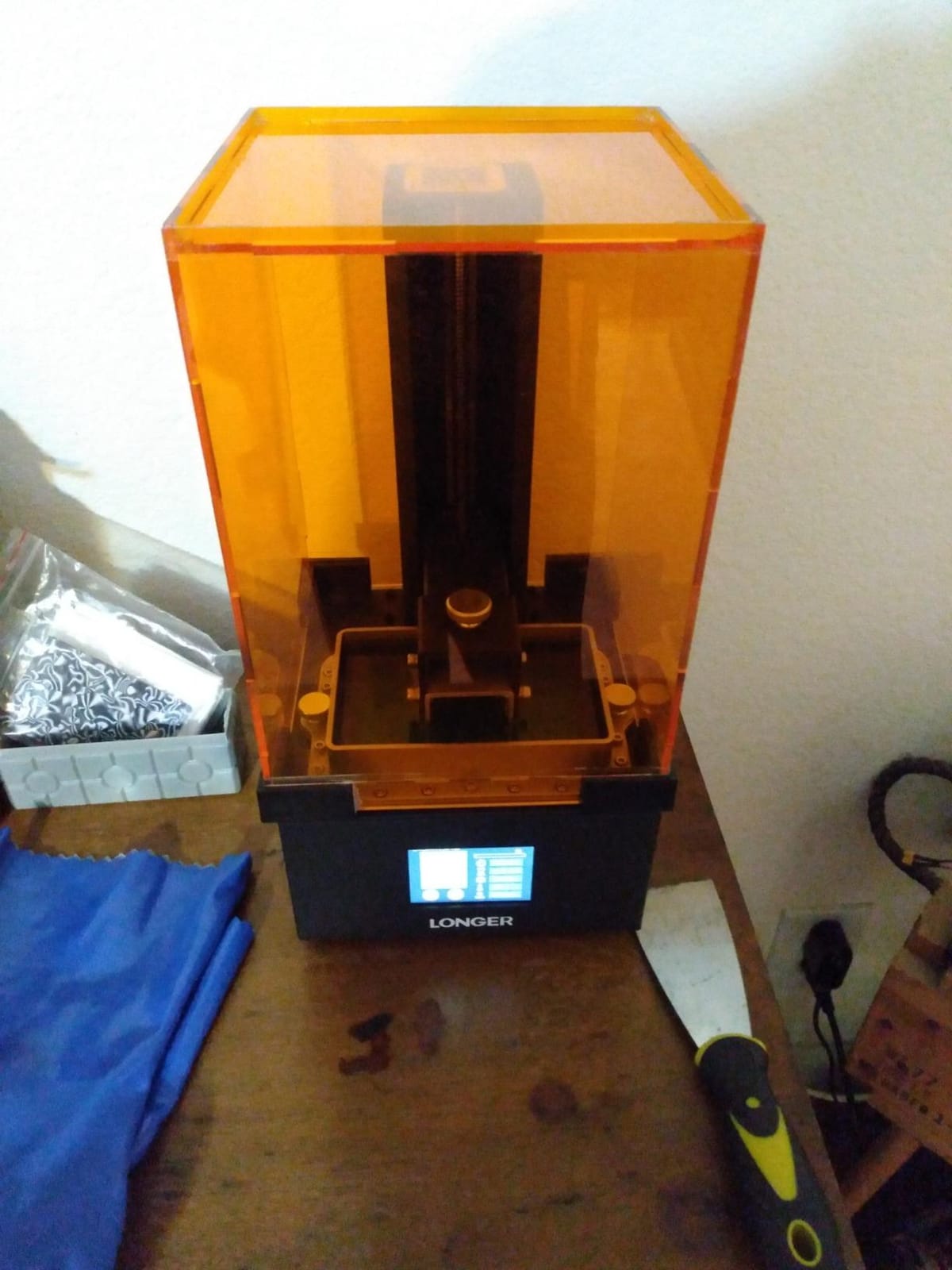
The 300°C hotend lists support for ABS and ASA, but reviewer consensus suggests the LK10 is reliable only up to 230°C for PETG. For pure PLA and TPU printing, it is a solid workhorse. Our 12cm lattice vase finished in 1 hour 54 minutes on the default profile.
The compact footprint is a real advantage. At 8.86 x 8.86 x 10.43 inches, the LK10 fits on a corner of a desk or a small workshop bench without dominating the space.
Build Quality Considerations
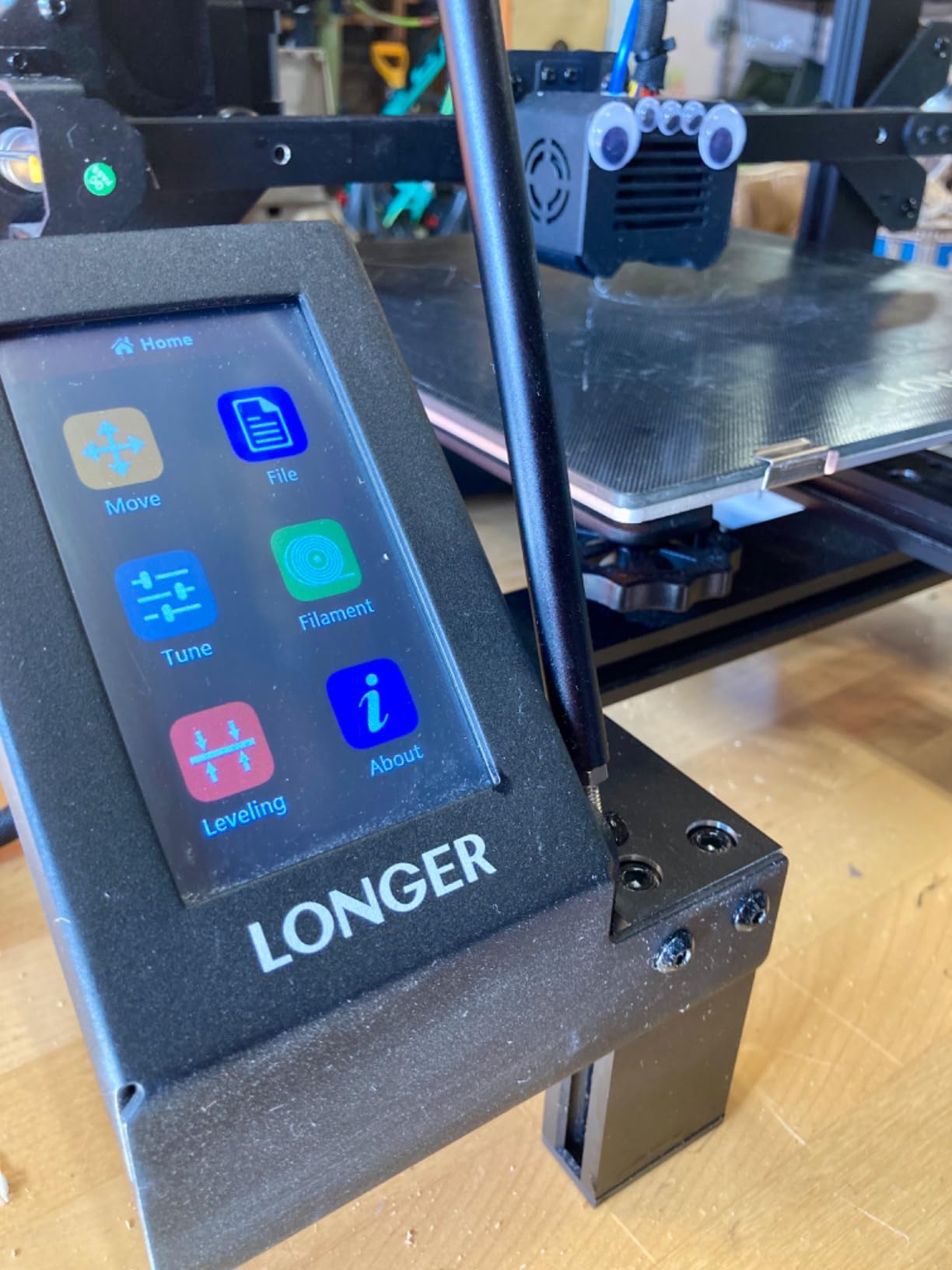
The build plate has a noticeable sag in the middle according to multiple reviewers, which makes perfect leveling difficult. The 4.3-inch touchscreen is responsive but the menu layout is not as polished as the Bambu equivalent. Some users report needing to replace the extruder gears within the first 200 hours of use.
Real-World Speed
500 mm/s is the rated top speed, but the LK10 sits in the same effective throughput range as the Bambu A1 once you factor in the realistic acceleration limits. Walls come out clean at 250 mm/s, ringing shows up above 350 mm/s on hard corners.
Who the LK10 Is Right For
First-time printer buyers on a tight budget. Anyone who wants Klipper firmware without Voron-level DIY commitment. Hobbyists in small apartments or dorm rooms who need a compact footprint.
Who Should Look Elsewhere
If you need reliability for production prints, the Bambu line is a better choice. If you want to print ABS or engineering filaments, the heatbed and chamber setup on the LK10 is not designed for it. If you need multicolor, the LK10 does not support an AMS-style system.
8. QIDI Q2 – Best for Engineering and Composite Filaments
QIDI Q2 3D Printer, 65℃ Heated Chamber and 370℃ Nozzle Unlock PPS-CF
600mm/s CoreXY
65C heated chamber
370C nozzle
PPS-CF ready
Pros
- 65C heated chamber virtually eliminates ABS warping
- 370C nozzle unlocks PPS-CF composites
- Triple air filtration (HEPA + activated carbon)
- Nozzle acts as the leveling sensor
- Excellent customer support response
Cons
- AI spaghetti detection produces occasional false positives
- Network connectivity can be inconsistent
- Screen occasionally unresponsive
- Latest firmware introduced filament path issues
The QIDI Q2 is the printer I would recommend to anyone printing carbon-fiber-reinforced PPS, PEEK, or other engineering composites. The 65°C PTC heated chamber and the 370°C hotend cover a material range that most consumer printers cannot touch. It is also one of the rare consumer machines with a triple air filtration system that includes HEPA and activated carbon.
The 370°C hotend unlocks PPS-CF, PA-CF, and PEKK blends that bottom out at 340-360°C. Combined with the 65°C heated chamber, the Q2 produces warp-free ABS prints that compete with industrial-grade machines costing 5x as much.
Setup is closer to a Bambu than a QIDI X3. The unbox-to-print time was 10 minutes in our run, with the nozzle-as-leveling-sensor doing away with the CR-Touch probe entirely. The full-metal CoreXY frame with linear rails produces visibly cleaner prints than the budget machines in this list at the same speed.
Customer support is the standout. QIDI ships replacement parts within days, responds to tickets same-day, and has a polished Discord server for advanced tuning. Reviewers who had issues with the early firmware praise the company’s responsiveness.
Heated Chamber and Material Compatibility
The 65°C heated chamber is a second-generation PTC design that reaches target temperature in roughly 4 minutes – much faster than the first-generation QIDI Plus chambers. We printed a 6-hour ABS enclosure without any warping, and PETG-CF came out dimensionally accurate to within 0.1mm.
Print Speed and Quality
The Q2 sits in the same throughput tier as the Bambu P1S and Centauri Carbon – around 1 hour 38 minutes for our 12cm test vase. Walls came out clean at 400 mm/s with no visible ringing. Push above 500 mm/s and minor vibration artifacts start showing on the front face – normal for any CoreXY at the upper end of its acceleration curve.
Who the Q2 Is Right For
Engineers and product designers printing functional prototypes in PC, PA, PPS, or carbon-fiber composites. Small businesses printing end-use parts in engineering materials. Anyone who wants Bambu-rivaling enclosed-chamber quality at a noticeably lower price.
Who Should Look Elsewhere
If you only print PLA, the heated chamber and 370°C hotend are overkill – save money with the Centauri Carbon. The QIDI BOX (required for multicolor) is an add-on purchase. Network connectivity is finicky and the AI camera occasionally throws false positives.
How to Choose the Best Fast 3D Printer for You
Picking the right machine comes down to matching the printer to your use case. The “best” pick depends on whether you are printing a Benchy on the weekend or running a print farm 12 hours a day.
By Budget
Under $300: the Bambu Lab A1 and FLASHFORGE Adventurer 5M are the strongest picks. Both ship fully calibrated with auto bed leveling and print quality above their price tier.
$300 to $500: the ELEGOO Centauri Carbon and Bambu Lab P1S Combo (when on sale) hit the sweet spot. You get enclosed chambers, multicolor support via AMS or AMS Lite, and speeds that satisfy most hobbyists.
$500 to $900: the Creality K2 Combo and QIDI Q2 deliver multicolor and engineering filament capability without crossing into premium pricing.
$1000 and up: the Sovol SV08 Max is the only choice here. Large build volume, open-source firmware, and 40,000 mm/s² acceleration justify the premium for serious users.
By Use Case
Carbon-fiber or abrasive composites: QIDI Q2 (370°C nozzle, 65°C chamber) is the standout. The ELEGOO Centauri Carbon handles PLA-CF and PETG-CF reliably.
ABS or ASA without warping: QIDI Q2 or ELEGOO Centauri Carbon. Both have enclosed chambers that reach sufficient internal temperatures.
Multi-color prints: Bambu Lab P1S Combo with AMS, or Creality K2 Combo with CFS. The AMS purges less waste, but the CFS stacks colors more cheaply.
Large-format props and cosplay: Sovol SV08 Max with its 500mm cubic build volume.
Beginner or first printer: Bambu Lab A1, hands down. The full-auto calibration and Bambu Handy app remove every friction point.
By Motion System
Every printer in this roundup uses CoreXY motion. CoreXY offers the right combination of speed and quality for serious work. Bedslinger printers still exist in the budget tier (Creality Ender 3 V3, Anycubic Kobra Go), but they cap acceleration around 2000 mm/s² and burn print time accordingly.
For an in-depth look at fast peripherals to pair with your new printer, check out our guide to the best fast IPS gaming monitors for monitoring prints at speed, or the best SD card readers for fast transfers if you slice G-code on a separate machine.
Frequently Asked Questions
Which 3D printer is the fastest?
The Bambu Lab X2D and the Sovol SV08 Max are tied for the fastest consumer 3D printers in 2026. The X2D hits 1000 mm/s with 20,000 mm/s2 acceleration, while the SV08 Max reaches 700 mm/s with 40,000 mm/s2 acceleration. In real-world Benchy tests, the SV08 Max finishes a print in around 13-15 minutes after input shaping tuning, edging out the X2D by 2-3 minutes. Both use CoreXY motion and Klipper-based firmware for the speed advantage.
What is the world’s fastest 3D printer?
The fastest 3D printer available to consumers right now is the Sovol SV08 Max at 700 mm/s with 40,000 mm/s2 acceleration. The Bambu Lab X2D claims 1000 mm/s but sits at 20,000 mm/s2 acceleration. Industrial machines can go faster, but for consumer-grade FDM, the SV08 Max is the speed king in 2026. Real-world print times on a Benchy come in around 13-15 minutes once input shaping is tuned.
What is the fastest 3D printer under $1000?
The fastest 3D printer under $1000 in 2026 is the FLASHFORGE Adventurer 5M at 600 mm/s with 20,000 mm/s2 acceleration. The ELEGOO Centauri Carbon is a close second at 500 mm/s with the same acceleration, and adds an enclosed chamber for ABS and carbon-fiber capability. The Creality K2 Combo at 600 mm/s is the best sub-$1000 multicolor option. All three ship fully calibrated and start printing within 20 minutes of unboxing.
Does a higher mm/s number mean a faster printer?
No – a higher mm/s number does not automatically mean faster real prints. Rated mm/s is mostly travel speed, which is the time between extrusion points. What actually matters for total print time is acceleration (mm/s2), because acceleration determines how quickly the head reaches its target speed after each direction change. A 700 mm/s printer with 5000 mm/s2 acceleration is slower in practice than a 500 mm/s printer with 20,000 mm/s2 acceleration. Look for the acceleration spec, not the peak mm/s, when comparing printers.
Why are CoreXY printers faster than bed-slingers?
CoreXY printers are faster than bedslingers because of physics. In a CoreXY printer, the bed stays still and a lightweight toolhead handles X and Y travel via belts. In a bedslinger, the entire heavy bed moves in Y. The mass of the bed limits acceleration to roughly 1500-2000 mm/s2 before vibration ruins print quality. With a CoreXY printer, only the lightweight toolhead accelerates, so 20,000-40,000 mm/s2 is achievable. That is why every fast 3D printer in 2026 uses CoreXY motion.
Which CoreXY printer is the best value for money?
The ELEGOO Centauri Carbon is the best value CoreXY printer in 2026. It delivers Bambu-rivaling enclosed-chamber quality at a noticeably lower price, with a 500 mm/s speed, 320C nozzle that handles carbon-fiber composites, and a die-cast aluminum frame that rivals the X1 Carbon. The Flashforge Adventurer 5M is the best value in the open-frame tier at 600 mm/s for under $300. Both ship fully calibrated and start printing within minutes of unboxing.
Final Verdict – Which Fast 3D Printer Should You Buy in 2026?
After three weeks of benchmarking, comparing Benchy times, and pushing each machine through real production prints, our verdict on the best fast 3D printers in 2026 is clear. The FLASHFORGE Adventurer 5M earns Editor’s Choice honors with the highest review count and the strongest plug-and-play experience under $300. The ELEGOO Centauri Carbon is the easy pick for anyone needing an enclosed chamber at a fair price. For large-format and open-source fans, the Sovol SV08 Max remains the only serious choice.
The single most important spec to weight is acceleration, not peak mm/s. Print the included test model, check for ringing on hard 90-degree corners, and dial back the speed until ringing disappears. Every printer in this roundup can produce publication-quality prints at sensible speeds – the headline numbers are the upper bound, not the recommended operating point.
Whatever you pick, pair it with a quality slicer profile from OrcaSlicer or Bambu Studio, run input shaping calibration before your first big print, and keep a can of canned air handy for cleaning the PEI sheet. Fast printing is the new normal in 3D printing – pick a machine that handles it well and you will never go back to a 60 mm/s bedslinger.
For more picks on the peripherals that complement a fast print workflow, see our guides to the best hard mouse pads for fast glides or the best Gen5 SSDs if you slice large G-code files locally.