
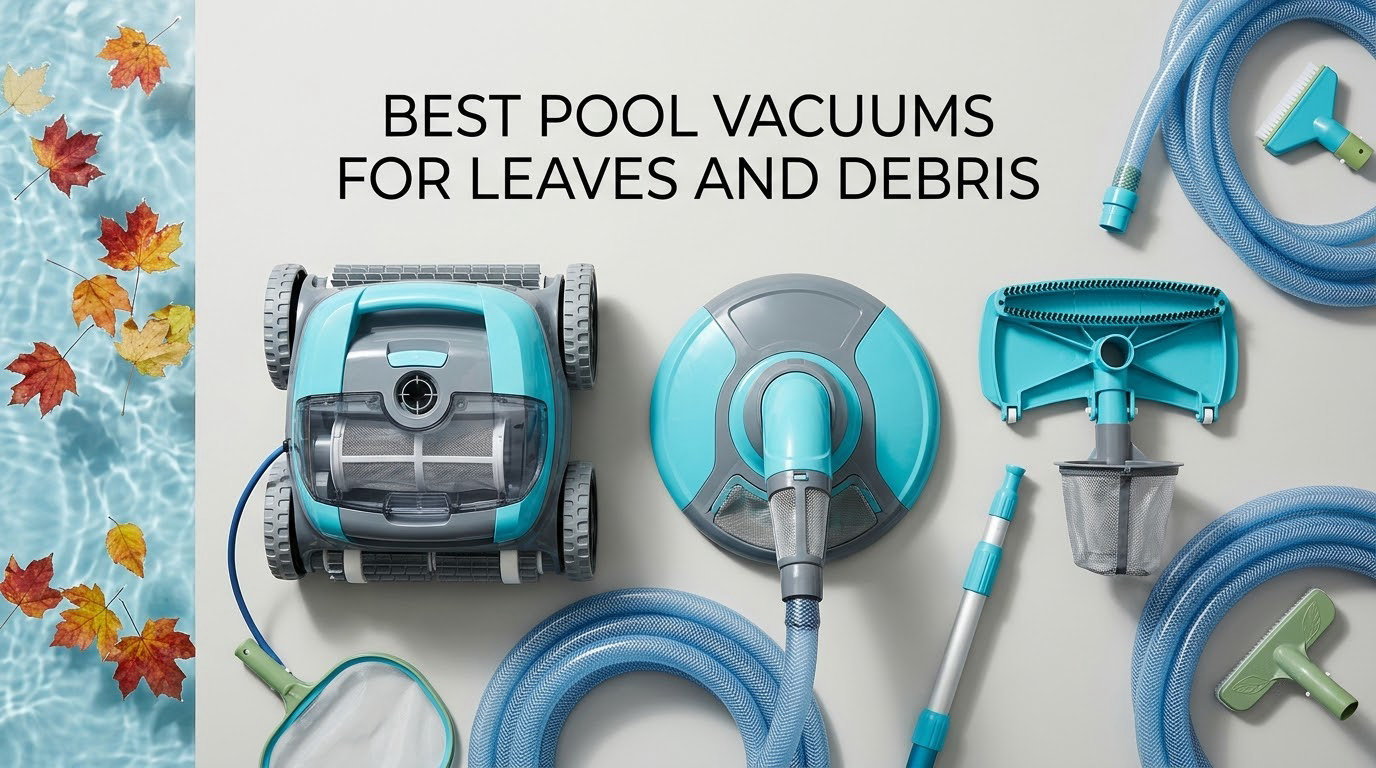
Above-ground pool owners get short shrift in most vacuum roundups, even though they are often the ones standing knee-deep in a windrow of leaves every October. That gap is why we built this list of the best pool vacuums for leaves and debris around one question: which tool actually pulls whole leaves into a bag instead of grinding them into your filter media.
We went through ten machines across all four vacuum classes, from hose-powered leaf heads to cordless robots, and sorted them by the three things leaf season actually rewards: how large a debris mouth they have, whether the collection bag is visible from the deck, and whether the design lets you bypass the filter. A tool with impressive suction can still lose to a modest one with a wide intake and a bag you can see filling.
Our top pick is the Zodiac G3, a suction-side automatic with a 36-fin disc that holds onto curved floors instead of stalling. If your pool sits under trees and you want the job handled without a weekly commitment, that is where we would start. For a small above-ground pool, a cordless handheld, or anyone who wants zero plumbing changes, the leaf heads on this list cost far less than the automatic models and clear the same piles.
We also cover the part no competitor explains: how to vacuum to waste so a heavy leaf load never reaches your filter, and why your skimmer basket jams even when the vacuum is working fine. If you are still shopping for a household vacuum for the garage, our shop vacuum roundup is a separate track.
Table of Contents
Can a Pool Vacuum Pick Up Leaves?
Yes, but only if it was built for it. A pool vacuum picks up leaves when it has a wide intake opening, a mesh leaf bag or large debris basket, and enough suction to lift a whole leaf off the floor in one pass. Most general pool vacuums are engineered for fine sand and silt, and they either clog within minutes on leaf load or push debris straight into the pool filter.
There are four classes of pool vacuum, and only some of them suit leaves:
Manual leaf heads run off garden hose water through pressure jets, cost little, and put debris straight into a removable mesh bag. The strongest leaf handling per dollar in this roundup.
Cordless handheld vacuums use a rechargeable or AA battery motor and a large leaf bag. They handle whole leaves well and double as surface skimmers, but they cannot pick up fine silt and sand.
Suction-side automatics are dragged around the floor by your existing pool pump and empty into a filter canister. Reliable, quiet, and genuinely bad at large leaves unless the pump is strong.
Robotic cleaners drive the pool floor themselves and deposit debris in a top-load basket. Best coverage per unit of your effort, with a basket that still needs emptying in heavy fall.
Pressure-side cleaners round out the category and are excellent with leaves, but they demand a booster pump and a dedicated vacuum line, which puts them out of reach for a lot of pools. We explain that trade-off further down.
Top 3 Pool Vacuum Picks for Leaves and Debris (October 2026)
These three cover the most common situations: an in-ground pool that needs a hands-off cleaner, a large robotic for the biggest surface area, and a hose-powered head for anyone who just wants leaves gone without a plumbing project.

Zodiac G3 Suction-Side Vacuum
- 36-fin disc grips curved floors
- 39 ft feed hose
- Works with variable-speed pumps

Dolphin Nautilus CC Plus
- Climbs walls on any surface
- Top-load filter basket
- 2-hour cleaning cycle

Poolmaster Big Sucker Leaf…
- 8 pressure jets to a mesh bag
- 15-inch body
- Weighs about 1.8 lbs
All 10 Pool Vacuums Compared in 2026
Every pick below appears in the table with the features that actually matter for leaf work. Scan the whole list first, then jump to the review that matches your pool type and debris load.
| Product | Specs | Action |
|---|---|---|
| Zodiac G3 Suction-Side Inground Vacuum Pool Cleaner |
|
Check Latest Price |
| Dolphin Nautilus CC Plus Robotic Pool Vacuum |
|
Check Latest Price |
| Poolmaster 28300 Big Sucker Manual Leaf Vacuum Head |
|
Check Latest Price |
 POOL BLASTER Leaf Vac Cordless Pool Leaf Vacuum and Skimmer POOL BLASTER Leaf Vac Cordless Pool Leaf Vacuum and Skimmer |
|
Check Latest Price |
 U.S. Pool Supply Leaf Terminator Pool Vacuum 15 inch U.S. Pool Supply Leaf Terminator Pool Vacuum 15 inch |
|
Check Latest Price |
 Polaris MAXX Premium Suction-Side Automatic Pool Cleaner Polaris MAXX Premium Suction-Side Automatic Pool Cleaner |
|
Check Latest Price |
 WYBOT C2 Cordless Pool Vacuum for Inground Pools WYBOT C2 Cordless Pool Vacuum for Inground Pools |
|
Check Latest Price |
 KOKIDO Rechargeable Heavy Duty Pool Leaf Vacuum XV910 KOKIDO Rechargeable Heavy Duty Pool Leaf Vacuum XV910 |
|
Check Latest Price |
 WYBOT C1 Cordless Robotic Pool Vacuum for Inground Pools WYBOT C1 Cordless Robotic Pool Vacuum for Inground Pools |
|
Check Latest Price |
 POOLAZA Manual Pool Vacuum with Double Mesh Bags and 56 inch Pole POOLAZA Manual Pool Vacuum with Double Mesh Bags and 56 inch Pole |
|
Check Latest Price |
1. Zodiac G3 Suction-Side Pool Vacuum: Best Overall for In-Ground Pools
Zodiac G3 Suction-Side Inground Vacuum Pool Cleaner
Suction-side automatic
39 ft feed hose
5 lb load capacity
2 year limited warranty
Pros
- 36-fin disc grips tile vinyl gunite and fiberglass
- Works with low-flow and variable-speed pumps
- Wheel deflector handles tight corners
- Glides over lights drains and fittings
Cons
- Needs a running pump and a skimmer or suction line connection
- Hose must be re-routed every cleaning cycle
This is the one I recommend to most in-ground pool owners, and it earns the place through its disc rather than its suction. The 36-fin disc holds the machine against curved gunite and vinyl floors so it keeps moving instead of stalling mid-pool, which is the failure that makes owners give up on suction-side cleaners.
Setup takes three steps: the disc, the wheel deflector, and the 39-foot feed hose, then a connection to the skimmer or a dedicated suction line. After that it does its work on its own every time you run the pump, which means your leaf cleanup happens on the same schedule as your filtration.
What I like most is that it is built to run on a modern pump. Low-flow and variable-speed settings are common now, and plenty of older suction cleaners stall or lose their grip when the pump is throttled down. The G3 was designed with that in mind, so it works with the pump you already own.
The one moving part means there is very little to break, and the machine measures 24 by 12 by 24 inches and weighs 5 pounds, so it is easy to lift out of the water when the hose snags on a step. It is rated for tile, vinyl, gunite and fiberglass in-ground surfaces.
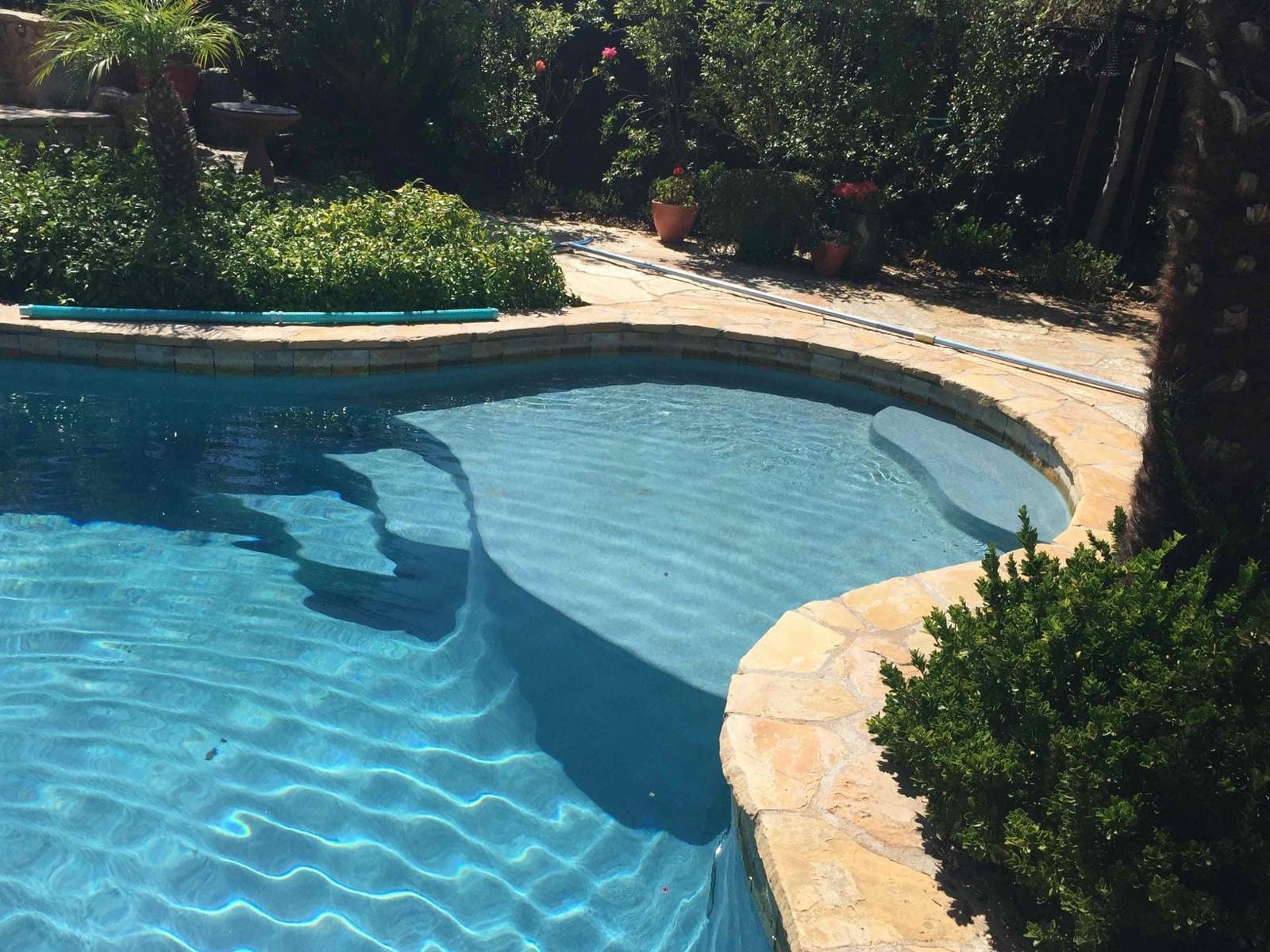
When the G3 is the right call for leaf season
Pick it if you have an in-ground pool, a running pump, and a skimmer or vacuum line you can hook into. The disc keeps it moving through leaf piles that would stall a bodiless head, and the five-pound load capacity means it carries a real load before you interrupt it.
It is also the quiet choice. There is no motor, so the only sound is water moving through the hose, and you can run it while the family is outside.
When the G3 is the wrong tool for leaves
Its weakness is whole leaves. A suction-side cleaner sends debris into your filter, so a heavy autumn load means backwashing, and forum threads over at r/pools are full of owners asking how to avoid exactly that. The Zodiac MX8 is the model those discussions name most often for heavy leaf work.
It also cannot be used without a running pump and a suction connection. Above-ground pools without a skimmer line are not a fit, and owners who do not want to re-route 39 feet of hose every cycle tend to drift toward a cordless tool instead.
2. Dolphin Nautilus CC Plus: Best Robotic for Large In-Ground Pools
Dolphin Automatic Robotic Pool Vacuum Cleaner, Wall Climbing Scrubber Brush, Smart Navigation, Ideal for In-Ground Pools up to 40FT in Length – Nautilus CC Plus
Robotic cleaner for pools up to 40 ft
22.2 by 17.6 by 12.9 inches
9.45 kg
Wall-scrubbing
Pros
- Climbs walls on any pool surface or shape
- Active scrubbing brush handles stuck debris
- Top-load basket empties without tools
- Plug-and-play 2-hour cycle
Cons
- Cord and power supply need managing around the pool
- Top-load basket is small for heavy leaf loads
With close to 14,000 ratings, the Nautilus CC Plus is the most widely reviewed machine on this list, and the reasons are unglamorous: it gets in, it covers, and you can empty it without finding a tool. It suits in-ground pools up to 40 feet in length.
Two features matter in fall. The wall-scrubbing lets it climb the walls and shift leaves out of the corners where wind deposits them, and the active scrubbing brush knocks down debris that has settled into seams. The top-load filter basket is the detail owners mention most, since you can lift it straight out and rinse it in seconds.

Set it up, drop it in, power it on, and the roughly two-hour cycle does the work. There is no hose to route and nothing to reconfigure between passes, which is a meaningful difference from every automatic on this list when you are out of the house most of the day.
Reviewers commonly report multi-year ownership without drama, and the cleaning point most often named is the filter. Users of a Nautilus-style robot tend to treat the screen as a consumable that gets rinsed after every cycle, which is the habit that keeps suction up.
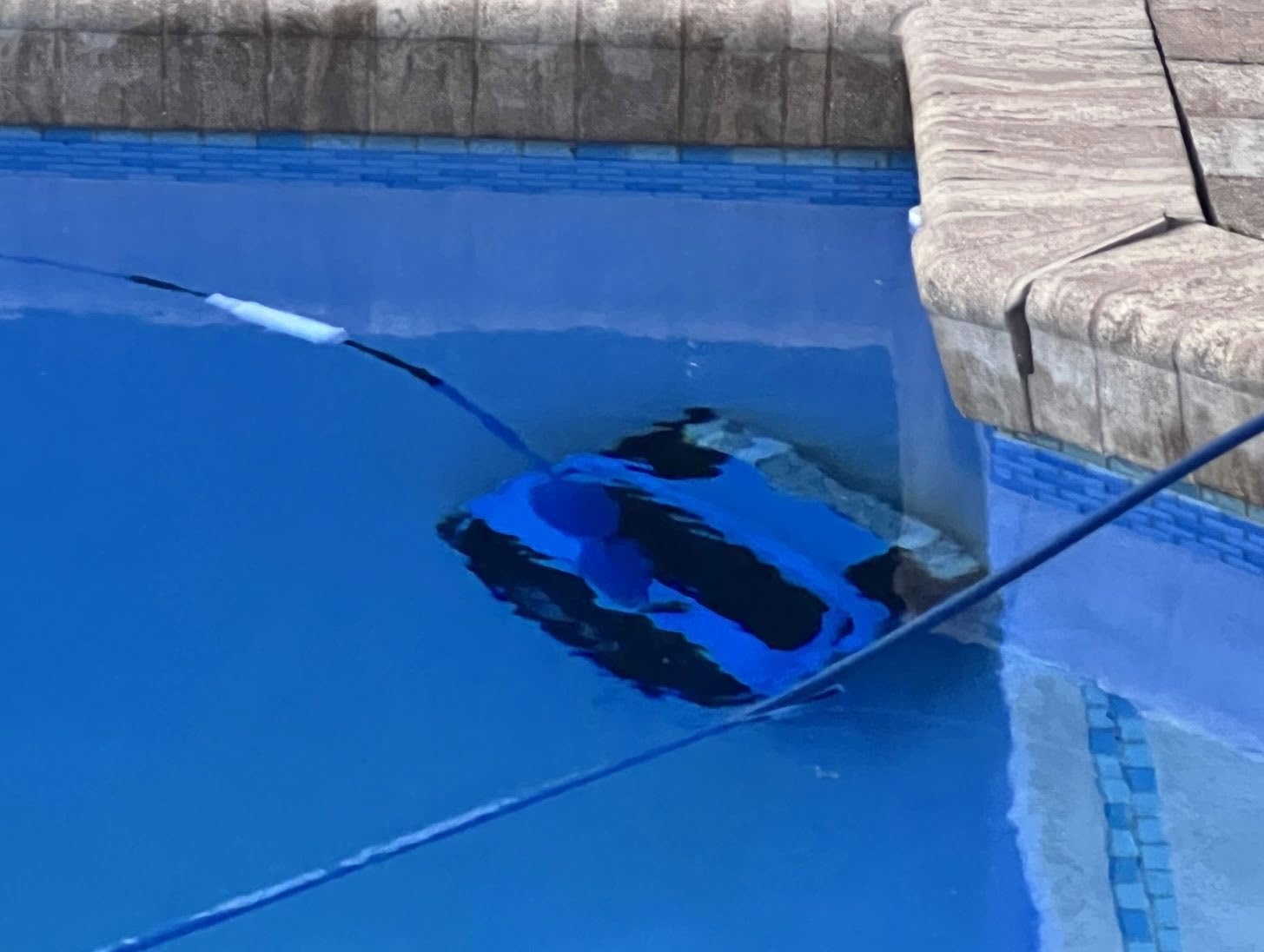
Why pool owners keep this one
It is the set-and-forget option for a large in-ground pool where leaf piles settle into steps, ledges and the deep end. Wall climbing means it does not leave the perimeter, and the scrubbing brush handles the film that hand vacuuming always misses.
For a family that vacuums weekly rather than daily, the two-hour cycle covers a lot of ground without anyone dragging a pole. It also doubles as the answer to which pool robot is best for picking up leaves, because the basket and the brush are both sized for more than silt.
Where the Nautilus disappoints leaf owners
The basket is the limit. In peak fall you may need to pull it mid-cycle, and that means wading in, lifting a 9.45 kg unit, rinsing and restarting. Consensus in the r/swimmingpools discussions is that robotics handle large debris well but demand daily retrieval during heavy leaf drop.
It is also a corded unit, so you manage a cable and a power supply around the pool deck. On a large in-ground pool with obstacles, that cord is the thing most likely to snag. Above-ground pools are not its design centre either; we cover that case later with a cordless robot built for shallower and liner-heavy setups.
3. Poolmaster Big Sucker: Best Value Leaf Head
Poolmaster 28300 Big Sucker Manual Swimming Pool Leaf Vacuum Head, Blue
Manual hose-powered head
15-inch diameter body
1.8 lbs
Head and mesh bag included
Pros
- Built for large loads of leaves and dirt
- Weighs about 1.8 pounds and steers easily
- Round body cleans pool edges well
- No motor no batteries no hookup
Cons
- Bag retaining ring can snap when lifting a full bag
- No bottom brushes so some surfaces need extra passes
- Pool pole is not included
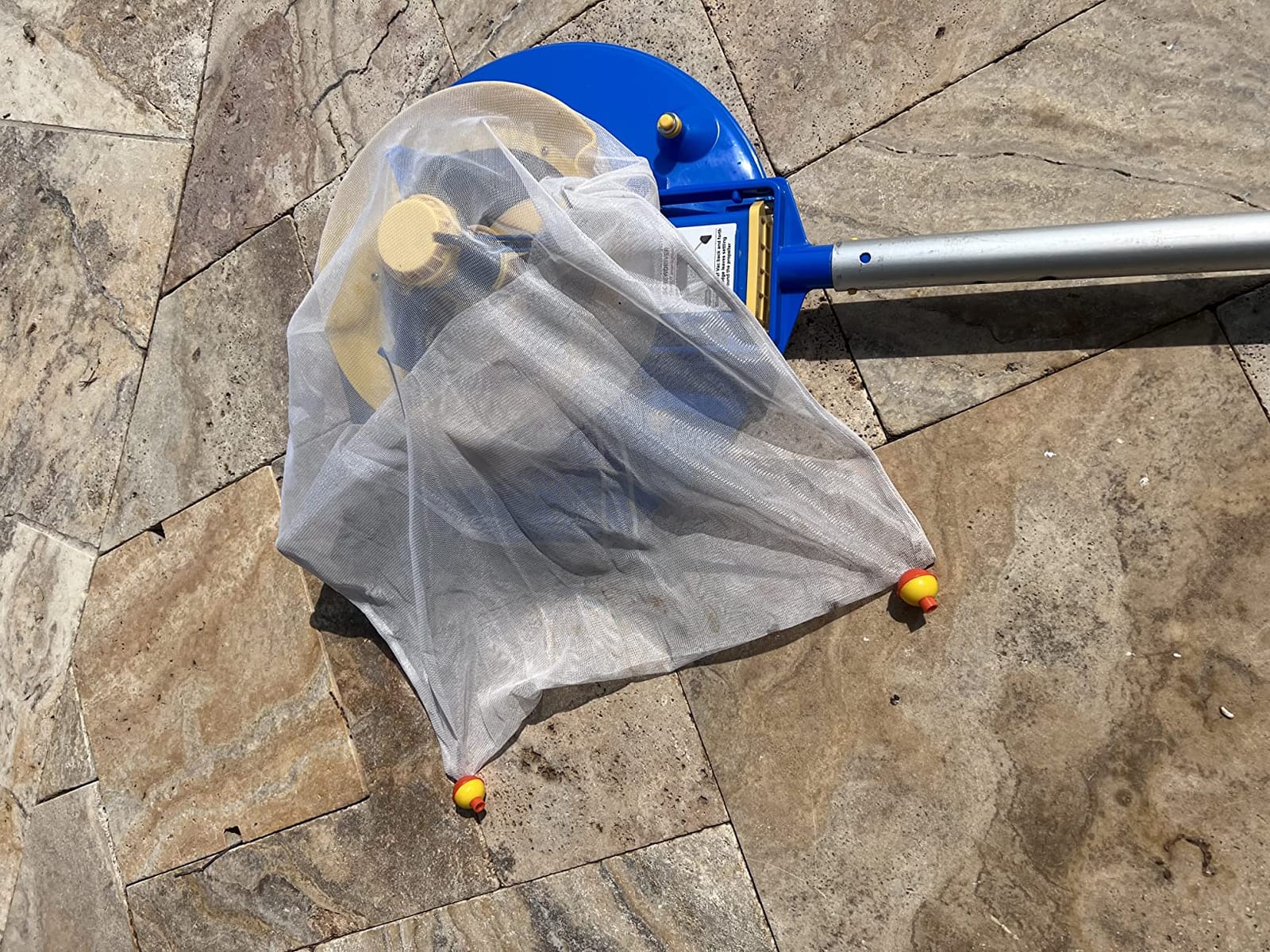
This is the tool we hand to anyone who just needs the leaves out of the water. The Poolmaster 28300 runs on garden hose water through eight high-pressure jets that create suction into an included reusable mesh bag, and that design is purpose-built for large debris rather than fine sediment.
At about 1.8 pounds, it is light enough to work by hand or on a pole, and four multi-direction rotating wheels keep it tracking along the pool floor. Several owners report it doing the work of far costlier cordless robots, which tells you how much of a premium goes into convenience rather than leaf capacity.
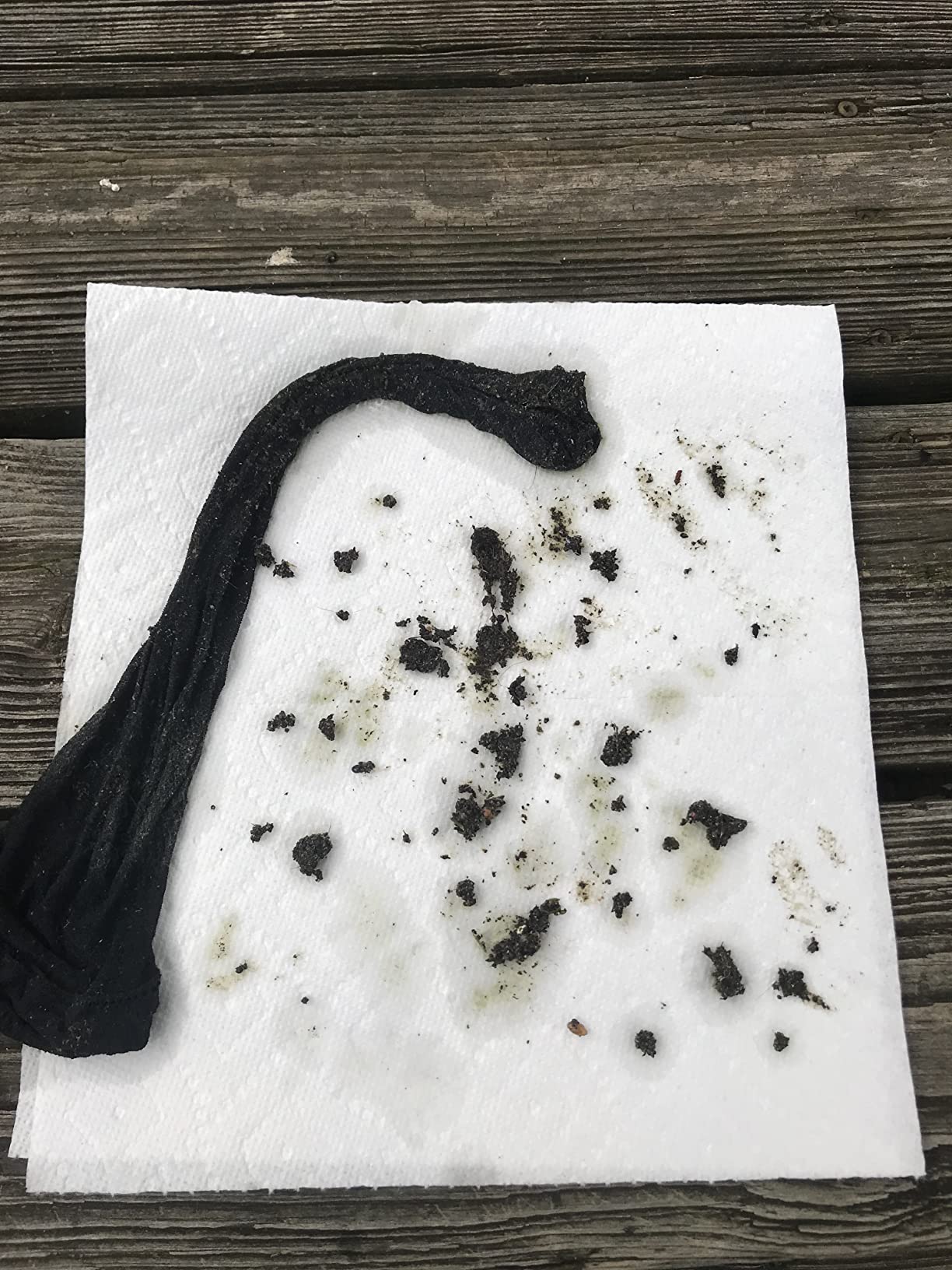
For above-ground owners this is the practical choice. There is no suction line to install, no pump requirement, and no filter hookup. You attach a garden hose and a standard pool pole of about 1-1/4 inch diameter or smaller, and the quick-connect adapter takes a minute.
The 15-inch round body is a genuine advantage on circular pools because it follows the curve without leaving a ring of leaves at the wall. That geometry is the reason we rank it so high for round above-ground setups.
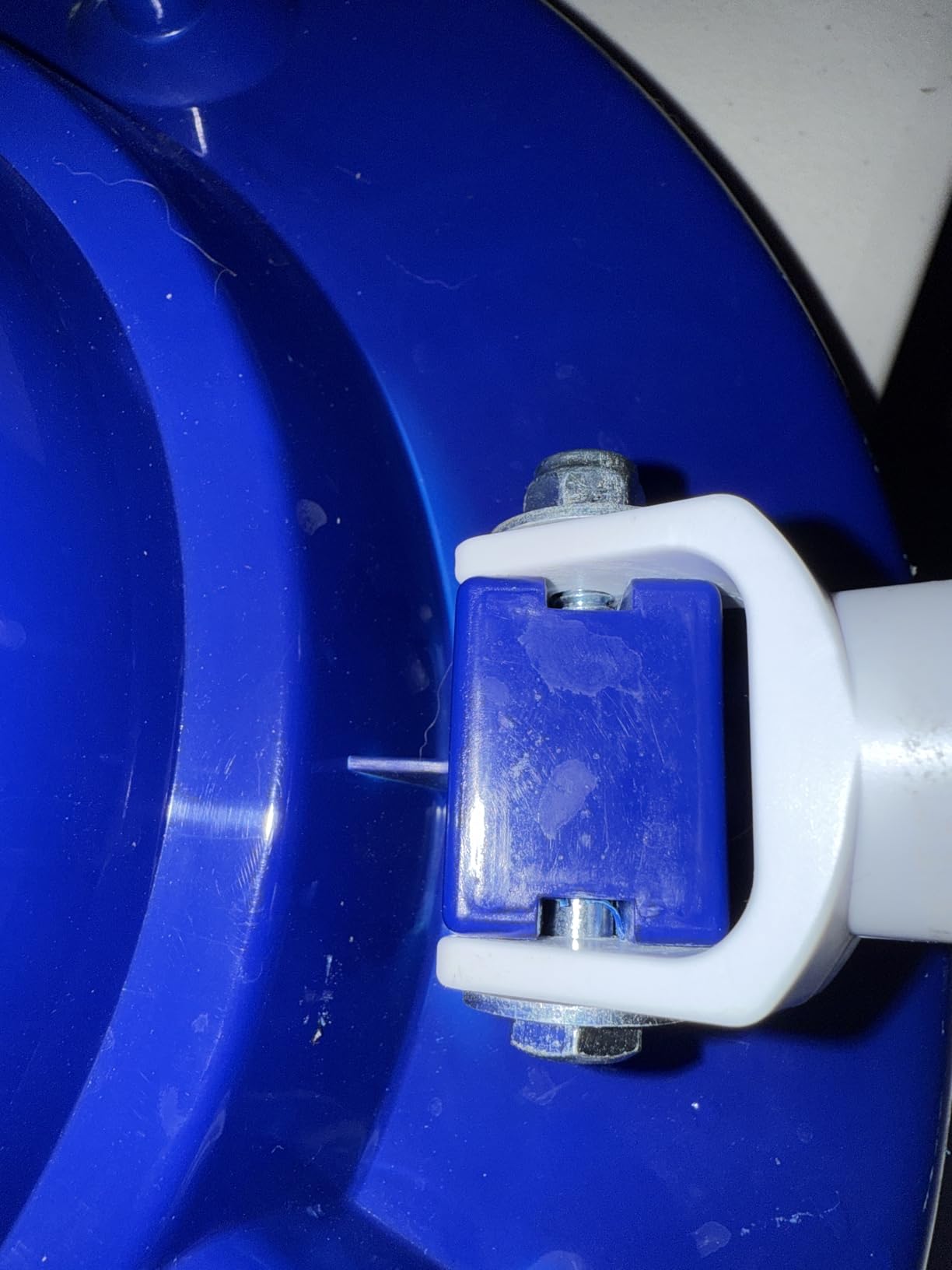
Who this head works for
Anyone with a real leaf pile and limited patience for setup. The included all-purpose mesh bag captures leaves, seeds and twigs, the body is easy to steer, and the whole thing stores in a corner of the garage. It suits both in-ground and above-ground pools.
It is also the honest answer if your pool only needs a cleanup once or twice a season. You are not buying automation, you are buying capacity per pass, and this delivers that without an automatic cleaner.
Where owners run into trouble
The bag retaining ring is the recurring complaint. Lift a full bag out of the pool and the ring can snap off, spilling the load back into the water, so you end up doing the job twice.
There are also no bottom brushes, which means some surfaces need multiple passes to loosen what is stuck. Fine debris passes straight through the included mesh, and if your pool problem is silt rather than leaves, this is the wrong tool. Add the pole to your list, because it is not included.
4. POOL BLASTER Leaf Vac: Best Cordless Handheld for Fast Leaf Pickup
POOL BLASTER Leaf Vac Cordless Hoseless Pool Leaf Vacuum & Skimmer, Battery-Powered Swimming Pool Leaf Catcher with Heavy Duty Mesh Bag, for Inground and Above Ground Pools, by Water Tech
Cordless battery leaf vacuum
8 AA batteries,up to 3 hours
1.8 lbs
21.25 by 15 by 7 inches
Pros
- Wide intake and spiral design lift about 95 percent of leaves in one pass
- Hoseless and cordless so no water is added to the pool
- Doubles as a surface skimmer to slow bag fills
- Works by hand or on a standard pole
Cons
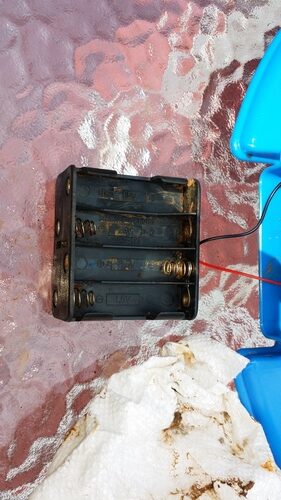
- Battery compartment is prone to water ingress and corrosion
- Uses 8 AA batteries rather than a rechargeable pack
- Oak leaves and acorn caps can jam the stabilizers
Where the Big Sucker is simple and capable, the Pool Blaster Leaf Vac adds battery convenience. It is cordless and hoseless, so it adds no water to the pool and cannot disturb your pH, and it runs up to three hours on eight AA batteries.
The wide intake mouth and internal spiral are built to pick up roughly 95 percent of leaves in a single pass, which matters more than it sounds. Fewer passes means fewer trips to the edge to empty the extra-large all-purpose bag, and owners of mid-size pools report clearing a 26 to 34 foot pool in about half an hour.
The dual-role design is the quiet winner. Used as a surface skimmer it collects floating leaves before they sink, which is where leaf season is actually won, and the same bag serves when you switch it to bottom vacuuming. You can run it handheld or attach any standard telescopic pool pole, though the pole is not included.
At 1.8 pounds it is light enough to hand-run in a shallow above-ground pool, which makes it a good fit for owners who cannot manage a pole across a deep end.
Why we like it for leaf-only pools
It is a genuinely two-job tool. Surface skimming cuts the volume of debris that ever reaches the floor, and bottom vacuuming clears what sinks, so you are not relying on a single mechanism to handle a whole autumn.
It suits both in-ground and above-ground pools, needs no filtration changes, and stores in a closet. For a pool under a tree that needs a fast Saturday rescue, that is the right tool.
Where it falls short
Water getting into the battery compartment is the most common durability complaint, and owners work around it by drying the unit thoroughly or sealing the module in a plastic bag after each use. It also runs on eight AA cells rather than a rechargeable pack, so you are replacing batteries, not charging.
Its suction is not built for heavy objects. Long-stemmed oak leaves and acorn caps can jam on the internal stabilizers, and it will not lift rocks or acorns. If your debris is mostly twigs and grit, look at a unit with a wider inlet.
5. U.S. Pool Supply Leaf Terminator: Best Hose Head with Brush Action
U.S. Pool Supply Professional Swimming Pool Leaf Terminator Vacuum – 15″
15-inch ABS body
8 integrated pressure jets
4 rotating wheels
3 perimeter brushes
Pros
- 8 jets make strong suction from a standard garden hose
- Perimeter brushes loosen debris a brush-free head leaves behind
- Two reusable all-purpose leaf bags included
- 360-degree wheels steer easily around obstacles
Cons
- Pool pole is not included
- Garden hose needs a quick-disconnect fitting attached each use
Most hose-powered leaf heads are bare shells with wheels. The Leaf Terminator adds three perimeter brushes, and that is the whole difference: the brushes loosen material that a brush-free body would smear along the floor and then drive straight over.
Eight integrated pressure jets create a vortex from garden hose water and pull debris into one of two included reusable all-purpose leaf bags. Four 360-degree rotating wheels handle the steering, and the mar-proof perimeter bumper protects pool floors and walls from scuffing.
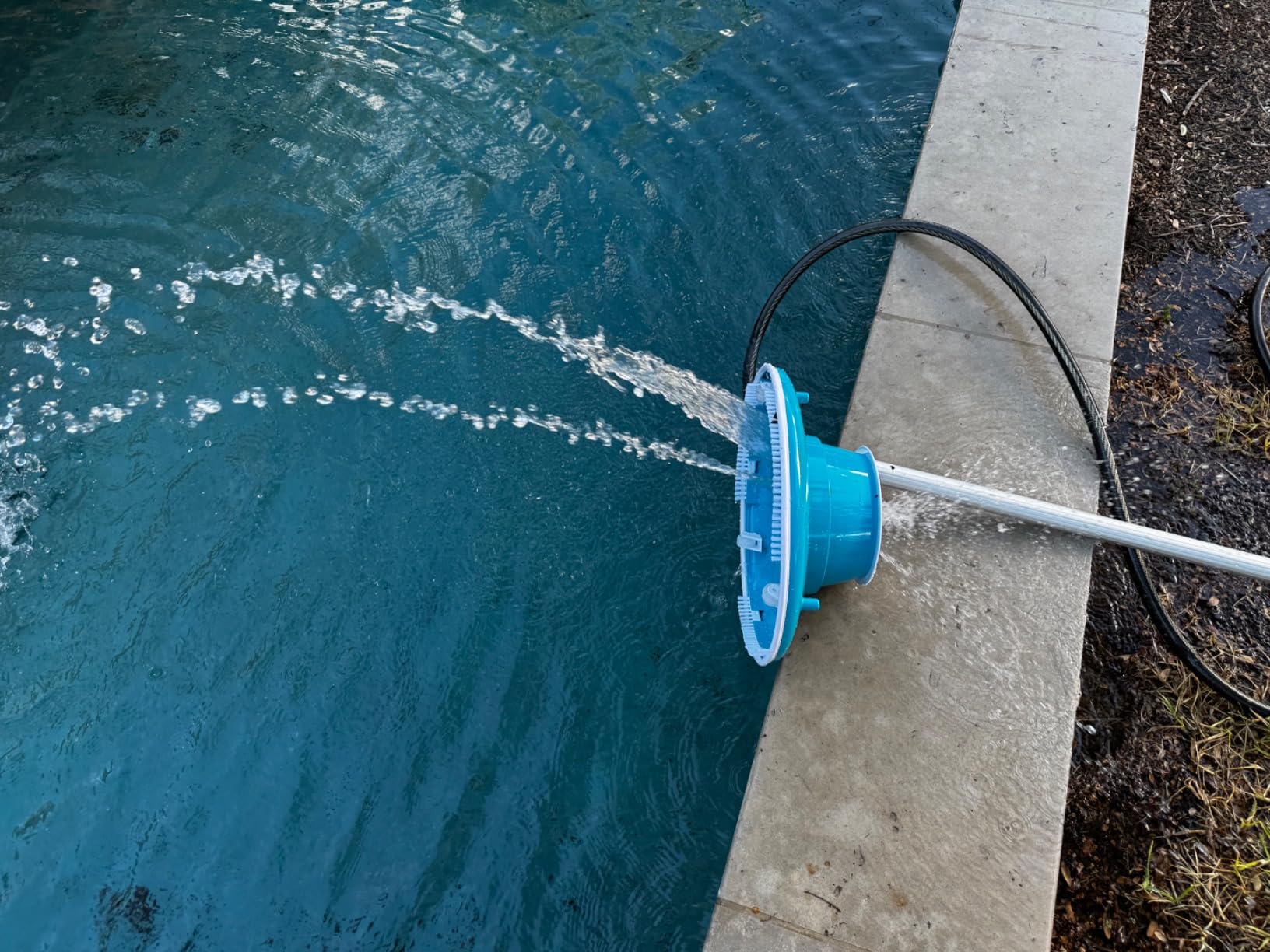
It works across pool types, and the 15-inch diameter body is a 15-inch diameter body that steers well in corners. Two bags means one can be drying while the other is in use, which is a small thing that matters when you are doing a full cleanup.
It carries a one-year warranty, and the aluminum handle attaches to any standard pool pole, which is sold separately. The 5-pound load capacity is a fair indicator of how much debris to expect before you stop and empty the bag.

Where it beats the plain leaf heads
Stuck-on debris. If your pool floor develops a film of leaves pressed into seams, steps or a vinyl liner, the perimeter brushes are the reason this head finishes the job in one pass where a brush-free model needs three.
It is also a good fit for pool openings after winter, when the floor carries a mix of leaves, grit and silt rather than a clean pile of autumn debris.
Where you will feel the compromises
There is no battery and no pump requirement, which is a strength, but it also means no suction reserve. Garden hose pressure sets the ceiling on performance, and a weak hose or a partly closed spigot shows up immediately as a lazy head.
The pole is not included, so budget for that separately, and you are attaching a hose fitting for every session. If you want fewer steps between passes, a cordless handheld is the smoother experience.
6. Polaris MAXX: Best Suction-Side for Long Debris in Tree-Heavy Yards
Polaris MAXX Premium Suction-Side Automatic Pool Cleaner
Suction-side automatic
39 ft hose
40.4 by 14.8 by 9 inches
2 year limited warranty
Pros
- HALO technology handles fine silt sand and long debris
- Active scrubbing brushes lift stuck-on debris
- Multi-directional tracking with climbing turbines
- Regulator valve reduces excess water flow and wear
Cons
- Wall climbing falls short on freeform curves and low-powered 1 HP pumps
- Setup needs a wheel rotation timing check
- Built for routine maintenance rather than pool opening
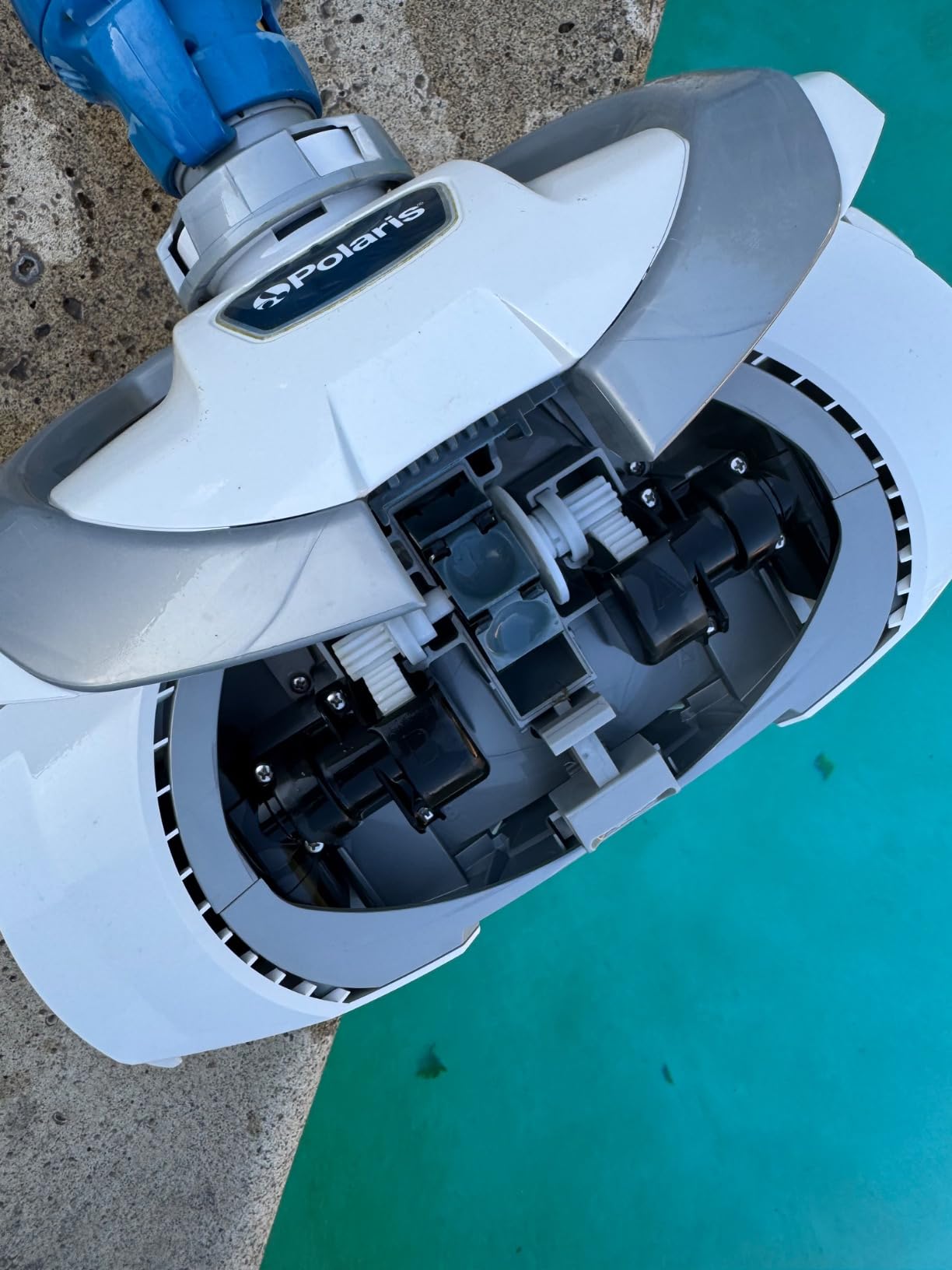
The MAXX is the suction-side answer for yards where the debris is long rather than bulky. Twigs, blossom and branch fragments are exactly what its HALO technology is described as clearing, and the active scrubbing brushes push particles toward the suction inlet instead of letting them sit.
It comes with a 39-foot feed hose like other suction-side units, plus a regulator valve that automatically limits excess water flow to reduce wear. Owners upgrading from older suction cleaners report a large jump in floor coverage and pickup strength, which tracks with the smart multi-directional tracking and the climbing turbines.
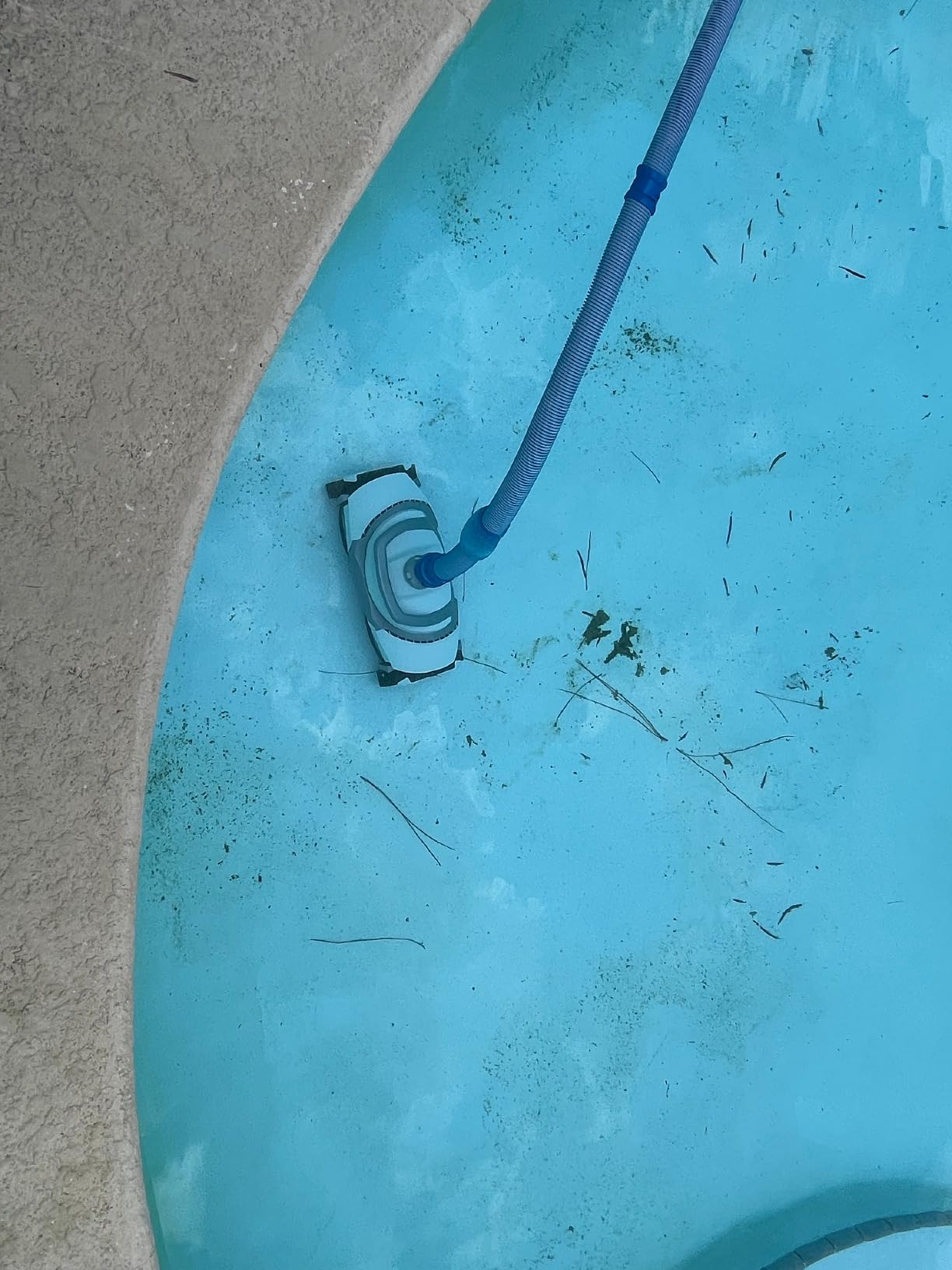
It handles all in-ground surfaces from floor to waterline, and the replaceable scrubbing brushes extend its service life rather than forcing a full replacement when the bristles wear down.
It is also explicit about its job: routine maintenance. The manufacturer positions it for keeping a pool clean rather than for opening a pool in spring, and buyers who expect it to strip a season of winter debris come away disappointed.
Who should buy the MAXX
Owners of an in-ground pool under heavy tree cover whose debris is a mix of twigs, blossom and leaves rather than a few whole leaves. The scrubbing action and the long-debris handling are the reasons to choose it over a simpler disc-style suction cleaner.
It suits a pool with a proper dedicated suction line, and it will happily run alongside a variable-speed pump that is set for a moderate flow. Replaceable brushes also make it a longer-term purchase than a sealed unit.
Where it disappoints
Wall climbing is the weak point. On curved freeform walls, and with a low-powered 1 HP pump, the machine does not hold the vertical surfaces, and that is where leaves collect. Reviews also note that setup involves timing the spinning wheel rotation to confirm the suction range, which is fiddly the first time.
Like every suction-side unit, it puts debris into your filter. That is fine as weekly maintenance and a poor fit as a leaf operation, and its review base is smaller than the machines above it, so you are buying a newer design on a thinner track record.
7. WYBOT C2 Cordless: Best Premium Pick for Dual Filtration
Wybot C2 Cordless Pool Vacuum for Inground Pools, Robotic Pool Cleaner
Cordless robotic
95 watt-hour battery
3 liter capacity
24 pounds
Pros
- 10 micron fine filter plus 180 micron primary filter
- Three brushless motors deliver strong suction
- Covers up to 2152 sq ft per cycle
- Auto-parks at the pool edge with a retrieval hook
Cons
- App setup required and Bluetooth does not connect underwater
- Heavy and bulky compared with entry-level cordless models
- Pattern-based routes can leave corners for a second pass
The C2 is the machine here whose filtration is built for both jobs at once, and that is the single reason to look at it. Dual filtration pairs a 10 micron ultra-fine filter with a 180 micron primary filter, driven by three brushless motors.
Coverage is the other headline: up to 2,152 square feet per cycle and roughly 140 to 180 minutes of runtime. It climbs walls and steps and scrubs the waterline, and it auto-parks at the pool edge when it finishes, with a retrieval hook included so you are not hauling 24 pounds out of the deep end by hand.
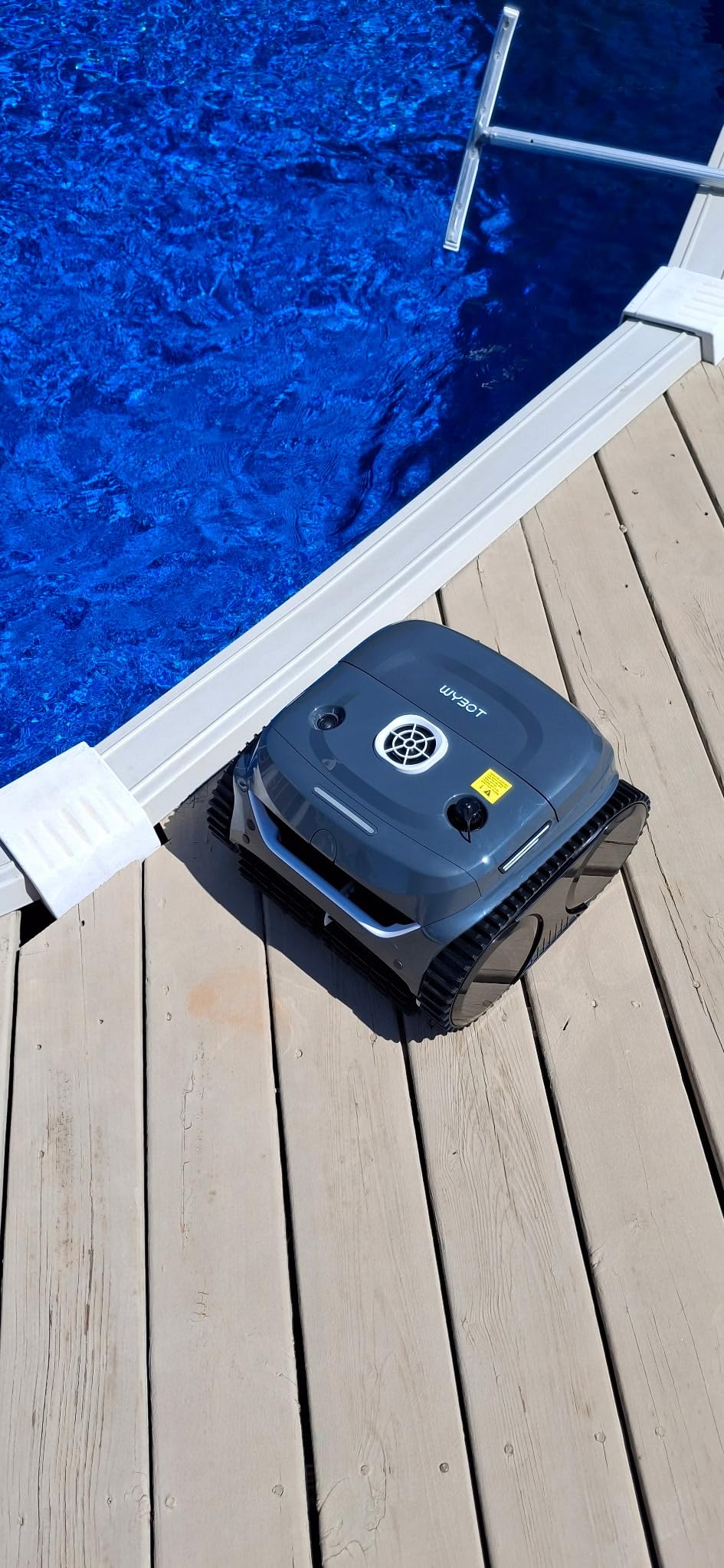
It has a built-in gyroscope for route planning across seven cleaning modes, with Bluetooth app control for scheduling. Filter care is a rinse: reviewers report the basket and fine filter clean in about a minute, which is what keeps the suction honest.
Because it is fully cordless, there is no cable to snag and no power supply to route around the deck. That is a structural advantage over corded robotics in a pool with steps, rails and Baja shelves.
Where the dual filtration earns its place
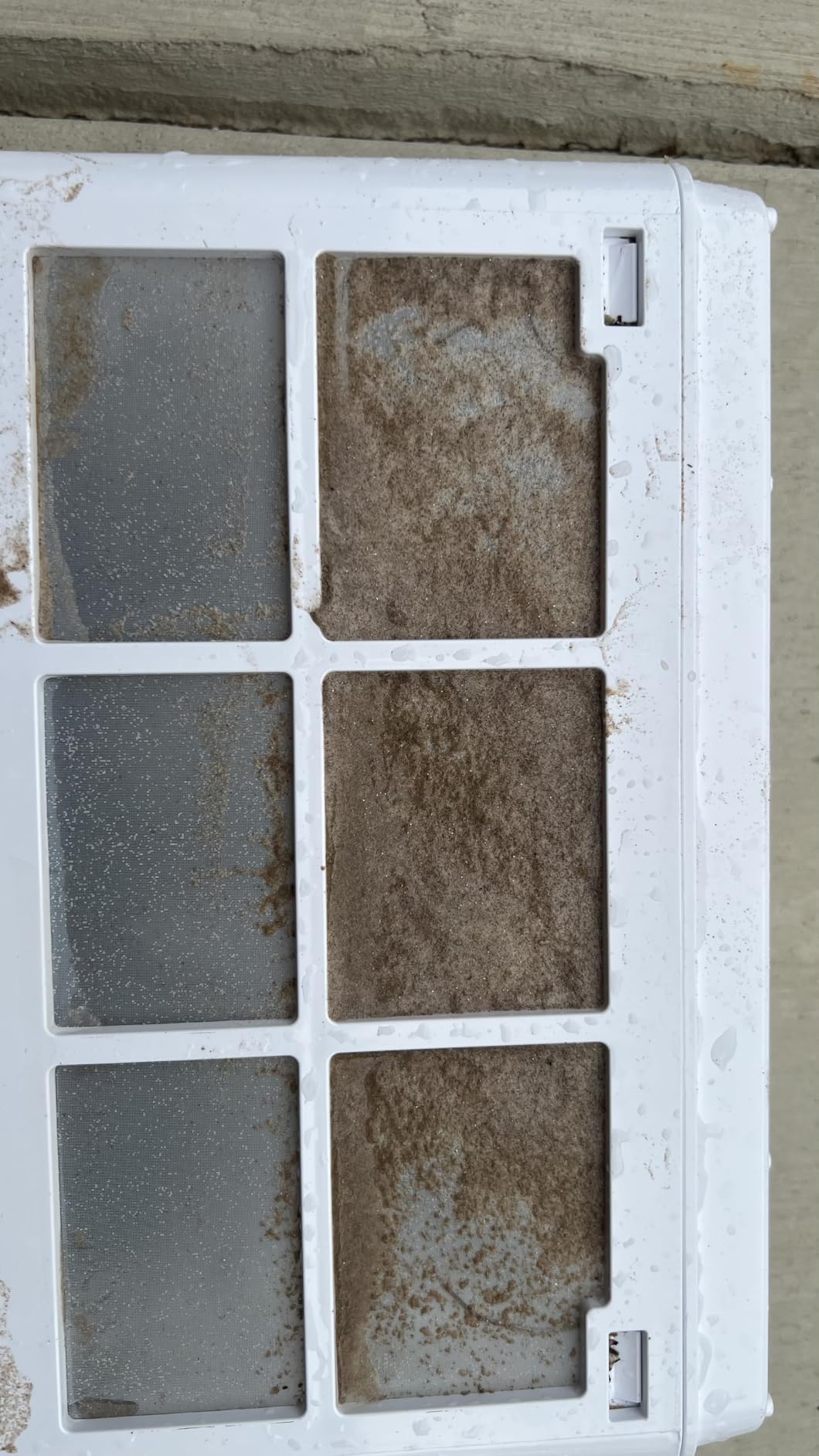
Pools that get both leaf drop and fine grit. A single-mesh machine forces a choice between capturing a whole leaf and holding silt, and the usual answer is a second manual pass. This one does not ask you to choose.
It suits large in-ground pools where a single cycle needs to cover the whole floor, and the wall climbing handles the perimeter where wind piles leaves against the tile line.
Where owners hit friction
App setup is required before the first use and Bluetooth does not connect underwater, so you set the mode on the deck and commit to it. The screw-on charging connector has to be dried and secured before you submerge the unit again.
At 24 pounds it is the heaviest thing on this list, which is awkward for older owners lifting it out. Route planning is pattern-based rather than fully mapped, so a few corners can need a second pass, and a few reviewers weigh it against cost once the other boxes are ticked.
8. KOKIDO XV910 Rechargeable Leaf Vacuum: Best for Pool Opening Cleanups
KOKIDO Rechargeable Heavy Duty Pool Leaf Vacuum Cleaner, Commercial Power Suction for Pool Opening, Standard and Fine Filter Bags, for Larger Leaves and Debris, Inground and Above Ground Pools XV910
Cordless rechargeable leaf vacuum
62 GPM flow,75 minute runtime
1.72 gallon debris bag
1 year warranty
Pros
- High flow and a large bag clear heavy leaf loads quickly
- Dual filter bags switch between coarse debris and fine particles
- IPX8 waterproofing with automatic shut-off
- Cleans about 200 sq ft in 5 minutes
Cons
- Not built for debris larger than 7 inches
- Fine bag mode does not handle algae or silt
- 5-hour charge time is long against a 75-minute runtime
Positioned for pool opening, the XV910 is built around capacity. Powerblade technology drives 62 GPM of water flow, and the 1.72 gallon debris bag means far fewer trips to the edge during a session, which is the metric that decides an opening weekend.
The switchable bags are unusual and genuinely useful: a 250 micron standard mode for gravel, sand and leaves, and a 75 micron fine mode for smaller particles. Scrubbing bristles handle the floor as it goes, and the 5-inch extra-large inlet gives you a wide margin before a branch or seed pod jams it.
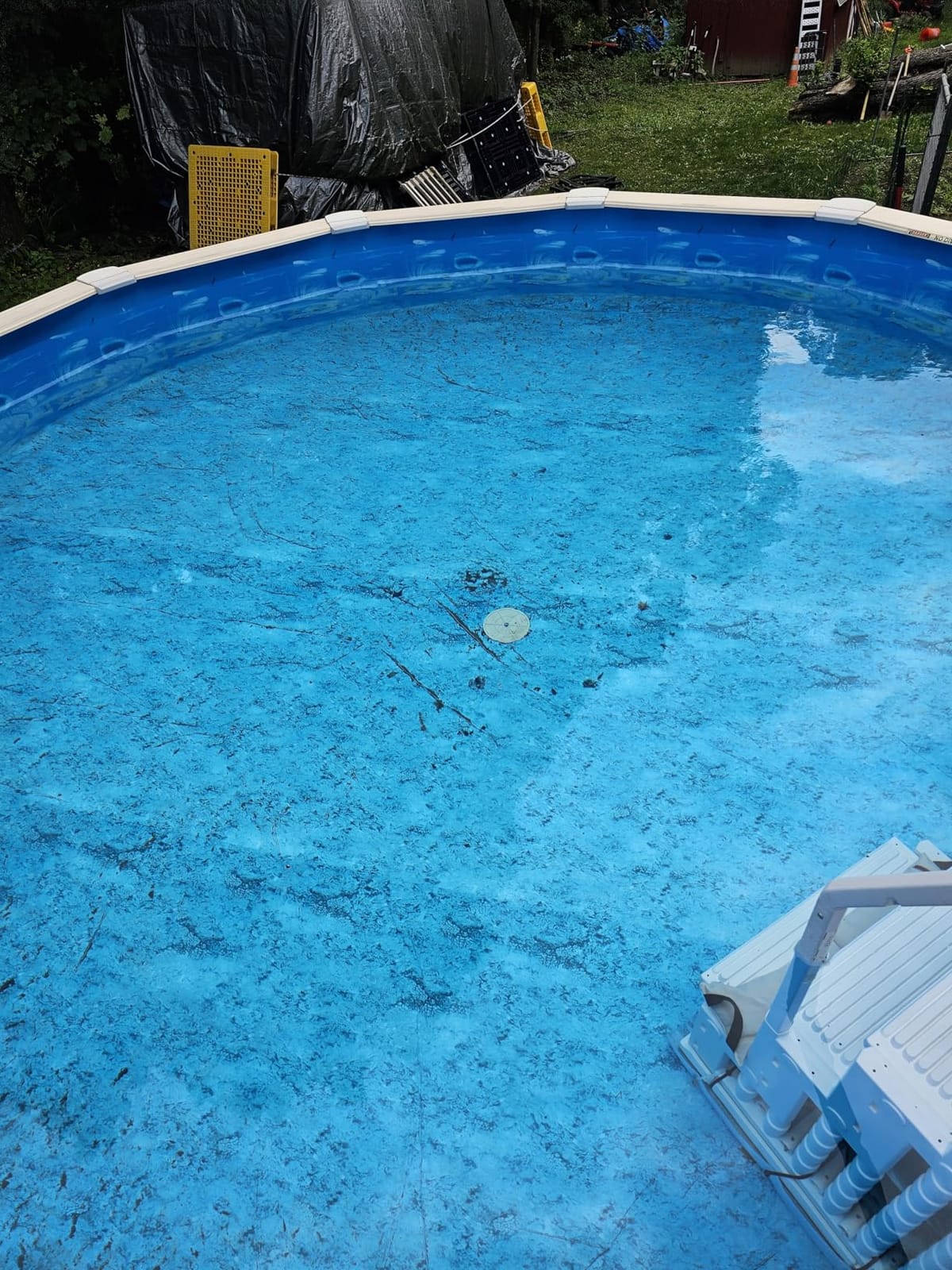
It works as a leaf vacuum and as a skimmer, and it handles both in-ground and above-ground pools. Compatibility with standard telescopic poles means you can extend your reach, though the pole is not included. The 44.4 watt-hour lithium-ion pack takes about five hours to charge.
IPX8-grade waterproofing with automatic shut-off when the unit is not submerged is a comfort feature on a tool that lives at the pool edge, and the oversized rotary switch is operable with wet hands.
Why opening-season owners pick it
Bag capacity plus flow rate is the whole argument. A 1.72 gallon bag and 75 minutes of continuous suction mean a spring opening or a fall closing happens in a few focused sessions rather than a day of emptying, and reviewers commonly quote about 200 square feet in five minutes as the working figure.
It is the manual option here suited to a pool that has genuine volume of debris rather than a weekly trickle, and the dual bags mean one tool covers leaves and finer material without a swap.
Where it is the wrong purchase
There is a hard size limit. Debris and leaves larger than 7 inches will clog the inlet, so an overhanging tree dropping large seed pods or big limbs is a poor match no matter how strong the suction.
The fine bag mode is not for algae or silt, so it does not replace a silt vacuum, and the five-hour charge against a 75-minute runtime is an awkward ratio. It is a big machine for a small above-ground pool with a light weekly load.
9. WYBOT C1 Cordless Robot: Best for Above-Ground and Lined Pools
WYBOT C1 Cordless Robotic Pool Vacuum for Inground Pools
Cordless robotic
99.9 watt-hour battery
10.32 kg
24-month warranty
Pros
- 4-in-1 cleaning of floors walls waterlines and stairs
- Triple motors climb 45-degree slopes
- 180 micron top-load basket rinses without tools
- App control and scheduling are easy to set up
Cons
- Leaves micro fines in the wrinkles of a vinyl liner
- Heavy to lift out of the pool
- 3-hour recharge against 120-150 minutes of runtime
The C1 is the robot we would point an above-ground pool owner toward, and the reason is simple: it climbs walls and cleans the waterline in shallow liner pools, which is where above-ground debris collects. Triple motors handle 45-degree slopes and obstacles without stalling.
It cleans floors, walls, waterlines and stairs in one 4-in-1 pass, with an upgraded independent water pump motor described as delivering twice the suction of earlier units. That extra suction is what lifts leaves and sand off a liner rather than pushing it around, and owners report it handling complex pools with steps, rails and Baja shelves.
Runtime is 120 to 150 minutes for pools up to 1,614 square feet and 9.8 feet deep, with a three-hour recharge. The 180 micron top-load basket rinses clean in seconds with no tools, and dual PVC brushes grip tile, mosaic and glass.
App control and scheduling with S-path floor and N-path wall routes are straightforward to set up, which means a weekly routine that runs while you are elsewhere. The warranty runs 24 months with lifetime technical support.

Where the C1 fits best
Above-ground pools, and any pool where a corded robot would be a nuisance. It is fully cordless, so there is no cable to drag over a liner, and it returns a full basket to a top-load position you can reach from the deck.
It suits a pool that gets a mix of debris, including calcium deposits and sand, not only leaves. For an owner who wants the pool handled weekly without a pole in the water, the trade for weight is worth making.
Where owners push back
It leaves micro fines in the wrinkles and divots of a vinyl liner, so a manual top-up pass is still needed on an above-ground pool with an older liner. That is the honest limitation of any robot on a lined surface.
It is heavy to lift out at 10.32 kg, Bluetooth does not connect underwater so modes must be set before submerging, and the 3-hour recharge against a 120 to 150 minute runtime means daily charging during heavy leaf season. It also uses a proprietary charging connector rather than a standard plug.
10. POOLAZA Manual Vacuum with Double Mesh Bags: Best Complete Budget Kit
POOLAZA Manual Pool Vacuum with Double Fine Mesh Bags & 56″ Aluminum Pole
Manual hose-powered vacuum
7.3 by 2.55 by 56 inches
1.1 lbs
100 centiliter capacity
Pros
- Pole is included
- unlike most competing manual vacuums
- Standard and ultra-fine mesh bags for coarse debris and fine particles
- Lightweight at about 1.1 pounds and easy to assemble
Cons
- Fine silt is lifted and dispersed rather than captured
- Will not pick up pebbles rocks or heavy debris
- Less effective on large in-ground pools
The reason this one is on the list at all is the pole. A 56-inch six-section aluminum pole with three bottom brushes comes in the box, and for most owners that removes the most common complaint about budget manual pool vacuums.
The double mesh bag system is the other differentiator: a standard mesh for coarse debris and an ultra-fine mesh for finer material, held by a twist-lock design meant to give a tighter, more durable seal than a friction ring. It is garden hose powered, so there is no electricity involved at all.
At about 1.1 pounds it is the lightest tool here and stores compactly, which suits a small above-ground pool or a spa. Smooth edges protect vinyl liners, and the hose adaptors include a spare EZ clip adapter for standard pool poles.
Owners rate it as competent with sand, shavings and modest leaf piles. It handles the cleanup, and the double bags mean you can adapt the pickup to the debris without buying a second head.
Where this kit makes sense
First-time pool owners, above-ground setups and anyone who wants a complete working tool without hunting for a separate pole. Assembly is straightforward and the whole package is easy to store and to hand to another family member.
It is a sensible spare to keep for small touch-ups even if you own something bigger, because it is cheap, light and has no dependencies beyond a garden hose.
Where it falls short
Fine silt is lifted off the floor and dispersed rather than captured, so the water clouds and you are back where you started. Reviews split on that point and it is the main reason we rank this one last.
It will not pick up pebbles, rocks or heavier debris, and reviewers describe the plastic construction as feeling cheap, with fittings that can loosen if the pole and hose are moved quickly together. On a large in-ground pool it is simply not the right size of tool.
What to Consider Before You Buy a Pool Vacuum for Debris
Start with your debris, not your pool size. Whole leaves, twigs and grit reward wide intakes and big bags, while fine sand and silt reward mesh you can see through. A tool that handles one badly handles the other worse, which is why our top three cover different debris profiles rather than ranking a single machine first in every case.
Pool type decides the shortlist. In-ground pools with a skimmer or dedicated vacuum line can use suction-side automatics and robotics. Above-ground pools usually have neither a vacuum line nor the depth for a large robot, which pushes you toward manual leaf heads and cordless handhelds, or a cordless robot built for shallow liners like the C1. It is worth reading our robot vacuum guide if you want the automation comparison laid out separately.
Bag visibility beats raw suction. Owners in the r/pools threads ask one question more than any other: can I see when the bag is full. A transparent or removable canister that you can check from the deck means you empty it on a schedule, while an opaque one means you push past capacity and clog. Our general rule is that a visibly full bag is worth more than a stronger motor.
Decide how debris leaves the pool. Manual leaf heads and cordless handhelds deposit debris outside the pool entirely. Suction-side cleaners send it into your filter, and robotic cleaners send it into a basket. Only the manual and cordless classes let you work with your filter switched off or bypassed, which is the deciding factor during a heavy autumn.
Match the machine to the season, not just the pool. For routine weekly maintenance, an automatic or robotic is the sensible spend. For pool opening after winter, or a one-time autumn clear, a manual head or heavy-duty handheld gives you more capacity per pass for far less outlay. If your garage is also missing a shop vacuum for wet messes, our wet and dry vacuum picks cover that gap.
Suction-Side vs Pressure-Side vs Handheld vs Robotic
These four classes use your equipment in completely different ways, and the difference matters more for leaves than it does for routine cleaning. Understanding the mechanics tells you which one your pool can actually support.
Suction-side cleaners are pulled along the floor by water drawn through a hose from your existing pump, and they empty into a filter canister. They need no extra plumbing beyond a suction line, which is why the Zodiac G3 and Polaris MAXX sit where they do. Debris goes into your filter, so leaf season means backwashing.
Pressure-side cleaners run in reverse, using a dedicated booster pump to push water through a thruster and pull leaves into an external debris bag. That bag keeps leaves out of your filter completely, which is the single best design for leaf work, and it is used three ways: the thruster propels and vacuums, the bag fills with captured debris, and a backwash mode clears the bag into the pool for disposal.
The catch is infrastructure. Pressure-side cleaners need a booster pump and a dedicated vacuum line plumbed into the pool, and if you do not have those, a plumber is the first step. Forum posts about pressure-side cleaners read as a list of people who skipped that step.
Handheld and manual leaf heads are the lowest-friction option. Manual heads use garden hose water through pressure jets, cordless handhelds use a battery motor, and both put debris in a bag you carry out of the pool. Neither touches your filtration system, so neither can clog it.
Robotic cleaners are self-propelled, run on a cycle, and empty into an onboard basket. The Dolphin and WYBOT models here cover the most ground per session, but you still retrieve and rinse the unit on a schedule, and in peak leaf fall that can mean every day.
How to Vacuum Leaves Without Clogging Your Filter
Vacuuming to waste means running your pump with the filter valve set to waste instead of a filter position, so debris leaves the pool through the drain rather than entering the filtration system. It is the single most-discussed topic across pool forums and the one most often left out of vacuum guides. For a suction-side cleaner, the sequence is short:
Net the surface first. Empty the skimmer basket and scoop out floating leaves with a net before anything reaches the floor. Most of the volume is still up top, and it decomposes faster there.
Empty the pump basket. Check the strainer and the skimmer basket so you are not starting with a restricted flow that will stall the cleaner early.
Shock and wait when the load is heavy. Advice that repeats across the forums: shock the pool, let the leaves die and partly decompose overnight, then vacuum. Softer leaves break down instead of matting together.
Set the filter valve to waste and run the pump. Debris travels through the filter and out to the drain instead of being trapped in your media.
Vacuum in short passes and stop before the canister is full. One overloaded pass can stop the pump or push debris back through the overflow. Empty the canister, then resume.
Return the valve to filter position and backwash. Once the floor is clear, switch back, run the pump, and backwash any residue that went through.
If your setup cannot vacuum to waste, a manual leaf head sidesteps the problem entirely. Debris goes into a bag and never touches the filter, which is the simplest answer for above-ground pools and any pool without a vacuum line.
How to Stop Leaves Clogging Your Skimmer and Pump Basket
Even a good vacuum cannot help if the skimmer basket is already packed. Check it every few days during peak leaf drop, because a basket that looks three-quarters full will be running a partial flow by the time the vacuum is on the pool floor.
Clean the pump strainer at the same time. A leaf mat in the strainer starves the pump, and the reduced flow is a common reason owners blame their new vacuum for weak suction.
For extra margin, a skimmer sock fitted inside the basket catches a surprising share of leaves before they reach the impeller. It does not solve the problem, but it delays the jam long enough to finish a cleanup session. If a basket is overflowing despite a sock, the real fix is more frequent emptying, not a bigger sock.
Frequently Asked Questions
What is the best pool cleaner for picking up leaves?
For whole leaves, a hose-powered manual leaf head or a cordless handheld with a wide intake and a large mesh bag will outperform a robot or suction-side cleaner. Those classes can pick up leaves, but they route debris into a basket or your filter, which means emptying and backwashing on top of the vacuuming. The Zodiac G3 is the strongest overall pick for an in-ground pool that wants hands-off cleaning.
Can a pool vacuum pick up leaves?
Yes, provided it is built with a wide intake opening, a mesh leaf bag or large debris basket, and enough suction to lift a whole leaf in one pass. Most general pool vacuums are designed for fine sand and silt and will either clog on leaf load or push debris into the pool filter. Leaf-specific models exist in manual, cordless handheld, suction-side and robotic forms.
Which pool cleaner is best for cleaning leaves?
Pressure-side cleaners handle leaves best of any type because they capture debris in an external bag and keep it out of your filter, but they require a booster pump and a dedicated vacuum line. Without that plumbing, a manual leaf head or cordless handheld is the practical answer, and a robotic with a large top-load basket is the lowest-effort option for a large in-ground pool.
Do robotic pool cleaners work in above ground pools?
Yes, as long as the robot is sized for shallow water and a liner surface. The WYBOT C1 climbs walls and cleans waterlines in above-ground pools and is rated for depths up to 9.8 feet. Expect to top up with a manual pass, since robots leave micro fines in the wrinkles of a vinyl liner that a dedicated vacuum head collects more completely.
Should I vacuum leaves to waste or through the filter?
Vacuum to waste for heavy leaf loads. Setting the filter valve to waste sends debris out through the drain instead of into your media, which avoids a backwash or a filter change and keeps organic material out of the filtration system. Run the pump, vacuum in short passes, empty the canister before it is full, then return the valve to filter position and backwash once the floor is clear.
What do professional pool cleaners use to vacuum a pool?
Professionals match the tool to the debris and the plumbing. A manual leaf head or commercial-grade cordless vacuum handles whole leaves, pressure-side cleaners are preferred where a booster pump and vacuum line exist, and robotics cover floors, walls and waterlines between visits. A typical service sequence is netting the surface, shocking and letting leaves decompose overnight, then vacuuming to waste the next morning.
Is Dolphin or Polaris pool cleaner better?
They sit in different classes, so the answer depends on the job. The Dolphin Nautilus CC Plus is a robotic that covers floors, walls and waterlines on its own in a roughly two-hour cycle, while the Polaris MAXX is a suction-side automatic that uses your existing pump and handles long debris such as twigs and blossom with active scrubbing brushes. For minimum effort on a large in-ground pool, the robot wins; for long debris in a tree-heavy yard, the suction-side unit does.
The Best Pool Vacuum for Leaves and Debris: Final Word
For most in-ground pools, the best pool vacuums for leaves and debris shortlist starts and ends with the Zodiac G3, because its disc keeps the machine moving through piles that stall bodiless suction cleaners and it runs on the pump you already have. The Dolphin Nautilus CC Plus covers the most ground per session, and the Poolmaster Big Sucker moves the most leaf volume per pound of outlay.
Whichever you pick, the technique matters as much as the tool. Net the surface, empty the skimmer basket and pump strainer, and vacuum to waste on the heavy passes so your filter never sees the load. Start with a manual head or handheld this season if you can, then decide whether automation is worth it once you know how much debris your pool actually collects.