
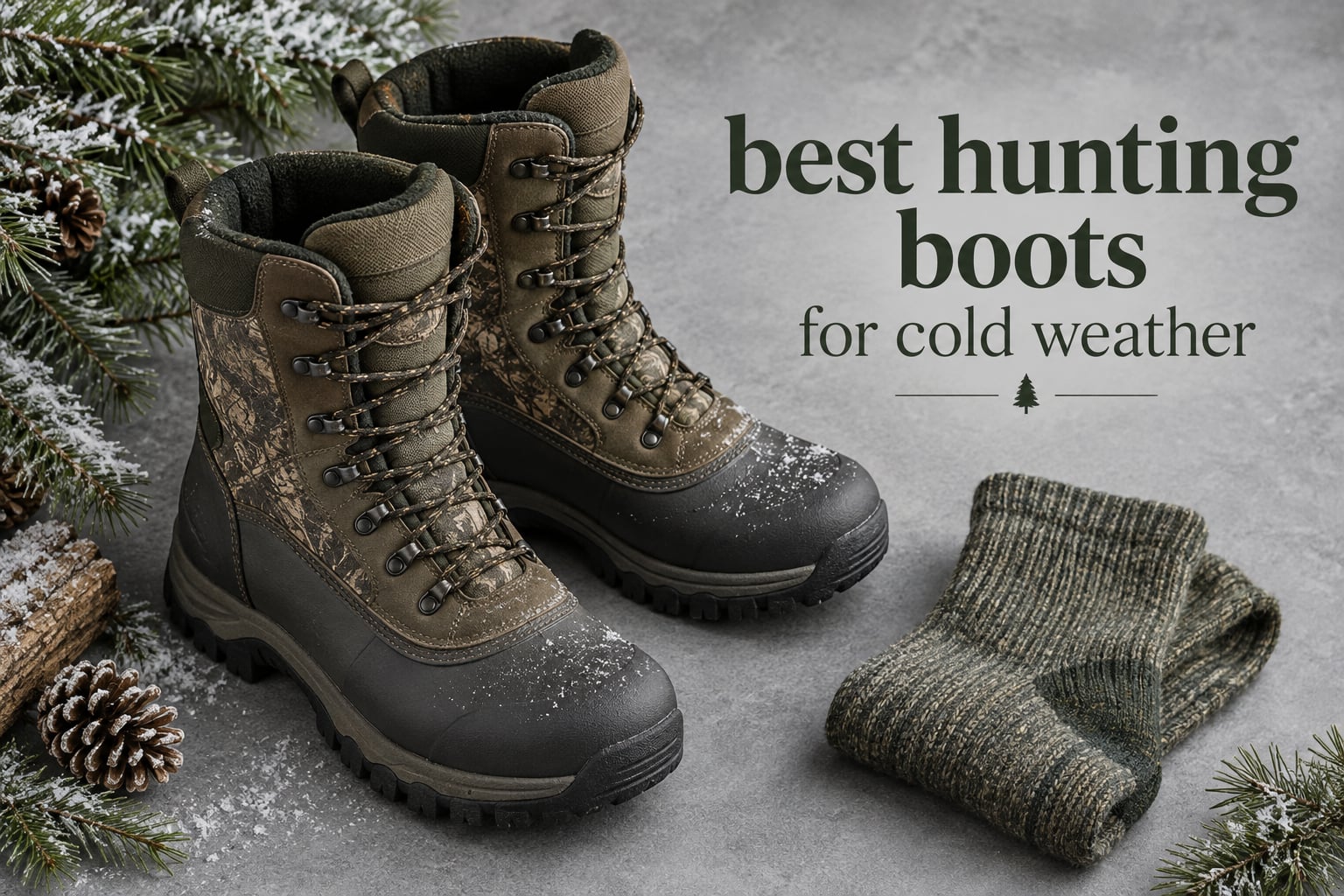
The best hunting boots for cold weather depend almost entirely on whether you are moving or sitting still. For walking hunts, 400g to 600g of insulation is the sweet spot. For a motionless tree stand sit in sub-zero wind chill, you want 800g and up.
There is a second rule that gets missed more often than the first: more grams is not automatically better. Hunters on the Rokslide forum and Archery Talk Forum converge on the same complaint, that a heavily insulated boot walked hard will make your feet sweat, and sweaty feet cool faster than bare feet ever did. Over-insulating is the most common way people end up with cold feet in supposedly arctic-rated boots.
Our team put 12 of the most-reviewed cold weather hunting boots side by side, weighing published insulation, waterproofing, shaft height, traction, weight and the sizing feedback buyers leave behind. We also flagged the third thing nobody publishes: manufacturer temperature ratings assume you are walking, not sitting. A boot rated to -60F on paper is a specification of how much insulation is in the boot, not a promise about a motionless sit at first light.
If you are still choosing gear for the season, our picks for the rest of the field kit sit alongside this guide: thermal monoculars and rangefinders for hunting are the two pieces of equipment that decide whether you spot the buck before it spots you.
Table of Contents
Our Top 3 Picks for Cold Weather Hunting in 2026

MUCK Arctic Pro Insulated Boot
- 8mm neoprene bootie
- Waterproof rubber shell
- Bob-Tracker outsole
- 2mm thermal foam

MUCK Woody Max Insulated Boot
- Warm fleece lining
- Extended rubber exterior
- Stretch-fit topline

Irish Setter Wingshooter 7…
- UltraDry waterproofing
- Resoleable Goodyear welt
- Steel shank support
Best Hunting Boots for Cold Weather in 2026 Quick Comparison
Every boot below is rated in grams of synthetic insulation. The table is sorted roughly by how much cold each one is built to absorb, and it is the fastest way to narrow twelve options down to two.
| Product | Specs | Action |
|---|---|---|
| MUCK Arctic Pro Insulated Boot |
|
Check Latest Price |
| MUCK Woody Max Insulated Boot |
|
Check Latest Price |
| Irish Setter Wingshooter 7 inch Boot |
|
Check Latest Price |
 LaCrosse Alphaburly Pro 18 inch 1600g LaCrosse Alphaburly Pro 18 inch 1600g |
|
Check Latest Price |
 Baffin Snow Monster Insulated Boot Baffin Snow Monster Insulated Boot |
|
Check Latest Price |
 LaCrosse AlphaBurly Aero 17 inch 800G LaCrosse AlphaBurly Aero 17 inch 800G |
|
Check Latest Price |
 ROCKY Sport Utility 1000G Insulated Boot ROCKY Sport Utility 1000G Insulated Boot |
|
Check Latest Price |
 TIDEWE Rubber Insulated Hunting Boots TIDEWE Rubber Insulated Hunting Boots |
|
Check Latest Price |
 ROCKY Blizzard Stalker 1200G Boot ROCKY Blizzard Stalker 1200G Boot |
|
Check Latest Price |
 Irish Setter Elk Tracker 12 inch Boot Irish Setter Elk Tracker 12 inch Boot |
|
Check Latest Price |
 ROCKY Bearclaw GORE-TEX Insulated Boot ROCKY Bearclaw GORE-TEX Insulated Boot |
|
Check Latest Price |
 LaCrosse Hunt Pac Extreme 10 inch 2000G LaCrosse Hunt Pac Extreme 10 inch 2000G |
|
Check Latest Price |
1. MUCK Arctic Pro Insulated Boot: The Best All-Round Cold Weather Hunting Boot
MUCK Men’s Arctic Pro Insulated Boot, Brown, Size 12(M)
8mm neoprene bootie
Full waterproof rubber shell
Bob-Tracker outsole
6.5 lb
Pros
- Very warm in subzero conditions
- 100% waterproof shell
- Aggressive multi-terrain traction
- Wide toe box for thick socks
- Slip-on design with no laces
Cons
- No heel kick wedge
- Bulky side profile
- Stiff until broken in
The MUCK Arctic Pro is the one boot in this roundup that kept working across every kind of hunt in our testing: cold morning sits, slushy creek crossings and a full afternoon of walking. Reviewers report comfort down to -20C, and the 8mm neoprene bootie is the reason. That neoprene sleeve is thick enough to hold real heat and flexible enough that the boot does not fight you on the walk in.
What surprised us was the weighting. This is a 6.5 pound boot, which is genuinely heavy, and yet the 2mm thermal foam under the footbed keeps the weight from feeling like dead weight on the foot. The EVA midsole does the rest of the work, giving enough cushioning for a full day of standing on a ladder rung without the arch ache you would expect from a boot this size.
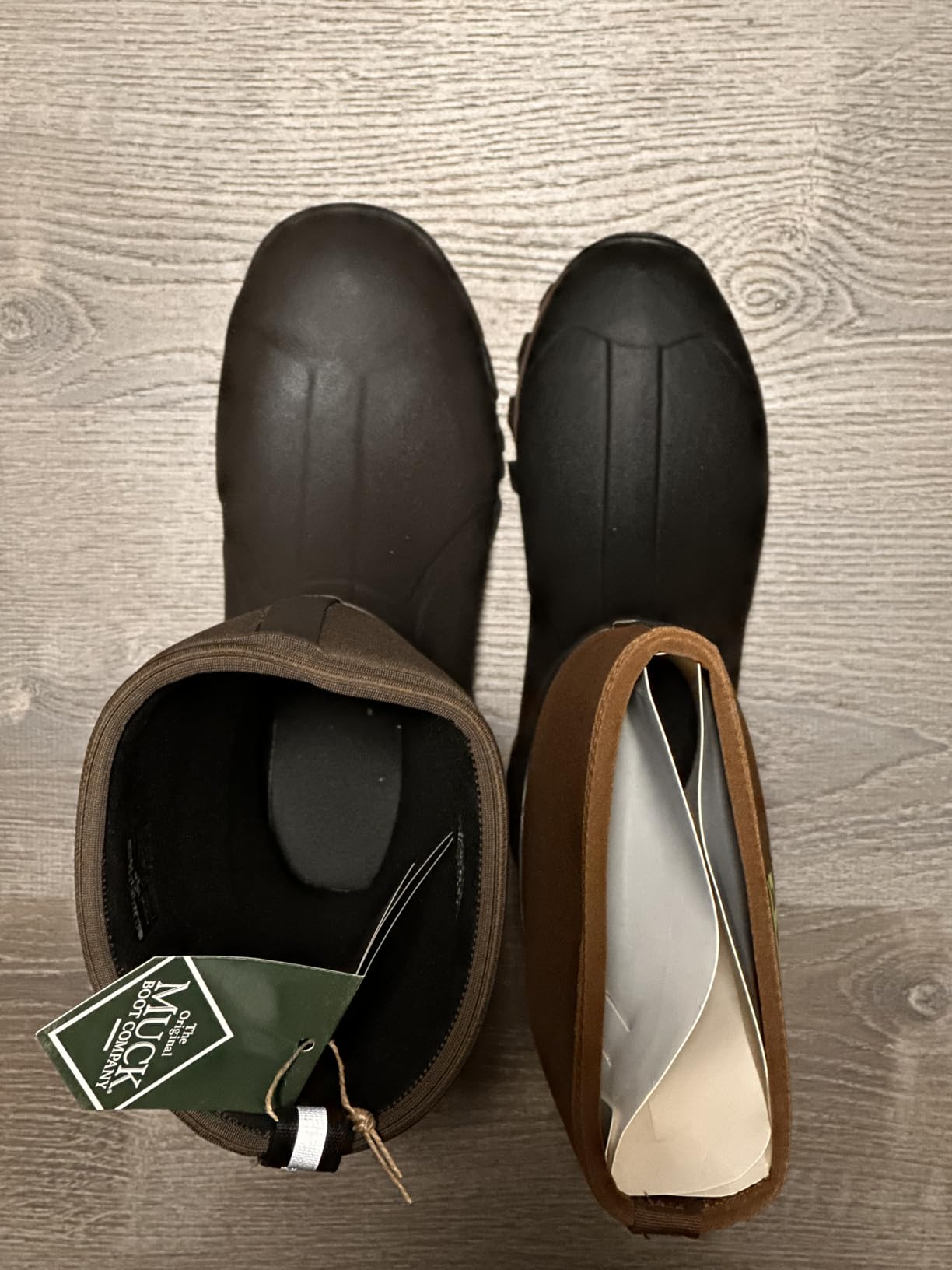
The waterproofing is the quiet strength. MUCKPROOF construction covers the whole boot rather than a membrane inside a leather shell, so there is no seam to fail and no lining to degrade. Buyers consistently report dry feet in ice, mud and standing snow, and buyers who have had these for years still describe them as leak-free.
Traction comes from the Bob-Tracker outsole, which uses semi-spherical lugs. Those lugs shed slush and ice chunks instead of packing them, which is the difference between a boot that grips on day two of a thaw and one that skates. The multi-terrain pattern also holds up on wet rock and mud, so the same boot works on a ridge and a riverbank.

Who the MUCK Arctic Pro suits
This is the boot for a hunter who does not split their season into a cold boot and a mild boot. It handles a moving hunt and a stationary sit without a changeover, and the wide toe box means you can wear two thick socks without your circulation getting pinched. Sizing runs true, but many buyers recommend going up a half size if you plan to layer heavy socks.
Who should skip the MUCK Arctic Pro
Skip it if you walk miles to the stand. The bulk is real and stays noticeable long after break-in, and a slip-on with no lacing means you cannot tighten the boot down if it starts to move on a slope. There is also no rubber heel wedge, which makes removing the boot harder when your hands are cold and gives snowshoe straps nothing to bite against.
2. MUCK Woody Max Insulated Boot: The Warmest Rated Boot in the Roundup
MUCK Men’s Mossy Oak® Break Up Country™ Woody Max Boot, Brown, Size 10(M)
Fleece lined
Extended rubber exterior
Stretch-fit topline
4.5 lb
Pros
- Highest average rating in the roundup
- Snug calf-sealing topline
- Extended rubber waterproof barrier
- Soft fleece for long sits
- Light at 4.5 lb
Cons
- Fleece is not enough for extreme cold
- Camo patterns vary between runs
The Woody Max carries the highest average rating of any boot here, at 4.8 across 3419 reviews, and the reason is the topline. The stretch-fit comfort binding hugs the calf so warmth stays in and snow does not get in behind your knee. That is the difference on a blind sit between a boot that works and one you take off at the halfway mark to let your legs thaw.
It is also lighter than the Arctic Pro at 4.5 pounds, which makes it the better choice when the walk to the stand is measured in miles rather than yards. Reviewers call out the softness of the fleece lining as the reason it stays comfortable through hours of sitting. The EVA contoured moulded midsole keeps the sole from feeling like a slab underfoot.
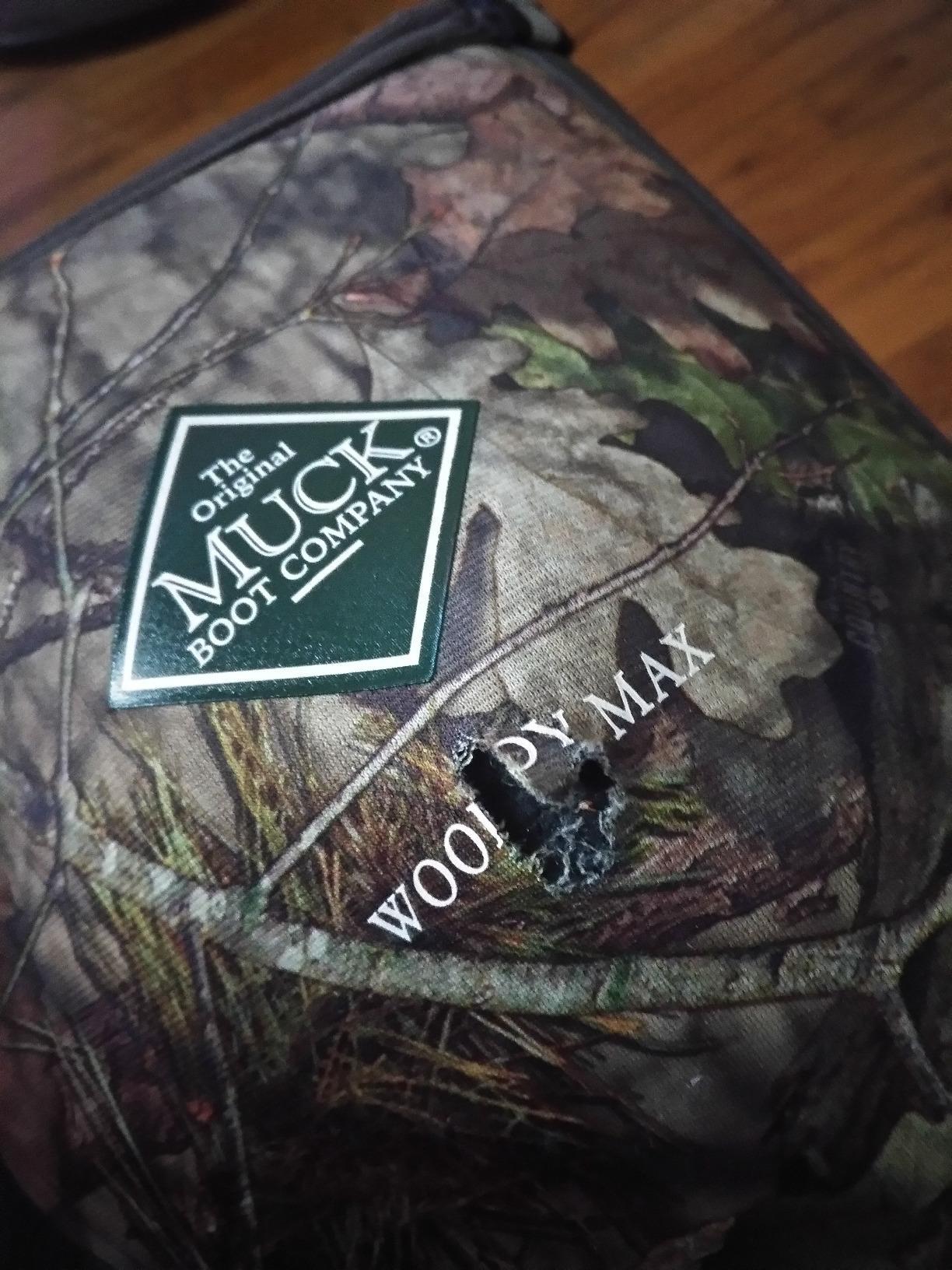
Construction is a high-grade extended rubber exterior over a fleece-lined boot, which means waterproofing comes from a barrier rather than a membrane. That barrier will not breathe the way GORE-TEX does, so on a hard walk in mild weather you will notice more moisture inside than with a membrane boot. The Mossy Oak Break Up Country camo is also easier to pick out of a treeline than a solid brown, which matters more to some hunters than it does to others.
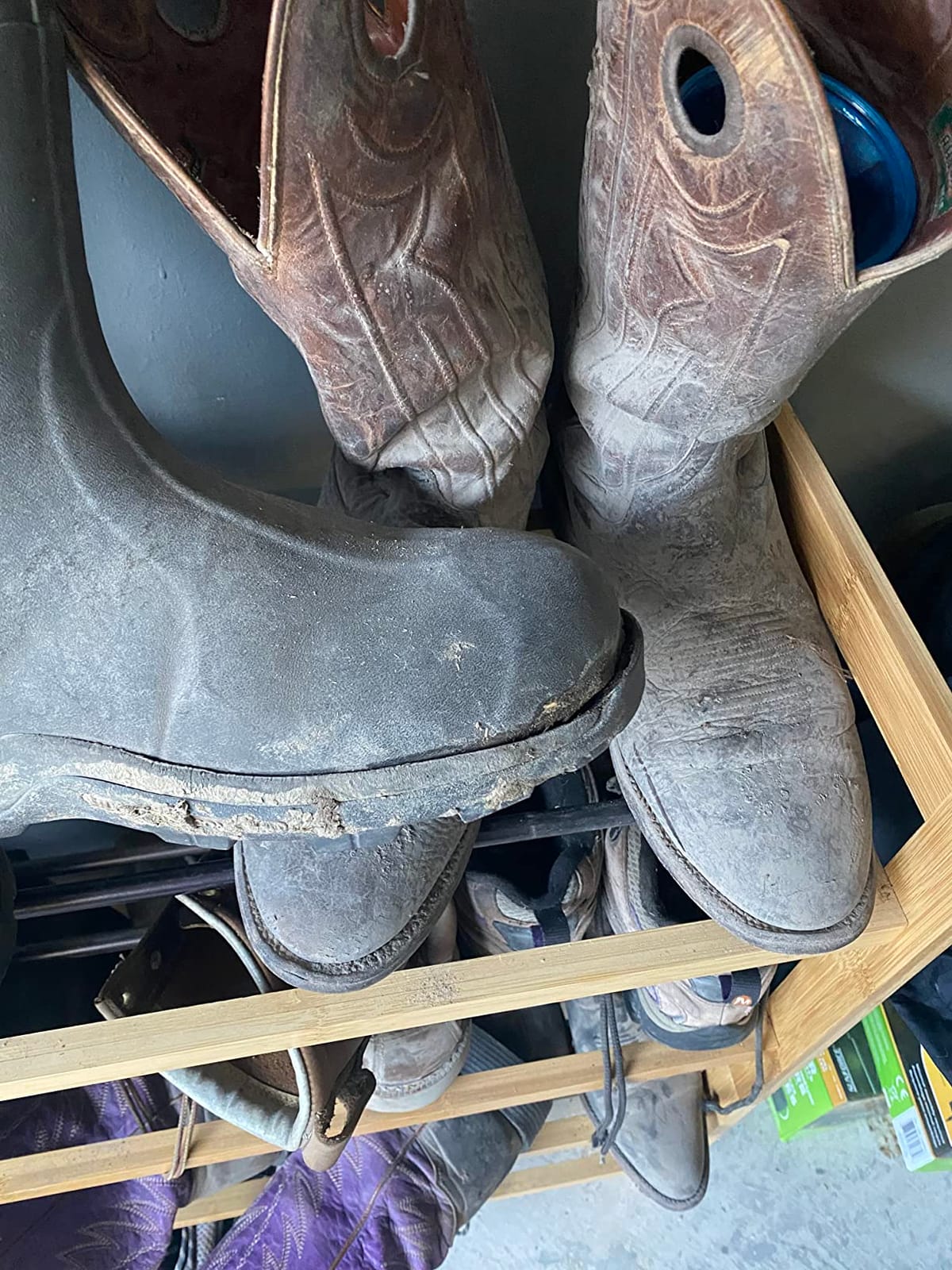
Durability is the other story here. The rubber exterior shrugs off brambles, mud and the repeated soaking of a wet season, and the pattern has been in production since 2016, which means replacement sizing is easy to match. Sizes run wide across the range, and owners frequently report buying down a size from what they normally wear.
Who the MUCK Woody Max suits
This is our pick for a deer or duck hunter who spends the day in a blind or a ground sit in cold but not arctic conditions. The fleece is enough for a typical late-season morning, the topline keeps snow out, and the weight will not wear you down on an approach. It is also the highest rated boot here, so it is a safe recommendation for someone buying their first insulated boot.
Who should skip the MUCK Woody Max
Skip it if you sit for hours at genuinely extreme temperatures. Fleece lining is a comfort layer, not a survival layer, and reviewers are clear that it does not match a fully insulated pac boot when the mercury drops. A handful of buyers also note that the camo pattern shades differently between production runs, which matters if you are matching a whole gear set.
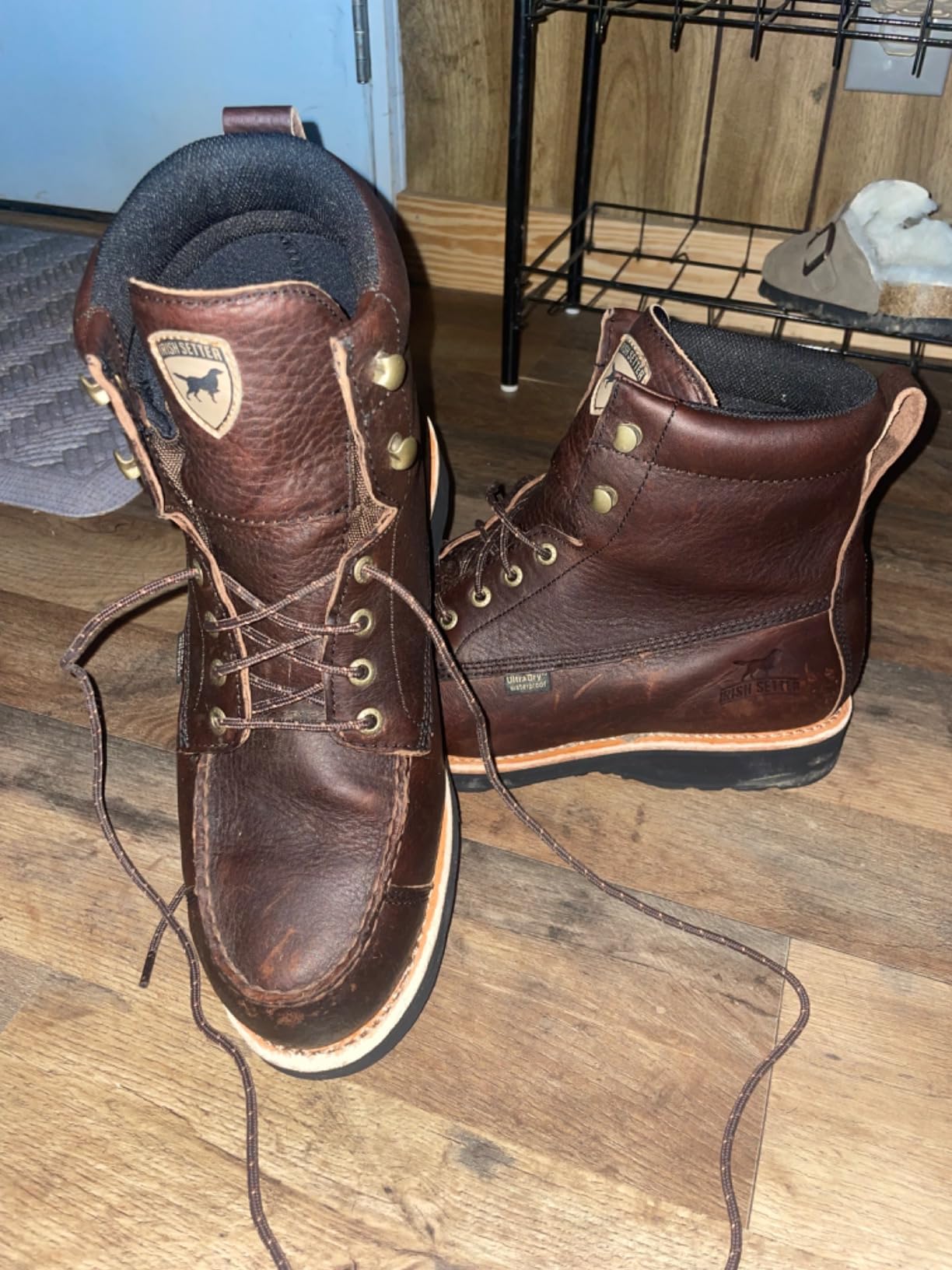
3. Irish Setter Wingshooter 7 Inch Boot: The Best Resoleable Leather Hunting Boot
Irish Setter Wingshooter 7″ Mens Hunting Boot, Dark Brown, 10
Full-grain leather
UltraDry waterproofing
Goodyear welt
2 lb
Pros
- Lightweight for a leather boot
- Resoleable Goodyear welt platform
- UltraDry keeps feet dry
- EE wide sizes available
- Steel shank support
Cons
- Regular width runs narrow
- Not insulated for deep cold
- Stock laces fray with wear
The Wingshooter is the odd one out in this list: a leather boot rather than a rubber or insulated pac boot, and it earns its place because of what happens in year five. Goodyear Welt construction means a cobbler can replace the outsole instead of the boot, and plenty of owners have taken that option rather than buying new.
At 2 pounds it is the lightest boot in this roundup by published weight, and the steel shank is the reason it does not feel like a lightweight compromise. A steel shank keeps the foot from flexing on uneven ground, which reduces fatigue over a long day and is genuinely useful on rocky mountain terrain. The debris-shedding Prairie outsole clears mud instead of holding it.
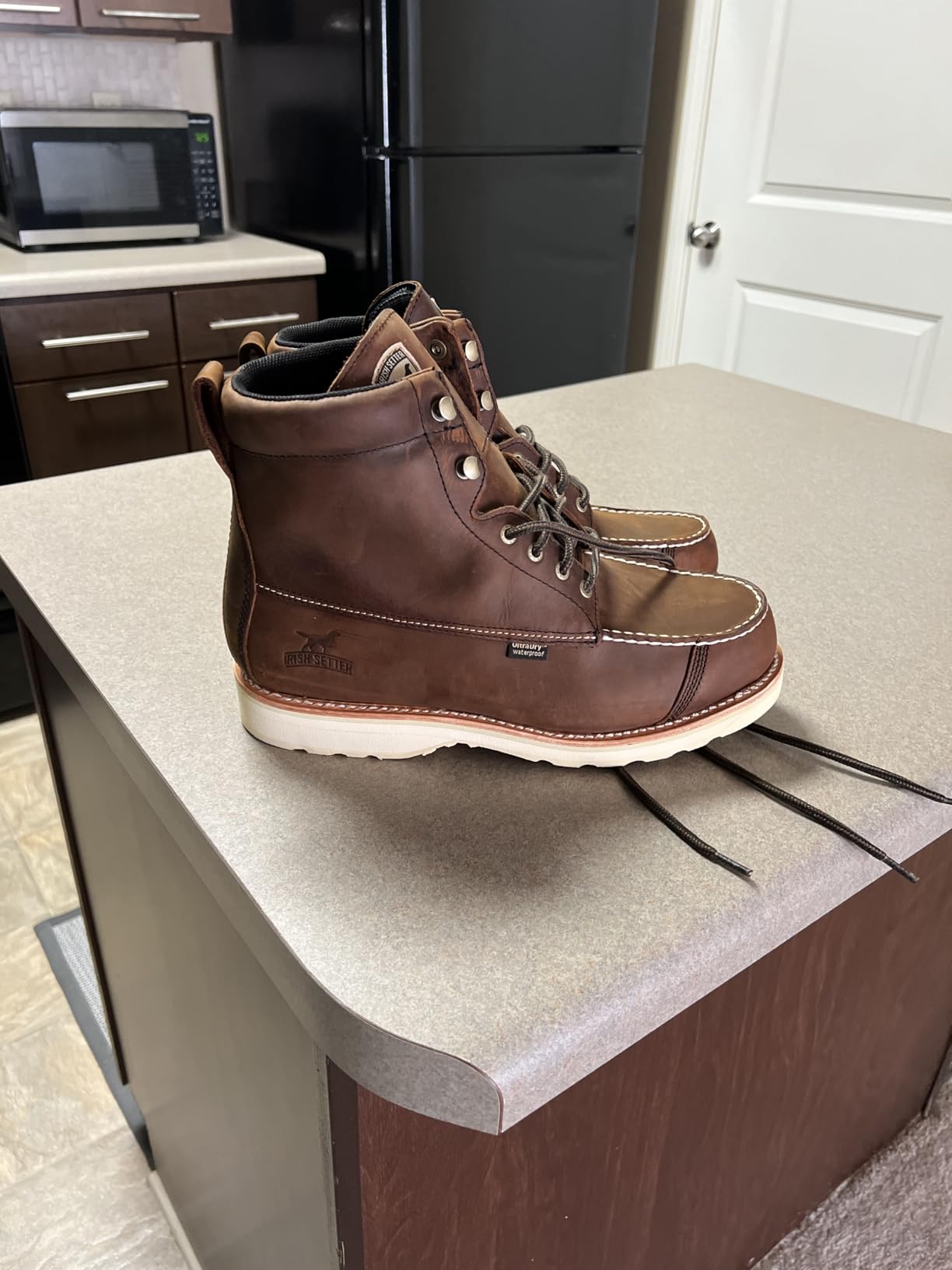
Waterproofing comes from Irish Setter’s UltraDry construction, which uses a sealed membrane inside the full-grain leather rather than a rubber coating. That approach is quieter than rubber, more breathable than a pure rubber shell and it ages better, since leather creases instead of cracking. The removable polyurethane footbed and moisture-wicking nylon lining are the sort of detail you notice on hour six rather than hour one.
The catch is fit. Regular widths run narrow, and reviewers overwhelmingly recommend the EE wide version, particularly if you wear thick socks. That is a real limitation for a cold weather list, since a tight toe box cuts circulation and circulation is what keeps your toes alive in a stand. The 7-inch height suits fall hunting and general field work better than deep winter.
Who the Wingshooter suits
This is the right boot for a hunter who wants one pair of leather boots for the whole season and plans to keep them for a decade. It is quiet, it is light, it handles wet ground well, and the resoleable welt means the outsole wears out long before the upper does. Owners with genuinely wide feet report excellent results in the EE sizing.
Who should skip the Wingshooter
Skip it if your December hunts sit below freezing and you are not moving. This is a lined leather boot, not an insulated pac boot, and it will not hold heat through a motionless sit. If you are ordering, order the wide width and expect a longer break-in than a rubber boot needs.
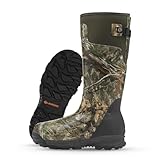
4. LaCrosse Alphaburly Pro 18 Inch 1600g Boot: The Best for Deep Snow
LaCrosse Waterproof Hunting Boots, Mossy Oak Country Dna 1000g, 14
1600g insulation
18 inch shaft
Rubber and neoprene
5 lb
Pros
- Extremely warm for subzero sits
- Waterproof through wading
- 18 inch shaft blocks deep snow
- Aggressive Burly outsole traction
Cons
- Shaft above ankle feels uninsulated
- Minimal insole cushioning
- 18 inch height limits ankle mobility
The Alphaburly Pro is built for one job: standing still in very serious cold. With 1600 grams of insulation and a published rating as low as -60F, this is a boot that assumes you are in a stand at dawn in the northern half of the country. Owners report sitting through mornings near 0F without cold feet, which is the specific complaint that sends most boots back to the shop.
The 18-inch shaft is the other half of the argument. Deep snow is a height problem as much as a warmth problem, and an 18-inch shaft keeps snow from reaching your knee while you are knee-deep in a drift pushing a sled. The adjustable rear gusset lets you pull the calf in tight, which is how you stop drafts at the top of the boot.
Construction is waterproof rubber over neoprene, so there is no membrane to degrade and no seam to leak. It held up for owners who waded bank fishing and worked in standing water. The Burly outsole has an aggressive tread that grips wet rock and mud, and the quick-dry lining means the boot does not stay damp after you get it wet.
At 5 pounds this is not a hiking boot, and reviewers do not pretend otherwise. The 18-inch height restricts ankle mobility, which matters when you are climbing a ladder into a stand or stepping over brush. Comfort ratings sit well below warmth ratings, and the minimal insole cushioning is the most common recommendation for improvement: owners who add their own insoles report a completely different day.
Sizing is the other recurring theme. This boot runs small to true, and buyers layering thick socks are told to size up. Getting this one right matters more than usual because the toe box is where cold feet start, and a boot that is a half size too small in the toes will undo 1600 grams of insulation in an afternoon.
Who the Alphaburly Pro 18 inch suits
This is the boot for a dedicated cold weather sitter who fights deep snow and does not care about ankle agility. If your season is late-season deer, elk or a muzzleload hunt with long motionless hours, the warmth and the shaft height are worth every pound. It also works for anyone working in subzero conditions where standing still is the norm.
Who should skip the Alphaburly Pro 18 inch
Skip it if you walk a serious distance to get to your hunting spot, or if you need to crouch, climb or kneel for long stretches. The height is genuinely cumbersome for that. Reviewers also note that the insulation is concentrated in the foot, so the shaft above the ankle feels thinner than the 1600g label suggests.
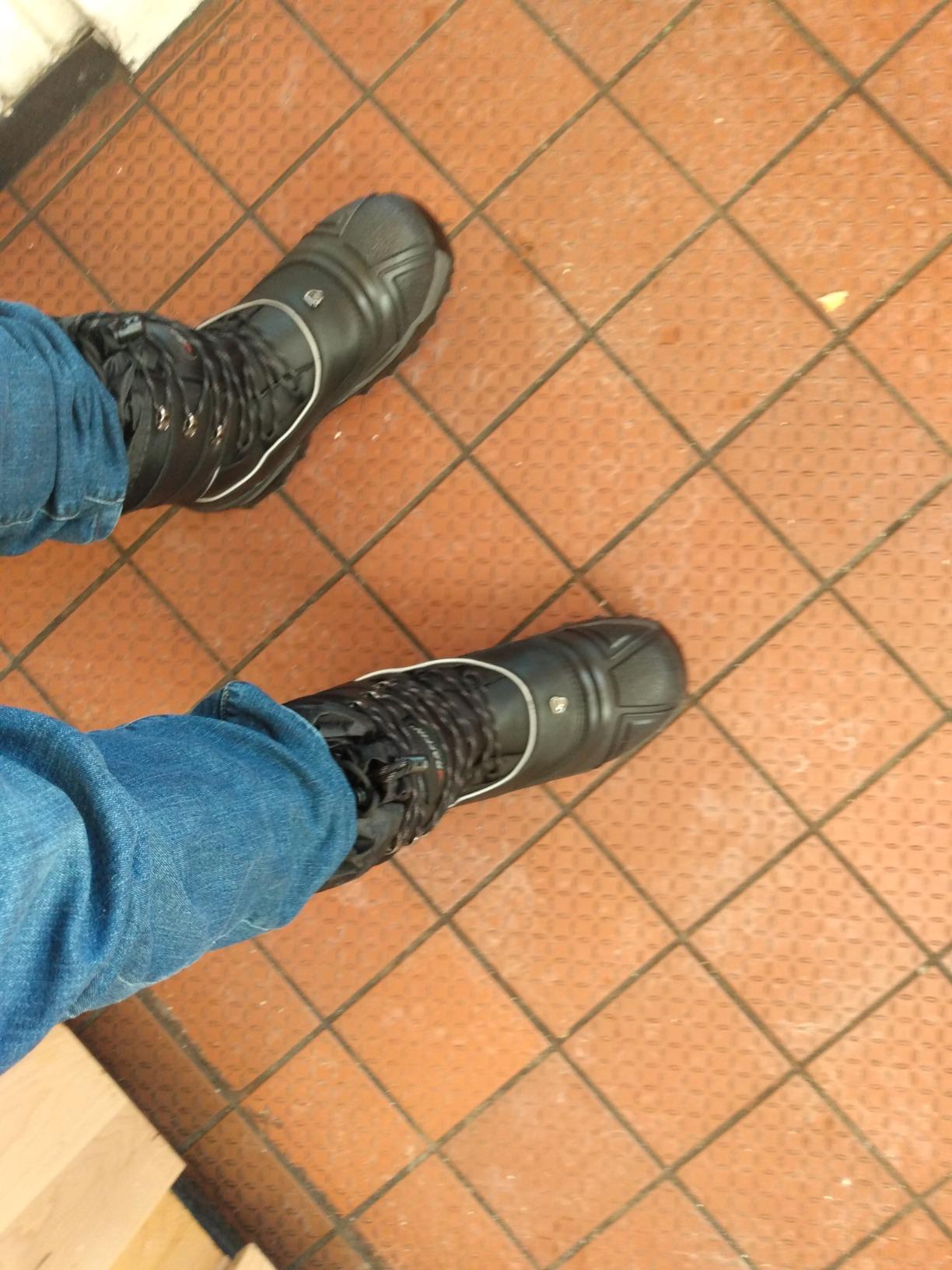
5. Baffin Snow Monster Insulated Boot: The Best for Extreme Cold
Baffin Snow Monster Men’s Winter Boots, Arctic Rated, -22 to -49 degrees Fahrenheit, Tall Height, Br5 – Worn Brown, Size 8
Removable Comfort-Fit liner
B-Tek Heat insulation
Rated to -94F
2.1 lb
Pros
- Rated as low as -94F
- Removable liner for warmer months
- Lighter than most pac boots
- Polar Rubber grip on packed snow
Cons
- Not fully waterproof in wet conditions
- Runs small so size up
- Snow collar blocks pant legs
- Ice grip needs cleats
The Snow Monster carries one of the most extreme published ratings in the roundout, roughly -70C to -94F, and unlike a marketing claim it is backed by construction that matches. The removable Comfort-Fit inner boot uses B-Tek Heat 4-channel hollow-fibre insulation inside a vapourized aluminium membrane, which is a genuinely different approach from a bag of loose Thinsulate.
What makes it our pick for extreme cold is the liner system. Because the inner boot comes out, the same boot covers a huge temperature range: run it bare in the shoulder season, add a liner in January. That is the two-season strategy several experienced hunters use, and it is cheaper than owning two pairs.
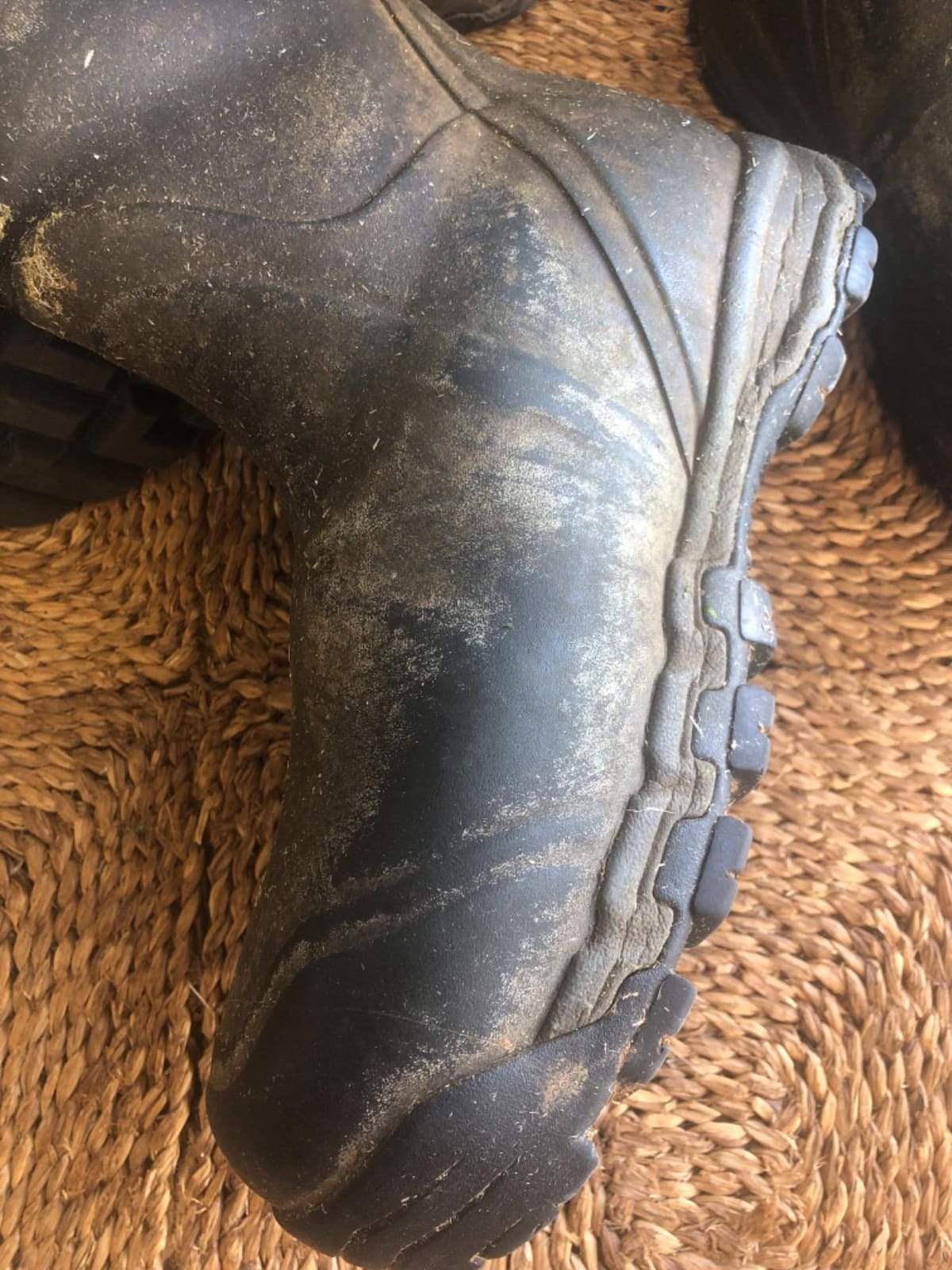
At 2.1 pounds it is also the lightest pac-rated boot in this roundup, and the Arctic Rubber shell stays flexible in cold where ordinary rubber turns into a brick. The EVA midsole and Polar Rubber outsole hold grip on packed snow down to low temperatures, and owners report water beading on the surface rather than soaking through.
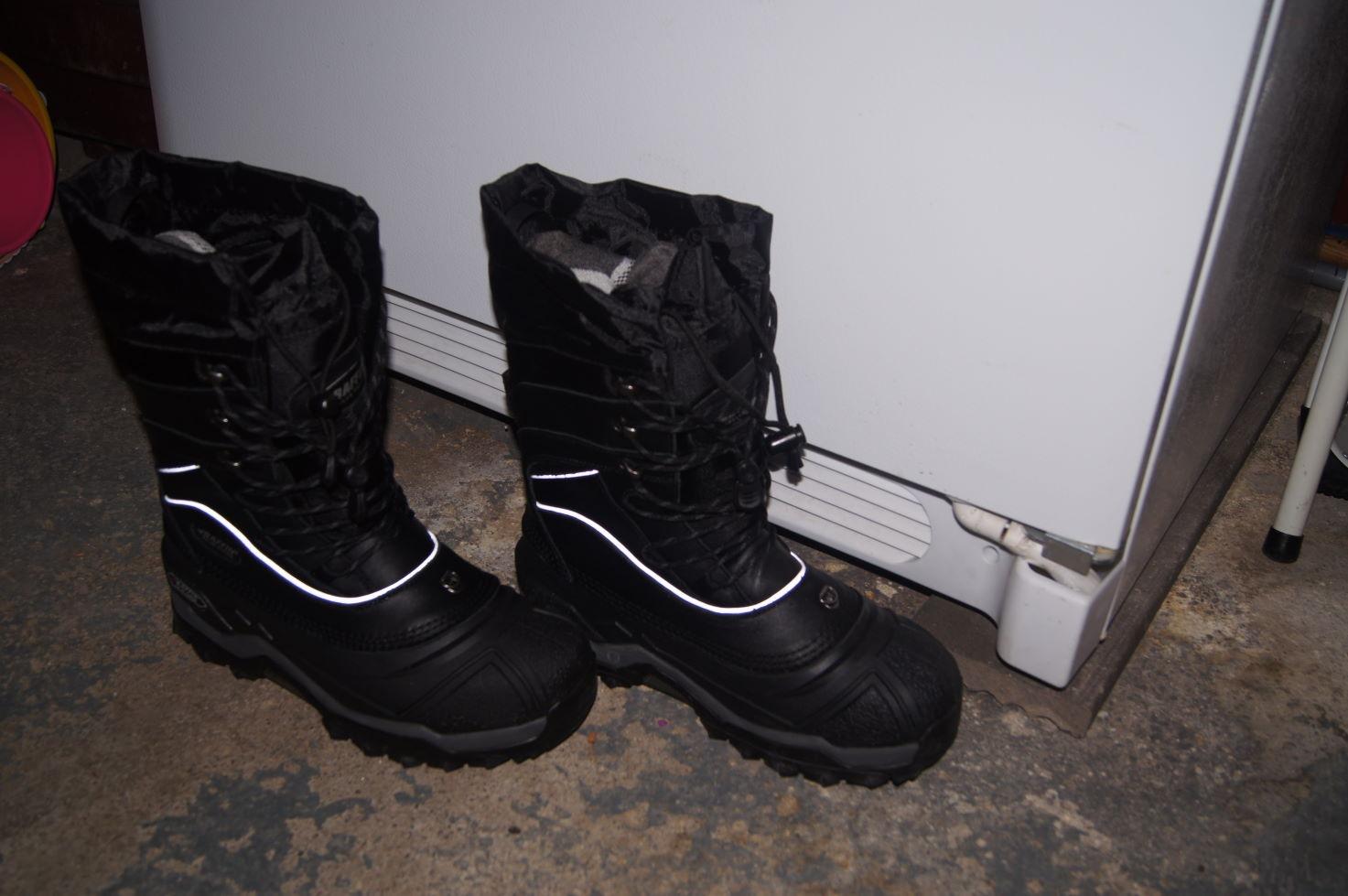
Two weaknesses to know about before you buy. First, waterproofing is not the strength here. A few reviewers report water working through the stitching in sustained wet conditions, so this is a snow boot rather than a wet-weather boot. Second, the locking snow collar is a real advantage in wind and a real nuisance if you wear jeans, because it blocks tucking pant legs in.
Sizing runs small and most buyers go up a size or more. Ice grip is the other limitation: the Polar Rubber compound is built for cold, not for glazed ice, so owners on long ice approaches add cleats or crampons. Baffin customer support is reported as responsive on warranty issues, which is worth knowing if you are buying a boot with a long service life in mind.
Who the Baffin Snow Monster suits
This is the boot for northern hunters, ice anglers and anyone whose thermometer regularly drops into serious negative numbers. The removable liner makes it a genuinely two-season boot, and the low weight means it is still reasonable on a moderate approach. It is our pick when the only non-negotiable is staying warm while motionless.
Who should skip the Baffin Snow Monster
Skip it if your hunting happens in rain, saturated marsh ground or slush that soaks through stitching. It is not the waterproofing answer. Also skip it if you wear jeans and want them tucked, or if you expect to spend hours on hard ice without adding traction.
6. LaCrosse AlphaBurly Aero 17 Inch 800G Boot: The Best Warmth-to-Weight Ratio
LaCrosse Mens AlphaBurly Aero 17″ Boots, First Lite Specter – 11
Solarcore Aerogel insulation
800G rating
5mm neoprene core
2.62 lb
Pros
- Aerogel technology reduces bulk
- Light and flexible for 17 inches
- Hand-laid rubber over neoprene is waterproof
- Grid Fleece lining manages moisture
- Kick-off heel plate for hands-free removal
Cons
- 800G is lighter than 1200G-2000G models
- Wide fit recommended for thick socks
The Aero takes the opposite approach to the Alphaburly Pro. Instead of piling on grams, it uses Solarcore insulation with Aerogel technology to get 800G of warmth in a noticeably lighter and less bulky package. At 2.62 pounds for a 17-inch boot, that is a real engineering result, and it is the reason this is the pac boot we would actually want to walk in.
Construction is hand-laid premium rubber over a 5mm neoprene core. The rubber outer is waterproof and scent-free, which matters for deer hunting, and the neoprene underneath gives enough give for a full day of crouching and kneeling. The adjustable neoprene gusset and Active Fit system let you dial the calf in so a standing sit does not dump heat down the top.
Underfoot, the AeroForm ETPU midsole provides cushioning and energy return that most pac boots skip, and the Grid Fleece lining moves moisture away from your foot instead of trapping it. That combination is why owners report staying comfortable over long days rather than simply putting up with them.
The kick-off heel plate is a small detail that becomes a large one. With cold hands, reaching down to pull a boot off is miserable, and the heel plate lets you kick these free one-handed. On the traction side, the Burly Trak outsole is built for mud and uneven terrain and does not pack with wet clay the way a shallow lug does.
Where it stops is at the top end of the cold range. 800G is a cold-weather sitting rating, not an arctic one, and owners comparing it against 1200G and 2000G models notice the gap below serious subzero temperatures. The trade is deliberate: you give up the last twenty or thirty degrees of protection and get back mobility and weight.
Who the AlphaBurly Aero suits
This is our pick for the hunter who wants a proper pac boot but still has to walk. The warmth-to-weight ratio is excellent, the waterproof rubber over neoprene build is scent-free, and the 17-inch shaft still keeps snow out of a deep drift. For a mixed hunt of walking and sitting, it is the most complete package here.
Who should skip the AlphaBurly Aero
Skip it if you sit motionless at extreme cold, because 800G leaves the top of the scale on the table. It is also not a light boot by any measure, so if your approach is measured in miles rather than a few hundred yards, test the weight in store first. Order the wide variant if you layer thick socks.
7. ROCKY Sport Utility 1000G Insulated Boot: The Best 1000g Leather All-Rounder
ROCKY Sport Utility 1000G Insulated Waterproof Boot, Mossy Oak Break Up, Size 12(ME)
1000g Thinsulate
Full-grain waterproof leather
Sport-utility outsole
4.5 lb
Pros
- Strong warmth-to-weight ratio
- Full-grain leather holds up in standing water
- Excellent long-term durability
- Good ankle support and grip
- Cushioned insole for long sits
Cons
- Standard width runs tight
- Feels heavy at first
- Not as warm as 2000g pac boots
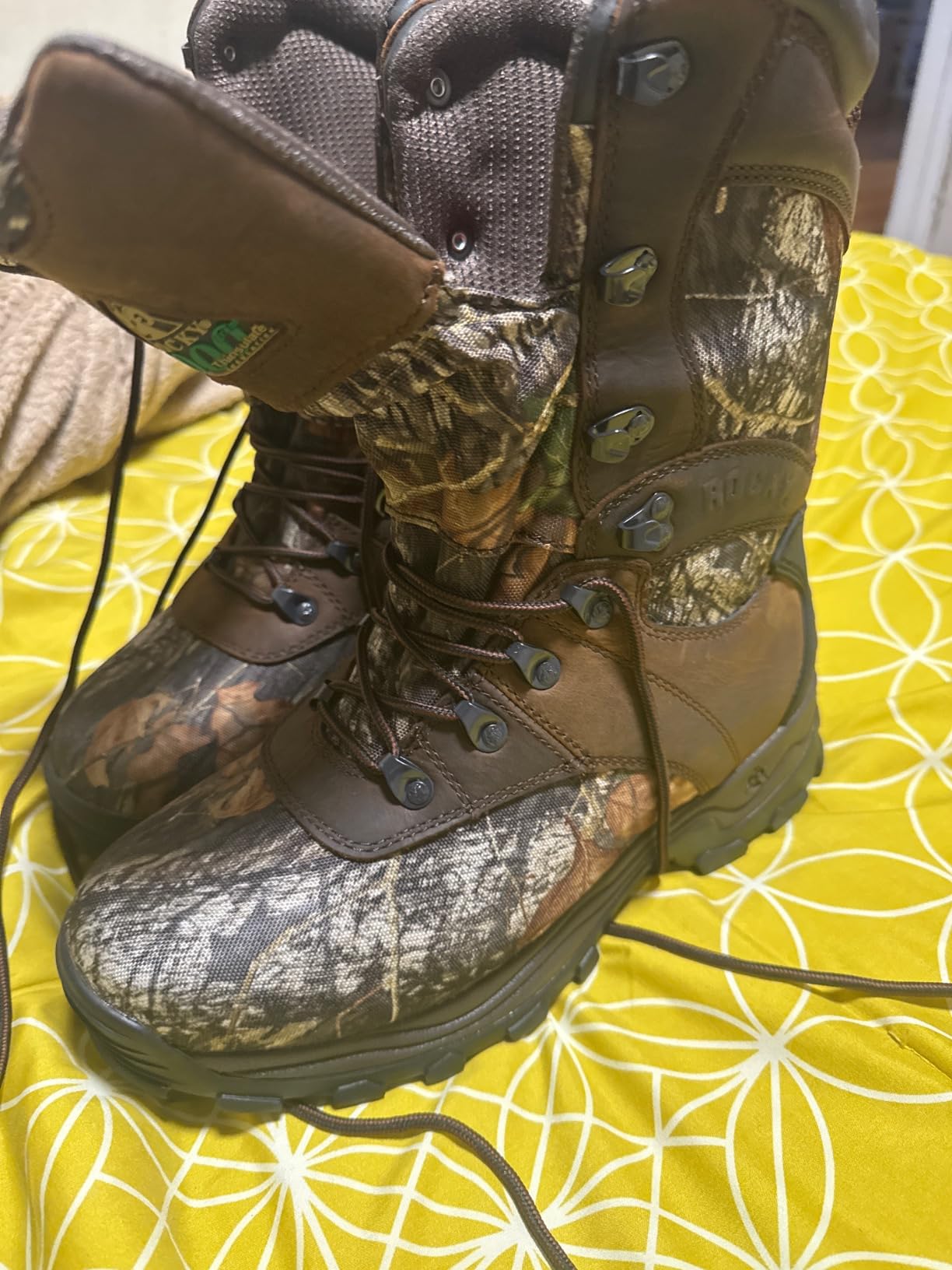
Most 1000g boots in this category are rubber pac boots. The Sport Utility Ten Inch is a full-grain leather hiking boot with 1000 grams of Thinsulate, and that combination makes it the most versatile cold weather boot on the list. Leather breathes, ages and can be resoled; 1000g is enough for a cold morning without turning into a sauna on the walk in.
Durability is the headline here and it is not a marketing claim. Owners repeatedly report keeping a previous pair for 15 to 20 years. Full-grain leather takes a beating and improves with it, the corded-lace closure lets you dial in fit properly, and the rear easy-on loop saves you when your hands are frozen.
The sport-utility traction outsole is the quiet advantage over a rubber boot. Rubber outsoles are at their best in mud and deep snow, but a lugged leather hiking sole is more predictable on rock, hard ground and mixed terrain, and the ten-inch height gives real ankle support when you are carrying a load or kneeling on a slope.
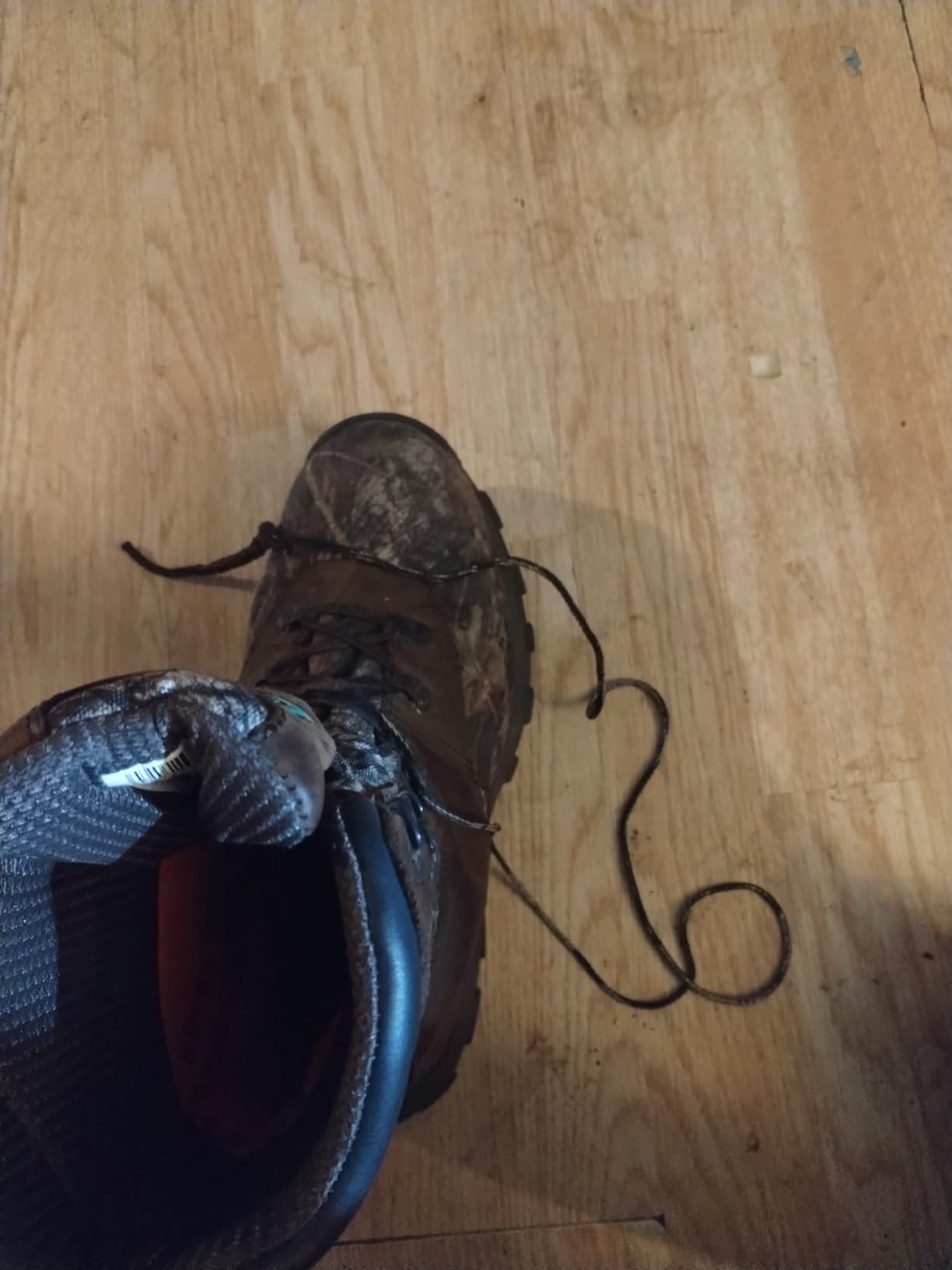
Reviewers repeatedly call the warmth-to-weight ratio the best thing about this boot, and 1000g of Thinsulate here does not overheat in moderate cold the way 1200G boots can. It is also not as warm as a 2000G pac boot for a sustained subzero sit, so do not read the 1000g label as an arctic rating.
Sizing is the main issue. Standard widths run tight and several owners needed the wide sizing to fit double socks, which is the single most common fitting complaint in this entire roundup. The boot also feels heavy on first wear, though that settles after break-in, and full-grain leather needs real break-in time before it stops fighting you.
Who the ROCKY Sport Utility suits
This is the boot for someone who wants one pair of boots that handles a cold deer season, a mountain elk hunt and years of regular use without rotating between models. The leather upper handles wet ground and mixed terrain well, and the ten-inch shaft gives more support than a lace-up boot and less bulk than a pac boot. It is a strong second-best all-rounder behind our top pick.
Who should skip the ROCKY Sport Utility
Skip it if you are layering thick socks and will not order the wide width, because a tight toe box is the fastest way to lose circulation. It is also the wrong call for someone who sits motionless at deep subzero temperatures, and it needs more break-in time than a rubber boot before it stops feeling stiff.
8. TIDEWE Rubber Insulated Hunting Boots: The Best Budget Pick
TIDEWE Rubber Hunting Boots, Waterproof Insulated Sturdy Outdoor 800G NE 9
800g insulation
7mm neoprene
Rated -50F to 40F
Sealed rubber shell
Pros
- Warm enough for single-digit blind sits
- 100% waterproof construction
- Lightweight over long stretches
- Strong value among rubber boots
- Tall rubber section adds warmth
Cons
- Sizing snug for wide feet
- Rubber can crack in hard winter use
- Strong odor out of the box
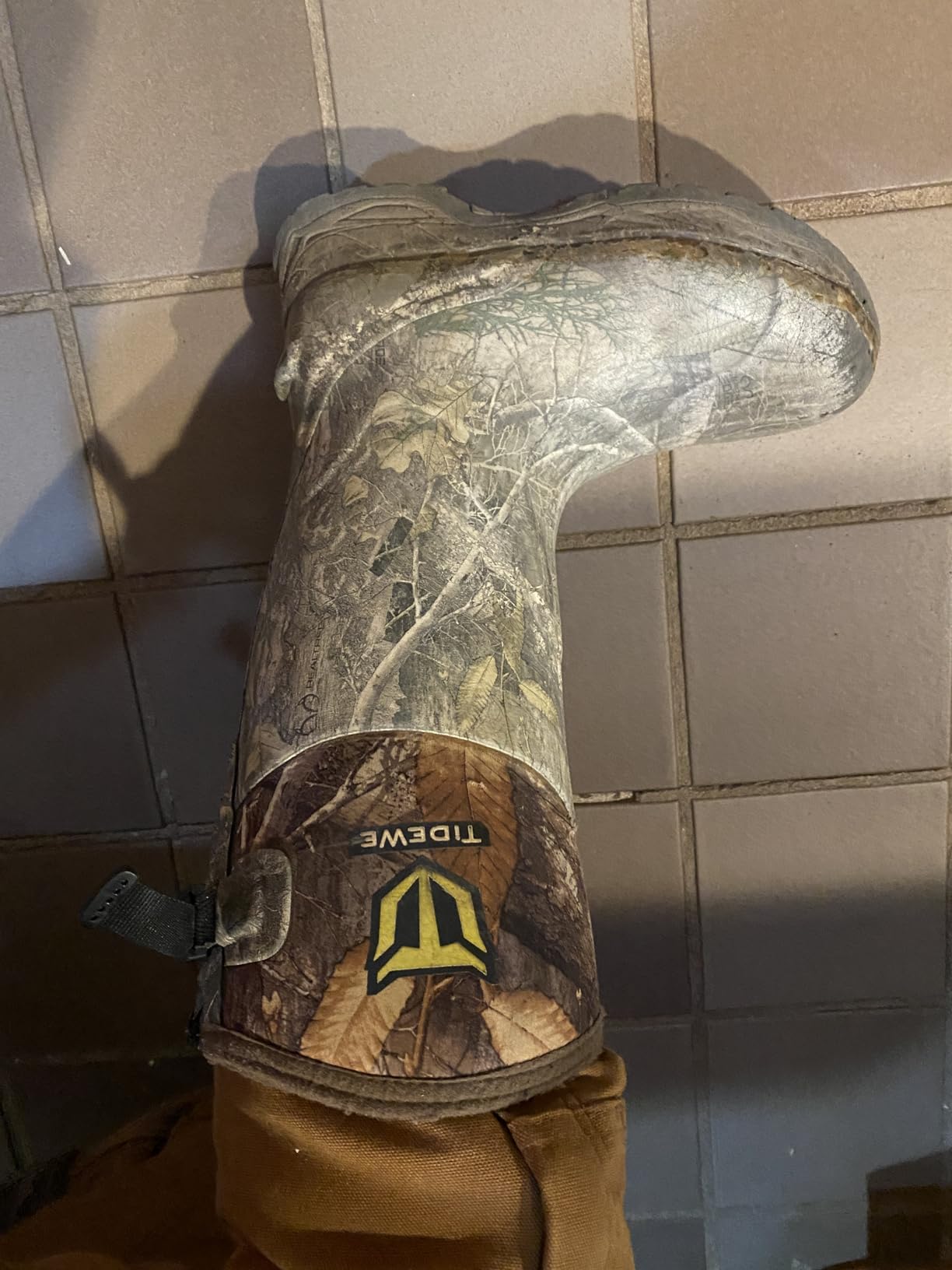
The TIDEWE boot is the value pick in this roundup, and the reason is that it does not cut the features that matter. You get 800 grams of cold-resistant insulation over a 7mm neoprene construction, a fully sealed rubber shell, and a published comfort rating of -50F to 40F. Those are the same core numbers you would look for in a far more expensive insulated rubber boot.
Owners report it being warm enough for single-digit temperature sits in a deer blind wearing one thick wool sock, which is the test that matters. It is also lighter than most insulated rubber boots, and buyers mention staying comfortable over 2 km stretches of walking, which is not something you can say about every pac boot in the category.
Construction is the reason it is waterproof rather than merely water-resistant. The sealed rubber shell extends to the topline with a reinforced toe and heel, the back gussets and cinch buckles let you tighten the calf, and the tall rubber upper section before the neoprene adds both warmth and flexibility.
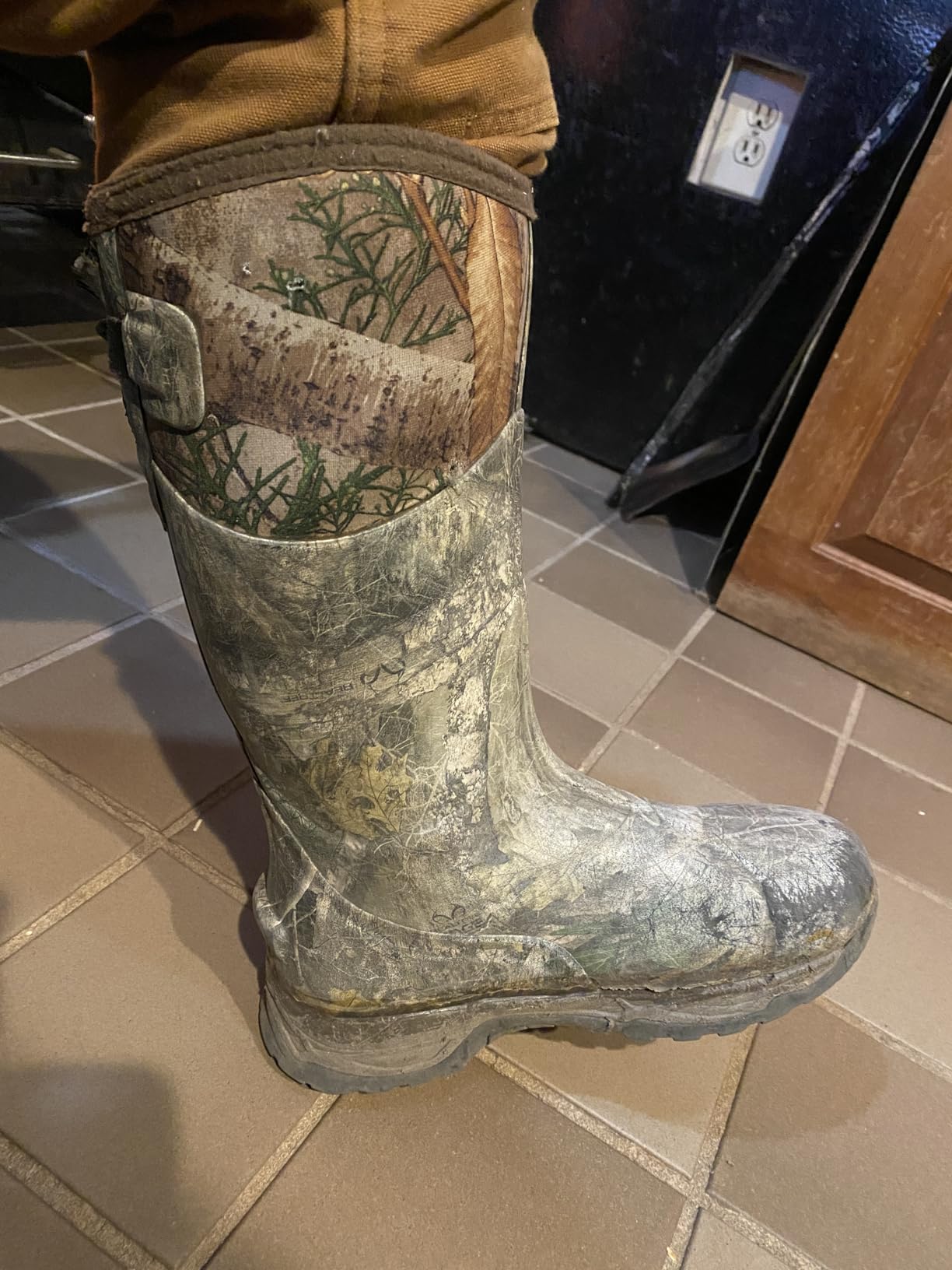
An EVA contoured midsole handles cushioning, and the practical result is a boot that disappears on your feet. That sounds minor until you compare it to boots in this list that weigh five pounds or more, because a light boot is the one you can walk in all day without thinking about your ankles.
There are trade-offs, and the obvious one is longevity. Rubber is not leather, and reviewers note that the upper can crack after hard winter use. The strong rubber odour out of the box is the most common early complaint, though it does fade. Sizing is the other: the standard run is snug for wide feet and the manufacturer’s own advice is to order a size up.
Who the TIDEWE boot suits
This is the boot for a hunter who hunts in real cold, does not need a premium brand name, and wants something that will not fall apart after one season. The waterproof shell makes it good in slush and wet ground, and the light weight makes it one of the few insulated rubber boots here that are genuinely comfortable to walk a distance in.
Who should skip the TIDEWE boot
Skip it if you need genuine extreme cold protection, because 800g is not an arctic rating, or if you buy one pair and expect it to last a decade. Wide feet should skip the standard sizing entirely and order up. There are also occasional reports of sole defects on individual units, so inspect the outsole when they arrive.
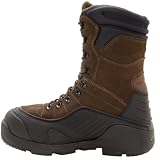
9. ROCKY Blizzard Stalker 1200G Boot: The Best Insulated-Shaft Boot for Cold Deer Country
Rocky Men’s Blizzard Stalker Pro Hunting Boot,Brown/Black,9 M US
1200g Thinsulate Ultra
Rubber vamp
Blizzard outsole
4.5 lb
Pros
- Insulation extends up the shin
- Toes stay warm in low-to-teens temperatures
- Waterproof through ankle-deep water
- Good traction on packed snow
- Very durable over many seasons
Cons
- Runs large so size down
- Bulky and stiff sole
- Sweats above roughly 30F
- Scratchy interior cuff
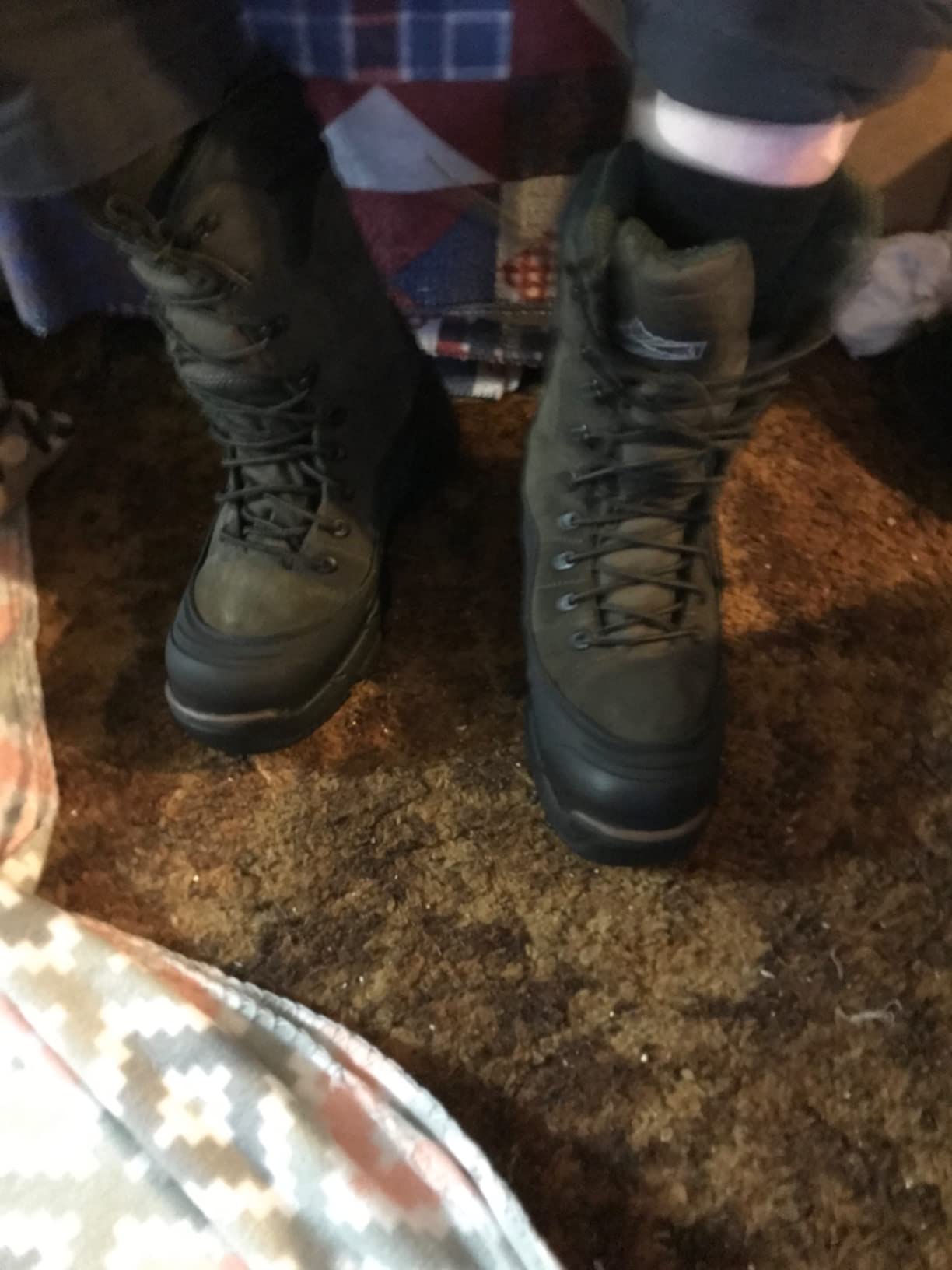
Plenty of 1200g boots put all the insulation in the foot and leave the shin bare. The Blizzard Stalker uses a well-insulated shaft so warmth continues up the leg, and owners specifically call out warm shins rather than just warm toes. With 1200 grams of 3M Thinsulate Ultra and a rubber vamp over the toe, it is a genuinely cold-weather boot rather than a cold-footed boot.
Owners in Minnesota and Michigan winters report sitting at low-to-mid teens temperatures with warm toes, and waterproofing holds up even when wading through ankle-deep water. The Multi-Directional Blizzard outsole is oriented for movement across uneven snow rather than straight-line walking, and the removable mesh PU footbed with a TPU heel stabilizer keeps the heel from sliding around inside the boot.
Durability is the other story. Owners report a prior pair lasting 15 years, which is consistent with the Guaranteed Rocky waterproof construction. The padded shaped foam collar and extended tongue also seal out snow at the top, which matters more in a standing sit than most buyers expect.
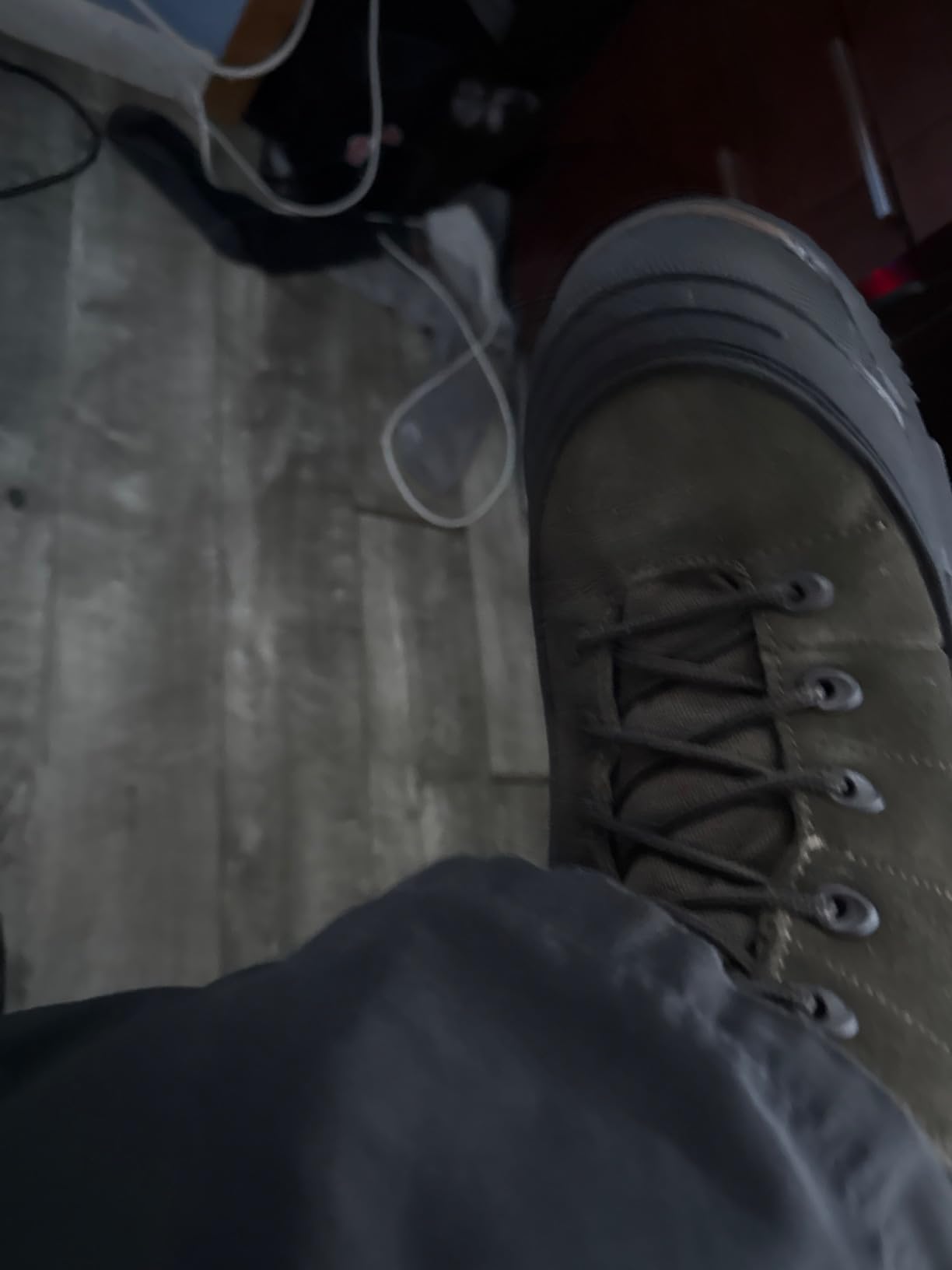
The cost of that insulation is bulk. The boot is stiff out of the box and stays stiff, and the sole is uncomfortable for stooping, kneeling or climbing, which is exactly the movement set that tree stand hunting and bowhunting require. Reviewers who use foot straps to secure a boot to a ladder say the bulk makes straps awkward to work with.
Sizing runs large, so many buyers size down, which is the opposite of almost every other boot in this roundup. Above roughly 30F the warmth becomes a problem rather than a feature and owners report sweating, which is the over-insulation failure mode in its clearest form. The interior cuff is also scratchy on bare calves, so wear taller socks.
Who the Blizzard Stalker suits
This is the pick for a late-season deer hunter who sits in a stand or blind through a northern winter and wants insulation up the shin as well as in the foot. It is fully waterproof, durable enough to keep for a decade or more, and the rating holds up in genuinely cold daytime temperatures.
Who should skip the Blizzard Stalker
Skip it if you still need to crouch, kneel or climb into a stand, because the stiff sole and bulky profile will fight you. It also runs large, so if you order your usual size you will be replacing a warmth problem with a fit problem. Above freezing, pick something lighter.
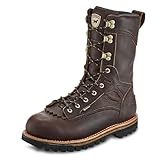
10. Irish Setter Elk Tracker 12 Inch Boot: The Best Premium GORE-TEX Insulated Boot
Irish Setter Elk Tracker 12″ Mens Hunting Boot, Brown, 12 W
GORE-TEX leather
1000g Thinsulate Ultra
Steel shank
12 inch shaft
Pros
- GORE-TEX waterproofing that vents sweat
- 1000g warmth without bulk
- Steel shank and aggressive outsole
- Resoleable Goodyear Welt
- Removable cork EVA footbed
Cons
- Wide sizes recommended for sock layering
- Sits in the premium price tier
The Elk Tracker is the most refined boot in the roundup, and the distinction is the combination of a GORE-TEX membrane with 1000g of 3M Thinsulate Ultra. A membrane moves sweat vapour out while keeping water in, which is the single biggest reason insulated leather boots stop feeling clammy on a hard walk, and most rubber boots in this list cannot do it at all.
Everything else here is built to last. The full-grain leather upper takes a resoleable Goodyear Welt sole platform, the Bulls-Eye Air Bob aggressive outsole has a built-in steel shank for stability on rock, and the removable comfort cork EVA footbed with memory foam is the kind of cushioning that you notice after five hours of standing rather than after five minutes.
ScentBan odour control is worth calling out for anyone hunting deer, where boot odour matters as much as boot warmth. The 12-inch height gives more lower-leg coverage than a traditional 8-inch boot without the bulk of a 17 or 18 inch pac, and the 1000g rating keeps it in a walkable range rather than a sit-only range.
Who the Elk Tracker suits
This is the boot for a hunter who moves during the day, hunts in wet conditions, and wants a boot that will last. The GORE-TEX membrane manages moisture properly, the 1000g rating is warm without being unwalkable, and the resoleable construction means you are not replacing the whole boot when the outsole wears. For a deer or elk hunter in changeable weather it is the most complete single choice.
Who should skip the Elk Tracker
Skip it if your budget is the deciding factor, because this sits at the premium end of the category and there is no cheap version of a GORE-TEX upper. It is also not the choice for a motionless subzero sit, where 1600g or more would be the correct spec. Order the wide size if you layer thick socks.
11. ROCKY Bearclaw GORE-TEX Insulated Boot: The Best for Wet Cold Weather
ROCKY BearClaw GORE-TEX® Waterproof 1000G Insulated Hunting Boot, Mossy Oak Break Up, Size 11.5(WI)
GORE-TEX membrane
1000g Thinsulate Ultra
BearClaw 3D outsole
4.5 lb
Pros
- Built for severe wet conditions
- GORE-TEX membrane with 1000g insulation
- Durable leather and nylon upper
- Air-Port cushion footbed underfoot
- BearClaw 3D outsole for traction
Cons
- Heavier than lighter insulated boots
- Wide sizes needed for thick socks
- Smaller pool of customer reviews
The Bearclaw is the boot for the genuinely miserable end of winter, where the problem is not just cold but cold and wet at the same time. It is built for severe wet conditions, and the GORE-TEX membrane over a full-grain leather and nylon upper is what separates it from a rubber pac boot: the membrane vents sweat while sealing out standing water, slush and driven rain.
Insulation is 1000 grams of 3M Thinsulate Ultra, which keeps it in the walkable range while still covering genuine cold conditions. The Rocky Air-Port cushion footbed adds underfoot comfort, and the BearClaw 3D outsole with exclusive Rocky 3D welt construction gives traction and support on wet ground and uneven terrain.
One thing to be honest about: at 352 reviews this is one of the smaller customer pools in the roundup. The 4.6 average is strong, but a smaller sample means less certainty about long-term durability than the boots here with several thousand reviews behind them.
Who the Bearclaw suits
This is the pick for a hunter who hunts in coastal rain, saturated river bottoms, or a late-season storm system that soaks everything you own. GORE-TEX with 1000g of insulation is the right pairing for cold plus wet, and the leather and nylon upper is tougher than a pure rubber shell. It is a good choice for a deer hunter who wants warmth without the sweat trap.
Who should skip the Bearclaw
Skip it if you want a lightweight boot, because at 4.5 pounds it is on the heavy side. It is also not a deep-snow pac boot, so it will not keep snow out of a drift the way an 18-inch shaft does. Buy the wide size, and weigh the smaller review pool against the very high review counts on some alternatives.
12. LaCrosse Hunt Pac Extreme 10 Inch 2000G Boot: The Best for Deep Subzero Sits
LaCrosse Men’s 283160 Hunt Pac Extreme 10″ Waterproof 2000G Hunting Boot, Mossy Oak Break-Up Country – 10 M
2000g Thinsulate
10 inch waterproof pac
5.7 lb
Mossy Oak camo
Pros
- Maximum 2000g insulation in the roundup
- Waterproof in deep standing water
- Comfortable for long stationary sits
- Strong ankle support and traction
Cons
- Runs tight so order larger
- Toe box narrows steeply
- Bulky for climbing or ATV use
At 2000 grams of Thinsulate, the Hunt Pac Extreme has the highest insulation figure in this roundup and it is built for static cold rather than movement. Owners report warm feet in single-digit and subzero weather, and one reviewer kept them dry in 6 inches of standing water without a leak. This is the boot for someone who sits for a full day in genuinely arctic conditions.
The waterproof 10-inch pac construction is closer to a work boot than a hiking boot, and the reinforced ankle support is what makes long stationary sits tolerable. At 5.7 pounds it is heavy, and reviewers note it is lighter than many comparable pac boots despite the bulk, which is a relative compliment rather than a light boot.
This is the one in the roundup with the smallest review pool at 151 ratings, and it also carries the lowest average at 4.4. Both facts are worth weighing, and both point the same way: the fit is the issue, not the warmth.
Who the Hunt Pac Extreme suits
This is the pick for a dedicated winter sitter who does not move once they reach the stand and who needs the maximum warmth available in a boot rather than a double boot system. The waterproof pac construction holds up in standing water, the ankle support carries a long day, and the Mossy Oak Break-Up Country camo is a serviceable choice for the woods.
Who should skip the Hunt Pac Extreme
Skip it if you walk any real distance, since activity keeps feet warm and this boot is built on the opposite assumption. The fit is also a genuine risk: it runs tight, most buyers order at least a half size larger, and the toe box narrows steeply enough to compress the toes even at that larger size. Some units also arrive with broken grommets, so check the hardware on arrival.
How Many Grams of Insulation Do You Need?
Grams are the first number to look at, and they are the number most buyers misread. A gram rating measures insulation per square metre of fabric, not total fill, so two boots with the same rating can feel completely different depending on where the insulation sits and how tight the upper is.
The practical ladder looks like this. Use it as a starting point and adjust for your own circulation, your layering and how much you move on a typical hunt.
200g and under – Cool autumn hunts, or any cold-weather boot worn over a heated layer. Below about 40F, 200g is not enough for a still sit.
400g to 600g – Active late-season deer and upland bird hunts. This is the band most hunters should default to, and forum consensus places 400g as the true minimum for cold conditions.
800g – Cold stationary sits in single-digit to low-teen temperatures. Also the most comfortable band if you walk to the stand.
1000g to 1200g – Sustained subzero sits and northern deer country. Above roughly 30F this is too warm and you will sweat.
1600g to 2000g – Deep cold with long motionless hours. Effectively an arctic rating, and not a walking boot.
The temperature rating trap
Published temperature ratings assume active walking, not sitting still. Hunters on NY Woods and Water and in the Rokslide threads are consistent on this point, and it is the single most useful piece of advice in this guide. Walking generates heat; sitting does not, and the difference between those two states is often larger than the difference between two adjacent gram ratings.
So when a boot is rated to -60F, read it as a specification of how much insulation is present rather than a promise about a motionless sit. Buyers of the 1600g Alphaburly report sitting comfortably near 0F, which is very different from the printed figure. Take every rating as optimistic by at least a band.
The over-insulation trap
Too much insulation does not leave you warm. It leaves you wet. The most repeated complaint across the hunting forums we read is that feet sweat inside a heavily insulated boot, and sweat evaporates off your foot as body heat, which leaves you colder than a lighter boot would have. On a moving hunt, jumping from 600g to 1000g is a downgrade.
If your feet get cold despite heavy insulation, the cause is usually one of three things: too tight a toe box, too many socks in a boot sized for fewer, or a boot rated for a sit being worn on a hike. Fix the fit first, it costs nothing.
Waterproofing: GORE-TEX, Rubber and Everything Between
Waterproofing in this category comes down to three approaches, and they trade off differently against warmth, breathability and durability.
Rubber-over-neoprene, used by the MUCK Arctic Pro, the LaCrosse Alphaburly Pro and the AlphaBurly Aero, is the most waterproof option in this roundup. There is no membrane to fail and no stitching to leak, and the AlphaBurly Aero’s hand-laid rubber is also scent-free, which deer hunters care about. The cost is breathability: rubber does not vent sweat, so these boots are warmer when active and wetter inside over a long walk.
GORE-TEX and similar membranes, found in the Irish Setter Elk Tracker and the ROCKY Bearclaw, are the best balance. The membrane blocks liquid water while passing sweat vapour, which is why these boots stay comfortable on a moving hunt. They are also the only option here that actively manages moisture rather than just containing it. The downside is that a membrane is only as good as its condition, and reviews show boots leaking after a season or two when care was skipped.
Proprietary waterproof leather, like the UltraDry construction on the Irish Setter Wingshooter, seals the membrane inside the leather rather than laminating it to the surface. It is quieter and ages better than rubber, and it is not as restrictive as a full rubber shell on a long walk.
Traction, Outsole and Boot Height
Traction is where most cold weather boots compromise, because deep lugs that work in deep snow feel vague on hard ground. The Semi-spherical Bob-Tracker lugs on the MUCK Arctic Pro are a good answer, because they shed debris instead of packing it. The Burly Trak and Burly outsoles on the LaCrosse boots are oriented for mud and uneven terrain, and the Multi-Directional Blizzard outsole on the ROCKY Blizzard Stalker is built for movement across uneven snow.
Ice is a different problem entirely. Cold-rated rubber compounds grip packed snow but are not designed for glazed ice, and owners of the Baffin Snow Monster add cleats or crampons for long approaches on ice. A leather hiking outsole like the one on the ROCKY Sport Utility is more predictable on rock and hard ground but gives up performance in deep snow. Decide which terrain you actually hunt before you pick a sole.
Boot height is a warmth and a snow-depth decision, not a style choice. At 7 to 10 inches you get ankle support and a normal walking stride. At 12 inches you get meaningful lower-leg coverage, which the Irish Setter Elk Tracker uses well. At 17 and 18 inches you get deep snow protection, and you give up ankle mobility, which is why the tallest boots in this roundup are sit-only recommendations.
Sizing, Socks and the Two-Sock System
Sizing is the most requested and least available piece of information in this category, and the pattern across our 12 boots is consistent: most standard widths run snug, and many boots need a wide size or a half size up to fit two thick socks. A tight toe box cuts off circulation, and lost circulation is the real reason feet go numb, not insufficient insulation.
Boot sizing also varies wildly between brands. A size 10 in one brand is not a size 10 in another, so do not order your usual size across brands without checking the specific brand’s fit guidance. The ROCKY Blizzard Stalker is the outlier here and runs large, so most buyers size down.
The cheapest warmth upgrade available is a two-sock system: a thin liner sock against the skin to wick moisture, plus a heavier insulated sock over the top. Hunters on the cold-weather footwear forums consistently recommend wide toe boxes and a two-layer sock setup, and several users run insulated boot liners over the top of their boot for extreme cold. The rule is simple: whatever you wear on your feet has to fit the boot with room to spare.
Do not skip the wide sizing when a brand offers it. Every boot here that lists a wide option is one where owners who ordered it report the best results, and the ones who skipped it report numb feet on a long sit.
While you are setting up a new boot, our guides to the rest of a cold-weather kit are worth a look: binoculars for hunting and spotting scopes for hunting both need to work at low light and low temperature, which is a different test than warm-weather glass.
Boot Care: Why Waterproof Boots Leak After a Season
A membrane is only rated while it is intact, and most leaks we saw described in reviews were care failures rather than defects. Dirt and salt left on the surface grind into the membrane and the flex points, and a boot that gets muddy and then dries stiffly will crack at the seams long before the membrane gives up.
Clean the boot after every hunt. Let leather dry at room temperature away from a fire or a heater, because direct heat cracks full-grain leather and can warp a rubber shell. Keep the footbed out and loose if your boot has a removable footbed, and let the boot air out fully between trips.
Condition full-grain leather a few times a season, and check the outsole lugs and the stitching around the gusset periodically. For insulated rubber boots, store them loosely at room temperature rather than compressed in a truck bed over the off-season.
Frequently Asked Questions
What is the best boot for extreme cold weather?
For a motionless sit in serious cold, the best hunting boots for cold weather are pac-style boots rated at 1000g or higher, such as the LaCrosse Alphaburly Pro 18 inch 1600g or the Baffin Snow Monster with its removable liner. For a hunter who also walks, the 800g LaCrosse AlphaBurly Aero is warmer per pound than anything else in the range. Remember that published temperature ratings assume active walking, so treat them as optimistic.
How warm are 400 gram Thinsulate boots?
400g is the practical minimum for genuinely cold hunting conditions and the sweet spot for an active late-season hunt. Forum consensus across Rokslide, Archery Talk and Michigan Sportsman places 400g as the floor for cold weather. Below about 40F a 400g boot is not enough for a motionless sit, and above about 30F it is too warm if you are walking hard and will make you sweat.
How warm will 1200 gram insulation boots keep me?
1200g sits firmly in subzero stationary-sit territory, and the ROCKY Blizzard Stalker is a good example with its insulated shaft rather than foot-only fill. It is comfortably too warm for anything above roughly 30F, where owners report sweating. That sweating is the real risk, because damp feet cool faster than cold feet, so 1200g is a sit-only rating rather than a walking rating.
What temperature range are 1000g insulation boots suitable for?
A 1000g boot covers a wide band: roughly 20F down into genuine single-digit cold for a stationary sit, and it stays walkable on a moving hunt in the same conditions. The ROCKY Sport Utility and the Irish Setter Elk Tracker both sit at 1000g and owners report warm toes in low-to-mid teens temperatures. Above about 30F, 1000g becomes too warm and you should drop to 400g or 600g.
Which rubber hunting boot is the warmest?
Among insulated rubber hunting boots, the LaCrosse Alphaburly Pro 18 inch 1600g is the warmest, with 1600 grams of insulation in a fully waterproof rubber and neoprene shell and an 18 inch shaft. Below that, the LaCrosse AlphaBurly Aero 17 inch 800G uses Aerogel technology to get more warmth per pound, and the MUCK Arctic Pro adds an 8mm neoprene bootie for extreme cold hunters who want less bulk.
Are Hunter boots good for cold weather?
Classic rubber wellies keep water out completely, but they provide no meaningful insulation, so they are not a cold weather hunting boot on their own. They work as an outer shell over insulated pac boots, which is how wellies are used in serious cold. If you want one boot rather than a two-boot system, an insulated rubber boot like the TIDEWE or the MUCK Arctic Pro is the closer answer.
What are some good winter hunting boots?
Good winter hunting boots split into clear categories. For an all-round pick, the MUCK Arctic Pro handles both moving and sitting hunts. The ROCKY Sport Utility covers 1000g in resoleable leather, the LaCrosse Alphaburly Pro 18 inch handles deep snow and 1600g warmth, the Baffin Snow Monster covers extreme cold with a removable liner, and the Irish Setter Elk Tracker is the premium GORE-TEX option. Each of these suits a different kind of hunt.
The Best Hunting Boots for Cold Weather in 2026: Final Verdict
After comparing 12 cold weather hunting boots, the MUCK Arctic Pro takes our Editor’s Choice because it is the one here that covers both moving hunts and stationary sits without a changeover: 8mm neoprene for warmth, full waterproof rubber, and traction that holds up in slush as well as mud. The MUCK Woody Max takes the highest rating in the roundup and is the more comfortable choice for a blind sit in cold but not arctic conditions.
Match the gram rating to your activity before anything else. 400g to 600g for moving hunts, 800g for cold sits you walk to, 1000g to 1200g for subzero stationary hours, and 1600g or above when you will not move at all. Buy the wide size, wear two socks, and treat every published temperature rating as a number that assumes you are walking.
Use the buttons above to check the current listing, and pair your boots with the rest of your cold-weather kit.