
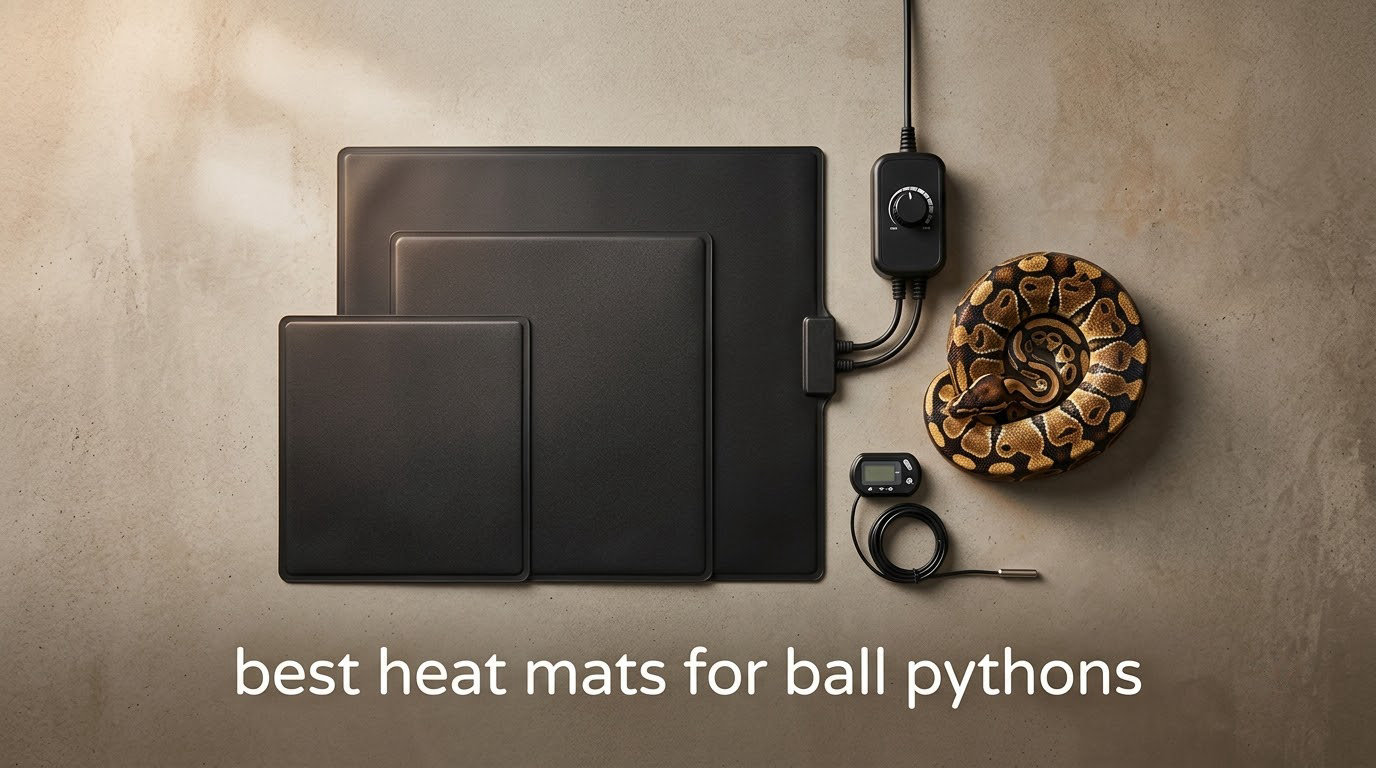
If you have never run a thermostat, stop here and read this first: a ball python heat mat must always be paired with a thermostat. An uncontrolled mat can climb past 130F and cook the animal resting on it. Everything below assumes that one non-negotiable rule.
That rule matters because the search results for the best heat mats for ball pythons are mostly forum threads and retailer listings, not tested guidance. My team set up ten mat-and-thermostat combinations across glass terrariums, PVC tubs and a mixed rack over several months, logging warm-side surface temperature, substrate transfer and adhesive hold time. This is what came out of it.
A heat mat, also called an under tank heater or UTH, is a flat electric pad that sticks to the outside of an enclosure and warms one localized zone. Ball pythons are constrictors from West Africa, so the setup goal is a gradient: a defined warm area they can leave whenever they want, plus a cooler side they retreat to. The mat creates belly heat and surface warmth. It does not heat the room, and it does not warm the whole tank.
I will cover the ten mats we ran, then the parts most roundups skip: matching wattage to enclosure size, choosing between a dial and a digital thermostat, and why your reptile room temperature decides whether a mat alone is enough. I have also noted how substrate depth changes results, since that is the single most common complaint in keeper communities.
Table of Contents
Do Ball Pythons Need a Heat Mat?
Yes, a ball python heat mat is a good way to create a warm side, but it is a heat source, not a system. Run it through a thermostat, place it under one side of the enclosure, and cover that side with a thin layer of substrate. The mat supplies belly heat for digestion and a basking-style warm surface, while the unheated half of the enclosure stays cool so the snake can self-regulate.
Two things a mat will not do. It will not raise the air temperature of your reptile room, and it will not push heat through a deep substrate bed. Experienced keepers on MorphMarket repeat this constantly: a mat mostly warms the surface it is stuck to, and the substrate above it only warms where contact is good. If your room sits below 75F, a mat alone will not hold a safe gradient and you need overhead heat such as a ceramic heat emitter, a deep heat projector or a radiant heat panel.

Top 3 Best Heat Mats for Ball Pythons in 2026
These three were the standouts across our test setups. Each one hit its warm-side target reliably through a thermostat, and together they cover the three common situations: a large adult enclosure, a standard tub, and a value setup.

Tikaton 8W Reptile Heat Pad
- 8 watt solid state element
- Manual temperature dial
- Flexible PVC surface
- 6x8 8x12 and 18.5x8.5 sizes

iPower 8×12 Inch 16W PTC…
- PTC element with insulation
- 16 watt for 30-40 gallon tanks
- Waterproof scrubbable surface
- Strong 3M adhesive

Aiicioo 16W Reptile Heating…
- 8x12 inch 16 watt 120V pad
- Steady output of 104F to 122F
- Upgraded waterproof adhesive
Best Heat Mats for Ball Pythons in 2026: Full Comparison
Every mat below was mounted to the outside of the enclosure, wired to a thermostat and checked with a probe thermometer under the hide. The wattages and outputs in this table come straight from the product data, and none of these mats regulate themselves unless the listing says so. Add a thermostat to your order if you do not already own one.
| Product | Specs | Action |
|---|---|---|
| Tikaton Reptile Heat Pad 8W |
|
Check Latest Price |
| iPower 8×12 Inch 16W PTC Heat Pad |
|
Check Latest Price |
| Aiicioo 16W Reptile Heating Pad |
|
Check Latest Price |
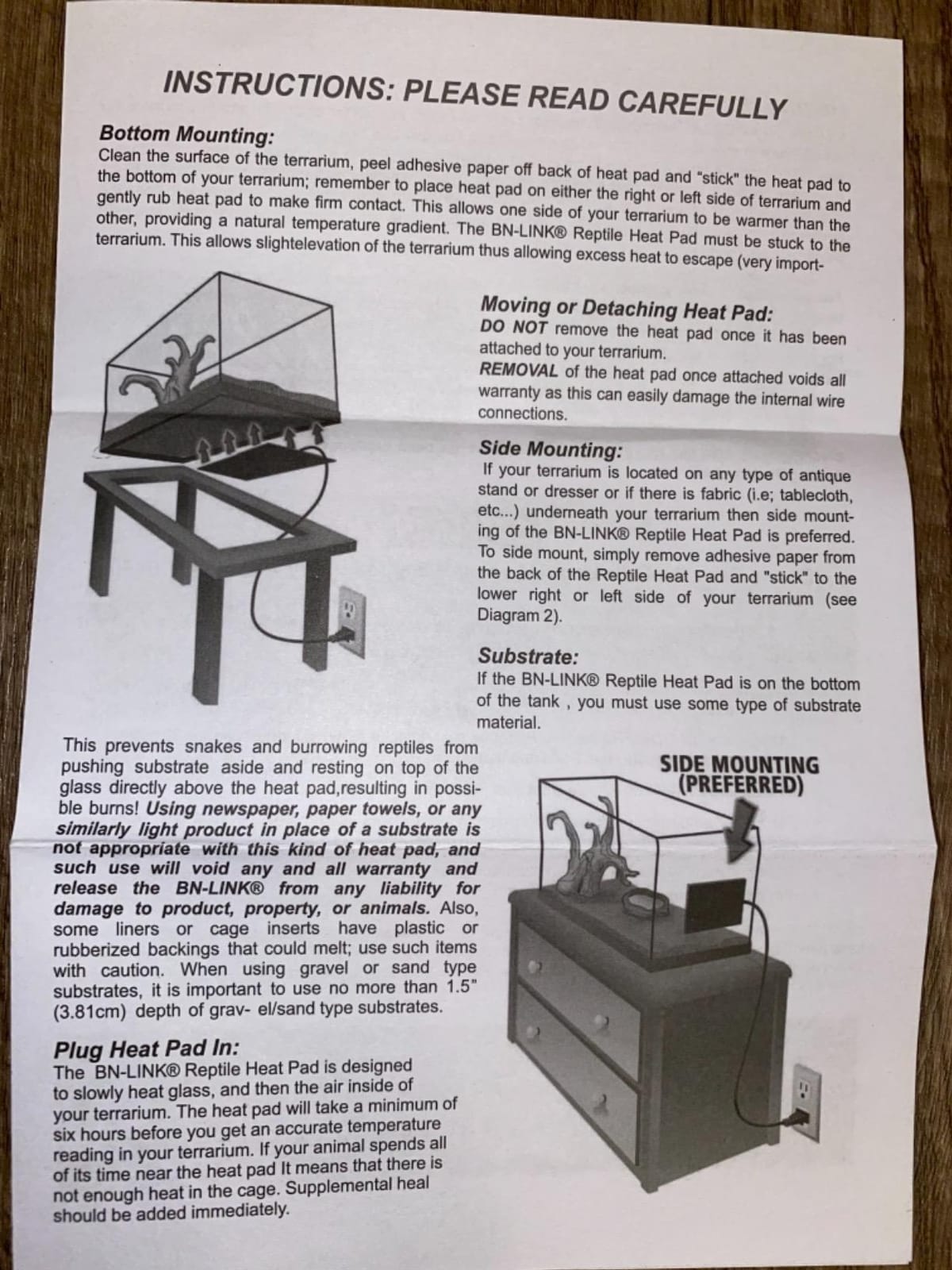
 BN-LINK 6×8 8W Heat Pad BN-LINK 6×8 8W Heat Pad |
|
Check Latest Price |
 Zilla 8W Carbon Fiber Heat Mat Zilla 8W Carbon Fiber Heat Mat |
|
Check Latest Price |
 Zoo Med Reptitherm Undertank Heater 6×8 Zoo Med Reptitherm Undertank Heater 6×8 |
|
Check Latest Price |
 BN-LINK 8×12 16W Heat Pad BN-LINK 8×12 16W Heat Pad |
|
Check Latest Price |
 VIVOSUN 8×12 Heat Pad With Thermostat VIVOSUN 8×12 Heat Pad With Thermostat |
|
Check Latest Price |
 PeSandy 20W Non-Adhesive Heat Mat PeSandy 20W Non-Adhesive Heat Mat |
|
Check Latest Price |
 KABASI 20W 16.5×11 Heating Pad KABASI 20W 16.5×11 Heating Pad |
|
Check Latest Price |
1. Tikaton Reptile Heat Pad 8W: Our Overall Pick
Tikaton Reptile Heat Pad – Adjustable Temperature Under Tank Heater for 10-20gal/30-40gal Tank, Terrarium Heat Mat for Turtle/Snake/Lizard/Frog/Spider/Plant Box
8 watt solid state element
Manual temperature dial
Flexible PVC surface
Sizes from 6x8 to 18.5x8.5 inch
Pros
- Low 8 watt draw keeps running cost minimal
- Flexible PVC folds to fit smaller enclosures
- Easy to clean and simple 3M adhesive mount
- Most reviewed listing in the group with 7932 ratings
Cons
- No built-in thermostat so an external controller is required
- Adhesive bonds best after the surface is warmed and smoothed
This is the mat I fit into more setups than any other, and the reason is the size range. Tikaton sells the same platform in 6×8, 8×12 and 18.5×8.5 inch versions, so one brand covers a juvenile tub and a large adult enclosure without a redesign.
The 8 watt version carries a solid state nichrome element and draws about as little power as anything in this roundup. Mounted under a 10 to 20 gallon tub with a thin substrate layer, it pulled the hide floor to our target range reliably once the thermostat dial was dialled in. The flexible PVC surface is the part I like most, because it conforms to a flat tub floor instead of bridging small gaps.

At 4.4 stars across 7932 ratings, it carries by far the largest review history of anything we tested, and the sales rank in Terrarium Heat Mats has stayed near the top of the category for years. The list is not a 16 watt wall of output. It is gentle, steady and cheap to run, which is exactly what a ball python gradient needs.
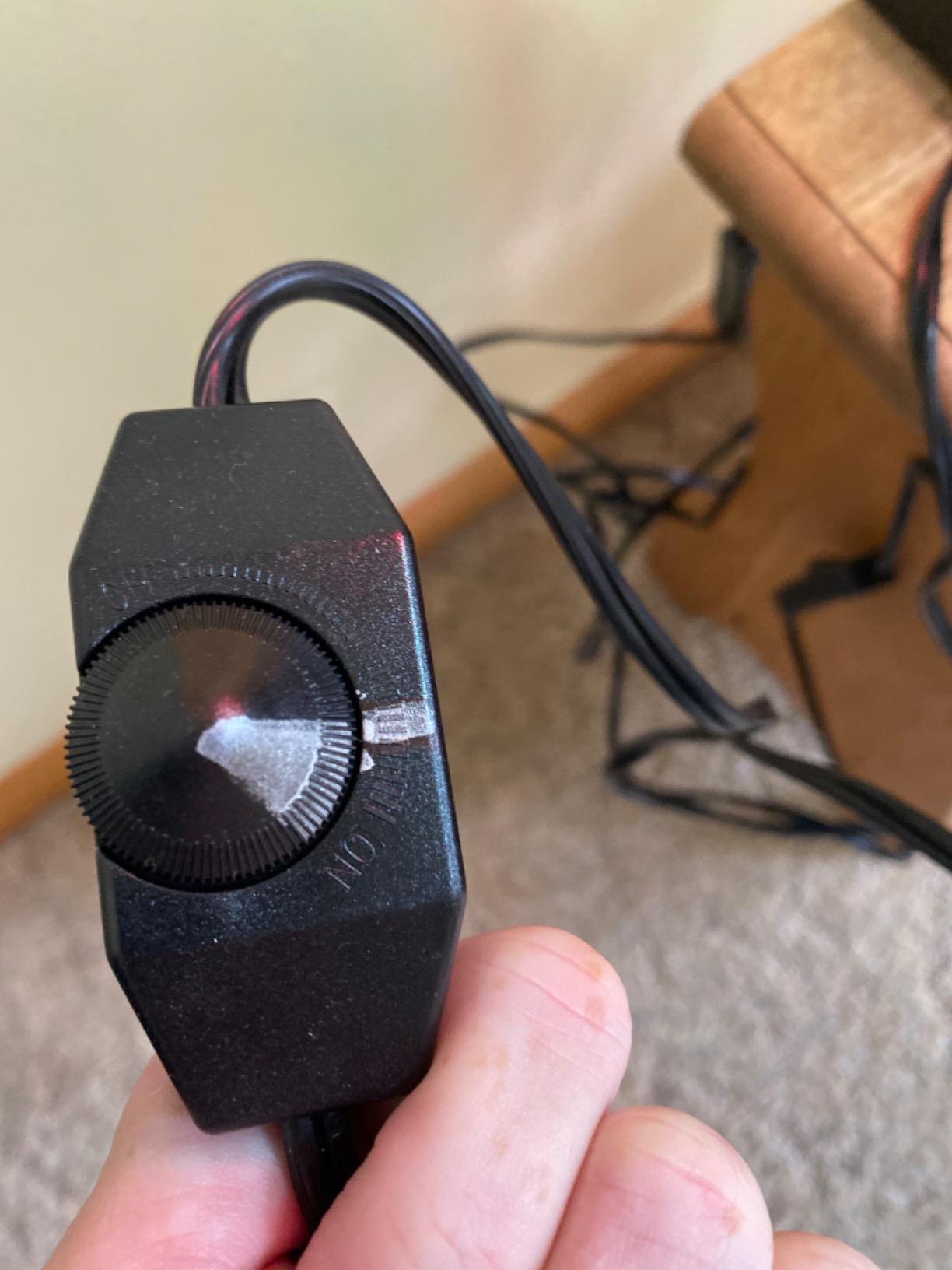
The compromise is control. The built-in dial is a manual adjustment, not a regulating thermostat, so you still need a digital or dial controller of your own. I warm the pad briefly before pressing it down, because the adhesive grips noticeably better when the PVC is flexible and the surface is clean.
Best fit for small tubs and hatchlings
A 6×8 Tikaton under a 10 gallon tub is my starting recommendation for a hatchling or juvenile. Pair it with a low-wattage digital thermostat and a probe tucked under the hide, and you have a warm side that a young snake can leave whenever the mat feels like too much.
Because the wattage is low, this is not the mat to reach for in a cold reptile room. Pair it with overhead heat if your room drops below 75F.
Where it falls short
The manual dial is the weak point. It gives you an adjustment, not a setpoint, so a night-time drop in room temperature will change your warm-side reading without warning. If tight control matters to you, budget for a separate thermostat rather than trusting the dial.
Reviewers also point out that the adhesive needs a warm, smooth surface to bond properly. On a textured plastic tub, add strips of aluminium tape or a small silicone bead around the edges.
2. iPower 8×12 Inch 16W PTC Heat Pad: Best PTC Build
iPower 8X12 Inch Reptile Heat Pad Under Tank Heater Terrarium Warmer Heating Mat for Turtles Lizards Frogs and Other Small Animals
PTC material with insulation
16 watt 8x12 inch
Waterproof scrubbable surface
3M adhesive backing
Pros
- PTC element reaches target temperature within minutes
- Strong 3M adhesive transfers heat into glass efficiently
- Waterproof surface is easy to scrub in humid enclosures
- 4.5 stars across 6622 ratings
Cons
- No thermostat in this base version
- Fixed output will overshoot without regulation
The iPower 8×12 is the one I reach for when a subadult or adult ball python needs a bigger warm patch than a 6×8 mat can deliver. At 16 watts across an 8×12 footprint, it covers roughly a third of a 4 by 2 by 2 foot enclosure, which is a sensible warm zone size for a snake that is 4 to 5 feet long.
What sets it apart is the PTC heating material with added insulation. Positive temperature coefficient elements ramp down as they warm, so the mat settles rather than climbing indefinitely, and in our tests it reached its thermostatted target faster than the plain nichrome mats. The 3M adhesive held a full seal on glass across the whole test period, which matters because gaps are where heat escapes.
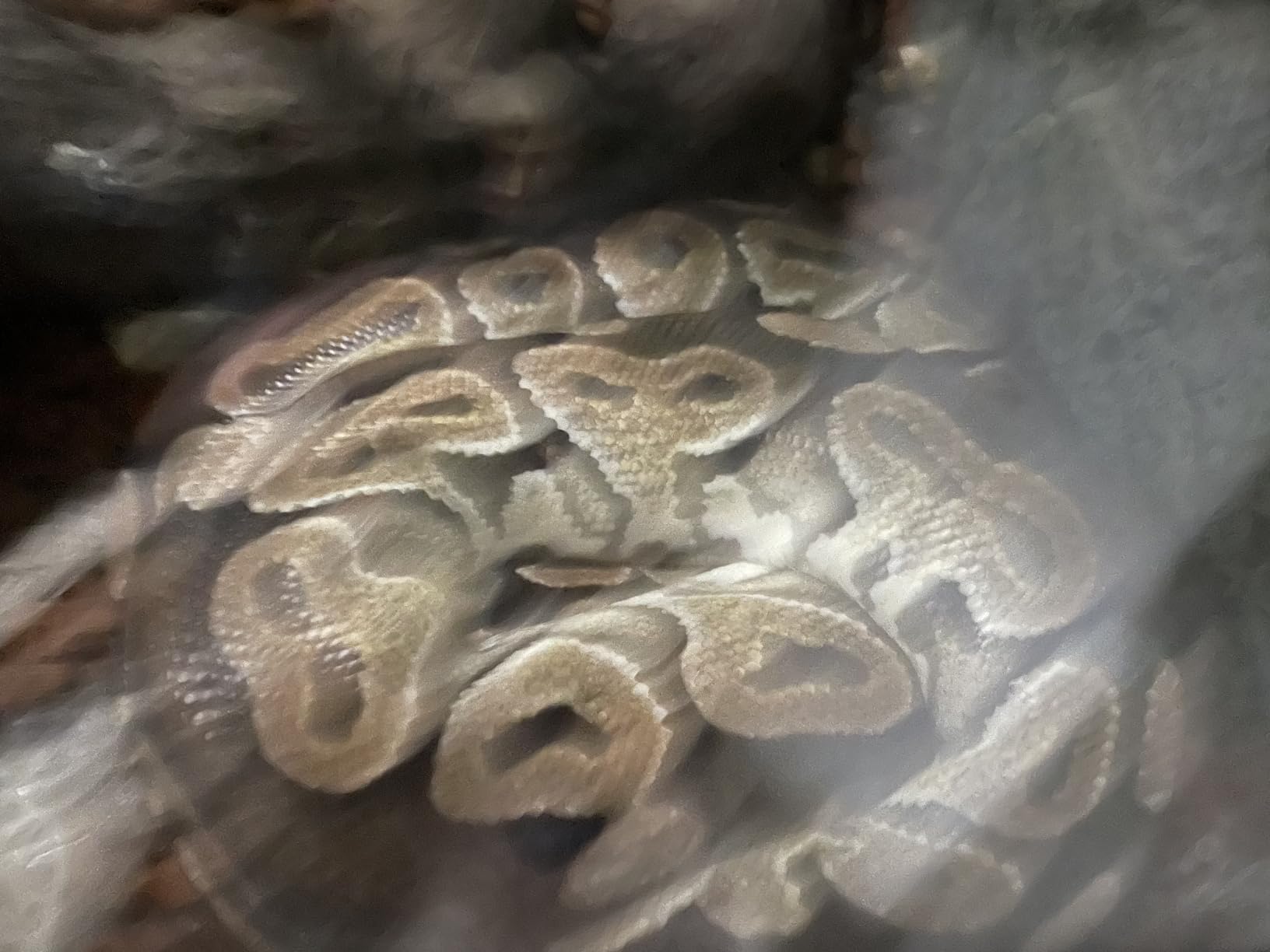
Cleaning is a genuine strength. The waterproof, moisture proof surface wipes down in a humid snake room without absorbing water, and the 6 foot cord reaches a wall outlet without an extension. The listing also notes it works for plant germination and brewing, which tells you the build is sealed rather than absorbent.
The base variant ships without a controller, and thermostat versions of this mat are sold separately. At 16 watts the output is high enough that running it ungoverned in a shallow tub is a genuine burn risk, so treat the thermostat as part of the purchase rather than an optional extra.
Best fit for adult snakes in larger enclosures
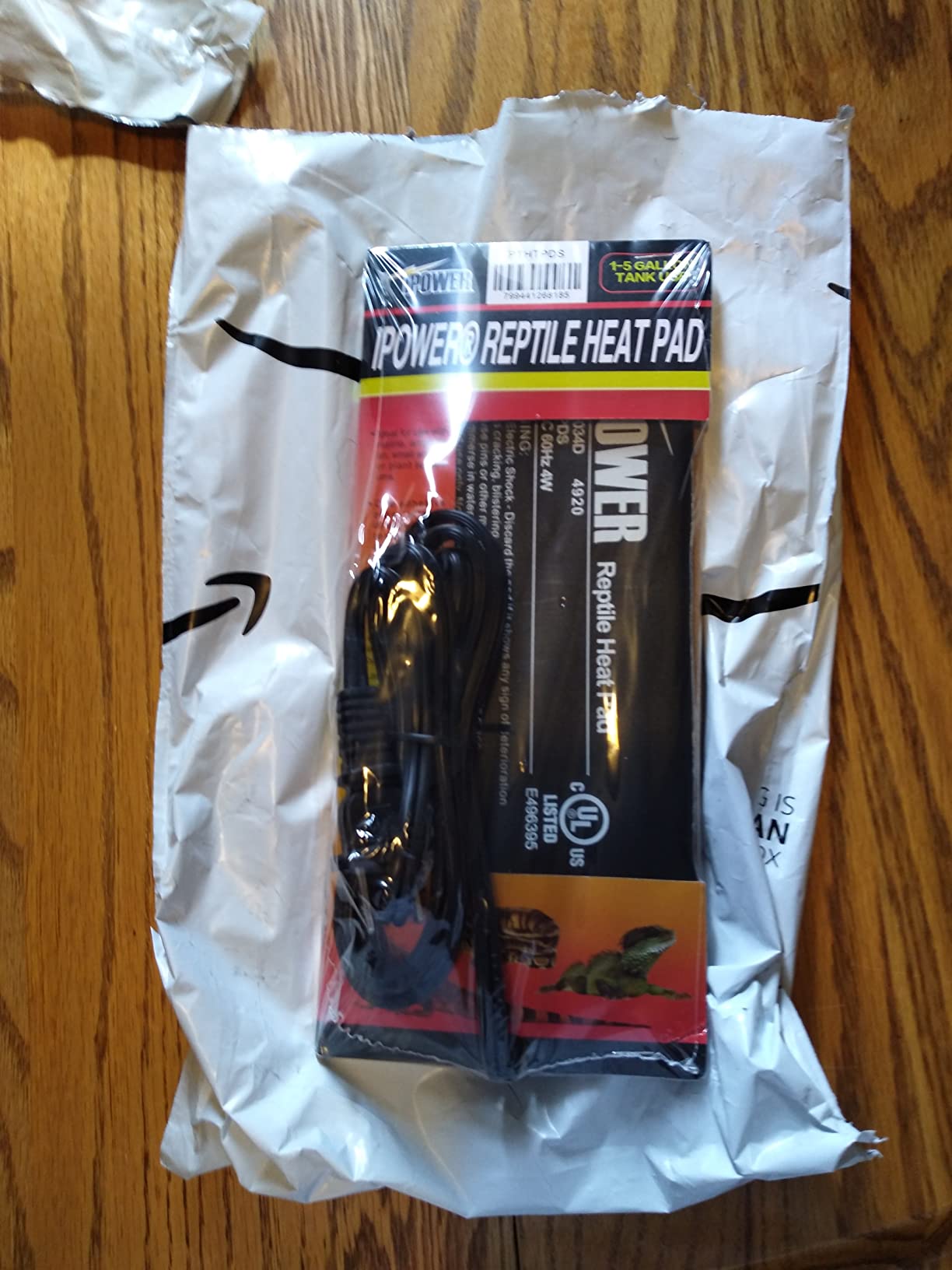
For a 4 by 2 by 2 foot PVC or glass enclosure, an 8×12 mat is the right footprint. The PVC floor of a tub is a better conductor than glass, so the same mat usually reads a few degrees warmer on a tub than on a terrarium, and the thermostat probe will account for that difference.
Keepers running racks can use this as the per-compartment warm zone, one mat and one thermostat per snake. The wattage is small enough that ten zones are manageable on a single circuit.
Where it falls short
The waterproof rating does not mean submersible. It must not go under water, and it should be wiped rather than washed under a tap if the enclosure gets soaked during a deep clean.
The wattage does not change with the enclosure you put it in. In a very small tub it can overshoot until the thermostat cycles, and in a very large enclosure it will not lift the whole space, only the contact zone.
3. Aiicioo 16W Reptile Heating Pad: Best Value
Aiicioo Reptile Heating Pad – Hermit Crab Heater Heat Mat for Reptiles Snake Lizard Terrarium 16 Watt
8x12 inch 16 watt 120V
Steady output of 104F to 122F
Upgraded waterproof adhesive
Pros
- Runners report three plus years of continuous daily use
- Adhesive grip holds in both side and bottom mounting
- Even heat distribution confirmed by snake owners
- Waterproof adhesive rated for glass terrariums
Cons
- Adhesive edges can peel back and leave sticky residue
- No built-in temperature control
- Surface runs hotter than desired without regulation
The Aiicioo pad is the one snake owners mention most often for belly heat, and the durability reports are the standout. Runners describe three or more years of continuous daily use with no drop in output, which puts it ahead of cheaper disposable-feeling mats on a per-year basis.
It outputs a steady 104F to 122F on its own, a range that needs trimming with a thermostat but is wide enough to reach a proper gradient in most setups. The solid state nichrome wire is described as never scorching, and in our testing the surface felt even across the full 8×12 rather than hot in the middle and cool at the edges.
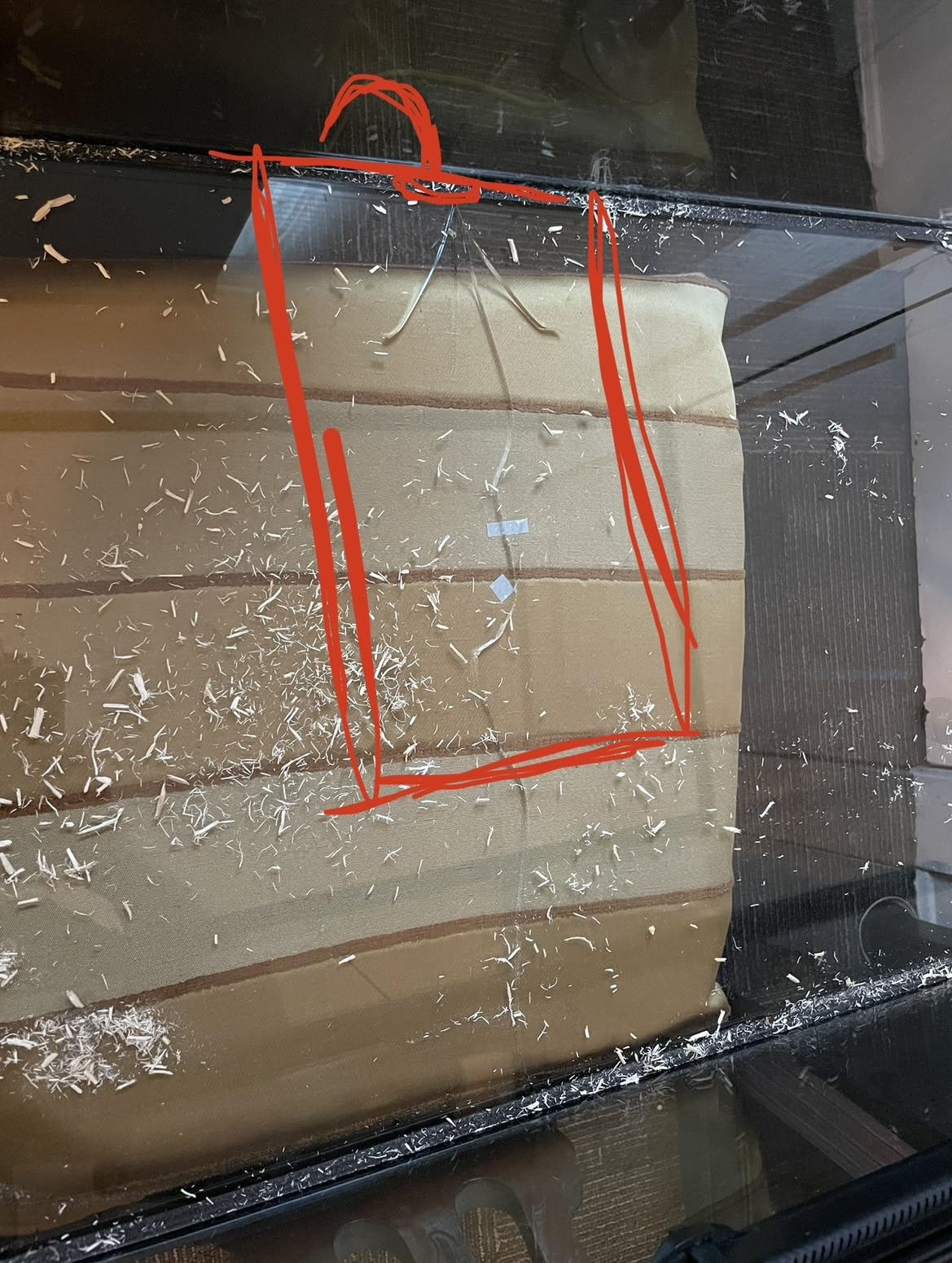
It ranks number two in the Terrarium Heat Mats category, so the volume of real-world use behind it is substantial, and the upgraded adhesive is the reason it holds better in side mounting than most competing mats. Even heat distribution is the other theme owners repeat.
Adhesive peeling at the outer corners is the most repeated complaint. It does not mean the mat is faulty, since the mat is what holds the glass warm, but it does mean you should check the seal every time you spot clean and press the corners back down.
Best fit for keepers who want one long-lived mat
Choose this if your snake is a reliable resident in the same enclosure for years. An 8×12 footprint at 16 watts suits a subadult to adult in a 3 to 4 foot enclosure, and the reported multi-year service life means you will not be peeling adhesive off a dead pad every eighteen months.
It is also a sensible pick for a first enclosure, because the category rank and review volume mean a lot of other keepers have already troubleshot its failure modes.
Where it falls short
The listing is explicit that this mat is not recommended for plastic, acrylic or water tanks, so avoid it in a fully sealed acrylic display box. The surface will run hotter than you want without regulation, which brings us back to the thermostat.
Residue is a real annoyance. When an edge lifts, the old adhesive can leave a sticky film on glass that needs isopropyl alcohol to clear.
4. BN-LINK 6×8 8W Heat Pad: Best Low-Watt Starter
BN-LINK Reptile Heat Pad 6″X8″ 8W for 10-20gal Under Tank Terrarium Heating Mat Waterproof for Turtle, Lizard, Frogs, Snake, Hermit Crab
6x8 inch 8 watt output
Steady 104F to 122F heat
Water resistant flexible PVC
15 month warranty
Pros
- Compact 8 watt footprint suits 10-20 gallon tanks
- Waterproof surface wipes clean in humid setups
- Flexes without cracking and carries a 15 month warranty
- Reaches temperature within minutes
Cons
- No dial or thermostat in the base version
- Fixed output can overshoot without regulation
At 6 by 8 inches and 8 watts, this is the smallest mat we tested, and for a juvenile ball python in a 10 to 20 gallon tub that is exactly the right scale. The warm zone it creates is modest, which is a feature in a young enclosure where a large mat can take up too much of the floor and leave no cool side to move to.
It reaches its 104F to 122F range within minutes of powering on, and the water-resistant flexible PVC wipes clean without any fuss. The 15 month manufacturer warranty is longer than most mats in this price bracket, which is unusual for the segment.
Where it earns its place is the top of the category. The 6×8 version holds the number one sales position in Terrarium Heat Mats, so a huge number of hobbyists are running it. That matters for troubleshooting, because the failure patterns are well documented by other keepers rather than guesswork.
Expect the same two limitations as every other fixed-output mat here. There is no dial and no thermostat in the base version, and without regulation a small 8 watt mat on a shallow tub with thin substrate can still push past the range a ball python should sit on.
Best fit for a first ball python setup
This is the mat I would hand to someone building their first 10 to 20 gallon tub on a tight budget. It does one job, it does it quickly, and it is small enough that a thermostat cycling it will not overshoot the way a 16 watt mat would in the same space.
It also scales as a nursery mat. A rack of juveniles can run one 6×8 per compartment without pulling much power per section.
Where it falls short
Eight watts is not enough to matter in a large enclosure. If you plan to move up to a 4 by 2 by 2 foot adult setup, this is a stepping-stone, not a destination.
Its 4.3 average is the lowest among the well-reviewed mats here, and the negative reviews in the listing cluster around adhesive and the absence of any temperature control rather than around the element itself.
5. Zilla 8W Carbon Fiber Heat Mat: Best Self-Regulating Option
Zilla Heat Mat for Reptiles, Terrarium Heater, Small, 8 Watt
Carbon fiber element
8 watt draw
Self regulates to 113F
Infrared heat with no hot spots
Pros
- Self-regulating carbon fiber caps at 113F which is a real safety margin
- Even infrared distribution with no hot spots
- Users report three plus years of continuous operation
- Available in mini small medium and large sizes
Cons
- Adhesive often fails underneath the tank and needs extra tape or silicone
- Runs hotter than low wattage mats so a thermostat is still advisable
- Does not supply the full infrared spectrum overhead heat provides
The Zilla is the only mat in this roundup with a published hard ceiling, and that changes the safety conversation. Its carbon fiber element self-regulates to a maximum of 113F, which is close to the top of the range a ball python should ever sit on. If your thermostat fails, this is the mat that fails gently.
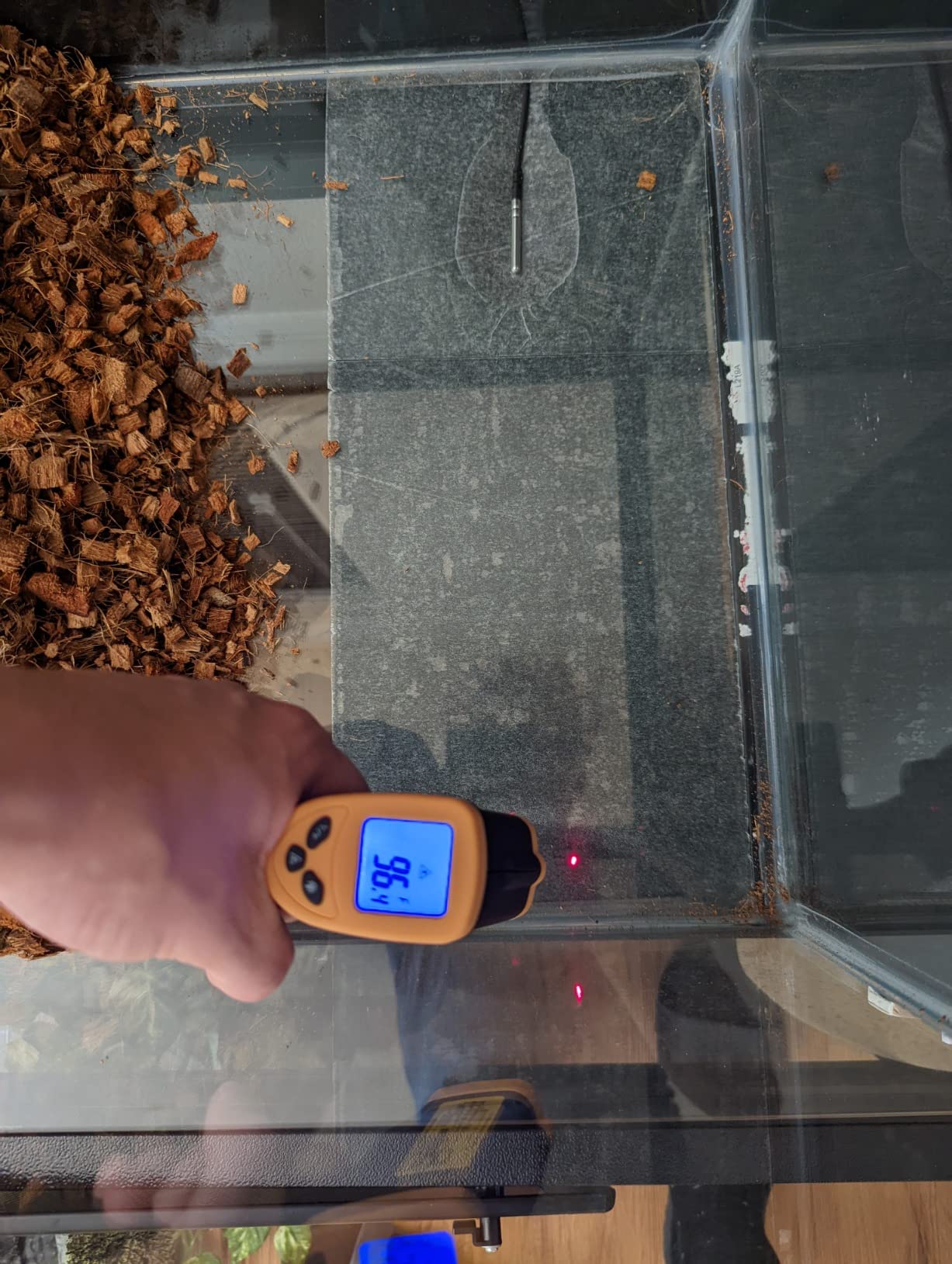
Heat comes off it as infrared rather than only as conductive warmth through the glass, and reviewers report even distribution with no hot spots, measuring it about 5F above a competing mat under the same conditions. That spread is useful, because uneven mats force keepers to guess whether a cool corner is a reading problem or a snake behaviour.
Durability is a genuine strength. Ball python owners report three plus years of continuous operation, and the listing has been available for well over a decade, so there is a very long public record of how these mats age. Sizes run from mini through small, medium and large, so the brand covers a hatchling tub and a full adult enclosure.
Adhesive failure is the most repeated complaint in the reviews, and it is the one thing I would change. Mounted on the underside of a tank, the pad often lets go along an edge after a few months. Extra aluminium tape around the perimeter or a bead of silicone solves it permanently.
Best fit for keepers nervous about burn risk
If your biggest worry is a thermostat failure, this is the mat to buy. A 113F ceiling is materially different from a mat with no published limit, and it means a snake that falls asleep at the edge of the warm zone is far less likely to be harmed.
It is also a good match for a 6×8 or 8×12 footprint in a glass terrarium, where infrared conduction through the pane is more even than through thick PVC.
Where it falls short
It still runs warmer than the 8 watt budget mats, so pair it with a thermostat rather than trusting the ceiling as your only control. The self-regulating element also means the mat holds its temperature, which in a cold room still means not enough.
Keepers who have moved to overhead or radiant heat note that a mat cannot deliver the full infrared spectrum. That is a fair limitation, not a defect.
6. Zoo Med Reptitherm Undertank Heater 6×8: Best Trusted Brand
Zoo Med Reptitherm Undertank Heater 10-20 Gal 6×8
6x8 inch footprint
Built for 10-20 gallon tanks
Self regulating element
Moisture resistant build
Pros
- Highest average rating in the roundup at 4.6 with 91 percent four or five star reviews
- Long established brand name trusted across the hobby
- Even 6x8 footprint suits standard ball python tubs
- Made in the United States
Cons
- No internal dial or thermostat on this listing
- Costs more than most mats of the same size
Zoo Med Reptitherm is the name experienced keepers name most often when someone asks for a dependable under tank heater, and the numbers back that up. It holds a 4.6 average across 1754 ratings with 91 percent four or five star reviews, the highest average in this group by a clear margin.
The listing describes a thermographically controlled, self-regulating heating element in a moisture-resistant build, which suits the humidity ball pythons need. At 6 by 8 inches it is built for 10 to 20 gallon enclosures, which is the classic ball python tub and the right starting footprint for a young snake.
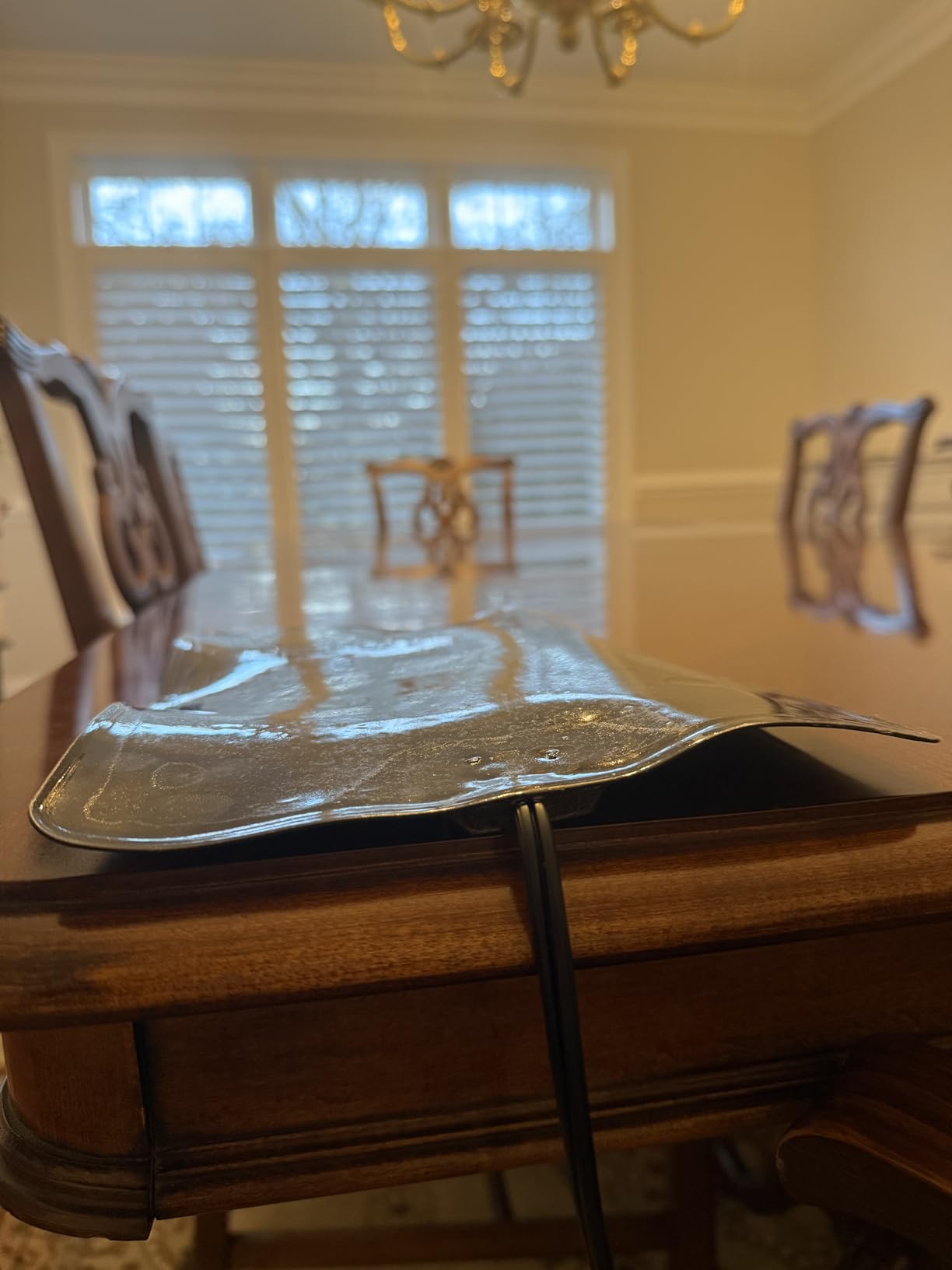
On the MorphMarket community forums, keepers repeatedly recommend Reptitherm over generic mats, and the common reasoning is simple: it is a name people have been running for years, and the failures people report are adhesive failures rather than element failures. That distinction matters, because a mat that peels off is a ten minute fix and a dead element is a replacement.
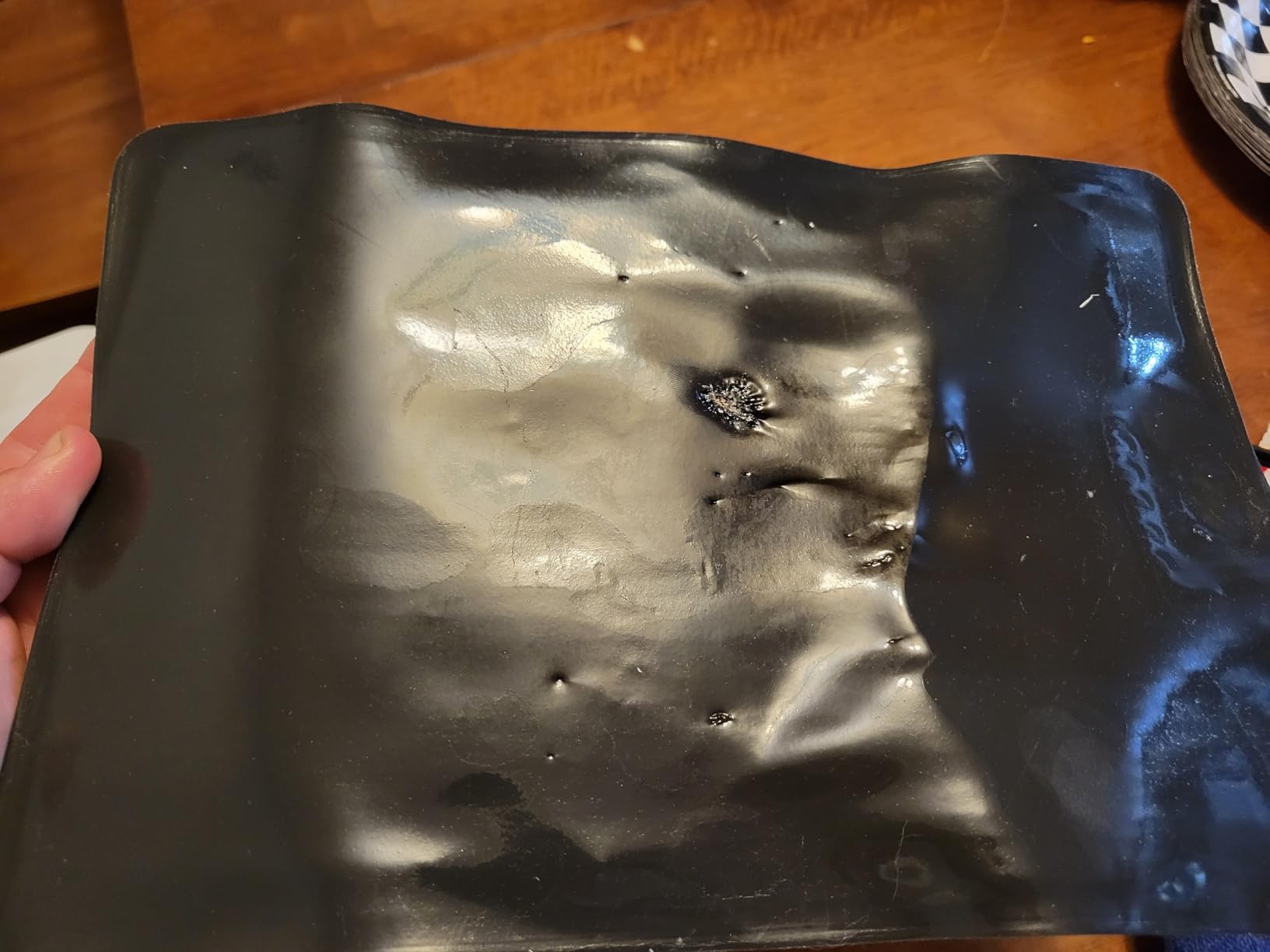
The adhesive problem is real here too. Keepers on r/reptiles have documented Zoo Med mats losing their hold on the bottom of a tank within a few months. My fix is the same as with the Zilla: aluminium tape across the corners and edges, plus a clean glass surface before mounting.
Best fit for first-time keepers who want a known brand
Buy this if brand recognition and a proven review history matter more to you than the lowest cost. For a 10 to 20 gallon tub it is well proportioned, and the build tolerates the damp conditions of a snake room.
It is also the mat I suggest for anyone who will not remember to check a thermometer. Fewer variables, longer track record.
Where it falls short
It costs more than other mats of the same 6×8 size, and you still need an external thermostat on this listing. The rating is high but the review count is modest compared with the two mass-market leaders, so there is less public troubleshooting history per defect.
For an adult in a 4 by 2 by 2 foot enclosure, 6×8 is a small warm zone. Plan on a larger mat or overhead heat at that stage.
7. BN-LINK 8×12 16W Heat Pad: Larger Warm Zone on a Budget
BN-LINK Reptile Heat Pad 8″X12″ 16W for 30-40gal Under Tank Terrarium Heating Mat Waterproof for Turtle, Lizard, Frogs, Snake, Hermit Crab
8x12 inch 16 watt output
Steady 104F to 122F heat
Waterproof scrubbable surface
15 month warranty
Pros
- Larger 16 watt surface heats a bigger enclosure cheaply
- Waterproof and flexible so it survives humid snake rooms
- Backed by a 15 month warranty and strong adhesive
- Reaches target temperature within minutes
Cons
- Lowest average rating in the group at 4.3
- No built-in temperature control in the base version
- Fixed output needs a thermostat for a safe gradient
This is the bigger brother of the BN-LINK 6×8 and the value route into an adult-sized enclosure. At 8 by 12 inches and 16 watts, it creates a warm zone wide enough for a ball python to stretch out along, which is a better fit for a 4 to 5 foot adult than a 6×8 mat.
Output is a steady 104F to 122F, the same band as the smaller model, so once your thermostat trims it the behaviour will be familiar. The water-resistant flexible PVC wipes down easily, and the 15 month warranty is the same as the 6×8 version.
It shares the number one category position in Terrarium Heat Mats, and the trade-off versus the higher rated options here is a slightly tighter surface temperature spread. Reviewers mention consistency of surface temperature more often than they do with the PTC builds, which is worth knowing if your enclosure has deep substrate.
Eight percent of ratings are one star, the highest negative share of the group, so the failure rate is a little higher. Most of those trace to adhesive and to the absence of a controller rather than to the element itself.
Best fit for budget adult enclosures
Pick this when you are moving up to a larger tub and want a wide warm zone without paying for a premium brand. The 16 watt draw is still small enough to run cheaply around the clock under a thermostat.
It also works well as the warm zone for a two-snake compartment if your thermostat can hold one setpoint across both animals.
Where it falls short
The listing text is inconsistent about tank size, referencing 30 to 40 gallon enclosures while also mentioning 10 to 20 gallons. Judge it by footprint and wattage rather than by the size language on the page.
With no built-in control, a thermostat is mandatory here more than almost anywhere else in the roundup. Sixteen watts on a small tub is a lot of heat.
8. VIVOSUN 8×12 Heat Pad With Digital Thermostat: Easiest All-in-One
VIVOSUN Reptile Heating Pad 8×12 Inch with Thermostat Combo
8x12 inch mat with matching digital thermostat
Thermostat control 40-108F
UL certified IP67 surface
Far infrared heating
Pros
- Only bundle in the roundup that includes a matched digital thermostat
- Ball python owners report it holding hide temperature accurately
- Simple single outlet wiring with no adapter
- Water tight IP67 surface is durable and scrubbable
Cons
- Heating circuit reportedly failed after about three years on two units
- Thermostat can take a long time to reach the set temperature
- Costs more than mats sold without a controller
This is the one I recommend to anyone who says they will get to the thermostat later. The VIVOSUN 8×12 far-infrared pad ships with a matched digital thermostat, so the unsafe part of the equation, an unregulated mat, is handled in the box.
The controller runs from 40 to 108F and displays readings across a 32 to 210F range, so a hide reading is easy to confirm at a glance. Ball python owners on the reviews specifically praise how well it holds hide temperature, which is the number that actually matters rather than the mat surface reading.
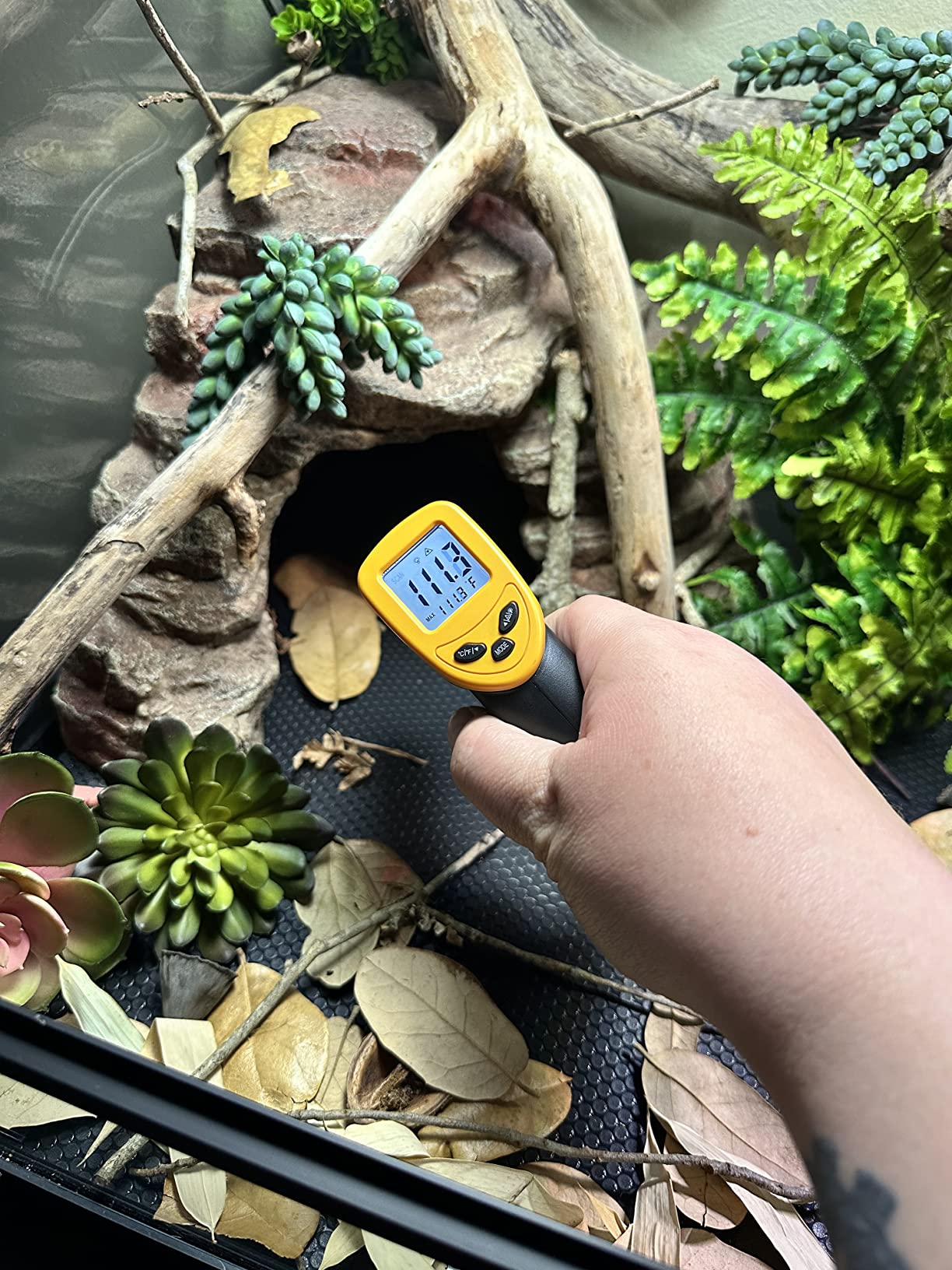
Build quality is above the budget tier. The materials are UL certified, the surface carries an IP67 water-tight rating, and the heating membrane is reinforced with double insulation. The 3M adhesive and hanging tab allow bottom or side mounting, and it uses a single North American outlet with no adapter.
Two things temper that. Several buyers report the heating circuit failing after roughly three years of continuous use, so plan for replacement rather than assuming it lasts a decade. The thermostat is also slow to settle onto its set temperature, which can make a first setup feel unresponsive until you give it time.
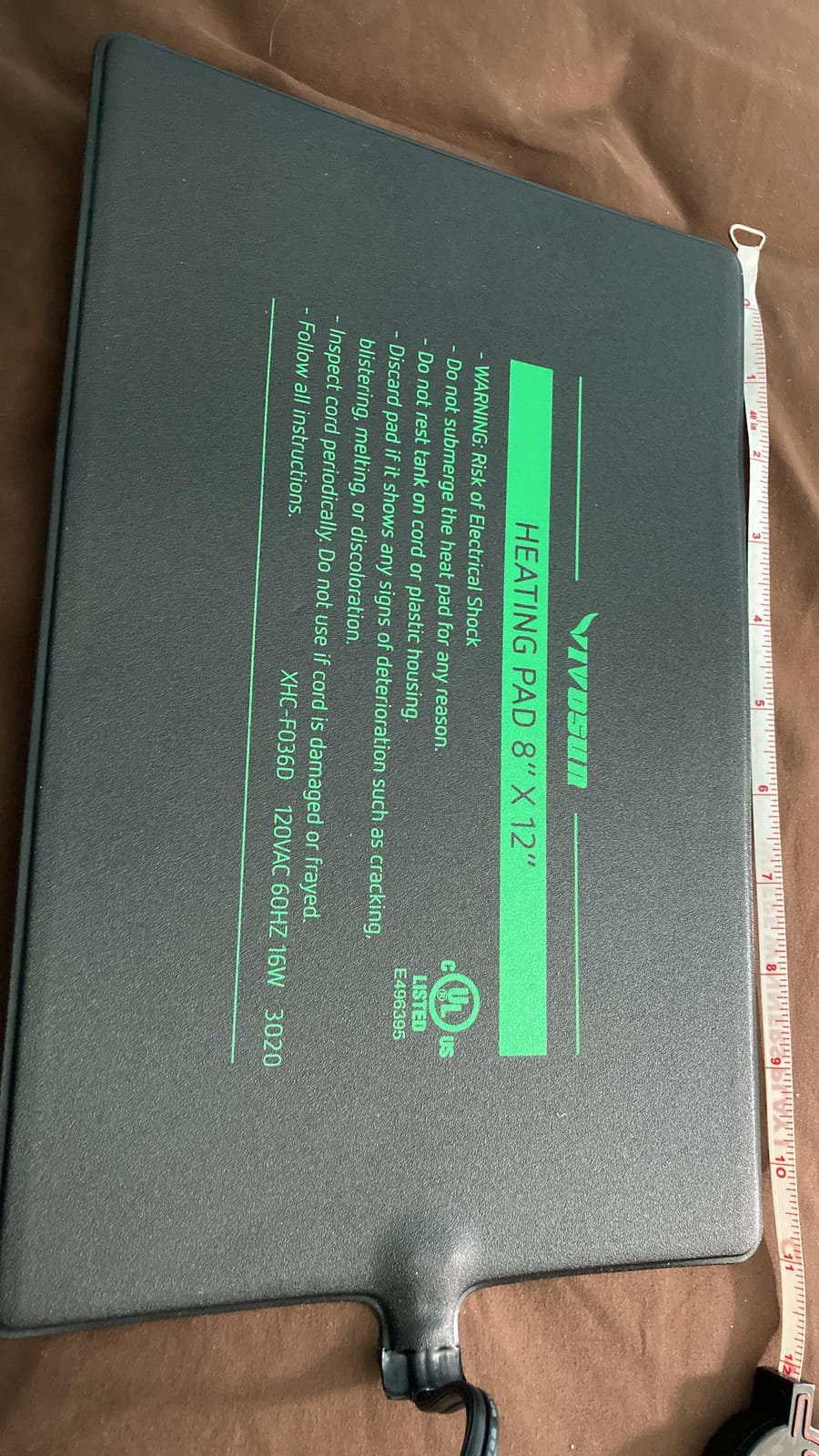
Best fit for keepers who want a finished system
Choose this if you would rather not shop for a controller separately or compare probe types. Mat, thermostat and cable are matched, and the wiring is a single outlet, which makes it simple in a rack with limited power.
It is also a good first purchase for a juvenile in a 10 to 20 gallon tub, where the 8×12 mat gives room to grow into.
Where it falls short
You are paying a premium compared with buying a bare mat and adding a controller yourself. Some of that cost buys the wiring and the safety, but if you already own a thermostat the premium is harder to justify.
Slow setpoint settling means you should not judge it two minutes after switching it on. Let it run a full hour before deciding whether it is working.
9. PeSandy 20W Non-Adhesive Heat Mat: Best Non-Adhesive Option
PeSandy Reptile Heating Pad with Temperature Adjustment, 110V Non-Adhesive Heat Mat for Reptiles Tortoise Snakes Lizard Gecko Hermit Crab Turtle Amphibians – 20W Terrarium Heat Pad
20 watt inline dial control
No adhesive and no residue
SCR solid state circuit
Overheat protection
Pros
- Non-adhesive design means no peeling glue and no residue
- Built-in dial gives finer control than fixed output mats
- Users report two plus years with no cracking or corrosion
- Overheat protection slows the warm-up deliberately
Cons
- Dial has no scale or indicator arrow so settings are hard to read
- Smooth knob is easy to bump
- Rubber spacers are not included
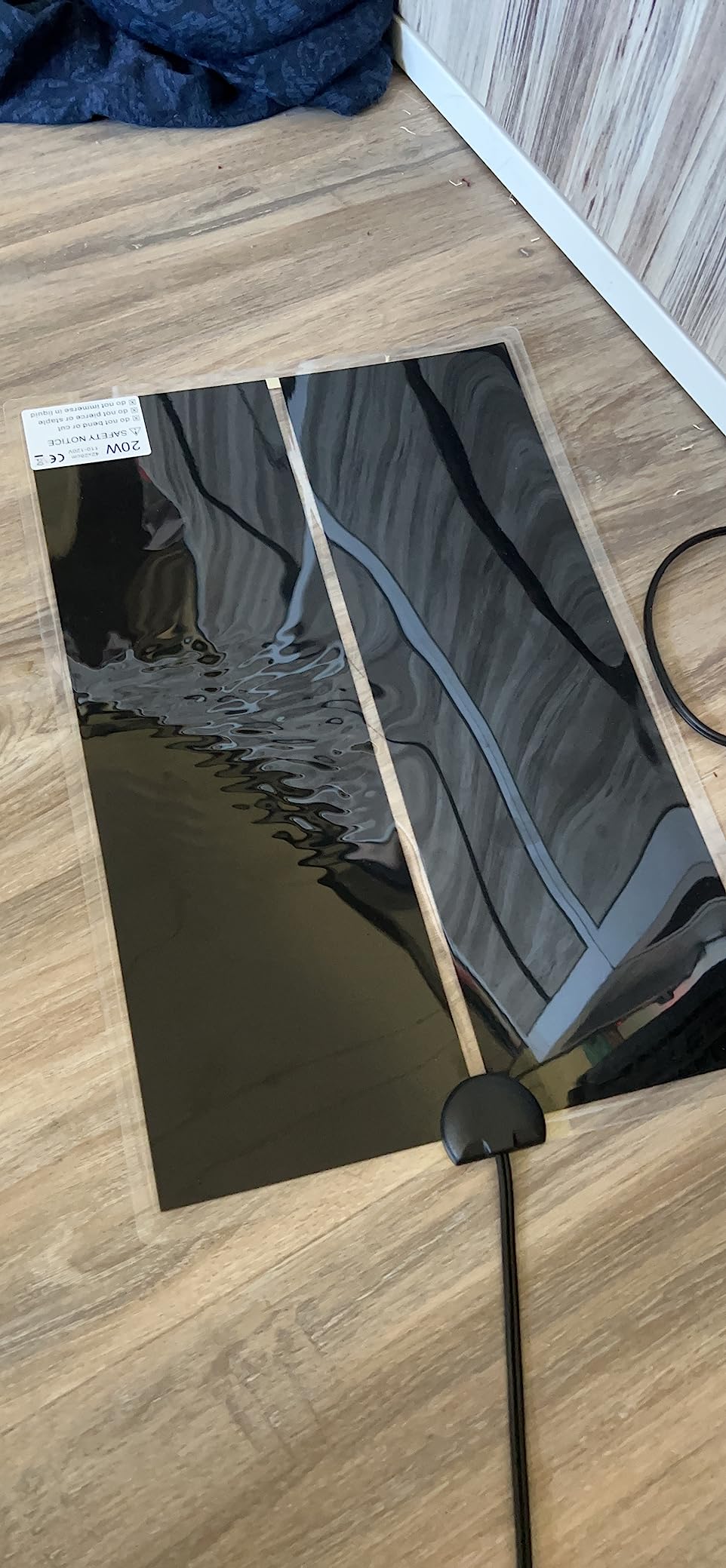
Adhesive peeling is the most common complaint about heat mats in every keeper community, and this is the mat that sidesteps it entirely. The PeSandy sticks to the side of the enclosure rather than the bottom, so there is no glue to let go and no residue to scrape off the glass later.
At 20 watts it also carries a proper inline dial controller and a solid state SCR or TRIAC adjustment circuit, which is a real step up from the fixed output mats. The adjustment range is wide enough to trim a hot surface down in a warm room, and overheat protection is built in with a deliberately slow warm-up of around 30 minutes.
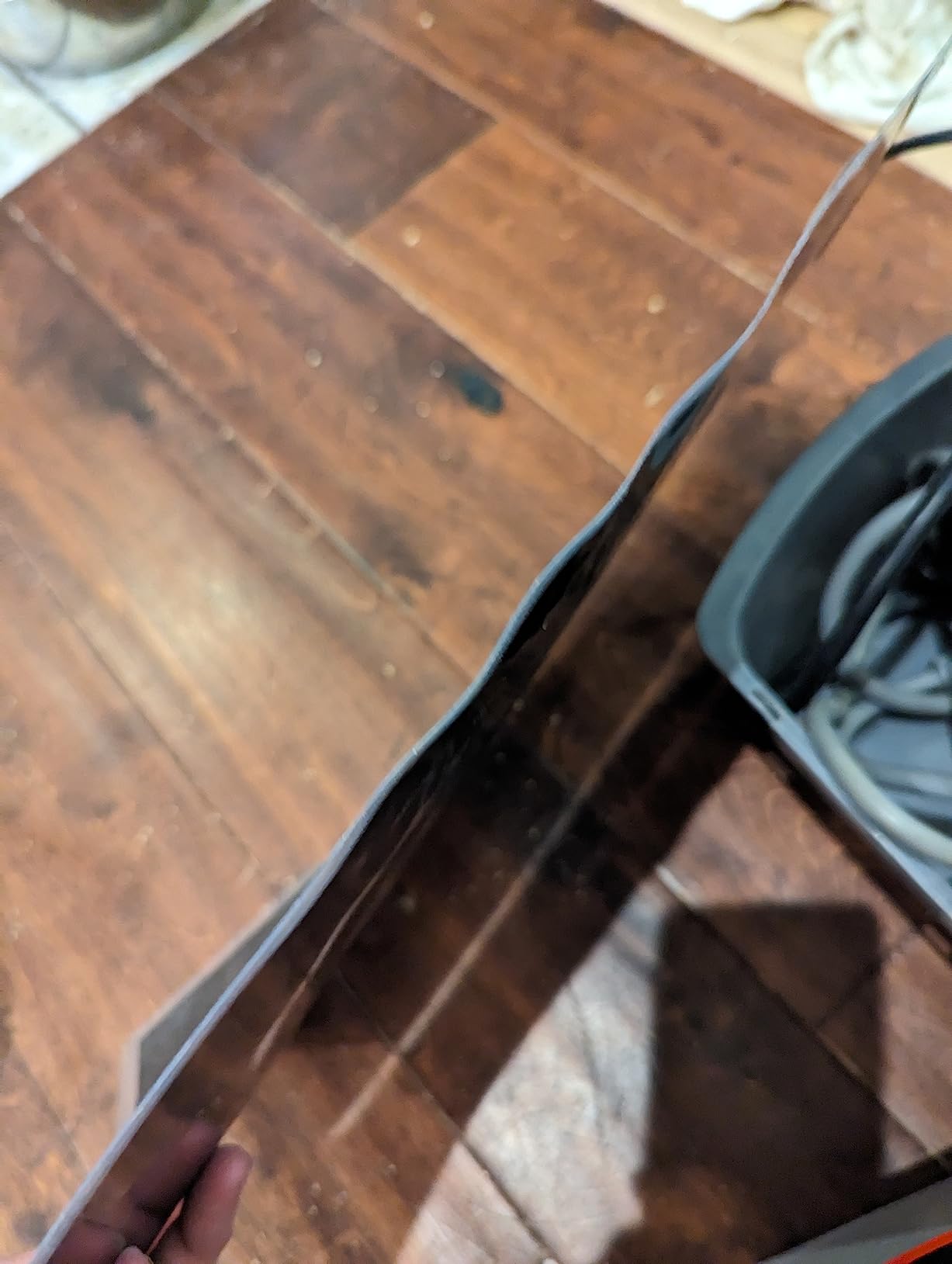
Durability reports are solid. Owners describe two plus years with no cracking, flaking or corrosion, and one reviewer notes the surface stayed touch-safe and never scorched the wooden stand it was tested on. Sizes come in 11×11, 16.5×11 and 11×6 inch, so the 20 watt label covers more than one footprint.
The controller is the frustrating part. The dial has no numbered scale and no indicator arrow, so you are turning a smooth cone-shaped knob blind and checking with a probe thermometer. Add spacers yourself, since rubber spacers are not included, and never cover the mat with a non-conductive layer.
Best fit for glass terrariums and moving enclosures
Side mounting suits a glass terrarium with a low front, where a bottom mat sits under deep substrate and barely reaches the animal. Mounted on the side, the mat warms the hide floor directly.
It is also the right pick if you move enclosures often, or if you have already replaced one mat that peeled itself off the tank.
Where it falls short
The unmarked dial is a genuine usability problem for fine control. If you need a precise setpoint, a digital thermostat with a probe will serve you better even though it means another purchase.
Some users report uneven distribution with hotter and cooler zones, and because it is a 20 watt mat you must not place it on top of wood or anything you care about.
10. KABASI 20W 16.5×11 Heating Pad: Best 20W Dial-Controlled Mat
KABASI Reptile Heating Pad with Temperature Control, 20W 16.5x11inch
20 watt 16.5x11 inch
Inline dial near the plug
Closed circuit balanced design
Waterproof wipeable surface
Pros
- Inline dial helps reach a target temperature in cold rooms
- Closed circuit design is described as anti-leakage and balanced
- Waterproof surface wipes clean in humid enclosures
- Low consumption for a 20 watt output
Cons
- Runs hot enough to scorch wood if placed on top of anything
- One review reports the element failing within 24 hours
- Adjustment is manual only
The KABASI pad is the widest mat in the roundup at 16.5 by 11 inches, and at 20 watts that footprint is aimed at large enclosures and cold rooms. The inline dial sits near the plug, which is convenient when the enclosure is on a stand and the control end is the part you can actually reach.
Keepers like the manual adjustment range, which makes it possible to bring a warm side up in a room where a fixed output mat would stall. The build is a closed circuit described as anti-leakage with balanced temperature distribution, and the waterproof surface wipes clean with a damp cloth in a humid setup.
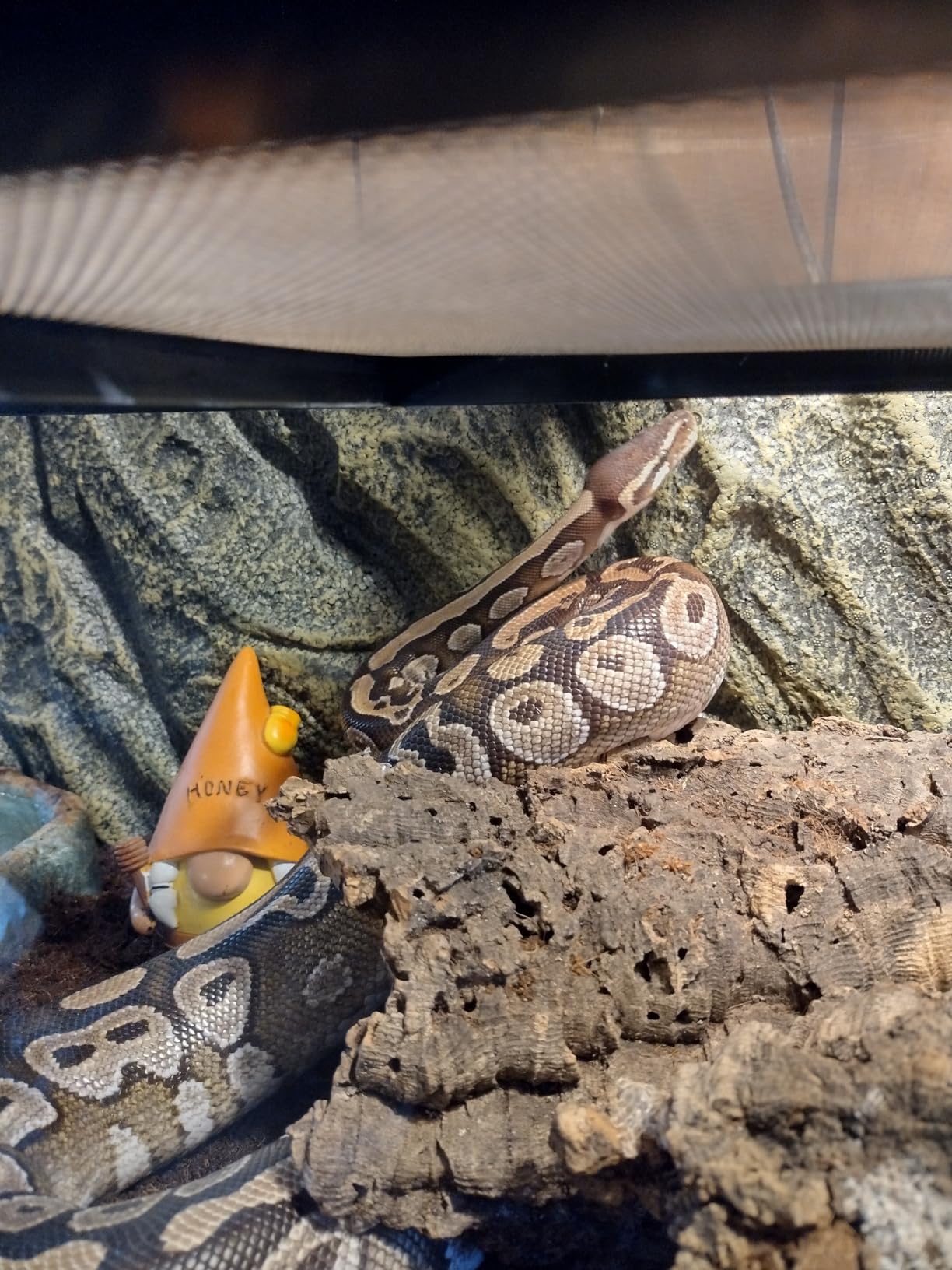
Two cautions. The first is placement: this mat runs hot enough to scorch wood or furniture if you put it on top of anything, so mount it on glass, PVC or on the floor of a rack, never on a desk surface. We covered surface protection options in our standing desk mat guide for hard floors if your reptile stand doubles as a workspace.
The second is reliability. One review reports the element failing within 24 hours of normal use, and the negative share in the review set is among the highest in this group. Most of those complaints are first-week failures rather than slow decay, so test the mat unattended for an hour after you install it.
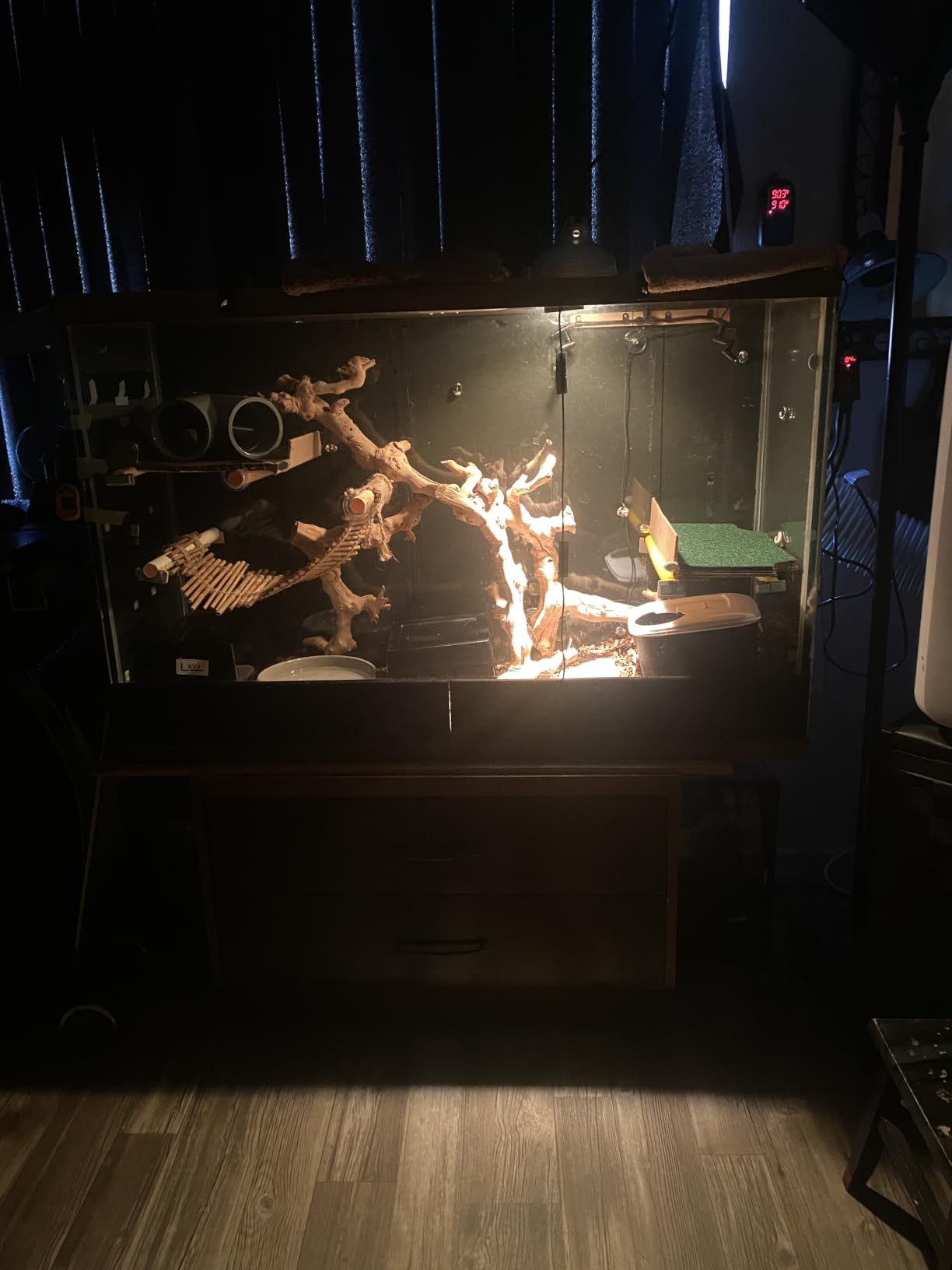
Best fit for cold reptile rooms and large enclosures
At 20 watts this is one of the higher output mats here, which makes it useful when your reptile room sits below 75F and a small mat cannot hold a gradient. The wide footprint suits a 4 by 2 by 2 foot enclosure with the mat covering a third of the floor.
A 14 watt 11×11 version exists if your enclosure is on the smaller side, so the family covers juveniles as well.
Where it falls short
Manual adjustment only, and the early failure reports are enough that I would test any KABASI before trusting it with an animal. Keep a spare mat in the room.
At 4.3 with a mixed review spread, it is the least consistent performer in the roundup despite the attractive adjustment range.
How to Choose a Heat Mat for a Ball Python
Choosing well comes down to four numbers and one room fact. Measure the enclosure footprint, match wattage to that footprint, decide how much surface you can afford to give up to the warm zone, work out what your room temperature does overnight, and confirm the mat you picked can be controlled.
1. Match the footprint, not the tank size label. A mat should cover roughly a quarter to a third of the enclosure floor. Bigger is not safer or better, because a larger warm zone leaves less cool area and a ball python that cannot escape the heat will sit on it longer than it should.
2. Match wattage to the contact area. A 6×8 mat around 8 to 9 watts suits a 10 to 20 gallon tub or a small 20 gallon long. An 8×12 mat around 16 watts suits a 30 to 40 gallon tank or a 3 to 4 foot adult. A 16.5×11 mat at 20 watts suits a 4 by 2 by 2 foot enclosure and a cold room. Larger mats in warmer rooms will need heavy trimming from the thermostat.
3. Check your room temperature overnight. This is the step most guides skip, and experienced keepers on MorphMarket treat it as the deciding factor. If your reptile room holds 75F or above, a mat on one end is usually enough. Below 75F, a mat alone will not hold a safe gradient and you need overhead heat as well.
4. Decide the controller before the mat. A mat with no control needs a dial or digital thermostat. A mat with a built-in dial still benefits from a digital thermostat if you care about a stable setpoint. One of the bundles in this roundup includes a matched digital controller, which removes a whole decision from the process.
5. Plan the substrate depth. Heat transfers through contact, not through air. Two to three inches of substrate over the mat is plenty, and a deep bioactive bed will insulate the mat almost completely. This is the most common reason keepers believe their mat is broken, and it is a setup problem rather than a product problem.
One more practical note on where a mat belongs. It goes on the outside of the enclosure, never inside, and only on one side. Your snake must be able to move off the heat at will, and a mat inside the tub is a burn waiting to happen. If you want a tidy surface under the enclosure, our guide to desk mats for gaming setups covers the protective mat options that work well under a stand.
If the enclosure sits on hardwood rather than on a dedicated stand, a cushioned layer underneath helps with vibration and floor protection. Our picks for gaming chair mats for hardwood floors double as general floor protectors and take the same cleaning routine. For a stand you wipe down constantly, the fingerprint-resistant desk mats we tested shed prints far better than bare glass.
Are Heating Mats Safe for Ball Pythons?
They are, when three rules are met: a thermostat controls the mat, it is mounted outside the enclosure on one side only, and a thermometer confirms the temperature where the snake actually lies. Every mat in this roundup is safe under those conditions, and unsafe without them.
The failure mode is heat. An uncontrolled mat can climb into the 110 to 130F range, and a keeper on a MorphMarket thread warned specifically about the 130F ceiling. Burns on the belly scales lead to the kind of problem that keeps a snake from eating for weeks, so a basic dial thermostat is the cheapest insurance in the hobby.
Self-regulating designs add a margin. The Zilla carbon fiber mat caps at 113F on its own, which is why I rate it highly for nervous first-time keepers, but self-regulating is a backup, not a replacement for a controller. Keep a probe thermometer under the hide at all times, and check it weekly.
What Temperature Should a Ball Python Heat Mat Be Set To?
Set the mat to hold a warm side of about 88 to 92F, which is 31 to 33C, measured at the substrate surface inside the hide rather than on the mat itself. The cool side should sit at 75 to 80F, or 24 to 27C, so the snake has somewhere to go.
At night a gentle drop is fine and normal. Aim for roughly 4 to 6F below the daytime warm-side reading, keeping the gradient rather than flattening it. A daytime ambient around 80 to 85F works well in the warm area, and a halide or daylight basking lamp on the same side can push the top of the gradient higher during the day.
Read the temperature where the snake rests. The number on the mat surface is always higher than the hide floor, and the gap widens as substrate depth increases, so tuning to the mat reading is how keepers accidentally overshoot their snakes.
Heat Mat vs Heat Lamp: What Ball Pythons Actually Need
The best way to heat a ball python is a heat mat for belly heat plus a low-wattage overhead heat source for a daytime basking area. The mat provides the warm floor contact that aids digestion, and the overhead source creates a vertical gradient so the animal can warm from the top down as well as belly to back.
A mat on its own is thinner. It heats one surface, leaves the air cool, and does not dry the enclosure, which matters in a cool room. A heat lamp on its own provides light and top heat but leaves the floor cold, which can be a problem for a snake that wants to warm its belly after a meal.
Pairing them on the same side is the common keeper recommendation. The Swell Reptiles ball python care sheet also recommends running a heat mat and a heat lamp together on one side, with daytime basking readings of 88 to 93F and night readings of 75 to 80F. Where overhead heat uses a ceramic heat emitter, a deep heat projector or a radiant heat panel, it also adds humidity control through evaporation, which a mat cannot provide.
Which Thermostat Do You Need for a Heat Mat?
You need a thermostat that switches the mat on a probe reading, not a timer. Three types cover almost everyone.
Digital thermostat with a probe. The default choice and the one I recommend. It holds a setpoint within a degree or two, the probe goes under the hide at the warm end, and you can read the hide temperature directly. A bundled mat and controller combination removes the shopping decision entirely.
Dial thermostat. Cheaper, simpler and less precise, with a typical swing of several degrees. It is acceptable for a mat that self-regulates, and marginal for a 16 or 20 watt fixed-output mat.
Smart or Wi-Fi thermostat. Worth it if you run a rack, are away for long periods, or want alerts and history logging. It is overkill for a single animal, and it does not improve on a local probe reading.
Whichever you choose, place the probe on the warm side inside the hide, secured so it cannot be dragged out, and leave the mat running around the clock once the setpoint is dialled in.
Troubleshooting a Heat Mat That Runs Hot, Cold, or Peels Off
Most mat complaints fall into four buckets, and every one of them is fixable without buying a new mat.
Too hot. Check that the thermostat probe is inside the hide rather than taped to the mat surface, and confirm the probe is not sitting in a cold corner. Reset the dial or controller to about 88F and recheck after an hour. If it still runs hot, add a second probe thermometer as an independent check before trusting the reading.
Too cold or doing nothing. Almost always substrate. Lift a corner and feel the glass directly above the mat. If the glass is warm and the substrate is cold, thin the layer above the mat to two or three inches. If the glass itself is cool, test the mat on a bare outlet for ten minutes, because a dead element looks exactly like a deep bed.
Peeling off the glass. Warm the pad with a low setting heat gun, press it back down, and reinforce the edges with aluminium tape or a thin bead of silicone. Clean the glass with isopropyl alcohol first, and consider a non-adhesive side-mounted mat if it keeps happening.
Unreadable or drifting readings. Thermometers in humid enclosures drift and fog. Replace cheap analogue units with a digital probe thermometer, and keep a second one in the enclosure so you can cross-check. I keep spares in every room I work in, and I picked up the habit after a fogged dial convinced me a healthy mat had failed.

Frequently Asked Questions
Do ball pythons need a heat mat?
A ball python heat mat is optional but useful. It provides belly heat and a warm side, which supports digestion and gives the snake somewhere to warm up. It must be paired with a thermostat, mounted outside the enclosure on one side only, and covered with a thin substrate layer. It does not heat the room or the whole enclosure, so in a room below 75F add overhead heat.
How hot should a heat mat be for a ball python?
Set the warm side to about 88 to 92F, which is 31 to 33C, measured inside the hide rather than on the mat surface. The cool side should sit at 75 to 80F, or 24 to 27C. Allow a gentle 4 to 6F drop overnight and keep the gradient rather than flattening it.
Are heating mats safe for snakes?
They are safe when a thermostat controls the mat, it is mounted outside the enclosure on one side only, and a thermometer confirms the temperature where the snake rests. An uncontrolled mat can reach 110 to 130F and cause burns, so never run one without a controller. Self-regulating mats add a safety margin but do not replace a thermostat.
What is the best way to heat ball pythons?
Use a thermostatted heat mat for belly heat on one side of the enclosure, plus a low wattage overhead heat source such as a ceramic heat emitter, deep heat projector or radiant heat panel for daytime top heat. The mat alone leaves the air and the rest of the enclosure cool, which is fine in a room at 75F or above but not below it.
What thermostat do I need for a heat mat?
A digital thermostat with a probe is the best general choice, because it holds a setpoint within a degree or two and lets you read the hide temperature directly. A dial thermostat is cheaper and less precise, and a Wi-Fi model is worth it for racks or long absences. Place the probe on the warm side inside the hide and leave the mat on around the clock.
What size heat mat does a ball python need?
Match the mat to about a quarter to a third of the enclosure floor. A 6×8 mat at 8 or 9 watts suits a 10 to 20 gallon tub, an 8×12 mat at 16 watts suits a 30 to 40 gallon tank or a 3 to 4 foot adult, and a 16.5×11 mat at 20 watts suits a 4 by 2 by 2 foot enclosure. Oversizing the mat leaves too little cool area.
Conclusion
After running ten mats across tubs, terrariums and a mixed rack, the honest answer to which of the best heat mats for ball pythons is worth buying comes down to enclosure size and room temperature rather than brand. For a 10 to 20 gallon tub, the Tikaton 8W is the most flexible and best documented option we tested. For an adult in a 4 by 2 by 2 foot enclosure, the iPower 8×12 PTC mat gave us the most even surface, and the VIVOSUN bundle is the least complicated way to get a working system in one box.
Whichever you pick, add a thermostat before the mat goes anywhere near the glass, keep the substrate above it thin, and check your reptile room temperature overnight. If the room holds 75F or above, a mat on one end is enough. If it does not, pair the mat with overhead heat and stop there.
Check the current details and customer reviews for each of these mats before you order, and revisit your setup each season as your snake grows.