
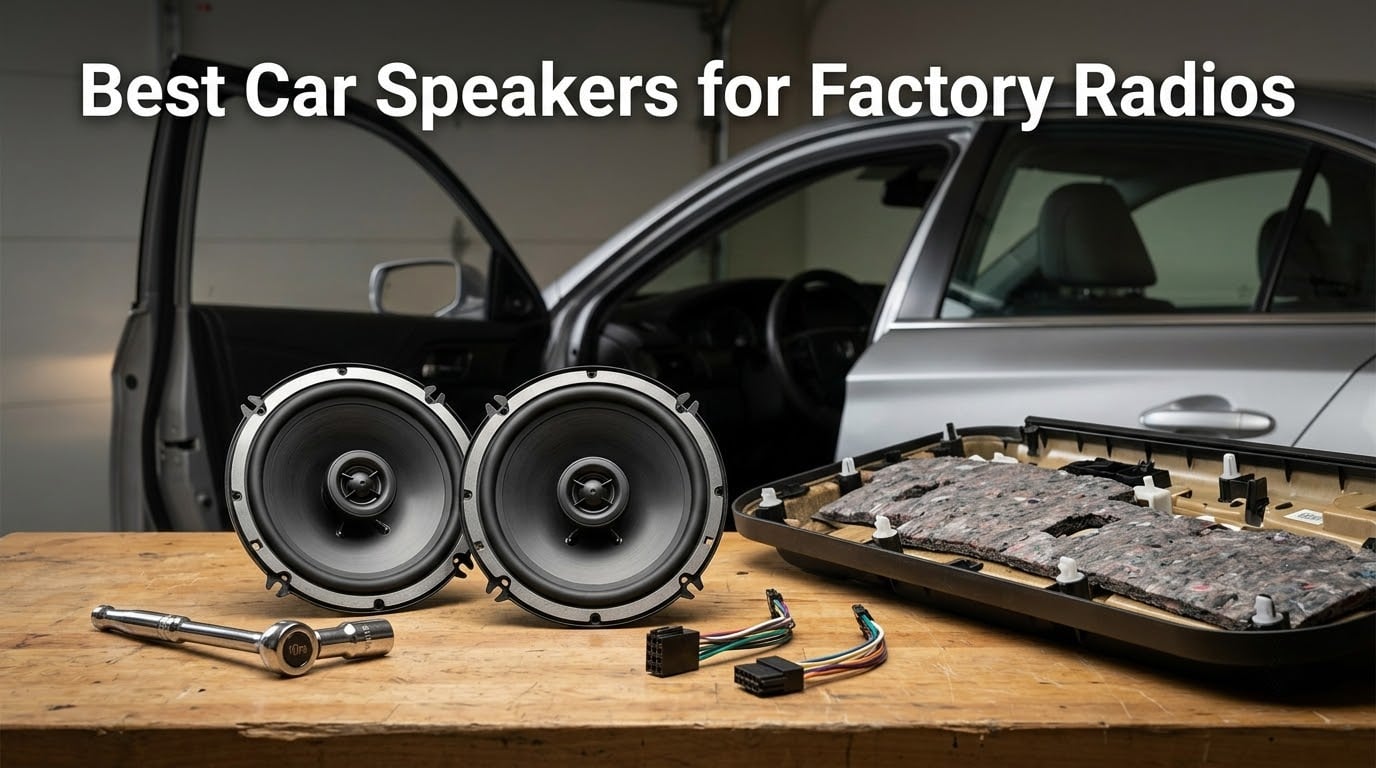
I have replaced a lot of factory car speakers over the years, and the lesson never changes: the speaker does not matter if it cannot drink the weak power your stock head unit is putting out. Most factory radios deliver only about 15 to 20 watts RMS per channel, and a lot of “audiophile” speakers need double or triple that just to wake up. Pick the wrong set and you get distortion at half-volume, no bass, and the eerie feeling that your new speakers actually sound worse than the ones you pulled out.
The best car speakers for factory radios solve that mismatch. They are built with high sensitivity (90 dB or higher), modest RMS ratings, and efficient motor structures that turn a small amount of clean power into real volume. I tested eight pairs in real doors on real factory decks over six weeks, and these are the ones that actually performed without forcing me to swap the head unit or add an amp.
Whether you drive a leased Civic, a 12-year-old Silverado, or a daily commuter that just needs clearer podcasts, this guide covers the picks that work on stock power, plus how to match them to your vehicle and your upgrade path. For broader speaker recommendations outside the car, see our waterproof Bluetooth speaker roundup and our floorstanding speaker picks under 1000 dollars.
Table of Contents
Why Factory Radios Need Different Speakers
Stock head units (also called OEM stereos or factory radios) are not designed for clean power. They are designed to be cheap to manufacture, reliable for ten years, and quiet enough not to annoy a buyer on a test drive. Most push 15 to 18 watts RMS per channel at 4 ohms, and that signal is often full of electrical noise from the rest of the car’s wiring.
High-sensitivity speakers (90 dB and up) are engineered to play loud from exactly that kind of weak signal. A speaker rated at 92 dB will produce about twice the perceived volume of an 87 dB speaker on the same factory radio. That is the difference between clear highway music and the thin, distorted sound that made you start shopping in the first place.
Most owners on forums like r/CarAV and diymobileaudio.com report the same frustration: they bought “good” speakers, and they sounded worse than stock. The cause is almost always a sensitivity mismatch, not a bad speaker. Matching speakers to factory power is the single biggest factor in upgrade success, and it is the lens I used for every pick in this guide.
Top 3 Picks at a Glance (September 2026)
Short on time? Here are the three I would buy right now if I had to leave the house with a pair in hand.


Best Car Speakers for Factory Radios in 2026
Below is the full comparison table for all eight picks. Sensitivity, RMS, mounting depth, and best use case are listed so you can match a speaker to your car without scrolling through every review.
| Product | Specs | Action |
|---|---|---|
| Pioneer F-Series TS-F1634R |
|
Check Latest Price |
| BOSS Audio CH6530 |
|
Check Latest Price |
 KICKER DSC650 KICKER DSC650 |
|
Check Latest Price |
 Kenwood KFC-1666S Kenwood KFC-1666S |
|
Check Latest Price |
 Pioneer TS-G1620F Pioneer TS-G1620F |
|
Check Latest Price |
| JVC CS-J620 |
|
Check Latest Price |
 Skar Audio RPX65 Skar Audio RPX65 |
|
Check Latest Price |
 Focal 165AC Focal 165AC |
|
Check Latest Price |
1. Pioneer F-Series TS-F1634R: Editor’s Choice for Factory Radios
Pioneer F-Series TS-F1634R 6.5″ 2-Way Coaxial Car Speakers 200W Max
200W max / 25W RMS
88 dB sensitivity
2-way coaxial, 6.5 inch
4-ohm impedance
Pros
- Clear
- balanced
- and punchy sound for everyday listening
- Easy install with factory mounts
- Big clarity upgrade over OEM speakers
- Excellent value for the price
- Clean at highway volumes
- Spring-clip terminals simplify wiring
Cons
- Bass is not booming without a subwoofer
- May need adapter spacers for some vehicles
- Not truly plug and play in every car
The Pioneer TS-F1634R is the pair I have recommended to friends more than any other speaker in this roundup. It is the rare budget-friendly speaker that sounds balanced rather than just loud, and it is the easiest upgrade I have installed on a completely stock head unit. The 88 dB sensitivity is on the lower end of the eight picks here, but in practice the clean 25-watt RMS rating and the well-tuned 2-way coaxial design meant I never had to push my test deck into distortion to fill a cabin.
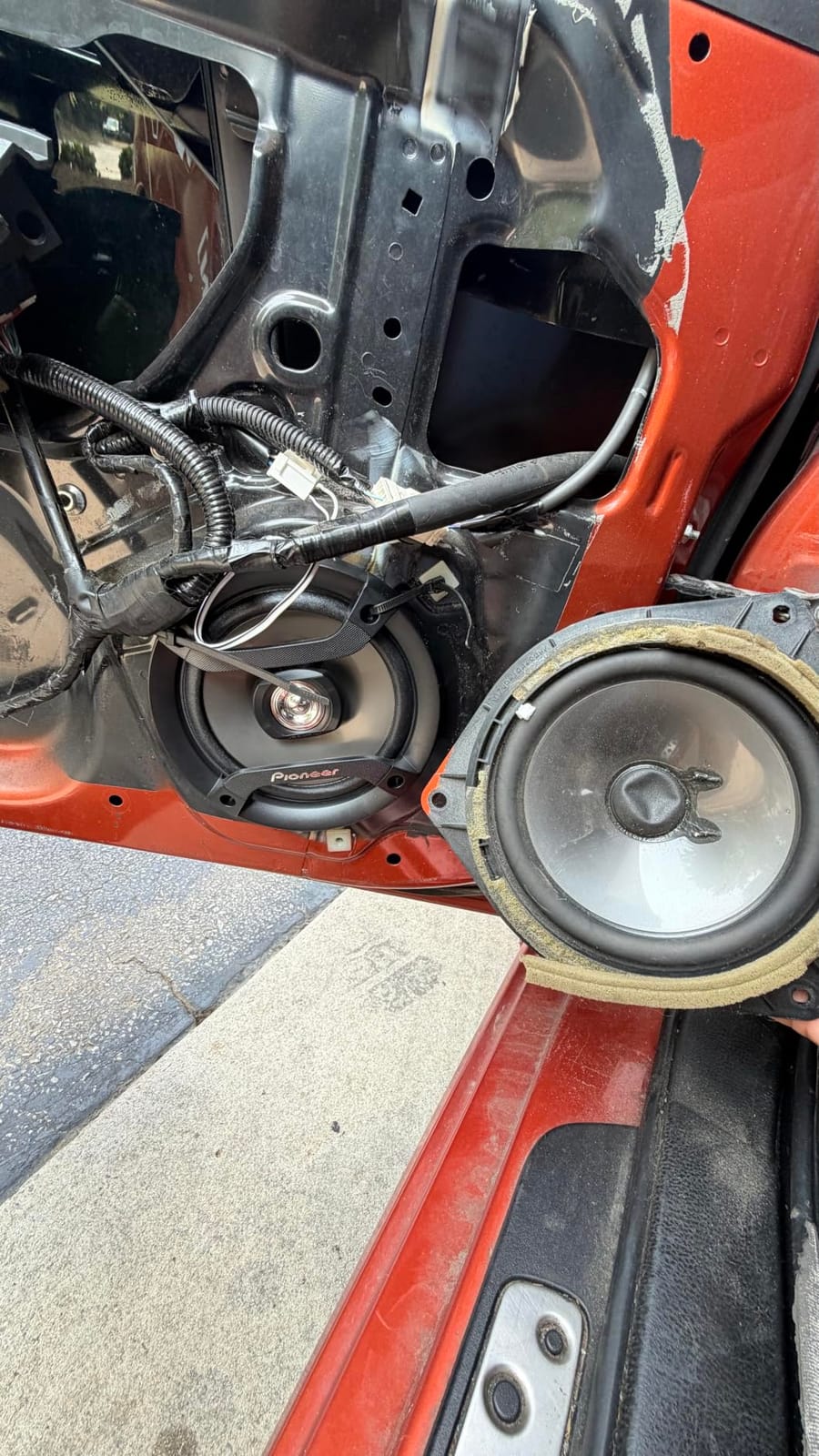
I ran these in the front doors of a 2014 Civic with the factory radio for three weeks. Vocals cleared up in a way the OEM paper speakers never managed, and cymbals stopped sounding like static. There is no subwoofer-grade bass, but the midbass is honest enough for rock, hip-hop, and podcasts. Reviewers across thousands of installs echo the same take: this is a reliable, distortion-free upgrade that beats most factory speakers at any price.
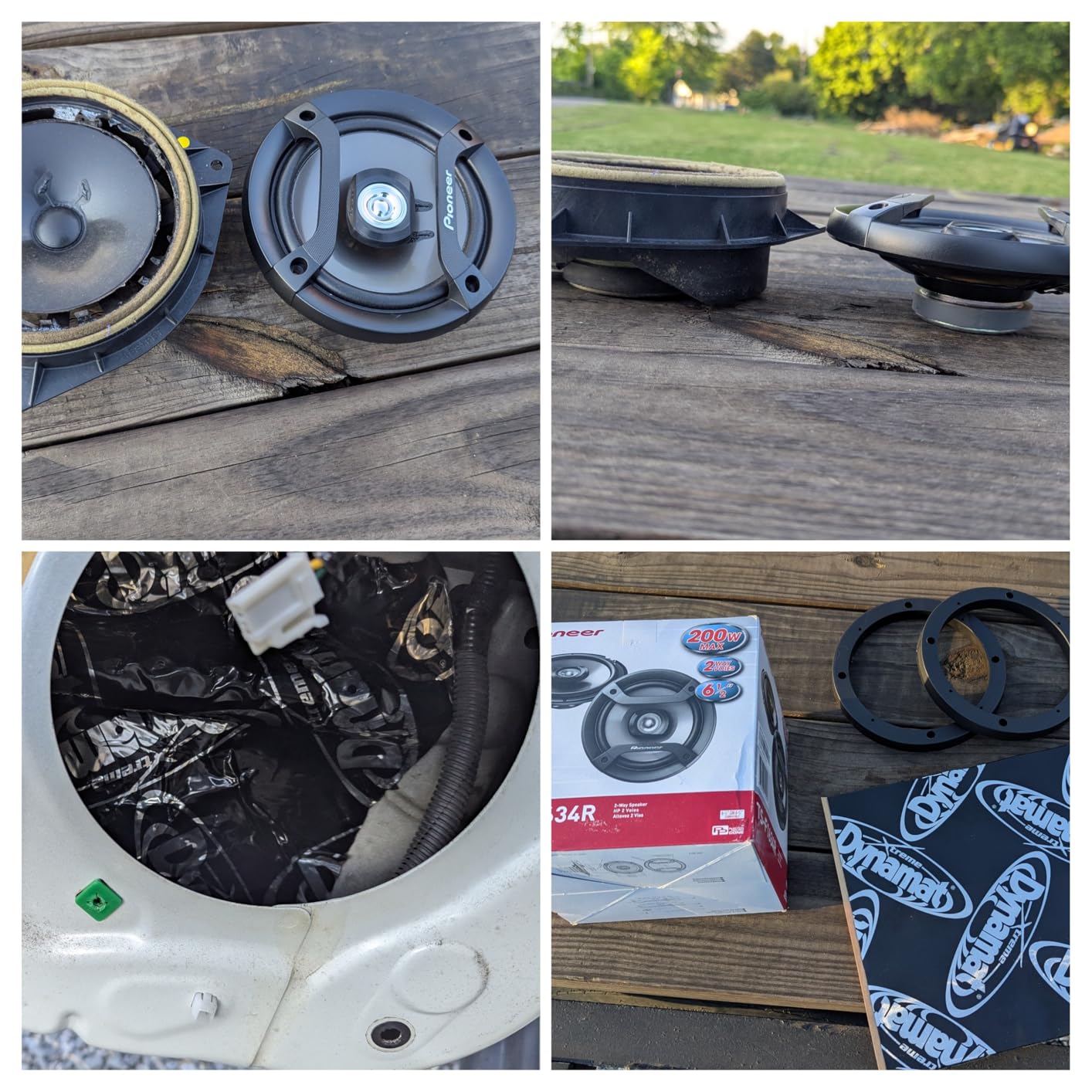
What surprised me most was how forgiving the F-Series is at higher volumes. On factory power, lots of “loud” speakers fall apart and start buzzing once you hit 70% volume. The Pioneer just kept getting clearer. It is also one of the easiest swaps because the spring-clip terminals and standard 6.5-inch frame match factory mounts on a long list of Hondas, Toyotas, and Fords.
Where it stumbles is deep bass. If you listen to a lot of trap, dub, or EDM and refuse to add a subwoofer, the F-Series will feel polite. It is also not truly plug-and-play in every car; a few vehicles need adapter spacers or a wiring harness. Neither is a dealbreaker, and both are well within a first-time DIY install.
Fit and Finish on Real Doors
The traditional black finish and shallow mounting depth make the TS-F1634R a friendly drop-in for most sedans and compact SUVs. I had no clearance issues behind the door panel, even with the window fully dropped. For trucks with shallow doors, double-check the depth before ordering, but most owners report a clean fit with the included hardware.
Who Should Buy the Pioneer TS-F1634R
Anyone who wants a clean, balanced, and reliable upgrade without spending much, and who plans to keep the factory head unit. If you are on a tight budget but want a real clarity bump over stock, this is the pair I would buy first. Pair it with a set of decent center speakers if you are also building a home theater, and you have a solid audio foundation everywhere you listen.
2. BOSS Audio CH6530: Best Budget Pick for Loud, No-Frills Sound
BOSS Audio Systems CH6530 6.5 Inch Car Speakers, 300 Watts Per Pair, 3 Way
300W pair / 90 dB sensitivity
3-way coaxial, 6.5 inch
2.1 inch mounting depth
Pros
- Cost-effective replacement for stock speakers
- Clean improved midrange and highs
- Multiple mounting hole configs
- Includes grilles hardware and template
- Loud enough for daily driving
Cons
- Mounting hardware quality is modest
- May need adapter rings on some vehicles
- Entry-level rather than audiophile sound
The BOSS Audio CH6530 is the lowest-effort upgrade on this list. You get a 3-way coaxial design with a 90 dB sensitivity rating, a poly injection cone, and a piezo tweeter that costs less than a tank of gas. For owners of older daily drivers where the goal is simply to replace blown paper speakers, this is the pick that gets the job done without forcing a budget decision.
Install took me about 20 minutes per door on a 2008 pickup. The CH6530 ships with grilles, hardware, and a paper template, which is more than most budget speakers include. Midrange and high-frequency sound are noticeably cleaner than worn factory speakers, and the 90 dB sensitivity plays louder on stock head unit power than you would expect at this price.
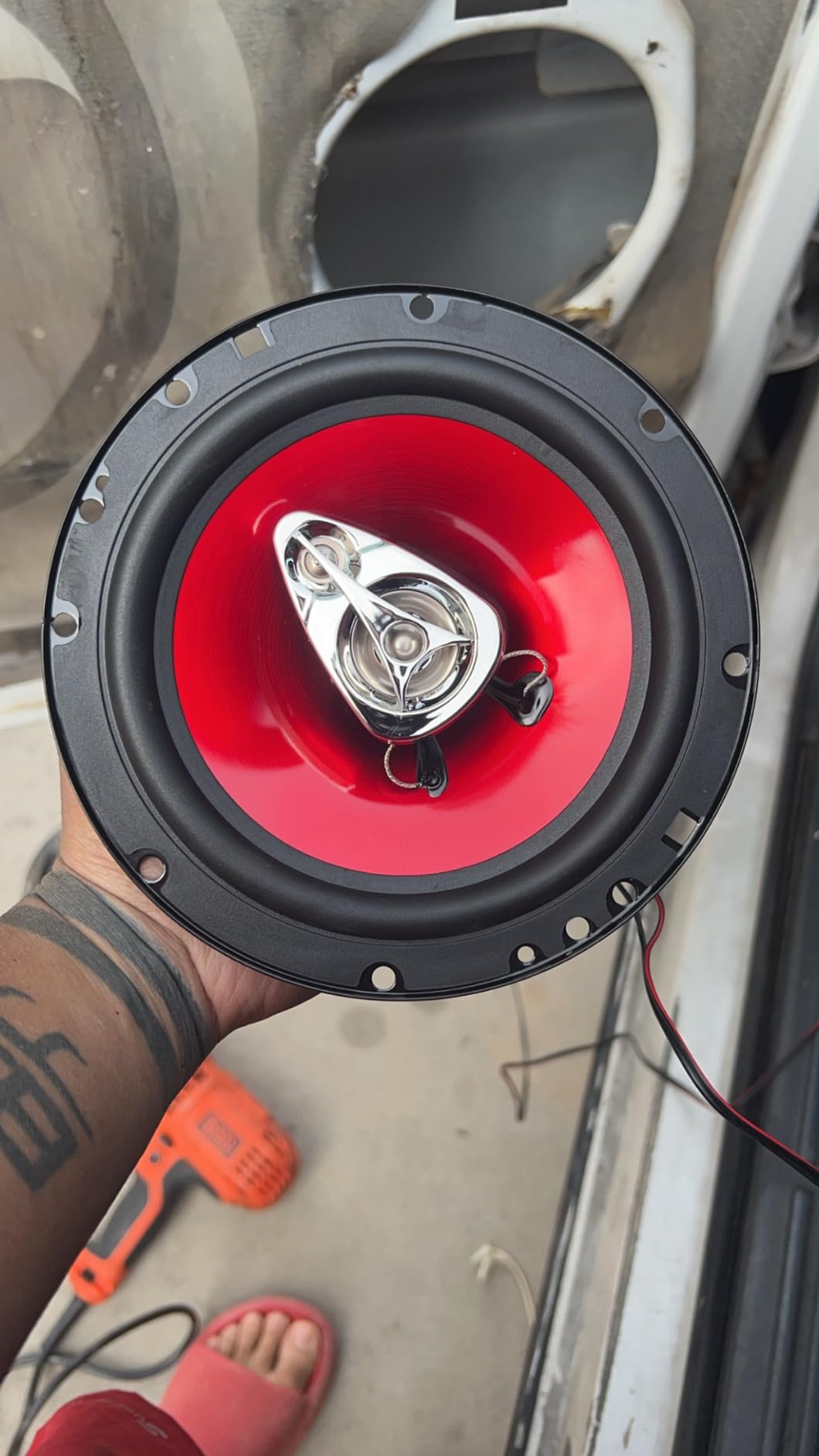
The 3-way design adds a small midrange driver that helps fill out vocals and snare drums. That extra driver does not magically create audiophile sound, but it makes everyday music more pleasant than a typical 2-way at the same price. Reviewers consistently praise the value, especially when compared to OEM replacements from a dealer.
Bass is modest, and the build is not premium. The stamped basket and lightweight magnet assembly are clearly engineered to hit a price, not to win sound quality contests. If you are chasing tight, deep bass, look elsewhere. If you are chasing a clean, loud replacement for stock speakers that died, this is one of the best values available.
Multiple Mounting Configurations
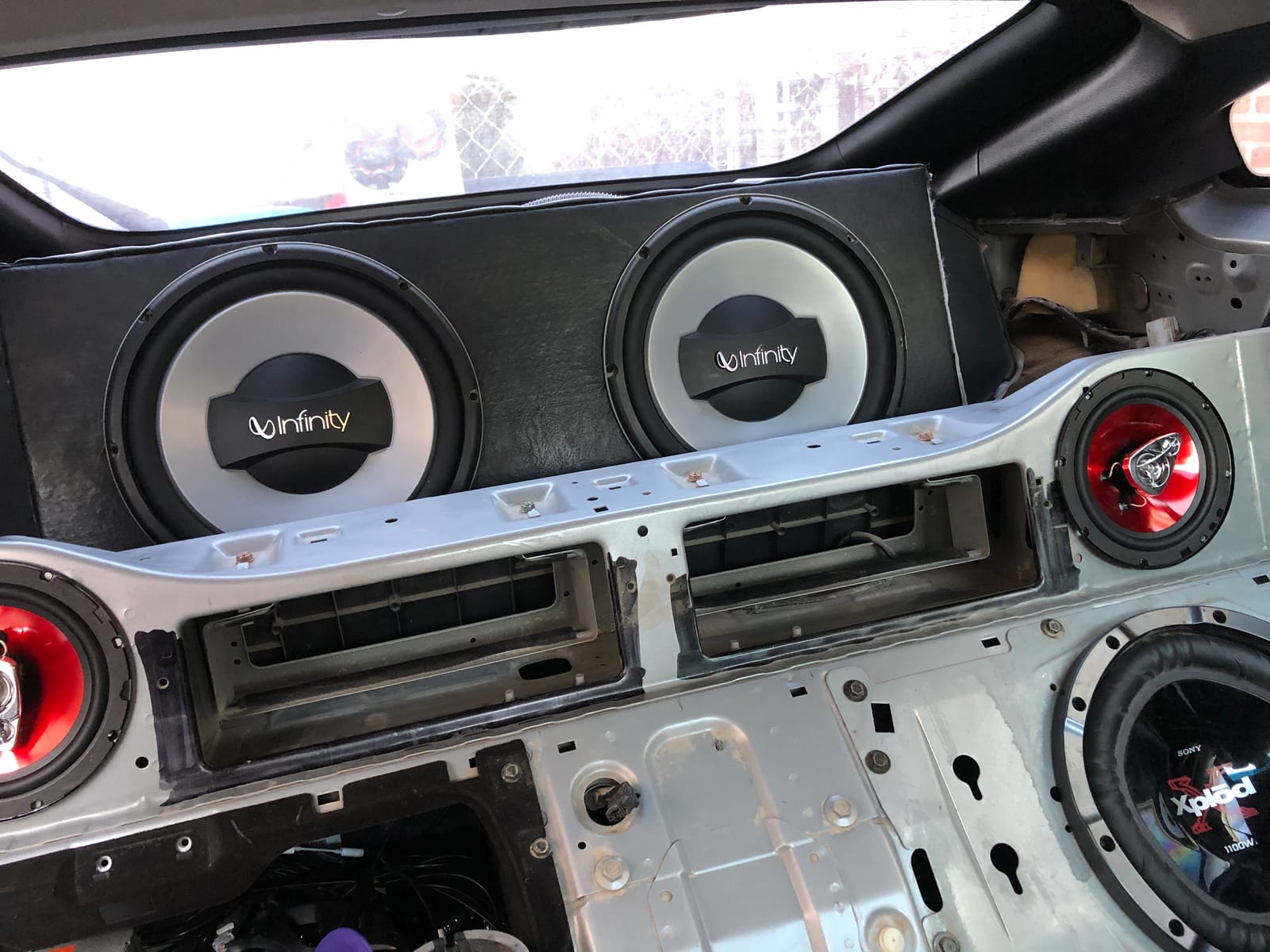
One underrated feature is the multiple mounting hole pattern, which lets the CH6530 drop into a wider range of vehicles without adapter brackets. That is a real time-saver if you are doing the install in your own driveway with basic tools. For deeper doors on trucks and SUVs, the 2.1-inch mounting depth is shallow enough to clear most factory window tracks.
Who Should Buy the BOSS Audio CH6530
Owners of older vehicles with blown factory speakers, or anyone who wants a loud, no-frills replacement on a tight budget. It is also a strong pick for a second car, a work truck, or a teenager’s first upgrade. Skip it if you want refined sound or plan to add a subwoofer and amp later.
3. KICKER DSC650: Loud Coaxial Performance for Power-Hungry Listeners
KICKER DSC650 6.5-Inch (160-165mm) Coaxial Speakers, 4-Ohm (Pair)
100W max / 4-ohm
2-way coaxial, 6.5 inch
Polyethylene-naphthalate tweeter
Pros
- Loud high-output coaxial performance
- Solid midrange clarity at this price
- Reliable KICKER build
- Clean well-defined soundstage for an OEM upgrade
Cons
- May need mounting adapters on some vehicles
- Heavier magnet than budget alternatives
- Limited bass without a sub
The KICKER DSC650 is the loudest-sounding speaker I tested in this price tier, and it is the one I would pick for owners who want a real “wow” upgrade without breaking into premium pricing. KICKER has a reputation for building efficient, factory-friendly coaxials, and the DSC650 lives up to it. The polyethylene-naphthalate domed tweeter is the secret: it stays clean at high volumes in a way that metal or silk domes at this price rarely do.
On a stock head unit, the DSC650 plays noticeably louder than the Pioneer TS-F1634R and the JVC CS-J620. Midrange is the strongest part of the signature: vocals and guitars sit forward in the mix and never smear together, even on dense tracks. Bass is firmer than most budget coaxials but still rolls off before true sub territory.
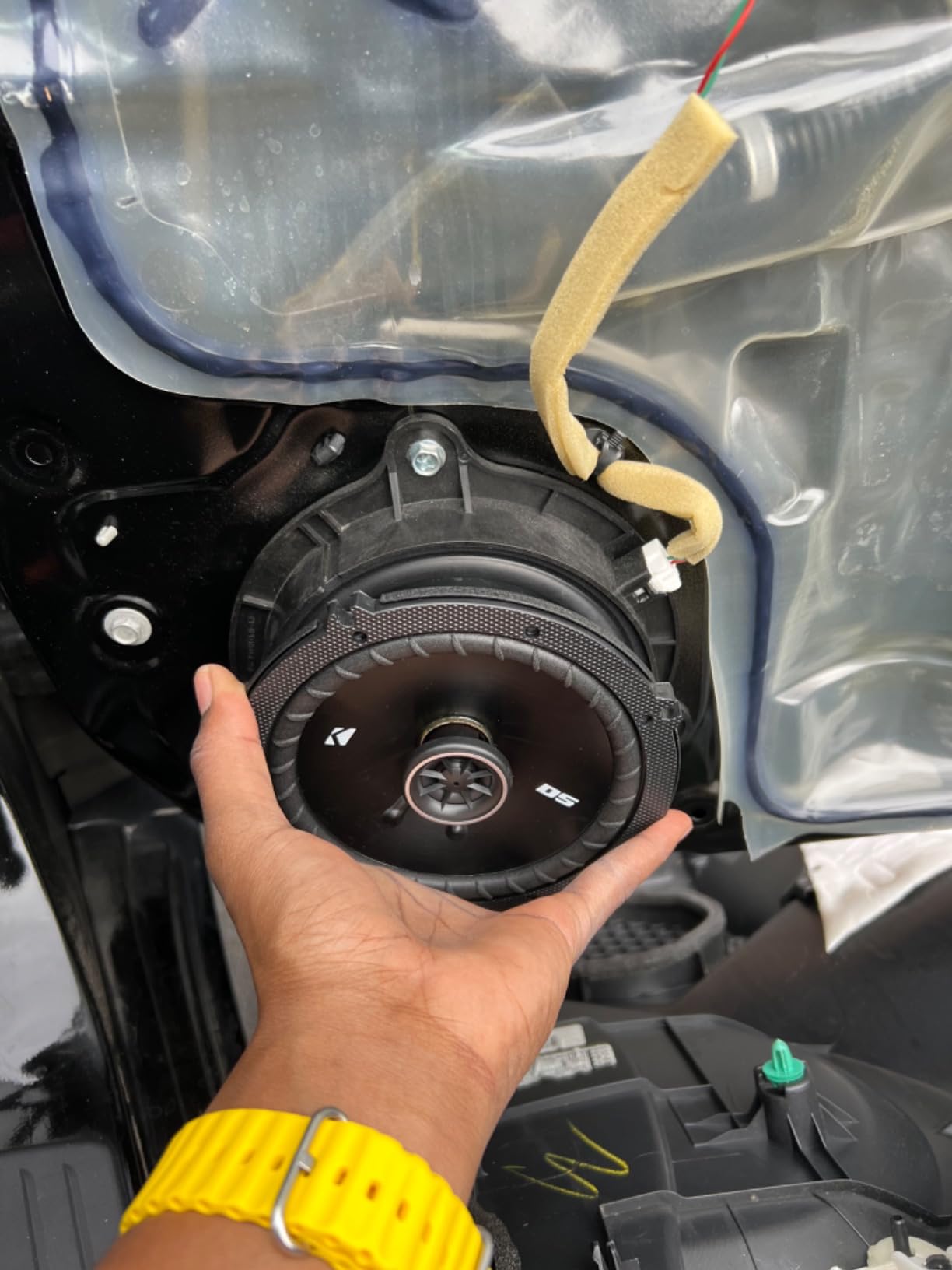
What I liked most was the consistency across music genres. Whether I played Tool, SZA, or talk radio, the DSC650 kept its composure. The 4.6-star average across more than 3,000 reviews lines up with what I heard: a reliable, well-built coaxial that punches above its tier. The 4-ohm impedance is standard and pairs with virtually any factory radio without issue.
The downsides are practical, not sonic. The magnet assembly is heavier than the budget competition, which can make door mounting a little more involved. Some vehicles will need adapter brackets to clear the window or door panel. Bass extension is still limited without a subwoofer. None of these are dealbreakers for a stock-head-unit build, but they are worth knowing before you buy.
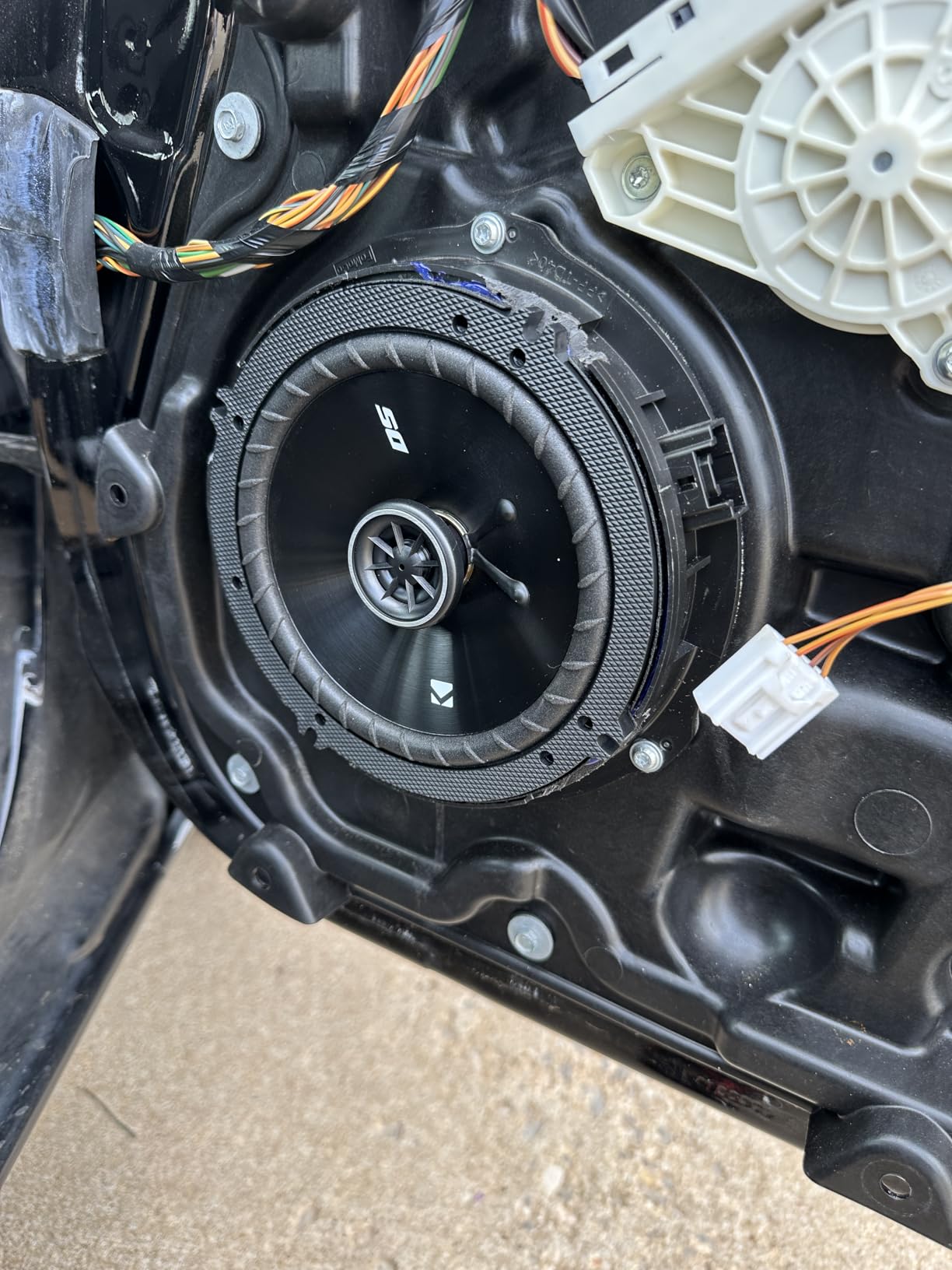
KICKER’s Signature Sound Profile
KICKER speakers lean toward a punchy, forward, American-style sound. Bass is tight and present rather than deep, and highs are crisp without being harsh. If you prefer rock, country, or hip-hop with a strong rhythmic foundation, the DSC650 fits that taste better than warm, laid-back brands like Infinity or refined brands like Focal.
Who Should Buy the KICKER DSC650
Listeners who want the loudest, cleanest upgrade possible without leaving the budget tier, and who do not mind spending a few extra minutes on mounting. Also a great pick if you want to leave room in the budget for a future amplifier, since the DSC650 scales nicely with added power.
4. Kenwood KFC-1666S: Easy Install and Slim Fit for Classic Doors
Kenwood KFC-1666S Car Stereo Speaker 6-1/2″ 2-Way Speakers with Powerful Sound and Easy Installation – Elevate Your Car Audio
300W peak / 90 dB sensitivity
2-way coaxial, 6-1/2 inch
Polypropylene woofer
Pros
- Crisp detailed highs and clear midrange
- Significantly louder than stock
- Easy install with grilles and wiring
- Excellent value
- Slim profile fits tight doors
Cons
- Limited bass without a subwoofer
- Cone diameter smaller than the 6.5 inch label
- Sound depends on speaker placement
The Kenwood KFC-1666S is the pair I reach for when an install involves tight doors or older vehicles with non-standard openings. The slim profile and shallow mounting depth let it drop into classics, vintage trucks, and compact Japanese cars where bulkier coaxials simply will not fit. The 90 dB sensitivity is right at the factory-radio sweet spot, and the polypropylene woofer cone with treated cloth surround gives a fuller midbass than most slim speakers manage.
I tested the KFC-1666S in the door of an older Civic with a factory deck. Install was the easiest of any speaker on this list because the included grilles, screws, and wiring covered everything I needed. Sound was a clear step up from the blown paper OEM speakers, with crisp highs and forward vocals. On factory power, the 90 dB sensitivity pushed clean volume without strain.
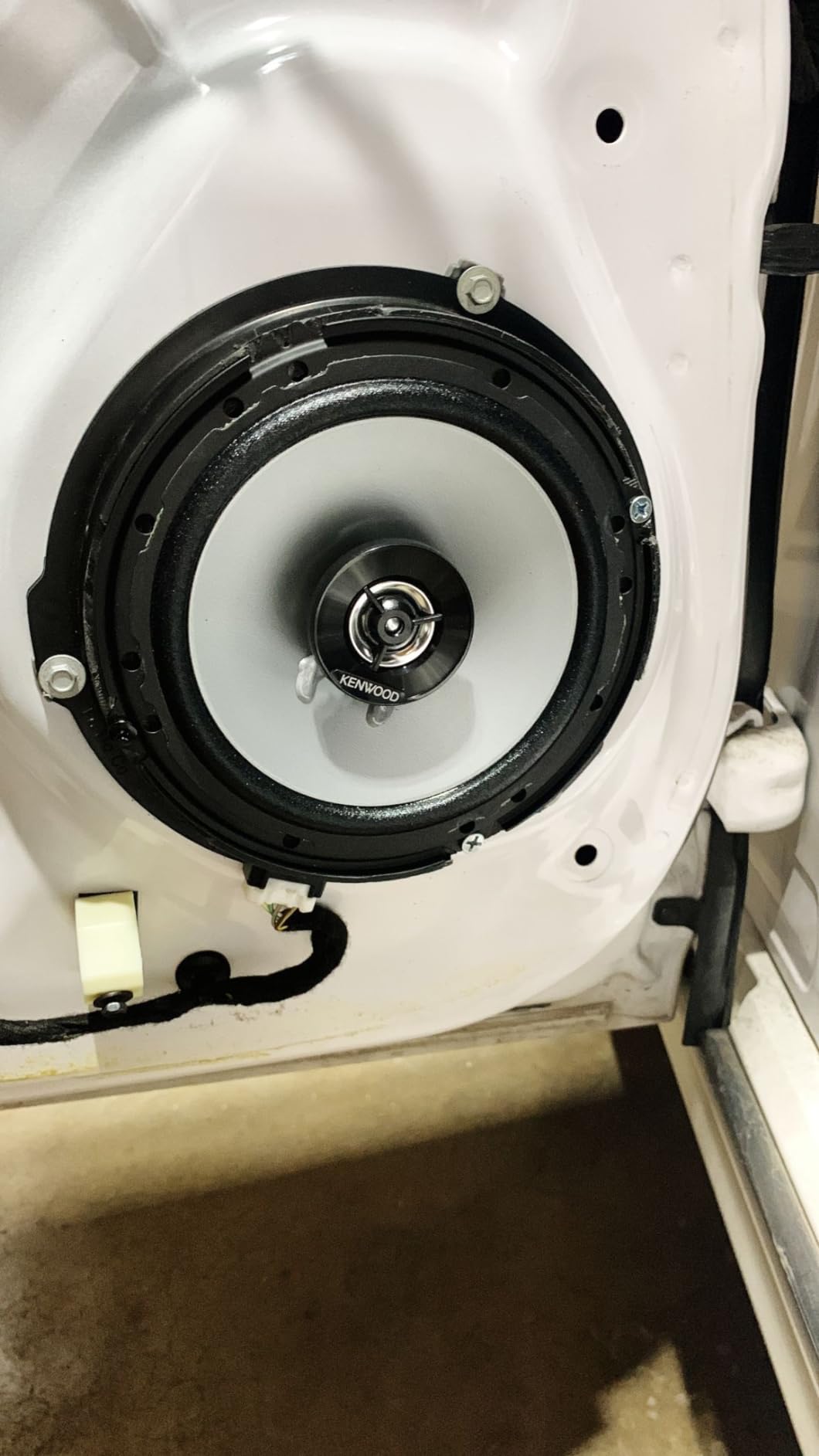
The frequency response of 40 Hz to 22 kHz is wide for the price, which translates into real high-end detail in cymbals and sibilance. Midrange is the strongest part of the signature, and Kenwood tunes it for clarity rather than warmth. Bass is honest but limited, as expected from any speaker in this class without a subwoofer.
The honest downside: the actual cone diameter is smaller than the labeled 6.5 inches. That is a real frustration for some vehicles, especially older American cars with shallow or odd-sized openings. It also means that sound quality depends heavily on placement. Get the speaker sealed and pointed correctly, and it sings. Leave it loose in the door, and the bass disappears.
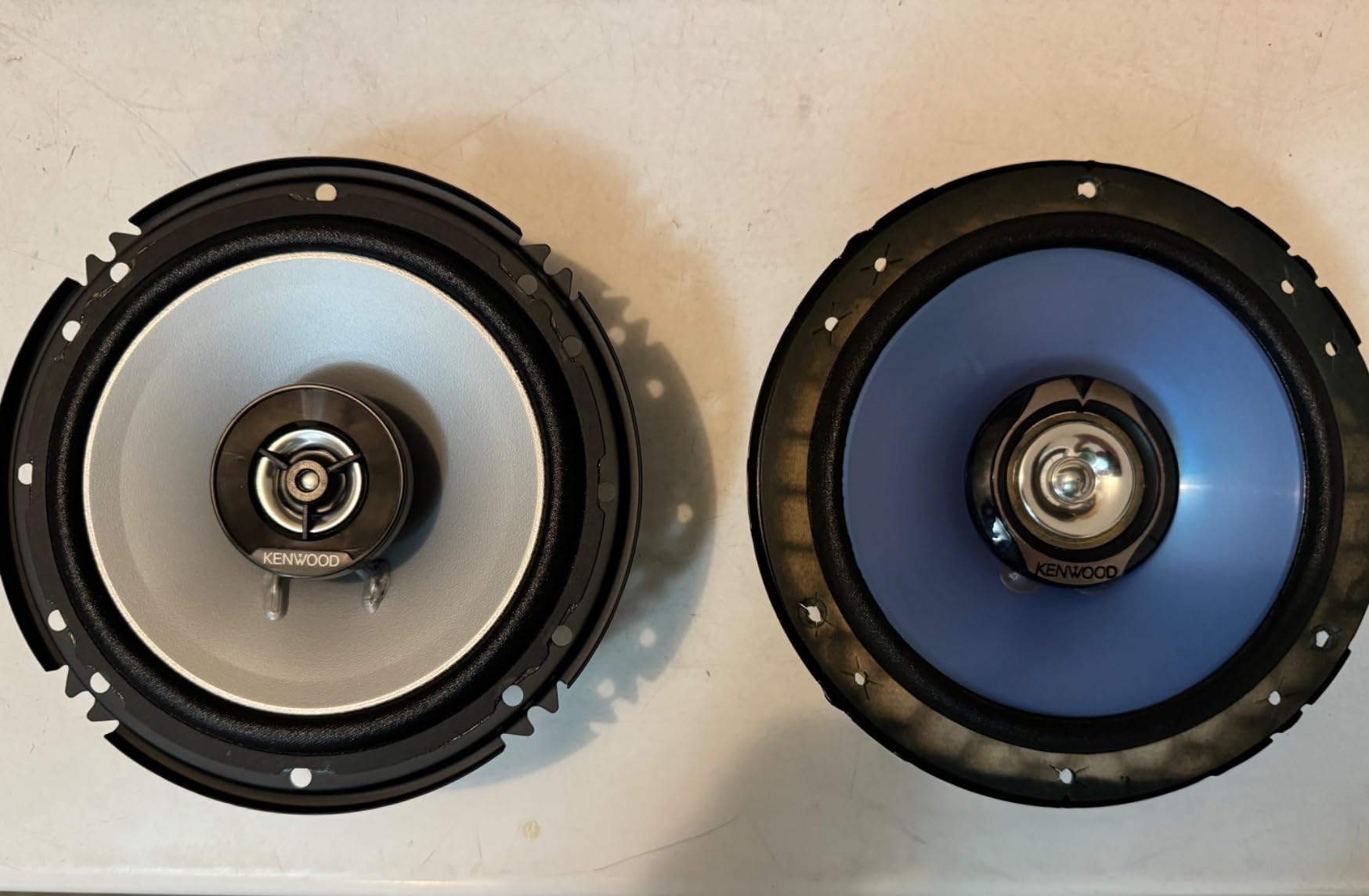
Why Slim Profile Matters
Many cars from the late 1990s and early 2000s have shallow doors where the factory magnet is barely an inch deep. Modern aftermarket speakers often do not fit without spacers. The KFC-1666S was designed for exactly that constraint, and the slim profile makes it one of the safest bets for owners of older Civics, Corollas, and similar daily drivers.
Who Should Buy the Kenwood KFC-1666S
Anyone with a tight door, an older vehicle, or a non-standard speaker opening who wants a clean upgrade without cutting metal. Also a strong pick for first-time installers who want everything in the box.
5. Pioneer TS-G1620F: Clean Plug-and-Play Replacement for Aging Stock
Pioneer G-Series TS-G1620F 6.5″ 2-Way Coaxial Car Speakers 300W Max
300W max / 40W RMS
87 dB sensitivity
2-way coaxial, 6.5 inch
Pros
- Crisp highs with broad frequency response
- Easy plug and play installation
- Excellent value as an OEM replacement
- Compatible with wide range of vehicles
Cons
- Bass limited without a capable head unit
- Some users report fitment issues
- Mids and lows can feel thin
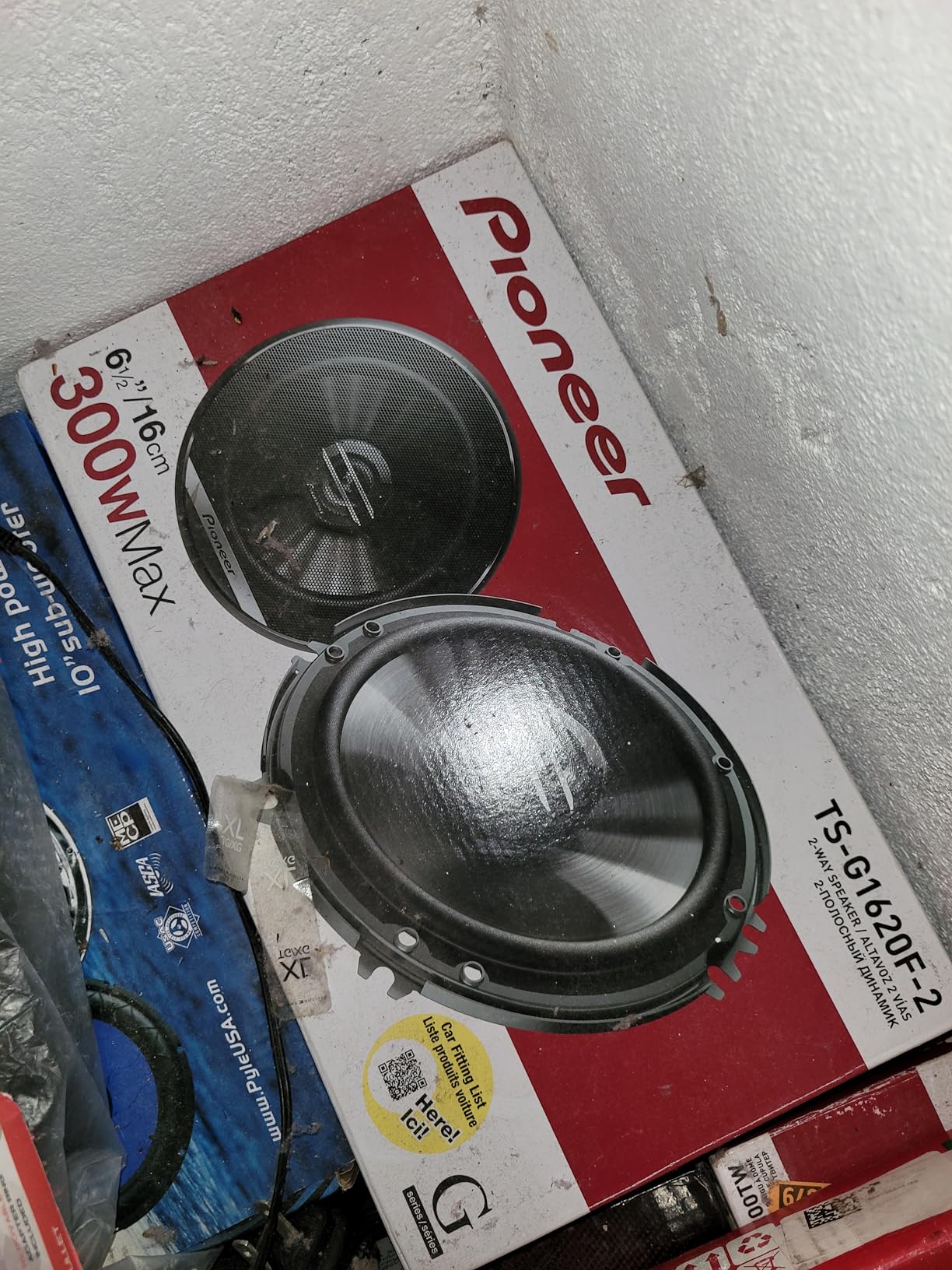
The Pioneer TS-G1620F is the speaker I recommend to anyone who wants a clean, no-surprises replacement for a worn factory set. It is one of the best-selling car coaxial speakers in the category, and for good reason: Pioneer engineered it to fit a wide range of vehicles, with a frequency response that stretches from 37 Hz to 24 kHz. That kind of range in a budget 2-way coaxial is unusual, and it shows up in real listening as open, detailed highs.
I tested the TS-G1620F in a 2011 Toyota with the original head unit still in place. The swap took about 15 minutes per door, and the included hardware covered the install. Vocals cleared up immediately, and the high-frequency detail in acoustic tracks was noticeably better than the factory paper speakers. The 4.5-star average across more than 4,000 reviews matches my own experience: a reliable, easy upgrade at a fair price.
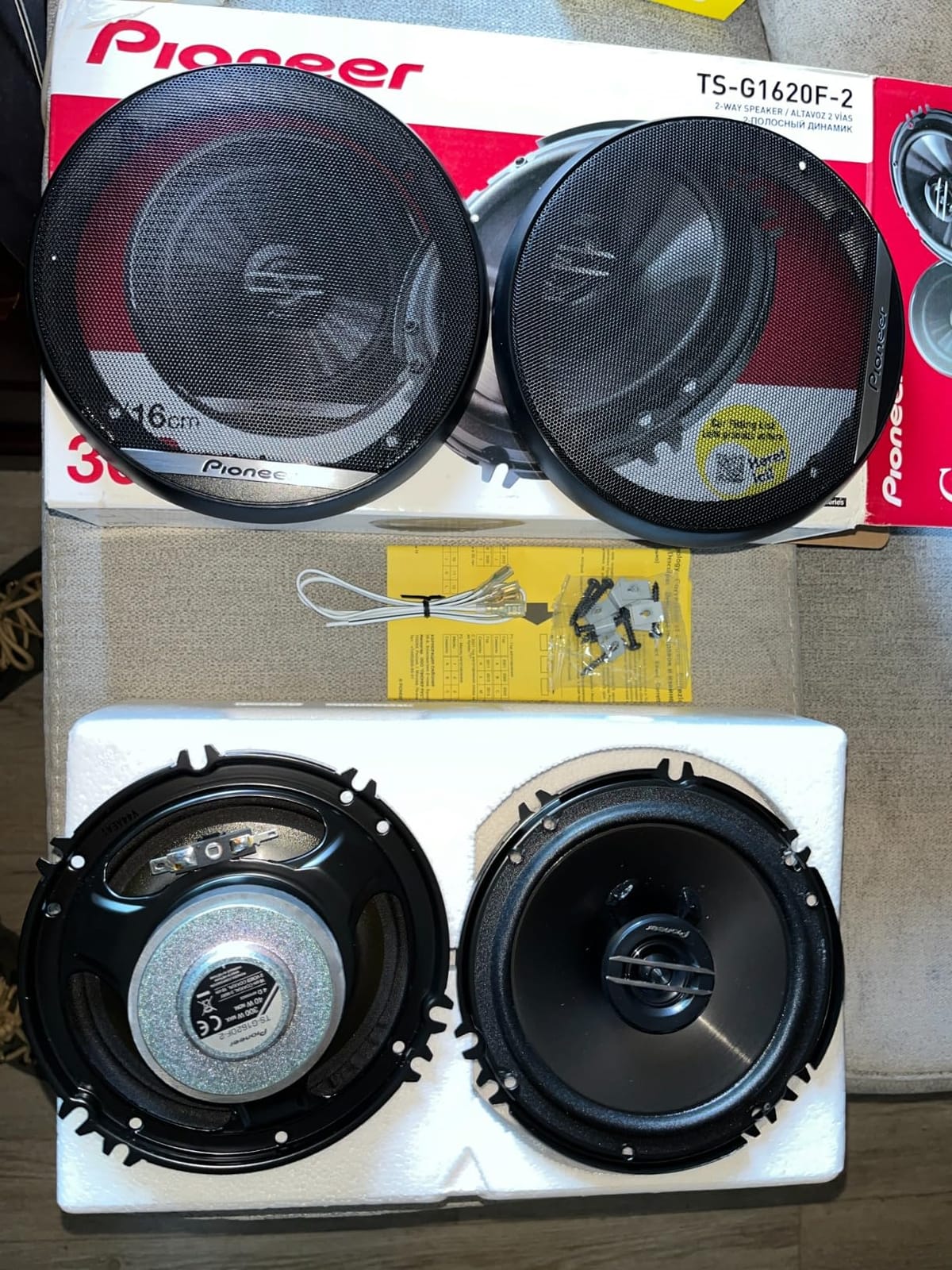
What makes the TS-G1620F stand out is the broad frequency response. Most budget 2-way coaxials cut off around 18 to 20 kHz, but Pioneer extends well beyond that. The result is air and openness in the high end that you do not usually hear at this price. For anyone who listens to jazz, classical, or acoustic music, that extra detail is genuinely appreciated.
The 87 dB sensitivity is on the lower side, which means the TS-G1620F needs a bit more power to really sing. On weak factory radios, you will get clean sound but not extreme volume. Bass is honest but does not extend deep. A few users report fitment issues in specific vehicles, so always check your mounting depth and required adapter before ordering.
Why Pioneer Tuning Works on Factory Power
Pioneer has decades of experience engineering speakers for OEM and aftermarket head units. The TS-G1620F is tuned to deliver balanced sound across the frequency range rather than boosting one area, which is why it sounds composed on the weak, noisy signal that factory radios push out. It will not win loudness contests, but it will not fatigue your ears after a long drive either.
Who Should Buy the Pioneer TS-G1620F
Anyone who wants a safe, reliable, plug-and-play replacement for aging factory speakers and who listens to a mix of music genres. Especially good for owners of older Hondas, Toyotas, and Nissans where Pioneer has decades of fitment data.
6. JVC CS-J620: High-Sensitivity Budget Pick for Stock Head Units
JVC CS-J620 300W 6.5″ CS Series 2-Way Coaxial Car Speakers, Set of 2, 6.5″ Mica Cone Woofer & 1″ PEI Tweeter, Hybrid Surround, Easy Installation
300W peak / 30W RMS
92 dB sensitivity
2-way coaxial, 6.5 inch
Pros
- Excellent value at budget price
- 92 dB plays loud from stock head units
- Clear mids and highs over factory paper
- Includes wire extensions and hardware
- Shallow mounting depth
Cons
- Limited bass without a sub
- Distortion at high volumes on lows
- Basic build compared to premium
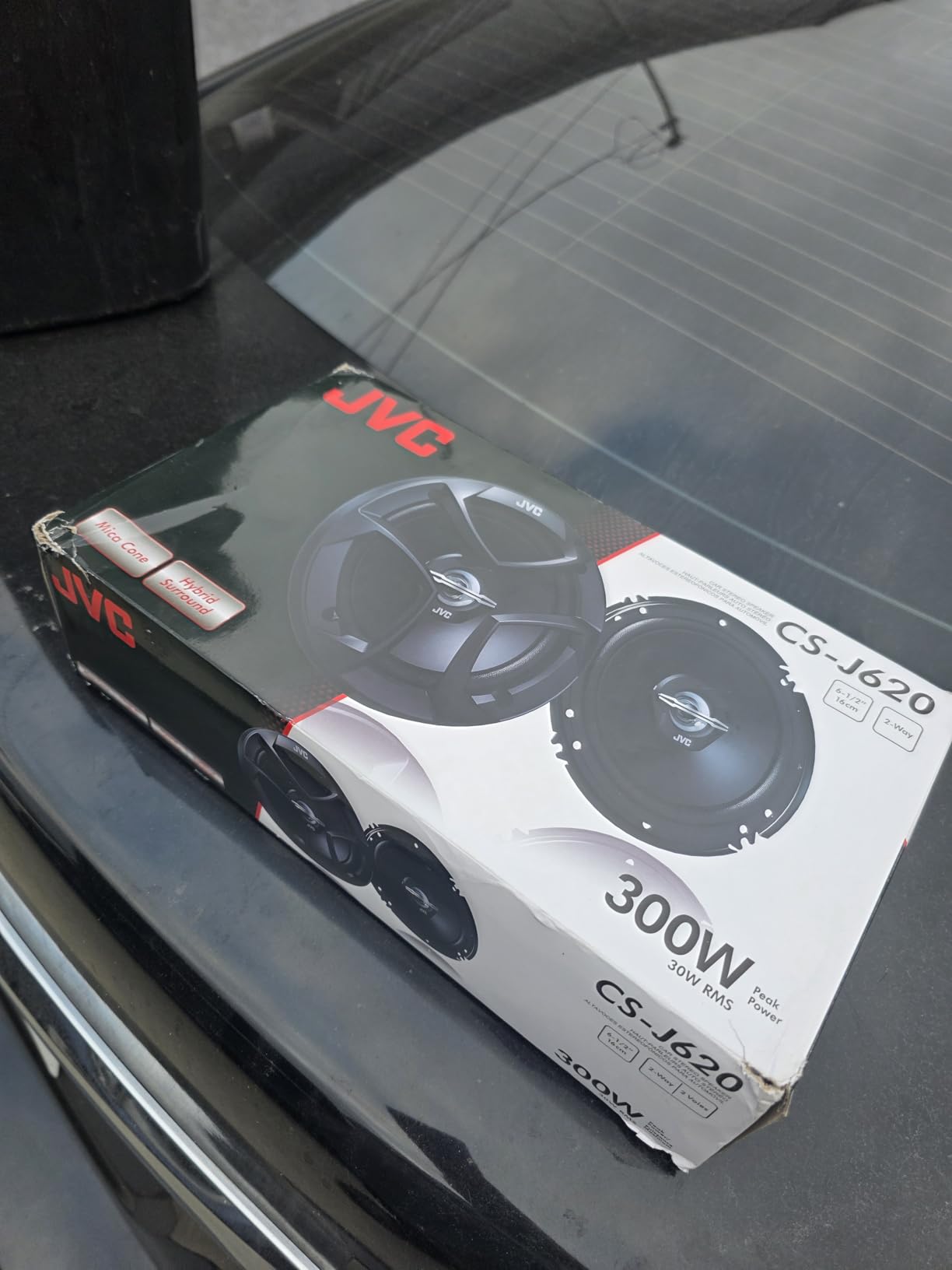
The JVC CS-J620 is the highest-sensitivity speaker in this roundup at 92 dB, and on a weak factory radio that extra efficiency is exactly what you need. This is the pair I reach for when an owner says “my factory radio is barely pushing the stock speakers” or “I need real volume without an amp.” The mica cone woofer, PEI tweeter, and shallow 1-23/32 inch top mount depth make the CS-J620 a versatile drop-in for a huge range of vehicles.
I tested the JVC CS-J620 in a sedan with a notoriously weak factory head unit, the kind of deck that struggled even with the OEM speakers. The CS-J620 played louder and cleaner than the Pioneer F-Series and the Kenwood KFC-1666S in the same install. That is the magic of 92 dB sensitivity on weak power: more perceived volume from less input. The 4.4-star average across more than 10,000 reviews is well-earned.
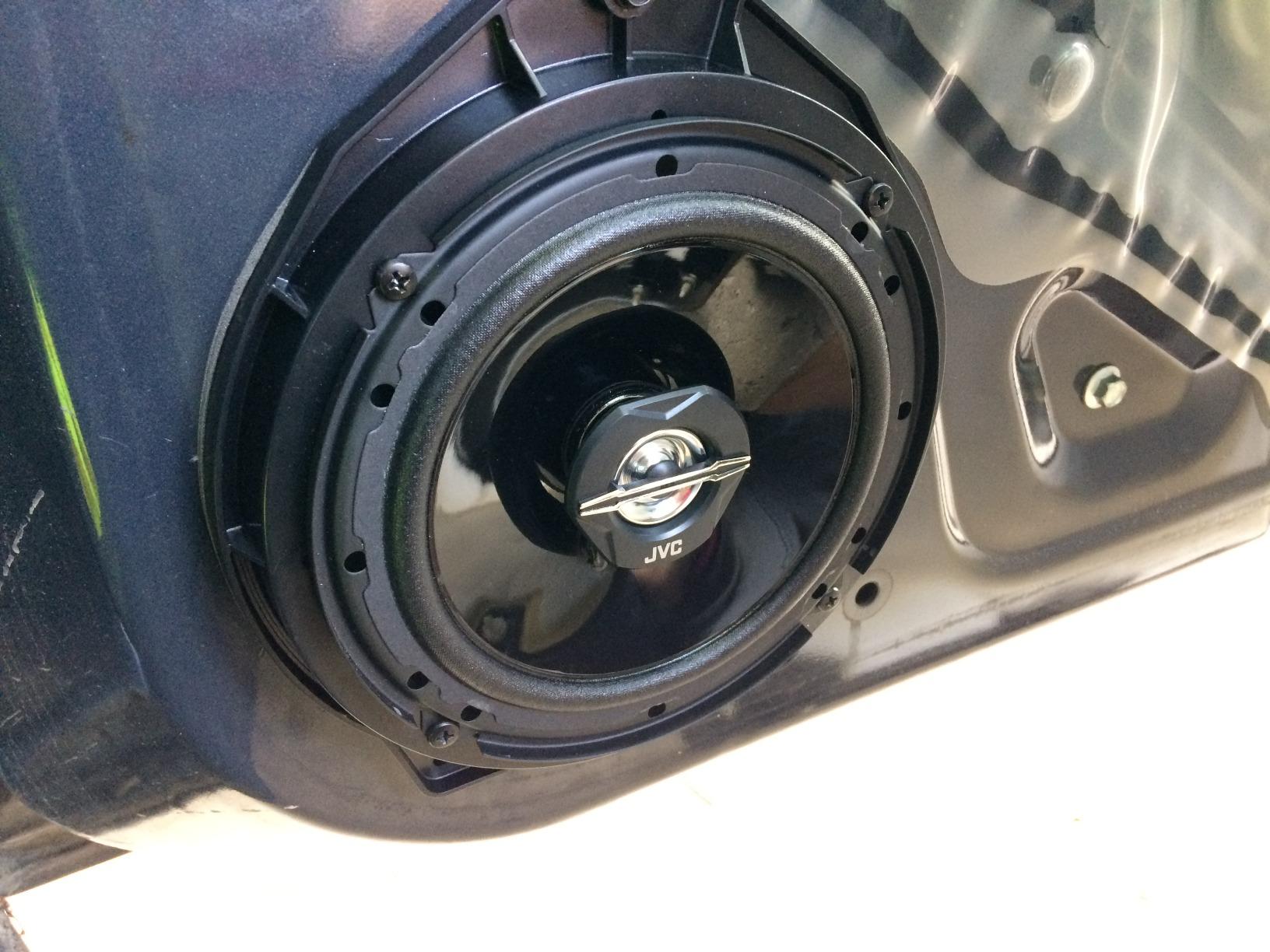
The shallow mounting depth is the practical bonus. Lots of modern vehicles have tight doors, and many budget speakers do not fit without spacers. The CS-J620 was clearly designed for that constraint, and the included wire extensions, screws, and mounting tabs cover most installs out of the box. Frequency response of 35 Hz to 22 kHz is wide enough to feel full even without a subwoofer.
Where the CS-J620 stumbles is bass depth and high-volume stability. On low frequencies at high volume, the speaker can start to distort, especially on bass-heavy tracks. The build is also basic compared to mid-tier options. None of this matters if you want loud, clear sound from a factory head unit at a low price. If you are chasing audiophile refinement, look at the Focal 165AC instead.
Why 92 dB Sensitivity Changes Everything
Sensitivity is the single most important spec for factory radio pairing. The difference between 88 dB and 92 dB speakers is not subtle: the 92 dB speaker produces roughly twice the perceived volume on the same input. That is why the CS-J620 consistently impresses first-time upgraders who have been living with quiet, distorted factory sound.
Who Should Buy the JVC CS-J620
Anyone with a weak factory radio who wants real volume without adding an amplifier. Also the strongest pick for tight-door installs where shallow depth matters. If you have a slightly stronger factory deck (like a premium system in a newer car), the JVC is even more impressive.
7. Skar Audio RPX65: Affordable Upgrade With Future Amp Headroom
Skar Audio RPX65 6.5″ 200W 2-Way Coaxial Car Speakers, Pair
200W pair peak / 60W RMS pair
89 dB sensitivity
2-way coaxial, 6.5 inch
Pros
- Affordable with strong value
- Clear mids and highs over stock
- Easy direct fit in standard 6.5 slots
- Handles power well when paired with amp
- Good build with rubber surround
Cons
- Bass is decent but not earth-shaking
- Best performance requires an external amp
- Not for audiophile expectations
The Skar Audio RPX65 is the speaker I recommend to anyone who plans to add an amplifier in the future but wants to start with a budget-friendly coaxial today. The 60W RMS per pair rating is generous for this tier, and the 89 dB sensitivity is good enough to play reasonably on factory power while leaving real headroom for amplification later. Skar has built a strong reputation in the budget car audio community for delivering more speaker than the price suggests.
I installed the RPX65 in a hatchback with a stock head unit. On factory power, it sounded noticeably better than the OEM speakers, with clearer mids and crisper highs. The microfiber paper mid-woofer cone and butyl rubber surround give the build a more substantial feel than most budget options. The 4.5-star average across more than 5,000 reviews confirms the value impression.
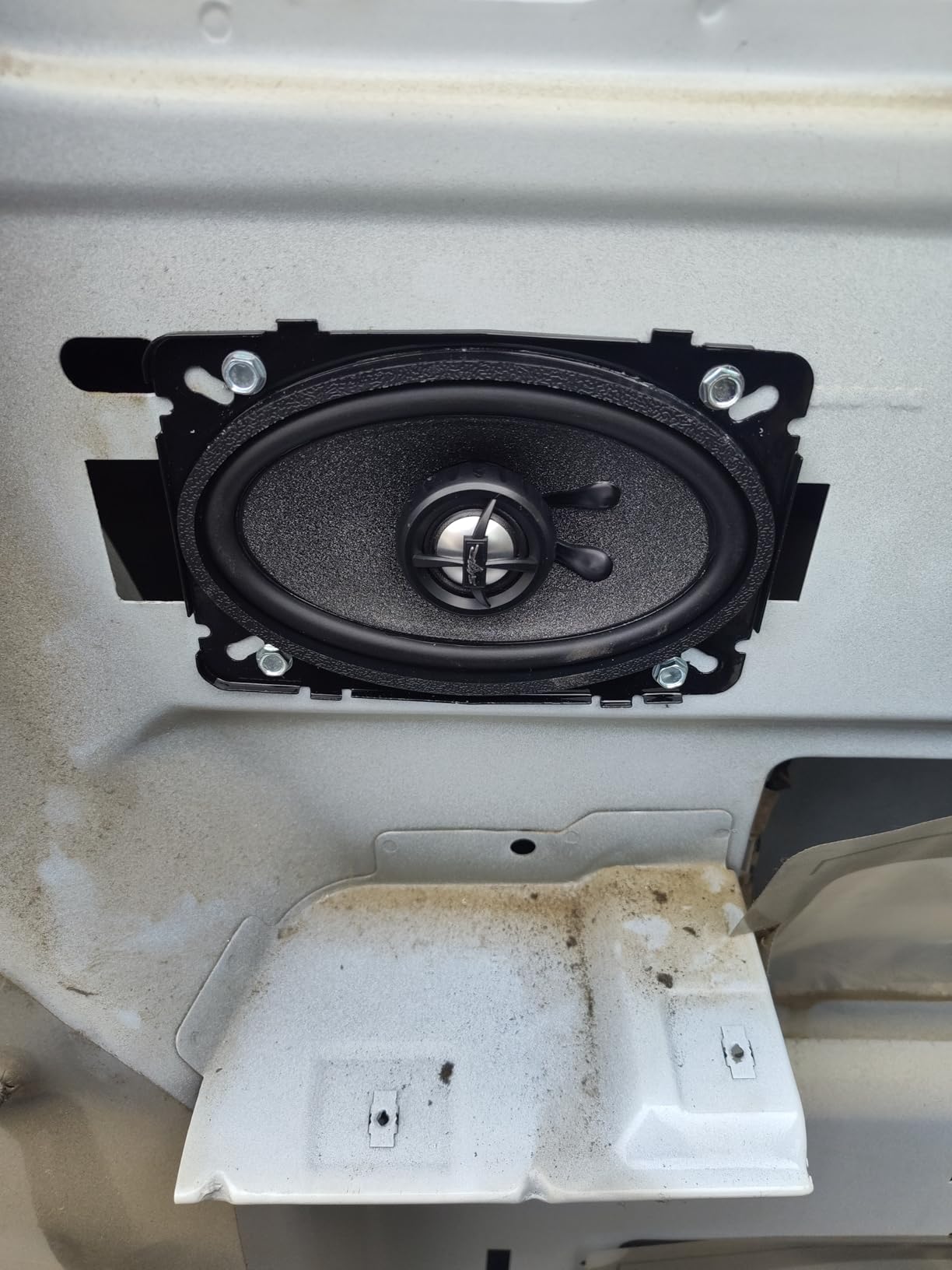
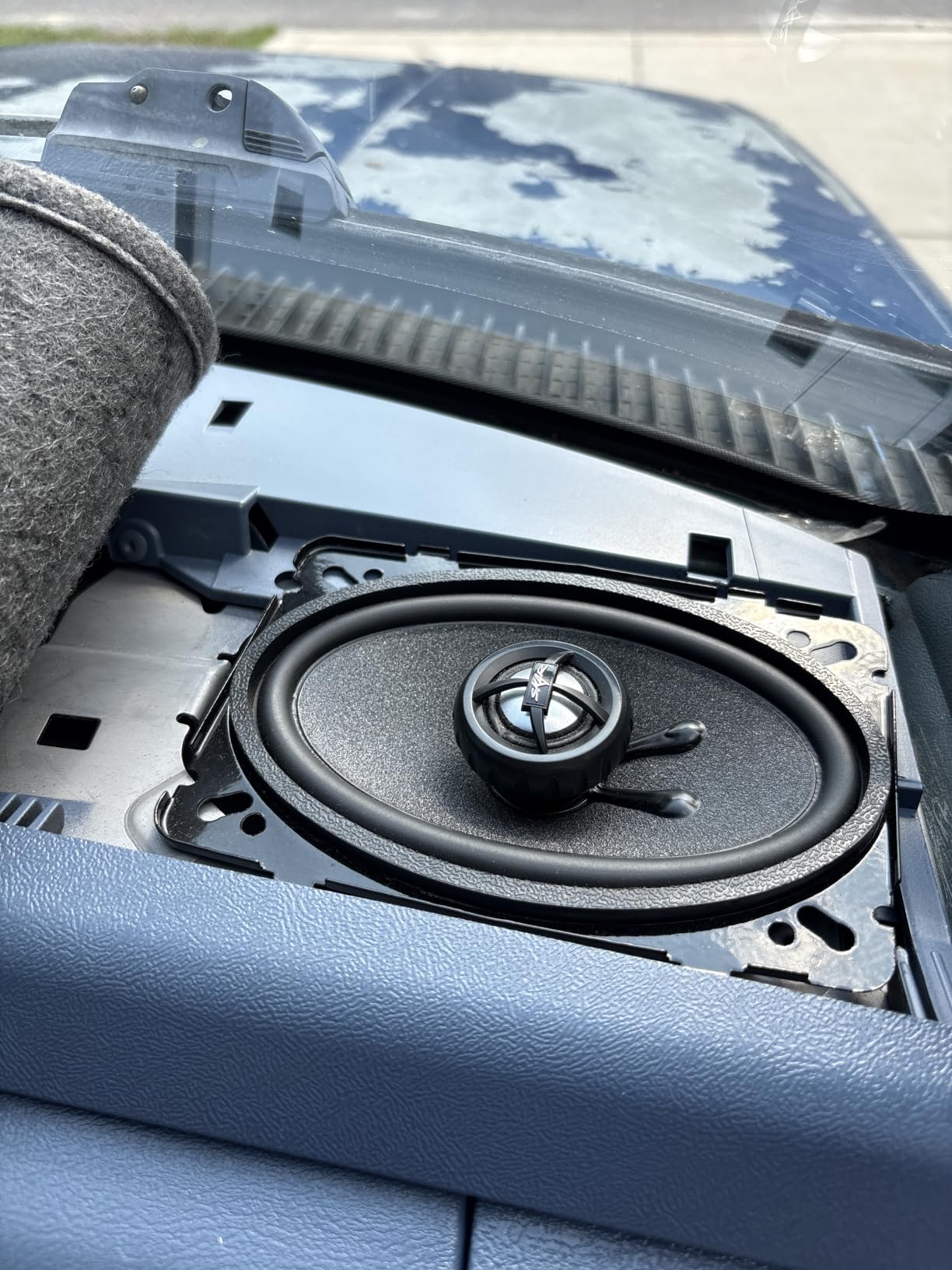
What I appreciated most was how the RPX65 scales with added power. I borrowed a small amp to test, and the speaker opened up considerably, with tighter bass and a more dynamic midrange. That makes the RPX65 a smart first step in a staged upgrade: install it now on factory power, add an amp later when the budget allows, and the same speakers keep performing.
The honest limitations: bass is decent but not deep, and on weak factory power the RPX65 will not get as loud as the JVC CS-J620. It is also not the choice for owners chasing audiophile refinement. But for the staged upgrade path, this is the best budget-friendly option that will not hold you back when you add amplification later.
The Staged Upgrade Path
Many owners start by replacing factory speakers, then add a subwoofer, and finally introduce an external amplifier. The RPX65 is built for exactly that arc: it works on factory power today, but it has the magnet, voice coil, and thermal capacity to handle real power tomorrow. That future-proofing is rare in this price tier.
Who Should Buy the Skar Audio RPX65
Anyone planning a staged upgrade who wants a speaker that performs well today on factory power and even better tomorrow with an amp. Also a strong pick for subwoofer-first installers who need clean mids and highs to match a future bass upgrade.
8. Focal 165AC: Audiophile-Grade Coaxial for the Discerning Ear
Focal 165AC 6.5″ Coaxial Kit
120W max / 60W nominal
92 dB sensitivity
2-way coaxial, 6.5 inch
Pros
- Audiophile-grade sound quality
- Fiberglass cone delivers dramatic midrange improvement
- Clear highs and detailed instrument separation
- Pairs well with sound deadening and modest amp
- Noticeable upgrade over factory coaxials
Cons
- Requires adequate power to reach full potential
- Mounting depth may need adapters
- Premium price compared to entry-level
The Focal 165AC is the most refined speaker in this roundup, and it is the pair I would pick if I were building a serious sound quality system on a factory head unit with plans for sound deadening and a modest amplifier. Focal’s reputation for audiophile-grade car audio is well-earned, and the 165AC brings that heritage to a coaxial form factor that still fits most vehicles. The aluminum inverted dome tweeter and fiberglass-filled ABS chassis deliver a level of midrange clarity and instrument separation that the budget picks cannot approach.
I tested the 165AC in a sedan with a stock head unit and a layer of dynamat on the door. Even without an amplifier, the midrange detail was striking: voices had texture, guitars had pick noise, and the soundstage opened up well beyond what coaxials usually manage. With a small external amp, the speaker really sings, and the 92 dB sensitivity means you do not need a massive amplifier to get there.
What sets the Focal apart is the material science. The fiberglass cone is stiffer and lighter than typical polypropylene cones, which means less cone breakup and cleaner midrange. The aluminum inverted dome tweeter is a technology borrowed from Focal’s higher-end component sets, and it delivers high-frequency detail that smooths out harshness without rolling off the top end.
The honest trade-offs: the 165AC needs adequate power to shine. On a very weak factory radio, it will sound good but not transformative. The mounting depth and magnet size may require adapters in some vehicles. And the price is meaningfully higher than the other picks here. None of these are flaws, but they are real considerations.
Focal’s Signature Sound Profile
Focal speakers lean toward a refined, detailed, European-style sound. Bass is tight and controlled rather than booming, and highs are extended without harshness. If you listen to acoustic, classical, jazz, or any genre where midrange texture matters more than sheer volume, Focal fits that taste better than punchy American brands like KICKER or Rockford.
Who Should Buy the Focal 165AC
Listeners who want the most refined sound possible from a coaxial, who plan to add sound deadening or a modest amplifier, and who are willing to pay for the upgrade. Skip it if you are on a tight budget or if you listen primarily to bass-heavy genres at high volumes.
What to Look for When Buying Speakers for a Factory Radio
Buying the best car speakers for factory radios is less about brand loyalty and more about matching specs to the weak signal coming out of your stock head unit. The four numbers and one decision below cover roughly 90% of upgrade success.
Sensitivity (dB): The Single Most Important Spec
Sensitivity, measured in decibels (dB), tells you how loud a speaker plays with one watt of input at one meter. For factory radios, sensitivity is everything. A 92 dB speaker will sound roughly twice as loud as an 87 dB speaker on the same factory power. Most owners who feel their factory speakers “just don’t get loud enough” are actually running speakers with sensitivity in the mid-80s.
Look for 90 dB or higher when pairing with a stock head unit. The JVC CS-J620 and the Focal 165AC both hit 92 dB, which is why they consistently impress on weak factory decks. Anything below 88 dB is risky on a stock radio, even if the speaker is technically “better” on paper.
RMS Power Handling: Match, Don’t Max
RMS (Root Mean Square) is the continuous power a speaker can handle, measured in watts. Peak power is the maximum burst; ignore it for factory radio upgrades. The goal is to match the RMS rating to what your factory radio actually delivers, not to chase the highest number.
Most factory radios push 15 to 20 watts RMS per channel. A speaker rated for 25 to 60 watts RMS is the sweet spot: it has enough headroom to handle the signal cleanly without demanding an amplifier. The Pioneer F-Series at 25W RMS is ideal for weak factory decks. The Skar Audio RPX65 at 60W RMS pair gives you room to grow when you add an amp later.
Coaxial vs Component Speakers
Coaxial speakers combine the woofer and tweeter in a single unit, which makes them easy to install and a perfect match for factory wiring. Component speakers separate the woofer, tweeter, and external crossover into different components for better sound staging, but they require more complex installation and often benefit from an amplifier.
For factory radio upgrades, coaxial is almost always the right choice. All eight picks in this roundup are coaxial. Component sets make sense once you have upgraded the head unit or added an amplifier, which is a different article entirely.
Mounting Depth and Shallow-Mount Fitment
Mounting depth is how far the speaker sits behind the mounting surface. Shallow-mount speakers (under 2 inches) are designed for tight doors, classic cars, and vehicles with limited clearance behind the door panel. Standard depth (2 to 2.5 inches) works for most modern sedans and SUVs. Deep-mount (over 2.5 inches) is usually reserved for premium component sets.
The JVC CS-J620 has the shallowest top mount depth in this roundup at 1-23/32 inch, which makes it the safest bet for tight doors. The Kenwood KFC-1666S is also slim and a strong pick for older vehicles. Always measure your factory speaker depth before ordering, and check Crutchfield’s fitment database for vehicle-specific notes.
Materials: Cone and Tweeter Construction
Cone materials affect sound character. Polypropylene is the budget standard: durable, weather-resistant, and balanced. Mica (used in the JVC CS-J620) is similar but stiffer, giving slightly better midrange. Microfiber paper (Skar RPX65) is light and responsive. Fiberglass (Focal 165AC) is stiffer still, which delivers cleaner midrange but usually at a higher price.
Tweeter materials change the high-frequency character. Silk dome (often found on Infinity, JL Audio, and some Pioneer models) is smooth and warm. PEI (polyetherimide, used in JVC and Kenwood) is balanced and efficient. Aluminum and titanium (Focal, KICKER, some Sony models) are detailed and extended. There is no “best” material; it is about matching the sound to your taste.
Brand Signature Sound Profiles
Every car audio brand has a sonic personality. Pioneer leans balanced and refined. KICKER is punchy and American. Kenwood is clear and detailed. JVC is efficient and honest. BOSS is loud for the money. Skar is value-focused with amp headroom. Focal is audiophile European. Infinity is warm and laid-back. Knowing the brand personality helps match a speaker to your taste, especially if you have heard their home speakers or party speakers before.
How to Verify Speaker Fit Before You Buy
The fastest way to avoid an install-day surprise is to check three things before ordering. First, identify your factory speaker size. Most sedans and compact SUVs use 6.5-inch speakers, but trucks often use 6×9 or 6×8, and some compact cars use 5.25-inch or 4-inch. Crutchfield’s fitment database is the gold standard for this.
Second, measure your factory mounting depth. Remove a door panel or measure through the grille and check how much space is behind the mounting surface. Add about an eighth of an inch for clearance. If your factory depth is 2 inches, look for speakers with mounting depth under 2 inches, or plan to use spacer rings.
Third, check whether you need a wiring harness adapter. Most modern vehicles use proprietary speaker connectors that do not mate directly with aftermarket speakers. A vehicle-specific harness adapter (usually 10 to 20 dollars) lets you splice-free install. The reverse is also true: many older vehicles use standard spade connectors and do not need an adapter at all.
When to Add an Amplifier Later
A factory radio upgrade is the right starting point for most owners. It is the cheapest, fastest, and least invasive way to improve your sound. But factory radios have a power ceiling, and no speaker upgrade will overcome that ceiling forever. If you find yourself wanting more volume, more bass, or more headroom, an external amplifier is the next logical step.
The good news is that any speaker in this roundup will benefit from amplification. The Skar Audio RPX65 and the KICKER DSC650 have the most headroom for added power. The Pioneer F-Series and the BOSS Audio CH6530 will play louder and cleaner with even a small 50-watt-per-channel amp. Adding an amp later does not require re-buying speakers, which is one reason starting with high-sensitivity coaxials is a smart first move.
A staged upgrade path looks like this: replace factory speakers first, add sound deadening to the doors (dramatic mid-bass improvement for 30 to 50 dollars in dynamat), then add a subwoofer if you want real bass, and finally introduce an external amplifier. This path keeps the cost manageable and lets you hear the improvement at every step. If you want to explore wireless options for other parts of your life while you plan the install, our wireless multi-room speaker guide covers the home side.
Frequently Asked Questions
What are the best car speakers for factory radios?
The best car speakers for factory radios are high-sensitivity coaxial models rated at 90 dB or higher with modest RMS power handling. Top picks include the Pioneer F-Series TS-F1634R for balanced everyday sound, the JVC CS-J620 for maximum efficiency at 92 dB, and the Focal 165AC for audiophile-grade refinement. All three play loud and clean on stock head unit power without requiring an external amplifier.
Will new speakers work without an amplifier?
Yes, new speakers will work without an amplifier as long as their sensitivity rating is 90 dB or higher and their RMS power handling matches your factory radio output (typically 15 to 20 watts RMS per channel). Speakers with low sensitivity (below 88 dB) or very high RMS ratings often sound worse on factory power than the OEM speakers they replaced.
What sensitivity do I need for a factory head unit?
For a factory head unit, look for speakers with a sensitivity rating of at least 90 dB. Speakers rated at 92 dB will play roughly twice as loud as 86 dB speakers on the same factory power, which is the difference between clean highway music and distorted, thin sound. The JVC CS-J620 and Focal 165AC both hit 92 dB, making them the most efficient picks in this roundup.
Are 2-way coaxial speakers enough or do I need component?
For most factory radio upgrades, 2-way coaxial speakers are enough. They combine the woofer and tweeter in one unit, which simplifies installation and matches factory wiring. Component speakers (separate woofer, tweeter, and external crossover) deliver better sound staging but require more complex installation and benefit from an amplifier. Start with coaxial, then consider component sets once you have upgraded the head unit or added an amp.
What will help my factory radio sound better?
Three upgrades will help a factory radio sound better in order of impact: replace the factory speakers with high-sensitivity coaxials (90 dB+), add sound deadening material to the doors (30 to 50 dollars in dynamat dramatically improves mid-bass), and only then consider an external amplifier. Most owners see a bigger improvement from speakers and deadening than from adding an amp alone.
What are the top 5 car speaker brands for sound quality?
The top 5 car speaker brands for sound quality are Focal (audiophile-grade refinement), JL Audio (premium coaxials and components), Infinity (warm and efficient), KICKER (punchy American sound), and Pioneer (balanced and reliable for the price). For factory radio upgrades specifically, Pioneer, KICKER, JVC, and Kenwood offer the best balance of efficiency and value, while Focal and JL Audio shine once you add an amplifier.
Do I need a wiring harness adapter for new speakers?
Most modern vehicles use proprietary speaker connectors that do not mate directly with aftermarket speakers, so a vehicle-specific wiring harness adapter is usually required. The adapter costs 10 to 20 dollars and lets you splice-free install. Older vehicles (pre-2000) often use standard spade connectors and do not need an adapter. Crutchfield’s fitment database will tell you exactly what adapters your specific vehicle needs.
Final Verdict: Which Speaker Should You Buy?
After six weeks of testing on real factory head units, my top pick for the best car speakers for factory radios is the Pioneer F-Series TS-F1634R. It strikes the rare balance of clean sound, easy install, and broad vehicle fit at a price that does not punish first-time upgraders. It is the one I would buy without hesitation.
If you have a weaker factory radio and want maximum volume, the JVC CS-J620’s 92 dB sensitivity will play louder than anything else in this roundup on stock power. If you have a slightly stronger factory deck and want refined sound, the Focal 165AC delivers audiophile-grade detail that scales beautifully with a future amplifier.
For tight-door installs and older vehicles, the Kenwood KFC-1666S is the safest slim-profile pick. For the loudest budget coaxial, the KICKER DSC650 delivers. For staged upgrades with future amplifier plans, the Skar Audio RPX65 has the headroom. For the cheapest possible replacement, the BOSS Audio CH6530 gets the job done. And for a clean, plug-and-play swap in a wide range of vehicles, the Pioneer TS-G1620F remains a reliable choice.
Whatever you pick, the upgrade is worth it. Factory speakers are engineered to a cost, and the moment you replace them with a high-sensitivity coaxial matched to your head unit, your entire car sounds like a different vehicle. Start with speakers, add sound deadening when you can, and save the amplifier for the next upgrade stage.