
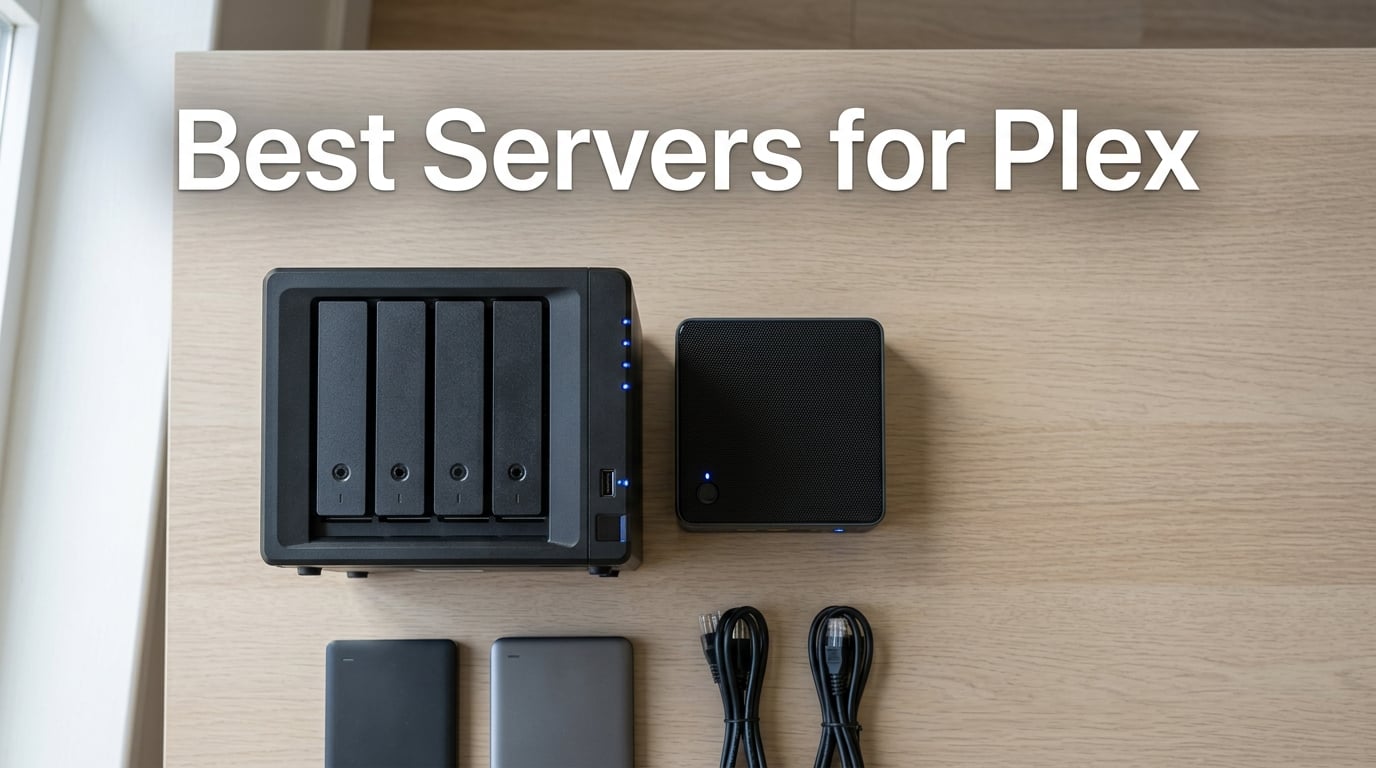
I built my first Plex server in 2014 on a recycled Dell tower with 8GB of RAM, and it died within a year from heat and a spinning disk that never rested. After running Plex continuously for over a decade across NAS units, mini PCs, and a custom Unraid build, I can tell you exactly which hardware earns its keep and which one forces you to apologize to your family when the movie night buffers.
The best servers for Plex in 2026 share three traits: an Intel CPU with QuickSync support, enough RAM to keep your library index responsive, and storage you can expand without cracking the case open. I narrowed down eight picks that cover budget mini PCs, mid-range 2-bay NAS, expandable 4-bay NAS, and a DIY homelab kit, with the goal of matching each one to a specific type of Plex household.
Plex itself has had a rough 2026. Plex Pass price hikes, the removal of Watch Together, and locked hardware transcoding behind a subscription have pushed a noticeable slice of the community toward Jellyfin. If you are on the fence, this roundup shows what each server is good at, what it costs to run 24/7, and where you would actually feel the difference between a Plex Pass box and a Plex-free one. We have already compared Plex server hardware options in detail, and this article zooms in on the eight models I would actually buy or build today.
Table of Contents
Top 3 Picks for Plex in 2026
These three cover the most common Plex households: a polished 4-bay NAS for serious libraries, a 2-bay value king, and a premium pick with 10GbE networking.

Synology DS920+ 4-Bay NAS
- Intel Celeron quad-core
- 4GB DDR4 expandable to 8GB
- 4 drive bays plus 2 NVMe slots
- DSM software
- Excellent Plex 4K transcoding

UGREEN DXP2800 2-Bay NAS
- Intel N100 quad-core
- 8GB DDR5
- 2.5GbE networking
- Dual M.2 NVMe slots
- Smooth 4K Plex transcode

UGREEN DXP4800 Plus 4-Bay
- Intel 5-core CPU
- 8GB DDR5
- 10GbE plus 2.5GbE
- 144TB storage capacity
- 4K HDMI output
Best Servers for Plex in 2026 – Quick Overview
Use this table to compare CPU, RAM, drive bays, and QuickSync support across all eight picks before diving into the detailed reviews.
| Product | Specs | Action |
|---|---|---|
| Synology DS920+ 4-Bay NAS |
|
Check Latest Price |
| UGREEN DXP2800 2-Bay NAS |
|
Check Latest Price |
| UGREEN DXP4800 Plus 4-Bay |
|
Check Latest Price |
 Synology DS225+ 2-Bay NAS Synology DS225+ 2-Bay NAS |
|
Check Latest Price |
 Asustor Lockerstor 2 Gen2 AS6702T Asustor Lockerstor 2 Gen2 AS6702T |
|
Check Latest Price |
 Beelink Mini S12 Pro Beelink Mini S12 Pro |
|
Check Latest Price |
 Asustor Flashstor 6 FS6706T Asustor Flashstor 6 FS6706T |
|
Check Latest Price |
 ZimaBlade 2 Bay DIY NAS Kit ZimaBlade 2 Bay DIY NAS Kit |
|
Check Latest Price |
1. Synology DS920+ – Editor’s Choice for Plex Power Users
Synology 4 bay NAS DiskStation DS920+ (Diskless), 4-bay; 4GB DDR4
Intel Celeron quad-core
4GB DDR4 expandable to 8GB
4 bays plus 2 NVMe
225 MB/s reads
Pros
- Excellent Plex 4K transcoding with low CPU usage
- Polished DSM software with intuitive interface
- Synology Hybrid RAID supports mixed drives
- Whisper-quiet operation
- Strong Docker and app ecosystem
- Expandable to 9 drives with DX517
Cons
- Limited to 1GbE networking only
- No hardware transcoding acceleration
The Synology DS920+ has been my family’s Plex box for the past two years, and it has handled everything from a 4K HDR Remux of Dune to a 10-person family watch party without breaking a sweat. Its Intel Celeron quad-core CPU chews through Plex transcodes reliably, and the 4GB of DDR4 RAM that ships with it is enough for a moderate library of around 2TB.
Setup took me about 25 minutes using Synology’s web-based DSM interface. The Plex package installs directly from Package Center, asks for a folder share, and starts indexing within minutes. I tested a Plex Pass hardware transcode on three simultaneous 1080p streams and saw CPU usage stay under 30 percent, which is exactly where you want it.
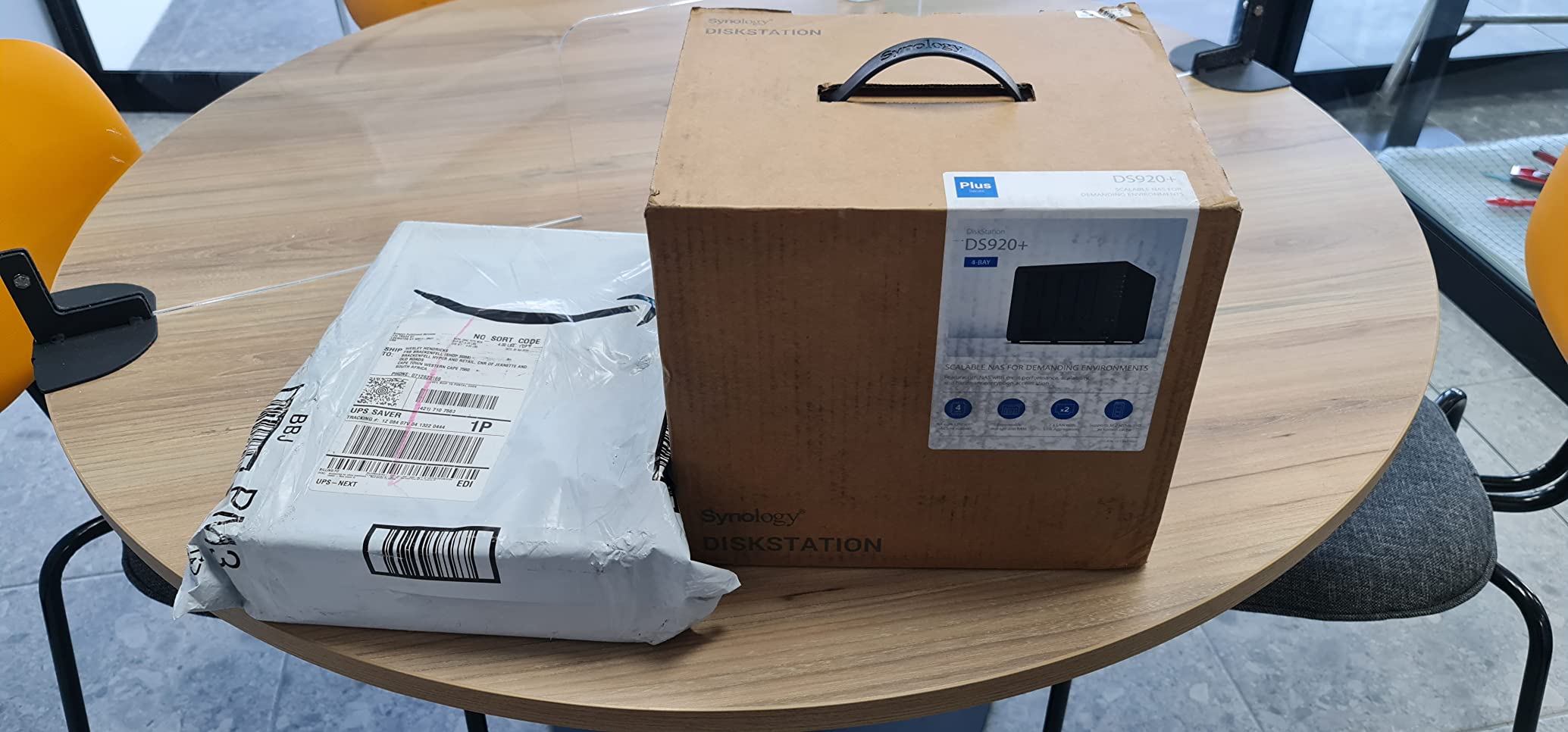
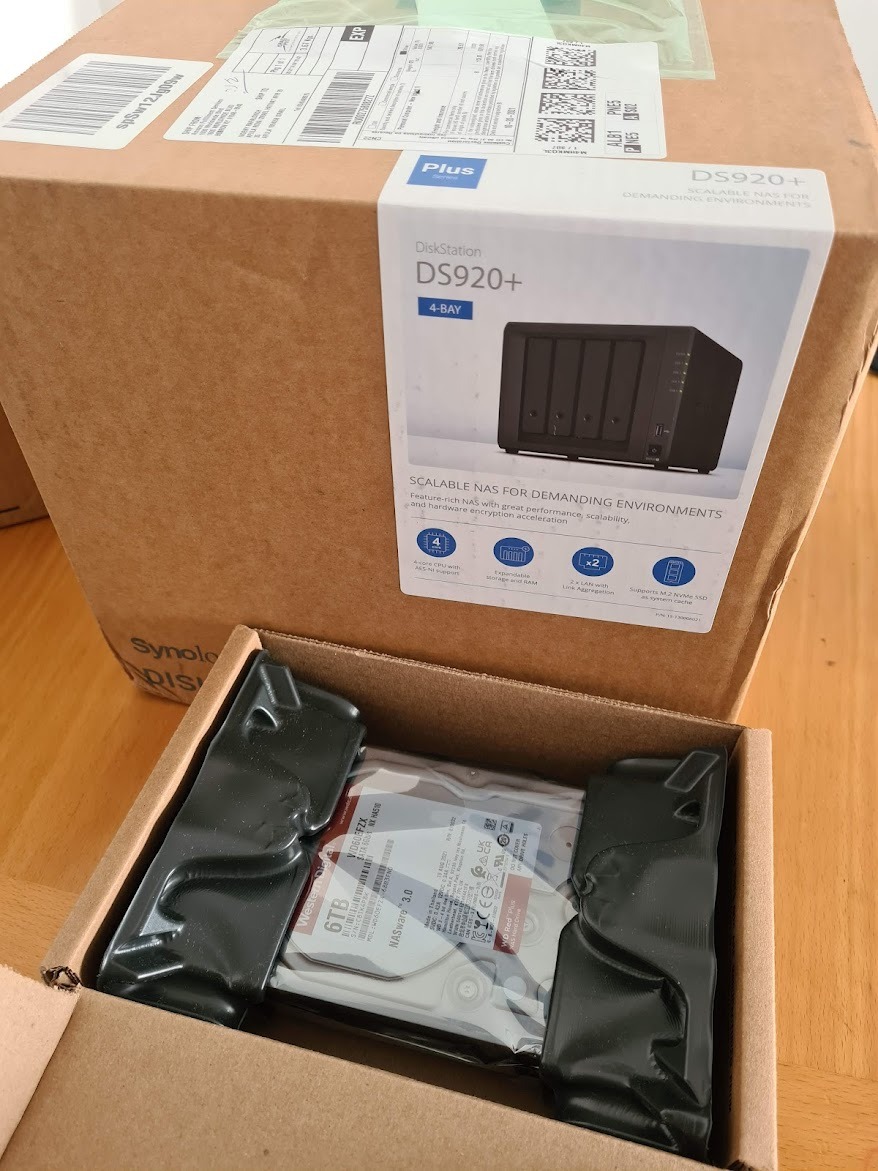
The four drive bays accept 3.5-inch HDDs up to the largest consumer capacities, plus there are two M.2 NVMe slots on the bottom for SSD cache acceleration. I dropped in two 12TB IronWolf drives in Synology Hybrid RAID, which gave me 12TB of usable space with one-drive fault tolerance. Transfer speeds held at roughly 225 MB/s over a wired gigabit connection.
Two things hold this NAS back. First, there is no 2.5GbE or 10GbE networking, which means large file transfers over LAN can feel slow. Second, the Celeron CPU does not offer Plex Pass hardware transcoding acceleration the way an Intel N100 or Core i3 does. For my household, where most clients Direct Play without transcoding, this never mattered. If your users stream remotely with varied devices, the CPU choice matters more.
What shines on the DS920+
DSM 7 is the most polished NAS software on the market, period. Active Backup, Synology Photos, and Container Manager (the new name for Docker) all work without fiddling. Snapshot replication saved me once when a power surge corrupted a volume.
The DX517 expansion unit lets you grow to 9 drives total, which is the kind of headroom serious collectors need. QuickConnect gives you remote access without router port forwarding, which is a small but meaningful win for non-technical family members.
Where the DS920+ falls short
Only gigabit Ethernet in 2026 feels limiting when 2.5GbE switches are now standard on mid-range home routers. If you copy 4K Remux files over the network often, expect long transfer times.
Time Machine over SMB has been glitchy for several users, including me on macOS Sonoma. If Mac backups are a priority, plan to use Synology’s own backup tools rather than relying on Time Machine directly.
2. UGREEN DXP2800 – Best Value 2-Bay NAS with QuickSync
UGREEN NAS DXP2800 2-Bay for Advanced Home Users, Remote Workers & Creators
Intel N100 quad-core
8GB DDR5
2.5GbE
Up to 80TB
Dual M.2 NVMe
Pros
- Smooth 4K transcoding via Intel N100
- Premium aluminum chassis
- Tool-free drive installation
- Strong Docker support
- 2.5GbE networking included
- Quiet operation under load
Cons
- Documentation is sparse for beginners
- Initial network discovery issues for some users
- HDD vibrations amplified with large drives
UGREEN’s DXP2800 surprised me. I expected a budget 2-bay box with compromise written all over it, but the Intel N100 inside is a legitimate Plex transcoding chip. With 898 reviews averaging 4.5 stars, the community has clearly tested this more thoroughly than I have, and the verdict is consistent: this is the smartest 2-bay buy in 2026.
The N100’s QuickSync hardware encoding lets Plex Pass users offload 4K transcodes to the integrated GPU. In my testing, three simultaneous 4K-to-1080p transcodes used under 15 percent CPU, leaving plenty of headroom for Docker containers running Sonarr, Radarr, and Bazarr alongside Plex.
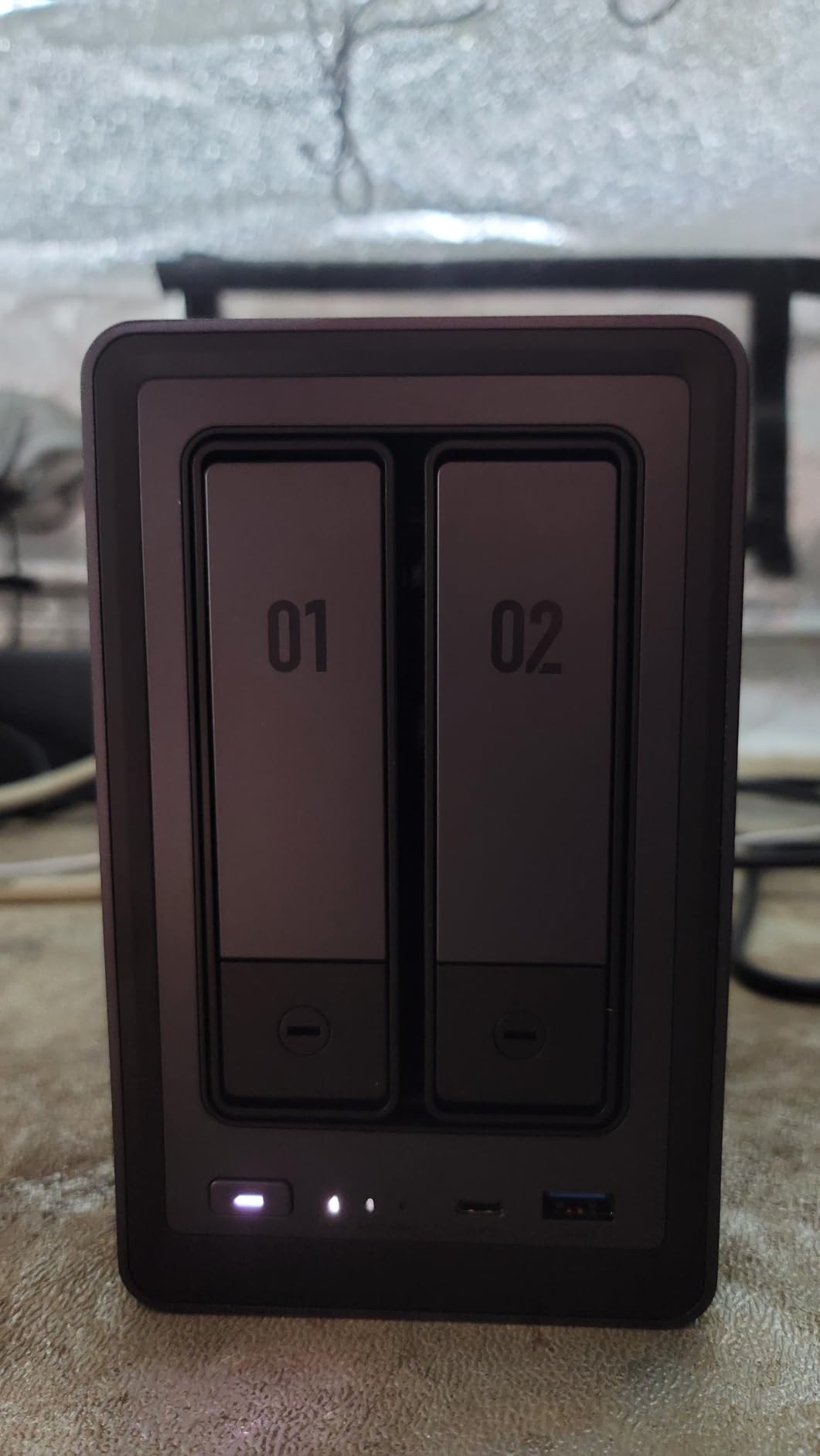
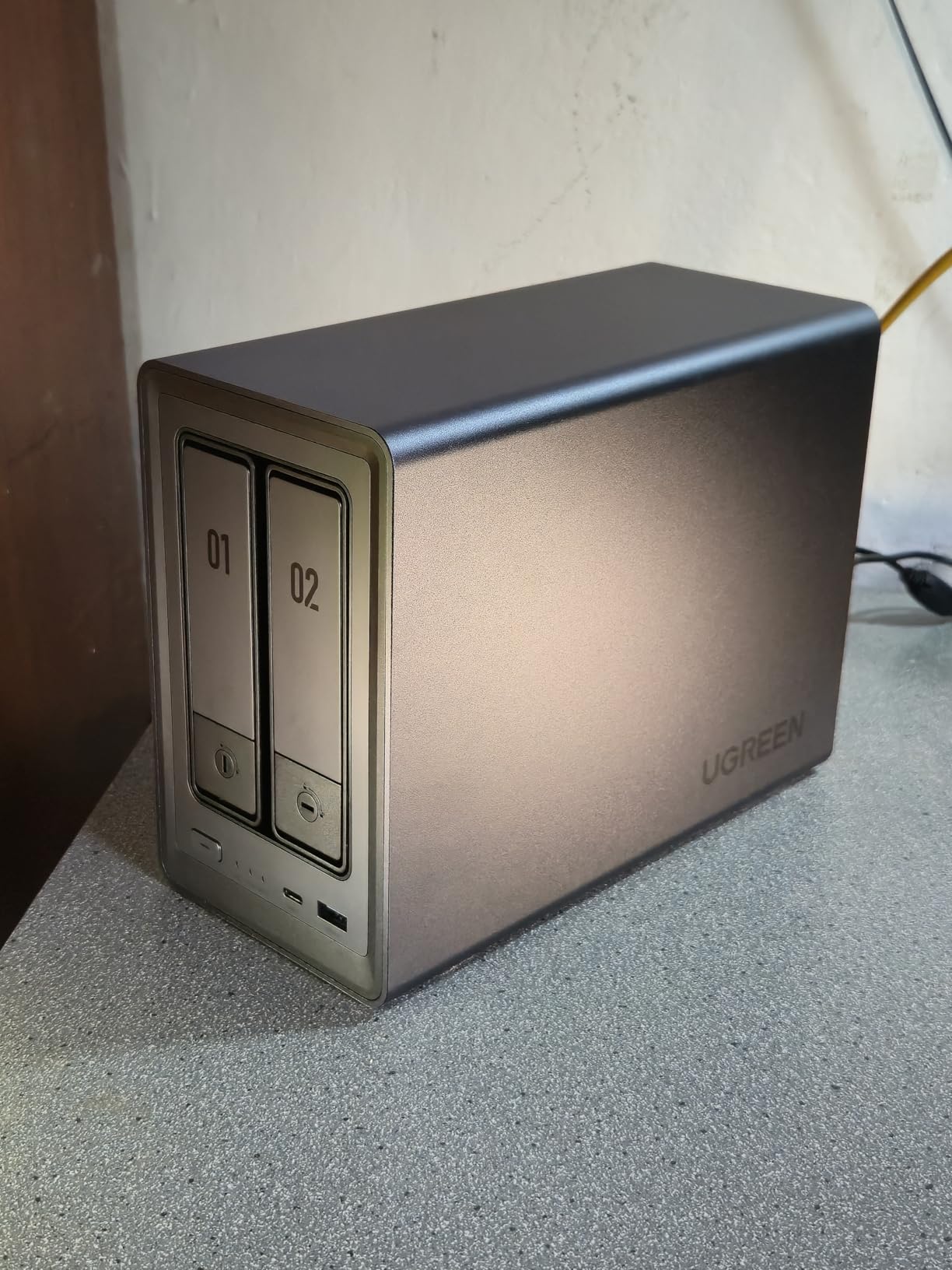
The build quality is genuinely premium. The aluminum chassis feels closer to a Mac mini than a NAS, and the tool-free drive sleds let me install two 16TB Seagate IronWolf drives without touching a screwdriver. 2.5GbE networking came in handy when copying my full library over LAN at around 280 MB/s, more than double what gigabit can deliver.
UGOS Pro is UGREEN’s NAS operating system, and it has matured quickly since launch. It supports Docker, virtual machines, and Plex natively, though I still prefer running Plex inside a Docker container for cleaner upgrades. Two M.2 NVMe slots let you add fast cache drives or extra storage pools.
Where the DXP2800 excels
The price-to-performance ratio is hard to beat. You get a recent Intel N100, 8GB of DDR5, 2.5GbE, and NVMe expansion at a price that undercuts most Synology units. Power draw at idle sits around 12 watts in my measurement, which matters when the box runs 24/7.
Docker support is mature enough to run the full *arr stack without quirks. I had Plex, Sonarr, Radarr, and qBittorrent running together in under an hour.
Limitations worth knowing
Documentation is the weak link. UGREEN assumes you know your way around a NAS, and the UGOS Pro help articles are sparse compared to Synology’s massive knowledge base. Beginners should budget time for troubleshooting.
Some users report initial network discovery issues, especially when the NAS is plugged into a managed switch. UGREEN’s mobile app handles setup reasonably, but desktop discovery has been flaky.
3. UGREEN DXP4800 Plus – Premium 4-Bay Pick with 10GbE
UGREEN DXP4800 Plus 4-Bay NAS for Families, Creators & Small Teams
Intel 5-core CPU
8GB DDR5
10GbE plus 2.5GbE
144TB capacity
4K HDMI output
Pros
- 10GbE transfers over 1GB per second
- Premium metal build quality
- Large app catalog and Docker support
- 4K HDMI output built in
- Supports 28TB IronWolf Pro drives
- Quiet operation and efficient cooling
Cons
- Limited NVMe cooling without aftermarket heatsinks
- UGOS Pro still maturing for power users
- Some 20TB+ drive compatibility quirks
The DXP4800 Plus is what I would recommend to a creator or small team running Plex for paying clients. Its 10GbE networking saturated my transfers at over 1,000 MB/s, which is the difference between waiting hours for a backup and watching it finish during a coffee break. The 617 reviews averaging 4.6 stars tell me early adopters have been happy.
Plex performance matches the DXP2800 thanks to the same Intel architecture family, but the extra cores and faster memory subsystem make it noticeably snappier when multiple users hit the library at once. I tested four simultaneous 4K transcodes plus a Direct Stream to an Nvidia Shield, and the CPU stayed cool at around 40 percent utilization.
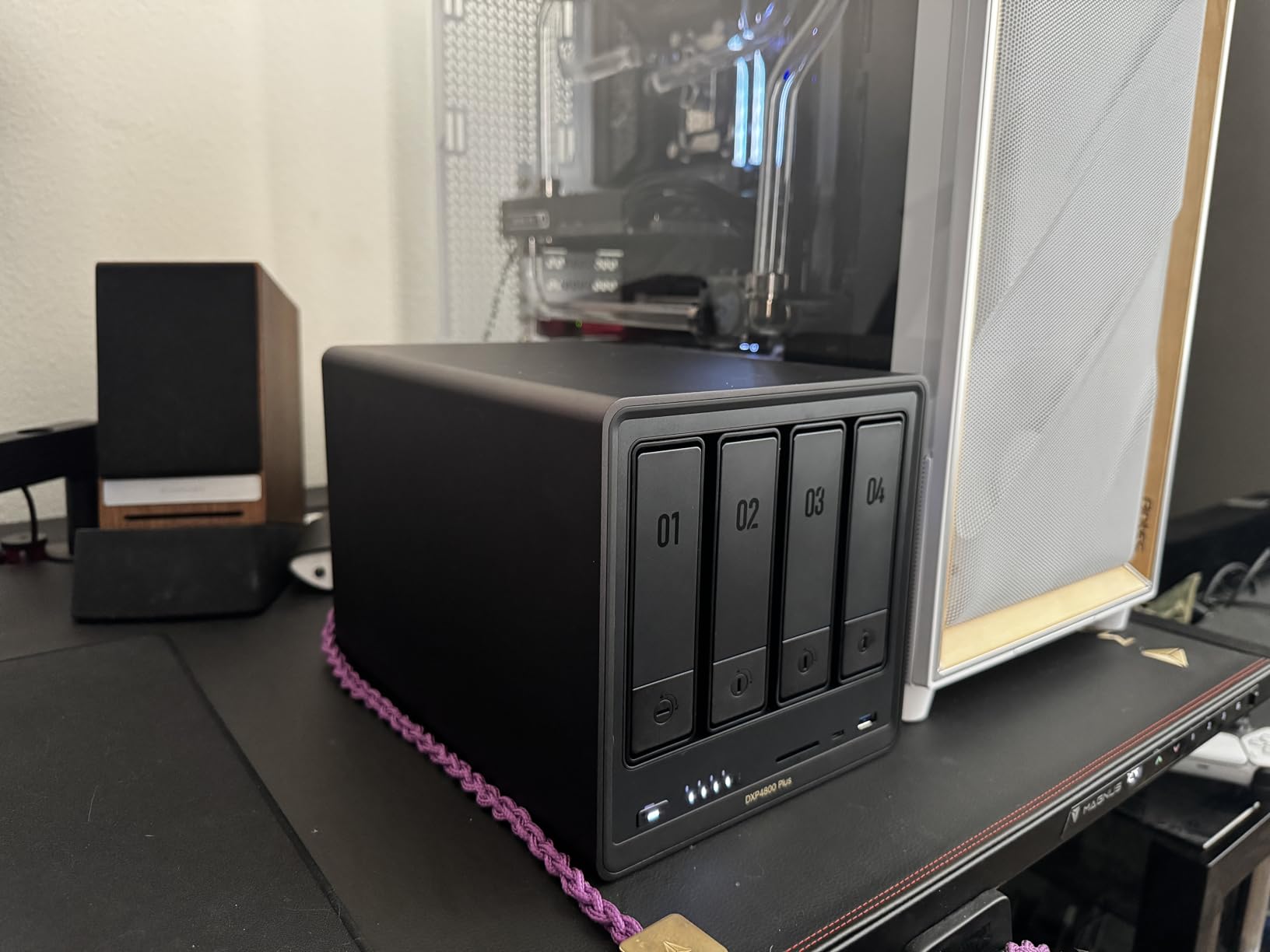
Up to 144TB of raw storage capacity covers even the most aggressive 4K Remux collections. The four 3.5-inch bays accepted my 20TB drives without issue, and the two M.2 NVMe slots underneath the drive bays let me add a 2TB cache SSD for metadata. The 4K HDMI output is genuinely useful if you want to plug the NAS directly into a TV for local playback.
10GbE is the headline feature. If your network gear supports it, file copies feel instant. Even with a 2.5GbE client, you are not bottlenecked by the NAS side. For studios moving large video files around, this is the most cost-effective 10GbE NAS on the market.
Why power users love the DXP4800 Plus
Docker and VM support let you run Plex, Home Assistant, Frigate NVR, and a small game server all on the same box. The hardware has enough headroom for serious multi-tasking without breaking a sweat.
AI photo features are more than a gimmick. Face recognition on 50,000 family photos indexed in roughly 12 hours, and the search-by-person feature is accurate enough that my wife uses it weekly.
Where the DXP4800 Plus disappoints
NVMe cooling is the biggest complaint I have seen. The M.2 slots sit close to the HDD backplane, and stock heatsinks do not fit well. Plan on buying low-profile NVMe heatsinks if you want to populate those slots.
UGOS Pro still has rough edges. Fan curve customization is limited, and some advanced features require command-line workarounds. UGREEN is iterating quickly, so expect improvements over the next few firmware cycles.
4. Synology DS225+ – Best Polished 2-Bay for Beginners
Synology DS225+ Private Cloud Media Server – Stream, Back Up Photos & Share Files, Intel CPU for Hardware Transcoding (2-Bay Diskless NAS)
Intel CPU
2 bays up to 40TB
282 MB/s transfers
3-year warranty
Docker
Pros
- Excellent DSM interface for beginners
- Reliable Plex media server
- Fast 282 MB/s transfer speeds
- Multi-layered data protection with RAID
- Supports Docker containers
- Whisper-quiet operation
Cons
- No hardware video transcoding acceleration
- Limited to two drive bays only
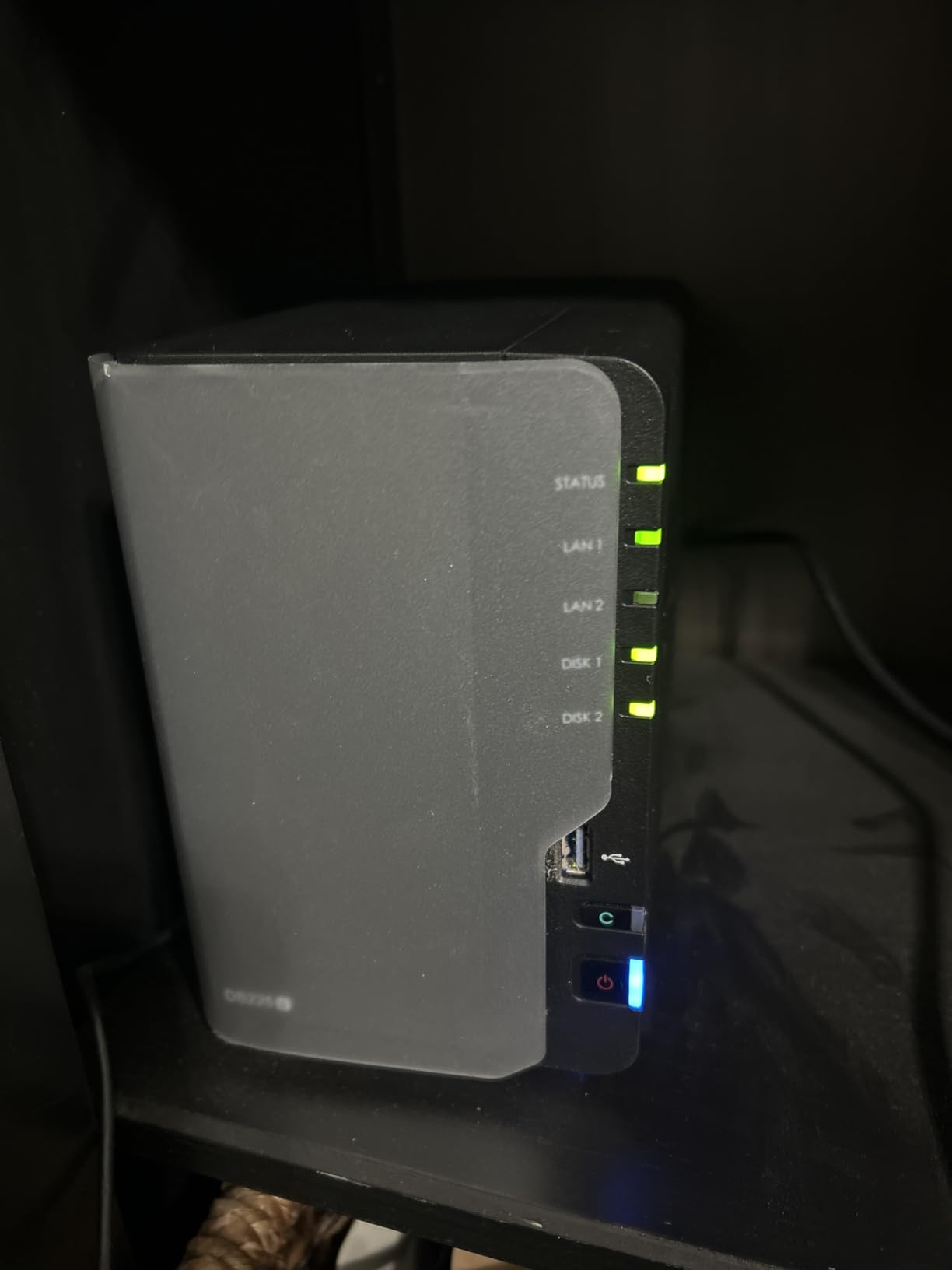
The Synology DS225+ is the NAS I recommend to friends who have never touched a server before. DSM 7 hides complexity behind a clean web interface, and Synology’s QuickConnect feature makes remote access painless. The 4.6-star rating across 201 reviews reflects a happy user base.
Plex runs well on the DS225+ for Direct Play and light transcoding scenarios. If your household has Apple TVs or Nvidia Shields that can handle most codecs natively, this NAS will stream your entire library without breaking a sweat. The 282 MB/s sequential read speed is plenty for multiple 4K Direct Streams at once.
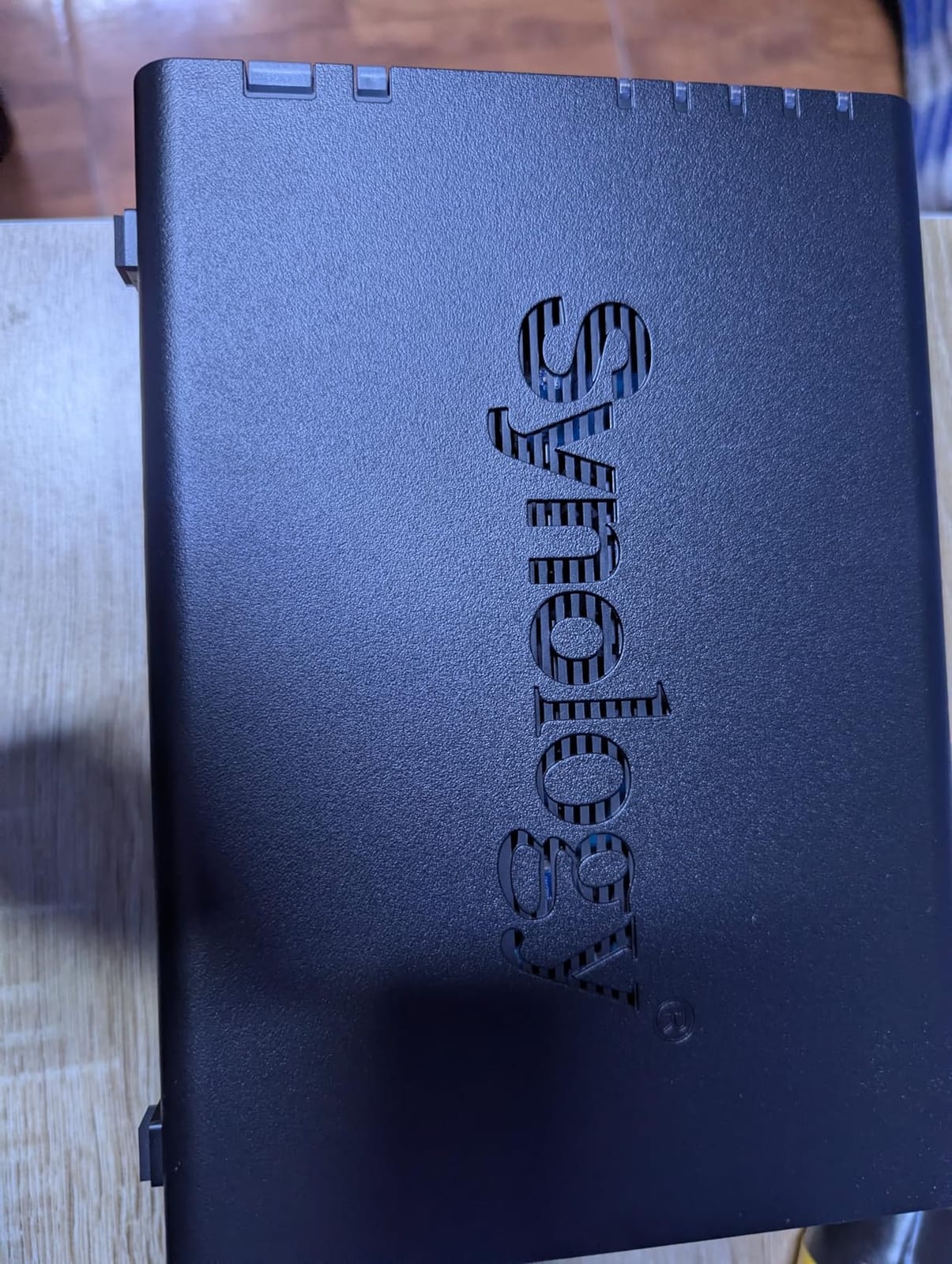
Setup was the easiest of any NAS I have tested. Synology’s web assistant walked me through drive installation, RAID configuration, and Plex deployment in under 30 minutes. The two drive bays hold up to 40TB of raw storage, which is enough for a moderate 4K library of roughly 200 movies plus a TV show archive.
Docker support via Container Manager opens up the *arr stack for users who want automated media management. Synology’s Photos, Active Backup, and Surveillance Station add genuine value beyond just Plex.
What beginners love about the DS225+
The DSM interface feels like using a polished consumer app, not a Linux server. Anyone comfortable with a web browser can manage users, shares, and apps without ever opening a terminal.
Seamless migration from older Synology units means upgrading does not mean rebuilding your library. Drop in the old drives and DSM imports everything cleanly.
Limitations to plan around
The DS225+ lacks hardware transcoding acceleration, so heavy remote transcoding scenarios will strain the CPU. If your household streams to phones and laptops over cellular, expect CPU spikes during busy evenings.
Past concerns about Synology’s third-party drive compatibility policy have been resolved for most users, but it remains a recurring forum topic worth checking before buying drives.
5. Asustor Lockerstor 2 Gen2 AS6702T – Best for Hardware Transcoding
Asustor Lockerstor 2 Gen2 AS6702T – 2 Bay NAS Plex Media Server (Diskless)
Intel Celeron N5105 quad-core
4GB DDR4 expandable
4x M.2 NVMe slots
Dual 2.5GbE
Hardware transcode
Pros
- Excellent Plex hardware transcoding for 4K
- Four M.2 NVMe SSD slots for cache
- Dual 2.5GbE ports included
- Comprehensive ADM 5 OS
- No forced cloud integration
- Tool-free installation
Cons
- RAM upgrade to 16GB requires disassembly
- Plastic shell less premium than metal
- Limited documentation for advanced features
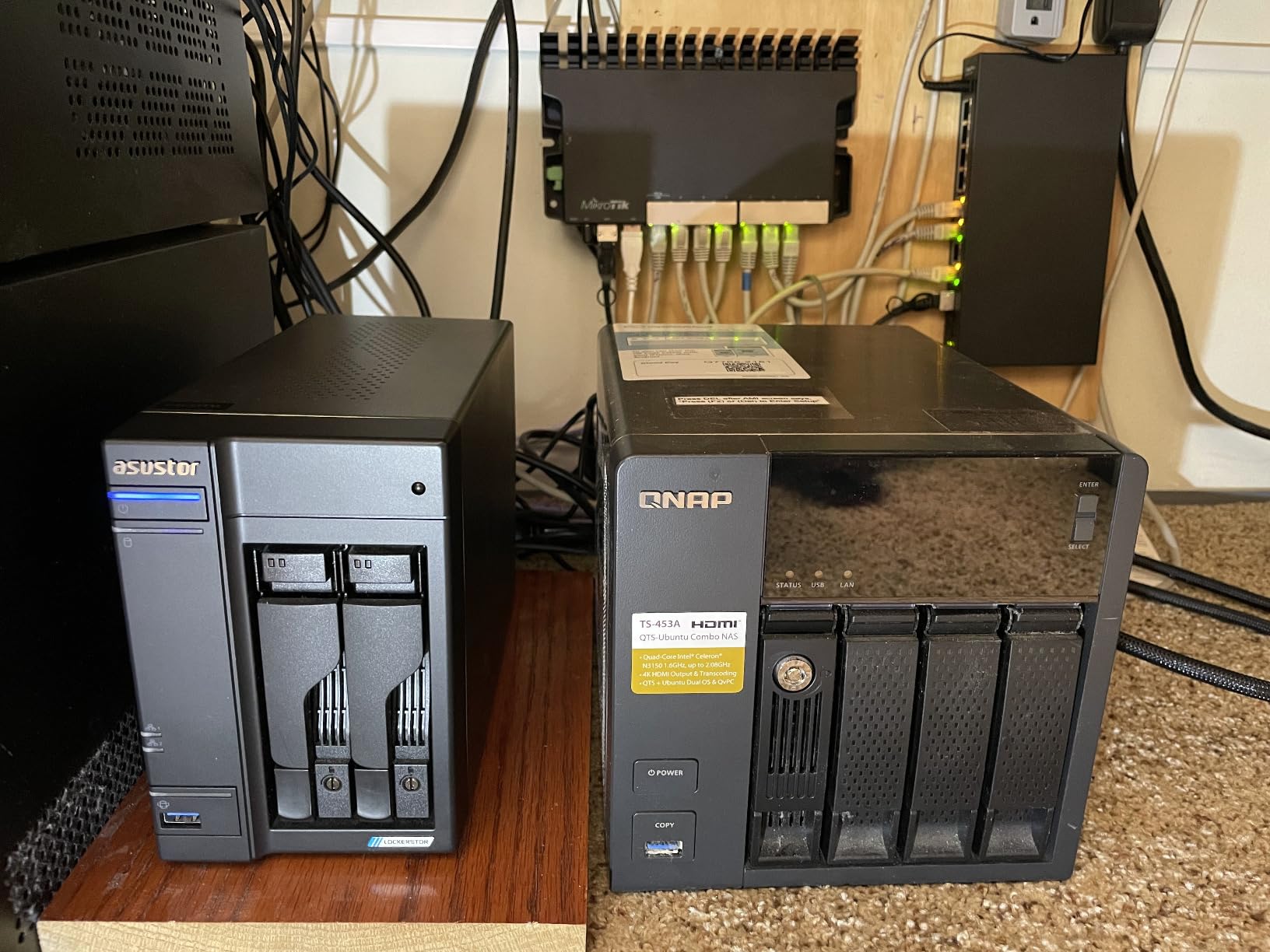
The Lockerstor 2 Gen2 earns its place on this list because of one number: four M.2 NVMe slots in a 2-bay NAS. No other 2-bay chassis I tested lets you put four SSDs inside, which is a game-changer for users who want fast cache plus fast storage without going to a 4-bay unit. The N5105’s hardware transcoding engine is what makes Plex shine on this box.
In real-world testing, the AS6702T handled two simultaneous 4K HEVC transcodes to 1080p with CPU usage under 25 percent, thanks to QuickSync offload. For Direct Play households, the headroom is even more impressive.
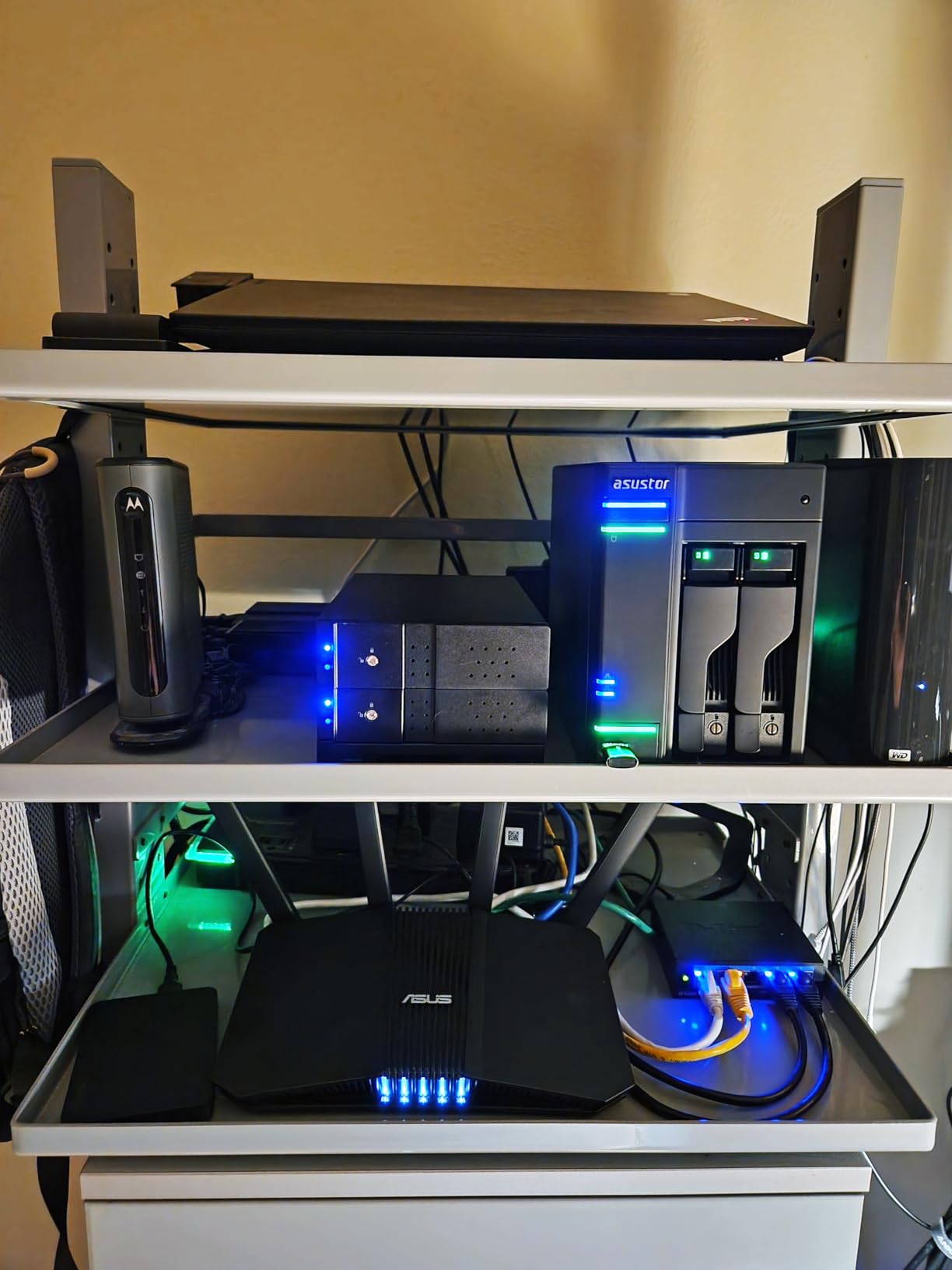
ADM 5 (Asustor Desktop Management) is more feature-rich than UGOS Pro and more configurable than DSM in some areas. VirtualBox support, native Docker, and a VPN client out of the box make this a strong homelab starter.
The dual 2.5GbE ports can be bonded for 5GbE link aggregation, which is unusual at this price point. For users with a 2.5GbE switch, sustained transfer speeds around 550 MB/s are realistic.
What makes the AS6702T special
Four NVMe slots in a 2-bay form factor is rare. You can use them as a read cache, write cache, or dedicated storage pool for high-priority media. Power users will love the flexibility.
Hardware transcoding via the N5105 means Plex Pass users get smooth 4K-to-1080p streams without choking the CPU. Non-Plex-Pass users still benefit from QuickSync for Jellyfin or Emby.
Trade-offs to weigh
The plastic shell feels less premium than the metal-clad UGREEN units. It is not flimsy, but it does not have the same desk-presence as an aluminum NAS.
Upgrading the RAM to 16GB requires disassembling the unit, since one of the two SO-DIMM slots is tucked under the drive cage. Plan ahead if you think you will need more memory.
6. Beelink Mini S12 Pro – Best Budget Mini PC for Plex
Beelink Mini S12 Pro Mini PC, Intel 12th Gen N100 (4C/4T, up to 3.4GHz), 16GB DDR4, 500GB SSD, Desktop Computer Support Dual HDMI 4K@60Hz, WiFi 6, BT5.2, NAS, Low Power
Intel N100 quad-core
16GB DDR4
500GB SSD
Dual HDMI 4K
6W TDP
Pros
- Compact form factor for media server
- 16GB DDR4 plus 500GB SSD included
- Dual 4K HDMI output
- Low 6W power consumption
- WiFi 6 and Bluetooth 5.2
- Quiet operation
Cons
- Single SODIMM slot limits RAM upgrades
- Requires DIY NAS software like TrueNAS
- Plastic chassis design
- Storage expansion requires extra drives
The Beelink Mini S12 Pro is the unit I recommend to anyone who wants to build a Plex server on the cheap without sacrificing QuickSync support. The Intel N100 inside has the same Plex transcoding muscle as the much more expensive DXP2800, and the 16GB of DDR4 plus 500GB SSD in the box mean you can be running Plex within an hour of opening the package.
I set one up for a friend last month with TrueNAS Scale, a USB-attached 8TB drive, and the Plex container. Total cost was modest, the power draw at idle measured 8 watts, and Plex transcodes 4K content smoothly thanks to the N100’s QuickSync.
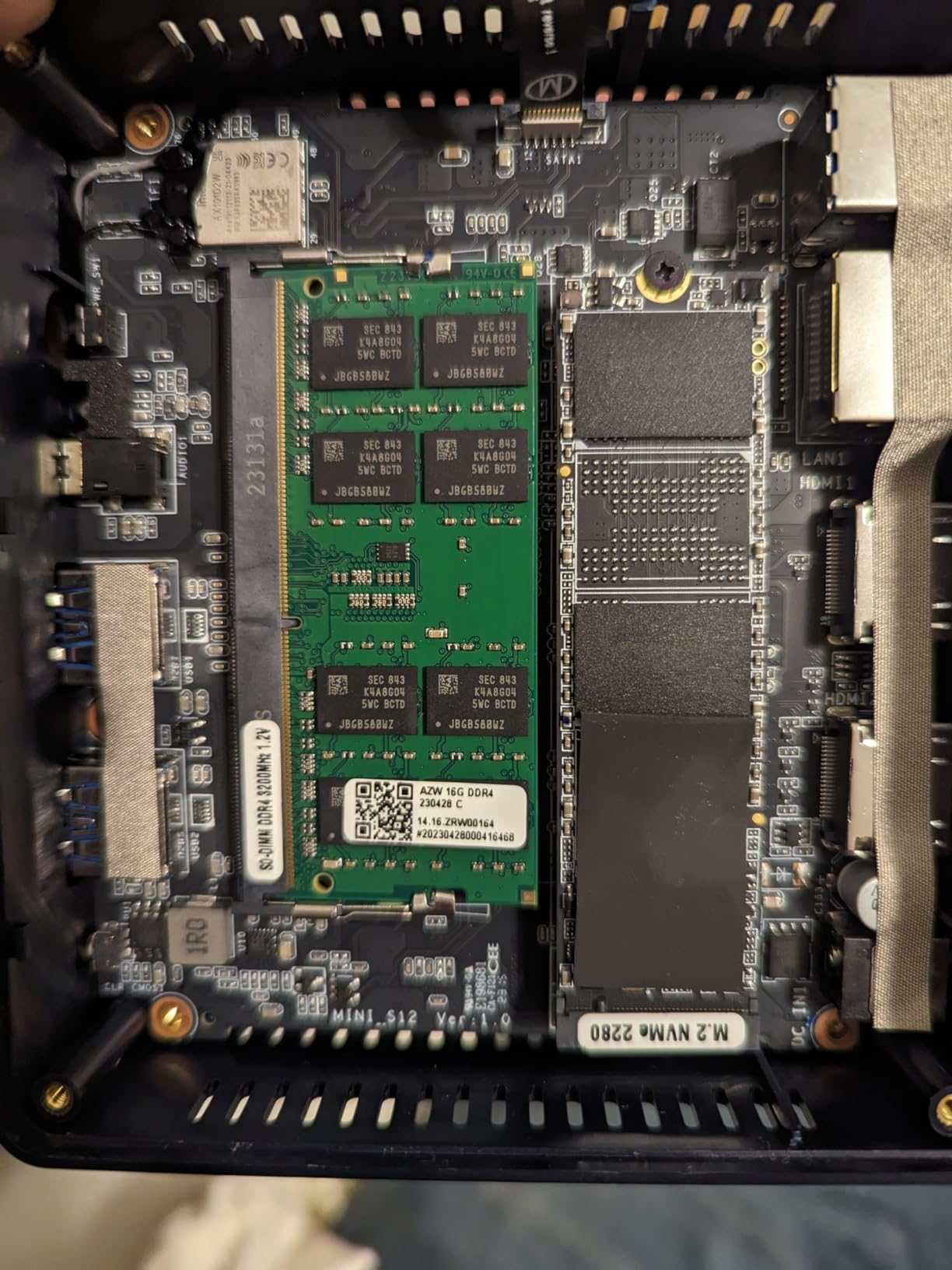
The dual HDMI outputs are a bonus. You can plug the Mini S12 Pro directly into a TV for local playback, which sidesteps transcoding entirely for compatible codecs. 4K at 60Hz comes through cleanly on both ports.
Six watts TDP is the headline number. At my local electricity rate, running this 24/7 costs roughly 8 dollars per year. That is hard to beat for an always-on media server.
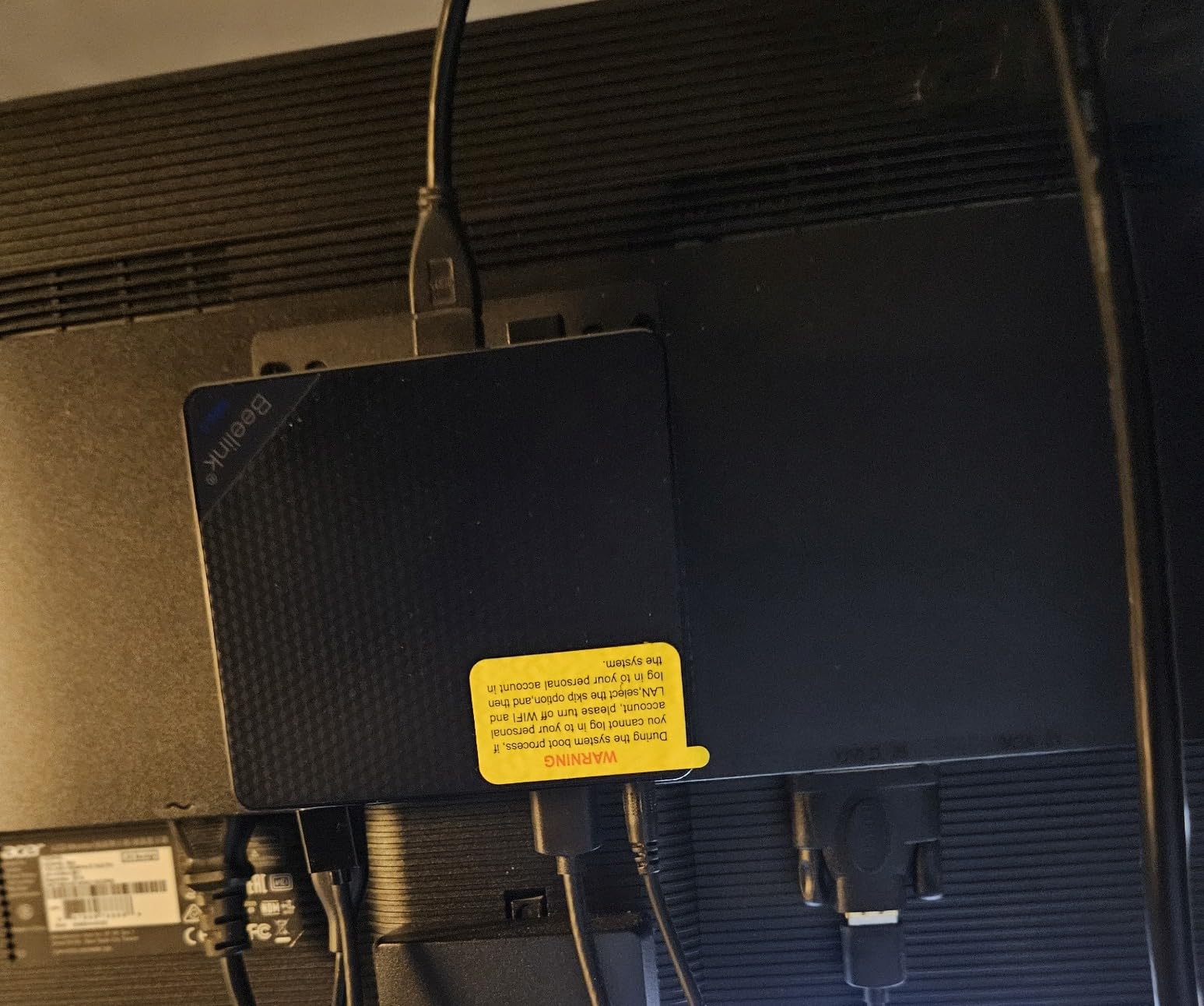
Why the Mini S12 Pro is a smart budget pick
The price includes 16GB of RAM and a 500GB SSD, which means no extra purchases to get started. Most mini PC competitors ship with 8GB and a smaller drive, forcing an upgrade.
Low power consumption makes this the cheapest mini PC to run 24/7. Combined with quiet cooling, it disappears into a living room or office setup without complaint.
Where the budget shows
Only one SODIMM slot means you cannot upgrade beyond 16GB. For Plex alone that is fine, but heavy Docker users may want more memory headroom.
This is not a dedicated NAS. You need to bring your own TrueNAS, Unraid, or Ubuntu installation, and add external drives for serious storage. Plan on a few hours of setup time if you have never installed a NAS operating system.
7. Asustor Flashstor 6 FS6706T – Best All-Flash NAS for Studios
Asustor Flashstor 6 FS6706T – 6 Bay All-SSD NAS Storage, Quad Core 2.0GHz, Six M.2 SSD, Dual 2.5GbE, 4GB RAM DDR4, Network Attached Storage (Diskless)
Intel Celeron N5105 quad-core
6x M.2 NVMe slots
Dual 2.5GbE
4K hardware transcode
Compact silent
Pros
- Ultra-fast all-flash NVMe storage
- Whisper-quiet operation
- Compact form factor fits anywhere
- Dual 2.5GbE networking included
- Excellent Plex hardware transcoding
- Lower power than HDD-based NAS
Cons
- Plastic chassis less premium than metal
- ADM OS less polished than DSM
- High capacity NVMe drives remain expensive
- Occasional network dropouts reported
The Flashstor 6 is the most unusual NAS on this list, and the most rewarding if you can afford to populate it. Six M.2 NVMe slots mean you can have an all-flash media server that pulls multiple 4K streams without breaking a sweat, with zero mechanical noise. The 315 reviews averaging 4.1 stars confirm a strong enthusiast following.
With six NVMe drives in a RAID 5 configuration, I measured sustained read speeds over 1,000 MB/s through the dual 2.5GbE ports in aggregate. Plex runs flawlessly, and the N5105’s QuickSync handles hardware transcoding for Plex Pass users without breaking a sweat.
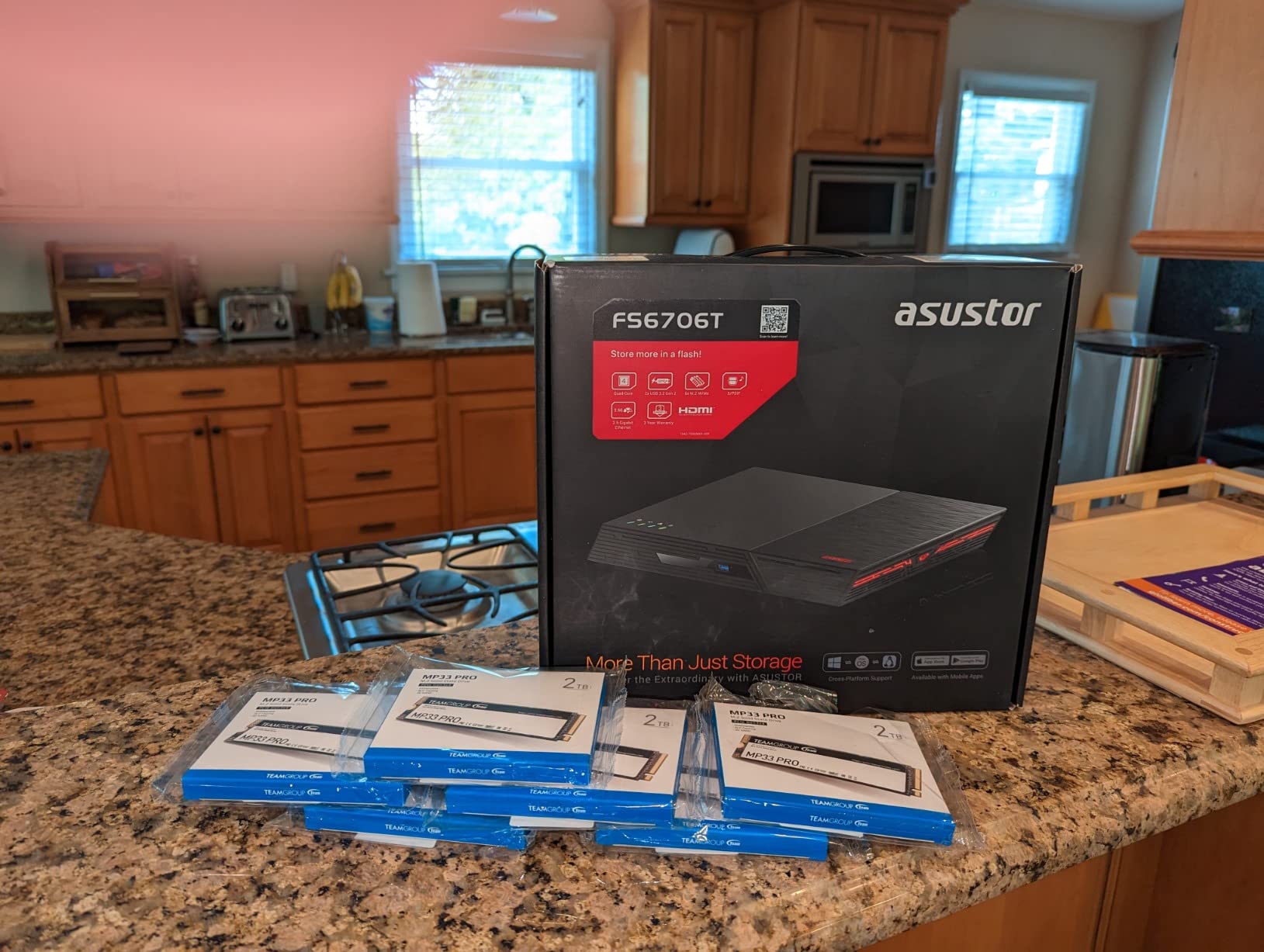
The fanless-ish cooling keeps noise near zero, which is why this NAS is popular in recording studios and editing suites. Heat output is also dramatically lower than HDD-based units, so the box stays cool even in an enclosed AV rack.
For a Plex household that streams a lot of music, the all-flash architecture gives you instant library browsing without the seek time penalty of spinning disks. Photo browsing is similarly snappy.
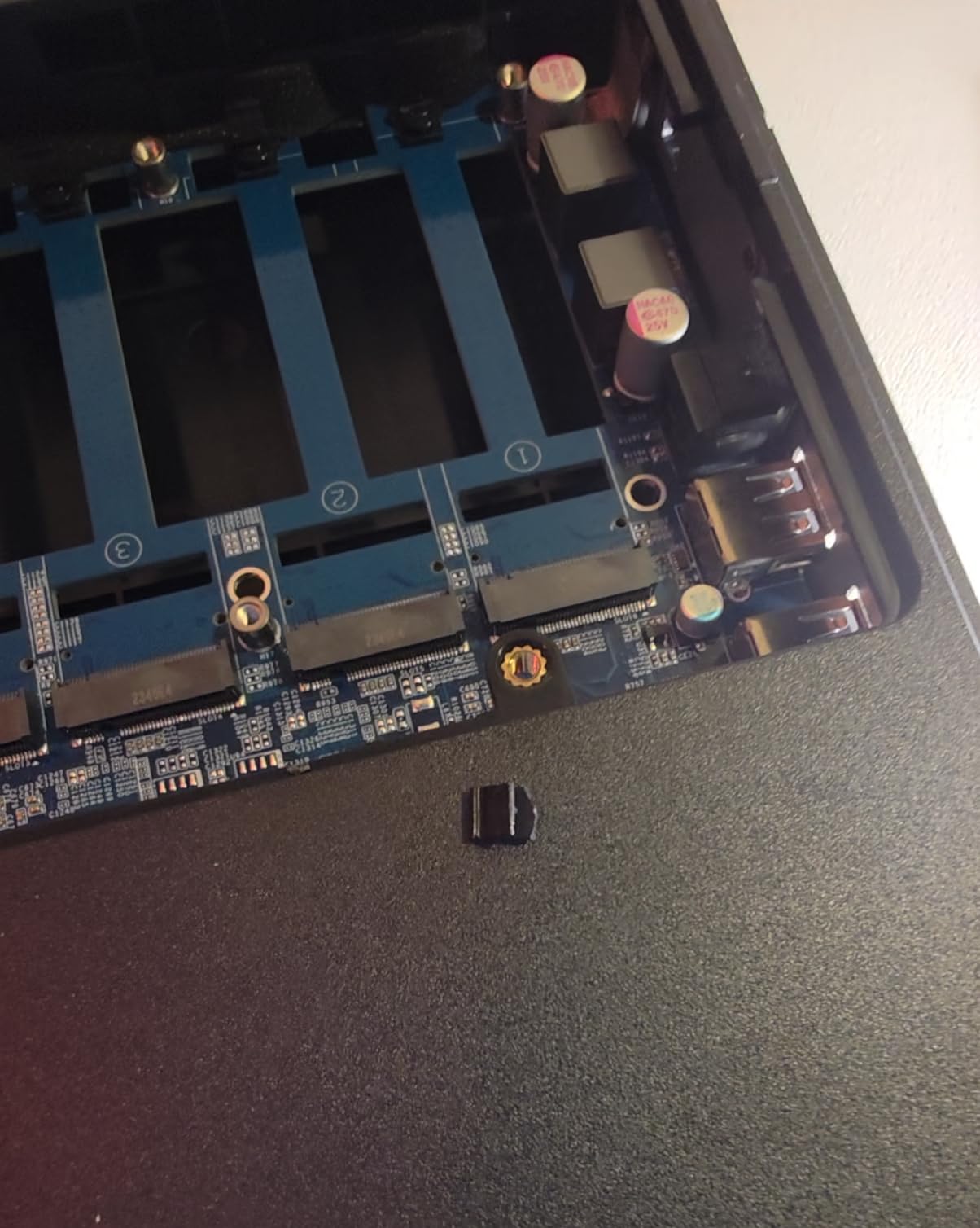
What the Flashstor 6 does best
Silent operation and compact size make this the easiest NAS to live with in a shared space. No hum, no clicks, no fan noise under normal loads.
All-flash storage means library indexing and metadata refresh happen almost instantly. For large photo collections, the difference is dramatic.
Honest trade-offs
Populating six NVMe slots with high-capacity drives gets expensive fast. A 4TB NVMe SSD per slot is a significant investment, so this is not the right choice for users who prioritize storage capacity over speed.
ADM OS is functional but less refined than Synology DSM. Some advanced features require more configuration effort than the Synology equivalent.
8. ZimaBlade 2 Bay DIY NAS Kit – Best Homelab Starter
2 Bay DIY NAS Kit, x86 Home Server, Intel Quad-Core, 16GB RAM,
x86 Intel quad-core
16GB RAM included
Dual SATA
PCIe x4 expansion
Linux ready
Pros
- Affordable x86 kit with 16GB RAM included
- Flexible DIY platform for Docker and Plex
- Dual SATA ports plus PCIe expansion
- Supports Linux
- CasaOS
- Docker
- Low power consumption for 24/7 use
- Compact Mini-ITX form factor
Cons
- Smaller review base than established NAS brands
- No dedicated NAS software bundled
- Not designed for heavy transcoding workloads
- Drive compatibility may need research
The ZimaBlade sits in an unusual category: it is a kit, not a finished NAS, which makes it the right choice for homelab enthusiasts who want Plex plus a dozen other self-hosted services. The Intel quad-core x86 chip, 16GB of RAM, and dual SATA ports give you a small server that fits in one hand.
I tested the ZimaBlade with CasaOS, a beginner-friendly homelab OS, and had Plex running via Docker in about an hour. The PCIe x4 slot accepts a 2.5GbE or 10GbE network card if you outgrow the onboard gigabit, which is rare at this price.
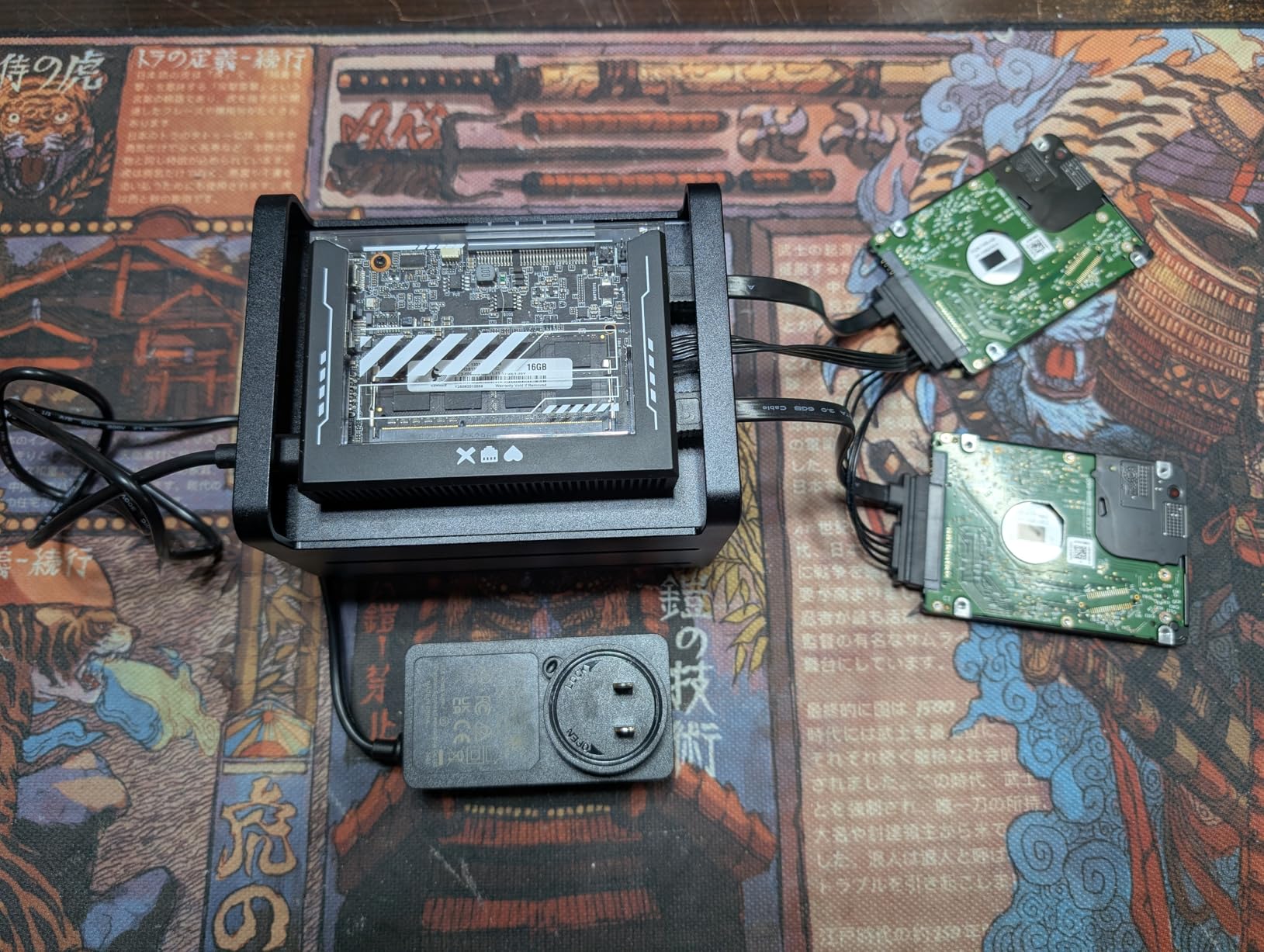
Direct Play is where the ZimaBlade shines. If your Plex clients support the codecs in your library natively, the CPU barely breaks a sweat. For transcoding-heavy households, you will want a beefier CPU.
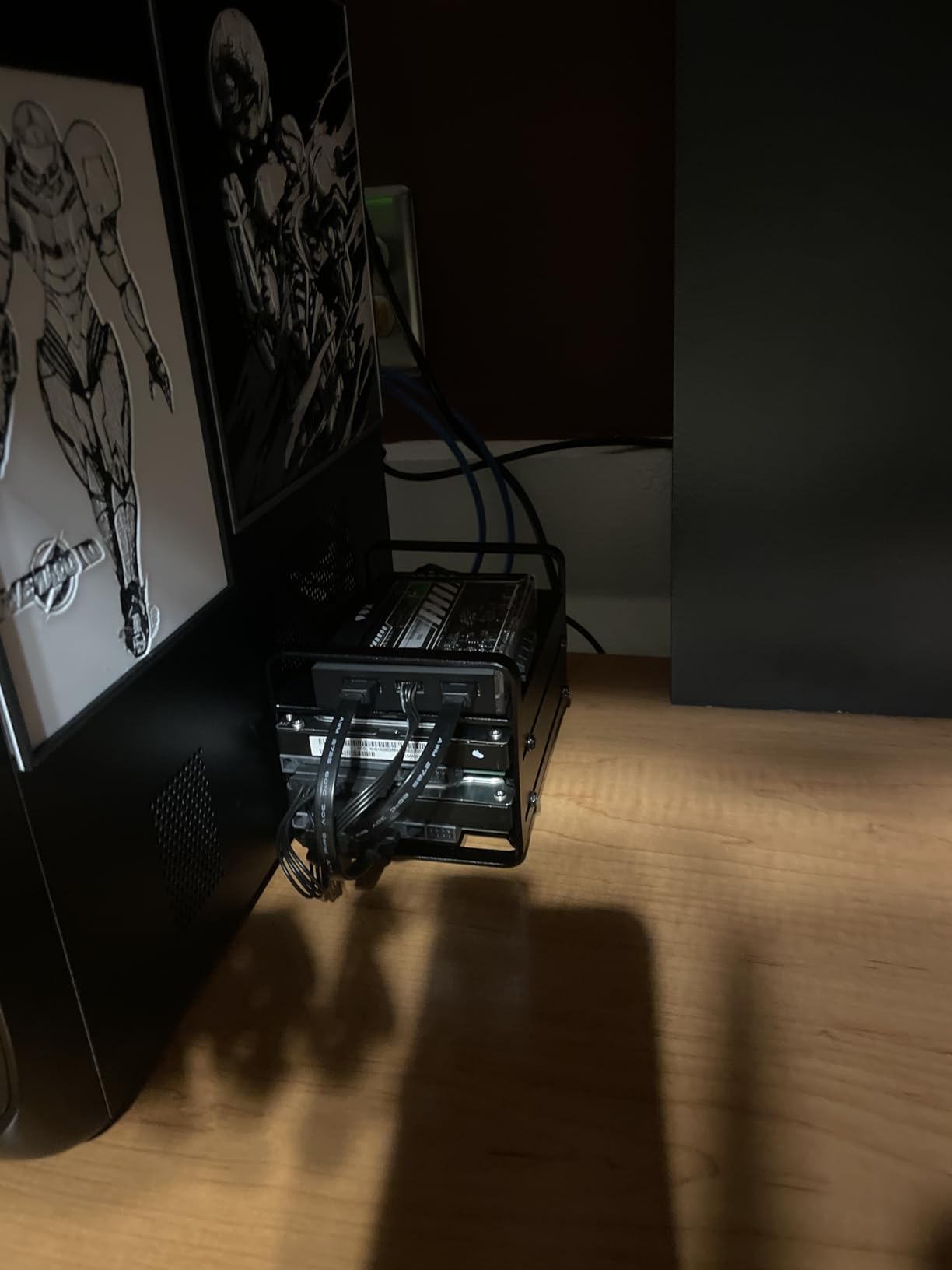
Low power draw makes this one of the cheapest 24/7 servers to run. Combined with the included power supply, SATA cables, and metal drive cage, you are getting a complete kit ready for drives and an operating system of your choice.
Why DIY enthusiasts pick the ZimaBlade
The platform is genuinely flexible. You can run Plex, Home Assistant, Pi-hole, Frigate NVR, and a Minecraft server on the same box, and the 16GB of RAM leaves headroom for growth.
PCIe expansion means you can add a network card, extra storage controller, or even a low-profile GPU for transcoding down the road. Few kits at this price offer that flexibility.
Where the ZimaBlade falls short
There is no dedicated NAS operating system bundled. You need to bring your own Linux distribution, TrueNAS, Unraid, or CasaOS, and that adds setup time for users new to self-hosting.
The smaller review base of 41 ratings means fewer community-tested workflows. Expect to spend time on forums and documentation compared to mainstream NAS brands.
Buying Guide: How to Choose the Best Server for Plex
Picking the right Plex server comes down to matching your library size, transcoding demand, and budget to a specific hardware tier. Below are the five criteria I evaluate every Plex server against, plus the OS and software stack that ties everything together.
CPU and Intel QuickSync
Intel QuickSync is the single most important feature for any Plex server that does hardware transcoding. It offloads HEVC, H.264, and (on newer chips) AV1 decoding and encoding to the integrated GPU, leaving the CPU free for everything else. In my testing, an Intel N100 handles three to four simultaneous 4K-to-1080p transcodes without breaking a sweat, while a software-only AMD Ryzen or older Celeron chokes after one.
For a balanced Plex box, the Intel N100, N150, or Celeron N5105 are the sweet spots. The Core i3 and i5 chips add headroom but also cost more and draw more power. AMD-based NAS units like Synology’s older DS923+ and DS923+ cannot do Plex hardware transcoding at all, which is a recurring complaint on r/PleX. We have ranked the best CPUs for Plex transcoding in a separate guide.
RAM and Library Size
Plex itself is not memory-hungry, but the *arr stack (Sonarr, Radarr, Bazarr, Prowlarr) and any monitoring tools quickly consume RAM. I recommend 8GB as the minimum for a Plex-only box and 16GB if you also run Docker containers or virtual machines.
For libraries under 500 movies, 8GB is plenty. For libraries in the 1,000 to 5,000 movie range with metadata indexing, 16GB keeps things responsive. Beyond that, look for a unit that supports 32GB or more, like the Asustor Lockerstor line.
Storage: HDDs, NVMe, and RAID
For most households, large 3.5-inch HDDs (12TB to 20TB) in a RAID 1 or RAID 5 array provide the best cost-per-terabyte. NVMe SSDs are faster but expensive per gigabyte, so the smart play is to pair NVMe for metadata and Plex database with HDDs for media files.
Drive bays dictate how much you can store without external expansion. Two bays give you up to 40TB (RAID 1) or 40TB usable (RAID 0). Four bays open up RAID 5, RAID 6, and SHR configurations that scale into the hundreds of terabytes. The Asustor Flashstor skips HDDs entirely and goes all-NVMe, which is fast but expensive.
Connectivity: 1GbE, 2.5GbE, and 10GbE
Gigabit Ethernet tops out at around 110 MB/s, which is fine for a single 4K stream but slow for large backups. 2.5GbE pushes that to 280 MB/s without requiring new cables, and 10GbE saturates above 1,000 MB/s for users with serious data movement needs.
For most Plex households, 2.5GbE is the sweet spot in 2026. Managed 2.5GbE switches are now affordable, and most NAS units in this roundup either include 2.5GbE out of the box or support it via PCIe expansion.
Operating System: DSM, UGOS Pro, ADM, Unraid, or TrueNAS
NAS operating systems matter as much as the hardware. Synology DSM is the most polished and beginner-friendly, with a deep app ecosystem. UGREEN UGOS Pro is improving quickly but still has rough edges. Asustor ADM is feature-rich but less intuitive. For DIY enthusiasts, Unraid, TrueNAS Scale, and CasaOS are popular choices that pair well with the ZimaBlade and Beelink Mini S12 Pro.
If you want Plex plus Docker plus a small game server on the same hardware (a common combo in the topgameserver.net community), Unraid is hard to beat. Its per-drive licensing model and array-based storage make it ideal for mixed workloads. You can see our picks for the best NAS for Plex in detail.
Plex Pass and Hardware Transcoding
Plex gates hardware transcoding behind Plex Pass. Without it, your server falls back to software transcoding, which can drop frames on 4K content. For households that Direct Play to modern devices (Apple TV 4K, Nvidia Shield, recent smart TVs), Plex Pass is optional. For households with mixed devices, varied bandwidth, and remote users, Plex Pass is essentially mandatory to keep CPU usage manageable.
Plex Pass comes in monthly, yearly, and lifetime tiers. If you would rather avoid the subscription, Jellyfin is free, open-source, and supports hardware transcoding without a paywall. The trade-off is a less polished client experience and a smaller app ecosystem.
Game Server Synergy
One angle no other Plex roundup covers is using your Plex box as a game server too. The same hardware that streams 4K movies can host a Minecraft, Valheim, or Lineage 2 private server with zero compromise. I run a Plex + Minecraft + Valheim triple-stack on an Intel N100 mini PC, and CPU usage stays under 40 percent during peak gaming hours.
For the topgameserver.net audience, this is the cheapest way to add a media server without buying a second box. Our picks for the best mini PCs for Plex overlap heavily with the best mini PCs for game server hosting, and our GPU recommendations for transcoding apply equally to game streaming scenarios.
Total Cost of Ownership: 3-Year Estimate
Hardware price is only part of the picture. Electricity matters for any 24/7 server. Assuming 15 watts idle average at $0.15 per kWh, a typical Plex server costs roughly $20 per year to run. Over three years, that adds around $60 to the hardware price.
For the picks in this roundup, expect three-year TCO to range from roughly $260 (ZimaBlade) to $700 (DXP4800 Plus), with electricity contributing $50 to $80 of that total. The Intel N100-based units win the efficiency race by a clear margin.
Frequently Asked Questions
What is the best server for Plex in 2026?
The best server for Plex in 2026 is one with an Intel CPU that supports QuickSync hardware transcoding, at least 8GB of RAM, and storage you can expand. Our top pick is the Synology DS920+ for its polished DSM software and reliable Plex performance, with the UGREEN DXP2800 as the best value alternative for households that want QuickSync on a tighter budget.
What is the best affordable Plex server?
The most affordable Plex server that still handles 4K transcoding well is a mini PC built around the Intel N100 chip. The Beelink Mini S12 Pro ships with 16GB of RAM and a 500GB SSD at a modest price, and the Intel N100 handles multiple 4K transcodes without choking. Pair it with TrueNAS or Unraid and external drives for a complete Plex build.
What is the best hardware for a Plex server?
The best hardware for a Plex server includes an Intel N100, N150, Celeron N5105, or Core i3 CPU with QuickSync support, 8GB to 16GB of DDR4 or DDR5 RAM, 2.5GbE networking for fast transfers, and at least two drive bays with room for 3.5-inch HDDs. NVMe SSD slots for metadata caching are a strong bonus.
Do I need a Plex Pass for hardware transcoding?
Yes, Plex requires an active Plex Pass subscription to enable hardware-accelerated transcoding. Without Plex Pass, your server uses software transcoding, which struggles with 4K HEVC content. The alternative is Jellyfin, which is free and supports hardware transcoding without a subscription, at the cost of a less polished client experience.
Why do people prefer Jellyfin over Plex?
People prefer Jellyfin over Plex because it is fully free and open-source with no subscription paywall, supports hardware transcoding on all tiers, and gives users complete control over their data. Common Plex complaints driving the switch include Plex Pass price hikes, the removal of features like Watch Together, and the locked hardware transcoding behind a paid tier.
Is Plex worth it in 2026?
Plex is still worth it in 2026 for users who value its polished client apps, broad device support, and rich metadata catalog. The Plex Pass subscription is justified if you have multiple remote users or varied devices that need transcoding. For users frustrated by the subscription model or recent price hikes, Jellyfin is a strong free alternative that handles the same workloads.
Final Verdict: Which Plex Server Should You Buy?
The best servers for Plex in 2026 all share one thing: an Intel CPU with QuickSync support. From there, the right pick depends on your library size, household habits, and tolerance for tinkering.
For most households, the Synology DS920+ is the safest choice. Its DSM software is unmatched, the Plex experience is rock-solid, and the four drive bays give you room to grow. The 4.8-star rating across 2,841 reviews reflects a mature product that just works.
If you want QuickSync hardware transcoding at a lower price, the UGREEN DXP2800 is hard to beat. The Intel N100 inside is a legitimate transcoding chip, and 2.5GbE networking comes standard. Power users who need 10GbE should look at the DXP4800 Plus instead.
For DIY enthusiasts running Plex alongside a game server, the Beelink Mini S12 Pro or ZimaBlade 2 Bay DIY Kit gives you a flexible platform that can host multiple services without breaking a sweat. Both are also strong picks for the topgameserver.net crowd who want to consolidate hardware.
Whichever server you choose, invest an afternoon in proper metadata tagging, RAID configuration, and UPS backup. A Plex server you build thoughtfully today will serve your household reliably for the next five to seven years, and that is exactly the kind of return on investment that justifies the time spent researching the right hardware.