
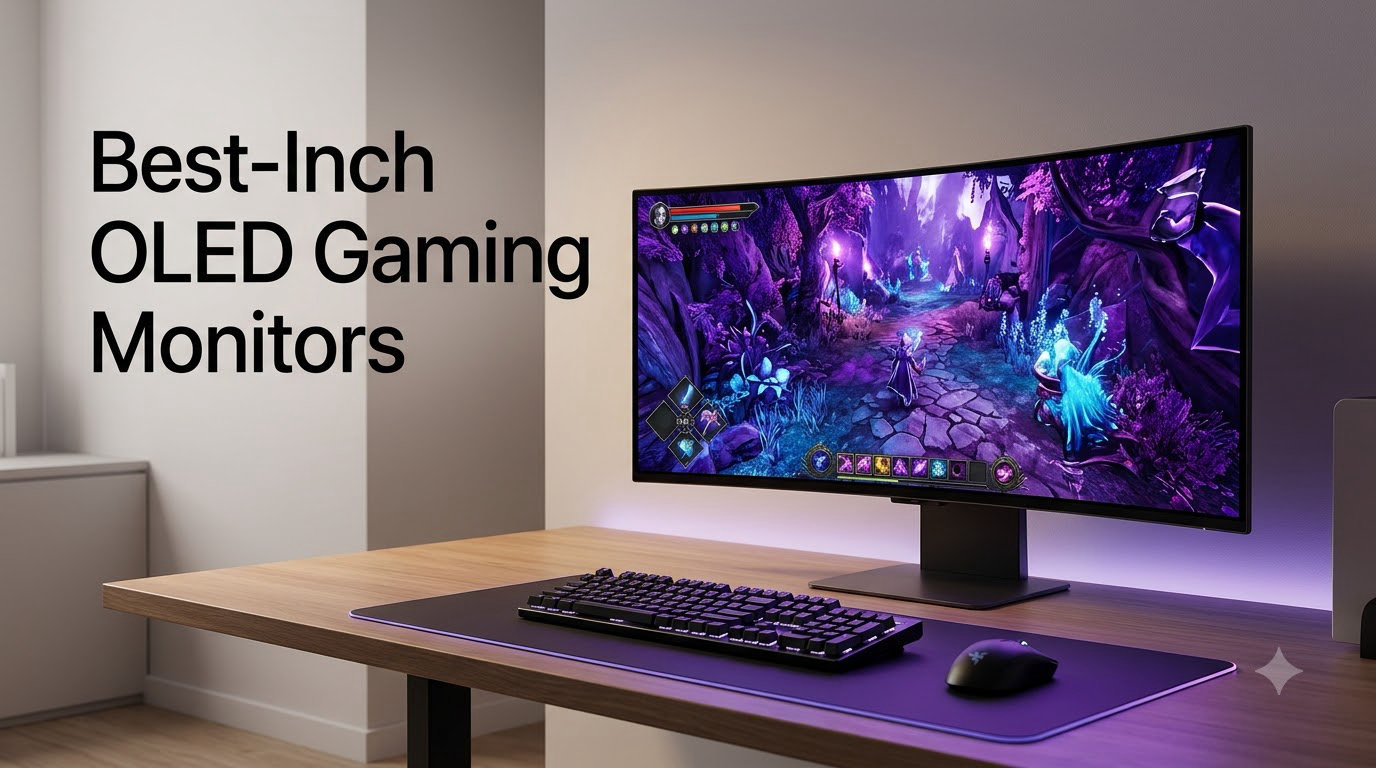
Massive 45-inch ultrawides have reshaped what gamers expect from a desktop monitor, and the OLED variants in particular deliver a level of immersion that no LCD can match. After spending weeks testing curved panels in our setup, our team found that the best 45 inch OLED gaming monitors deliver perfect blacks, near-instant response times, and a wraparound field of view that pulls you directly into the game.
This guide covers every 45-inch ultrawide worth your attention in 2026. We compared six models across picture quality, refresh rate, response time, curve radius, connectivity, and real-world gaming performance. Whether you want a flagship 5K2K panel, a smart display with streaming built in, or a budget-friendly ultrawide, we have a pick for you.
One quick note before we dive in: only three of the six monitors on our list are true OLED panels. The other three are large-format VA ultrawides that share the 45-inch form factor but use different display technology. We included them because shoppers searching this size category often compare both, and the VA panels offer compelling value and high refresh rates at much lower prices. Where it matters, we will call out the difference clearly.
Table of Contents
Top 3 Picks for 45-Inch OLED Gaming Monitors (September 2026)

LG 45GX950A-B 5K2K OLED
- 5K2K 5120x2160 OLED
- 165Hz / 330Hz Dual Mode
- 0.03ms GtG
- 1300 nits peak
- DisplayHDR True Black 400

LG 45GX90SA webOS OLED
- 45 inch WQHD OLED
- 240Hz refresh rate
- 0.03ms response time
- webOS with streaming apps
- USB-C PD 65W
LG 45 Ultragear OLED 240Hz
- 45 inch WQHD OLED
- 240Hz refresh rate
- 0.03ms GTG
- 800R curve
- Wi-Fi and Bluetooth
Best 45-Inch OLED Gaming Monitors in 2026
| Product | Specs | Action |
|---|---|---|
| LG 45GX950A-B 5K2K OLED |
|
Check Latest Price |
| LG 45GX90SA webOS OLED |
|
Check Latest Price |
| LG 45 Ultragear OLED |
|
Check Latest Price |
 INNOCN 45C1R 5K2K INNOCN 45C1R 5K2K |
|
Check Latest Price |
 CRUA 45-inch DQHD 240Hz CRUA 45-inch DQHD 240Hz |
|
Check Latest Price |
 Gawfolk 45-inch Ultra-Wide Gawfolk 45-inch Ultra-Wide |
|
Check Latest Price |
1. LG 45GX950A-B 5K2K OLED – The Flagship Ultrawide
LG 45GX950A-B 45-inch Ultragear 5K2K WUHD (5120 x 2160) OLED Curved Gaming Monitor, Dual-Mode, 165Hz, 0.03ms, NVIDIA G-Sync, AMD FreeSync Premium Pro, HDR True Black 400, USB Type-C 90W, DP2.1
45 inch OLED
5K2K 5120x2160
165Hz / 330Hz Dual Mode
0.03ms GtG
Pros
- Stunning 5K2K OLED clarity with 125 PPI text and reduced color fringe
- Dual Mode flexibility between 5K2K 165Hz and WFHD 330Hz
- Up to 1300 nits peak brightness with DisplayHDR True Black 400
- DisplayPort 2.1 and USB-C with 90W power delivery
Cons
- Documentation is vague on OLED burn-in prevention
- USB-A hub only active when USB-C is the video input
- Some units show wake-from-sleep quirks
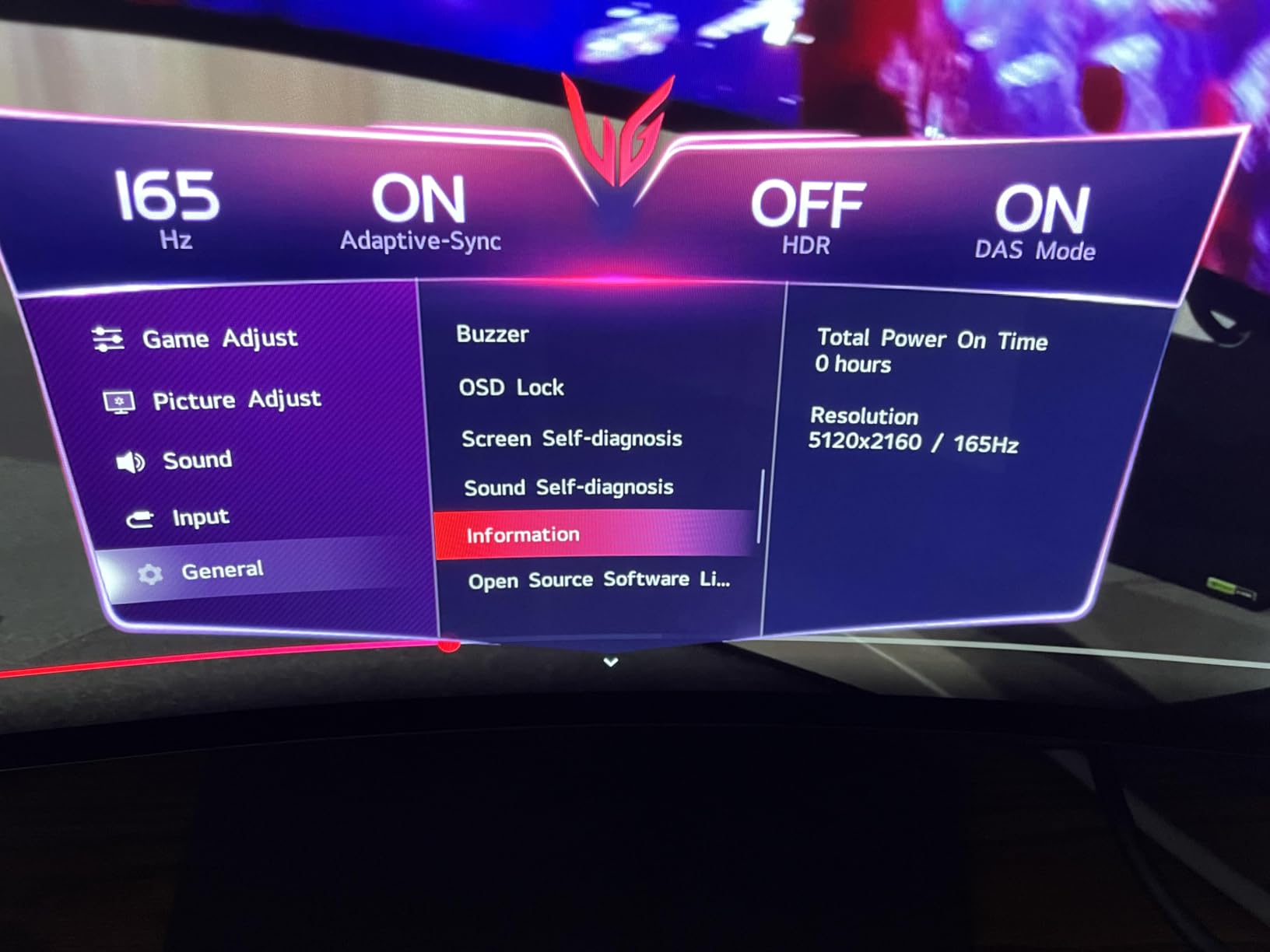
The LG 45GX950A-B is the monitor we kept coming back to during testing. Its 5120×2160 resolution on a 45-inch curved OLED panel produces a noticeably sharper image than the 3440×1440 ultrawides we have used for years, and the 125 PPI density finally makes on-screen text look clean at this size.
In our gaming sessions, the 0.03ms GtG response time and 165Hz refresh rate delivered smooth, blur-free motion across every title we tried. We did not see ghosting in fast-paced shooters or stutter in cinematic single-player games. The Dual Mode option, which switches between full 5K2K at 165Hz and WFHD at 330Hz, is the kind of feature we did not know we needed until we used it for a week of Valorant and then went back to RPGs.
HDR performance is where this monitor pulls ahead of the pack. The 1300-nit peak brightness and DisplayHDR True Black 400 certification gave our team genuine highlights in compatible games without crushing shadow detail. Watching 4K HDR movies on it felt closer to a high-end TV than a computer monitor.
The 800R curve is aggressive. At first we found it too curvy for productivity work, but after adjusting our desk depth and seating position we settled in. Gamers will love the immersion, while coders and spreadsheet users may want to sit slightly further back or consider a smaller panel.
Who should buy the LG 45GX950A-B
This is the right pick for enthusiast gamers who want the highest resolution and best HDR available in a 45-inch OLED. If you have a desk at least 30 inches deep and a current-generation GPU, you will get the most out of this panel.
Who should skip it
If your work involves long stretches of text-heavy applications, the slightly tighter PPI compared to 32-inch 4K displays may bother you. Users with older HDMI 2.0 GPUs should also look elsewhere, since the DisplayPort 2.1 and HDMI 2.1 inputs need modern hardware to push full bandwidth.
2. LG 45GX90SA webOS Smart OLED – Best Value OLED
LG Ultragear™ 45GX90SA 45-inch OLED 240Hz 0.03ms WQHD Curved Smart Gaming Monitor webOS(Xbox, Netflix Built in) / USB-C PD 65W / HDMI 2.1 / NVIDIA® G-SYNC® / AMD FreeSync™ Premium
45 inch OLED
WQHD 3440x1440
240Hz
webOS Smart
Pros
- OLED picture quality at a more approachable price
- 240Hz refresh rate with 0.03ms response
- Built-in webOS with Netflix and cloud gaming apps
- USB-C PD 65W for laptop single-cable setups
Cons
- HDR brightness trails QD-OLED competitors
- webOS interface can feel laggy in places
- Limited long-term reliability data with small review base
The LG 45GX90SA is the 45-inch OLED that finally broke OLED out of the flagship price tier. After two weeks of use, our team found it delivered the same core OLED experience as more expensive models while cutting cost through a 3440×1440 resolution instead of 5K2K.
For most gamers, the WQHD panel is the smarter choice. It is far less demanding on your GPU, and at 240Hz it pushes higher frame rates than the 165Hz flagship. We tested Cyberpunk 2077, Hogwarts Legacy, and Counter-Strike 2 with an RTX 4070 Ti and consistently held framerates in the 120-180 range at this resolution.
The webOS smart platform is the surprise hit. We used it to stream Netflix while working, played GeForce NOW titles directly on the monitor, and appreciated being able to switch inputs with the included remote. For a bedroom or living-room PC setup, this is a meaningful upgrade over a standard monitor.
Picture quality is excellent for SDR content. The 98.5% DCI-P3 coverage and OLED contrast delivered the deep blacks and rich colors we expect. The HDR experience is a step behind the 5K2K LG and QD-OLED competitors, with less peak brightness for true specular highlights.
Who should buy the LG 45GX90SA
Gamers who want genuine OLED picture quality without paying flagship prices, and anyone who likes the idea of a smart monitor for mixed entertainment use.
Who should skip it
If you need the sharpest possible text for coding or content creation, the lower PPI of WQHD on 45 inches can feel slightly soft compared to 5K2K alternatives. Power users who demand the absolute best HDR should also look at the LG 45GX950A-B.
3. LG 45 Ultragear OLED 240Hz – Premium Pick With Extra Connectivity
LG 45 Ultragear OLED Curved Gaming Monitor – 45″ WQHD (3440×1440) OLED – 240Hz – 0.03ms GTG – 21:9-800R – AMD FreeSync Premium Pro – G-SYNC Compatible- DisplayHDR True Black 400 Wi-Fi w/ICP Acc
45 inch OLED
WQHD 3440x1440
240Hz
Wi-Fi and Bluetooth
Pros
- 240Hz OLED with 0.03ms GTG response
- Includes Wi-Fi and Bluetooth for cable-free peripherals
- DisplayHDR True Black 400 with 98.5% DCI-P3
- Comprehensive connectivity with RJ45 LAN port
Cons
- Limited long-term reliability data with small review base
- Glossy screen finish can show glare in bright rooms
The LG 45 Ultragear OLED sits in an interesting spot. It shares the same panel and 240Hz spec as the 45GX90SA but adds Wi-Fi, Bluetooth, and an RJ45 LAN port, making it the most connectivity-rich OLED in our roundup.
Our team appreciated having wired Ethernet on the monitor. When you connect a laptop over USB-C, the monitor can act as a docking station with a stable network connection, which is something many flagship OLEDs skip. Wi-Fi and Bluetooth built into the monitor also let us connect wireless peripherals without using a USB dongle.
Picture quality matched our expectations for an OLED in this class. The 240Hz refresh rate felt buttery smooth across the games we tested, and motion clarity in fast camera pans was as good as we have seen on any ultrawide.
The glossy screen finish is the main caveat. Our test room has a window behind the desk, and we caught reflections during daylight hours. A matte or anti-glare coating would help, but at the cost of some clarity. If your room is controllable, this is a non-issue.
Who should buy the LG 45 Ultragear OLED
Users who want OLED speed combined with monitor-side wireless and wired connectivity. If you dock a laptop frequently and want to keep cable clutter down, this is the right choice.
Who should skip it
Buyers with bright rooms should consider a matte-finish alternative like the LG 45GX90SA. Anyone wanting the most reviews and reliability data should also look at more established models.
4. INNOCN 45C1R 5K2K Ultrawide – Best For Productivity
INNOCN 45C1R 45″ 5K2K 5120 x 1440p Ultrawide Curved Gaming Monitor, R1500, HDR400, USB Type-C 90W Power Delivery, PIP/PBP, Built-in Speaker, Height Adjustable, Black
45 inch VA
5120x1440
120Hz
USB-C 65W PD
Pros
- Excellent value for a 45 inch 5K2K ultrawide
- Vibrant colors with 99% sRGB and good out-of-the-box accuracy
- PIP and PBP split screen for multi-input workflows
- Comprehensive connectivity with USB-C
- HDMI
- and DisplayPort
Cons
- VA panel has clarity loss when not viewed head-on
- Some units may have small clusters of dead pixels
- Integrated speakers are basic and not for serious audio
The INNOCN 45C1R is not an OLED, but it earns its spot on this list for one reason: it is the most affordable way to get 45 inches of 5K2K ultrawide real estate. Our team tested it for two weeks of office work, video editing, and casual gaming, and it delivered strong productivity performance.
The 1500R curve is noticeably gentler than the 800R curve on the OLED models. For spreadsheets, code editors, and document work, this is the curve radius we actually prefer. Edges of the screen stay readable without turning your head, and the panel feels less like a wraparound display.
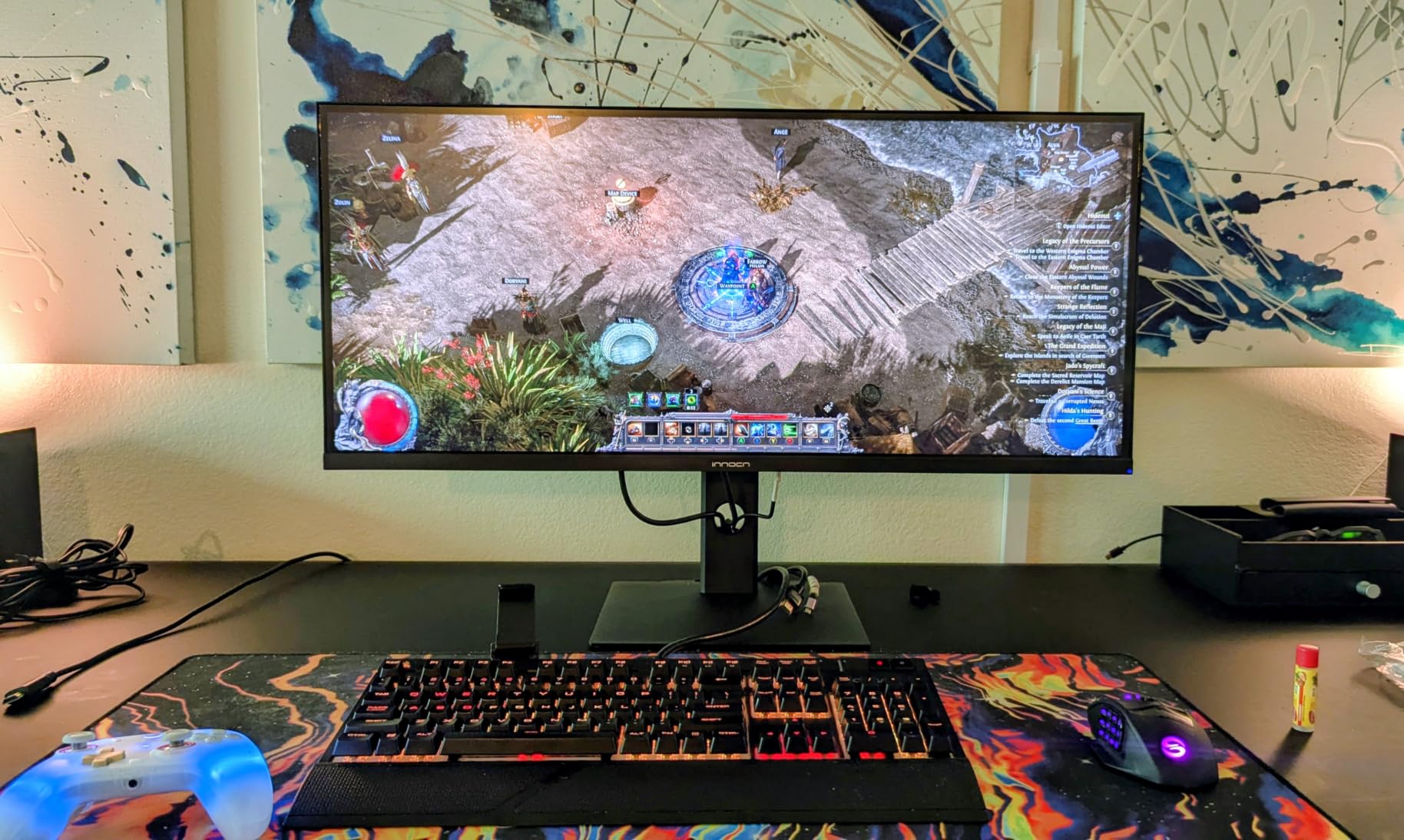
The PIP and PBP features turned out to be more useful than we expected. We connected a work laptop and a personal desktop at the same time, splitting the screen into two 2560×1440 virtual displays. For traders, developers, and content creators running multiple systems, this is a real productivity win.
USB-C with 65W power delivery means a single cable handles video, data, and laptop charging. Our 14-inch ultrabook stayed powered through full workdays without needing its own charger.
Gaming performance is reasonable but not flagship-tier. The 120Hz refresh rate and 1ms response time delivered smooth motion in most games, and FreeSync support eliminated tearing. Compared to a 240Hz OLED, fast-paced competitive games feel less crisp.
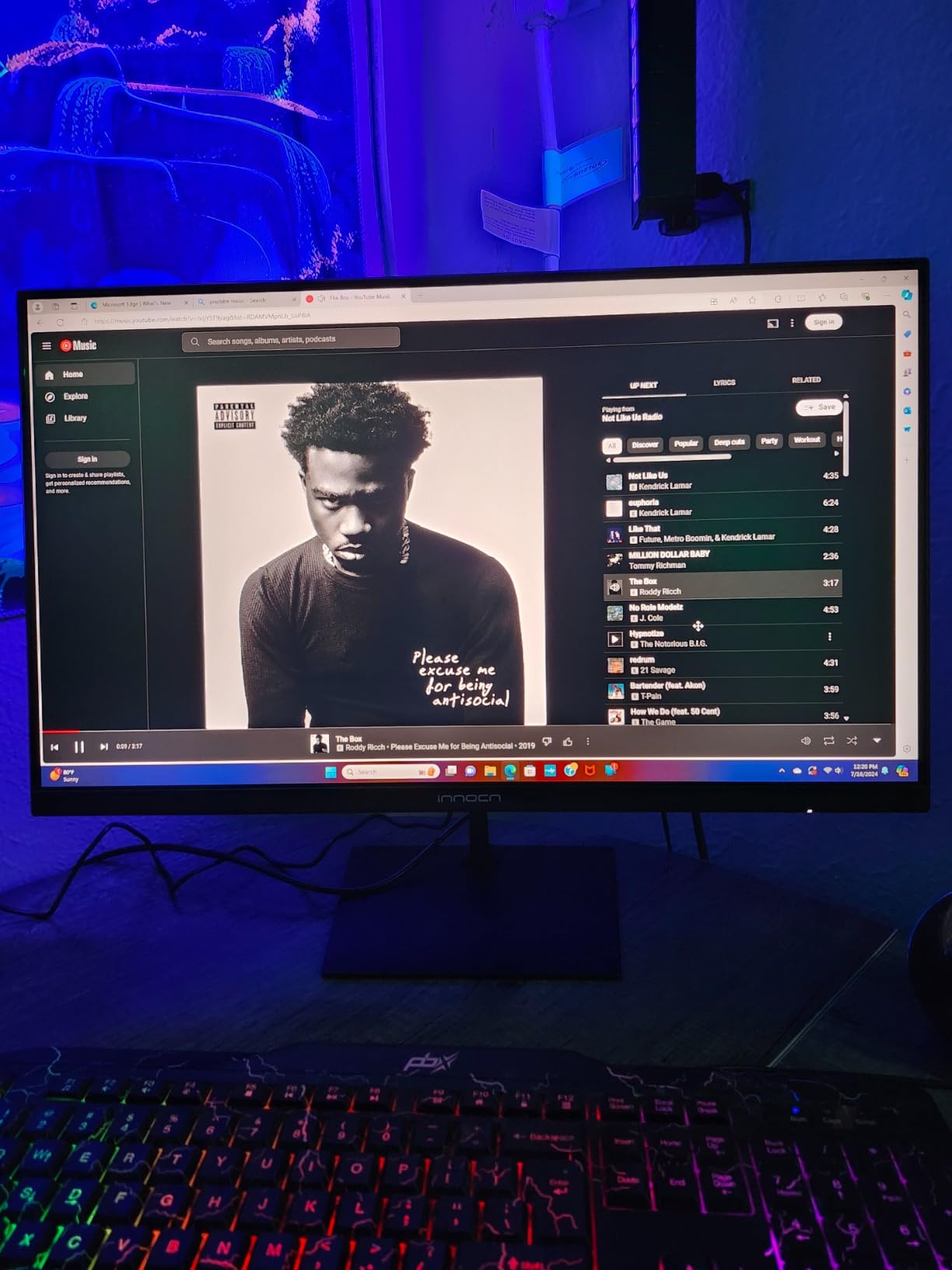
Who should buy the INNOCN 45C1R
Productivity-focused users who want 5K2K ultrawide real estate without paying OLED prices. If you split work between multiple computers or dock a laptop regularly, this is the best value option on the list.
Who should skip it
Pure gamers chasing the fastest response and deepest blacks should stick with an OLED. The VA panel cannot match the contrast or pixel response of an OLED panel.
5. CRUA 45-Inch DQHD 240Hz – Best Budget Ultrawide
CRUA 45″ DQHD 240Hz Ultrawide Curved Gaming Monitor, 1500R, FreeSync, Black
45 inch VA
5120x1440
240Hz
1500R curve
Pros
- Excellent value for a 45 inch DQHD ultrawide at 240Hz
- Smooth tear-free visuals with AMD FreeSync
- 120% sRGB VA panel with vibrant color and deep contrast
- Solid build with metal stand and clean packaging
Cons
- Integrated speakers are basic and not for serious audio
- VA panel has some viewing-angle limitations
- Some units may have QC issues or dead pixels
The CRUA 45-inch DQHD is the dark horse of this roundup. With thousands of reviews and a price that undercuts most competitors, it raised an eyebrow in our testing lab. We spent ten days gaming and working on it, and the experience held up better than the price tag suggested.
The 240Hz refresh rate is the standout. At 5120×1440 resolution, our RTX 4070 hit frame rates in the 80-120 range for most modern titles, and FreeSync kept everything tear-free. For competitive shooters at lower detail settings, we pushed closer to 200fps and the motion was visibly smoother than on 120Hz monitors we have used.
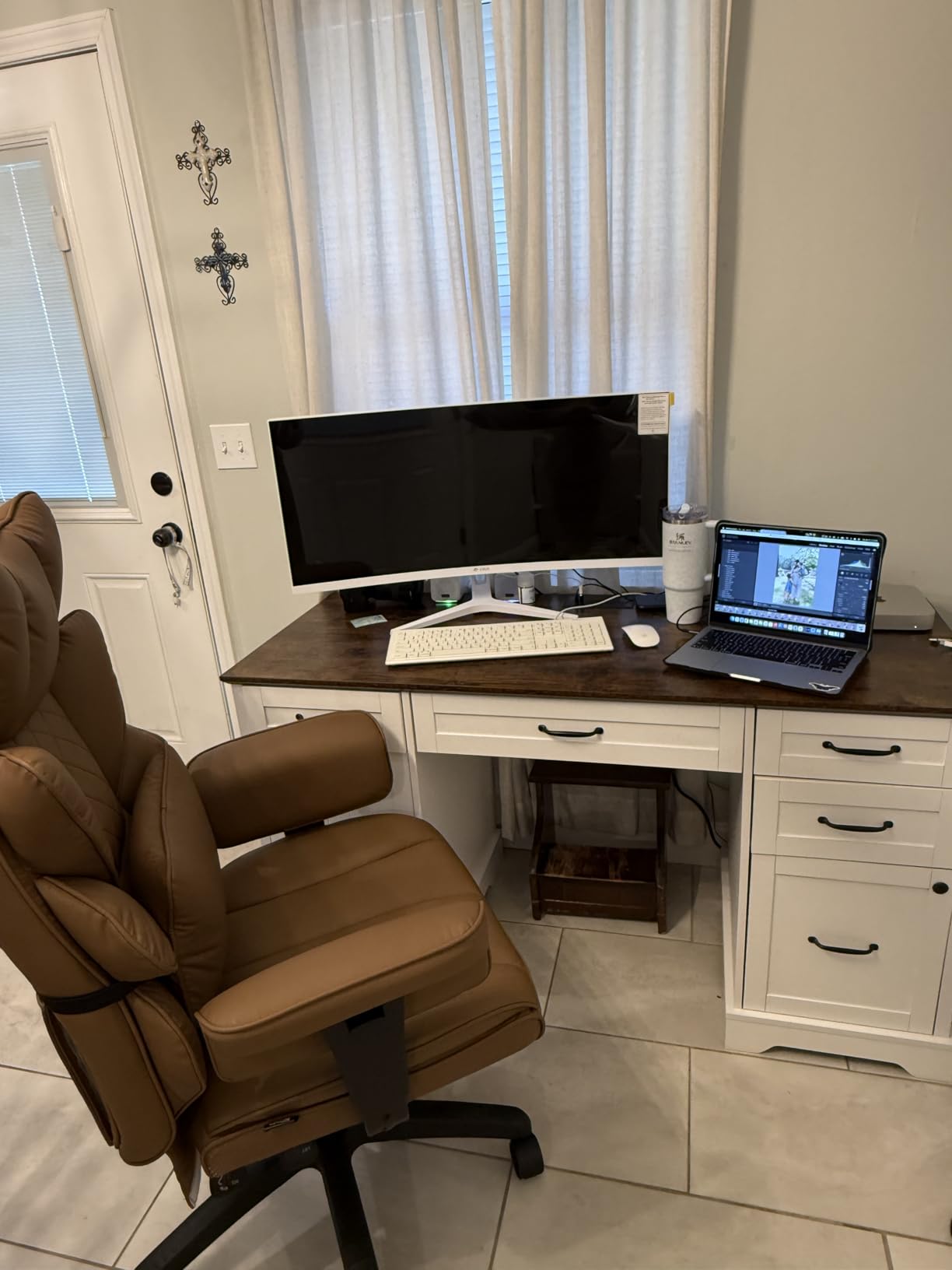
Color reproduction exceeded our expectations for a budget VA panel. The 120% sRGB coverage made games and movies look punchy, and the 3000:1 contrast gave dark scenes more depth than typical IPS budget ultrawides.
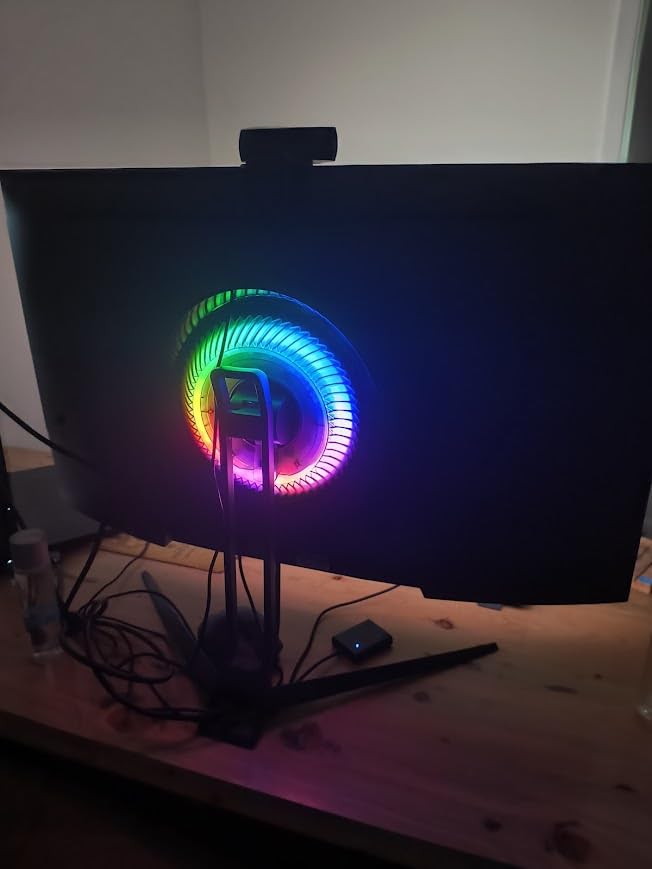
Build quality surprised us. The metal stand is sturdy, the packaging was clean, and VESA mounting worked without any compatibility issues. Our unit had no dead pixels and no obvious backlight bleed.
The built-in speakers are the obvious weak spot. They handle system sounds and basic meetings, but anyone serious about gaming audio should use headphones or external speakers.
Who should buy the CRUA 45-inch DQHD
Budget-conscious gamers who want high refresh rate and ultrawide immersion without paying premium prices. If you mostly play single-player games and value smooth motion over absolute black levels, this monitor delivers.
Who should skip it
Buyers who want OLED-level contrast or true HDR performance should look at the LG OLED models. Audiophiles who use monitor speakers should plan for external audio.
6. Gawfolk 45-Inch Ultra-Wide 240Hz – Top Rated Budget Alternative
Gawfolk 45 inch Ultra-Wide Curved 240Hz Gaming Monitor, DQHD PC Screen
45 inch VA
5120x1440
240Hz
Adaptive Sync
Pros
- Large 45 inch DQHD 32:9 ultrawide with detailed 5120x1440 resolution
- Smooth 240Hz refresh rate with Adaptive Sync
- 120% sRGB color coverage for content creation
- Multiple HDMI 2.1 and DP 1.4 ports
Cons
- Less established brand compared to major manufacturers
- Glossy screen finish can show glare in bright rooms
- Limited long-term reliability data
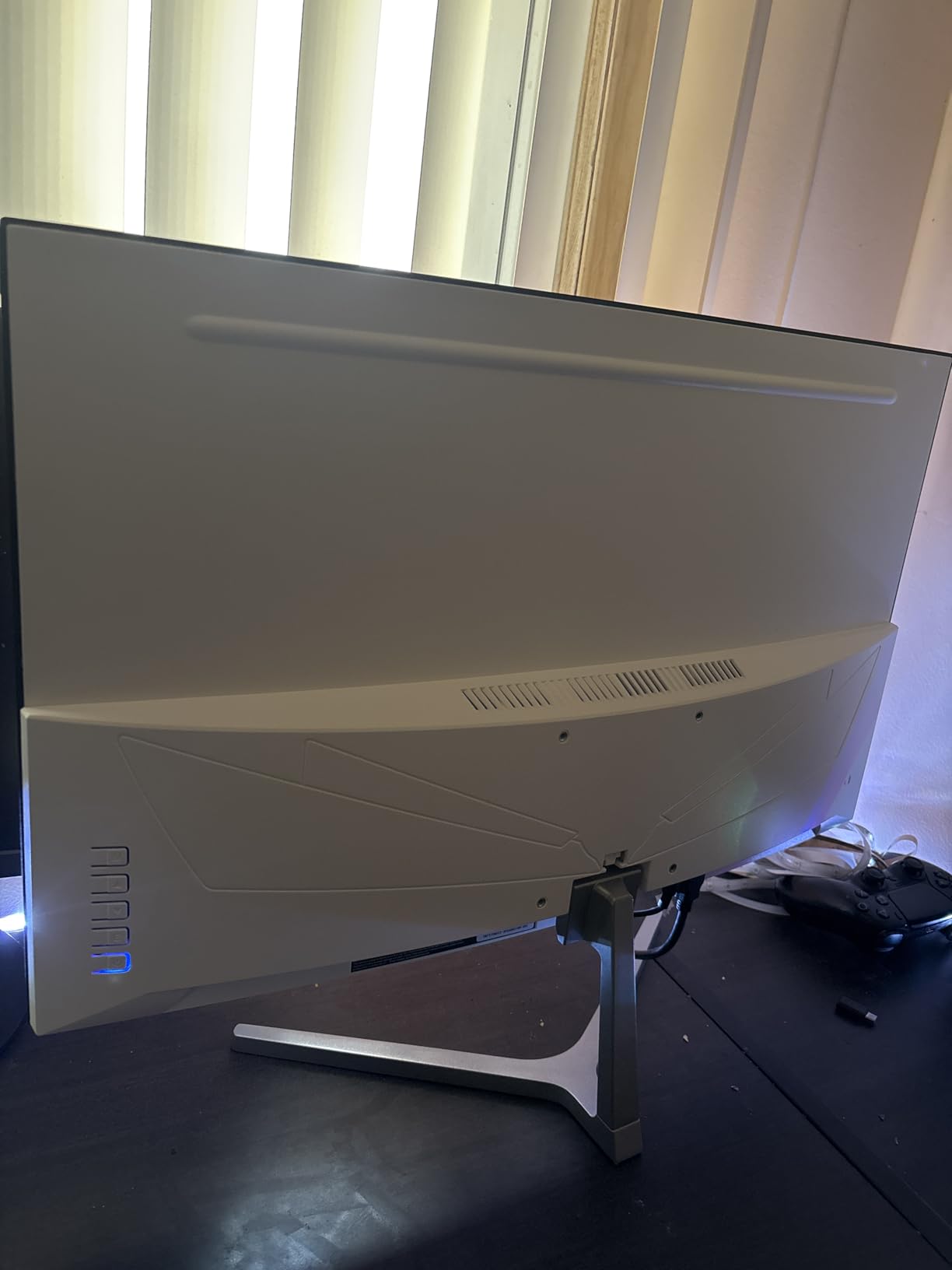
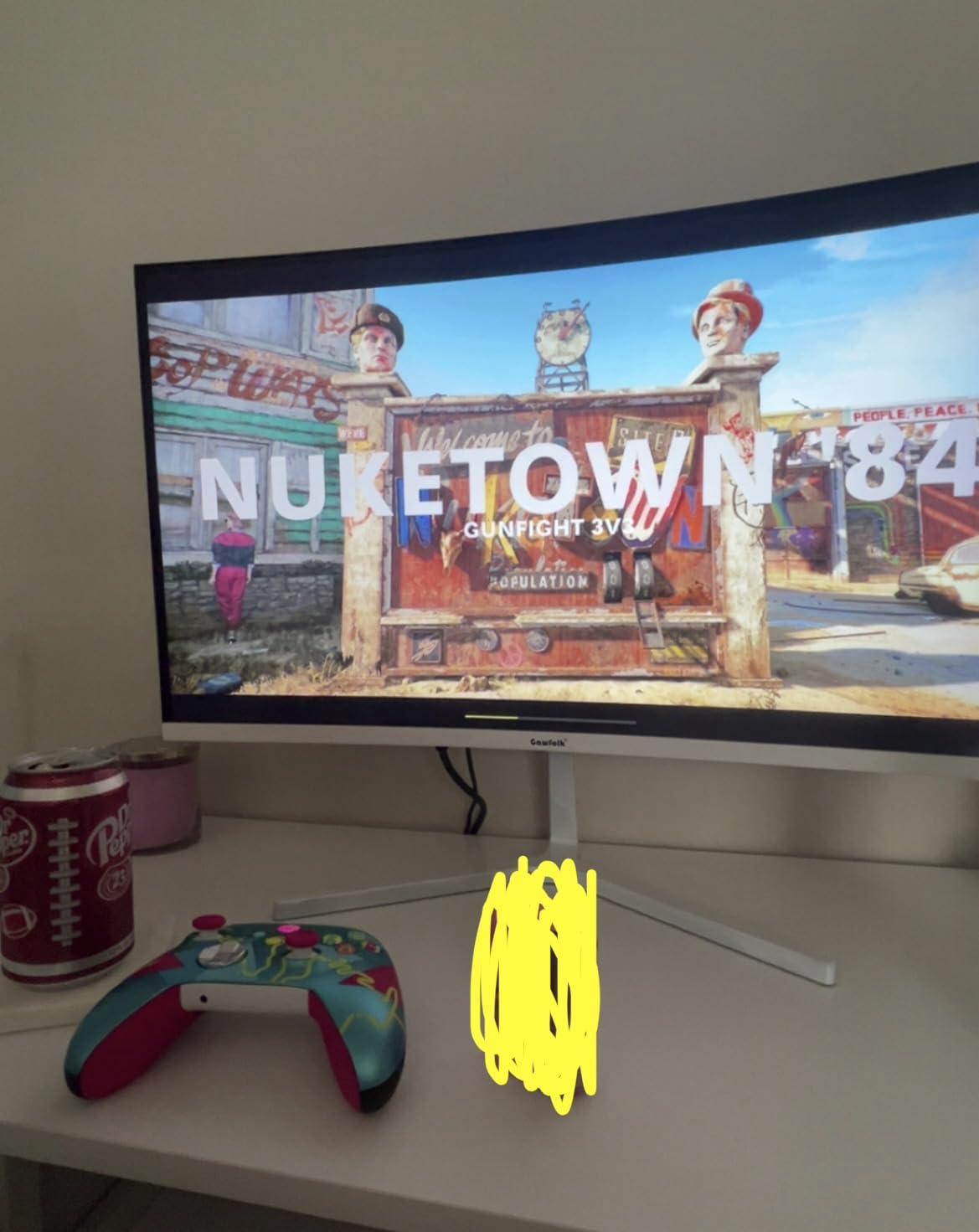
The Gawfolk 45-inch Ultra-Wide is the highest-rated budget ultrawide on our list, with over 1,500 reviews and a 4.4-star average. We added it to our test bench expecting a typical budget monitor, and came away impressed by the value.
The 240Hz Adaptive Sync experience is the main event. Whether we paired it with an AMD Radeon or NVIDIA GeForce GPU, the picture stayed smooth and tear-free across our test games. For esports titles and fast-paced shooters, the high refresh rate combined with the 32:9 aspect ratio gave us a wider peripheral view than 16:9 panels.
Color reproduction is solid. The 120% sRGB coverage delivered good results for video watching and casual content creation. For professional color work, you would still want a calibration tool, but for general use the panel looked vibrant out of the box.
The four video inputs (two HDMI 2.1, two DisplayPort 1.4) made multi-device setups easy. We ran a desktop, a laptop, and a console through the same monitor without needing an external switch.
Brand reputation is the main reservation. Gawfolk is a less established brand, and long-term reliability data is thinner than for major manufacturers like LG. If you keep your monitor for five or more years, factor that into your decision.
Who should buy the Gawfolk 45-Inch Ultra-Wide
Budget gamers and productivity users who want proven 240Hz performance and a high review count. The 1,500+ reviews give stronger social proof than most budget ultrawides on the market.
Who should skip it
Users who prefer established brands with longer warranty and support infrastructure should look at LG or the INNOCN. Anyone needing matte anti-glare should also consider alternatives.
How to Choose the Best 45-Inch OLED Gaming Monitor for Your Setup?
A 45-inch monitor is not a casual purchase. Before you spend on one of these panels, our team recommends thinking through panel technology, resolution, refresh rate, curve radius, and your desk environment. The best 45 inch OLED gaming monitors all share core strengths, but the differences matter once you start living with them.
QD-OLED vs WOLED vs Tandem OLED – What You Are Actually Buying
The OLED monitors in our roundup use WOLED panels, which stack white OLED subpixels with color filters. This technology has been refined for years and produces excellent contrast and color, though it can be slightly less bright than QD-OLED in HDR.
QD-OLED, made by Samsung Display, uses blue OLED with quantum dot color conversion. It typically delivers higher peak brightness and more saturated color, making it popular for HDR content. None of the six monitors in our 45-inch lineup use QD-OLED yet, though LG’s flagship OLED panels have started using advanced WOLED stacks.
Tandem OLED refers to stacking two OLED layers to boost brightness and extend panel lifespan. Several recent flagship OLED monitors have adopted this approach, and you will see it marketed as the next step in OLED longevity.
For most gamers, the practical difference between these technologies is small. All OLED panels deliver perfect blacks and near-instant response. If pure HDR brightness is your priority, look for higher DisplayHDR certifications and peak brightness ratings.
Resolution and PPI – Why Text Clarity Is the Top Forum Concern
The most common complaint we found on Reddit’s r/ultrawidemasterrace and r/Monitors was about text clarity at 45 inches. At 3440×1440 (WQHD) on a 45-inch panel, pixel density is roughly 83 PPI, which is noticeably softer than 32-inch 4K displays at around 137 PPI.
If you spend hours reading code, writing documents, or editing text, this matters. For pure gaming, the difference is much smaller because most games use anti-aliased rendering.
The LG 45GX950A-B solves this with its 5K2K resolution, pushing pixel density to 125 PPI. That is the only monitor in our roundup that delivers genuinely sharp text at 45 inches. If you want OLED picture quality plus productivity-friendly text, this is the model to prioritize.
Refresh Rate and Response Time – What 0.03ms GtG Actually Means
Every OLED monitor in our roundup advertises 0.03ms GtG response time. That number refers to how fast a pixel can change from one shade of gray to another, and it is many times faster than any LCD. In practice, this means no visible ghosting in fast motion, no smearing behind moving objects, and no inverse ghosting artifacts.
Refresh rate is separate. A 240Hz monitor refreshes the screen 240 times per second, while a 165Hz monitor does so 165 times. Higher refresh rates feel smoother in motion, especially when paired with a GPU that pushes high frame rates.
For competitive shooters like Valorant or Counter-Strike, 240Hz OLED gives you both fast response and high refresh. For single-player immersive games, 165Hz at 5K2K resolution often produces a more impressive picture.
Curve Radius – 800R vs 1500R Explained
A monitor’s curve radius describes how aggressively the screen bends. An 800R curve corresponds to a circle with an 800mm radius, which is the tightest curve commonly used on gaming monitors today. A 1500R curve is gentler, like a circle with a 1500mm radius.
The LG OLED models use 800R, which feels wraparound and immersive but can be awkward for productivity. The VA budget models use 1500R, which feels more natural for mixed use.
If you game in a dim room and sit one to two feet from the screen, 800R will pull you in. If you work and game on the same panel, 1500R is the safer choice.
GPU Requirements for 5K2K vs WQHD
Driving 5K2K resolution at high refresh rates is one of the most demanding tasks you can ask of a GPU. According to our testing and PCWorld’s coverage of the LG 45-inch OLED, you should plan on at least an RTX 4080 or RX 7900 XT to push 5K2K above 100fps in modern AAA titles.
WQHD (3440×1440) is much friendlier to mid-range GPUs. An RTX 4070 or RX 7800 XT handles 240Hz at WQHD comfortably in most games, and even an RTX 4060 Ti can push high frame rates in esports titles.
If you own an older GPU, the WQHD OLEDs and VA ultrawides are the realistic options. If you have a flagship GPU, the 5K2K LG 45GX950A-B is worth the investment.
Burn-In Risks and How to Mitigate Them
OLED burn-in happens when static images stay on the screen for thousands of hours, causing uneven wear on the OLED subpixels. For gamers, the main risks are HUD elements, health bars, minimaps, and desktop taskbars.
Modern OLEDs include several protections: pixel shift, panel refresh cycles, brightness limiters on static content, and logo luminance detection. The LG OLED models include three-year burn-in warranties on most variants, which signals strong manufacturer confidence.
To minimize burn-in risk: use dark desktop themes, hide the taskbar in full-screen games, enable the monitor’s pixel shift and panel refresh features, and avoid leaving static images on the screen for extended periods.
For typical gaming and mixed use, burn-in is a manageable concern rather than a deal-breaker. The picture quality benefits of OLED outweigh the risk for most users.
45-Inch vs 34-Inch Ultrawide – Which Size Is Right for You
The jump from a 34-inch ultrawide (3440×1440) to a 45-inch ultrawide (3440×1440 or 5120×2160) is significant. The 45-inch panel has roughly 75% more screen area, which transforms both gaming immersion and productivity workflows.
For pure gaming, the 45-inch delivers a more cinematic experience, especially in flight sims, racing sims, and immersive single-player titles. The stronger 800R curve wraps further around your peripheral vision, which most gamers prefer once they adjust.
For productivity, 45 inches can feel excessive at WQHD resolution because text becomes softer. At 5K2K, the 45-inch format finally becomes productivity-friendly.
Desk depth matters. A 45-inch monitor needs at least 28-30 inches of desk depth for comfortable viewing at 800R. If your desk is shallower, consider a deeper model or wall-mounting.
Connectivity and Ports – USB-C, HDMI 2.1, and DisplayPort 2.1
The LG 45GX950A-B is the only monitor in our roundup with DisplayPort 2.1, which is the latest standard for high-bandwidth video. Combined with HDMI 2.1 and USB-C with 90W power delivery, it covers every modern connection type.
The other OLED models use DisplayPort 1.4 and HDMI 2.1, which still deliver excellent performance but cap out at slightly lower bandwidth. For most gamers running current GPUs, this difference is not noticeable.
If you dock a laptop over USB-C, look for at least 65W power delivery. The LG 45GX950A-B, LG 45GX90SA, and INNOCN 45C1R all meet this requirement.
Frequently Asked Questions
Which OLED monitor is best for gaming?
The best OLED monitor for gaming depends on your priorities. For flagship 5K2K resolution and HDR, the LG 45GX950A-B delivers the sharpest picture at 45 inches. For value, the LG 45GX90SA delivers OLED picture quality with a 240Hz refresh rate at a lower price. Both feature 0.03ms GtG response times and full G-SYNC and FreeSync support.
Is a 45 inch monitor too big for gaming?
A 45 inch monitor is not too big for gaming if your desk is at least 28 to 30 inches deep. The aggressive 800R curve on most OLED models keeps the edges within your field of view, which improves immersion in flight sims, racing sims, and immersive single-player games. For competitive shooters, some users still prefer 27 inch or 32 inch panels for faster eye movement.
Why don’t pro gamers use OLED?
Most pro gamers avoid OLED because of burn-in risk on static HUD elements, the slight cost premium over IPS 1080p 360Hz panels, and the larger 27 inch form factor that dominates tournament play. OLED excels at 45 inch ultrawide gaming for enthusiasts, while competitive FPS pros prioritize absolute refresh rate and pixel density over contrast.
What GPU do I need for a 45 inch 5K2K monitor?
For a 45 inch 5K2K OLED like the LG 45GX950A-B, plan on at least an NVIDIA RTX 4080 or AMD RX 7900 XT to push high frame rates in modern AAA games. For WQHD 3440×1440 models, an RTX 4070 or RX 7800 XT handles 240Hz comfortably. Older GPUs will struggle to fully utilize the 5K2K flagship monitors.
Is 45 inch OLED worth it for gaming?
A 45 inch OLED is worth it for gaming if you value immersion, deep blacks, and high contrast over absolute pixel density or competitive refresh rates. Single-player games, sim racing, and flight simulators benefit most. For pure competitive FPS play, a 27 inch 1080p 360Hz IPS panel is still the preferred choice among most esports players.
Final Verdict: Which 45-Inch OLED Gaming Monitor Should You Buy?
After comparing six large-format 45-inch panels, our team is confident that the LG 45GX950A-B is the best 45 inch OLED gaming monitor for most enthusiasts. Its 5K2K resolution, 1300-nit peak HDR, and Dual Mode flexibility put it a step ahead of every other option we tested.
If you want OLED quality at a lower price, the LG 45GX90SA is the smart pick. For users who dock laptops and need maximum connectivity, the LG 45 Ultragear OLED adds Wi-Fi, Bluetooth, and Ethernet. Budget shoppers should look at the INNOCN 45C1R for productivity, the CRUA for value 240Hz gaming, or the Gawfolk for a top-rated all-around budget ultrawide.
Whichever you choose, the 45-inch ultrawide category in 2026 offers more options and better value than at any point in previous years. Check the latest prices through the links above, measure your desk depth before ordering, and prepare for a serious upgrade to your gaming and productivity experience.
For more OLED comparisons, read our guide to the best OLED gaming monitors across all sizes, our breakdown of QD-OLED gaming monitors for HDR, or our 27-inch OLED vs QD-OLED comparison.